Use Japan Meteorological Agency 30-year averages and 2026 observations to read the 2027 sakura front and plan trips to Okinawa, Kyoto, Osaka, Tokyo, Hirosaki and Hakodate, covering early-April breaks, Golden Week, JR reserved seats and blossom-based detours.
- Region & Focus
- Okinawa
- Reading Scope
- 19 min read · 9 chapters · 7 Q&As
- Official Verification
- 40 official sources checkedUpdated 22 November 2026
- Key Topics
- SeasonsItinerariesBooking
Chapter Route Map (tap any stop)
- Pick Your Region by Averages First, Then Save Two Days for Blossoms
- From Winter Forecasts to On-the-Ground Reports: When to Change Bookings
- Staggering Flights, Hotels and Reserved Train Seats
- Making the Most of Early-April Breaks and Japan's Golden Week
- Okinawa to Kansai: Matching Locations to Blossom Types and Walking Effort
- Swapping Time Slots Between Tokyo Riverbanks and Shinjuku Gyoen
- Hirosaki: Choose Between the Moats and the Honmaru First
- Late-Season Hokkaido: Factoring In the Journey Between Hakodate and Sapporo
- Adjusting for Night Illuminations, Rain and Crowds
- Quick Q&A
If you can only travel to Japan for the 2027 cherry blossom season during an early-April four-day break (such as 3–6 April), pick one base from Kyoto-Osaka, Tokyo or Fukuoka first. Set aside at least two daytime slots for blossoms on a four-day, three-night trip: one for city parks and one kept flexible to pivot to a nearby suburb or an alternative garden based on live bloom reports. If you are after petals floating across castle moats, wait for mid-April in Hirosaki, where organisers have pencilled in 16 April 2027 as the provisional festival opening date. Heading further north to Hokkaido? Check separate observations for Hakodate and Sapporo—in 2026, Hakodate's official sample tree reached full bloom 12 days ahead of its 30-year average. Use long-term averages to pick your region before booking hotels, watch ticket release dates for reserved train seats, and check zone-by-zone park reports once you land to decide which stretch to walk.
Pick Your Region by Averages First, Then Save Two Days for Blossoms
The Japan Meteorological Agency (JMA) monitors one designated sample tree (hyohonboku) in each city. The official flowering date (kaika) is declared the first day that around five to six blossoms open on that tree, and full bloom (mankai) is called on the first day roughly 80 per cent of its buds are open. In Tokyo, that tree is a Somei Yoshino at Yasukuni Shrine. When you see headlines announcing full bloom in Tokyo before your flight, treat it as a barometer for central Tokyo's spring progress, then check individual parks you plan to visit. Opposite riverbanks and different cultivars inside the same garden can peak days apart. On a three-night itinerary, lock timed-entry gardens into a half-day when you know you can arrive on schedule, and leave the remaining days open until local parks post live bloom updates.
A single season's numbers show how unpredictable the gap can be: in 2026, Tokyo opened on 19 March and hit full bloom on 28 March, nine days later. Fukuoka opened on 24 March and reached full bloom on 3 April—actually trailing Tokyo that year. Hakodate, meanwhile, opened on 18 April and hit full bloom on 20 April, just two days apart. Sharp warm or cold snaps make the old rule of flying out 'one week after first bloom' unreliable. If you are still choosing 2027 dates, use the 30-year averages in the table below to place your trip in the right window, and keep one half-day free on day three so you can switch between early and late varieties in the same city.
In January and February, look to Okinawa. Naha's sample tree is a Kanhizakura (Taiwan cherry), with a JMA 30-year average opening date of 16 January and full bloom on 4 February. For northern Okinawa Island, check separate updates for Nakijin Castle Ruins, Mount Yaedake or Nago Central Park. If you want deep-pink blossoms against stone castle walls, fly into Naha and head north to the Motobu Peninsula. If you only have one night in Naha with a late arrival or an early-morning flight out, the long drive north will eat up most of your daylight—stick to a stroll in town and save the north for another trip.
From late March to early April, start by comparing flights and hotels across Fukuoka, Kyoto-Osaka and Tokyo. Fukuoka works well if you want fewer train transfers and an easy mix of cherry blossoms with everyday city sightseeing. In both Tokyo and Osaka, you can stay in one neighbourhood and enter parks from different sides morning and evening. Kyoto lets you bookend spring across early weeping cherries (shidarezakura), Somei Yoshino and late-blooming Omuro-zakura. Short hops within this window give you far more flexibility than changing cities every night to chase a few days' difference in average peak dates.
Moving north in April means tracking Sendai, Aomori and Hakodate separately. The JMA full-bloom average is 13 April for Sendai and 26 April for Aomori; in 2026, those two cities peaked on 4 April and 16 April respectively. Aomori City's figures help you pick which week to head north, but once you reach Hirosaki, switch to Hirosaki Park's own breakdown across the Inner Grounds, Outer Moat and West Moat. Hakodate averages full bloom on 2 May and Sapporo on 6 May, though both peaked in April in 2026. If an early-May holiday is your only travel window, shortlist cities with late-blooming varieties and strong non-sakura sights before booking accommodation.
| Observation Site | Full-Bloom Average | 2026 First Bloom | 2026 Full Bloom |
|---|---|---|---|
| Naha, Okinawa (Kanhizakura) | 4 Feb | 18 Jan | 3 Feb |
| Fukuoka | 31 Mar | 24 Mar | 3 Apr |
| Kyoto | 4 Apr | 23 Mar | 30 Mar |
| Osaka | 4 Apr | 26 Mar | 3 Apr |
| Tokyo | 31 Mar | 19 Mar | 28 Mar |
| Sendai | 13 Apr | 31 Mar | 4 Apr |
| Aomori | 26 Apr | 13 Apr | 16 Apr |
| Hakodate | 2 May | 18 Apr | 20 Apr |
| Sapporo | 6 May | 18 Apr | 24 Apr |
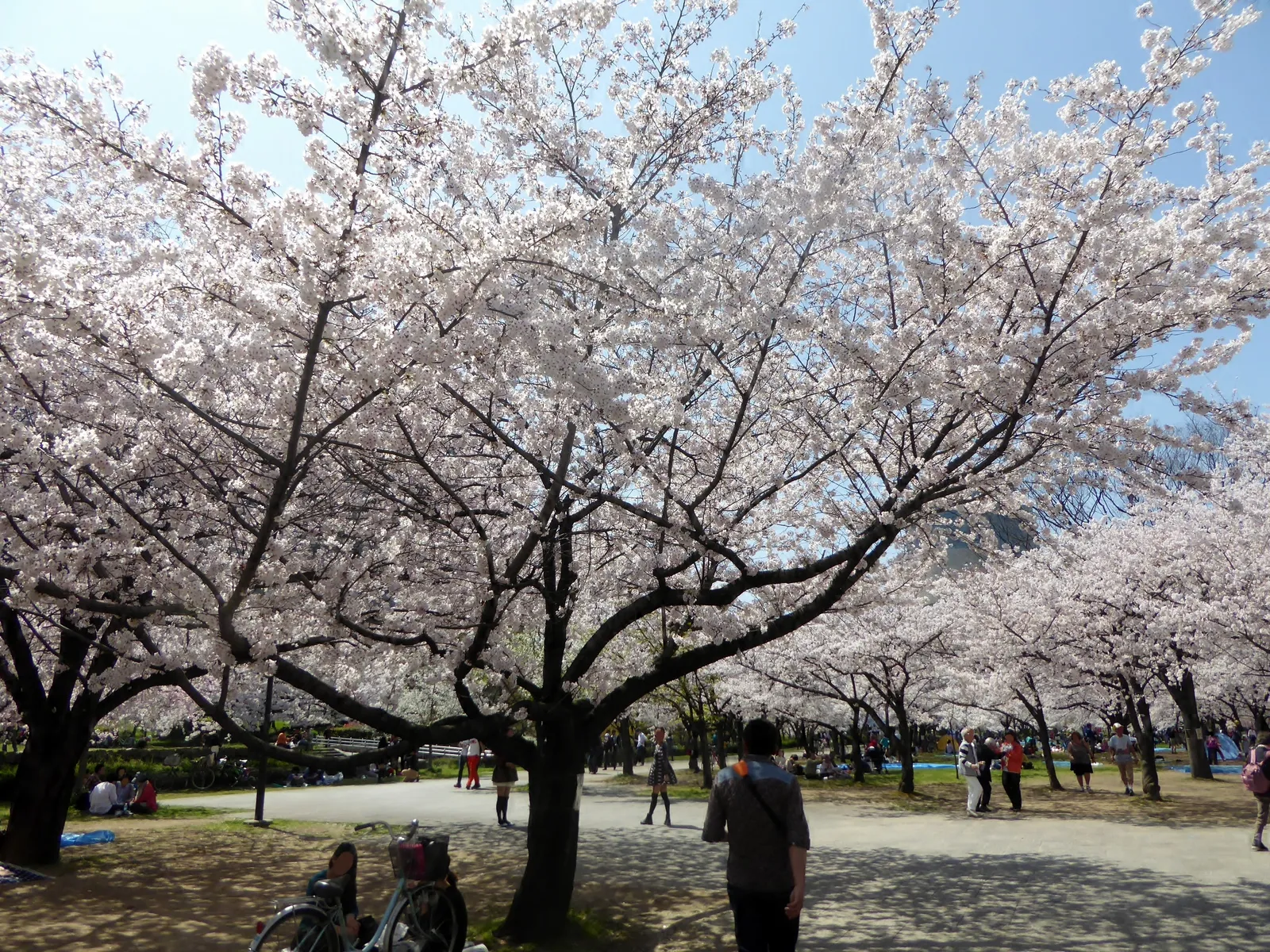
Use Japan Meteorological Agency 30-year averages and 2026 observations to read the 2027 sakura front and plan trips to Okinawa, Kyoto, Osaka, Tokyo, Hirosaki and Hakodate, covering early-April breaks, Golden Week, JR reserved seats and blossom-based detours.
From Winter Forecasts to On-the-Ground Reports: When to Change Bookings
Private winter forecasts are useful for narrowing down a broad region. Japan Meteorological Corporation (JMC) issued its first 2026 forecast on 18 December 2025, while Weathernews released its first 2026 outlook on 8 January. Each forecaster runs its own model and update schedule; as of 22 November 2026, neither has published its first forecast for the 2027 season. When the first map drops after New Year, check whether the column lists first bloom (kaika) or full bloom (mankai), and whether it applies to a whole city or a single park. Fukuoka opening two days early calls for a very different adjustment from Maizuru Park moving from tight buds to 50 per cent open on the ground.
When comparing consecutive updates, note down the full-bloom date and release date from the same forecaster. If the opening forecast places Kyoto's peak on your final day, and the next update pushes it past your flight home, look first at early weeping cherries in the same area or price out adding one extra hotel night. Some bloom pages keep last year's photos on display, so always read the timestamp and caption to avoid pencilling last spring's peak into this year's calendar. Handle shifts of a few days within your existing itinerary; save changing airports or adding an overnight long-distance transfer for when two destinations genuinely diverge in bloom stage.
Closer to departure, go straight to each attraction's cultivar and zone breakdown. At Hirosaki, 'Inside the Park' (ennai) usually tracks the Somei Yoshino rows, while the Outer Moat, West Moat western bank and Sakura Tunnel are reported separately. Shinjuku Gyoen's blossom guide helps you tell Somei Yoshino apart from multi-petalled yaezakura, and Kyoto City Tourism Association's Sakura-dayori (blossom bulletins) specify which corner and variety each update covers. Whenever you see 'peak viewing' (migoro), read further to confirm whether it means the main waterside avenue or just a handful of weeping trees inside the grounds—do not judge from the homepage hero photo alone.
When checking live updates on your phone in Japan, learn three terms: 'tsubomi' (closed buds), 'sakihajime' (just starting to open) and 'chirihajime' (petals beginning to fall). If you want to catch drifting petals after peak bloom, head out early in the morning before wind and rain strip the branches; after a shower, switch your focus to moats, canals and petal-lined paths. Wind and currents dictate where floating petals gather, so scan both banks from a bridge, take a few shots where you are not blocking foot traffic, and walk on to the next stretch rather than waiting in a bottleneck.
Staggering Flights, Hotels and Reserved Train Seats
If your group is locked into fixed holiday dates, secure international flights and one well-connected hotel base first, then leave everything flexible until you arrive in Japan. Flying into Kansai Airport with an early flight home? Spend your final night in Osaka and keep earlier nights for daytime Kyoto trips. With three nights in Tokyo, staying around Ueno or Asakusa sets you up for eastern riverside walks, whereas Shinjuku lets you enter Shinjuku Gyoen at opening time before riding across to the east side. If blossoms arrive early, you can simply walk more riverside sections or switch cultivars from the same hotel. Before paying, double-check guest count, bed configuration and the exact Japan Standard Time (JST) cut-off for free cancellation, and save that deadline straight to your calendar.
When weighing refundable rates against prepaid deals, compare the price difference across the whole stay. For a group of four switching from one quad room to two twin rooms, shifting dates by two days means amending two separate bookings. If you split a trip into two hotel reservations, check each cancellation deadline independently—being able to cancel Friday's night does not mean Saturday's is still refundable. Map out long-distance connections and late check-ins on paper beforehand to make sure a missed transfer will not lock you out past reception hours, especially when continuing from Aomori Airport to Hirosaki or New Chitose to Hakodate. Sometimes staying the first night in the airport city buys you a calmer, adjustable morning instead of crossing half a region straight off the plane.
Standard JR reserved seats go on sale at 10:00 JST one calendar month before the train's departure date from its originating station. For example, a daytime train leaving Tokyo on 16 April normally opens for booking at 10:00 JST on 16 March. Set phone reminders in JST so you do not miss the window by an hour. At the end of months where the previous month has fewer days, check JR's official release calendar for the exact date. If your trip links two Shinkansen legs, lock in the critical train first and leave buffer time on the connecting leg, adjusting each ticket according to the rules of the booking platform you used.
JR East's Ekinet also offers an Early Reservation (soki yoyaku) option on limited trains and seats for basic Shinkansen e-Ticket fares on specified Hayabusa, Yamabiko, Komachi, Tsubasa, Toki and Asama services. Applications run from 14:00 JST three months before travel until 23:50 JST one month and eight days before departure, with seat numbers assigned from 08:00 JST one month ahead at the earliest. The site also lists a separate advance request option (jizen uketsuke), which is only processed once general sales open. Early Reservation is handled through the Japanese Ekinet site or app, allows one train per application, and does not let you pick window or aisle seats. If you use the overseas JR-EAST Train Reservation portal, follow that site's release window; rail pass holders should book reserved seats through their pass's dedicated reservation flow.
When a long journey requires two separate tickets, decide first which leg cannot slip. For instance, if you are riding from Tokyo to Shin-Aomori and connecting onto the Ou Main Line to Hirosaki, search both legs together so you can match your Shinkansen arrival to the local departure. If you only snag a midday long-distance train, save park entry for later in the afternoon and make the following morning your main blossom session. Booking a return train in the afternoon gives you one extra half-day in hand if the weather turns on your penultimate day.
Making the Most of Early-April Breaks and Japan's Golden Week
According to Taiwan's Directorate-General of Personnel Administration calendar, the 2027 Children's Day and Qingming long weekend runs from Saturday 3 April to Tuesday 6 April. In 2026, Kyoto's sample tree reached full bloom on 30 March, Osaka and Fukuoka peaked on 3 April, and Tokyo hit full bloom on 28 March—a reminder of how much bloom stages can diverge across that four-day window. With three hotel nights over an early-April break, a practical Kansai split is one stretch at Osaka Castle, one park or temple in Kyoto, and one day held back for later-blooming spots. In Tokyo, you can pair riverside avenues with varied cultivars inside a single garden so your trip does not hinge on one park. When comparing flights, landing at midday rather than dusk can buy you an entire sunny afternoon under the trees.
Japan's Cabinet Office lists 29 April and 3, 4 and 5 May as 2027 spring public holidays, with Friday 30 April bridging into the weekend of 1–2 May. If you plan to combine Hirosaki and Hakodate on one trip, anchor yourself in one city across the public-holiday weekend rather than dragging luggage onto short regional trains every day. Hirosaki Cherry Blossom Festival's provisional closing date is 5 May; if you like multi-petalled yaezakura, check the park's cultivar status before setting out. Should Goryokaku hit full bloom before Golden Week begins, round out your Hakodate stay with Hakodate Park, tram-line stops and the harbourfront so the trip still holds plenty to do.
Where your departure dates are flexible at either end, weigh airfare savings against adding one extra day of leave for an extra hotel night. Look beyond the cheapest outbound fare to see when you will actually get home from the airport—and whether your arrival afternoon still leaves usable daylight for sightseeing. If friends or relatives are arriving on different flights, agree to meet at the same hotel rather than at a timed-entry gate. Early arrivals can stroll riverbanks or outer castle grounds first, saving paid gardens until everyone is together so one delayed flight does not waste a batch of timed tickets.
Okinawa to Kansai: Matching Locations to Blossom Types and Walking Effort
Nakijin Castle Ruins usually see Kanhizakura blossoms from mid-January to early February, with stone steps leading up from the entrance into the fortress walls. From January to April, official opening hours are 08:00 to 18:00 with last entry at 17:30; admission is ¥1,000 for adults, ¥500 for junior and senior high school students, and free for primary school pupils and younger. Take Okinawa Bus route 65 or 66 (Motobu Peninsula Line) to Nakijin Joseki Iriguchi, then walk about 15 minutes; on the Yanbaru Express Bus, check whether your service stops at Nakijin Joseki or Nakijin Joseki Iriguchi, as walking distances to the ticket booth differ. Continuous stone stairs inside the ruins limit buggy access, so anyone pushing a pram can browse the free History and Culture Centre first and meet others back at the ticket gate. The museum normally closes on Mondays, except when Monday falls on a Japanese public holiday or Okinawa Memorial Day, when it opens and closes the following day.
On Fukuoka's Airport Line, leave Ohorikoen Station via Exit 5 for Maizuru Park and Fukuoka Castle Ruins, Exit 3 for Ohori Park and Fukuoka Art Museum, or Exit 1 for Nishi Park. Walk the castle ruins in clear morning light and duck into the art museum if heavy rain hits in the afternoon. Visitors who want stone walls as a backdrop should start at Maizuru Park, while older travellers or families with prams can treat Ohori Park's flat lakeside paths as an adaptable loop. Staying near Hakata makes next-day JR transfers straightforward; staying in Tenjin suits an evening dinner out followed by a quick Airport Line ride back, depending on whether you are heading out of the prefecture next. If you visit the parks over two separate half-days, use a different exit on day two and pick your route from what you saw blooming rather than locking in every corner to the minute.
Fukuoka Art Museum's standard spring hours are 09:30 to 17:30 (last entry 17:00), with collection and special exhibition tickets at ¥200 for adults, ¥150 for high school and university students, and free for junior high school pupils and younger. It closes on Mondays, moving the closure to the next weekday when Monday is a Japanese holiday. If your itinerary includes Monday 5 April 2027, shift the museum to the weekend and keep Monday for an untimed lakeside stroll before riding the Airport Line back to Hakata or Tenjin. To pair Ohori with Nishi Park on the same day, compare terrain and station exits in our Fukuoka cherry blossom guide.
Osaka Castle Park's public grounds stay open 24 hours; take Osaka Metro to Tanimachi 4-chome Station for Otemon Gate, or use Exit 1-B if you are heading straight for Nishinomaru Garden. From March to October, Nishinomaru Garden normally opens 09:00 to 17:00 (last entry 16:30), charging ¥300 for adults and nothing for junior high school pupils and younger; it usually closes on Mondays (or the next day after a holiday), with special hours and pricing during spring viewing events. For an early morning walk or to dodge a passing afternoon shower, explore the free park paths first and save the paid garden for clearer skies. If you plan to leave from the east side, walk out via JR Osakajokoen Station instead of doubling back to Otemon Gate. See our Osaka cherry blossom routes for nearby stops to pair with it.
In Kyoto Gyoen National Garden, look around Konoe Residence Ruins and the Demizu Stream for early weeping cherries. Konoe Residence Ruins sit in the north-west corner, reached via Exit 3 at Imadegawa Station on the Karasuma Underground Line—this exit has a lift. The Ministry of the Environment keeps Kyoto Gyoen's general grounds open free all day, while the Imperial Palace and individual buildings follow separate hours. Late in the season, head to Ninnaji Temple in Ukyo Ward for the low-branching Omuro-zakura, a three-minute walk from Omuro-Ninnaji Station on the Randen tram. If you are travelling with older relatives and only want one stop, pick a Kyoto Gyoen gate and rest area in advance rather than sandwiching cross-city rides before and after lunch; if you are based in Kyoto throughout, split Kyoto Gyoen and Ninnaji across two days once bloom reports update.
Swapping Time Slots Between Tokyo Riverbanks and Shinjuku Gyoen
For a walk that frames blossoms with water and the city skyline, stroll from Asakusa Station into Taito Ward's Sumida Park and look across the Sumida River. The opposite bank in Mukojima also forms part of Sumida Park, with Toei Asakusa Line's Honjo-azumabashi Station serving as an easy entry point. Whether you loop one bank or cross a bridge depends on whether you are staying in Asakusa or walking towards Tokyo Skytree. When blossoms are just starting to open, stick to the bank with denser rows; on peak-bloom weekends, meet outside the station at an unmistakable landmark, walk a waterside stretch and head into town for lunch rather than waiting on crowded bridge approaches. Crossing both banks also lets companions split smoothly towards different return stations.
Chidorigafuchi offers another waterside perspective. Exit 2 at Kudanshita Station and Exit 5 at Hanzomon Station are each roughly a five-minute walk from the greenway entrance, with a further stroll to the boat pier. Chiyoda Ward revised regular boat hire rates from March 2026: during the blossom season (dates announced annually by the ward), boats cost ¥1,500 for 30 minutes or ¥3,000 for 60 minutes. If you only want moat-side views on foot, follow the greenway towards the cemetery entrance, where angles shift between water, bank and overhanging canopy as you walk.
Chiyoda Ward Tourism Association's festival page publishes the hours when one-way foot traffic is enforced along the greenway. When one-way routing runs from Yasukuni-dori towards the cemetery entrance, enter from Kudanshita and exit towards Hanzomon so older travellers can board a train straight away without backtracking. Treat boat hire as an optional extra if your priority is photographing the avenue—if queues stretch out or wind halts boats, the riverside walk still works. Because the moat path is narrow, agree to regroup outside the greenway or at a station if friends separate to take photos.
To see multiple blossom types in Tokyo, Shinjuku Gyoen pairs Somei Yoshino with Ichiyo, Kanzan, Ukon and Gyoiko cultivars. Shinjuku Gate is about a 10-minute walk from JR Shinjuku Station's South Exit, or roughly five minutes from Exit E5 at Shinjuku-sanchome Station on the Fukutoshin Line. If half your group is arriving on the Marunouchi Line from eastern Tokyo and the rest from JR Shinjuku, agree on the same gate beforehand to avoid wasted walking inside the grounds. Saving Shinjuku Gyoen for your final half-day? Enter via Shinjuku Gate and decide at the end whether to leave via Sendagaya Gate based on your next train.
Under Ministry of the Environment rules, spring opening hours from 15 March are typically 09:00 to 18:00 (last entry 17:30), and from 25 March to 24 April the garden stays open on Mondays too. Admission is ¥500 for adults, ¥250 for seniors aged 65+ and students (high school and above), and free for junior high school pupils and younger. Peak-season weekends and Japanese holidays are flagged in official guidelines as dates that may require timed reservations—keep Asakusa's riverbank as a same-day backup, and on reservation dates lock in your park slot before booking restaurants or other tickets. On quieter weekdays paired with family meals or shopping, visit Shinjuku Gyoen first and judge crowd levels before crossing to east Tokyo, which beats forcing two fixed meeting times. For other riverside walks and gardens, see our Tokyo cherry blossom area routes.
Hirosaki: Choose Between the Moats and the Honmaru First
The 2027 Hirosaki Cherry Blossom Festival is provisionally scheduled from 16 April to 5 May, subject to adjustments for actual bloom progress. In the city's official 2026 recap, Somei Yoshino inside the park opened on 11 April, peaked from 17 to 20 April, and formed petal rafts (hanaikada) from 20 to 23 April. Notably, on 16 April 2026 the Outer Moat and the western bank of the West Moat were already at full bloom while the inner park sat at 70 per cent. If you only have one morning in Hirosaki during a split update like that, start along the Outer Moat and save the West Moat or inner grounds for the afternoon. To see petal rafts, aim for the petal-fall stage and check the city Parks and Greenery Division's hanafubuki and hanaikada bulletin rather than relying solely on full-bloom dates.
From Hirosaki Station, the Dotemachi Loop Bus drops you at Shiyakusho-mae, a handy starting point near Otemon Gate. Effective 1 October 2026, single adult fares are ¥200 in cash or ¥180 by IC card (children ¥100 cash / ¥90 IC). A one-day pass costs ¥600 for adults and ¥300 for children; it must be loaded onto MegoICa, Suica or PASMO by asking the driver before tapping off. Two cash rides cost ¥400, and three loop-bus rides by IC card total ¥540—¥60 less than the day pass. Planning to stay for night illuminations? Regular loop-bus services between April and November end at 18:00, so check festival evening shuttle times in advance. Staying around Dotemachi makes for a direct walk back from Otemon Gate, while a hotel beside Hirosaki Station is better for catching an early train out.
Hirosaki City moved the schedule for sliding the castle keep back onto its restored stone base from November 2026 to March 2027, with anchoring work slated to continue until autumn 2027 and the keep interior closed throughout renovations. Focus your visit on the moats, gates and open areas of the Honmaru inner bailey, following park detours around construction fencing. The city lists individual admission to the paid Honmaru and Kita-no-Kuruwa zones at ¥320 for high school students and adults, and ¥100 for primary and junior high pupils. If you want to follow the engineering project or need shelter in heavy rain, drop into the Hirosaki Castle Information Hall inside the park (normally open 09:00 to 17:00), neatly placed near Otemon Gate for a wet half-day.
Doing Hirosaki as a single day trip from Tokyo chops up your sightseeing time with round-trip rail transfers; staying locally for one night makes it far easier to catch dawn petal rafts or dusk along the West Moat. With a second night, pick either the station or park side as your base and walk whichever moat you missed the next morning. If travelling with older companions, separate sloped Honmaru paths from long flat stretches—enter via Otemon Gate, take a breather around San-no-Maru, and save your energy for whichever bank has the strongest bloom. Rather than standing around in the cold waiting for petals to drop, step out to Dotemachi for a hot meal and return refreshed for dusk. Our Tohoku cherry blossom rail bases guide helps link a second northern city.
Late-Season Hokkaido: Factoring In the Journey Between Hakodate and Sapporo
Staying in Hakodate gives you two shots at photographing Goryokaku's star-shaped moat from above, leaving rainy days free for indoor sights or the tower lobby. From JR Hakodate Station, take the Hakodate City Tram to Goryokaku-Koen-Mae. The tower estimates a 10-minute walk from the tram stop to the tower base, plus extra walking around the outer park, bridges and moat paths. Type 'Goryokaku-Koen-Mae' in full when checking routes—JR's Goryokaku Station is a completely different stop further away, and mixing up the two adds an unwanted ground transfer.
Goryokaku Tower's observation deck opens from 09:00 to 18:00 with ticket sales closing at 17:50. From 1 April 2027, revised admission will be ¥1,500 for adults (18+), ¥1,130 for junior and senior high school students, and ¥750 for primary school pupils. Walking the moat itself is free inside the park; buy a tower ticket when you want the full ring of blossoms and star silhouette in one frame. If mist or drizzle rolls in, wait for a clearer morning before going up—your group can still meet at the tower base while keener walkers loop part of the moat first. Weigh the indoor history exhibits against the observatory view in our Goryokaku Tower guide.
Observation tickets are valid for a single entry, so heading up in the morning and returning after an afternoon stroll requires a second ticket. Scout gate directions and backlighting from ground level first, then pick your clearest visibility window for the lift up. If queues build and your party splits up, agree to regroup on the ground floor or outside the entrance—and if rain obscures the fort altogether, save the ticket fee for the next day.
Sapporo and Hakodate normally reach full bloom within a few days of each other, or can both jump forward together as they did in 2026. Check flights into Hakodate versus New Chitose first, then pick your hotel base from live city reports. If you fly into New Chitose solely for blossoms with only three nights to spare, keep your days in Sapporo where city parks and neighbourhoods pair easily; if fortress walls and moats are your priority, push on to Hakodate. Matsumae also offers castle-ground cherry blossoms, though it requires a separate excursion from Hakodate. Give each castle town its own daytime window and plan the order around bus timetables, rail tickets and luggage logistics—see how to visit Matsumae Park for cherry blossoms for transport and cultivar details.
Late-April blossom viewing in Hokkaido brings brisk sea breezes, making moat walks and evening queues noticeably colder than daytime city streets. Pack a stowable windproof layer and wear grippy shoes for damp flagstones and sloped earthworks. With young children or slower walkers, take transport right to the park entrance and agree on your return tram stop or bus bay before setting off. Once travel and queues take up half the day, stick to one park walk and one indoor stop, deciding on a second sight only if light, visibility and energy hold out.
Adjusting for Night Illuminations, Rain and Crowds
Evening illuminations follow separate entry rules from daytime visits. Osaka Castle's Nishinomaru Garden normally closes at 17:00, with spring night-viewing events sold as distinct sessions with their own dates and tickets. Where a park's main grounds are open 24 hours, you can walk public avenues after dark, but paid gardens require checking that year's event schedule for closing times, last admission and ticketing. The same goes for Hirosaki's night illumination hours and zone access. Limit yourself to one evening blossom plan per night and sort out your ride back first—if local buses or trams stop before the lights switch off, finish near a main stop or stay within walking distance.
To photograph avenues with fewer pedestrians, arrive at gated gardens right at opening time and walk free riverbanks early in the morning before stopping for coffee. On busy bridges and single-file stone paths, take a few frames and step aside for people behind you, saving longer shoots for wider walkways—and never stop to eat in front of gates or lifts. Picnicking under the trees is restricted to designated park zones: carry a compact mat that packs away easily in crowds and take all litter with you when you leave. Temple gardens and ticketed parks enforce their own food, drink and tripod rules, so check signage at the gate as you buy tickets.
When rain looks patchy, pair a short park walk with an indoor option right by a station. In Fukuoka, start from Ohorikoen Station towards the castle ruins and duck into Fukuoka Art Museum by the pond if a downpour hits—provided you have avoided its closed day. In Kyoto, walk just the north-west corner of Kyoto Gyoen in the morning and move down to the Kyoto Station area after lunch while your hotel holds your bags. In Hirosaki, a quick stretch along the Outer Moat pairs easily with waiting out a shower inside the Information Hall. Keeping both halves on the same route back to your hotel saves major detours if you are travelling with a wheelchair, pram or small children.
When forecasts stay mixed, save your final morning for the blossom setting you care about most: riverside paths from Asakusa, an early slot at Shinjuku Gyoen, or whichever moat in Hirosaki has fresh petal rafts on that morning's council report—shrinking the loop on the spot if needed. Heading out early before breakfast checkout and returning to pick up your bags beats hauling suitcases around park lockers after check-out. And if you only have an hour before a flight or train, stick to the nearest cluster of trees by your hotel for one last unhurried stroll.
A few useful answers
When are the 2027 Japan cherry blossom forecasts released?
As of 22 November 2026, neither Japan Meteorological Corporation (JMC) nor Weathernews has published its first 2027 forecast. Last season, JMC issued its opening outlook on 18 December and Weathernews followed on 8 January. In the meantime, Japan Meteorological Agency data provides historical sample-tree observations and 30-year averages.
How does the cherry blossom front typically move across Japan?
Okinawa's Kanhizakura blossoms open first in winter. For Somei Yoshino, the 30-year full-bloom average falls on 31 March in Fukuoka and Tokyo, and 4 April in Kyoto and Osaka. The front then moves to Sendai in mid-April, Aomori in late April, and Hakodate and Sapporo on 2 May and 6 May respectively.
Where should I go for cherry blossoms during an early-April break in 2027?
For a 3–6 April 2027 long weekend, Kyoto-Osaka or Tokyo are strong first choices: settle in one base and keep two half-days flexible to follow live bloom updates. If Somei Yoshino petals are already falling, switch to riverside walks for floating petals or seek out later-blooming cultivars.
Can you still see cherry blossoms during Japan's Golden Week?
Yes—the Hirosaki Cherry Blossom Festival is provisionally scheduled to run until 5 May 2027, and if Somei Yoshino is past peak you can track late yaezakura cultivars on the park's official updates. Hakodate and Sapporo also average full bloom in early May, though both peaked earlier in April in 2026.
What are the 2027 Hirosaki Cherry Blossom Festival dates?
Organisers have announced provisional dates of 16 April to 5 May 2027, subject to adjustment based on actual flowering. If you are hoping to see petal rafts (hanaikada), book your Hirosaki accommodation first and follow the park's separate Outer Moat, West Moat and petal-raft reports closer to travel.
How many days after first bloom does full bloom happen?
It varies sharply by city even within a single year: in 2026, Tokyo took nine days from first bloom to full bloom, whereas Hakodate took just two days. Use 30-year averages to pick your region when booking flights, then check park-by-park zone and cultivar updates when planning daily walks.
How far in advance do JR reserved seats go on sale for sakura season?
Standard JR reserved seats go on sale at 10:00 JST one calendar month before the train's departure date from its originating station. JR East also offers an Early Reservation option on limited Shinkansen e-Ticket basic fares starting at 14:00 JST three months ahead, subject to eligible services and seat quotas.
Official information and references
Sources used in this guide.
- Japan Meteorological Agency | 2026 Cherry Blossom First-Bloom Observations and 30-Year Averages
- Japan Meteorological Agency | 2026 Cherry Blossom Full-Bloom Observations and 30-Year Averages
- Tokyo Regional Headquarters, JMA | Definitions of Sample Trees, First Bloom and Full Bloom
- Japan Meteorological Corporation | 2026 First Cherry Blossom Forecast and Methodology
- Weathernews | 2026 First Cherry Blossom Flowering Forecast
- Directorate-General of Personnel Administration (Taiwan) | 2027 Public Holiday Calendar
- Cabinet Office of Japan | 2027 National Holidays
- JR West | Standard Reserved Seat Ticket Sales Rules
- JR East | Ekinet Early Reservation Eligible Trains and Application Rules
- JR East | Reserved Seat Release Times and Advance Request Guide
- Nakijin Castle Ruins | Opening Hours, Access and Admission Fees
- Nakijin Castle Ruins | Grounds Layout and Kanhizakura Blossoms
- Fukuoka City Subway | Ohorikoen Station Exit Guide
- Fukuoka Art Museum | Spring Hours, Closures and Collection Admission
- Osaka Castle Park | Nishinomaru Garden Hours and Admission
- Osaka Castle Park | Park Grounds Hours and Otemon Gate Access
- Osaka Metro NiNE | Tanimachi 4-chome Exit 1-B Access to Nishinomaru Garden
- Kyoto City Tourism Association | Live Cherry Blossom Reports by Location
- Ministry of the Environment | Kyoto Gyoen Cherry Blossoms and Opening Information
- Ministry of the Environment | Kyoto Gyoen Frequently Asked Questions
- Ministry of the Environment | Kyoto Gyoen Station Access Including Imadegawa
- Kyoto City Tourism Association | Ninnaji Temple Omuro-zakura and Access
- Official Tokyo Travel Guide (GO TOKYO) | Taito Ward Sumida Park
- Sumida City | Mukojima Sumida Park and Station Access
- Chiyoda City Tourism Association | Chidorigafuchi Greenway, Exits and Festival Routing
- Chiyoda City | Chidorigafuchi Boat Hire Fee Revision from March 2026
- Ministry of the Environment | Shinjuku Gyoen Entry Guidelines
- Ministry of the Environment | Shinjuku Gyoen Gates and Station Access
- Ministry of the Environment | Shinjuku Gyoen Cherry Blossom Varieties
- Hirosaki Tourism & Convention Bureau | 2027 Hirosaki Cherry Blossom Festival Provisional Dates
- Hirosaki Tourism & Convention Bureau | Hirosaki Park Historical Blossom Records
- Hirosaki City Parks and Greenery Division | 16 April 2026 Hirosaki Park Zone-by-Zone Blossom Report
- Hirosaki Tourism & Convention Bureau | Dotemachi Loop Bus and October 2026 Fare Revision
- Hirosaki Civic Hall | Bus Stops from Hirosaki Station to Otemon Gate Area
- Hirosaki City | Hirosaki Castle Keep Relocation and Anchoring Work Schedule
- Hirosaki City | Hirosaki Park Paid Zones and Castle Keep Interior Closure
- Hirosaki City | Hirosaki Castle Information Hall
- Goryokaku Tower | City Tram and Bus Access
- Goryokaku Tower | Observation Deck Opening Hours
- Goryokaku Tower | Notice on Observation Ticket Price Revision from 1 April 2027