Cherry blossom viewing in central Osaka centres on roughly 3,000 trees at Osaka Castle Park, around 4,800 along the Okawa River at Kema Sakuranomiya Park, and the Japan Mint Sakura Avenue, which moves to free online bookings from 2026. Official bloom dates rely on Japan Meteorological Agency observations of Osaka's reference tree—first bloom on 26 March and full bloom on 3 April in 2026—and this guide links all three spots into one straightforward day's route with fares, hours, and transport.
- Region & Focus
- Osaka
- Reading Scope
- 13 min read · 9 chapters · 4 Q&As
- Official Verification
- 8 official sources checkedUpdated 20 November 2026
- Key Topics
- ItinerariesSeasonsKyoto, Osaka & Kansai
Chapter Route Map (tap any stop)
- Official Bloom Dates: The Reference Tree in Nishinomaru Garden
- Osaka Castle Park: A Free 3,000-Tree Centrepiece
- Kema Sakuranomiya Park: 4,800 Trees Along the Okawa River
- Japan Mint Sakura Avenue: Free Online Booking from 2026
- Two Bonus Spots for Peak Bloom
- Transport and Tickets: Linking Three Spots by Metro
- A One-Day Route and Wet-Weather Backup
- After the Rain and Late-Season Petal Fall
- Fitting Cherry Blossoms into Your Osaka Itinerary
- Quick Q&A
Planning a cherry blossom itinerary in central Osaka works best when anchored to official observation data. The Japan Meteorological Agency (JMA) monitors Osaka's official reference tree inside Nishinomaru Garden at Osaka Castle Park, recording first bloom on 26 March and full bloom on 3 April in 2026 (against historical averages of 27 March and 4 April). Since 2010, the JMA has stopped issuing blossom forecasts—leaving predictions to private weather companies—and publishes only verified observations. Osaka Castle Park itself offers around 3,000 cherry trees to wander past free of charge, while admission to Nishinomaru Garden rises to ¥300 for adults from 1 April 2026. Heading north along the Okawa River, Kema Sakuranomiya Park stretches across roughly 4,800 trees, and the Japan Mint Sakura Avenue opens from 9 to 15 April 2026 under a new free online booking system. Because all three sights sit along the same castle-and-riverside corridor from Osaka Castle to Temmabashi, they make an easy afternoon-to-dusk walk—with plenty of indoor options nearby if rain sets in.
Official Bloom Dates: The Reference Tree in Nishinomaru Garden
Osaka's official cherry blossom start and peak dates come from the JMA's phenological observations. Monitors track a designated Somei-Yoshino specimen tree: "first bloom" (kaika) is declared when 5 to 6 blossoms open, and "full bloom" (mankai) when roughly 80% or more of the tree is in flower. Osaka's reference tree stands inside Nishinomaru Garden at Osaka Castle Park—a location confirmed by both park authorities and Osaka City—meaning the city's main viewing hub and its official weather gauge share the exact same lawn.
In 2026, actual observations recorded first bloom on 26 March and full bloom on 3 April, each one day earlier than the historical average (27 March and 4 April). The JMA ceased issuing blossom forecasts in 2010 to focus purely on confirmed field data, leaving predictive calendars to private meteorological firms. The smartest approach is to split the two sources: use private forecasts to pick your travel window in advance, then switch to JMA field updates once your dates are fixed to track the season's real pace. Weekends around peak bloom draw the heaviest crowds, so shifting your visit by a day either side makes a noticeable difference. About a week typically separates first bloom from full bloom—your prime viewing window—and because the official peak threshold is 80%, the trees often look fullest slightly after that announcement.
Admission to Nishinomaru Garden increases from ¥200 to ¥300 for adults starting 1 April 2026; daytime hours during sakura season run from 09:00 to 17:00, with separate evening illumination sessions. Outside the garden gates, the wider Osaka Castle Park and West Outer Moat remain free 24 hours a day, while entry to the Osaka Castle Main Keep (Tenshukaku) is ¥1,200 for adults. Budgeting is straightforward: keep it free in the outer park, pay ¥300 to enter Nishinomaru Garden for close-up views of the reference tree and night lighting, or add ¥1,200 if you want the panoramic lookout from the top of the keep.
Having the official reference tree inside the main park gives Osaka's bloom announcements immediate practical value. The moment the JMA calls first bloom, stepping into Nishinomaru Garden puts you right in front of the tree that triggered the news. Count roughly seven days from those first 5 to 6 blossoms to reach full bloom, after which prime viewing usually holds for three to five days before petals begin blanketing the ground. Keeping this three-stage timeline—first bloom, peak, and petal fall—alongside live JMA updates tells you exactly what stage you will meet on arrival.
Forecasts and live observations each play a distinct role before and after you land. Private weather agencies roll out predictions from January through March and refine them weekly—consult early editions when booking flights and hotels, then check updates two weeks before departure. Once in Osaka, rely solely on daily JMA reports and official park notices. Because Osaka Castle Park packs so many trees into one area, the transitional days between first bloom and peak offer the most flexibility, letting you catch half-open buds and fully laden boughs along a single stroll.
Pay close attention to when the updated ticket prices take effect. Nishinomaru Garden's ¥300 adult fare begins on 1 April 2026, right as the peak cherry blossom rush gets underway; on the exact same date, Expo '70 Commemorative Park's Natural and Cultural Gardens and Japanese Garden rise from ¥260 to ¥450. Using these April 2026 rates instead of outdated figures from older guides keeps your budget accurate—just double-check official park pages right before you go.
Cherry blossom viewing in central Osaka centres on roughly 3,000 trees at Osaka Castle Park, around 4,800 along the Okawa River at Kema Sakuranomiya Park, and the Japan Mint Sakura Avenue, which moves to free online bookings from 2026. Official bloom dates rely on Japan Meteorological Agency observations of Osaka's reference tree—first bloom on 26 March and full bloom on 3 April in 2026—and this guide links all three spots into one straightforward day's route with fares, hours, and transport.
Osaka Castle Park: A Free 3,000-Tree Centrepiece
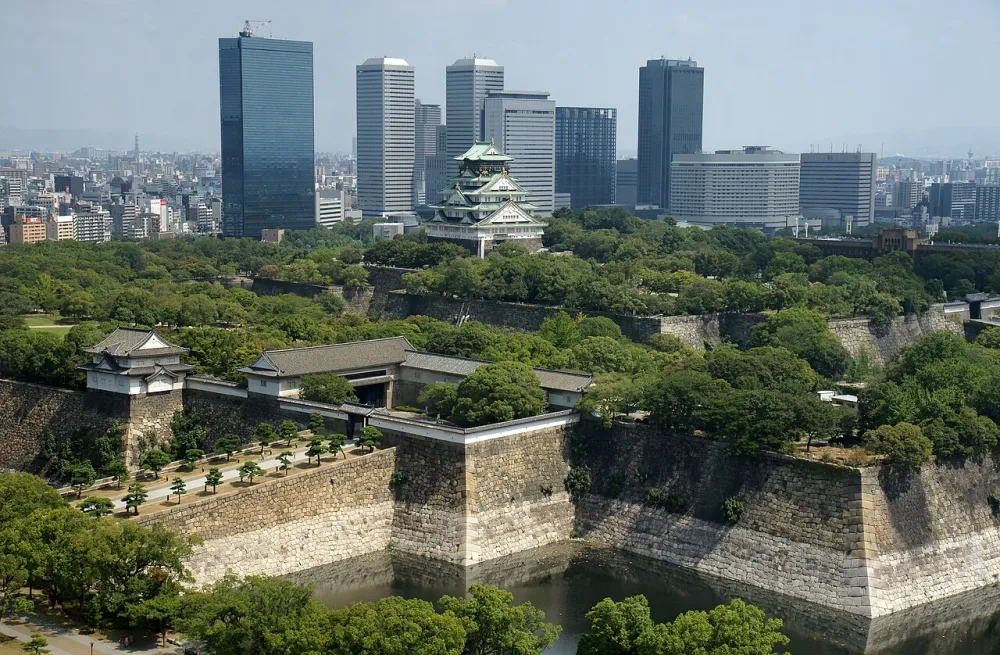
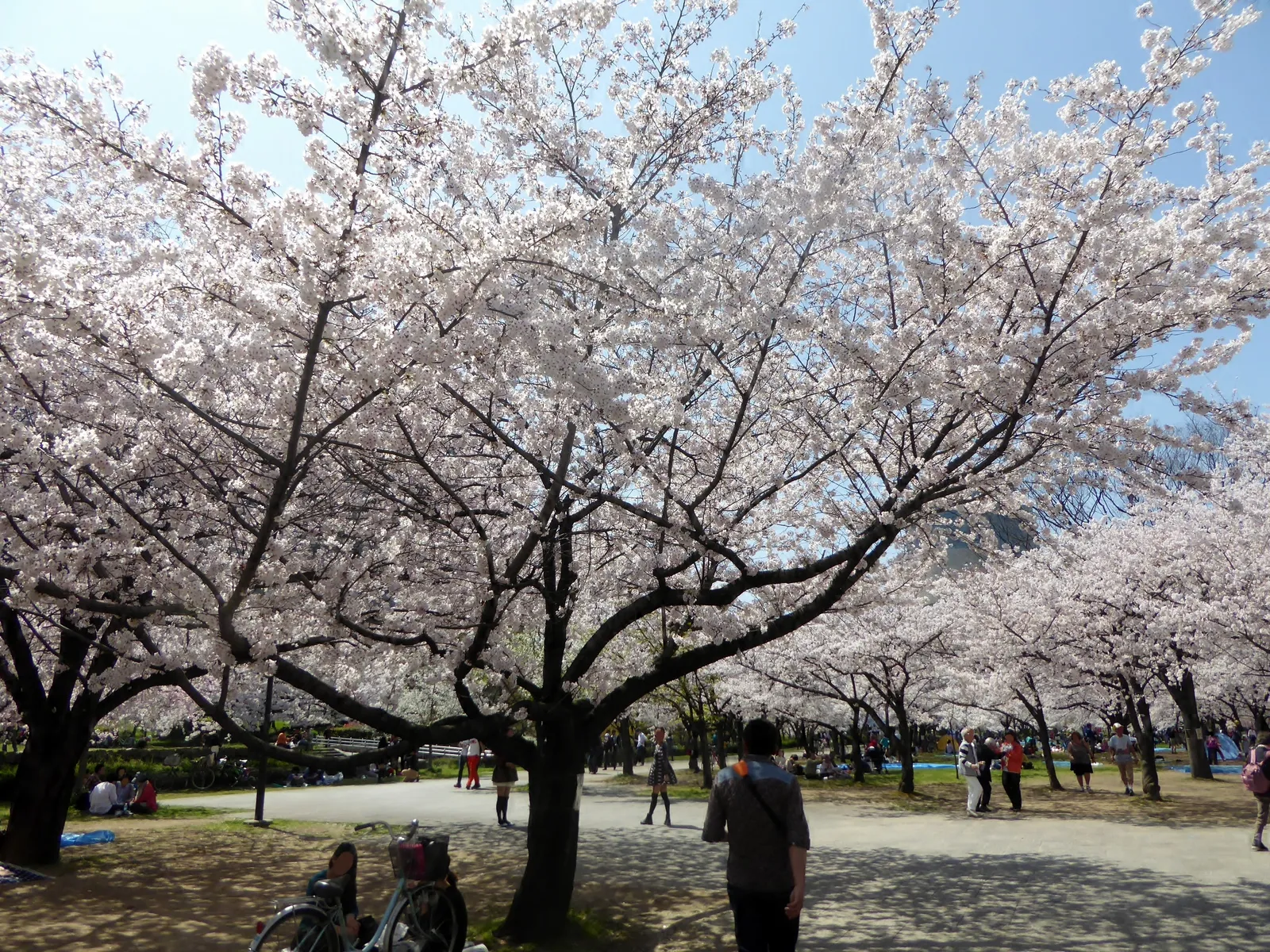
Around 3,000 cherry trees line the paths and moats of Osaka Castle Park, and you can step straight under the blossoms as soon as you exit JR Osakajokoen or Morinomiya stations. The grounds stay open 24 hours a day: dawn brings quiet paths with few visitors, while afternoon draws dense picnic crowds, mostly spreading groundsheets across the lawns south of the castle and outside Nishinomaru Garden. The park naturally divides into three distinct zones: the inner moat near the Main Keep, the southern lawn area, and the later-blooming Tamatsukuri-guchi section. An unhurried loop along the perimeter paths takes roughly 90 minutes—picnickers claim a patch of grass on the southern lawns, while photographers trace the inner moat for classic frames of cherry boughs against the castle walls.
Around Tamatsukuri-guchi, late-flowering yaezakura (double-blossom) varieties open after the Somei-Yoshino trees have faded, giving you a reliable fallback if you arrive past the main peak. Inside Nishinomaru Garden itself, around 300 trees frame Osaka's quintessential castle-and-sakura view, with wider sightlines and gentler slopes than the free outer paths. Evening illuminations in the garden run only on selected sakura-season dates, with exact times and entry periods set by each year's official park notice.
Exploring the park on foot is by far the easiest option. The grounds are sprawling—walking from the JR station entrance to Nishinomaru Garden takes 10 to 15 minutes—so touring the castle and blossom avenues forms a natural circuit. Basic hanami etiquette applies: stick to designated picnic zones and take all your rubbish home with you. Seasonal food stalls and pop-up kiosks shift slightly in number and placement from year to year. If you are passing through with bulky suitcases, leave them in a station coin locker or at your hotel first; there are no luggage storage facilities along the park paths, and wheeling bags down crowded blossom-lined walkways is tiring and gets in everyone's way.
Choosing the right station saves a fair bit of walking depending on your route. JR Osakajokoen Station borders the east side, Morinomiya Station connects to the southern Tamatsukuri-guchi entrance, and Tanimachi 4-chome Station sits on the west side. Late in the season, entering via Morinomiya toward Tamatsukuri-guchi puts you straight among the late-blooming yaezakura. Picnickers are best off starting near the southern lawns, whereas visitors heading straight for Nishinomaru Garden and the Main Keep have the shortest walk from the northern or western gates.
Park rules for picnicking are straightforward: groundsheets are welcome on the lawns and you may rest under the trees, provided you pack out all rubbish and avoid open flames, barbecues, or portable generators. Weekend crowds build early in the morning—the sooner you arrive, the better your chances of claiming prime shade, as free patches by midday tend to be pushed away from the main avenues. Families travelling with children can also factor in seasonal target-shooting stalls and street-food kiosks, whose locations are signposted around the park each spring.
Nishinomaru Garden's night illumination is the highlight of Osaka Castle after dark. Roughly 300 illuminated cherry trees set against the floodlit Main Keep create an atmospheric backdrop, though evening session hours and ticket rules depend on the annual schedule and may differ between weekdays and weekends. Note that if you visit the park and keep during the day and return to Nishinomaru Garden at dusk for night viewing, each entry requires its own ticket—so budget according to how many times you plan to pass through the gate.
Tickets for Nishinomaru Garden and the Osaka Castle Main Keep are sold separately: the garden's ¥300 admission buys broad lawns and close-up blossom angles, while the keep's ¥1,200 ticket covers its historical museum galleries and top-floor observation deck. If you plan to do both, stroll the garden first while the light is good for wide shots of the blossoms framing the keep, then head up to the observatory to take in the whole park and the Okawa River from above.
Kema Sakuranomiya Park: 4,800 Trees Along the Okawa River
Stretching north along the Okawa River from Kema Weir down to Temmabashi, Kema Sakuranomiya Park lines 33.7 hectares of open-access riverfront with roughly 4,800 cherry trees. Blossom-draped banks mirrored in the water as sightseeing boats glide past are one of Osaka's signature spring scenes. Footpaths run continuously down both sides of the river, easiest to join from Osakajokitazume Station, with Sakuranomiya and Temmabashi stations serving as the other two main gateways. Separated from Osaka Castle Park only by the North Outer Moat and the streets around Ogimachi, the two parks merge at peak bloom into one unbroken corridor linking castle walls to riverbanks—the densest stretch of sakura greenery in central Osaka and the main reason to combine both in a single afternoon.
Each bank has its own pace. The right (south) bank borders Osakajokitazume and runs directly past the Japan Mint, making it ideal for linking straight into the Sakura Avenue. The left bank stretches further and feels quieter, favoured by local joggers and walkers. River cruises require separate advance booking at peak bloom, yet walking along the riverside promenade for free is already deeply rewarding, with grassy stretches where you can spread a picnic mat. Walking the entire length of both banks takes well over an hour, so pace yourself by focusing on the richest section near the Japan Mint first before deciding how far to continue.
Walking from Osaka Castle Park straight to the riverfront is completely doable on foot: crossing from the North Outer Moat to the southern tip of Kema Sakuranomiya Park takes around 40 to 60 minutes. If you prefer a gentler pace, split the walk between afternoon and dusk with a coffee stop at a riverside cafe along the way. Travellers wanting the full riverside stretch can start up at Kema Weir and wander south all the way down to Temmabashi, ending right beside the underground station.
Picking which bank to walk comes down to whether you are visiting the Japan Mint. Starting from Osakajokitazume Station puts you on the south bank, leading straight toward the Mint's South Gate entrance. Crossing to the north bank gets you away from the heaviest foot traffic much faster. Footbridges span the Okawa at regular intervals, so if one side starts feeling too packed, simply cross over to the quieter bank. Sightseeing boats generally depart from the piers near Temmabashi, following timetables and booking rules set by each operator.
Cruising the river and walking the banks each offer something distinct. From the deck of a boat, you take in both flowering shores at once like a continuous pink tunnel; on foot, you can stand right beneath the branches and browse seasonal stalls. Boat seats are limited and book out quickly in peak week, whereas the riverside paths are free and run to no timetable at all. To enjoy both perspectives, stroll the banks in the afternoon and board a boat at dusk to catch the reflections on the water.
Picnicking and walking rules mirror standard city parks: spread mats on the grass, keep paved paths clear, and expect peak-weekend congestion from midday onwards, with early morning and dusk offering the calmest conditions. Visitors with children or pushchairs should watch for cyclists along shared riverfront sections—marked lanes separate pedestrians and bikes, so keeping pushchairs toward the outer edge of the path ensures a smoother walk.
Japan Mint Sakura Avenue: Free Online Booking from 2026
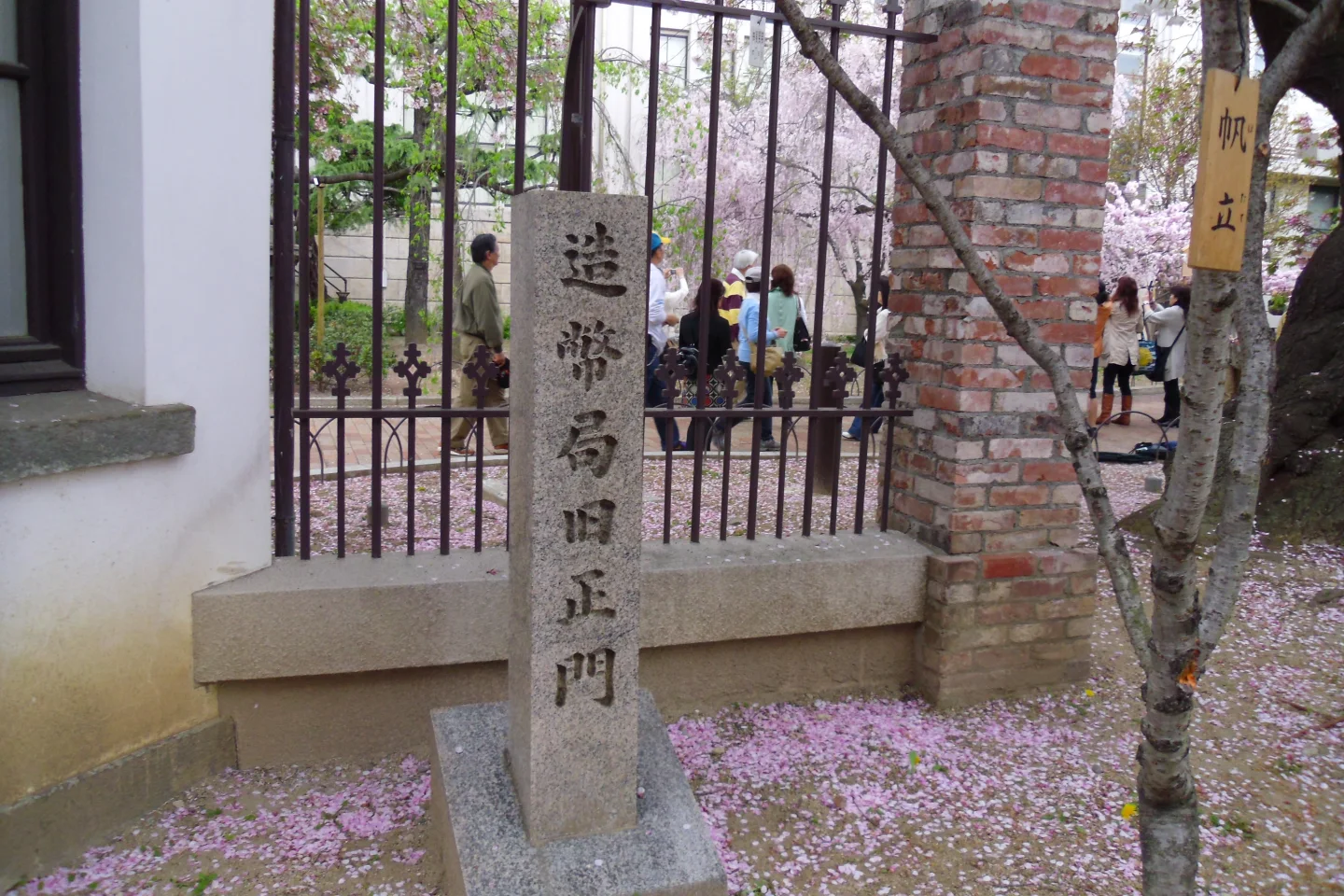
The Japan Mint's Sakura-no-Torinuke ("Cherry Blossom Walk") is Osaka's quintessential limited-time spring event. Running roughly 560 metres inside the Mint grounds, this one-way avenue is lined with 331 trees across 140 varieties, including rare cultivars seldom seen in public city parks. In 2026, it opens for seven days from 9 to 15 April—10:00 to 19:15 on weekdays and 09:00 to 19:15 on weekends—with strict one-way entry through the South Gate and exit via the North Gate; turning back is prohibited. Admission remains free, yet advance booking is now mandatory: starting in 2026, entry moves entirely to timed online reservations, and popular weekend evening slots regularly fill within minutes of release. Save a screenshot of your confirmation before arriving and queue in your designated slot; if tickets sell out, simply walk the adjacent Kema Sakuranomiya riverside paths instead, which are free and require no booking.
The rules introduced in 2026 are clear-cut: free online reservations allocated on a first-come, first-served basis, divided into 30-minute entry slots capped at 2,350 visitors per window. This replaces the old system of queuing on the street without a ticket, so keep a close eye on the Japan Mint website for release dates. Historically, the Mint announces exact opening dates in January, opens reservations in mid-March, and runs the seven-day event in early to mid-April—a reliable calendar if you are planning ahead for 2027.
Its South-Gate-in, North-Gate-out layout dovetails seamlessly with the riverside route. Stepping out of the North Gate places you directly beside Kema Sakuranomiya Park and the path back toward Temmabashi, making a late-afternoon or early-evening Mint slot the cleanest finale to an Osaka sakura walk. Evening illuminations light up the avenue after dusk, subject to each year's official schedule. Because the 30-minute windows are strictly enforced to manage crowd flow, late-arrival rules follow that year's guidance—never book a morning slot if you plan to turn up at noon. On weekends, queues form up to an hour before opening, so arriving 30 minutes ahead of your time slot is ideal.
Knowing a little about the collection makes those 560 metres even richer. Unlike parks dominated by pale Somei-Yoshino trees, the Mint has opened its grounds each spring to showcase a curated mix of roughly 140 cultivars and 331 trees, heavily weighted toward distinctive and late-blooming varieties. Walking slowly from start to finish and exiting straight back onto the Okawa riverbank links the rare cultivars inside with the grand riverside avenue outside.
A few practical tips make online booking much smoother. Because each 30-minute slot is capped at 2,350 people and issued first-come, first-served, weekend evening windows are always the first to disappear—if your schedule allows a weekday visit, your odds jump dramatically. Count everyone in your party accurately before submitting the form, as extra guests cannot be added at the gate.
Double-checking the entry and exit gates saves a pointless detour. The South Gate entrance sits toward Temmabashi, while the North Gate exit opens onto the Kema Sakuranomiya Park side, with strict one-way foot traffic between them. Arriving via the Osaka Metro Tanimachi Line to Tanimachi 4-chome or the Keihan Railway to Temmabashi puts you cleanly in line for the South Gate; once you emerge from the North Gate, continue along the river toward JR Osakajokitazume Station or stay on the riverside promenade without looping back.
Two Bonus Spots for Peak Bloom
If you want to venture beyond the city centre, Expo '70 Commemorative Park in Suita is a favourite day-two add-on around peak bloom. From 1 April 2026, combined entry to the Natural and Cultural Gardens and Japanese Garden rises to ¥450 for adults; hours are 09:30 to 17:00, closed Wednesdays except during the sakura season from 1 April to 2 May when the park opens daily. While officials do not publish an exact tree count, the wide lawns and rolling hills offer sweeping blossom fields rather than castle backdrops, pairing nicely with a separately booked tour inside the Tower of the Sun. Getting there from central Osaka takes about an hour each way via Osaka Metro and the Osaka Monorail, so give Expo '70 Park a dedicated day rather than squeezing it alongside Osaka Castle. Its blooms often peak a few days later than central Osaka, making it a great backup if you just missed the downtown peak.
For an easy crowd-dodging alternative inside city limits, head to Tsurumi Ryokuchi Park right outside Tsurumi-ryokuchi underground station. Open 24 hours across 122.6 hectares, the park scatters cherry trees along wide walkways and expansive lawns with far fewer visitors than Osaka Castle Park—ideal for a relaxed afternoon picnic. Both bonus parks connect to the Osaka Metro network, so check the next section to see if a day pass pays off.
Pairing cherry blossoms with the Tower of the Sun fills out a rewarding day at Expo '70 Commemorative Park. The ¥450 garden ticket from April 2026 covers both the Natural and Cultural Gardens and the Japanese Garden, while entering the Tower of the Sun requires a separate advance reservation—giving you striking indoor art installations alongside vast blossom meadows outside. Given the longer journey out on the metro and monorail, dedicating half a day to a full day to this single park feels unhurried.
Tsurumi Ryokuchi's appeal lies in pure breathing room. With the underground station dropping you at the gate, its enormous grounds spread trees across gentle hills and open turf—officials likewise list no total count, and blooms are less concentrated than at Osaka Castle, yet the extra space compensates handsomely. It is a natural fit for families flying kites on the grass, and early-morning photographers can capture clean blossom frames free of crowds even on peak days.
Transport and Tickets: Linking Three Spots by Metro
All three primary sakura spots sit neatly inside the overlap of JR lines and the Osaka Metro. For Osaka Castle Park and Nishinomaru Garden, JR Osakajokoen Station, Osaka Metro Morinomiya Station, or Tamatsukuri Station all offer straightforward access. For Kema Sakuranomiya Park and the Japan Mint, use JR Osakajokitazume, Keihan Temmabashi, or Osaka Metro Tanimachi 4-chome, from which an easy walk brings you straight onto the Okawa riverfront paths. Combining walking with short underground hops is the fastest way around this district. Choose JR or Metro based on where you start: JR Osakajokoen and Morinomiya (shared by Metro and JR) sit right on the park's edge—making JR from Kyoto the most direct line—whereas travellers coming from Namba can ride Osaka Metro to Tanimachi 4-chome right beside the Nishinomaru Garden entrance.
If you plan multiple underground rides in a single day, the Enjoy Eco Card offers solid value: ¥820 for adults on weekdays, ¥620 on weekends and public holidays, and ¥310 for children, covering unlimited rides across all Osaka Metro lines (excluding Yumeshima Station) and Osaka City Buses, plus attraction discounts. If you only need one or two trips into town, paying per ride with an IC card or single ticket is cheaper. Station platforms clog fastest at Morinomiya, Temmabashi, and Sakuranomiya during peak bloom, so travelling before 09:00 or after 20:00 makes transfers far more comfortable.
If you are heading straight into central Osaka from Kansai International Airport or Kyoto, our dedicated Osaka and Kansai airport transport guides cover the fastest rail links into town. Travellers landing on an early morning flight during peak bloom can drop their bags at a locker or hotel, stroll straight into Osaka Castle Park, and finish with a late-afternoon slot at the Japan Mint—just allow ample buffer time between landing and your timed Mint reservation.
Deciding whether to buy the Enjoy Eco Card comes down to trip count. Three or more Osaka Metro journeys in one day—for instance, linking Morinomiya, Tanimachi 4-chome, and a return trip to Tsurumi Ryokuchi—usually exceeds the ¥820 weekday or ¥620 weekend pass price (¥310 for children). Official pass pages list the latest discounts at Osaka Castle Main Keep and partner venues, so check before buying. For just one or two short hops, simply tapping an IC card is simpler and avoids forcing extra rides.
Picking less crowded stations also smooths out peak weekends. Mornings at Morinomiya and JR Osakajokoen bottleneck quickly; if you are carrying daypacks or bags, entering via Tanimachi 4-chome is noticeably calmer. Tsurumi-ryokuchi Station stays quieter still—requiring a slightly longer walk into the city parks, though trains and platforms have far more breathing room. Always check current Osaka Metro route maps for exact pass coverage following the Yumeshima Station extension.
While the Japan Mint Sakura Avenue is open, road closures and traffic controls apply around both the South and North gates, with designated pick-up and drop-off points for taxis and private cars strictly enforced by stewards. Taking the Keihan line to Temmabashi or JR to Osakajokitazume and walking in per posted signs is far more reliable, as nearby bus stops may also be temporarily rerouted during the seven-day event.
A One-Day Route and Wet-Weather Backup
To cover all three headline sights in a single peak-bloom day without doubling back, follow this straightforward sequence: enter Osaka Castle Park from Morinomiya Station before noon, walk the free outer blossom avenues, and buy a ticket into Nishinomaru Garden to see the reference tree and castle framing. Around 15:00, wander north across the North Outer Moat into Kema Sakuranomiya Park and follow the riverbank toward Temmabashi. Finish with an evening reservation at the Japan Mint Sakura Avenue, exiting the North Gate for a final riverside stroll back to Temmabashi Station. In one continuous loop, you experience a free public park, a ticketed heritage garden, and a timed-entry cultivar collection.
If spring rain arrives, do not force an outdoor itinerary. Heavy rain dulls blossom colours and washes out views, so pivot straight to indoor alternatives: the museum levels inside Osaka Castle's Main Keep, city museums, and covered food arcades easily fill a wet afternoon while you save outdoor parks for clearer skies. Note that Nishinomaru Garden's evening illuminations are frequently cancelled in rain—always verify evening status on the park's daily notice before heading out.
Families with older relatives or young children need not worry about steep terrain. Osaka Castle Park avoids endless flights of stone steps, keeping to gentle, level paths you can shorten whenever energy dips. Kema Sakuranomiya Park's riverfront walkways are completely flat and easy for pushchairs, while the Japan Mint's 560-metre one-way route is level tarmac throughout—just join your booked slot and follow the steady flow.
For families travelling purely with young children, dialling back the pace pays dividends. Most young ones tire after circling Osaka Castle Park and Nishinomaru Garden; although the Mint's 560-metre walk is easy underfoot, morning slots feel far less cramped with a pushchair. Better yet, give children extra time on the wide riverside lawns at Kema Sakuranomiya Park, where there is plenty of room to run, picnic, and fly kites—cutting three stops down to two often delivers a much happier day.
Photographers should chase first light. Between 05:30 and 06:30 during full bloom, the grounds are remarkably quiet, giving you clear shots of the Main Keep framed by sakura from the southern lawns and West Outer Moat. Inside the Japan Mint and during night illuminations, check each year's official rules on tripods and camera gear. At popular vantage points, queues form organically—take your frames and step aside promptly to keep the atmosphere friendly.
When walking with older travellers, prioritise frequent benches and zero backtracking. Each park breaks naturally into short segments: Osaka Castle Park offers regular toilets and seating along its paths, Nishinomaru Garden slopes gently, and the Mint's one-way path never forces a U-turn. Along Kema Sakuranomiya Park, you can walk just the blossom-heavy southern stretch from Osakajokitazume and turn back without tackling the full riverside length.
After the Rain and Late-Season Petal Fall
A spring downpour during peak bloom is no reason to write off your trip. Rain knocks petals down quickly, often creating vivid hana-ikada ("flower rafts") floating across the water the very same afternoon and following day—most strikingly on Osaka Castle's West Outer Moat and along the edges of the Okawa River. Grab an umbrella and walk the damp paths: most casual crowds vanish, and swapping a lawn picnic for a quiet riverside stroll and cafe stop lets you savour the serene spectacle of fallen petals.
Once peak Somei-Yoshino petals fall in late April, yaezakura take centre stage. Around Osaka Castle's Tamatsukuri-guchi gate, these multi-layered blossoms open later with deeper pinks and fuller clusters, giving late arrivals a second chance at vibrant blooms. The Japan Mint's 140 cultivars also include many late-flowering varieties that look their lushest near the 15 April closing day—broadening your definition beyond a single variety keeps all of April rewarding.
When balancing Osaka against Kyoto and Kobe, avoid splitting a single day across two cities. Central Osaka excels at spacious public parks and open riverfront promenades, while Kyoto and Kobe bring distinct hillside paths and temple gardens. Give Osaka a full, unhurried day of its own before moving on to Kyoto the next morning—using one city as your base and radiating outward by train keeps daily transit time to a minimum.
Fitting Cherry Blossoms into Your Osaka Itinerary
For a two-day, one-night weekend trip at peak bloom, this sequence avoids repeating any ground. Arrive from Kansai Airport or Kyoto on Day 1 morning, drop bags near Namba or Morinomiya, explore Osaka Castle Park and Nishinomaru Garden around midday, catch an evening booking at the Japan Mint Sakura Avenue, and have dinner around Temmabashi. On Day 2, return early to Osaka Castle Park for peaceful morning light, check out before noon, enjoy a final riverside walk through Kema Sakuranomiya Park in the afternoon, and continue to Kyoto or Kobe by dusk—capturing every signature scene and night viewing without overlap.
You do not need to stay in Osaka itself to enjoy the route on a day trip. Guests staying in Kyoto can ride the Keihan line or JR south in the morning, arriving directly at JR Osakajokoen, Keihan Temmabashi, or Osakajokitazume right beside the castle-and-river loop; visitors based in Kobe can transfer smoothly via the JR Osaka Loop Line. While day-tripping offers slightly less flexibility around dawn or late-night strolls, commuting from a neighbouring city—or basing in Osaka when Kyoto hotels sell out or spike in price—is a practical workaround.
Even if your holiday misses peak week entirely, Osaka delivers distinct phases right across April. Early-blooming varieties open the month, Somei-Yoshino reaches peak mid-season, and late yaezakura blend into fresh spring foliage by month's end. Rather than regretting a missed peak date, follow live JMA updates and weekly park notices to let the season's natural rhythm guide your stops.
A few useful answers
When do cherry blossoms bloom in Osaka?
The Japan Meteorological Agency does not issue forecasts, publishing only verified observations: in 2026, Osaka's reference tree recorded first bloom on 26 March and full bloom on 3 April (against historical averages of 27 March and 4 April). Private weather firms provide advance forecasts, while JMA field data and official park notices confirm real-time progress.
Do you need a ticket for the Japan Mint Sakura Avenue?
Entry is free, though from 2026 it requires an advance online reservation allocated first-come, first-served in 30-minute slots capped at 2,350 visitors each. In 2026, it opens from 9 to 15 April (10:00–19:15 weekdays, 09:00–19:15 weekends) along a 560-metre one-way route. For 2027, dates are typically announced in January with bookings opening in mid-March.
Is there an admission fee for Nishinomaru Garden?
Yes—adult admission rises to ¥300 from 1 April 2026 (previously ¥200). Daytime hours run from 09:00 to 17:00 between March and October, with separate evening illumination sessions during sakura season. Osaka Castle Park itself and the West Outer Moat remain free, while entry to the Main Keep costs ¥1,200 for adults.
Can you visit all three spots in one day?
Yes. Start at Osaka Castle Park and Nishinomaru Garden before noon, follow the Okawa River north into Kema Sakuranomiya Park in the afternoon (or hop one stop by underground if tired), and finish with an evening booking at the Japan Mint Sakura Avenue. All three sit along one connected corridor from Osaka Castle to Temmabashi.
Official information and references
Sources used in this guide.
- Japan Meteorological Agency | Cherry Blossom Blooming Information (2026 Osaka: First Bloom 26 Mar, Full Bloom 3 Apr)
- Japan Meteorological Agency | Cherry Blossom Observation Data (Definitions of First & Full Bloom)
- Japan Meteorological Agency | 2009 Press Release (Discontinuation of Sakura Forecasts from 2010)
- Osaka Castle Park | Approx. 3,000 Cherry Trees & Nishinomaru Garden (Reference Tree Location)
- City of Osaka | Kema Sakuranomiya Park (Approx. 4,800 Trees, Kema Weir to Temmabashi)
- Japan Mint | Sakura-no-Torinuke 2026 (9–15 April, Online Reservation System)
- Osaka Castle | Main Keep Admission Fees and Opening Hours
- Osaka Metro | Enjoy Eco Card (¥820 Weekdays / ¥620 Weekends)