2027 dates for the Osaka Mint Bureau Cherry Blossom Corridor are not yet announced. Use the 2026 official record to plan free timed booking, South Gate entry, North Gate exits, late-blooming double blossoms, and a half-day along the Okawa River.
- Region & Focus
- Osaka
- Reading Scope
- 19 min read · 11 chapters · 5 Q&As
- Official Verification
- 23 official sources checkedUpdated 22 November 2026
- Key Topics
- SeasonsBookingItineraries
Chapter Route Map (tap any stop)
- Planning for 2027: Lock In Travel Dates First, Then Track Both Blossom Waves
- How 2026 Booking Worked: Two Release Phases and Your Entry Pass
- Morning, Afternoon or Evening: Choosing the Best Entry Slot
- Three Stations Serve the South Gate: Save Your Exit Before Setting Off
- Walking the 560-Metre Corridor: Keep Heading North Past the Former Main Gate
- Gyoiko, Kanzan and Fugenzo: Spotting Differences Between Cultivars
- Rain, Children and Accessibility: Practical Logistics
- Which Way From the North Gate? Pick Your Bank Before Leaving
- Fitting the Corridor Into a Half-Day: Keep It to One Timed Booking
- No Booking? Walk the Outer Okawa Riverbank or Duck Into a Museum
- The Mint Museum and Factory Tour Are a Separate Visit
- Quick Q&A
Normally part of a restricted facility, the Osaka Mint Bureau Cherry Blossom Corridor opens each spring for visitors to enter via the South Gate near Temmabashi, walk roughly 560 metres along the Okawa River, and exit through the North Gate beside Sakuranomiya Bridge. As of 22 November 2026, the 2027 dates and admission details have not yet been announced. In 2026, the event ran from 9 to 15 April with free, first-come, first-served timed-entry reservations. If you are visiting Osaka in spring, pencilling in a half-day around Temmabashi and the Okawa River makes it easy to slot in your booking once the Mint announces its dates.
Planning for 2027: Lock In Travel Dates First, Then Track Both Blossom Waves
The Mint Bureau calls the event Sakura no Torinuke (Cherry Blossom Walk-Through). In official Japanese notices, 2027 corresponds to Reiwa 9, a useful marker when checking for fresh announcements. The Japan Mint Osaka event portal currently links to the archived Reiwa 8 page, whose opening hours, bloom updates, and traffic restrictions all apply to 2026. When planning your trip, treat the date announcement, the opening of reservations, and the daily bloom updates during the event as three separate milestones. Sort out your accommodation and intercity travel according to your date flexibility, then finalise your Osaka half-day as each milestone arrives.
According to the Mint's historical records, the corridor opened on 13-19 April in 2022, 7-13 April in 2023, 5-11 April in both 2024 and 2025, and 9-15 April in 2026. Each of the past five editions ran for seven days, and even after two identical years the dates can shift again. Travellers tied to fixed holiday dates should anchor their itinerary around sights they already plan to visit, such as Osaka Castle Park or Kema Sakuranomiya Park. If the Mint's late-blooming double-flowered cherries (yaezakura) are your main priority, book refundable or flexible accommodation so you can keep an Osaka half-day open until the dates are confirmed.
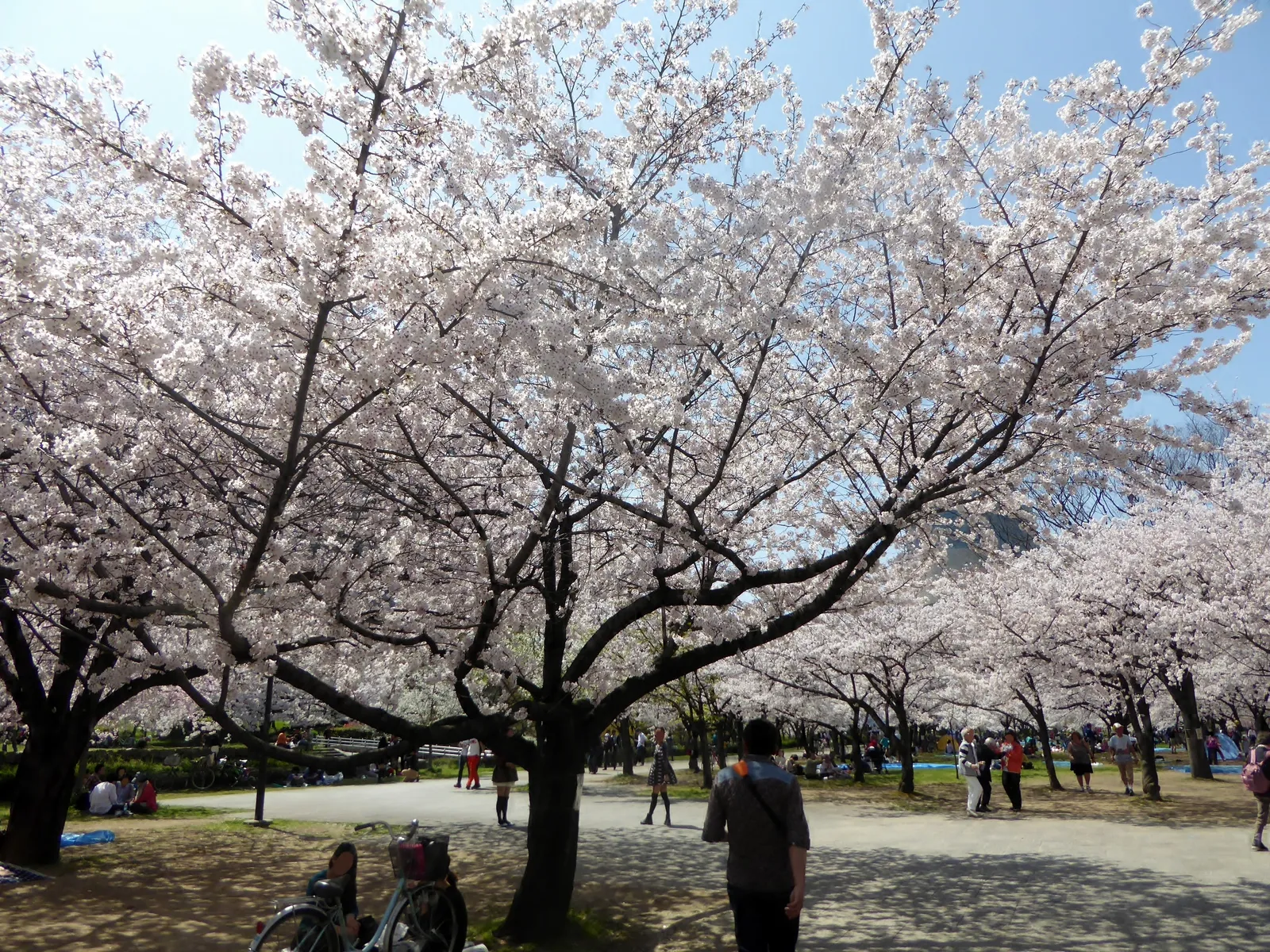
In 2026, the Osaka Regional Meteorological Observatory recorded full bloom on its Yoshino cherry (Somei-Yoshino) sample tree in Osaka Castle Park's Nishinomaru Garden on 3 April. The Mint Bureau did not open its gates until six days later. Use meteorological observatory reports to track the city's Yoshino cherry season, and check the Mint's own event page for specific cultivars inside the grounds. On the final day of the 2026 opening, the Mint reported overall blooms at roughly 70 per cent open, with around 60 per cent of trees in full bloom, nearly 20 per cent beginning to shed petals, and the 2026 Blossom of the Year, Gyoiko, at peak bloom.
If your travel dates fall in late March or early April, focus on open public parks and save late-blooming cultivars for another time. If you have only one day in Osaka in early to mid-April, lock in your intercity trains first and pick from whatever time slots remain once bookings open. With two or more Osaka half-days to spare, designate one as your primary booking day and keep the other flexible for riverside blossoms and weather. Families, photographers, and casual strollers suit different times of day; using a single booking for the slot that best fits your group is far easier than switching hotels just to chase peak bloom on a specific date.
2027 dates for the Osaka Mint Bureau Cherry Blossom Corridor are not yet announced. Use the 2026 official record to plan free timed booking, South Gate entry, North Gate exits, late-blooming double blossoms, and a half-day along the Okawa River.
How 2026 Booking Worked: Two Release Phases and Your Entry Pass
The 2026 official guidelines were straightforward: applications opened on 18 March at 09:00 Japan Standard Time (JST). That first release covered roughly three-quarters of each slot's capacity. Bookings paused for system maintenance on 1 April from 07:00 to 09:00 JST, then reopened at 09:00 until slots filled. Any time slots still showing availability on the day could be booked right up until the event closed. Looking at that schedule, if your preferred time goes quickly on day one, note down the second release date from the guidelines, and wait until you hold a confirmed slot before adjusting intercity trains.
In 2026, admission ran in 30-minute entry slots. Standard capacity was capped at 2,350 people per half-hour, dropping to 1,200 people per half-hour during the first hour of opening on both weekdays and weekends. Early slots have smaller caps and suit anyone hoping to start walking early and finish before lunch. If you only manage an afternoon slot, have lunch around Temmabashi first and head to the South Gate on time rather than rushing away from Kyoto or Kobe to make the opening slot. Capacity limits reflect online booking quotas, while actual queue length still depends on arrival patterns and bag checks at the gate.
The application form asks in order for your entry slot, party size, and the lead applicant's email address and telephone number, followed by a short survey and data-consent boxes. In 2026, individuals could book for up to five people including the lead applicant, with infants and toddlers not counted towards the total. Each applicant could hold one slot per day. Everyone on a single booking must check in together, though fewer people may arrive than originally registered. Groups of six or more can have separate lead applicants book the same slot, or, if they only get adjacent slots, walk separately and meet outside the North Gate.
Once submitted, the organiser emails a confirmation containing a QR code. Have the lead applicant's email address and phone number ready before filling out the form, then double-check the date, entry time, and headcount on the confirmation before forwarding it to your group. Printing a paper copy of the QR code alongside your phone screen is a sensible backup. If companions are using data-only SIMs in Japan, put the lead applicant who can easily open the email at the front of the group so the queue is not held up at the gate. Phone numbers and booking URLs on older flyers belong to past editions; for the next season, always navigate to the active application page from the Mint's official event portal.
Morning, Afternoon or Evening: Choosing the Best Entry Slot
In 2026, gates opened at 10:00 on weekdays and 09:00 on weekends. Last entry was 19:15 each day, with everyone required to leave by 19:45. First-time visitors who want to read the cultivar plaques clearly should choose a daylight slot, meeting at the station exit before walking together to the gate. Evening slots work well if you have daytime plans elsewhere and are staying overnight in Osaka. Bear in mind that the very last slot leaves limited walking time before clearing begins, so if anyone in your party wants to inspect individual tree labels, pick an earlier slot.
Under the 2026 rules, visitors were expected to enter during the time shown on their confirmation email. Outside the strict opening and closing cut-offs, organisers allowed minor leeway for transport delays. If you are travelling in from another city, factor in train transfers, exiting the station, the 15-minute walk, and check-in at the gate. If you are delayed, staff at the entrance will direct you on arrival. If your group knows it will be significantly late, keep Kema Sakuranomiya Park in mind as a backup so you can head straight to the riverbank from the station instead of walking to the gate only to re-route.
Daylight is best for judging subtle petal shades and examining flower centres. Even under overcast skies, you can easily compare colours and stamens along the path. Photographers planning to shoot Osaka Castle or its keep on the same day should check the castle's closing time before deciding whether to take an evening Mint slot or split the two across separate half-days. Families with older relatives or young children are usually happiest picking a slot that fits around normal mealtimes and rest breaks, making it easy to sit down for food right after exiting.
If a free half-day opens up shortly before departure, check which slots remain on the booking page, then weigh the forecast and travel time to your next stop. When several slots are equally convenient and daily bloom reports are live, pick a day when the cultivars you want to see are well into bloom. On any given day, choosing thoughtfully between morning and afternoon makes transfers, pacing, and light far easier to manage. Once the logistics are settled, you can slow down and enjoy the trees.
Three Stations Serve the South Gate: Save Your Exit Before Setting Off
Entry begins at the Mint Bureau's South Gate near Temmabashi, at 1-1-79 Tenma, Kita-ku, Osaka. When searching on a map app, look specifically for the Mint Bureau South Gate or Sakura no Torinuke entrance. Pinning just "Osaka Mint Bureau" or "Mint Museum" can send your phone to the weekday Main Gate on the north side along National Route 1. Drop pins for both the South Gate and the North Gate in your group chat so anyone arriving on a different train line knows exactly which exit they are using before check-in.
On the Osaka Metro Tanimachi Line, get off at Temmabashi Station and take Exit 2 from the North Ticket Gate. This line connects directly from Higashi-Umeda, Tanimachi 4-chome, and Tennoji. The Keihan Main Line also stops at Temmabashi Station, where the route uses Exit 14 from the East Ticket Gate. Although both stations share the same name, their exit numbering systems are completely separate. Telling companions simply to "meet outside Temmabashi Station" leads to confusion on crowded street corners; agree on one specific exit or pick a visible landmark at the north end of Temmabashi Bridge.
The JR Tozai Line is handy if you are coming from Kitashinchi or Kyobashi. Leave Osakajokitazume Station via Exit 3 and walk to the South Gate before viewing begins. Official guidance puts the walk from all three station exits at roughly 15 minutes, measured from street level. Factor in bottlenecks at bridge approaches and crossings along the Okawa River; JR passengers may want to sort out tickets, phones, and jackets inside the station before following event signs outside. On JR route maps, look carefully for Osakajokitazume - Osakajokoen Station on the Osaka Loop Line sits much further from the South Gate.
During the 2026 event, surrounding streets were closed to vehicles. The Mint's traffic map marked several no-vehicle zones from the north end of Temmabashi Bridge towards Higashi-Tenma, scheduled from 09:30 on weekdays and 08:30 at weekends until 19:30. There is no event parking or coach drop-off inside the Mint grounds. Groups arriving by different lines should meet at a single agreed Temmabashi exit, and anyone travelling between cities with large suitcases should leave luggage at a hotel or major rail hub, allowing extra time after exiting to collect bags.
| Rail Line | Station | Official Exit Route |
|---|---|---|
| Osaka Metro Tanimachi Line | Temmabashi | North Ticket Gate, Exit 2 |
| Keihan Main Line | Temmabashi | East Ticket Gate, Exit 14 |
| JR Tozai Line | Osakajokitazume | Exit 3 |
Walking the 560-Metre Corridor: Keep Heading North Past the Former Main Gate
After entering through the South Gate beside the Okawa River, visitors follow a path inside the Mint Bureau perimeter towards Sakuranomiya Bridge. The 560-metre figure covers only the corridor itself; allow extra time for QR code scanning, bag checks, lingering beneath individual trees, and walking onward from the North Gate. Treating the walk as the centrepiece of a half-day keeps the pace relaxed. If you have a lunch booking or an intercity train afterwards, start timing your buffer from the moment you clear the North Gate, leaving extra minutes for bridges, crossings, and station entry.
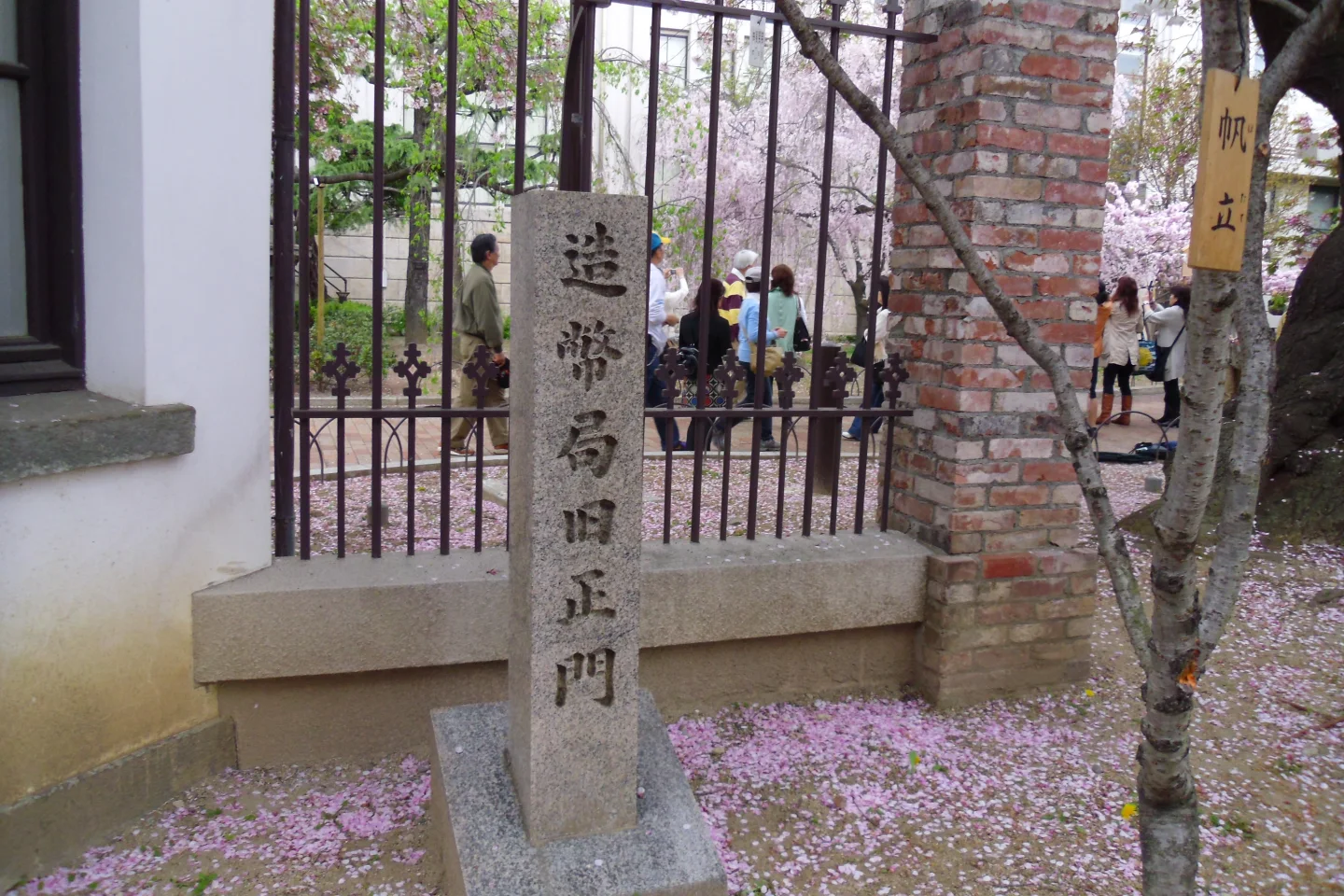
According to Osaka City's cultural heritage notes, the route passes the Former Main Gate dating from the Mint's founding in 1871, recognisable by its octagonal red-brick guardhouse. The hero image shows the stone marker inscribed for the Former Main Gate. Two other Meiji-era structures stand nearby: the original foundry portico and Senpukan, once the Mint's official reception hall. If Meiji architecture interests you, mark those names on your map beforehand so you know where to look as you pass the Former Main Gate.
Mint records trace this concentration of cherry trees to the early Meiji period, when garden cherry cultivars (satozakura) were transplanted here from the nearby Todo clan storehouse grounds. In 1883, Mint Director Kinsuke Endo proposed opening the riverside avenue to the public during peak bloom. Torinuke literally means walking straight through from one end of the compound to the other. Today's one-way route preserves that tradition: for several hundred metres inside the gates you are walking through an active coin-minting complex, whereas everyday riverside walks keep to the parks and embankments outside the walls.
In heavy crowds, check the direction a tree's branches extend from its plaque and look up from a safe spot to stand. When one tree's boughs overlap its neighbour, the closest cluster of blossoms does not always belong to the nearest nameplate. To pair blossoms with their cultivar name in your photos, take one wider shot showing the tree and plaque together, then step in for a close-up of the flowers; if the crowd carries you along, keep moving and sort your shots once you reach the riverbank or a cafe.
Gyoiko, Kanzan and Fugenzo: Spotting Differences Between Cultivars
In 2026, the Mint Bureau listed 140 cultivars across 331 cherry trees. Each year, one cultivar is highlighted as the Blossom of the Year. The 2026 selection, Gyoiko, opens with pale yellowish-green petals that gradually develop red vertical streaks and typically number around 15 per flower. Compare it directly with Ukon, another greenish-yellow cultivar: the official list notes that Ukon usually has 10 to 15 petals, tinted like turmeric root. Because subtle greens and yellows look misleading in phone photos, photograph the plaque first and inspect the flower's centre and petal veining in person rather than fiddling with colour filters.
Added to the list for the first time in 2026, Fukuzakura traces its lineage to an original tree in Kanazawa's Kenroku-en that died in 1961 and was preserved through grafted successors. The Mint describes its purplish-red blossoms as chrysanthemum-like (kikuzaki) in petal arrangement, with visible chloroplasts in the petals. If you are new to chrysanthemum-flowered cherries, look face-on at the dense layers of narrow petals, then view the blossom from an angle to judge its depth rather than trying to count petals under the tree. Even if only one or two Fukuzakura blossoms are open, they make a striking foreground against rows of full-bloom Kanzan.
Kanzan is one of the most numerous cultivars in the grounds, with 58 trees listed in 2026, bearing deep pink blossoms of around 30 petals. Shogetsu opens pale pink before fading to white, making its leafy central pistils easy to observe. Fugenzo stands out for two leaf-like pistils curving out from the centre of the flower, likened in the Mint's guide to the trunk of the white elephant ridden by the Bodhisattva Samantabhadra (Fugen). Look for those distinctive shapes with the naked eye first, then match them against the kanji on the plaques.
Otemari, Kotemari, and Benitemari are all named after dense, ball-like clusters at the ends of branches. The Mint describes Otemari as pale pink blooms gathered into large spheres, Kotemari forming smaller clusters, and Benitemari carrying a deeper red tint. Take half a step back to take in the whole cluster and the names make immediate sense. Because the Mint orders its cultivar list by Japanese kana, on the mobile table you look under o for Otemari, ko for Kotemari, he for Benitemari, and ki for Gyoiko. Screenshot a handful of target names before you set off so you can match shapes on the day while still leaving time for unexpected discoveries.
Rain, Children and Accessibility: Practical Logistics
Under the 2026 guidelines, eating and drinking inside the corridor were discouraged, smoking was prohibited throughout, and visitors were asked to put away parasols, selfie sticks, and tripods. Pets are not allowed, with assistance dogs for visitors with disabilities exempt. Bag checks form part of check-in at the gate, so consolidating your belongings into one daypack speeds up entry. If you are visiting with young children, fit in snacks, drinks, and toilet breaks before meeting up, and plan another rest stop outside the North Gate. Anyone hoping to picnic beneath the blossoms should save lunch for an open riverside park outside the corridor.
The Mint's 2026 guidance also confirmed that electric wheelchairs and handlebar-controlled three- and four-wheeled mobility scooters could enter directly, provided they kept to a low speed inside the corridor. Ask staff or security guards at the gate if you need an attendant to guide the way ahead. When planning this route, check station maps for step-free lift exits first and build in unhurried walking time. Anyone familiar with street-level crossings around the exit should note which side of the bridge you need, avoiding unnecessary detours or an extra bridge crossing after leaving the North Gate.
If the corridor stays open in light rain, pack a foldaway raincoat, a waterproof pouch for your phone, and shoes with good grip. Wipe your screen dry before scanning your QR code at the gate, or keep a printed pass handy. Watch for puddles and nearby walkers when stopping for photos, framing shots at shoulder height rather than blocking the path. In severe weather, the Mint may suspend entry at short notice; in 2026, organisers posted updates on the website and emailed ticket holders. Check your inbox before boarding an intercity train so your group can switch cleanly to an indoor plan if needed.
On the Osaka Metro at Temmabashi Station, the station map shows a step-free route taking a lift from the platform to the North Ticket Gate, then transferring via the Keihan-side lift up to street level. If you travel on Keihan to Temmabashi, the street-level lift sits on the Hachikenyahama riverside park side, connecting down to the ticket gates and platform lifts. Agree on the exact rail operator and street-level lift exit when arranging your meeting point. Because queues form above ground, underestimating underground transfer times is a common reason groups miss their planned meet-up.
For older visitors and guests with mobility needs, 2026 also featured a special preview day on 8 April, the day before general admission opened. That session required a separate application with rules published on the event page. When someone in your group prefers a slower pace, pare the day down to one main sight plus a seated lunch stop, and save the route from the North Gate to your return station on your phone ahead of time.
Which Way From the North Gate? Pick Your Bank Before Leaving
Exiting the North Gate puts you right by Sakuranomiya Bridge. If you are heading to Osaka Tenmangu Shrine, stay on the Mint's side of the river and walk west towards Higashi-Tenma and Minamimorimachi; the shrine sits just off the southern end of Tenjinbashisuji Shopping Street. The shrine's access page recommends Exit 4 at Minamimorimachi Station and Exit 7 at JR Osakatemmangu Station, handy reference points for both the arcade and your train back. For a midday entry slot, grab a light bite beforehand and sit down for a proper meal afterwards; booking lunch towards Minamimorimachi saves backtracking along the river.
A short walk from the North Gate, Senpukan offers exterior viewing from 10:00 to 17:00, closed on the second Wednesday of each month and over the New Year holiday. Look for it just north of the Mint grounds from the west end of Sakuranomiya Bridge. Stepping over to admire its two-storey colonnade takes only a few minutes before you decide whether to continue towards Minamimorimachi or cross the bridge for a riverside stroll. For anyone interested in Meiji architecture, it is an easy add-on that pairs the Former Main Gate you just saw with the Mint's historic reception hall.
To reach the east bank of Kema Sakuranomiya Park, turn out of the North Gate across Sakuranomiya Bridge and follow the riverside promenade north towards JR Sakuranomiya Station. The park stretches along both banks of the Okawa River from Kema Weir down to Temmabashi, lined with long avenues of cherry trees and wide water views. Save Sakuranomiya Bridge and Sakuranomiya Station as two separate pins on your phone: the bridge sits right beside the Mint's north side, while the station lies further north along the river, making it easy for Osaka Loop Line passengers to walk straight up without looping back to the South Gate.
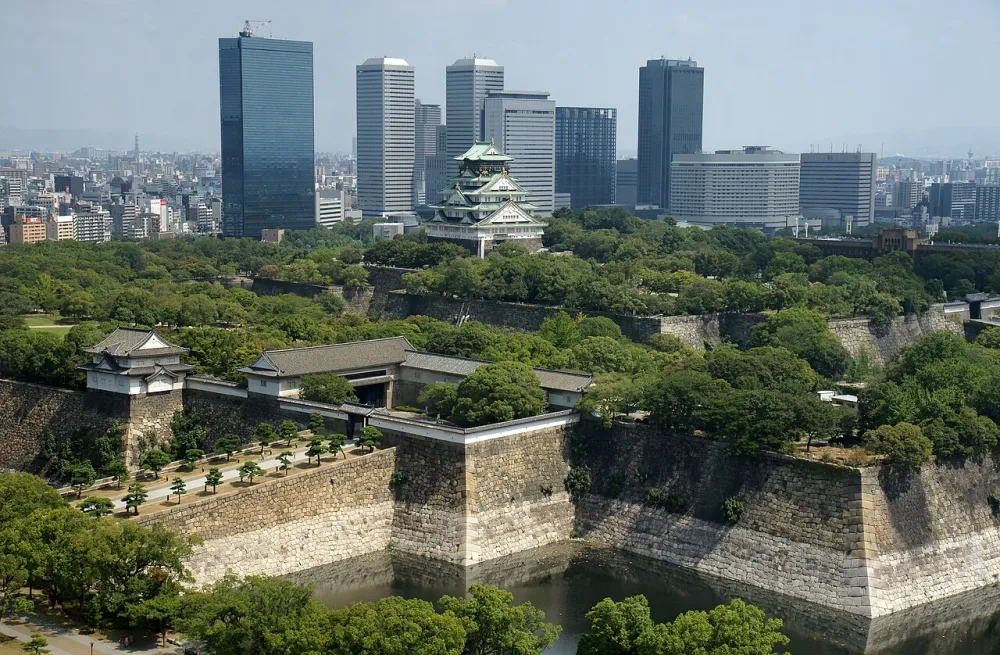
For Osaka Castle or the Fujita Museum, cross Sakuranomiya Bridge from the North Gate and head towards Osakajokitazume Station. If you intend to walk into Nishinomaru Garden or climb the castle keep, check the entrance layout in our Osaka Castle keep and park guide first. Osakajokitazume Station lies just south-east of Sakuranomiya Bridge; reaching Nishinomaru Garden still requires entering the park grounds and following the moat to the garden gate. With only a single afternoon window, choose either the outer park grounds or Nishinomaru Garden - save the keep itself for a fuller block of time, especially if you need timed tickets or hit a garden closure day.
If your next stop is Kyoto on the Keihan Line, you can also walk south outside the Mint walls from the North Gate back to Temmabashi, leaving a few minutes to reach the Keihan ticket gates. If dinner or a browse through the shopping arcade is next, head into Minamimorimachi and pick the nearest station from there. The key decision after exiting is whether to cross the river, switch to JR, or follow the same bank west - everyone in your group does not need to stick to the exact same path back. If you are splitting up to return to different hotels, pause at a wide junction just beyond the North Gate to get your bearings before heading for your stations.
Fitting the Corridor Into a Half-Day: Keep It to One Timed Booking
With a morning slot, put the Mint Bureau first. Meet at Temmabashi, walk the corridor at your booked time, then choose either Osaka Tenmangu Shrine or Kema Sakuranomiya Park once you clear the North Gate. The shrine route lets you pay a visit, find lunch along Tenjinbashisuji Shopping Street, and depart from Minamimorimachi or Osakatemmangu Station. The park route follows riverside blossoms north to Sakuranomiya Station for the Osaka Loop Line back to Umeda. Both options carry you forward from the North Gate with minimal backtracking.
If you only hold an afternoon slot, spend the morning in Osaka Castle Park. If your focus is photographing the keep and cherry trees from Nishinomaru Garden, check the garden's opening days and head from lunch to Temmabashi for the South Gate. If you want to tour multiple castle exhibits or climb to the top of the keep, give Osaka Castle a separate day and keep your Mint day simple with a riverside stroll and lunch nearby. The open castle grounds are easy to wander flexibly, whereas Nishinomaru Garden and the keep follow their own hours - lock in whichever part of the day is least flexible before adding anything else.
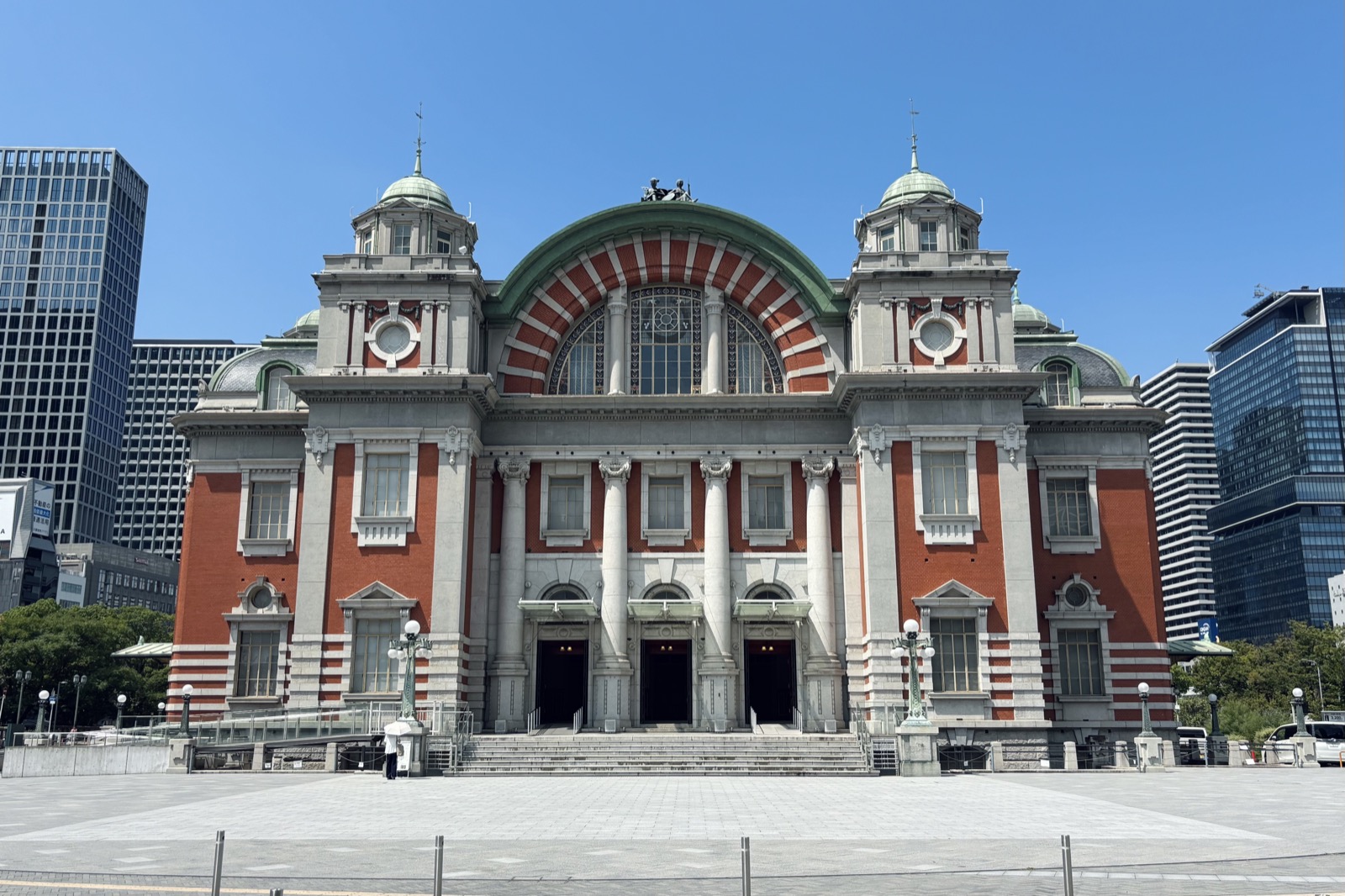
Evening slot holders can start on the south side of Temmabashi at Hachikenyahama. This waterfront promenade looks out towards the eastern tip of Nakanoshima and has a riverboat pier, making it a pleasant spot to fill an hour before entry. If you plan to visit Osaka City Central Public Hall or pair the walk with Nakanoshima's museums and Central Public Hall, schedule gallery hours and last admission first, then cross over to Temmabashi. After leaving the Mint's North Gate, look for dinner and your train home on the north side for an easy day-to-evening flow.
Day-trippers from other cities most often come unstuck on the return train. Coming from Kyoto, use Keihan Temmabashi as your arrival hub and decide after exiting whether to walk back there or leave from another line. If you have a Shinkansen or airport transfer that evening and your Mint slot runs close to departure, skip extra stops and pick a station with a direct link to your luggage lockers or hotel. Especially with children or older relatives, one timed-entry venue is plenty for a half-day - since the entrance and exit are in different places, there is no need to cram extra variables into your final hour.
No Booking? Walk the Outer Okawa Riverbank or Duck Into a Museum
Kema Sakuranomiya Park is open around the clock with no booking required. Starting from Temmabashi, follow the riverbank north wherever the blossoms look best, then decide which bank to walk as you near Sakuranomiya Bridge. Visitors arriving at Osakajokitazume Station can drop straight down to the water near the bridge. The park and the Mint corridor sit on opposite sides of the boundary wall with their own cherry trees: for wide views of water and sweeping canopies, frame your shots in the open park, and save Mint reservations for specific late-blooming cultivars such as Gyoiko.
If your trip falls before the Mint opens, the Yoshino cherries and moat views in Osaka Castle's Nishinomaru Garden make a complete blossom outing on their own. If Yoshino cherries are already past peak when you arrive in Osaka, switch districts or chase later varieties - some late-blooming spots have fewer trees, yet remain accessible all day for short stays. For wider coverage and alternative routes, check our Osaka cherry blossom spots and routes guide and carry one or two nearby backups to the river.
When rain cuts outdoor plans short, the nearby Fujita Museum makes an easy indoor alternative. Located right beside Exit 3 of JR Osakajokitazume Station, it opens 10:00-18:00 with no booking required for individual visitors; admission is ¥1,000, and free for visitors aged 19 and under with proof of age. Keep passports or ID handy in your daypack if travelling with teenagers. If you enjoy historic buildings and miss out on a Mint pass, you can still admire the Mint's riverbank facade from outside before strolling west towards Nakanoshima's Central Public Hall - choose based on your station, as the east bank sits closer to the Fujita Museum while Temmabashi and Kitahama put Hachikenyahama and Nakanoshima within easy reach.
The Mint Museum and Factory Tour Are a Separate Visit
During the 2026 general opening from 9 to 15 April, the Mint Museum closed temporarily from 8 to 15 April. Regular museum closures routinely cover the entire Cherry Blossom Corridor period. If you want to see both the coin exhibits and the cherry trees on the same trip, schedule the museum for an open day before or after the corridor dates. If you have only one night in Osaka and your sole window falls during the blossom opening, prioritise the corridor walk and pick another nearby museum that remains open.
On normal weekdays, entry to the Mint Museum is via the Main Gate along National Route 1 on the north side. The closest stations are Minamimorimachi on the metro and JR Osakatemmangu, both listed by the Mint as roughly a 15-minute walk. Admission is free, opening 09:00-16:45 with last entry at 16:00. The museum is normally closed on Wednesdays - if Wednesday is a public holiday, it opens and closes the following Thursday instead. Parties of nine or fewer need no reservation, while groups of ten or more must contact the museum in advance. Although the museum shares the Mint's street address, look for the Route 1 Main Gate on ordinary days so you do not walk down to the Temmabashi side by mistake.
Housed in a 1911 thermal power station converted into a museum in 1969, the collection spans roughly 4,000 items, including historic Japanese oban and koban gold coins, post-Meiji currency, commemorative medals, and foreign coinage. Multilingual audio guides, including Chinese, are available to borrow inside; picking either monetary history or minting technology from the floor map helps pace your visit. Since July 2026, the Mint Bureau has also offered a virtual-reality tour accessible in English or Chinese via a mobile or desktop browser, handy if you are visiting during the blossom closure and still want a look inside.
Factory tours require a separate free reservation and normally run on Mondays, Tuesdays, Thursdays, and Fridays, excluding public holidays, the New Year break, the day before the Cherry Blossom Corridor opens, and the corridor dates themselves. The guided tour takes around 60 minutes, or about 90 minutes including a self-guided look around the museum. While the introductory film has Chinese and other language options, the factory tour itself is led in Japanese, viewing production lines through glass windows. Bring your confirmation email and valid photo ID for the lead applicant, and check in at least 10 minutes before your slot; if you only want to browse the museum galleries, you do not need to wait for a tour slot and can fit the visit around other Osaka plans much more easily.
A few useful answers
Have the 2027 dates for the Osaka Mint Bureau Cherry Blossom Corridor been announced?
As of 22 November 2026, the Osaka Mint Bureau event portal still links to the 2026 archive, and neither the 2027 dates nor the booking opening time have been announced.
Do you need to buy a ticket for the Osaka Mint Bureau cherry blossoms?
In 2026, admission was free via first-come, first-served timed-entry booking in advance. You present the QR code from your confirmation email at check-in, and everyone on the same booking must enter together.
Which Osaka Metro station and exit should I use?
Take the Tanimachi Line to Temmabashi Station and follow the North Ticket Gate to Exit 2, roughly a 15-minute walk from the South Gate entrance. Keihan also serves Temmabashi Station via the East Ticket Gate and Exit 14.
Can you visit the Osaka Mint Bureau Cherry Blossom Corridor both during the day and at night?
In 2026, gates opened at 10:00 on weekdays and 09:00 at weekends, with last entry at 19:15 and clearing by 19:45 daily. Choose a daytime slot if seeing true petal colours and reading cultivar plaques matters most.
Where can I see cherry blossoms if I arrive in Osaka at the end of March?
Focus on Osaka Castle Park's Nishinomaru Garden or Kema Sakuranomiya Park. The Mint Bureau features late-blooming cultivars and has historically held its opening in April.
Official information and references
Sources used in this guide.
- Japan Mint: Osaka Cherry Blossom Corridor Event Portal
- Japan Mint: 2026 Event Record (Dates, Bloom Status, Access & Entry Rules)
- Japan Mint: 2026 English Event Announcement (Free Admission, Time Slots & Gates)
- Japan Mint: 2026 Application Guidelines (PDF)
- Japan Mint: Corridor History, Past Dates & Viewing Data
- Japan Mint: Osaka Cherry Blossom Cultivar Catalogue
- Osaka Regional Meteorological Observatory: 2026 Yoshino Cherry Full-Bloom Observation (PDF)
- Osaka City: 2026 Event Notice (Applications & Special Viewing Day)
- Osaka City Call Centre: Mint Bureau Cherry Blossom Corridor Access & Gates
- Japan Mint: 2026 Surrounding Traffic Restriction Map (PDF)
- Osaka City: Former Main Gate, Foundry Portico & Senpukan
- Osaka City: Important Cultural Property Senpukan Exterior Viewing Information
- Osaka Metro: Temmabashi Station Map & Step-Free Access
- Keihan Electric Railway: Temmabashi Station Map (PDF)
- Osaka City: Kema Sakuranomiya Park Information
- Osaka Tenmangu Shrine: Access Information
- Osaka Castle Park: Nishinomaru Garden
- Osaka Prefecture: Hachikenyahama Waterfront Information
- Fujita Museum: Access & Opening Hours
- Mint Museum (Osaka): Opening Hours & Group Admission
- Mint Museum (Osaka): Building History & Exhibition Guide
- Mint Museum (Osaka): Virtual Reality Tour
- Japan Mint: Osaka Plant Tour & Reservation Guide