Build a Nakanoshima half-day around one exhibition. Compare the National Museum of Art’s special and collection tickets, Friday evening prices and age concessions with Nakanoshima Museum of Art, then plan public hall access or a tour ballot.
- Region & Focus
- OsakaAttractions
- Reading Scope
- 30 min read · 20 chapters · 6 Q&As
- Official Verification
- 20 official sources checkedUpdated 9 November 2026
- Key Topics
- ItinerariesBookingTravel budget
Chapter Route Map (tap any stop)
- Choose one museum by its exhibition before buying two tickets
- National Museum of Art: collection and special exhibitions offer different visits
- Aki Sasamoto: Laboratory rewards time spent with the space
- Special exhibition admission includes the collection: avoid an extra ¥860 for two
- Bring student and age documents; free admission depends on the exhibition
- At Nakanoshima Museum of Art, identify the exhibition and floor
- Check each museum’s calendar, especially during November exhibition changes
- Reach the western museums through the right station exit
- Store bags before entering the underground galleries
- Underground architecture: follow natural light down to the flooring
- Separate photographs from viewing and check signs beside the works
- Wheelchairs, pushchairs and rest: choose a visit everyone can finish comfortably
- Central Public Hall remains a working civic building
- Visit the B1 exhibition independently; apply separately for the Special Room
- Inside the Special Room: Japanese myths and phoenixes in a Western-style space
- Hall tours use individual announcements: wait for a confirmed place before dinner plans
- Western half-day: finish one exhibition before deciding about the east
- Eastern tour booking: anchor the day on check-in and shorten the western visit
- Rain, closures and children: rebuild the half-day around the alternative
- The shop closes at 19:00 on Fridays: plan purchases, luggage and the station
- Quick Q&A
Start a Nakanoshima half-day with one exhibition. A special exhibition ticket at the National Museum of Art includes the concurrent collection exhibition; Nakanoshima Museum of Art sells tickets by exhibition. Afterwards, decide whether you have the energy to walk to Central Public Hall. For an interior tour, first complete the application and ballot process in that tour’s notice.
Choose one museum by its exhibition before buying two tickets
The two museums in western Nakanoshima stand next to each other, but the useful choice comes before buying tickets. At the National Museum of Art, special exhibition tickets include the collection exhibition. Nakanoshima Museum of Art sells tickets for individual exhibitions. With only half a day, choose one exhibition you want to see, then decide about Central Public Hall to the east. Seeing half of each museum can be more tiring than completing one exhibition, and breaks the connections between works.
For post-war and contemporary art exploring the body, materials and actions, start with the National Museum of Art’s exhibition descriptions. If paintings, crafts or a current theme at Nakanoshima Museum of Art appeal, choose that exhibition directly. A museum name cannot replace an exhibition title. Ask each companion to choose a work or question of interest before filling the map with buildings.
This guide uses official information from 28 October 2026 to explain tickets and reservations. For a wider three-day plan, museum dining and Nakanoshima accommodation, return to three days in Osaka. Keep this half-day for art, architecture and a seated rest. The eastern area works with just the hall exterior and basement exhibition room. For the Special Room, follow the announced tour application process.
Build a Nakanoshima half-day around one exhibition. Compare the National Museum of Art’s special and collection tickets, Friday evening prices and age concessions with Nakanoshima Museum of Art, then plan public hall access or a tour ballot.
National Museum of Art: collection and special exhibitions offer different visits
The National Museum of Art’s current exhibition page separates special and collection exhibitions. A special exhibition often develops one artist or question in depth; a collection display rearranges works from the museum to explore part of art history. If you are new to contemporary art without a preferred artist, read the collection exhibition’s period, media and curatorial questions before deciding whether to devote more time to the special exhibition.
Running until 3 November, “Collection 1: I / Action” spans works from the 1890s to the mid-1960s, considering the artist’s position as “I” and changes in the act of making. Compare how paintings direct the viewer’s eye, sculpture occupies space, and bodies or materials retain traces of production. Two or three contrasting works can offer more than trying to remember every artist’s name.
Listed artists include Cézanne, Duchamp, Kazuo Shiraga and Atsuko Tanaka. Read the official exhibition theme and work details before visiting, then start with the introduction and areas that interest you. With unfamiliar work, describe the lines, colours, scale and materials you see before reading the label. You do not need an immediate standard answer for every piece.
Aki Sasamoto: Laboratory rewards time spent with the space
Also running until 3 November 2026, “Aki Sasamoto: Laboratory” focuses on installation and performance. Everyday objects become devices that set events in motion. Relationships between body, language, sound and objects affect how the work is seen. Visitors expecting walls full of traditional paintings will approach it differently from those who enjoy moving through a space and observing how objects work.
The current audio guide is available through a smartphone app or an on-site rental device, each officially priced at ¥500. Both cover the special and collection exhibitions. Two people using one each add ¥1,000 to admission. For your own phone, read the official distribution period and prepare headphones and battery power before leaving. Arrange a rental device before entering the galleries.
Performances have their own dates within the exhibition period. If a performance is your reason for coming, choose the specific official event and make it the fixed point of the day. An ordinary exhibition visit can focus on the installations. Companions who dislike prolonged standing can choose only the collection display, then use the remaining time for the hall’s basement history exhibition.
Special exhibition admission includes the collection: avoid an extra ¥860 for two
For the National Museum of Art’s current programme ending on 3 November 2026, general special exhibition admission is ¥1,800, including the concurrent collection display. Two adults pay ¥3,600 for both parts. Buying two additional ¥430 collection tickets would add an unnecessary ¥860. For the collection alone, two adults pay ¥860 and can leave the special exhibition for another visit.
The current Friday evening prices, valid 17:00–20:00, are ¥1,600 general admission for the special exhibition and ¥250 for the collection. Two adults pay ¥3,200 or ¥500 respectively. Evening entry extends your usable day. After Osaka Castle and shopping streets, eat and rest before entering. Staying out late just to save ¥200 may not suit everyone’s energy.
The official admission and hours page says neither ticket type requires a dated, timed reservation, and counter prices are the same. Check the exhibition and ticket type before choosing online or same-day purchase. Inclusion rules follow the current announcement. Recalculate the two-person total from the new exhibition page when the special exhibition changes.
Bring student and age documents; free admission depends on the exhibition
The current collection exhibition costs ¥430 general admission or ¥130 for university students. High-school students and younger, under-18s and people aged 65 or over enter free with proof. Two adults with an eligible child need only two adult collection tickets. Keep age evidence handy for older family members. Read the special exhibition’s own concessions: its current page lists free admission with proof for high-school students and younger and under-18s, with a separate university student price. Record each person’s age, student status and intended exhibition. Check disability and one-companion conditions in the relevant exhibition listing and bring proof.
The current collection exhibition also lists free admission on 3 November. Allow enough time for entry, luggage and viewing even on a free day, rather than add distant sights because admission costs nothing. If some family members are not interested in the special exhibition, seeing different displays and meeting in a public area can suit everyone better than one ticket type for the whole group.
At Nakanoshima Museum of Art, identify the exhibition and floor
The official Nakanoshima Museum of Art ticket page lists each exhibition separately. On 28 October 2026, the fifth floor is showing the exhibition marking 50 years of NHK’s Sunday Art Museum. The fourth-floor exhibition of Japanese art from the British Museum, “Hyakka Ryoran”, opens on 31 October. Three days can change what is available. Give friends the exhibition title and floor when arranging to meet.
If you enjoy understanding art through television footage, the NHK exhibition places years of art programmes and works in a shared context. It runs until 20 December, with general same-day admission at ¥2,000: ¥4,000 for two adults seeing this exhibition alone. Compare its subject with the National Museum of Art’s special exhibition, rather than judge content by the size of the buildings.
The museum’s ticket FAQ says reserved and purchased tickets cannot be cancelled or refunded. Same-day entry follows the rules where an exhibition prioritises dated tickets but has space, or uses untimed tickets. If your date is flexible and you want to respond to weather, choose the exhibition first, then decide when to buy. Save the dates and conditions of any discount product.
Check each museum’s calendar, especially during November exhibition changes
The National Museum of Art normally opens 10:00–17:00, last entry 16:30. Fridays extend to 20:00, last entry 19:30. It closes on Mondays, over New Year and between exhibitions, with holiday adjustments. This programme explicitly opens on Monday 2 November 2026. Read the current exception after the usual Monday rule to plan the exhibition’s final days.
Nakanoshima Museum of Art’s galleries normally open 10:00–17:00, last entry 16:30, with Monday closure, but each exhibition lists its own dates and exceptions. The fourth-floor Hyakka Ryoran exhibition opening on 31 October lists Friday hours until 20:00, last entry 19:30. The fifth-floor NHK exhibition still closes at 17:00. The two museums can have different dates, closures and evening hours in the same week. National Museum of Art Friday evenings do not extend its neighbour’s ticket hours. Follow the deadline for the exhibition you bought.
In early November, check both calendars before booking other activities. The National Museum of Art’s current programme ends on 3 November; later exhibitions have separate opening dates. An announced next exhibition does not mean it opens the next day. Between programmes, choose one complete Nakanoshima Museum of Art exhibition and then eastern architecture, rather than reach a closed entrance before finding an alternative.
Reach the western museums through the right station exit
The National Museum of Art is at 4-2-55 Nakanoshima; Nakanoshima Museum of Art is at 4-3-1. Both officially list about five minutes on foot from Watanabebashi Station exit 2 on the Keihan Nakanoshima Line. On the Yotsubashi Line, use Higobashi Station, with slightly different recommended exits for each museum. Navigate to your chosen museum’s entrance rather than search only for Nakanoshima Park.
Both museums list about 15 minutes on foot west from Yodoyabashi exit 7. The National Museum of Art lists about 20 minutes from Osaka Station. These official estimates start at the station; add platforms, gates and lift waits. In rain or with children, a shorter walk after leaving the station may help more than avoiding one train change and spending longer in wet coats.
Osaka City Bus routes 53 and 75 depart from Osaka Station. Outbound, alight at Taminobashi and walk to the museums. The National Museum of Art specifically recommends the nearby Watanabebashi bus stop for the return towards Osaka Station. Mark that return stop before leaving. If the interval does not suit, walk to Watanabebashi for Keihan rather than squeeze a bus wait before your next booking.
Store bags before entering the underground galleries
The National Museum of Art has B1 coin lockers with a refundable ¥100 deposit. Storing large bags eases shoulders and arms and reduces the risk of striking something when turning near works. Luggage too large for lockers may be left at the B1 information desk and collected the same day. Keep valuables with you.
If you are checking out, visiting an exhibition and moving hotels, treat storage, viewing and collection as one complete stage. Do not collect a large suitcase before deciding to walk to the eastern hall. A cross-island walk works best with light bags. If luggage remains in the west, leave from there or use accommodation storage already arranged. Same-day museum collection must fit your final stop.
Food and drink, including sweets and chewing gum, are prohibited in galleries. Have water and snacks before entering. The facility page currently lists the restaurant as closed. Eat before or after the visit rather than count on a basement meal between exhibitions. The B1 information area has past exhibition catalogues to read before collecting bags and leaving.
Underground architecture: follow natural light down to the flooring
The National Museum of Art has one above-ground floor and three basement levels, with main galleries on B2 and B3. Enter through the metal structure, then descend by stairs, escalator or lift. Natural light through ground-level glazing reaches the atrium, creating a change between the bright entrance and underground galleries. Read the official architecture guide to connect the idea of an underground museum with the spaces you pass through.
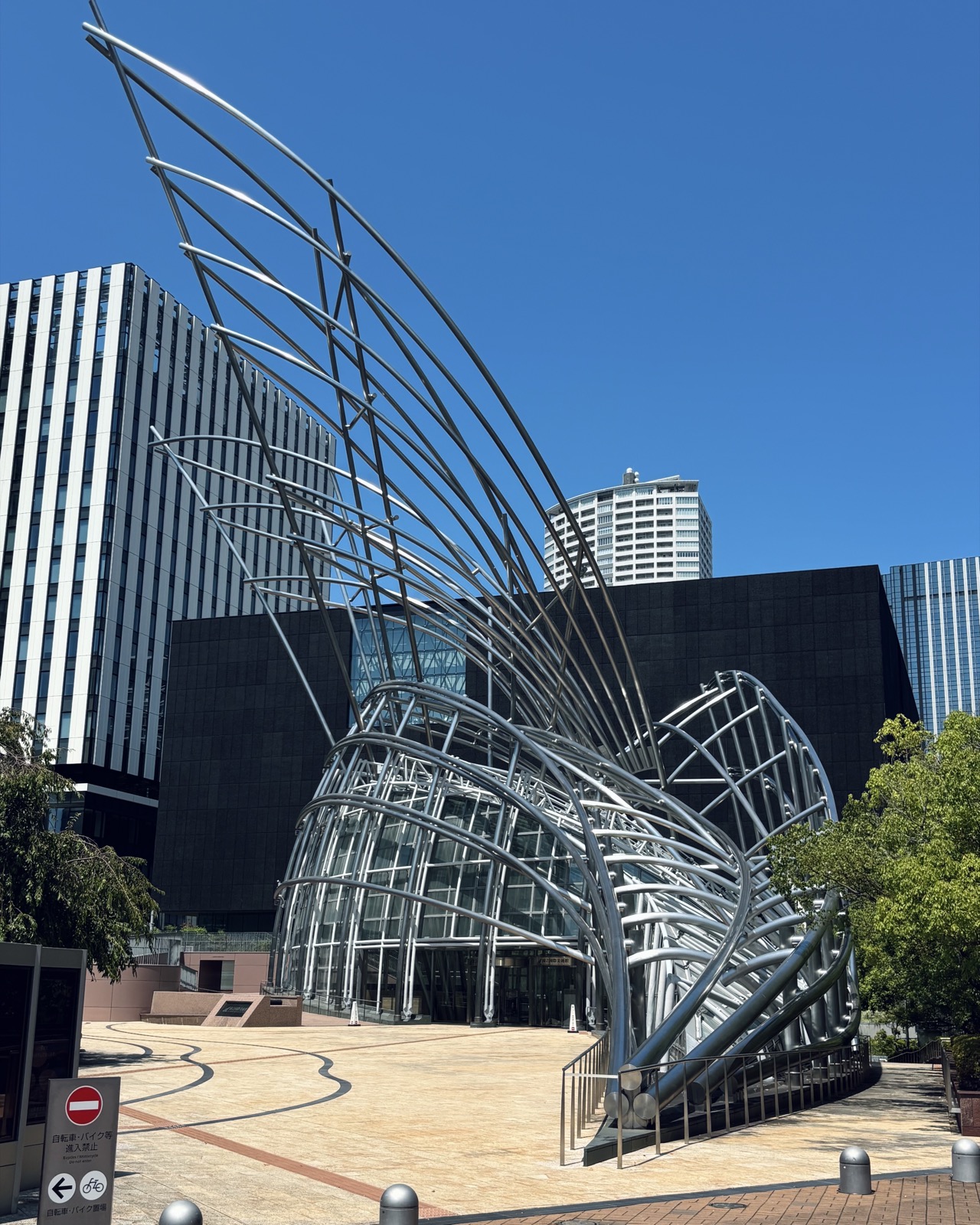
The B1 entrance hall holds permanent works including Miró’s ceramic mural Innocent Laughter (1969), Calder’s sculpture London (1962) and Jiro Takamatsu’s Shadow (1977). Rushing from ticket sales downstairs can miss this level. Leave ten to fifteen minutes before departure to look at the relationship between works, natural light and passing visitors. It offers a different setting from the themed galleries.
Look down too. The B1 hall uses Italian mosaic marble tiles, while the galleries have end-grain Douglas fir flooring to reduce footstep noise. The atrium’s large wall uses pale beige stone from the United States. The official design notes connect materials with purpose. Compare colour, joints and sound underfoot, then notice how light changes after the escalator descent. The arrival and exit routes provide architectural detail without a separate long visit.
An official short film released in 2024, introducing Nakanoshima’s underground museum and its contemporary art collection.
Separate photographs from viewing and check signs beside the works
The National Museum of Art permits photography in the ground-floor entrance hall and B1 public areas. Collection displays generally allow it, with rights-based exceptions for some works. Special exhibitions set individual rules. Read the entrance guidance and each work’s signs first. Photograph the exterior before or after your gallery visit.
Video, flash, tripods and selfie sticks are prohibited. Wait for a clear route, take the photograph and let other visitors approach. If one companion wants longer with a work, the other can move ahead and meet at the exit. To retain a memory, note the exhibition, work title and a detail you noticed, then look for a catalogue or postcard. Use of gallery photographs has further conditions, with commercial use restricted. For public commercial content, obtain images through authorised museum materials and permission procedures. A few minutes without the camera can make scale and surrounding sounds easier to notice.
Wheelchairs, pushchairs and rest: choose a visit everyone can finish comfortably
The ground-floor reception lends wheelchairs and pushchairs. Pushchair use may be restricted for safety during crowds. B1 has a childcare room and nursing room, with about 750 children’s picture books for use with a parent in the childcare room. Change nappies, feed and store bags first. When a child needs another activity, books are easier to fit in than a hurried second museum.
Wheelchair users can read the museum’s accessibility information and connect reception with the required gallery floor. Agree where to stop and rest if companions take turns pushing. Ask at entry about the B1 desk offering written communication and accessible toilet locations.
If the family can manage only about an hour indoors, select a few collection areas or one exhibition everyone prefers. Walking, meals and toilets also take part of the half-day. Return by the same station route if children do not want another museum. The hall exterior can fit another day in the east; there is no need to extend a suitable short visit to finish a list.
Central Public Hall remains a working civic building
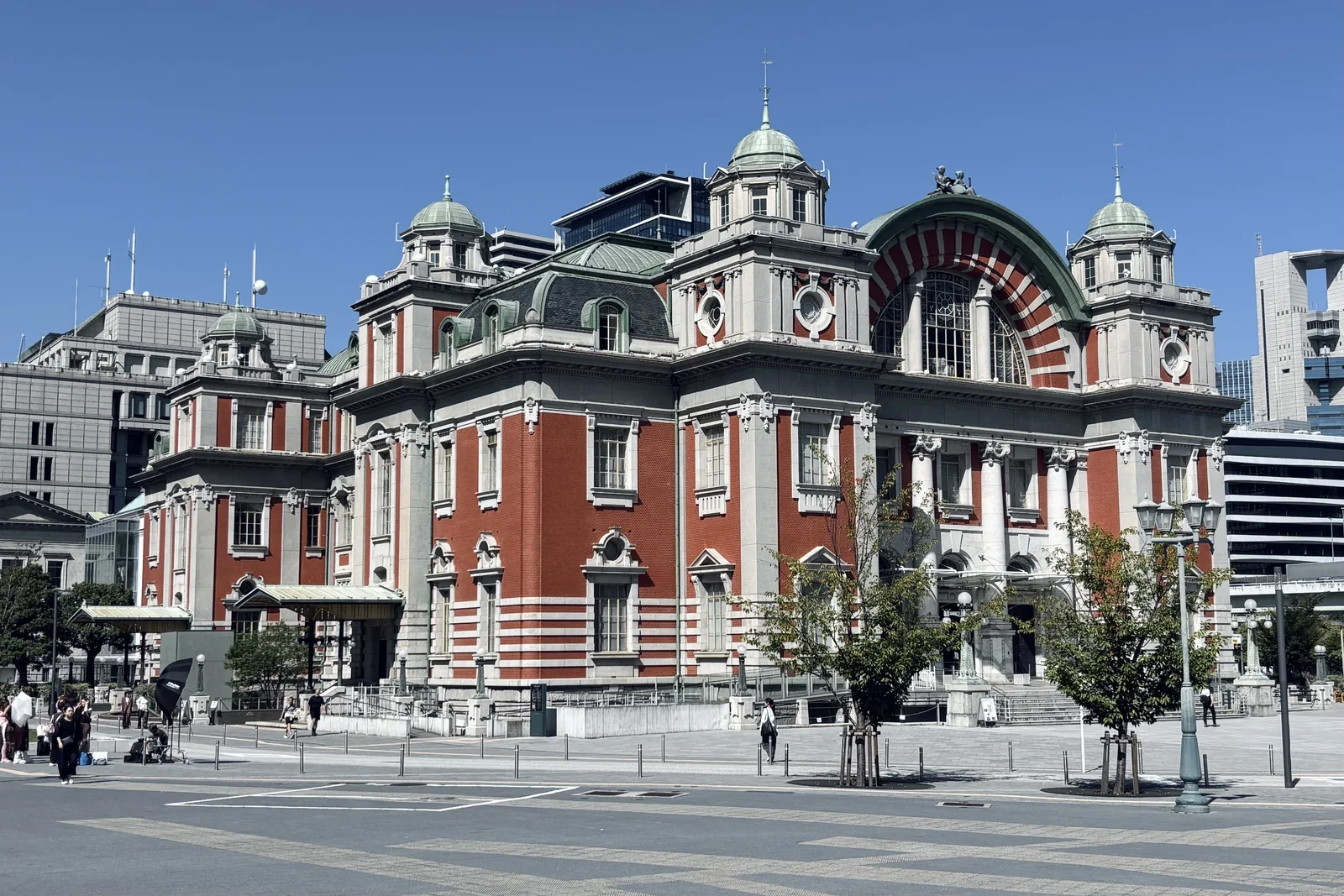
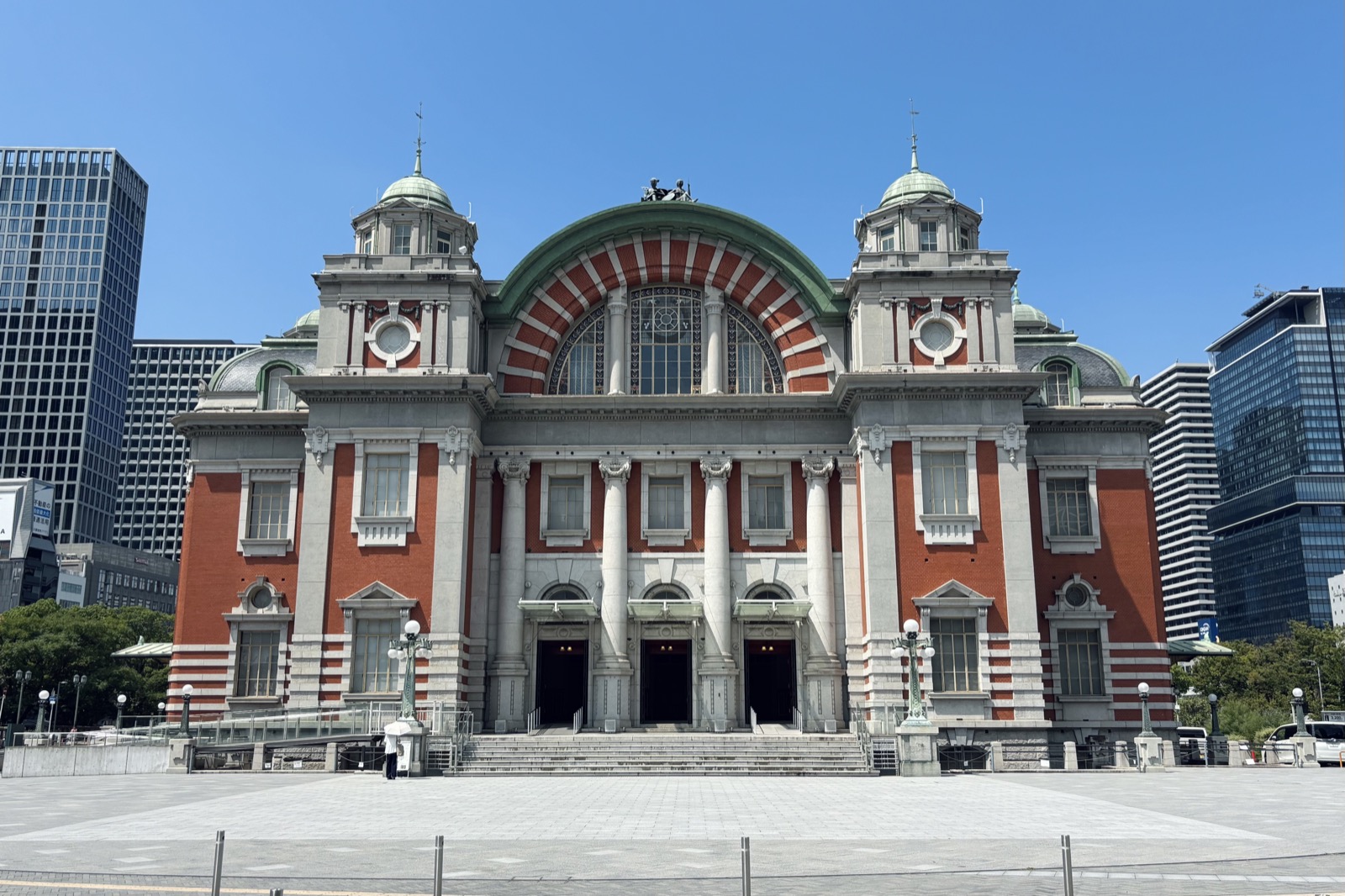
Central Public Hall stands at 1-1-27 Nakanoshima. Completed in 1918, it underwent conservation and regeneration work in 2002 and became an Important Cultural Property that year. It still hosts lectures, concerts and meetings. From the front, look at red brick against white stone, large arched windows and the symmetrical layout, then stand clear of entrances to see the overall proportions.
The official architecture history credits Shinichiro Okada’s original proposal and detailed design by Kingo Tatsuno and Yasushi Kataoka. A donation by citizen Einosuke Iwamoto began the project. Continue the story from private funding to public cultural space in the basement exhibition. Allow twenty to thirty minutes outside and another half-hour to read the display.
The conservation work restored the original design while improving earthquake resistance and access. The official room guide lists 810 ground-floor and 351 upper-floor seats in the large assembly hall, palace-like decoration in the medium hall, wood interiors in the small hall, and ceiling paintings and a full stained-glass wall in the Special Room. Read which rooms a particular tour visits before choosing it.
Visit the B1 exhibition independently; apply separately for the Special Room
Independent access mainly covers the B1 exhibition room and self-guided area. The room opens 9:30–20:00 and uses documents, photographs and Iwamoto material to explain construction and conservation. Basement corridors preserve old equipment and objects too. Read these smaller details, then look at the façade outside for more than a single front-view photograph.
The official route to the exhibition and shop descends the south sunken-court stairs to B1, using the east entrance on the right. The restaurant and office have separate entrances. Match your purpose to the correct entrance rather than follow event attendees. For step-free access, obtain the usable route for that day from staff and enter there, rather than carry a pushchair down photographed steps.
The eastern front entrance on floor 1 opens only when the large assembly hall is not in use. Do not make the ground-floor lobby essential to an independent visit. The Special Room and other rental spaces open through official tours or events. Without a tour, the exterior and B1 form a complete short architecture visit. Even with an open door, read signs before entering a meeting or performance preparation area.
Inside the Special Room: Japanese myths and phoenixes in a Western-style space
The third-floor Special Room was originally for distinguished guests. Japanese myths cover the ceiling and walls; stained glass features phoenixes and Osaka’s miotsukushi city emblem. For an interest in modern architecture, look at how a Western-style interior contains Japanese stories and how the city emblem links this public building to Osaka.
The ceiling is about eight metres high and the room covers 162.1 square metres. On an authorised tour, start with the overall height, then follow staff guidance to murals and glass. Do not spend the visit searching only for an online camera angle. The room also hosts meetings, weddings and displays. Food and drink are prohibited to protect murals, marble flooring and fittings, which helps explain the limited independent access.
Hall tours use individual announcements: wait for a confirmed place before dinner plans
For an official tour, read the event, application and result notices under the official guided-tour category. The original tour on 21 October 2026 used a ballot, with sessions of about 60 minutes for 30 people, ¥2,000 per person including a souvenir, and up to four people per application. Applications closed on 30 September and the event has ended. This recent example shows why a tour needs an application and result, rather than an assumption of daily walk-up tickets.
That application used an official form, not telephone booking. Only successful applicants received notification; cancellations were filled through the waiting-list process. For a future month, follow the new notice’s dates, sessions, application window and rooms. October’s price, payment method and capacity belong to that October product. Until a place is confirmed, plan the eastern section around the exterior and B1, then add a fixed gathering time after the result.
Once confirmed, save the check-in time and contact details before booking nearby dinner. If unable to attend, contact the organiser under that notice’s procedure. No successful notification means no assumed reserved place on the day. If a tour is close to museum closing time, shorten a gallery visit rather than compress the transfer into the final minutes.
Announced tour routes include indoor and outdoor sections. The recent October route visited the large hall, Special Room and exterior in that order, with some B1 areas possible instead in rain. If stained glass is your main interest, confirm that the Special Room is in that particular route before applying. The actual rooms explain more than the words “interior tour”.
Western half-day: finish one exhibition before deciding about the east
This version suits four to five hours in the morning or afternoon without a fixed tour. Using a 10:00 opening as an example, arrive outside at 9:45, store bags and confirm tickets after opening, then see the main exhibition from 10:10 to 12:10. Collect bags, eat or rest afterwards. Two hours is a planning allowance. Extend it for work you love and remove the final stop.
With a collection-only ticket, focus on a few contrasting areas and make notes in public space afterwards. With a special ticket that includes the collection, give the main exhibition a full block first. Decide how much collection viewing remains comfortable. Inclusion does not require seeing every room. Ask about everyone’s energy and next meal before crossing to the hall.
If heading east, allow thirty to forty minutes for walking, crossings and finding the entrance before the exterior or B1 visit. This is a relaxed, light-luggage planning buffer. Add time for slower walking, rain, wind or lifts. Otherwise finish at a western station. A clear purpose such as “hall façade and conservation exhibition” makes it easier to stop than adding every riverside landmark.
Eastern tour booking: anchor the day on check-in and shorten the western visit
With a confirmed hall tour, make check-in the fixed point. For an evening session, see a shorter collection exhibition in the afternoon, then allow time to travel, find the entrance and use the toilet. Eat after the tour or finish dinner much earlier. Do not arrive at the front façade only at the scheduled start, as check-in may use another entrance.
Take the now-ended 17:30 session on 21 October 2026 as an example. Official reception began at 17:10. A suggested 16:10 departure from the western museum gives an hour for bag collection, transport and finding the meeting point. For future tours, substitute the new notice’s check-in time. If it is already too late to enter a western exhibition, stay east and read the B1 display.
If architecture interests you more than painting, make the hall the half-day focus and leave the museums for another day. Its exterior, basement history and toured rooms already provide enough content. Rest while waiting rather than rush to another bookable venue. A confirmed place is more useful when you can listen and look throughout.
Rain, closures and children: rebuild the half-day around the alternative
In rain, a longer visit to one museum is easiest. Galleries, lockers and indoor rest share one destination; return directly to the station afterwards. Leave the hall for another day or replace a long riverside walk with its B1 exhibition. Travel between indoor buildings still includes outdoors, so reduce movement in wet weather.
If children mainly want science exhibits or books, the science museum or Nakanoshima Children’s Book Forest can become a different half-day focus. Secure the chosen reservation or programme time, then remove the main art exhibition. Do not combine a planetarium, book forest, special exhibition and hall tour in one afternoon. These alternatives help families choose suitable content rather than follow an adult art-viewing pace.
If museums are closed or no tour places remain, retain the hall exterior and B1 with a nearby meal. The hall closes on the fourth Tuesday each month, moved to the following weekday when it is a public holiday; it opens exceptionally on 22 December 2026 and closes for the year-end period from 27 December 2026 to 4 January 2027. If the basement is closed too, make the exterior a short stop and return another day. Finish while everyone still has energy for the evening.
The shop closes at 19:00 on Fridays: plan purchases, luggage and the station
The National Museum of Art shop normally opens 10:00–17:00 and until 19:00 on Fridays, closing on museum closure days. Friday exhibitions may run until 20:00, but the shop shuts earlier. Buy catalogues or postcards before 19:00 rather than wait for the gallery closing announcement. Consider luggage weight and save the budget for exhibition material you want to take home.
Count admission, audio guides and purchases separately. Two current special exhibition tickets cost ¥3,600. Two ¥500 audio guides bring this to ¥4,600, before books and transport. Add only one guide if only one person uses it. Accepted cards and electronic payments are listed on the visiting page. For transport IC payment, retain enough balance for the return journey.
After collecting bags, choose the station for your accommodation. The hall’s official access lists about five minutes from Yodoyabashi exit 1, ten from Kitahama exit 26 and one from Keihan Naniwabashi exit 1. In the west, return to Watanabebashi or Higobashi. Save the full station names and distinguish Keihan Naniwabashi from Osaka Metro Yodoyabashi. Navigate to the station you need.
A few useful answers
Do I need a separate collection ticket at the National Museum of Art?
The current special exhibition, ending on 3 November 2026, costs ¥1,800 general admission and includes the concurrent collection display. Collection-only general admission is ¥430.
Can we visit both Nakanoshima museums in half a day?
Choose one main exhibition for a half-day. Give two long exhibitions a full day with food and rest between, and leave the hall for another day.
Can I enter Central Public Hall independently?
On open days, visit the B1 exhibition room and self-guided area. The exhibition room opens 9:30–20:00. Ground-floor lobby access depends on use of the large hall; the Special Room requires an official tour or event.
Can I buy a hall tour ticket on the day?
Read the application method in the specific official tour notice. The 21 October 2026 event used a form-based ballot and has ended. Without a confirmed place, plan the exterior and B1 exhibition.
Do both museums open until 20:00 on Fridays?
The National Museum of Art normally extends Fridays to 20:00. Nakanoshima Museum of Art follows each exhibition’s dates and hours; check separately.
Can I visit the National Museum of Art with large luggage?
B1 has refundable ¥100 lockers. Oversized luggage may be left at the information desk and must be collected the same day. Keep valuables with you.
Official information and references
Sources used in this guide.
- National Museum of Art, Osaka | current and forthcoming exhibitions
- National Museum of Art, Osaka | Collection 1: I / Action
- National Museum of Art, Osaka | Aki Sasamoto: Laboratory
- National Museum of Art, Osaka | access, opening hours and admission
- Nakanoshima Museum of Art, Osaka | official exhibition tickets
- Nakanoshima Museum of Art, Osaka | tickets, cancellation and refunds
- National Museum of Art, Osaka | accessibility and family facilities
- Osaka City Central Public Hall | history, architecture and independent visits
- Osaka City Central Public Hall | guided-tour notices
- National Museum of Art, Osaka | architecture and design
- National Museum of Art, Osaka | facilities and restaurant closure
- National Museum of Art, Osaka | luggage and photography rules
- Central Public Hall | room guide
- Central Public Hall | access and accessibility
- Central Public Hall | October 2026 tour applications (ended)
- Central Public Hall | Special Room mythological murals and stained glass
- Nakanoshima Museum of Art, Osaka | 50 years of NHK Sunday Art Museum
- Nakanoshima Museum of Art, Osaka | opening hours and admission
- Nakanoshima Museum of Art, Osaka | access and entrances
- Nakanoshima Museum of Art, Osaka | Hyakka Ryoran dates and Friday evenings