Plan a family visit to Kids Plaza Osaka: pick tickets by height and slide hours, explore Hundertwasser's castle, giant soap bubbles and the TV studio, with Ogimachi Station exits, lift detours and lunch re-entry via Tenjinbashisuji.
- Region & Focus
- Osaka
- Reading Scope
- 18 min read · 8 chapters · 6 Q&As
- Official Verification
- 35 official sources checkedUpdated 22 November 2026
- Key Topics
- First tripTravel budgetNeighbourhoods
Chapter Route Map (tap any stop)
- Choose Your Ticket by Slide Hours
- Getting There via Ogimachi Station Exit 2
- Hundertwasser's Kids Town: Sliding from 5F to 4F
- 4F Supermarket, Post Office, Food Stalls and Picture Books
- 5F Giant Soap Bubbles and Water Pumps
- Present the Weather or Dub an Animation
- 3F Cardboard Crafts and Remote-Control Trains
- Lunch on Tenjinbashisuji and Sunny Play in Ogimachi Park
- Quick Q&A
One end starts on 5F, the other lands on 4F. Children climb into the tube slide while adults wait one floor below to catch them. This multi-level castle is the centrepiece of Kids Plaza Osaka, alongside giant soap bubbles, a children's supermarket and a studio where young visitors can present the weather. Allow half a day for a first visit; if it rains, follow the underground passage from Exit 2 of Ogimachi Station on the Sakaisuji Line. For the slide on weekdays, buy a standard ticket—by the time the afternoon discount ticket goes on sale at 14:00, the slide has closed. If you plan to step out for lunch along Tenjinbashisuji Shopping Street and return afterwards, keep the whole family's same-day admission tickets handy.
Choose Your Ticket by Slide Hours
Before setting off for the castle's long chute, check your child's height and the clock. Children who are at least 100 cm tall and under 16 can ride the Tube Slider. It runs 10:00–14:00 on weekdays, extending until 16:30 on weekends and Japanese public holidays. If your children like a slower morning or you want to eat first, a standard weekend ticket gives you far more slide time than a weekday visit. Only aim for a weekday afternoon discount ticket if you want to keep costs down and your family prefers the soap bubbles or pretend-play zones.
Regular opening hours are 9:30–17:00, with last admission and ticket sales at 16:15. That 45-minute window covers entering the building and making your way to your chosen floor before closing. Some areas shut earlier—the soap bubble zone closes at 16:30, for instance. Arriving around 14:30 helps you miss some of the school-group rush; if you arrive near 16:00, ask your children to pick their top priority before stepping inside.
Standard tickets are priced by age. Six-year-olds still qualify for the preschool rate until 31 March of the year they finish kindergarten, while 15-year-old high school students pay the adult rate. For two adults and one 8-year-old, standard admission totals ¥3,800, or ¥2,500 when the afternoon ticket is available. Seniors aged 65 and over pay ¥700 at the counter on presentation of proof of age, and family members can mix and match ticket types as needed. The afternoon ticket ('Niji-kara Ticket') is sold on eligible weekdays until 18 December 2026, and again from 8 January to 12 March 2027, excluding closed days. Note that family tickets and annual passports were discontinued at the end of October 2026.
Individual families do not need advance reservations and can simply buy tickets on 1F. If your date is fixed, you can also pre-purchase standard tickets at 7-Eleven, Lawson, FamilyMart or MINISTOP in Japan and head straight to the entrance gate. Convenience-store tickets are sold at standard rates, remain valid for three months from issue, and cannot be cancelled or refunded. If you are waiting on the weather forecast, buying on the day is easier. Should you plan to join capacity-limited workshops, leave extra time to collect activity passes at the separate check-in desk inside.
Admission tickets and workshop slots are handled separately. Card payments are accepted at the 1F ticket counter, though e-money options listed in the museum FAQ stop at 15:00, and paid workshops are cash-only—bring Japanese yen coins if you think your children might fancy a craft session. While buying tickets, check the board for operating times next to the Tube Slider and Soap Bubble Corner, and look for the reception ('uketsuke') column for any scheduled programmes. Tuck everyone's tickets into one pocket so you are not rummaging through bags when returning from lunch.
Regular closed days fall on the second and third Monday of each month (shifting to the next day if that Monday is a Japanese public holiday), and on the fourth Monday in August. The final open day of 2026 is 27 December, followed by a New Year closure from 28 December 2026 to 2 January 2027, reopening at 9:30 on 3 January. Around Japanese long weekends or school excursion seasons, check the morning and afternoon columns on the museum's official congestion forecast page. The museum flags late April to late June, late September to early December, and February to mid-March (weekdays 9:30–14:30) as peak times for group visits. If your dates are fixed and your children want the slide, make it your first stop in the morning.
| Ticket Type | Standard Admission | Afternoon Rainbow Ticket (Niji-kara) |
|---|---|---|
| Adult (16 and over) | ¥1,500 | ¥1,000 |
| Child (6–15) | ¥800 | ¥500 |
| Preschooler (3–5) | ¥500 | ¥300 |
| Infant (0–2) | Free | Free |
| Sales Hours | Open days 9:30–16:15 | Eligible weekdays 14:00–16:15 (same-day counter only) |
Plan a family visit to Kids Plaza Osaka: pick tickets by height and slide hours, explore Hundertwasser's castle, giant soap bubbles and the TV studio, with Ogimachi Station exits, lift detours and lunch re-entry via Tenjinbashisuji.
Getting There via Ogimachi Station Exit 2
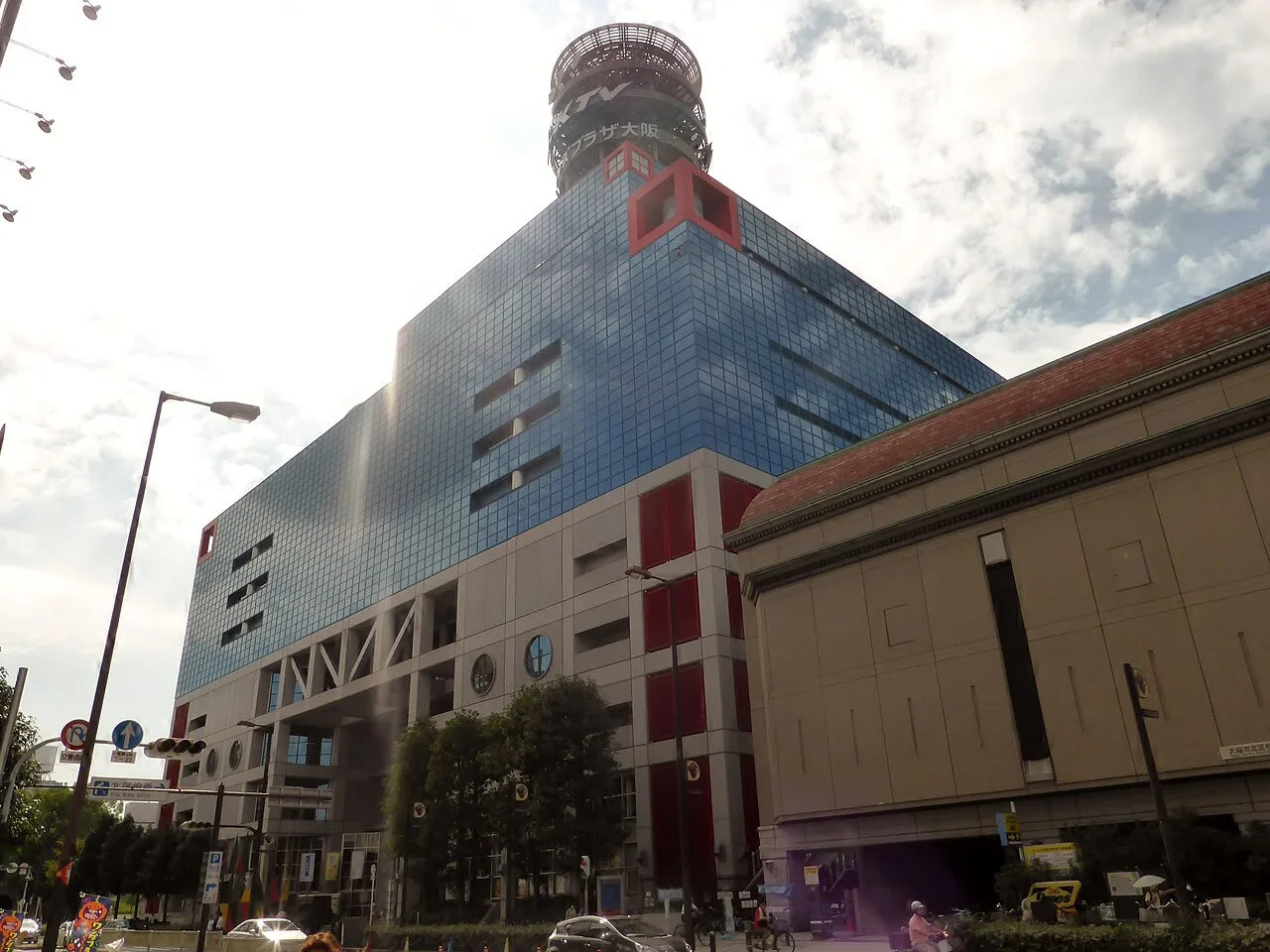
The museum sits at 2-1-7 Ogimachi, Kita Ward, Osaka. Ogimachi is also the station name: take the Osaka Metro Sakaisuji Line (K12). Head towards Exit 2 for the underground passage linking directly to the Kansai TV building, where the museum entrance is on 1F. If walking above ground, follow signs for 2-A 'Ogimachi Park' and look up for the blue glass facade and circular rooftop sign. Travellers with a pushchair or wheelchair can follow the step-free route via the lift from the platform to the North Ticket Gate, then a second lift to street level. When leaving the building later, do not mistake the 3F museum exit for a metro corridor—go down to ground level outside first.
If you are staying near Osaka Station, you can also ride one stop on the JR Osaka Loop Line to Temma Station and walk west for about 3 minutes, as listed by the museum. This approach brings you in from the shopping arcade side; on a clear day, note a landmark corner for meeting up later. From eastern Namba or Kuromon Market, board the Sakaisuji Line directly at Nippombashi. From western Namba, take the Sennichimae Line to Nippombashi and change to the Sakaisuji Line; from Tennoji, take the Tanimachi Line to Minami-morimachi and transfer there. Choosing the line closest to your hotel entrance matters more than saving a single stop, especially if one adult is juggling both a pushchair and luggage.
Step inside and pause at the 'Ball Circus' on 1F. Pick a ball and watch it wind along the tracks, ride a miniature Ferris wheel and drop to the lower level. Many children stop here straightaway to watch a full circuit, giving adults a moment to put away tickets, coats and IC cards. Then take the dedicated entrance lift up to 5F. Coin-return lockers (requiring a ¥500 coin deposit) are available by the 5F vending machines and near the TV studio, beside the 4F infant zone, and by the 3F stairs. Suitcases can be secured at the free locking bar on 5F, and pushchairs can be parked beside the 5F Children's Plaza or the 4F infant zone. Free loaner pushchairs (for ages 0–2) and wheelchairs are issued at the 1F information desk for use inside the museum only.
In transitional seasons, children often want to shed windbreakers once they start running around indoors. Small lockers measure 35 cm wide, 43 cm deep and 28–38 cm high, big enough to fold two people's jackets together. Anyone heading into Kids Town should stow long coats that might snag or trip them up, keeping just a water bottle and a light layer to hand. If shoes and socks got damp on the walk over, bring spare dry pairs to change into inside and retrieve your outdoor gear from the same floor before leaving. Should an accident happen indoors, clean-up showers are available in the 4F infant area and the 5F culture zone toilets.
From 3 November to 23 December 2026, the internal lifts serving 3F–5F are closed for maintenance. Families able to use the stairs can still walk down to 3F and exit as usual. During this period, the dedicated entrance lift operates in both directions, stopping at 1F, 4F and 5F. To travel between 4F or 5F and 3F by lift, ride down to the temporary 1F exit, step outside and switch to the external lift decorated with Kansai TV mascot Hachiemon; on 3F, turn right twice out of the lift and show your ticket at the re-entry desk. To head back up from 3F to 4F or 5F, turn left out of the 3F exit, take the external lift down to 1F and re-enter via the temporary 1F gate. Grouping 3F workshops around lunchtime avoids extra up-and-down detours.
| Starting Area | Rail Route | Arrival & Last Walk |
|---|---|---|
| Osaka Station / JR Umeda area | JR Osaka Loop Line to Temma Station | Walk west for about 3 minutes |
| Kuromon Market / Nippombashi | Sakaisuji Line bound for Tenjimbashisuji 6-chome to Ogimachi | Underground passage towards Exit 2 |
| Western Namba | Sennichimae Line to Nippombashi, change to Sakaisuji Line for Ogimachi | Step-free lifts via North Ticket Gate for pushchairs |
| Tennoji Station area | Tanimachi Line to Minami-morimachi, transfer one stop on Sakaisuji Line to Ogimachi | Follow museum signs to the 1F entrance |
Hundertwasser's Kids Town: Sliding from 5F to 4F
Step out of the lift on 5F and look into the central atrium. Curving walls, windows of every shape and size, and suspension bridges link both sides together. This 'Kids Town' was designed by Austrian artist Friedensreich Hundertwasser. Inside, children can climb walls, cross bridges and pop their heads out at unexpected windows. Walk round to the other side of the same wall and an opening you just spotted at eye level may suddenly be overhead. If your child has strong views on which route is quickest, let them choose the doorway while you follow along paths you can navigate together.
The Tube Slider starts on 5F and lands on 4F; look for the entrance sign on the upper level rather than queuing at the 4F exit chute where parents wait to collect riders. Children wearing short sleeves must put on the museum's protective arm covers to prevent friction burns against the tube walls. Rain boots and loose, slip-on shoes are not permitted—pack well-fitting shoes with heel straps if you plan to slide. Rides are one person at a time, subject to the 100 cm height minimum and age under 16. If a first-time rider wants a parent to go down with them, walk the suspension bridges together first to get comfortable with the height until they feel ready to enter alone.
When two adults are visiting together, one can queue at the 5F entrance while the other waits on 4F, splitting the climb and the pick-up cleanly. If you are a solo parent, ask the staff at the 5F slide entrance how escorting and collection work before joining the line. Visiting with a younger sibling as well? Agree beforehand who stays with the pushchair and the toddler so the group can reunite smoothly even as the queue shifts. Once down, meet on 4F before heading back upstairs for another go.
Arriving right at 9:30 leaves half an hour before the slide opens. Spend those 30 minutes watching the animations or testing hands-on displays in the 5F Nature & Science zone, then move over near the slide by 10:00. On a weekday close to 14:00, check directly with the 5F slide attendant first instead of touring other corners and missing the cut-off. Children under 100 cm can still explore the winding 4F corridors with a parent and hunt for different window shapes: ask an older sibling to spot which window looks out onto the suspension bridge while a younger one matches colours along the same wall.
Footsteps echo across the bridges here, and some passages narrow or curve out of sight. Begin with a stretch where your child can keep you in view. Children sensitive to noise, heights or busy crowds can look up from the 4F perimeter to see where the bridges lead before deciding whether to climb up. For a gentler pace, stick to the pretend-play shops on the same level; if siblings move at different speeds, one can tackle the climbing paths while the other reads picture books with an adult, meeting up later at the supermarket.
4F Supermarket, Post Office, Food Stalls and Picture Books
Follow 4F to 'Kids Street'. At Kids Mart, children pick groceries from the shelves, scan them at the till and return everything to its place afterwards. Younger siblings can choose ingredients for tonight's imaginary dinner while older ones work the checkout, then swap roles for the next round. Even a child whose hands are empty has a job—helping track down items on the aisles. To raise the challenge, name two items from memory and see if they can find both in one trip. No Japanese is needed when everything is right there to point to.
At the Post Office, work begins with sorting postcards according to the display prompts before heading out along the street to drop letters into the matching postboxes. Children who prefer running a shop can take over the hair salon, clinic, police box or street-food stalls ('yatai'), serving up toy takoyaki, sushi, bread and cakes. Once playing chef actually makes everyone hungry, move over to the multipurpose room or step outside for real food. Kids Mart and the Post Office normally run 10:15–16:45, so late arrivals should prioritise checkout and letter delivery ahead of crafts or snacks.
The Peekaboo playroom on 4F is tailored for children aged 0–2 with an accompanying parent. Three-year-olds may enter when accompanying a younger sibling, whereas energetic preschoolers on their own are better off in the surrounding Kids Street or the book corner. Nearby in the infant area, you will find nursing rooms, a baby-food dining space, hot water dispensers for formula and a sink. Accessible toilets on every floor include baby-changing tables. If an older child wants another turn in Kids Mart, one parent can stay on the same floor with the baby—set a meeting spot just outside both entrances so nobody has to search from 5F.
Do not miss the clinic and the underground pipework site. In the clinic, placing the stethoscope on the marked spots brings up diagnostic visuals on screen. Round the corner, the simulated plumbing trench lets children peek beneath the street and test how pipes connect together. After finishing a round as a postal worker, ask your child where the water goes from all those houses they just delivered letters to—the street's hidden infrastructure extends the game behind the shopfronts.
The 'Library' picture-book area requires taking shoes off. Around lunchtime, it offers a calm change of pace even if you only browse a few covers. If your family does not read Japanese, invent stories from the animals, meals and expressions on the page, or let your child supply sound effects and dialogue for the next spread. Watching how they respond here is also a quick gauge of whether to stay for an afternoon workshop or save energy for the park outside.
After playing with soap bubbles on 5F, children fascinated by shifting colours can check the schedule for Kids Lab on 4F. On 6, 7 and 13 December 2026, for instance, the 'Rainbow Room' ('Niji no Heya') workshop uses special films to uncover colours hidden in light. Preschoolers and parents can simply drop into the classroom on the day—last entry is 11:45 for the Monday morning session, or 15:45 for afternoon and Sunday sessions. If you are eating lunch at the round tables just outside, you can spot the classroom easily; finish food and drinks before going in.
5F Giant Soap Bubbles and Water Pumps
Head to the Soap Bubble Corner on 5F, normally open 10:00–16:30. Stepping inside a giant bubble feels like pulling a transparent curtain up from around your feet. One person stands inside the ring while someone outside operates the pulley as shown on the sign, drawing a thin film of solution skyward. From across the room, your child appears encased in swirling bands of colour. Let hesitant children watch someone else first—seeing another visitor poke the wall and pop it teaches them to keep hands tucked in when it is their turn. Two adults can split roles between pulling and photography; solo parents can ask staff to demonstrate the pull.
If the film snaps halfway up, try lifting more slowly next time. Viewed from the side, ribbons of blue, yellow and purple drift across the curved surface. Children waiting in line can trace a single band of colour with their eyes until the bubble bursts, then watch from another angle. When it is your turn, agree on a clear cue with the person pulling the ring so everyone knows when to lift.
From bubbles, walk over to the Splash Pump ('Jabu-jabu Pump'), where four hand pumps feed a large central bucket. Step back a pace and let children work out where the water flows after leaving each spout. Once the bucket fills to tipping point, it flips over in a sudden cascade. Two children can team up—one pumping, one calling out the water level—then swap. Expect a few splashes on cuffs and sleeves, so roll them up in cooler weather.
Nearby, the Bicycle Electromagnet links pedalling speed to magnetic force. Children can pedal to pull fine metal filaments upright, then slow down to watch how the strands settle. Just beyond sits a spinning zoetrope drum lined with slightly different drawings: peer through the slits as it turns and the figures spring into motion. If it spins too fast to follow, wait until the drum slows before looking again. Since the 3F AQUA studio lets children animate their own drawings later, picking up a simple movement idea here saves staring at a blank tablet screen in the afternoon.
For sound experiments, try the 'Moshi-moshi Tube' speaking pipes—one person whispers at one end while another listens across the display—or step into the 'Funny Voice' booth that alters your pitch. The ball-track zone features two parallel chutes for side-by-side races and stays open until 16:30. Have two children release their balls at the exact same moment and follow which one finishes first. On a half-day visit balancing science with the castle, pick either the ball tracks or water pumps and keep 15 minutes free for other hands-on exhibits.
At 'Barrier Town', families can experience how different road surfaces resist a wheelchair's tyres and examine height differences on the pavement before trying tactile recognition boxes at 'See with Hands, See with Eyes'. Continue into the Multicultural Square to try world musical instruments, spinning tops or kendama. Korean traditional dress try-ons are listed under World Box, generally open 10:00–16:45. If anyone needs a breather after the science displays, return to one of these gentler corners on the same floor.
Present the Weather or Dub an Animation
On 5F, 'Waiwai Studio' houses both a TV news studio and a sound-effects booth. A young weather presenter stands before a plain backdrop while the monitor composites them live onto a broadcast map. Children can test where to point first and check the screen to see if their hand lines up with the forecast graphic. Practise one short weather line together beforehand so stepping in front of the camera does not feel daunting. A sibling off-camera can act out 'heavy rain' beside them for extra fun.
Voice-acting and Foley sound effects share the same zone. On-screen animated characters open and close their mouths on cue, challenging dubbers to match the timing when they stop. Sound-effects participants use props alongside the footage—try guessing together outside whether footsteps should sound light or heavy before going in. Once inside, check whether that session is running voice dubbing or Foley demonstration and follow the staff prompts. Shy visitors are welcome to watch family members record rather than everyone taking a turn on the mic.
News and voice-acting programmes are scheduled separately on the museum calendar. For December 2026, the news studio runs on open days from 1–27 December with on-site registration: morning sessions 10:00–12:00 (last sign-up 11:50) and afternoon sessions 13:00–16:45 (last sign-up 16:35). Groups are capped at five people including parents (preschoolers must be accompanied), each slot lasts around 4 minutes, and participation is free with admission. When checking event listings, note both the start time and the final reception cut-off so latecomers can pivot smoothly to another floor.
If you enter on an afternoon ticket, check the sound booth and news studio schedules separately. Standard sound-booth hours are 10:00–12:00, 13:00–14:00 and 15:20–16:45; during the 14:00–15:20 break, head over to the water pumps or downstairs to the role-play shops. The news studio also closes for a one-hour midday break, so families visiting only around lunch should check which block is open first and record before eating.
On 24 December 2026, Kansai TV announcers present a Christmas kamishibai picture-card storytelling show in the 5F Kids Plaza Hall. Shows run at 11:30 and 13:30, with same-day numbered tickets distributed outside the hall from 9:30 (50 people per show; up to five tickets per person in the queue). If your children want to hear professional voice delivery before trying the studio themselves, put this show earlier in your route. Because kamishibai tells the story through sequential illustrated boards, even visitors who do not follow Japanese can easily trace the plot.
3F Cardboard Crafts and Remote-Control Trains
The 3F level brings together the Craft Studio, Computer Studio, AQUA Digital Square and the regular museum exit. Start by distinguishing scheduled workshop rooms from drop-in interactive exhibits. At AQUA, 'Flying Silhouette' projects your shadow onto a giant screen from 9:30 to 16:45, while 'One-Frame Animation' lets visitors build frame-by-frame finger animations during 9:30–12:00 and 13:00–16:15. Passing through at noon makes a natural break for lunch before returning to turn the zoetrope movement you saw upstairs into your own short clip.
Projects at the Craft Studio rotate seasonally. For December 2026's cardboard workshop, children aged 3 and over choose from cut pieces of different shapes to assemble their own creation. Give younger builders a moment beforehand to feel the edges and test which pieces stand upright without tipping over. The workshop runs on selected Fridays, Saturdays and Sundays from 5 to 27 December; on weekends, same-day session tickets are handed out outside the studio from 9:30 (Friday 25 December also follows the weekend ticket system). Picking up an afternoon slot in the morning lets you explore the science zone without rushing downstairs at the last minute.
The Computer Studio also runs ticketed sessions. In December 2026, the remote-control toy train workshop takes place on Wednesdays, Saturdays and Sundays from 2–27 December, letting children drive model trains wirelessly. Weekday places are handled during workshop hours, whereas weekends distribute tickets first-come, first-served from 9:30 (six participants per slot, times assigned on the ticket). The train session carries no extra fee, though preschoolers need a parent beside them. If your child has their heart set on the trains, make 3F ticket collection your first stop instead of lingering by the slide. Note that the Computer Studio sometimes doubles as a rest room while certain digital activities move next door to AQUA—always check the 'location' line on the event listing before queuing.
Trying to catch both cardboard crafts and the trains on a weekend can be tricky, so decide in advance which one matters less if times clash. Both require queuing near their studios, though you can choose your cardboard slot while train times are assigned in order. Once your slots are locked in, plan lunch and upstairs play around them. If you leave with a bulky cardboard creation, pause by the 3F exit to sort coats and bags first—carrying a long model at your side is much easier on trains and station stairs than letting a child run with it.
Finished crafting early while waiting for the rest of the family? Browse the museum shop beside the 3F exit, open 11:00–17:00 on operating days, for spinning tops and kendama like the ones upstairs. It also stocks science experiment kits, wooden puzzles and museum-original souvenirs, and connects straight to the external lift down to street level.
Lunch on Tenjinbashisuji and Sunny Play in Ogimachi Park
There is no restaurant inside Kids Plaza Osaka. Families bringing packed lunches can eat in the 4F Multipurpose Room or check for free round tables near Kids Lab. If school groups fill the space, eat slightly early or head towards Temma Station for sit-down restaurants. Drinks and light snacks are sold at vending machines on 4F and 5F. Pack food that can be eaten at room temperature, as there are no public microwaves or kettles for warming meals—hot water is provided exclusively in the infant zone for preparing baby formula.
To eat outside, leave through the regular 3F exit with everyone's same-day tickets tucked safely in one pocket, and present them at the same gate to re-enter. During the 2026 lift works (3 November to 23 December), families needing a lift must use the temporary 1F exit and re-entry gate instead. Museum rules require adults and children to leave and return together, so take the whole family out at once. If one parent needs to stay behind with a sleeping or resting child, eating indoors saves an extra round of re-grouping.
Tenjinbashisuji Shopping Street's 4-bancho, 4-chome North and Temma Station stretches sit just across the road. Walk east across Sakaisuji Avenue to reach the covered arcade, remembering to stow umbrellas once under the roof. With hungry children in tow, look for noodle shops, rice bowls or convenience stores near Ogimachi Station Exit 4 rather than walking the entire length of the arcade—getting seated quickly matters more than covering ground. To keep a pushchair unfolded, ask staff at the door, 'Bebika no mama hairemasu ka?' ('May we come in with the pushchair?'). If bringing takeaway back to eat inside, secure seats first before letting children run back to the exhibits. If you are done for the day after lunch, continue to Temma Station for the JR Loop Line back to Osaka Station.
Returning after lunch is straightforward: walk back towards Ogimachi Station Exit 4 and cross the avenue into the Kansai TV building. If it is nearly naptime after you finish at the museum, stroll north from Temma along the covered arcade towards Tenjimbashisuji 6-chome and catch the underground from the nearest station. Save that leisurely browse for the end of your visit rather than before a timed workshop—street snacks and overhead shop signs give children plenty of excuses to stop every few steps.
When the skies clear, Ogimachi Park right next door offers open lawns and a newly renovated playground area that reopened in May 2026. Its hillside features three types of large slides—roller, tube and wide chute—built for ages 6–12. Relying on the natural slope, these outdoor slides feel quite different from the indoor castle chute. After rain, check that the slide surfaces and hillside paths have dried before climbing up. If an older child wants to play while a toddler cannot join on the big equipment, one parent can stay on the grass perimeter while the other accompanies the older sibling.
For a half-day plan, arrive around 9:30, tackle the 10:00 slide or soap bubbles first, drop to 4F for the supermarket or post office, and finish on 3F before leaving. For a full Ogimachi day, step out for lunch first and decide afterwards whether to return for workshops or head into the park. If sunshine breaks through mid-afternoon, finish any pre-booked studio slot before stepping outside. And if your child is still talking about how high they stretched a soap bubble as you leave, save the park for another dry day and retrace your steps to Ogimachi Station.
A few useful answers
Do you need advance reservations for Kids Plaza Osaka?
No—individual families do not need reservations and can buy same-day tickets on 1F. Workshops and studio programmes are booked separately inside on the day, with some weekend sessions handing out numbered tickets on their respective floors right after opening.
Which Ogimachi Station exit should I take, and what is the pushchair route?
On the Sakaisuji Line, follow signs at Ogimachi Station towards Exit 2 for the underground passage into the Kansai TV building. With a pushchair, take the lift from the platform to the North Ticket Gate and a second lift to street level, then head to the 1F entrance.
Can you still ride the Tube Slider with an afternoon discount ticket?
On weekdays, the Tube Slider closes at 14:00, so you will need a standard ticket and an earlier arrival to ride it. The weekday afternoon Rainbow Ticket (Niji-kara) goes on sale at 14:00 and still gives you time for the soap bubbles, Kids Street and afternoon workshops.
How tall do children need to be for the castle's Tube Slider?
Riders must be at least 100 cm tall and under 16 years old, riding one at a time. Children in short sleeves must wear the provided arm covers, and rain boots or loose slip-on shoes are not allowed.
Can we leave for lunch and come back into Kids Plaza Osaka?
Yes—you can re-enter on the same day via the 3F gate by showing everyone's admission tickets. During lift maintenance from 3 November to 23 December 2026, a temporary 1F exit and re-entry gate is also open.
Is Kids Plaza Osaka worth visiting with a 2-year-old?
Yes—children aged 0–2 enter free, and the 4F Peekaboo playroom is designed specifically for them with accompanying parents, right beside nursing and baby-food spaces. Toddlers also enjoy watching the 1F Ball Circus and exploring the 4F role-play street with family.
Official information and references
Sources used in this guide.
- Kids Plaza Osaka Visitor Information and Access
- Kids Plaza Osaka FAQ: Dining and Re-entry Rules
- Standard Advance Ticket Outlets and Terms of Use
- Kids Plaza Osaka Year-End and New Year Closure Notice
- Kids Plaza Osaka Lift Maintenance and Alternative Access Routes
- Traditional Chinese Detour Map During Lift Maintenance (PDF)
- Kids Plaza Osaka Congestion Forecast Calendar
- Kids Plaza Osaka Floor Guide and Zone Entrances
- Kids Plaza Osaka Official Floor Map (PDF)
- Kids Town and Friedensreich Hundertwasser's Design
- 1F Ball Circus Exhibit
- Tube Slider Operating Hours and Safety Requirements
- Kids Mart, Post Office and Role-Play Street
- Peekaboo Playroom and Accompanying Sibling Rules
- Nature & Science Zone and Soap Bubble Hours
- World Musical Instruments, Toys and Traditional Dress
- AQUA Digital Square and Exhibit Opening Hours
- Kids Plaza Osaka Event Calendar
- December 2026 TV News Programme Experience
- December 2026 Cardboard Craft Workshop
- December 2026 Remote-Control Train Workshop
- Osaka Metro Ogimachi Station Exits and Map
- Osaka Metro Tenjinbashisuji Shopping Street Guide
- Osaka City Ogimachi Park Overview and Station Access
- Ogimachi Park Playground Reopening and Age Guidelines
- Ogimachi Park Playground Slides Overview
- Osaka City Exhibit Inventory (Water Pumps, Sound and Everyday Science)
- Kansai TV Building and Ogimachi Station Underground Passage
- Osaka Metro Ogimachi Station Layout (North Ticket Gate and Lifts)
- Kids Plaza Osaka TV Studio and Sound Booth Hours
- December 2026 Rainbow Room (Niji no Heya) Workshop Details
- 24 December 2026 Kansai TV Announcer Kamishibai Storytelling
- Kids Plaza Osaka Computer Studio
- 3F Museum Shop
- 5F Accessibility and Tactile Exhibits