Compare pay-as-you-go rides with unlimited passes at Hirakata Park from Osaka or Kyoto. Covers ELF and Red Falcon height rules, closure dates, toddler half-days, rainy-day options, and 2026–2027 winter illuminations and ice skating.
- Region & Focus
- Osaka
- Reading Scope
- 20 min read · 9 chapters · 5 Q&As
- Official Verification
- 24 official sources checkedUpdated 22 November 2026
- Key Topics
- ItinerariesBookingRail travel
Chapter Route Map (tap any stop)
- Two adults and one child can each buy a different ticket
- 110cm and 120cm decide how you plan the two rollercoasters
- Take the Keihan Railway and alight at Hirakata-koen Station
- When the Keihan Go!Go! ticket beats paying with an IC card
- Dry-weather plans for primary-schoolers and half-day toddlers
- Cross off both rollercoasters first when it rains
- Visit the rose garden in spring or autumn, and check dates for the illuminations
- Winter Carnival skating and snow play are priced separately
- Which day of your Osaka or Kyoto trip fits Hirakata best
- Quick Q&A
Children need to be at least 110cm tall to ride ELF, Hirakata Park's wooden rollercoaster, and 120cm for the 1,300-metre Red Falcon. If you are visiting with pre-schoolers for the miniature train, carousel and rose garden, admission plus individual ride tickets is plenty. An unlimited ride pass only pays off if the whole family plans to stay from opening until late afternoon and qualifies for plenty of attractions. From Osaka's Yodoyabashi or Kyobashi, or Kyoto's Tambabashi, take the Keihan Railway to Hirakata-koen Station, a three-minute walk from the main gate. If you are planning a trip between late November and December 2026 specifically for Red Falcon, strike out its scheduled maintenance closure from 27 November to 23 December first.
Two adults and one child can each buy a different ticket
The booking page groups secondary-school pupils and adults together as Adults, places primary-school pupils in their own tier, and classifies children aged 2 and over who have not yet started primary school as Kids. Booked online via the park's official links to Asoview! or KKday, standard daytime admission is ¥1,900 for Adults and ¥1,100 each for primary-school pupils and Kids. At the ticket booth on the day, those three tiers cost ¥2,000, ¥1,200 and ¥1,200. Children under 2 enter free, though an accompanying adult on the carousel must still pay for that ride. If you are simply strolling around with a one-year-old, budget solely for adult admission.
Through the same online channels, a combined daytime admission and unlimited ride pass (Free Pass) costs ¥5,300 for Adults, ¥4,500 for primary-school pupils and ¥3,200 for Kids, compared with ¥5,400, ¥4,600 and ¥3,300 on the gate. Within either channel, upgrading to the Free Pass adds ¥3,400 for Adults and primary-school pupils, or ¥2,100 for Kids. Tally up the attractions each person will definitely ride before committing. A primary-school child riding both rollercoasters once each, plus the Ferris wheel, carousel and miniature train, spends ¥3,000 in individual ride fares — still ¥400 short of the pass upgrade. Adding one screening at the 4D theatre pushes that total to ¥3,500. If your child only wants to ride one favourite attraction repeatedly all day, simply multiply its single-ride price by the number of turns.
For a pre-schooler aged 2 or over riding the carousel (¥300), miniature train (¥400), Ferris wheel (¥600) and strawberry teacups (¥400) once each, individual fares come to ¥1,700 — ¥400 less than the Kids Free Pass upgrade. One adult accompanying that child rides the carousel free of charge, so an adult joining all four rides pays ¥1,400. If two adults take turns going on rides, add up only the fares each person actually uses. Anyone staying off the rides to look after a younger sibling needs only standard admission, while family members who want unlimited rides can buy their own passes individually.
Visitors already holding a Keihan combo ticket that includes park admission can top up with a standalone daytime Free Pass at ¥3,400 for Adults and primary-school pupils, or ¥2,100 for Kids. When the family has not yet decided on the day's pace, enter with basic admission and purchase individual ride tickets (norimono-ken) on site or through the park's mobile e-ticketing portal at each attraction's posted price. On a weekend with two children of very different ages, picking one must-do ride each in advance prevents you from chasing queues late in the afternoon just to break even on a pass.
The Free Pass also covers Planet Aqua Port where listed on the park's pass eligibility schedule, whereas Winter Carnival, special events and Priority Passes use separate tickets. Always pick your visit date on the operating calendar before opening that day's ticket page. General online tickets for November 2026 to March 2027 went on sale at 10:00 JST on 30 September 2026, with Winter Carnival tickets opening separately from 10:00 JST on 20 November. Double-check the date, the ticket quantities across all three age brackets and the entry window before paying, and divide up the QR tickets beforehand if members of your group are arriving separately.
| Ticket type | Purchase method | Adult (12+) | Primary school | Kids (2 to pre-school) |
|---|---|---|---|---|
| Admission | Asoview! / KKday advance | ¥1,900 | ¥1,100 | ¥1,100 |
| Admission | At the gate | ¥2,000 | ¥1,200 | ¥1,200 |
| Admission + Free Pass | Asoview! / KKday advance | ¥5,300 | ¥4,500 | ¥3,200 |
| Admission + Free Pass | At the gate | ¥5,400 | ¥4,600 | ¥3,300 |
| Free Pass only | With separate admission | ¥3,400 | ¥3,400 | ¥2,100 |
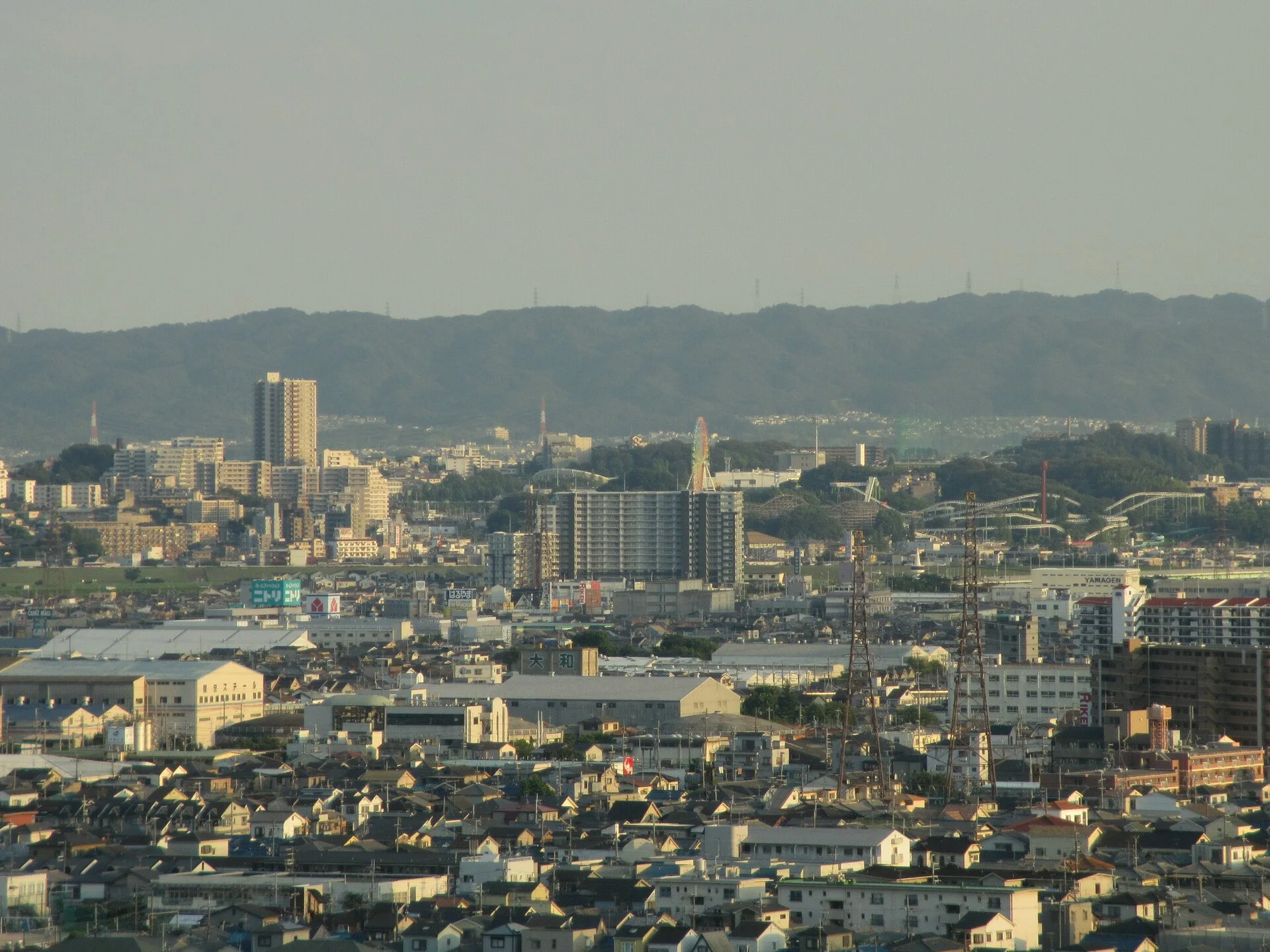
Compare pay-as-you-go rides with unlimited passes at Hirakata Park from Osaka or Kyoto. Covers ELF and Red Falcon height rules, closure dates, toddler half-days, rainy-day options, and 2026–2027 winter illuminations and ice skating.
110cm and 120cm decide how you plan the two rollercoasters
ELF, the wooden rollercoaster marked number 3 on the park map, costs ¥800 per ride and requires a minimum height of 110cm. Its tight turns through the timber framework and pronounced lateral sway are the main draw, and even first-time rollercoaster riders can find it lively. Red Falcon (number 13) costs ¥900 per ride, requires 120cm, and is listed by the park at 1,300 metres long with a top speed of 70 km/h. Both are included in the Free Pass and both close in the rain. If a child meets the height mark but seems nervous, watch one run from the path outside first and let them decide before joining the queue.
For children between 110cm and 119cm, make ELF the centrepiece of your morning. If they want more gentle thrills, look for Wizard's Magical Jumpin' on the map, which opens at 105cm, and save your ride budget for attractions they can definitely board. For children under 110cm, the miniature train and Ferris wheel still offer height and movement without height barriers. Measure borderline children at home before setting out, and check the entrance height gauge with staff before queuing so the family is not split at the boarding platform. Neither rollercoaster allows under-height children on board even with an accompanying adult.
Check both the age and chaperone columns when reading ride restrictions, as the park requires accompanying companions to be at least 15 years old while fares generally apply from age 2. On the Gnome Train, for example, children aged 4 and under need an eligible companion — up to five children per companion — whereas ages 5 and up can ride solo. When an adult rides the double-decker carousel with a one-year-old, the toddler travels free while the adult still buys a ¥300 ride ticket. If an older sibling is under 15, put the two children together and have an adult board as the official chaperone.
Any opening-hour dash straight to Red Falcon needs rethinking between 27 November and 23 December 2026, when the ride has a scheduled maintenance closure. The hairpin-turn Crazy Mouse coaster is also listed as closed from 5 to 15 December. For keen riders visiting in early December, build a dry-weather morning around ELF alongside the Ferris wheel, Wizard's Magical Jumpin' and other eligible rides on the park map. If both headline coasters are essential, shift your travel date and verify the main ride list on the park's Attraction Closure Information page. The operating calendar only shows whether the park gates open; individual rides follow their own maintenance schedules.
Priority Passes for ELF and Red Falcon cost an extra ¥500 per person per ride, on top of regular admission or a Free Pass, and riders must still meet standard height rules. They are sold on the day only via Asoview! between 09:30 and 30 minutes before the ride closes, granting entry through a dedicated lane during your chosen slot. Hold off buying if a child is napping, needs a nappy change or if part of the family is queuing elsewhere, until everyone can reach the entrance on time. PACHANGA also offers a per-boat Priority Pass at ¥1,500 for up to six riders; if your group splits across two boats, factor both boats into the cost.
Take the Keihan Railway and alight at Hirakata-koen Station
If you are staying around Osaka Umeda, take the JR Osaka Loop Line from Osaka Station to Kyobashi, or ride one stop on the Osaka Metro Midosuji Line from Umeda to Yodoyabashi, then transfer to the Keihan Main Line. Travellers staying near Namba or Shin-Osaka can also take the Midosuji Line straight to Yodoyabashi. Because Yodoyabashi is the terminus of the Keihan Main Line, boarding with a pushchair is far easier than squeezing along a full carriage mid-route. Some Keihan trains terminate before Hirakata-koen, such as services ending at Kayashima, so check station boards or your route planner to make sure the train stops at KH20 rather than forcing an unexpected change.
On the Keihan station timetable, Limited Express, Rapid Limited Express Rakuraku, Rapid Express and Commuter Rapid Express services are greyed out and bypass Hirakata-koen. Express, Sub-Express, Commuter Sub-Express, Section Express and Local trains all call there. From the Osaka side, aim for a service stopping directly at KH20; if a journey planner routes you via an Express or Limited Express stopping at Hirakatashi, change there for one stop back towards Osaka. From Kyoto, if you reach Hirakatashi first, transfer to an Osaka-bound train that calls at Hirakata-koen. With more than one toddler in tow, waiting a few minutes for a direct Sub-Express is usually calmer than herding everyone across platforms.
From Kyoto Station, the park's recommended route is the Kintetsu Kyoto Line to Kintetsu Tambabashi, followed by a short walk to Keihan Tambabashi. Guests staying in Gion, Sanjo or near Fushimi Inari can simply board an Osaka-bound Keihan train from their nearest Keihan station. On the Kyoto side, services heading past Hirakata-koen are signed for Yodoyabashi or the Nakanoshima Line, so check both the train type and final destination before boarding. If you are moving hotels that day, leave large suitcases at your previous accommodation for collection or use a luggage delivery service to your next hotel. Hauling two big cases through Tambabashi and into the park's rest areas quickly complicates boarding and nap times.
The walk from Hirakata-koen Station to the main gate takes roughly three minutes: exit via the East Ticket Gate and head south. Trains from Kyoto arrive at Platform 2, which leads directly to the East Gate; trains from Osaka arrive at Platform 1, linked to the West Gate, with a stepped underpass connecting to the east side. Visitors with pushchairs or wheelchairs can use the ramp on the arrival platform side to exit at street level and walk to the main gate along the road. The West Gate is unstaffed all day and the East Gate has unstaffed hours too, so use the intercom if you run into a ticket or barrier issue. For the return journey, board from Platform 2 for Yodoyabashi and Nakanoshima, or Platform 1 for Sanjo and Demachiyanagi.
From JR Takatsuki or Hankyu Takatsuki-shi, the park's alternative public transport link is a Keihan Bus to Hirakata-koen-guchi, followed by about a 10-minute walk. Note that there is a similarly named bus stop, Hirakata-koen-ekimae, so check the map and enter Hirakata-koen-guchi when looking up buses from Takatsuki. If you are based in central Osaka or along the Keihan corridor in Kyoto, the train drops you closer to the gate. Coming from Kobe, the park recommends taking JR to Osaka Station, connecting to the Osaka Loop Line to Kyobashi and switching to Keihan, avoiding an extra underground transfer.
If you want dinner or shopping after leaving the park, ride one extra stop to Hirakatashi Station. If everyone has eaten inside and the children are ready for bed, head straight back to your hotel and skip the extra stop. Anyone staying for evening illuminations should check the weekday or weekend/holiday timetable on the Keihan Hirakata-koen Station page, noting your return direction and interchange station. Make sure the last Keihan service connects cleanly with your final Osaka Metro, JR or Kintetsu train, as catching the last Keihan departure does not guarantee the final onward connection.
Standard car parking at the park costs ¥2,000 on normal days and rises to ¥3,000 on designated peak dates, including 24, 25 and 28–30 December 2026 and 2–3 January 2027. When the park car park is full, staff direct drivers to public car parks around Hirakatashi Station to ride one stop back on the Keihan Line, a detour that takes about 30 minutes from moving the car to reaching the gate. The park also warns that exiting the car park after Christmas evening closing can take over an hour, making the train far simpler if you are staying in the city. If you do drive, note public car parks around Hirakatashi in advance so you can pivot smoothly if the main lot fills up.
When the Keihan Go!Go! ticket beats paying with an IC card
Keihan's station fare chart lists a standard adult single from Yodoyabashi, Kyobashi or Tambabashi to Hirakata-koen at ¥400. A same-day return journey plus the ¥1,900 online admission ticket therefore comes to ¥2,700. By contrast, Keihan's digital Hirapar Go!Go! Ticket costs ¥2,200 for Adults and ¥1,250 for primary-school children, bundling park admission with unlimited one-day Keihan rides in the designated zone. Starting from Yodoyabashi, an adult saves ¥500 straight away, before counting any separate Osaka Metro fare such as the Midosuji Line leg to reach Yodoyabashi.
The savings hold even if every adult plans to buy an unlimited ride pass. Returning from Yodoyabashi with the ¥5,300 online admission-and-Free-Pass bundle plus ¥800 in train fares totals ¥6,100. Pairing the ¥2,200 Keihan Go!Go! ticket with a standalone ¥3,400 Free Pass brings the total down to ¥5,600 instead. If you are still unsure how many rides you will manage, buying the transport-and-admission pass keeps your options open to add single rides or upgrade once you are inside.
This Keihan digital pass is valid for one park operating day between 1 April 2026 and 31 March 2027, covering the Keihan Main Line and the Iwashimizu-Hachimangu Sando Cable, though excluding the Otsu Line. The child version is for primary-school pupils and does not cover the park's Kids tier (ages 2 to pre-school), whose admission must be bought separately from the park. If you are staying in Umeda or Namba and using the underground at both ends of the day, check Keihan's ticket page for the Osaka Metro combined edition too, after checking whether any city transit pass you already hold covers the underground leg.
The Go!Go! e-ticket requires registration on Surutto QRtto and payment by credit card, with a limit of four adult or child tickets per transaction that can be distributed to companions. At railway stations, use the dedicated QR-enabled ticket gates. Station travel and park entry sit on separate tabs inside the pass screen: at the park gate, open the park tab, scan the QR code displayed near the entrance as instructed by Keihan, and show the screen to staff. Groups needing five or more tickets can split them across two bookings, and if grandparents are travelling on paper tickets while parents scan children through on phones, agree on a meeting spot outside the gate beforehand.
Dry-weather plans for primary-schoolers and half-day toddlers
For primary-schoolers keen to maximise rides, arrive near opening time and tackle the family's top picks straight away. The two main rollercoasters sit in different parts of the park, so pairing map numbers 3 and 13 in the morning and picking one nearby attraction the siblings can share on the walk between them works well. If you arrive around midday, eat something and visit the loos before chasing queues; starting with a long wait on an empty stomach leaves younger children remembering little else. Arriving early also tells you after the very first ride whether anyone prefers slower attractions.
For three- and four-year-olds, a comfortable half-day runs from the miniature train to the carousel, followed by the Ferris wheel after lunch if energy holds. Because the grounds have slopes, group pushchair-friendly rides along the same walkway first and save the rose garden stroll for the walk back towards the exit. When an older sibling meets the wooden rollercoaster height limit and a younger one does not, one adult can ride with the elder child while the other stays with the toddler on a nearby ride in the same zone, swapping roles on the next round. Pick a named service counter as your meeting point rather than trying to guess benches by text.
If you want a proper sit-down lunch, Gnome Dining inside the park makes a natural midday anchor before an afternoon pause. Bringing your own packed lunch is permitted — including into the summer pool and winter snow zones — though outside food cannot be taken into park restaurants or the BBQ area. Same-day re-entry is allowed if you prefer to eat outside, provided you inform staff at the exit gate first. Taking the train one stop to Hirakatashi Station for lunch and walking back adds transfer and waiting time, so eating on site is usually much smoother with toddlers.
Families combining daytime entry with evening illuminations can have dinner inside the park, provided you check which outlets remain open rather than assuming everything stays open until closing time. Otherwise, stop for dinner after alighting at Kyobashi or Yodoyabashi on the way back into Osaka. Several shops and machines accept ICOCA, credit cards or mobile payments, though availability varies by counter and machine. Keep a little cash handy for spontaneous single-ride tickets, pushchair hire or coin lockers so nobody is stuck waiting while you track down a compatible payment terminal.
Baby-care rooms with nappy-changing tables, hot water for formula and nursing spaces are located at both the Main Gate Information Centre and the Central Information Centre near Hub Plaza. Compact B-type pushchairs can only be hired and returned at the Main Gate Information Centre for ¥500 plus a refundable ¥1,500 deposit, with no advance booking. If your child needs a lie-flat bassinet or naps reliably only in their own buggy, bring yours from home. Coin lockers sit beside the Main Gate Information Centre for dropping spare clothes on arrival, with another bank near Dippin' Dots ice cream inside the park.
Leave a buffer before closing time for packing up. Return hired pushchairs, collect locker items and change damp clothes back near the main gate rather than scheduling your last ride at the far end of the park. If older relatives, expectant parents or wheelchair users are in your group, they can rest at a café or join a gentle garden stroll while others queue. According to the park's FAQ, the 360° 4D Theatre is accessible while seated in a wheelchair, while other rides have individual boarding and safety rules, making the theatre, lunch and flower gardens the easiest shared moments for mixed-mobility groups. Pick your start time for a relaxed half-day around whenever your youngest child is most awake.
Cross off both rollercoasters first when it rains
In light rain, the park's wet-weather guide points families towards indoor attractions such as the 4D Theatre, the Witch's Labyrinth and shooting rides. You will still walk outdoors between queues and pavilions, so waterproofs and a spare bag for wet coats are far handier than fussing with umbrellas at every doorway. If a child dislikes dark rooms or loud audio, preview what is showing at the 4D Theatre or choose the indoor Witch's Labyrinth instead. The carousel, miniature train and a few covered rides continue operating in gentle rain, though strong winds or heavy downpours shrink the roster quickly — use the park's live closure board to trim your list on the day.
If heavy rain and wind are forecast all day and your group's main reason for going is ELF and Red Falcon, move Hirakata to another day. Families staying in central Osaka who want an all-weather substitute can swap that slot for Osaka Aquarium Kaiyukan, spending half a day inside the tanks and leaving the rest of the day for lunch and easy transit. If you only wanted a gentle stroll through the gardens and a couple of sheltered rides, buy basic admission plus individual ride tickets and play the rest by ear. For toddlers on a wet day, pick two neighbouring indoor stops rather than traipsing back and forth across sloping paths under umbrellas.
If a passing shower clears and outdoor attractions reopen, head straight for whichever ride your children want most. Normal park closing times, individual ride cut-offs and seasonal zone hours can differ, so check when a reopened ride closes its queue too. Should shoes or socks get soaked, pause at a rest area to change into dry spares before tackling a distant corner of the park. Save the Ferris wheel for clear visibility after the rain passes, or put that budget towards indoor attractions if low cloud lingers.
Visit the rose garden in spring or autumn, and check dates for the illuminations
Established in 1955, the rose garden holds roughly 4,000 bushes across 600 varieties. Typical peak blooms run from early to late May and from mid-October to late November, with the park's bloom update marking peak flowering on 21 November 2026. Spring showcases heritage species roses that bloom only once a year, while autumn highlights repeat-flowering varieties. During peak bloom, adults keen on photography can start with the rose arches and main beds before agreeing on a meeting point once children finish a set of rides. Even with just two or three spare hours, standard admission lets you pair a garden walk with one spin on the Ferris wheel.
The Hikari no Yuenchi illumination event runs on selected dates between 31 October 2026 and 4 April 2027. Check the illumination calendar on the event page first to confirm both operating dates and lighting-up hours. For instance, the park stays open from 10:00 to 20:00 on 5 December and 10:00 to 21:00 on 24 and 25 December, but closes early at 17:00 on 31 December, while blank weekdays such as 7 or 17 December have no evening illuminations at all. If you want daytime attractions as well, ride those before late afternoon; once the lights switch on, only attractions on the night-operating roster stay open.
Anyone already holding daytime admission can stay on to see the lights. If you are arriving specifically from 16:00 and also plan to go on night rides, the Night Admission + Night Free Pass costs ¥3,900 for Adults, ¥3,300 for primary-school pupils and ¥2,500 for Kids online. Note that 16:00 on the night pass marks when evening entry and pass perks begin, while actual switch-on times follow the illumination calendar. Families who only want to stroll among the lights need just standard admission — and if you will only add one ¥600 Ferris wheel ride, compare that total before buying a pass, especially if tired children will want to head back to the hotel around 18:00.
The park states that the main Floral Fairy Castle sound-and-light show plays at 00, 15, 30 and 45 minutes past each hour, while the Lantern Plaza show runs at 10, 25, 40 and 55 minutes past. If you are already in a ride queue when a show starts, wait for the next 15-minute cycle rather than sprinting across the park. Temperatures drop sharply after dark, so keep extra layers handy when walking between the Ferris wheel and the garden, and schedule dinner or a group regrouping right after a show. With toddlers, arriving after 16:00 for one light show and one gentle ride leaves plenty of time to catch a train back into the city for dinner.
Winter Carnival skating and snow play are priced separately
The 2026–2027 Winter Carnival runs from 19 December 2026 to 28 February 2027, with scheduled closed days in between. To enter both the theme park and the snow-and-ice area, online combination tickets cost ¥2,600 for Adults and ¥1,800 each for primary-school pupils and Kids. Visitors who already hold a Keihan combo ticket or standard admission can add Winter Carnival entry on site for ¥700 per person. Bear in mind that the Free Pass covers regular park rides only; carnival games and skate or sled hire cost extra. If only part of your group wants to skate, count only those entrants for the Winter Carnival add-on and arrange to meet everyone else at the garden or a café.
Gloves that cover the fingertips completely are mandatory both on the ice rink and in the snow play area. Ice skate hire costs ¥700, in half-centimetre increments from 15cm to 31cm, with limited twin-blade skates available in 1cm steps from 15cm to 18cm. Families skating for the first time can start on the Baby Rink, which gives priority to pre-school and primary-school children and has lower handrails. Helmets are free to borrow, and if the smallest skates are still too big or a child decides against the ice, switch smoothly to the snow zone instead. Snow sled hire costs ¥700 plus a refundable ¥1,000 deposit, and any toys or sleds brought from home must be plastic.
Plan skating for earlier in the day so you can decide in the afternoon whether to stay for the evening lights or return to Osaka. Pack water-resistant outer layers, spare gloves and extra socks, and use the changing space inside the skate rental building after finishing in the snow. Both the skate rental building and the rink side have ¥400 re-openable coin lockers (which return ¥100 on final collection) alongside larger ¥600 lockers. Anyone waiting off the ice can warm up in an indoor café and rejoin at an agreed time. Walking straight from the cold rink out to the evening illuminations feels chilly if your gloves are damp, so change into dry pairs first.
In summer, the seasonal attraction switches to The Boon outdoor water park, which historically operates from mid-July to early September. Water park tickets are sold alongside or separately from standard admission, so families planning a water-focused day should build changing, lunch and drying-off into the schedule and leave just one or two favourite rides for the afternoon. For summer holiday planning in 2027, confirm exact opening dates on the official summer pool page before booking nearby hotels. If you are travelling out from central Osaka just for the pools, arrive early and pack waterproof dry bags for wet swimwear so you are not carrying dripping towels back to the train.
Which day of your Osaka or Kyoto trip fits Hirakata best
If your base is Osaka and your focus is family rides or seasonal events, there is no need to move hotels. Take the morning train from Umeda or Namba via Yodoyabashi and return the same way in the afternoon so tired children can rest quickly. Stay on the train to Kyobashi or Yodoyabashi if you want dinner back in the city, and only alight at Hirakatashi if you want daytime shopping or a town-centre meal. If you are still choosing where to stay, check the Osaka Station and Midosuji Line access notes in our Osaka Umeda accommodation guide to pick the easiest hotel exit for a pushchair.
Visitors staying around Shijo-Kawaramachi or Gion in Kyoto have a direct Keihan run, while those near Kyoto Station should factor in the Kintetsu transfer at Tambabashi. If you are planning two theme park days back to back, give Universal Studios Japan its own full day given its tighter ticketing and crowds, and use Hirakata Park for a height-tailored half-day. If you only have one park day and your children are set on meeting film or game characters, Universal Studios Japan is the obvious pick; if you would rather pay per ride, enjoy the Ferris wheel and stroll the rose garden at an unhurried pace, save that day for Hirakata.
If Hirakata Park only fits on the day you switch hotels between Kyoto and Osaka, decide first which station or hotel will hold your bags and work backwards from check-in times. Should your next room have a strict check-in window or curfew, leave the park before dinner and evening illuminations, finishing with the rose garden or Ferris wheel as your final stop. Whenever your trip connects to Kansai Airport later the same day, keep the airport leg separate from a theme park visit so luggage and train timings stay stress-free. If you need an early start or station lockers around Kyoto Station, pick the most convenient side of the tracks using our Kyoto Station area stays guide.
A few useful answers
How much do Hirakata Park tickets cost?
Booked online through Asoview! or KKday, standard daytime admission is ¥1,900 for Adults (12+) and ¥1,100 each for primary-school pupils and Kids (aged 2 to pre-school). Combined online tickets with an unlimited Free Pass cost ¥5,300, ¥4,500 and ¥3,200 respectively.
What are the height limits for ELF and Red Falcon?
The wooden rollercoaster ELF requires riders to be at least 110cm tall, while Red Falcon requires 120cm. Red Falcon has a scheduled maintenance closure from 27 November to 23 December 2026.
Do Keihan Limited Express trains stop at Hirakata-koen Station?
No. Hirakata-koen Station (KH20) is bypassed by Limited Express and Rapid Express trains. Take an Express, Sub-Express or Local service instead, or ride a faster train to Hirakatashi and change for one stop.
Do I need a separate ticket just to see the Hirakata Park illuminations?
No, standard same-day park admission lets you stay to see the lights. The event runs on selected dates from 31 October 2026 to 4 April 2027, listed on the official illumination calendar.
What is there to do at Hirakata Park when it rains?
The park's wet-weather guide highlights indoor attractions such as the 4D Theatre and the Witch's Labyrinth. ELF and Red Falcon close in the rain, so save both rollercoasters for a dry day.
Official information and references
Sources used in this guide.
- Hirakata Park Calendar and Standard, Night and Winter Fares
- Hirakata Park Attraction Closure Information
- Official ELF Ride Requirements and Fare
- Official Red Falcon Ride Requirements and Fare
- Hirakata Park Traditional Chinese Park Map and Ride Restrictions (PDF)
- Hirakata Park Train Access and Walking Route
- Hirakata Park Keihan Bus Access Routes
- Keihan Hirakata-koen Station Train Types, Timetables, Platforms and Facilities
- Keihan Hirakata-koen Station Layout Map (PDF)
- Keihan Hirakata-koen Station Standard Fare Chart (PDF)
- Keihan Hirapar Go!Go! Digital Ticket Details
- Hirakata Park Baby-Care Rooms and Pushchair Hire
- Hirakata Park Re-Entry, Outside Food and Accessibility FAQ
- Hirakata Park Rainy-Day Attractions Guide
- Hirakata Park Rose Garden
- Hirakata Park Rose Bloom Updates 2026
- Hirakata Park 2026–2027 Hikari no Yuenchi Illuminations
- Hirakata Park 2026–2027 Winter Carnival
- Hirakata Park Peak-Day Parking Fees and Overflow Routes
- Hirakata Park Accepted Cashless Payment Methods by Venue (PDF)
- Official Merry-Go-Round Ride Requirements and Fare
- Official Sky Walker Ferris Wheel Requirements and Fare
- Official Gnome Train Ride Requirements and Fare
- Official Strawberry Café Ride Requirements and Fare