Choose the right Kyoto Station hotel by ticket gate. Compare Karasuma Exit, Hachijo Exit, and direct-access stays, plus Kansai Airport bus H2, HARUKA trains, family rooms, luggage delivery, and the 2026 accommodation tax.
- Region & Focus
- Kyoto
- Reading Scope
- 18 min read · 8 chapters · 5 Q&As
- Official Verification
- 26 official sources checkedUpdated 22 November 2026
- Key Topics
- Where to stayBookingNeighbourhoods
Chapter Route Map (tap any stop)
- Karasuma Exit, Hachijo Exit, or Direct Station Access: Which Fits Your Trip
- Where Each of These Four Hotels Actually Connects
- Checking Beds, Noise, and Luggage Space Before You Book
- Kansai Airport to Kyoto Station: Plan from the Final Stretch
- Leaving Kyoto by Shinkansen: Which Gate to Take After Checkout
- Getting Around from Kyoto Station: Arashiyama, Fushimi, Nara & Shijo
- First Evening, Rainy Days, and Checkout Gaps Around the Station
- How Many Nights in Kyoto Before Switching Neighbourhoods
- Quick Q&A
Start your Kyoto Station hotel search by picking an exit. If you are arriving on the Kansai Airport limousine bus or the Tokaido Shinkansen with heavy luggage, look on the Hachijo Exit side first. If you plan to use the station-front city buses every day, shop at JR Kyoto Isetan, or keep dinners inside the station complex, choose the Karasuma Exit opposite Kyoto Tower. Travelling with older relatives or bracing for winter rain makes a direct-access hotel worth comparing, though you should check which ticket gate the lobby actually connects to before booking. Two hotels can both advertise direct station access and still leave you at completely different ends depending on whether you step off a Shinkansen or a local JR train.
Karasuma Exit, Hachijo Exit, or Direct Station Access: Which Fits Your Trip
Write down the very first and very last trains or buses of your trip side by side. The Kansai Airport limousine bus serves the Hachijo Exit on the south side of Kyoto Station, and the main Shinkansen gates sit towards the south as well. The JR conventional line Central Gate faces north, opening directly onto Kyoto Tower and the city bus terminal on the forecourt. Both sides give you access to the same JR trains; the real difference hits after you tap out: which side forces a road crossing, where you change floors, and whether you can pop back to your room for bags.
The Karasuma Exit usually refers to the north side facing out from the JR Central Gate, though some hotels list it as the Karasuma Central Exit. For JR Kyoto Isetan, head towards the western end of the station building on this north side. For the underground, follow signs for the Kyoto Municipal Subway or Karasuma Line, whose entrance sits below ground. Keep the two names distinct: Karasuma Exit marks the street-level direction, while Karasuma Line is the subway line, and both appear separately on booking maps and station wayfinding. Guests staying on the north side can take subway exits near Shiokoji-dori and use the station forecourt as their landmark.
The Hachijo Exit stretches along the south side of the station. Coming out of the Hachijo East Exit, orient yourself towards the hotels on the east side and Kyoto Avanti. If your hotel map references the Kintetsu ticket gates, navigate from the Kintetsu Central Gate or Shinkansen Central Gate area instead. Treating every sign marked Hachijo as the same doorway is the quickest way to drag suitcases down the wrong corridor. When travelling in separate groups, never arrange to meet at the vague 'Shinkansen exit'—pick the Hachijo Exit H2 bus stop, a specific hotel lobby, or one named ticket gate.
City trips have their own trap below ground. The Karasuma Line Kyoto Station has both north and south ticket gates plus multiple street exits. Guests on the Hachijo side should look for the Subway South Gate first, whereas those heading back towards Kyoto Tower walk towards the Karasuma Exit. To board JR or Kintetsu trains, you will still need to walk to their respective gates. To avoid wheeling a pushchair down dead-end corridors the next morning, scout the exact subway gate and lift you need on an evening supply run after checking in, then use that same route with the whole family the next day.
The North–South Free Passage links both sides outside the ticket barriers and is listed by the station building as open 24 hours a day. On your first visit, think of it strictly as a non-ticketed public walkway. On station maps, the Shinkansen Central Transfer Gate connects directly with JR conventional lines inside the paid area, whereas the Shinkansen Central Gate opens out to the public concourse. Walk out through a street-facing gate when dropping bags at a hotel, and follow transfer signs only when catching another JR train straight away. Those two gate names differ by just one word ('Transfer'), and taking the wrong one usually means working out which floor you are on all over again.
For a single overnight stay before catching the Shinkansen to Tokyo, Nagoya, or Shin-Osaka, a south-side hotel or one linked to the Shinkansen Central Gate makes getting to the platform on time after checkout far easier. On a three-night stay with JR day trips to Arashiyama and Uji, proximity to a conventional JR entrance matters more in practice than Shinkansen convenience. If anyone in your group has knee trouble, count the lift changes between your hotel room door and the train platform. Being a couple of minutes closer on a street map is very different from having a flat, step-free roll all the way to the carriage.
| Area | Best suited for | What to check on the hotel map |
|---|---|---|
| Karasuma Exit / Kyoto Tower side | Station-front city buses, central sightseeing, shopping at Isetan | JR Central Gate, Kyoto Tower, and subway entrances |
| Hachijo Exit / Shinkansen side | Airport limousine buses, early Shinkansen departures, heavy luggage | Bus stop H2, Hachijo East or West Exit, and gate orientation |
| Direct station access | Wheeling bags in the rain, older relatives, frequent train trips | Connected ticket gate, lobby floor, lift route, and late-night entrance |
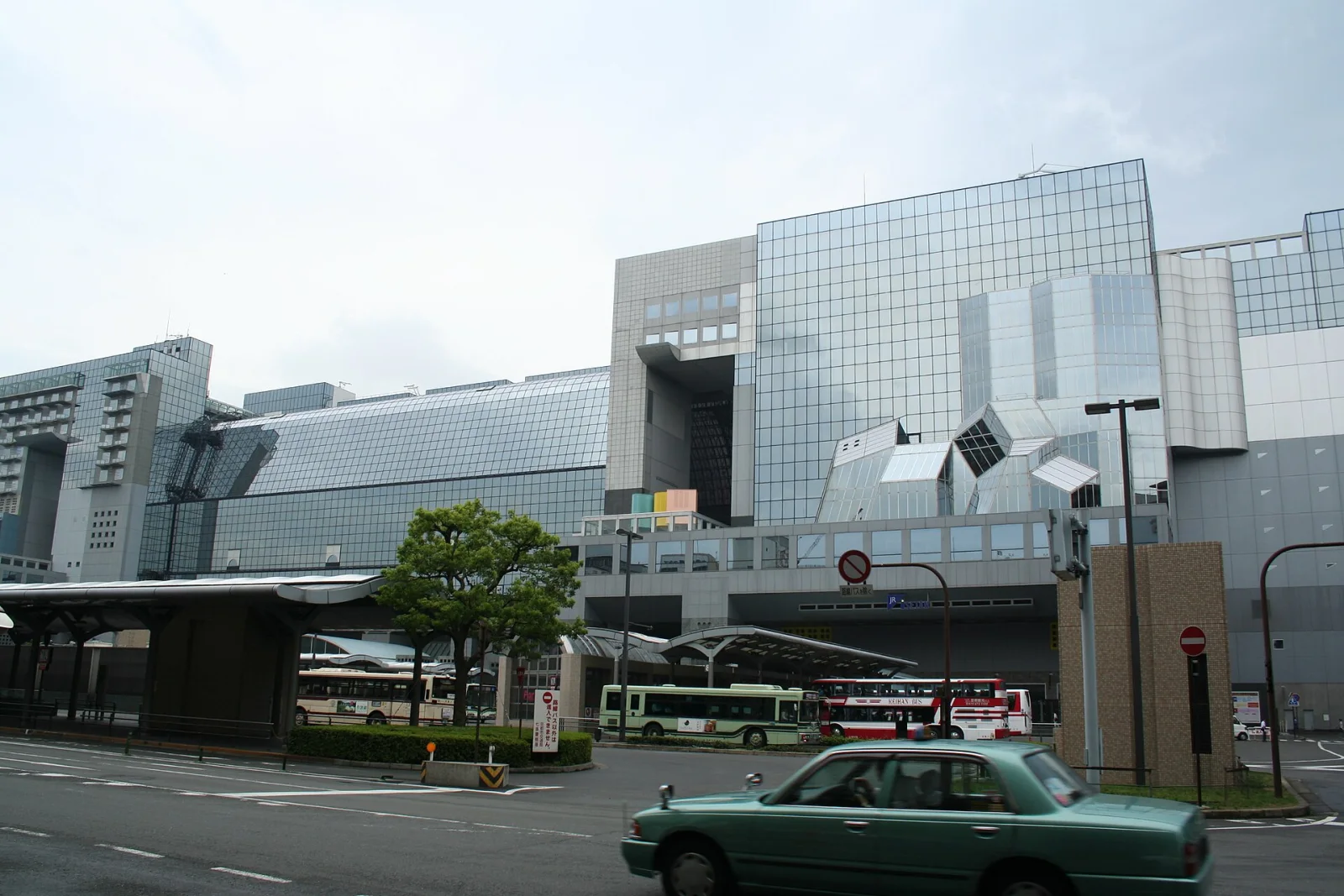
Choose the right Kyoto Station hotel by ticket gate. Compare Karasuma Exit, Hachijo Exit, and direct-access stays, plus Kansai Airport bus H2, HARUKA trains, family rooms, luggage delivery, and the 2026 accommodation tax.
Where Each of These Four Hotels Actually Connects
Hotel Granvia Kyoto connects directly into the JR Kyoto Station Building. Stepping out of the JR conventional line Central Gate, take the escalators on your right up to the second-floor main lobby. From the West Gate, turn right along the North–South Free Passage and follow the hotel signs to the lobby. For wheelchair users, the hotel's official website notes that staff can meet guests at a JR ticket gate if arranged in advance. Sending your train arrival time and exit gate to the hotel when booking is far simpler than wandering out onto the forecourt to hunt for the entrance.
Miyako City Kintetsu Kyoto Station also offers direct station access, linked straight to the Kintetsu Kyoto Station gates and the Shinkansen Central Gate. Its official site estimates roughly a one-minute walk from either gate, with check-in from 15:00 and checkout by 11:00. Those two gates sit right on your daily path if you are taking the Kintetsu line to Nara in the morning or boarding the Shinkansen the next day. The hotel highlights rooms with train views as a signature feature, which is worth comparing on the official room list if you are travelling with train-loving children; if you are a light sleeper, ask about window orientation at the same time.
Looking at Miyako City's published room layouts, a standard twin measures 16 square metres. Groups of three can compare the 21-square-metre spacious twin with a sofa bed or the three-person Comfort Floor triple room, while families of four can check the 42-square-metre deluxe room. Three adults carrying plenty of luggage should also price two standard rooms against a single triple: two rooms give you two bathrooms at once, and families coordinating early wake-ups or toddlers can pick a layout based on actual bed count and doorway flow. Never estimate a four-person stay from a two-guest search rate.
THE THOUSAND KYOTO sits outside the station complex, roughly a two-minute walk east from the Karasuma Exit according to its official site. It works well if you take local JR trains by day and dine on the north side at night, and its rates are worth comparing against in-station properties. Arriving by Shinkansen, walk through the North–South Free Passage to the Karasuma Exit before heading east—there is a short outdoor stretch once the indoor concourse ends. Another north-side mainstay in older guides, the Kyoto New Hankyu Hotel, has announced its final night of stay as 17 January 2027; for cherry blossom season or later trips, look at other north-side hotels that remain open for booking.
MIMARU KYOTO STATION is roughly a two-minute walk from the Hachijo East Exit, and about two minutes from the Karasuma Line Kyoto Station South Gate. Every room includes a kitchen, cookware, and dining table—handy for families wanting breakfast in the room, separate beds, or an earlier dinner for young children. Check the official floor plans before picking beds: an upper bunk is fun for kids old enough to climb a ladder safely, whereas groups with toddlers or older relatives should allocate lower bunks and regular beds first before confirming which room fits everyone.
Copy each hotel's exact Japanese name and street address from its official website into your shared trip notes. The Kyoto Station district has both a Kintetsu-connected hotel and similarly named off-site properties nearby, so typing only the chain name into a map app can route you to the wrong building. If your party arrives in two shifts, save a screenshot of the hotel's official walking directions so the earlier group can drop off bags first. Anyone pushing a folding buggy should mark the lift exits on that map too.
Checking Beds, Noise, and Luggage Space Before You Book
For a party of four, search directly for the true headcount and enter every adult and child's age on the booking form. Even if a room is labelled a twin, check the bed widths and spacing between them, plus whether there is a proper third bed or sofa bed. Three travellers with three large suitcases should inspect the floor plan for open floor space between the hallway and the foot of the beds. Checking whether you can walk comfortably to the bathroom and open two cases at once tells you far more than simply scaling up from solo-travel habits.
Rank window views, quietness, and proximity to the lifts in order of priority. If you are sensitive to street or rail noise, add a booking note asking in Japanese for a quiet room away from the train tracks and main avenues, and check which orientations exist for your room category. If a Kyoto Tower view matters, book a room type that explicitly specifies it; for train views, pick the matching railway-view tier. Tracks, major roads, and lifts generate distinct kinds of noise, so asking for a higher floor or a south-facing room only solves part of the picture.
When travelling with older relatives, scrutinise bathroom step-ups, bathtub height, and bed height. In a twin room for two, if one person needs to get up from the side of the bed, make sure there is standing clearance between the mattress and the wall. Anyone using a wheelchair or walking frame should confirm bedside clearance, clear bathroom doorway width, and step-free lift access all the way from the lobby to the guest floor. The quickest entrance for wheeling a suitcase is not always the easiest route for a wheelchair user; if you book station meet-and-greet assistance, list a single arrival spot so the whole family stays together.
For autumn foliage weekends, New Year, or early-morning spring departures, lock in the right room and bed configuration first, then decide whether to add a breakfast plan. Note the free-cancellation deadline in Japan Standard Time (JST) on refundable bookings, and always check the cancellation terms on both reservations before making a backup booking for the same night. For families juggling care needs or strict routines, being able to shower early, eat a simple breakfast in-room, or slip back for a midday rest often outweighs a difference of a few hundred yen per night.
Breakfast around the station can be taken in the hotel restaurant or picked up the evening before to eat in your room. Before booking a breakfast-inclusive rate for an early bus or Shinkansen, compare your lobby departure time against the restaurant's first seating. Stocking up on drinks and travel snacks the night before saves an extra detour in the morning. Even on multi-night stays, compare the breakfast add-on price against paying a la carte on select mornings so the half-hour you saved by staying near the station is not lost queuing for a buffet.
To trim room costs, widen your search to hotels one junction past the station exit or a short walk straight along the same main road. Trace the exact route you would wheel suitcases in the rain, counting traffic-light waits if you have to cross two junctions. On a four-night stay where you only haul large bags in and out once, walking slightly further for a roomier twin at the same price makes sense; if you are catching a dawn bus at H2 or assisting someone who walks slowly, put your budget towards the closest station access. Comparison sites usually show distance only in metres or minutes—open the street-level route to see whether those minutes involve underground passages or busy multi-lane crossings.
From 1 March 2026, Kyoto City's accommodation tax is tiered into five bands per person per night based on the room rate: ¥200 under ¥6,000; ¥400 from ¥6,000 to under ¥20,000; ¥1,000 from ¥20,000 to under ¥50,000; ¥4,000 from ¥50,000 to under ¥100,000; and ¥10,000 for ¥100,000 or more. At a taxable room rate averaging ¥12,000 per person per night, two guests staying three nights owe ¥2,400 in total tax. Always check whether the checkout breakdown already includes the accommodation tax so you compare hotels on the same tax-inclusive total.
Kansai Airport to Kyoto Station: Plan from the Final Stretch
The JR HARUKA express runs direct from Kansai Airport Station to JR Kyoto Station. The airport railway station connects directly with Terminal 1 and Aeroplaza; travellers landing at Terminal 2 must first ride the free shuttle bus to Aeroplaza before walking to Kansai Airport Station, so factor that transfer into your timing. On arrival at Kyoto, exit via the JR Central Gate, West Gate, or a south-facing passage depending on your hotel. Kyoto Station diagrams list Kansai Airport-bound HARUKA departures on Platforms 6, 7, and 30—check the departure boards for your specific train name on the return leg rather than assuming you will leave from the same platform you arrived on.
Airport limousine buses from the Hachijo Exit to Kansai Airport depart from stop H2 on the south side, while buses arriving from the airport drop passengers at neighbouring stop H3. Tickets and vending machines are located at the Keihan Bus information counter on the ground floor of Kyoto Avanti. Fares are ¥2,800 one-way for adults (¥1,400 for children) and ¥5,100 for an adult return ticket valid for 14 days from the first ride. Airport-bound buses require seat reservations, opening one month to the day before departure, though walk-up boarding is possible when seats remain. For early flights or groups wanting seats together, note the bus booking opening date as soon as you reserve your hotel.
Check your flight terminal and arrival hour before lining up the bus and train side by side. If you are flying out of Terminal 2, look for limousine bus departures that stop directly at Terminal 2. On weekend evenings or rainy days, road traffic can stretch bus journey times, so weigh the door-to-door schedule against a rail trip that includes the airport shuttle transfer. For early flights, work backwards from your airline's check-in deadline: the Hachijo Exit timetable includes early-morning departures, yet you still need separate buffers for walking out, bag drop, and security. Staying next to the bus stop trims one transfer, not airport formalities.
When landing on a late flight, add time for clearing the terminal, buying or collecting tickets, and reaching the platform, then look for a departure after that cutoff. If your landing sits right on the final trains or buses to Kyoto, keep an airport-area hotel in reserve as a backup. When you do book in Kyoto, send your estimated arrival time, check-in date, and reservation name to the hotel and ask for their reception hours and night-entrance procedure. Even if you arrive past midnight, quote the original check-in date when contacting the desk, and message an updated arrival time promptly if your flight is delayed.
Save the hotel's late-night entrance instructions for offline viewing before you fly. That way, even if one person is reading a phone map while another follows station signs, both of you have a single landmark to meet at outside the gates. North-side guests arriving at the Hachijo Exit can walk straight through the North–South Free Passage to the Karasuma Exit. If you step outside and decide to take a taxi instead, show the driver the hotel's full Japanese name and address. You can compare full ticket types and other airport connections in the Kansai Airport transfers guide.
Leaving Kyoto by Shinkansen: Which Gate to Take After Checkout
Guests staying near the Hachijo Exit can enter the Shinkansen platforms straight through the street-level Shinkansen ticket gates. Those staying near the Karasuma Exit will see the JR conventional line Central Gate right ahead on station maps, but should take the non-ticketed North–South Free Passage across to the Shinkansen Central Gate instead. Only travellers arriving at Kyoto Station on another JR train to connect onwards should follow the inside-the-gates Shinkansen transfer signs. Before rolling out your bags, check whether you are inside or outside the JR paid area—and remember that stopping at a locker or hotel desk changes which gate you use.
On the Tokaido and Sanyo Shinkansen departing Kyoto, any suitcase whose total external length, width, and height exceeds 160 cm (up to 250 cm) requires a seat with an oversized baggage area reservation. Measure the packed case including wheels and handles. If a family is sharing just one oversized bag, secure that designated seat first, then check whether enough standard seats remain nearby on the same train. Discovering at the station that a bag is over the limit—or switching trains last minute—restricts your seat choice and cuts into the time you saved for shopping after checkout.
If one adult is managing a pushchair alongside suitcases, take screenshots of your train number, carriage, seat assignments, and post-arrival route once packed. Leave buying bento boxes and drinks until you reach the shops near your actual departure gate. If part of your group wants to split into different queues, agree clearly beforehand whether you are meeting outside a named ticket gate or directly on the platform—especially close to departure time, never let the person holding everyone's booking details wander off onto another floor. Confirm every ticket and seat reservation before separating, so you only need to check direction and carriage numbers at the platform.
When forwarding large suitcases to your next hotel, check both the drop-off cutoff and when the bags will reach your next room. Pack an overnight bag with a change of clothes and essentials to carry on the train so one night apart from the big cases is painless. When your hotel front desk dispatches the luggage, keep the receipt showing the destination hotel name, tracking number, and delivery date. If you are only passing through Kyoto between cities, leaving big bags at a direct-access hotel lets you tour the city light in the morning and walk straight onto your train after collecting them—just plan your final sightseeing stop along the return corridor to that same hotel.
Getting Around from Kyoto Station: Arashiyama, Fushimi, Nara & Shijo
To reach Arashiyama from Kyoto Station, ride the JR Sagano Line to Saga-Arashiyama Station and walk on towards the Bamboo Grove and Tenryu-ji. If you are only touring western Kyoto for half a day, you can travel straight along the Nijo or Saga-Arashiyama corridor without doubling back through Higashiyama first. On cherry blossom or autumn foliage weekends, put the walking stretch early and take an early JR train west. Check station departure boards for 'Sagano Line / San-in Line' stopping patterns so you avoid limited express services that require a separate supplement ticket.
For Fushimi Inari Taisha, take the JR Nara Line to Inari Station, which drops you steps from the shrine approach. As of November 2026, Kyoto City's official visitor transport guide lists Local, Regional Rapid, and Miyakoji Rapid services as stopping at Inari, so check the platform board for Inari before boarding. Early risers walking the torii gates can set off straight from the station and continue onwards by Keihan Railway towards Gion-Shijo in the afternoon, rather than returning to Kyoto Station just to use one type of ticket—simply walk to nearby Keihan Fushimi-Inari Station once you finish at the shrine. If you plan to hike up the mountain paths, break down your timing with the Fushimi Inari mountain route guide.
Uji is an easy trip on the JR Nara Line from Kyoto Station, and staying near the station lets you head out to Uji in the morning, pick up your bags in the afternoon, and catch a JR train straight on to Osaka. For Nara Park, compare the Kintetsu line from the south side—Kintetsu-Nara Station puts you closer to the park than JR Nara Station, so pick your starting point on the map first. Kintetsu Limited Express trains require a separate limited express ticket. If Todai-ji is the focus of your day, leave early for Nara and eat dinner back at Kyoto Station rather than making an extra detour out to Shijo late at night.
To reach Shijo-Karasuma, ride the municipal Karasuma Line underground north from Kyoto Station via Gojo to Shijo. Kawaramachi lies further east along Shijo-dori, either on foot from Shijo or via the Hankyu line. If you are heading from Kyoto Station to Kiyomizu-dera in Higashiyama in the morning, you can take the JR Nara Line one stop to Tofukuji and transfer to the Keihan line for Kiyomizu-Gojo. Kyoto City's visitor guide estimates roughly a 25-minute walk uphill towards the end from Kiyomizu-Gojo Station; anyone preferring less walking can check the Karasuma Exit bus platforms for services to Gojo-zaka. On weekends and holidays, Kyoto Station also runs sightseeing express buses EX100 and EX101 to Gojo-zaka for ¥500 per adult one-way, and the Subway & Bus 1-Day Pass is valid on them.
For a single return trip between Kyoto Station and Shijo, simply tap an IC card. Kyoto City Transportation Bureau lists standard flat-fare city buses at ¥230 per adult, the Subway 1-Day Pass at ¥800 for adults (¥400 for children), and the Subway & Bus 1-Day Pass at ¥1,100 for adults (¥550 for children). Four individual flat-fare bus rides add up to ¥920. On days when you take JR to Arashiyama and Hankyu back to Shijo, exclude both legs when calculating whether a municipal pass pays off; save day passes for itineraries linking several subway and city-bus stops.
On a three- or four-night stay that includes Osaka, separate your destinations by station. For JR Osaka Station, take the JR Kyoto Line straight from Kyoto Station. If your evening centres on Namba, Shinsaibashi, or Osaka Bay, factor the intra-Osaka subway transfers into your return journey to Kyoto. When companions want to split up for different sights, agree to meet back at your hotel or at a seated cafe inside the station rather than forcing everyone onto the same train back. If you are spending two or three nights out in Osaka and flying home from Kansai Airport at the end, shifting those nights to an Osaka hotel cuts out several late-night intercity rides.
First Evening, Rainy Days, and Checkout Gaps Around the Station
Arriving around midday, drop your bags at the hotel and spend half a day either east or west of the station. Heading east brings you to Sanjusangendo and the Kyoto National Museum across the road; Kyoto's official station-area transport guide groups Sanjusangendo with Higashiyama, reached eastwards along Shiokoji-dori and Shichijo or by city bus to Hakubutsukan Sanjusangendo-mae. Heading west takes you one stop on the JR Sagano Line to Umekoji-Kyotonishi. Both the Kyoto Railway Museum and Kyoto Aquarium sit in the same park, making it easy to prioritise whichever museum you want longest first.
When rain sets in, keep meals and shopping inside the Kyoto Station Building. Kyoto Ramen Koji sits on the 10th floor, while JR Kyoto Isetan and Porta are both linked directly along internal walkways. If you have time to spare after a hot drink, the Skyway on the 10th floor is listed as open 10:00–22:00. The Grand Stairway of 171 steps opens 6:00–23:00; guests with pushchairs can admire the steps from the bottom before taking a lift to other levels. Because the Grand Stairway and several station plazas are open-air, retreat into indoor restaurants and connected shopping floors whenever wind and rain pick up.
The Kyoto Station Building has announced that the rooftop Oozora Hiroba plaza is closed for construction from 27 November 2026 until around winter 2031. For north-facing views of Kyoto Tower from inside the building, head instead to the 10th-floor Skyway or the 4th-floor Karasuma Koji Plaza; the 7th-floor East Plaza on the eastern wing also looks out towards the tower. If you arranged to meet companions at the Grand Stairway, specify the 4th-floor Muromachi Koji Plaza so no one climbs all the way to a closed roof looking for you.
Returning from Arashiyama or Higashiyama on a winter evening, drop damp coats in your room before deciding where to eat. North-side guests can step straight into the station building restaurants, while families staying near the Hachijo East Exit can bring station takeaway back to an apartment-style dining table. If you want dinner in Gion, combine it with a Higashiyama afternoon and walk north from Gojo; riding out from Kyoto Station to Kawaramachi and back purely for dinner adds two extra ticket-gate runs when everyone's feet are already tired.
With half a day free after checkout, store your luggage on the same side as your final departure. Hotel Granvia Kyoto notes that guests may leave bags both before check-in and after checkout, and MIMARU KYOTO STATION offers free luggage storage from 7:00 to 22:00 on check-in and checkout days. If you are catching the airport bus from the Hachijo Exit after visiting Sanjusangendo, walk from the north side first, then collect your bags via the North–South Free Passage before heading to stop H2. If you are departing by conventional JR train, keep your bags on the JR side so you avoid dragging cases back across the passage.
If you need bags delivered to another accommodation, Crosta Kyoto sits in the basement level (B1) near the JR Central Gate and operates 8:00–20:00. Same-day delivery from Kyoto Station to participating accommodations within its service area costs ¥1,500 per piece when dropped off before 14:00, arriving after 17:00. Sending bags back from a partner accommodation to Kyoto Station requires check-in at the hotel desk before 10:00 for station pickup between 14:00 and 20:00. If you are leaving before 14:00, use self-pickup luggage storage instead. Whenever your party splits up, keep passports, medication, and rail tickets in a small daypack, and leave the luggage receipt with whoever will collect the cases.
How Many Nights in Kyoto Before Switching Neighbourhoods
Arriving on a Friday evening and catching a Sunday midday Shinkansen works smoothly from a single Kyoto Station hotel. Take JR to Arashiyama on Saturday with a break back at the room before dinner, then spend Sunday morning at Sanjusangendo or shopping around the station. If you depart on Sunday evening instead, leave bags after checkout and pick a final sight a single ride from Kyoto Station, leaving a buffer to reclaim your luggage and buy bento boxes. On a short break, checking in twice cuts the middle of your trip in half.
On a five-night stay with two morning JR excursions out of town, you can either remain at Kyoto Station throughout or group those day trips with your arrival night. If most of your time is spent in central Kyoto and you want to stroll home after late evenings around Nishiki Market, Kiyamachi, or Gion, staying near Shijo-Karasuma or Kawaramachi trims daily backtracking. Shijo-Karasuma connects directly to Kyoto Station via one subway ride even with suitcases. If you base yourself in Gion or Kawaramachi, schedule the transfer back to Kyoto Station on your departure day; unless you have an early train, the whole family can simply sleep through the final night in the same hotel.
Switching hotels makes the most sense when your itinerary naturally brings you back to Kyoto Station—for instance, four nights in central Kyoto followed by a fifth day returning from Arashiyama ahead of an early airport bus from the Hachijo Exit. Either forward your suitcases straight to the final station hotel or leave them at your first hotel at checkout and collect them on the way back. The difference is whether you detour back to your previous address and when your bags arrive at the new room; if children need an early bath or older relatives need evening medication, keep anything needed right away out of bags that will not arrive until early evening.
When considering moving to a station hotel purely for your final night, weigh the room-rate difference alongside transfer fares, luggage delivery fees, and drop-off time. If the move is only for an early flight and someone in your group walks slowly, price a taxi from your central hotel straight to the Hachijo Exit based on your headcount and suitcase count and compare it with the cost of changing hotels. Moving works cleanly if you are already passing through Kyoto Station that day; if you are spending the whole day in Gion, taking a taxi or train the next morning saves an entire hotel move.
If you are pushing a buggy out of the same hotel every morning, map out your exact exit path before booking: which street links your hotel entrance to the outdoor station lift, and which concourse leads straight to your platform. Map apps measure walking times only from the station doorway, ignoring lifts, level changes, and finding the right track inside Kyoto Station. When you stay by the station for the entire trip, price gaps between the north and south sides can often buy a larger room or an extra bed. Once you book, jot down one fixed landmark and exit beside your confirmation so everyone carrying the address can find their way back independently.
A few useful answers
Is Kyoto Station a good base for a first-time trip to Kyoto?
Yes, especially if you arrive or depart by Shinkansen or HARUKA, plan day trips to Uji or Nara, or want easy luggage handling on a short stay. If you prefer lingering late around Nishiki Market, Kawaramachi, and Gion every evening, compare hotels near Shijo-Karasuma and Kawaramachi.
Which Kyoto Station exit do Kansai Airport limousine buses use?
Stop H2 on the south side at the Hachijo Exit. Seat reservations are required for airport-bound buses and open one month before departure.
How do you walk to Kyoto Station's direct-access hotels after getting off the train?
Hotel Granvia Kyoto connects to its second-floor lobby from the JR conventional line Central Gate. Miyako City Kintetsu Kyoto Station connects directly to the Kintetsu ticket gates and the Shinkansen Central Gate. Follow each hotel's Japanese signage and designated lobby entrance.
Do you have to walk through underground shopping arcades for late-night check-in near Kyoto Station?
Kyoto Station's North–South Free Passage stays open 24 hours a day. Before travelling, note your hotel's late-night entrance and reception procedure, and if you will arrive past midnight, send your original check-in date, reservation name, and updated arrival time to the hotel.
How much is the Kyoto accommodation tax at Kyoto Station hotels from 2026?
From 1 March 2026, Kyoto City charges five per-person, per-night tiers based on room rate: ¥200, ¥400, ¥1,000, ¥4,000, and ¥10,000. Check the tax-inclusive total when comparing bookings and verify against Kyoto City's official tax bands.
Official information and references
Sources used in this guide.
- JR West Kyoto Station Premises Map and Platforms
- Kyoto Municipal Subway Karasuma Line Kyoto Station and Exits
- Kyoto City Official Travel Guide: Kyoto Station Navigation Advice
- Hotel Granvia Kyoto Access and Lobby Entrance
- Hotel Granvia Kyoto Accommodation and Universal Services
- Miyako City Kintetsu Kyoto Station Access and Check-In Hours
- Miyako City Kintetsu Kyoto Station Room Types and Capacity
- THE THOUSAND KYOTO Access
- Kyoto New Hankyu Hotel Closure Notice
- MIMARU KYOTO STATION Room Types, Access, and Luggage Storage
- Kyoto City Accommodation Tax Rate Revision
- JR West Kansai Airport Train Boarding Guide
- Peach Aviation Kansai Airport Terminal 2 and Shuttle Bus Guide
- Kansai Airport Transportation Kyoto Line Fares and Reservations
- Kansai Airport Transportation Kyoto Station Hachijo Exit H2 Bus Stop
- SmartEX Shinkansen Oversized Baggage Rules
- Kyoto City Official Travel Guide: Saga-Arashiyama Access
- Kyoto City Official Travel Guide: Fushimi Inari Access
- Kyoto City Official Travel Guide: Sanjusangendo Access
- Kyoto City Official Travel Guide: Kiyomizu-dera Access and Sightseeing Express Buses
- Kyoto City Transportation Bureau City Bus and Subway Fares
- Kintetsu Railway Kyoto to Nara Access and Tickets
- Kyoto Station Building Plazas and Public Passage Hours
- Kyoto Station Building Rooftop Oozora Hiroba Closure Notice
- Kyoto Ramen Koji Floor Guide and Restaurants
- Crosta Kyoto Luggage Storage and Delivery Service