Follow giant salamanders, Kyoto’s Sea, penguins, jellyfish and Satoyama through Kyoto Aquarium, with date-specific dolphin programmes, baby facilities, designated eating areas and a short Umekoji Park walk.
- Region & Focus
- Kyoto
- Reading Scope
- 30 min read · 21 chapters · 8 Q&As
- Official Verification
- 27 official sources checkedUpdated 7 November 2026
- Key Topics
- ItinerariesKyoto, Osaka & Kansai
Chapter Route Map (tap any stop)
- Make the aquarium the half-day focus; judge park time afterwards
- Walk from Kyoto Station or use Umekoji-Kyotonishi Station
- Buy by age and check opening hours for your date
- Know the floors: underwater below, land views and programmes above
- Kyoto's rivers: giant salamanders and the Yura's upper to lower reaches
- Fur seals and seals: change windows to see the same animals
- Kyoto's Sea: shoals at the main window, hidden life at the sides
- See penguins twice: swimming below and coming ashore upstairs
- Jellyfish: GURURI, growth and husbandry
- Mitette: garden eels, anemonefish and workshops
- Dolphin School: choose a lesson and use the seated pause
- Sanshi Suimei: small fish in Kyoto's wetlands and watersheds
- Kyoto Satoyama: finish with rice fields and water channels
- Connect the schedule: one dolphin programme and one feeding are enough
- Babies and pushchairs: locate rest rooms, then change viewing height
- Designated eating areas and three cafes for different pauses
- Only two hours: keep underwater and land contrasts
- Half-days for toddlers and primary pupils: vary the depth
- Afterwards: short walks to lawn, trams or play equipment
- Continue the ecology theme at Suzaku Garden and Inochi no Mori
- Rain, water play and the return: plan a comfortable finish
- Quick Q&A
Kyoto Aquarium’s permanent displays take about two hours, or combine dolphins, a meal break and Umekoji Park outside for a family half-day. Begin downstairs with Kyoto’s rivers and giant salamanders, view fur seals, seals and penguins through different windows, then go upstairs for jellyfish and dolphins. Finish with local freshwater life and outdoor Satoyama. Adjust the depth of each stop to companions’ ages while keeping the complete theme and breaks.
Make the aquarium the half-day focus; judge park time afterwards
Give Kyoto Aquarium half a day without rushing to another attraction. The aquarium suggests 1½–2 hours for a usual visit; children, a dolphin programme, food or workshops extend that. Allow about three hours from entry to exit as a travel plan, with lunch and the park separately. This leaves time at favourite tanks as well as nappies, milk and handwashing.
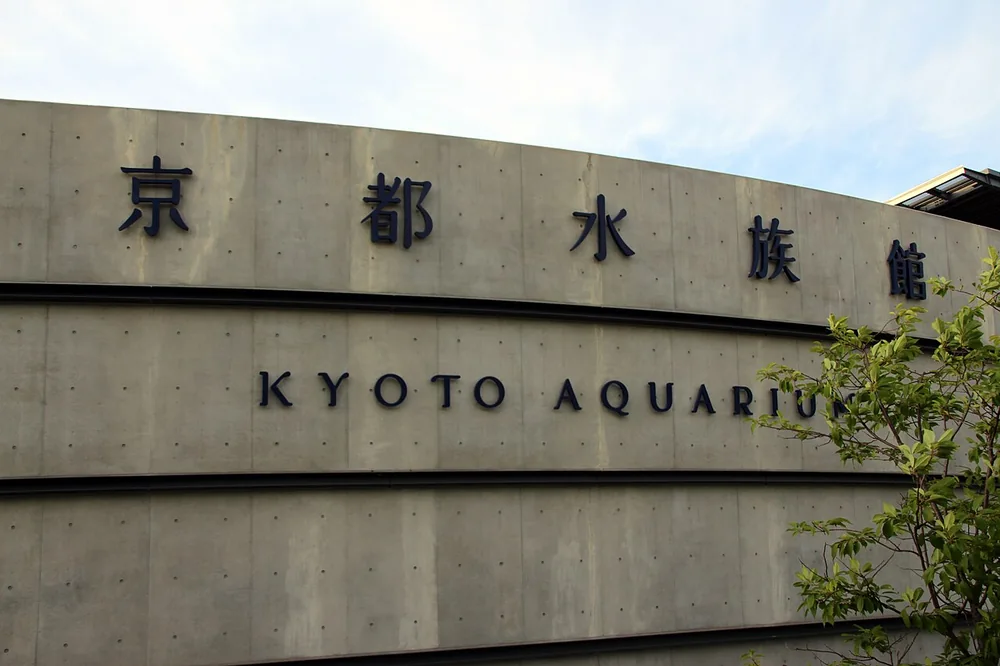
Start by reading Kyoto's water environments: entrance giant salamanders and Yura River fish, then the large marine tank, returning to local freshwater life and farmland. Dolphins, penguins and jellyfish each merit a pause, selected by interest. Adults photographing jellyfish or studying fish can follow the same route slowly. There is ample content for a complete visit without children.
Umekoji Park is immediately outside, allowing an outdoor change of pace. If children are tired, return through the park to the station; if energetic, choose lawn or play equipment. Give Kyoto Railway Museum another half-day. For a city itinerary choosing one museum, continue with Kyoto neighbourhoods and quieter visiting times.
Follow giant salamanders, Kyoto’s Sea, penguins, jellyfish and Satoyama through Kyoto Aquarium, with date-specific dolphin programmes, baby facilities, designated eating areas and a short Umekoji Park walk.
Walk from Kyoto Station or use Umekoji-Kyotonishi Station
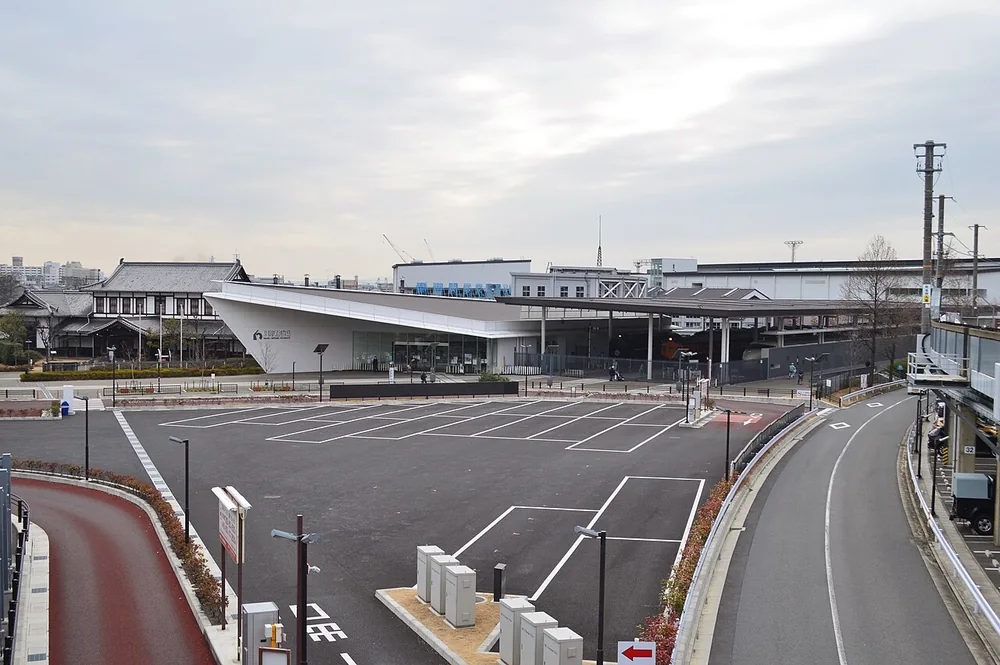
The official access page gives about 15 minutes on foot from Kyoto Station's Central Exit or seven minutes from Umekoji-Kyotonishi on the JR San-in Main Line. Families staying near Kyoto Station with children willing to walk can use the Central Exit. If already travelling on JR or wanting less final walking, choose Umekoji-Kyotonishi.
Identify Kyoto Station's north-side Central Exit: the Hachijo Exit is on the other side. The park's official directions follow Shiokoji-dori west. For navigation, enter “京都水族館 京都市下京区観喜寺町35-1” rather than the large Umekoji Park alone. The walk from the park edge to the right entrance is outdoors too. The nearest bus stop is Shichijo Omiya/Kyoto Suizokukan-mae. From Shijo or Higashiyama, use that full stop name to find your service rather than getting off elsewhere after searching only Umekoji. The aquarium has no dedicated car park or drop-off area; use lawful nearby parking. Eligible disabled visitors, older people, families with preschool children, pregnant or postpartum visitors and people with walking difficulties can use the park's Omoiyari parking under its rules.
Buy by age and check opening hours for your date
Standard admission is ¥2,600 for adults, ¥2,000 for senior secondary students, ¥1,400 for primary and junior secondary pupils and ¥900 for preschool children aged three or above. Children aged two or younger enter free. Two adults and one primary pupil cost ¥6,600; with a preschool child aged three or above, ¥6,100. Food, workshops and shopping cost extra. Senior secondary students need student identification.
The official ticket information says online sales open 30 days before a visit. Tickets usually specify a date; selected Golden Week, Obon and Silver Week dates also specify a time slot. Enter using the QR code emailed to your registered address, from one minute after purchase. Entrance machines sell same-day tickets, but do not release extra tickets for dates or slots sold out online. Hours vary by date. Admission and ticket or annual-pass procedures end one hour before closing. Select your date on the calendar before planning transport and meals, especially for afternoon arrival. An adult annual pass is ¥5,800. Standard admission is straightforward for a single visit; compare the adult annual-pass price if planning at least three visits in a year. Standard web admission tickets bought through the official Webket service can have their date and time slot changed up to and including the day of use. They cannot be cancelled after purchase.
Know the floors: underwater below, land views and programmes above
The official floor plan begins on the ground floor with Kyoto's rivers, fur seals, seals, underwater penguin windows and Kyoto's Sea. Upstairs are the penguin land area, jellyfish, Mitette and the dolphin stadium, followed by Sanshi Suimei and the ground-floor outdoor Kyoto Satoyama area. Ramps and lifts provide accessible routes upstairs for pushchairs and wheelchairs.
Penguins and the main tank have viewpoints at different heights. Connect what you saw below with the view above: children can recognise swimming penguins after they emerge onto land. At the main tank, see the whole shoal, then change angle to find bottom-dwelling or concealed animals. On arrival, settle the timed priority first: check that day's programme and note the location of your preferred event. If it is much later, follow the displays; if imminent, use the floor plan to reach the venue first and return to missed areas afterwards.
Kyoto's rivers: giant salamanders and the Yura's upper to lower reaches
The entrance Kyoto's Rivers display introduces giant salamanders, called osanshouo in Japanese. The native Japanese giant salamander is a Special Natural Monument. Here it is placed in Kyoto's river context. Study the head, flattened body and limbs, then its position against the bottom. These animals are nocturnal and often still by day; begin with shape and posture rather than waiting indefinitely for swimming.
Nearby tanks bring the upper, middle and lower Yura River into one display. Find differences in rocks, current and open water, then compare fish in each section. This reveals the display's meaning more readily than memorising all the names. Listed fish include iwana and yamame upstream, mugitsuku and oikawa midstream, and carp downstream. Match Japanese labels with animals to read a river's spatial changes through small tanks.
Preschool children can find eyes and feet; primary pupils can compare salamander and fish bodies and consider movement in shared water. If a child only wants movement, wait briefly, visit the next tank, then compare the animal's position. Keeping this entrance pause makes later local conservation displays easier to connect.
Fur seals and seals: change windows to see the same animals
The fur-seal area has a three-sided underwater window at children's height, where South American fur seals swim alongside. Adults entering with children should mind low spaces and other visitors. Let an absorbed child watch a complete swim before moving upstairs to see resting animals on the rocks. Speed underwater and sleeping postures on land make a natural contrast.
The seal area's tube tank connects beneath the floor to another tank, letting spotted seals choose their route. Look upwards from the tube's base, then see heads above the water from the terrace. If a window has no animal, change sides to understand the tanks' connection and the animals' choice of position. Brief repeated observations work well: watch swimming direction first, then forelimbs, hindlimbs or turning. If feeding commentary is scheduled, hear how keepers explain individual differences. The three-sided window, tube and upper terrace connect swimming, rest and feeding through different angles.
Kyoto's Sea: shoals at the main window, hidden life at the sides
Kyoto's Sea, the aquarium's largest tank, uses about 500 tonnes of artificial seawater and displays about 50 species, including red sea bream, sharks and rays. First watch the shoal's height and direction, then follow one fish briefly. Trying to identify every fish can leave only a moving blur. With toddlers, begin with flat, long or high-swimming animals.
Side windows including Umi no Dokutsu and Same no Dokutsu offer other angles and animals preferring shade. When the main window is crowded, continue from another side without squeezing to the front. These caves are viewpoints into the same large tank. Choose one side window for a shorter visit or make another round if you enjoy fish.
The area also introduces red tilefish, called guji in Kyoto cuisine. They dig hiding burrows; compare fish and burrow positions to connect a food name with a living animal. The aquarium periodically adjusts displayed species in line with Kyoto's marine environment.
The aquarium’s official-channel film shows preparations for feeding in Kyoto’s Sea, extending observation to large-tank husbandry.
See penguins twice: swimming below and coming ashore upstairs
The aquarium's African penguins come from southern Africa, broadening the idea that all penguins live in snow and ice. The ground-floor Penguin Cave gives underwater side views; upstairs shows land life. The same wings drive quick underwater movement and take a different posture ashore. Connect both levels into one movement study.
Uneven land on the upper floor lets penguins use waves to come ashore. Watch an approach to the bank rather than waiting for a row to face the camera. Breeding-season nests and collected nesting materials create different individual activities. If a relationship chart is displayed, identify one bird and find it, linking name with action. For children following underwater silhouettes, choose a safe stopping window and agree to move after a complete swim. Upstairs, slow down to find resting, preening or walking individuals. Use a feeding event to learn about eating, then stay for everyday behaviour so the whole area does not become just one scheduled show.
Jellyfish: GURURI, growth and husbandry
Jellyfish Wonder displays about 30 species in tanks suited to their ecology, including floating and bottom-living species. Compare shapes, bell contractions and tentacle extension. A glance can reduce every tank to a pretty transparent pattern. Comparing two reveals different positions and movement.
GURURI is a 360-degree panoramic tank surrounding the view with moon jellyfish. Let your eyes adjust to the darkness, then watch from one position as animals drift from foreground to background. Leave passage space when moving with pushchairs and companions. Turn off flash; do not use lights, tripods or other photographic aids. Livestreaming is also prohibited. Moving close to the glass reduces reflections; give others space afterwards.
The Kyoto Jellyfish Research Department puts breeding, research and care in an observable open workspace and shows moon jellyfish changing body form through development. Primary pupils can compare this with the main tank: schooling fish on one side, a different body structure on the other. Adults wanting longer can study growth stages and husbandry to go beyond appearance into a life cycle.
Mitette: garden eels, anemonefish and workshops
Mitette displays coral-reef life including garden eels and anemonefish, with workshops and a Staff Station information display. After jellyfish movement and light, look at colours, markings and tiny actions. The aquarium lists six anemonefish species found in Japan. Comparing body colours and white-band positions helps children describe discoveries.
Take time with garden eels emerging from sand. Stand still, locate one, then look for another nearby. Adults and children can each choose one and exchange descriptions rather than immediately naming Japanese species. Staff displays explain animal care and AQTION! activities, moving from what visitors see to daily work. Some crafts suit young children; keeper-led events follow individual announcements. Read application method, fee and audience and reserve making time if participating. If merely passing, prioritise exhibits. Fish and hands-on activities give children a different way to engage after standing and watching.
Dolphin School: choose a lesson and use the seated pause
The upstairs dolphin stadium shows bottlenose dolphins swimming, feeding and interacting with trainers, against Kyoto's seasonal scenery. Dolphin School treats visitors as students, with lessons such as PE and school lunch. Children enjoying big movements can watch how bodies leave the water; quieter observers can study responses to trainers and approaches to companions.
Select your actual date in the official Events and Experiences calendar, read programme names and venues, then choose one. Schedules vary by date and animal conditions affect proceedings. For a dolphin-focused visit, make this the fixed central pause, fitting jellyfish or local freshwater displays around it. Add other feeding events only where they fit your progress.
Seating is roofed but the venue is open-sided; strong wind can drive rain in. Wearable rainwear is easier than holding an umbrella throughout. With restless toddlers, choose a place near an exit aisle and accompany them out when needed rather than insisting on the full programme. If they settle, rest their legs. Drinks and food follow the venue's designated eating-area rules.
Sanshi Suimei: small fish in Kyoto's wetlands and watersheds
Sanshi Suimei returns to Kyoto's freshwater life. Through the Yura and Lake Biwa–Yodo watersheds, it introduces Midorogaike Pond, former Ogura Pond and local freshwater species. Recall the entrance river display: Kyoto's mountain streams, ponds and lowland wetlands support different life.
Rare local species include oyanirami and hotoke-dojo, alongside explanations of conservation outside natural habitats and continued captive breeding. Small tanks need a different approach from the main window: find animals among plants, sand or shade, then study shape. Primary pupils can choose a tank each, read habitat labels and identify the waterside conditions needed.
If everyone is tired, slowly study one or two tanks, then rest at nearby Harvest Cafe. Local-ecology enthusiasts can stay longer before entering outdoor Satoyama, moving from captive tanks to rice fields and channels.
Kyoto Satoyama: finish with rice fields and water channels
Kyoto Satoyama is the ground-floor outdoor area, recreating Kyoto's rural landscape with seasonal rice, Kujo spring onions and Shogoin radishes. At the visit's end, glass gives way to channels, plants and soil. Bring children's questions into daily life: where does field water come from, and how do fish enter?
The aquarium explains that rising channel water and field flooding let fish enter paddies to spawn. Find the connections between watercourses and fields. Seasons change both their appearance and the life you can find. Spring and summer fields and autumn insects reward children interested in small animals at their own pace. The route is outdoors, so put on rainwear; in heavy rain, shorten Satoyama and follow open routes to the shop and exit. Shop last to avoid carrying large soft toys throughout, letting children choose a theme after seeing all the animals.
Connect the schedule: one dolphin programme and one feeding are enough
The official events page separates animal programmes, feeding, experiences and other activities. Select the travel date first to match times with display areas. Feedings may be scheduled separately at the main tank, penguins, fur seals, giant salamanders or Mitette. Choose one near your route from that day's list.
To retain the full permanent displays, use one dolphin programme as a middle pause and add one favourite feeding. Leave the gap for tanks, toilets and moving. Include floor changes if events are on different levels. Chasing everything means crossing back and forth and leaving favourite animals too soon.
For an experience requiring registration, replace some free viewing time rather than adding it on top. Details distinguish advance applications from same-day registration. Follow that event's payment, booking and meeting-point instructions.
Babies and pushchairs: locate rest rooms, then change viewing height
The support page lists three baby rest spaces with hot water and sinks, plus feeding, nappy-changing and children's toilet facilities. With bottles, locate the room on your floor immediately. Fit feeding and changing between floors or around a dolphin programme, before hunger becomes distress.
Ramps and lifts allow pushchair entry. The aquarium neither rents nor stores pushchairs. Listed parking areas are the terrace marked 2F and the stadium ramp marked 3F. Take valuables and follow signs when leaving one. If children walk for a while, keep the pushchair for later rest instead of abandoning it to make them walk throughout.
Low fur-seal windows suit toddlers. Adults can lift children for higher views or find an appropriate window, checking the passage behind before lifting. Wheelchairs use lifts and ramps. Free loan wheelchairs are limited and cannot be reserved. Handlebar-controlled mobility scooters are not admitted.
Designated eating areas and three cafes for different pauses
The aquarium has three cafes: Kaiju Cafe on the ground floor by fur seals and seals, Stadium Cafe upstairs at the dolphin venue, and Harvest Cafe beside Sanshi Suimei with indoor and terrace areas. Pause downstairs for a snack after the first displays, at the stadium around a programme, or in the later upper-floor cafe area for a seated meal.
Packed meals, snacks and drinks are allowed; take rubbish away. Eat only in designated spaces such as benches at the fur-seal, seal, Sanshi Suimei and dolphin areas, not while walking through other displays. Cafe purchases follow the same rules. Take children's snacks out at seating areas, keeping tank viewing focused and hands and packaging manageable. Light meals and themed desserts cover a pause; for a full family lunch, eat after leaving. Re-entry requires the original ticket at the entrance; keep it readily accessible and follow crowd controls. If a child falls asleep outside, combine lunch with a brief park rest rather than disrupting the nap to re-enter.
Only two hours: keep underwater and land contrasts
For two hours focused on permanent exhibits, start with giant salamanders and a short Yura River section, continue through fur seals and seals, then the ground-floor penguin window and main tank. Upstairs, keep penguins ashore and jellyfish, then Sanshi Suimei and Satoyama before leaving. This preserves local water environments, large marine displays and contrasting animal movements beyond one star animal.
If dolphins are the priority, select a suitable programme first, shorten jellyfish or local freshwater viewing and skip workshops. A programme within two hours reduces free tank time. Visitors photographing or reading every label may prefer ordinary dolphin swimming and keep time for permanent displays.
Let each companion choose one priority at entry: for example, salamanders and penguins get fuller attention while other areas are seen en route. Decide upstairs whether to add dolphins, avoiding backtracking. Keep the shop to a short final stop, then head directly to lunch or the station for a natural finish.
Half-days for toddlers and primary pupils: vary the depth
Preschool children can begin with fur-seal windows, the seal tube and penguin movement, slowly see two jellyfish tanks, then rest in dolphin seating or a cafe. If still walking happily, find Satoyama's channels; if rubbing eyes or repeatedly asking to be carried, leave. Break viewing into standing, seated and pushchair-rest sections rather than expecting every explanation to be heard.
Primary pupils can spend longer at Kyoto's Rivers, Mitette and Sanshi Suimei, with one question to answer: fish in different river sections, changing jellyfish shapes or anemonefish markings. Bring a small notebook to draw animals during a food break; drawings often reveal what they noticed. Those unwilling to draw can choose one discovery to share on the return journey.
With siblings, one adult can feed the younger child while another reads nearby displays with the older one, meeting at an agreed precise place. The aquarium does not make paging announcements; ask nearby staff if separated. A jointly identified place such as outside Harvest Cafe upstairs is easier to find than “see you upstairs”.
Afterwards: short walks to lawn, trams or play equipment
The park facilities map shows the lawn, tram plaza, Suzaku Yume Plaza, riverside play area and gardens. Pause outside the aquarium before choosing: lawn for walking and sitting, Suzaku Yume Plaza for energetic climbing, preserved trams for one brief change of scene. The park can be just a short transition after the aquarium.
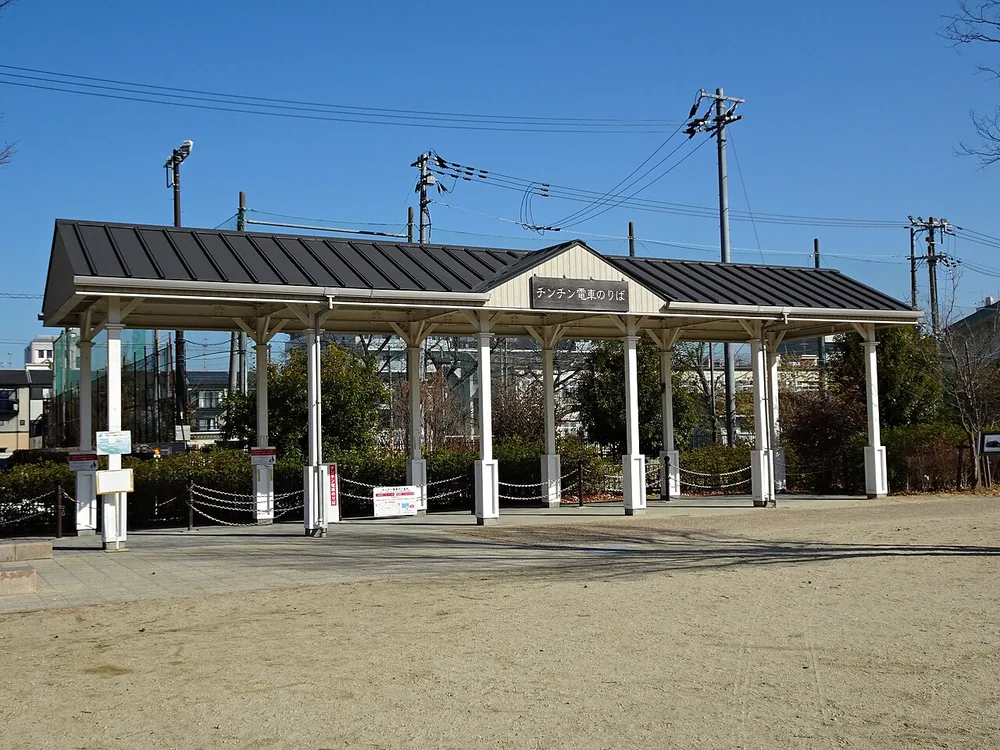
The lawn has room to sit on a mat, stretch and watch activity. Dogs, bicycles and ball games disturbing other users are prohibited there. Suzaku Yume Plaza has a large slide, rope climbing equipment and cafe space. Adults can supervise different ages separately so children play within their abilities. The tram plaza preserves four Taisho- and Showa-period vehicles, some used as cafes and shops, shifting the theme from animals to city life. For the park tram linking Suzaku Yume Plaza and the tram plaza, read the day's operating notice and boarding rules. If children only want to see vehicles, the preserved trams make a short stop before leaving via Umekoji-Kyotonishi Station.
Continue the ecology theme at Suzaku Garden and Inochi no Mori
Suzaku Garden is a strolling pond garden open 09:00–17:00, last entry 16:30. It closes Mondays, the following day if Monday is a holiday, and 28 December–4 January. Admission is ¥200 from primary-school age and includes access to Inochi no Mori. This separate paid garden suits visitors still wanting quiet plants, water and ecology.
A thin sheet of water over black granite forms a reflecting surface, with flowing water and changes in garden height along the route. After aquarium tanks, children can compare water behind glass with an outdoor surface and see reflections change with position.
If everyone is tired, take a short rest in the free park instead.
Inochi no Mori restores habitat within the city. Cross Furin Bridge from Suzaku Garden and follow an elevated canopy walkway protecting the woodland. Connect it with Satoyama through one question: how can cities leave room for birds, insects and waterside life? Stay on open walkways and shift from searching for animals to looking at the environments they need.
Rain, water play and the return: plan a comfortable finish
Most aquarium displays are indoors or roofed, but Satoyama and uncovered passages get wet; the dolphin stadium needs protection from wind-driven rain. In heavy rain, keep indoor tanks and a meal break, shortening Satoyama and the park. Walk briefly on the lawn after rain stops. If socks and shoes are wet or a toddler needs changing, end outdoor time and return to your accommodation; the half-day is still complete.
For warm-season water play in the park's riverside area, bring spare clothes, towels and non-slip sandals. Management rules require footwear such as rubber sandals, slip prevention and continuous adult supervision; the water is not drinkable. This suits families planning water play. Shallow water need not prompt an unplanned entry in trainers; a shaded waterside walk also makes a finish.
Choose the return station from your final location. On the park's west side near Umekoji-Kyotonishi, leave by JR. Returning to Kyoto Station's Central Exit, follow the park and official walking route towards it. Allow time for water, toilets and the journey back to your accommodation.
A few useful answers
How long does Kyoto Aquarium take?
The usual official estimate is 1½–2 hours. For a dolphin programme, food or babies and toddlers, allow about three hours inside as a travel plan, with flexible park time separately.
Can I bring a pushchair?
Yes. There are ramps and lifts. The aquarium does not rent or store pushchairs. Designated parking is on the terrace marked 2F and stadium ramp marked 3F.
Can I bring packed meals and snacks?
Yes; take rubbish away. Eat at designated benches in areas including fur seals, seals, Sanshi Suimei and the dolphin stadium. Do not eat while walking through other displays.
Are dolphin programmes at the same time every day?
Select your actual date in the official events calendar for programmes, times and venues. On-site notices reflect changes that day.
Can I visit in rain?
Most displays are indoors or roofed. Satoyama and uncovered passages need rainwear. Dolphin seating is roofed, but strong wind can drive rain in from the sides.
Which station is closer?
The aquarium gives about 15 minutes from Kyoto Station’s Central Exit and seven from Umekoji-Kyotonishi. Walk directly from Kyoto Station, or use Umekoji-Kyotonishi if already on JR or wanting less outdoor walking.
Can I re-enter after leaving?
Show the original ticket at the entrance. Follow on-site crowd controls and keep the ticket until the day’s visit is finished.
Should I combine the aquarium and railway museum in one day?
Both are in Umekoji and can be linked on foot. For young children or a full exhibit visit, one attraction with lunch and the park is more comfortable. Give the railway museum another half-day.
Official information and references
Sources used in this guide.
- Kyoto Aquarium: current floors and suggested route
- Kyoto Aquarium: Kyoto’s rivers and giant salamanders
- Kyoto Aquarium: fur seals
- Kyoto Aquarium: seal tube tank
- Kyoto Aquarium: Kyoto’s Sea main tank
- Kyoto Aquarium: penguins on land and underwater
- Kyoto Aquarium: jellyfish and husbandry research
- Kyoto Aquarium: Mitette and workshops
- Kyoto Aquarium: dolphin stadium
- Kyoto Aquarium: Dolphin School
- Kyoto Aquarium: Sanshi Suimei freshwater displays
- Kyoto Aquarium: Kyoto Satoyama
- Kyoto Aquarium: dated opening calendar and access
- Kyoto Aquarium: standard and annual-pass prices
- Kyoto Aquarium: ticket and timed-entry rules
- Kyoto Aquarium: programmes and experiences by date
- Kyoto Aquarium: baby facilities, accessibility, eating and photography rules
- Kyoto Aquarium: visit length, re-entry and pushchair FAQ
- Kyoto Aquarium: three cafes and shop locations
- Kyoto City Urban Greenery Association: current Umekoji Park map
- Kyoto City Urban Greenery Association: Umekoji Park access
- Kyoto City Urban Greenery Association: lawn and rules
- Kyoto City Urban Greenery Association: Suzaku Yume Plaza
- Kyoto City Urban Greenery Association: tram plaza
- Kyoto City Urban Greenery Association: Suzaku Garden fees and hours
- Kyoto City Urban Greenery Association: Inochi no Mori and canopy walkway
- Kyoto City Urban Greenery Association: riverside play-area safety and water rules