Compare Daigo-ji ticket combinations, Sanbo-in Garden and Garan routes, 2026 night illumination hours, Reihokan exhibition dates, Kami-Daigo trail closures, and Kyoto transport.
- Region & Focus
- KyotoAutumn leaves
- Reading Scope
- 22 min read · 10 chapters · 7 Q&As
- Official Verification
- 22 official sources checkedUpdated 22 November 2026 at 08:00 GMT+8
- Key Topics
- SeasonsItinerariesKyoto, Osaka & Kansai
Chapter Route Map (tap any stop)
- Which Autumn Ticket to Buy First
- Daytime Ticket Prices & Last Entry
- Getting from Daigo Station to the Main Gate
- Garan Precinct: Five-Storey Pagoda, Kondo Hall & Benten Pond
- Viewing Sanbo-in Garden from Omote-shoin
- Catching the Seasonal Exhibition at Reihokan Museum
- 2026 Night Illumination: Re-entering via Sanbo-in Reception
- Structuring Daytime, Break Time & the Return Journey
- Visiting with Seniors, Children, or Collecting Goshuin Stamps
- Adding Yamashina or Uji Beyond a Half-Day Visit
- Quick Q&A
Daigo-ji's Five-Storey Pagoda, Benten-do pavilion, and Benten Pond all sit inside the Garan precinct, so a single-area ticket covers all three. To view Sanbo-in Garden from the Omote-shoin hall as well, allow half a day and buy a two-area daytime pass. The 2026 autumn night illumination requires a separate ticket and re-entry, even if you visited earlier in the day. Arrive via Daigo Station on the Kyoto Municipal Subway, decide whether your priority is the garden, museum galleries, or the lit pond after dark, then head back via Yamashina or straight into central Kyoto.
Which Autumn Ticket to Buy First
On a first daytime visit to Daigo-ji, set aside half a day to cover both the Garan precinct and Sanbo-in. If you only have an hour, choose the Garan. Walking through Nio-mon Gate puts the Five-Storey Pagoda, Kondo Hall, and Benten Pond on one continuous route, pairing autumn foliage with National Treasure architecture. Sanbo-in is daytime-only. If you plan to stay on for the illuminated Benten-do after dusk, tour the garden in daylight, step outside for an early dinner, and return to the Sanbo-in ticket counter for night-session entry.
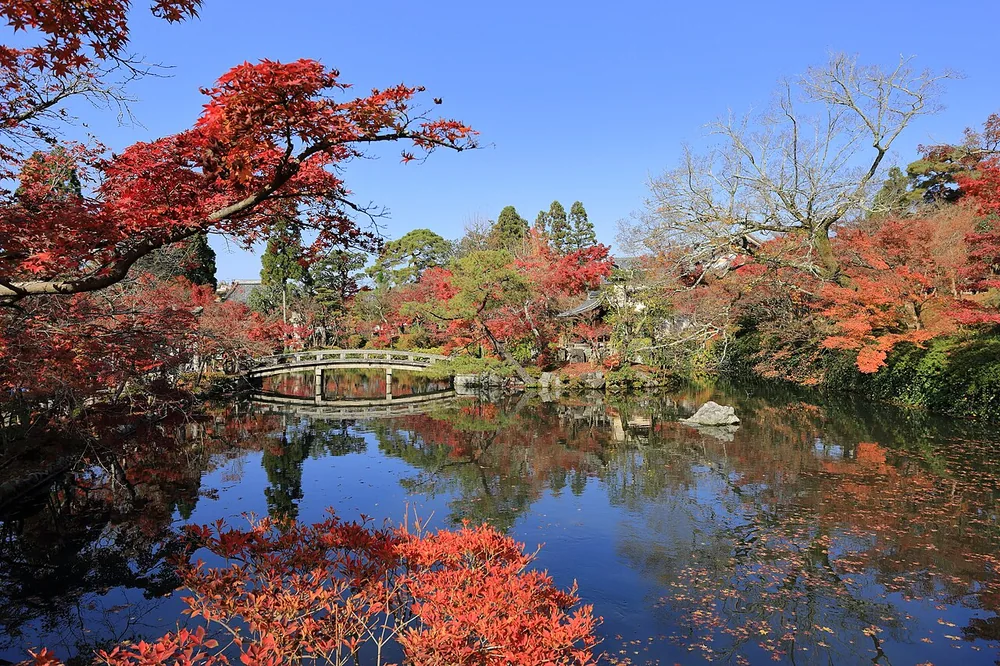
The Kyoto City Tourism Association lists the temple's typical peak autumn colour window as mid- to late November. In Daigo-ji's own foliage update from 17 November 2026, sunnier spots already showed green, gold, and crimson together in photographs stretching from Karamon and Nio-mon gates down to Benten Pond. Time your visit around the area that matters most to you. If the Benten-do reflection is your main target, check the lakeside shots in the temple's seasonal log; if you are coming for the view from under the eaves at Sanbo-in, look closely at the mature garden trees and pond surface, as leaf turn varies between the two grounds.
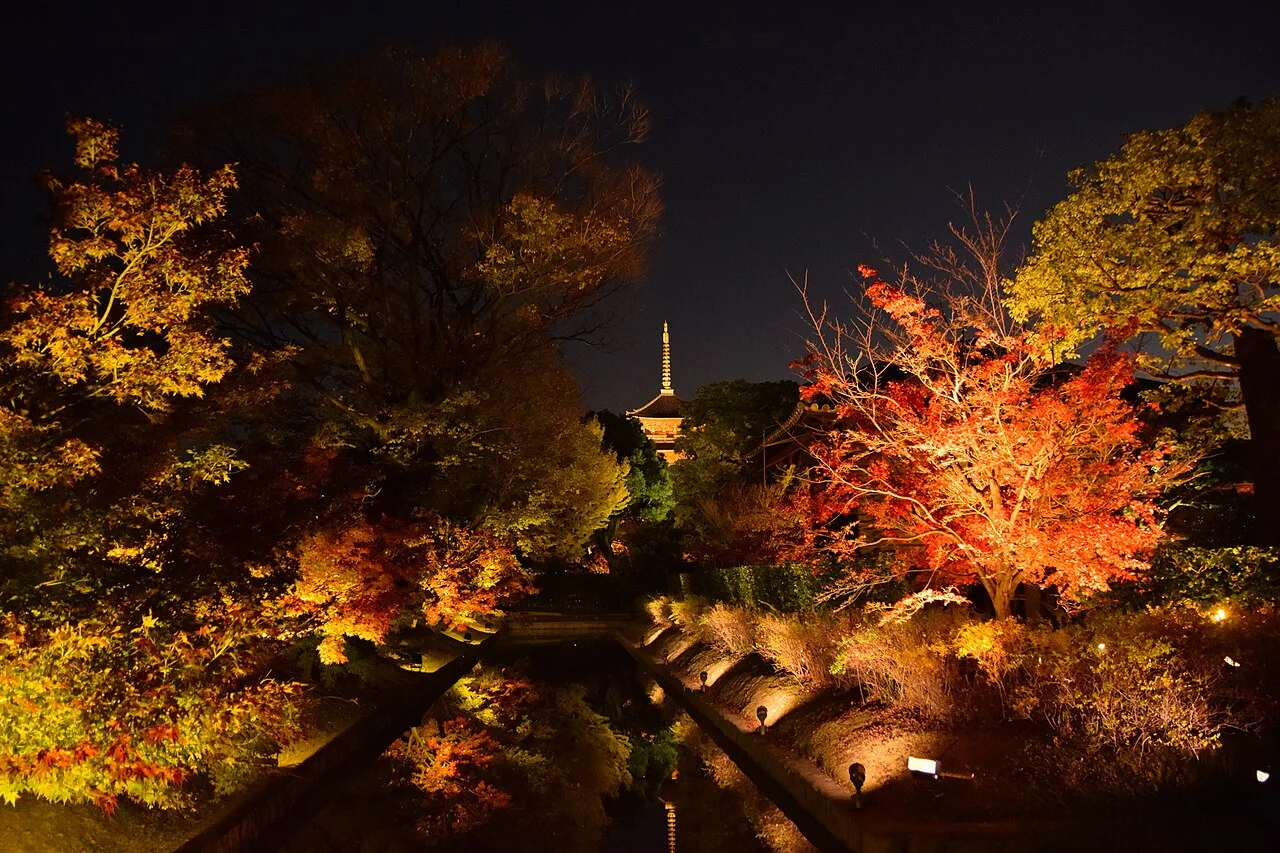
The 2026 autumn night illumination runs from 20 November to 6 December, spanning the usual peak foliage period and the week immediately following. Visitors arriving in the first week of December can check canopy colour and fallen leaves during the day before deciding whether to stay on for the evening lights. From 7 December onwards, both the night illumination and the Reihokan autumn special exhibition have finished, daytime closing shifts to winter hours, and the whole visit finishes half an hour earlier than the weekend before.
Compare Daigo-ji ticket combinations, Sanbo-in Garden and Garan routes, 2026 night illumination hours, Reihokan exhibition dates, Kami-Daigo trail closures, and Kyoto transport.
Daytime Ticket Prices & Last Entry
Daytime tickets are sold at the Sanbo-in ticket counter (Sanbo-in Haikan Uketsuke), just inside the Somon main gate. At the window, choose admission for one, two, or all three precincts: Sanbo-in, Garan, and Reihokan Museum. Individual visitors and groups can purchase standard admission on the day using cash, credit card, or electronic payment. Pick up a temple map leaflet at the desk to get your bearings between Nio-mon Gate, Karamon Gate, and each area's ticket gate before setting off.
Autumn falls under standard seasonal pricing. Adult tickets cost ¥600 for one area, ¥1,000 for two areas, and ¥1,500 for all three; junior and senior high school students pay ¥400, ¥700, and ¥1,000 respectively. Buy a single-area ticket if you only want the pagoda and Benten Pond, or pair Garan with Sanbo-in to include the garden. A two-area pass also works for Garan plus Reihokan Museum if your morning focus is Buddhist sculpture, manuscripts, and historic timber architecture; groups with mixed interests can walk one area together and split for their second.
During the day, primary school pupils and younger children enter free of charge. Visitors holding a disability certificate and one accompanying carer receive free standard admission to all three areas, though special viewings are charged separately. Standard group rates for 20 or more adults drop to ¥800 for two areas and ¥1,300 for three, while single-area tickets remain at the individual rate. Special access to the inner Sanbo-in Goten halls costs an extra ¥500 for adults and secondary students, which suits visitors wanting to walk the rear chambers beyond the study; if you are mainly here to photograph the garden, the view from Omote-shoin is plenty.
Daytime gates open at 09:00. Through 6 December 2026, grounds close at 17:00 with last admission at 16:30. From 7 December until the end of February 2027, closing shifts to 16:30 with last admission at 16:00. If you plan to visit two precincts, keep the final entry cutoff in mind for your second stop. Arriving in the afternoon, check closing times at the desk first and start with the Garan if you want unhurried time around the pond.
Spring operates on a separate tariff for another trip. Standard rates apply through 19 March the following year, while the spring season from 20 March to the third Sunday in April offers three-area (¥1,800 adult, ¥1,300 secondary student) and single-area (¥800 adult, ¥600 student) tickets, with opening hours sometimes adjusted for cherry blossom season. For a straightforward autumn budget, allow ¥2,500 per adult for a two-area daytime pass plus the 2026 night illumination, and add ¥500 if you include the Sanbo-in Goten inner halls.
| Scope of Visit | Ticket Type | Adult | Junior / High School |
|---|---|---|---|
| Five-Storey Pagoda, Kondo Hall & Benten Pond only | Garan Single-Area Ticket | 600 | 400 |
| Add Sanbo-in Garden | Two-Area Combined Ticket | 1,000 | 700 |
| Add Reihokan Museum | Three-Area Combined Ticket | 1,500 | 1,000 |
| Rear chambers beyond Sanbo-in Omote-shoin | Goten Special Viewing Add-on | 500 | 500 |
| 2026 Autumn Garan night foliage | Night Illumination Ticket | 1,500 | 1,500 |
Getting from Daigo Station to the Main Gate
If you are staying near Kyoto Station, take the JR Biwako or Kosei Line to Yamashina, then transfer to the Kyoto Municipal Subway Tozai Line bound for Rokujizo and alight at Daigo Station. The temple notes roughly 5 minutes on JR and 10 minutes on the underground, though you should budget extra time for changing stations, waiting for trains, and the walk in. Guests staying near Sanjo Keihan or Karasuma Oike can board the Tozai Line directly and use the same underground line after a morning visit to stop in Yamashina for lunch or return to the city centre.
Leave Daigo Station via Exit 2 and walk about 10 minutes to the temple grounds. Set your map destination to Daigo-ji Somon Gate or the Sanbo-in ticket counter rather than Benten-do itself, as pinning the lakeside pavilion can skew your route past the actual entrance sequence through the Somon Gate, reception approach, and Garan gate. Both the Five-Storey Pagoda and Benten-do lie inside the Garan with other halls between them, so Nio-mon Gate makes a reliable meeting point if family members split up.
If you are staying near Kyoto Station's Hachijo Exit and want less walking outside stations, take the Keihan Bus Kyoto–Daigo-ji Line from stop H4 outside Hotel Keihan. Route 301 runs to the Daigo-ji terminus, while Route 305 bound for Aibagawa stops at Daigoji-mae; the temple estimates roughly 30 minutes from Hachijo Exit. Buses 22 and 22A also serve Daigoji-mae from Yamashina Station Stop 1 or Keihan Rokujizo Station Stop 2. Note the name of your arrival bus stop, and keep the walk back to Daigo underground station saved as a backup—especially handy when leaving after the night session.
Coming from Uji or along the JR Nara Line, ride JR to Rokujizo and change to the Tozai Line. Note that the Keihan Uji Line also has a Rokujizo Station—all three lines share the same station name, so follow signs for the specific operator you need when transferring. If you plan to pair Daigo-ji with an afternoon in Uji, approach via Yamashina on the way out, then continue south through Rokujizo and take JR straight back to Kyoto Station from Uji without backtracking.
When combining JR and the underground, price each leg separately first. The Kyoto Municipal Subway 1-Day Pass costs ¥800 for adults, while the Subway & Bus 1-Day Pass is ¥1,100 and covers specific Keihan Bus zones; the JR fare to Yamashina is always separate. If you are only making a straight return trip to the temple, tapping a contactless transit IC card is easiest. Should you plan several stops along the Tozai Line, check our Kyoto Subway & Bus Day Pass guide and include any evening return ride in your calculation.
Garan Precinct: Five-Storey Pagoda, Kondo Hall & Benten Pond
Head east through the Somon main gate and the gate directly ahead is Nishidaimon, also marked as Nio-mon Gate on temple maps. Beyond it lies the Shimo-Daigo Garan precinct. On a first visit, head for the Five-Storey Pagoda, pass Kondo Hall along the avenue, and continue towards Kannon-do and Benten-do. If you are short on photo time, capture the pagoda first before budgeting minutes for walking and waiting for an opening by the pond; anyone squeezing the temple into a single hour must factor in both ticket purchase and the walk back to Nio-mon Gate.
According to temple records, the Five-Storey Pagoda was completed in 951, making it the oldest surviving wooden structure in Kyoto Prefecture. Stand back to take in all five tiers of sweeping eaves and the sorin spire at the summit, then step closer to see the timber bracketing. You can view the exterior in two passes: look up to frame its silhouette on your way to Kondo Hall, then turn back for a shot framed between the trees on the return leg. In autumn, a corner of maple leaves is enough—leave sky above the spire so all five storeys read cleanly, as autumn visitors view the exterior rather than the Esoteric Buddhist wall paintings inside.
Kondo is Daigo-ji's principal hall, relocated from Yuasa in Kishu on Toyotomi Hideyoshi's orders while retaining late-Heian architectural proportions. Kondo and Kannon-do stand separately: Kondo enshrines the main image of Yakushi Nyorai, while Kannon-do sits further along towards the pond. Pin Kannon-do as your landmark if you are looking for the Saigoku Kannon Pilgrimage stamp office, which also helps gauge walking distance along the way. Whenever monks enter or leave during a service, keep doorways and steps clear and step to the side of the approach to take photographs.
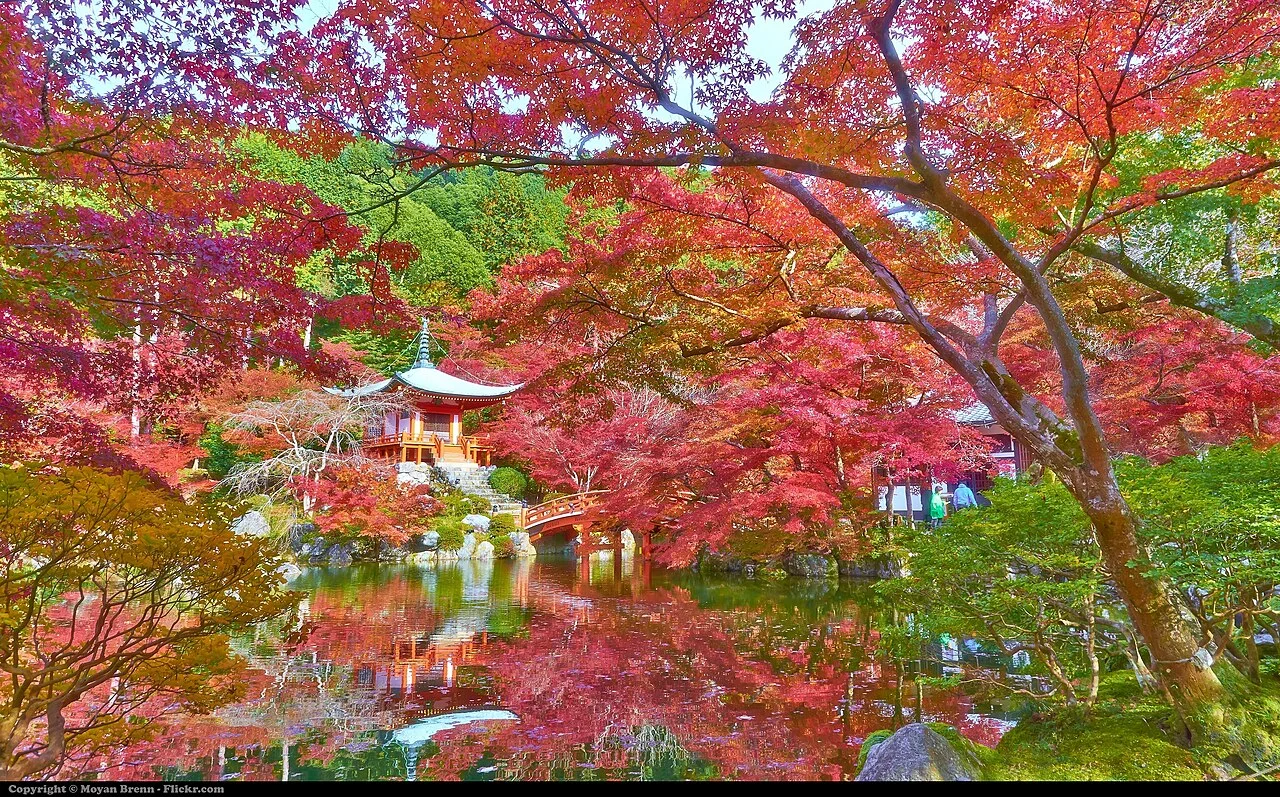
Benten-do stands beside Benten Pond at the far end of the Garan. The signature composition brings together the vermilion hall, the bridge, and the pond surface, where overhanging foliage along the bank naturally frames the water. On clear days, shoot a wide view from the bank showing both bridge and pond first, then shift somewhere out of foot traffic for close-ups. If a breeze breaks up the reflection into ripples, compose with foreground maple branches against the pavilion roof and pause until passers-by clear rather than blocking narrow paths.
For families where not everyone wants a long walk, the stretch from Nio-mon Gate to the pagoda and Kondo Hall already takes in two National Treasures. Benten Pond sits considerably deeper in the grounds and adds a return walk back to the meeting point, so let slower walkers decide early whether to continue or turn back. Giving keen photographers ten minutes alone while the rest of the group heads to an agreed landmark saves far more time than regrouping at every turn.
Viewing Sanbo-in Garden from Omote-shoin
Sanbo-in sits right beside the Somon Gate and ticket counter; visiting it first before heading down the avenue to the Garan keeps indoor shoe removal separate from the longer lakeside walk. Its National Treasure Karamon Gate serves as an easy landmark, lacquered in black with gilded chrysanthemum and paulownia crests that remain crisp even under overcast skies. Follow reception staff directions inside the halls, and outside step back along the side of the approach to admire the lintel and roofline without crowding the entrance.
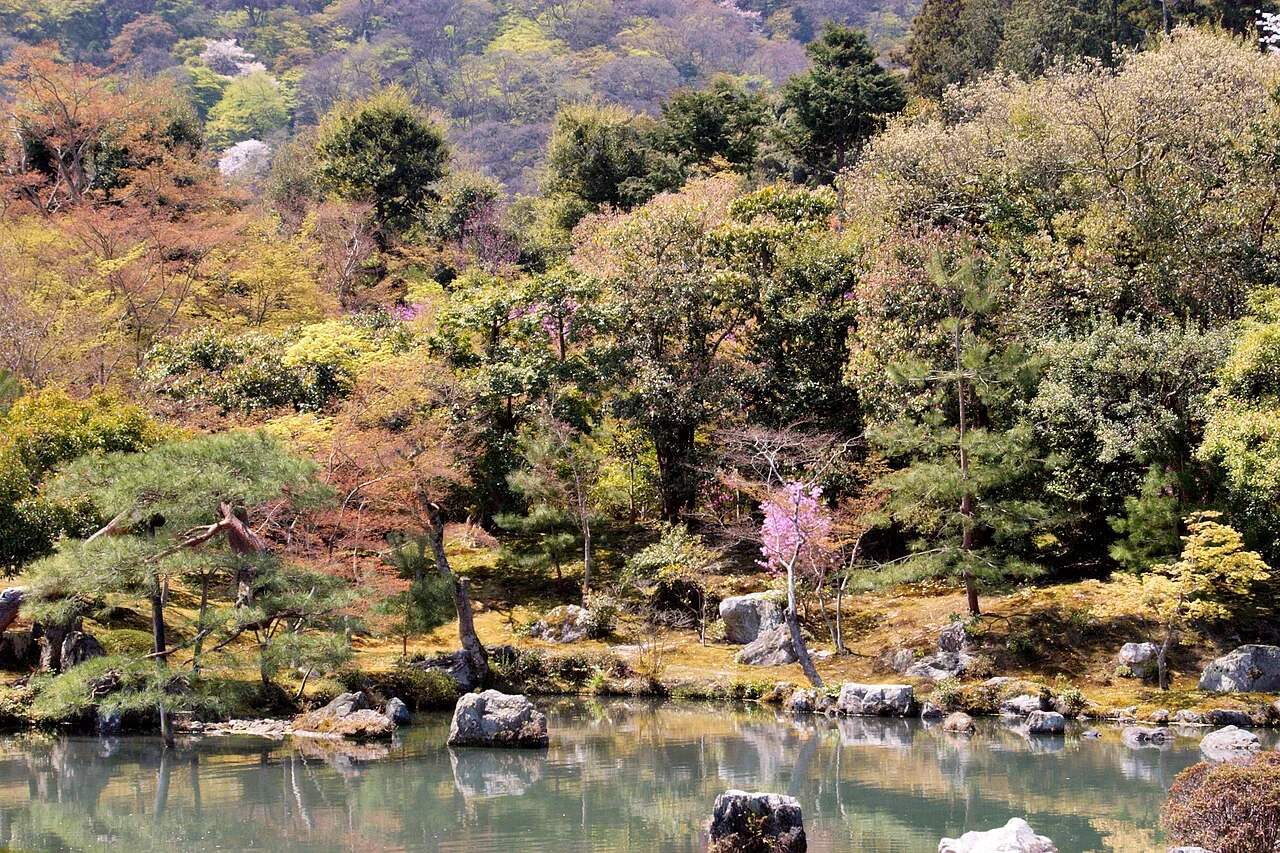
Founded in 1115 by the 14th abbot Shokaku, Sanbo-in owes the basic layout of its present garden to Toyotomi Hideyoshi, who commissioned the landscaping ahead of his famous 1598 cherry-blossom banquet at Daigo. Designated both a Special Historic Site and Special Place of Scenic Beauty, the garden arranges pond islands, bridges, and carefully positioned viewing stones. Looking out from the study, spot the famous Fujito Stone near the water's edge first, then pick out Tortoise Island and Crane Island formed of rock and trimmed trees—even when autumn leaves turn late, these closer garden compositions reward an unhurried pause.
The Omote-shoin itself is a National Treasure, bordered by a railed timber veranda facing the garden at multiple angles over the pond. Inside, the room steps across upper, middle, and lower levels; temple records explain that removing the tatami mats from the lower tier created a Noh stage watched from the raised middle and upper sections. Looking back inside from the garden edge makes the stepped floor plan immediately clear. Bring warm socks on chilly days, as visitors remove shoes at the door and the temple asks guests not to walk barefoot inside historic buildings.
If you wish to see Junjo-kan, Miroku-do, and Oku-shinden, look for the Goten Special Viewing desk at the far end of Omote-shoin. Miroku-do houses a statue of Miroku Bosatsu carved by master sculptor Kaikei, while Junjo-kan displays sliding-door paintings depicting cherry blossom and autumn maples. Standard garden admission follows the Omote-shoin and garden route only; if part of your group wants the add-on, agree to meet outside afterwards so photographers heading to the pagoda and pond do not lose time waiting.
On a rainy Kyoto day, Sanbo-in comes into its own because you can take in the pond, wet stones, and damp foliage directly from the covered veranda before walking carefully along the outer gravel paths. Stow wet umbrellas and gear neatly at the shoe entrance before stepping onto the wooden floors. Because stepped thresholds inside the halls prevent wheelchair access, wheelchair users can follow the level approach outside Karamon Gate and ask at the counter which outdoor garden routes are open on the day.
Catching the Seasonal Exhibition at Reihokan Museum
Reihokan Museum stands just inside the Somon Gate opposite Sanbo-in across the main avenue. On a three-area ticket, it fits cleanly ahead of the Garan—visitors keen on Heian-period Buddhist statues and historical manuscripts will appreciate reading the gallery labels while fresh in the morning before touring Sanbo-in and the pond. Conversely, if your group is mainly focused on night photography or someone needs seated rest during the day, save the extra admission budget for lunch and a break and stick to the garden and pagoda.
From 17 October to 6 December 2026, Reihokan's autumn special exhibition highlights Daigo-ji's National Treasure documents, sacred texts, and Kan'ei-era culture. Both the Main Building (Honkan) and Heiseikan are open from 09:00 to 17:00 (last entry 16:30), while the Sculpture Hall (Butsuzo-to) is closed for the run. If you have specific works or archives in mind, check the published exhibition checklist beforehand to gauge how long to linger; note that Sculpture Hall refers only to one wing listed on Japanese schedules, whereas your ticket covers Reihokan as a whole.
If you visit the pagoda first, start inside the Main Building with its Five-Storey Pagoda architectural model. The 2026 checklist also features historic roof tiles, bracket complexes, spire fittings, and the original National Treasure central pillars—details you can only crane up at outdoors become easy to inspect in display cases. Document highlights include shogunal vermilion-seal decrees by Tokugawa Hidetada and Iemitsu alongside letters by Lady Kasuga, while sculpture fans should head to Heiseikan for the Yakushi Triad and Five Great Wisdom Kings. Since the mountain Yakushi-do is closed, seeing the Yakushi Triad preserved down in Reihokan keeps it firmly on the itinerary.
Under normal scheduling, at least one of the three wings—Honkan, Heiseikan, or the Sculpture Hall—remains open outside the first three days of New Year and occasional closures. The final day of the autumn exhibition coincides with the last night of the 2026 illumination on 6 December. Visitors coming in mid-December should check current Reihokan notices to confirm open galleries and follow winter daytime closing cutoffs; keep your phone packed away inside, as photography is prohibited throughout the museum.
The temple suggests roughly 30 minutes per Shimo-Daigo precinct, making 90 minutes across all three a realistic baseline. Anyone who reads gallery notes thoroughly should add 15 to 30 minutes at Reihokan, then judge the afternoon light outside before deciding whether to tackle Sanbo-in or the Garan next. Autumn maples also dot the main avenue between buildings, so leaving a buffer between stops gives you room to adapt.
2026 Night Illumination: Re-entering via Sanbo-in Reception
Evening opening runs from 18:00 to 20:50, with last entry at 20:10. Admission is ¥1,500 for secondary school students and adults (¥1,200 per person for groups of 20 or more), booked via the temple's Autumn Night Viewing page. The grounds clear completely after daytime hours before evening check-in opens at the Sanbo-in ticket counter; Sanbo-in serves solely as the entry point here, as the lit area is the Garan precinct around Kondo Hall, the Five-Storey Pagoda, and Benten-do. Visit Sanbo-in Garden and Reihokan during the day.
Booking standard night entry through the Kyoto City Tourism Association link charges your credit card immediately and carries a 100% cancellation fee unless the organiser cancels the event. If you would rather dine after leaving the temple, JR Central EX also offers a 2026 Early Entry night pass at ¥1,800, with entry between 17:30 and 17:50. Arriving within that window lets you remain inside the Garan seamlessly into the main session without queuing twice; the extra half-hour simply means shifting your train, walk, and dinner plans slightly earlier.
Walking the path from the pagoda to Benten Pond in daylight first gives you your bearings so you can concentrate on the lit halls, bridge, and trees at night. Families who cover the full Garan earlier can head straight for Benten-do in the evening, leaving enough time to reach the pond and admire the pagoda on the way out. Night-only visitors can follow the standard flow past the pagoda and Kondo Hall to the pond, saving the main avenue photos for the walk back to Nio-mon Gate; though the session lasts nearly three hours, late arrivals still face the full return walk, so if you are still at the underground station around 20:00, check whether you can reach check-in before 20:10.
On five dates in 2026—21, 22, and 23 November, plus 5 and 6 December—monks hold evening shomyo liturgical chanting and a goma fire ritual. Shomyo chanting takes place inside Kondo Hall at 18:30 and 20:00, with the goma fire ritual held outside Fudo-do at 19:15; both are included with a night ticket. If chanting is your priority, head straight to Kondo Hall first and stroll to Benten Pond afterwards, or visit the pond right after entering if you plan to attend the 20:00 chanting, which ends around 20:20 with only half an hour before closing.
Dimly lit gravel paths hide small level changes after dark, so give your eyes a moment to adjust when walking with older relatives or children, wear proper outdoor walking shoes, and retrace your inward route back to the underground. Tripods, monopods, and selfie sticks are strictly banned throughout the grounds, along with any photography inside halls or of Buddhist statues. For sharper handheld shots, lock focus on the brightest leaves or bridge railing, drop phone exposure slightly to preserve leaf detail, and pocket your handset until you come to a full stop.
To weigh late-evening travel times back to your hotel before buying tickets, compare options by neighbourhood in our Kyoto autumn night illumination guide. Daigo-ji's appeal lies in combining a Heian-era pagoda and lakeside reflections along a single avenue. If you have an early Shinkansen the next morning, enter as soon as gates open, leave a little ahead of closing, and enjoy an unhurried dinner near your hotel.
Structuring Daytime, Break Time & the Return Journey
For a classic half-day combining autumn leaves and the garden, enter the Somon Gate around 09:00, visit Sanbo-in Garden first, then pass through Nio-mon Gate into the Garan. Allowing roughly two to three hours separates the pagoda and Kondo Hall from Benten Pond with room for tickets, walking, and photos; push lunch slightly later if your group wants time to pause over garden stones and architecture. Travelling from Kyoto Station, also add the transfer at Yamashina and the walk from the underground exit to the main gate.
To combine daytime and evening visits, arrive in the afternoon to tour Sanbo-in and the Garan, head out to Daigo Station or Yamashina for an early dinner, and return for evening check-in after 18:00. Adults who only want Sanbo-in in daylight can pair a ¥600 single-area ticket with the ¥1,500 night entry for ¥2,100 total; if you also want natural light on the Five-Storey Pagoda timberwork and pond surface, budget ¥2,500 for a two-area daytime pass plus night admission and wrap up your daytime walk around 15:00 for a relaxed meal.
People frequently underestimate the walking involved in the early-evening break. Dining back in Yamashina adds two underground hops on top of walking out to Daigo Station and returning to the ticket counter later. If family members are tired after an afternoon on their feet, eat near Daigo Station or wait until leaving the temple for the night and dine at a larger station along the line; anyone picking up luggage or catching onward trains at Kyoto Station should check Daigo-to-Yamashina underground departures alongside connecting JR times, allowing for the transfer walk between platforms.
Refreshment spots operate inside the grounds, which the temple FAQ places in the Reihokan and Garan areas, while outside food and packed lunches should wait until after you leave. Carry a sealed bottle or flask to stay hydrated outdoors in line with temple guidelines, and on wet days check which on-site cafés are open when buying tickets so meals, toilets, and shelters align on your map. Keep bags light enough to manage wet gravel paths easily and minimise loose items when taking off your shoes at Sanbo-in.
For a daytime sit-down near Kannon-do, stop by the tea room Saryo Uji Wazukaen before or after Benten Pond; temple listings give its hours as 11:00–16:00, closed Tuesdays and Wednesdays, making it an easy post-Garan tea break. Note that the French café Le Clos Sous le Cerisier closed its previous operation at the end of October 2026 ahead of a scheduled reopening in January 2027. If you saved café posts from a previous autumn, plan your 2026 pre-illumination dinner around Daigo Station or Yamashina instead.
Visiting with Seniors, Children, or Collecting Goshuin Stamps
Garan walkways combine gravel paths with gentle gradients. Wheelchair users can access much of the grounds, though no wheelchair hire is offered on site and an assistant is needed on certain stretches; accessible toilets sit near Reihokan, Sanbo-in, and Kodai-in. Start near Sanbo-in so ticket staff can mark the best step-free route on your map before you commit to the full walk out to Benten Pond, and switch to a shorter loop whenever rain makes outdoor surfaces slick or older relatives tire.
Families with young children do best keeping daytime sightseeing to one or two main highlights: admire the pagoda first, walk up to Kondo Hall, and only carry on to Benten Pond if energy holds. Children fascinated by big wooden buildings often enjoy counting the pagoda's five tiered roofs from ground level. Pack a spare pair of socks for entering Sanbo-in's halls, and if adults split up to take photos, set Nio-mon Gate or the Somon Gate as the rendezvous rather than leaving children waiting by the pond.
Daytime goshuin temple stamps are issued at two spots: Kannon-do inside the Garan handles Yakushi Nyorai, Juntei Kannon (Temple No. 11 on the Saigoku Kannon Pilgrimage), and Godairikison stamps, while Sanbo-in's stamp office issues the Miroku Bosatsu stamp. If you begin at Sanbo-in from the Somon Gate, confirm which stamp you want before entering the halls, then pick up Garan stamps when you reach Kannon-do. A limited-edition stamp is also featured on the 2026 night event page—ask where to collect it at evening check-in, or get daytime stamps first if you are working to a tight train departure.
Kami-Daigo is the temple's mountain birthplace, where Shobo founded the original hall in 874, placing the mountain Yakushi-do and Kaisan-do in a completely separate precinct from the Five-Storey Pagoda below. Daigo-ji's homepage warns that landslide hazards along sections of the trail have closed Kami-Daigo to all entry. Although standard mountain-entry pages still list the Nyonin-do trailhead and seasonal hours, stay within Shimo-Daigo while closures remain in force and obey all posted barriers even if third-party hiking maps route across Mount Daigo from elsewhere.
Adding Yamashina or Uji Beyond a Half-Day Visit
Bishamon-do and Daigo-ji pair neatly along the Tozai Line. Spend the morning with Daigo-ji's pagoda, garden, and pond, take the underground to Yamashina Station for lunch, and walk roughly 20 minutes up to Bishamon-do. Leave extra outdoor time in Yamashina for the maples around Chokushimon Gate and its carpet of fallen leaves along the stone steps; Bishamon-do's official site notes hall entry closes at 16:00 in November and shifts earlier to 15:30 from December. If you plan to return to Daigo-ji for the evening illumination, factor in the walk back down to Yamashina Station before dusk.
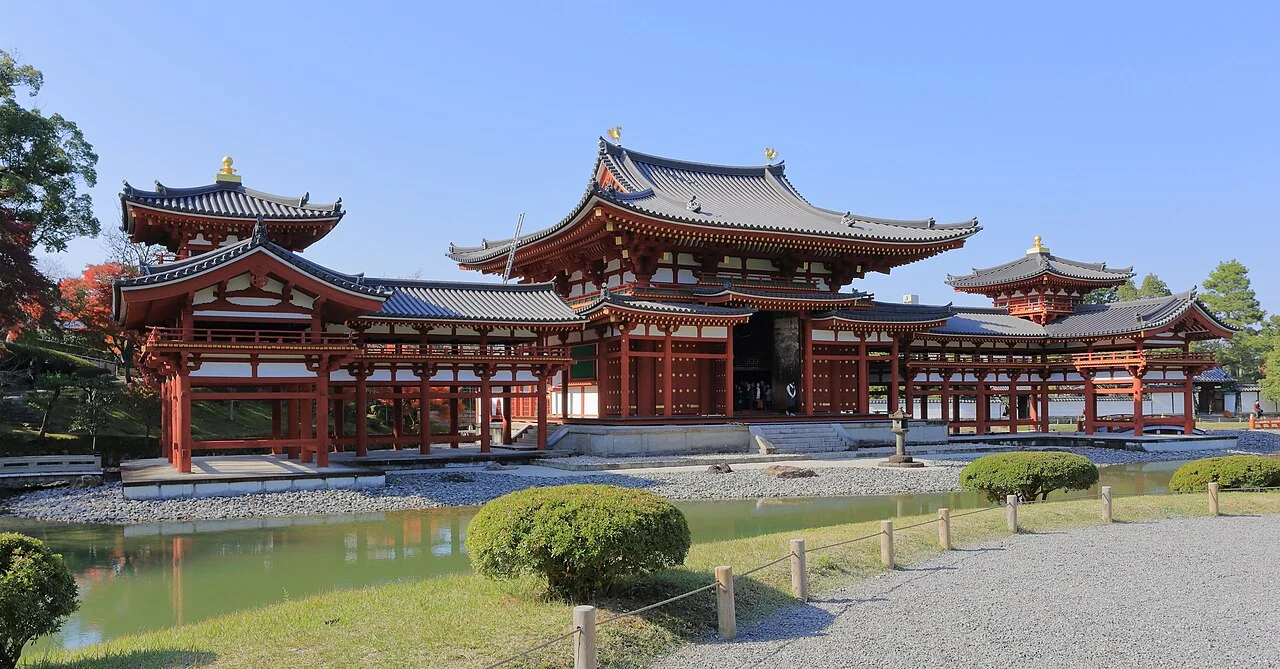
Uji suits travellers wanting to pair Daigo-ji's pagoda with another landmark of Heian architecture. At midday, ride from Daigo to Rokujizo, change onto the JR Nara Line or Keihan Uji Line, and walk to Byodo-in. Should stepping inside the Phoenix Hall be non-negotiable, put Uji in the morning instead, as timed interior tickets are issued on the spot that day until sold out; visitors doing Daigo-ji first can focus the afternoon on viewing the Phoenix Hall across the garden pond, touring Hoshokan Museum, and strolling along the Uji River—see our Uji Byodo-in & Tea District Day Guide for ticketing flow and station links.
When fitting multiple foliage spots into one Kyoto trip, keep Yamashina and Daigo on the same day while saving Higashiyama or Arashiyama for another. Keeping both half-days along one railway corridor saves far more transit time than bouncing across the city by popularity alone. If you only have one evening for night illuminations, check which side of town your daytime stops fall on in our Kyoto Autumn Foliage Zones & Transport Guide—if Daigo-ji is your evening choice, keep your late-afternoon stop along the Tozai Line rather than dashing back to eastern Fushimi at dusk.
If Yamashina's uphill walk feels too long, swap your second stop for Zuishin-in, just a 5-minute walk from Ono Station—one stop past Daigo. Associated with the legend of Heian poet Ono no Komachi, Zuishin-in rewards a quiet loop from its courtyard gardens between halls into the rooms displaying painted sliding screens. Because the Kyoto City Tourism Association notes that Zuishin-in's 2026 autumn night illumination is suspended for Oku-shoin restoration works, visit Ono by day and hop back one underground stop to Daigo-ji after dark.
Across a multi-day Kyoto stay, treat a daytime visit to Daigo-ji as a flexible slot. Reserve an early clear morning for crisp reflections on Benten Pond, or flip the order on heavy rain days by putting Reihokan and Sanbo-in first. Before walking up to Bishamon-do in the afternoon, check recent foliage photos from Yamashina Station—if the stone steps look bare or slick after rain, take a relaxed break near the station instead and decide from there whether to head back to Daigo-ji for the evening lights.
A few useful answers
When is Daigo-ji's autumn foliage usually at its best?
The Kyoto City Tourism Association lists the typical peak window as mid- to late November. Before heading over for Benten Pond, check Daigo-ji's current seasonal foliage updates for recent lakeside photos.
Which ticket do I need just for the Five-Storey Pagoda and Benten-do?
Both landmarks sit inside the Garan precinct, so a single-area ticket is all you need during standard autumn hours: ¥600 for adults and ¥400 for junior and senior high school students. To add Sanbo-in Garden, choose the two-area combined ticket.
What time does the 2026 night illumination start, and are daytime tickets valid?
From 20 November to 6 December 2026, night admission opens at 18:00, with last entry at 20:10 and closing at 20:50. Daytime tickets are not valid: evening viewing requires a separate ¥1,500 ticket (secondary school students and older) and re-entry via the Sanbo-in ticket counter.
Can visitors hike up to Kami-Daigo?
No—the temple currently prohibits all entry to Kami-Daigo due to landslide risks along sections of the mountain trail. Sanbo-in, the Garan precinct, and Reihokan Museum are all on the flat lower grounds.
Which underground exit leads to Daigo-ji Temple?
Take Exit 2 from Daigo Station on the Kyoto Municipal Subway Tozai Line for an approximately 10-minute walk to the temple. From Kyoto Station, ride JR one stop to Yamashina and transfer onto the Tozai Line.
Are Sanbo-in's interior halls wheelchair accessible?
No, multiple stepped thresholds prevent wheelchairs from entering the historic buildings, and no wheelchairs are available to hire on site. Accessible toilets are located beside Sanbo-in, Reihokan Museum, and Kodai-in.
Where do I get the Saigoku Kannon Pilgrimage No. 11 goshuin stamp?
Go to the stamp office inside Kannon-do in the Shimo-Daigo Garan precinct. Enter via the Somon main gate, pass through Nio-mon Gate, and follow the Garan avenue towards Benten Pond.
Official information and references
Sources used in this guide.
- Daigo-ji Temple | Visiting Hours, Area Fares & Ticket Counters
- Daigo-ji Temple | 2026 Autumn Night Illumination & Shomyo Schedule
- Daigo-ji Temple | 2026 Night Event & Illuminated Zones (Official Flyer)
- Kyoto City Tourism Association | Daigo-ji Autumn Foliage Updates & Typical Peak
- Daigo-ji Temple | November 2026 Autumn Foliage Photos
- Daigo-ji Temple | Official Notices & Kami-Daigo Entry Closure
- Daigo-ji Temple | Access & Daigo Station Exit Guide
- Keihan Bus | Yamashina & Daigo Routes, Stops for Lines 301 & 305
- Daigo-ji Temple | Precinct Map & Historic Halls
- Daigo-ji Temple | Visiting, Photography, Accessibility & Goshuin FAQ
- Daigo-ji Temple | Sanbo-in Garden, Omote-shoin & Goten Special Viewing
- Daigo-ji Temple | Garan Precinct: Five-Storey Pagoda, Kondo Hall & Benten-do
- Daigo-ji Temple | 2026 Reihokan Autumn Special Exhibition Wings & Hours
- Daigo-ji Temple | 2026 Reihokan Autumn Special Exhibition Checklist
- Kyoto City Tourism Association | Daigo-ji Night Viewing Booking & Cancellation Policy
- JR Central | 2026 Daigo-ji Night Illumination Early Entry Plan
- Kyoto City Transportation Bureau | Subway & Bus 1-Day Pass Fares
- Daigo-ji Temple | On-Site Dining & Shop Notices
- Daigo-ji Temple | Saryo Uji Wazukaen Tea Room Hours
- Bishamon-do | Visiting Hours & Walking Route from Yamashina Station
- Byodo-in | Phoenix Hall Interior Entry & Same-Day Timed Tickets
- Kyoto City Tourism Association | Suspension of 2026 Zuishin-in Night Illumination