Plan your 2026 autumn visit to Daigo-ji Temple in Kyoto. Compare tickets, Sanbo-in Garden and Garan routes, night illumination hours, Reihokan dates, Kami-Daigo trail closures, and transit.
- Region & Focus
- KyotoFall foliage
- Reading Scope
- 22 min read · 10 chapters · 7 Q&As
- Official Verification
- 22 official sources checkedUpdated November 22, 2026 at 08:00 AM GMT+8
- Key Topics
- SeasonsItinerariesKyoto, Osaka & Kansai
Chapter Route Map (tap any stop)
- Which Ticket to Buy First in Autumn
- Daytime Ticket Prices and Last Entry
- Getting from Daigo Station to the Somon Main Gate
- The Garan Precinct: Five-Story Pagoda, Kondo Hall, and Benten Pond
- Viewing Sanbo-in Garden from the Omoteshoin
- Checking the Seasonal Exhibition at the Reihokan Museum
- 2026 Night Illumination: Re-Entry via the Sanbo-in Ticket Office
- Pacing Daytime Visits, Dinner Breaks, and the Trip Back
- Visiting with Seniors or Kids, and Collecting Goshuin Stamps
- Pairing Half a Day at Daigo-ji with Yamashina or Uji
- Quick Q&A
Daigo-ji's five-story pagoda, Bentendo Hall, and Benten Pond all sit inside the Garan precinct, so a single-area ticket covers the icons. If you also want to view Sanbo-in's garden from the Omoteshoin hall, set aside half a day and buy a two-area daytime pass. The 2026 autumn night illumination requires a separate ticket and re-entry, even if you visited earlier in the day. From Daigo Station on the Kyoto Municipal Subway, decide whether your priority is the garden, museum exhibition, or illuminated pond reflections, then exit toward Yamashina or central Kyoto.
Which Ticket to Buy First in Autumn
For a first daytime visit to Daigo-ji Temple, plan on half a day to cover both the Garan precinct and Sanbo-in. If you only have an hour, choose the Garan. Entering through the Nio-mon Gate puts the five-story pagoda, Kondo Hall, and Benten Pond on one route, combining autumn maples with National Treasure architecture. Sanbo-in must be visited during the day. If you plan to stay until dark for Bentendo Hall, tour the garden first, step outside for an early dinner, and return to the Sanbo-in Ticket Office for night admission.
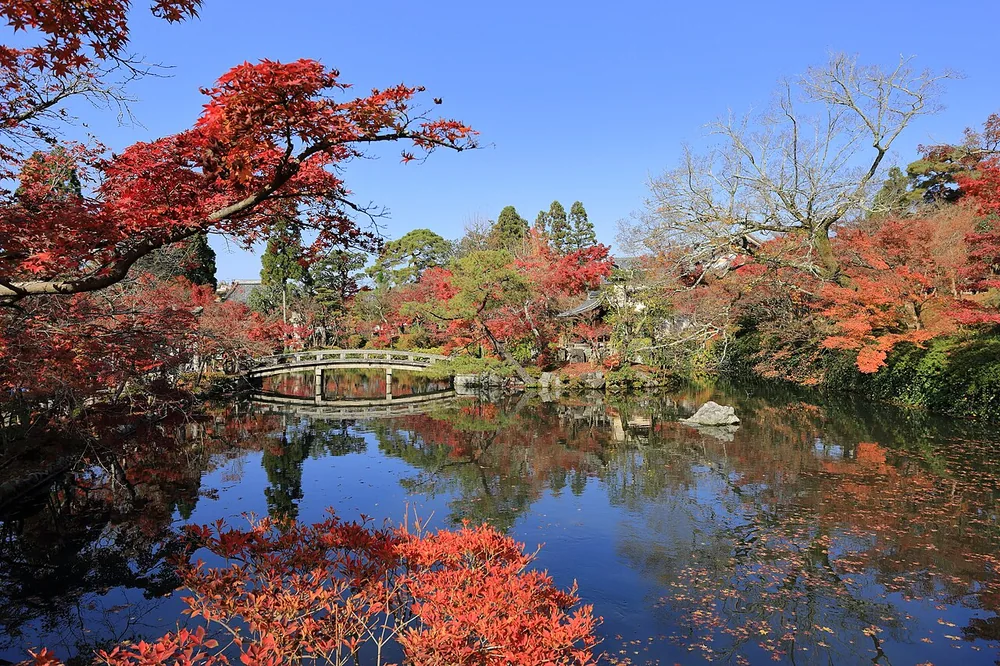
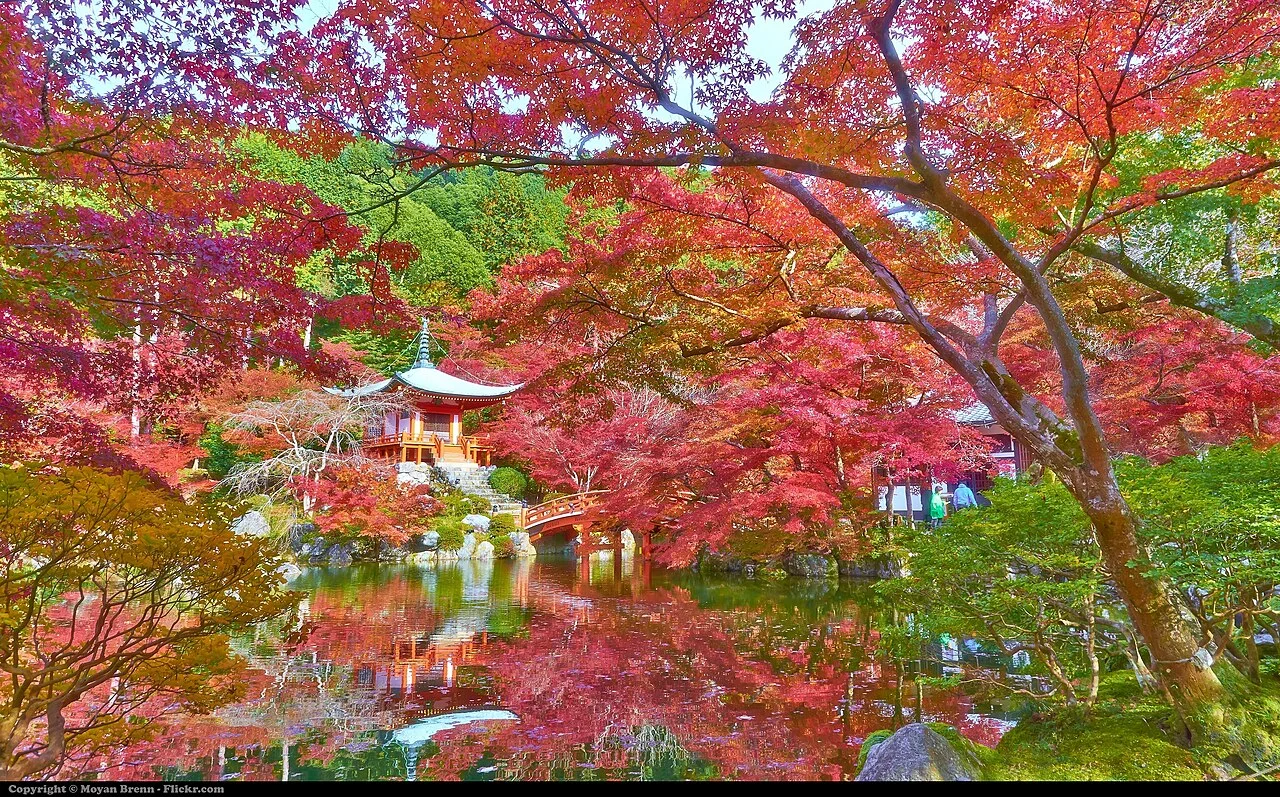
The Kyoto City Tourism Association lists Daigo-ji's typical autumn foliage window as mid- to late November. In the temple's November 17, 2026 foliage update, sunnier spots already showed green, yellow, and red leaves in photos taken from Karamon Gate through Nio-mon Gate to Benten Pond. Pick your date based on the area you care about most. If Bentendo reflections are your priority, check the lakeside shots in the temple's seasonal update; if you want the view from under Sanbo-in's eaves, look at the garden's mature trees and pond separately, since color turns at its own pace in each precinct.
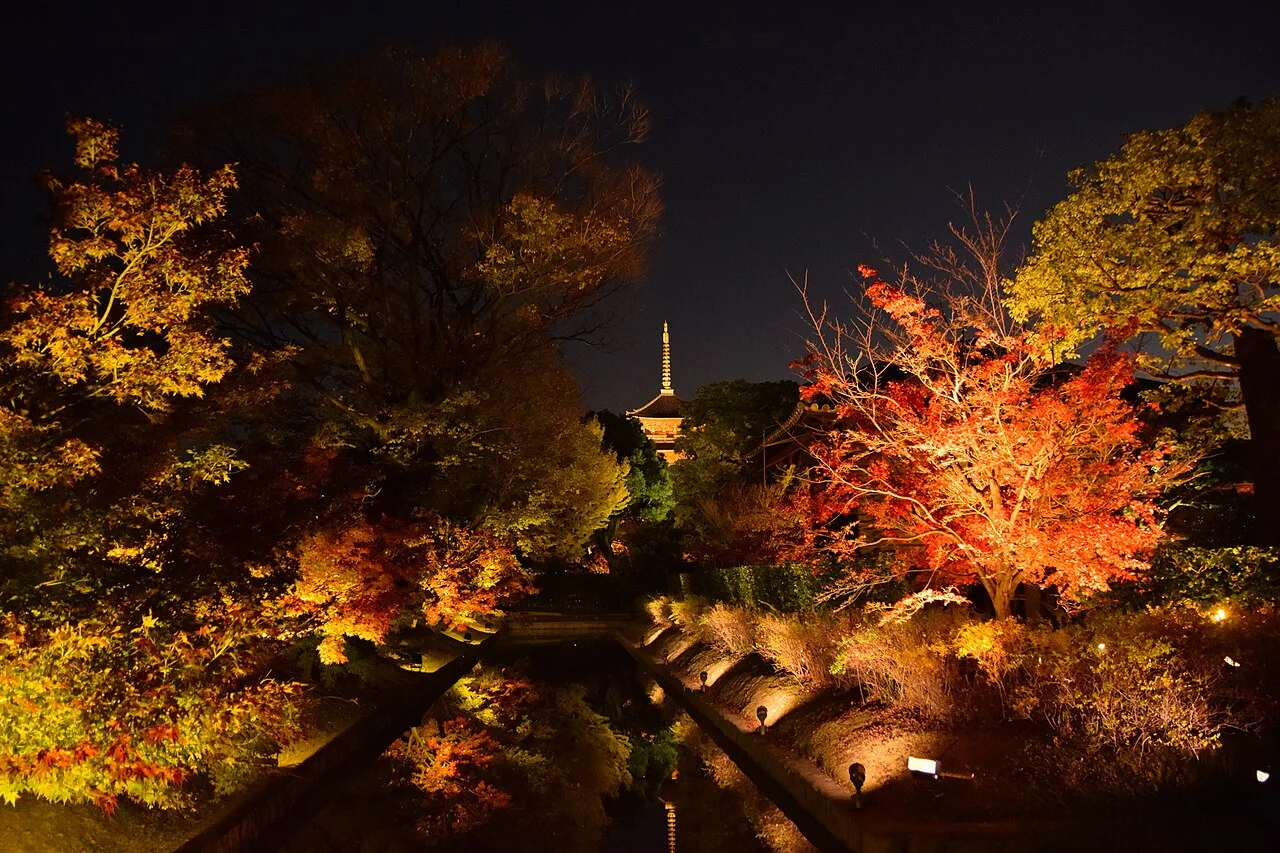
The 2026 autumn night illumination runs from November 20 to December 6, spanning peak foliage season and the stretch right after. If you are visiting during the first week of December, inspect the canopy and fallen leaves during the day before deciding whether to stay for the evening lights. Starting December 7, both the night event and Reihokan's autumn special exhibition are over, and daytime hours switch to the winter schedule, cutting the day 30 minutes shorter than the previous weekend.
Plan your 2026 autumn visit to Daigo-ji Temple in Kyoto. Compare tickets, Sanbo-in Garden and Garan routes, night illumination hours, Reihokan dates, Kami-Daigo trail closures, and transit.
Daytime Ticket Prices and Last Entry
Daytime tickets are sold at the Sanbo-in Ticket Office (signed as Sanbo-in Haikan Uketsuke), located just inside the Somon Main Gate. At the counter, pick a one-area, two-area, or three-area pass covering Sanbo-in, the Garan, and the Reihokan Museum. Both individuals and groups can buy general admission on the spot using cash, credit cards, or electronic payment. Brochures (including Traditional Chinese editions) are available at the window; use the map to locate Nio-mon Gate, Karamon Gate, and each ticket checkpoint before heading in.
Autumn falls under the temple's regular-season pricing. Adult admission is ¥600 for one area, ¥1,000 for two areas, and ¥1,500 for all three; junior and senior high school students pay ¥400, ¥700, and ¥1,000. Get a single-area ticket if you only want the pagoda and Benten Pond, or pair the Garan with Sanbo-in to include the garden. A two-area pass also works for the Garan plus Reihokan, a good morning setup if your focus is Buddhist statuary, calligraphy, and historic architecture. When traveling in a group with mixed interests, tour one shared precinct together and let each person pick their own second area.
Daytime general admission is free for elementary school students and younger. Visitors with a disability certificate and one accompanying caregiver receive free general admission to all three areas, though special viewings cost extra. Regular-season group rates for 20 or more adults drop to ¥800 for two areas and ¥1,300 for three, while single-area tickets remain at the individual rate. Special access to the rear Sanbo-in palace halls (Goten Special Viewing) costs an extra ¥500 for adults and junior/senior high students; if you only want garden photos, the standard Omoteshoin view is enough.
Daytime gates open at 9:00 AM. Through December 6, 2026, closing is 5:00 PM with last admission at 4:30 PM. From December 7 through the end of February 2027, hours shift earlier to a 4:30 PM close and 4:00 PM last admission. If you plan to visit two precincts, make sure you reach the second checkpoint before last entry. When arriving in the afternoon, ask at the ticket counter when each gate stops admitting visitors, and start in the Garan if you want unhurried time around the pond.
Spring rates are separate and apply to another trip. Regular pricing runs through March 19 of the following year, while the spring cherry-blossom period runs from March 20 through the third Sunday of April with only three-area and single-area tickets listed (¥1,800 and ¥800 for adults; ¥1,300 and ¥600 for junior/senior high students), and opening hours may shift with the blooms. For a straightforward 2026 autumn budget, plan on ¥2,500 per adult for a two-area daytime pass plus night illumination, adding ¥500 if you enter the rear palace halls.
| Scope of Visit | Ticket Type | Adults | Jr. & Sr. High |
|---|---|---|---|
| Five-story pagoda, Kondo Hall, and Benten Pond only | Garan Single-Area Ticket | ¥600 | ¥400 |
| Add Sanbo-in Garden | Two-Area Combined Ticket | ¥1,000 | ¥700 |
| Add Reihokan Museum | Three-Area Combined Ticket | ¥1,500 | ¥1,000 |
| Halls behind Sanbo-in Omoteshoin | Goten Special Viewing Add-On | ¥500 | ¥500 |
| 2026 autumn Garan night illumination | Night Viewing Ticket | ¥1,500 | ¥1,500 |
Getting from Daigo Station to the Somon Main Gate
If you are staying near Kyoto Station, take the JR Biwako or Kosei Line to Yamashina Station, then transfer to the Kyoto Municipal Subway Tozai Line bound for Rokujizo and ride to Daigo Station. Daigo-ji lists the JR leg at roughly 5 minutes and the subway leg at roughly 10 minutes, though you should budget extra time for the transfer, waiting, and walking to the temple. Travelers staying near Sanjo Keihan or Karasuma Oike can board the Tozai Line directly, then use the same line afterward to grab lunch in Yamashina or head back downtown.
Take Exit 2 at Daigo Station and walk about 10 minutes to reach the temple grounds. Set your navigation pin to Daigo-ji Somon Gate or the Sanbo-in Ticket Office rather than Bentendo Hall, which can mislead map apps toward the back pond even though you have to enter via the main gate, walk past the ticket booth, and enter the Garan. Because the pagoda and Bentendo Hall are separated by other temple buildings inside the Garan, families meeting up should pick the area just outside Nio-mon Gate as an easy landmark.
If you are staying near Kyoto Station's Hachijo Exit and want less walking, take the Keihan Bus Kyoto-Daigo-ji Line from stop H4 outside Hotel Keihan Kyoto Grande. Bus 301 terminates at the Daigo-ji stop, while Bus 305 bound for Aibagawa drops off at Daigoji-mae; the temple estimates roughly 30 minutes from the Hachijo side. From Yamashina Station (Stop 1) or Keihan Rokujizo Station (Stop 2), Buses 22 and 22A also stop at Daigoji-mae. Note your drop-off stop when arriving by bus, and keep the 10-minute walk to Daigo Subway Station saved as an easy alternative for the ride back, especially after night viewing ends.
Coming from Uji or along the JR Nara Line, ride JR to Rokujizo and transfer to the Tozai Subway Line. Keep in mind that the Keihan Uji Line also has a Rokujizo Station; all three operators share the station name, so follow signs for your specific railway when transferring. If you are pairing Daigo-ji with an afternoon in Uji, arrive via Yamashina, depart south through Rokujizo, and take JR directly back to Kyoto Station from Uji instead of doubling back.
When mixing JR and subway legs, price out your single rides first. A Kyoto Municipal Subway 1-Day Pass costs ¥800 for adults, while the Subway & Bus 1-Day Pass is ¥1,100 and covers eligible Keihan Bus zones; JR fares to Yamashina are separate. For a simple round trip to Daigo-ji alone, tapping a standard IC card is easiest. If you plan multiple stops along the Tozai Line, check the Kyoto subway and bus day pass guide to compare routes and factor in your evening ride home.
The Garan Precinct: Five-Story Pagoda, Kondo Hall, and Benten Pond
Heading east past the Somon Main Gate brings you straight to the Saidaimon (marked as Nio-mon Gate on temple maps), which opens into the Shimo-Daigo Garan precinct. On a first visit, head for the five-story pagoda first, continue past Kondo Hall, and then walk toward Kannondo Hall and Bentendo Hall. If your photo window is tight, get a clear shot of the pagoda first before budgeting time for the walk to the pond and waiting for an open spot along the railing. If you only have an hour between hotel plans, remember that figure has to cover ticket purchase and the walk back out through Nio-mon Gate.
Completed in 951 according to temple records, the five-story pagoda is the oldest surviving wooden structure in Kyoto Prefecture. Step back to take in its tiered eaves and tall bronze finial (sorin), then move closer to examine the timber joinery. You can also view it from two angles: look up for the full silhouette on your way to Kondo Hall, and frame a second shot through the trees on the return walk. A corner of autumn foliage is plenty here; leave breathing room above the top roof so all five stories stay intact in the frame. While the interior holds important Esoteric Buddhist wall paintings, autumn visits focus on the exterior.
Kondo Hall serves as Daigo-ji's main sanctuary; relocated from Yuasa in Kishu (modern-day Wakayama) by order of Toyotomi Hideyoshi, it retains late-Heian architectural lines. Kondo Hall and Kannondo Hall stand separately, with Kondo enshrining the principal Yakushi Nyorai (Medicine Buddha) and Kannondo sitting farther along the path toward the pond. Mark Kannondo Hall if you are looking for the Saigoku Kannon Pilgrimage stamp office, which also helps you gauge the remaining walk. If monks enter or exit during a service, keep doorways and steps clear and step to the side of the approach to take photos.
Bentendo Hall stands beside Benten Pond at the far end of the Garan. Classic compositions frame the vermilion pavilion, arched bridge, and water encircled by dense bankside branches. On sunny days, start with a wide bankside view taking in both bridge and pond, then step out of foot traffic for tighter details. When breezes ripple the reflections into broken highlights, pivot to framing low maple boughs against the pavilion roof and wait for passing groups to clear instead of stalling in narrow choke points.
For families or groups with mixed stamina, the short stretch from Nio-mon Gate to the pagoda and Kondo Hall already delivers two National Treasures. Benten Pond sits much deeper inside and requires doubling back, so let slower walkers decide early whether to continue or wait near the front. Giving photographers ten solo minutes while everyone else walks ahead to an agreed landmark saves far more time than regrouping at every bend.
Viewing Sanbo-in Garden from the Omoteshoin
Sanbo-in sits right beside the Somon Main Gate and ticket booth, so touring it first keeps your shoe-off indoor walk separate from the long outdoor stroll to Benten Pond. Outside stands the National Treasure Karamon Gate, an easy orientation point coated in black lacquer with gold chrysanthemum and paulownia crests that stay legible even under overcast skies. Follow staff directions at the entrance, and step aside from the main thoroughfare if you pause to admire the lintel and roofline so you do not block doorways.
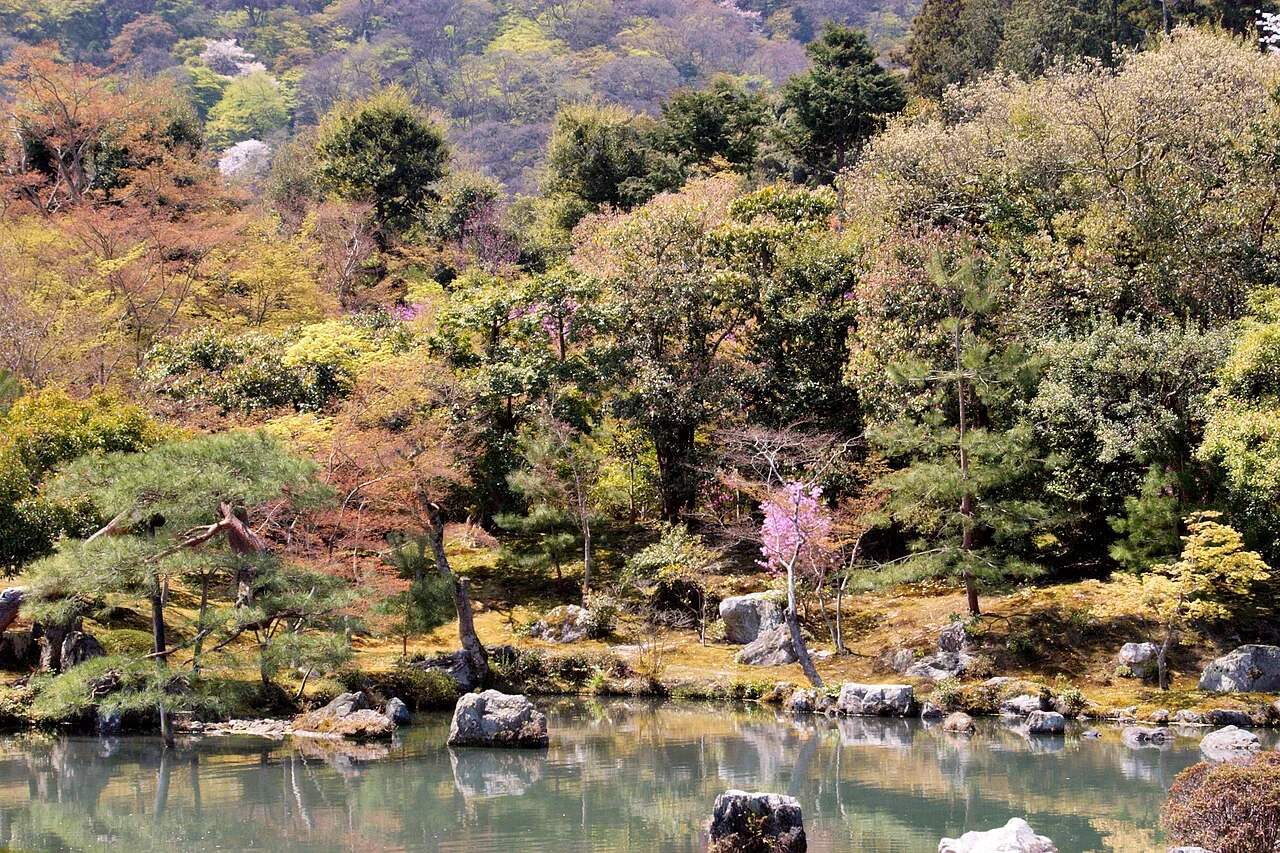
Founded in 1115 by Shokaku, Daigo-ji's 14th chief abbot, Sanbo-in owes its current garden layout to Toyotomi Hideyoshi, who commissioned the landscaping in 1598 for his famed Daigo cherry-blossom banquet. Designated both a Special Historic Site and Special Place of Scenic Beauty, the garden features pond islands, bridges, and arranged viewing stones. Looking out from the veranda, spot the celebrated Fujito-ishi stone along the water's edge before picking out Turtle Island and Crane Island formed by rocks and pruned trees. Because those stonework details sit close to the hall, the garden remains rewarding even before peak leaf color arrives.
The Omoteshoin is a National Treasure bordered by a railed veranda that offers shifting angles over the pond. Inside, the floor rises across lower, middle, and upper tiers; according to temple records, removing the tatami in the lower chamber turned it into a Noh stage viewed from the elevated upper tiers. Glancing back inside from the veranda makes the stepped layout immediately clear. Bring warm socks in chilly weather, as the temple asks visitors to remove shoes and avoid walking barefoot through historic cultural properties.
To see the Junjokan, Mirokudo Hall, and Okushinden, look for the Goten Special Viewing desk deep inside the Omoteshoin. Mirokudo Hall enshrines a Miroku Bosatsu (Maitreya) carved by Kaikei, while Junjokan features painted sliding doors depicting cherry blossoms and autumn maples. Standard garden admission covers only the Omoteshoin and garden route, so if part of your group adds the rear halls, agree on a meeting point outside afterward so photographers do not lose light at the pagoda and pond.
On rainy Kyoto days, Sanbo-in shines because you can watch wet leaves, stone arrangements, and raindrops on the pond from beneath the sheltered veranda, taking the outdoor stone paths slowly. Stow wet umbrellas and footwear neatly at the shoe entrance before stepping inside. Because raised thresholds inside the palace buildings prevent wheelchair entry, visitors using wheelchairs should take the outer approach past Karamon Gate and ask the reception desk which accessible garden paths are open that day.
Checking the Seasonal Exhibition at the Reihokan Museum
The Reihokan Museum sits just inside the Somon Main Gate opposite Sanbo-in. With a three-area pass, it works well before the Garan, especially if you enjoy Heian-period Buddhist sculpture and historic manuscripts, when morning focus makes reading exhibition notes easier before visiting the garden and pond by midday. On the other hand, if your group mainly cares about night foliage or needs sit-down breaks during the day, put that extra ticket budget toward a meal or rest stop and save your daylight hours for the garden and pagoda.
From October 17 to December 6, 2026, Reihokan's autumn special exhibition spotlights Daigo-ji's National Treasure documents, sacred texts, and Kanei-era culture. Both the Main Building (Honkan) and Heiseikan are open from 9:00 AM to 5:00 PM (last entry 4:30 PM), while the Buddhist Sculpture Wing (Butsuzo-to) is closed. The museum publishes an exhibit checklist online so you can look up specific works ahead of time; note that Japanese listings referring to "Butsuzo-to" simply name one museum wing, while admission tickets still read "Reihokan."
If you tour the pagoda first and visit the museum afterward, start with the scale model of the five-story pagoda in the Main Building. The 2026 checklist also includes historic roof tiles, bracket complexes, finial fittings, and the National Treasure former Shitenbashira columns: architectural details hard to make out from the ground outside. Among the manuscripts, look for red-seal decrees from Tokugawa Hidetada and Iemitsu alongside letters by Kasuga no Tsubone. Sculpture fans should save time in the Heiseikan for the Yakushi Triad and Five Wisdom Kings; since mountain trails to the upper Yakushido Hall are closed, seeing these relocated triad statues inside Reihokan is the best way to catch them.
Under normal scheduling, at least one of the three wings (Honkan, Heiseikan, or Butsuzo-to) remains open, aside from the first three days of the New Year and occasional special closures. The final day of the 2026 autumn exhibition aligns with the last night of autumn illuminations on December 6. For mid-December visits, check Reihokan's current notice for open galleries and follow winter's earlier afternoon cutoff. Keep your phone stowed inside the museum, as photography is prohibited throughout.
The temple estimates about 30 minutes per Shimo-Daigo precinct, making 90 minutes a realistic baseline for all three areas. Add an extra 15 to 30 minutes if you like reading gallery captions closely, then gauge the afternoon light when you step back outside to decide between Sanbo-in and the Garan next. Autumn foliage also lines parts of the main approach, so building a small buffer between precincts leaves room to adjust on the fly.
2026 Night Illumination: Re-Entry via the Sanbo-in Ticket Office
Evening hours run from 6:00 PM to 8:50 PM, with last entry at 8:10 PM. Admission is ¥1,500 for junior high students and older (¥1,200 per person for groups of 20 or more), with tickets linked from the temple's 2026 autumn night viewing page. The grounds clear after daytime closing, and night visitors check in again at the Sanbo-in Ticket Office. Sanbo-in serves only as the check-in point at night; the lit zone itself is inside the Garan, covering Kondo Hall, the five-story pagoda, and Bentendo Hall. Schedule Sanbo-in Garden and Reihokan strictly during daytime hours.
Bookings made through the Kyoto City Tourism Association link charge your credit card immediately and are non-refundable in principle unless the organizer cancels the event. If you prefer eating dinner after the visit, JR Central's 2026 EX early-admission night plan costs ¥1,800 and admits holders between 5:30 PM and 5:50 PM, allowing you to stay inside the Garan into the general night session without lining up twice. The value lies in that 30-minute head start, which just means shifting your train, walk, and dinner timing accordingly.
Walking Benten Pond in daylight before returning at night lets you learn the distance from the pagoda first, so evening time goes straight to the lit halls, bridge, and maples. Families who finish the Garan by day can walk directly to Bentendo at night and catch the pagoda on the way back out. Night-only visitors should start at the pagoda and Kondo Hall, continue to the pond, and save the main approach for the return stroll past Nio-mon Gate. Even across a nearly three-hour window, late arrivals still face the full round-trip walk; if you are still at Daigo Station around 8:00 PM, calculate whether you can reach the ticket counter before the 8:10 PM cutoff.
On five evenings in 2026 (November 21, 22, and 23, plus December 5 and 6), the temple holds Shomyo Buddhist chanting and a Goma fire ritual, both open to night ticket holders. Shomyo sessions take place inside Kondo Hall at 6:30 PM and 8:00 PM, while the Goma fire ritual begins at 7:15 PM at the hearth in front of Fudodo Hall. If you are coming specifically for the 6:30 PM chanting, go straight to Kondo Hall and walk out to Benten Pond afterward; if you attend the 8:00 PM session, which wraps up around 8:20 PM with roughly 30 minutes left until closing, visit the pond as soon as you enter so you are not rushed.
The dimly lit approach has uneven stone steps and curbs, so wear sturdy walking shoes, give your eyes a moment to adjust when escorting seniors or kids, and stick to the main path back toward the subway. Tripods, monopods, and selfie sticks are prohibited on temple grounds, and no photography is allowed inside halls or of Buddhist images. For sharper handheld night shots, tap the brightest lit leaves or bridge railing to lower your phone's exposure, and pocket the screen whenever you are actually walking.
Before committing to night tickets, compare return travel times across neighborhoods in our Kyoto autumn night illumination guide. Daigo-ji's appeal is getting both a Heian-era pagoda and lakeside reflections along one route. If you have an early Shinkansen the next morning, enter right at opening so you can finish early and have an unhurried dinner near your hotel.
Pacing Daytime Visits, Dinner Breaks, and the Trip Back
For a standard half-day focused on gardens and autumn leaves, arrive at the Somon Gate around 9:00 AM, tour Sanbo-in Garden first, and pass through Nio-mon Gate into the Garan. Planning two to three hours lets you separate the pagoda and Kondo Hall from the Benten Pond walk while leaving room for tickets and photos. Push lunch a bit later if anyone in your group likes lingering over architecture notes or spotting named garden rocks, and add transfer time at Yamashina plus the station walk when coming from Kyoto Station.
To combine day and night sessions without burning out, arrive in the afternoon, visit Sanbo-in and the Garan, head out to Daigo Station or Yamashina for an early dinner, and return after 6:00 PM. If Sanbo-in is all you want in daylight, buy a ¥600 single-area ticket plus the ¥1,500 night pass for ¥2,100 total; if you also want daylight views of the pagoda joinery and pond, go with the two-area pass for ¥2,500 combined and wrap up around 3:00 PM so dinner stays relaxed.
The evening turnaround is where people most often underestimate extra walking. Heading back to Yamashina for dinner means exiting the grounds, walking to Daigo Station, riding two extra subway legs, and walking back to the ticket booth again. If your group is already tired by late afternoon, eat right around Daigo Station or save dinner for a major hub after leaving for good. Travelers picking up luggage or catching connections at Kyoto Station should check Daigo-to-Yamashina subway times, line up the JR transfer, and allow extra minutes to walk between platforms.
On-site dining is available (the temple FAQ points to eateries in both the Reihokan and Garan areas), while outside food and packed lunches should wait until after you leave the grounds. Carry a sealed water bottle for outdoor hydration during long walks. In wet weather, check which on-site cafes are open that day and mark them alongside ticket counters and restrooms so you can skip an extra walk outside. If you are carrying bags before picking up luggage later, travel light enough to walk gravel paths steadily and manage shoe removal at Sanbo-in without juggling extra gear.
For a daytime sit-down near Kannondo Hall, work tea house Saryo Uji Wazuka-en into your Benten Pond loop; it operates 11:00 AM to 4:00 PM (closed Tuesdays and Wednesdays) and makes an easy post-Garan tea break. Note that the French cafe Le Clos Sous le Cerisier closed at the end of October 2026 ahead of a scheduled reopening in January 2027. If you saved photos of temple-side restaurants from last autumn, plan on eating pre-illumination dinner around Daigo Station or Yamashina instead.
Visiting with Seniors or Kids, and Collecting Goshuin Stamps
Paths inside the Garan combine crushed gravel and gentle slopes. Wheelchair users can reach much of the grounds, though the temple does not lend wheelchairs and some stretches require companion assistance; accessible restrooms are located near Reihokan, Sanbo-in, and Kodai-in. Start near Sanbo-in and ask staff to mark open accessible routes on your map before deciding whether to push all the way to Benten Pond. With older travelers, switch to a shorter loop right away if damp paths get slick and avoid unnecessary back-and-forth trips to the pond.
With younger kids, keep daytime plans to one or two anchors: start with the pagoda, walk up to Kondo Hall, and continue to Benten Pond only if energy holds. Counting the five roof tiers from ground level tends to keep kids engaged around big wooden halls. Pack spare socks for children entering Sanbo-in, and if adults split up for photos, wait near Nio-mon or the Somon Main Gate rather than keeping kids waiting beside the pond.
Daytime goshuin temple stamps are issued at two spots: Kannondo Hall in the Garan handles Yakushi Nyorai, Juntei Kannon (Temple No. 11 on the Saigoku Kannon Pilgrimage), and Godairiki-son, while Sanbo-in's stamp office issues Miroku Bosatsu. If you visit Sanbo-in first from the Somon Gate, confirm which stamps you want before entering the halls, then collect the rest at Kannondo Hall inside the Garan. The 2026 night illumination page also highlights limited-edition goshuin, so ask where to claim them when checking in for the evening session; if you are watching train departure times during the day, stop at the stamp office before lingering at the pond.
Kami-Daigo marks the temple's mountain birthplace, where Shobo erected its original halls in 874, housing the upper Yakushido and Kaisando separate from the lower pagoda. An official notice on Daigo-ji's homepage states that Kami-Daigo is currently closed to entry due to landslide risks along sections of the mountain trail. Although the regular hiking guide still lists the Nyonindo trailhead and seasonal entry windows, stick to Shimo-Daigo while the closure remains in place, and respect posted barriers even if third-party hiking routes across Mount Daigo approach restricted temple land from other sides.
Pairing Half a Day at Daigo-ji with Yamashina or Uji
Bishamon-do Temple and Daigo-ji connect cleanly along the Tozai Subway Line. Tour the pagoda, garden, and pond at Daigo-ji in the morning, take the subway to Yamashina Station for lunch, and walk about 20 minutes up to Bishamon-do. Leave extra outdoor time there for the maples and leaf-strewn stone steps before Chokushimon Gate; Bishamon-do lists last indoor admission at 4:00 PM in November, shifting earlier to 3:30 PM from December. If you plan to return to Daigo-ji for night illuminations afterward, factor the 20-minute downhill return walk into your sunset schedule.
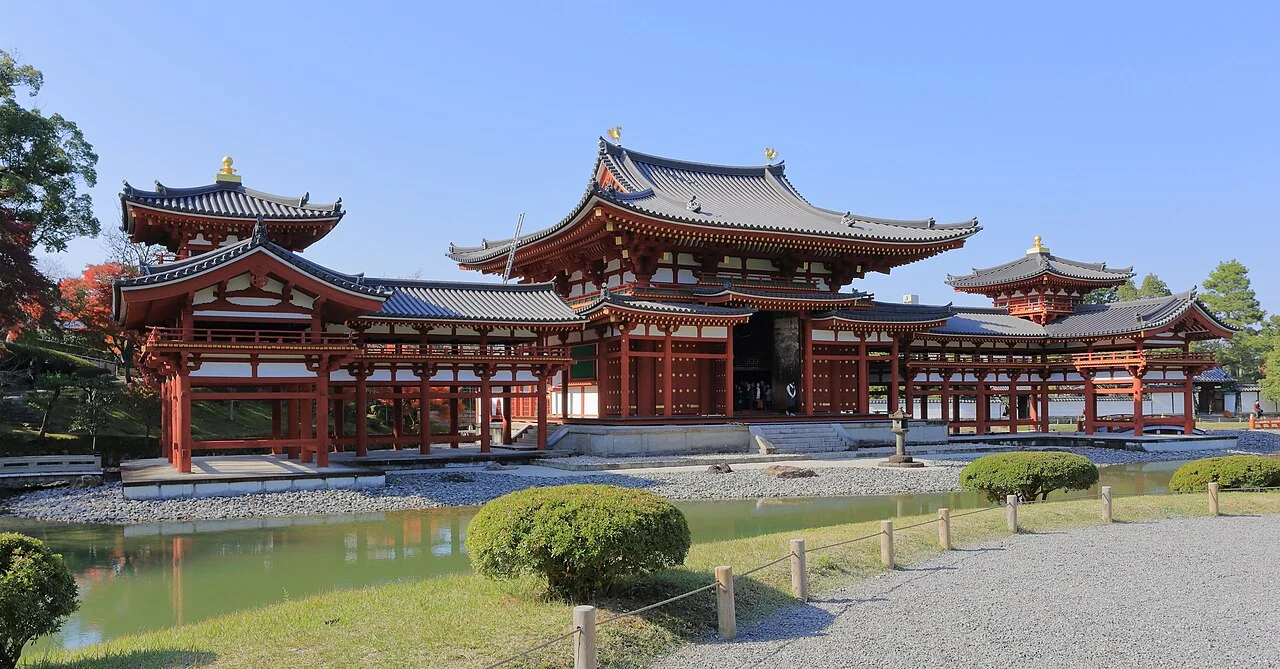
Uji makes a rewarding second stop if you want to pair Daigo-ji's pagoda with another Heian-era monument. Around midday, ride from Daigo to Rokujizo, switch to the JR Nara Line or Keihan Uji Line, and walk to Byodo-in Temple. Put Uji first in the morning if going inside the Phoenix Hall is mandatory, as timed interior tickets are issued in person on the day until sold out; visitors starting at Daigo-ji can focus their afternoon on the garden pond views of the Phoenix Hall, the Hoshokan Museum, and a stroll along the Uji River. Save your ticket order and station transfers alongside our Uji Byodo-in and tea street day guide.
Across a multi-day Kyoto foliage trip, grouping Yamashina and Daigo-ji on one day while saving Higashiyama or Arashiyama for another cuts cross-town transit compared to chasing citywide rankings. If you only have one evening for night illuminations, check our Kyoto autumn foliage zones and transit guide to see where your afternoon ends. When choosing Daigo-ji at night, keep your late-afternoon stop on the Tozai Line so you are not rushing across town to eastern Fushimi at dusk.
If the uphill walk in Yamashina sounds steep, swap in Zuishin-in Temple instead, just one stop from Daigo at Ono Station, followed by a flat 5-minute walk. Linked to legends of poet Ono no Komachi, Zuishin-in rewards a slow loop past its courtyard gardens and painted sliding screens. Because the Kyoto City Tourism Association announced that Zuishin-in's 2026 night viewing is suspended for Okushoin renovation work, visit Ono during the day and hop one stop back to Daigo-ji for the evening lights.
With several days in Kyoto, keep your daytime Daigo-ji visit flexible. Save an early clear morning if pond reflections are your goal, or pivot to Reihokan and Sanbo-in's covered verandas if heavy rain hits. Before heading up to Bishamon-do in the afternoon, check the temple's foliage updates at Yamashina Station so you only climb the hill if the stone steps are in peak color; if you would rather skip wet stairs after rain, relax over a meal near the station before deciding whether to ride back to Daigo-ji for the evening session.
A few useful answers
When is autumn foliage usually at its peak at Daigo-ji Temple?
The Kyoto City Tourism Association lists Daigo-ji's typical foliage window as mid- to late November. Before visiting Benten Pond, check the temple's current seasonal photo updates for lakeside leaf color.
Which ticket do I need just for the five-story pagoda and Bentendo Hall?
Both landmarks sit inside the Garan precinct, so a regular-season single-area ticket covers both (¥600 for adults; ¥400 for junior and senior high students). Choose the two-area pass if you want to add Sanbo-in Garden.
What are the 2026 night illumination hours, and does a daytime ticket cover entry?
The 2026 autumn night illumination runs November 20 through December 6 from 6:00 PM to 8:50 PM (last admission at 8:10 PM). Daytime tickets are not valid for the evening; you must purchase a separate night ticket (¥1,500 per person for junior high age and up) and re-enter via the Sanbo-in Ticket Office.
Can visitors hike up to Kami-Daigo right now?
No. Daigo-ji's official notice states that Kami-Daigo is currently closed due to landslide risks along sections of the mountain trail. Sanbo-in, the Garan precinct, and the Reihokan Museum are all located in the lower Shimo-Daigo area.
Which subway exit leads to Daigo-ji Temple?
Take Exit 2 at Daigo Station on the Kyoto Municipal Subway Tozai Line, about a 10-minute walk from the Somon Main Gate. Coming from Kyoto Station, ride JR to Yamashina Station and transfer to the Tozai Line.
Are Sanbo-in's interior palace halls wheelchair accessible?
No. Raised steps and thresholds inside the historic halls prevent wheelchair access. Accessible restrooms are available near Sanbo-in, Reihokan, and Kodai-in, though the temple does not provide rental wheelchairs.
Where can I get the Saigoku Kannon Pilgrimage Temple No. 11 goshuin stamp?
Head to the Kannondo Hall stamp office inside the lower Garan precinct. Enter through the Somon Main Gate, pass through Nio-mon Gate, and follow the Garan path toward Benten Pond.
Official information and references
Sources used in this guide.
- Daigo-ji Temple: Visiting Hours, Area Fares, and Ticket Booth Locations
- Daigo-ji Temple: 2026 Autumn Night Illumination and Shomyo Schedule
- Daigo-ji Temple: 2026 Night Event and Illuminated Grounds (Official Flyer)
- Kyoto City Tourism Association: Daigo-ji Autumn Foliage Updates and Typical Peak Season
- Daigo-ji Temple: November 2026 Autumn Foliage Photo Log
- Daigo-ji Temple: Official Notices and Kami-Daigo Mountain Access Restriction
- Daigo-ji Temple: Access Directions and Daigo Station Exits
- Keihan Bus: Yamashina and Daigo Routes, Bus 301 and 305 Stops
- Daigo-ji Temple: Precinct Map and Temple Buildings
- Daigo-ji Temple: FAQ on Visiting, Photography, Accessibility, and Goshuin
- Daigo-ji Temple: Sanbo-in Garden, Omoteshoin, and Goten Special Viewing
- Daigo-ji Temple: Garan Five-Story Pagoda, Kondo Hall, and Bentendo Hall
- Daigo-ji Temple: 2026 Reihokan Autumn Special Exhibition Open Wings and Hours
- Daigo-ji Temple: 2026 Reihokan Autumn Special Exhibition Checklist
- Kyoto City Tourism Association: Daigo-ji Night Illumination Reservations and Cancellation Policy
- JR Central: 2026 Daigo-ji Night Illumination Early Entry Plan
- Kyoto Municipal Transportation Bureau: Subway and Bus 1-Day Pass Fares
- Daigo-ji Temple: On-Site Dining and Shop Notices
- Daigo-ji Temple: Saryo Uji Wazuka-en Tea House Hours
- Bishamon-do Temple: Visiting Hours and Walking Route from Yamashina Station
- Byodo-in Temple: Phoenix Hall Interior Tours and Same-Day Timed Tickets
- Kyoto City Tourism Association: 2026 Suspension of Zuishin-in Night Illumination