Compare Kyoto's 2026 autumn night illumination dates, last-entry cutoffs, and ticket prices: pond-side maples at Eikando, the stage at Kiyomizu-dera, and projection mapping at Kodai-ji, plus To-ji, Arashiyama Hogon-in, Kitano Tenmangu, and return transit routes.
- Region & Focus
- KyotoFall foliage
- Reading Scope
- 16 min read · 11 chapters · 5 Q&As
- Official Verification
- 34 official sources checkedUpdated November 22, 2026 at 08:00 AM GMT+8
- Key Topics
- SeasonsItinerariesFirst trip
Chapter Route Map (tap any stop)
- Filter Your Options by Date First
- How Much Time to Budget for Eikando's Pondside Maples
- Kiyomizu-dera's Stage, Joju-in Garden, and the Walk Downhill
- Kodai-ji Lets You Stay From Day Into Night, With Entoku-in Across the Street
- Choosing Between Shoren-in and Chion-in
- Staying Near Kyoto Station or Nishijin? Pick To-ji or Kitano Tenmangu
- Daytime Bamboo Groves, Evening Lights at Arashiyama Hogon-in
- Connecting Kifune Shrine's Lantern Steps and the Illuminated Train Window
- Work Backward From Last Entry to Place Dinner and Your Hotel on the Right Side of Town
- Move Your Daytime Finish Line Closer to Your Evening Gate
- Traveling With Kids, Wet Stone Steps, and Handheld Night Photos
- Quick Q&A
If you only have one evening for illuminated autumn leaves in Kyoto, go to Eikando for dense maples reflected across a pond, or Kiyomizu-dera for the wooden stage and city skyline. In 2026, their evening schedules overlap only from November 21 to 30. Already spending the day in Gion? Kodai-ji connects naturally to an afternoon walk and lets you stay from daylight right into the lights. Shoren-in works best if you want to sit under deep eaves looking out at lit grounds before strolling through the garden. After December 7, Kodai-ji is the only one of those four still running, though To-ji near Kyoto Station also stays lit through December 13.
Filter Your Options by Date First
Kyoto's special night viewings (yakan tokubetsu haikan) are seasonal temple openings with extended hours, separate evening admissions, or specially lit gardens. Once your hotel is booked, mark which sites are actually open each night. If you arrive in early November 2026, Kodai-ji and To-ji are already open, followed by Shoren-in on November 6. Hogon-in and Kitano Tenmangu join on November 13, and Chion-in opens on November 17. Kiyomizu-dera's entire autumn night season runs only from November 21 to 30—if you have just one evening for Higashiyama during those ten days, lock in Kiyomizu-dera first.
Arriving on December 1 still gives you plenty of options. Eikando, Shoren-in, Chion-in, Kitano Tenmangu, and Hogon-in stay open through December 6, making it easy to split Arashiyama and Higashiyama across separate nights. From December 7 to 13, stay around Gion for Kodai-ji or walk from Kyoto Station to To-ji. Although Entoku-in shares Kodai-ji's schedule, it closes on December 11 and 12 for temple duties, so buy a Kodai-ji single-temple ticket on those two evenings. Tracking individual closure days on your calendar is far more reliable than just jotting down 'Kodai-ji evening.'
Event dates and peak foliage color do not always line up. You can see illuminated temple architecture as early as late October, so if your main goal is red maples, check the Kyoto City Tourism Association's Momiji-dayori (Autumn Foliage Report) for each temple's latest leaf status and update date. If your trip straddles late November and early December, scout leaf colors during the day and choose your night venue in the same district afterward. On a night when someone in your group needs an earlier return, schedule Kitano Tenmangu or Hogon-in so you can finish right after dusk and head back to the hotel.
| Location | 2026 Night Dates | Start / Last Entry / Close | Individual Admission (JPY) |
|---|---|---|---|
| Eikando | Nov 20–Dec 6 | 17:30 / 20:30 / 21:00 | Junior high & up: ¥1,000 |
| Kiyomizu-dera | Nov 21–Nov 30 | 17:30 / 21:00 / 21:30 | Adults: ¥500; elementary & junior high: ¥200 |
| Kodai-ji | Oct 23–Dec 13 | 17:00 lights on / 21:30 / 22:00 | Adults: ¥800; junior & senior high: ¥400; elementary & under: free with an adult |
| Shoren-in Monzeki | Nov 6–Dec 6 | 18:00 / 21:30 / 22:00 | Adults: ¥1,500; elementary through high school: ¥1,000 |
| Chion-in | Nov 17–Dec 6 | 17:30 / 21:00 / 21:30 | Adults: ¥800; elementary & junior high: ¥400 |
| To-ji | Oct 31–Dec 13 | 18:00 / 21:00 / 21:30 | Adults & high school: ¥1,000; junior high & under: ¥500 |
| Kitano Tenmangu Momiji-en | Nov 13–Dec 6 | Sunset lights on / 19:40 / 20:00 | Junior high & up: ¥1,500; elementary: ¥700; preschool: free |
| Arashiyama Hogon-in | Nov 13–Dec 6 | 17:30 / 20:00 / 20:30 | Adults: ¥1,000; elementary & junior high: ¥300 |
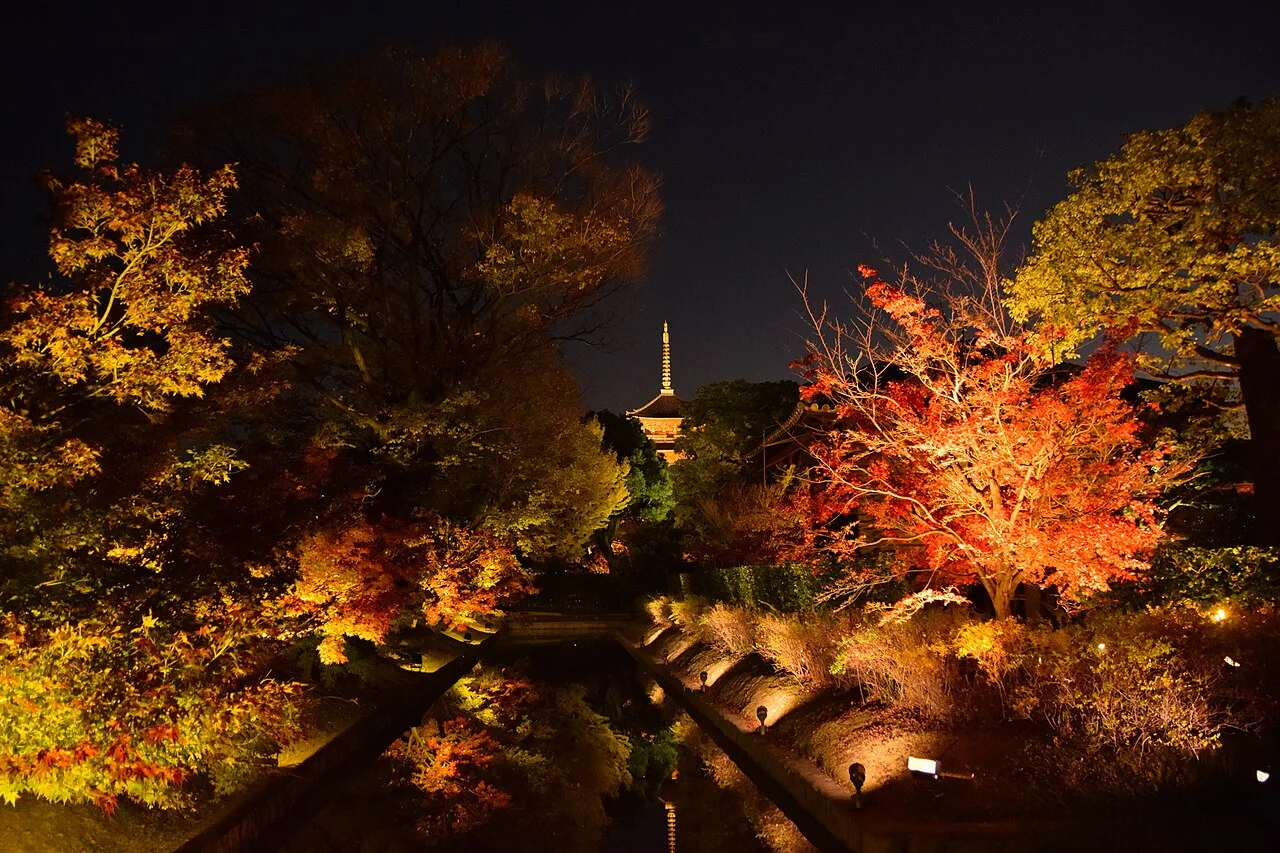
Compare Kyoto's 2026 autumn night illumination dates, last-entry cutoffs, and ticket prices: pond-side maples at Eikando, the stage at Kiyomizu-dera, and projection mapping at Kodai-ji, plus To-ji, Arashiyama Hogon-in, Kitano Tenmangu, and return transit routes.
How Much Time to Budget for Eikando's Pondside Maples
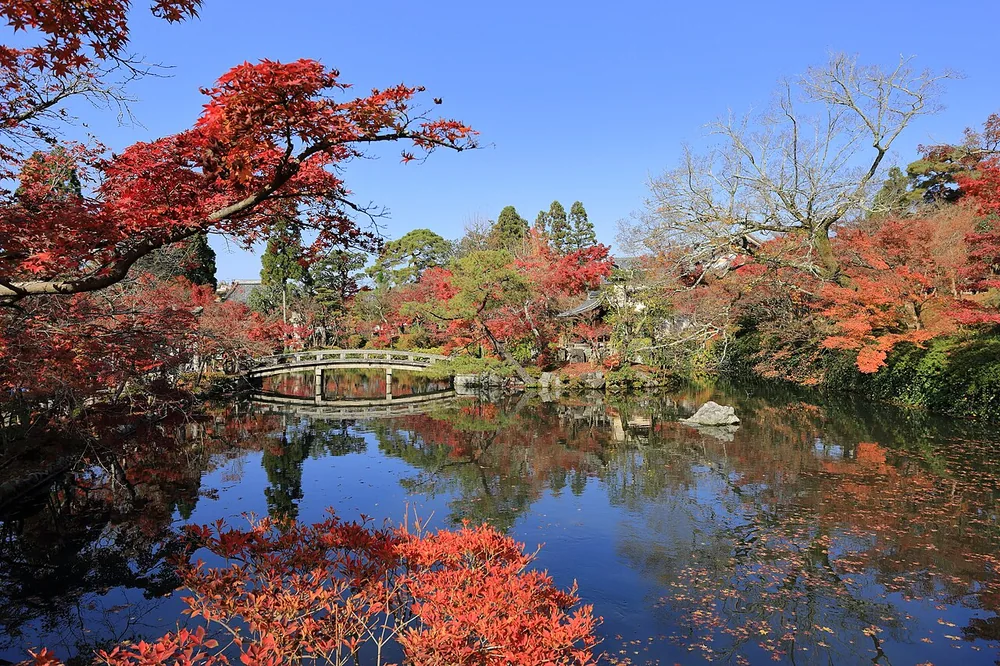
If your ideal evening is a solid ring of red maples reflected in dark water, Eikando alone can anchor the night. Evening access covers the Amida-do Hall and the surrounding gardens. Walk the path around Hojo Pond in both directions—the canopy and water reflections shift noticeably from each angle. During the Autumn Temple Treasures Exhibition from November 11 to December 6, the Garyuro corridor and Senbutsu-do Hall are closed, and the Tahoto Pagoda may also close during heavy crowds or poor weather. When traveling with older relatives, keep the loop focused on the pond and Amida-do Hall rather than climbing up only to find the pagoda closed.
Evening ticket sales and entry begin at 17:30 on-site for ¥1,000 (junior high and older), with no advance reservations. The daytime Autumn Temple Treasures Exhibition also has no pre-sale tickets; admission runs 09:00 to 16:00 (closing at 17:00) at ¥1,500 for general visitors, ¥1,000 for university and vocational students, and ¥800 for junior and senior high students. Doing both sessions in one day costs ¥2,500 for an adult because daytime visitors must exit before lining up again for evening tickets. If you are only visiting Eikando for the night lights, spend the afternoon at Nanzen-ji or Okazaki instead so you do not walk the same garden twice.
Eikando notes that heavy late-November crowds may force an early cutoff at the ticket gate. Treat 20:30 as a hard deadline and push a sit-down dinner in Shijo until after your visit. To arrive before the lights turn on, make Nanzen-ji your final afternoon stop and grab a quick bite before walking toward Eikando-cho. If anyone in your group needs frequent seating breaks, schedule a late lunch and skip an extra open-air garden at dusk so you are not standing on your feet right up to ticket time. The temple also asks visitors to bring their own shoe bag—pack one you can slip shoes into one-handed before entering Amida-do Hall, which helps far more than carrying extra camera gear.
Eikando is about a 15-minute walk from Keage Station on the Kyoto Municipal Subway Tozai Line. By Kyoto City Bus #5 from Kyoto Station, Keihan Sanjo, or Hankyu Kyoto-Kawaramachi, get off at Nanzenji-Eikando-michi and walk roughly 3 minutes. If your afternoon starts downtown, take the bus in and walk back to Keage Station afterward to skip post-closing bus queues. Change to the Karasuma Line at Karasuma Oike for Kyoto Station, or exit at Sanjo Keihan if you are staying around Sanjo and Kawaramachi.
Kiyomizu-dera's Stage, Joju-in Garden, and the Walk Downhill
Kiyomizu-dera's autumn night viewing requires no reservation and runs from November 21 to 30, 2026, opening at 17:30 with last entry at 21:00 and closing at 21:30. Tickets are ¥500 for adults and ¥200 for elementary and junior high students. To frame the wooden stage and lit maples in a single view, continue past the Hondo (Main Hall) toward Okunoin Hall to look back at the stage from the side. Pause along the way where the city opens up to spot the blue searchlight stretching across Kyoto's night sky, which the temple calls Kannon's Ray of Compassion. Because those viewpoints sit along a one-way visitor flow, budget extra time to move with the crowd rather than just aiming to beat the gate cutoff.
Joju-in Garden opens on the exact same dates from 18:00, with last entry at 20:30—30 minutes earlier than Kiyomizu-dera itself. Separate admission is ¥600 for adults and ¥300 for elementary and junior high students, bringing the combined total to ¥1,100 for adults and ¥500 for students. Neither venue requires advance booking. If you want to see both on a single evening arrival, go to Joju-in first before heading out to the stage. Because Joju-in's window is tight, it suits visitors already near Kiyomizu-dera by dusk; if you are arriving late from another city, devote the evening strictly to Kiyomizu-dera's main grounds.
Kiyomizu-dera's access guide puts the uphill walk from the Kiyomizu-michi or Gojo-zaka bus stops at around 10 minutes, and about 25 minutes on foot from Keihan Kiyomizu-Gojo Station—flat heading east from the Kamo River, then climbing steadily. That walk helps when bus lines back up, though it is rarely worthwhile if your group has already walked all day. Guests staying in Kawaramachi or Gion can climb up in the afternoon and walk down via Higashioji-dori toward the Keihan line or their hotel. If you are heading straight from Kyoto Station on your arrival night, factor in hotel check-in or luggage storage before starting up the hill.
Visitors with strollers can take the step-free path on the left side of the main approach leading up to the Hondo. The temple's FAQ also details vehicle access via the Chawan-zaka disaster-prevention road and notes that accessible route maps are available at Todoroki-mon Gate by the Hondo entrance. Even along the step-free route, the climb up from downtown remains steep, so sort out jackets, water, and essentials before heading uphill. On the way back down, decide which bus stop and direction you need before reaching Higashioji-dori so you are not crossing back and forth to hunt for the right platform.
Kodai-ji Lets You Stay From Day Into Night, With Entoku-in Across the Street
From October 23 to December 13, 2026, Kodai-ji illuminates its grounds at 17:00, with last entry at 21:30 and closing at 22:00. Admission is the same day and night—¥800 for adults, ¥400 for junior and senior high students, and free for elementary students and younger accompanied by an adult—so you can enter in the afternoon and stay through dusk, though re-entry after exiting requires another ticket. If you want to see the Kyakuden (Guest Hall), which is open only from 09:00 to 16:30, enter in the late afternoon and stroll the garden until the lights switch on. If you plan to step out for dinner and return, wait until after dinner to enter for the first time rather than paying twice.
A single evening at Kodai-ji combines projection mapping in the Hojo Front Garden, reflections on Garyu Pond, and an illuminated bamboo grove. Head to the Hojo Front Garden early so you do not circle back near closing time, or linger around Garyu Pond if you prefer classic garden lighting over projected visuals. While Kiyomizu-dera shines for its hillside main hall and sweeping stage, Kodai-ji packs a greater variety of lighting styles into a flatter, more compact loop—a better fit for travelers who want variety without another steep climb.
Directly across the lane, Entoku-in also lights up at 17:00 with 21:30 last entry and 22:00 closing. Inside, you will find the rock arrangements of the North Garden and the raked white sand of the South Garden, ideal if you want to sit quietly after Kodai-ji's light show. Entoku-in costs ¥500 alone (¥1,300 if bought separately with Kodai-ji), compared with ¥1,200 for the two-temple combination ticket. If you arrive late or want an early dinner, skip the combo and buy just your primary stop. Because the two temples sell tickets at separate entrances, decide the order beforehand so you can walk straight through once ticketed.
Kodai-ji pairs naturally with a daytime walk from Kiyomizu-dera down Ninenzaka and Sannenzaka into Nene-no-Michi, keeping your evening anchored in Gion. From the Higashiyama Yasui bus stop, Kodai-ji is about a 7-minute walk; afterward, walk down to Higashioji-dori for your return transit. If you book dinner in Shijo-Kawaramachi, budget extra time to walk to the Kamo River, cross the bridge, and gather everyone at the restaurant—dining right between the temples is far faster on a tight schedule.
Just off the same lane, the Sho Museum closes at 21:10 during night-viewing season—earlier than both Kodai-ji and Entoku-in. If you want to see the exhibition, visit the museum before buying temple tickets or prior to dusk. Walking out of Kodai-ji at 21:00 still leaves time for Entoku-in, but almost none for the museum, so keep all three cutoff times written down together.
Choosing Between Shoren-in and Chion-in
Shoren-in Monzeki holds its 2026 night illumination from November 6 to December 6, open from 18:00 with last entry at 21:30 and closing at 22:00. Admission is ¥1,500 for adults, and the Kyoto City Tourism Association lists ¥1,000 for elementary, junior high, and high school students. Day and night sessions are ticketed separately, and the event takes place at the main temple in Higashiyama (Awataguchi Sanjobo-cho)—Shogunzuka Seiryuden is not part of this illumination. Enter 'Shoren-in Monzeki' into your maps app and walk about 5 minutes from Higashiyama Station on the Tozai Line until you spot the massive camphor trees at the gate.
Shoren-in's signature lighting highlights its giant camphor trees, bamboo grove, and moss garden, making it a strong pick if you want to see more than just red maples. Pause under the deep eaves first to watch how low ground-level lights pull depth out of the garden before stepping onto the paths. If your group only wants crimson maples or pond reflections, Eikando is more direct—but if you have spent all day walking Higashiyama and want an easy subway ride home afterward, Shoren-in avoids a long downhill trek from higher slopes.
Just to the south, Chion-in runs its autumn night illumination from November 17 to December 6, 2026, from 17:30 to 21:30 (last entry 21:00), at ¥800 for adults and ¥400 for elementary and junior high students. Lighting covers the monumental Sanmon Gate, Miei-do Hall, and Yuzen-en Garden, and the 2026 event includes special access to the Sanmon Gate's upper gallery. The staircase up to the gate is steep, so anyone uncomfortable climbing can stick to the base of the gate and the lit gardens. If both temples are open on your dates and you only want one, pick Chion-in for grand architecture and gates, or Shoren-in for low-lit temple gardens—you can even decide after walking north from Maruyama Park, saving a cross-town transit leg.
Chion-in's general night tickets require no reservation and are usually sold at a booth to the right as you face the Sanmon Gate; daytime visitors must buy a separate ticket once the evening session opens. The temple estimates 45 to 60 minutes for the full route, meaning a 21:00 arrival leaves only 30 minutes before closing. Enter earlier if you plan to climb the Sanmon Gate and visit both gardens; near closing time, focus on the lower gate plaza and Yuzen-en Garden. Because parts of the grounds use stone paving and gravel, visitors with strollers or wheelchairs should check accessible paths at the evening reception desk first.
Staying Near Kyoto Station or Nishijin? Pick To-ji or Kitano Tenmangu
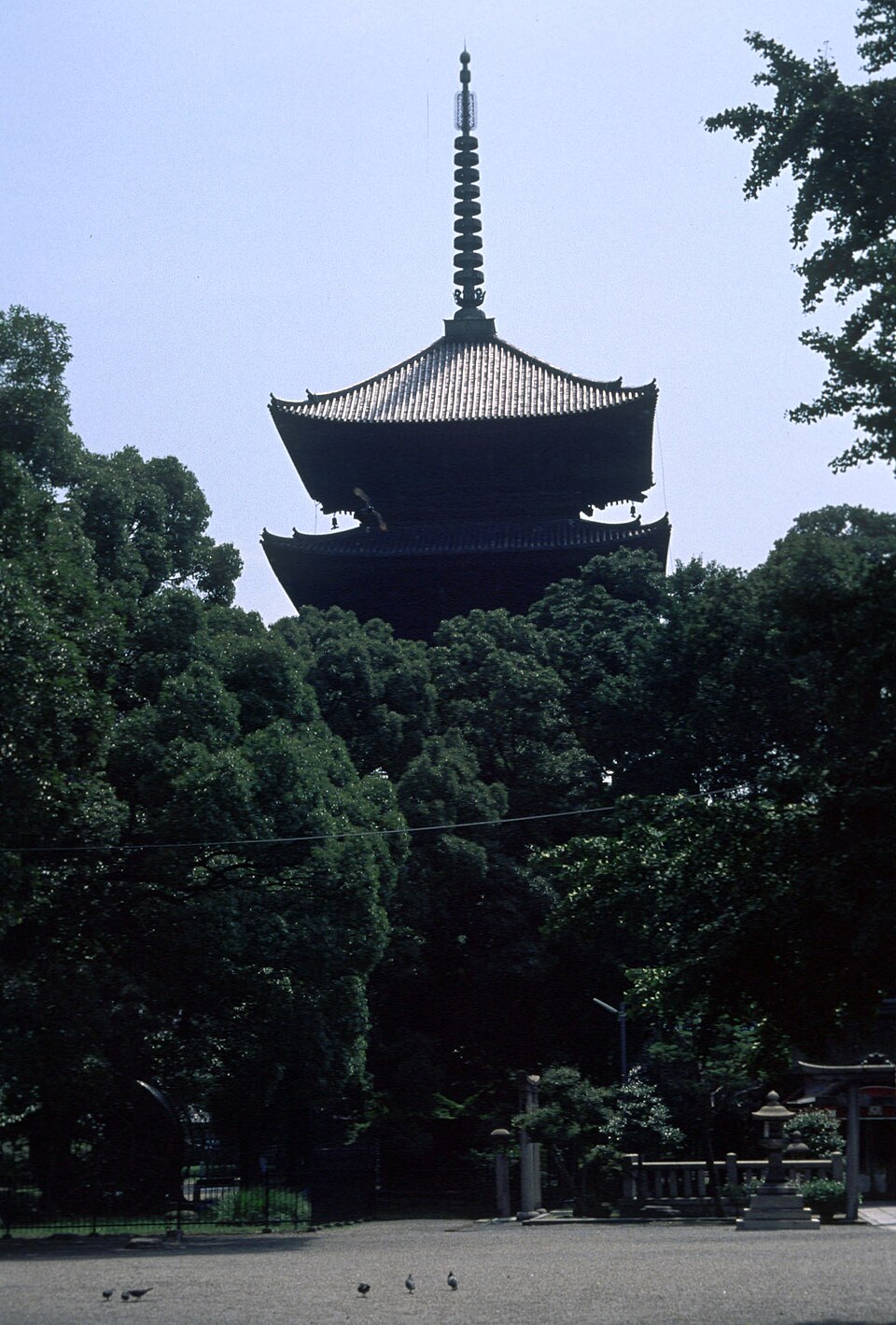
To-ji works especially well on a Shinkansen arrival evening: drop your bags near Kyoto Station's Hachijo Exit and walk about 15 minutes, or ride the Kintetsu line one stop to Toji Station and walk roughly 10 minutes. During night illumination, enter through the East Gate on Omiya-dori—map pins for the South or West gates will send you to the wrong side. The 2026 illumination runs from October 31 to December 13, from 18:00 to 21:30 (last entry 21:00), with tickets at ¥1,000 for adults and high school students and ¥500 for junior high and younger. Evening admission includes nighttime access inside the Kondo and Kodo halls alongside views of the five-story pagoda; the pagoda's special daytime ground-floor opening is a separate event.
If you arrive on a late Shinkansen and still want night foliage, line up your hotel side with the right gate. Staying on the Hachijo side lets you drop bags and walk straight to the East Gate without boarding another train or bus. If your hotel is on the north side of Kyoto Station, factor in the walk across the station concourse to the south exit first. Travelers catching an early train the next morning can easily grab dinner near the station after To-ji, knowing the walk back is short if anyone gets tired.
After exploring Nishijin or Kitano by day, head to Kitano Tenmangu's Odoi Momiji-en (Maple Garden) at dusk. Its 2026 illumination runs from November 13 to December 6, from sunset until 20:00 with last entry at 19:40. Admission is ¥1,500 for junior high students and older, ¥700 for elementary students, and free for preschoolers. During the event, the Momiji-en stays open continuously from 09:00 into the night, letting you arrive before sunset and watch the maples shift from natural twilight to spotlights. The historic Odoi earthen embankments create upper walkways overlooking the canopy and lower paths beneath the trees, so you can tailor the walk to your legs.
On a northwest Kyoto day, pair Ninna-ji, Ryoan-ji, or Nishijin with Momiji-en at dusk. Walking from Randen Kitano-Hakubaicho Station saves doubling back from dinner in Shijo-Kawaramachi, or you can ride the bus to and from Kitano Tenmangu-mae—just note which side of the street holds your return stop when you step off. Because Kitano Tenmangu's last entry is earlier than most Higashiyama temples, it pairs neatly with dinner afterward; if you are running late, eat near your hotel rather than chasing another illuminated temple across town.
Daytime Bamboo Groves, Evening Lights at Arashiyama Hogon-in
From November 13 to December 6, 2026, Hogon-in in Arashiyama opens its Shishiku Garden for evening viewing from 17:30 to 20:30, with last entry at 20:00. Admission is ¥1,000 for adults and ¥300 for elementary and junior high students, with separate day and night ticketing. Spend the day at Tenryu-ji or strolling along the Katsura River, and if you cross to the south side of Togetsukyo Bridge in the afternoon, leave enough time to walk back to the south side of Tenryu-ji. Daytime Hogon-in viewing ends at 17:00, so visitors hoping to see the illumination must exit and buy an evening ticket.
Hogon-in warns that queues may form at opening and entry can be capped during peak crowds, with no extension past the 20:00 last-entry deadline. If you are traveling with children, break for a late-afternoon snack and rest in Arashiyama instead of standing in line outside the gate before 17:30. The temple's event page also lists priority-entry and early-entry packages requiring EX membership login: priority entry uses a dedicated lane (though waits are still possible), while early entry adds access to the usually closed Shoin and Hondo halls—worth considering only if you specifically want to see the painted sliding doors (fusuma-e).
For the return trip, use JR Saga-Arashiyama Station for Kyoto Station, or Randen Arashiyama Station for Shijo-Omiya and Saiin. Keep JR Saga-Arashiyama, Randen Arashiyama, and Hankyu Arashiyama distinct when mapping your night: Hankyu Arashiyama sits south of Togetsukyo Bridge, so taking it adds another river crossing in the dark. After crossing the bridge during the day, sticking to a station on the same side of the river as the garden saves extra steps. Base your Arashiyama evening schedule directly on Hogon-in's own ticketing, opening, and closing times.
Connecting Kifune Shrine's Lantern Steps and the Illuminated Train Window
If you are staying in northern Kyoto or spending the day in Rakuhoku, save dusk for Kifune Shrine. Its 2026 Main Sanctuary approach maple illumination runs from November 7 to 24, from sunset until 20:30 with free admission; the amulet counter closes at 20:00. Red lanterns line the stone stairway beneath the autumn canopy. Walking straight up to the Main Sanctuary and back is quick, whereas buying charms, drawing fortunes, or visiting upper shrines takes extra time—decide which stops you want before planning your ride down the valley.
Ride the Eizan Railway Kurama Line from Demachiyanagi to Kibuneguchi Station, then transfer to Kyoto Bus #33 up the valley to Kibune. Extra buses and extended night service run during the illumination at ¥200 for adults and ¥100 for children one-way. Daytime buses through 16:23 stop at a temporary stand roughly 300 meters short of the regular stop, making an arrival before dark a pleasant riverside stroll. For the trip down, locate the return stop at Kibune bound for Eiden Kibuneguchi-ekimae early, and check the special seasonal timetable (rinji daiya) on Kyoto Bus listings for exact dates.
The train illumination follows a different calendar from the shrine. From November 7 to December 6, 2026, designated local trains pass through the illuminated roughly 250-meter Maple Tunnel between Ichihara and Ninose stations with cabin lights dimmed and speed reduced. To catch both the shrine and the darkened train on one night, pick your return illuminated train departure first, then match the connecting bus down from Kibune with buffer time to spare—do not linger on the shrine steps until the lights shut off. From November 25 onward, after Kifune Shrine's event ends, simply ride the train toward Kurama to enjoy the Maple Tunnel without waiting for a bus at Kibuneguchi.
Separate from regular local trains, Eizan Railway also operates one daily all-reserved special maple round-trip from Demachiyanagi between November 13 and 30 (advance reservation required). Unlike regular trains that merely slow down, this special service stops for about 3 minutes inside the Maple Tunnel outbound and roughly 5 minutes at Ninose Station on the return. If your main goal is seated viewing without rushing, dedicate an evening to that round-trip alone; if you want both the lantern steps and the railway, the standard Kibuneguchi-plus-bus connection is simpler.
Work Backward From Last Entry to Place Dinner and Your Hotel on the Right Side of Town
Plan every evening by starting from the target venue's last-entry cutoff, subtracting uphill walks, transfers, and ticket queues, and fitting dinner into whatever window remains. Because Eikando cuts off entry at 20:30, if you are still in Arashiyama late in the afternoon, get back to the Tozai Line or Okazaki area before deciding whether there is time for a sit-down meal. Use 20:30 as your Kiyomizu-dera cutoff if you want Joju-in Garden, or 21:00 for the main hall alone. Kodai-ji stays open until 22:00, making it ideal when you have walked Kiyomizu by day and want dinner in Gion before entering.
With two evenings in Kyoto, reserve one for your top-priority temple and the other for a contrasting setting or neighborhood. Split Higashiyama South and Okazaki across two days: explore the Kiyomizu area on day one followed by either Kiyomizu-dera or Kodai-ji at night, then cover Okazaki on day two before Eikando or nearby Shoren-in by Higashiyama Station. If you are commuting from Osaka on JR, slot To-ji onto your return night and dine near Kyoto Station before boarding your train rather than racing downhill from Kiyomizu-dera.
Staying around Shijo-Kawaramachi puts you an easy walk from the Kamo River after Kiyomizu-dera, Kodai-ji, or Chion-in, keeping dinner and evening strolls on the same side of town. Hotels near Sanjo Keihan or Higashiyama Station make Shoren-in and the Tozai Line effortless, and let you walk via Keage to Eikando. Around Kyoto Station, your exit side matters: the Hachijo side saves crossing the station if you visit To-ji before a morning Shinkansen, while the Karasuma (north) side works better if you frequently head north by subway or catch buses out front.
Build your return around trains first and keep city buses as a short-hop backup when legs give out. On late-November weekends, check Kyoto City's Tourism Comfort Map and live webcams before heading out—remembering that cameras only show fixed angles, while actual ticket lines depend on on-site staff guidance. On November 21, 22, 23, 28, and 29, Kyoto Station operates temporary baggage storage and delivery counters, with same-day delivery cutoffs at 14:00 for Kyoto city hotels and 11:30 for Osaka city hotels. Arriving in the afternoon? Drop or ship your bags before leaving the station so you are not hauling suitcases up temple slopes, and check our Kyoto Subway and Bus Transit Guide to fold the rest of the day's rides into the right pass.
Move Your Daytime Finish Line Closer to Your Evening Gate
On your Eikando evening, start the day from Keage Station through the Suirokaku Aqueduct and Nanzen-ji, then walk north to Eikando. Because Nanzen-ji's Sanmon Gate and Hojo Garden charge separate admissions, pick just one if you want an easy afternoon with time to sit and eat. Anyone eager to climb the Sanmon Gate should tackle it early, saving the flatter pond loop for night. After walking past Suirokaku, you already get plenty of temple scenery, letting you skip paying for another similar daytime garden before Eikando opens.
When the forecast looks unsettled, anchor your afternoon at the Kyoto City KYOCERA Museum of Art collection exhibition in Okazaki, then walk to Eikando or Shoren-in depending on the rain. Its 2026 autumn collection exhibition runs through December 13 from 10:00 to 18:00 (last entry 17:30) at ¥730 for out-of-city adults and ¥300 for elementary through high school students. The museum normally closes on Mondays except on national holidays, so move it to Tuesday if your schedule hits Monday, November 30 or Monday, December 7. Staying indoors through a rainy afternoon leaves plenty of energy to walk straight to Shoren-in beside Higashiyama Station instead of tackling the long climb up to Kiyomizu-dera.
First-time autumn visitors can keep both day and night in southern Higashiyama: climb Gojo-zaka to Kiyomizu-dera in the morning, walk down Ninenzaka toward Yasaka Shrine, take a real break in the afternoon, and finish with Kodai-ji's Kyakuden and evening lights. Prefer Kiyomizu-dera after dark? Spend the day around Gion and Yasaka Shrine, then walk up Kiyomizu-michi once dusk settles—you see the wooden stage once and save your legs a second uphill climb. Choosing that second order for the iconic Okunoin photo of the stage at night also frees your daylight hours for an entirely different part of Kyoto.
With only two nights in a Kyoto hotel, spend one on date-sensitive Kiyomizu-dera and the second at an easy backup near your lodging. On a November 29 to December 1 stay, both nights catch Kiyomizu-dera: see the stage and blue light on night one, then pick To-ji if staying by the station or Kodai-ji if staying in Higashiyama on night two. On a December 3 to 5 trip, pair either Eikando or Shoren-in on one night with To-ji or Hogon-in on the other for distinct scenery. And whenever an afternoon runs long, stay in the district you are already in that night and save cross-town transit for morning.
Traveling With Kids, Wet Stone Steps, and Handheld Night Photos
With children in tow, prioritize evenings that let everyone eat near their normal dinner hour. For two adults and one elementary student, night admission totals ¥1,200 at Kiyomizu-dera, ¥1,600 at Kodai-ji (with accompanying adults), and ¥4,000 at Shoren-in—though walking distance, queues, and meals count just as much as ticket prices. If your family is already inside Kodai-ji during the afternoon, staying through the 17:00 illumination and heading straight to dinner beats relocating across town just to save a few hundred yen on tickets. At Eikando, note that strollers are restricted from inside the temple hall corridors; if everyone wants to go inside together, have one adult fold the stroller first while others wait in a clear spot nearby.
After rain, grippy shoes matter more than a big camera on Kiyomizu-dera's slopes. Keep umbrellas spaced apart when walking single file, and step aside to let people pass before adjusting jackets or bags. If wet weather pushes your plans south, walking from Kyoto Station's Hachijo Exit to To-ji skips Kiyomizu-dera's steep approach and lets you spend part of the evening indoors inside the Kondo and Kodo halls. Chion-in remains open in the rain, though anyone nervous about wet, steep stairs should skip the upper Sanmon Gate gallery and stick to the ground-level paths. When heavy rain makes walking tiring, swap in an indoor evening or dinner near covered arcades and catch up on gardens the next day using our Kyoto Autumn Foliage Zones and Transit Guide.
Both Eikando and Kiyomizu-dera ban tripods and monopods; Eikando also prohibits selfie sticks inside temple halls and forbids photographing interior cultural properties, while Kitano Momiji-en asks visitors not to set up tripods. Shooting handheld on a smartphone works best when you wait for an open pocket of space, switch on Night Mode, and frame a single lit maple or pagoda as your anchor. Along pond edges, crop out harsh white floodlights so the softer water reflections hold detail. Keep moving across narrow bridges and crowded bottlenecks, pause only where paths widen, and always glance down at uneven stone steps in the dark before taking your next step.
A few useful answers
Do you need a reservation for Eikando's 2026 autumn night illumination?
No. Eikando does not sell advance tickets. From November 20 to December 6, 2026, night-viewing tickets go on sale at the temple starting at 17:30, with last entry at 20:30 and closing at 21:00. Admission is ¥1,000 for junior high students and older. Afternoon visitors to the Autumn Temple Treasures Exhibition must exit before buying a separate evening ticket.
Is Kiyomizu-dera still lit up in December?
Kiyomizu-dera's 2026 autumn night viewing ends on November 30. From December 1 to 6, choose Eikando or Shoren-in instead. From December 7 to 13, Kodai-ji and To-ji remain open at night (Entoku-in is closed on December 11 and 12).
Can you enter Kodai-ji during the day and stay for the night illumination?
Yes. From October 23 to December 13, 2026, Kodai-ji turns on its lights at 17:00, accepts last entry at 21:30, and closes at 22:00 on a single day-to-night admission, though re-entry after exiting requires a new ticket. Note that the Kyakuden (Guest Hall) closes at 16:30.
Can you visit both Kiyomizu-dera and Kodai-ji on the same evening?
Yes. Walk downhill from Kiyomizu-dera along Nene-no-Michi to Kodai-ji—starting at Kiyomizu-dera saves you a steeper uphill climb, and Kodai-ji stays open for last entry 30 minutes later. If you only have time for one, pick Kiyomizu-dera for the wooden stage and city views, or Kodai-ji for Hojo garden projection mapping and the bamboo grove.
Can you walk to any illuminated autumn foliage spots from Kyoto Station?
Yes. To-ji is about a 15-minute walk from Kyoto Station's Hachijo Exit. Its 2026 autumn night illumination runs from October 31 to December 13, with entry from 18:00 to 21:00 and closing at 21:30. Enter via the East Gate on Omiya-dori.
Official information and references
Sources used in this guide.
- Eikando Zenrin-ji: 2026 Autumn Temple Treasures Exhibition, Night Illumination Admission, and Visiting Rules
- Eikando Zenrin-ji: 2026 Official Event Flyer and Access Map
- Eikando Zenrin-ji: English Visitor Guide and Stroller Restrictions
- Kiyomizu-dera: 2026 Autumn Special Night Viewing Announcement
- Kiyomizu-dera: 2026 Night Viewing Closing Hours and Kannon's Ray of Compassion
- Kyoto City Tourism Association: Kiyomizu-dera Night Viewing Admission and Access
- Kiyomizu-dera: Joju-in Garden Special Public Opening
- Kiyomizu-dera: 2026 Joju-in Garden Night Viewing Admission and Entry Details
- Kiyomizu-dera: Access From Kyoto Station and Keihan Kiyomizu-Gojo Station
- Kiyomizu-dera: Accessible Routes and Photography Guidelines FAQ
- Kodai-ji: 2026 Autumn Special Night Viewing and Re-Entry Rules
- Kodai-ji: Admission Fees, Combination Tickets, and Child Pricing
- Kyoto City Tourism Association: Kodai-ji Illuminated Gardens and Hojo Front Garden Projection Mapping
- Kodai-ji: Access Information
- Kyoto City Tourism Association: Entoku-in Autumn Night Viewing, Closure Dates, and Admission
- Shoren-in Monzeki: 2026 Night Illumination, Garden Lighting, and Venue Details
- Shoren-in Monzeki: Daytime Viewing and Access From Higashiyama Subway Station
- Chion-in: 2026 Autumn Special Night Viewing Dates and Illuminated Areas
- Chion-in: 2026 Night Viewing FAQ and Sanmon Gate Access Rules
- To-ji: 2026 Autumn Foliage Illumination and Night Access to the Kondo and Kodo Halls
- To-ji: Access From Kyoto Station Hachijo Exit and Kintetsu Toji Station
- Kitano Tenmangu: 2026 Odoi Momiji-en Illumination and Garden Admission
- Kitano Tenmangu: Access Information and Precinct Map
- Arashiyama Hogon-in: 2026 Autumn Night Viewing and Priority Admission Options
- Kyoto City Tourism Association: 2026 Autumn Night Illuminations Directory
- Kyoto City Tourism Association: Autumn Foliage Forecast and Update Dates
- Kyoto City Tourism Comfort Map and Seasonal Live Cameras
- Kyoto City Tourism Association: 2026 Autumn Transit Measures and Temporary Baggage Storage
- Kifune Shrine: 2026 Main Sanctuary Approach Autumn Illumination
- Kyoto Bus: 2026 Kifune Illumination Route 33 Extra Service and Temporary Bus Stop
- Eizan Railway: 2026 Maple Tunnel Illumination and Designated Train Timetable
- Nanzen-ji: Visiting Hours and Sanmon Gate / Hojo Garden Admission
- Kyoto City KYOCERA Museum of Art: 2026 Autumn Collection Exhibition Dates and Admission
- Kodai-ji Sho Museum: Evening Hours and Seasonal Exhibition Schedule