When does it snow in Kyoto? Compare winter transit for Kinkaku-ji, Arashiyama, Kibune, and Ohara, plus what to wear, Chion-in's 2026 New Year's Eve bell, Hatsumode, 2027 special winter temple openings, and indoor backups.
- Region & Focus
- KyotoWhen to visit
- Reading Scope
- 22 min read · 8 chapters · 5 Q&As
- Official Verification
- 36 official sources checkedUpdated November 22, 2026
- Key Topics
- WinterSeasonsItineraries
Chapter Route Map (tap any stop)
- December for Lights, January and February for Snow
- Where to Go on a Snowy Morning: Kinkaku-ji, Arashiyama, Kibune, and Ohara
- What to Wear in Kyoto in Winter: Dressing for Transit Waits and Temple Floors
- New Year's Eve and New Year's Day: Joya-no-Kane, Okera-mairi, and Hatsumode
- Planning Around 2027 Kyo no Fuyu no Tabi Special Openings
- Wind, Rain, Snow, or Holiday Closures: Afternoons in Okazaki and Umekoji
- Where to Stay and Eat: Pick One Easy Base and Keep Dinner Nearby
- Three-Day Winter Itinerary: Keep the Flexible Half-Day in the Middle
- Quick Q&A
For a three-day winter trip to Kyoto, plan one half-day in central Kyoto, one half-day in Arashiyama or northern Kyoto (Rakuhoku), and leave one morning flexible for the weather. If it snows overnight and transit is running normally, shift Kinkaku-ji to opening time. Coming for New Year's Eve on December 31, 2026? Decide first whether you want to watch the monks ring the great bell at Chion-in, line up to strike a temple bell yourself, or visit Yasaka Shrine for the Okera-mairi fire ritual. If you arrive on or after January 8, build your route around the 2027 Kyo no Fuyu no Tabi special heritage openings—even on overcast days, there is plenty worth taking your time over.
December for Lights, January and February for Snow
When choosing your travel dates, start with the one seasonal event you care most about catching. In December, the Christmas tree in front of Kyoto Station is lit through December 25, making it an easy post-dinner stop on your arrival night. For New Year's Eve bell-ringing on December 31, lock in your participation method and your route back to your hotel well ahead of time. If you want to step inside temple buildings normally closed to the public, aim for January 8 or later. Kyo no Fuyu no Tabi (Kyoto Winter Special Openings) runs into March, with opening dates varying by site, so work backward from the specific temple you want to see.
According to 1991–2020 climate normals from the Japan Meteorological Agency's Kyoto station, average daily highs and lows run about 11.6°C and 3.5°C in December, 9.1°C and 1.5°C in January, and 10.0°C and 1.6°C in February—a reliable baseline for packing. Over the same period, average monthly maximum snow depth is just 2 cm in December, 3 cm in January, and 4 cm in February. Official snow-day counts include brief flurries, so photographing white rooftops depends on snow actually sticking to the ground and eaves. On the same morning, pavement outside Kyoto Station may only be wet while roofs in the northern valleys are already dusted white. JMA Kyoto Station Monthly Normals
If your flights are already booked, keep one central Kyoto morning swappable with an afternoon. Lock timed museum tickets, single-day temple ceremonies, and lunch reservations onto your calendar first, then let overnight snowfall dictate the rest. Say you originally penciled in Kinkaku-ji for Day 2 and Arashiyama for Day 3: if it snows overnight, move whichever is closer and faster to reach first thing in the morning. Even if both spots have snow, chasing a second cross-town site means factoring in transfers, walking to the entrance, and the trip back so nobody feels rushed out of the first stop.
Each morning, check conditions where you are staying and at your destination, then verify train and feeder bus operations. The Kyoto City Tourism Association's Kyoto Comfort Map includes live camera feeds at select spots—usually pointed at roads, bridgeheads, or transit stops—which help you gauge street conditions and crowd lines. The Kinkaku-ji-michi feed only shows a stretch of the street: if you see snow on the road, head toward the temple, though you won't know how much snow is sitting on the pavilion roof and garden until you arrive. Kyoto Comfort Map
Some mornings are better spent sleeping in. If it rained overnight and sidewalks are wet and slick at dawn, wait until full daylight and drier footing before heading out. On crisp, dry, sunny days, front-load outdoor sightseeing from morning into early afternoon, and save markets, a hot bowl of noodles, or museum galleries for dusk. When skies aren't slated to clear until afternoon, start inside at a museum in Okazaki and stroll the neighborhood once the sun comes out—far nicer than shivering at an exposed bus stop waiting for the clouds to break.
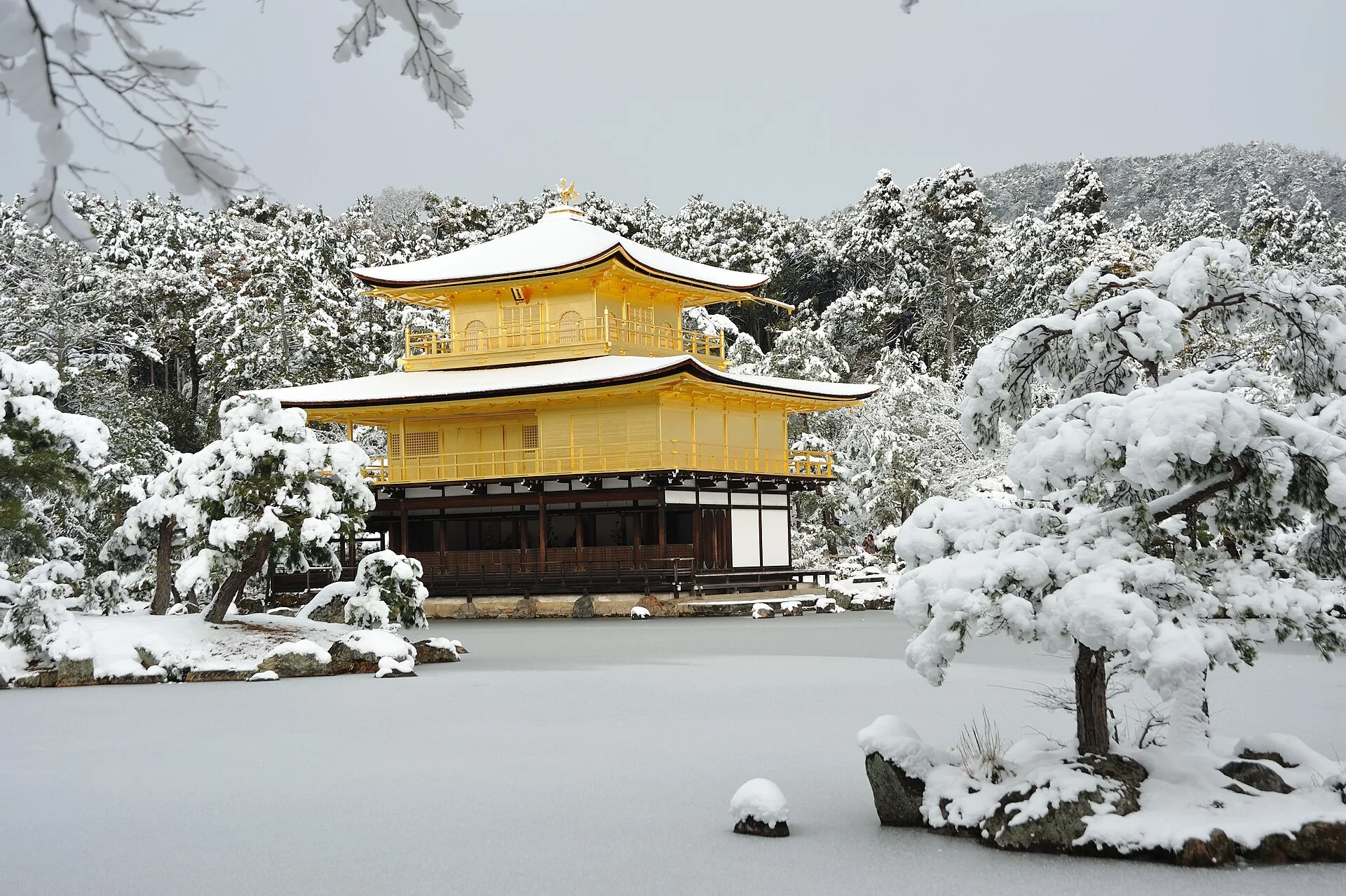
When does it snow in Kyoto? Compare winter transit for Kinkaku-ji, Arashiyama, Kibune, and Ohara, plus what to wear, Chion-in's 2026 New Year's Eve bell, Hatsumode, 2027 special winter temple openings, and indoor backups.
Where to Go on a Snowy Morning: Kinkaku-ji, Arashiyama, Kibune, and Ohara
Kinkaku-ji is the easiest stop to swap with a central city plan. Take the Karasuma Subway Line from Kyoto Station or Karasuma Oike to Kitaoji, walk into the bus terminal's blue boarding zone, and catch a city bus (such as Route 204 or 205) toward Kinkaku-ji-michi. Bus 205 also runs directly from Kyoto Station, though taking the subway as far as Kitaoji keeps your timing predictable when downtown traffic backs up. From the Kinkaku-ji-michi stop, you still have an open-air walk along the approach to reach the temple gate. Kyoto City Tourism Association Kinkaku-ji Access
Kinkaku-ji opens daily from 9:00 AM to 5:00 PM year-round; admission is ¥500 for high school students and adults, and ¥300 for elementary and junior high students. To catch snow on the Golden Pavilion's roof, make it your first stop when transit is running normally, as direct sun can melt the eaves quickly. After the main pond viewpoint, the standard walking loop climbs stairs. The temple's accessible route for wheelchairs, strollers, and visitors with limited mobility doubles back to the original entrance before the steps—a useful timing benchmark on snowy days, too, if your group splits up and agrees on a meeting point. Small handheld cameras are allowed for personal snapshots, while on-site photography for public social media or commercial use is prohibited. Kinkaku-ji Visitor Information and Kinkaku-ji FAQ
Arashiyama gives you two straightforward routes. From Kyoto Station, take the JR Sagano Line to Saga-Arashiyama and walk toward Tenryu-ji and Togetsukyo Bridge. From near Shijo-Omiya, board the Randen tram to Arashiyama Station, which drops you right near Tenryu-ji. If anyone in your group struggles with wind chill, head straight to lunch after the garden. Togetsukyo Bridge is completely exposed on both sides, so save the riverside stroll for clear weather, when the snow-dusted hills and the waters of the Katsura River show best. Tenryu-ji's Sogenchi Pond Garden is open 8:30 AM–5:00 PM (last entry 4:50 PM; ¥500 for high schoolers and adults). The Cloud Dragon painting in the Dharma Hall requires a separate ticket and typically opens on weekends and national holidays, though it will be closed on January 2, 2027. Tenryu-ji Visiting & Access
Compared with the Arashiyama river valley, Kibune's wildcard begins after you step off the train. Ride the Eizan Railway toward Kurama from Demachiyanagi to Kibuneguchi, then transfer at the Eiden Kibuneguchi Ekimae stop to Kyoto Bus Route 33 for Kibune. Look up your return trip in two separate legs as well, noting that the bus timetable lists Kibuneguchi and Eiden Kibuneguchi Ekimae as different stops. Bookmark both outbound and return stop pages on your phone before leaving. When the shuttle bus is running, you can walk straight up toward the main shrine after getting off; if Route 33 is suspended, head back to central Kyoto and try another day rather than dragging luggage up unfamiliar icy roads. Kifune Shrine Access, Kyoto Bus Kibune Return Timetable, and Eiden Kibuneguchi Ekimae Outbound Timetable
From December 1 through April 30, Kibune Shrine's main grounds (Hongu) are open 6:00 AM–6:00 PM with free admission, and the amulet counter (Juyosho) operates 9:00 AM–5:00 PM. If you only want daytime photos of the red lantern-lined stone steps and to try water fortune slips, turn back at the main shrine. Continuing upstream along the river to the Okumiya inner shrine means fitting the round-trip walk into the gap before your return bus. While Yui-no-Yashiro and Okumiya remain accessible at all hours, keep that streamside walk to daylight in winter so you can watch your footing. Pick a return bus before dark first, then decide how far up the valley to go. Kifune Shrine Hours
For Ohara, take Kyoto Bus Route 17 directly from Kyoto Station, or ride the Karasuma Subway Line to Kokusaikaikan and transfer outside the station to Route 19 via Ohara. From the bus stop, walk through the village lanes up to Sanzen-in—you will retrace the same slope on the way back. From December through February, Sanzen-in is open 9:00 AM–4:30 PM (¥700 adults, ¥400 junior/senior high students, ¥150 elementary students). Start with the Shuhekien Garden from the guest hall, then check path conditions before continuing into Yuseien Garden; even with a light dusting, the covered veranda frames the moss, cedar grove, and Ojo Gokuraku-in Hall nicely. If you plan to head back downtown after lunch, pick your afternoon bus departure first before adding another nearby temple. Sanzen-in Hours & Admission, Kyoto Bus Kokusaikaikan Ekimae, and Kyoto Bus Ohara Stop
Kibune and Ohara both sit in northern Kyoto on the map, but they rely on completely different transit corridors—pick just one on a snowy day. Choose Kibune for the lantern stone steps and riverside hamlet, giving yourself time for the Eizan Railway and connecting bus. Choose Ohara if you prefer a direct bus ride and lingering over indoor garden views at Sanzen-in. If afternoon buses thin out, eating an early lunch and catching the earlier departure beats waiting at a deserted stop trying to hail a cab. If both are must-sees, put them on separate days and leave large suitcases at your hotel.
| Target View | Main Transit Route | Fallback Trigger |
|---|---|---|
| Kinkaku-ji pond & Golden Pavilion | Karasuma Line to Kitaoji, then city bus | If streets around Kinkaku-ji-michi stall, stick to subway-accessible neighborhoods |
| Arashiyama valley & Tenryu-ji | JR from Kyoto Station or Randen from Shijo-Omiya | If the riverfront is too windy, keep it to the garden and lunch |
| Kibune Hongu stone steps | Eizan Railway from Demachiyanagi, then Bus 33 at Kibuneguchi | If the shuttle bus is suspended, pivot back to central Kyoto |
| Sanzen-in gardens in Ohara | Bus 17 from Kyoto Station, or Bus 19 from Kokusaikaikan | If time runs short before your bus, make Sanzen-in your sole stop |
What to Wear in Kyoto in Winter: Dressing for Transit Waits and Temple Floors
Build your morning outfit around the coldest part of your day. On a typical daytime loop of subway rides and indoor exhibits with short outdoor waits, a thermal base layer, a zip-up midlayer, and a windproof outer shell give you easy temperature control. If you plan to stand in an outdoor line on New Year's Eve, your insulation needs to hold heat while standing still, with proper coverage for your neck, head, and fingers. Wearing just a thin short-sleeve tee under a heavy coat forces you to strip the whole coat on heated trains and pull it back on the moment you step onto a windy platform.
The same path can feel completely different on the walk back. Shaded stone paving freezes overnight, midday foot traffic turns slush into puddles, and refreezing temperatures make surfaces slick again by dusk. Wear shoes with deep tread, and pick water-resistant uppers if you are headed to Kibune, Ohara, or snow-covered gardens. Test your shoes with the thickest socks in your luggage—your toes should wiggle freely without heel rub. Packing one spare pair of dry socks in your daypack lets you swap at lunch on wet snow days instead of riding transit in damp socks.
Slip-on or easy-to-untie footwear makes a real difference when stepping inside hojo halls and historic temple buildings. Follow posted shoe-removal signs, have everyone hold their own shoe bag, and check for benches where you can sit to unlace. Covered temple verandas block wind and snow, yet wooden floorboards stay bitingly cold—thick wool socks are far less hassle than juggling another bulky coat in your arms. With kids, park wet umbrellas in designated racks, shake snow off hats and jackets outside, and wipe damp soles before walking along covered corridors.
Before heading out for snow photos, fully charge your phone and spare power bank, keeping the spare battery in an inside coat pocket where body heat preserves the charge. Frame your shots off to the side of walkways so other visitors can pass, and stow your camera before walking on. Keep one hand free for railings on slick bridges, stone steps, and damp verandas. Before stepping from freezing air into a heated café or museum, tuck your camera inside its bag so it warms gradually without condensation. If you are shooting with a phone, step aside from the pond edge right after your shot so the crowd behind you keeps moving.
New Year's Eve and New Year's Day: Joya-no-Kane, Okera-mairi, and Hatsumode
For December 31, 2026, Chion-in announces that bell-ringing (Joya-no-Kane) begins around 10:20 PM, with 17 monks working in unison to strike the giant bell while visitors watch in assigned viewing waves. Online reservations open first-come, first-served from December 1 at 2:00 PM through December 24 at 4:59 PM JST (credit card payment). Limited cash tickets are also sold in person at the Yuzen-en counter from December 7 through December 24, 9:00 AM–4:00 PM, until sold out. Admission is ¥3,000 per person (free for elementary school age and under), entering via Kuromon Gate according to the wave listed on your voucher; there is no same-day walk-up registration on December 31. If you are with children or staying near Kyoto Station, the daytime rehearsal ring on December 27 at 2:00 PM requires no advance booking, with entry managed by belfry capacity. Chion-in 2026 Joya-no-Kane
If you want to strike a bell yourself, Kodai-ji—listed on the Kyoto City Tourism Association's directory—hands out numbered tickets starting at 10:00 PM on December 31 to the first 108 groups (one strike per group), with ringing starting at 11:45 PM. For groups who don't want to stay out past midnight, Myoman-ji in Iwakura holds a daytime "Toshiokuri-no-Kane" year-end bell session on December 31 from 3:00 PM to 5:00 PM, where visitors line up to ring in turn before gates close at 5:00 PM. The main trade-off is how late you are willing to wait and how you will get back afterward. Zoom in on your map around the entrance to confirm a lit, walkable route to a station before picking a temple. 2026 Kyoto Joya-no-Kane Directory
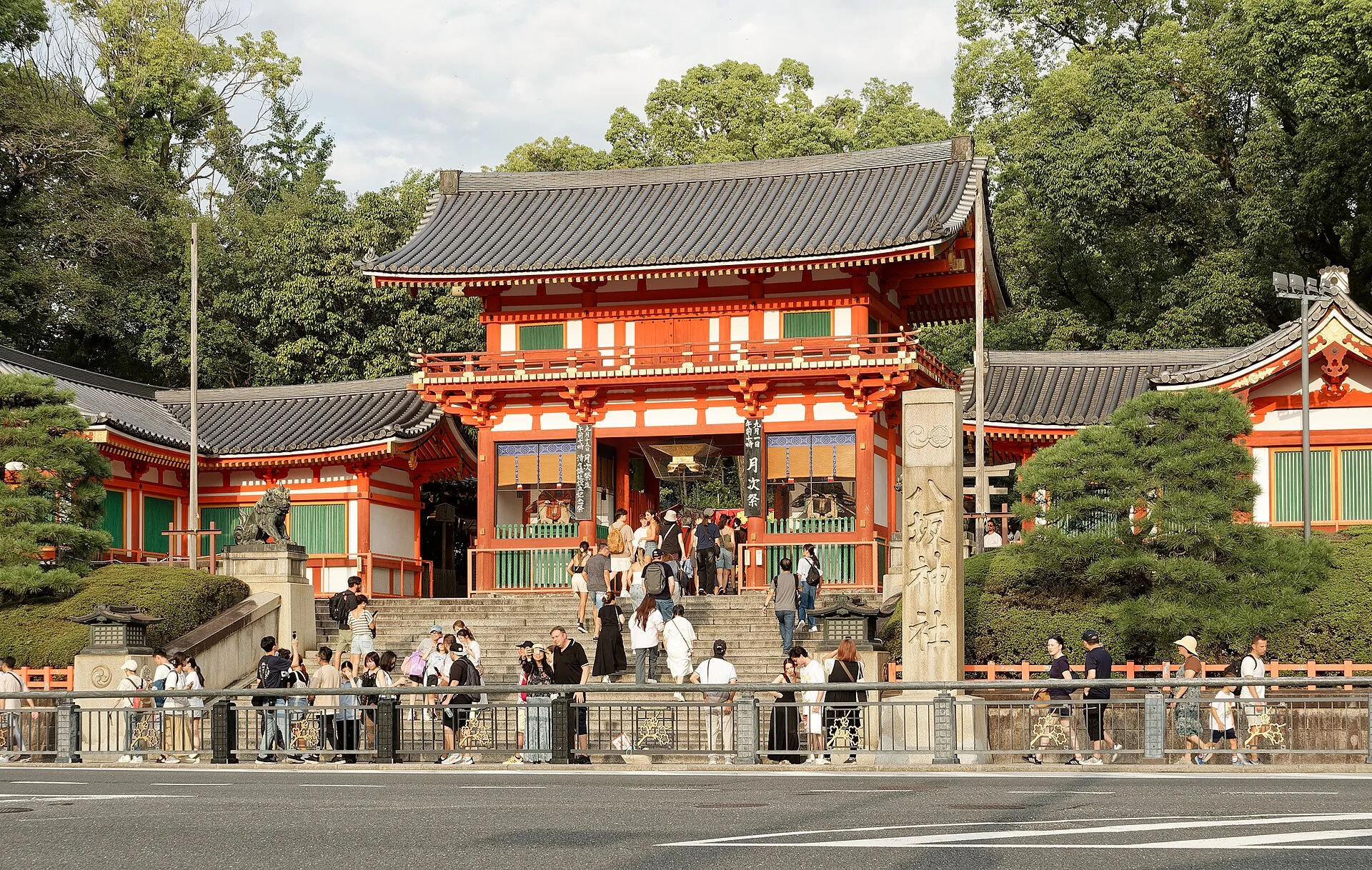
Yasaka Shrine's Okera-mairi is Kyoto's signature Shinto New Year's Eve ritual. Per the shrine's standard schedule, the Joya-sai rite starts at 7:00 PM on December 31, followed by Okera-mairi around 7:30 PM, with the sacred fire kept burning until roughly 5:00 AM on New Year's Day. If you only want to see the glowing lanterns and year-end rites, drop by after dinner and head back to your hotel to rest. If you stay through midnight for Hatsumode (first shrine visit), watch the crowd flow around Gion-Shijo and Higashiyama, follow one-way entry and exit routing, and never push upstream against incoming lines. Anyone carrying home a lit bamboo rope (kichi-jo-nawa) must follow shrine safety rules and extinguish it completely before leaving the grounds as instructed. Yasaka Shrine New Year Rites
Fushimi Inari Taisha works much better as a daytime visit. From Kyoto Station, take the JR Nara Line two stops to Inari Station, which opens straight onto the main approach. From Gion or Sanjo, ride the Keihan Main Line to Fushimi-Inari Station and walk east about five minutes. New Year's crowds can stretch that short approach into a slow crawl, so make the main shrine hall your primary goal and turn back toward the station if the entrance to the Senbon Torii gates is backed up. Agree on a specific station meeting point before heading out in case anyone separates—Keihan Fushimi-Inari and JR Inari are two different stations. The Kyoto City Tourism Association maintains neighborhood-by-neighborhood transit instructions. Fushimi Inari Taisha Access, Fushimi Inari Access by Area, and Kyoto Hatsumode Route Guide
If you plan to ride transit back to your hotel after midnight, enter the next day's date when checking train schedules, since timetables straddling midnight split across two calendar days—and verify that your final transfer actually connects. Guests staying in Gion or Higashiyama should prioritize events within an easy walk along well-lit streets. If you are based near Kyoto Station and prefer an early night, pair the December 27 afternoon bell rehearsal, an early evening stop at Yasaka Shrine, or station lights so you still get a full night's sleep. Intercity travelers should also note that Tokaido and Sanyo Shinkansen Nozomi trains operate as all-reserved-seat services from December 25, 2026 through January 5, 2027, and again from January 9 through January 11. JR Central Nozomi All-Reserved Dates
Already planning a New Year's Day trip to Ohara? Sanzen-in holds its Shusho-e service at 11:00 AM on January 1, 2027 in the Shinden Hall; joining as a prayer participant requires advance application by mail or fax starting at ¥5,000 per prayer, separate from regular sightseeing admission. For February trips, keep an eye on Yasaka Shrine's Setsubun Festival: regular annual programming on February 2 and 3 features dance-pavilion dedications and bean-throwing ceremonies. Pick one session and stand near the edge of the crowd if you want an easy exit. If you just want a standard shrine visit, treat the festival as part of the surrounding neighborhood buzz and pad your schedule for lines and detours. Sanzen-in 2027 Shusho-e and Yasaka Shrine Setsubun Festival
Planning Around 2027 Kyo no Fuyu no Tabi Special Openings
The 61st Kyo no Fuyu no Tabi (Kyoto Winter Special Openings of normally closed cultural properties) runs primarily from January 8 through March 18, 2027. Most participating sites open 10:00 AM–4:30 PM (last admission 4:00 PM), with general admission typically ¥800 per site (¥400 for elementary school students). For this edition, anchor your day around Chion-in, Kitano Tenmangu, or the Kyoto Station area—pick one guaranteed site first, then pair it with lunch or an afternoon museum nearby. Kitano Tenmangu's Treasure Hall charges ¥1,000 for adults and ¥500 for elementary students separately, which includes a commemorative gift. Kyoto City Tourism Association Event Schedule
Chion-in splits its special openings across two consecutive windows at the same address: the Sanmon Gate opens January 8–28, followed by the Daihojo, Kohojo, and Hojo Garden from January 29 through March 18 (closed March 9). Both windows run 9:00 AM–4:00 PM (last admission 3:30 PM), at ¥800 for adults and ¥400 for elementary students each. If interior sliding-screen paintings (fusuma-e) are your priority, make sure your dates fall in the Hojo window. Each room in the Daihojo has a distinct theme and role—slow down to take in one room properly before moving on to the nightingale-floor corridor and garden rather than rushing through every chamber. The Sanmon Gate window centers on climbing to the upper level; if traveling with older relatives, check official site notes on stairs and standing time beforehand. 2027 Kyoto Winter Special Openings Venues and Chion-in Hojo & Garden Opening
If you are staying near Kyoto Station in January or February, you can fit Higashi Hongan-ji's Goeido Gate winter opening right before heading elsewhere—it opens 9:00 AM–4:00 PM (last admission 3:30 PM) across both months. This special opening lets visitors climb to the gate's second story for views of the Buddhist statues and Kyoto skyline; buy a ticket if you want to go upstairs, or keep to the ground-level Goeido Hall and front plaza. Because Kitano Tenmangu and Kinkaku-ji both sit in northwest Kyoto, you can combine them on a clear day—or give the morning solely to Kinkaku-ji if it snows. With kids, one heritage interior is often plenty, leaving the second ticket budget for a warm sit-down lunch. Every venue sells tickets separately, so you never have to overcommit; if you have a timed museum slot later, don't squeeze in an extra temple just before cutoff at the expense of lunch and transit margins. 2027 Kyoto Winter Special Openings Venues
Wind, Rain, Snow, or Holiday Closures: Afternoons in Okazaki and Umekoji
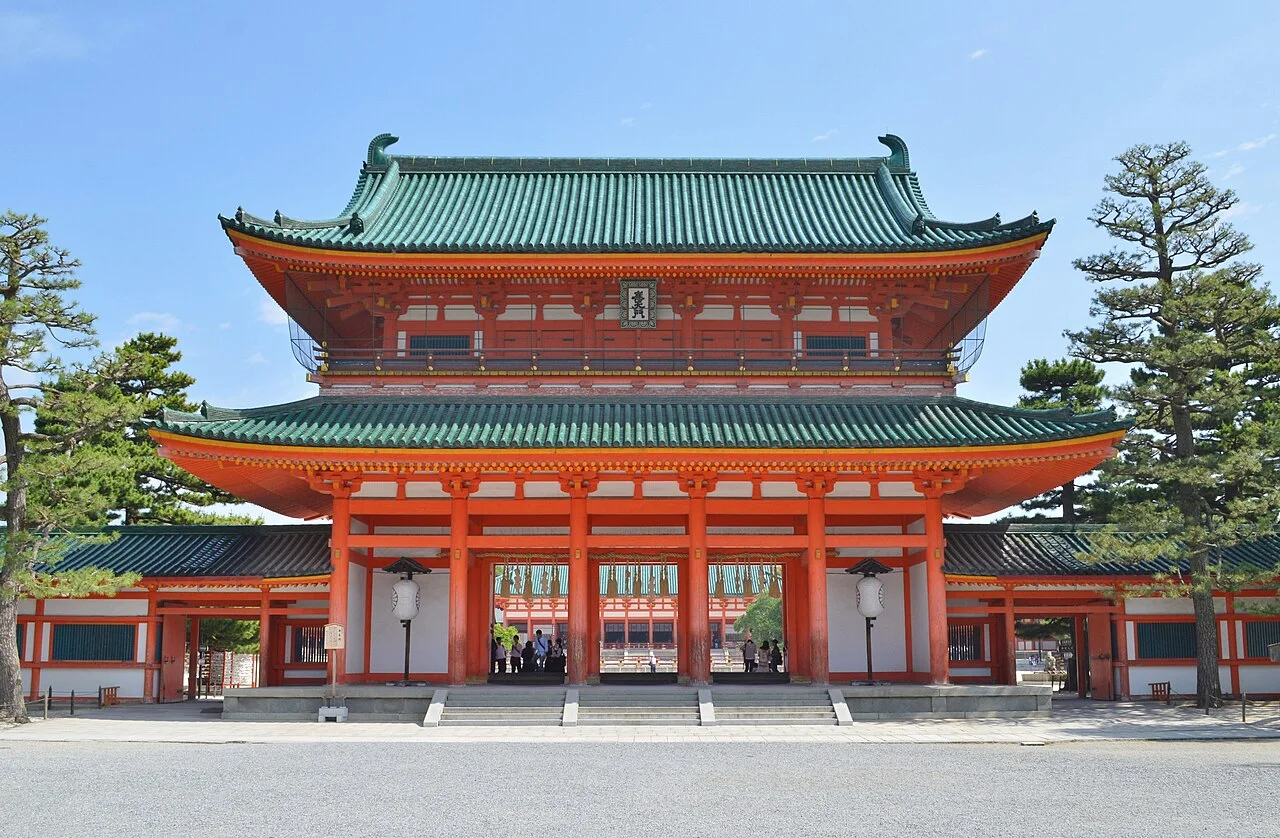
Okazaki starts with an easy 8-minute walk from Higashiyama Station on the Kyoto Municipal Subway Tozai Line to the Kyoto City Kyocera Museum of Art. Take East Exit 1, walk east along Sanjo-dori, turn north onto Jingu-michi, and pass beneath Heian Shrine's giant torii gate—the museum entrance is on your right. With extra time afterward, continue up Jingu-michi to Heian Shrine. The Kyocera Museum is open 10:00 AM–6:00 PM and normally closes Mondays (except national holidays), plus year-end holidays from December 28 through January 2. Running December 17, 2026 through January 11, 2027 in the Higashiyama Cube annex, the Studio Ghibli-produced exhibition "Zen of Hakuin" costs ¥1,700 at the door (¥1,500 advance) for adults and university students, with last entry at 5:30 PM; it follows the museum's year-end closure and stays open on Monday, January 11 (Coming of Age Day). Kyoto City Kyocera Museum of Art Current Exhibition and Kyoto City Kyocera Museum of Art Access
For families based near Kyoto Station, Umekoji offers the easiest retreat from bad weather. Ride the JR Sagano Line one stop to Umekoji-Kyotonishi Station, right beside the park and the Kyoto Railway Museum. The museum closes December 30, 2026 through January 1, 2027, reopening on January 2. Through the end of February 2027, admission is ¥1,500 for adults, ¥500 for elementary through high school students, and ¥200 for children ages 3 and up. Start with the locomotives kids recognize in the train halls, then claim a bench when anyone needs a break. Driving simulators require separate timed experience tickets, so if snow might delay your morning arrival, lock in your main gallery visit first without banking on simulator slots. Kyoto Railway Museum Visitor Guide and Kyoto Railway Museum 2026–27 Calendar
During the New Year overlap when both museums are shut, check the Kyoto Aquarium's daily operating calendar. The aquarium opens year-round with daily hours and show schedules posted online, roughly a 15-minute walk from Kyoto Station's Central Exit or 7 minutes from Umekoji-Kyotonishi Station—handy for cutting down outdoor walking in rain or snow. It combines indoor galleries with outdoor habitats and amphitheater shows, so pick two priority zones once inside before deciding whether to stay for the next show. From November 21, 2026 through March 31, 2027, its winter program highlights the fur seal pups born in 2025—check the family tree board first before spotting them in the tank. If your stroller has a weather cover or blanket, open it up indoors for airflow before re-covering outside in the park. Kyoto Aquarium Calendar & Access, Hours & Ticketing FAQ, and Kyoto Aquarium Winter Event
If anyone in your group gets knee fatigue on long walks, split Okazaki into two bite-size halves: eat and use the restrooms near Higashiyama Station first, tour only the Kyocera Museum, and head straight back down the same flat path to the subway. Anyone with energy left for Heian Shrine can walk on and meet back at the hotel later. Higashiyama involves slopes and Ohara and Kibune add bus rides, so if you still want a snowy temple garden without overdoing it, turning back before the stairs at Kinkaku-ji saves real effort. When splitting up with wheelchairs or strollers, pick step-free routes for each group and set one clear meetup time.
Save the opening hours of two indoor backups the night before, and avoid booking back-to-back timed tickets across different museums. If morning wind warnings or wet sleet roll in, check last-entry times online and build an easy day around one museum plus lunch near your hotel—adding a short riverside walk later only if skies clear. Remember to leave time before closing for lockers, ticket queues, and finding the right wing, and if afternoon buses fall behind schedule, switch to the subway early rather than gambling on the next bus.
Where to Stay and Eat: Pick One Easy Base and Keep Dinner Nearby
On a first winter trip to Kyoto, staying at one central hotel for all nights saves the most friction. Karasuma Oike lets you ride both the Karasuma and Tozai subway lines—north to Kitaoji in the morning, east to Okazaki in the afternoon. Kyoto Station works best when arriving and departing by JR, or splitting Arashiyama and Fushimi Inari across separate days. If you are attending late-night Higashiyama New Year's events, Gion-Shijo puts you within walking distance of your bed. Even the last few hundred meters matter on a freezing night: check the map before booking for bridges, hills, or extra bus legs after exiting the train, and note which station exits have elevators. Kyoto Station Area Stays and Karasuma Area Stays
If you want an overnight stay in northern Kyoto (Rakuhoku), put it on a night when you don't need to race straight from the mountains to the airport the next day. For mountain inns with dinner included, work backward from the final check-in cutoff to confirm shuttle timing, pickup station, whether advance booking is required, and how to reach the inn if you miss the last shuttle. Check cancellation windows and late-arrival fees carefully in case snow shuts down feeder buses. If you plan to visit Kibune early on the day you switch hotels, ask to leave big suitcases at your city hotel—or save the mountain ryokan for the back half of your trip to avoid hauling rollers up snowy bus-stop slopes.
Sleeping overnight along the Arashiyama riverside pays off when you want to walk straight to the river and Tenryu-ji the next morning. If you only want one daytime garden visit, riding JR in from Kyoto Station is fast and simple—save the riverfront splurge for a night when you want a hot soak and an unhurried breakfast. Check whether dinner is included in your room plan, requires a separate reservation, or means walking back toward the station for restaurants. Riverside inns aren't always close to late-night transit, so on a dark, rainy winter evening, having dinner on-site has very tangible value. Arashiyama River vs. Station Stays
When comparing hotel rates, calculate the per-person, per-night pre-tax lodging charge to factor in Kyoto's accommodation tax. Under Kyoto City's revised brackets effective March 2026, the tax is ¥200 under ¥6,000, ¥400 from ¥6,000 to under ¥20,000, ¥1,000 from ¥20,000 to under ¥50,000, ¥4,000 from ¥50,000 to under ¥100,000, and ¥10,000 at ¥100,000 and above. Taxable room rates exclude itemized meals and consumption tax, and the bracket applies per guest, per night. For example, if a hotel quotes room rates before accommodation tax and two guests stay three nights in the ¥400 bracket, add ¥2,400 back into the total when comparing quotes. Kyoto City Accommodation Tax Brackets and Kyoto Accommodation Tax Calculation Guide
For most city hops, tap an IC card (such as ICOCA or Suica) as you go, and only buy a day pass when you know you will take multiple covered subway and city bus rides in one day. Itineraries hitting Fushimi Inari, Arashiyama, and Kibune often mix JR, Keihan, Randen, and Eizan lines, which are tallied separately. Route 17 and 19 to Ohara fall under Kyoto Bus zones, so match any pass to the exact operator and zone before buying. On an afternoon when your family pivots indoors to escape the cold—taking one subway ride and one city bus in the morning, then walking back to the hotel at night—pay-as-you-go comes out cheaper than a pass. Kyoto Subway & Bus Day Passes and Routes
Winter meal timing often determines how far you end up walking. If you want yudofu (simmered tofu) in Arashiyama, book lunch right after Tenryu-ji at a spot along your exit path, and check whether the menu is an individual hot pot or a multi-course set with appetizers and rice. Travelers with young kids or vegetarian guests should ask ahead about children's seating and dashi stock, as dipping sauces, sides, and starters often contain bonito or other fish. Bundle back up before stepping out if you still want to walk by the river, and save teahouses and sweets for the stretch closer to your return train station. Arashiyama Dining & Yudofu Guide
For a New Year's trip, lock down where you are eating dinner on December 31 and breakfast on January 1 ahead of time. Heading to Chion-in? Eat in Higashiyama or Gion and give yourself cushion for the walk to the gate meetup. Staying by Kyoto Station without midnight plans? Dine in the station complex, see the illuminations, and walk straight back to your room. If you want New Year's bento, osechi, or sweets for morning, check individual holiday hours for department store basement food halls and restaurant floors, and shop the day you pass through the station if early closures loom. Grab hot tea, amazake, or zenzai sweet red bean soup wherever seats are open—no one in your group needs to stand outside for 30 minutes in the cold.
Three-Day Winter Itinerary: Keep the Flexible Half-Day in the Middle
If you arrive around noon on Day 1, drop your bags and stay near your hotel. Based in Karasuma or Higashiyama, visit an open Okazaki museum in the afternoon and have dinner around Gion. Based near Kyoto Station, stroll over to Umekoji or eat inside the station, then step out to the station plaza after dark. From November 18 through December 25, 2026, the plaza Christmas tree lights up from 3:00 PM to 11:00 PM; from December 26 through December 31, the Grand Stairway snow-themed light show runs from 3:00 PM to 10:00 PM. To take in the full staircase graphics, pause for a few minutes in the lower viewing area while keeping walkways clear—strollers can wait comfortably on the open landing. Kyoto Station Christmas Tree and Kyoto Station Grand Stairway Illumination Schedule
Treat Day 2 morning as your swappable Kinkaku-ji slot. If it snowed overnight, go there first at opening, adjust your pace to sun and footing, and transition to lunch around Kitano before your afternoon plan. If there is no snow and you already have an Arashiyama lunch booked, head straight into Arashiyama via JR Saga-Arashiyama or Randen Arashiyama with plenty of time for Tenryu-ji. Note that the Sagano Scenic Railway (Romantic Train) runs on a separate schedule from the JR Sagano Line, and its published 2026 calendar lists December 30 and 31 as winter suspension days; regular JR or Randen trains cover Tenryu-ji and Togetsukyo Bridge without interruption. Sagano Scenic Railway 2026 Operating Calendar
If you have a full Day 3 on a clear forecast, pick either Kibune or Ohara in the morning and return downtown by afternoon. If you have an evening Shinkansen or airport transfer, put the northern mountain trip in the middle of your stay instead. On departure day, stay near your luggage storage: browse around Kyoto Station or catch the Higashi Hongan-ji gate opening in the morning, eat lunch, and walk back to your hotel to grab your bags. Adding a last-minute temple right before leaving means factoring in the walk from baggage storage to the train platform—when everyone is juggling winter coats, strollers, and rolling suitcases, that final stretch always takes longer than map apps predict.
Over New Year's, simply swap one of those half-days for seasonal events. On December 31, lock in either your reserved Joya-no-Kane bell session or early-evening Okera-mairi, keeping daytime open for shopping and dining around Kyoto Station. On January 1, choose either Yasaka Shrine or Fushimi Inari for Hatsumode and ride back near restaurants afterward so holiday lines never jeopardize an onward train. From January 2 onward, the Kyoto Railway Museum in Umekoji comes back into play as an indoor option. From January 8 onward, prioritize Chion-in's winter special opening and spend the rest of that day in Higashiyama. Keeping each half-day self-contained in one neighborhood means anyone who gets tired can ride a single familiar line straight back to the hotel.
A few useful answers
When does it snow in Kyoto, and which month is best for snow at Kinkaku-ji?
Based on 1991–2020 JMA data for Kyoto, average minimum temperatures are lower in January and February than in December. Whenever snow actually sticks overnight and transit is running normally, arriving right when Kinkaku-ji opens at 9:00 AM gives you the best shot at seeing snow on the Golden Pavilion roof.
Can I sign up on-site for Chion-in's 2026 New Year's Eve bell-ringing?
No—there is no same-day ticket booth on December 31. For 2026, online applications run December 1 at 2:00 PM through December 24 at 4:59 PM JST, alongside limited cash sales at the Yuzen-en counter from December 7 to December 24. Admission is ¥3,000 per visitor (free for elementary school age and under) to watch inside the grounds. For a free daytime alternative with no registration needed, attend the rehearsal ring on December 27 at 2:00 PM.
Between Kibune and Ohara, which is easier with kids in winter?
It depends on whether your kids handle uphill walks well and how soon the next return bus leaves. Ohara is one bus ride followed by a village slope, after which you can sit inside Sanzen-in's guest hall to view the gardens. Kibune requires transferring from the Eizan train to a bus and climbing stone steps at the main shrine—if you have a stroller or want minimal stairs, the indoor museums in Umekoji are far easier to reach.
Where can I go indoors over New Year's in Kyoto when museums are closed?
The Kyoto City Kyocera Museum of Art closes December 28 through January 2, and the Kyoto Railway Museum closes December 30 through January 1. Check the Kyoto Aquarium's daily schedule to spend a half-day in Umekoji during that gap, and keep the Railway Museum in mind once it reopens on January 2, 2027.
When does the 61st Kyo no Fuyu no Tabi start in 2027?
The main window for 2027 winter special openings of normally closed cultural properties runs January 8 through March 18. At Chion-in, for example, the Sanmon Gate is open through January 28, and the Daihojo, Kohojo, and Hojo Garden open from January 29 onward (closed March 9).
Official information and references
Sources used in this guide.
- Japan Meteorological Agency: Kyoto Station Monthly Climate Normals
- Kyoto City Tourism Association: Kyoto Comfort Map
- Kyoto City Tourism Association: Kinkaku-ji Access Guide
- Kinkaku-ji Official Visitor Information & Access
- Kinkaku-ji Photography & Accessibility FAQ
- Tenryu-ji Temple Garden & Dharma Hall Visiting Guide
- Kifune (Kibune) Shrine Access & Shuttle Bus Info
- Kifune (Kibune) Shrine Seasonal Worship & Counter Hours
- Kyoto Bus: Kibune Stop Return Timetable
- Kyoto Bus: Eiden Kibuneguchi Ekimae Outbound Timetable
- Kyoto Bus: Kokusaikaikan Ekimae Routes
- Kyoto Bus: Ohara Stop Routes & Timetables
- Sanzen-in Temple Visiting Hours & Admission Fees
- Chion-in 2026 Joya-no-Kane & Rehearsal Ring Schedule
- Kyoto City Tourism Association: 2026 New Year's Eve Temple Bell Directory
- Yasaka Shrine New Year Rites & Okera-mairi Schedule
- Yasaka Shrine Setsubun Festival
- Fushimi Inari Taisha Access Guide
- Kyoto City Tourism Association: Fushimi Inari Access by Area
- Sanzen-in 2027 New Year's Day Shusho-e Service Announcement
- 61st Kyo no Fuyu no Tabi: Dates, Fees & Closure Information
- Kyoto City Tourism Association: 2027 Winter Special Openings (English)
- 2027 Chion-in Hojo & Garden Special Opening Schedule
- Kyoto City Kyocera Museum of Art: Zen of Hakuin Exhibition & Year-End Closures
- Kyoto Railway Museum Admission, Fees & Facilities Guide
- Kyoto Railway Museum 2026–27 Opening Calendar
- Kyoto Aquarium Closed Days & Access
- Kyoto City Accommodation Tax Revision Effective March 2026
- Kyoto City Accommodation Tax Calculation Guide
- JR Central: Tokaido & Sanyo Shinkansen Nozomi All-Reserved-Seat Dates
- Kyoto Station Building: 2026 Station Plaza Christmas Tree Illumination
- Kyoto Station Grand Stairway Winter Graphical Illumination Schedule
- Sagano Scenic Railway 2026 Operating Calendar
- Kyoto City Kyocera Museum of Art Access
- Kyoto Aquarium Operating Hours & Ticketing FAQ
- Kyoto Aquarium 2026–27 Winter Event Announcement