Plan a Kyoto New Year's Eve and New Year's Day hatsumode itinerary covering Yasaka Shrine's okera-bi fire, Joya no Kane bell-ringing at Chion-in and Kodai-ji, transit to Fushimi Inari and Kiyomizu-dera, and late-2026 JR West special train coverage.
- Region & Focus
- KyotoShrines and temples
- Reading Scope
- 21 min read · 12 chapters · 7 Q&As
- Official Verification
- 35 official sources checkedUpdated November 22, 2026 at 08:00 AM GMT+8
- Key Topics
- SeasonsWinterItineraries
Chapter Route Map (tap any stop)
- Decide What You Want to Do on December 31 Night First
- Yasaka Shrine's Okera-bi Starts Around 19:30 on New Year's Eve
- From Gion-Shijo Station, Walk East Along Shijo-dori to the West Gate
- Walk From Fushimi Inari's Gate to Okusha, Then Decide on Yotsutsuji
- Kiyomizu-dera's Morning Hours and New Year's Eve Bell Are Separate Plans
- Book Chion-in in Advance; Line Up at Kodai-ji at 22:00
- Plan Your New Year's Eve Return From the Last Connection Backwards
- Which Side of the Kamogawa River to Book Depends on Midnight
- Start New Year's Day in Higashiyama or Check Crowds Before Fushimi Inari
- If It Rains, Snows, or Kids Tire Out, Cut One Uphill Climb
- January Also Brings Heian Shrine, the Seven Lucky Gods, and Gion Events
- Where to Fit New Year's Eve Dinner and New Year's Day Breakfast
- Quick Q&A
Spending New Year's Eve 2026 in Kyoto? Head into Gion by early evening for Yasaka Shrine's okera-bi sacred fire, which the shrine lists as starting around 19:30. On New Year's Day 2027, walking through the Senbon Torii gates at Fushimi Inari Taisha is easiest as a daytime round trip from Kyoto Station on a local JR Nara Line train. Save Kiyomizu-dera for the next morning by taking the Keihan Line to Kiyomizu-Gojo and walking up Kiyomizu-zaka. If you want to hear the midnight bells, pick one temple first and book lodging within walking distance—JR West's announced New Year's Eve special trains do not include late-night service between Kyoto and Inari after the regular last train.
Decide What You Want to Do on December 31 Night First
Hatsumode is the first shrine or temple visit of the New Year. On New Year's Eve, the okera-bi fire and Joya no Kane bell-ringing follow strict evening schedules, while daytime hatsumode on January 1 can wait until you wake up. If you only have one night in Kyoto, the smoothest plan is watching the fire lighting in Gion on New Year's Eve and visiting one shrine or temple the next morning. Keeping your room through the night of January 1 gives you an extra half-day of breathing room—especially helpful if you want to hike partway up Mount Inari or avoid rushing up the approach to Kiyomizu-dera.
If you are traveling with young children, older adults, or anyone who needs elevators, skip New Year's Eve crowds altogether, go out during the day on January 1, and keep dinner close to your hotel. The stone steps at Yasaka Shrine's Nishiromon West Gate, the mountain trails at Fushimi Inari, and the uphill slope of Kiyomizu-zaka each present very different mobility challenges for wheelchairs and strollers. Build your itinerary around the steepness and wait times your group can comfortably handle, and check holiday hours before planning post-visit meals or museums—especially for indoor stops on January 1.
To ring a temple bell yourself, aim for Kodai-ji's same-evening numbered tickets; at Chion-in, monks strike the great bell while ticketed guests watch in timed slots. Each venue uses a different entrance and check-in window, which affects both where you book your hotel and which Shinkansen you take into town. If you arrive in Kyoto in the late afternoon, drop your bags at your hotel first or check into your room before heading out. Hauling suitcases uphill toward Higashiyama makes it much harder to hit a ticket pickup or check-in cutoff on time.
| What You Want to Do | Best Plan | Time to Reserve in Advance |
|---|---|---|
| See the okera-bi sacred fire | Arrive at Yasaka Shrine on the evening of Dec 31 | Entry and the walk back to your hotel |
| Ring a temple bell yourself | Same-night numbered tickets at Kodai-ji | Waiting before ticket distribution at 22:00 |
| Walk the Senbon Torii gates | Visit Fushimi Inari Taisha during the day on Jan 1 | Turning back at Okusha or climbing up to Yotsutsuji |
| See the Kiyomizu Stage | Daytime visit to Kiyomizu-dera | Walking uphill from the station and buying tickets |
| Travel with seniors and cut outdoor time | One flat-ground shrine or temple plus an indoor stop | Seated rest breaks and dining nearby |
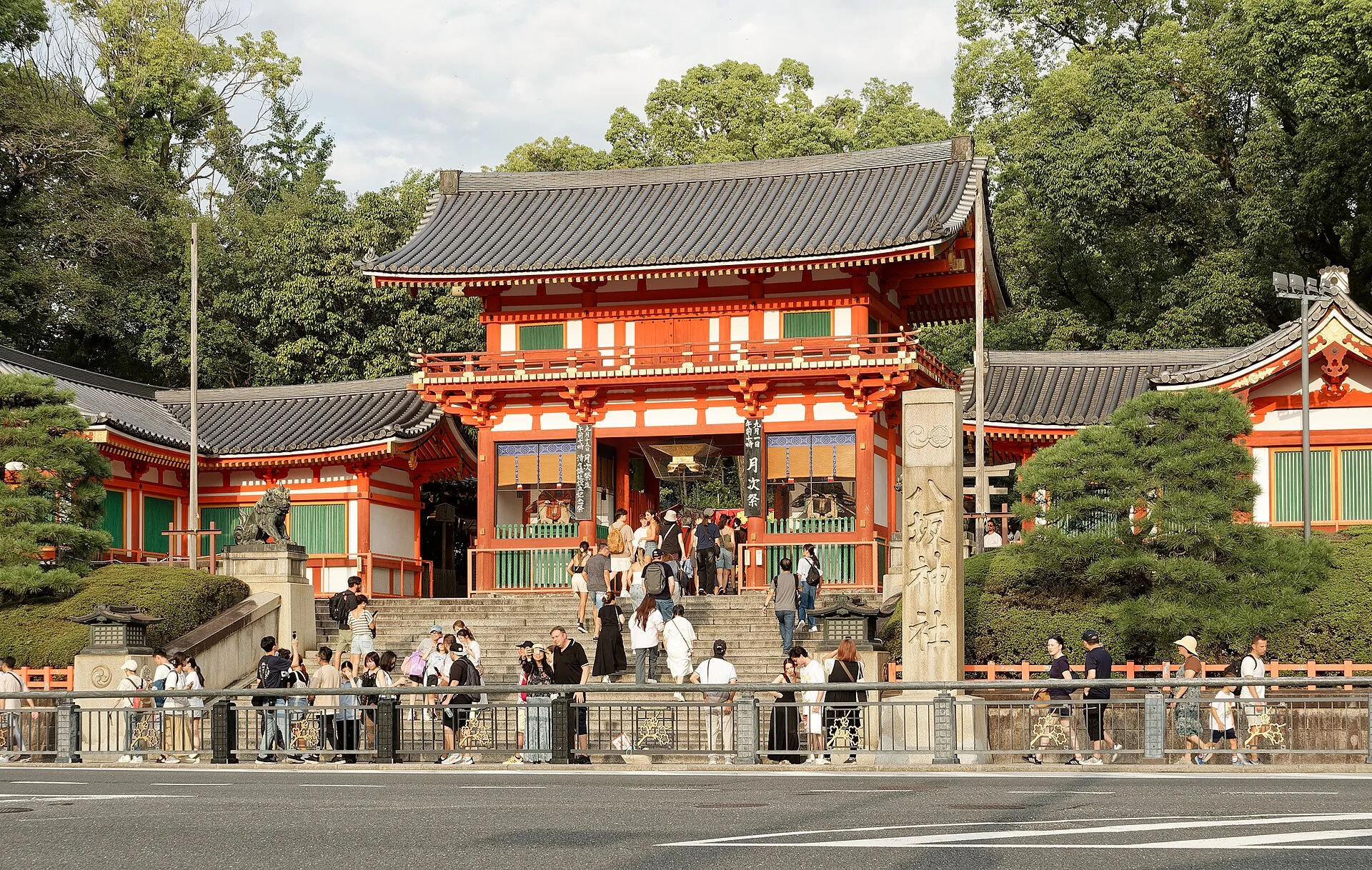
Plan a Kyoto New Year's Eve and New Year's Day hatsumode itinerary covering Yasaka Shrine's okera-bi fire, Joya no Kane bell-ringing at Chion-in and Kodai-ji, transit to Fushimi Inari and Kiyomizu-dera, and late-2026 JR West special train coverage.
Yasaka Shrine's Okera-bi Starts Around 19:30 on New Year's Eve
Known in Japanese as okera-bi, this tradition begins on December 28 at 4:00 a.m., when Yasaka Shrine holds the Kiribishiki ritual to kindle sacred fire using traditional friction tools. On December 31, the Joyasai service begins in the Main Hall at 19:00, after which priests transfer the flame to lanterns across the grounds. The shrine lists Okera-mairi hours from roughly 19:30 on New Year's Eve until about 5:00 on New Year's Day, followed by the Okera-sai ritual later on January 1. If you want to see the lanterns first lit, head into Gion after dinner and aim to enter around 19:00; if you just want to see the fire, arriving later still lets you catch the ceremony.
Okera (atractylodes) is a plant in the daisy family whose dried roots release an aromatic scent when burned. At the shrine, okera roots are burned alongside wooden okera-gi prayer sticks inscribed with wishes. Historically, visitors carried the ember home on a braided rope to cook New Year's ozoni soup or light their household altar. Today, the shrine recommends extinguishing the rope and hanging it in the kitchen as a charm against fire; the announced offering (hatsuho-ryo) for a hanging fire rope is ¥1,000. If you are staying in a hotel or taking trains, stick to viewing the lanterns or carry only a fully extinguished rope. Follow staff directions along the rope-carrying route, and watch your spacing around heavy coats, scarves, and children before reaching out.
When you enter, pray at the Main Hall first, then look for signs pointing to "okera" to view the fire. Rows of glowing paper lanterns hang from the Maiden dance stage directly in front of the Main Hall, making it an easy landmark as the crowd circulates. Yasaka Shrine's Main Hall is a designated National Treasure whose inner sanctuary and worship hall share a single roof—step back slightly to take in the full roofline. At night, the illuminated Maiden lanterns stand out most clearly, so if you want a closer look at the architecture and gates, return during daylight the next morning.
Yasaka Shrine's grounds stay open 24 hours a day. Regular shrine office hours run 9:00-17:00, and prayer reception runs 9:00-16:00, though Okera-mairi operates on its own overnight schedule. If you want an amulet (omamori) or shrine stamp (goshuin), step out of the main prayer queue after bowing and look for signs for the amulet counter (juyosho) or goshuin window. Families with young children can head back to their hotel right after seeing the fire lit and return the next day for a calmer stroll around the Maiden.
From Gion-Shijo Station, Walk East Along Shijo-dori to the West Gate
Keihan Gion-Shijo Station sits on the east bank of the Kamogawa River. Take Exit 7 up to street level and walk east along Shijo-dori for about 5 minutes to reach Yasaka Shrine's Nishiromon West Gate. Coming from Hankyu Kyoto-Kawaramachi Station, leave via the East Ticket Gate toward Shijo-Ohashi Bridge, cross the river, and continue straight to the end of the street; the shrine estimates an 8-minute walk. From Kyoto Station, City Bus 206 drops you right at the Gion stop, or you can ride JR one stop to Tofukuji and transfer to the Keihan Line to bypass northbound traffic along Higashioji-dori.
The Nishiromon West Gate stands at the eastern end of Shijo-dori behind a flight of stone steps, while the South Gate (Minamiromon) is the official front gate facing the Main Hall. The Kyoto Prefecture Tourism Federation notes wheelchair access via the Tokiwa Shinden side of the grounds, and Kyoto City Tourism accessibility listings point to a ramp on the south side of the Nishiromon West Gate. After tapping out at Keihan Gion-Shijo, follow the elevator signs to street level; if your group splits up above ground to find the accessible entrance, pick a clear street address along Shijo-dori as your meeting point.
Walking back toward Kawaramachi takes you across Shijo-Ohashi Bridge. If anyone gets separated in the crowd, wait until you reach a wider stretch of sidewalk rather than stopping on the West Gate steps, at crosswalks, or at station exits. If you wander down a narrow lane around Hanamikoji, double back out to Shijo-dori or Higashioji-dori. Parts of Gion include private residential alleys where photography is prohibited—for photos of the West Gate, set up on the wider public sidewalk across the street so your group can stay together as you move on.
Walk From Fushimi Inari's Gate to Okusha, Then Decide on Yotsutsuji
From Kyoto Station, board a local JR Nara Line train that stops at Inari; the ride takes about 5 minutes and exits directly onto the main approach. From Gion, Sanjo, or Kiyomizu-Gojo, a local Keihan train bound for Osaka is the simplest option—get off at Fushimi-Inari Station and walk east for about 5 minutes to the shrine. For the return trip to Gion, use the dedicated entrance gate and Platform 1 for Sanjo and Demachiyanagi-bound trains at Keihan Fushimi-Inari Station, as the two directions have separate street-level entrances. Visitors staying around Yodoyabashi or Kyobashi in Osaka can also ride Keihan straight through, though you should check each train's final destination rather than searching only for a Kyoto city stop.
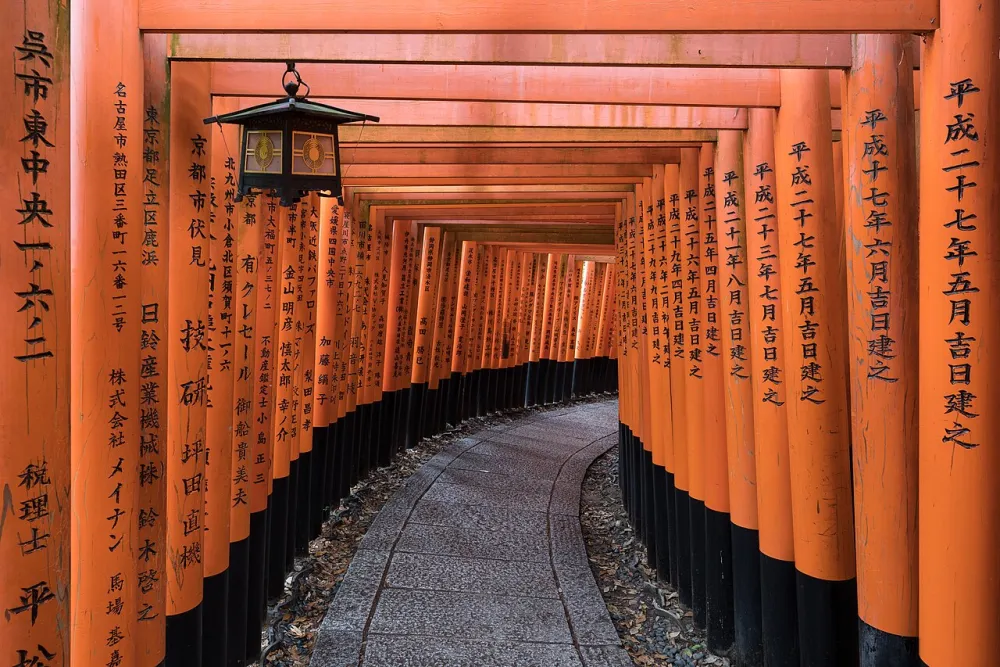
Walking up the approach takes you past the Romon Tower Gate and Outer Worship Hall to the Main Hall. According to the Kyoto Prefecture Tourism Federation, general shrine admission is free. If you only want a quick hatsumode prayer, stop at the Main Hall and save your legs for the train ride home. To walk through the Senbon Torii gates, circle behind the Main Hall and follow the trail markers up to the Okusha Worship Hall. Set at the base of Mount Inari after the first long stretch of vermilion gates, Okusha lets you pray toward the mountain from below and makes an easy turnaround spot for families with toddlers or groups walking at different paces.
Yotsutsuji is a trail junction and viewpoint higher up the slope that adds both stone stairs and descent time. From there, you get a wide view over southern Kyoto, while the full mountain loop listed by Kyoto City Tourism measures roughly 4 km. If New Year's Day crowds are already slowing the Senbon Torii corridor to a shuffle, both halves of the climb will take longer than usual, so treating Okusha as your turnaround keeps the rest of your day intact. Before pushing past Yotsutsuji, review our Fushimi Inari mountain route guide to verify trail splits and descent paths rather than judging the return distance from a flat map.
Fushimi Inari Taisha closes its on-site parking lots from December 30 through January 6, so anyone renting a car should leave it at the hotel or an earlier lot and take JR or Keihan instead. If you visit at night, stay on the lower, well-lit paths where crowds and signage are clear. When stone steps are slick, markers are hard to read, or your legs stiffen up after standing in line, save the upper mountain paths for daylight—shoe grip matters far more than camera angles once you start climbing.
During the first days of January, queues can start right outside the station. Before stepping into line, agree on whether your group is taking JR or Keihan back. Families with kids can send one adult to handle restroom breaks while another checks the directional signs so everyone merges into the same lane. If your main goal is picking up an amulet, check the counters beside the Main Hall before deciding whether to climb higher, and save souvenir shops, photo stops, and lunch until you come back down so you do not have to reorganize on narrow paths.
Kiyomizu-dera's Morning Hours and New Year's Eve Bell Are Separate Plans
Kiyomizu-dera lists regular winter visiting hours as 6:00-18:00, with the amulet and goshuin office opening around 8:00. General admission is ¥500 for adults and ¥200 for elementary and junior high school students. If you want to walk onto the wooden stage and collect a goshuin stamp in one sweep, aim to reach the Niomon Gate around 8:00; if catching early morning light matters more than buying charms, arrive closer to opening. Shops along the approach will likely still be closed that early, so eat breakfast near your hotel and bring water.
From Keihan Kiyomizu-Gojo Station, take Exit 4, walk east along Gojo-dori past Higashioji-dori, and climb Gojo-zaka—about 20 to 25 minutes total to the temple. From Kyoto Station, City Bus 206 reaches the Gojo-zaka stop, leaving roughly a 10-minute walk uphill. Coming from Yasaka Shrine, you can walk south through Higashiyama or catch Bus 207 from Gion toward Tofukuji and Kujo Shako, getting off at Kiyomizu-michi before heading up the slope. Even the shorter bus options still leave you with the final uphill climb, so budget energy for the last stretch.
The temple lists two main uphill approaches from Gojo-zaka: Kiyomizu-zaka, which leads straight to the Niomon Gate, and Chawan-zaka, which connects to the emergency access road. Visitors using wheelchairs can follow the temple's step-free route on the left side of the main approach to reach the Main Hall; point it out to entrance staff on the temple map when you arrive. While the inner grounds offer a route without stairs, the hill leading up to the temple remains steep, so tired companions may prefer turning back at the Main Hall and saving Otowa Waterfall for another trip.
Kiyomizu-dera holds its Joya no Kane bell-ringing on the night of December 31, but the Japanese page states that ringing requires a reservation and the English visitor guide specifies that reservations are not open to the general public. If you want to ring a bell yourself, head to Kodai-ji for a numbered ticket on New Year's Eve and save Kiyomizu-dera for a standard daytime visit. Strolling Ninenzaka and Sannenzaka from Gion for street photos is also best kept to daylight hours. At night, when pavement is damp or you have a timed check-in to make, walking along wider Higashioji-dori makes navigation and regrouping far easier.
Book Chion-in in Advance; Line Up at Kodai-ji at 22:00
For Chion-in's 2026 Joya no Kane, the belfry service begins around 22:00, bell-ringing starts around 22:20, and the ceremony wraps up around 0:15 on January 1. Seventeen monks pull ropes in unison to swing the roughly 70-metric-ton great bell, while visitors enter in timed viewing groups of about 30 minutes each so you can watch the full pull-and-strike sequence up close. Because each slot has a separate arrival window, write your assigned meetup time from the confirmation notice straight into your itinerary. Check-in takes place at the bus parking lot in front of Kuromon (the Black Gate), and entry is via Kuromon—do not line up at the main Sanmon Gate.
Online reservations open first-come, first-served by credit card from 14:00 on December 1 until 16:59 on December 24. Cash tickets are also sold at the Yuzen-en garden counter from December 7 to 24 between 9:00 and 16:00 while supplies last, a practical option if you are already in Kyoto earlier in the month. Tickets cost ¥3,000 per person (free for elementary school students and younger), and no walk-up requests are accepted on New Year's Eve. Chion-in also holds a rehearsal bell-ringing on December 27 at 14:00 with no advance booking required, though belfry capacity is limited. If you want to see the bell in action while keeping New Year's Eve relaxed with family, catch the rehearsal or watch the temple's livestream from your hotel.
Kodai-ji begins handing out numbered tickets at 22:00 on December 31 to the first 108 groups (one ticket per group), with bell-ringing starting at 23:45 and one strike per group. Listed on Kyoto City Tourism's official event calendar, the temple also stays open for hatsumode viewing from 22:00 until 2:00 on January 1. Pairs or families can decide beforehand who will pull the rope while everyone enters together. If you plan to pair Yasaka Shrine's okera-bi fire with Kodai-ji on the same night, catch the fire lighting around 19:30 and walk south through Higashiyama with time buffered for dinner and the ticket line. If numbered tickets run out before you arrive, either stay for a quiet prayer or walk back to your hotel rather than scrambling uphill to another venue.
If you are staying in Murasakino, Nishijin, or Arashiyama, check Kyoto City Tourism's full Joya no Kane list for a neighborhood temple instead. In 2026, Tenryu-ji in Arashiyama distributes numbered tickets starting at 23:30 for the first 108 groups, with ringing at 23:45—saving anyone staying in Arashiyama a late-night trek back from Higashiyama. If you pick a hillside temple such as Jojakko-ji, walk the return path once in daylight or early evening before deciding whether everyone in your group should stay until midnight.
| Temple | Format | What to Arrange First |
|---|---|---|
| Kiyomizu-dera | Reservation only, closed to the general public | Plan a regular daytime visit instead |
| Chion-in | Monks ring the bell; ticketed guests watch in timed slots | Online booking opens Dec 1 at 14:00 |
| Kodai-ji | First 108 groups on site; one strike per group | Line up for numbered tickets at 22:00 on Dec 31 |
| Tenryu-ji | First 108 groups on site | Line up for numbered tickets at 23:30 on Dec 31 |
Plan Your New Year's Eve Return From the Last Connection Backwards
JR West's October 30, 2026 announcement schedules late-night New Year's Eve extra trains only on the Osaka Loop Line and JR Yumesaki Line, wrapping up around 3:00; neither the JR Kyoto Line nor the JR Nara Line has post-last-train service. JR runs on a weekend/holiday timetable on December 31, with full special train timetables scheduled for release around December 21 on JR Odekake Net and WESTER. If you are commuting back to Osaka after midnight, check the last departure that still connects all the way to your hotel—even if a train gets you as far as Osaka Station, connecting subways may already have stopped running.
Keihan, Hankyu, and the Kyoto Municipal Subway each publish separate year-end and New Year timetables, and as of November 22 none had posted full overnight schedules for this season. Start by locking in a plan where you can walk back to your room. Once winter holiday timetables go live, run two separate transit searches—one for the 23:00 hour on December 31 and another for the 0:00 hour on January 1—and enter the station closest to your hotel as your final destination if you need to transfer at Sanjo or Tofukuji so you know whether the final leg still connects.
For a daytime pair of Fushimi Inari and Kiyomizu-dera, paying per ride with an ICOCA or Suica card on the JR Nara Line and Keihan Main Line keeps things simple. Kyoto's Subway & Bus 1-Day Pass (¥1,100 adults, ¥550 children) makes sense only on days with heavy municipal subway and city bus travel, as neither railway serving Fushimi Inari is covered. If you are simply taking City Bus 206 round trip between Kyoto Station and Kiyomizu-dera, the flat fare is ¥230 each way for adults and ¥120 for children—cheaper than a day pass. Note that Bus 206 runs on its holiday schedule from December 29 to January 3; heading back from Gojo-zaka, board the bus routed via the National Museum and Sanjusangendo toward Kyoto Station rather than the opposite-side platform bound for Gion and Kitaoji.
If you are staying near Kyoto Station and leaving Gion late on foot, save two main routes and your hotel entrance on your map ahead of time: either west along Shijo-dori across the Kamogawa River and then south, or south through Higashiyama along wider arterial roads to Shichijo-dori and west to the station. Because walking from Gion to Kyoto Station crosses several neighborhoods, decide over dinner whether to catch an earlier train or ask your hotel if they can arrange a taxi. When booking a pickup, name a major intersection and side of the road a block or two outside shrine or temple exits so the car has room to pull over.
Check the Kyoto Prefectural Police traffic restriction page on the day of your visit in case temporary road closures force you to move your drop-off or pickup point out one main intersection. With Fushimi Inari's own parking lots closed over the New Year period, taking the train beats circling narrow side streets for a spot. Locking in an easy, predictable trip home on New Year's Eve leaves you rested enough to climb Kiyomizu-zaka the next morning.
Which Side of the Kamogawa River to Book Depends on Midnight
For Yasaka Shrine's okera-bi fire or Chion-in's bell-ringing, look at hotels in Gion or Higashiyama and map the walk directly from the shrine or temple gate you will actually exit. Lodging near Yasaka Shrine lets you walk straight back to your room without crossing a bridge, unlike hotels in Kawaramachi. If a Kawaramachi hotel is noticeably cheaper and your group walks fast without luggage in tow, that savings can go toward New Year's Eve dinner. Even near Yasaka Shrine, remember that Chion-in's check-in is north at Kuromon, so factor in the extra walk north from the Nishiromon West Gate.
The Shijo-Kawaramachi west bank works well if you plan to ride Hankyu to Arashiyama or Osaka the next day; after leaving Gion, simply cross Shijo-Ohashi Bridge and turn down your hotel's street. Before booking a property listed under "Shijo-Karasuma," measure the actual walk west along Shijo-dori from Yasaka's West Gate—hotels using the same neighborhood label can sit several long blocks apart. That extra distance adds daytime transit convenience if you plan to turn in before last trains, whereas Kawaramachi or Gion keeps late-night walks shorter for older travelers.
Staying near Kyoto Station pays off for an early January 1 trip to Inari and Shinkansen departures the next day. Properties on the Hachijo South Exit side offer a direct walk to the JR Nara Line platforms, though returning from Gion on foot puts you approaching the north Karasuma Exit first, so account for crossing through or around the station complex. Late-evening airport arrivals can stay beside Kyoto Station on December 31, travel light to Fushimi Inari on January 1 morning, and pick up stored suitcases before moving on. Hotels along Kiyomizu-zaka or near Kodai-ji are great for an early start up the hill, provided you check whether there is a steep climb between the taxi drop-off and the lobby on arrival day.
When booking, keep late check-in cutoffs, after-hours entrance instructions, and free-cancellation deadlines in a single note. Let your hotel know in advance if you are arriving late on December 31, and if your rate includes breakfast on a morning you plan to reach Kiyomizu-dera around 6:00, confirm whether you can make it back before dining hours end. If half your group heads back early while others stay out for the midnight bells, carry separate keycards or pick a numbered street address as your meetup spot so nobody is left waiting in the cold.
Start New Year's Day in Higashiyama or Check Crowds Before Fushimi Inari
Guests staying in Gion or Higashiyama can walk up to Kiyomizu-dera before breakfast, take in the view from the wooden stage, and head downhill before peak crowds arrive. Walking back via Matsubara-dori or Kiyomizu-michi passes near Rokuharamitsu-ji if you want to add a stop on the Miyako Seven Lucky Gods route. Give the Main Hall priority during your first hour on the grounds, and save photo stops on the narrow approaches until you clear the corners where foot traffic bottles up.
If you are based at Kyoto Station, take JR to Inari first; afterward, you have two clean options. Either hop right back on JR to Kyoto Station for breakfast and checkout, or walk west to Keihan Fushimi-Inari Station, ride north toward Demachiyanagi to Kiyomizu-Gojo, and come up Exit 4. If the torii trail took longer than expected, grab an early lunch around Kiyomizu-Gojo before deciding whether to tackle the uphill walk to Kiyomizu-dera. Anyone catching an afternoon Shinkansen can finish sightseeing in Fushimi, pick up luggage at Kyoto Station, and still reach the platform with time to spare.
Check Kyoto City Tourism's Comfort Map over breakfast for neighborhood congestion forecasts and live camera feeds along the Fushimi Inari approach and Higashiyama gates before picking your first stop. Keep in mind that cameras only show the immediate area around the lens, so weigh what you see against your group's stamina. January 2 and 3 are still part of the core three-day New Year period, making it smart to split major sights across separate mornings—if you hike Mount Inari before noon, switch to a flat-ground shrine in the afternoon so everyone still has energy for dinner.
Travelers sharing a room with different energy levels can easily split up for the morning. Early risers can walk from Gion to Kiyomizu-dera while late sleepers eat breakfast near the hotel and meet up afterward—pick a street corner outside Kiyomizu-Gojo Station or around Sanjo rather than waiting under a crowded temple gate. Saving "Keihan Kiyomizu-Gojo" and "JR Inari" as separate pins on your phone makes it easy for everyone to catch the right daytime train if plans shift mid-morning.
If It Rains, Snows, or Kids Tire Out, Cut One Uphill Climb
If rain or black ice hits, cut whichever itinerary leg requires walking back downhill afterward. The streets leading to Yasaka Shrine are mostly flat, though you still face stone steps and paving stones inside the gates; at Fushimi Inari, you can stop at the Romon Gate and Main Hall; and at Kiyomizu-dera, weigh whether the uphill trek is worth it in driving rain. Because all three complexes are mostly outdoors, pack waterproof outer layers, shoes with solid tread, and compact rain gear that does not jab neighbors in tight queues.
Standing in line chills you far faster than walking. Mark restroom locations, indoor warming spots, and early bailout points before setting out with kids or older relatives, put gloves on indoors, and keep hats in an outer pocket. If socks or shoes get soaked at Fushimi Inari, take the train straight back to Kyoto Station right after your prayer to change. Before taking a stroller into heavy crowds, decide whether a child carrier makes more sense—hauling a folded stroller up and down stone steps quickly wears everyone out.
For a reliable indoor stop on New Year's Day, head to Kyoto Aquarium in Umekoji Park, which stays open year-round with daily hours listed on its official calendar. It is about a 15-minute walk from Kyoto Station's Central Exit or 7 minutes from JR Umekoji-Kyotonishi Station. Standard tickets are ¥2,600 for adults, ¥2,000 for high school students, ¥1,400 for elementary and junior high students, and ¥900 for children age 3 and up; online tickets go on sale 30 days ahead, and ticket machines operate on site. You can return to Kyoto Station from Fushimi Inari for lunch, then spend the afternoon indoors—see our Kyoto Aquarium and Umekoji Park guide for a half-day pairing.
Next door in the same park, the Kyoto Railway Museum is closed from December 30 through January 1. If trains are your family's top priority, shift the museum to January 2—its published calendar shows it open that day—and stick to shrine visits on January 1. Although both attractions are within easy walking distance of each other, their holiday closures differ, so write exact open dates beside each name and check our Kyoto Railway Museum guide for entry tips and hands-on exhibits.
January Also Brings Heian Shrine, the Seven Lucky Gods, and Gion Events
For a completely flat hatsumode stop, visit Heian Shrine in Okazaki. Walk north from Higashiyama Subway Station along Jingu-michi beneath the giant torii gate straight to Otenmon Gate. The shrine's annual calendar lists the Saitan-sai New Year service at 6:00 on January 1 and Genshi-sai at 8:00 on January 3. Beyond praying at the main courtyard, the paid Shin-en Garden makes a calm daytime walk along the canal if weather holds, and flat paved paths make it an easy stop for photographers who want dramatic gate architecture without climbing stairs.
The 2027 Miyako Seven Lucky Gods pilgrimage (Miyako Shichifukujin Meguri) runs from January 1 to 31. Guests staying in Higashiyama can easily pair Rokuharamitsu-ji and Kyoto Ebisu Shrine with Kiyomizu-dera or Gion, while those near Kyoto Station can walk from Kintetsu Toji Station to Toji Temple before continuing on to Umekoji. Kyoto City Tourism lists goshuin stamps at ¥500 and large talisman plaques starting at ¥2,500; visiting just one temple or shrine along your existing route lets you enjoy the tradition without rushing all seven sites in a single day.
To cover all seven in one day without navigating transfers, Kyoto Regular Sightseeing Bus runs its 2027 Miyako Seven Lucky Gods Tour daily from January 1 to 31, departing JR Kyoto Station's Karasuma Exit at 9:30 for a 7.5- to 8-hour route that includes taxi transfers on select legs. Fares include transit and lunch: ¥14,900 for adults and ¥10,900 for children from January 1 to 3, dropping to ¥13,900 for adults and ¥10,400 for children from January 4 onward. If you also want to visit Kiyomizu-dera or are coming only on a day trip, picking one or two stops on your own avoids locking your schedule to tour pickup and drop-off times.
On January 3, Yasaka Shrine hosts Hatsuno Hono (first Noh theater dedication) at 9:00 and the Karuta Hajime-shiki poetry card ceremony at 13:00 on its Noh stage. Catch the morning Noh performance, grab lunch nearby, and return for the afternoon karuta match—players recite the opening lines of classical Hyakunin Isshu poems and race to swipe the matching lower-verse card. If you are only visiting to pray, head toward Maruyama Park afterward to keep space clear around the stage for spectators.
Where to Fit New Year's Eve Dinner and New Year's Day Breakfast
Chion-in's timed entry, watching the okera-bi fire, and lining up for Kodai-ji tickets all push New Year's Eve dinner earlier than usual. If you have an evening check-in slot, reserve dinner beforehand so you can eat first and walk straight to the gate. Arriving in Kyoto around dusk? Pick up takeout near Kyoto Station or your hotel to eat back in your room once you return from the crowds. On New Year's morning, approaches at Kiyomizu-dera and Fushimi Inari open earlier than many restaurants, so hotel breakfast or onigiri and a thermos packed the night before beat hunting for open seats—and with kids, handle warm food and restroom stops before starting uphill so you can return straight to a seated break afterward.
Knowing each venue's etiquette also keeps the front of the prayer line moving. Yasaka Shrine specifies two deep bows, two claps, and one final bow; at Kiyomizu-dera, a Buddhist temple, simply press your palms together silently before the Main Hall. Keep offering coins and your goshuin-cho stamp book in an accessible pocket so you are not digging through bags in the crowd. Stamp and amulet counters sit separately from the main prayer queue—step aside first and check signs before queuing again. Notice that "kakioki" means a pre-written paper stamp meant to be pasted into your book; if you want calligraphy brushed directly onto a blank page, open to it before reaching the counter. If your main focus on New Year's Eve is the fire or midnight bells, leave stamp collecting and charm shopping for daylight the next day.
Staying near Kyoto Station and hoping to see the first sunrise of 2027? Kyoto Tower holds a special observation deck session on January 1 from 6:30 to 7:30. Capacity is capped at 150 people by lottery, with applications open from November 23 to December 16 at 23:59 (up to 6 people per entry) and results emailed by 17:00 on December 18. Tickets cost ¥4,000 for junior high school age and older, ¥2,100 for elementary school students, and ¥300 for children age 3 and older; winning entries are charged automatically and cannot be canceled, refunded, or modified. Admission is standing-room only, meeting at the 1F West Entrance of the Kyoto Tower Building—ideal if you are staying by the station and want to watch sunrise, eat hotel breakfast, and then ride out to Fushimi Inari.
If you are sleeping in or traveling with anyone who cannot stand for an hour, visit Kyoto Tower after 10:00 instead. Regular New Year's Day hours run 10:00-21:00 (last entry 20:30) with standard observation deck tickets. After returning to Kyoto Station from Fushimi Inari, step out the Karasuma Exit for lunch or head up the tower; families booked on the 9:30 Seven Lucky Gods bus from the same side of the station can save the tower for after the tour returns in the afternoon.
A few useful answers
Which shrine or temple is best for a 2027 Kyoto hatsumode visit?
Choose Yasaka Shrine for the okera-bi fire or Fushimi Inari Taisha to walk the Senbon Torii gates. Families visiting Kiyomizu-dera can plan a daytime visit after its standard 6:00 winter opening and budget extra time for the uphill approach.
What time does Yasaka Shrine's okera-bi fire start?
Yasaka Shrine announces that the Joyasai ritual starts at 19:00 on December 31, followed by Okera-mairi from roughly 19:30 until around 5:00 on January 1. If you want to keep a rope as a talisman, extinguish the ember before taking it with you.
Can I take JR to Fushimi Inari after midnight on New Year's Eve 2026?
JR West's New Year's Eve notice adds late-night extra trains only on the Osaka Loop Line and JR Yumesaki Line, with no post-last-train service between Kyoto and Inari. Take a local train on the JR Nara Line during the day on January 1 instead.
Can I line up to ring the New Year's Eve bell at Kiyomizu-dera?
The temple states that bell-ringing requires an advance reservation, and its English visitor page notes that reservations are not open to the general public. For hands-on bell-ringing, go to Kodai-ji instead, where numbered tickets are distributed starting at 22:00 on December 31 for the first 108 groups.
How do I buy tickets for Chion-in's 2026 New Year's Eve bell-ringing?
Online reservations run from 14:00 on December 1 to 16:59 on December 24 by credit card. Cash tickets are also sold at the Yuzen-en counter from December 7 to 24, 9:00-16:00. Admission is ¥3,000 per person (free for elementary school age and younger), and visitors watch in timed groups.
Should I stay in Gion or near Kyoto Station for New Year's in Kyoto?
Stay in Gion or Higashiyama within walking distance if you plan to attend Yasaka Shrine's okera-bi fire or Chion-in's late bell-ringing. If you are only doing a daytime hatsumode visit on January 1, Kyoto Station gives you direct JR Nara Line access to Inari and an easy Shinkansen connection the next day.
If it rains on New Year's Day, can I go to the Kyoto Railway Museum instead?
The museum is closed from December 30 through January 1, so substitute the year-round Kyoto Aquarium on New Year's Day instead.
Official information and references
Sources used in this guide.
- Yasaka Shrine | Okera-mairi and New Year Rituals
- Yasaka Shrine | Precinct Map and Access
- Yasaka Shrine | Grounds Architecture, South Gate, and West Gate
- Yasaka Shrine | Prayer Etiquette and Office Hours
- Keihan Electric Railway | Gion-Shijo Station Map
- Fushimi Inari Taisha | Public Transit and New Year Parking Closure
- Fushimi Inari Taisha | Precinct Map and Mount Inari
- Keihan Electric Railway | Fushimi-Inari Station, Train Types, and Platforms
- Kyoto Prefecture Tourism Federation | Fushimi Inari Taisha Visitor Information
- Kiyomizu-dera | Visiting Hours and Amulet Counter
- Kiyomizu-dera | Access and Two Uphill Approaches
- Kiyomizu-dera | Step-Free Worship Route
- Kiyomizu-dera | Joya no Kane and Reservation Rules
- Kyoto City Tourism Association | Kiyomizu-dera General Admission Fees
- JR West | Transfer at Tofukuji and Kiyomizu-Gojo Station Exit 4
- Chion-in | 2026 Joya no Kane Tickets, Reservations, and Check-In
- Kyoto City Tourism Association | 2026 Kyoto Joya no Kane Listings
- JR West | 2026 New Year's Eve Late-Night Special Trains
- Kyoto Prefectural Police | Temporary Traffic Restrictions Notice
- Kyoto City Tourism Association | Kyoto Tourism Comfort Map
- Kyoto City Tourism Association | Visitor Etiquette Around Gion and Kiyomizu-dera
- Kyoto Aquarium | Operating Calendar and Station Walking Times
- Kyoto Railway Museum | Year-End and New Year Closure Dates
- Heian Shrine | Saitan-sai and Genshi-sai Annual Rituals
- Kyoto City Tourism Association | 2027 Miyako Seven Lucky Gods Pilgrimage
- Kyoto City Tourism Association | 2027 Miyako Seven Lucky Gods Regular Sightseeing Bus
- Kiyomizu-dera | Visitor Event Schedule and Joya no Kane Eligibility
- Kyoto Municipal Transportation Bureau | City Bus Flat Fares and 1-Day Pass
- Kyoto Aquarium | Current Admission Prices
- Kyoto Tower | 2027 New Year's Day Sunrise Session, Fares, and Lottery
- Kyoto City Tourism Association | Fushimi Inari Mountain Loop Distance
- Kyoto Prefecture Tourism Federation | Yasaka Shrine Wheelchair Access Information
- Kyoto City Tourism Association | West Gate Steps and Tokiwa Shinden Ramp
- Kyoto Municipal Transportation Bureau | Bus 206 Timetable From Gojo-zaka to Kyoto Station
- Kyoto Railway Museum | 2026-2027 Opening Calendar