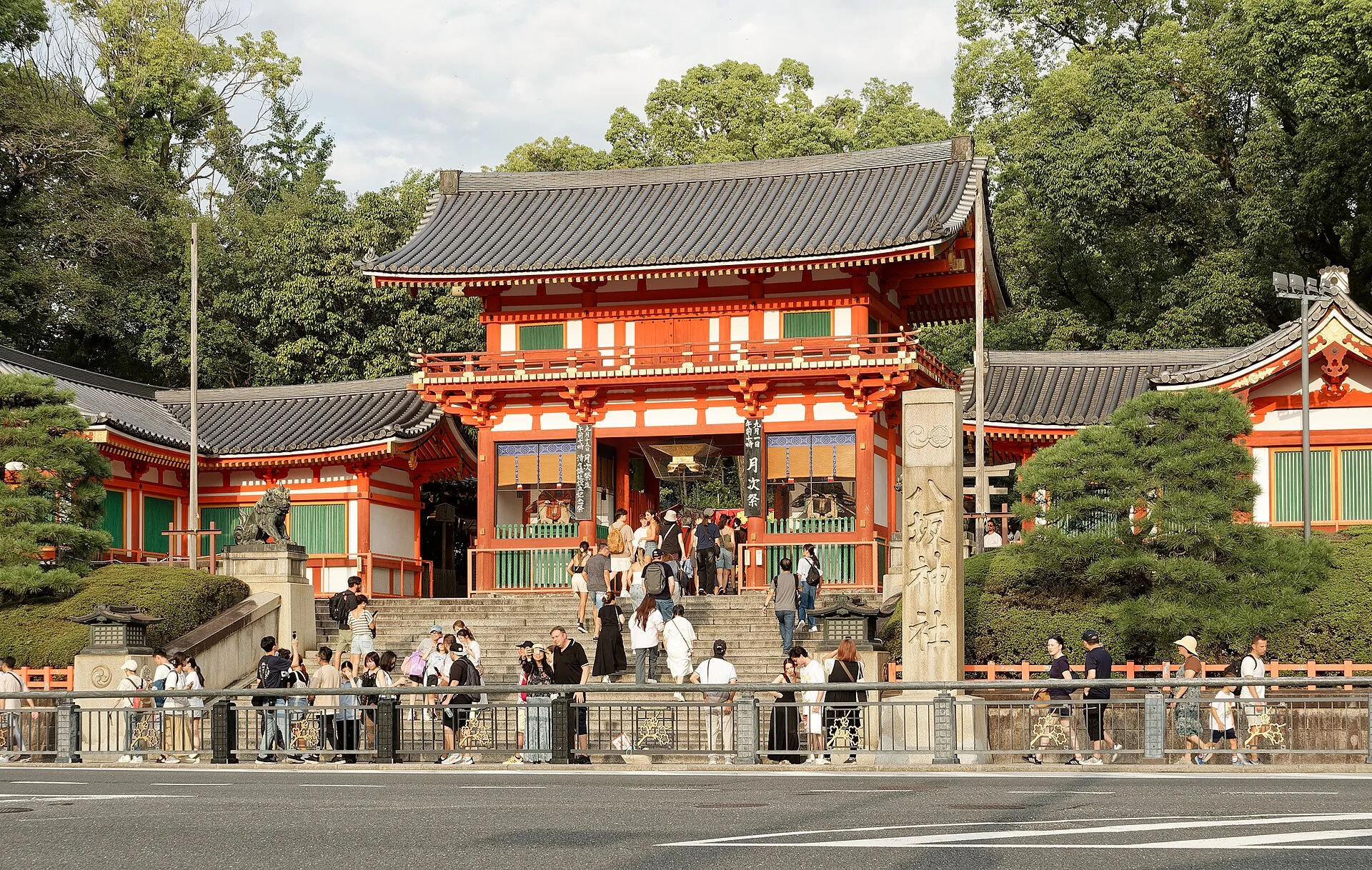
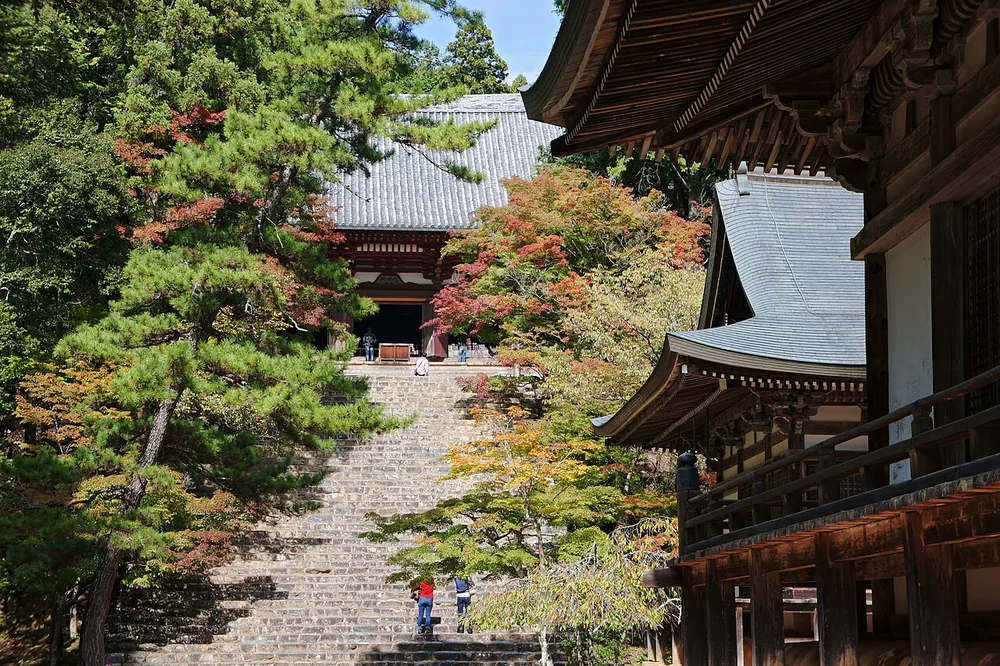
Choose a foothill visit, Okusha return, Yotsutsuji climb or Ichinomine pilgrimage circuit at Fushimi Inari. Plan rail access, mountain steps, sacred sites, breaks, food and shorter routes for children or rain.
- Region & Focus
- KyotoShrines and temples
- Reading Scope
- 32 min read · 16 chapters · 4 Q&As
- Official Verification
- 24 official sources checkedUpdated November 22, 2026
- Key Topics
- ItinerariesRail travelSeasons
Chapter Route Map (tap any stop)
- Choose Okusha, Yotsutsuji or Ichinomine before setting your departure time
- Use JR from Kyoto Station or Keihan from its own network
- Station facilities and luggage can change your route after descending
- Worship at Romon and the Main Hall before the foxes and torii
- Senbon Torii to Okusha is the clearest short return route
- Beyond Kumatakasha and the pond, stairs become the main part of the outing
- Yotsutsuji offers city views and a sensible place to finish climbing
- For Ichinomine, leave time for the full route between peaks
- Mitsurugisha and Gozendani make this more than a summit walk
- Eat in designated places and use proper rest areas
- Footwear, rainwear and daylight for a route of continuous steps
- Children, older companions and wheelchair users: choose route lengths from the same starting point
- Wildlife, photography and pets: follow the sacred grounds’ rules
- Use the same turnaround points for rain, summer heat and winter days
- Climb in daylight and keep evening worship short
- Put the post-climb meal and return journey along the final stretch
- Quick Q&A
Fushimi Inari Taisha’s torii extend from worship at the foot of Mount Inari up into the mountain. Walking through Senbon Torii to Okusha and visiting Ichinomine at 233 meters are different half-day outings. First-time visitors who mainly want the torii can turn back at Okusha. For a view over Kyoto, Yotsutsuji makes a good endpoint. To understand mountain worship and visit the sacred sites between peaks, allow a full mountain walk. Choose your farthest point first and include the descent, meal and return journey. You can then shorten the day to match your energy instead of climbing on because the next point seems almost within reach.
Choose Okusha, Yotsutsuji or Ichinomine before setting your departure time
Worship in the Fushimi Inari grounds is free. With only an hour or an afternoon reservation, focus on Romon Gate, the Main Hall and a short section of Senbon Torii. With about an hour and a half, make Okusha Worship Place a clear turnaround, allowing for worship, photographs, the Omokaru Stones queue and the return to the foothill. These times start on arrival in the grounds and include room for stops and worship. Add the walk from your accommodation to the platform, train waits and breakfast beforehand.
Yotsutsuji suits people willing to climb sustained stairs for a pause overlooking the city. Allow two to three hours in the grounds and return after resting there. If progress is slow, turn back at Kumatakasha or earlier. Both the short and Yotsutsuji routes provide a complete worship visit. You need not add unfamiliar summit paths just to complete the climb.
Kyoto’s official tourism information lists the full mountain pilgrimage as about four kilometers and two hours. The Inari Haneikai association lists its own vigorous walking course at about 135 minutes, including mountain side routes. These give a sense of the walking scale. For individual worship stops, unhurried photographs and food, allow three to four hours for the mountain plus a foothill rest. Match the group’s route to its slowest walker.
If the mountain is your morning’s main activity, have lunch after descending and leave only one optional afternoon activity. To continue to the Chushojima sake district, see the Fushimi Inari and sake brewery day route and choose one meal or tour from it. With a midday admission already booked, take the Okusha route. If the climb is your priority, keep unbooked afternoon plans flexible.
Choose a foothill visit, Okusha return, Yotsutsuji climb or Ichinomine pilgrimage circuit at Fushimi Inari. Plan rail access, mountain steps, sacred sites, breaks, food and shorter routes for children or rain.
Use JR from Kyoto Station or Keihan from its own network
JR Inari Station and Keihan Fushimi-inari Station belong to different companies. The shrine’s access page places the shrine immediately outside JR Inari on the Nara Line, the second stop from Kyoto Station, about five minutes away. From Keihan Fushimi-inari, it is about five minutes east on foot. Around Kyoto Station, compare JR first. Along the Keihan network, arriving and leaving by Keihan is usually simpler.
JR West’s current guidance lists Nara Line platforms 8, 9 and 10 at Kyoto Station, with local, regional rapid and rapid trains for Inari. At the platform, still check that your actual service lists Inari as a stop. The Nara Line has different service types, so a train heading toward Nara is not enough on its own. With children, gather everyone before passing the gates and boarding together.
From Keihan, walk east toward the shrine through streets and across a rail crossing. Follow signals at junctions and take photographs where they do not obstruct others. Even while following a crowd, save the station name and return direction. Arriving by JR and leaving by Keihan after the descent works if your accommodation or next stop is on Keihan. You do not need to return to Kyoto Station just to repeat the outward journey.
For a day trip from Osaka, choose JR or Keihan according to the station near your hotel. On Keihan, check Fushimi-inari stops and transfers in the journey results and include any luggage collection in the return plan. On JR, allow for the transfer walk at Kyoto Station. Intercity travel takes part of the early morning and evening. If the mountain pilgrimage matters, leave other Kyoto districts for another day.
Station facilities and luggage can change your route after descending
Leave luggage at your accommodation or a transport point you will still pass that evening. On mountain steps, you need your hands for clothing, railings and belongings; large cases and shopping bags obstruct movement. If arriving by JR and leaving by Keihan, choose storage to fit that one-way plan. If your case stays at JR, count the walk back for collection as a real part of the route.
The Keihan Fushimi-inari facilities list includes coin lockers but no staffed baggage storage. Locker use depends on available spaces and dimensions. With a large case, arrange storage at your accommodation before setting out. Save the locker’s exit location and collection time so you do not reach the opposite platform and have to find your way back.
The same station has ramps, regular toilets and a wheelchair-accessible toilet, but no elevator or baby facilities. Read the station map separately for the outward and return directions and choose the appropriate entrance. Use the call intercom for station assistance. Some gates or directions are not continuously staffed at certain times. Wheelchair, stroller and special-ticket users should leave time to request help before a connection.
Worship at Romon and the Main Hall before the foxes and torii
Romon Gate is a clear landmark at the main worship area. The shrine’s Romon introduction connects its construction in 1589 with Toyotomi Hideyoshi’s prayer for his mother’s recovery. An ink inscription bearing the same year was found during dismantling repairs in 1973. After a front photograph, examine the building’s proportions from somewhere clear of traffic, then follow the route inward. There is no need to rush straight uphill.
The Main Hall (Honden) was rebuilt in 1499 and is an Important Cultural Property of Japan. Examine the roof, beams and metal ornament from publicly accessible areas, then allow time for worship. The Kyoto tourism association describes its nagare-zukuri construction, with a long roof extension toward the front and Momoyama-style carving under the eaves. A worship porch was added during the Genroku era and attached to the inner worship hall when that was built in 1961. From the front, look first at how far the roof extends toward worshipers, then find the eaves decoration. Treat the hall as more than a passage to the torii. Companions who are not climbing can worship here and arrange to meet the walkers after their descent.
The shrine’s FAQ describes foxes as messengers of Inari Okami, calling these invisible attendants white foxes. Notice objects in the statues’ mouths or beside them, letting children learn through observation. Do not climb, sit on or strike statues, stone lanterns or offering structures. Next, notice the vermilion shared by the gate, shrine buildings and torii. The shrine explains it as an expression of Inari Okami’s power of abundance and notes its long use in palaces, temples and shrines. Torii extend beyond Senbon Torii: the FAQ lists about 10,000 along the mountain approaches, with donors’ gates continuing uphill.
Senbon Torii to Okusha is the clearest short return route
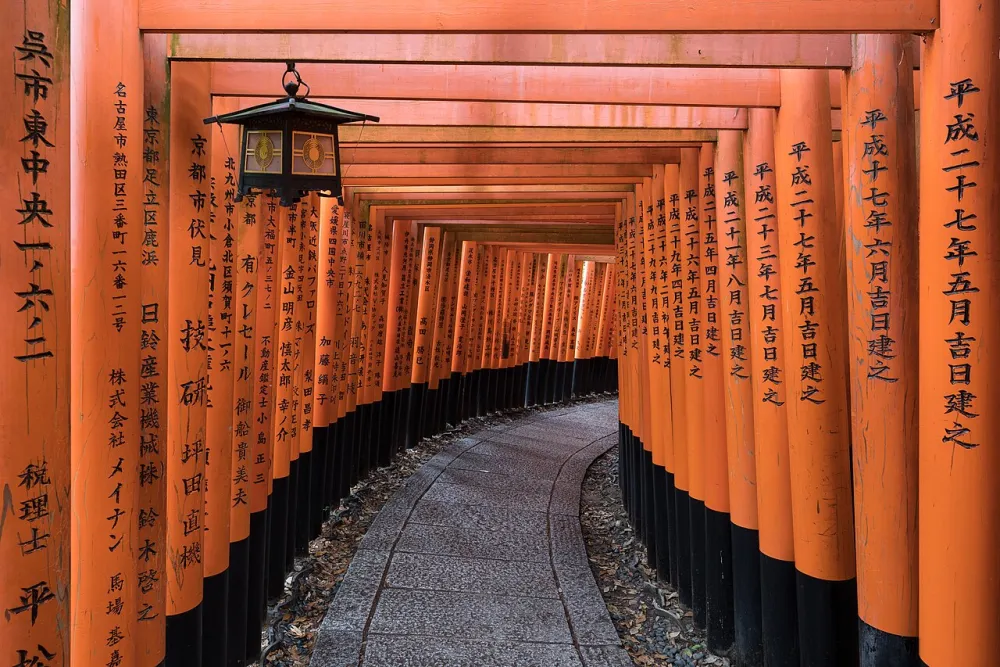
Senbon Torii forms a passage of closely spaced vermilion gates. The shrine’s official introduction traces torii donations to the Edo period, with prayers and thanks gradually forming the route. Keep your camera easy to reach, watch the ground while walking and stop only where there is room. The space between the pillars remains a route for others to pass and worship.
Beyond this section lies Okusha Worship Place, east of the Main Hall in the area commonly called Myobudani. It is a place to worship the three peaks of Mount Inari from afar. For a first visit without a climb, stopping here gives you torii, worship and a sense of how the foothill connects to the mountain. If lunch or another afternoon plan awaits, follow return signs back.
Behind Okusha on the right, the Omokaru Stones are test stones atop a pair of stone lanterns. According to the shrine’s explanation, make a wish, lift a top stone and compare its felt weight with what you expected. Follow the on-site order for this religious custom. If a child tries, an adult should watch the lift and replacement. Wait while others use it; anyone uninterested can stand aside without blocking the path.
Okusha is the first good place for the whole group to reassess. Turn back if legs are tiring, carrying a child has become hard or weather is worsening. A summit sign alone need not prompt another trial stretch. Those continuing should identify the next target and descent time, then agree with the short-route group on a meeting place and latest contact time before separating.
Beyond Kumatakasha and the pond, stairs become the main part of the outing
Continue up the main approach from Okusha toward Kumatakasha. The shrine describes the adjacent pond as Shin-ike or Kodamagaike, with a worship place and a Kumataka Okami otsuka beside it. Here, water, stone monuments and worship positions show how sacred spaces fit into the mountain. Leave room for worshipers when photographing and do not cross the sacred fence toward the pond.
If you already need frequent stops, make Kumatakasha your farthest point and return on the main approach you recognize. Toward Yotsutsuji, more stairs and junctions follow. Save its Japanese name, 四ツ辻. At signs such as Mitsutsuji, 三ツ辻, step to the side, read carefully and continue toward Yotsutsuji. Someone else taking a side path is no reason to change your route.
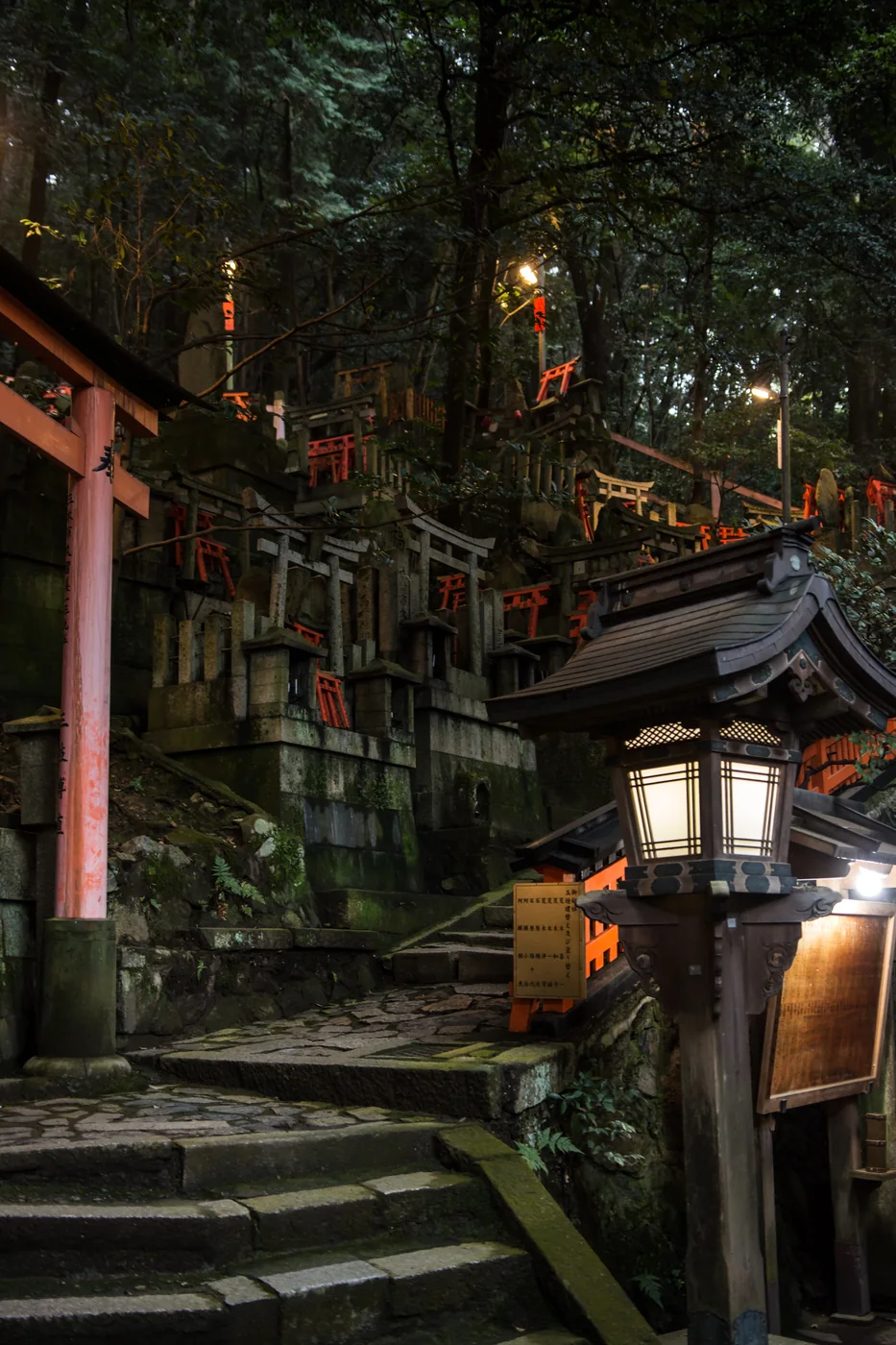
Many otsuka donated by believers stand on Mount Inari, with dense stone monuments beside the path and shrine names of different scales on maps. The shrine FAQ defines a shinseki as a place where a deity was enshrined, a sanctuary once stood and worship later continued. Mountain shrine buildings burned during the Onin War; despite later reconstruction attempts, worship continues at the sacred sites. Otsuka are stones donated by believers bearing the names under which they personally worship the deity. These terms distinguish the old worship sites at the peaks from the clusters of donated stones along the route. For a general pilgrimage, follow the main approach and map any particular sacred site in relation to it.
Yotsutsuji offers city views and a sensible place to finish climbing
Yotsutsuji is a junction and rest point on the approach. The Inari Haneikai route lists it as a viewpoint. If mountain torii and views over Kyoto are your aim, it is a reasonable endpoint. Keep through-routes clear, sit or rest in a suitable place and then decide whether to continue.
By reaching Yotsutsuji from the foothill, you have already linked Senbon Torii, Okusha, the pond and the stairs into a mountain walk. The highest peak, Ichinomine, is primarily a worship destination. Visitors focused on city views need not pursue it just because it is highest. To continue, reserve energy for the rises and falls between peaks, worship stops and the return to Yotsutsuji. The stairs immediately ahead are only the start.
Use a simple decision at Yotsutsuji: continue to Ichinomine only if everyone is still steady, water and daylight are sufficient, and there is no urgent booking ahead. If one is clearly lacking, return. If splitting up, confirm the meeting arrangement again. The shorter-route group can rest at the foothill while climbers keep to the agreed time. Phone location can supplement this, but use a landmark everyone recognizes for the meeting.
Before descending after the view, identify the direction you came from and return signs such as 本社, the main shrine. Mountain junctions can lead elsewhere. On a first visit returning through the shrine, stay on the main route to the familiar foothill. Photograph an on-site sign to compare along the way, checking again at the next junction rather than stopping in a line across the stairs.
For Ichinomine, leave time for the full route between peaks
For the full mountain pilgrimage, follow signs from Yotsutsuji toward Sannomine, then pass Ainomine and Ninomine to Ichinomine. Continue toward Mitsurugisha and Gozendani Worship Place back to Yotsutsuji, then descend. Before starting, open the shrine grounds map for the whole circuit and match each name with its Japanese form. On site, follow the main approaches open that day and the signs.
Sannomine is the Lower Shrine sacred site, venerating Shiragiku Okami. Ainomine is the Kada sacred site, venerating Ise Okami. Ninomine is the Middle Shrine sacred site, venerating Aoki Okami. Stops need not be equal in length; pause according to your own purpose in worship.
The stone torii at Ainomine’s entrance is called the Nune Torii. The gabled forms on either side of the central plaque support resemble hands joined in prayer. The shrine’s individual site guide highlights this design. After the dense vermilion gates, look up at this stone gate to compare donation and architectural forms on the same mountain. Observe from the approach without touching the stonework or entering offering areas.
Ichinomine, the highest point on Mount Inari at 233 meters, is the Upper Shrine sacred site, venerating Suehiro Okami. Identify it, complete your worship and secure your belongings before descending. Reaching the highest point does not finish the circuit. If companions are tired, retrace your route on an approach you recognize and that is open that day.
Mitsurugisha and Gozendani make this more than a summit walk
Mitsurugisha is also called the Choja Shrine sacred site. The shrine says old mountain maps already recorded this place of worship with Tsurugi-ishi and Kaminari-ishi stones. To the left is a well called Yakiba-no-mizu, linked to the legend of forging the Kogitsunemaru sword. Read these stories after worship. View the stones, well and facilities from the open approach; a legendary site is not an outdoor facility for climbing or drawing water.
At Gozendani Worship Place, attention moves from the three peaks to the valley behind them on the north. Their streams meet here. The former Miaedono offering hall and Mikamadono ritual kitchen were places for offerings to the deities of the peaks. The shrine describes the Oyamasai on January 5, when nakagumi sake is offered in ancient-style ritual earthenware on a sacred offering stone about one meter square. Ritual participants then put on ishimatsu adornments and visit the mountain’s sacred sites. After the peaks, the valley helps connect mountain worship with offerings. If rituals interest you, spend longer reading the names of sacred sites and offering facilities.
Different deity names on otsuka reflect the names under which individual worshipers venerate Inari. Stay on public approaches while viewing the stones, torii and forest. Do not enter between otsuka to find an uncrowded photograph. Wait when someone is worshiping or pass in a suitable place, and check photography restrictions before pointing a camera at an offering space.
An official channel formed by local residents, shops, government and others around Fushimi Inari introduces the shrine, torii and mountain worship. Watch alongside the pilgrimage between peaks.
Eat in designated places and use proper rest areas
The shrine’s visitor rules limit eating and drinking in the grounds to designated places, namely the free rest areas. Eating while walking or standing is prohibited. Finish takeaway breakfast before the worship route, and use places permitted by shops for food bought on the approach. Stop at a designated rest point for water or food during the walk. Steps, torii bases and offering tables are not dining tables.
At the foothill, Teichoan stands beside Yashima Pond. The shrine’s introduction describes a rest facility established in December 2017 with terrace seating. If the shorter-route group waits for climbers, include a named place like this in the meeting plan. Use it according to that day’s opening, seats and eating-area signs. A message naming it is clearer than saying to wait beside the pond.
For the full circuit, carry the drinking water you need before climbing. Tea houses and shops can provide supplies when actually open; lunch can wait until after descending. With an afternoon reservation, work backward from it to a latest turnaround. Pack all wrappers, bottles and litter, and seal food inside your bag to avoid attracting animals. Sort out drinks, cameras and rainwear at designated rest points before continuing on stairs.
Footwear, rainwear and daylight for a route of continuous steps
The most useful equipment is familiar, well-fitting footwear with suitable grip. Choose the route length according to how comfortably everyone normally handles stairs rather than testing new shoes on the full circuit during a trip. In a kimono or photograph-focused outfit, choose the gate, Main Hall and a short torii section, ending where footwear and hems remain manageable. For the full climb, wear clothes that allow you to lift your legs freely.
Keep your daypack light enough to carry comfortably, with water, rainwear, an adjustable light outer layer and phone accessible. Summer climbs can be sweaty; drink and adjust clothing at rest points. In winter, stopping changes how cold you feel, so do not bury the jacket at the bottom. With heavy camera equipment, select the lenses you will actually use at the foothill and leave the rest in your original storage location.
In rain, shorten your stride and stand securely before taking out your phone. Watch wet leaves, stone surfaces and step edges. Umbrellas can hit others between torii and on narrow paths. Let approaching walkers pass before moving, use rainwear that leaves both hands available if you need balance, or shorten the route. Arrange meals and rests earlier so there is time to return to your accommodation if shoes and socks become wet.
Check weather and sunset before departure, then work backward to the latest time to leave the foothill. For your first full circuit, walk in daylight when signs and the ground are clear. If you arrive late, switch to the short Okusha route. The mountain is not high; stairs, worship and stops account for the time. Keep daylight for walking and browse foothill shops afterward.
Children, older companions and wheelchair users: choose route lengths from the same starting point
With toddlers, focus on the Main Hall and a short torii section, reassessing at Okusha. Children who have climbed may need close supervision or carrying on the return, so have one adult save energy. If splitting, use a foothill rest point, restaurant or station for the meeting and agree how to make contact if delayed. Do not leave the shorter-route group standing on the approach throughout the wait.
Strollers can connect foothill transport and rests, but require a separate plan at the stairs. The shrine prohibits leaving strollers outside designated places, so follow on-site parking guidance. If everyone wants to enter the torii, decide who handles the stroller and child first. Avoid discovering that neither adult can manage a bag after one takes the child and the other carries the stroller. A shorter route still provides worship and torii.
Older companions comfortable on level ground but not with sustained descents can complete their main worship at the Main Hall while others go to Okusha. If they join to Okusha, count rests and the return, and do not require them to match someone else’s climbing speed. After Higashiyama slopes or a climb the day before, a shorter version can account for two days’ accumulated effort.
Wheelchair users should first plan suitable station exits from the station maps, then focus worship on public foothill areas. Check the on-site route separately for steps at Senbon Torii and higher paths. Keihan’s ramps and wheelchair-accessible toilet meet some station needs. For a continuous step-free route, tell the shrine your wheelchair needs, group size and desired worship areas before departure to establish the usable area for the day.
Wildlife, photography and pets: follow the sacred grounds’ rules
The shrine prohibits approaching or feeding wild birds and animals. Keep your distance, secure food and keep children beside an adult rather than pursuing a close photograph. Kyoto City’s guidance for wild boar encounters is to avoid provoking the animal, stay calm, move away slowly and keep yourself safe. If an animal blocks the path, you can stop and turn back instead of detouring through the forest to continue.
Photography restrictions include not obstructing narrow approaches, entering no-photography areas or taking commercial photographs without permission. Drones are prohibited. For a full row of torii, wait for a suitable gap or place your subject within the space available. Tripods, long hems and repeated group poses must give way to passage. If photographs need more time, shorten the route and stay in the sections you most want to photograph.
Smoking and open flames are prohibited in the grounds, as are climbing lanterns, damaging torii or trees, and entering buildings or fenced areas without permission. Stay outside spaces marked for private offerings or no entry. A road that looks passable is not automatically open to visitors. Mountain worshipers have their own order of ritual; let them use worship places first when you are photographing.
The shrine also prohibits walking dogs or bringing pets to worship, with exceptions for necessary assistance dogs and similar cases. Arrange care before deciding who enters the grounds. Do not leave pets with strangers or waiting in a car. Assigning mountain walking and pet care before departure is easier for the group than changing plans at the torii.
Use the same turnaround points for rain, summer heat and winter days
In persistent light rain, make Okusha your farthest target and return sooner if footing becomes unsteady. Senbon Torii remains on the main route. Save Yotsutsuji and the circuit behind the peaks for better ground and visibility. With heavy rain, strong winds or disrupted trains, change the half-day to something near your accommodation rather than setting out in rain for a prewritten summit plan.
In midsummer, reduce sustained uphill effort. Start earlier in daylight, eat breakfast and carry water. Pause at both Okusha and Yotsutsuji to assess everyone’s energy. If heat has left you wanting only to finish at Yotsutsuji, descend for food and remove the full circuit. Rest at your accommodation in the afternoon and choose dinner somewhere convenient for transport.
In autumn, visitors interested in ritual should distinguish the foothill and mountain fire festivals. The Kyoto tourism association describes the shrine’s November 8 Hitaki-sai as a ritual of thanks after harvest, prayers for blessings and purification of wrongdoing. Gozendani Worship Place separately lists a fire festival at 2:00 p.m. on November 28. These are different dates and places. If ritual is your travel focus, make your chosen event the fixed point, then select Okusha, Yotsutsuji or the full circuit around it. For an ordinary mountain visit, daylight and stamina still determine distance.
In winter, set departure for the shorter daylight, with clothing easy to remove uphill and add at rest. Follow instructions to reroute or return if there is ice, snow or another access restriction. If footwear and ground conditions do not match, keep foothill worship. You need not climb higher before accepting that the full circuit is unsuitable that day. Tidy wet umbrellas, coats and shoe soles before reaching the station for a more comfortable train ride.
Climb in daylight and keep evening worship short
Kyoto’s official information lists no closing time for the shrine, with worship available year-round. If arriving in Kyoto late, foothill worship can form part of the evening. For a first mountain pilgrimage, choose daylight. Seeing the steps and recognizing junctions and the return route at night requires more effort than studying a map in daylight. To see the vermilion gates, you can arrive while it is still light and have dinner after descending.
For a short evening route, save the return station and last usable service first. Before leaving your accommodation, decide the farthest familiar point. If lighting, weather or the group’s condition is unsuitable on arrival, reduce the visit to Romon and the Main Hall, then return. Do not turn a night photograph stop into a full climb at the torii. Keep enough phone battery and aim a flashlight at your own footing, away from worshipers.
Open paths and counter services have different hours. The shrine’s current prayer page lists formal prayers generally from 8:30 a.m. to 4:30 p.m., with registration completed by about 4:00 p.m.; New Year and festivals follow separate arrangements. Formal prayers require the chosen ritual offering fee. The Kyoto tourism association lists the amulet counter from 8:00 a.m. to 6:00 p.m., so fit amulet purchases into that period before or after the walk. If formal prayer is your priority, register first, then plan the mountain. After leaving at night, keep voices low in surrounding streets and use public roads to your chosen station.
Put the post-climb meal and return journey along the final stretch
For a half-day based at Kyoto Station, take JR after breakfast, worship at the Main Hall, follow Senbon Torii to Okusha and continue to Yotsutsuji if energy allows. Retrace the route, sort your belongings at the foothill, have lunch and return to Kyoto Station. If choosing Ichinomine, move lunch later and leave only rest at your accommodation or a nearby activity in the afternoon. Let the mountain determine the day’s length.
If staying on Keihan, walk to Fushimi-inari Station after descending and choose the platform for your accommodation. The station currently lists platform 1 toward Sanjo and Demachiyanagi and platform 2 toward Yodoyabashi and Nakanoshima. Confirm your destination before the gates and buy the required ticket or prepare your IC card. After a long walk, you may just want to sit down. Identifying the platform before finding a waiting place is calmer than asking the direction at the train door.
If you agreed to eat in the Fushimi sake district, use Keihan for the second half of the day rather than crossing back to Kyoto Station to start a new route. With a later booking, check the actual time once back at the foothill and use the original booking channel for changes. Take an extra hour spent on the mountain directly from optional afternoon plans. Before leaving the shrine, pack amulets, camera and outer layers, confirm where luggage is stored and check that everyone has descended. Keep collection, food and the station in the same direction where possible, sparing tired companions another walk between the two stations. Pass through the gates together once everyone has arrived.
A few useful answers
How do I get to Fushimi Inari from Kyoto Station?
Take the JR Nara Line to Inari Station, two stops and about five minutes from Kyoto Station. The shrine is right outside. If you’re staying along the Keihan Line, get off at Fushimi Inari Station and walk east for about five minutes.
Can I see the Senbon Torii if I only have an hour?
An hour at the shrine gives you time to pay your respects at the main hall and walk the first stretch of the Senbon Torii gates. With about 90 minutes, you can walk through the gates to Okusha, stop for prayers and photos, and head back down to the foot of the mountain.
Where should I go for a view over Kyoto from Fushimi Inari?
Head to Yotsutsuji for a view over Kyoto. Allow two to three hours to walk up through the Senbon Torii gates and past Okusha, take a break at Yotsutsuji, and come back down. If the steps are already tiring, turn back at Kumatakasha.
How long does the full Fushimi Inari hike via Ichinomine take?
The full pilgrimage route is about 4 km and takes roughly two hours of walking. The loop from Yotsutsuji reaches the 233-meter summit at Ichinomine before returning to the junction for the descent. Set aside three to four hours for shrine visits, photos, and breaks along the way.
Official information and references
Sources used in this guide.
- Fushimi Inari Taisha: access
- Fushimi Inari Taisha: grounds map and mountain sacred sites
- Fushimi Inari Taisha: Senbon Torii
- Fushimi Inari Taisha: Okusha Worship Place and Omokaru Stones
- Fushimi Inari Taisha: Kumatakasha
- Fushimi Inari Taisha: Ichinomine
- Fushimi Inari Taisha: Ninomine
- Fushimi Inari Taisha: Ainomine
- Fushimi Inari Taisha: Sannomine
- Fushimi Inari Taisha: Mitsurugisha
- Fushimi Inari Taisha: Gozendani Worship Place
- Fushimi Inari Taisha: Teichoan
- Fushimi Inari Taisha: Romon Gate
- Fushimi Inari Taisha: Main Hall
- Fushimi Inari Taisha: FAQ
- Fushimi Inari Taisha: visitor rules
- Fushimi Inari Taisha: formal prayer times and registration
- Kyoto official tourism Navi: Fushimi Inari Taisha
- JR Central: free grounds access and opening information
- Inari Haneikai: vigorous Mount Inari walking course
- JR West: Kyoto Station to Fushimi Inari Taisha
- Keihan Railway: Fushimi-inari Station platforms and facilities
- Kyoto City: wildlife advice and wild boar encounters
- Kyoto City release: official Fushimi Inari channel and main video