Planning a visit to Tenryu-ji in Kyoto's Arashiyama district? Get Sogenchi Pond Garden and temple hall fares, Cloud Dragon Dharma Hall dates, 2026 autumn early-entry details, the January 2, 2027 closure, and a half-day route linking the North Gate, Bamboo Grove, and Togetsukyo Bridge.
- Region & Focus
- KyotoShrines and temples
- Reading Scope
- 22 min read · 11 chapters · 6 Q&As
- Official Verification
- 19 official sources checkedUpdated November 22, 2026 at 08:00 AM GMT+8
- Key Topics
- First tripItinerariesSeasons
Chapter Route Map (tap any stop)
- Tenryu-ji Tickets and Opening Hours
- Main Street Gate or Bamboo Grove North Gate?
- Reading Sogenchi Pond: Mountains First, Then Dragon Gate Waterfall
- What the ¥300 Halls Add-On Gets You: Daihojo, Shoin, and Tahoden
- Cloud Dragon in the Hatto and New Year Closures
- Autumn Early Entry and Rainy-Day Adjustments
- Choosing an Entrance with Strollers, Wheelchairs, or Slower Pace
- Getting There from Kyoto Station, Shijo-Omiya, or Osaka-Umeda
- Fitting Tenryu-ji into a Half-Day Arashiyama Itinerary
- Booking Temple Zazen Meditation or Sutra Copying
- Why the Daihojo and Sogenchi Pond Are Centuries Apart
- Quick Q&A
On a first visit to Arashiyama's Tenryu-ji, a ¥500 garden ticket (high school and up) covers Sogenchi Pond Garden and the Hyakkaen Garden. Add ¥300 to view the pond from inside the Daihojo and explore the temple halls. Matazo Kayama's ceiling painting, Cloud Dragon, sits in a separate building—the Hatto (Dharma Hall)—which sells standalone ¥500 tickets on open days. If the gardens are your priority, enter from the main Arashiyama street side and exit through the North Gate straight into the Bamboo Grove. If you're coming specifically for the dragon painting, check the Hatto schedule before setting out and budget a few extra minutes to walk between the Hatto and the garden ticket booth.
Tenryu-ji Tickets and Opening Hours
On most maps, the main gate, garden ticket booth, and Dharma Hall entrance all cluster around the "Tenryu-ji" pin—walk through the Somon gate facing Nagatsuji-dori, and you still have a short temple approach before reaching the ticket counters. The garden booth sells tickets to Sogenchi Pond Garden and Hyakkaen Garden; admission is ¥300 for elementary and junior high students and free for preschoolers. The grounds generally open daily at 8:30, with the garden closing at 17:00 and ticket sales ending at 16:50. Visitors presenting a recognized disability certificate at the ticket counter receive ¥100 off garden admission for themselves and one companion.
To enter the Daihojo (Main Hall), Shoin, and Tahoden, buy the halls add-on at the Kuri Reception counter. That single ¥300 upgrade on top of a garden ticket covers all three connected buildings, bringing the total to ¥800 for high schoolers and adults. Since the three halls are bundled together, decide before stepping inside whether you want the full interior tour, then queue at the right booth. If you're heading to the Bamboo Grove afterward, tour the halls first and walk out toward the North Gate to avoid backtracking from Hyakkaen Garden back to the Kuri.
Matazo Kayama's Cloud Dragon hangs in the Hatto (Dharma Hall), where tickets are sold at a booth on the hall's west side (preschoolers enter free). Hatto admission alone is ¥500; pairing it with the garden brings the adult total to ¥1,000, and seeing all three areas comes to ¥1,300. If some people in your group want the architecture tour while others prefer photographing the Bamboo Grove, tour Sogenchi Pond together first, then pick an easy meeting spot outside the paid zone—like the courtyard outside the Kuri or Randen Arashiyama Station—so both groups can reunite effortlessly.
In the afternoon, ticket sales cut off earliest at the Hatto, followed by the temple halls, and finally the garden. To fit all three in, reach the main-street entrance before 14:30 and visit the Hatto first, then move on to the Kuri and garden—building in time to locate booths, wait in line, and remove your shoes for the halls. Arriving after 16:20, you might still catch the halls counter before cutoff, only to have barely ten minutes inside; if you walk at a slower pace or want time for pond photos, skip the add-on and stick with a garden ticket. The grounds close at 17:00, leaving just ten minutes if you buy at the 16:50 cutoff.
If Tenryu-ji is one stop in a fuller day, budget your time based on where you start and which tickets you buy. Stepping off the Randen tram, allow 40–60 minutes to stroll the garden, linger by the pond, and exit via the North Gate into the Bamboo Grove. Plan 70–90 minutes for the garden plus temple halls, or 90–120 minutes to include the Hatto and any waiting lines. Treat those numbers as baseline buffers—framing photos by the water, navigating tour groups, or taking a breather will quickly eat into them.
Bring Japanese yen in cash for all ticket counters. Tenryu-ji's own restaurant reservation page explicitly notes that temple admission fees cannot be paid by credit card. Train tickets, meals, and temple entry are billed separately, so even if you pay by card for trains and lunch, keep enough cash on hand for the garden, halls, and Hatto. Groups planning to split up should make sure everyone carries their own ticket cash before parting ways.
| Area | Admission | Hours | Last Ticket Sale |
|---|---|---|---|
| Gardens (Sogenchi Pond, Hyakkaen) | ¥500 high school & up, ¥300 elementary/junior high, free for preschoolers | 8:30–17:00 | 16:50 |
| Temple Halls (Daihojo, Shoin, Tahoden) | ¥300 add-on to garden ticket | 8:30–16:45 | 16:30 |
| Hatto: Matazo Kayama's Cloud Dragon | ¥500 separate ticket, free for preschoolers | Open days 9:00–16:30 | 16:20 |
Planning a visit to Tenryu-ji in Kyoto's Arashiyama district? Get Sogenchi Pond Garden and temple hall fares, Cloud Dragon Dharma Hall dates, 2026 autumn early-entry details, the January 2, 2027 closure, and a half-day route linking the North Gate, Bamboo Grove, and Togetsukyo Bridge.
Main Street Gate or Bamboo Grove North Gate?
Save two separate pins on your map app: "Tenryu-ji" and "Tenryu-ji North Gate." The main pin puts you on the Nagatsuji-dori side near Randen Arashiyama Station and Togetsukyo Bridge, where the approach leads to the garden ticket booth, Kuri, and Hatto—look for the building with a large white-walled gable crossed by dark timber beams, which is the Kuri. The North Gate opens directly into Hyakkaen Garden, with the Bamboo Grove right outside. Telling friends to meet "at the Tenryu-ji gate" almost guarantees splitting up at opposite ends, so meet outside the Randen station or share the exact pin for your chosen entrance.
Enter from the main-street side when Sogenchi Pond is your first priority. Start on the pond's east shore facing the Daihojo, then follow the walking paths uphill through Hyakkaen Garden to the North Gate. Because Hyakkaen is laid out along a gentle natural slope, you'll climb gradually as you head toward the bamboo. This direction also makes it easy to knock out the indoor halls or Hatto near the front before walking north. Once out the North Gate, you can turn toward Nonomiya Shrine or head toward Okochi Sanso Garden for a longer walk outside the temple.
Other times, starting at the North Gate flows better. If you arrive via JR Saga-Arashiyama Station and want to photograph the Bamboo Grove before shops open, walk past Nonomiya Shrine first. Enter through the North Gate into Hyakkaen Garden, stroll downhill toward Sogenchi Pond, and exit onto Nagatsuji-dori right next to Togetsukyo Bridge and lunch spots. Since the Bamboo Grove is a public path, early arrivals can walk through it first and enter the North Gate once its ticket booth opens.
If you have a set lunch reservation or a specific Randen or Hankyu train to catch, work backward to choose your exit gate. Dining south of Togetsukyo Bridge means budgeting time to cross the river, making the main-street exit far more convenient. Heading toward Rakushisha and Jojakko-ji instead? Leaving by the North Gate saves you a repeat trip up Nagatsuji-dori. Just avoid setting a meetup point right in the bottleneck of the North Gate—pick somewhere anyone can reach regardless of which path they took.
The City of Kyoto maps the Bamboo Grove as roughly 400 meters from Nonomiya Shrine to Okochi Sanso Garden, with Tenryu-ji's North Gate sitting right along that stretch. Note that walking times listed on the temple's visitor page are measured from the Nagatsuji-dori entrance, so adjust your navigation accordingly. Going "past Togetsukyo Bridge up to the North Gate" adds an uphill walk into the bamboo; if lunch or a scenic train departure is coming up fast, stick to the main-street entrance to skip the detour. You can always save Okochi Sanso or the park observation deck for a westward walk after finishing at the temple.
Reading Sogenchi Pond: Mountains First, Then Dragon Gate Waterfall
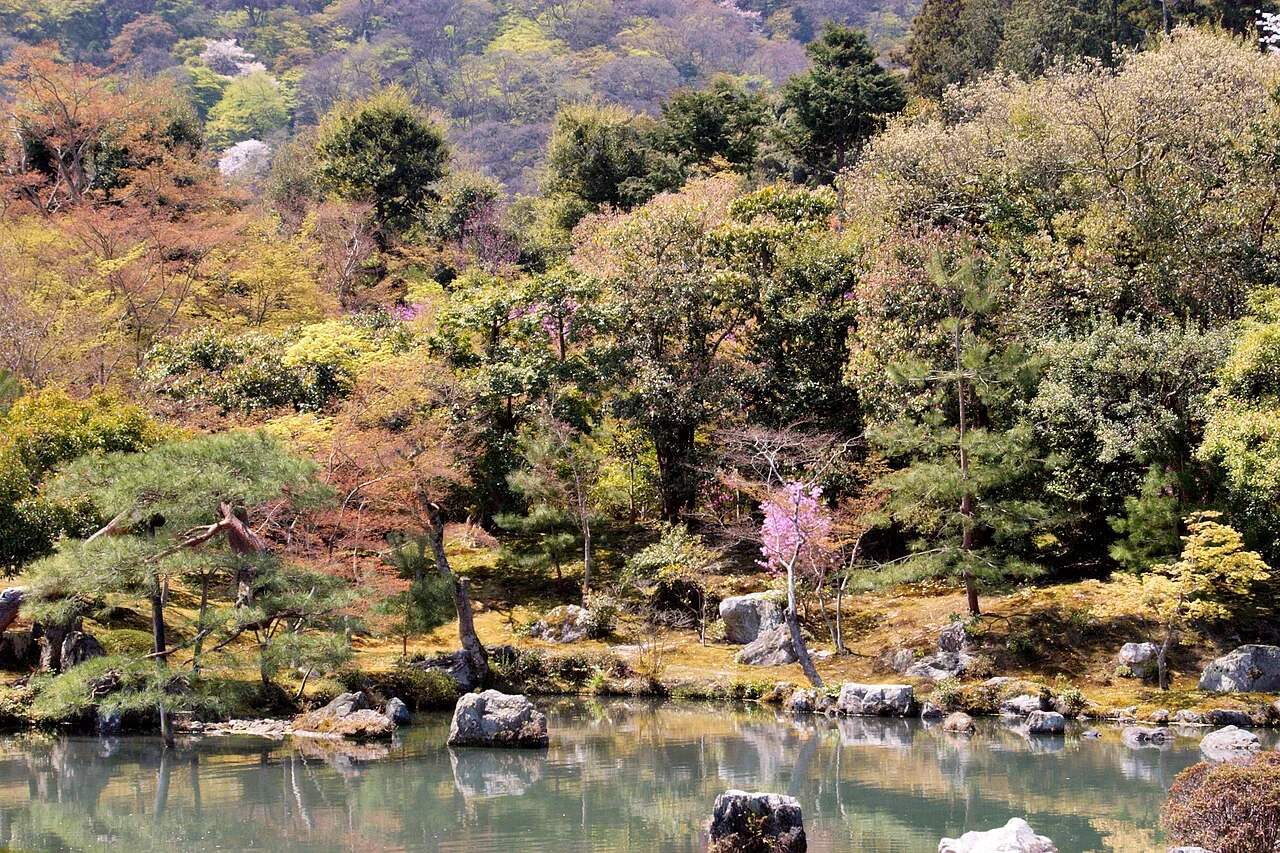
At the pond's edge, orient yourself facing west alongside the Daihojo's front veranda. From the east bank, your gaze skims across the water, opposite rock clusters, and dense foliage before lifting onto the hills beyond the temple walls. Mount Arashiyama (across the Oi River) and Mount Kameyama (just west of the garden) align directly along this sightline. The water's edge, shoreline trees, and distant peaks each occupy a distinct layer of depth, making this the clearest spot to understand borrowed scenery—the distant hills stay outside the garden, while the foreground water, stone, and foliage draw them right into the composition.
Take a few steps along the lakeside path and look back. A hillside ridge that stood clear a moment ago may vanish behind a foreground trunk, and the shoreline curve shifts with every angle. Move to another open viewing spot, locate the hills again, and notice how much bank and distant slope each vantage reveals. For photos, step back far enough to frame both shore and hillside before focusing in on one or two shoreline stones. Even on overcast days this comparison works well—when the distant ridge softens into haze, the dark shoreline rocks stand out even sharper.
Looking from the Daihojo toward the far center of the pond, scan for two tall upright rocks—that is the centerpiece of Ryumonbaku, the Dragon Gate Waterfall. The rockwork draws on the Chinese legend of a carp leaping a waterfall to transform into a dragon. According to temple notes, the stone representing the carp sits just to the side of the cascade, poised mid-leap. When you see the row of rocks near the bank, lock onto the big vertical boulders behind them first, then drop your gaze to the stone beside them. Right after rain, wet rock faces and shadowed crevices make the composition even easier to pick out from the main walkway.
If you're visiting with kids, turn rock-spotting into a quick game. Ask them which two tall boulders across the pond look like a gate, then have them spot the smaller stone beside the water's surface. If real koi happen to swim past, use them to tell the legend behind the stones. Whenever the path gets busy behind you, step along to a wider spot before stopping—and keep the rock-hunting safely on the open walkways, holding young kids' hands well away from the water's edge.
The pond's name also traces back to founding abbot Muso Soseki. Temple records note that when workers dredged the pond bed, they uncovered a stone stele inscribed with the Zen phrase Sogen itteki ("one drop from the source of Cao"), lending the pond its name. Tenryu-ji's grounds guide also references the 1799 woodblock-illustrated Miyako Rinsen Meisho Zue, whose depiction of the garden matches much of the layout you can still trace today. Browsing those illustrations on the official site before your trip makes it easy to connect the pond and Daihojo into a single mental map once you arrive.
Walking from the Daihojo toward the North Gate, trees gradually close off the pond view as Hyakkaen Garden begins winding uphill between closer plantings. Travelers who want both halves should linger by Sogenchi first, then treat Hyakkaen as a relaxed stroll out toward the bamboo. In bloom seasons, the seasonal shrubs lining the paths provide plenty to look at without rushing. Since this is a strolling pond garden, simply follow the designated open loop—or, if you prefer less walking, take in the main pond view and head straight back out to the main street.
What the ¥300 Halls Add-On Gets You: Daihojo, Shoin, and Tahoden
Stepping inside the Kuri, look straight across the entrance hall. Tenryu-ji highlights the Kuri's white-plaster gable and heavy timber beams as one of the temple's signature sights, and inside the foyer hangs a bold painting of Daruma by Seiko Hirata. Companions who only want the garden can admire the exterior facade from outside the booth while ticketed visitors follow the halls route. Take off your shoes at the marked shoe area—socks are warm comfort in fall and winter—and stow wet umbrellas where indicated so others have room to step out of their footwear behind you.
The Daihojo is the temple's largest building, completed in its current form in 1899. Its east side faces the Chumon gate as the formal front, while its west side opens onto a broad wooden veranda overlooking Sogenchi Pond. That veranda is the main reason to buy the ¥300 halls upgrade. Looking out from inside, the eaves and floorboards crop the garden into a low horizontal frame; step onto the outer edge and look up, and the hills rise clear above the roofline. Sitting or standing depends on crowds and roped-off zones, and shifting between pillars lets you see how the timber posts divide the pond into distinct frames.
Sliding fusuma doors divide the Daihojo's east and west rooms, featuring Motsugai Wakasa's 1957 Cloud Dragon paintings sweeping laterally across the panels—unlike the overhead circular dragon in the Hatto. Temple records also note that the seated Shakyamuni Buddha enshrined in the central chamber is a designated Important Cultural Property older than Tenryu-ji itself, rescued through centuries of fires. Looking down the open corridor across the central bay and side rooms reveals the building's six-room layout; when certain fusuma panels are closed, simply view them from the visitor walkway.
Deeper inside lies the Kohojo, also called the Shoin, completed in 1924. From there, a covered corridor climbs the slope toward Tahoden Hall, passing a view of a tea house along the way. Built in 1934, the current Tahoden houses a statue of Emperor Go-Daigo on grounds where, according to temple tradition, the emperor studied in his youth. Knowing whom the hall honors makes the walk up that covered gallery far more meaningful—connecting everyday residential quarters to the memorial space above.
If you only have 20 minutes left before leaving, skip the interior add-on—the regular garden ticket already gives you the classic pond-to-mountain vista from the shore. When combining the halls with evening plans, give yourself at least 30 minutes for the add-on alone, factoring in removing and putting on shoes plus walking the sloped corridors. Check local signage before taking photos, keep doorways and hallways clear, and never block handrails while lining up a shot. Note that temple halls may close section by section during ceremonies; the temple's visitor page lists scheduled suspension periods.
Cloud Dragon in the Hatto and New Year Closures
Standing beneath the Hatto ceiling, notice where the dragon's eyes sit in the composition, then walk a few paces along the open floor and look back up at them. Coiled inside a double circle, the dragon appears to meet your gaze from every angle—what the temple calls Happo-nirami no Ryu, the dragon glaring in all eight directions. Japanese painter Matazo Kayama created the work in 1997 across 159 cedar ceiling panels to mark the 650th anniversary of founding master Muso Kokushi's passing. Measuring about nine meters across, the painting feels immense right beneath its center; stepping out toward the edges lets you take in both rings at once.
An earlier Cloud Dragon by Shonen Suzuki once hung on this ceiling before suffering damage, leaving only fragments that occasionally go on special display in the Daihojo—such as a 2026 public showing scheduled from March 1 to 22. When browsing photos or older travel blogs, check the artist, medium, and building carefully. Lateral painted sliding doors are fusuma inside the Daihojo; only the giant overhead circle belongs to Kayama's painting in the Hatto.
The Hatto normally opens on Saturdays, Sundays, and Japanese national holidays from 9:00 to 16:30, with last ticket sales at 16:20. For autumn 2026, it opens daily from September 19 through December 6 before reverting to weekends and holidays. Note that Saturday, January 2, 2027 is listed as a Hatto closure day—if you're visiting over New Year's specifically for the ceiling painting, pick another open date from the official Cloud Dragon schedule. Because the garden, halls, and Hatto each run their own ticket desks, you can still spend a Hatto closure morning at the pond garden or Tahoden.
On early-opening autumn mornings at 7:30, you'll have time to spare before the Hatto opens. You can focus on the pond and Hyakkaen Garden, or explore the main-street half of the garden first, hit the Hatto at 9:00, and walk straight back out toward Togetsukyo Bridge. If you want one continuous walk into the Bamboo Grove, start at the Hatto at 9:00, then buy a garden ticket and follow the grounds up to the North Gate. The same logic holds in the afternoon: since the Hatto closes 30 minutes earlier than the garden, prioritize the painting the later you arrive.
Autumn Early Entry and Rainy-Day Adjustments
From November 14 to 30, 2026, Sogenchi Pond Garden opens early at 7:30—exclusively via the main-street garden booth for that first hour, while the North Gate keeps its regular 8:30 opening. To beat crowds in the Bamboo Grove, walk the grove at dawn and enter the temple via the North Gate at 8:30. If mirror-calm autumn maples over Sogenchi are your priority, reverse the plan: queue at the main-street booth for 7:30 entry and head into the bamboo whenever you finish. For either option, check hourly forecasts and live conditions on the Kyoto Sightseeing Comfort Map.
During peak foliage, you can decide on the spot that morning whether to tackle the garden or the Bamboo Grove first—just note where the North Gate queue forms along the public bamboo path. Traveling with older relatives? Entering and exiting via the main street around Sogenchi Pond avoids the steeper paths through Hyakkaen Garden. For an afternoon visit, schedule the garden before Togetsukyo Bridge, focus solely on the pond if you arrive close to 16:00, and catch twilight over the river afterward. Kyoto City's Tenryu-ji autumn foliage page tracks seasonal leaf color so you can book your stay early and pick your route once you're in town.
Lush early-summer foliage and fiery autumn maples along the near bank partially veil the distant mountains, whereas bare winter branches reveal the full stone lines and hillside contours. In spring, pair the blossom reflections on Sogenchi with the contrasting light under the bamboo canopy outside. On days with shifting sun and clouds, watch hillside visibility and wind ripples across the pond—and step clear of narrow walkways while waiting for light to break. In drizzle or rain, keep your framing tighter along the wet shoreline rocks looking into the trees. Even once your dates are locked, these details help you pick the right angles.
Umbrellas, narrow paths, and slopes slow every step down compared to a dry day. In light rain, stick to the main-street gate, linger around Sogenchi Pond, and consider adding the temple halls for covered walking along the corridors—just wear shoes with solid grip for slick wet stone. In heavy rain, push the Bamboo Grove and Kameyama Observation Deck to another day, double-check operating hours for the Hatto and temple halls, and stick to covered interiors. Remember you'll cross brief open stretches between indoor halls, so drip-dry or fold umbrellas before stepping onto the walkways.
Driving in during early-entry season comes with a catch: on November 21–23, 28, and 29, 2026, temporary traffic restrictions close Nagatsuji-dori from 13:00 to 17:00, blocking all entry and exit at Tenryu-ji's parking lot. Anyone with a rental-car return deadline on those dates is better off taking the train into Arashiyama. Normally, temple parking stays open until 17:00 at ¥1,000 per standard car (first-come, first-served), so even if you drive in early, count backward from afternoon road closures so you aren't trapped inside.
Choosing an Entrance with Strollers, Wheelchairs, or Slower Pace
According to the Kyoto Prefecture Tourism Federation, portions of the garden are wheelchair-accessible, and accessible restrooms are available on-site. Plan a round-trip from the main-street entrance to Sogenchi Pond, and ask staff at the garden ticket booth (Teien Uketsuke) to point out accessible paths and restroom locations—having a quick translated request for the wheelchair-accessible route ready on your phone makes communication effortless. Because Hyakkaen Garden slopes noticeably between the pond and North Gate, anyone using a walker or unsteady on gravel should visit the Bamboo Grove via the North Gate separately rather than cutting straight through.
With young kids and a stroller, start from the main-street side as well. Before buying tickets, confirm with staff which garden paths allow strollers and whether stroller parking is available if you want to switch to a baby carrier. The smoothest move is sending one adult to buy tickets while the other keeps the kids and gear tucked safely off the path. Once you reach Sogenchi Pond, decide whether to push up the slope or head straight back out to Nagatsuji-dori for nap time or a sit-down meal. If two adults want to take turns visiting the indoor halls, meet outside the Kuri before one enters—don't wheel a stroller all the way to the shoe-removal foyer.
On rainy days with puddles, loose gravel, or wet steps, let the slowest walker set the pace and wait in wider spots just past them. If anyone in your group will need frequent seated breaks, make the garden your only ticketed stop for the half-day, leaving plenty of cushion for a relaxed sit-down lunch or a short riverfront stroll. Keep in mind that walking from Hankyu Arashiyama Station requires crossing Togetsukyo Bridge, whereas Randen Arashiyama Station drops you right on the temple side—choosing your return rail line directly affects total steps.
Getting There from Kyoto Station, Shijo-Omiya, or Osaka-Umeda
From Kyoto Station, the fastest ride is the JR Sagano Line to JR Saga-Arashiyama Station—about 11 minutes on rapid trains per Kyoto City transit guides, with local trains stopping there too. Give yourself extra time to find the right platform, especially if transferring from the Shinkansen or another JR line. From the station, Tenryu-ji estimates a 13-minute walk. If travel companions take different trains, pick one specific JR station exit as your meetup spot so nobody gets confused by three different companies operating stations named "Arashiyama."
Staying around Shijo-Omiya? Hop on the Keifuku Electric Railroad's Randen Arashiyama Main Line straight to the terminal, Randen Arashiyama Station. You'll step out right onto Nagatsuji-dori on Tenryu-ji's doorstep, with the ticket booths just up the approach. If you're along the Kyoto Subway Tozai Line, ride to Uzumasa Tenjingawa Station and transfer across to Randen-Tenjingawa Station bound for Arashiyama. Going out of your way from Kyoto Station just to catch the Randen adds an unnecessary transfer—for early-morning garden entry, JR is much more direct.
From either Osaka-Umeda or Kyoto-Kawaramachi, take the Hankyu Kyoto Main Line and transfer at Katsura Station onto the Hankyu Arashiyama Line. Hankyu's Arashiyama Station sits across the river, about a 15-minute walk from the temple according to Tenryu-ji. Make the river crossing over Togetsukyo Bridge part of your arrival stroll—or leave extra time for older companions to rest and snap bridge photos before heading in. If you're heading back toward Kyoto Station afterward, exiting out the North Gate toward JR Saga-Arashiyama saves you from crossing the bridge twice.
Note the two similarly named scenic train stations as well: Torokko Saga sits right beside JR Saga-Arashiyama Station, while Torokko Arashiyama lies on the Bamboo Grove and Kameyama Park side. Online tickets from the railway operator go on sale at 0:00 JST one month before your travel date, with outbound and return legs sold separately. Check which station is printed on your ticket before choosing which temple gate to exit from, and work backward from your boarding time to allow for uphill paths and finding the platform.
Fitting Tenryu-ji into a Half-Day Arashiyama Itinerary
To tackle the Bamboo Grove early, follow this loop: JR Saga-Arashiyama Station, Nonomiya Shrine, North Gate, Sogenchi Pond, and Togetsukyo Bridge. While you can briskly walk from the JR station to the bamboo, groups tend to slow down at side alleys waiting for stragglers. On a half-day schedule, book lunch along Nagatsuji-dori or near the bridge and save your main morning pause for Sogenchi Pond. Adding the temple halls afterward pushes back your exit time—if you have an 11:30 lunch booking, check the clock at the gate so you leave ample time by the water.
Arriving by Randen tram lets you run the route in reverse. Start at the Hatto or garden, walk out the North Gate toward the west end of the Bamboo Grove, and if your legs still feel fresh, climb into Arashiyama Park's Kameyama area for the observation deck before descending the park paths to the river and Togetsukyo Bridge. Kyoto Prefecture's park guide notes that Kameyama sits on hilly terrain with park trails and a lookout. Prefer to skip the climb? Turn from the North Gate back past Nonomiya Shrine toward Nagatsuji-dori for lunch—and stay on the public walkways along the bamboo's western edge.
When you only have one morning and a fixed scenic-train departure, align your Tenryu-ji route with your station. Boarding at Torokko Saga? Ride first from the JR side, then enter the temple. Boarding at Torokko Arashiyama? Exit via the North Gate and walk toward the western side of the Bamboo Grove. On this railway, inbound trains run from Kameoka to Saga while outbound trains run from Saga to Kameoka—always type the exact station name on your ticket into your map app. To stretch this into a full day of forested gorges, pair the ride with the riverboat return or a stroll into Okusaga, leaving plenty of cushion for lunch and transfers.
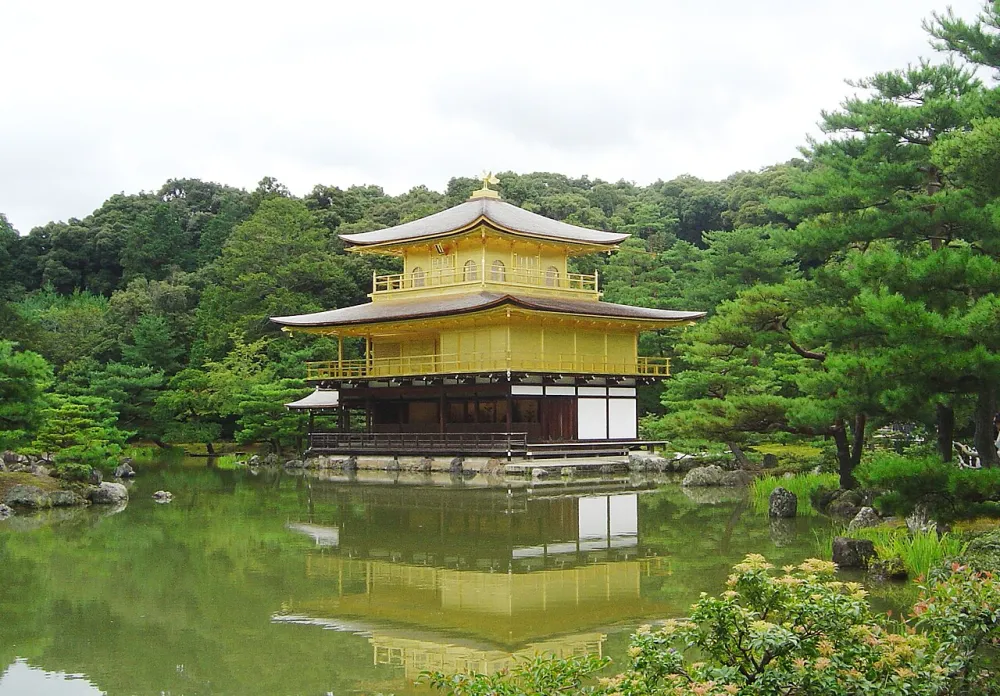
Planning to visit both Tenryu-ji and Kinkaku-ji on the same day means factoring in travel time from Arashiyama up to Kinugasa. If it's your first visit and you want to cover the temple halls, Cloud Dragon, and the Bamboo Grove without rushing, stay in Arashiyama through lunch and see how much afternoon you actually have left before heading north. With multiple nights in Kyoto, Kinkaku-ji pairs much better with Kitano and Ryoan-ji—follow the Kinkaku-ji and Northern Kyoto Route guide for that loop, and let Arashiyama stay dedicated to Tenryu-ji and the riverside before catching an easy train back at dusk.
If Shigetsu is on your itinerary, lock in your lunch reservation before finalizing tickets or entry direction. Run directly by Tenryu-ji, the restaurant serves from 11:00 to 14:00 (closed Thursdays). Course options are Yuki (¥3,800), Tsuki (¥6,500), and Hana (¥9,000), with garden admission charged separately; Tsuki and Hana require at least two diners. While the menu page states Yuki must be booked two days ahead, the web booking system enforces a minimum three-day lead time across all courses—book at least three days out online. Submitting the Shigetsu reservation form isn't final until you receive confirmation from the restaurant; note dietary allergies and whether accompanying children will order meals in the remarks box. Cancellation fees run 50% the day before and 100% on the day of dining.
Eating outside the temple instead? Aim to wrap up your temple loop shortly after 11:00 so you can pick a spot before peak lunch lines form. Keep in mind that leaving from the North Gate requires walking back through the Bamboo Grove to reach most restaurants along Nagatsuji-dori. Whether you're craving soba, tofu dishes, or simply a guaranteed table to sit down, check the Arashiyama Dining Guide to zero in on the right stretch of street. If you have a set Shigetsu seating, build your garden or halls visit ahead of lunch, then exit via the North Gate into the Bamboo Grove afterward.
Booking Temple Zazen Meditation or Sutra Copying
To fit morning zazen meditation and a garden walk into the same morning, make Yuun-an your first stop. Tenryu-ji holds open zazen sessions on the second Sunday of each month from 9:00 to 10:00 (excluding February, July, and August). Participation is free for individuals with no reservation required, and beginners are welcome. Yuun-an sits just east of Ryumontei—enter from the main-street side and follow the precinct map straight there. After an hour on the cushions, stroll Sogenchi Pond without booking lunch too tightly.
For sutra copying (shakyo) inside Tahoden Hall, you must reserve ahead by phone. Listed check-in hours run from 9:30 to 14:30 (finishing by 16:30), with a ¥1,000 copying fee plus ¥800 temple admission; all supplies are provided. Unlike a quick pass through the halls for veranda views, this requires sitting down to write and walking up to Tahoden. If others in your group prefer to skip it, set a lunch meetup back on Nagatsuji-dori so everyone moves at their own pace. Check the Tenryu-ji regular events page for exact venues and contact details before planning around either activity.
Why the Daihojo and Sogenchi Pond Are Centuries Apart
In 1339, Ashikaga Takauji founded Tenryu-ji on the site of a former imperial villa to honor the late Emperor Go-Daigo, appointing Zen master Muso Soseki as founding abbot. When construction funds ran short, Ashikaga Tadayoshi and Muso Soseki arranged to resume trade with Yuan-dynasty China, funding the project with shipping revenues until the temple was completed in 1345. Sogenchi Pond Garden outside the Daihojo survives from that era, when Tenryu-ji ranked first among Kyoto's Five Great Zen Temples (Kyoto Gozan). On-site, connect that history by visiting Emperor Go-Daigo's memorial inside Tahoden before walking down to the pond.
Repeated fires swept the complex over the centuries, with heavy battle damage striking again in 1864. The Daihojo, Hatto, and Kuri were rebuilt or restored during the Meiji era, followed later by the Shoin and Tahoden. As a result, a single photograph frames a 14th-century pond layout conceived under Muso Soseki right alongside Meiji-era timber verandas—while the Daihojo's westward orientation still aligns cleanly with the opposite rockwork and distant mountains outside.
In 1994, Tenryu-ji and 16 other sites were inscribed together as the UNESCO World Heritage property "Historic Monuments of Ancient Kyoto," spanning locations across Kyoto, Uji, and Otsu. UNESCO's boundary map distinguishes the core temple precinct from its surrounding buffer zone. Walking out the North Gate into Kameyama Park even lets you look down from the slopes at the Hozu River emerging onto the Kyoto plain. While the temple's pond borrows the mountain skyline and the park trails overlook the river valley, visitors focused strictly on Sogenchi can see the full interplay of hills and water right from the pond shore.
A few useful answers
How much are Tenryu-ji Temple tickets?
Garden admission is ¥500 for high school students and adults, ¥300 for elementary and junior high students, and free for preschoolers. Adding the temple halls costs an extra ¥300. Cloud Dragon in the Hatto (Dharma Hall) requires a separate ¥500 ticket (free for preschoolers).
Can I visit the Hatto just to see Cloud Dragon without buying a garden ticket?
Yes. On open days, the Hatto runs from 9:00 to 16:30 with last ticket sales at 16:20. Buy your ticket directly at the booth on the Hatto's west side—no garden ticket required. Note that the Hatto will be closed on January 2, 2027.
What time do Tenryu-ji's garden and North Gate open?
Normally, both the main garden ticket booth and the North Gate open at 8:30. During the autumn early-entry period from November 14 to 30, 2026, the main-street garden booth opens at 7:30 while the North Gate remains at 8:30.
How do I walk from Tenryu-ji to the Bamboo Grove?
Follow the paths from Sogenchi Pond uphill through Hyakkaen Garden to the North Gate, which exits directly onto the Bamboo Grove. You can also enter in reverse by buying a garden ticket at the North Gate and walking out the main-street side toward Togetsukyo Bridge.
Which entrance works best for wheelchairs or strollers?
Start at the main-street garden booth off Nagatsuji-dori and ask staff to point out accessible routes. Portions of the garden accommodate wheelchairs, and accessible restrooms are on-site. Avoid cutting straight to the North Gate if slopes are an issue, since Hyakkaen Garden has noticeable inclines.
When should I budget two full hours for Tenryu-ji?
Allow 40–60 minutes for the garden alone. If you plan to tour the Daihojo, Shoin, Tahoden, and Cloud Dragon in the Hatto as well, budget 90–120 minutes—and schedule around the Hatto's shorter hours and earlier ticket cutoff first.
Official information and references
Sources used in this guide.
- Tenryu-ji Visitor & Access Guide (Fares, Ticket Hours, Autumn Entry, and Parking Restrictions)
- Tenryu-ji Hatto Cloud Dragon (Open Days, Closures, and Painting Details)
- Tenryu-ji 2026 Special Openings and Events Calendar
- Tenryu-ji Precinct Map and Guide (Sogenchi Pond, Hyakkaen Garden, Halls, and Hatto)
- History of Tenryu-ji (Founding, Tenryu-ji-bune Ships, and Reconstruction)
- JR Central Kyoto Sightseeing Guide (Kyoto Gozan and Tenryu-ji)
- Tenryu-ji Regular Events (Zazen Meditation and Sutra Copying)
- Kyoto Prefecture Tourism Federation: Tenryu-ji Visitor Information (Accessibility)
- Kyoto City Arashiyama Access Guide (JR, Randen, and Hankyu)
- Kyoto City Guide: Arashiyama Bamboo Grove and Tenryu-ji North Gate
- Kyoto City Sightseeing Comfort Map (Bamboo Grove and Togetsukyo Bridge)
- Kyoto City Guide: Tenryu-ji Autumn Foliage Report
- Kyoto Prefecture Arashiyama Park Guide (Kameyama Area)
- Shigetsu Hours, Course Pricing, and Temple Admission Payment Rules
- Shigetsu Online Reservations and Cancellation Fees
- Hankyu Railway Kyoto Main Line and Arashiyama Line Route Guide
- Sagano Scenic Railway Ticketing and Station FAQ
- UNESCO Historic Monuments of Ancient Kyoto: Inscribed Property and Tenryu-ji Boundary Map
- UNESCO Historic Monuments of Ancient Kyoto: Inscription Year and Property Overview