Planning a visit to Tenryu-ji in Kyoto’s Arashiyama district? Covers Sogenchi Pond Garden and temple hall ticket prices, Hatto Cloud Dragon viewing dates, early-opening entrances for autumn 2026, the 2 January 2027 Hatto closure, and a half-day route linking the North Gate, Bamboo Grove, and Togetsukyo Bridge.
- Region & Focus
- KyotoShrines and temples
- Reading Scope
- 22 min read · 11 chapters · 6 Q&As
- Official Verification
- 19 official sources checkedUpdated 22 November 2026 at 08:00 GMT+8
- Key Topics
- First tripItinerariesSeasons
Chapter Route Map (tap any stop)
- Tenryu-ji Tickets and Opening Hours
- Should You Enter from the Main Street or the Bamboo Grove North Gate?
- Reading Sogenchi Pond: Locate the Mountains First, Then the Waterfall
- What Does the ¥300 Hall Add-On Cover (Daihojo, Shoin, and Tahoden)?
- The Hatto Cloud Dragon and New Year Dates
- Early Autumn Entry and Adjusting for Rain
- Choosing an Entrance for Slower Walkers, Wheelchairs, or Pushchairs
- Getting There from Kyoto Station, Shijo-Omiya, or Osaka-Umeda
- Fitting Tenryu-ji into a Half-Day Arashiyama Itinerary
- Locking In Times for Zen Meditation or Sutra Copying
- Why Centuries Separate the Daihojo and Sogenchi Pond
- Quick Q&A
For a first visit to Tenryu-ji in Arashiyama, a ¥500 garden ticket (high school students and adults) grants entry to Sogenchi Pond Garden and the Hyakkaen Garden. To view the pond from inside the Daihojo, add ¥300 for the main temple halls. Matazo Kayama’s Cloud Dragon ceiling painting hangs in a separate building, the Hatto (Dharma Hall), which charges a standalone ¥500 ticket on open days. If the gardens are your priority, enter from the main Arashiyama street side and exit through the North Gate straight into the Bamboo Grove. If you are travelling specifically to see the dragon, check the Hatto opening calendar before setting out and allow walking time between the Hatto and the garden ticket office.
Tenryu-ji Tickets and Opening Hours
On a map, the main gate, garden ticket gate, and Hatto entrance all cluster under 'Tenryu-ji', yet once you step through the Somon gate off Nagatsuji-dori, a short temple approach still separates you from the ticket counters. The Garden Reception sells tickets for Sogenchi Pond Garden and Hyakkaen at ¥300 for primary and junior high school pupils, with preschool children admitted free. Gates normally open daily at 08:30; the garden closes at 17:00, with last ticket sales at 16:50. Visitors presenting a disability certificate at the counter receive ¥100 off garden admission for both themselves and one companion.
To enter the Daihojo, Shoin, and Tahoden, head to the Kuri reception counter to add temple hall admission. The ¥300 supplement on top of a garden ticket covers all three buildings, bringing the total to ¥800 for high school students and adults. Because the three halls come as a single bundle, decide whether you want to go inside before entering the garden and queue at the right window. If you are heading to the Bamboo Grove afterwards, tour the halls first and then walk towards the North Gate, saving yourself a detour back from Hyakkaen to the Kuri.
Matazo Kayama’s Cloud Dragon sits inside the Hatto, whose ticket kiosk stands on the hall’s west side (preschool children enter free). Hatto admission alone costs ¥500; pairing it with the garden brings the adult and high-school total to ¥1,000, and covering all three zones comes to ¥1,300. If part of your group wants to inspect the architecture while others want to photograph the Bamboo Grove, walk Sogenchi Pond together first, then agree on an unmistakable meeting point outside the paid areas—such as the courtyard outside the Kuri or Randen Arashiyama Station—so everyone can reach it easily.
In the afternoon, the Hatto stops selling tickets first, followed by the temple halls, and finally the garden. To see all three, arrive at the main-street side before 14:30 and visit the Hatto first, then move on to the Kuri and the garden; that buffer accounts for finding ticket kiosks, queueing, and taking off your shoes inside the halls. If you arrive after 16:20, the halls may still be selling tickets, yet you will have barely a dozen minutes indoors—if you walk at a relaxed pace or want time to photograph the pond, buy a garden-only ticket instead. Closing time is 17:00 sharp, leaving just ten minutes if you buy at 16:50.
When fitting other sights into the same day, estimate your time at Tenryu-ji based on where you start and which tickets you buy. Stepping off the Randen tram, allow 40–60 minutes to stroll through the garden, pause by the pond, and exit through the North Gate to the Bamboo Grove. Garden plus temple halls takes roughly 70–90 minutes, while adding the Hatto—factoring in any queue—calls for 90–120 minutes. Treat those figures as planning ranges: framing shots by the water, waiting behind tour groups, or taking a breather can easily eat into the margin.
Carry Japanese yen in cash for the ticket windows. The booking page for Tenryu-ji’s temple-run restaurant specifically notes that temple admission cannot be paid by credit card. Train fares, meals, and temple entry are settled separately, so even if you pay by card for transport and lunch, keep cash aside for the garden, halls, and Hatto. If companions plan to split up, make sure everyone has enough cash before parting ways.
| Area | Admission | Opening Hours | Last Ticket Sales |
|---|---|---|---|
| Garden (Sogenchi Pond & Hyakkaen) | High school students & adults ¥500; primary & junior high school pupils ¥300; preschool children free | 08:30–17:00 | 16:50 |
| Main Temple Halls (Daihojo, Shoin, Tahoden) | Garden ticket plus ¥300 | 08:30–16:45 | 16:30 |
| Hatto Cloud Dragon by Matazo Kayama | Separate ¥500 ticket; preschool children free | Open days 09:00–16:30 | 16:20 |
Planning a visit to Tenryu-ji in Kyoto’s Arashiyama district? Covers Sogenchi Pond Garden and temple hall ticket prices, Hatto Cloud Dragon viewing dates, early-opening entrances for autumn 2026, the 2 January 2027 Hatto closure, and a half-day route linking the North Gate, Bamboo Grove, and Togetsukyo Bridge.
Should You Enter from the Main Street or the Bamboo Grove North Gate?
Save two separate pins on your phone map: 'Tenryu-ji' and 'Tenryu-ji North Gate'. The first points to the Nagatsuji-dori side near Randen Arashiyama Station and Togetsukyo Bridge, where the approach leads you to the Garden Reception, the Kuri, and the Hatto—look out for the Kuri’s bold white gable cross-hatched with dark timber beams. The North Gate opens into Hyakkaen Garden, right beside the Bamboo Grove path. Agreeing vaguely to meet 'at the Tenryu-ji gate' is a classic way to miss each other; specify outside the Randen station or share the exact entrance pin instead.
Enter from the main-street side whenever Sogenchi Pond is your first stop. Pause along the pond shore just west of the Daihojo, then follow the open garden path up through Hyakkaen to the North Gate. Hyakkaen is landscaped across natural slopes, so expect gentle climbs between the pond and the bamboo. If you also want to visit the temple halls or the Hatto, completing the indoor visits on the main-street side first keeps your route streamlined. Outside the North Gate, you can turn along the Bamboo Grove towards Nonomiya Shrine or head west towards Okochi Sanso for a longer walk.
Sometimes entering via the North Gate makes better sense. If you arrive at JR Saga-Arashiyama Station and want to photograph the Bamboo Grove before shops along the main street open, walk past Nonomiya Shrine first. Step through the North Gate into Hyakkaen, descend towards Sogenchi Pond, and exit onto the main street right by Togetsukyo Bridge and Nagatsuji-dori’s restaurants. Because the Bamboo Grove is a public thoroughfare, early risers can walk a stretch of it before the North Gate ticket booth opens.
When working backwards from a fixed lunch booking or a Randen or Hankyu train departure, pick your exit gate accordingly. If you are meeting south of Togetsukyo Bridge, allow extra time to cross the river and leave via the main street for the shortest connection. If you plan to continue towards Rakushisha and Jojakko-ji, exiting through the North Gate saves you doubling back along Nagatsuji-dori. When setting a rendezvous for companions, avoid the North Gate bottleneck and choose somewhere both routes converge naturally.
The City of Kyoto describes the roughly 400-metre Bamboo Grove path as running between Nonomiya Shrine and Okochi Sanso, with Tenryu-ji’s North Gate sitting along that stretch. Walking times listed on the temple’s visitor page assume the Nagatsuji-dori entrance, so adjust your navigation if you aim for the back gate. If you intend to cross Togetsukyo Bridge and head straight to the North Gate, note there is an uphill climb into the bamboo—when a lunch booking or scenic train departure is tight, use the main-street gate instead and save Okochi Sanso or the park viewpoint for after you leave the temple.
Reading Sogenchi Pond: Locate the Mountains First, Then the Waterfall
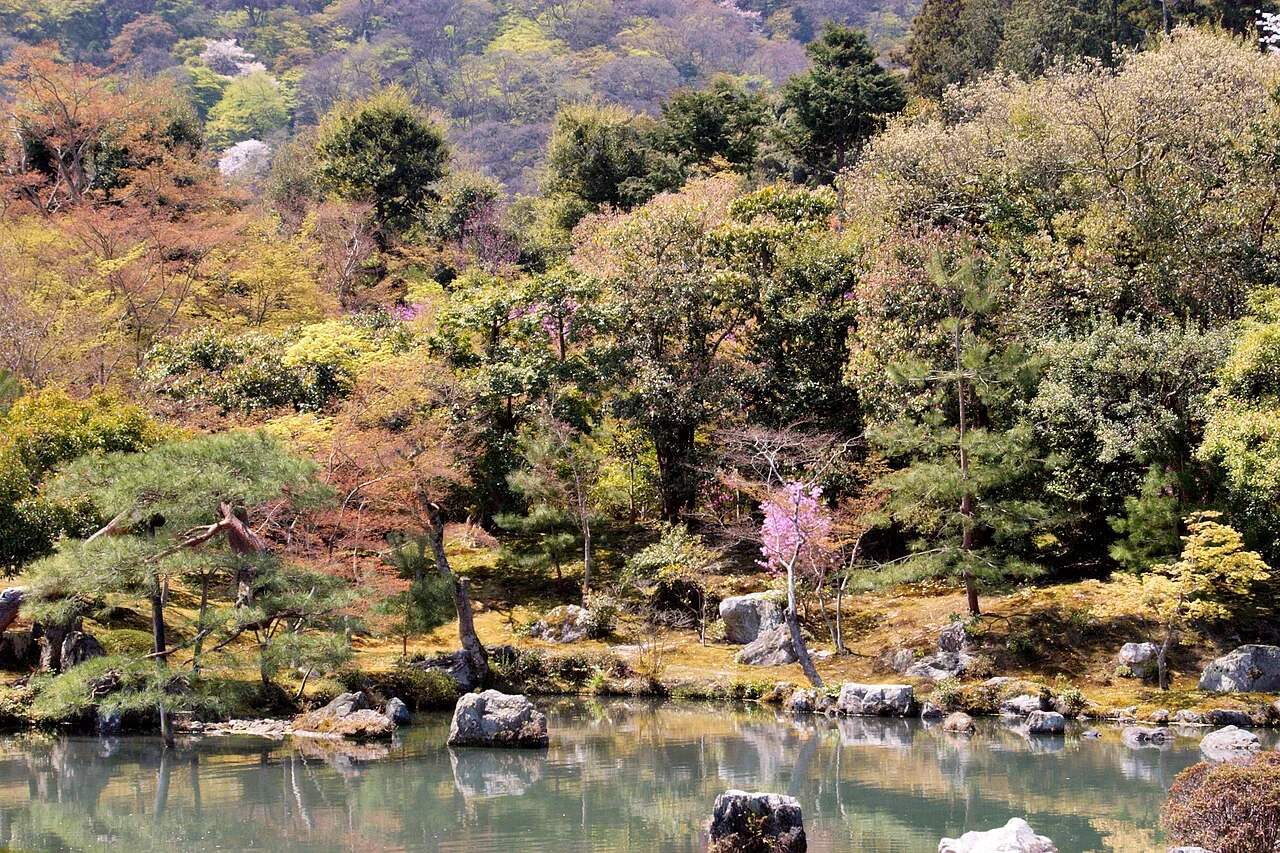
Once at the water’s edge, orient yourself on the eastern side of the pond beside the Daihojo, looking west across the water. Your gaze sweeps over the surface, the far rockery, and the tree line before rising to the peaks beyond the temple walls. Mount Arashiyama across the Oi River and Mount Kameyama immediately west of the garden align straight ahead. With the shoreline, garden trees, and distant ridges layered at distinct depths, this spot makes 'borrowed scenery' (shakkei) immediately clear: the mountains stay where they are, while the foreground water, stone, and foliage draw them into one frame.
Take a few steps sideways along the public lakeside path and look back. A hillside shoulder visible moments earlier may tuck behind a nearby trunk, subtly reshaping the curve of the bank. Pause at another vantage point and compare how much of the shore and distant slope stays in view. For photographs, step back far enough to capture both shoreline and hillside before studying individual rocks along the edge. Overcast days reward this exercise too: as the far ridge softens in haze, the dark shoreline stones stand out more sharply.
Looking from the Daihojo side towards the middle of the opposite bank, spot two tall upright stones—the focal boulders of Ryumon-baku (Dragon Gate Waterfall). The arrangement recalls the Chinese legend of a carp leaping up a waterfall to transform into a dragon. According to temple guidance, the Carp Stone sits slightly to the side of the dry cascade, caught mid-ascent. When scanning the rocks from the near shore, locate the tall vertical monoliths behind first, then drop your gaze beside them. After rain, wet stone surfaces and shadowed crevices make the composition even easier to read from the marked path.
Exploring the garden with children works well as a stone-spotting game. Ask them to pick out the pair of rocks across the pond shaped like a gateway, then notice how close the smaller boulder sits to the water. If real koi swim past below, weave them into the waterfall legend. Whenever paths grow busy, step along to a wider stretch before stopping, keep hold of little hands, and stay strictly on the paved walkways away from the water’s edge.
The pond’s name also traces back to founding abbot Muso Soseki. Temple records note that clearing the pond bed uncovered a stone tablet inscribed with 'Sogen Itteki' ('a single drop from the Sogen spring'), giving Sogenchi Pond its name. Tenryu-ji’s precinct guide pairs well with the 1799 illustrated volume Miyako Rinsen Meisho Zue, whose woodblock layout still matches much of what stands today. Checking the official map before you travel—noting how the pond faces the Daihojo—helps you connect those historic zones on the ground.
Walking from near the Daihojo towards the North Gate, trees gradually screen off the pond as Hyakkaen introduces gentle slopes and closer foliage. Visitors planning to see both sections should linger by Sogenchi first, then treat Hyakkaen as a scenic stroll towards the Bamboo Grove—especially rewarding when seasonal blossoms line the path. Built as a strolling pond garden, it is straightforward to follow along the day’s open circuit; if you prefer less walking, simply admire the pond from the east bank and return the way you came to the main street.
What Does the ¥300 Hall Add-On Cover (Daihojo, Shoin, and Tahoden)?
Inside the Kuri, look straight ahead in the entrance foyer. Tenryu-ji counts the white triangular gable framed by dark timbers among its signature sights, while inside the doorway you are greeted by a large painting of Bodhidharma (Daruma) by Seiko Hirata. Family members sticking to the garden alone can admire the exterior white gable from outside; ticket holders follow signs for the main halls. Remove your shoes where indicated before stepping onto the wooden floors—wear warm socks in autumn and winter—and stow umbrellas as directed so visitors behind you have space to change footwear.
Completed in 1899, the Daihojo is the largest building in the complex. Its formal front faces east towards the Chumon (Middle Gate), while its western side opens onto a broad wooden veranda overlooking Sogenchi Pond—the main reason to pay the ¥300 supplement. From inside the tatami rooms, the low eaves and floorboards compress the garden into a horizontal frame; stepping onto the outer veranda lifts your eye past the roofline to the mountains. Whether seated or standing—as crowd flow and roped areas allow—shifting between timber pillars reveals how the architecture crops each pocket of the pond.
Painted sliding doors (fusuma) divide the Daihojo into eastern and western bays, bearing a 1957 Cloud Dragon by Mokugai Wakasa that stretches horizontally across the panels—quite distinct from the round ceiling dragon in the Hatto. In the central chamber sits an Important Cultural Property seated Shaka Nyorai statue, older than the temple itself and rescued repeatedly from historic fires. Tracing the main bay and flanking rooms from the open veranda makes the building’s six-room floor plan easy to read; where doors remain shut, view them from the public corridor.
Further along lies the Small Hojo, or Shoin, completed in 1924. From there, a covered wooden walkway climbs gently uphill towards the Tahoden, passing views of a teahouse along the way. Built in 1934, the Tahoden enshrines an image of Emperor Go-Daigo on the site where, according to temple tradition, he once studied. Knowing whom the hall honours makes the stepped passage connecting everyday living quarters to the memorial sanctuary far more meaningful.
If you have only 20 minutes before leaving, a garden ticket already gives you the classic pond-to-mountain vista without rushing indoors. When combining an afternoon hall tour with evening plans, allow at least 30 extra minutes for the add-on, including removing shoes and walking the sloped corridor. Check signage before taking photographs, keep doorways and walkways clear, and avoid stopping to compose shots along sections with handrails. Sections of the halls may close temporarily for temple ceremonies; scheduled closures are listed on Tenryu-ji’s official visitor guide.
The Hatto Cloud Dragon and New Year Dates
Standing beneath the Hatto ceiling, find the dragon’s eyes first, take a few steps across the open floor, and glance back at the same gaze. Coiled inside a double circle, the dragon appears to watch the viewer from every angle—known as the 'dragon glaring in all eight directions' (happo-nirami no ryu). Painted in 1997 by Japanese artist Matazo Kayama to mark the 650th anniversary of Muso Soseki’s passing, the work spans 159 cedar panels in a circle roughly 9 metres across. Standing dead centre emphasises the dragon’s sheer scale; stepping towards the edges lets you take in both rings at once.
An earlier ceiling Cloud Dragon by Shonen Suzuki once hung here; only fragments survived historic damage and are displayed during special exhibitions inside the Daihojo (such as the 1–22 March 2026 showing). When researching images or reading older travel accounts, check the artist, medium, and building carefully: horizontal panels on wooden sliding doors are fusuma paintings in the Daihojo, whereas photographs looking straight up at a giant painted disc show Matazo Kayama’s ceiling work in the Hatto.
The Hatto normally opens on Saturdays, Sundays, and Japanese national holidays from 09:00 to 16:30 (last ticket sales 16:20). For autumn 2026, it opens daily from 19 September to 6 December before reverting to weekends and national holidays. Although 2 January 2027 falls on a Saturday, it is an announced closure day for the Hatto; if you are visiting Kyoto over New Year specifically to see the painting, pick an alternative open date on the official Cloud Dragon schedule. Because the garden, halls, and Hatto operate separate ticket desks, a Hatto closure simply frees up your morning for Sogenchi Pond or the Tahoden.
On 07:30 early-opening garden days, there is a wait before the Hatto opens. You can either make the pond and Hyakkaen your main stop—or stroll the main-street side of the garden first, enter the Hatto at 09:00, and leave via Nagatsuji-dori towards Togetsukyo Bridge. If you want a single one-way walk through to the Bamboo Grove, start at the Hatto at 09:00, then buy your garden ticket and walk straight out via the North Gate. The same logic holds in the afternoon: since the Hatto closes 30 minutes before the garden, the later you arrive, the more reason to see the dragon first.
Early Autumn Entry and Adjusting for Rain
From 14 to 30 November 2026, Sogenchi Pond Garden opens early at 07:30, with the first hour exclusively accessible via the Garden Reception on the main-street side; the North Gate still begins selling tickets at 08:30. To beat the crowds in the Bamboo Grove, walk through the bamboo at daybreak and enter Tenryu-ji at the North Gate at 08:30. If autumn maples over the pond are your priority, reverse the order: queue at the main-street garden window for 07:30 and keep your Bamboo Grove timing flexible. Before heading out, check hourly crowd forecasts and live webcams for the Bamboo Grove and Togetsukyo Bridge on Kyoto City’s Tourism Comfort Map.
In autumn leaf season, you can decide on the morning itself whether to tackle the garden or the Bamboo Grove first—foot traffic along the bamboo lane passes straight past the North Gate ticket queue. Travelling with older relatives, entering and exiting via the main street around Sogenchi Pond avoids Hyakkaen’s slopes. For an afternoon visit, schedule Sogenchi before Togetsukyo Bridge; arriving near 16:00, focus on the garden and catch the evening light from the bridge afterwards. Check seasonal foliage updates on Kyoto City’s Tenryu-ji autumn leaves page to gauge timing when planning your stay and fine-tune your route once in town.
Fresh early-summer leaves and scarlet autumn maples partially screen the distant hills along the near bank, whereas bare winter branches reveal the full rockwork and hillside contours. In spring, pair the blossom reflections on Sogenchi Pond with a walk through Hyakkaen, contrasting lakeside light with the shaded Bamboo Grove outside. On changeable days, watch the ridge visibility and ripples across the water—stepping aside from the path if you wait for sunbreaks—while in wet weather, frame tighter shots linking the shoreline stones to the greenery. Even once your dates are fixed, light and season suggest which angles work best.
Umbrellas, narrow paths, and slopes slow every step compared with dry days. In light rain, stick to the main-street entrance and exit, stay near Sogenchi Pond, and consider adding the covered temple halls; wear shoes with good grip, as wet flagstones turn slick. In heavy downpours, postpone the Bamboo Grove and Kameyama viewpoint for another day, check opening hours for the Hatto and temple halls, and focus on indoor viewing—remembering you still cross open thresholds between buildings, so fold dripping umbrellas carefully before removing your shoes.
Drivers heading for the temple car park during the early-opening window should note temporary traffic restrictions on Nagatsuji-dori from 13:00 to 17:00 on 21–23, 28, and 29 November 2026, when vehicles cannot enter or leave Tenryu-ji’s car park. If you have a hire-car drop-off deadline, taking the train to Arashiyama is far simpler on those dates. Standard parking runs until 17:00 at ¥1,000 per standard car (first-come, first-served); even if you park in the morning, plan your departure time before the afternoon road closure begins.
Choosing an Entrance for Slower Walkers, Wheelchairs, or Pushchairs
According to the Kyoto Prefecture Tourism Federation, parts of the garden are wheelchair-accessible and an accessible toilet is available on site. Plan an out-and-back route to Sogenchi Pond from the main-street side: at the Garden Reception (marked 'Teien Uketsuke'), ask the attendants—or use a translation screen on your phone requesting the wheelchair-accessible route—to point out accessible paths and toilet facilities. Reaching Sogenchi from the North Gate involves climbing Hyakkaen’s slopes, so if anyone in your party uses a walking frame or struggles on gravel, save the North Gate and Bamboo Grove for a separate flat approach.
With young children and a pushchair, stick to the main-street entrance. Before passing the ticket gate, ask which sections of the garden are pushchair-friendly and where buggies can be parked in case you prefer a baby carrier. The smoothest routine is for one adult to buy tickets while the other organises bags and children off to the side. Once you reach Sogenchi Pond, decide whether to tackle the incline—if naptime looms or you want a quick lunch, simply head back to Nagatsuji-dori. Two adults taking turns inside the halls should swap outside the Kuri rather than wheeling a pushchair right up to the shoe-removal lobby.
In wet weather with puddles, gravel, or stepped slopes, let the slowest walker set the pace while the rest of the group waits on wider clearings ahead. If regular seated breaks are needed, make Tenryu-ji’s garden the single ticketed sight of the half-day and pair it with a relaxed sit-down lunch or a short riverside stroll. Walking from Hankyu Arashiyama Station requires crossing Togetsukyo Bridge, whereas Randen Arashiyama Station cuts out that bridge walk altogether—your choice of return line noticeably changes total step count.
Getting There from Kyoto Station, Shijo-Omiya, or Osaka-Umeda
From Kyoto Station, the quickest route is the JR Sagano Line to Saga-Arashiyama Station—about 11 minutes on rapid services according to Kyoto City transport guidance, with local trains stopping there too. Allow time to locate the platform if transferring from the Shinkansen or another JR line. From the station, Tenryu-ji estimates a 13-minute walk. If companions arrive on separate trains, meet at the same JR exit before setting off so nobody gets stranded at another railway company’s 'Arashiyama' station.
Staying near Shijo-Omiya, take the Keifuku Electric Railroad’s Randen Arashiyama Main Line straight to its terminus, Arashiyama. The exit opens directly onto Nagatsuji-dori, putting Tenryu-ji’s approach and ticket counters on your side of the river. Along the Tozai underground line, change at Uzumasa Tenjingawa for Randen-Tenjingawa Station and continue to Arashiyama. Going out of your way from Kyoto Station just to ride the Randen adds an unnecessary transfer; for early-morning garden entry, the JR line is hard to beat.
From either Osaka-Umeda or Kyoto-Kawaramachi, ride the Hankyu Kyoto Main Line and change at Katsura Station onto the Hankyu Arashiyama Line. Hankyu Arashiyama Station sits across the river, about a 15-minute walk from the temple according to Tenryu-ji. Treat crossing Togetsukyo Bridge as part of the outward stroll, leaving time for photographs and a breather for older travellers. If you are returning to Kyoto Station afterwards, leave through the North Gate towards JR Saga-Arashiyama Station instead of crossing the bridge twice back to Hankyu.
Note the two similarly named stations on the Sagano Scenic Railway: Torokko Saga stands right beside JR Saga-Arashiyama Station, whereas Torokko Arashiyama lies on the far side near the Bamboo Grove and Kameyama Park. According to the railway operator’s FAQ, online tickets open one month ahead of travel at 00:00 JST, with outbound and return legs purchased separately. Confirm which Torokko station appears on your ticket before choosing your exit gate at Tenryu-ji, and work backwards from departure time to allow for uphill walks and finding the platform.
Fitting Tenryu-ji into a Half-Day Arashiyama Itinerary
To tackle the Bamboo Grove early, link JR Saga-Arashiyama Station, Nonomiya Shrine, Tenryu-ji’s North Gate, Sogenchi Pond, and Togetsukyo Bridge in sequence. The walk from the JR station to the bamboo moves quickly solo, though groups often pause at junctions. For a half-day plan, book lunch around Nagatsuji-dori or near the bridge and make Sogenchi Pond your main pre-lunch stop. Adding the temple halls after the pond pushes your exit back, so if you have an 11:30 lunch booking, gauge your remaining window at the gate and keep your visit focused on the garden.
Arriving by Randen tram, run the loop in reverse: visit the Hatto or garden first, exit through the North Gate towards the western edge of the Bamboo Grove, and—if your legs are willing—climb into the Kameyama section of Arashiyama Park for the viewpoint before descending riverside paths to Togetsukyo Bridge. Kyoto Prefecture’s park guide notes Kameyama’s hilly trails and observation deck. Anyone skipping steep climbs can turn back from the North Gate past Nonomiya Shrine to Nagatsuji-dori for lunch; if you do extend through the park, stay on marked public trails west of the bamboo.
With just a morning and a fixed scenic train slot, line up Tenryu-ji directly with your departure station. Boarding at Torokko Saga, catch the train on the JR side first and visit the garden afterwards; boarding at Torokko Arashiyama, exit via the North Gate and walk west through the bamboo. Note that on the line, 'nobori' (upbound) runs from Kameoka to Saga while 'kudari' (downbound) runs from Saga to Kameoka, and enter the exact station name printed on your ticket into your map app. To stretch the valleys and woods into a full day, add a return river boat trip or Okusaga, leaving buffer time for lunch and transfers.
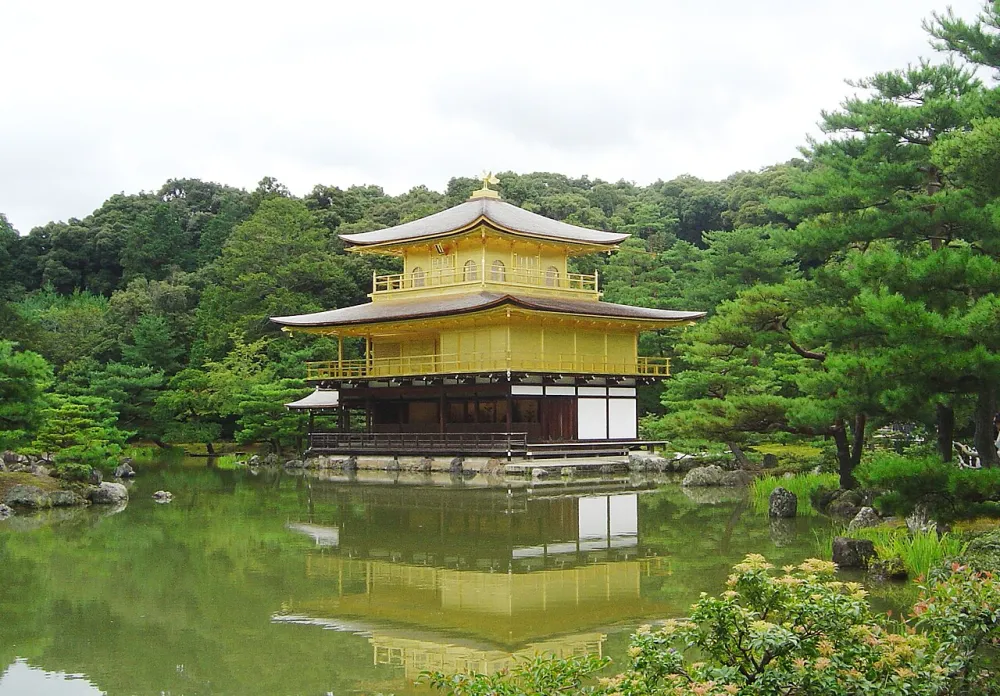
Combining Tenryu-ji and Kinkaku-ji on the same day means factoring in transit from Arashiyama to Kinugasa. On a first trip covering the halls, the Cloud Dragon, and the Bamboo Grove, have lunch in Arashiyama first and gauge how much afternoon remains for northern Kyoto. If you have several nights in the city, pair Kinkaku-ji with Kitano and Ryoan-ji instead—see our Kinkaku-ji and Northern Kyoto Route guide—keeping your Arashiyama day dedicated to Tenryu-ji and the riverfront before an easy late-afternoon train back.
If Shigetsu is on your itinerary, secure your table before deciding on tickets and entry gates. Operated directly by Tenryu-ji, the restaurant serves lunch from 11:00 to 14:00 and closes on Thursdays. Set courses are Yuki ('Snow') at ¥3,800, Tsuki ('Moon') at ¥6,500, and Hana ('Flower') at ¥9,000, with garden admission paid separately; Tsuki and Hana require at least two diners. While the menu page states two days’ notice for Yuki, the website form sets a uniform minimum of three days ahead, so allow at least three days when booking online. Your request via Shigetsu’s booking form is confirmed only upon receiving the restaurant’s reply email—use the notes field for children’s meals and allergies. Cancellation charges apply to the meal price: 50% the day before and 100% on the day.
For restaurants outside the temple grounds, aim to eat soon after 11:00 so you have more choice after touring the sights. Bear in mind that exiting via the North Gate requires walking back through the Bamboo Grove to reach Nagatsuji-dori’s wider selection of dining spots. For soba, tofu specialities, or reliable sit-down options nearby, pick a zone from our Arashiyama Dining Guide. Anyone booked into Shigetsu should anchor their morning around that lunch slot—touring the garden or halls beforehand and saving the Bamboo Grove exit through the North Gate for afterwards.
Locking In Times for Zen Meditation or Sutra Copying
To combine Zen meditation (zazen) with a garden walk in one morning, start at Yuun-an. Sessions generally take place on the second Sunday of each month from 09:00 to 10:00, excluding February, July, and August. Individual visitors attend free of charge without prior booking, and beginners are welcome. Yuun-an sits just east of Ryumontei—enter from the main-street side and check the precinct map to find it directly. Allow breathing room before lunch if you plan to explore the pond after the hour-long sitting.
Sutra copying (shakyo) in the Tahoden requires advance telephone booking. Reception runs from 09:30 to 14:30, finishing by 16:30; the fee is ¥1,000 plus ¥800 temple admission, with all brushes and materials supplied. Because you sit to copy the text and walk up to the Tahoden, it takes considerably longer than a quick veranda stop in the halls—if travel companions prefer to skip it, arrange to meet later for lunch on Nagatsuji-dori. Full venue details and contact numbers appear on Tenryu-ji’s regular events page.
Why Centuries Separate the Daihojo and Sogenchi Pond
Shogun Ashikaga Takauji founded Tenryu-ji in 1339 on the grounds of a former imperial villa to honour the late Emperor Go-Daigo, appointing Muso Soseki as founding abbot. When construction funds ran short, Takauji’s brother Ashikaga Tadayoshi and Muso Soseki revived trade missions with Yuan China, financing the work with maritime profits until the temple was completed in 1345. Sogenchi Pond Garden outside the Daihojo survives from that founding era, when Tenryu-ji ranked first among Kyoto’s Five Great Zen Temples during the Muromachi period. To anchor that history on site, visit Emperor Go-Daigo’s shrine in the Tahoden before walking down to the pond.
Repeated fires swept the complex over the centuries, followed by heavy damage during fighting in 1864. The Daihojo, Hatto, and Kuri were rebuilt or restored during the Meiji era, with the Shoin and Tahoden added later. As a result, a single photograph captures two distinct eras: the pond’s rockwork and layout preserving Muso Soseki’s fourteenth-century design alongside Meiji-era timber verandas. Keeping the Daihojo oriented westwards over the water ensures you still see the far stone composition and outer hills from indoors today.
In 1994, Tenryu-ji was inscribed alongside 16 other sites as part of UNESCO’s 'Historic Monuments of Ancient Kyoto', spanning Kyoto, Uji, and Otsu. UNESCO property maps delineate both the temple’s core heritage zone and its surrounding buffer zone. Stepping outside the North Gate leads up to Kameyama Park, where hillside overlooks show the Hozu River emerging onto the plain. Inside the temple you read the peaks from the pond, while in the park you trace the river from the ridge—two linked walks, though anyone focused purely on Sogenchi Pond can grasp every borrowed ridge without leaving the water’s edge.
A few useful answers
How much are Tenryu-ji tickets?
Garden admission costs ¥500 for high school students and adults, ¥300 for primary and junior high school pupils, and is free for preschool children. Adding the main temple halls costs ¥300 on top of a garden ticket. The Hatto Cloud Dragon charges a separate ¥500 ticket (preschool children free).
Can I visit the Hatto just to see the Cloud Dragon?
Yes. On open days (09:00–16:30, last ticket sales 16:20), buy a ticket straight from the kiosk on the west side of the Hatto—you do not need a garden ticket first. Note that the Hatto is closed on 2 January 2027.
What time do Tenryu-ji’s garden and North Gate open?
Normally both the Garden Reception and the North Gate ticket office open at 08:30. From 14 to 30 November 2026, the main-street Garden Reception opens early at 07:30, while the North Gate remains at 08:30.
How do you walk from Tenryu-ji to the Bamboo Grove?
From Sogenchi Pond, follow the garden path uphill through Hyakkaen to the North Gate, which exits directly onto the Bamboo Grove path. You can also work in reverse, buying a garden ticket at the North Gate from the bamboo lane and exiting via the main street towards Togetsukyo Bridge.
Which entrance should visitors with a pushchair or wheelchair use?
Use the Garden Reception on the Nagatsuji-dori main-street side and ask staff to point out accessible paths. Parts of the garden are wheelchair-accessible and an accessible toilet is provided; by contrast, Hyakkaen between Sogenchi Pond and the North Gate includes slopes.
When should I budget two full hours for a visit?
Allow 40–60 minutes for the garden alone. If you plan to include the Daihojo, Shoin, Tahoden, and the Hatto Cloud Dragon, allow 90–120 minutes and schedule around the Hatto’s opening hours and earlier ticket cut-off.
Official information and references
Sources used in this guide.
- Tenryu-ji Visitor & Access Guide (Admission, Reception Hours, Autumn Entry, and Parking Restrictions)
- Tenryu-ji Hatto Cloud Dragon (Opening Dates, Closures, and Artwork Overview)
- Tenryu-ji 2026 Special Viewings and Events Calendar
- Tenryu-ji Precinct Map & Guide (Sogenchi Pond, Hyakkaen, Main Halls, and Hatto)
- History of Tenryu-ji (Founding, Tenryu-ji-bune Trade Missions, and Reconstruction)
- JR Central Kyoto Sightseeing Guide (Kyoto Gozan and Tenryu-ji)
- Tenryu-ji Regular Events (Zazen Meditation and Sutra Copying)
- Kyoto Prefecture Tourism Federation Tenryu-ji Visitor Information (Accessibility)
- Kyoto City Arashiyama Access Guide (JR, Randen, and Hankyu)
- Kyoto City Bamboo Grove Path and Tenryu-ji North Gate
- Kyoto City Tourism Comfort Map (Bamboo Grove and Togetsukyo Bridge)
- Kyoto City Tenryu-ji Autumn Foliage Report
- Kyoto Prefecture Arashiyama Park Guide (Kameyama Area)
- Shigetsu Opening Hours, Course Prices, and Temple Admission Payment Rules
- Shigetsu Online Reservations and Cancellation Policy
- Hankyu Railway Kyoto Line and Arashiyama Line Route Information
- Sagano Scenic Railway Ticketing and Station FAQs
- UNESCO Historic Monuments of Ancient Kyoto Inscription and Tenryu-ji Property Maps
- UNESCO Historic Monuments of Ancient Kyoto Inscription Year and Property Overview