Travelling to Arashiyama from Kyoto Station, Shijo-Kawaramachi or Osaka? Compare Hirokawa reservations and prices, walk-in queues at Arashiyama Yoshimura, yudofu and yuba sets, plus cafés, tearooms and snacks matched to your departure station.
- Region & Focus
- Kyoto
- Reading Scope
- 18 min read · 11 chapters · 5 Q&As
- Official Verification
- 34 official sources checkedUpdated 22 November 2026
- Key Topics
- FoodNeighbourhoodsBooking
Chapter Route Map (tap any stop)
- Three Stations: Which Side of the River Suits Lunch Best
- Hirokawa Unagi: Opens One Month Ahead, Book a Slot Directly
- Soba by Togetsukyo's North End: Check the Seating Rules First
- Where to Eat Yuba, Yudofu or Shojin Ryori
- Riverside Coffee, Museum Cafés and Station-Side Tea
- Station Snacks: When to Eat and When to Save Room
- Combining the Bamboo Grove, Tenryu-ji Gardens and Lunch in Half a Day
- Pairing the Sagano Scenic Railway with Lunch on the Same Day
- Wet Weather, Winter Visits and Autumn Foliage Weekends
- Travelling with Young Children, Older Relatives or Solo
- Dinner Plans by Base: South Bank, Riverside Hotels or Central Kyoto
- Quick Q&A
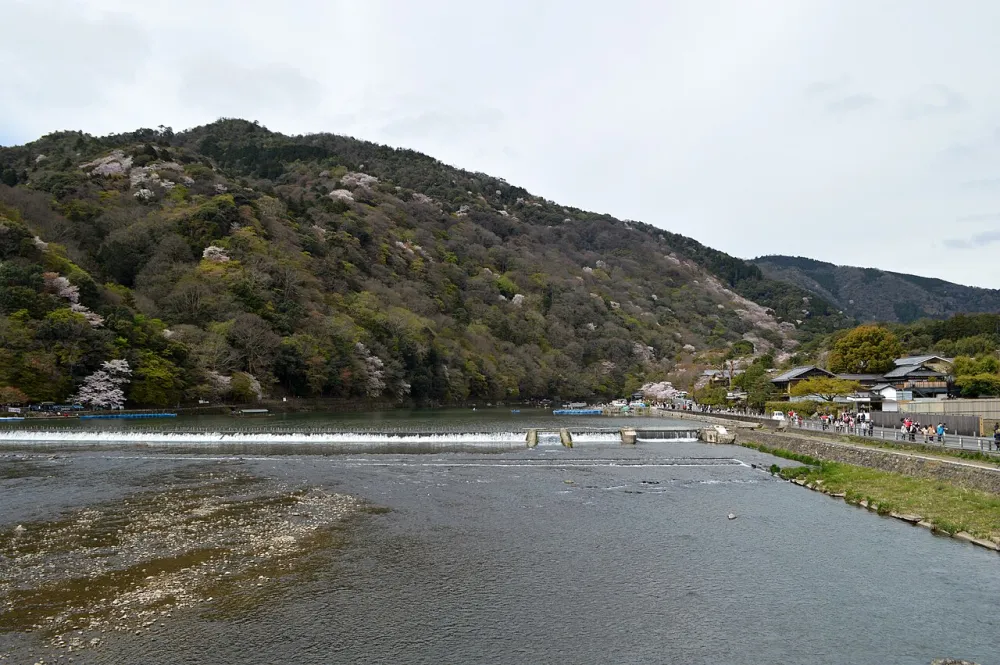
Arashiyama's dining strip stretches from the northern end of Togetsukyo Bridge right up to the gates of Tenryu-ji. If you have your heart set on Hirokawa's grilled eel, book before you plan your sightseeing: tables open one month ahead on the same calendar day. For handmade soba by the bridge, Arashiyama Yoshimura takes walk-ins only. Travellers wanting a unhurried, sit-down meal can also choose from yudofu (simmered tofu), shojin ryori (plant-based Buddhist cuisine) and bookable tearooms. Arrive via JR Saga-Arashiyama's South Exit from Kyoto Station to walk straight towards the river, or arrive on the south bank via Hankyu and budget extra time on either side of the bridge.
Three Stations: Which Side of the River Suits Lunch Best
If you are staying near Kyoto Station, take the JR Sagano Line to Saga-Arashiyama Station. Exit the ticket gates and head out of the South Exit towards Torokko Saga Station; the streets around the station are ideal for an early cup of tea or snacks for the journey back. Walking straight to Tenryu-ji? Head south-west from the South Exit for about 13 minutes, according to the temple's own guide. Heading for riverside soba instead? The restaurants at the northern end of Togetsukyo Bridge list a walk of roughly 12 minutes from the JR station. Save pins for both Tenryu-ji and your lunch spot beforehand so you can set off in the right direction the moment you step outside.
Travelling from Shijo-Kawaramachi or Osaka-Umeda on the Hankyu Line means changing at Katsura for the Arashiyama Line. Hankyu Arashiyama Station sits on the south bank of the Katsura River. Turn right from the station forecourt along the Kyoto City Tourism Association's park route, cross the small Taiko Bridge and turn left to reach Togetsukyo Bridge over the main channel. To reach Hirokawa, Tenryu-ji and most of the restaurants in this guide, you still need to cross the bridge. If you are meeting friends at Hanaikada on the south bank, walk towards the southern end of the bridge and let anyone arriving by JR cross over to join you.
Visitors riding the Randen tram from Shijo-Omiya emerge at the terminus, Randen Arashiyama Station, directly onto Nagatsuji-dori opposite Tenryu-ji's main approach. Turn left out of the station and walk south down the main street for about four minutes to reach Togetsukyo Bridge. Randen also stops one stop earlier at Randen-Saga, which connects smoothly with JR trains or shops on the Saga side. When coordinating a meetup in a group chat, always write "Hankyu", "Randen" or "JR" rather than just "Arashiyama Station" so everyone heads to the right bank.
Buses drop passengers virtually on the restaurant doorstep. Tenryu-ji lists Kyoto City Bus routes 11, 28 and 93 stopping at "Arashiyama Tenryuji-mae", and Kyoto Bus routes 61, 72 and 83 stopping at "Keifuku Arashiyama Ekimae". Both stops sit in the same dining district, though the buses take different routes into town. If you are coming from Shijo-Kawaramachi with a lunch booking to keep, the Kyoto City Tourism Association recommends taking the train instead, as City Bus 11 runs along congestion-prone Shijo-dori. When crossing districts shortly before lunch, trim out extra stops beforehand so you have breathing room for transfers and bridge crossings.
Travelling to Arashiyama from Kyoto Station, Shijo-Kawaramachi or Osaka? Compare Hirokawa reservations and prices, walk-in queues at Arashiyama Yoshimura, yudofu and yuba sets, plus cafés, tearooms and snacks matched to your departure station.
Hirokawa Unagi: Opens One Month Ahead, Book a Slot Directly
Unagiya Hirokawa sits on Nagatsuji-dori near Tenryu-ji at 44-1 Saga Tenryuji Kitatsukurimichicho. Because dishes are prepared to match each reservation, both lunch and dinner are strictly reservation-only. Tables open one month prior to the dining date on the same calendar day (pushed back by one day if that falls on a closure). Overseas visitors should book via the restaurant's multilingual online system; telephone reservations are handled in Japanese only, and hotel concierge bookings are restricted to partner hotels. If you are planning a weekend trip for two, check remaining time slots first before deciding whether to eat breakfast around Kyoto Station or finish your day in Arashiyama with an early dinner.
Lunch runs 11:00–15:00 (last order 14:30) and dinner runs 17:00–21:00 (last order 20:00). The restaurant closes every Monday, including when Monday is a public holiday, plus Year-End/New Year and extended seasonal breaks in January, May and October posted in its business notices. If Monday is your only day in Kyoto, opt for soba or tofu instead. With a 17:00 dinner slot, spend the afternoon along the riverbank, walk back up Nagatsuji-dori to eat, then leave via Randen to Shijo-Omiya or JR Saga-Arashiyama back to Kyoto Station.
Official pre-tax menu prices are ¥3,100 for unadon (eel rice bowl), ¥3,900 for unaju (lacquered box of grilled eel over rice), ¥5,400 for Jo Unaju (superior) and ¥6,700 for Tokujo (special). First-time visitors can start with either unadon or unaju and add clear soup if desired. To compare charcoal aroma with sweet tare glaze, both kabayaki (glazed) and shirayaki (unseasoned grilled eel) start from ¥5,100 before tax. Two ¥3,900 unaju mains come to ¥7,800 before tax; sides such as kimosui (eel-liver soup) are priced separately, so keep them together when working out your total.
Standard tables seat one to five guests; parties with pre-school children must book a private room. A private room costs ¥2,000 and seats two to eight guests including children, with table-and-chair or sunken horigotatsu seating assigned by the restaurant. Note wheelchair access, young children or chair-seating requests when reserving. Every guest must order one main dish, and groups of nine or more cannot split into multiple bookings. Cancellations should be made at least a day ahead whenever possible; no-shows and same-day cancellations carry a fee of ¥3,000 per person.
Tastes in eel vary widely within a group, so circulate the menu before booking. If someone only wants a side dish, expects to share a main with a child, or your group exceeds eight people, leave Hirokawa for companions happy to dine separately. Once your table is confirmed, keep your pre-lunch stroll around Tenryu-ji's main gate and northern Nagatsuji-dori — if you wander west past the bamboo grove, save the rest of the walk until after lunch rather than fighting crowds back to the door.
Soba by Togetsukyo's North End: Check the Seating Rules First
Arashiyama Yoshimura stands two doors west of the northern end of Togetsukyo Bridge, about three minutes on foot from Randen Arashiyama Station or seven minutes from Hankyu across the bridge. Weekday hours are generally 11:00–16:00, extending to 17:00 on weekends and Japanese public holidays, and running 10:30–17:00 during peak tourist seasons; it closes on New Year's Day. Unlike its sister branches in central Kyoto, the Arashiyama Main Branch does not take reservations. Families with pre-school children are seated in the ground-floor family area, so save the riverside views for a stroll after eating.
On the regular menu (tax included), nihachi soba (80% buckwheat, 20% wheat) costs ¥1,440 hot or cold, limited juwari soba (100% buckwheat) costs ¥1,600, and kamo nanban soba (with duck and spring onion) costs ¥2,240. On a warm summer walk to the bridge, chilled soba served on a bamboo tray with dipping sauce is refreshing; on cold days, pick a steaming broth. The tenzaru zen set adds tempura and a small bowl of rice alongside the noodles, ideal if you are continuing into Oku-Saga in the afternoon.
Seasonal menus replace the regular menu during cherry blossom season, Golden Week, Obon, autumn foliage and Year-End/New Year. For autumn 2026, the seasonal menu runs from 23 October to 7 December, so do not budget using regular prices during those dates. If you are watching costs closely, check the posted menu and queue outside before putting your name down. If you hold a timed ticket later in the day, work backwards from your latest possible departure time rather than relying on average wait times quoted online.
Arriving from Hankyu and planning to pick a restaurant only after meeting your group? Staying around the northern end of the bridge keeps your options open: you can check the queue at Yoshimura and easily walk towards Tenryu-ji for yuba or tofu if it looks long. Arriving and departing by JR? If Yoshimura is full, follow Nagatsuji-dori north instead of doubling back along the river for another water-view spot — you can split the meal and the riverside scenery without losing time.
Where to Eat Yuba, Yudofu or Shojin Ryori
For yuba (delicate soy-milk skin), start at Saga Tofu Ine Main Branch across from Tenryu-ji at 19 Saga Tenryuji Tsukurimichicho. Its North Branch sits at 46-2 Saga Tenryuji Kitatsukurimichicho, along the route towards the bamboo grove. Both list opening hours from 11:00 with last orders at 19:00, open year-round with possible extensions in peak seasons. Note that neither branch accepts credit cards. If you are splitting up before lunch, specify "Main Branch" or "North Branch" clearly — the street addresses look almost identical, so paste the full branch name into your map app.
Ine's Kyo-Yuba Ankake Gozen tops five-grain rice with thick, savoury yuba sauce alongside white miso soup, namafu dengaku (glazed wheat gluten) and fried dishes. The Teoke Yuba Gozen presents sheets of fresh yuba lifted straight into a wooden bucket over soy-milk dashi, ideal if you want to savour the pure texture bite by bite. A plant-based option is also available: ask staff specifically for the "Vegetarian Gozen". Because yuba and tofu are soy-based, write down any additional allergies or dietary restrictions in Japanese before settling on a set menu.
Follow the lane skirting Tenryu-ji from the northern end of the bridge to reach Yudofu Sagano at 45 Susukinobabacho. Its Yudofu Teishoku is ¥4,400 and Sagano Gozen is ¥6,600 (both tax included). The teishoku focuses on a simmering pot of tofu with tempura, small side dishes and pickles, while the gozen adds yuba sashimi, Kyoto vegetables and extra courses. Allow an unhurried window before any scenic train or museum slot so you are not watching the clock midway through. Published hours are 11:00–17:30 (last order 16:30), with irregular closures and early closing if tofu sells out; Ine outside the temple makes an easy fallback later in the afternoon.
To combine Tenryu-ji's gardens and lunch in a single entry, book the temple's own Shigetsu, which serves shojin ryori built around seasonal vegetables, mountain herbs and seaweeds from 11:00–14:00 (closed Thursdays). The entry-level "Yuki" course is ¥3,800 (the printed menu notes two days' notice, while the temple's online booking form requires submitting any course at least three days in advance, confirmed by email). "Tsuki" (¥6,500) and "Hana" (¥9,000) require at least two guests and three days' notice. Garden admission of ¥500 is charged separately, bringing an adult "Yuki" lunch to ¥4,300 total. Meals can be paid by card, whereas garden tickets are cash-only, so bring coins or notes to the gate. Cancellations incur 50% the day before and 100% on the day.
Yudofu Takemura sits near Ine's North Branch and Hirokawa at 48-7 Saga Tenryuji Kitatsukurimichicho. On a budget around ¥3,000, the Cosmos set costs ¥2,900 (tax included) with yudofu, rice, soup and hirousu (deep-fried tofu fritters). The Matsu set at ¥4,300 (tax included) adds tempura and house-made sesame tofu, and from roughly November to February the hassun starter includes yuzu-cup tofu. Takemura takes bookings by phone or via the Tabelog link on its official site — handy if you want a guaranteed hot tofu pot after Tenryu-ji without risking a long queue before your train.
If your accommodation has a fridge or kitchen, you can also bring tofu back. Saga Tofu Morika beside Seiryo-ji (42 Saga Shakado Fujinokicho) is roughly a 15-minute walk from JR or Randen Arashiyama Station, or a one-minute walk from the Saga Shakado-mae bus stop; Takemura itself uses Morika's tofu. Morika typically opens 9:00–17:00, closing on 31 December once sold out, and provides chilled storage guidance — stop by on your walk back towards the station after sightseeing.
Riverside Coffee, Museum Cafés and Station-Side Tea
Walking west along the river from the northern end of Togetsukyo Bridge brings you to % Arabica Kyoto Arashiyama, ideal when you have a brief gap in your schedule and want coffee on the go. Before joining the line, check whether people are queuing to order or waiting for collection; if friends are grabbing sweets elsewhere, agree to meet along the riverside promenade out of the flow of pedestrians. Keep the bridge pavement clear and finish drinks or photos before crossing, especially if pushing a pushchair.
For a seated view of Togetsukyo Bridge, treat Fukuda Art Museum as a full stop rather than a quick coffee run. Its café, Bread, Espresso & Fukuda Art Museum, admits museum ticket-holders only (food and drinks are paid separately) from 10:00–17:00, with last orders at 16:30. Set aside a relaxed afternoon slot for both the galleries and a break at the tables. Early-bird tickets permit museum entry between 9:15 and 10:00, though the café itself still opens at 10:00. The museum closes from 30 December 2026 to 1 January 2027, so plan to use independent tearooms on those three days.
Just by JR Saga-Arashiyama's South Exit, TEA ROOM KIKI Kyoto Arashiyama Main Branch (1 Kurumamichicho) currently lists hours of 9:00–17:00 (last order 16:00; last entry for the Tea Free multi-cup flight at 15:30), with irregular closures. You can reserve a seat-only slot via the booking page and choose scones, tea or meals on arrival; guests of junior-high age and above must order at least one item each. Afternoon tea sets use dedicated time slots and normally require booking by 18:00 two days ahead. Placing KIKI right on arrival or just before your JR train home keeps you on the station side away from bridge crowds.
Arriving around 9:00 and looking for breakfast? KIKI serves an English breakfast between 9:00 and 11:00 starting from ¥2,600 (tax included), with eggs, beans and bread — pair it with a stroll on the railway side towards Saga Shakado and save room for light yuba or snacks at midday. If you already have an early lunch booked at Shigetsu or Hirokawa, stick to a single tea or pastry near the station rather than cramming two heavy meals into three hours.
Check everyone's seating preferences before splitting up. Two people keen on a long afternoon tea can book KIKI while others browse near Saga Station and reunite at the South Exit. If the whole group is visiting Fukuda Art Museum, put the café break after the exhibition to avoid regrouping twice; if you only want a takeaway coffee, skip the museum and size up the riverside queue on the spot.
Station Snacks: When to Eat and When to Save Room
On Saga Shopping Street, Nakamuraya Sohonten is a butcher famous for freshly fried croquettes. Walking from JR Saga-Arashiyama towards Tenryu-ji, pick one up along the way — share a single croquette as a snack if you have a yudofu gozen ahead, or save it as a warm, savoury bite before coffee on the walk back to the station. Look specifically for the "Sohonten" (Main Shop) rather than searching near the bridge assuming every similarly named stall sits on your route.
Ine's menu also features yuba doughnuts and soy-milk yuba soft serve, offering a lighter, sweeter contrast to its lunchtime soy-milk dashi. If you only have time for a quick taste of Arashiyama soy treats before catching a train, grab one outside Tenryu-ji on your way back. Hold off on buying separate warabimochi until after lunch, too, as some of Ine's sets already include hon-warabimochi. Eat in the designated areas as directed by staff; avoid standing in the middle of busy Nagatsuji-dori holding food in one hand and a map in the other.
Decide where you will sit before buying multiple snacks. Takeaway counters near the station rarely offer seats for a whole family. If anyone needs to sit down to take medication or feed a toddler, schedule a seated lunch first and pick up treats afterwards. If your hotel room has a fridge, leave packaged or chilled items until just before departure so extra bags do not weigh down your walk.
Combining the Bamboo Grove, Tenryu-ji Gardens and Lunch in Half a Day
Arriving early from Kyoto Station, walk the bamboo grove first, enter Tenryu-ji via the North Gate, circle Sogenchi Pond and exit via the main garden reception onto the approach road for lunch around Nagatsuji-dori. Standard garden hours are 8:30–17:00 (last entry 16:50), costing ¥500 for high-school students and adults, ¥300 for primary and junior-high pupils, and free for pre-school children. Entering the temple buildings (Shodo) costs an extra ¥300 and has a separate last entry time, so avoid squeezing both into the hour before lunch.
From 14 to 30 November 2026, Tenryu-ji opens its gardens early at 7:30 via the main garden reception, while the North Gate by the bamboo grove remains at 8:30. If you want soba on those mornings, enter Tenryu-ji from the front first, walk through to the bamboo grove, and loop back to the northern end of Togetsukyo Bridge — arriving at the North Gate at 7:30 on the usual route leaves you waiting outside until 8:30. Reversing the loop puts that extra hour to good use and leaves comfortable time for toilet stops before lunch.
With an 11:00 booking at Hirokawa, judge how far into the bamboo grove to walk by the time needed to return to the restaurant, or move the garden visit to the afternoon. If half a day only allows one highlight, choose Sogenchi Pond for classic borrowed scenery and water reflections, or stroll the northern stretch of the bamboo grove and double back while checking foot traffic along Nagatsuji-dori. Lunching at Shigetsu combines garden entry and dining in one ticket; finishing earlier gives you time for riverside coffee before heading back to JR.
The Kyoto City Tourism Association's Saga-Arashiyama Comfort Map provides live camera views of Togetsukyo's north end and the bamboo grove alongside date- and weather-based crowding forecasts. Glance at the riverside feed to see if pedestrians from Randen are already queuing at the crossing before deciding whether to eat first or cross the bridge. Keep in mind that the map tracks street congestion rather than restaurant turnover — without a reservation, always check doorway notices or ask staff directly before locking in your plan.
Pairing the Sagano Scenic Railway with Lunch on the Same Day
Torokko Saga Station sits right next to JR Saga-Arashiyama's South Exit. One stop further on, Torokko Arashiyama Station by the western edge of the bamboo grove is roughly a 20-minute walk from Torokko Saga and has around 60 steps between the ticket gates and the platform. After lunch east of Nagatsuji-dori or near the JR station, boarding at Torokko Saga is the most direct option — and far easier with pushchairs or walking sticks. If you walk straight from the bamboo grove to Torokko Arashiyama, add extra minutes for those stairs when planning when to leave lunch.
Combining Hirokawa and the scenic train on one day means anchoring whichever booking is less flexible first. With an 11:00 lunch at Hirokawa, take a later train; if you already hold morning train tickets, ride back from Kameoka and eat after arriving. To stay on rail the entire way, ride the scenic train one-way to Kameoka, walk roughly 10 minutes to JR Umahori Station, catch the Sagano Line back to JR Saga-Arashiyama, and eat near the South Exit. Factor in the walk, JR wait times and the stroll to your restaurant rather than counting train minutes alone.
In 2026, the scenic train runs through 29 December before entering its winter break on 30 December. The new train debuts on 1 March 2027, departing Torokko Saga at 10:02; tickets for opening day go on sale around 10:00 JST on 1 February, while remaining 2027 services generally release 30 days ahead at 0:00 JST. Standard reserved seats on the new train cost ¥1,500 for adults and ¥750 for children (fare plus seat fee combined). Visiting during the January closure? Replace the train ride with a sit-down lunch and an indoor museum visit. From March onwards, set two separate calendar reminders: one month ahead by calendar day for Hirokawa, and 30 days ahead for the train.
According to the railway's official FAQ, online tickets must be refunded and repurchased if you change the date, departure or number of passengers, while Hirokawa may charge for late cancellations. Keep queue-only cafés and shopping outside those two fixed bookings. On a half-day schedule, leave the bridge stroll until after your meal or train ride so you can still catch a direct JR train back to town if things run late.
Wet Weather, Winter Visits and Autumn Foliage Weekends
Arriving by JR in the rain? Move from the South Exit straight towards Nagatsuji-dori and keep lunch and tea on the same side of the river. To wait out a downpour indoors, reserve a seat at KIKI or pair Fukuda Art Museum with its café. If you have Hirokawa booked, eat a light breakfast a stop earlier and wait near the restaurant entrance. Without a booking, pin both Yudofu Sagano and Ine on your map: Sagano's last order is earlier, so Ine opposite Tenryu-ji can catch late arrivals. With only an hour spare, check walk-in availability at the door and keep both waiting and dining around Tenryu-ji.
In winter, a steaming pot of yudofu doubles as a proper midday warm-up after a morning walk, leaving room for lighter snacks in the afternoon. Chasing the last daylight? Head down to the bridge right after lunch before walking to your station. For an evening meal in winter, note that Ine, Takemura (11:00–19:30, last order 18:30, closed Thursdays) and Hirokawa all serve into the evening — pick one on the same bank as your train home. If you already crossed from the north bank earlier, save the return crossing while there is still light to see both sides of the river.
During autumn 2026, drivers and walkers need separate plans on peak dates. Tenryu-ji notes temporary traffic controls along Nagatsuji-dori on 21–23 and 28–29 November from 13:00–17:00, blocking vehicles from entering or leaving the temple car park. Anyone parking inside the temple for lunch will be unable to drive out early in the afternoon; on those weekends, take JR or Randen if you have timed plans elsewhere. Around Year-End and New Year, verify individual holiday closures rather than assuming peak autumn hours still apply — Yoshimura closes on New Year's Day.
Travelling with Young Children, Older Relatives or Solo
For families with pre-school children, Hirokawa requires a private room while Yoshimura assigns ground-floor family seating. Booking Hirokawa locks in your time slot and mains ahead, letting you wrap up morning sightseeing early; Yoshimura keeps plans flexible — pack a familiar snack for children before joining the queue, and switch to tofu sets or noodles near Tenryu-ji if the wait stretches too long. If the afternoon includes the scenic train, stay on the north bank and walk straight from lunch to Torokko Saga beside the JR station.
When travelling with older relatives who struggle with stairs or kneeling, confirm chair seating, entrance steps and floor levels before booking. Only a handful of tables at any restaurant have prime views, and getting everyone seated comfortably matters more. Send one person ahead to check walk-in lists while everyone else rests nearby, then head over together when staff require the whole party present. Never wait on the south bank for a north-bank table — simply crossing the bridge can cost you your turn.
Solo diners can book standard seating at Hirokawa (budgeting for a single main) or reserve Shigetsu's "Yuki" course, which accepts single bookings, saving "Tsuki" and "Hana" for trips with company. After soba, a solo visitor can wander leisurely along the river to Fukuda Art Museum without coordinating group meetups — enjoy one unhurried lunch, take a seat by the water, and pick up a box of sweets on the walk back to the train if time allows.
Dinner Plans by Base: South Bank, Riverside Hotels or Central Kyoto
Staying on the south bank at the ryokan Hanaikada puts you about five minutes on foot from Hankyu Arashiyama Station with no bridge crossing required. Guests on dinner-inclusive plans are asked to check in by 19:00; arrivals after 19:30 cannot be served dinner and receive no refund. Treat that evening kaiseki as your main event: keep lunch modest with regular soba or a yuba rice bowl and stroll straight back across from the north bank in the afternoon. If you are venturing out to Oku-Saga earlier, leave time to drop off or collect luggage before checking in.
On the north bank upstream from Togetsukyo Bridge, Suiran sits at 12 Saga Tenryuji Susukinobabacho. Guests reserving at least three days ahead can request one complimentary one-way rickshaw transfer between the hotel and JR Saga-Arashiyama or Randen Arashiyama Station. Combine daytime visits to Sogenchi Pond, bridge-side soba or riverside coffee with a rest back at the hotel, then walk to Hirokawa on the same bank for dinner. If you are staying on the south bank instead, time your final bridge crossing as your walk home before dinner. Weighing whether an overnight stay is worth the quiet morning and evening riverbank walks? Compare riverbank and station choices for an overnight stay in Arashiyama alongside your station and dinner plans.
If you have an early Shinkansen the next morning, arrive late into Kyoto, or travel with mixed food preferences, staying by Kyoto Station makes dinner far simpler: ride JR back from Saga-Arashiyama, collect bags or pick up souvenirs, and eat near the hotel. Guests based in Shijo-Kawaramachi can return via Hankyu or take Randen to Shijo-Omiya depending on their street. Knowing which station you are leaving from stops tired travellers from trekking back across the bridge solely to hunt for dinner.
For a straightforward Arashiyama lunch, budget roughly ¥1,500 per person using Yoshimura's ¥1,440 regular nihachi soba as a baseline, plus extra for tea or snacks. For a full tofu or shojin set meal, compare Shigetsu's "Yuki" at ¥4,300 (including garden admission) with Yudofu Sagano's teishoku at ¥4,400 — Shigetsu ties dining and temple entry together, while Sagano lets you eat north of the bridge before deciding whether to enter the grounds. At Hirokawa, tally pre-tax dish prices, any private room fee and the mandatory main dish per guest. And on nights when ryokan dinner is already paid for, put daytime spending towards trains and admissions rather than a second heavy course.
A few useful answers
Can you queue as a walk-in at Hirokawa for unagi in Arashiyama?
Hirokawa is strictly reservation-only for both lunch and dinner. Bookings open one month before the dining date on the same calendar day (shifted by one day if closed), via its official multilingual online portal for overseas visitors. Standard seating does not accept pre-school children; families with young children must reserve a private room.
Does Arashiyama Yoshimura accept reservations?
The Arashiyama Main Branch takes walk-ins only and is the second shop west of Togetsukyo Bridge's northern end. Typical hours are 11:00–16:00 on weekdays, extended to 17:00 on weekends and Japanese public holidays, and 10:30–17:00 during peak tourist seasons; it closes on New Year's Day.
What should I order if I only want to eat yuba?
For yuba over rice, order the Kyo-Yuba Ankake Gozen at Saga Tofu Ine; to taste fresh yuba lifted straight from soy milk, choose the Teoke Yuba Gozen. Ine's Main Branch sits opposite Tenryu-ji, and its North Branch is towards the bamboo grove.
Are there cafés or tearooms in Arashiyama where you can book a seat?
Near JR Saga-Arashiyama's South Exit, TEA ROOM KIKI lets you book a seat-only reservation through the booking link on its official site. By the river, the café inside Fukuda Art Museum is restricted to museum ticket-holders, with food and drinks paid separately.
Which station should I use for a half-day trip to Arashiyama?
From Kyoto Station, take the JR Sagano Line to Saga-Arashiyama Station's South Exit; from Shijo-Omiya, take Randen straight onto Nagatsuji-dori; from Shijo-Kawaramachi or Osaka, ride Hankyu, changing at Katsura, and walk across Togetsukyo Bridge from the south bank. You can arrive and leave on different lines — just match your final stop to the station on the same side.
Official information and references
Sources used in this guide.
- Kyoto City Tourism Association | Saga & Arashiyama Rail and Bus Access
- JR West | Saga-Arashiyama Station Layout
- Kyoto City Tourism Association | Saga-Arashiyama Tourism Comfort Map
- Hirokawa | Reservations, Private Rooms and Cancellation Policy
- Hirokawa | Opening Hours and Access
- Hirokawa | Unagi Menu
- Arashiyama Yoshimura | Opening Hours, Address and Autumn Menu
- Arashiyama Yoshimura | Main Branch Walk-In Policy
- Arashiyama Yoshimura | Regular Menu and Prices
- Saga Tofu Ine | Yuba Dishes and Gozen Sets
- Saga Tofu Ine | Vegetarian Gozen
- Saga Tofu Ine | Address, Hours and Payment Methods
- Yudofu Sagano | Teishoku and Gozen Prices
- Yudofu Sagano | Address, Hours and Access
- Tenryu-ji | Garden Hours, Access, Autumn 2026 Early Entry and Traffic Controls
- Tenryu-ji Shigetsu | Shojin Ryori Prices and Reservations
- Tenryu-ji Shigetsu | Online Form Deadlines and Cancellation Fees
- Saga Tofu Morika | Opening Hours and Access
- Saga Tofu Morika | Storage and Serving Guide
- Yudofu Takemura | Morika Tofu and Evening Order Times
- Yudofu Takemura | Set Menus, Yuzu Tofu and Reservations
- % Arabica | Kyoto Arashiyama Riverside Store
- Fukuda Art Museum | Café Opening Hours and Entry Rules
- Fukuda Art Museum | Early-Bird and Standard Tickets
- Fukuda Art Museum | 2026–2027 Year-End and New Year Closures
- TEA ROOM KIKI Arashiyama Main Branch | Address, Hours and Reservations
- TEA ROOM KIKI Arashiyama Main Branch | Official TableCheck Booking Rules
- Saga Shopping Street | Nakamuraya Sohonten and Dining Directory
- Sagano Scenic Railway | Riding, Refund and Change FAQs
- Kyoto Prefecture Tourism Federation | Torokko Kameoka and JR Umahori Stations
- Sagano Scenic Railway | 2027 New Train, Fares and Advance Sales
- Hanaikada | South-Bank Address and Station Access
- Hanaikada | Check-In Deadline for Dinner-Included Stays
- Marriott | Suiran Address and Guest Transfers