Arriving in Arashiyama from Kyoto Station, Shijo-Kawaramachi, or Osaka? Decide which riverbank to eat on, compare Unagiya Hirokawa bookings and prices, Arashiyama Yoshimura walk-in rules, yudofu and yuba set meals, plus cafes and snacks matched to your return station.
- Region & Focus
- Kyoto
- Reading Scope
- 18 min read · 11 chapters · 5 Q&As
- Official Verification
- 34 official sources checkedUpdated November 22, 2026
- Key Topics
- FoodNeighborhoodsBooking
Chapter Route Map (tap any stop)
- Three stations, and which one to eat near first
- Unagiya Hirokawa: opens one month ahead, book a specific slot
- Soba at the north end of Togetsukyo Bridge: check seating rules first
- Where to eat yuba, yudofu, or temple shojin cuisine
- Riverside coffee, museum cafes, and station-side tea rooms
- Station-side snacks and when to save room
- Fitting the Bamboo Grove, gardens, and lunch into one half-day
- Pairing lunch with the Sagano Scenic Railway on the same day
- Backup plans for rain, winter cold, and autumn foliage weekends
- Dining with kids, three generations, or solo
- Planning dinner around south-bank, riverside, or central Kyoto hotels
- Quick Q&A
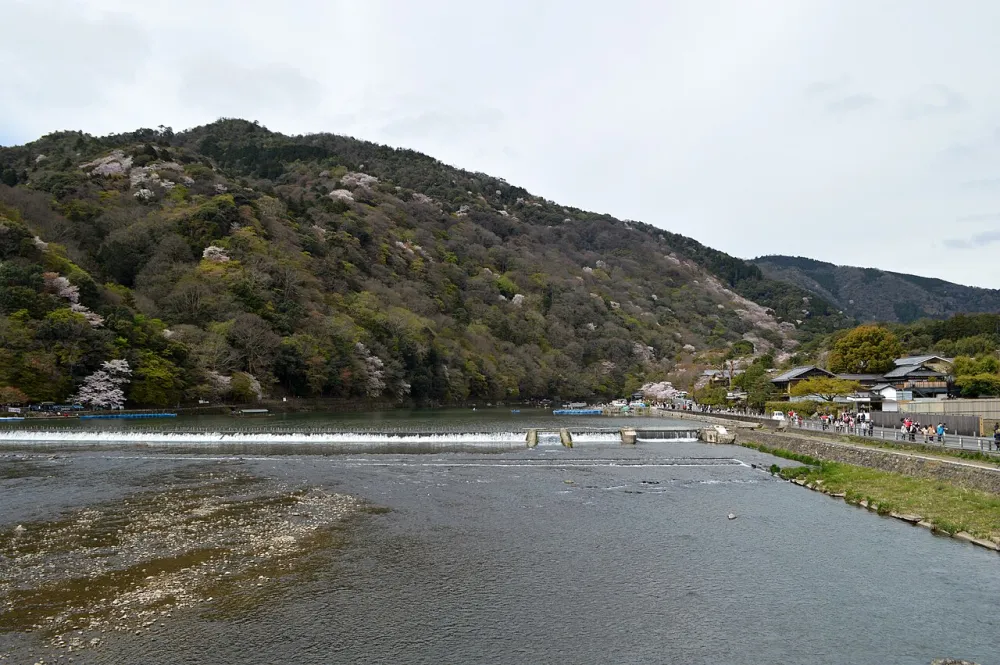
Arashiyama's main dining stretch runs from the north end of Togetsukyo Bridge up to the gates of Tenryu-ji Temple. If Unagiya Hirokawa is on your list, lock in your seat before planning the rest of your route—bookings open one month to the day before your meal. For handmade soba by the bridge, Arashiyama Yoshimura takes walk-ins only. Groups wanting a slower sit-down meal also have yudofu, temple shojin cuisine, and a tearoom with advance seatings. Travelers from Kyoto Station walk down toward the river from JR Saga-Arashiyama Station's South Exit, while Hankyu riders enter from the south bank and should leave buffer time around crossing the bridge.
Three stations, and which one to eat near first
If you are staying near Kyoto Station, ride the JR Sagano Line to Saga-Arashiyama Station. Exit the ticket gates and head toward the South Exit on the Torokko Saga Station side; the streets right outside work well for a quick tea or snacks on the way back. To head straight to Tenryu-ji Temple, walk southwest from the South Exit—the temple estimates about a 13-minute walk from the JR station. Soba seekers heading straight for the north end of Togetsukyo Bridge face about a 12-minute walk according to the restaurant. Drop map pins for both Tenryu-ji and your lunch spot before stepping out of the station so you know which direction to take first.
Coming from Shijo-Kawaramachi or Osaka-Umeda on the Hankyu Line, transfer at Katsura Station onto the Hankyu Arashiyama Line. The terminal Hankyu Arashiyama Station sits on the south bank of the Katsura River. Turn right out of the station plaza along the Kyoto City Tourism Association's park route, cross the small Taikobashi Bridge, and turn left to reach Togetsukyo Bridge over the main river channel. Reaching Hirokawa, Tenryu-ji, and most restaurants in this guide requires crossing Togetsukyo Bridge. If you are meeting friends at Hanaikada on the south bank, stay on the south side of the bridge while anyone arriving by JR walks across to you.
Arriving from Shijo-Omiya on the Randen tram drops you at Randen Arashiyama Station directly on Nagatsuji-dori, facing Tenryu-ji's main approach. Turn left out of the station and walk south down the main street for about 4 minutes to reach Togetsukyo Bridge. Randen also stops at Randen-Saga Station, which connects easily to the JR line and shops on the Saga side. When friends text "meet at Arashiyama Station," specify "Hankyu," "Randen," or "JR" so two groups do not head to opposite riverbanks.
Buses drop you right outside the main strip. Tenryu-ji lists Kyoto City Bus routes 11, 28, and 93 at Arashiyama Tenryu-ji-mae, and Kyoto Bus routes 61, 72, and 83 at Keifuku Arashiyama Ekimae. The stops sit in virtually the same dining zone, though the approaches differ. If you already have a lunch booking and are coming from Shijo-Kawaramachi, the Kyoto City Tourism Association recommends taking the train over City Bus 11, which runs along congestion-prone Shijo-dori. When cross-town transit lands right before a meal slot, skip browsing before you check in so transfers and bridge crossings do not squeeze your timing.
Arriving in Arashiyama from Kyoto Station, Shijo-Kawaramachi, or Osaka? Decide which riverbank to eat on, compare Unagiya Hirokawa bookings and prices, Arashiyama Yoshimura walk-in rules, yudofu and yuba set meals, plus cafes and snacks matched to your return station.
Unagiya Hirokawa: opens one month ahead, book a specific slot
Unagiya Hirokawa sits along Nagatsuji-dori near Tenryu-ji at 44-1 Saga Tenryu-ji Kitatsukurimichi-cho. The kitchen prepares orders to match reservation times, so both lunch and dinner are strictly reservation-only. Tables open one month prior on the same calendar date (shifted one day later if that date falls on a closing day). International visitors use the restaurant's multilingual online booking system; phone bookings are Japanese-only, and concierge calls are limited to partner hotels designated by the restaurant. For a weekend trip for two, check which time slots remain for your target date first, then decide whether to eat breakfast near Kyoto Station before coming or end your Arashiyama day with dinner here.
Lunch runs 11:00–15:00 (last order 14:30) and dinner runs 17:00–21:00 (last order 20:00). Hirokawa is closed every Monday, even when Monday falls on a national holiday, plus extended breaks around New Year's and in January, May, and October as announced on its schedule. If Monday is your only day in Kyoto, plan lunch around open soba or tofu spots instead. With a 17:00 dinner booking, spend the afternoon along the river, walk back up Nagatsuji-dori, and afterward ride Randen back to Shijo-Omiya or walk to JR Saga-Arashiyama for Kyoto Station.
Menu prices listed on the official site exclude tax: unadon is ¥3,100, regular unaju is ¥3,900, jo-unaju is ¥5,400, and tokujo-unaju is ¥6,700. First-timers can start with unadon or regular unaju and decide whether to add clear soup. To compare plain charcoal-roasted eel against glazed eel, order kabayaki and shirayaki, both starting at ¥5,100 before tax. Two regular unaju boxes total ¥7,800 before tax; sides such as kimosui (eel liver soup) are priced separately, so tally everything together when setting your budget.
Standard seating fits 1 to 5 guests, and parties with preschool-aged children must book a private room. A private room costs ¥2,000, holds 2 to 8 people including children, and comes with either table chairs or sunken horigotatsu seating assigned by the restaurant. Note wheelchair access, strollers, or chair requirements directly in the booking form. Every guest must order one main dish, and groups of 9 or more cannot split into multiple reservations. If you need to cancel, the restaurant asks that you contact them by the day before; no-shows and same-day cancellations incur a ¥3,000 per-person fee.
If people in your group have mixed feelings about eel, share the menu before booking. Anyone wanting only a small plate, hoping to share a main with a child, or traveling in a party over 8 should skip this meal and let eel fans book separately. Once locked in, keep your pre-lunch walk near Tenryu-ji's front gate and northern Nagatsuji-dori. If you have already walked past the west side of the Bamboo Grove and would have to push back through heavy foot traffic to make your seating, save that loop for after lunch.
Soba at the north end of Togetsukyo Bridge: check seating rules first
Arashiyama Yoshimura sits two doors west of the north end of Togetsukyo Bridge, about a 3-minute walk from Randen Arashiyama Station or a 7-minute walk across the bridge from Hankyu Arashiyama Station. Weekday hours are typically 11:00–16:00, extending to 17:00 on weekends and Japanese national holidays, and 10:30–17:00 during peak seasons (closed January 1). Unlike its sister locations in central Kyoto, the Arashiyama main shop does not accept reservations. Families with children younger than elementary school age are seated on the first floor, so save the riverside window view for a stroll after eating.
On the standard menu, tax-included prices are ¥1,440 for nihachi soba (served cold or hot), ¥1,600 for limited juwari (100% buckwheat) soba, and ¥2,240 for kamo nanban (duck and scallion) soba. Nihachi blends buckwheat and wheat flour, while juwari uses buckwheat flour alone. On hot days by the river, cold soba served on a tray with dipping sauce cools you down fast; in cold weather, pick hot broth, or order the tenzaru set with tempura and a small bowl of rice if you are heading deeper into Okusaga all afternoon.
Yoshimura switches to seasonal menus during cherry blossom season, Golden Week, Obon, autumn foliage season, and the New Year holidays. The 2026 autumn menu runs from October 23 to December 7, so do not use standard menu prices to estimate your bill during those dates. On a tight budget, check the posted seasonal menu and wait system outside the door before putting your name down. If you hold a timed ticket later in the day, set a hard cut-off time to leave the line rather than relying on average wait estimates from older blog posts.
Arriving via Hankyu and meeting friends before choosing a restaurant works best near the bridge's north end: you can check Yoshimura's wait right away and walk north toward Tenryu-ji for yuba or tofu if the line is too long. Coming and going by JR, simply continue north up Nagatsuji-dori if Yoshimura is full rather than backtracking to the riverfront for another scenic restaurant. You can always split soba and river views into two separate stops.
Where to eat yuba, yudofu, or temple shojin cuisine
For yuba, start at Saga Tofu Ine Main Shop in front of Tenryu-ji (19 Saga Tenryu-ji Tsukurimichi-cho). Its North Shop is at 46-2 Saga Tenryu-ji Kitatsukurimichi-cho, right along the route toward the Bamboo Grove. Both branches list 11:00 opening and 19:00 last order, open year-round with possible extended hours in peak periods, and both clearly state that credit cards are not accepted. When splitting up to shop, specify "Main Shop" or "North Shop"—their street addresses look nearly identical, so copy both the branch name and address into your map app.
Ine's Kyo-yuba Ankake Gozen pours a thick yuba sauce over five-grain rice alongside white miso soup, glazed namafu wheat gluten, and fried sides. The Teoke Yuba Gozen serves fresh yuba sheets in a wooden tub over warm soy milk broth for eating bite by bite. A plant-based option is also available; ask staff for the "Vegetarian Gozen" (Bejitarian Gozen) by name. Because both tofu and yuba are soy-based, write down any other dietary restrictions in Japanese before picking your set.
Turn down the side street along Tenryu-ji's perimeter from the bridge's north end to reach Yudofu Sagano at 45 Susukinobamba-cho. Its Yudofu Set Meal is ¥4,400 and the Sagano Gozen is ¥6,600, tax included. The standard set centers on a simmering pot of tofu with tempura, small sides, and pickles, while the gozen adds yuba sashimi, Kyoto vegetables, and extra courses. If you have an afternoon train or timed museum slot, budget ample time for the gozen so you are not rushing through the last courses. Listed hours are 11:00–17:30 (last order 16:30), with irregular closures and early closing if tofu sells out—for a late afternoon meal, Ine out on the main street is a reliable backup.
To combine Tenryu-ji's garden and lunch in a single entry, eat at Shigetsu, the temple's own restaurant. Open 11:00–14:00 (closed Thursdays), it serves shojin ryori built around vegetables, mountain greens, and seaweeds. The entry-level Yuki course is ¥3,800 (listed as requiring booking two days ahead, though online form submissions for any course must be sent at least three days in advance and confirmed by email). Tsuki (¥6,500) and Hana (¥9,000) both require at least two guests and booking three days ahead. Garden admission (¥500) is charged separately, bringing Yuki to ¥4,300 for an adult. While meals can be paid by card, Tenryu-ji specifies that garden tickets are cash-only, so bring bills for the gate. Cancellations incur a 50% meal charge the day before and 100% on the day.
Yudofu Takemura sits near Ine's North Shop and Hirokawa at 48-7 Saga Tenryu-ji Kitatsukurimichi-cho. For a meal around ¥3,000, the Cosmos Course is ¥2,900 (tax included) with simmered tofu, rice, soup, and deep-fried hirousu tofu fritters; the Matsu Course (¥4,300, tax included) adds tempura and house-made sesame tofu. From roughly November to February, the seasonal hassun platter includes tofu steamed inside a hollowed yuzu. Takemura takes reservations by phone or through the Tabelog link on its website—handy when you want hot tofu after Tenryu-ji without risking a long walk-in wait before your return train.
If your lodging has a fridge or kitchen, you can also take tofu back with you. Saga Tofu Morika, next to Seiryo-ji Temple at 42 Saga Shakado Fujinoki-cho, is about a 15-minute walk from either JR or Randen Arashiyama stations, or 1 minute from the Saga Shakado-mae bus stop. Takemura sources its yudofu directly from Morika. Hours are generally 9:00–17:00 (closing upon sell-out on December 31), and staff provide chilling and storage guidance—pick it up on your way back to the station after sightseeing rather than carrying it all afternoon.
Riverside coffee, museum cafes, and station-side tea rooms
Follow the river west from the north end of Togetsukyo Bridge to reach the % Arabica Kyoto Arashiyama kiosk facing the water. It works best when you only have a short window for coffee to go before walking on. Before joining the line, check whether people are queuing to order or waiting for pickup, and if companions are grabbing sweets elsewhere, agree on a meetup spot back off the narrow road. Keep the bridge walkway clear for pedestrians and finish drinks or photos before crossing—especially with a stroller, so both hands stay free.
To sit down with a view of Togetsukyo Bridge, build the Fukuda Art Museum into your afternoon. Its cafe, Bread, Espresso & Fukuda Art Museum, is open only to museum ticket holders, with coffee and food paid separately (10:00–17:00, last order 16:30). Give yourself enough time to see the exhibition and still rest your feet. Early-bird tickets grant museum entry between 9:15 and 10:00 to beat peak crowds, though the cafe itself still opens at 10:00. Note that the museum closes from December 30, 2026 to January 1, 2027, when you will need an independent tearoom for an indoor break.
Near JR Saga-Arashiyama's South Exit, TEA ROOM KIKI Kyoto-Arashiyama Main Shop (1 Kurumamichi-cho) runs 9:00–17:00 (last order 16:00; last entry for unlimited "Tea Free" service 15:30; irregular holidays). You can reserve just a seat through its booking page and decide between scones, tea, or a meal once seated; guests junior high age and older must each order at least one item. Afternoon tea sets use dedicated seasonal slots and generally require booking by 18:00 two days ahead. Put KIKI at the start of your arrival or right before boarding your JR train home so you do not have to push back through bridge-end crowds afterward.
Arriving around 9:00, KIKI also serves an English breakfast from 9:00–11:00, listed on the reservation page from ¥2,600 (tax included) with eggs, beans, and bread. Afterward you can stroll up the rail side toward Seiryo-ji and keep lunch light with yuba or snacks. If you already booked an early lunch at Shigetsu or Hirokawa, stick to a single cup of tea or a small pastry by the station—a full English breakfast followed by a multi-course gozen packs too much food into three hours.
When some people in your group want a long sit-down tea and others just want a quick coffee, split up early. Two people with a KIKI reservation can linger over scones while everyone else explores near Saga Station and meets back at the South Exit. If the whole group plans to visit the Fukuda Art Museum together, save the museum cafe for after the galleries to avoid coordinating an extra meetup. Solo coffee drinkers can skip the museum option and weigh riverfront queues on the spot.
Station-side snacks and when to save room
Nakamuraya Sohonten on Saga Shopping Street is a butcher shop famous for freshly fried croquettes. Walking from JR Saga-Arashiyama Station toward Tenryu-ji, you can swing past for one on the way—or split one between two people as a light snack if a full yudofu gozen is already on your schedule, or save it as a savory bite on the walk back to the JR gates before coffee. Make sure you navigate specifically to "Sohonten" (the main shop) rather than grabbing a similarly named croquette near the bridge assuming both are on the same path.
Ine also sells yuba donuts and soy milk yuba soft-serve, which taste quite different from the savory soy broth at lunch. If you are rushing for a train and just want a quick taste of Arashiyama soy sweets, pick up one item on your way back from Tenryu-ji's gate. Hold off on buying extra warabimochi until after lunch if you are eating at Ine, since several of its set meals already include hon-warabimochi. Eat standing snacks in the designated areas beside each stall rather than blocking crowded Nagatsuji-dori with food in one hand and a map in the other.
Before buying multiple takeout snacks, figure out where you will sit. Station-side stands are built for grab-and-go and rarely offer tables for a whole family to rest. If anyone needs to take medication or sit down to feed a toddler, prioritize a sit-down lunch first and leave street snacks for later. If your hotel has a refrigerator, save packaged or chilled goods for the final walk to the station so extra bags do not weigh down your afternoon.
Fitting the Bamboo Grove, gardens, and lunch into one half-day
Start early from Kyoto Station by walking the Bamboo Grove first, entering Tenryu-ji through its North Gate, touring Sogenchi Pond, and exiting via the main garden reception onto the temple approach right near Nagatsuji-dori's restaurants. Standard garden hours are 8:30–17:00 (last entry 16:50); admission is ¥500 for high schoolers and adults, ¥300 for elementary and junior high students, and free for preschoolers. Entering the temple buildings adds ¥300 with a different cutoff time, so do not cram both the garden and halls right before a tight lunch booking.
From November 14 to 30, 2026, Tenryu-ji opens its main garden reception early at 7:30, while the North Gate by the Bamboo Grove keeps its regular 8:30 opening. If soba by the bridge is your lunch goal during those dates, reverse the usual order: enter Tenryu-ji's front gate at 7:30, exit out to the Bamboo Grove at 8:30, and loop back down to the north end of Togetsukyo Bridge. Walking the Bamboo Grove at 7:30 would leave you waiting outside the locked North Gate—reversing the route captures that quiet early hour and leaves time for a bathroom break before lunch.
With an 11:00 booking at Hirokawa, decide how far into the Bamboo Grove to walk based on your return time, or save Tenryu-ji's garden for after lunch. If half a day only allows one major stop, pick Sogenchi Pond for borrowed mountain scenery and water reflections, or walk the northern edge of the Bamboo Grove and double back while checking foot traffic on Nagatsuji-dori. Eating at Shigetsu merges lunch and garden admission into one visit; the earlier you finish and exit, the better your odds of fitting in riverside coffee before catching JR back.
Check the Kyoto Tourism Comfort Map for live camera feeds of Togetsukyo Bridge's north end and the Bamboo Grove path, plus crowd forecasts by date and weather. Looking at the riverfront feed before leaving Randen Arashiyama Station shows whether crowds are already backing up at the crosswalks, helping you decide whether to eat first or cross the bridge first. Keep in mind the map only tracks street congestion—actual restaurant waits depend on table turnover, so check posted signs or ask staff at the door before committing to a line.
Pairing lunch with the Sagano Scenic Railway on the same day
Torokko Saga Station sits right beside JR Saga-Arashiyama Station's South Exit. Torokko Arashiyama Station at the western end of the Bamboo Grove is the next stop, roughly a 20-minute walk from Torokko Saga Station, and requires climbing about 60 stairs inside the station between the ticket gates and platform. After lunch on or east of Nagatsuji-dori, boarding at Torokko Saga is the most direct choice—and far better for strollers or anyone using a cane. If you walk from the Bamboo Grove to Torokko Arashiyama Station instead, add stair time onto your departure buffer from lunch.
To fit both Hirokawa and the scenic train into one day, lock in whichever has the tighter schedule first. For an 11:00 Hirokawa seating, book an afternoon train; if you already hold a morning train ticket, ride back from Kameoka to Arashiyama and eat lunch afterward. For a round-trip rail loop, take the scenic train one way to Kameoka, walk about 10 minutes to JR Umahori Station, ride the JR Sagano Line back to JR Saga-Arashiyama, and eat near the South Exit. Budget separate time for the walk, waiting for JR, and reaching the restaurant—counting only train ride duration is the fastest way to miss a meal slot.
In 2026, the Sagano Scenic Railway runs through December 29 before entering winter maintenance on December 30. Its new train launches March 1, 2027, departing Torokko Saga at 10:02 (tickets for that day go on sale around 10:00 JST on February 1; other 2027 tickets generally open 30 days before travel at midnight JST). Regular reserved seats on the new train cost ¥1,500 for adults and ¥750 for children (fare plus seat fee combined). Visiting during the January winter closure means replacing the train ride with a longer sit-down lunch and indoor museum time; from March onward, set two separate calendar reminders—one month prior by calendar date for Hirokawa, and 30 days prior for train tickets.
Under the railway's official FAQ, changing your date, departure time, or passenger count on an online ticket requires canceling for a refund and rebooking. Since Hirokawa also charges for late cancellations, keep flexible plans like coffee queues and shopping street browsing outside those two fixed windows. On a half-day visit, push Togetsukyo Bridge to after your train or meal so you can head straight back to central Kyoto on JR if the day runs late.
Backup plans for rain, winter cold, and autumn foliage weekends
On rainy days arriving by JR, stick to Nagatsuji-dori from the South Exit so lunch and tea stay on the same side of the river. Book KIKI in advance or plan a museum-and-cafe afternoon at Fukuda Art Museum to wait out downpours indoors. With a Hirokawa reservation, grab a light breakfast before boarding the train and wait near the temple approach until your seating. Without a reservation, pin both Yudofu Sagano and Ine on your map: Sagano stops seating earlier, so if you miss its last order, walk out to Ine by Tenryu-ji's main gate. When you only have an hour, pick whichever place has immediate seating and keep both your wait and meal around Tenryu-ji.
In winter, a hot pot of yudofu makes a welcome mid-day anchor after a morning walk, leaving room for only a light afternoon snack. To catch the last winter daylight, walk down to Togetsukyo Bridge right after lunch before heading to your departure station. For dinner in Arashiyama, note evening hours across Ine, Takemura (11:00–19:30, last order 18:30, closed Thursdays), and Hirokawa, pick one before dusk, and leave from a station on the same riverbank. If you already crossed to the south bank earlier in the afternoon, eating dinner on the north bank adds an extra bridge crossing—time your final walk across the bridge to catch both views before or after dinner.
Autumn 2026 brings temporary traffic restrictions that separate drivers from walkers. Tenryu-ji announced that on November 21–23 and 28–29, from 13:00–17:00, vehicles cannot enter or exit the temple parking lot due to Nagatsuji-dori traffic controls. Drivers who park inside the temple lot for lunch will be trapped until 17:00 if they planned an early afternoon departure. If you have timed commitments elsewhere in Kyoto on those dates, take JR or Randen instead. Year-end and New Year schedules also bring sudden closures—such as Yoshimura closing January 1—so do not assume extended autumn hours carry over into January.
Dining with kids, three generations, or solo
Families with preschoolers need a private room at Hirokawa or first-floor family seating at Yoshimura. Hirokawa locks in your time slot and main dishes ahead of time, letting you wrap up morning sightseeing early with zero guesswork. Yoshimura keeps the day flexible—pack a familiar snack for kids to eat before joining the wait, and pivot toward Ine or another tofu or noodle spot outside Tenryu-ji if the line tests their patience. If you are riding the scenic train right after lunch, keep your route on the north bank and walk straight from the restaurant to Torokko Saga Station next to JR.
When traveling with older relatives who have knee pain, check before booking for chair seating, entrance steps, and which floor tables are on. Prime river-view tables are limited, and ensuring everyone can sit comfortably matters more than snagging a window seat. Have one person check the restaurant wait while everyone else rests somewhere seated nearby, and walk over together only once the whole party is required for seating. Never wait on the south bank for a restaurant on the north bank—crossing Togetsukyo Bridge alone can cost you your table call.
Solo travelers can book standard seating at Hirokawa (budgeting for one main course) or reserve Shigetsu's Yuki course, which welcomes solo diners while Tsuki and Hana require two or more. After a bowl of soba at Yoshimura, walking along the river to the Fukuda Art Museum makes an easy solo afternoon with no group schedules to coordinate. Finish one solid sit-down lunch, take a break, and pick up a box of sweets on your way back to the train if time allows.
Planning dinner around south-bank, riverside, or central Kyoto hotels
Staying at Hanaikada ryokan at the south end of Togetsukyo Bridge puts you about a 5-minute walk from Hankyu Arashiyama Station with no bridge crossing required. Guests on dinner-inclusive plans must check in by 19:00; arrivals after 19:30 cannot be served dinner and receive no meal refund. With a full ryokan dinner waiting, keep lunch lighter—regular soba or a yuba rice bowl—and walk straight back across from the north bank in the afternoon. If you are exploring Okusaga first, leave buffer time to drop off or collect bags before crossing the river and checking in.
On the north bank, Suiran sits upstream from Togetsukyo Bridge at 12 Saga Tenryu-ji Susukinobamba-cho. Guests can book one complimentary one-way rickshaw transfer between the hotel and either JR Saga-Arashiyama Station or Randen Arashiyama Station at least three days in advance. Pair daytime walks around Sogenchi Pond, bridge-side soba, or riverside coffee with an easy walk back to your room after lunch—or book dinner at Hirokawa on the same bank. If you are staying on the south bank instead, use your pre-dinner walk back across Togetsukyo Bridge as your final riverside pass. When paying extra specifically for quiet morning and evening river walks, compare choosing riverside hotels and stations for an overnight stay in Arashiyama alongside your dining locations and rail lines.
If you have an early Shinkansen the next morning, arrive late into Kyoto, or have picky eaters in the group, staying near Kyoto Station makes dinner and departure far easier. Take JR from Saga-Arashiyama back to Kyoto Station, pick up stored bags or souvenirs, and sit down for dinner there. Travelers staying in Shijo-Kawaramachi can take Hankyu back, or ride Randen to Shijo-Omiya depending on hotel location. Knowing your departure station ahead of time saves exhausted walkers from crossing Togetsukyo Bridge back to the wrong bank just to hunt for dinner.
For a simple ¥1,500 per-person lunch budget in Arashiyama, use Yoshimura's standard ¥1,440 nihachi soba as your baseline and keep cash aside for tea or snacks. For a full tofu or shojin set, compare Shigetsu's Yuki course at ¥4,300 (including the ¥500 garden ticket) against Yudofu Sagano's ¥4,400 set meal: Shigetsu ties lunch to a timed booking and temple entry, while Sagano lets you eat first near the bridge and decide on sightseeing afterward. At Hirokawa, factor in tax on menu prices, the ¥2,000 private room fee if needed, and one mandatory main per diner. On nights when a ryokan dinner is already built into your room rate, put your daily spending toward trains and entry tickets rather than a second heavy sit-down meal.
A few useful answers
Can you walk in and wait in line at Unagiya Hirokawa in Arashiyama?
Unagiya Hirokawa serves both lunch and dinner by reservation only. Bookings open one month ahead on the same calendar date (pushed back one day if the restaurant is closed), with a multilingual online portal for overseas visitors. Regular tables do not accept preschool-aged children; families with young kids must book a private room.
Does Arashiyama Yoshimura take reservations?
The Arashiyama main shop operates strictly on a walk-in basis; it is the second building west of the north end of Togetsukyo Bridge. Standard hours are 11:00–16:00 on weekdays, extended to 17:00 on weekends and Japanese national holidays, and 10:30–17:00 during peak sightseeing seasons. Closed New Year's Day.
What should I order if I just want to eat yuba?
At Saga Tofu Ine, order the Kyo-yuba Ankake Gozen if you want thickened yuba sauce over rice, or the Teoke Yuba Gozen to eat fresh yuba sheets straight from a wooden bucket over soy milk broth. Ine's main shop sits in front of Tenryu-ji Temple, and its North Shop is toward the Bamboo Grove.
Are there cafes or tearooms in Arashiyama where you can book a seat?
TEA ROOM KIKI near the JR South Exit lets you reserve seats alone through the booking link on its official site. The cafe inside the riverside Fukuda Art Museum is restricted to museum visitors, with food and drinks paid separately.
Which station should I use for a half-day food trip in Arashiyama?
Take JR from Kyoto Station to JR Saga-Arashiyama Station's South Exit, take the Randen tram from Shijo-Omiya straight to Nagatsuji-dori, or take Hankyu from Shijo-Kawaramachi or Osaka (transferring at Katsura) to arrive on the south bank and cross Togetsukyo Bridge. You can use different lines going in and out—just pair your final stop with a station on the same side of the river.
Official information and references
Sources used in this guide.
- Kyoto City Tourism Association | Saga-Arashiyama Rail and Bus Access
- JR West | Saga-Arashiyama Station Premises Map
- Kyoto City Tourism Association | Saga-Arashiyama Tourism Comfort Map
- Unagiya Hirokawa | Reservations, Private Rooms, and Cancellation Policy
- Unagiya Hirokawa | Opening Hours and Access
- Unagiya Hirokawa | Eel Menu
- Arashiyama Yoshimura | Hours, Location, and Autumn Menu
- Arashiyama Yoshimura | Main Shop Walk-In Policy
- Arashiyama Yoshimura | Regular Menu and Prices
- Saga Tofu Ine | Yuba Dishes and Gozen Sets
- Saga Tofu Ine | Vegetarian Gozen
- Saga Tofu Ine | Address, Hours, and Payment Methods
- Yudofu Sagano | Set Meals and Gozen Prices
- Yudofu Sagano | Address, Hours, and Access
- Tenryu-ji Temple | Garden Hours, Access, and Autumn 2026 Early Entry & Traffic Restrictions
- Tenryu-ji Shigetsu | Shojin Cuisine Prices and Reservations
- Tenryu-ji Shigetsu | Online Booking Deadlines and Cancellation Fees
- Saga Tofu Morika | Opening Hours and Access
- Saga Tofu Morika | Storage and Serving Instructions
- Yudofu Takemura | Morika Tofu and Evening Last Order Hours
- Yudofu Takemura | Set Courses, Yuzu-Cup Tofu, and Reservations
- % Arabica | Kyoto Arashiyama Riverside Store
- Fukuda Art Museum | Cafe Opening Hours and Admission Rules
- Fukuda Art Museum | Early-Bird and General Admission Tickets
- Fukuda Art Museum | 2026–2027 Year-End and New Year Closure Schedule
- TEA ROOM KIKI Kyoto-Arashiyama | Address, Hours, and Reservations
- TEA ROOM KIKI Kyoto-Arashiyama | Official TableCheck Booking Rules
- Saga Shopping Street | Nakamuraya Sohonten and Dining Directory
- Sagano Scenic Railway | Riding and Ticket Change/Refund FAQ
- Kyoto Prefecture Tourism Federation | Torokko Kameoka and JR Umahori Stations
- Sagano Scenic Railway | 2027 New Train Launch, Fares, and Advance Sales
- Hanaikada | South Bridgehead Location and Station Access
- Hanaikada | Check-In Deadline for Dinner-Inclusive Stays
- Marriott | Suiran Location and Complimentary Guest Transfer