Plan half a day in north-west Kyoto, from Kinkaku-ji’s pond, steps and photography rules to Ryoan-ji’s rock garden or Kitano Tenmangu. Includes bus directions, children’s admission, accessible routes, the monthly market and the 2026 Odoi autumn garden.
- Region & Focus
- KyotoShrines and temples
- Reading Scope
- 30 min read · 12 chapters · 4 Q&As
- Official Verification
- 20 official sources checkedUpdated 22 November 2026
- Key Topics
- ItinerariesSeasonsRail travel
Chapter Route Map (tap any stop)
- For half a day, choose between the rock garden and the shrine
- Kinkaku-ji admission: ¥500 for adults, including senior high school students
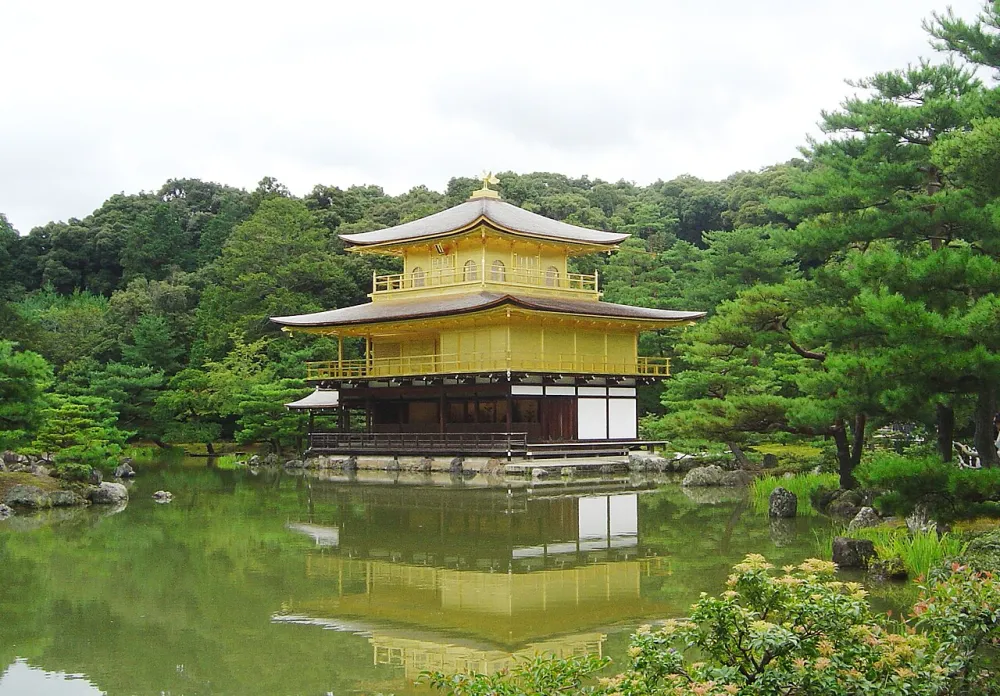
- Pause at Kyoko-chi Pond, then compare the pavilion’s three floors
- Beyond the pavilion: the full garden circuit and the return before the steps
- Sort out luggage, lunch and photography before leaving
- Choose the bus direction: direct from Kyoto Station or change at Kitaoji
- Kinkaku-ji to Ryoan-ji: two different ways to see a garden
- At Ryoan-ji, look beyond counting the stones
- Kinkaku-ji to Kitano Tenmangu: worship, charms and seasonal gardens
- Plan backwards from the last thing you need to do
- The market on the 25th and the 2026 Odoi garden change the itinerary
- Let your companions and the weather set the second stop’s length
- Quick Q&A
Kinkaku-ji, Ryoan-ji and Kitano Tenmangu are all in north-west Kyoto, but treating them as three consecutive photo stops makes a poor half-day itinerary. Kinkaku-ji follows a garden circuit. Ryoan-ji rewards quiet time in front of its rock garden. Kitano Tenmangu changes with the market on the 25th, the plum garden and the autumn maple garden. On a first visit, pair Kinkaku-ji with one of the other two. To see all three properly, allow a longer day that includes lunch, transport and any seasonal garden.
For half a day, choose between the rock garden and the shrine
Choose Kinkaku-ji and Ryoan-ji to compare a golden pavilion beside a pond with a dry landscape garden. Both are temples, but the visits feel different. At the first you move through the grounds and see how the building relates to the water. At the second you stop in front of the Hojo and study the white gravel and groups of rocks. For anyone interested in Japanese gardens, this pairing leaves more time than crossing to eastern Kyoto for another temple.
Choose Kinkaku-ji and Kitano Tenmangu to pray to the deity of learning, examine shrine decorations or buy an omamori charm. The shrine’s ordinary grounds are free to enter. Without a seasonal garden visit, admission costs less and the second stop can remain flexible. Families with students taking exams can make prayers for success the focus. If you are accompanying an older relative to see the Golden Pavilion, keep the second visit to worship in front of the main sanctuary if that suits their energy. There is no need to visit every subsidiary shrine.
If you plan to enter the Odoi autumn garden in 2026, treat Kitano Tenmangu as a main attraction with its own admission, walking and visiting time. An ordinary shrine visit and the maple garden need different time slots. For evening admission, a useful plan is Kinkaku-ji by day, lunch and a rest, then Kitano. Leave Ryoan-ji for another morning. You can see the buildings in daylight and wait for the garden lighting without chasing three closing times.
The half-day timings below are itinerary suggestions. Start by allowing four to five hours for two visits, one transfer and a meal. Add time for retracing the step-free route with a pushchair, children’s breaks or the autumn garden. If you have only three hours and must collect luggage at Kyoto Station, one main attraction and a meal are more suitable. Include leaving your accommodation, waiting for transport and reaching the actual entrance; nearby map markers then become a workable route.
Plan half a day in north-west Kyoto, from Kinkaku-ji’s pond, steps and photography rules to Ryoan-ji’s rock garden or Kitano Tenmangu. Includes bus directions, children’s admission, accessible routes, the monthly market and the 2026 Odoi autumn garden.
Kinkaku-ji admission: ¥500 for adults, including senior high school students
Kinkaku-ji is formally called Rokuon-ji. Its famous golden building is the reliquary hall known as the Golden Pavilion. The temple currently lists ordinary visiting hours of 09:00–17:00, year round. Admission is ¥500 for adults, including senior high school students, and ¥300 for primary and junior high school pupils. Plan around the 09:00 opening rather than expecting the early access available at Kiyomizu-dera.
For two adults, one senior high school student and one primary school pupil, ordinary admission totals ¥1,800. At a second stop at Ryoan-ji, the senior high school student pays a separate ¥500 rate. Age categories differ between the temples, so work out the family budget for each. Kinkaku-ji has no standard group discount; parties of 30 or more enter as a group. Visitors holding the disability or rehabilitation certificates specified by the temple can show the original on the day to apply for a reduction or exemption. Groups can apply in advance through the temple’s procedure.
Kinkaku-ji accepts cash and several cashless methods through Omairi Pay for admission. This does not cover charms, other religious items or goshuin seals, so keep cash for those purchases. The admission ticket gives access to the public garden route. Concentrate on the pavilion’s exterior beside the pond and the garden sights along the route; there is no need to set aside time to go upstairs or inside the pavilion.
17:00 is the listed end of visiting hours. Arriving at the last moment leaves too little time for the garden. Put Kinkaku-ji earlier in the day if you also want Ryoan-ji or Kitano’s main sanctuary, so the second stop’s final admission and closing times are easier to manage. For special events on your travel date, use the temple’s announcement of the areas open to visitors. Allowing enough visiting time is more useful than rushing the last stretch at the gate.
Pause at Kyoko-chi Pond, then compare the pavilion’s three floors
After entering the garden, first stop to see how Kyoko-chi Pond relates to the reliquary hall. Water, island rocks and trees frame the pavilion; there is more to see than its golden walls. Take in the whole pond, then examine the different storeys. This gives a better understanding of the garden than seeking a single angle that matches an online photograph.
The temple’s grounds guide explains that gold leaf covers the lacquered surfaces of the second and third floors. The first floor, Hosui-in, uses the shinden style of aristocratic residences. The second, Choondo, follows a warrior-residence style. The third, Kukkyocho, uses a Chinese-style Zen Buddhist hall design. From the pond you can spot the different materials and colours of the lower and upper floors, the phoenix on the roof and the distinct appearance of each storey. For a child who does not want a long history lesson, finding the floor that is not entirely gold is a good start.
The pond’s islands and rock groups are part of the design too. Focusing only on the pavilion can obscure its position within a much larger pond garden. Look more widely to compare the open water, trees along the shore and the building’s proportions. Wind breaks up the reflection; rain brings out wet stones and roof outlines. Keep to the visitor route, stay behind ropes and do not block the path while waiting for a reflection.
If people are already standing at the pond, examine the architectural details from an authorised viewing position, then move forward with the queue. Families with a wheelchair or pushchair should make this their main viewing area. Steps beyond the pavilion mean the full circuit and the step-free return are different routes. Decide at the entrance whether everyone will turn back together, so the group does not lose contact at the steps.
Beyond the pavilion: the full garden circuit and the return before the steps
After the pond, turn from the broad architectural view to smaller features. The official guide lists Rikushu-no-matsu pine, Gingasen spring, Gankasui water basin, Ryumon waterfall, Anmintaku pond, Sekkatei tea house and Fudo-do hall. Save the map if you want the full circuit, then follow on-site directions through the areas open that day. You do not need to stop at every name as though ticking off a roll call.
Gingasen, behind the pavilion, is linked in the temple guide to a tradition that Yoshimitsu used its water for tea. Nearby Gankasui is said to have supplied water for washing his hands. After the large pond view, notice where the springs sit on the slope and how the garden’s focus changes. Read these traditions as presented in the guide; do not plan to drink or collect the water.
Sekkatei on the later part of the circuit is a tea house to view as a garden feature. Treat it separately from any paid tea break along the way. Let others pass before stopping on narrow sections or steps. Photograph the names on the guide map and read their histories back at your accommodation rather than looking down to research every story on this uneven route.
The temple gives clear advice for wheelchair users, people with limited mobility and pushchairs. A route with fewer large changes in level reaches the side of the Golden Pavilion. Turn back before the steps and leave through the visitor entrance. This does not complete the garden circuit or exit at its far end. If some continue while others turn back, agree a meeting point outside the entrance first and make sure anyone needing help has a companion.
Kinkaku-ji has loan wheelchairs and an accessible toilet. Wheelchairs cannot be reserved and are available only if one is free on arrival. Plan the return route above if using your own wheelchair. For an older relative who can walk only short distances, do not make a loan wheelchair the sole basis of the plan. The shorter pond visit is worthwhile in itself. Everyone can turn back together and save energy for the second stop or lunch.
Sort out luggage, lunch and photography before leaving
Kinkaku-ji has neither luggage storage nor lockers. Leave large bags at your accommodation or station storage before travelling to the temple. You must carry your belongings from the entrance to the pond and the later steps, so a suitcase is unsuitable. On a day when you change hotels, decide where to leave and collect luggage before choosing a morning or afternoon visit. Avoid leaving companions and bags at different stations.
The temple also states that there is nowhere in the garden to eat a packed lunch. Use a restaurant outside before or after your visit; the pondside, steps and garden corners are not picnic areas. For two temples in a morning, eat breakfast before the first and lunch after both. If a young child needs an earlier meal, eat after Kinkaku-ji and move Ryoan-ji to the afternoon. Lunch is part of the itinerary, not something to postpone until every temple and shrine is finished.
Kinkaku-ji’s photography rules are stricter than many visitors expect. The official permission covers casual photographs with a small camera for personal enjoyment. Photography intended for sharing with third parties, including social media, and commercial photography are prohibited. Group photographs, livestreams and drone flights are also prohibited. If your main purpose is a public video or social media content, plan filming around the temple’s rules and use your garden visit for worship and observation.
These rules affect how a group visits. Do not have one person photograph everyone in turn beside the pond while others block the route. Agree the pace outside the entrance if some want to read signs and others want the short route. Small dogs and cats must stay fully inside a cage or carrier, with neither head nor body exposed. Carrying them in your arms or a sling does not meet the rule. Assistance dogs may accompany visitors.
Choose the bus direction: direct from Kyoto Station or change at Kitaoji
Kinkakuji-michi is the city bus stop listed on the temple’s access page, served by routes 12, 59, 205 and M1. There is still a walk from the stop to the temple entrance. Set navigation to the entrance rather than counting only the bus arrival time. Identify the return stop and direction on arrival, so you do not have to study the stop across the road in a crowd after the visit.
From Kyoto Station, look for city bus 205 towards Kinkaku-ji and Kitaoji Bus Terminal if you want a direct journey. Route 205 is circular, so the same number appears in different directions. Check the destination as well as the number. A direct bus is simple for families with children and light day bags, but more of the journey is on city roads. Any congestion takes time directly from your visit.
Alternatively, take the Karasuma subway line to Kitaoji Station and Bus Terminal, then a 204, 205 or M1 towards Kinkaku-ji. The transport bureau’s current stop pages separate route 204 into Takano/Ginkaku-ji and Kinkaku-ji/Emmachi directions, and route 205 into Kawaramachi-dori and Nishioji-dori directions. Choose the one showing Kinkaku-ji. The subway puts more of the city journey on rail, useful if you already stay near the Karasuma line or want less time on surface transport.
From Shijo Kawaramachi or Sanjo Keihan, compare that day’s services on routes 12 and 59. Route 59 is particularly useful if Ryoan-ji is next. The best service depends on your hotel and departure time. Search from the hotel door to Kinkakuji-michi and compare fewer changes with less walking for your companions. There is no need to detour via Kyoto Station as a meeting point.
For departure, the Kinkakuji-michi stop pages list route 59 towards Ryoan-ji/Yamagoe, routes 204 and 205 towards Kitaoji, and route 205 via Nishioji Shijo towards Kyoto Station, among others. For the Karasuma line, change at Kitaoji. For Ryoan-ji, choose its direction. Knowing the correct stop and direction matters more than memorising the number: do not join the nearest queue simply because it says 205.
Kinkaku-ji to Ryoan-ji: two different ways to see a garden
Ryoan-ji is south-west of Kinkaku-ji. Walk along Kinukake-no-michi, or take bus 59 from Kinkakuji-michi towards Ryoan-ji/Yamagoe and get off at Ryoanji-mae. Walking makes the road itself part of the outing. The bus saves energy for the temple, often the better choice in strong summer sun, rain or after the full Kinkaku-ji circuit. Waiting for a bus need not be wasted time; the distance already walked affects how well you can concentrate on the rock garden.
Ryoan-ji lists visiting hours of 08:00–17:00 from 1 March to 30 November and 08:30–16:30 from 1 December to the end of February. Its FAQ separately gives gate-closing times of 17:30 and 17:00 respectively. Plan arrival around the visiting hours, not the later gate closure. Ordinary admission is ¥600 for adults, ¥500 for senior high school students and ¥300 for primary and junior high school pupils, with no group discount. Goshuin service is normally 09:00–16:00, so fit it within your visit if you want an entry in your seal book.
The family of two adults, one senior high school student and one primary school pupil pays ¥2,000 at Ryoan-ji and ¥3,800 for both temples, excluding transport and lunch. For ordinary adult admission, the two temples total ¥1,100 per person. These are separate admissions, not a combined ticket. If the family is interested in only one garden type, choose one temple and spend the saved time and admission on a more relaxed meal.
The temple FAQ estimates a normal visit at about 30–40 minutes. Allow around an hour if you want to sit before the rock garden and walk beside the pond; that extra time is an itinerary choice. Visiting Ryoan-ji first uses its earlier opening before moving on to Kinkaku-ji. This suits anyone who wants to leave before 09:00 without waiting outside Kinkaku-ji.
At Ryoan-ji, look beyond counting the stones
Ryoan-ji’s famous rock garden is the Hojo Garden, with 15 rocks set in white gravel. The temple lists the groups from the east as five, two, three, two and three. Begin with the spaces between them, then the open gravel around them. If you start by trying to count every rock, you may miss how the same ground gains depth from different positions. This garden invites a still gaze, unlike the moving pondside visit at Kinkaku-ji.
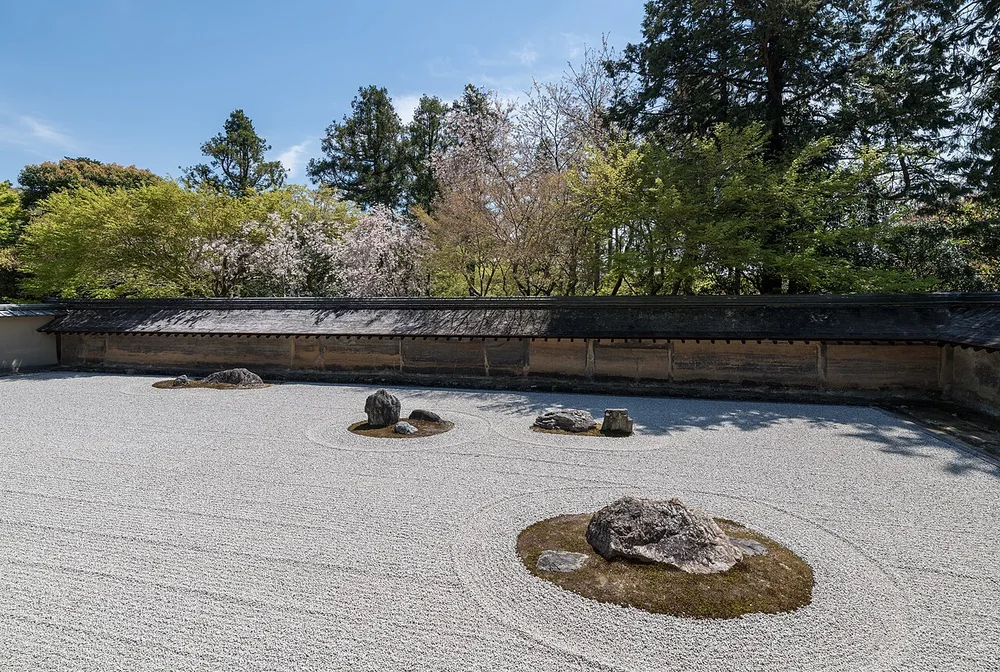
The temple presents several readings of the designer’s intentions, including the name “tiger cubs crossing the water”. First look at the rocks, gravel and earthen walls, then read the explanations. You do not need to assign each rock a single fixed meaning. Children can find the closest group or widest stretch of gravel; design enthusiasts can study how the walls frame the view. Both approaches work in the same space.
One easily missed detail comes from the official explanation: the garden slopes slightly towards the south-east corner at the rear left of the Hojo for drainage. The wall on the right also becomes lower towards the far end to create depth through perspective. These lines reveal more of the design than simply counting rocks. Follow the gravel patterns to the boundary and back to the groups to see the layers within this apparently flat, small garden.
After the southern rock garden, follow the public route to other views around the Hojo. The grounds guide describes a tsukubai water basin whose central square opening supplies the shared “mouth” element of the four characters in the inscription meaning “I know only contentment”. It is a good detail to decipher together. The Zorokuan tea house is normally closed, so do not make entering it an essential activity. Give the open gardens your time instead of waiting at a closed doorway.
Kyoyochi Pond offers a different scale again. The temple links it to the former villa of the Tokudaiji family. Seasonal plants and waterbirds can be seen from the shore paths. Do not chase the birds or throw food into the water. Keep both rhythms: sit quietly at the rock garden, then walk beside the pond after leaving the building. Ryoan-ji then becomes more than a single photograph of white gravel.
Kinkaku-ji to Kitano Tenmangu: worship, charms and seasonal gardens
Kitano Tenmangu, south of Kinkaku-ji, is dedicated chiefly to Sugawara no Michizane. Ordinary entry to the shrine grounds is free. Normal opening is 07:00–17:00, with evening opening during the autumn garden illuminations. The Sankomon gate before the main sanctuary closes 30 minutes before the day’s final closure. On an ordinary day, complete worship by 16:30 before exploring nearby. The charm counter normally opens 09:00–16:30, extended to 20:00 during the autumn illuminations. Prayer applications are accepted 09:00–16:00. Use the relevant hours for charms and formal prayers.
From Kinkakuji-michi, take a 205 or 204 south along Nishioji-dori, get off at Kitano Hakubaicho and walk. The shrine’s current access page gives a five-minute walk from Keifuku Kitano-Hakubaicho Station. Add the location of the bus stop, road crossings and the walk to the sanctuary to your journey. Kitano Tenmangu-mae is a different bus stop, useful for specified services such as route 50 from Kyoto Station or routes 51 and 203 from Imadegawa. Do not treat the two stops as the same place.
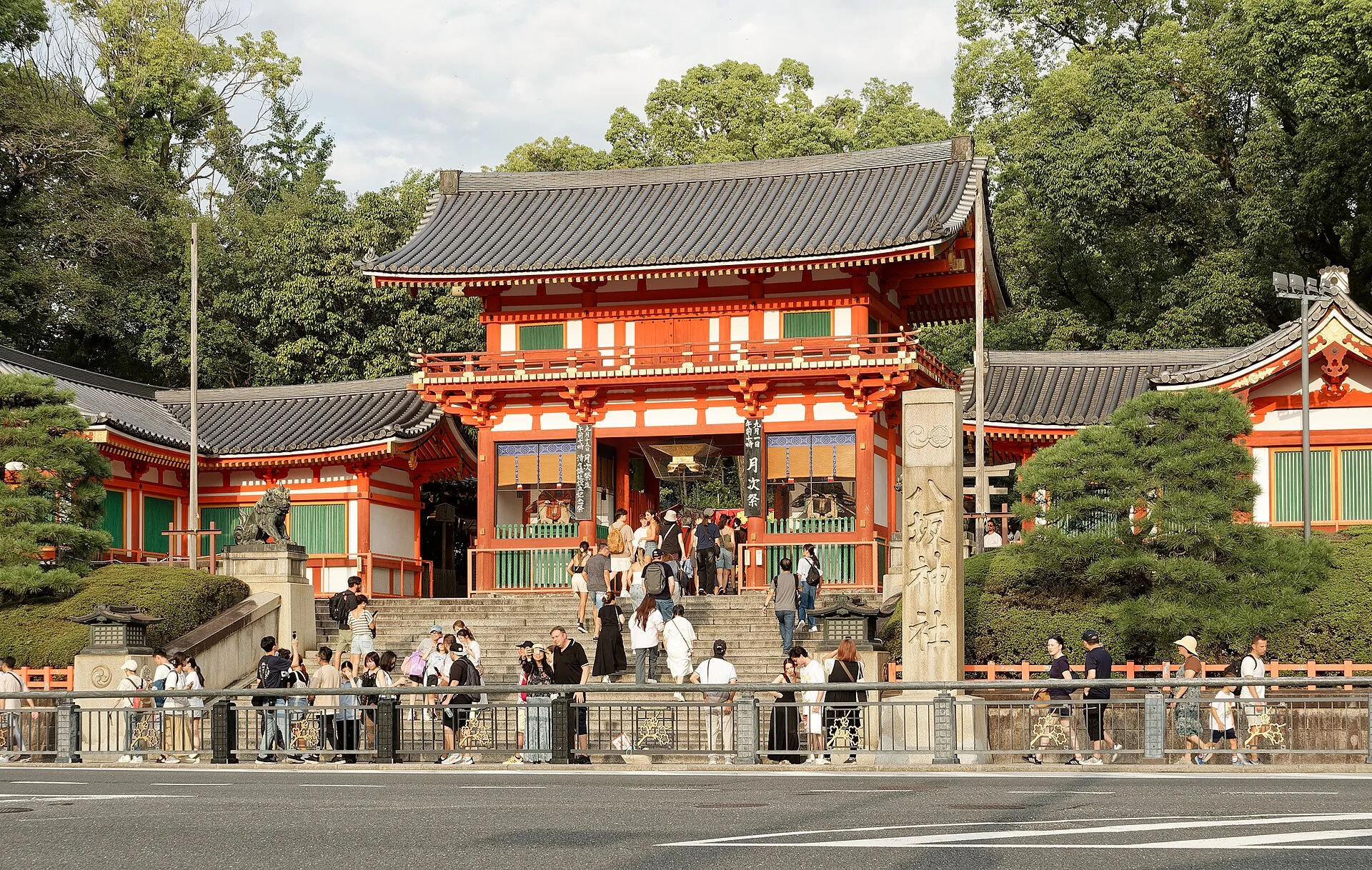
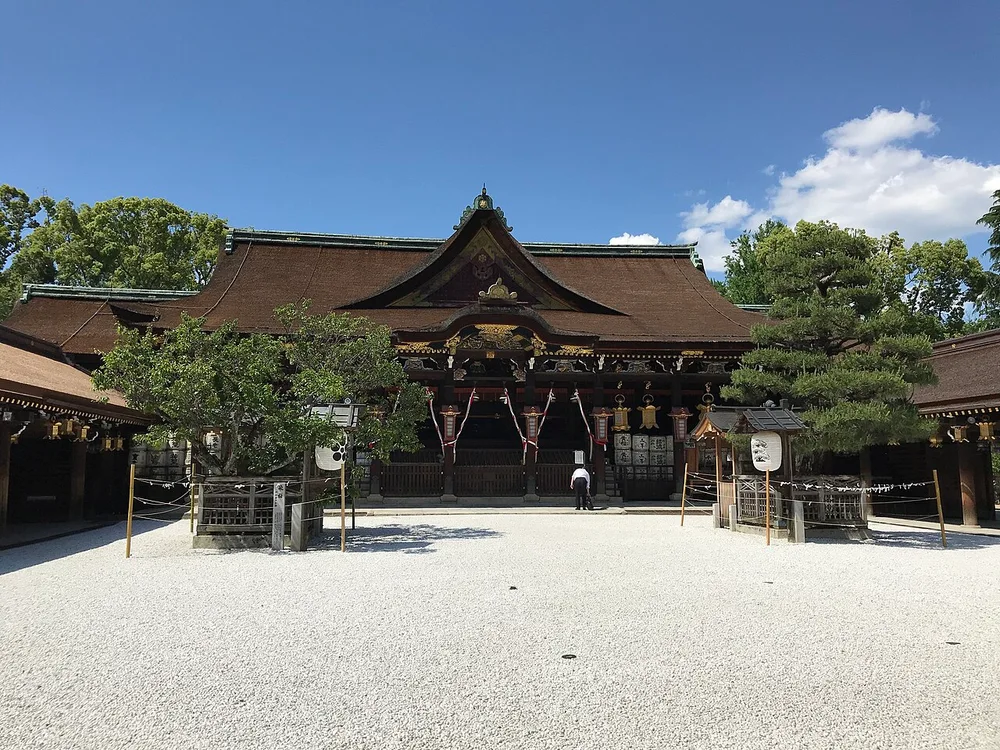
On a first visit, enter through the first torii on Imadegawa-dori, follow the approach through the Romon gate, then continue to Sankomon and the main sanctuary. The sanctuary connects the main hall, worship hall and intervening space in the yatsumune style, also called gongen-zukuri. The present building was constructed by Toyotomi Hideyori in 1607. Ordinary worship takes place before the worship hall. Study the roof curves, karahafu gable and gold details, then compare the carvings on Sankomon. This is quite different from Kinkaku-ji’s pond view.
Allow separately for charms, ema prayer plaques and goshuin seals according to what you choose. If some family members want formal prayers and others only charms, put the service hours first in the second visit. Others can then join them or rest outside the grounds. An ordinary visit does not need a group-worship procedure. For a family with exam candidates, this shrine can be the main purpose of the trip rather than whatever fits after Kinkaku-ji.
The official entrance-area livestream used by the shrine website shows the road and pedestrian traffic in front of the first torii.
Plan backwards from the last thing you need to do
For a morning at Kinkaku-ji and Ryoan-ji, allow 09:00–10:00 at Kinkaku-ji, transfer after 10:00, then about an hour at Ryoan-ji, with lunch after both. This gives the first stop room to breathe and leaves walking or waiting between the temples. If you leave Kyoto Station at 09:00, shift everything to match your actual arrival, including lunch. Do not hurry through the garden just to keep an exact hour on paper.
In the reverse order, use Ryoan-ji’s 08:00 opening from March to November, then head to Kinkaku-ji for its 09:00 opening. This suits visitors staying in western Kyoto who want an early start. In winter Ryoan-ji opens at 08:30; with the transfer included, you need not wait at Kinkaku-ji’s gate. For the Karasuma line afterwards, take a bus towards Kitaoji from Kinkakuji-michi rather than returning to Ryoan-ji for your original service.
For an afternoon at Kinkaku-ji and Kitano, first decide whether you want to worship before the main sanctuary or a goshuin. Put both before 16:30 and finish Kinkaku-ji earlier. For daytime admission to the 2026 autumn garden, reach its entrance before reception ends at 15:40. Evening visitors can split ordinary worship and the garden into separate stages, eat or rest between them, then enter after sunset rather than waiting continuously at the torii.
To visit all three, treat them as a longer day: Ryoan-ji, then Kinkaku-ji, lunch and Kitano Tenmangu. After the second transfer you still have the shrine approach and perhaps a seasonal garden, so do not book lunch across Kyoto. With a fixed city-centre lunch, keep the two morning temples and plan the afternoon from the centre. Seeing two places properly is more useful than delaying lunch and the return journey to force in a third.
The market on the 25th and the 2026 Odoi garden change the itinerary
The 25th of each month is Kitano Tenmangu’s festival day, with stalls along the approach and lighting in the grounds after sunset. The access page states that the visitors’ car park is unavailable that day, so use public transport. For the market, go straight to Kitano after Kinkaku-ji and leave out Ryoan-ji. Allow separate time for stalls, food and worship. For quiet architectural viewing, choose another date; market day brings different crowd conditions.
The autumn Historic Odoi Maple Garden is a separately ticketed area. In 2026 it opens 31 October–6 December, 09:00–16:00, with final reception at 15:40. Special evening viewing runs 13 November–6 December, from sunset to 20:00, with final reception at 19:40. Ordinary adult admission, including junior high school students, is ¥1,500; primary school pupils pay ¥700 and preschool children enter free. Tea and a sweet are included. Junior high school students are in the adult category here, so do not reuse Kinkaku-ji’s pupil rate for the family budget.
The Odoi is a surviving earthwork from Toyotomi Hideyoshi’s time. The garden has views down onto the maples and views upwards from a lower level. Allow energy for slopes and steps if you want both. Plan ordinary shrine worship and the garden walk separately for wheelchair or pushchair users. Ramps in the shrine grounds do not make every part of the Odoi suitable for wheels. Tripods are prohibited in the garden; keep paths clear during evening photography too.
The normal grounds lighting on the 25th and the autumn garden’s evening viewing are separate arrangements. The first accompanies the monthly festival; the second requires seasonal admission on the specified 2026 dates. Set your garden entry time first if you want illuminated maples. During the autumn illuminations the charm counter stays open until 20:00. Sankomon closes 30 minutes before the day’s final closure, so plan worship and garden entry to their respective hours.
Plan the plum garden for late winter or spring. The shrine’s annual-events guide normally gives early February to late March, with the Plum Blossom Festival and outdoor tea gathering on 25 February. For the 2027 plum season, wait for that year’s garden and tea announcements before choosing tickets. Ordinary worship can still be planned; do not estimate spring tea prices from the autumn garden tariff. Choose the Treasure Hall according to its current special opening. The listed July–September 2026 summer exhibition has ended and does not belong in an itinerary after late October.
Let your companions and the weather set the second stop’s length
With a pushchair at Kinkaku-ji, the simplest shared route is the pond view followed by a return before the steps. Meet outside the entrance if others continue around the circuit. At Kitano, the shrine FAQ lists step-free access via the ramp beside Romon and the east gate; the north gate has steps. Choose a suitable entrance before heading to the main sanctuary to avoid retracing your route. Wheelchair users attending formal prayers inside should ask staff for help under the shrine’s arrangements. Moving through the ordinary grounds and entering for prayers are separate matters.
Wheelchair users who prefer Ryoan-ji’s rock garden can plan around the services listed by the Kyoto Prefecture Tourism Federation. Staff guide wheelchair viewing, and the grounds have an accessible toilet. Visitors arriving by vehicle who have limited mobility can ask car park staff about parking closer to the rock garden. These services matter when choosing between temples. Agree the entrance and meeting arrangements before entering if some can use stairs while others can walk only short distances. The same official information lists a tactile rock-garden model and Braille inside the building for blind or partially sighted visitors. Ask staff where to use them.
Kitano Tenmangu has no dedicated nursing room. For an unexpected need to breastfeed or change a nappy, ask at the shrine office or Bundokaikan reception. This favours a manageable half-day for families with young children: prepare before leaving, eat and rest after the first stop, then avoid requiring a whole garden circuit when children are already tired. Finding differences between the pavilion’s floors, studying Ryoan-ji’s rock groups or writing a wish at Kitano gives children one or two clear memories.
If keeping Kinkaku-ji in a rainy-day plan, focus on the short pond route. Take wet steps slowly and do not block paths when opening or closing umbrellas. Ryoan-ji’s building and rock-garden viewing can be a second stop, but the walk from the bus stop to the entrance and through the grounds to the Hojo is still outdoors. If the rain makes walking unsuitable for your companions, drop the second stop rather than repeatedly travelling between stops and temple gates. Wear comfortable shoes with grip and follow signs about removing shoes inside.
In high summer, you can skip the road walk between temples. Take route 59 and concentrate walking in the gardens you came to see. Ryoan-ji ends visits earlier in winter, so put it first on an afternoon route. Waiting for hoped-for snow on the Golden Pavilion reduces flexibility. The temple FAQ directs visitors to weather forecasts for conditions and its live camera for snow in the grounds. Plan an ordinary visit around the day’s walkable conditions.
Plan the return from wherever you finish. Ryoan-ji lists a seven-minute walk to Keifuku Ryoanji Station. From Kitano Tenmangu, walk to Kitano-Hakubaicho or take a bus from Kitano Tenmangu-mae towards your accommodation. If you must collect luggage next, fix that and the station arrival time first, then use the remaining time for stalls or refreshments. If lunch is overdue, children are tired or rain begins, shorten the second visit to the one thing you most want to do.
A few useful answers
How do I get to Kinkakuji from Kyoto Station?
Take the 205 city bus towards Kinkakuji and Kitaoji Bus Terminal. Get off at Kinkakuji-michi and walk to the temple entrance. Alternatively, take the Karasuma underground line to Kitaoji Station and change to a 204, 205 or M1 bus towards Kinkakuji.
How much does entry to Kinkakuji cost, and when is it open?
Kinkakuji is open all year from 9 am to 5 pm. Entry costs ¥500 for adults and upper secondary pupils and ¥300 for primary and lower secondary pupils.
Can I visit Kinkakuji with a pushchair or wheelchair?
Follow the route with fewer changes in level to the Golden Pavilion, then turn back before the steps and leave through the entrance. Wheelchairs can be borrowed on arrival if available, without booking.
For a half-day visit, should I pair Kinkakuji with Ryoanji or Kitano Tenmangu?
Go to Ryoanji for the rock garden. Walk between the temples or take bus 59 from Kinkakuji-michi to Ryoanji-mae. Choose Kitano Tenmangu if you want to pray or buy a good-luck charm, with free entry to the main shrine grounds.
Official information and references
Sources used in this guide.
- Kinkaku-ji: current access, hours and admission
- Kinkaku-ji: grounds guide
- Kinkaku-ji: accessibility, photography, luggage and packed-lunch rules
- Ryoan-ji: official visitor information
- Ryoan-ji: FAQs and gate-closing times
- Ryoan-ji: sights in the grounds
- Ryoan-ji: interpreting the rock garden
- Ryoan-ji: perspective in the rock garden
- Ryoan-ji: access
- Kitano Tenmangu: hours and access
- Kitano Tenmangu: main sanctuary and Sankomon
- Kitano Tenmangu: 2026 Odoi Maple Garden
- Kitano Tenmangu: annual events and festival on the 25th
- Kitano Tenmangu: accessibility and facilities for young children
- Kyoto City Transportation Bureau: directions at Kinkakuji-michi
- Kyoto City Transportation Bureau: directions at Kitaoji Bus Terminal
- Kyoto City Transportation Bureau: route 205 from Kyoto Station to Kinkaku-ji
- Kyoto City Tourism Association: Ryoan-ji rock garden and access
- Kyoto Prefecture Tourism Federation: Ryoan-ji admission, seasonal hours and accessibility
- Kitano Tenmangu website: Kyoto City Tourism Association entrance livestream