Link Fushimi Inari with the sake district near Chushojima in one day. Choose where to turn back on the torii path, use the Keihan line, visit the Gekkeikan Okura Sake Museum and have lunch at Torisei, with options for non-drinkers, families and rainy days.
- Region & Focus
- KyotoShrines and temples
- Reading Scope
- 30 min read · 17 chapters · 4 Q&As
- Official Verification
- 13 official sources checkedUpdated 26 October 2026
- Key Topics
- ItinerariesFoodRail travel
Chapter Route Map (tap any stop)
- Choose between a short shrine visit and a day centred on Mount Inari
- Save the station names and separate the two parts of Fushimi
- Arrive at the shrine around 08:00 and leave room for lunch
- From Romon gate to Okusha: where to stop and what to look for
- After Ichinomine, keep just one afternoon stop in the sake district
- Shrine etiquette affects breakfast, photography and pushchair plans
- Choose the southbound Keihan stop around lunch and your booking
- Lunch at Torisei Honten: check the day before joining a queue
- Gekkeikan’s standard visit: admission ages, reception and payment
- Water, tools and transport: what to look for in the sake-making displays
- Keep the waterside walk short enough to return comfortably
- Fushimi Yume Hyakushu: coffee and a chance to compare sake
- Walk from Fushimi-Momoyama to Gokonomiya for another shrine visit
- With children or older travellers, build in places to turn back
- In rain, keep the museum and a meal, and shorten the outdoor walks
- Price transport and meals separately, and avoid adding Uji to justify a pass
- Before leaving, sort out bottles, dinner and the return station
- Quick Q&A
After visiting Fushimi Inari, take the Keihan line south to Chushojima for lunch, sake-making displays and a walk beside the water and through the old streets. This keeps the day moving in one direction. Spend the morning at the main sanctuary, Senbon Torii and Okusha Hohaisho, then leave the afternoon for the Gekkeikan Okura Sake Museum and Fushimi Yume Hyakushu. If you want to walk the full Mount Inari route, reduce the sake district to one meal and one stop. This day suits travellers who have already seen Higashiyama or would rather avoid several changes of city bus. Drinking is optional: architecture, shrine visits and the history of water transport give non-drinkers a full day too.
Choose between a short shrine visit and a day centred on Mount Inari
Decide how far you want to walk in the morning before booking an afternoon visit. The short route links Fushimi Inari’s Romon gate, main sanctuary, Senbon Torii and Okusha Hohaisho. At Okusha, follow the signs back, then take the Keihan line to the sake district. The mountain route gives more time and energy to the paths above, with lunch timed around your descent. Choose between these plans before setting off, rather than reaching the uphill section and remembering a lunchtime booking you must arrive for on time.
One fixed commitment works best here: book either a meal or an admission slot, and use walks to link the rest. If the sake-making displays are your priority, book Gekkeikan’s standard museum visit first and keep the morning short. If you most want to climb Mount Inari, leave yourself free of restaurant bookings before noon and early afternoon admission slots. When some people want to climb and others only want to see the torii, split up and meet again at the foot of the mountain. That is easier to manage than repeated discussions on the steps.
If you have only one day in Kyoto and also put Kiyomizu-dera and Arashiyama at the top of your list, choose one of the three areas first. The value of a day in Fushimi is having time to move from worship to lunch, then understand how the sake warehouses and waterways fit together. Once Fushimi is confirmed as part of a three-day trip, plan the other city areas around it. For accommodation and the allocation of full sightseeing days, see Kyoto itineraries by area for two or three days.
Link Fushimi Inari with the sake district near Chushojima in one day. Choose where to turn back on the torii path, use the Keihan line, visit the Gekkeikan Okura Sake Museum and have lunch at Torisei, with options for non-drinkers, families and rainy days.
Save the station names and separate the two parts of Fushimi
Fushimi Inari Taisha stands at the western foot of Mount Inari. The main walking area in the sake district lies further south, between Chushojima and Fushimi-Momoyama. Both are in Fushimi Ward, but a train journey connects them. Save the shrine, Gekkeikan Okura Sake Museum, lunch restaurant and return station separately on your map. You will see that the sake district is more than a few streets beyond the torii. Take the train between the two areas to save your legs.
The four names to distinguish are JR Inari Station, Keihan Fushimi-Inari Station, Keihan Chushojima Station and Keihan Fushimi-Momoyama Station. The shrine’s access page places JR Inari Station on the Nara Line just outside the shrine, with a train journey of about five minutes from Kyoto Station. Keihan Fushimi-Inari Station is about a five-minute walk west of the shrine. These stations serve different railways, so arriving by JR in the morning and leaving by Keihan after your visit is a sensible route without backtracking.
Chushojima is the more direct choice if Gekkeikan is your first afternoon stop. If you want lunch around Otesuji first, enter the area from Fushimi-Momoyama. Travellers returning to Kyoto Station can also compare the route from Kintetsu Momoyamagoryo-mae Station. Save its Japanese name, 桃山御陵前, to avoid confusing it with JR Momoyama Station. Search for your return journey from the last shop you visit. This gives you the walk you will actually need, rather than the reverse of your morning search from Kyoto Station.
Arrive at the shrine around 08:00 and leave room for lunch
Our suggested arrival time is around 08:00. Visit the main sanctuary first, then follow Senbon Torii to Okusha and return to the foot of the mountain around 10:00. Sort out your bags, rest and head to the Keihan station. This leaves time for lunch in the sake district after 11:00 and the museum around 13:00. If queues, rain or a slower walking pace delay you, drop the second afternoon walk first.
An early start gives the morning breathing space; there is no need to enter the mountain before dawn. Have breakfast at your accommodation or a shop you have found open, wear comfortable walking shoes and keep water within reach. If you want an amulet or a particular shrine service, make that service’s reception hours a fixed part of the plan. The hours when you can walk the paths do not tell you when every counter is staffed. Rushing out hungry just to photograph the torii can turn lunch into an urgent search for somewhere to sit.
For a day trip from Osaka, add the journey from your hotel to a Keihan station before the 08:00 arrival. If you prefer a later start, have lunch after the shrine and choose a later available museum slot. If you reach the shrine close to noon, keep the short visit and one meal in the sake district, and leave out the mountain extension. For a first visit, this is better than hurrying all day and rushing into the displays just before closing.
| Time | Main activity | What to drop first if time is short |
|---|---|---|
| Around 08:00–10:00 | Main sanctuary, Senbon Torii and Okusha Hohaisho | The upper mountain route |
| Around 10:00–11:00 | Rest at the foot of the mountain, walk to Keihan and travel south | Shopping on the shrine approach |
| Around 11:00–12:30 | Lunch in the sake district | Queuing for a second popular restaurant |
| Around 13:00 | Gekkeikan Okura Sake Museum | Keep the slot you have chosen |
| Afternoon | Choose one: a short waterside walk, Yume Hyakushu or Gokonomiya | A second walk |
From Romon gate to Okusha: where to stop and what to look for
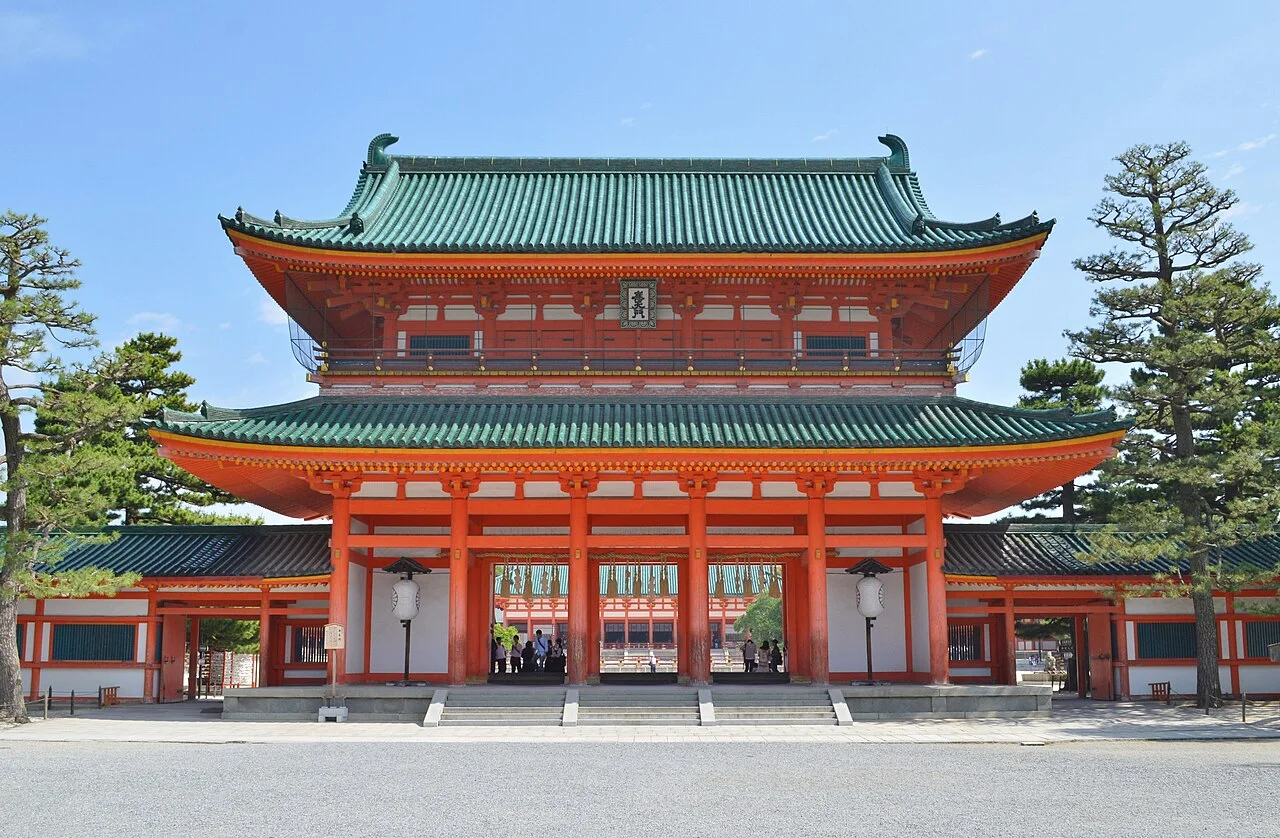
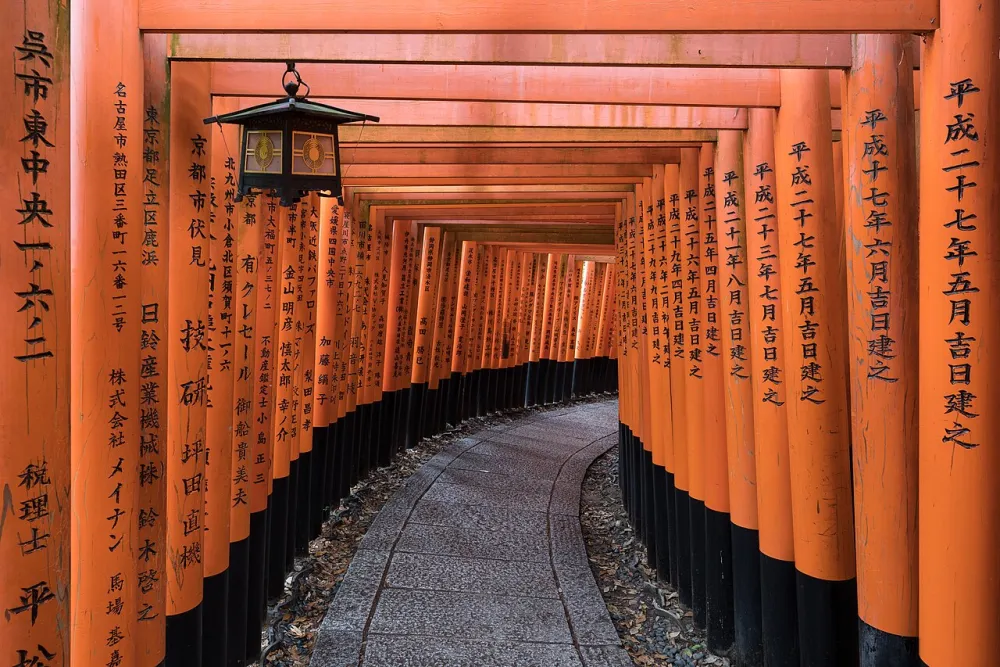
At the foot of the mountain, make the Romon gate and main sanctuary the focus of your shrine visit, then head towards the torii. The shrine’s grounds map marks Senbon Torii and Okusha Hohaisho separately. Okusha lies east of the main sanctuary, beyond Senbon Torii, and is a place to worship Mount Inari from a distance. Using it as the turning point on a short route takes you through the torii path you came to see, while saving energy for the sake district in the afternoon.
It is easy to stop every few steps where the torii stand close together. Before taking a photograph, find a place that leaves the path clear. Take turns, then move on. Long lenses and tripods occupy space in the narrow passage, so follow the restrictions on site. Lower your camera and wait when someone is praying; do not expect the whole path to empty for a photograph. Worshippers and people passing through set the pace here. Allow extra time so that other people’s walking speed does not become a problem.
If you want to try the omokaru-ishi stones near Okusha, read the instructions on site and follow the sequence. The shrine describes this as a religious custom in which you make a wish, then try lifting the stone on top of a stone lantern. Anyone in your group who is not interested can wait nearby. Even on a short visit, you can pause quietly here and decide whether to climb further before starting back, rather than following the crowd farther up as you walk.
Once you are back near the main sanctuary, deal with water, toilets and shopping. Open the route to the Keihan station and check which street to take before leaving the grounds. There is no need to keep circling back for a small shop that has not opened yet. If you already have an afternoon visit booked, use the time left for a meal or a seated rest.
After Ichinomine, keep just one afternoon stop in the sake district
Ichinomine is the highest point of Mount Inari, at 233 metres. The effort required to walk from the main sanctuary to Okusha is very different from visiting the sacred sites across the mountain. The shrine map also distinguishes the upper paths from the grounds below. If you want a substantial mountain walk, spend the morning visiting the shrines along those paths. Carry enough water, wear shoes with good grip and slow down on wet steps. The descent still works your knees and legs: reaching the highest point leaves more walking to do.
Agree on a rule for turning back before setting off. You might decide to leave enough time for an unhurried lunch after descending, or for everyone to be back at the main sanctuary by a set time. When someone becomes tired, return by a route you can identify. Other visitors continuing ahead are no guide to your group’s needs. Use the route at the foot of the mountain if the weather worsens, the ground is slippery or visibility is poor. A last-minute decision to climb once you reach the torii often means you have not prepared enough water, clothing or phone charge.
If you only want a meal after the climb, head straight towards Otesuji from Fushimi-Momoyama and decide after lunch whether you still have energy for the waterside. If the museum matters more, go in after a simple lunch and leave out Gokonomiya and the second shop. Reducing the choices to one gives you time to look at the displays after the mountain, rather than carrying a ticket through the museum while looking for the quickest exit. For a fuller sake-tasting visit, leave a separate afternoon.
Shrine etiquette affects breakfast, photography and pushchair plans
The shrine’s published visitor rules prohibit eating and drinking outside the designated free rest areas, including eating while walking or standing. After buying food along the approach, finish it in a place allowed by the shop or on-site rules before joining the shrine route. If you bring breakfast, eat before entering the grounds. Take your rubbish away and keep meals off the stone steps, torii bases and religious structures.
The same rules prohibit climbing lanterns and other structures, entering fenced areas or buildings without permission, approaching or feeding wild animals, and obstructing narrow shrine paths to take photographs. Foxes and vermilion torii may fill the photographs, but this is a sacred place where people come to pray. Explain to children beforehand that statues and torii are not for climbing, rather than having to stop them throughout the visit. Commercial photography and other special activities require the shrine’s separate permission procedure.
Decide who will look after a pushchair, which must not be left outside designated places. For Senbon Torii and the paths above it, agree who will do what on the stairs along the route you can use that day, and leave the pushchair in a suitable place. The pace of one adult carrying a child while another carries a pushchair also affects how much you can keep in the afternoon. Travellers with less walking stamina can visit just the Romon gate and main sanctuary, wait for the others to return from a short walk, then take the train together. Everyone’s day need not be measured against the same uphill route.
Choose the southbound Keihan stop around lunch and your booking
After your shrine visit, walk to Keihan Fushimi-Inari Station and use the platform for Yodoyabashi and Nakanoshima. Keihan’s Fushimi-Inari Station information lists platform 2 for that direction. Check the destination and stopping pattern on the train and platform displays, and choose a service that stops at Chushojima or Fushimi-Momoyama. The Inari name identifies your starting station; there is no need to ride north first and double back in search of an express.
If Gekkeikan comes first in the afternoon, walk north-east from Chushojima Station. The prefectural tourism federation gives the walk to the museum as about five minutes. If lunch is at Torisei Honten, or you want to browse Otesuji first, Fushimi-Momoyama is a better starting point. Walk south from the shopping street to link the restaurant, sake warehouses and waterside. You can reverse the order of the two stations: start at whichever is closer to the meal or museum slot you fix first. The Keihan fare table from Fushimi-Inari, with fares revised on 1 October 2025, lists an adult ordinary fare of ¥240 to both Fushimi-Momoyama and Chushojima. Add this journey to your budget, then add the fare from your accommodation in the morning and your return fare in the evening. The ¥240 covers this section, rather than all travel between Kyoto Station and Fushimi. If these are your only stops, start by planning single tickets or an IC card, then compare any day pass against the route you will actually take.
Lunch at Torisei Honten: check the day before joining a queue
Torisei Honten, at 186 Kamiaburakake-cho in Fushimi Ward, suits a lunch combining chicken dishes with the sake district. The restaurant’s current information gives normal hours of 11:00–22:00, with last orders at 21:30. It closes on Mondays, but opens when Monday is a public holiday. The year-end closure is listed separately as 31 December–4 January. A special schedule gives earlier opening times on some dates in October and November. Read the entry for your visit date; 10:30 is not the daily opening time.
Aim to arrive around 11:00 for lunch, then visit the museum afterwards. That leaves more flexibility in the route. If there is already a queue, check how long remains before your booking. You can wait if you have finished the short shrine route and have no fixed afternoon slot. If you have booked museum entry at 13:00, keep the lunch queue from taking over the visit. Choose another restaurant with seats available, or change the museum slot if it can still be changed. Make one of those choices instead of waiting in line and expecting the rest of the day to move back automatically.
The official website lists an average budget of ¥3,000–4,000 for the restaurant overall. Your lunch cost depends on your meal, extras and drinks. Budget separately for a main meal and alcohol so that two travelling companions can also keep their bills clear. If you have a smaller appetite, eat lunch before deciding on an afternoon dessert. There is no need to fill up along the shrine approach and then force down a full set meal for the sake of a famous restaurant.
If you are bringing children or have dietary requirements, write down the seating you need, ingredients you cannot eat and the number of diners, then use the restaurant’s contact or booking method. Families who want a settled lunch can prioritise a proper meal the restaurant can serve that day. Decide on other snacks in the sake district afterwards, rather than leaving children hungry while adults taste sake at one shop after another.
Gekkeikan’s standard visit: admission ages, reception and payment
The Kyoto Prefecture Tourism Federation’s Gekkeikan Okura Sake Museum listing gives opening hours of 09:30–16:30, with reception closing at 16:00. Admission is ¥600 for ages 20 and over, ¥100 for ages 13–19, and free for children aged 12 and under. Visitors aged 13 and over receive a souvenir. Ticket categories use age, so calculate the charge for secondary-school and university students by their actual ages. For the standard visit, choose a date and time on the official booking page, then save the confirmation on your phone.
The official booking page also announces that all payments in the museum became cashless from 1 July 2026; cash is not accepted. Have a suitable payment method ready, separately from the cash you carry for transport and small purchases. Other shops you visit that day set their own payment rules. To change a confirmed booking, use the booking details page linked in the confirmation email. Read the change deadline for the type of visit you selected.
A visit around 13:00 leaves proper time for both lunch and the displays. If the morning runs late, deal with the booking first, then decide whether to drop coffee or the waterside walk. A 16:00 reception deadline calls for arriving before it, rather than leaving the restaurant close to 16:00. The prefectural tourism federation gives a typical visit length of about 40–60 minutes. Add shopping time if you want to read the displays and browse the products, then plan the return journey from when you actually expect to leave.
Water, tools and transport: what to look for in the sake-making displays
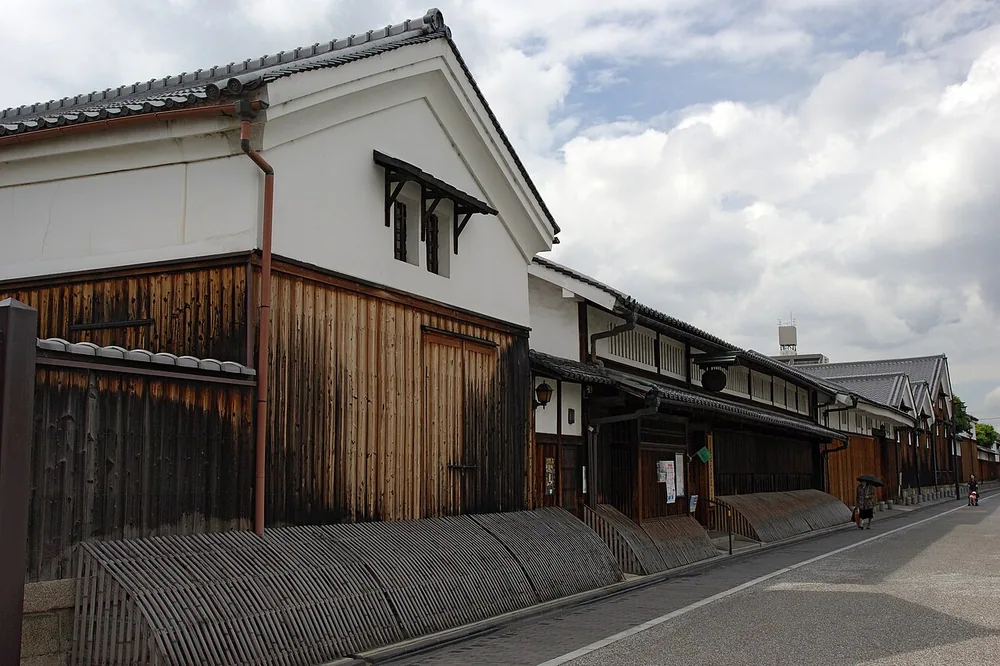
The museum is a useful place to learn how sake was made in Fushimi. Keihan’s Fushimi feature explains that it occupies a sake warehouse built in 1909, displays brewing tools, and has sake tasting and a brand shop. Start by looking at the tools’ size and purpose, then read the explanations. You will take more from the displays than if you use them only as a passage to the tasting area. Two companions could each choose a tool they want to understand and compare thoughts after leaving.
Keep the question of water in mind when you return to the streets. Fushimi has groundwater and waterways that linked people and goods with Kyoto and Osaka. Groundwater forms part of the conditions for brewing; the waterways are connected with the city’s transport history. After seeing sake vessels, containers and historical material in the museum, a walk beside the water puts the warehouses and port town on the same map. This is why lunch, the museum and the waterside work together in one day.
In the shop, check bottle size, storage instructions and whether refrigeration is needed before choosing sake to take away. For a gift, tell the staff what flavours the recipient usually likes, whether they have a fridge and when they plan to drink it. Choosing only by the bottle’s appearance can leave you with something unsuited to your transport plans. If you are staying in Kyoto for several more nights, choose your products and note them down first, then discuss delivery and receipt dates with the shop. This can save you carrying heavy glass bottles through the afternoon walk.
Non-drinkers can focus on the displays and architecture without feeling obliged to take part in an included tasting. If others in the group want to taste sake, agree on how long to spend so that everyone else can finish the displays at their own pace. Shared meals, worship and walks connect the day. A shorter tasting still leaves a complete itinerary.
Gekkeikan’s official video explains how sake is made. Watch it after the section on sake-making tools.
Keep the waterside walk short enough to return comfortably
The Ujigawa-haryu waterway and Horikawa canal near the museum make Fushimi’s water transport history easy to picture. Kyoto City’s cultural heritage feature on the port town of Fushimi records how the development of the castle town and diversion of the Uji River encouraged water transport. Fushimi Port then linked Osaka with central Kyoto. The afternoon’s waterways, bridges and sake warehouse walls show a different side of the town’s life from the morning’s shrine visit at the foot of the mountain.
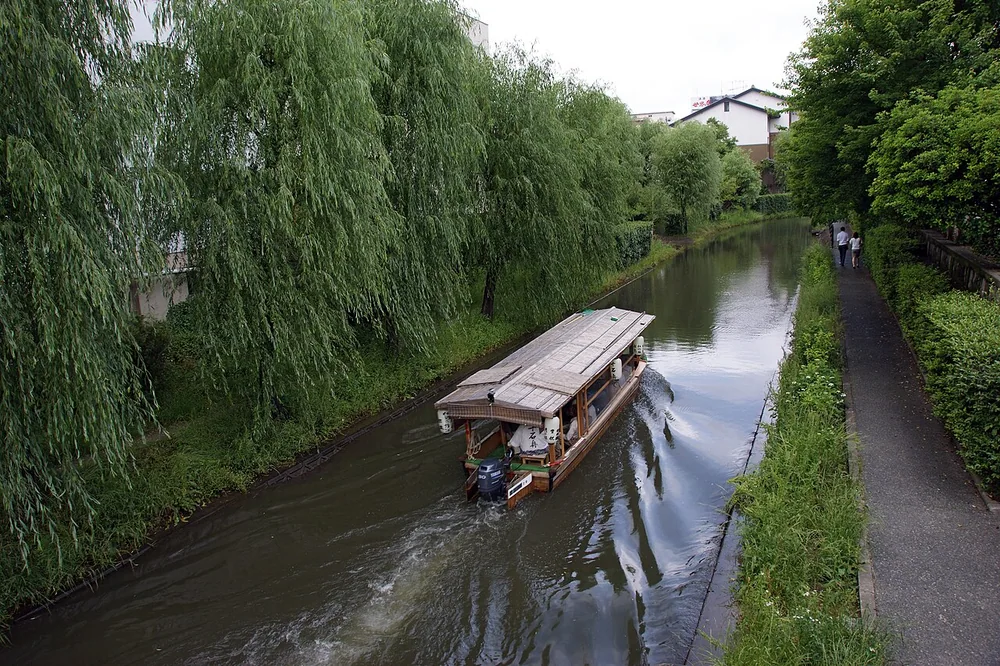
Begin with a short walk beside the Ujigawa-haryu near the museum. When you tire, retrace your steps to the museum and choose Yume Hyakushu or Gokonomiya as your next stop. Photograph buildings from public roads and keep house entrances, loading access and traffic routes clear. Give way when sake warehouse staff are coming and going. Enter courtyards, production sites and warehouses only with permission.
With children, avoid searching for steps down just to get closer to the water. Hold hands and stop where the path is clear to see. Older companions who have already climbed the torii steps in the morning can look at a short stretch from a bridge, then return to a shop with seats. This short walk is enough for a sense of the canals. Treating every bridge name as a checklist can simply mean walking the same waterway several times.
If you see the Jukkokubune boats, treat a cruise and a walk on land as two different plans. This day already has lunch and a museum visit. Adding a boat trip on the spot also adds meeting time, waiting for departure and walking afterwards. If you really want the cruise, use it in place of afternoon coffee or Gokonomiya, and book from the operator’s calendar for that year. If you choose the waterside walk, head towards your return station when you have walked far enough.
Fushimi Yume Hyakushu: coffee and a chance to compare sake
For a seated afternoon stop, put Fushimi Yume Hyakushu after the museum. The Fushimi Tourism Association’s introduction lists cold-brew coffee made with brewing water, sweets and sake, as well as bottles from several Fushimi breweries. The shop’s official blog currently gives hours of 10:30–17:00, with last orders at 16:30, and Monday closing except on public holidays. Non-drinking companions can rest here, and everyone can sit down to sort out purchases before leaving the sake district.
Completed in 1919, the building was Gekkeikan’s former head office. The tourism association points to the entrance’s stone steps and raised building as features of its flood protection design. Look at the publicly visible exterior and the café areas that are open, including the transoms, different rooms and small courtyard garden, without trying to enter every area. There are steps at the entrance. Work out a usable way in and out for anyone with a wheelchair or pushchair, then decide together whether to go inside.
If you have already tasted sake at the museum, order coffee here or ask the staff about the sweets before choosing one, and compare the sake you may want to buy. Tell the staff directly if you need to avoid alcohol. Choose between desserts containing sake and ordinary drinks accordingly, and ask about the item before sharing it with a child. When buying sake, explain whether you will take it back to the hotel, drink it the next day or give it as a gift. The purpose affects the bottle size and storage you need.
If the shop is closed on Monday, replace it with a short waterside walk or Gokonomiya. Torisei Honten also normally closes on Mondays. A glance at the calendar before setting off avoids planning around two closed businesses. Make that day one for worship and displays, and choose a restaurant open that day for lunch. This takes less effort than searching again outside each closed door.
Walk from Fushimi-Momoyama to Gokonomiya for another shrine visit
For another shrine in the afternoon, walk towards Fushimi-Momoyama after the sake district and continue to Gokonomiya Shrine. The shrine’s official access and grounds guide gives walks of about four minutes from Kintetsu Momoyamagoryo-mae Station and six minutes from Keihan Fushimi-Momoyama Station. Put the shrine near your return station, rather than going back to Chushojima and taking another train north. To reduce total walking, enter the area from Fushimi-Momoyama, visit Gokonomiya, then walk through the shopping street and sake district before leaving from Chushojima.
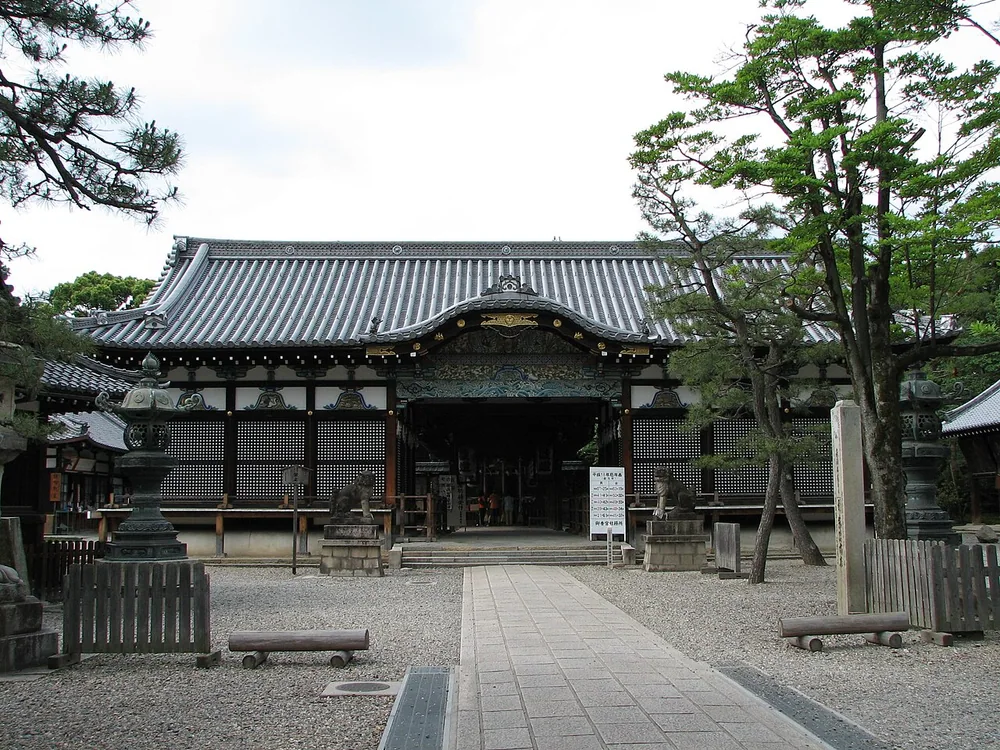
Focus on the main sanctuary, worship hall and Gokosui spring. The shrine describes the main sanctuary as an Important Cultural Property commissioned by Tokugawa Ieyasu, with richly coloured carvings. After worshipping, view the decoration from the areas open to visitors. This offers a different way of looking from the long Senbon Torii path in the morning. The shrine gives the worship sequence as two bows, two claps and one bow. If you are unfamiliar with it, read the instructions from somewhere out of the way, and finish worshipping before photographing the buildings.
For amulets or goshuin shrine seals, the shrine office receives visitors from 09:00 to 16:00. These hours affect the afternoon order. If you leave the museum late, go to the office first, then decide whether it is convenient to return for coffee. If you only want to see the shrine buildings, there is no need to join another queue to collect religious items. Leave time to return to your accommodation from the station you chose.
Gokonomiya can also be the main afternoon stop for a group of non-drinkers. Make the museum optional, take a short waterside walk after lunch, then return to the shrine to worship. You will still stay within the same area. If sake-making tools and museums do not interest you, this version is more comfortable than accompanying a whole round of tastings.
With children or older travellers, build in places to turn back
For a family morning, focus on the main sanctuary and a manageable short stretch of torii, without making a climb everyone’s shared goal. Adults should agree who will turn back with a tired child and where exactly to meet, and keep enough phone charge. What looks like a short section on a map may include steps, crowds and waits for photographs. Leaving out the mountain extension saves energy for lunch and a few displays in the afternoon, and avoids having to carry a child for the whole route.
For lunch, prioritise seats and food everyone will eat. Feed the children first and plan adult tasting afterwards; this is easier to manage than splitting up in search of snacks. Gekkeikan’s admission categories are ages 20 and over, 13–19, and 12 and under. Under-20s can focus on the displays, architecture and souvenirs, with tasting reserved for eligible adults. Adults can take turns looking after the children so that anyone interested in the displays has time to read.
For wheelchair users or anyone who needs ramps, plan access through the stations before access within each attraction. Keihan Fushimi-Inari Station lists ramps and a wheelchair-accessible toilet, with no lift. Use the station layout to plan your platform and entrance or exit. If you choose Yume Hyakushu in the afternoon, include its entrance steps in that plan. Assuming one piece of station equipment makes every stop accessible can leave you facing a change in level only when you reach a shop door.
Leave luggage at your accommodation or a storage point you have already chosen, and carry only what you need for the day. Keihan Fushimi-Inari Station has coin lockers but no staffed left-luggage service. If you travel on through the area and return from Chushojima or Fushimi-Momoyama, a suitcase at the morning station adds a journey back to collect it. On a departure day, use a transport hub where you can collect your bags, and finish the afternoon early enough to connect your accommodation visit with travel to the next city.
In rain, keep the museum and a meal, and shorten the outdoor walks
In light rain, reduce Fushimi Inari to worship at the foot of the mountain, and decide how far to walk from the ground conditions and your companions’ needs. Put your phone away on wet steps and keep umbrellas out of other people’s faces. Stand securely before taking a photograph. If the rain gets heavier, drop the upper mountain route and take the Keihan line to lunch and the museum. Handle an existing museum booking according to its confirmation. Work out any change and whether you can reach it, rather than adding another walk in the rain to fill the schedule.
You can drop the afternoon canal walk, visit the museum after lunch and rest in a shop with seats. If you want to walk through the shopping street, include the open-air walk from the station to the shopping street and between individual shops. Bring rainwear and a way to contain a wet umbrella: covered streets do not extend across the whole sake district. For a passing shower, have a drink first and walk when the rain and your energy allow. If the forecast shows strong winds and heavy rain, or trains are disrupted, swap this day for indoor activities near your accommodation. The Fushimi route can be spread across visits: coming back just for lunch and the museum in the sake district, or just for worship at the shrine, is easy to arrange. Keep a half-day available to swap during your trip. That gives you useful space in bad weather, instead of relying on a faster walking pace to recover lost time.
Price transport and meals separately, and avoid adding Uji to justify a pass
List the journeys you will actually make: accommodation to the shrine, Fushimi-Inari to the sake district, and the last stop back to your accommodation. Taking JR from Kyoto Station in the morning and Keihan to the sake district in the afternoon involves different operators; a Keihan ticket does not cover the JR leg. If you stay near Gion-Shijo or Sanjo, you can use Keihan as the main route throughout the day and compare passes by your actual number of journeys. Choose the ticket after the route to calculate the cost accurately.
For one adult aged 20 or over, two costs currently established are the ¥240 Keihan fare from Fushimi-Inari to Chushojima or Fushimi-Momoyama, and ¥600 standard admission to Gekkeikan, totalling ¥840. Add breakfast, lunch, coffee, shopping and travel to and from your accommodation. For ages 13–19, museum admission is ¥100. Apply the railway’s own age categories to transport fares, rather than combining the two systems.
To spend less, skip a second tasting, buy one fewer bottle of sake or replace coffee with a shorter rest. There is no need to cut a proper meal. Two travelling companions can set separate shopping budgets and settle shared meal and transport costs first. Base the budget on what you actually do. Adding Uji just to take more journeys on a day pass also brings walking in another area, attraction fees and waits at tea shops.
If Uji is the place you most want to visit, use it in place of the sake district and make a different route with Fushimi Inari and Uji. For a day already built around lunch, a museum visit and a waterside walk, Chushojima offers time to stroll within a small area. Moving to a new district in the afternoon turns that spare time into connections.
Before leaving, sort out bottles, dinner and the return station
After shopping, arrange the packaging and keep glass bottles stable. Share heavy items rather than giving them all to someone who has just walked the mountain. Follow the shop’s storage instructions for refrigerated products, and tell the staff how long it will be before you reach your hotel. Choose something else if you cannot store an item properly that day. Buying gifts in the last part of the route makes the earlier shrine and museum visits much easier.
After a substantial lunch, you can return straight to your accommodation from Chushojima in the early evening. If Gokonomiya is your last stop, search from Fushimi-Momoyama or Kintetsu Momoyamagoryo-mae. For Kyoto Station, compare the actual Kintetsu route and Keihan connections. If you stay along the Keihan line, use the northbound services. For a return to Osaka, choose the station near your hotel first, then check where to change; there is no need for everyone to go back through Kyoto Station. If you want dinner in Fushimi, shorten afternoon coffee and make dinner the day’s last fixed commitment. Finish shopping before the meal, then go straight to the train. If you have drunk alcohol during the day, use public transport home, and check your bottles and belongings before leaving the shop.
A few useful answers
Can I walk between Fushimi Inari and the Fushimi sake district?
The two areas are a train journey apart. Take Keihan from Fushimi-Inari to Fushimi-Momoyama or Chushojima, and keep walking within each area. Enter from Fushimi-Momoyama for lunch around Otesuji, or Chushojima if Gekkeikan comes first.
Is this Fushimi day suitable for non-drinkers?
Yes. Worship at the shrine in the morning, then see sake-making tools and architecture, walk beside the water, have coffee at Yume Hyakushu or use the tasting time for a visit to Gokonomiya. Choose either the museum or the café according to your interests.
Does the Gekkeikan Okura Sake Museum accept cash?
The official booking page announces cashless payment throughout the museum from 1 July 2026. Have a suitable payment method ready before entering. Other shops set their own payment rules.
Can I also visit Uji on the same day?
If Uji is your priority, use it in place of the sake district. A short shrine visit, sake-district lunch, museum and waterside walk already make a full day. Fitting all of them in reduces time for meals, displays and connections.
Official information and references
Sources used in this guide.
- Fushimi Inari Taisha: official access information
- Fushimi Inari Taisha: grounds map, Okusha and Mount Inari
- Fushimi Inari Taisha: rules for worship, food and photography
- Keihan: Fushimi-Inari Station, platforms and facilities
- Keihan: ordinary fares from Fushimi-Inari, revised October 2025
- Torisei Honten: opening days, address and budget
- Kyoto Prefecture Tourism Federation: Gekkeikan Okura Sake Museum admission ages, hours and access
- Gekkeikan: official standard-visit booking and cashless payment announcement
- Keihan: Fushimi sake warehouses, museum and Gokonomiya
- Kyoto City Cultural Heritage: Fushimi, the port town linking Kyoto and Osaka
- Fushimi Tourism Association: Yume Hyakushu café, products and building
- Fushimi Yume Hyakushu official blog: current opening hours
- Gokonomiya Shrine: grounds, reception and access