Travel from Demachiyanagi by Eizan Railway. Choose a Kurama main-hall return, an Okunoin crossing or a shorter Kifune visit, with fares, bus 33, shrine walks, seasonal lunch, autumn 2026 lights and rain or snow alternatives.
- Region & Focus
- KyotoShrines and temples
- Reading Scope
- 32 min read · 19 chapters · 4 Q&As
- Official Verification
- 28 official sources checkedUpdated 9 November 2026
- Key Topics
- ItinerariesRail travelSeasons
Chapter Route Map (tap any stop)
- Choose the walking effort before combining Kurama and Kifune
- Reach Demachiyanagi, then board for Kurama
- Check specific Kirara services; the maple tunnel is seen from the train
- Add the individual fares before buying a day pass
- Kurama Station to Niomon: choose walking or the cable railway below
- Yuki Shrine and the winding approach: slow down for the buildings
- Tigers and the Kongosho forecourt: decide on your return here
- Reihoden: nature, temple treasures and Yosano Akiko
- Crossing Okunoin: the root path is followed by a descent to Kifune
- Kifune main shrine: steps, spring water and water fortunes
- Main shrine, inner shrine and Yui-no-yashiro: leave time to return
- Build lunch around the booking; summer riverside seats differ from autumn and winter dining
- Take bus 33 from Kibuneguchi; the station is not the shrine entrance
- Spring to early summer: prioritise new leaves and mountain paths
- Midsummer and the rainy season: shorten hiking for riverside dining
- Separate daytime autumn hiking from the 2026 illuminations
- Winter snow: short visits without the mountain crossing
- Alternatives for rain, tiredness or cable-railway suspension
- Two usable daytime schedules
- Quick Q&A
Kurama and Kifune fit into one day. First decide whether to walk the mountain path. For a dry-weather hike, cross from Kurama-dera through Okunoin to Kifune. For just the main hall and lantern steps, connect by train and bus. With a riverside dining or kaiseki reservation, entering and leaving via Kifune makes timing easiest. Each route needs different energy and transport costs. All should preserve time for the return from Kibuneguchi to Demachiyanagi.
Choose the walking effort before combining Kurama and Kifune
Kurama and Kibuneguchi stations are only one stop apart, but Mount Kurama separates the main places of worship. Linking Kurama-dera, the root path and Kifune Shrine involves uphill walking, exposed roots and a descent. This is the part most easily underestimated by joining two map pins. On a dry day, regular hill walkers can enter at Kurama and leave at Kifune. If descents trouble your knees, you have young children or lunch is the main aim, omit the mountain path and use the train.
There are three day plans. First, visit Kurama-dera in the morning, cross via Okunoin to Kifune, worship in the afternoon and leave by bus. Allow six to eight hours from and back to Demachiyanagi. Second, return from Kurama-dera’s main hall, take the train one stop to Kibuneguchi and a bus to Kifune. Allow seven to eight hours for the two separate approaches and lunch. Third, enter and leave via Kifune for the main shrine, a three-shrine walk and a meal over half a day to a day. This best suits an existing restaurant booking. These allowances include breaks, lunch and changes.
For temple gardens and time sitting on tatami before moss gardens, switch to a day at Sanzen-in in Ohara. For several autumn-leaf areas, read Kyoto’s autumn foliage districts. Kurama and Kifune offer forest, approaches and water-deity worship; one northern mountain direction is enough. Although both Ohara and Kurama are in northern Kyoto, splitting a first visit between them in one day is awkward.
Travel from Demachiyanagi by Eizan Railway. Choose a Kurama main-hall return, an Okunoin crossing or a shorter Kifune visit, with fares, bus 33, shrine walks, seasonal lunch, autumn 2026 lights and rain or snow alternatives.
Reach Demachiyanagi, then board for Kurama
From Gion-shijo, Sanjo or the Keihan line, take Keihan to Demachiyanagi and walk to Eizan Railway at ground level. From Kyoto Station, use the JR Nara Line to Tofukuji and change to Keihan, or take the Karasuma Subway Line to Karasuma Oike, change to the Tozai Line for Sanjo Keihan, then walk to Keihan Sanjo for Demachiyanagi. Both routes need time for changes and waits. With a morning restaurant booking, reach the northern mountains early rather than compressing the Kyoto Station connection. See Kyoto Travel’s Kurama and Kifune access guide for official transport information.
Demachiyanagi is the easiest place to choose the wrong direction. Eizan branches at Takaragaike: one line goes to Yase-Hieizanguchi, the other to Kibuneguchi and Kurama. Read “Kurama” on the train and platform rather than following a sightseeing train’s appearance. The Eizan official route guide separates the branches. Stay on to Kurama terminus for Kurama-dera, or leave one stop earlier at Kibuneguchi for Kifune Shrine first.
The temple’s access page gives about 30 minutes from Demachiyanagi to Kurama. Allow roughly an hour and a half from a city hotel to Kurama Station in the morning, depending on the starting point and services. On arrival, use the toilets and organise water and outer layers. Leave large luggage at your accommodation or arranged storage. Neither the mountain crossing nor the Kifune bus suits a wheeled case.
Check specific Kirara services; the maple tunnel is seen from the train
The large windows of the Kirara panoramic train bring the scenery into the carriage. It runs towards Kurama from Demachiyanagi without an extra limited-express charge. To ride it, check the weekday or weekend official Kirara and Mai timetable before leaving. One departure of flexibility is enough in the morning. If an ordinary train arrives first and waiting would reduce walking or lunch time, board it and compare the return services later.
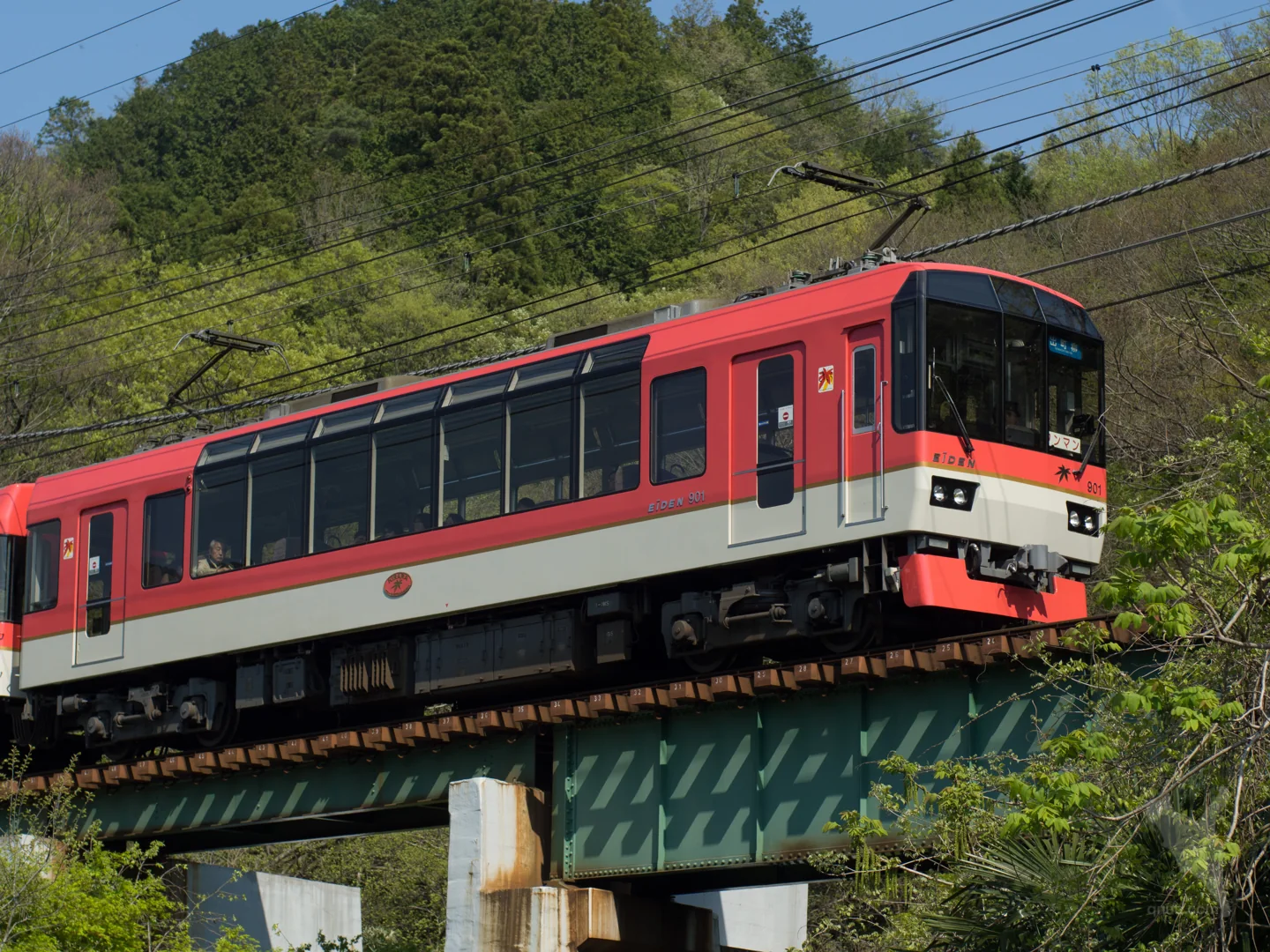
The green oval-fronted Hiei train, often searched alongside Kirara, runs towards Yase-Hieizanguchi. Give Yase a separate half day if you want both. Repeated detours solely for another train break up time for the main hall and Kifune. A rail-focused day can work, but omit the Okunoin crossing and let trains be the main subject.
The official maple-tunnel introduction locates it between Ichihara and Ninose. It is a stretch of track viewed from inside the train, not a place to get off and walk into. Late spring and summer bring fresh green leaves, autumn brings leaf colour, and snowy winter days bring white branches. Ordinary trains pass through too. Kirara is not required, and there is no walking entrance to seek beside the railway.
Eizan Railway’s footage of the maple tunnel on 20 November 2025 previews the view from the train while it runs slowly through this section.
Add the individual fares before buying a day pass
The following adult prices in yen come from official information read on 27 October 2026. Demachiyanagi to Kurama or Kibuneguchi costs ¥470 one way, ¥940 return. Kurama to Kibuneguchi costs ¥220 for the one stop. Compare the ordinary fare table and Ee Kippu product page: an all-line Eizan day pass costs ¥1,200 for adults or ¥600 for children. For one journey into and out of the northern mountains, individual fares are cheaper.
Returning from Kurama-dera, then taking Kurama–Kibuneguchi and finally Kibuneguchi–Demachiyanagi costs ¥470 + ¥220 + ¥470 = ¥1,160 on Eizan, still ¥40 below the pass. The mountain crossing omits the middle train, leaving ¥940. Do not add Ichijoji or Yase solely to recover the pass price. Choose stops first and total the legs. Pure fare savings begin above ¥1,200.
Kyoto Bus route 33 from Kibuneguchi Station to Kibune costs ¥200 per adult each way, separately from Eizan tickets. The current Kyoto Bus fare and IC rules specify one tap on alighting for this short route. Nationwide interoperable cards such as Suica and ICOCA are accepted. A Kifune-only return by train and bus totals ¥1,340; crossing the mountain and using the bus once totals ¥1,140. Both start and end at Demachiyanagi. Transport from your hotel costs extra.
The official discount-ticket list also gives the Kyoto Rakuhoku Mori to Mizu Kippu at ¥1,800 for adults, covering all Eizan lines and specified Kyoto Bus sections in northern Kyoto. The Subway & Eiden Kurama–Kibune Day Trip Ticket costs ¥2,100 for adults and covers all city subway lines, Keihan from Sanjo to Demachiyanagi and all Eizan lines, but no buses. Sales of the latter run until 31 March 2027. Start with individual fares for a simple Kurama and Kifune visit. Compare combination tickets if staying farther away and taking several subway journeys that day.
Kurama Station to Niomon: choose walking or the cable railway below
After Kurama Station, see the tengu figure outside and follow the street to Kurama-dera’s Niomon gate, officially about three minutes on foot. Tengu and Ushiwakamaru stories introduce the area, but the approach path determines the physical effort. Do not spend so long around the station that the climb starts late. For a crossing to Kifune, keep the morning foothill stop to food and preparations.
The Kurama-dera entry rules list a ¥500 mountain contribution, ¥200 extra for Reihoden and cable-railway donations of ¥200 one way for adults or ¥100 for primary school children and younger. The temple operates the cable railway to help worshippers, but it removes only part of the climb. From the upper Tahoto station, the main hall still needs about ten minutes of walking with slopes and changes in level. Assess this remaining route if steps are difficult; the railway does not make the whole visit level.
Walk up the winding approach to include Yuki Shrine, or use the cable railway to save energy for the main hall and later paths. The railway bypasses Yuki Shrine, so include it on a walking descent if wanted. Riding up and walking down or walking both ways have different merits. If descents trouble your knees, use the railway down too and spend the saved time resting at the main hall.
Yuki Shrine and the winding approach: slow down for the buildings
Yuki Shrine is about five minutes on foot beyond Niomon, with about another 20 minutes up the winding approach to the main hall according to the temple. Slow down to see the sacred trees and worship hall instead of chasing the steps. Yuki Shrine’s official history describes a worship hall divided left and right around a central passage, called a ninaiden or warihaiden. Recognising that space gives the central walk-through a clear architectural meaning.
The main deities are Onamuchi-no-Mikoto and Sukunahikona-no-Mikoto, and the large cedar is also a focus of worship. The Kurama Fire Festival belongs to this shrine and traces its tradition to welcoming the transferred deities. A daytime visit also shows the relationship between shrine and settlement below.
Bends and stops separate walking speeds. If one companion photographs while another walks faster, agree to wait at a clearly named hall rather than searching at forks. Rest in wide places and put phones away on steps. Finish a bend before stopping for photographs to leave space behind. These arrangements are more practical than timing the climb to the minute.
Tigers and the Kongosho forecourt: decide on your return here
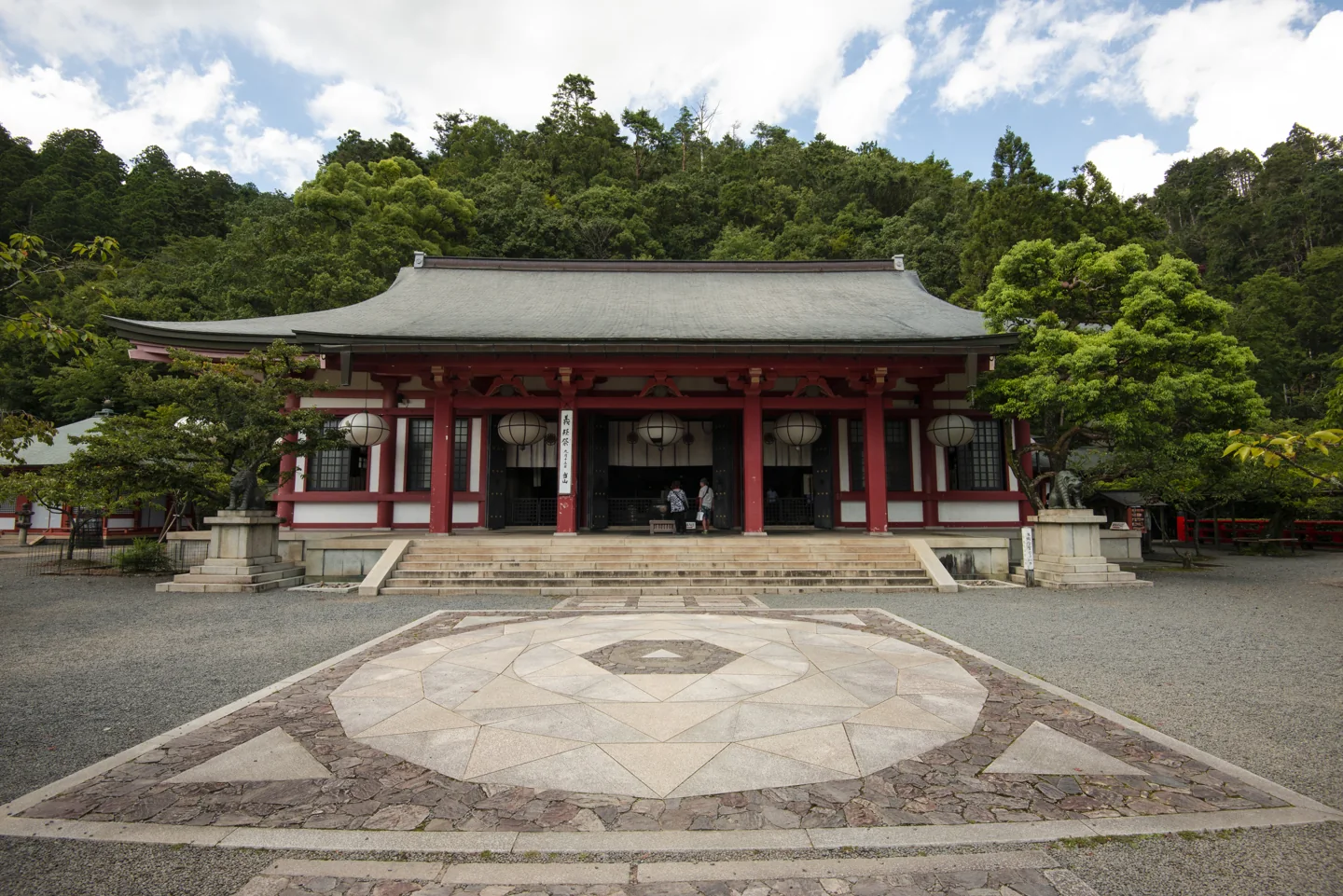
At the main hall, look first at the tiger statues on either side. The temple grounds guide identifies the tiger as Bishamonten’s messenger. Senju Kannon, Bishamonten and Gohomaoson express Sonten’s love, light and power. The Kongosho forecourt is linked with star-mandala belief and is a place of worship. Leave room for worshippers when photographing and avoid occupying its centre for long.
This is the best decision point. Stay around the main hall and return for a visit focused on the buildings; add Reihoden for exhibits; continue towards Okunoin only for the crossing. Each branch can form a complete visit. Paying admission does not require walking all the way to Kifune. If you reach the hall after midday or already found the climb hard, returning leaves a more comfortable afternoon.
The temple’s current announcement lists main-hall opening at 09:00–16:15 and the last downward cable railway at 16:25. The access page gives a normal frequency of every 20 minutes. Check the hall’s closing time before the railway, rather than starting a visit with the final uphill service. If relying on it, read suspension notices before leaving and choose the route accordingly.
Reihoden: nature, temple treasures and Yosano Akiko
Reihoden, also called the Kurama Mountain Museum, is near the main hall and suits interests in Buddhist sculpture, nature or Yosano Akiko. The museum guide lists natural science on 1F (ground floor), temple treasures and the Yosano memorial room on 2F, and Buddhist statues on 3F. The relocated Tohakutei stands outside. Spend longer on one subject rather than dividing time equally by floor.
Natural displays discuss Mount Kurama’s geology and surface roots. Before walking Kinone-michi, see this floor so the roots become more than a photographic background. Literature enthusiasts can connect 2F with Tohakutei. A main-hall return route allows more detailed viewing here than a crossing. Less mountain walking creates time for a slower museum visit.
Reihoden opens 09:00–16:00 and closes Tuesdays, or the following day when Tuesday is a national holiday. Its winter closure runs from 12 December to the end of February. Choose an open day and allow indoor time during the climb if the museum is the priority. It is on the mountain and still requires outdoor walking. When heavy rain, snow or ice makes the approach unsuitable, switch to a city museum rather than climbing just because the exhibits are indoors.
Crossing Okunoin: the root path is followed by a descent to Kifune
Behind Reihoden, the route becomes the Okunoin approach, passing Sekurabe-ishi, Kinone-michi, Sojogatani and Yoshitsune-do, then Mao-den before descending to the west gate and Kifune. The temple classifies this as a route for strong walkers, giving about 30 minutes from the main hall to Mao-den and another 20 to Kifune Shrine. Treat these as continuous walking times and add stops and rests. Allowing an hour and a half to two hours makes the section more comfortable.
Exposed roots require attention to your footing. Wear grippy soles, keep hands free and use rain gear that allows this. Long skirts, hard-soled dress shoes and sandals are unsuitable. Root-path photographs can suggest a small level patch, but the crossing also has climbs and a long descent. Descending loads the knees continuously; anyone who dislikes stairs should include that in the route choice.
Starting at Kurama puts the longer climb in the morning and lunch and departure on the Kifune side. In reverse, you must rearrange the climb from the west gate around Kurama-dera’s opening hours. Use the forward direction on a first visit with afternoon dining. If companions cannot take the mountain path, use the train for everyone rather than splitting into mountain groups with an uncertain meeting time.
There is no intermediate exit suitable for switching to a train. Deal with water, toilets and energy before leaving the main hall. Return to Kurama Station if turning back. Once in Okunoin, follow signed temple paths rather than navigation shortcuts. Stop the crossing in torrential rain, thunder, strong wind or when footing becomes too slippery. Autumn illuminations are within Kifune’s precincts. Complete the mountain path before dark.
Kifune main shrine: steps, spring water and water fortunes
From Kibune bus stop, walk about five minutes along the road to the main shrine entrance. The descent from Kurama’s west gate also joins the Kifune road before the main shrine. Identify the lantern-lined steps first. Stand aside by the road without blocking traffic. Climb to the main shrine for worship and water fortunes, leaving photographs for spare time on the return rather than repeatedly turning around on the stairs.
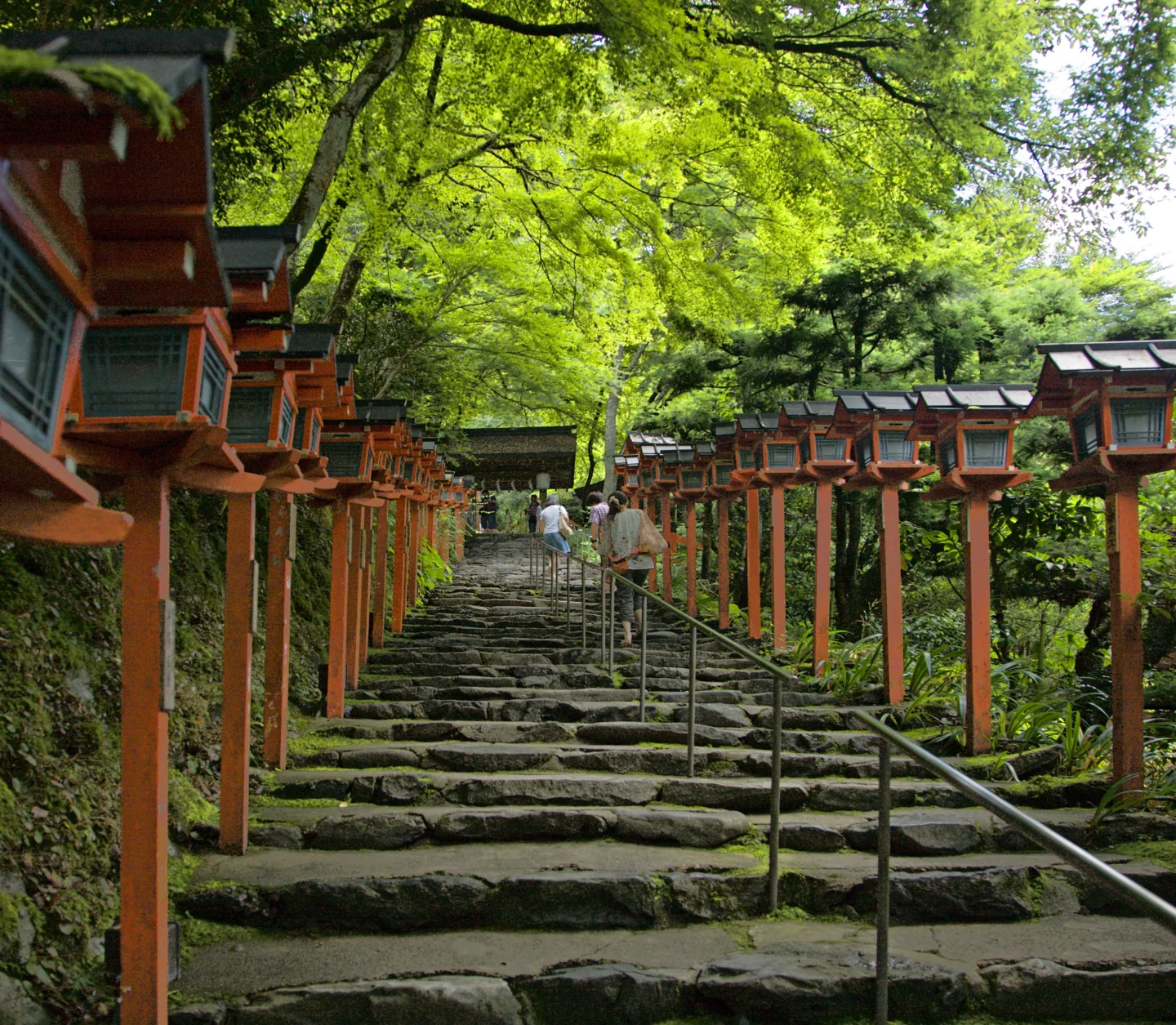
The Kifune Shrine deity guide lists Takaokami-no-Kami at the main and inner shrines, and Iwanaga-hime-no-Mikoto at Yui-no-yashiro. Water-deity worship gives the spring its context; water fortunes are one way to engage with it. The Kyoto Tourism Federation lists general worship as free and water fortunes at ¥200 each. Characters appear when the paper floats on the sacred water. Bring small cash and allow unhurried time by the pool.
From 1 May to 30 November 2026, main-shrine worship including water fortunes is 06:00–20:00. The amulet office normally opens 09:00–17:00 and prayer reception 09:00–15:00, according to the shrine’s announcement for that year. Use the office hours as the deadline for goshuin or amulets. Evening lantern viewing needs a separate return plan and a different arrival time.
The main shrine has continuous stone steps. With a pushchair, reaching the entrance still leaves carrying the child, storing the chair and negotiating stairs. It is not a smooth pushchair route throughout. If continuous wheelchair access is needed, choose a destination with an established accessible route. Older companions who simply walk slowly can keep only the main shrine and a short roadside walk; all three shrines need not be completed.
Main shrine, inner shrine and Yui-no-yashiro: leave time to return
A full three-shrine visit can run main shrine, inner shrine, then Yui-no-yashiro before returning near the main shrine to leave. You pass Yui-no-yashiro on the outward road. Continue to the farther inner shrine first and visit Yui-no-yashiro on the return for a clear turning point. Allow 45 minutes to an hour for the extended three-shrine walk, including worship and return. If crowded or photographing longer, move lunch later rather than walking fast to recover time.
The inner shrine is the founding site described by the shrine and differs from the busier main-shrine steps. Slow down here. Shrine tradition links the boat-shaped stones with Tamayori-hime travelling upstream in a yellow boat. The dragon hole beneath the sanctuary is not open for viewing. Remain in public precincts, connecting the tradition with visible stones and buildings rather than leaving the path to search for a hole.
Yui-no-yashiro’s matchmaking belief connects Iwanaga-hime-no-Mikoto with the tradition of Izumi Shikibu. Spend longer here if that cultural thread interests you, then retrace the road to the main shrine. With only two or three hours, choose the main shrine and a riverside stretch without the inner-shrine return.
Kifune’s road serves pedestrians, buses, restaurant shuttles and other vehicles in shared space. Stop in a wide place when a vehicle approaches. Do not move into the road centre for an empty photograph. Umbrellas need more width, so walk in single file rather than chatting side by side. At night, keep the phone towards the inside and stand securely before checking a map.
Build lunch around the booking; summer riverside seats differ from autumn and winter dining
If Kibune riverside dining is the main aim, book the meal before transport. Kibune Beniya’s 2026 announcement lists its riverside season as 1 May–30 September. Late October is already another season; an autumn-leaf visit now means autumn food and shrine walks. For next summer, choose a Kifune day as the broad plan, then book dates when restaurants publish the new season.
Beniya’s official menu currently lists November–April seasonal kaiseki at ¥8,800, ¥11,300 and ¥13,800, all including 10% consumption tax. Its summer riverside menu lists a ¥9,800 plan limited to lunch from May to September. These named plans help compare budgets. For a formal mountain kaiseki meal, make lunch the centre of the day. For a simple meal, eat a full breakfast, carry supplementary food and save the main meal for the city.
The restaurant booking page takes reservations by telephone on 075-741-2041. Give the date, party size, menu, lunch start, children’s meals, allergies and cancellation questions together. Reserve transfers with the meal if needed. For a 13:30 lunch, keep the morning to the main shrine or a Kurama main-hall return that reaches it on time. Slow walking, photographs or changing weather make a mountain crossing harder to time tightly.
In rain or high river water, Beniya serves indoors. Parties of two or more can request a Kibuneguchi transfer in advance, subject to limited vehicles; see the restaurant FAQ. Accept this rain arrangement when booking riverside seats. Cancellation follows the deadline and charges in the booking. The transfer is a dining service, not a walk-up public bus between shrine and station.
Take bus 33 from Kibuneguchi; the station is not the shrine entrance
Kibuneguchi is the railway station; Kibune is the bus stop near the shrine. Follow signs outside the Eizan station for Kyoto Bus 33, alight at Kibune and walk to the main shrine. From Kokusaikaikan on Kyoto Bus 52, change at Kibuneguchi. Include the second wait when taking two buses. The shrine’s official access page links the 33 and 52 timetables and is useful to save before departure.
Walking the road from Kibuneguchi to the shrine is another route choice, rather than a few incidental minutes after the train. After crossing Mount Kurama, prioritise bus 33 for the return and save energy for queues and the city journey. Include the streamside walk only if visiting Kifune alone and wanting that walk. With limited time, omit the long road walk before cutting worship time to fit it.
The Kyoto Bus departures from Kibune separate weekdays, Saturdays and holidays and note a timetable change on 28 September 2026. For the return, save Kibune towards Eiden Kibuneguchi-ekimae, not the uphill direction. Illuminations keep visitors later, but shrine opening until 20:30 does not imply buses until 20:30. Obtain that day’s usable downhill departures before deciding how late to stay.
Save bus and return-train pages near the shrine, with a second copy on a companion’s phone. A short ride does not mean a short total journey when queues are long: another departure may require waiting, followed by platform access. If the main shrine visit is finished and a bus is coming, return to the station. Dinner around Demachiyanagi or your hotel is easier to time than insisting on one final Kifune stop.
Spring to early summer: prioritise new leaves and mountain paths
After Kyoto city cherry blossom, Kurama and Kifune offer a day of forest and valley rather than more blossom chasing. Choose a dry day for the main hall and Okunoin. After rain the previous day, switch to a main-hall return or shorter Kifune visit. The Eizan journey gives an early view of the day’s leaf colours.
Early summer leaves more time for the mountain, but walking still needs water. Put Kurama in the morning and rest at Kifune in the afternoon, taking the hardest climb while energy is higher. Once riverside dining opens, companions may have different priorities. If one wants hiking and another the meal, use a short Kurama main-hall visit followed by transport to Kifune, leaving time to change and tidy up before lunch.
A light jacket in May or a removable sun-protection layer in summer is more useful than dressing only for daytime Kyoto city temperatures. Walking can be hot and streamside dining cool; keep layers easy to reach. For a fixed restaurant arrival, use the direct Kifune route. Save the mountain path for an unbooked day so a meal does not make you hurry companions across roots.
Midsummer and the rainy season: shorten hiking for riverside dining
For summer cooling or riverside dining, enter and leave via Kifune. Visit the main shrine in the morning, add Yui-no-yashiro and the inner shrine after lunch according to energy, then take the bus to Kibuneguchi. This divides the longest outdoor activity into sections with a meal break. Kifune’s valley differs from the city, but waiting for buses, stone steps and roadside walking still require water and sun protection. Going into the mountains does not remove heat precautions.
With afternoon thunderstorms forecast, finish outdoor visits in the morning and leave after lunch. If heavy rain already affects transport, switch to the city. For a meal booking, follow the restaurant’s rain arrangements and cancellation terms rather than adding Okunoin because food is prepaid. Roots, steps and soil do not become dry immediately after rain stops. Taking transport remains a reasonable same-day plan.
Riverside platforms are restaurant seats. For photographs near the water, stay within the restaurant’s permitted area. Do not enter another venue’s platform or private access. Without a reservation, enjoy Kifune through public approaches and shrine precincts, then eat back in the city.
Separate daytime autumn hiking from the 2026 illuminations
With one autumn day for Kurama and Kifune, choose forest daylight or shrine illuminations first. A daytime plan enters Kurama in the morning and leaves Kifune in the afternoon, preserving hiking and lunch. An evening plan enters from Kibuneguchi in the afternoon, visits the three shrines and sees lights after food. A shrine-only visit need not start in the morning for an all-day wait. With other booked autumn sights in Kyoto, save Kurama for another day instead of repeatedly crossing between Higashiyama and the northern mountains.
Kifune Shrine’s announcement of 19 October 2026 lists illuminations in the main- and inner-shrine precincts from sunset to 20:30 on 7–24 November, including water fortunes. The amulet office opens 09:00–20:00. These hours extend shrine visits into the evening; they do not turn Kurama’s Okunoin mountain path into a night route. To combine both, complete the mountain walk by day and stay in Kifune for sunset.
If using the wait for a formal dinner, check whether its start and finish connect with the return bus. Without a suitable bus, and if you do not intend to walk a dark road, leave earlier and see the red lanterns and foliage by day. Shorter autumn daylight makes the final transport leg worth more than ten extra minutes of photographs. A daytime plan is usually easier for a group with older relatives or children.
Winter snow: short visits without the mountain crossing
In winter, make a short main-shrine visit or Kurama main-hall return the limit, omitting Okunoin in snow or ice. For snow scenery, visit Kifune’s main shrine when transport is operating and the entrance is safe, take the lantern steps slowly and return the same way.
The shortest steps and descents often take most time in winter. Grippy soles, gloves that can hold a rail and a bag leaving both hands free help more than a thick coat alone. If climbing is slippery, descending will be harder. Turn back where you can still walk securely. If a companion needs support, do not add the road to the inner shrine. Pushchair and wheelchair users should choose a city route with smooth access throughout.
Reihoden closes from 12 December to the end of February, so a snowy day cannot become an indoor mountain exhibition visit. Do not copy summer’s late return into winter. Finish worship first and return to the city for lunch or afternoon tea. Read Eizan service status and same-day temple and shrine information before leaving. With suspensions, road closures or strong snowstorm warnings, save the northern mountains for another day and choose an open city museum.
Alternatives for rain, tiredness or cable-railway suspension
In light rain without thunderstorms or transport disruption, use a short Kifune main-shrine route: train to Kibuneguchi, bus 33 to Kibune, worship and lunch, then return the same way. Omit the inner shrine, long streamside walk and Kurama crossing. Wear grippy shoes and keep rain gear from obstructing others on the steps. If rain makes the steps difficult, omit even the main shrine and stay with city indoor activities.
In fine weather with limited energy, keep a Kurama main-hall return. Ride up, decide at the main hall whether to visit the museum, then descend and return to Demachiyanagi for food. Without Kifune, this still gives a full northern-mountain half day. If the cable railway is suspended and you do not want the winding climb, choose short Kifune or the city rather than forcing yourself at Niomon.
If companions tire at midday, finish where you are. Descend from Kurama’s main hall, or return to the bus stop from Kifune’s main shrine. Their names often appear together, but that does not make the other a required missing stop. Agree an alternative before departure so shortening the route becomes a ready choice.
Two usable daytime schedules
For the hiking plan, leave Demachiyanagi around 08:30 and start Kurama’s approach around 09:15–09:30. Allow the main hall, rest and any wanted museum visit until about 11:00, then enter Okunoin before noon and reach Kifune around 12:30–13:00. Select the closest actual services from that day’s timetable. Carry simple supplementary food. After afternoon worship and a meal, start leaving between 15:00 and 16:00, keeping time for queues and the return.
For less mountain walking, visit Kurama in the morning, return from the main hall and take the train one stop to Kibuneguchi, then bus 33. Keep only the main shrine and a meal for the afternoon. For a formal lunch booking, start at Kifune instead and decide afterwards whether time remains for Kurama’s main hall. If cable railways or steps are a concern, stay on the Kifune side. Seeing both without the mountain path normally costs transfer time, so avoid a lunch that is both very early and very long.
The meal-centred plan is simplest: reach Kifune for the reservation, visit the main shrine before eating, add Yui-no-yashiro or the inner shrine afterwards and return to Demachiyanagi in the afternoon. For another evening walk, use the riverbank there or streets around your hotel rather than another temple with a reception deadline. Use the Kyoto itinerary and accommodation-base guide to connect the stay with other city days.
A few useful answers
Does a cable railway connect Kurama-dera directly with Kifune Shrine?
No. Kurama’s cable railway connects the lower gate area with Tahoto station, followed by a walk to the main hall. The Okunoin section towards Kifune is on foot. To avoid the mountain path, return to Kurama Station, take the train one stop to Kibuneguchi and Kyoto Bus 33 to Kibune.
Do I need an Eizan day pass just for Kifune Shrine?
The adult Demachiyanagi–Kibuneguchi return costs ¥940, ¥260 below the ¥1,200 day pass. Bus 33 costs another ¥400 return. For a simple Kifune return, pay individual fares.
Can I still use riverside seats in rain?
At the named example, Kibune Beniya, rain or high water moves dining indoors. Cancellation follows the booking terms. To keep the meal but omit hiking, use bus 33 or a pre-booked restaurant transfer from Kibuneguchi.
Can I walk back over the mountain to Kurama after autumn illuminations?
Complete Kurama’s Okunoin in daylight. Night illuminations are within Kifune’s main- and inner-shrine precincts. Leave from the Kifune side with buses and trains planned for that day.
Official information and references
Sources used in this guide.
- Kurama-dera: current opening and cable-railway announcements
- Kurama-dera: access and mountain routes
- Kurama-dera: mountain contribution, cable donations and Reihoden opening
- Kurama-dera: halls and Okunoin guide
- Kurama-dera: Reihoden exhibitions
- Yuki Shrine: history, worship hall and sacred trees
- Kifune Shrine: three shrines and worship
- Kifune Shrine: deities and history
- Kifune Shrine: access and bus 33/52 links
- Kifune Shrine: 2026 visiting-hours announcement
- Kifune Shrine: 2026 autumn illumination announcement
- Eizan Railway: official route guide and single fares
- Eizan Railway: ordinary fare table
- Eizan Railway: Ee Kippu product and refunds
- Eizan Railway: combined-ticket prices and coverage
- Eizan Railway: Kirara train
- Eizan Railway: all-line and sightseeing-train timetables
- Eizan Railway: maple tunnel
- Kyoto Bus: ordinary fares, IC cards and child rules
- Kyoto Bus: fare table effective 20 March 2026
- Kyoto Bus: departures from Kibune
- Kyoto Travel: city access to Kurama and Kifune
- Kyoto Tourism Federation: Kifune water-fortune cost and access
- Kibune Beniya: 2026 riverside dining announcement
- Kibune Beniya: seasonal kaiseki and riverside menus
- Kibune Beniya: rain arrangements and transfers
- Kibune Beniya: telephone reservations and mealtimes
- Kyoto Bus: temporary Route 33 timetable and Kibune temporary bus stop (7–24 November 2026)