Ride Eizan Railway from Demachiyanagi and choose a Kurama-dera return walk, Okunoin crossing or short Kifune visit. Compare fares, bus 33, meals, 2026 autumn lights and rain or snow alternatives.
- Region & Focus
- KyotoShrines and temples
- Reading Scope
- 32 min read · 19 chapters · 4 Q&As
- Official Verification
- 28 official sources checkedUpdated November 9, 2026
- Key Topics
- ItinerariesRail travelSeasons
Chapter Route Map (tap any stop)
- Choose the walking effort before combining Kurama and Kifune
- Reach Demachiyanagi first and board for Kurama
- For Kirara, check its timetable; the maple tunnel is a train view
- Add up the fares before choosing a day pass
- Kurama Station to Niomon: choose walking or cable car below the mountain
- Yuki Shrine and the zigzag approach
- Tigers and Kongo-sho at the main hall; decide your return here
- Reihoden: nature, temple treasures and Yosano Akiko
- Crossing Okunoin: the root path is followed by a descent to Kifune
- Kifune main shrine: steps, spring water and water fortunes
- Main shrine, Okumiya and Yui-no-Yashiro: allow time to return
- Build lunch around a reservation; separate summer riverside seats from indoor meals
- Bus 33 to the shrine: Kibuneguchi is not the entrance
- Spring to early summer: fresh leaves and the mountain path
- Summer and rainy season: shorten hiking when dining comes first
- Autumn daytime hiking and the 2026 lights need separate planning
- Winter snow: short visits without a mountain crossing
- Alternatives for rain, tiredness and a suspended cable car
- Two daytime schedules you can use
- Quick Q&A
Kurama and Kifune fit into one day once you decide whether to take the mountain path. On a dry day, hikers can cross from Kurama-dera through Okunoin to Kifune. For just the main hall and lantern-lined approach, link them by train and bus. With a riverside dining or kaiseki reservation, entering and leaving on the Kifune side makes timing easier. These three routes need different levels of energy and transport spending. In every case, plan the return from Kibuneguchi to Demachiyanagi first.
Choose the walking effort before combining Kurama and Kifune
Kurama and Kibuneguchi stations are only one stop apart, but Mount Kurama separates the main places of worship. Linking Kurama-dera, the tree-root path and Kifune Shrine means climbing, walking over roots and descending. Joining two map pins hides the hardest part. On a dry day, regular mountain walkers can enter at Kurama and leave at Kifune. If downhill walking hurts your knees, you have young children or lunch is the priority, remove the mountain crossing and use the train.
There are three day plans. First, visit Kurama-dera in the morning, cross through Okunoin to Kifune, visit the shrine and leave by bus. Allow six to eight hours from departure to return at Demachiyanagi. Second, walk to Kurama-dera's main hall and back, take the train one stop to Kibuneguchi and a bus to Kifune. Allow seven to eight hours for two separate uphill visits and lunch. Third, enter and leave via Kifune, filling half a day to a full day with the main shrine, a three-shrine walk and a meal. This is best with a restaurant reservation. These estimates include rests, lunch and transfers.
For temple gardens and sitting on tatami overlooking moss, switch to an Ohara and Sanzen-in day trip. For several autumn foliage areas, read the Kyoto foliage area guide. Kurama and Kifune offer woodland, shrine approaches and water-deity traditions. One northern Kyoto direction is enough for the day. Although Ohara and Kurama are both in Rakuhoku, trying to take half of each does not suit a first visit.
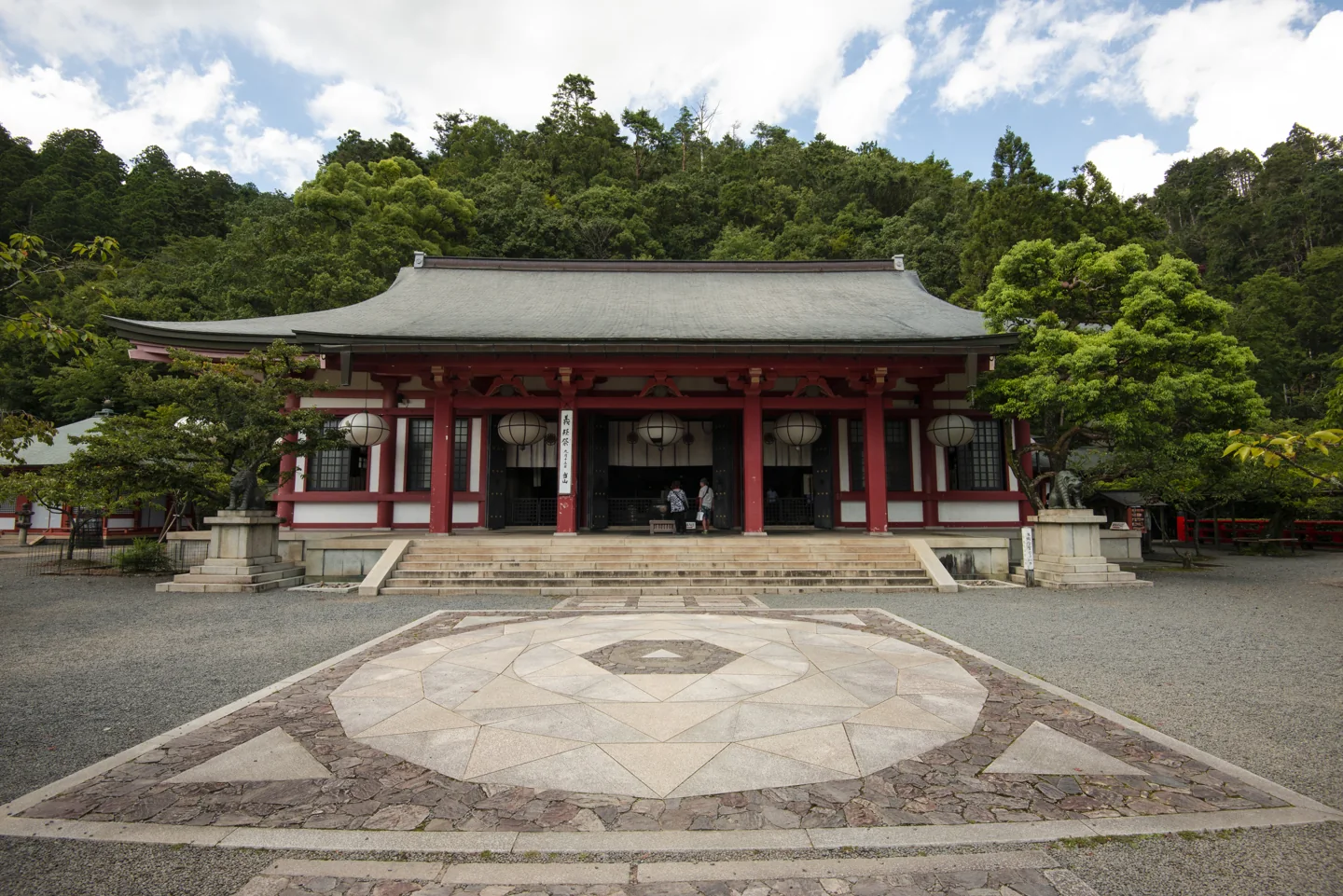
Ride Eizan Railway from Demachiyanagi and choose a Kurama-dera return walk, Okunoin crossing or short Kifune visit. Compare fares, bus 33, meals, 2026 autumn lights and rain or snow alternatives.
Reach Demachiyanagi first and board for Kurama
From Gion-Shijo, Sanjo or along the Keihan line, take Keihan to Demachiyanagi, then walk to the ground-level Eizan station. From Kyoto Station, use the JR Nara Line to Tofukuji and transfer to Keihan, or take the Karasuma subway to Karasuma Oike, the Tozai Line to Sanjo Keihan, then walk to Keihan Sanjo for Demachiyanagi. Both need transfer and waiting time. For a late-morning restaurant reservation, reach northern Kyoto early instead of leaving a tight connection to the Eizan departure. See Kyoto Travel's Kurama and Kifune access guide for official transport information.
Demachiyanagi is the easiest place to take the wrong direction. Eizan divides at Takaragaike: one branch goes to Yase-Hieizanguchi and the other to Kibuneguchi and Kurama. Read “Kurama” on the train and platform rather than following the appearance of a sightseeing train. The Eizan official route guide separates the branches. Ride to the Kurama terminus for Kurama-dera; get off one stop earlier at Kibuneguchi for Kifune Shrine first.
The temple's access page gives about 30 minutes from Demachiyanagi to Kurama. For a morning departure, allow roughly 90 minutes from a city hotel to Kurama Station, depending on the hotel and services. On arrival, use the toilets and arrange your jacket and water. Leave large bags at your accommodation or arranged storage. Neither the mountain crossing nor the Kifune bus suits rolling a suitcase.
For Kirara, check its timetable; the maple tunnel is a train view
The Kirara panoramic train has broad windows and runs between Demachiyanagi and Kurama without an extra limited-express charge. Check the weekday or weekend version of the official Kirara and Mai timetable before leaving. Keep flexibility for one departure in the morning. If a regular train comes first and waiting would cut hiking or lunch time, take it and check Kirara again for the return.
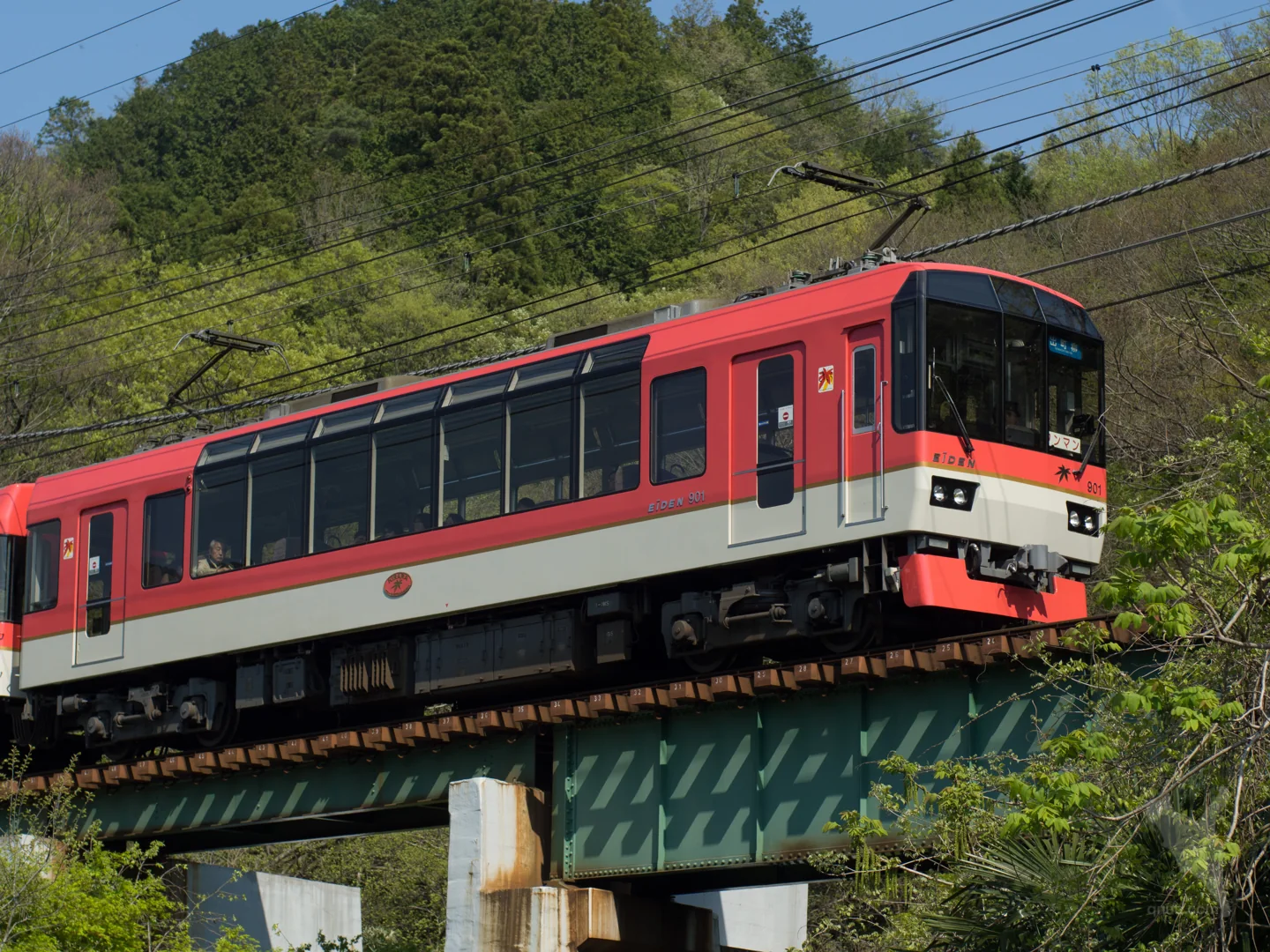
The green Hiei train with its oval front, often searched alongside Kirara, runs toward Yase-Hieizanguchi. If you want both, give Yase a separate half-day. Doubling back repeatedly just to ride another train cuts the time meant for the main hall and Kifune walk. Rail enthusiasts can make trains the day's theme, but should remove the Okunoin crossing.
The official maple tunnel introduction places it between Ichihara and Ninose. It is a stretch of track with woodland viewed from the train; you cannot get off and walk into it. Late spring and summer bring fresh green leaves, autumn brings color, and snowy winter days bring white branches. Regular trains pass through too, so Kirara is not required. Do not look for a walking entrance beside the tracks.
Eizan Railway’s maple-tunnel footage from November 20, 2025 previews the window view while trains slow along the route.
Add up the fares before choosing a day pass
The following adult fares in yen are from official prices read on October 27, 2026. Demachiyanagi to Kurama or Kibuneguchi costs ¥470 one way, or ¥940 return. The single stop between Kibuneguchi and Kurama is ¥220. Compare the regular fare table and Ee Kippu product page. The all-line Eizan day pass is ¥1,200 for adults and ¥600 for children. One journey into and out of the area costs less with individual fares.
If you return downhill from Kurama-dera, ride one stop from Kurama to Kibuneguchi and finally return to Demachiyanagi, the three Eizan legs total ¥470 + ¥220 + ¥470 = ¥1,160, still ¥40 below the day pass. The mountain-crossing version omits the middle train ride and costs ¥940 on Eizan. Do not add Ichijoji or Yase just to recover the pass price. Choose your stops, then total the legs. Fare-only savings begin above ¥1,200.
Kyoto Bus 33 between Kibuneguchi Station and Kifune costs ¥200 per adult each way, separate from Eizan fares. The current Kyoto Bus fare and IC rules say to tap once when getting off on this short route. Nationwide compatible cards such as Suica and ICOCA work. A Kifune-only return trip by train and bus totals ¥1,340. Crossing the mountain and taking the bus once totals ¥1,140. Both start and finish at Demachiyanagi; hotel connections cost extra.
The official discount-ticket list also includes the Kyoto Rakuhoku Forest and Water Ticket at ¥1,800 for adults, covering all Eizan lines and specified Kyoto Bus sections in Rakuhoku. The Subway & Eizan Kurama–Kifune Day Trip Ticket is ¥2,100 for adults, covering all city subway lines, Keihan from Sanjo to Demachiyanagi and all Eizan lines, but no buses. The latter is sold through March 31, 2027. For a simple Kurama and Kifune trip, start with single fares. Compare combination tickets if staying farther away and using several subway journeys that day.
Kurama Station to Niomon: choose walking or cable car below the mountain
Outside Kurama Station, see the tengu figure, then follow the street toward Kurama-dera's Niomon Gate, around three minutes on foot according to the temple. Tengu and young Yoshitsune stories introduce the area, but the approach path determines the effort. Do not spend so long near the station that you start climbing late. For a crossing to Kifune, use the morning stop below the mountain for extra breakfast and preparations.
The Kurama-dera entry rules list a ¥500 mountain contribution, an additional ¥200 for Reihoden and a cable-car donation of ¥200 per adult one way or ¥100 for elementary-school children and younger. The temple treats the cable car as assistance for worshippers. It removes only part of the climb. From the upper Tahoto Station, around ten minutes of walking to the main hall remains, with slopes and changes in level. Judge that remaining section if stairs are difficult; the cable car does not create a level route throughout.
Take the zigzag approach to see Yuki Shrine along the way. Take the cable car to save energy for the main hall and later mountain path. It bypasses Yuki Shrine, so visit on a walking descent if you still want to see it. Taking the cable car up and walking down, or walking both ways, each has a purpose. If descending hurts your knees, the cable car down may be better too. Spend the saved time resting at the main hall.
Yuki Shrine and the zigzag approach
Yuki Shrine is about five minutes on foot past Niomon. From there, the temple gives about 20 minutes up the zigzag approach to the main hall. Slow down to see the sacred tree and worship hall instead of chasing time up the steps. Yuki Shrine's official history explains that its worship hall has two side sections with a central passage, a divided worship-hall form. Understanding the space gives you a feature to recognize while passing through.
The main deities are Onamuchi-no-Mikoto and Sukunahikona-no-Mikoto, and the great cedar is also an object of worship. The Kurama Fire Festival belongs to this shrine and draws on traditions of welcoming the deities' relocation. A daytime visit also shows how the shrine relates to the settlement below.
Bends and stops spread out walking speeds. If one companion takes photographs and another walks faster, agree to meet in front of a clearly identified hall rather than searching at a junction. Rest where there is room, and put phones away before using steps. Stop for photographs after a bend so those behind can pass. These arrangements help more than timing the walk to the minute.
Tigers and Kongo-sho at the main hall; decide your return here
At the main hall, look first at the tigers on both sides. The temple's site guide describes them as messengers of Bishamonten, and presents Senju Kannon, Bishamonten and Gohomaoson as the love, light and power of Sonten. The Kongo-sho forecourt is linked to star-mandala belief and is a place of worship. Watch for people praying when photographing it and avoid occupying the center for long.
This is the day's best decision point. Stay around the halls and return the same way, add Reihoden for exhibits, or continue toward Okunoin only if crossing the mountain. Each branch makes a complete temple visit. Buying admission does not require walking to Kifune. If you reach the main hall only in the afternoon or found the climb difficult, turning back leaves a more comfortable rest of the day.
The current temple notice lists main-hall opening from 9:00 to 16:15 and the last downhill cable car at 16:25. The access page gives a normal interval of 20 minutes. Check the hall's closing time before the cable car's last departure. Do not treat the last uphill ride as the start of a visit. If depending on the cable car, read suspension notices before leaving and choose your route accordingly.
Reihoden: nature, temple treasures and Yosano Akiko
Reihoden near the main hall, also called the Kurama Mountain Museum, suits interests in Buddhist statues, natural history or Yosano Akiko. The museum guide lists natural science on the first floor, temple treasures and the Yosano memorial room on the second, and Buddhist statues on the third. The relocated Tohaku-tei stands in front. Spend longer on one interest rather than dividing time equally among floors.
Natural-history exhibits cover Mount Kurama's geology and exposed roots. Before an afternoon on the tree-root path, this floor gives the roots more meaning than a photograph backdrop. Literature enthusiasts can link the second floor with Tohaku-tei. The main-hall return route allows a closer look here than the crossing route: less mountain walking buys time with exhibits.
Reihoden opens 9:00–16:00. It closes Tuesdays, or the following day when Tuesday is a national holiday, and for winter from December 12 to the end of February. Choose an open day if the museum is central to your plan and allow indoor visiting time during the climb. It is on the mountain and still requires outdoor walking. If heavy rain, snow or ice makes mountain access unsuitable, choose a city museum rather than climbing just for shelter inside.
Crossing Okunoin: the root path is followed by a descent to Kifune
Beyond the main hall toward the back of Reihoden, the route becomes the Okunoin approach. It passes Sekurabe-ishi, the tree-root path, Sojogatani and Yoshitsune-do, then Mao-den before descending to the West Gate and Kifune. The temple calls this a route for strong walkers, giving about 30 minutes from the main hall to Mao-den and another 20 to Kifune Shrine. These describe continuous walking. Allow extra time for looking and resting; 90 minutes to two hours is a more relaxed planning allowance.
With roots exposed, keep your eyes on your footing. Wear grippy soles, leave your hands free and use rain gear that permits this. Long skirts, hard-soled dress shoes and slippers are unsuitable. Photographs can make the root path seem like a small level patch, but the crossing includes climbing and a long descent. Descending keeps weight on the knees. Anyone who finds stairs down difficult should account for that when choosing the route.
Entering at Kurama and leaving at Kifune puts the longer climb in the morning, with lunch and departure transport on the Kifune side. In reverse, you must replan the West Gate climb around Kurama-dera's hours. For a first visit with afternoon dining, use the forward route. If companions will not hike, use the train together rather than splitting into two groups with an uncertain mountain meeting time.
There is no convenient intermediate exit to a train. Before leaving the main hall, check water, toilets and energy. If turning back, return to Kurama Station. Once in Okunoin, follow the signed approach rather than a straight-line navigation shortcut. Stop the crossing in torrential rain, thunder, strong wind or conditions too slippery for stable footing. Autumn illuminations take place within Kifune Shrine grounds. Finish the mountain path before dark.
Kifune main shrine: steps, spring water and water fortunes
From Kifune bus stop, walk about five minutes along the road to the main shrine entrance. Descending from Kurama's West Gate also brings you to the Kifune-side road before the main shrine. Identify the lantern-lined steps first. Keep to the side when stopping beside the road. After climbing to the main shrine, worship and try a water fortune if you wish. Save photographs for a gap on the return rather than repeatedly turning back on the stairs.
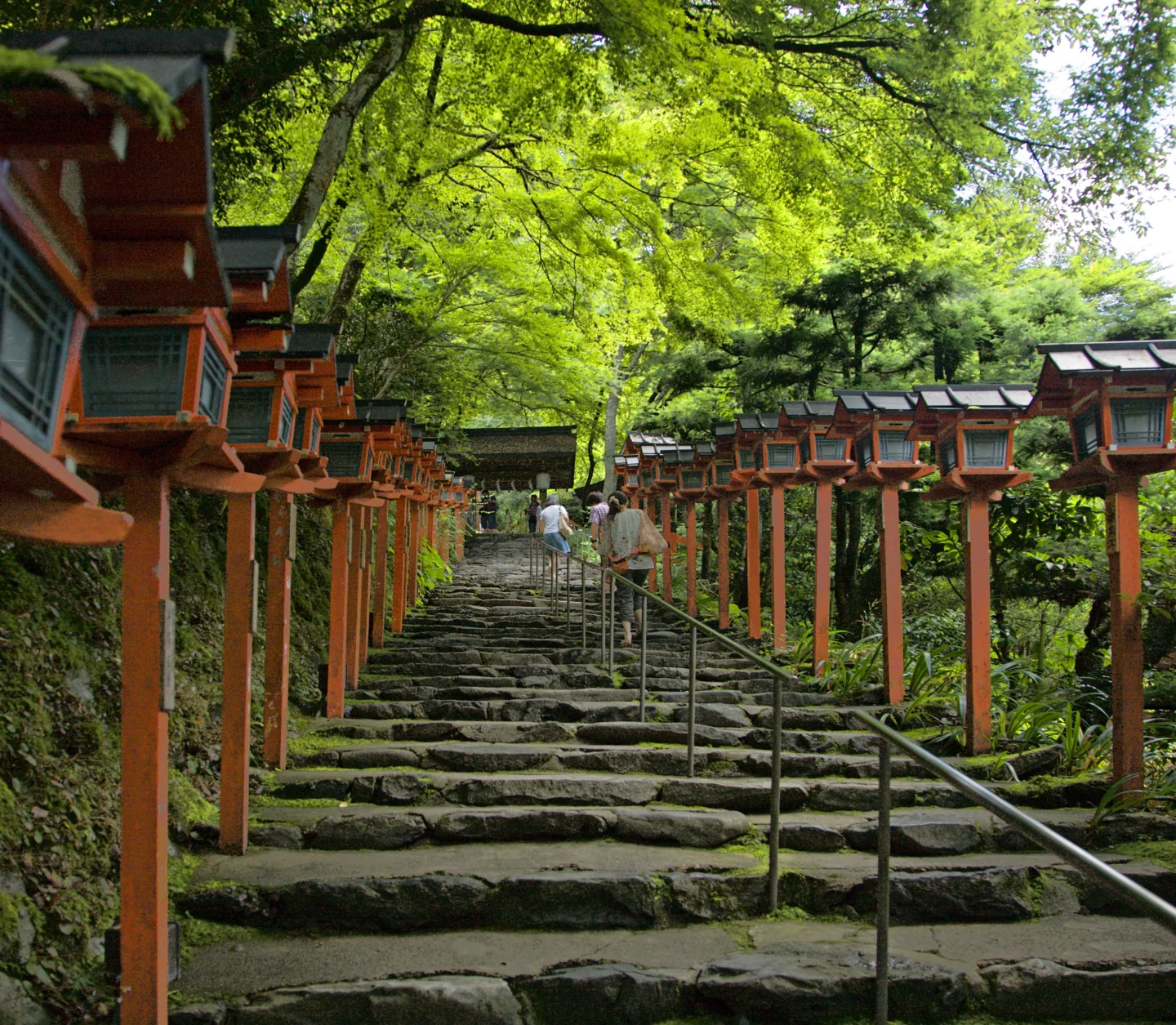
The shrine's deity introduction names Takaokami-no-Kami at the main shrine and Okumiya, and Iwanagahime-no-Mikoto at Yui-no-Yashiro. Water-deity worship gives context to the spring in front of the main shrine; water fortunes are one way to engage with it. The Kyoto Tourism Federation lists ordinary worship as free and water fortunes at ¥200 each. Float the paper on the sacred water to reveal the words. Have small change ready and allow unhurried time by the pool.
From May 1 to November 30, 2026, main-shrine visiting, including water fortunes, is 6:00–20:00. The amulet office normally opens 9:00–17:00, and prayer applications are accepted 9:00–15:00. Use the shrine's opening notice for that year. For goshuin or amulets, work to the office deadline. For evening lanterns alone, plan the return separately. These require different arrival times.
The main shrine has continuous steps. A stroller at the entrance still leaves lifting a child, parking the stroller and managing stairs. It is not a smoothly accessible stroller visit. Travelers needing wheelchair access throughout should choose a destination with an accessible route. If an older companion simply walks slowly, keep only the main shrine and a short road walk before returning. You need not complete all three shrines.
Main shrine, Okumiya and Yui-no-Yashiro: allow time to return
A full three-shrine route can go from the main shrine to Okumiya, then Yui-no-Yashiro, before returning near the main shrine to leave. You pass Yui-no-Yashiro on the way in; continuing to the farther Okumiya first creates a clear turning point. Allow 45 minutes to an hour for the added three-shrine walk, including worship and the return. With crowded roads or longer photography stops, move lunch later instead of walking faster throughout.
Okumiya is the shrine's stated founding site. Its quieter space differs from the busy main-shrine steps. The shrine history links the boat-shaped stone setting to the tradition of Tamayorihime arriving upstream in a yellow boat. The dragon hole beneath the main hall is forbidden to view. Stay in the public grounds. Link the tradition with the visible stones and buildings rather than searching off the approach for a cave entrance.
Yui-no-Yashiro's relationship traditions connect Iwanagahime-no-Mikoto and Izumi Shikibu. If this cultural theme interests you, spend longer here, then return along the same road to the main shrine. With only two or three hours, choose the main shrine and part of the river instead of adding the Okumiya return walk.
Kifune's road serves pedestrians, buses, restaurant transfers and other vehicles. When a vehicle approaches, stop in a wider place to let it pass. Do not move into the road's center for an empty-looking photograph. Umbrellas take extra width, so walk one behind the other instead of chatting side by side. At night, keep your phone toward the inside and stand securely before checking the map.
Build lunch around a reservation; separate summer riverside seats from indoor meals
If riverside kawadoko dining is the main attraction, book the meal before planning transport. Kibune Beniya's 2026 notice lists the season from May 1 to September 30; late October belongs to another season. An autumn foliage visit uses autumn meals and shrine walks. For next summer, choose a Kifune day in principle, then book dates after the restaurant announces the new season's plans.
The official Beniya menu currently lists November–April seasonal kaiseki at ¥8,800, ¥11,300 and ¥13,800, all including 10% consumption tax. Its summer riverside kaiseki page lists a ¥9,800 plan only for lunch from May to September. These named plans help compare budgets. For a formal meal in northern Kyoto, make lunch the center of the day. For simpler food, eat a full breakfast, carry snacks and plan the main meal back in the city.
The restaurant booking page takes phone reservations at 075-741-2041. Give the date, group size, menu and lunch start time, and ask about children's meals, allergies and cancellation conditions together. Book a transfer with the meal if needed. For a 13:30 lunch, make the morning a main-shrine visit or Kurama main-hall return walk that can finish on time. A mountain crossing is harder to time closely when walking slows, photographs take longer or weather changes.
In rain or high river levels, Beniya serves meals indoors. Groups of two or more can request a Kibuneguchi transfer ahead, with limited vehicles; see the restaurant FAQ. A riverside booking needs to work with that indoor rain plan. Cancellation before departure follows the booking's deadlines and rates. The transfer is a dining service, not a public bus for walk-up shrine and station journeys.
Bus 33 to the shrine: Kibuneguchi is not the entrance
Kibuneguchi is the railway station; Kifune is the bus stop near the shrine. After leaving Eizan, follow station signs to Kyoto Bus 33, get off at Kifune and walk to the main shrine. If arriving on Kyoto Bus 52 from Kokusaikaikan, transfer at Kibuneguchi. Include waiting for the second bus. The shrine's official access page links timetables for routes 33 and 52; save them before departure.
Walking all the way from Kibuneguchi to the shrine is a separate route choice, not a few casual minutes after leaving the train. After crossing Mount Kurama, prioritize bus 33 back and save energy for waiting and city travel. Only include the road walk if visiting Kifune alone and wanting a slow streamside approach. If short of time, cut the long road walk before cutting the shrine visit merely to fit it in.
The Kyoto Bus departures from Kifune separate weekdays, Saturdays and holidays, and note a September 28, 2026 timetable change. Save the downhill direction from Kifune to Eiden Kibuneguchi Station, not the opposite uphill service. Night illuminations encourage later stays, but a shrine open until 20:30 does not mean buses run until 20:30. Obtain that day's usable downhill departures before deciding how late to stay.
Save the return train and bus pages near the shrine, with a copy on a companion's phone. In a long queue, a bus ride of only a few minutes does not represent total travel time: another service may require waiting, followed by reaching the platform. If you have finished the main shrine and a bus is due, return to the station. Dinner at Demachiyanagi or near your hotel is easier to time than one final Kifune stop.
Spring to early summer: fresh leaves and the mountain path
After Kyoto's city cherry blossoms, Kurama and Kifune offer a day of woodland and valleys without continuing the blossom chase. Choose a dry day for the main hall and Okunoin. After rain the previous day, switch to a main-hall return or a short Kifune visit. The Eizan ride gives you a first look at the day's foliage.
Early summer allows more time on the mountain, but walking still needs water. Walk Kurama in the morning and rest at Kifune in the afternoon, putting the hardest climb when you have more energy. Once riverside dining opens, companions may have different priorities. If one wants hiking and another wants lunch, take a short main-hall route and transport to Kifune, leaving time to change and freshen up.
A light jacket in May or a removable sun-protection layer in summer works better than dressing only for daytime city temperatures. You may feel hot walking and cool while eating by the stream. Keep layers accessible. For a fixed restaurant arrival, use the direct Kifune route and leave the mountain for a day without reservations. A meal should not force companions to hurry over roots.
Summer and rainy season: shorten hiking when dining comes first
For cooler surroundings or riverside dining in summer, enter and leave via Kifune. Visit the main shrine in the morning, eat lunch, then add Yui-no-Yashiro and Okumiya according to energy before taking the bus back. This divides the longest outdoor activity into shorter parts with a meal break. The valley differs from the city, but bus waits, steps and road walks still need water and sun protection. Going into the hills does not remove heat precautions.
If afternoon thunderstorms are forecast, finish outdoor activity in the morning and leave after lunch. If heavy rain is already affecting transport, switch to the city. For a meal reservation, use the restaurant's rain plan and booking cancellation conditions. Prepayment is no reason to add Okunoin. Roots, steps and soil do not become dry immediately after rain stops. Using transport still makes a reasonable day.
Kawadoko are restaurant seats. Photograph near the water only where the restaurant permits it. Do not enter another restaurant's platform or a private passage. Without a reservation, enjoy public approaches and shrine grounds, then eat back in the city.
Autumn daytime hiking and the 2026 lights need separate planning
With one day for Kurama and Kifune, decide between daytime woodland and shrine illuminations. For daylight, enter Kurama in the morning and leave Kifune in the afternoon, keeping hiking and lunch time. For lights, enter from Kibuneguchi in the afternoon, walk the three shrines, eat and see the lights. Shrine-only visitors need not arrive in the morning and wait all day. If you have another Kyoto foliage reservation, leave Kurama for another day rather than competing for time between Higashiyama and the north.
The Kifune Shrine notice dated October 19, 2026 lists illuminations November 7–24, from sunset to 20:30 in the main-shrine and Okumiya grounds, including water fortunes. The amulet office opens 9:00–20:00. This extends shrine visiting into the evening; it does not make Kurama's Okunoin path a night route. If doing both, finish the mountain in daylight, then wait for sunset in Kifune.
If filling the wait with a formal dinner, check whether the meal's start and finish connect with the return bus. Without a suitable service, and if you do not intend to walk dark roads, leave earlier and see the red lanterns and leaves by day. Shorter autumn daylight makes the final transport leg more valuable than another ten minutes of photographs. With children or older relatives, the daytime plan usually suits the group more easily.
Winter snow: short visits without a mountain crossing
In winter, make a short main-shrine visit or a Kurama main-hall return the upper limit. Cancel the Okunoin crossing in snow or ice. For snow views, visit Kifune's main shrine only when transport runs normally and the entrance is safe. Take the lantern steps slowly and return the same way.
The shortest steps and slopes often take the most time in winter. Grippy shoes, gloves that let you hold rails and bags that leave both hands free help more than a thick coat alone. If climbing feels slippery, descending will be harder. Turn back while you can still walk securely. If a companion needs support, do not add the road walk to Okumiya. Stroller and wheelchair users should choose a city route with smooth access throughout.
Reihoden closes from December 12 to the end of February, so a snowy winter day cannot be planned as an indoor museum visit up the mountain. Do not copy a late summer return into a winter afternoon. Finish worship, then return to the city for lunch or tea. Read Eizan operations and that day's temple and shrine information before leaving. With suspended services, road closures or severe wind and snow, save northern Kyoto for another day and choose an open city museum.
Alternatives for rain, tiredness and a suspended cable car
In light rain without thunderstorms or transport disruption, use a short Kifune main-shrine route: train to Kibuneguchi, bus 33 to Kifune, worship and lunch, then return the same way. Remove Okumiya, long streamside walks and the Kurama crossing. Wear grippy shoes and keep rain gear from blocking others on steps. If rain makes the steps difficult, replace even the main shrine with an indoor city activity.
In fine weather with limited energy, keep a Kurama main-hall return. Take the cable car up, decide about the museum at the main hall, then descend and return to Demachiyanagi for food. Without adding Kifune, this still makes a full half-day in northern Kyoto. If the cable car is suspended and you do not want the zigzag climb, choose short Kifune or the city rather than forcing yourself at Niomon.
If companions tire at noon, finish where you are. Descend from Kurama's main hall, or return to the bus from Kifune's main shrine. Their names often appear together, but that does not make the other sight a gap you must fill. Agree on alternatives before departure so a shorter route is easy to adopt.
Two daytime schedules you can use
For hiking, leave Demachiyanagi around 8:30 and begin Kurama's approach around 9:15–9:30. Allow the main hall, rests and any museum visit until around 11:00, then enter Okunoin before noon and reach Kifune around 12:30–13:00. Choose the nearest actual service from that day's timetable. Carry a simple snack, visit and eat in the afternoon, then begin leaving around 15:00–16:00 with time for queues and the return.
For less mountain walking, still visit Kurama in the morning, return downhill and take the train one stop to Kibuneguchi, then bus 33. Keep the afternoon to the main shrine and a meal. For a formal lunch reservation, go straight to Kifune in the morning and consider Kurama afterward only if time remains. If cable cars or steps are a concern, stay on the Kifune side. Seeing both without the crossing means spending time on transfers. Avoid making lunch both very early and very long.
The meal-focused version is simplest: reach Kifune for the reservation, visit the main shrine before eating, add Yui-no-Yashiro or Okumiya afterward and return to Demachiyanagi in the afternoon. For an evening walk, use the Demachiyanagi riverbank or hotel area rather than another temple with an admission deadline. Use the Kyoto itineraries and accommodation bases guide to connect this day with your stay and other city days.
A few useful answers
Does a cable car link Kurama-dera directly to Kifune Shrine?
The Kurama cable car links the area near the temple gate with Tahoto Station. You still walk to the main hall, and the Okunoin section toward Kifune is on foot. Without hiking, return to Kurama Station, ride one stop to Kibuneguchi and take Kyoto Bus 33 to Kifune.
Do I need an Eizan day pass just for Kifune Shrine?
The adult return fare between Demachiyanagi and Kibuneguchi is ¥940, ¥260 less than the ¥1,200 day pass. Bus 33 costs another ¥400 return. For a simple Kifune return, pay each leg separately.
Does riverside dining operate in rain?
At Kibune Beniya, the named example here, meals move indoors in rain or high water. Cancellation follows the booking conditions. To keep lunch and remove hiking, use bus 33 from Kibuneguchi or a restaurant transfer booked ahead.
Can I walk over the mountain to Kurama after the autumn lights?
Finish Kurama’s Okunoin path in daylight. Night illuminations take place in Kifune’s main-shrine and Okumiya grounds. Leave on the Kifune side, with usable bus and train departures planned ahead.
Official information and references
Sources used in this guide.
- Kurama-dera: current opening and cable-car notices
- Kurama-dera: access and mountain routes
- Kurama-dera: admission contributions, cable car and Reihoden hours
- Kurama-dera: halls and Okunoin guide
- Kurama-dera: Reihoden exhibitions
- Yuki Shrine: history, worship hall and sacred tree
- Kifune Shrine: three shrines and visiting
- Kifune Shrine: deities and history
- Kifune Shrine: access and bus 33/52 links
- Kifune Shrine: 2026 visiting-hours notice
- Kifune Shrine: 2026 autumn illumination notice
- Eizan Railway: official routes and single fares
- Eizan Railway: regular fare table
- Eizan Railway: Ee Kippu product and refunds
- Eizan Railway: combination-ticket fares and coverage
- Eizan Railway: Kirara train
- Eizan Railway: network and sightseeing-train timetables
- Eizan Railway: maple tunnel
- Kyoto Bus: regular fares, IC cards and child rules
- Kyoto Bus: fare table effective March 20, 2026
- Kyoto Bus: departures from Kifune
- Kyoto Travel: city access to Kurama and Kifune
- Kyoto Tourism Federation: Kifune water-fortune cost and access
- Kibune Beniya: 2026 riverside-dining notice
- Kibune Beniya: seasonal kaiseki and riverside menus
- Kibune Beniya: rain plan and transfer rules
- Kibune Beniya: phone reservations and meal times
- Kyoto Bus: temporary Route 33 timetable and Kibune temporary bus stop (Nov 7–24, 2026)