Walk from Ohara bus terminal to Sanzen-in, explore Shuheki-en, Yusei-en, Ojo Gokuraku-in and Enyu-zo, choose a one- or two-hour temple visit, and plan noodles, a vegetable lunch or another nearby temple.
- Region & Focus
- KyotoShrines and temples
- Reading Scope
- 30 min read · 22 chapters · 5 Q&As
- Official Verification
- 15 official sources checkedUpdated November 7, 2026
- Key Topics
- SeasonsFoodItineraries
Chapter Route Map (tap any stop)
- Allow 90–120 minutes for the gardens and halls
- Split the walk from Ohara terminal to Goten-mon into three parts
- Choose your route from Kyoto Station, Kokusaikaikan or Demachiyanagi
- Opening hours, admission and last entry
- Goten-mon: stone walls and the history of an imperial temple
- The guest hall and Shuheki-en: sit to study the ponds
- Shinden: moving from an interior view to Yusei-en
- Yusei-en: change perspective with the water and cedars
- Ojo Gokuraku-in: study the three figures, then the ceiling
- Warabe Jizo and Suzaku-mon: two scales within the garden
- The upper path: Benzaiten, hydrangeas and Konjiki Fudo-do
- Kannon-do, the Jigen garden and the stone Amida
- Enyu-zo: revisit Gokuraku-in through its reconstructed ceiling
- Choose a one-hour or two-hour route inside
- Morning or midday arrival: place lunch where it fits
- Noodles and sweets near the gate: Seryo Chaya and Ippuku Chaya
- A seated vegetable lunch: Shino Shomon's meal hours
- Red shiso and pickles: buy them on the way down
- More time: choose Hosen-in, Jikko-in or Shorin-in by interest
- Early summer, autumn leaves and winter: where to spend time
- Young children, older relatives and wheelchair users need different routes
- A half-day example starting at Ohara terminal
- Quick Q&A
Give Sanzen-in a half day that allows both sitting beside a garden and walking among the trees. Climb from Ohara bus terminal to Goten-mon, then move from Shuheki-en at the guest hall through Yusei-en in front of Shinden to Ojo Gokuraku-in. Finish with the reconstructed ceiling at Enyu-zo to connect the scenery with the Buddhist images. Allow 90–120 minutes inside. With lunch on the approach and the walk up and down, budget about half a day from Ohara terminal. To add a nearby temple, choose one according to your interest in gardens, plants or Buddhist chanting.
Allow 90–120 minutes for the gardens and halls
Coming from central Kyoto, combine Sanzen-in, lunch on the approach and a village walk in the same day. Allow 90–120 minutes inside to sit at the guest hall, walk the gardens and view the Buddhist images. With only an hour, focus on Shuheki-en, Shinden, Yusei-en and Ojo Gokuraku-in, making brief stops at the upper halls along the route. For cultural objects or a slower exploration of the upper halls, allow more than two hours and eat lunch afterward.
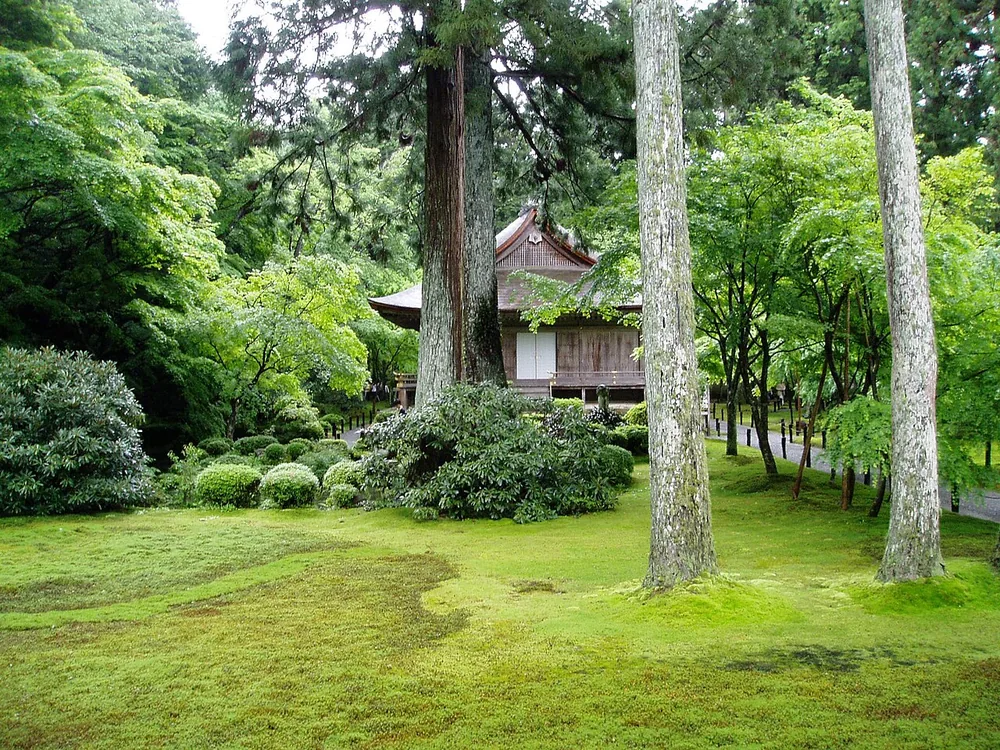
Sanzen-in is on a hillside about a 10-minute walk from Ohara bus terminal. Its grounds combine buildings, outdoor gardens and paths continuing uphill. Completing the circuit takes more effort than photographing the entrance. It best suits visitors willing to look from a broad moss garden to details of Buddhist sculpture and sit to appreciate a garden. If you mainly want food and a village walk, choose separately whether to include paid temple admission.
The two gardens offer different ways of looking. Shuheki-en is viewed from the guest hall, with your sightline stopping at the building's edge. Yusei-en lets you walk among cedars and moss, seeing Ojo Gokuraku-in change with your position. Understand this difference first so you can spend time on each garden's character instead of retracing your steps for photographs.
Walk from Ohara bus terminal to Sanzen-in, explore Shuheki-en, Yusei-en, Ojo Gokuraku-in and Enyu-zo, choose a one- or two-hour temple visit, and plan noodles, a vegetable lunch or another nearby temple.
Split the walk from Ohara terminal to Goten-mon into three parts
First, find the Sanzen-in direction from Ohara bus terminal, cross the road at the crossing and enter the temple approach. Ohara is the village transport stop; the temple entrance is still uphill. Use the toilet and organize coats and rain gear before starting. If someone needs to sit and eat, decide here whether to eat before visiting, rather than reaching the gate to find lunch can no longer wait.
Second, follow the approach uphill along the Ro River. Shops, tea houses and small bridges divide it into short stretches. You can slow down beside the water, but stopping at every shop easily exceeds a simple walking estimate. Note shops on the way up and buy pickles on the way down to avoid carrying bags through shoe-removal areas and gardens. If you have a restaurant reservation, remember its position on the slope so you do not search back and forth afterward.
Third, the tall stone walls and road in front of the temple bring you close to Goten-mon. The Kyoto Prefecture Tourism Federation lists about 10 minutes on foot after getting off at Ohara. With young children, older relatives or shopping stops, allow 20–30 minutes for climbing, stopping and regrouping. At the stone walls, follow that day's entrance signs.
Choose your route from Kyoto Station, Kokusaikaikan or Demachiyanagi
If staying near Kyoto Station and wanting fewer transfers, consider route 17 or Special 17 to Ohara. From the Karasuma subway line, ride to Kokusaikaikan Station and transfer to Kyoto Bus. The temple's transport information lists about an hour by bus from Kyoto Station and about 23 minutes after transferring at Kokusaikaikan. Use these to compare road travel, then add waiting, transfers and the final uphill walk to your door-to-temple time.
From Kawaramachi, Sanjo or the Keihan line, check Ohara services from the relevant stop. Kyoto Bus's official directions list routes from Shijo Kawaramachi, Sanjo Keihan and Keihan Demachiyanagi, noting that Special 16 uses different stops in some areas. Check the stop name, direction and exact boarding point together. Seeing Ohara on a sign does not establish which side of the street to use. The timetable links on that page provide special-service and weekday/holiday schedules.
If you must return to Kyoto Station for luggage or a long-distance train, the Kokusaikaikan route puts the latter part of the journey on the subway. With substantial luggage or difficult transfers, compare the direct bus instead. Leave bags in the city and carry only daily essentials to make the approach and temple shoe-removal areas easier.
Opening hours, admission and last entry
The Kyoto Prefecture Tourism Federation's Sanzen-in listing gives 9 a.m.–5 p.m. from March through October, 8:45 a.m.–4:45 p.m. in November, and 9 a.m.–4:30 p.m. from December through February. Admission closes 30 minutes before closing. General admission is ¥700, junior and senior high school students pay ¥400, and elementary school pupils ¥150. For groups of 30 or more, general admission is ¥600 and junior/senior high school admission ¥300. Sanzen-in opens year-round.
Plan last entry separately from the time you want inside. In winter you can enter before 4 p.m., but that is already too late for a full visit to the gardens and upper halls. Count back 90 minutes, then add the walk to the gate to decide whether lunch belongs before or after the temple. Two adults and one elementary school pupil pay ¥1,550 for temple admission alone. Other nearby temples charge separately.
Goten-mon is the arrival landmark. Continue to ticketing and entry according to on-site signs. Organize shoes, umbrellas and backpacks when entering buildings so your hands remain free on steps. With several layers in autumn or winter, keep your coat on while sitting indoors, then adjust outdoors in the garden. That is easier than stopping in a passage to search your bag.
Goten-mon: stone walls and the history of an imperial temple
Tall stone walls surround Goten-mon, making it resemble the entrance to a small castle. The temple's grounds guide explains that the administrative residence layout survives here and attributes the stonework to the Anoshu builders of Sakamoto in Omi. Before entering, examine how natural stones of different sizes fit together and how the walls separate road level from the grounds. This reveals more of the architecture than treating the gate as a signboard. Keep the entrance clear while taking photographs.
The term monzeki relates to Sanzen-in's history of imperial-family abbots. It began with a hermitage founded by Saicho on Mount Hiei, moved several times, and continued in Ohara under the Sanzen-in name during the Meiji period. That history explains the combination of wooded gardens and the courtly Shinden hall. Buildings from different periods standing together reward slow observation.
The guest hall and Shuheki-en: sit to study the ponds
On entering the guest hall, first look at Shuheki-en. This pond garden is designed for viewing from the building. The eastern hillside creates changes in level; round and gourd-shaped ponds connect to the south. Study it from one position: water in front, clipped shrubs, stones and trunks behind, then the hillside carrying the greenery higher. Sitting low and standing reveal different amounts of pond edge.
Trace the pond shapes along the water first, then find where hillside and level ground meet. This makes the layout easier to read. The garden is traditionally said to have been remodeled by Edo-period tea master Kanamori Sowa.
If you want one longer pause, put it in the first half of the visit here. Sitting beside the garden rests your legs after the climb and lets companions regroup. Stay a few minutes beyond taking a picture and notice how branches obscure the water. Shuheki-en's details gradually separate.
Shinden: moving from an interior view to Yusei-en
Shinden was built in the style of Kyoto Imperial Palace's Shishinden and hosts Sanzen-in's important Osenbo-ko service. Its principal image, Yakushi Ruriko Nyorai, is normally concealed. Regular visits focus on the hall's layout, ceremonial context and outward garden view. A throne is on the east side, memorial tablets for successive imperial abbots on the west. A rainbow painted by Shimomura Kanzan gives the eastern room its name, Rainbow Room. Follow the open route and leave screened-off areas for religious activities.
Look at Yusei-en from beneath the eaves and note Ojo Gokuraku-in's position. Later, on the garden path, look back at Shinden. What looked like a horizontal picture has become a space you can walk through. This indoor-to-outdoor shift offers a useful point to separate photography from worship. If someone wants longer in the hall, agree on a meeting point before entering the garden.
Sanzen-in's shomyo chanting tradition has a specific role in Shinden. Osenbo-ko combines gagaku court music and Buddhist chanting in a ceremony inherited from the court. On an ordinary day, learn about the space without treating a service as a daily attraction. For a particular ceremony, add the temple's announcement for that year and budget its duration separately from a normal garden visit.
Yusei-en: change perspective with the water and cedars
Yusei-en is a strolling pond garden extending from Shinden toward Ojo Gokuraku-in. Cedars and cypresses rise from moss, and water flows from a three-tier waterfall on the upper slope into the ponds. First follow the water, then see how trunks divide near and distant layers, and finally place the hall back into the whole scene. The path remains readable even without a hillside full of autumn color.
Position creates the largest changes. Near the pond, water and stone edges sit below you. From a more open angle, trunks frame Ojo Gokuraku-in again. Shuheki-en invites a long look from one point; Yusei-en rewards shorter pauses at several turns. Look at one thing per move, such as the pond edge, the clearing before the hall or leaf shadows. This gives the two gardens distinct memories.
The moss edge marks the viewing boundary. Stay on open paths and use your zoom for framing. To photograph low stone figures, stand securely on the path before bending. In rain, keep your umbrella close and let approaching visitors pass at narrow points. These small actions make slow viewing comfortable for companions, which matters more than squeezing into one extra camera angle.
Ojo Gokuraku-in: study the three figures, then the ceiling
Ojo Gokuraku-in is a modest wooden hall outside, but its Amida triad has a strong presence within. Facing the figures, Kannon is to the viewer's right of the central Amida Nyorai and Seishi to the left. Kannon holds a lotus pedestal and Seishi joins the palms. Both attendants lean forward in a kneeling posture to welcome those entering the Pure Land, a pose called Yamato-zuwari. Understanding the movement makes their relationship easier to grasp than memorizing all the names at once.
The three statues are National Treasures; the building is an Important Cultural Property. The temple's cultural-property page records the central image at 232 centimeters and the attendants at about 132 centimeters. At the hall, use that scale to understand how a small building holds them. The boat-hull-shaped ceiling folds upward above them, responding to the relationship between statues and space. Let your eyes adjust to the interior light, study hands, knees and forward-leaning bodies, then look at the curve overhead.
The ceiling originally carried paintings of the Buddhist Pure Land, now difficult to distinguish with the naked eye. Pair this stop with Enyu-zo later: here, see the original building's scale and devotional center; there, see the colors reconstructed at full size. The viewing distances differ. Returning to cultural objects near the exit fills in details you could not see in the dark hall.
Warabe Jizo and Suzaku-mon: two scales within the garden
The small stone figures south of Ojo Gokuraku-in beside Benten Pond are called Warabe Jizo, created by stone sculptor Takashi Sugimura. Close to the moss, each has a different expression and posture. Let children find a favorite face from the garden path before returning to the adults' pace of viewing halls. Studying one or two suits a garden walk better than turning every statue into a checklist.
Also south of Ojo Gokuraku-in, Suzaku-mon was once the main gate when Gokuraku-in served as the main hall. The present gate was rebuilt in the Edo period and is normally closed. Compare it with Goten-mon to recognize entrances left by different stages of the site's history: Goten-mon connects to the imperial temple's administrative layout, Suzaku-mon to Gokuraku-in's original front. View Suzaku-mon, then leave by the current exit route.
The upper path: Benzaiten, hydrangeas and Konjiki Fudo-do
Uphill after Ojo Gokuraku-in, the path passes Benzaiten, then the hydrangea garden and Konjiki Fudo-do. Broad views across moss give way to individual short stops. Keep this stretch if your focus is Buddhist practice, temple seals or early-summer flowers. If you mainly want the two gardens and the triad, shorten upper-hall stops and follow the current visiting route through, saving viewing time for the lower grounds.
The hydrangea garden lies after Benzaiten and before Konjiki Fudo-do. The temple lists several varieties flowering in succession in early summer, including koajisai, shichidanka, mountain and lacecap hydrangeas, usually from mid-June into July. In flower season, make this a main stop and shorten sitting time at the guest hall. In other seasons, treat it as a wooded link to the halls, with buildings and Buddhist images taking priority.
Built in 1989, Konjiki Fudo-do is a hall for goma fire prayers. Its principal golden Fudo Myoo image is normally concealed. Ordinary visits are to the hall; special image openings follow the temple's annual schedule. Before entering, distinguish ordinary worship, religious services and a queue for temple seals. People passing through and those needing a longer stop should not all join the same queue.
Kannon-do, the Jigen garden and the stone Amida
Continue uphill to Kannon-do, which houses a golden Kannon. Small halls on either side hold little Kannon figures associated with devotees. Nearby, the Garden of the Compassionate Gaze of the Twenty-five Bodhisattvas represents the Fudaraku Pure Land in stone, contrasting with the lower moss and ponds. Garden enthusiasts can treat it as a third way of looking: from Shuheki-en's ponds and shrubs, through Yusei-en's woods and moss, to stones and bodhisattva arrangements.
North of Konjiki Fudo-do, across a bridge over the Ritsu River, is a stone Amida also called the Charcoal Seller's Stone Buddha. The temple describes it as a Kamakura-period statue seated cross-legged on a lotus pedestal. It suits visitors with energy to complete the upper path. You still need to return through the gardens and exit area. With a fixed lunch time, concentrate on the halls you most want to see rather than giving every small hall equal time.
Enyu-zo: revisit Gokuraku-in through its reconstructed ceiling
Enyu-zo, a cultural-property storage and exhibition facility opened in 2006, works best after Ojo Gokuraku-in. It contains a full-size boat-hull ceiling with paintings reconstructed from research. Where the original hall revealed form and shadow, here celestial figures, bodhisattvas and color return to that roof space. The Pure Land becomes a visual world you can understand beyond the statues' names.
The guest hall once held sliding-door paintings donated by modern Kyoto artists. The originals are now preserved and displayed in rotation at Enyu-zo. Works by Takeuchi Seiho, Kikuchi Hobun, Imao Keinen and Suzuki Shonen show the temple continuing to receive new art in modern times. With the current exhibits, notice the long proportions intended for sliding doors and connect them to the pillar spacing you saw indoors. Linking one work to its original room scale explains its use.
Companions interested only in gardens can split into a brief-look and detailed-look group and meet at the exit. With limited time, Enyu-zo and Gokuraku-in form a complete pair, taking priority over another uphill stretch merely to finish a list. Choose special-exhibition works from the temple's current program and add time for those that interest you.
Choose a one-hour or two-hour route inside
The one-hour version focuses on Shuheki-en at the guest hall, the view from Shinden, Yusei-en, Ojo Gokuraku-in and Enyu-zo. Sit briefly at the guest hall, choose a few garden turns, skip searching for every stone figure and focus on the ceiling reconstruction among the exhibits. Still follow the established on-site circuit, passing or briefly stopping at the upper halls before Enyu-zo. The one-hour version shortens viewing time.
With 90–120 minutes, allow stops at Benzaiten, the hydrangea garden, Konjiki Fudo-do and Kannon-do, then extend to the stone Buddha if energy allows. Time need not be evenly divided. Plant lovers can linger in the gardens and flower area, sculpture enthusiasts at the triad and upper halls, and painting enthusiasts at Enyu-zo. Use shared route points for meeting without requiring everyone to spend equal time before one painting.
Both versions count time inside the temple. The walk from the terminal, ticketing, lunch and return to the stop are separate stages. Put them separately in your schedule to see whether half a day is enough. If you meet a large tour group, pause where it is safe at the guest hall or path and adjust your stops. This often preserves your pace better than continually overtaking.
Morning or midday arrival: place lunch where it fits
If you arrive in Ohara in the morning and are not hungry, walk up to Sanzen-in first, then eat near the gate or on the way down around noon. This puts the gardens in your more alert hours and pickle shopping at the end. If you get off the bus near lunchtime, eat on the approach first so children and older relatives can settle more comfortably during the visit. With a winter midday arrival, keep both restaurant time and temple duration in view so a slow meal does not push the whole visit toward last entry.
Noodles near the gate suit eating and continuing on foot. A traditional-house restaurant suits making lunch an experience in its own right. Their time requirements differ: noodles fit on the downhill route after the temple, while a reserved meal determines when you must leave. Sweets, matcha and red-shiso drinks make approach-road breaks; a main meal still needs its own place. For young children, enough food and a seated meal affect afternoon walking more directly than trying every Ohara specialty.
Noodles and sweets near the gate: Seryo Chaya and Ippuku Chaya
Seryo Chaya is in front of Sanzen-in. The Ohara Tourism Association listing includes herring soba, curry soba, soy-sauce dango, warabi mochi and desserts. It suits a meal or break close to the entrance. If buying a snack, finish it before entering shoe-removal and worship areas to keep your hands free.
Ippuku Chaya is also near the gate. Local tourism information lists herring soba, udon and rice bowls, with hours of 11 a.m.–5 p.m. A group split between noodles and rice can find common ground here. Closing time and the kitchen's last orders are different. Ask whether main meals are still being served before deciding to sit or head back.
Ask the shop about buckwheat, fish, sauces and stock according to individual allergies or dietary needs. If avoiding buckwheat, ask about shared noodle-cooking equipment too. Switching the main ingredient to udon can still involve the same equipment. A short written Japanese request is clearer for staff than a lengthy explanation at busy times.
A seated vegetable lunch: Shino Shomon's meal hours
Shino Shomon is a traditional-house restaurant run by Shino, known for lunches featuring Ohara vegetables. Its official website lists 11 a.m.–5 p.m., with lunch last orders at 2:30 p.m. For a leisurely meal, that lunch cutoff matters more than closing time. Visit Sanzen-in in the morning, walk downhill for lunch, then shop on the way to the terminal.
The reservation page says no reservations are accepted in November; guests are seated in arrival order. In other months, same-day reservations or changes must be made by phone before 11 a.m. Give the date, time, number of guests and whether you are preordering food. During autumn foliage season, concentrate upper-temple stops on your priorities before joining the restaurant queue. In months when you have a reservation, work back from the meal time and shop afterward.
Red shiso and pickles: buy them on the way down
Ohara's food culture is closely tied to red shiso and shibazuke pickles. For a brief approach-road stop, choose a shiso drink, dango or pickles without scheduling consecutive meals for every specialty. Shibakyu grows red shiso and other crops on its own farm for shibazuke and seasonal pickles. Doi Shibazuke Honpo's Sanzen-in-mae shop is another shopping stop on the approach.
For gifts, check storage temperature, best-before dates and package size, including whether you can refrigerate them back in the city. Buy chilled products at the end and head toward the terminal afterward. If visiting another temple, choose products first and collect them on the return. This keeps food needing care on the shortest travel stretch and leaves your hands freer inside.
More time: choose Hosen-in, Jikko-in or Shorin-in by interest
For more seated garden viewing and tea, choose Hosen-in. Bankan-en framed by pillars, its five-needle pine and the study's viewpoint differ from walking into Sanzen-in's woods. The temple's admission page lists general admission including tea and sweets at ¥1,000, open 9 a.m.–5 p.m. with last entry at 4:30 p.m. This fee applies from April 10, 2026. It suits another seated pause after lunch. If you already spent ample time at Sanzen-in's guest hall, you can instead keep a village approach walk.
For plants and another small garden, choose Jikko-in. Keishin-en draws water from the Ritsu River into a heart-character-shaped pond. The garden has fudan-zakura cherry trees that flower from autumn to spring. Its small scale suits close botanical observation. Where Sanzen-in's moss and cedars encourage an overall view, here you can focus on pond edges and flowering branches.
To continue the shomyo theme introduced at Shinden, choose Shorin-in. It connects to Ohara's chanting tradition and Honen's Ohara Debate. Local tourism information describes a button inside the hall for listening to shomyo. This turns what you read about Buddhist chanting into something audible. Choose one extra temple by interest and leave a full interval to sit or listen, with afternoon time remaining to return to the terminal.
The Ohara Tourism Association route video introduces Hibiki no Michi, accompanying plans for temples around Sanzen-in, the approach and shomyo chanting culture.
Early summer, autumn leaves and winter: where to spend time
In early summer, bring the hydrangea garden into the main route and focus on flowers against the cedar woods. Rain adds moss color, water surfaces and stone steps to the experience, but outdoor paths still require secure footwear. Put the camera and phone away before adjusting your umbrella to avoid handling two tasks at once on steps.
In autumn, give Shuheki-en and Yusei-en different viewpoints so the visit does not become a pursuit of one foliage photograph. Sit by reflected colors in the former and look at halls through leaves between cedars in the latter. Enter in the morning and walk down the approach after lunch, allowing queues and photography within the Ohara day. When crowded, select upper halls and shopping stops rather than also turning lunch into a hurried roadside meal.
Winter closing is 4:30 p.m. You repeatedly move between wooden interiors and outdoor gardens, so foot warmth must work with removing shoes. Snow depends on that day's weather. Without it, enjoy evergreens, moss and the outlines of the halls. A morning departure and early lunch leave daylight for the downhill return. If the slope is icy or snow-covered, follow on-site safety guidance and shorten outdoor stretches.
Young children, older relatives and wheelchair users need different routes
With young children, build the visit around sitting beside one garden, seeing one group of Buddhist images and finding one Jizo. If a child cannot sit long at the guest hall, one adult can accompany them to the next open stopping place while another finishes the garden view. The upper grounds add climbing. Rather than spend all the child's energy completing every hall, keep lower-ground moments for independent observation and eat a normal meal afterward.
For older relatives who move slowly on steps, arrange guest hall and Shinden sitting time first, then assess the gardens and upper path. Wheelchair use has clearer limits. The Kyoto Prefecture Tourism Federation lists a wheelchair visiting route with access to some areas. Steps prevent wheelchair entry to the guest hall and Shinden. Two wheelchair-accessible toilets are provided. Ask staff to show the wheelchair route on entry and plan around accessible garden areas.
Sanzen-in has no car park of its own; drivers use nearby private parking. Include the final uphill walk when choosing a parking location. You still need to reach the entrance after parking. Leave bulky items in the city or car and bring only necessary care supplies, rather than carrying everything along narrow paths, shoe-removal areas and steps.
A half-day example starting at Ohara terminal
For an arrival at Ohara bus terminal at 10 a.m., allow 20–30 minutes to walk to the gate and enter, about 100 minutes inside, then leave near noon and spend 45–60 minutes on lunch. Shop for pickles and follow the water along the approach in the afternoon, returning to the terminal area around 2 p.m. This version centers on a full Sanzen-in visit and one meal. It leaves the later afternoon for rest in the city and can fit children's naps.
To add a temple, choose Hosen-in, Jikko-in or Shorin-in after lunch and allow enough time for a complete visit, taking a later bus. Photography, temple-seal or cultural-object enthusiasts can instead keep this time at Sanzen-in. Match the return to that day's bus timetable. If there is a gap before the next bus, rest near the terminal instead of climbing back toward the temple merely to fill it.
The example's 10 a.m. means arrival in the village. Work backward from your accommodation for city departure. Save separate map markers for Ohara terminal, Goten-mon, lunch and the return stop for easier navigation. Check shoes and rain gear when leaving Sanzen-in, buy the food you want to take away, then follow the slope down to the terminal.
A few useful answers
How long should I allow inside Sanzen-in?
Allow 90–120 minutes for the gardens, Ojo Gokuraku-in and Enyu-zo. A one-hour version shortens upper-hall and stone-statue stops. This is a planning allowance; the walk from Ohara terminal, lunch and return are separate.
How do Shuheki-en and Yusei-en differ?
Shuheki-en is a pond garden viewed from the guest hall. Yusei-en has paths among cedars, moss and ponds, with Ojo Gokuraku-in within it.
What is the latest winter entry time?
From December through February, hours are 9 a.m.–4:30 p.m., with admission ending at 4 p.m. Arrive earlier than that cutoff to allow the full duration of your chosen garden and hall route.
Can wheelchair users visit Sanzen-in?
A wheelchair route reaches some garden areas. Steps prevent wheelchair entry to the guest hall and Shinden. There are two wheelchair-accessible toilets. Ask staff to show the wheelchair route when entering.
Which temple should I add afterward?
Choose Hosen-in for framed garden views and tea, Jikko-in for plants and a small garden, or Shorin-in to explore Buddhist chanting. Complete Sanzen-in and lunch first in the half-day version; add one temple when extending it.
Official information and references
Sources used in this guide.
- Sanzen-in: buildings and gardens within the grounds
- Sanzen-in: cultural properties, Amida triad and sliding-door paintings
- Sanzen-in: origins and imperial-abbot history
- Sanzen-in: access and parking
- Sanzen-in English page: travel times
- Sanzen-in: official route map of the grounds
- Kyoto Prefecture Tourism Federation: Sanzen-in hours, fees and accessibility
- Kyoto Bus: Sanzen-in routes and timetable links
- Ohara Tourism Association: Hibiki no Michi and approach facilities
- Ohara Tourism Association: Seryo Chaya
- Ohara Tourism Association: Ippuku Chaya
- Shino Shomon: opening hours and lunch last orders
- Hosen-in: visiting hours and admission including tea and sweets
- Ohara Tourism Association: Jikko-in
- Ohara Tourism Association: Shorin-in and listening to shomyo