Walk from Ohara bus station in stages, explore Shuheki-en, Yusei-en, Ojo Gokuraku-in and Enyu-zo, choose a one- or two-hour circuit, then plan noodles, a vegetable lunch and one nearby temple.
- Region & Focus
- KyotoShrines and temples
- Reading Scope
- 30 min read · 22 chapters · 5 Q&As
- Official Verification
- 15 official sources checkedUpdated 7 November 2026
- Key Topics
- SeasonsFoodItineraries
Chapter Route Map (tap any stop)
- Allow 90–120 minutes for Sanzen-in's gardens and halls
- Ohara bus station to Goten-mon: divide the climb into three stages
- Choose an approach from Kyoto Station, Kokusaikaikan or Demachiyanagi
- Opening hours, fees and last admission
- Goten-mon: stone walls and a temple led by imperial abbots
- The reception hall and Shuheki-en: sit and study the pond
- The Shinden: moving from an interior view to Yusei-en
- Yusei-en: follow water and cedars to change the view
- Ojo Gokuraku-in: the three statues' poses, then the roof
- Warabe Jizo and Suzaku-mon: two scales within the garden
- The upper worship route: Benzaiten, hydrangeas and Konjiki Fudo-do
- Kannon-do, the Jigen garden and the stone Amida
- Enyu-zo: revisit Gokuraku-in through the reconstructed ceiling
- One hour or two: choosing an internal route
- Morning or midday arrival: place the main meal carefully
- Noodles and sweets near the gate: Seryo Chaya and Ippuku Chaya
- A seated vegetable lunch: Shino Shoumon's meal times
- Red perilla and pickles: buy on the descent
- More time: choose Hosen-in, Jikko-in or Shorin-in by interest
- Early summer, autumn leaves and winter: where to spend time
- Different visit areas for toddlers, older visitors and wheelchairs
- A half-day example from Ohara bus station
- Quick Q&A
Give Sanzen-in a half-day with time both to sit by gardens and walk into woodland. Climb from Ohara bus station to Goten-mon, then connect Shuheki-en at the reception hall, Yusei-en before the Shinden, Ojo Gokuraku-in and Enyu-zo’s reconstructed ceiling. The landscape and statues then form a coherent route. Start with 90–120 minutes inside; with lunch on the approach and walking uphill and down, allow about half a day from Ohara station. For another temple, choose by gardens, flowers or Buddhist chant.
Allow 90–120 minutes for Sanzen-in's gardens and halls
A day from central Kyoto to Ohara works well with Sanzen-in, lunch on the approach and a village walk. Allow 90–120 minutes inside for sitting in the reception hall, walking the gardens and viewing the Buddhist statues. With only an hour, focus on Shuheki-en, the Shinden, Yusei-en and Ojo Gokuraku-in, stopping briefly at the upper halls along the route. For artefacts or a slower upper-hall visit, allow over two hours and eat after leaving.
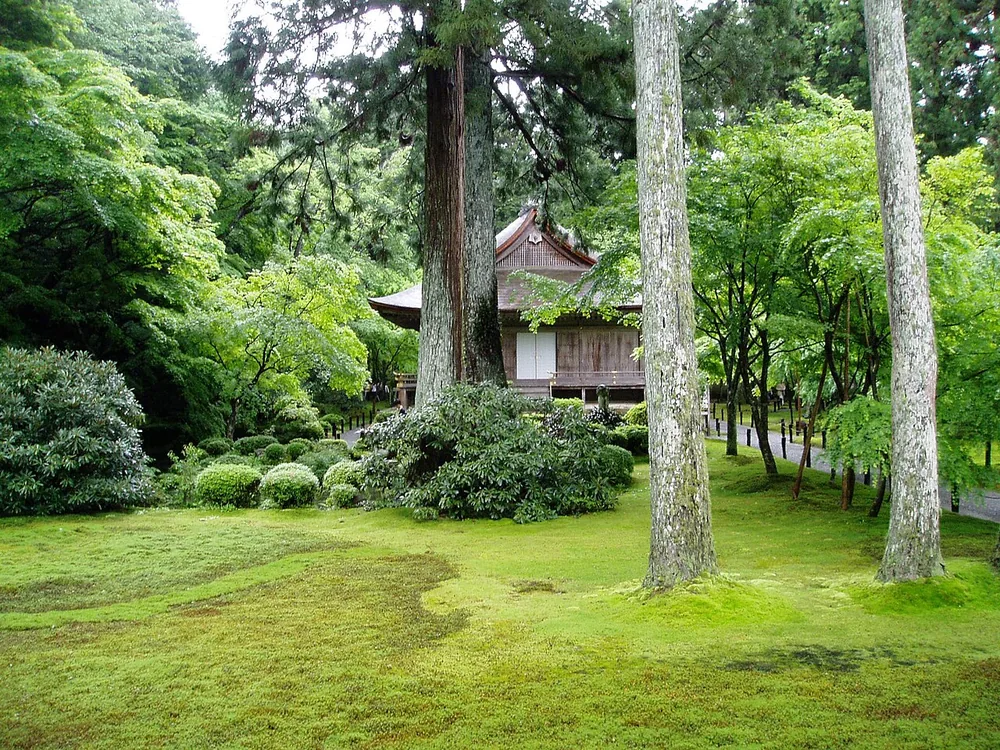
Sanzen-in stands on a hillside about ten minutes on foot from Ohara bus station. Its grounds include buildings, outdoor gardens and an ascending worship route. A full circuit takes more effort than a photograph at the entrance. It best suits visitors happy to shift attention from the moss garden to statue details and sit looking at a garden. If you mainly want food and a village walk, decide separately whether to include paid temple admission.
The two gardens invite different ways of looking. Shuheki-en is viewed from the reception hall, where your viewpoint stops at the building's edge. Yusei-en lets you walk among cedars and moss, with Ojo Gokuraku-in changing as you move. Understanding this first helps you spend time on each garden's character and reduces backtracking for photographs.
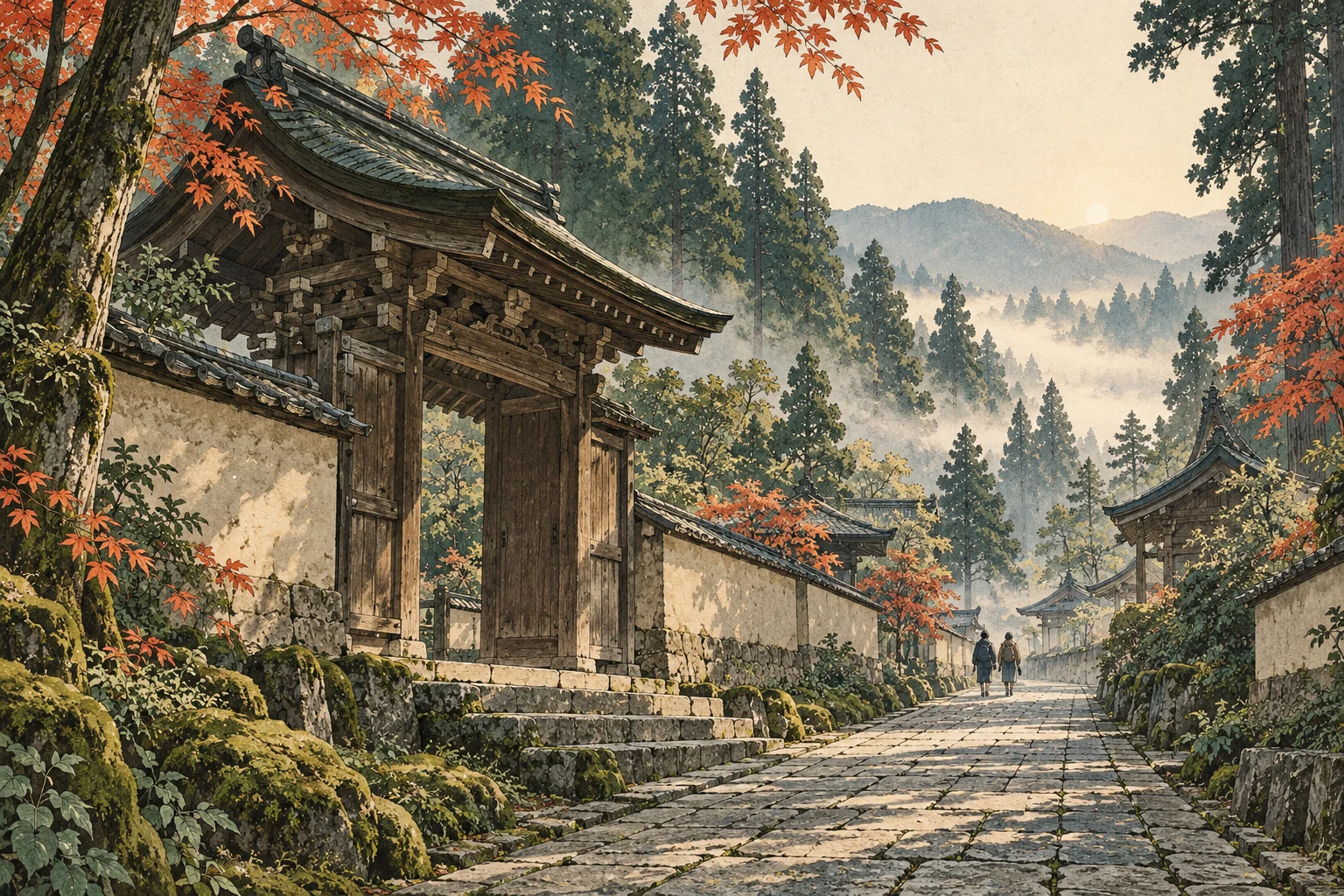
Walk from Ohara bus station in stages, explore Shuheki-en, Yusei-en, Ojo Gokuraku-in and Enyu-zo, choose a one- or two-hour circuit, then plan noodles, a vegetable lunch and one nearby temple.
Ohara bus station to Goten-mon: divide the climb into three stages
First, find the Sanzen-in direction from Ohara bus terminal, cross the road and enter the approach. Ohara is the village transport hub; the temple entrance is still uphill. Use the toilet and arrange coats and rainwear before walking. If someone needs to sit and eat, decide here whether lunch or the temple comes first, before reaching the gate too hungry to wait.
The second stage climbs the approach beside the Ro River. Shops, teahouses and little bridges break it into short sections. Enjoy the water, but stops at every shop can exceed your walking estimate. Locate shops on the way up and buy pickles on the descent, reducing bags to carry through shoe-removal areas and gardens. If lunch is booked, remember where the restaurant lies on the slope so you can find it directly afterwards.
The third stage reaches the high stone walls and road outside the gate, bringing you close to Goten-mon. The Kyoto Prefecture Tourism Federation gives about ten minutes' walk from the Ohara stop. With young children, older relatives or shopping stops, allow 20–30 minutes for the climb, pauses and regrouping. Follow the day's entrance signs at the stone walls.
Choose an approach from Kyoto Station, Kokusaikaikan or Demachiyanagi
From around Kyoto Station, routes 17 or Special 17 towards Ohara minimise changes. From the Karasuma underground line, continue to Kokusaikaikan Station and change to Kyoto Bus. The temple's access information gives about an hour by bus from Kyoto Station or 23 minutes after changing at Kokusaikaikan. These compare road-journey lengths; your door-to-temple time also includes waiting, changing and the final hill.
From Kawaramachi, Sanjo or the Keihan line, check Ohara services from the relevant stop. Kyoto Bus's official access page lists routes from Shijo Kawaramachi, Sanjo Keihan and Keihan Demachiyanagi, and notes that Special 16 uses different stops in some areas. Check stop name, direction and boarding point together. Seeing Ohara on a sign is insufficient if you are across the road. Use that page's timetable links for special services and weekday or holiday schedules.
If you must collect luggage or catch a long-distance train at Kyoto Station afterwards, Kokusaikaikan transfers the latter part of the return journey to the underground. With heavy bags or difficult transfers, compare the direct service. Store luggage in the city and carry only day essentials to make the approach and shoe-removal areas easier.
Opening hours, fees and last admission
The Kyoto Prefecture Tourism Federation's Sanzen-in listing gives 09:00–17:00 from March to October, 08:45–16:45 in November and 09:00–16:30 from December to February. Admission closes 30 minutes before closing. Standard admission is ¥700, junior and senior secondary students ¥400, and primary school pupils ¥150. For groups of 30 or more, standard and secondary-student rates are ¥600 and ¥300 respectively. Sanzen-in opens year-round.
Plan last admission separately from visit length. Entry before 16:00 in winter leaves too little time for the full gardens and upper halls. Work backwards by 90 minutes, plus the approach walk, to decide whether lunch comes before or after. Two adults and one primary school pupil pay ¥1,550 for admission alone. Other nearby temples charge separately.
Goten-mon is the arrival landmark; follow on-site signs to ticketing and entry. Organise shoes, umbrellas and backpacks before entering buildings, leaving hands free on steps. In autumn and winter, keep your coat on while sitting indoors and adjust layers after entering the garden, rather than stopping in a passage to search your bag.
Goten-mon: stone walls and a temple led by imperial abbots
High stone walls make Goten-mon resemble a small castle entrance. The temple's grounds guide explains that it preserves the form of an administrative residence, with stonework by the Ano craftsmen of Sakamoto in Omi. Before entering, look at how differently sized natural stones fit together and separate road and grounds. This reveals more than treating the gate as a signboard. Keep the entrance clear while photographing.
The term monzeki connects Sanzen-in with its history of imperial-family abbots. It began as a hermitage established by Saicho on Mount Hiei, moved several times, and continued in Ohara under the Sanzen-in name in the Meiji era. That history helps explain the combination of wooded gardens and the courtly Shinden. Buildings from different periods reward a slow look together.
The reception hall and Shuheki-en: sit and study the pond
After entering the reception hall, look at Shuheki-en. This pond garden for seated viewing uses the eastern hillside for changes in height; round and gourd-shaped ponds connect to the south. From one place, study the water in front, clipped shrubs, rocks and trunks behind, and higher greenery held by the slope. Sitting low or standing changes how much shoreline you see.
Trace the pond shapes first, then find where hillside and level ground meet to understand the layout. The garden is traditionally attributed to work by the Edo-period tea master Kanamori Sowa.
If you want one longer pause, put it in the first half of the visit here. Sitting rests legs after the climb and allows companions to regroup. Stay a few minutes after taking photographs and notice how branches conceal the water; individual details become clearer.
The Shinden: moving from an interior view to Yusei-en
Modelled on Kyoto Imperial Palace's Shishinden, the Shinden hosts the important Osenboko service. Its principal image, Yakushi Ruriko Nyorai, is normally concealed, so ordinary visits focus on the hall's layout, ritual context and outward garden view. The throne is on the east, memorial tablets of successive imperial abbots on the west. The eastern room has a rainbow painted by Shimomura Kanzan and is called the Rainbow Room. Follow open routes and leave screened areas for religious use.
Look out beneath the eaves and note Ojo Gokuraku-in's position in Yusei-en. Later, from the garden path, look back at the Shinden. The scene that appeared as a wide picture becomes space you can walk through. This shift from indoors to outdoors offers a useful separation between photography and worship. If some companions want longer inside, agree a meeting point before entering the garden.
Sanzen-in's shomyo chanting tradition has a specific role here. Osenboko combines gagaku court music with Buddhist chant in a ceremony inherited from the imperial court. On an ordinary visit, learn about the space; hearing a service is not a daily attraction. For a particular ritual, use that year's temple schedule and allow ceremony time separately from the garden circuit.
Yusei-en: follow water and cedars to change the view
Yusei-en is a strolling pond garden extending from the Shinden towards Ojo Gokuraku-in. Cedars and cypresses rise from moss; water descends through a three-tier waterfall to the pond. First follow the water, then notice how trunks divide near and far, and finally place the hall back in the whole scene. The path remains legible even without autumn leaves everywhere.
Position creates the biggest changes. Near the pond, water and stone banks appear below; from a wider angle, trunks surround Ojo Gokuraku-in. Shuheki-en suits a long look from one point; Yusei-en rewards shorter pauses at several turns. Notice one thing with each move, such as a bank, the clearing before the hall or shadows of branches, giving the two gardens distinct memories.
The moss edge marks the viewing boundary. Stay on open paths and use zoom for framing. Stand securely before bending to photograph a low statue. In rain, hold your umbrella close and let oncoming visitors pass at narrow points. These small actions help companions look comfortably more than squeezing in another camera angle does.
Ojo Gokuraku-in: the three statues' poses, then the roof
Ojo Gokuraku-in is a modest timber hall whose Amida triad has a strong presence. Facing the statues, Kannon is to the right of central Amida Nyorai and Seishi to the left. Kannon holds a lotus pedestal; Seishi joins the hands. Both attendants lean forward in kneeling poses to welcome those entering the Pure Land, a posture called Yamato-zuwari. Reading the gestures makes their relationship easier to grasp than memorising every term.
The triad is a National Treasure and the building an Important Cultural Property. The temple's heritage page gives the central statue's height as 232 cm and the attendants' as about 132 cm. At the hall, use that scale to imagine how the small building holds them. The boat-bottom ceiling folds upwards in response to statues and space. Let your eyes adjust, study hands, knees and forward inclination, then look at the curve overhead.
Paintings of the Pure Land once covered the ceiling but are now difficult to discern unaided. Pair this stop with Enyu-zo later: here, see the original building's scale and devotional centre; there, see colours reconstructed at full size. The viewing distances differ. Returning to artefacts before the exit fills in what the dim hall concealed.
Warabe Jizo and Suzaku-mon: two scales within the garden
Small stone figures south of Ojo Gokuraku-in beside Benten Pond are called Warabe Jizo, created by sculptor Takashi Sugimura. Close to the moss, they have different expressions and postures. Children can choose a favourite face from the path before returning to the adults' hall-viewing pace. Study one or two rather than making finding every figure a task.
Also south of the hall, Suzaku-mon was its main gate when Gokuraku-in served as the principal hall. The present gate was rebuilt in the Edo period and is normally closed. Compare it with Goten-mon to recognise different historical entrances: Goten-mon reflects the imperial abbot's administrative residence, while Suzaku-mon faces the old Gokuraku-in. View it, then leave by the current exit route.
The upper worship route: Benzaiten, hydrangeas and Konjiki Fudo-do
Beyond Ojo Gokuraku-in, ascend past Benzaiten towards the hydrangea garden and Konjiki Fudo-do. The broad moss-garden views give way to individual stops. Keep this section for Buddhist devotion, calligraphy seals or early-summer flowers. If your priority is the two gardens and triad, pass through the upper halls with shorter stops along the current route and spend more viewing time below.
The hydrangea garden lies after Benzaiten and before Konjiki Fudo-do. The temple lists koajisai, shichidanka, mountain hydrangeas and lacecaps flowering successively in early summer, usually from mid-June into July. During flowering, make this a main stop and shorten seated time at the reception hall. In other seasons, treat it as woodland passage to the halls and focus on architecture and statues.
Konjiki Fudo-do was established in 1989 as a place for goma fire prayers. Its principal golden Fudo Myoo is normally concealed. Visit the hall ordinarily; special openings follow the temple's annual programme. Before entering, distinguish general worship, a service and a calligraphy-seal queue, so those passing through and those staying do not all join the same line.
Kannon-do, the Jigen garden and the stone Amida
Further uphill, Kannon-do houses a golden Kannon, with smaller Kannon figures associated with the temple's devotees in side halls. Beside it, the Twenty-five Bodhisattvas' Jigen Garden represents the Pure Land of Potalaka in stone, contrasting with the lower moss and ponds. Garden enthusiasts can make this a third viewing mode: from Shuheki-en's water and shrubs, through Yusei-en's trees and moss, to stones and arranged bodhisattvas.
North of Konjiki Fudo-do, across a bridge over the Ritsu River, stands a stone Amida, also called the charcoal seller's stone Buddha. The temple dates it to the Kamakura period and describes it sitting cross-legged on a lotus seat. Add it if you have energy to complete the upper route. You still need to return through the garden and exit area. If lunch is timed, concentrate on your preferred halls instead of giving every small hall equal time.
Enyu-zo: revisit Gokuraku-in through the reconstructed ceiling
Enyu-zo, a cultural-property storage and exhibition facility opened in 2006, works best after Ojo Gokuraku-in. It contains a full-size boat-bottom ceiling with paintings reconstructed from research. Where the original hall offered shape and shadow, this restores celestial figures, bodhisattvas and colour to the roof space, making the Pure Land a comprehensible visual world.
Sliding-door paintings donated by modern Kyoto painters once occupied the reception hall. Their originals are now conserved and displayed in rotation at Enyu-zo. Works by Takeuchi Seiho, Kikuchi Hobun, Imao Keinen and Suzuki Shonen show the temple continuing to receive new art in modern times. Notice the long sliding-door format of works on display and connect it with the bays between pillars you saw inside. Relating one painting to its original room scale explains its use.
If some companions only enjoy gardens, split into brief and detailed viewing groups and meet at the exit. With limited time, Enyu-zo and Gokuraku-in form a coherent pair worth prioritising over another upper-route detour simply to complete a list. Choose special exhibitions from the temple's current programme and allow time for works that interest you.
One hour or two: choosing an internal route
For one hour, focus on Shuheki-en at the reception hall, the Shinden's garden view, Yusei-en, Ojo Gokuraku-in and Enyu-zo. Sit briefly, choose several garden turns, skip a search for every stone figure and select the reconstructed ceiling among the artefacts. Still follow the established on-site route, passing through or briefly stopping at upper halls before Enyu-zo. The shorter version reduces viewing time.
With 90–120 minutes, pause at Benzaiten, the hydrangea garden, Konjiki Fudo-do and Kannon-do, extending to the stone Buddha if energy allows. Time need not be equal: plant enthusiasts can favour gardens, statue enthusiasts the triad and upper halls, and painting enthusiasts Enyu-zo. Use shared route points for meetings without requiring everyone to stand equally long before each painting.
Both versions count time inside. The walk from the bus station, tickets, lunch and return walk are separate stages. List them individually to see whether half a day suffices. If you meet a large group, wait safely at the reception hall or garden path and adjust your stopping order. That often preserves your own pace better than continual overtaking.
Morning or midday arrival: place the main meal carefully
If you arrive in the morning without hunger, climb the approach and visit Sanzen-in first, then eat near the gate or on the descent around noon. This gives the gardens your fresher attention and leaves pickle shopping until last. Arriving around midday, eat first so children and older relatives can settle during the visit. A winter midday arrival needs both a shorter meal plan and a shorter temple visit, preventing a leisurely lunch from pushing admission close to the cut-off.
Noodles near the gate suit eating and continuing on foot; a restaurant in an old house can make lunch an experience itself. The first fits naturally after the temple on the descent. For a reserved meal, calculate your exit time backwards from lunch. Sweets, matcha and red-perilla drinks make approach-road rests, but the main meal still needs its own place. For young children, enough food and a settled meal affect afternoon walking more directly than trying every Ohara speciality.
Noodles and sweets near the gate: Seryo Chaya and Ippuku Chaya
Seryo Chaya is outside Sanzen-in. Its Ohara tourism association listing includes herring soba, curry soba, soy-sauce dumplings, warabi-mochi and desserts. It suits a meal or rest close to the entrance. Finish a takeaway snack before entering worship and shoe-removal areas to keep your hands free.
Ippuku Chaya is also near the gate. The local tourism page lists herring soba, udon and rice bowls, with hours of 11:00–17:00. Mixed noodle and rice preferences are easier to accommodate here. Closing time and the kitchen's last order differ; ask whether main meals are still served before sitting down or continuing back.
Tell staff about allergies or dietary needs concerning buckwheat, fish, sauces and stock. If avoiding buckwheat, ask about shared noodle-cooking equipment too; changing to udon can still involve the same equipment. A short written Japanese request is clearer than a lengthy explanation during the lunch rush.
A seated vegetable lunch: Shino Shoumon's meal times
Shino Shoumon, an old-house restaurant operated by Shino, specialises in Ohara vegetable lunches. Its official website gives 11:00–17:00 opening and last lunch orders at 14:30. For a leisurely meal, the lunch cut-off matters more than closing. Morning Sanzen-in, lunch downhill afterwards, shopping and the bus station form an easy sequence.
The reservation page states that November bookings are not accepted: seating is in arrival order. In other months, same-day reservations or changes must be made by telephone before 11:00. Give date, time, numbers and whether you are ordering meals ahead. During autumn foliage season, focus upper-hall time on favourites before joining the restaurant queue. In months with a reservation, work backwards from the meal and shop afterwards.
Red perilla and pickles: buy on the descent
Ohara's food traditions include red perilla and shibazuke pickles. For a short approach-road stop, choose a perilla drink, dumplings or pickles rather than scheduling a meal for every speciality. Shibakyu grows red perilla and other crops on its own farm for shibazuke and seasonal pickles. Doi Shibazuke Honpo's Sanzen-in-front shop is another shopping stop.
Check storage temperature, best-before date and pack size, including whether you can refrigerate purchases back in town. Buy chilled products last and head to the bus station. If visiting another temple, inspect products first and collect them on the return. This keeps food needing care on the shortest travel leg and your hands freer inside the temple.
More time: choose Hosen-in, Jikko-in or Shorin-in by interest
For more seated garden viewing and tea, choose Hosen-in. Bankan-en framed by pillars, its five-needle pine and study-hall viewpoint differ from walking Sanzen-in's woods. The temple's admission page gives ¥1,000 including tea and a sweet, 09:00–17:00 opening and 16:30 last admission. The current fee applies from 10 April 2026. It suits another seated pause after lunch; if you already lingered at Sanzen-in's reception hall, keep the rest for an approach-road walk instead.
For flowers and another small garden, choose Jikko-in. Keishin-en draws Ritsu River water into a heart-character-shaped pond; its fudanzakura cherry flowers from autumn into spring. Plant enthusiasts can inspect this intimate garden closely. Where Sanzen-in's moss and cedars invite a broad view, focus here on pond edges and flowering branches.
To continue the Shinden's shomyo theme, choose Shorin-in. Linked to Ohara's chanting tradition and Honen's Ohara debate, it has a button to hear shomyo according to the local tourism page. This makes Buddhist chanting something you can hear. Choose one additional temple by interest, leaving time for a complete seated view or listening session and an afternoon return to the bus station.
The association’s Hibiki no Michi route film accompanies nearby temples, the approach and Buddhist chanting culture.
Early summer, autumn leaves and winter: where to spend time
In early summer, bring the hydrangea garden onto the main route and focus on flowers alongside cedar woods. Rain adds moss colour, water and stone steps to the view, but outdoor paths still require secure footwear. Stow cameras and phones before changing umbrella position to avoid managing two things on steps.
In autumn, preserve different views in Shuheki-en and Yusei-en instead of chasing one foliage photograph. Sit by reflected colour in the first; look at the hall through leaves between cedars in the second. Morning admission and a post-lunch descent absorb queues and photography into one Ohara day. If crowded, select upper halls and shopping stops rather than rushing lunch on the move as well.
Winter closing is 16:30. Repeated moves between timber buildings and outdoor gardens call for foot warmth compatible with shoe removal. Snow depends on the day's weather; without it, look at evergreen trees, moss and building outlines. A morning start and earlier lunch leave daylight for the descent. If the slope is icy or snow-covered, shorten outdoor sections following local safety guidance.
Different visit areas for toddlers, older visitors and wheelchairs
With toddlers, build the main visit around sitting by one garden, seeing one group of statues and finding one Jizo. If a child cannot sit long in the reception hall, one adult can accompany them to the next open stopping point while another finishes viewing. The upper route adds climbing. Keep time for the child's own observations below and a normal meal afterwards instead of spending all their energy completing every hall.
For older visitors slow on steps, plan seated time in the reception hall and Shinden first, then assess gardens and the upper route. Wheelchair access has clearer boundaries: the Kyoto Prefecture Tourism Federation lists a wheelchair worship route with some areas accessible. Steps prevent wheelchair entry to the reception hall and Shinden. There are two wheelchair-accessible toilets. Ask staff to show the wheelchair route on arrival and plan around the accessible garden areas.
Sanzen-in has no car park; drivers use nearby private car parks. Include the final slope when choosing where to park, as the entrance still requires a walk. Leave bulky belongings in town or the car and carry only necessary care supplies, reducing carrying through narrow paths, shoe-removal areas and steps.
A half-day example from Ohara bus station
For an example arrival at Ohara bus station at 10:00, allow 20–30 minutes to reach the gate and enter, about 100 minutes inside, then 45–60 minutes for lunch around noon. Spend the early afternoon shopping for pickles and looking at waterways along the approach, returning to the station around 14:00. This centres on a complete Sanzen-in visit and a meal, leaving the city afternoon for rest and fitting children's naps.
For one more temple, choose Hosen-in, Jikko-in or Shorin-in after lunch and allow enough time for a full visit, taking a later bus. Photography, calligraphy-seal or artefact enthusiasts can instead keep that time at Sanzen-in. Use the day's bus timetable. If there is a gap before the next service, rest near the station rather than climbing back to the gate just to fill it.
Here, 10:00 means arrival in the village; work back from your accommodation to set the city departure time. Save separate map pins for Ohara bus station, Goten-mon, lunch and the return stop. Check shoes and rainwear as you leave Sanzen-in, then buy food to take away and follow the slope back to the station.
A few useful answers
How long should I allow inside Sanzen-in?
Allow 90–120 minutes for gardens, Ojo Gokuraku-in and Enyu-zo. A one-hour version shortens upper-hall and stone-figure stops. This is a planning allowance; the bus-station walk, lunch and return are additional.
How do Shuheki-en and Yusei-en differ?
Shuheki-en is a pond garden viewed from the reception hall. Yusei-en lets you follow paths among cedars, moss and ponds, with Ojo Gokuraku-in within it.
What is the latest winter admission?
December–February hours are 09:00–16:30, with admission until 16:00. Arrive earlier by the length of your chosen route for a full garden and hall visit.
Can wheelchair users visit Sanzen-in?
A wheelchair worship route reaches some gardens. Steps prevent wheelchair entry into the reception hall and Shinden. There are two accessible toilets. Ask staff to show the wheelchair route on entry.
Which temple should follow Sanzen-in?
Choose Hosen-in for a framed garden view and tea, Jikko-in for plants and small gardens, or Shorin-in for Buddhist chant. Complete Sanzen-in and lunch in a half-day plan; add one temple when extending it.
Official information and references
Sources used in this guide.
- Sanzen-in: buildings and gardens
- Sanzen-in: cultural properties, Amida triad and sliding-door paintings
- Sanzen-in: origins and imperial-abbot history
- Sanzen-in: access and parking
- Sanzen-in English page: journey times
- Sanzen-in: official grounds route map
- Kyoto Prefecture Tourism Federation: hours, fees and accessibility
- Kyoto Bus: Sanzen-in routes and timetable links
- Ohara tourism association: Hibiki no Michi and approach facilities
- Ohara tourism association: Seryo Chaya
- Ohara tourism association: Ippuku Chaya
- Shino Shoumon: opening and last lunch orders
- Hosen-in: hours and admission including tea and sweets
- Ohara tourism association: Jikko-in
- Ohara tourism association: Shorin-in and hearing shomyo