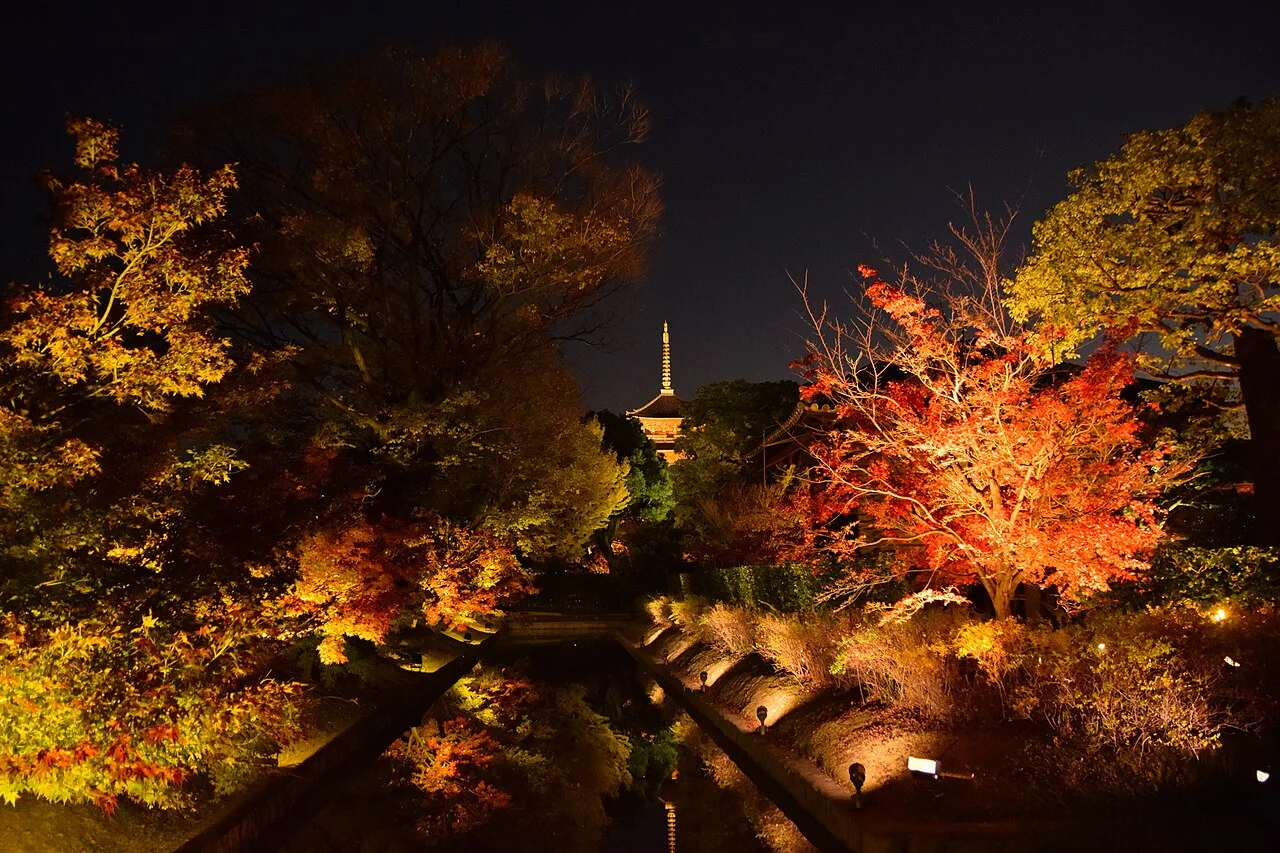
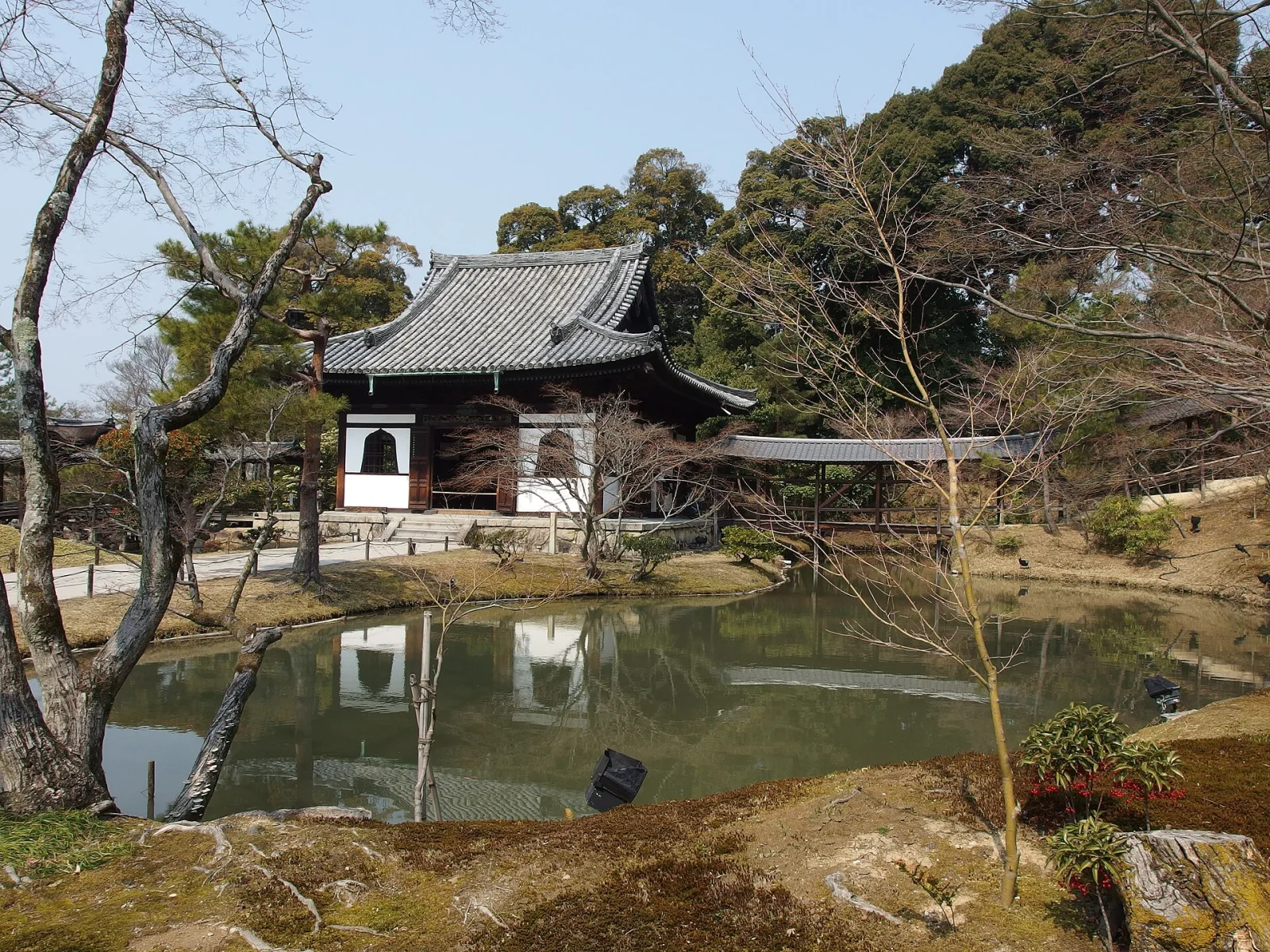
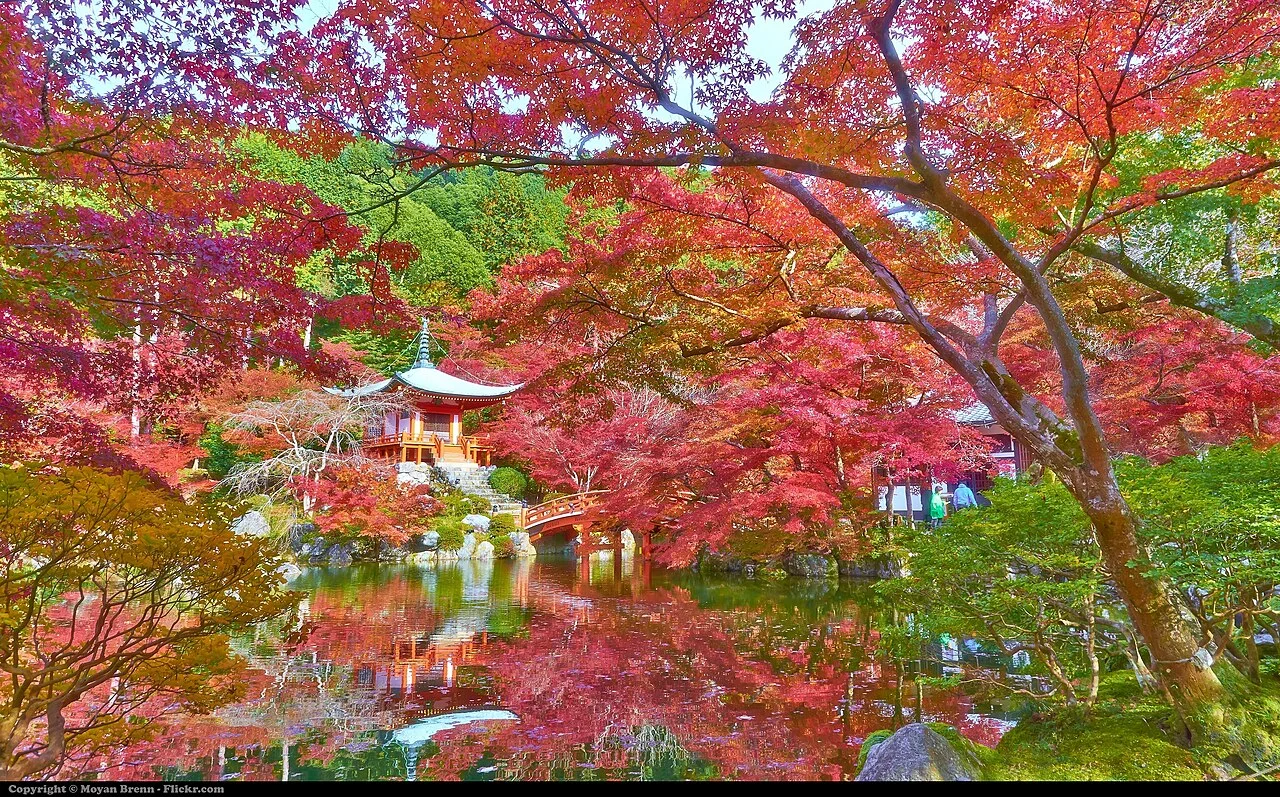
Choose Kyoto autumn-leaf areas for one to three full days. Plan Eikando's separate day and evening admission, Tenryuji's 2026 early opening, Tofukuji's separate tickets and peak-season road restrictions, with shorter walks, pass calculations and dinner before illuminations.
- Region & Focus
- KyotoAutumn leaves
- Reading Scope
- 35 min read · 13 chapters · 4 Q&As
- Official Verification
- 21 official sources checkedUpdated 26 October 2026
- Key Topics
- ItinerariesSeasonsRail travel
Chapter Route Map (tap any stop)
- One area a day: check leaf conditions, then choose your entrance
- From your accommodation to the first temple: three rail approaches
- Northern Higashiyama: choose Eikando by day or night and one paid Nanzenji area
- A northern Higashiyama day: daytime gardens or evening illuminations
- Arashiyama: start with garden opening, then keep bamboo and river walks together
- One Arashiyama afternoon focus: Oku-Saga, the river or the train
- Tofukuji in autumn: Tsutenkyo and the Hojo have separate admission
- After Tofukuji: leave the afternoon for something seated
- Mountain areas: give Ohara or Takao a day each
- Eat before illuminations: allow separate time for dinner and queues
- Calculating passes: count the services you will use, with admission separate
- Peak-season road changes: use taxis for the particular stretch you need
- One to three autumn days: adapt to energy and weather
- Quick Q&A
Choose one area for each autumn-leaf day in Kyoto. For ponds and evening illuminations, visit Nanzenji and Eikando. For gardens, riverside walks and mountain colour, choose Arashiyama. For half a day devoted to a maple-filled valley, choose Tofukuji. Leave another area for the following day and use the time for temple visits, meals and rest. The 2026 early openings, separate day and night sessions and separate tickets affect the plan. Set your entrances and times first, then choose a transport pass.
One area a day: check leaf conditions, then choose your entrance
A common way to overfill a Kyoto autumn day is to put Tofukuji, Arashiyama and Eikando together, joined by apparently short train journeys. Each also needs station access, walking, tickets and queues, with crowds concentrated in similar daylight hours. For one full leaf-viewing day, choose one of these areas. Visit another side of the city on a second full day. Time saved crossing the city can buy another garden visit or a seated lunch for your companions.
Choose northern Higashiyama, from Nanzenji to Eikando, for ponds, temple buildings and layered garden views. Choose Arashiyama for riverside walks and mountain scenery, or Tofukuji if your goal is the maple valley below Tsutenkyo Bridge. These choices follow the scenery and route. For someone with painful knees, keep Arashiyama to the river and Tenryuji garden, omitting Jojakkoji's steps. In Higashiyama, choose one paid garden and reduce climbs up the Sanmon gate and towards Eikando's Tahoto pagoda.
Use Keihan's autumn-leaf information to distinguish green leaves, beginning colour, peak colour, past peak and fallen leaves, then check the page's update date.
Kyoto City Tourism Association's 2026 autumn notice gives 30 October as the publication date for its leaf calendar. While choosing flights, start with how many days you can stay. Once dates are fixed, use that week's information to choose the area for the day. Near the end of your trip, there is no need to pursue a famous temple whose leaves have not turned. Replace your planned second area with one in better colour; that is where flexible transport planning helps.
| Choice | Morning focus | Afternoon and departure direction | First items to omit |
|---|---|---|---|
| Northern Higashiyama | Enter via Keage; choose Nanzenji or Eikando first | Eat near the temples; choose a separate evening illumination, then return to Keage | Extension to Ginkakuji or a second paid area at Nanzenji |
| Arashiyama | Tenryuji garden; enter through the garden ticket office from 7:30 during early opening | Choose Jojakkoji, the river or the train; select JR, Randen or Hankyu by your final location | A second crossing of Togetsukyo Bridge or another temple |
| Tofukuji | 14 November–6 December: Tsutenkyo from 8:30, Hojo from 9:00 | After lunch, return towards Kyoto Station or the Keihan line and leave time to rest | Climbing Mount Inari or crossing to Arashiyama the same day |
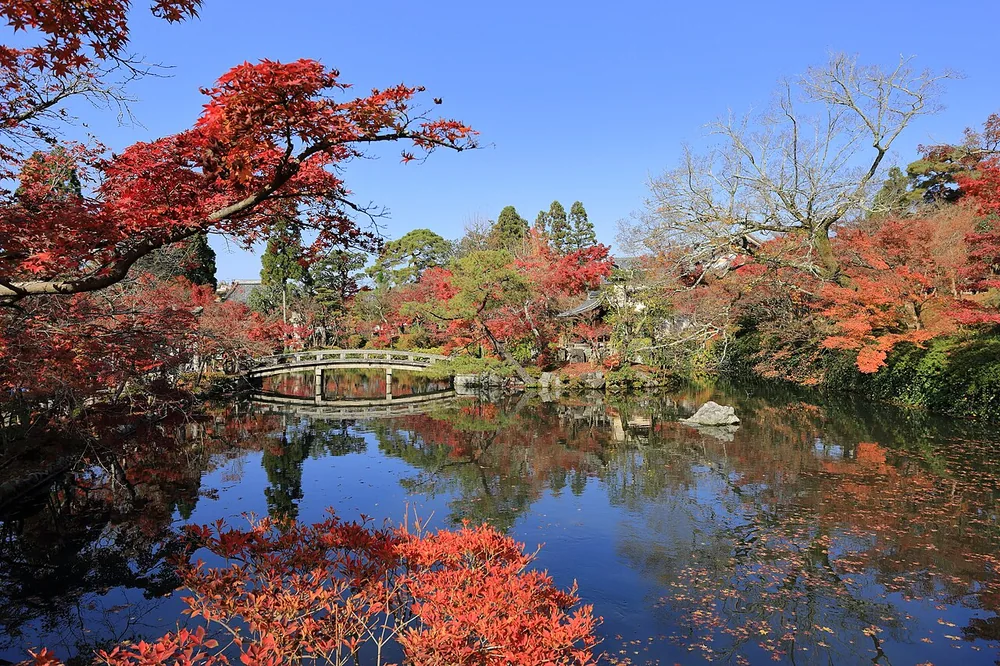
Choose Kyoto autumn-leaf areas for one to three full days. Plan Eikando's separate day and evening admission, Tenryuji's 2026 early opening, Tofukuji's separate tickets and peak-season road restrictions, with shorter walks, pass calculations and dinner before illuminations.
From your accommodation to the first temple: three rail approaches
From Kyoto Station, take the JR Sagano Line to Saga-Arashiyama, then walk into Arashiyama; for Tofukuji temple, take the JR Nara Line to Tofukuji Station and walk from there. If staying near Shijo Kawaramachi or Gion, walk to Keihan Gion-Shijo for Tofukuji instead of returning to Kyoto Station. Keage on the Tozai subway line is an easy entrance for Nanzenji and Eikando. From Kyoto Station, take the Karasuma Line and change at Karasuma Oike.
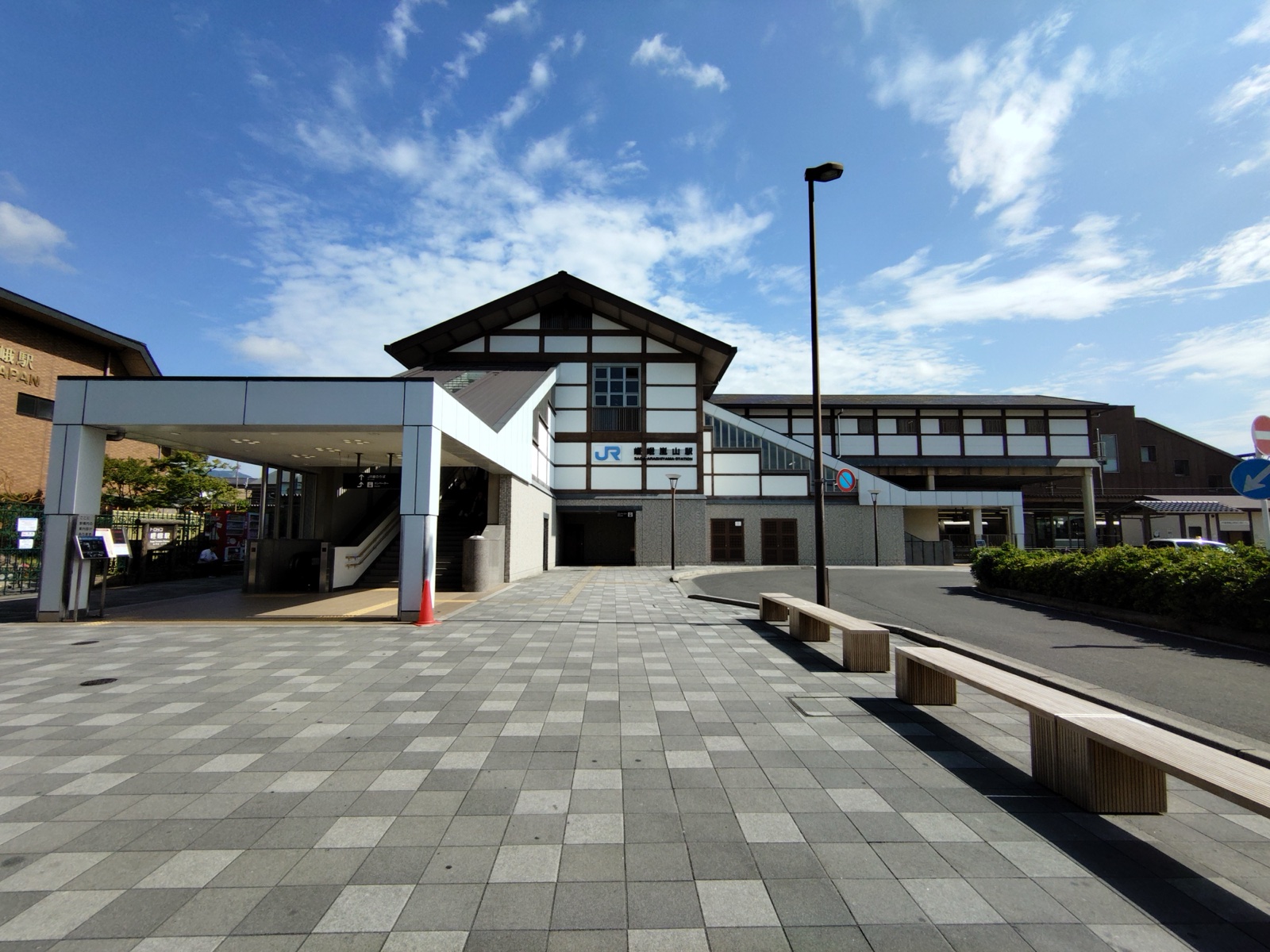
The different companies' Arashiyama stations are in different places. Randen is near Tenryuji's entrance, Hankyu is south of the river, and JR Saga-Arashiyama is in the neighbourhood to the north. Coming from Osaka by Hankyu, crossing the river to the riverside and Tenryuji is natural. From accommodation near Kyoto Station, JR followed by a walk is more direct. Return from the station nearest your last stop; you need not retrace your route through the crowd.
Kyoto's 2026 autumn transport notice promotes using rail to approach destinations and spreading demand away from Kyoto Station. Apply this to your starting point. From Shiga towards northern Higashiyama, compare changing at Yamashina to the subway. From the Keihan corridor to Tofukuji, stay on Keihan. Use your hotel's actual address as the start of a route search. The shortest train time may omit the hotel-to-platform walk, traffic lights and the final uphill stretch.
For meetings and reservations, separate arrival at the station from arrival at the ticket office. First-time visitors also need to find exits, toilets and ticket counters, and crowds can divide a party. Meet at a fixed landmark outside the station before starting the temple walk. If travelling from Osaka that morning, work back from the first paid entrance's opening time and leave luggage at your Osaka accommodation or storage facility.
Northern Higashiyama: choose Eikando by day or night and one paid Nanzenji area
Eikando's 2026 autumn temple-treasures exhibition runs from 11 November to 6 December. Daytime entry is 9:00–16:00, and the temple closes at 17:00; general adult admission is ¥1,500. Evening opening runs from 20 November to 6 December, with entry 17:30–20:30 and closing at 21:00. Admission is ¥1,000 from junior-high age upwards. Daytime includes treasures, buildings and gardens; evening admission opens the Amida Hall and garden. Choose what you want to see, then choose a session.
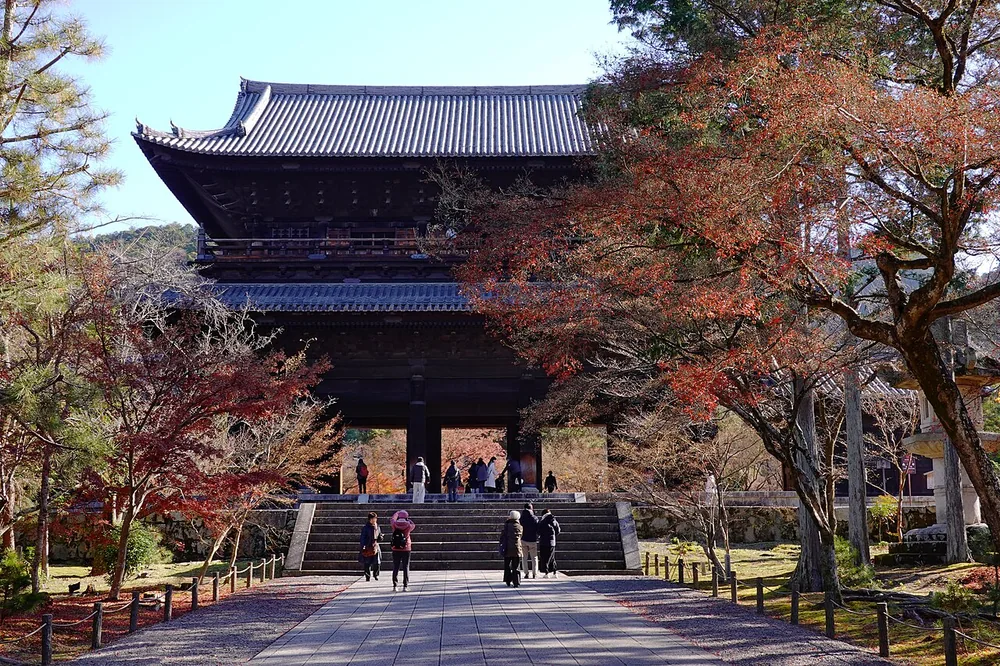
Eikando clears the site between sessions. Daytime visitors must leave by 17:00 and buy another ticket for evening entry. Advance tickets are not currently issued. Both sessions cost an adult ¥2,500 in total, and you need somewhere to spend the interval between clearing and reopening. An early dinner suits tired walkers better than standing outside the entrance. Autumn also changes the normal daytime building route: Garyuro and Senbutsudo are closed from 11 November to 6 December.
Nanzenji sells separate tickets for its main paid areas: general adult admission is ¥600 for the Hojo garden, ¥600 for the Sanmon gate and ¥500 for Nanzenin. The gate involves climbing upstairs. Choose the Hojo first if you want to sit and view a garden; Nanzenin is another option for a pond garden and maples. Buying all three adds time and physical effort. If Eikando is the day's focus, choose one Nanzenji area and use the rest of the time for the grounds and aqueduct.
Nanzenji's official general visiting hours are 8:40–17:00 from March to November, with last entry 20 minutes earlier. From December, closing is 16:30, again with last entry 20 minutes before. Both temples are walkable from Keage, but their ticket offices, thresholds and garden paths add distance. For lunch in northern Higashiyama, choose somewhere between the temples, Keage and Okazaki, rather than travelling to a distant famous restaurant in Shijo and back.
A northern Higashiyama day: daytime gardens or evening illuminations
For the daytime-garden version, reach Keage around 8:30, walk to Nanzenji at your own pace and enter your chosen paid area when it opens. Rest afterwards, then continue north to Eikando. Put Eikando before or after lunch according to your priority. If the treasures exhibition matters most, enter Eikando earlier and keep Nanzenji to a grounds walk. For the Hojo garden's design, allow a full morning there and make Eikando the afternoon's only paid visit.
There is no need to continue along the entire Philosopher's Path to Ginkakuji. Heading south from Eikando to Okazaki shortens the walk and reconnects with the subway. If you have the energy and the weather is settled, walk part of the Philosopher's Path and turn back at an agreed point. Name a junction or bridge so everyone knows the limit. Searching for the nearest station only after tiring halfway along the path usually means more walking before you can leave.
For evening illuminations, keep the morning for sleep, indoor activities or an ordinary city visit, and reach northern Higashiyama in the afternoon. See one paid Nanzenji area, then eat before the evening session. Choose a restaurant serving early, within walking distance of Eikando. If dinner will follow the illumination, have a substantial snack beforehand and choose somewhere whose hours you know. Leaving food entirely undecided can turn fatigue into disagreement among companions.
Eikando states that admission may end early when busy. Do not aim to reach the entrance at 20:30. Arrive in the first half of the evening session to allow for queuing and walking. Afterwards, follow a saved walking route to Keage for the subway. If staff direct you through a different exit, follow them instead of walking against the flow to regain the entry point.
For half a day, reduce this area to Nanzenji and a seated break, or just Eikando. Choose by the view you want: give Eikando more time for extensive maples and pond views, or retain Nanzenji's paid area for architecture and dry-landscape gardens. Include photography time. The whole party's lunch should not depend on finishing one particular photograph.
Arashiyama: start with garden opening, then keep bamboo and river walks together
Tenryuji's special early garden opening on 14–30 November 2026 starts at 7:30, through the garden ticket office only. The north gate still opens at 8:30. Normal garden hours are 8:30–17:00, with last entry at 16:50. For an early visit, use the front garden ticket office rather than following a normal map to the north gate beside the bamboo grove and waiting there. Starting the main visit early leaves room to slow down afterwards.
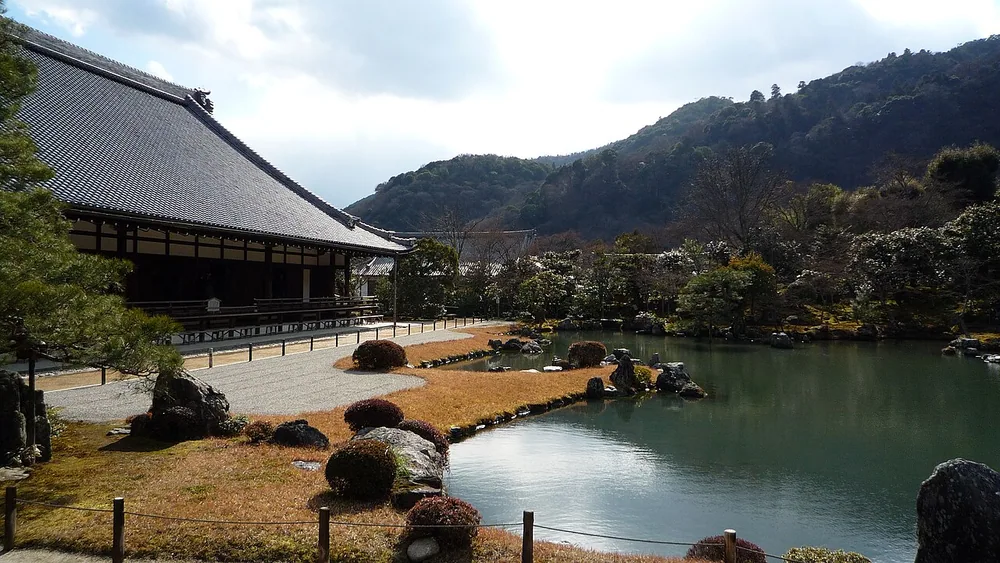
Tenryuji garden costs adults ¥500; the temple buildings cost an additional ¥300, and the Cloud Dragon painting in the Dharma Hall is a separate ¥500. For leaves, focus first on Sogenchi Garden. Add the buildings if their interiors interest you. The painting's opening days and entrance are listed separately; check its admission times if adding it that day. Visiting every ticketed area reduces time for Oku-Saga or the river. One complete garden visit can fill the morning well.
After the early garden visit, use an open exit to the bamboo grove, then choose Jojakkoji or the river. The grove is a public walking route, and crowds make group photographs difficult. Treat it as part of the walk. Stow selfie sticks and bulky backpacks before entering, and stop only at wider places. With a pushchair, decide beforehand how two adults will manage the child and belongings to avoid rearranging everything in a narrow section.
Jojakkoji currently costs adults ¥600 and opens 9:00–17:00, with last entry at 16:30. The temple gives walks of about 15 minutes from JR Saga-Arashiyama, 20 from Randen Arashiyama and 30 from Hankyu Arashiyama, reflecting their different locations. There are many steps and limited wheelchair access. If you also want a riverside walk after Tenryuji and the bamboo grove, decide whether you have enough energy left for Jojakkoji. Nearby green areas on a map can still involve a demanding walk.
One Arashiyama afternoon focus: Oku-Saga, the river or the train
Keen walkers can make Jojakkoji the afternoon focus, with a meal and rest along the way, then finish towards Saga-Arashiyama Station. This keeps most of the day north of the river and avoids an extra Togetsukyo crossing. If companions most want bridge and river views, reverse the emphasis: walk to the river after Tenryuji, have lunch, then walk along safely accessible banks and leave via Hankyu Arashiyama. Agree on the final station so shopping and breaks can follow the return direction.
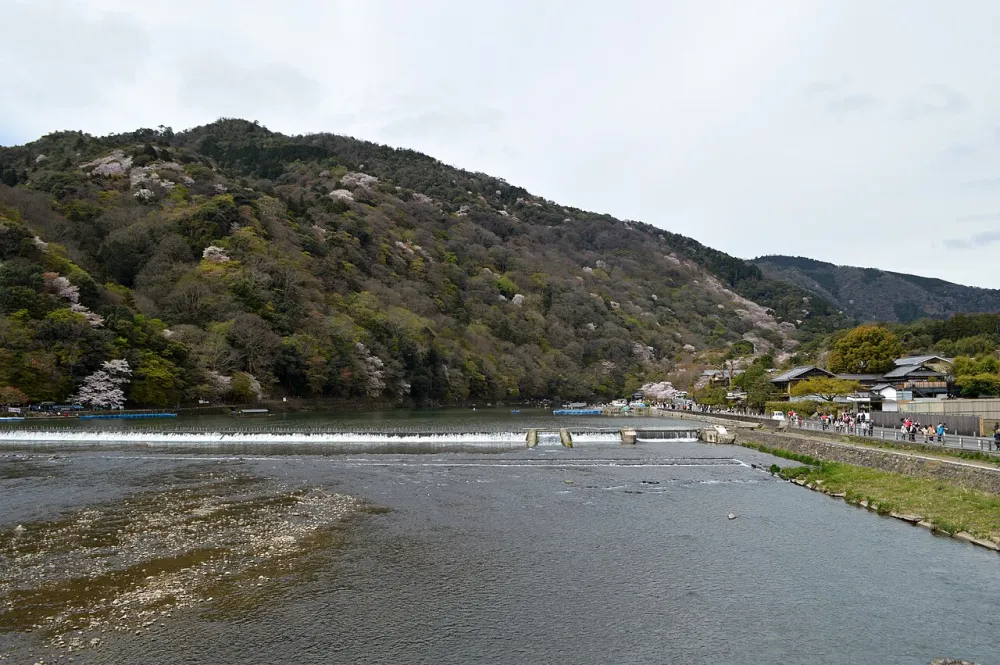
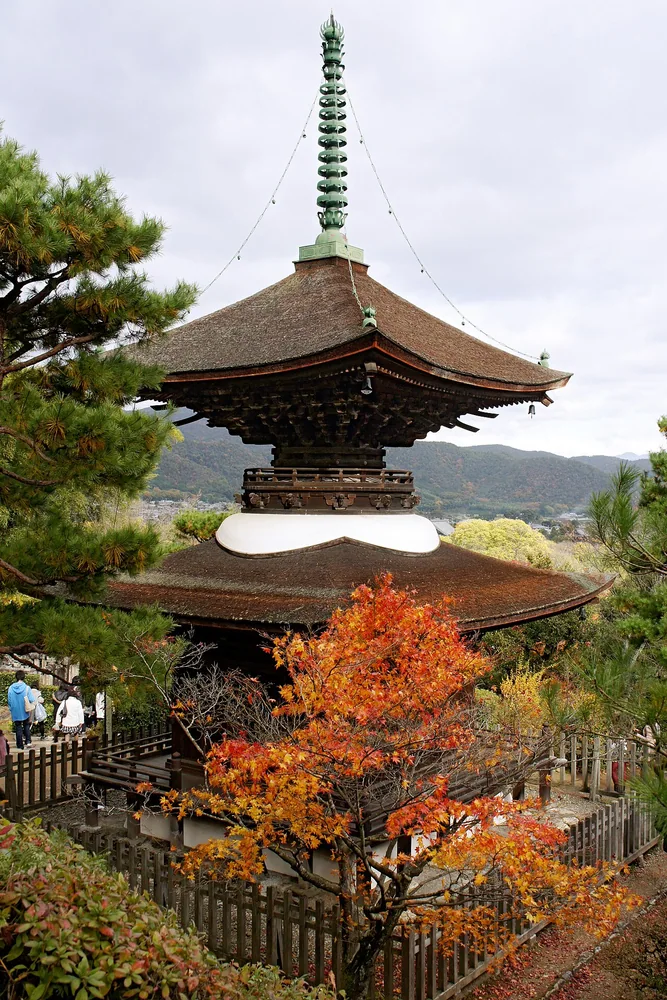
The sightseeing train is another main activity. If you have reserved the Sagano Romantic Train, put the ride and connections at both ends in the timetable and remove a temple. Torokko Saga is beside JR Saga-Arashiyama, but Torokko Kameoka is a walk from JR Umahori. A one-way gorge trip followed by JR back to the city reduces repeated loops around Arashiyama. For dinner back in Arashiyama, allow the return connection. Choose the train's direction by where you want to finish.
Autumn trains offer daylight and evening illuminated scenery. Choose daytime for natural valley colours, or an available evening service if lighting is your aim. With that train in the plan, there is no need to pursue an eastern Kyoto illumination too. The two evening activities are on opposite sides of the city, and transfers consume dinner time. Compare one garden plus the train with two temples plus the river, then choose the combination you want more.
If Togetsukyo is crowded on a weekend afternoon, finish on the same bank instead of recrossing for a snack. Sit down, organise purchases and walk towards your planned station. If a shop queue exceeds the time you want to wait, shop near the return station instead. Keep reserved activities; change an unreserved snack. One easily missed way to finish Arashiyama is to omit the last temple and leave directly from the nearest railway station.
Tofukuji in autumn: Tsutenkyo and the Hojo have separate admission
Tofukuji suits a half-day focused on one temple. The official 2026 visiting information lists 14 November–6 December opening from 8:30 for Tsutenkyo and 9:00 for the Hojo garden, with last entry at 16:00. During this period, Tsutenkyo Bridge and Kaisando cost adults ¥1,000. Hojo garden admission becomes ¥600 from 1 November. No combined ticket is sold during the autumn period, so both areas cost an adult ¥1,600 in total.
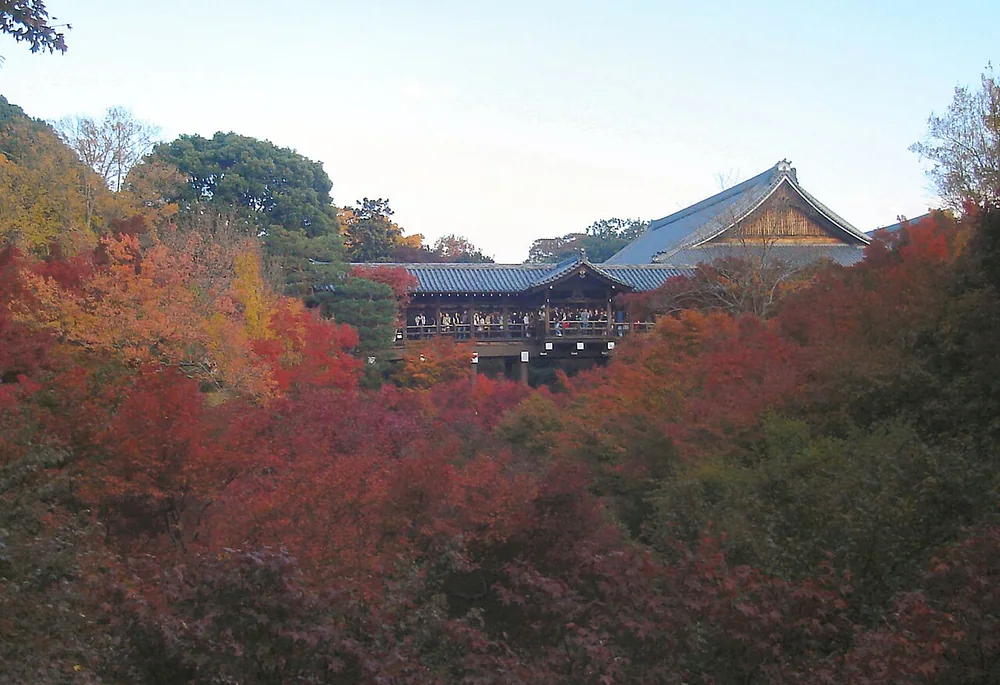
Prioritise Tsutenkyo and Kaisando for the maple valley and covered bridge. Add the Hojo garden if garden design and views between interior and exterior interest you. Its four gardens by Mirei Shigemori invite a different pace from the valley walk. Visit Tsutenkyo first and decide on the Hojo afterwards according to energy. Agree on the budget and what you want before buying instead of adding a ticket only because everyone else is going.
Take the JR Nara Line from Kyoto Station or Keihan from Gion-Shijo to Tofukuji Station. The temple gives a walk of about 10 minutes from either railway. For arrival near 8:30, add this and station-exit time after the train. From central accommodation, there is no need to gather at Kyoto Station and travel south again. Use a nearby Keihan station and meet outside Tofukuji Station.
Photography may be restricted on Tsutenkyo and Gaunkyo bridges during autumn crowding. Eating, drinking and tripods are prohibited in the grounds. Prepare the lens first and photograph only where stopping is allowed. If people must keep moving on a bridge, take pictures in an area where you may pause. Making older relatives or children wait for an empty-bridge photograph makes the next walk harder. Re-entry is not allowed; change the order if you intended to leave for lunch and return to the same paid area.
Keihan's official short film focuses on Tofukuji's autumn leaves, alongside the choice of visiting Tsutenkyo Bridge and the gardens.
After Tofukuji: leave the afternoon for something seated
After a morning at Tofukuji, return to the Kyoto Station area for a meal, shopping or rest. If you still want a garden, stay on the same side of the city and choose one whose entrance you have already located. The morning has already provided the day's main view. Let the afternoon restore some energy. This is especially useful before Arashiyama the next day, rather than having to force yourself through two long walking days.
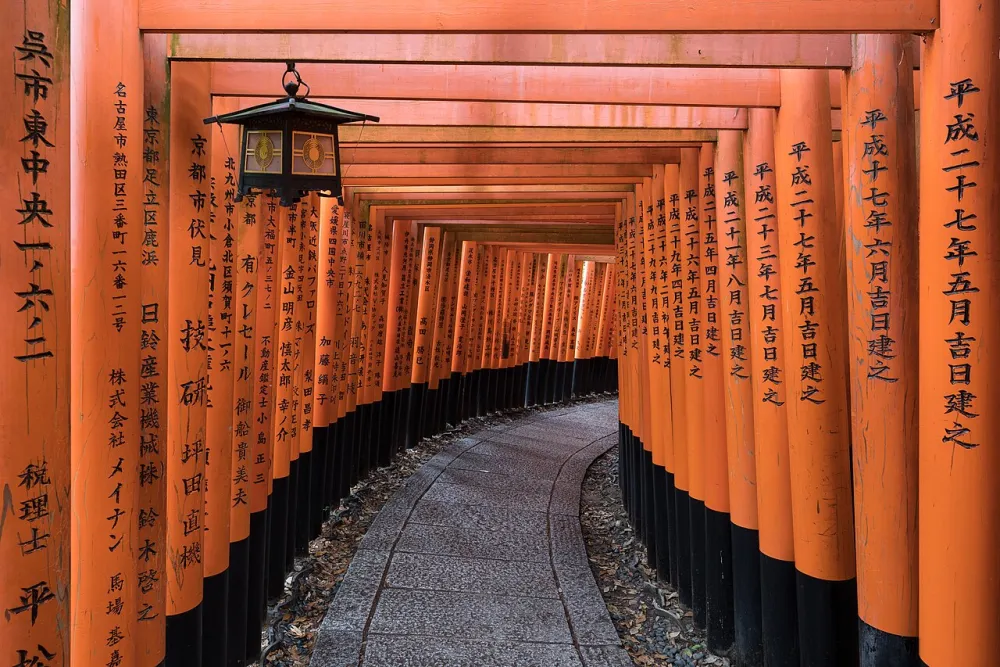
Tofukuji and Fushimi Inari can be linked by JR or Keihan, but climbing Mount Inari adds to the effort of prolonged standing among autumn crowds. If combining them, keep Fushimi Inari to a short visit at the foot of the mountain and one afternoon focus. Save the full mountain walk for another day. For sake breweries and lunch, choose the separate Fushimi Inari and Fushimi sake district day route and let that southbound day have its own pace.
Tofukuji's rail access makes it useful for a half-day visit. For an afternoon Shinkansen, work back from departure to set a latest temple-exit time, adding luggage collection, station access and finding the platform. A suitcase left at your hotel adds a hotel journey; the train time from Tofukuji to Kyoto alone is insufficient. If the spare time remains unused, sit down for food at the station instead of adding another temple.
Mountain areas: give Ohara or Takao a day each
Ohara and Takao can each be a main autumn-leaf day for visitors willing to spend more time on buses and mountain paths. They lie in different directions from central Kyoto. Combining them uses time returning through the city before heading out again. Choose Ohara for fields and temple gardens, or Takao for a valley and temples with substantial steps. If mountain walking worries you or rain is heavy, rail-accessible Higashiyama or Tofukuji is easier to shorten.
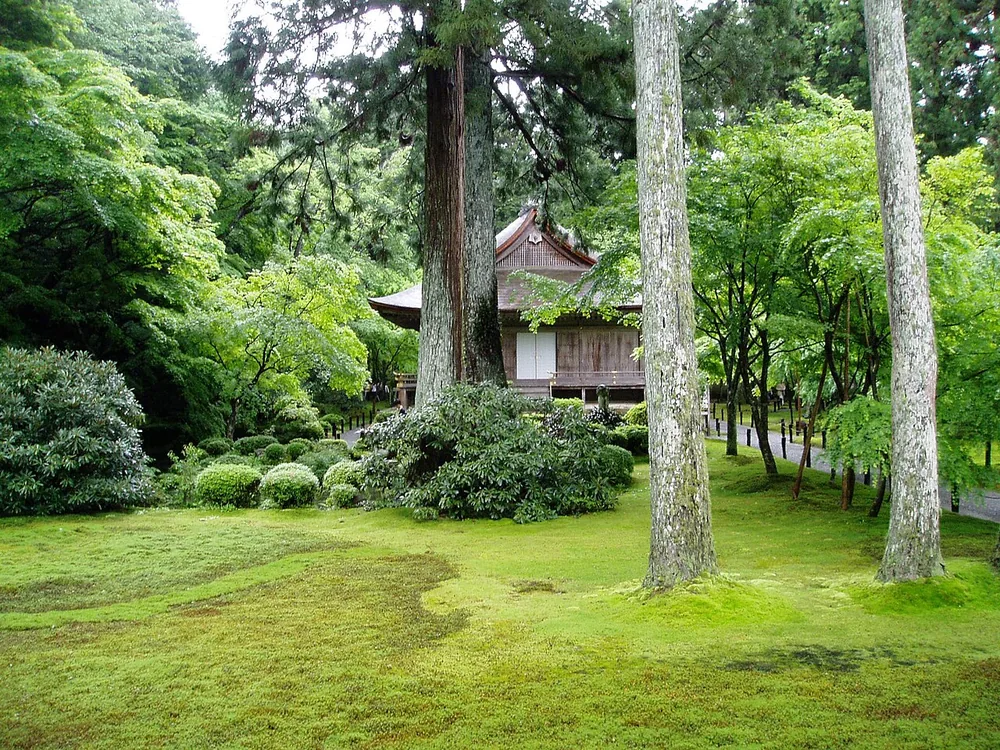
Kyoto's official access advice for Ohara is subway to Kokusaikaikan, then Kyoto Bus route 19. From Keihan, use route 17 from Demachiyanagi. Replacing a long city-centre bus section with subway reduces exposure to traffic. Return to Kokusaikaikan or Demachiyanagi for rail too, rather than boarding solely because a bus says Kyoto Station and leaving the whole road journey until evening.
From Ohara's stop, there is still a walk into the temple area; plan lunch alongside the climb. For Sanzenin as the main visit, finish the temple and sit down for lunch before deciding on another stop. With a fixed restaurant reservation, do not add a temple on the other side that morning. Before returning, check the stop and day's departures, with one target bus and one backup. If weather worsens, omit the extra attraction rather than rush to recover the original schedule.
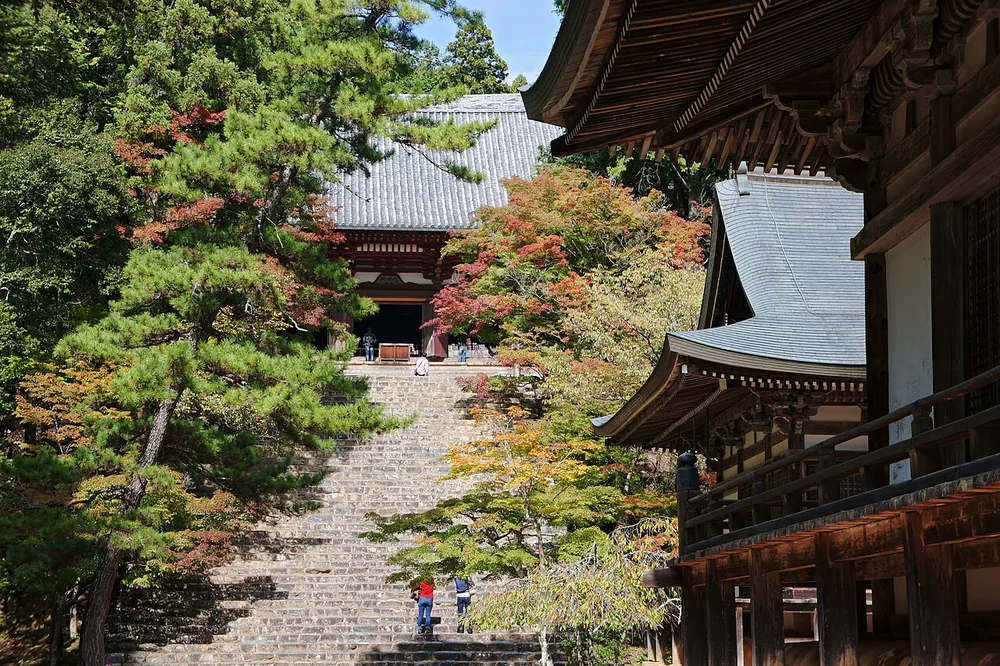
At Jingoji in Takao, steps climb from the valley towards the temple gate. This takes different effort from level city streets. Anyone with weak knees should assess the downhill return too. Even with one temple, leave time to reach the bus stop and wait in daylight. To walk all three Sanbi temples in one day, allocate time separately for each path, meals and the return service.
Eat before illuminations: allow separate time for dinner and queues
Evening illuminations suit those who want the lighting or prefer a later morning. Adding Eikando after a full Arashiyama day presses dinner, transfers and entry queues into the same period. Keep illuminations for your northern Higashiyama day, or shorten daytime visits to half a day. Before reserving dinner, decide whether to eat before or after the lights. The restaurant's last arrival time matters more than its distance from the temple.
If one person wants night photographs while the other gets cold or dislikes standing, agree on how to leave during the day. Choose a shared return station and a route each can use independently, then decide whether to split for the evening. If the whole family needs to stay together, make the illumination the only evening activity. Resting at the hotel after lunch is reasonable. A child with an afternoon nap starts the evening differently from one who has been on their feet all day.
For evening photography, find a permitted stopping place before adjusting settings. Bag dripping umbrellas and keep their tips away from the queue. Eikando prohibits monopods and tripods, bans photography of cultural properties inside buildings and asks visitors to stow selfie sticks in crowded places. Light rainwear is easier to move with than a large umbrella covering the group. If rain makes steps slippery, cancel the illumination and retain dinner; you can make that adjustment in the afternoon.
After the evening visit, you need not return to the bus stop used before entry. Save the route to the subway from northern Higashiyama, JR or Keihan from Tofukuji, or your chosen railway from Arashiyama. Toilets, lifts and platforms can add walking inside stations. Gather the group before entering. For a return to Osaka, choose a range of suitable departures beforehand instead of beginning the last-train search only once everyone is inside the station.
Calculating passes: count the services you will use, with admission separate
The Kyoto Subway & Bus 1-Day Pass costs ¥1,100 for adults and ¥550 for children. It covers municipal subway and city buses plus designated sections of Kyoto Bus, Keihan Bus and West Japan JR Bus. It suits days using those systems. JR returns to Arashiyama and JR or Keihan returns to Tofukuji do not count as covered rides just because they are in Kyoto. List the operators, then total individual fares.
For subway only, compare the ¥800 adult Subway 1-Day Pass. For Randen access to the west, the 2026 Subway & Randen 1-Day Pass costs adults ¥1,300. If northern Higashiyama involves only a subway return from your hotel and walking at midday, individual fares may work better. A pass with many possible rides is no reason to add journeys back and forth. Plan walking and entrances first, tickets afterwards.
For Ohara, check whether your chosen Kyoto Bus section is included in the Subway & Bus 1-Day Pass. Write down the companies at both ends of connections. Subway and Keihan are different systems; Eizan Railway from Demachiyanagi to Yase is another. If companions hold different discount passes, agree where to meet outside the gates. An IC card allows flexible travel. Top up at a station rather than deal with insufficient balance while alighting in a mountain area.
List admission in a separate column to see the choices. During Tofukuji's 2026 autumn period, both areas cost adults ¥1,600. Eikando by day and evening totals ¥2,500. Tenryuji garden alone is ¥500; with Jojakkoji at ¥600 the total is ¥1,100. These combinations offer different content, with transport and meals extra. To cut costs, remove overlapping paid visits first instead of reducing meal time and the margin for returning.
The Kyoto Subway & Bus 1-Day Pass and Subway 1-Day Pass last until the end of service on the day of use. Travel the next morning requires a separate fare. For two nights, calculate each day's plan separately instead of buying the same pass for every day. If you already hold a suitable JR area pass, assess Saga-Arashiyama or Tofukuji access with it first, then buy short rides on other companies separately. Avoid a longer route merely to fit every journey onto one ticket.
Peak-season road changes: use taxis for the particular stretch you need
Kyoto's 2026 autumn transport measures specify some road controls on 21, 22, 23, 28 and 29 November. Nagatsuji-dori in Arashiyama becomes pedestrian-only from 13:00 to 17:00, and vehicle restrictions operate around Tofukuji from 9:00 to 16:00. A booked car or taxi on these dates still leaves a walk from a permitted stopping place. Save an actual road and junction for collection instead of sending only a temple name.
On weekdays from 16 to 27 November, Arashiyama also has a northbound one-way measure on Nagatsuji-dori, with bus diversions. Boarding may move from the stop shown on your map. Read the transport bureau's and operator's information before departure, then temporary signs on arrival. If using rail both ways, these changes mainly affect the final neighbourhood walk and taxis. A changed bus stop need not force a full-day redesign.
A taxi can cover a short stretch when legs are tired, such as between a permitted collection point and somewhere closer to your hotel. It still uses the same congested roads. Let older companions rest somewhere seated and sheltered while one person confirms collection, then move together. Do not leave someone needing a seat standing at a narrow junction, or keep crossing crowds to find the nearest pickup.
Leave large luggage at accommodation or legitimate storage. Kyoto's autumn visitor information links to luggage reservations and delivery; choose by hotel location. Bags left at Kyoto Station must be collected there in the evening. If staying in Kawaramachi and leaving the city the following day, hotel storage often avoids a detour. Collection deadlines, delivery arrival and hotel acceptance are different times. Arrange the handover so you carry only daily essentials while viewing leaves.
One to three autumn days: adapt to energy and weather
For one day, choose one main area and one removable addition. In northern Higashiyama, focus on Eikando and choose one Nanzenji area. In Arashiyama, focus on Tenryuji garden, then choose Jojakkoji or the river. At Tofukuji, prioritise Tsutenkyo and return to town in the afternoon. Give the first focus a full slot and decide the addition after lunch. If the morning queue runs long, drop the addition instead of taking time from lunch or the return.
For two days, separate northern Higashiyama and Arashiyama, with illuminations on the Higashiyama day. If both mornings start early, shorten the second afternoon. Make Tofukuji a replacement for one day’s daytime plan rather than an extra stop on a two-day itinerary. Three full days make separate main slots for Higashiyama, Arashiyama and Tofukuji more practical. A mountain day can replace a city day. Count hotel moves and intercity travel separately; a half-day should have a half-day route.
Adapt weather plans to the day's activities. In light rain, if still willing to walk, keep one temple with an easier rail return and shorten long outdoor sections. In strong wind, thunderstorms or service suspensions, switch to indoor city visits and meals, and cancel mountain travel. Evening illuminations involve dim paths, and slippery steps increase fatigue. If your feet hurt by midday, shorten the plan then instead of forcing yourself to buy a ticket at the entrance.
Photography can be shared out too. While one person takes pictures, others can wait clear of the route with the next meeting point agreed. Someone wanting empty scenes can set out early alone while family eat breakfast at their usual time. Respect residents' entrances, restaurant seats and temple photography boundaries. Fewer photographs are fine. A garden visit, a complete meal and return to the station at the agreed time give the day a clear shape.
A few useful answers
Which area should I choose for a first Kyoto autumn visit with one day?
Choose northern Higashiyama for gardens and evening illuminations, Arashiyama for river and gardens, or Tofukuji for the maple valley at Tsutenkyo. Focus on one area and decide on additions after lunch.
Can a 2026 Eikando daytime ticket carry me into the evening illumination?
The site clears between sessions. Day visitors must leave by 17:00; evening entry restarts at 17:30 with a separate ticket. General adult daytime admission is ¥1,500; evening admission from junior-high age upwards is ¥1,000.
Is there a combined Tsutenkyo and Hojo ticket during Tofukuji's 2026 autumn period?
There is no combined ticket from 14 November to 6 December. Adult admission is ¥1,000 for Tsutenkyo and Kaisando and ¥600 for the Hojo garden, or ¥1,600 for both.
When can I enter Tenryuji garden in 2026?
Special early entry runs from 7:30 on 14–30 November through the garden ticket office. The north gate still opens at 8:30. Normal garden hours are 8:30–17:00, with last entry at 16:50.
Official information and references
Sources used in this guide.
- Kyoto City Tourism Association: autumn 2026 transport, luggage and leaf information
- Keihan: 2026 autumn-leaf area updates and colour stages
- Kyoto City: autumn 2026 Higashiyama and Arashiyama road controls
- Kyoto City: autumn 2026 rail alternatives and luggage information
- Eikando: 2026 treasures exhibition, evening opening, fees and rules
- Eikando: public transport routes
- Nanzenji: visiting hours and fees for each area
- Nanzenji: access from Keage Station
- Tenryuji: 2026 early opening, ticket types, access and admission
- Jojakkoji: current hours and admission
- Jojakkoji: steps, wheelchair access and station walks
- Tofukuji: autumn 2026 tickets, hours and visiting rules
- Tofukuji: JR and Keihan access
- Kyoto City Tourism Association: current transport-pass operators and prices
- Kyoto Travel Navi: rail and bus connections for Ohara
- Ohara Tourism Association: routes via Kokusaikaikan and Demachiyanagi
- Kyoto Bus: current Ohara return timetables
- Kyoto Travel Navi: 2026 Sagano train autumn events
- Kyoto Travel Navi: Jingoji approach and mountain paths
- Sagano Romantic Train: access to Torokko Saga Station
- Sagano Romantic Train: Torokko Kameoka Station and walk to Umahori