Wondering where to stay in Kyoto's Karasuma district? Compare Shijo-Karasuma, Karasuma-Oike, Karasuma-Sanjo, and Nijojomae by subway elevator access, Kyoto Station and Osaka transit links, and lodging tax.
- Region & Focus
- KyotoHotels and stays
- Reading Scope
- 22 min read · 7 chapters · 6 Q&As
- Official Verification
- 31 official sources checkedUpdated November 22, 2026
- Key Topics
- Where to stayNeighborhoodsBooking
Chapter Route Map (tap any stop)
- Start with which street your hotel entrance faces
- Arriving from Kyoto Station: elevator exits matter more than station names
- Routes for Osaka day trips, Higashiyama, and Arashiyama
- Compare beds for two; check floor plans for three generations
- Kyoto's lodging tax is calculated per person, per night
- Half-day outings within easy reach of your hotel
- When to book Kyoto Station or Kawaramachi instead
- Quick Q&A
Stay in Shijo-Karasuma if you are riding the Hankyu Line in from Osaka-Umeda or want Nishiki Market and Shijo-dori dinner spots within easy walking distance. Pick Karasuma-Oike if you are arriving via Kyoto Station and splitting your days between Nijo Castle and Higashiyama. Looking for a middle ground between the two stations? Focus on the stretch from Karasuma-Sanjo over to Shinmachi-dori. If your hotel sits close to Horikawa-dori and Nijo Castle's main gate, build your transit plan around Nijojomae Station on the Tozai Line. When traveling with large suitcases or a stroller, match each hotel's street address to the subway's elevator exits first—walking distance alone will rule out half your options.
Start with which street your hotel entrance faces
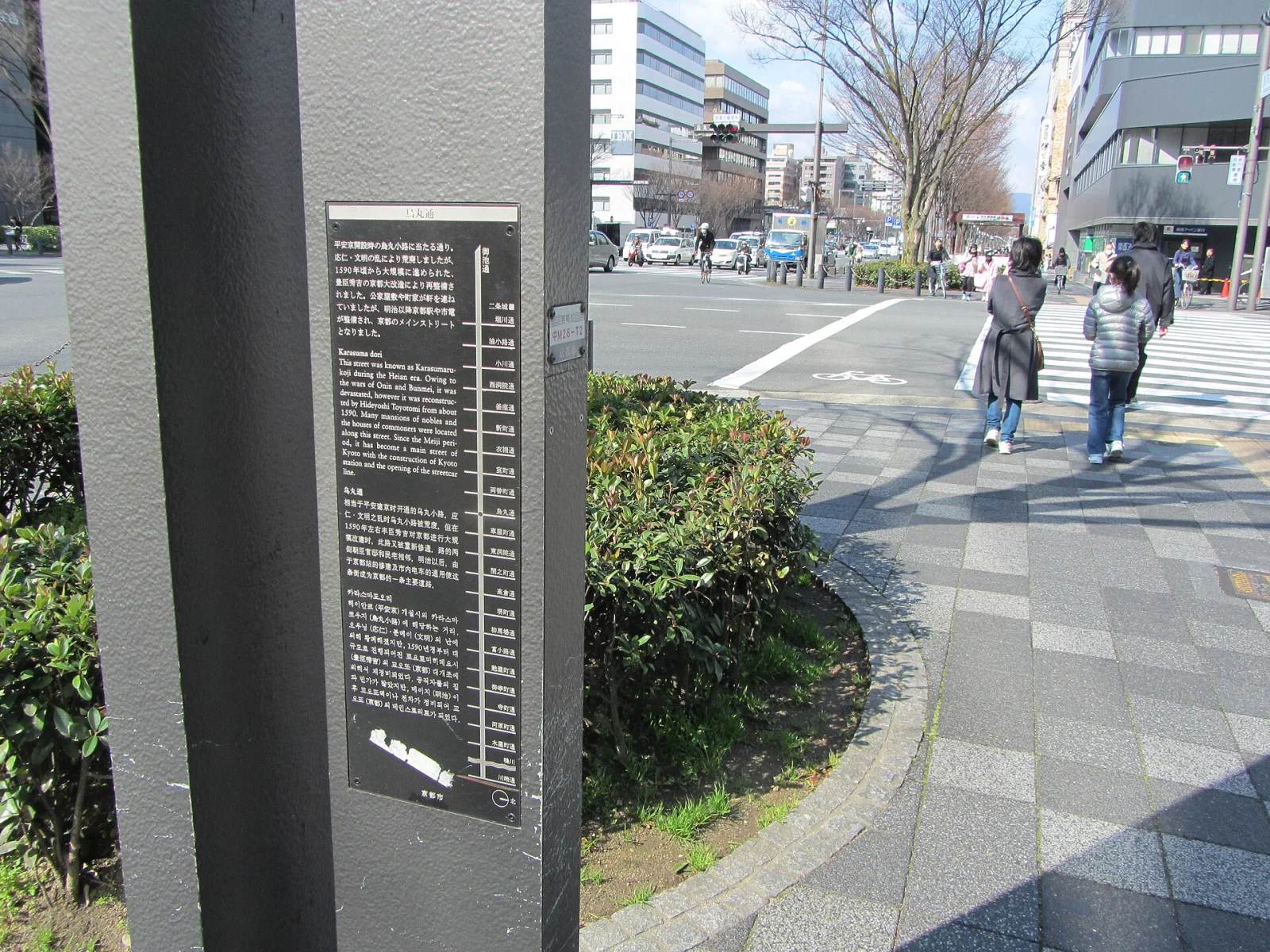
Shijo-Karasuma and Karasuma-Oike are two major intersections. Karasuma-dori runs north–south, crossed by Shijo-dori and Oike-dori, with Sanjo-dori sitting in between. Subway Shijo Station sits along the south side of Shijo-dori, while Hankyu Karasuma Station's exits run along Shijo-dori itself. An underground passage connects the two, so follow the signage for whichever rail operator you are riding. One stop west of Karasuma-Oike, Nijojomae has its own exits and platform.
Shijo-Karasuma suits travelers who want to keep browsing after dinner. Heading east from the intersection takes you toward Daimaru Kyoto, Nishiki Market, and Shijo-Kawaramachi, while heading west along Shijo-dori leads to Omiya. If your hotel is on Bukkoji-dori or Ayanokoji-dori, the south exits of Subway Shijo Station make the walk back after dinner simpler. If you stay on Muromachi-dori, walking back from Daimaru means crossing Karasuma-dori; when room rates are similar, save that crossing for daytime and dine on your hotel's side of the street at night.
Karasuma-Oike stacks two subway lines at the same crossroads: the Karasuma Line on B2F and the Tozai Line on B3F. The biggest advantage of staying nearby is choosing either line right outside your door. You can head to Nijo Castle in the morning, drop off shopping bags in the afternoon, and catch the Karasuma Line to Kyoto Station the next day from the exact same intersection. Hotels on opposite sides of Oike-dori look adjacent on a map, so factor in crosswalk wait times when rolling suitcases.
Karasuma-Sanjo puts both stations within walking distance, making it a strong pick if you want cafes and lunch spots tucked along Sanjo-dori and its side streets. Read the cross-streets in hotel addresses carefully: a listing with "Shinmachi-Sanjo" sits west of Karasuma-dori, whereas "Karasuma-dori Sanjo-sagaru" heads south toward Shijo. Scanning only for "Sanjo" in a property name can easily land you near the Kamo River instead. Pin the exact entrance on your map first, then decide whether you will use Oike on regular days and which elevator exit works best on luggage days.
Properties near Nijojomae fit itineraries anchored around Nijo Castle or the western stretch of the Tozai Line. Estimate your walk to Nijo Castle from the Higashi-Otemon Gate on Horikawa-dori along the east side. If your hotel sits closer to Senbon-dori and JR Nijo Station, you can ride JR directly on travel days, which feels much more like staying in the Nijo Station area. If you plan to commute through Kyoto Station every day, staying at Nijojomae adds a transfer at Karasuma-Oike on every round trip—something you feel most with bags in tow.
| Neighborhood | Main stations | Best for |
|---|---|---|
| Shijo-Karasuma | Subway Shijo (K09), Hankyu Karasuma (HK85) | Osaka-Umeda trips, Nishiki Market, Shijo-dori shopping |
| Karasuma-Oike | Karasuma-Oike (K08 / T13) | Kyoto Station, Nijo Castle, Okazaki, using both subway lines |
| Karasuma-Sanjo | Walk to Shijo or Karasuma-Oike depending on address | Strolling Sanjo-dori with easy access north or south |
| Nijojomae | Nijojomae (T14) | Early Nijo Castle visits, Tozai Line stops, Uzumasa Tenjingawa |
Wondering where to stay in Kyoto's Karasuma district? Compare Shijo-Karasuma, Karasuma-Oike, Karasuma-Sanjo, and Nijojomae by subway elevator access, Kyoto Station and Osaka transit links, and lodging tax.
Arriving from Kyoto Station: elevator exits matter more than station names
From Subway Kyoto Station (K11), take the Karasuma Line toward Kokusaikaikan through Gojo to Shijo, then one more stop to Karasuma-Oike. If you are bound for Nijojomae, transfer at Karasuma-Oike to the Tozai Line for one stop toward Uzumasa Tenjingawa. Stepping off the Shinkansen or a JR train, follow the subway signs first—your subway ride time only starts once you reach the underground platform. Beyond the minutes on the train, budget extra time to clear the JR gates, wait for a departure, and ride back up to street level.
The step-free route at Shijo Station runs via the elevator at the south end of the platform through the South Ticket Gate to the street. The Kyoto Municipal Transportation Bureau station map marks street-level elevators at Exit 1 on the east side and Exit 4 on the west side near Ayanokoji-dori. If phone maps steer you toward the nearest underground staircase, search directly for Shijo Station Exit 1 or Exit 4 instead. Because the two elevators sit on opposite sides of Karasuma-dori, picking the one on your hotel's side saves a long wait at the main crosswalk.
At Karasuma-Oike Station, the street-level elevator is Exit 3-2 on the southeast corner of Karasuma-dori and Oike-dori. From the Tozai Line platform, take the elevator toward the Karasuma Line level to reach the North Ticket Gate, then continue up to the street. Screenshot the station diagram before your first transfer, especially if your group splits up for restrooms or exits different train cars. Follow the Tozai Line or Karasuma Line signs between levels and pick an obvious spot on the target platform to regroup instead of circling back at street level.
For Nijojomae Station, ride the elevator from the center of the platform through the ticket gate and take the street-level elevator at Exit 1, which opens onto the south side of Oshikoji-dori. If a hotel website quotes walking minutes from Exit 2, recalculate from Exit 1 whenever you have rolling luggage. Travelers using wheelchairs or strollers should also check the final stretch to the lobby for front steps, door thresholds, driveway slopes, or sidewalks that narrow abruptly.
The Shijo-dori underground passage keeps you dry all the way from Hankyu Karasuma toward Shijo-Kawaramachi. When heading into a department store or straight to a shop, match the exit numbers to the store's floor guide, then step up to street level only when you approach your hotel. Transferring between Hankyu and the subway requires passing through both companies' ticket gates; stroller users can follow the Shijo Station map to stairlifts or use each operator's separate street-level elevator. For groups hauling large suitcases, agree to meet at a street-level exit so you do not block the underground stairways.
Japanese hotels quote walking minutes from the nearest station exit, which is handy for comparing that final block. When estimating door-to-door time from your train car, trace four separate legs on the map: platform, ticket gate, exit, and street. If two people are returning from different neighborhoods at night, pick the exact hotel entrance you can walk straight into. Some properties share a building with other businesses, so saving a Street View shot showing both the street number and hotel sign helps taxi drivers and companions far more than pinning the nearest intersection.
Routes for Osaka day trips, Higashiyama, and Arashiyama
On the Hankyu Kyoto Main Line from Osaka-Umeda, aim for Karasuma Station (HK85)—one stop before Kyoto-Kawaramachi, opening right onto Shijo-dori. If your Osaka base is near Hankyu Osaka-Umeda Station or your mornings start in Umeda, this direct link is a major practical advantage for Shijo-Karasuma. If you arrive in Kyoto by Shinkansen or JR instead, the municipal subway from Kyoto Station works just as smoothly. On Hankyu platforms, check both the destination and stopping pattern, and save both "Karasuma" on Hankyu signage and "Subway Shijo" for transfers.
Heading east from Karasuma-Oike on the Tozai Line brings you to Kyoto Shiyakusho-mae for the Teramachi area, or Sanjo Keihan to connect with the Keihan Main Line or walk across the Kamo River along Sanjo-dori. For Heian Shrine and the museums in Okazaki, ride to Higashiyama Station and walk from street level. If an evening is focused solely on Shijo-Kawaramachi, Shijo Bridge, or southern Gion, walking east along Shijo-dori from Shijo-Karasuma—or taking Hankyu one stop to Kyoto-Kawaramachi—is much simpler than heading north to Karasuma-Oike just to switch subway lines.
Several routes reach Arashiyama, and each drops you in a different spot. From Shijo-Karasuma, walk to Shijo-Omiya to board the Randen tram, or ride a Hankyu train from Karasuma that stops at Omiya and step up to Randen's street-level Shijo-Omiya Station. Keifuku Electric Railroad lists the ride from Shijo-Omiya to Arashiyama at roughly 24 minutes, excluding transfer and wait times. From Karasuma-Oike, take the Tozai Line to the terminus at Uzumasa Tenjingawa and walk up to street level for Randen Tenjingawa. Save the shops you want to visit alongside Togetsukyo Bridge so you can take whichever line is closest to your final stop on the way back.
Another option is taking Hankyu from Karasuma to Katsura and transferring to the Hankyu Arashiyama Line, which ends at Hankyu Arashiyama Station on the south bank of the Katsura River. This drop-off works well if you want to start at the south end of Togetsukyo Bridge or have lunch booked south of the river. If your main stops are in Sagano and you are already staying near JR Nijo or Kyoto Station, compare the walk from JR Saga-Arashiyama Station on the JR Sagano Line. Before heading back, pin all three stations named Arashiyama or Saga-Arashiyama on your map and factor in which side of Shijo-dori you booked for dinner.
To reach Fushimi Inari from Shijo or Karasuma-Oike, ride the Karasuma Line south to Kyoto Station and transfer to a JR Nara Line train that stops at Inari. JR Inari Station sits directly across from Fushimi Inari Taisha, while the shrine's access page notes Keihan Fushimi-Inari Station is about a 5-minute walk away. If you leave Karasuma in the morning and want to spend the afternoon in Gion, ride JR on the way down and return on the Keihan Line to Gion-Shijo, then cross the Kamo River for dinner in Kawaramachi. Guests staying at Nijojomae should avoid backtracking unnecessarily—plan from whichever station you are actually leaving.
Both Kyoto Gyoen National Garden and Kyoto Botanical Gardens sit along the Karasuma Line. For the Botanical Gardens' Kitayama Gate, Kyoto Prefecture notes that Kitayama Station Exit 3 opens right at the entrance; for the Main Gate, get off at Kitaoji Station and walk east. If your daytime schedule includes two or more stops around Kitayama and Kitaoji, check our Kitayama stay guide to see how that neighborhood pairs up. When part of your group still wants to shop along Shijo, you can spend a full morning in Kitayama and keep Karasuma as your base to avoid changing hotels.
Standard Kyoto Municipal Subway adult fares run ¥220 to ¥360 by distance zone. The Subway 1-Day Pass costs ¥800 for adults (¥400 for children), while the Subway & Bus 1-Day Pass is ¥1,100 for adults (¥550 for children). Sketch out your planned subway rides before buying either pass: two minimum-fare rides total ¥440, so paying by IC transit card makes more sense if you do plenty of walking in between. You need at least four ¥220 subway trips in a single day (¥880) before the Subway 1-Day Pass starts saving money.
Staying in Shijo-Karasuma often means riding Hankyu and Randen, both of which charge separate fares. Tally your guaranteed municipal subway and eligible city bus rides in one column, and keep JR, Hankyu, Keihan, and Randen fares in another. On days centered around Shijo-dori and Nishiki Market, walking straight through often beats going underground for a single stop. For other transit passes and sightseeing express options across the city, see our Kyoto subway and bus day pass and express route guide.
Compare beds for two; check floor plans for three generations
For two adults staying one or two nights, look first for a generously sized double bed or book two single beds outright. On Via Inn Kyoto Shijo Muromachi's website, Single A rooms have a 140 cm bed for solo guests, while Double rooms use the same 140 cm width for two people. Economy Twin rooms use 97 cm beds, compared with 122 cm beds in Twin A rooms. If you need floor space to open suitcases flat, compare total room square meters alongside desk and chair placement.
When traveling with school-age kids or four adults, an apartment hotel lets everyone share a dining table, laundry setup, and sleeping quarters under one roof. Count exactly which bed each person gets, then check seating at the dining table and whether bedrooms have doors or partitions. A four-person room might offer four single beds or combine bunk beds with singles. If upper bunks are awkward for young children or older relatives, book a layout where everyone sleeps on standard low beds. Study the bathroom and toilet placement on the floor plan too—when four people get ready at once, a separate washbasin saves more time than extra hallway space.
Take MIMARU Kyoto Shinmachi Sanjo as an example: its official site lists a roughly 5-minute walk from Karasuma-Oike Station, in-room kitchens, in-unit washer-dryers, and exact bed and sink counts on each room page, with select layouts sleeping six or more. Multigenerational groups can weigh one large apartment directly against two twin hotel rooms. If early risers and night owls need separation, pick a suite with an interior partition door or book two adjoining rooms. If kids will come back for midday naps, prioritize blackout curtains and a short walk from the main intersection to the front desk.
Housekeeping schedules within the same apartment hotel can make a noticeable difference on longer stays. At MIMARU Kyoto Shinmachi Sanjo, daily service covers partial towel and bath mat replacement plus vacuuming, while wet-area cleaning outside the kitchen and bed making begin on night three and run every two days. Extra full cleanings can be requested at the front desk for a fee. If you are staying several nights and cooking or doing laundry often, check where clothes can dry and how trash is collected. For a two-night trip where you eat every meal out, put the budget saved on a kitchen toward wider beds or breakfast instead.
Families often filter strictly for a kitchen even when they end up using very little of it. If you only need quick breakfasts, a fridge, microwave, basic tableware, and a real table to sit around are plenty. If you plan to cook full dinners, check the property's equipment list for stovetop burners, pots, knives, and dish counts. For week-long stays, verify whether the microwave fits store-bought bento boxes and whether the fridge includes a freezer compartment. Crossing off appliances you will not use makes choosing between neighborhoods much easier.
When traveling with elementary-age children or younger, enter every child's exact age first so booking engines show accurate bed options. Availability of cribs, bed guards, and extra bedding depends on the specific room category, so include all adults and children on the same reservation. Give older relatives the bedroom closest to the toilet if they get up at night, and leave the living area to family members who stay up talking. For accessibility needs, ask separately about doorway widths, bathroom thresholds, and shower chairs—specific measurements give far clearer answers than simply asking whether a hotel is accessible.
Buildings along Shijo-dori and Karasuma-dori offer easy taxi pickup and unmistakable entrances, whereas side-street addresses warrant a quick check on street width and whether cars can pull over briefly out front. Light sleepers should filter by room orientation, window placement, and floor level before booking. If one side of the building faces a busy avenue, request an inward-facing or side-street room. When you specifically need a bright living area or a certain bed configuration, pick a room category whose photos and specs confirm it—that usually matters more than high-floor requests.
Arrival time on day one can also shift which room style works best. The same MIMARU property offers free luggage storage from 7:00 to 22:00 on check-in and check-out days. A family arriving in Karasuma early in the morning can drop bags at reception and hop one stop to Marutamachi or grab breakfast; if you are using evening luggage delivery, pack a change of clothes in your daypack. Conversely, if you land on a late flight or arrive from Osaka after dark, check the property's check-in window and enter your estimated arrival time in the reservation so nobody ends up hunting for the entrance from different stations.
Kyoto's lodging tax is calculated per person, per night
Starting March 1, 2026, Kyoto City's updated lodging tax rates apply based on each stay date and the nightly room charge per person. The city calculates taxable accommodation charges using the room-only rate including service fees, excluding meals and consumption tax. Booking platforms may collect the tax upfront or leave it payable at check-in. When comparing room-only and breakfast-included plans at the same hotel, open the price breakdown with taxes and service charges included and check the line showing what is due at the property.
Take two adults staying three nights as an example. If a twin room costs ¥18,000 per night room-only, the per-person nightly charge is ¥9,000, which falls into the ¥400 tier—coming to ¥2,400 total for two guests across three nights. If those same two guests book a plan costing ¥20,000 per person per night, the lodging tax jumps to ¥6,000 total for three nights. Larger groups comparing one apartment against two twin rooms should run the math separately using each setup's exact guest count and nights.
The headcount entered on your reservation and the cash or card buffer you set aside for local lodging tax go hand in hand. Plans with different guest counts often split charges differently, so quote the booking with accurate information for every guest from the start. When a reservation includes free bed-sharing children or meal packages, ask the hotel how the taxable per-person room charge is broken down. Note any balance payable at reception in your itinerary so your group keeps prepaid room charges separate from local settlement.
If your travel dates might shift, look closely at cancellation deadlines. Read the exact cutoff time and time zone—Japan Standard Time (JST) at Japanese properties—and put the final free-cancellation timestamp on your calendar. If you book two rooms separately, track check-in rules and cancellation windows for each one. When promo codes, prepayments, or split multi-night reservations are involved, record the amount already paid and refund terms per booking. Before switching hotels mid-trip to chase a lower rate, weigh luggage storage fees, delivery costs, and the time spent returning to pick up bags.
| Taxable room charge per person, per night | Lodging tax per person, per night |
|---|---|
| Under ¥6,000 | ¥200 |
| ¥6,000 to under ¥20,000 | ¥400 |
| ¥20,000 to under ¥50,000 | ¥1,000 |
| ¥50,000 to under ¥100,000 | ¥4,000 |
| ¥100,000 or more | ¥10,000 |
Half-day outings within easy reach of your hotel
Staying around Shijo-Karasuma makes Nishiki Market the easiest place to open your day. The Nishiki Market Merchants Association lists the walk from Subway Shijo and Hankyu Karasuma at about 3 minutes. If you are shopping for pickles or sweets, pick one or two stalls open that morning, work east down Nishikikoji-dori, and save refrigerated items for the walk back to your hotel. Individual shop hours vary, so if you want a full sit-down breakfast first, choose a cafe beforehand and browse the market a little later. The market asks visitors not to eat while walking—finish food inside or directly in front of the stall where you bought it. Families with strollers can stick to one or two stalls for hot snacks rather than carrying open food through narrow crowds.
Daimaru Kyoto's official access page notes direct underground links from both Subway Shijo and Hankyu Karasuma, while Kyoto Takashimaya connects directly to Hankyu Kyoto-Kawaramachi at Shijo-Kawaramachi. If you want prepared deli food for an apartment dinner, loop through Nishiki Market into Daimaru and pick up chilled dishes right before heading upstairs to your room. On evenings when dinner is east of the Kamo River, save glass jars and refrigerated treats for another day so you are not hauling heavy bags across the bridge and back.
Early coffee drinkers around Karasuma-Sanjo can stroll along Sanjo-dori to Sakaimachi-dori. Inoda Coffee Main Shop sits just south of Sanjo on Sakaimachi-dori; its official site lists a 7:00 opening and about a 5-minute walk from Karasuma-Oike Station. On a morning heading to Nijo Castle at opening time, walk back to Karasuma-Oike after breakfast to hop on the Tozai Line; if Nishiki Market is next, cut straight down Sakaimachi-dori into Nishikikoji-dori. Guests staying west of Shinmachi-dori who need to catch an early first train can pick up bakery items the night before instead of walking back and forth at dawn.
From Karasuma-Oike, Nijo Castle fits cleanly into a morning slot: ride the Tozai Line one stop to Nijojomae and head for the Higashi-Otemon Gate. The castle opens at 8:45, with last admission generally at 16:00 and closing at 17:00. General castle grounds and Ninomaru Palace admission require no advance reservation, whereas Honmaru Palace requires a timed-entry electronic ticket purchased ahead of time. Staying nearby lets you lock in one fixed entry slot, wander whichever garden section suits the weather before or after, and easily pop back to the hotel for a break.
Visiting over late December 2026 into early January 2027 requires extra calendar checks: Nijo Castle lists full closures from December 29 to 31, and both Ninomaru and Honmaru palaces close December 26–28 and January 1–3. Ninomaru Palace also closes on Tuesdays in January, July, August, and December (shifting to the following day if Tuesday is a public holiday). If anyone in your group specifically wants to see the palace screen paintings, mark the open palace days on your calendar the week you book lodging and block off a morning. For details on choosing between the two palaces or sticking to the grounds, see our Nijo Castle tickets and palace entry guide.
Wheelchair users should check palace interior logistics in addition to subway exits. Nijo Castle allows wheelchairs inside both Ninomaru and Honmaru palaces, though visitors must transfer to the castle's dedicated indoor wheelchairs at the entrance. Free power-assisted wheelchairs are also available on a first-come basis at the General Information Center. If you hold a timed ticket for Honmaru Palace, build in extra buffer before your slot for picking up a chair, transferring, and crossing from the main gate to the palace.
For a stroll north of Karasuma-dori, get off at Imadegawa or Marutamachi to enter Kyoto Gyoen National Garden from the north or south. To tour Kyoto Imperial Palace itself, aim for Seishomon Gate on the west side. The Imperial Household Agency's year-round public access is free with no reservation required, though bags are checked at entry. Last entry is 15:50 in March and September, 16:20 from April through August, and 15:20 from October through February. Decide whether you want a park walk or the palace tour first—if you are doing both, check Seishomon Gate's cutoff time and stroll the outer garden afterward.
Keep in mind that Kyoto Gyoen's wide paths are gravel. If anyone in your group wants to avoid long stretches of loose stone, enter from a west-side gate near your target building rather than walking end-to-end from south to north. Afterward, you can ride the Karasuma Line straight back to Karasuma-Oike from Imadegawa or Marutamachi, giving older travelers time to rest before dinner. Suitcases and other large bags are not permitted inside Kyoto Imperial Palace, so leave luggage at your hotel first. If companions want to book Kyoto Sento Imperial Palace as well, check entry rules in our Kyoto Imperial Palace, Sento Palace, and Imperial Villas guide.
When rain hits a Karasuma-Oike stay, the Kyoto International Manga Museum is an easy nearby fallback. Its access guide points visitors out Exit 2 and north along Karasuma-dori; if you need the elevator, take Exit 3-2 to street level and cross at the intersection. Before shifting your plans to a Wednesday, double-check the museum's operating calendar for that exact date. If only half your group wants to browse manga, plan to regroup back at the hotel or over lunch on Sanjo-dori rather than dragging everyone back to Kyoto Station to meet up.
If a downpour keeps you completely underground, both stations connect directly to spots where you can sit down right away. ShinPuhKan links to the South Ticket Gate at Karasuma-Oike, while COCON Karasuma connects to Shijo Station Exit 2 as well as Exits 23 and 25 from Hankyu Karasuma. If you are staying west of Shijo, grab a meal in COCON Karasuma before heading back to your room and save Kawaramachi for clear weather. East of Oike, step straight from the subway into ShinPuhKan until the rain lets up, then cross Karasuma-dori to the Manga Museum or continue north. Where connecting corridors have slight level changes, follow each complex's step-free route signage if you have a stroller.
When to book Kyoto Station or Kawaramachi instead
Kyoto Station hotels make the most sense when you arrive very late, catch an early-morning Shinkansen, or spend most days riding JR lines. On hotel maps, pay attention to whether a property sits on the Karasuma side or the Hachijo side. Both market themselves as "right outside Kyoto Station," yet crossing the elevated walkway and navigating multiple floors to reach the right ticket gate eats into suitcase convenience. If your train gets in just before the last subway departure, sleeping beside Kyoto Station wraps up the evening fast. On a three-night trip where only your final departure is early, price out a morning taxi from Karasuma against switching hotels.
If your itinerary revolves around evening walks along the Kamo River, Pontocho, and Kiyamachi—or dinners booked east of the river and around Shijo-Kawaramachi—staying farther east cuts down the walk home. Pin both Hankyu Kyoto-Kawaramachi and Keihan Gion-Shijo on opposite sides of the bridge: staying near Kyoto-Kawaramachi keeps Hankyu open for Osaka, while Keihan is right across the river. Shijo-Karasuma still sits within easy daily walking reach of Kawaramachi, making it a smart compromise when one traveler wants morning access to Nishiki Market and another needs the subway to Kyoto Station. When picking late-night restaurants, keep the intersection crossings and final walk back in mind.
When one person wants Nijo Castle and another is heading to Okazaki, Karasuma-Oike lets both set off in opposite directions from the same station every morning. Conversely, if you find yourself returning to Kyoto Station every day for the JR Kyoto, Nara, or Sagano lines, staying beside the station saves enough transfers to outweigh quieter nightlife. With just one day trip to Osaka and one afternoon in Arashiyama, Shijo-Karasuma works cleanly as a single base. Whenever two properties sit inside the same target zone, favor the entrance that is easiest to spot at a glance each morning and night.
During Gion Matsuri, connect your arrival route directly to your hotel's exact block before booking along Shijo-dori. The Kyoto City Tourism Association's 2026 Yoiyama guide recommends entering the subway at Karasuma-Oike when heading toward Kyoto Station to sidestep heavy crowds at Shijo Station. If you plan to stay near Shijo during Yoiyama nights or the float processions in 2027, wait for that year's traffic restriction map and locate pedestrian entry points for your hotel's specific block. Arrange taxis outside the restricted zone and confirm when your hotel can accept delivered luggage so your bag transfer still works smoothly.
If you reach Kyoto Station in the morning and want to start sightseeing before check-in, use Kyoto City's HANDS FREE KYOTO portal to compare luggage storage and same-day hotel delivery options; some services accept bags at Kyoto Station until 14:00 for delivery to partner hotels that afternoon. That setup works especially well if you want to tour Nijo Castle or Nishiki Market hands-free and find your suitcases waiting at check-in. On a late-afternoon Shinkansen departure, ask whether your hotel can ship bags back to a station pickup counter. Before booking any courier service, line up three columns—drop-off cutoff, estimated hotel delivery window, and pickup hours—against both your hotel front desk and the carrier's schedule.
Changing hotels mid-trip is rarely worth the hassle unless a hard early train or intercity leg forces it. You can spend the first three nights in Karasuma and move to the departure side of Kyoto Station on your final night, or stay put in Karasuma and leave bags with your hotel after check-out until you head to the train. Keeping one base also helps slower-paced travelers rest near the room with easy access to medication or extra layers. Whenever you do split stays or use luggage delivery, pack essentials, passports, valuables, and half a day's spare items in a carry-on daypack in case bags arrive late.
If you will not return to the same hotel on check-out day, plan luggage pickup backward from your last stop. For example, if you visit Kyoto Gyoen in the morning and catch an afternoon Shinkansen, send bags ahead to a Kyoto Station counter open for afternoon pickup, then ride south from Marutamachi Station. If your final afternoon wraps up around Shijo and you are riding Hankyu back to Osaka, leaving bags at your Karasuma hotel is faster and simpler. Whenever your hotel exit offers both stairs and a street-level elevator, note both the elevator exit and bag-pickup deadline directly in your day-by-day schedule.
A few useful answers
Are Hankyu Karasuma Station and Subway Shijo Station the same station?
They are two separate stations at the same intersection, linked outside the ticket gates by an underground passage. Hankyu Karasuma serves the Kyoto Main Line and Subway Shijo serves the Karasuma Line, so transferring between them means passing through both companies' fare gates.
Which subway exits have elevators when staying in Karasuma with big suitcases?
At Shijo Station, go through the South Ticket Gate for Exit 1 on the east side of Karasuma-dori or Exit 4 on the west side. At Karasuma-Oike Station, the street-level elevator is Exit 3-2 on the southeast corner. At Nijojomae Station, use the elevator at Exit 1.
Do I need to transfer to get from Karasuma-Oike to Nijo Castle?
No—take the Tozai Line directly from Karasuma-Oike toward Uzumasa Tenjingawa for one stop to Nijojomae. If you are coming from Kyoto Station, take the Karasuma Line first and transfer at Karasuma-Oike.
What should a family of four check first when booking an apartment hotel?
Enter the exact ages and headcount of all adults and children first, then check individual bed layouts and whether sleeping areas have closing doors. For multi-night stays, in-unit laundry, dining seating, sink layout, and housekeeping frequency matter far more than room category names.
How is Kyoto's lodging tax calculated for Karasuma hotels?
From March 1, 2026, Kyoto City charges five tiers ranging from ¥200 to ¥10,000 per person, per night, based on the room-only nightly rate per guest. For example, a nightly rate from ¥6,000 to under ¥20,000 per person is taxed at ¥400 per person per night. Check your booking breakdown to see whether the tax is prepaid or collected at check-in.
Is Shijo Station or Kyoto-Kawaramachi Station closer to Nishiki Market from Karasuma?
According to the market association's access guide, Subway Shijo and Hankyu Karasuma are about a 3-minute walk away, compared with about 4 minutes from Hankyu Kyoto-Kawaramachi. If you want to start from the west end near Daimaru, use Shijo or Hankyu Karasuma.
Official information and references
Sources used in this guide.
- Kyoto Municipal Transportation Bureau | Shijo Station Timetable, Layout, and Elevators
- Kyoto Municipal Transportation Bureau | Karasuma-Oike Station Layout and Transfers
- Kyoto Municipal Transportation Bureau | Nijojomae Station Layout and Elevators
- Kyoto Municipal Transportation Bureau | Subway Station Maps
- Hankyu Railway | Karasuma Station Map and Transfers
- Hankyu Railway | Kyoto Line Route Map
- Keifuku Electric Railroad | Randen Route Map and Station Timetables
- Kyoto Municipal Transportation Bureau | Standard Subway Fares
- Kyoto Municipal Transportation Bureau | 1-Day Passes and Fare FAQ
- City of Kyoto | Lodging Tax Revision and Updated Rates
- Kyoto City Call Center | Definition of Taxable Accommodation Charges
- MIMARU Kyoto Shinmachi Sanjo | Rooms, Kitchens, and Housekeeping Policy
- Via Inn Kyoto Shijo Muromachi | Room Amenities and Bed Sizes
- Kyoto Nishiki Market Merchants Association | Access
- Nijo Castle | Hours, Closed Dates, and Palace Closures
- Nijo Castle | FAQ and Entry Reservations
- Imperial Household Agency | Kyoto Imperial Palace Year-Round Public Access
- Ministry of the Environment | Kyoto Gyoen Access and Gates
- Kyoto Prefecture | Kyoto Botanical Gardens Access
- Kyoto International Manga Museum | Access Map
- Kyoto International Manga Museum | Opening Calendar
- Kyoto City Tourism Association | 2026 Gion Matsuri Yoiyama Guide
- Kyoto City HANDS FREE KYOTO | Luggage Storage and Delivery Options
- Kyoto Nishiki Market Merchants Association | Dining and Etiquette Guidelines
- Daimaru Kyoto | Underground Access from Shijo and Karasuma Stations
- Kyoto Takashimaya | Access and Shijo-Kawaramachi Location
- Inoda Coffee Main Shop | Hours and Access
- ShinPuhKan | Direct Access from Karasuma-Oike South Ticket Gate
- COCON Karasuma | Passageways to Shijo and Hankyu Karasuma Stations
- Fushimi Inari Taisha | JR Inari and Keihan Fushimi-Inari Access
- Nijo Castle | Entrances and Access