Kyoto Imperial Palace needs no reservation; Kyoto Sento Imperial Palace requires a place. Covers 8:40 same-day reception, the age-18 minimum, ID and luggage, 2026 Shishinden works, and an Imadegawa-to-Marutamachi route.
- Region & Focus
- KyotoAttractions
- Reading Scope
- 28 min read · 15 chapters · 5 Q&As
- Official Verification
- 21 official sources checkedUpdated October 29, 2026
- Key Topics
- ItinerariesBookingKyoto, Osaka & Kansai
Chapter Route Map (tap any stop)
- Choose a visit everyone can join before deciding on both palaces
- Shishinden works have begun: focus on other buildings and gardens
- Approach Seishomon from Imadegawa and Sento from Marutamachi
- After Seishomon, allow about an hour for the public route
- Chinese staff tours meet at the visitors’ rest house
- Apply for Sento online three months ahead; applications are grouped by day
- Without an online place, go to Sento for same-day reception around 8:40
- Sento check-in and belongings: everyone needs ID; store bags first
- Sento’s hour: changing views around the two ponds and tea houses
- With Sento booked for 13:30: Imperial Palace first, then a lunch break
- A half-day without reservations: palace, rest and a southward exit
- Choose lunch and the return route separately
- Wheelchairs, walking sticks and children: keep a route with rest options
- Summer sessions and winter cutoffs differ; reduce walking in rain
- Keep the calendar with the permit and work backward from your next train
- Quick Q&A
You can decide to enter Kyoto Imperial Palace on the day, while Kyoto Sento Imperial Palace requires admission permission first. Both are inside Kyoto Gyoen, but their entrances and visiting arrangements are separate. For a first visit, choose a flexible half-day at the Imperial Palace and park. If you have a Sento place, fix its roughly one-hour guided tour first and fit lunch and the other visit around it. Long-term Shishinden works began in October 2026, a change to consider if you want an unobstructed architectural view.
Choose a visit everyone can join before deciding on both palaces
If anyone is under 18, choose Kyoto Imperial Palace and Kyoto Gyoen. Sento’s minimum age is 18; infants cannot accompany visitors either. Wheelchair users should also focus on the Imperial Palace, as Sento’s current FAQ excludes wheelchair visits. With only half a day and no wish to queue early, a self-guided Imperial Palace visit fits better. Adults willing to meet at a fixed time and cross stepping stones and stone bridges can add Sento. These conditions narrow the choices faster than selecting the prettiest photo.
Kyoto Gyoen is the surrounding national garden. The Imperial Household Agency’s Imperial Palace and Sento Palace each have their own walls, entrance and calendar. The Ministry of the Environment gives the park’s dimensions as about 700 m east to west and 1,300 m north to south, with free access. Entering a park gate still leaves a walk to the actual visitor entrance. Save the Agency’s Kyoto Office application counter, the Imperial Palace’s Seishomon Gate, and Sento’s visitor entrance as three separate map pins. Reaching Kyoto Gyoen is not checking in.
With four to five hours, two adults can choose one palace visit, sit down to eat and walk out. Seeing both requires an earlier start and less wandering around the grounds. Leave Katsura and Shugakuin Imperial Villas for another half-day: Katsura is in Nishikyo Ward and Shugakuin in Sakyo Ward, each with its own on-site reception. Katsura currently admits junior-high-school age and above, while Sento and Shugakuin require age 18 or above. “Imperial garden” does not imply one shared age rule.
| Item | Kyoto Imperial Palace | Kyoto Sento Imperial Palace |
|---|---|---|
| Admission permission | No application for general opening | Advance application or same-day ticket |
| Visiting format | Independent visiting; free staff tours also available | Everyone follows a Japanese guide; Chinese audio devices available |
| Age | General opening does not have Sento’s age-18 limit | Age 18 and above; infants cannot accompany visitors |
| Surface | Gravel; wheelchair visits and loans available | About 1 km, stone bridges, stepping stones and level changes; no wheelchair visits |
| Transport starting point | Imadegawa Station | Marutamachi Station or Furitsu Idai Byoin-mae |
| Cost | Free | Free |
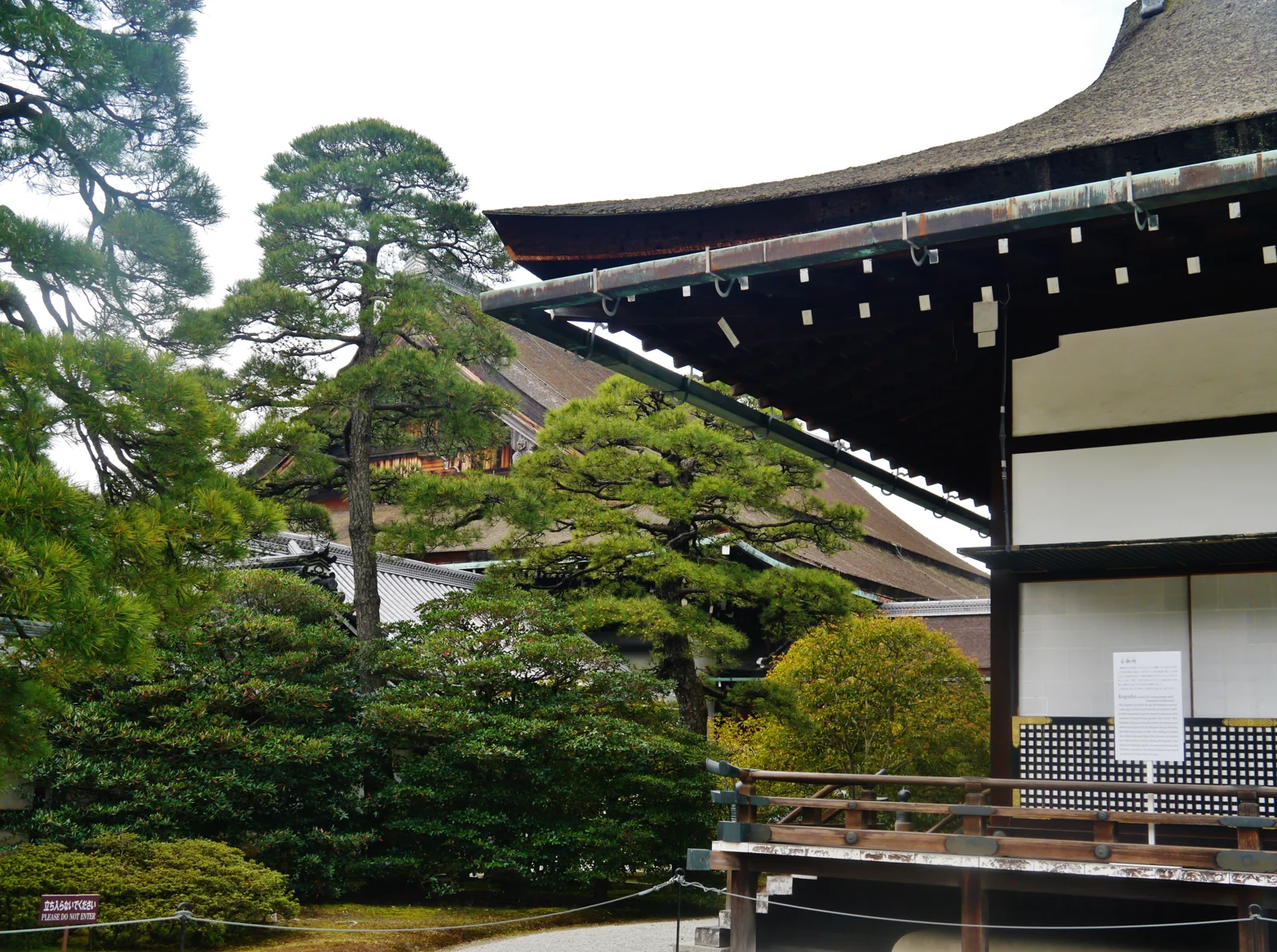
Kyoto Imperial Palace needs no reservation; Kyoto Sento Imperial Palace requires a place. Covers 8:40 same-day reception, the age-18 minimum, ID and luggage, 2026 Shishinden works, and an Imadegawa-to-Marutamachi route.
Shishinden works have begun: focus on other buildings and gardens
The Imperial Household Agency announced the start of Shishinden works on October 8, 2026, with three phases expected to take about nine years. Phase one installs a protective roof in fiscal years 2026–2029; phase two repairs the building in fiscal years 2029–2032; phase three removes protection and restores the site in fiscal years 2033–2034. These are Japanese fiscal years: fiscal 2034 continues through the end of March 2035. Read the construction stages rather than converting a year into a specific full-reopening date.
The temporary protective roof covers the building to shield it from weather while the cypress-bark roof is replaced. Work also includes walls, shutters, earthquake resistance and disaster-prevention equipment, with work on the 18 steps and parts of the terrace before and after installation. If your goal is an unobstructed Shishinden panorama, pre-construction travel photos no longer set a suitable expectation. The October 2026 special autumn opening has ended; its displays are not a fixed program on ordinary days.
Other building exteriors and gardens remain subjects for a palace visit. To understand court spaces, look at how arrival, waiting, ceremonial and daily areas are separated. For waterside scenery, leave time for the visible parts of Oikeniwa and Gonaitei. Use the Agency’s Shishinden works page for current photos and progress. Its October 8, 2026 record describes construction vehicle routes at Imadegawaguchi and Kenshunmon Gate. Visitors still follow Seishomon admission directions, rather than seeking shortcuts through construction entrances.
An Imperial Household Agency construction animation released in October 2026, showing how the temporary protective roof is moved over Shishinden.
Approach Seishomon from Imadegawa and Sento from Marutamachi
The Imperial Palace’s official access page lists about five minutes on foot from Imadegawa Station on the Karasuma subway line, or seven from the Karasuma Imadegawa bus stop. Add time to leave the platform, find your exit, reach Seishomon and pass security to these official access estimates. For the 10:00 Chinese tour, aim to reach Seishomon around 9:30. From Kyoto Station, head north on the Karasuma Line without first going to Kawaramachi for a bus. The same subway works from Shijo-Karasuma.
Sento’s official directions list about 15 minutes on foot from Marutamachi Station and ten from Furitsu Idai Byoin-mae bus stop. The Agency’s booking system also lists about 20 minutes from Keihan Jingu-Marutamachi. Subway Marutamachi and Keihan Jingu-Marutamachi are separate places; give the operator and full station name for meetings. Enter the park from the Marutamachi side and head to the visitor entrance beside the rest house on the north side of the official route map. The western “Kyoto Sento Imperial Palace Main Gate” is separate from the visitor entry route. Seishomon is elsewhere; taking a Sento permit there leaves another walk.
For a first visit to both, save an area map and both entrance names. Google Maps attraction pins often sit in the middle of a site. Identify the correct side using the Agency’s access maps and on-site entrance signs. The itinerary here allows about 20–30 minutes between Seishomon and Sento’s visitor entrance for walking and finding the way, including going around walls, stopping to orient yourself and arranging belongings.
After Seishomon, allow about an hour for the public route
General admission to Kyoto Imperial Palace is free and needs no advance application. Enter at Seishomon for a hand-luggage check. Suitcases and large bags are not allowed, so store them at your accommodation or a suitable facility on arrival or checkout days. There is no visitor car or bicycle parking inside the palace. Public transport followed by walking is straightforward. Arrange backpacks and make items easy to inspect before the gate to reduce delays for your group.
The ordinary visit covers building exteriors and garden views from the designated route; interiors are closed. Start with the Okurumayose carriage porch and Shodaibunoma waiting rooms to understand arrival and waiting by rank, then look at ceremonial spaces and the Kogosho area. Kogosho combines shinden and shoin architectural styles and served ceremonies and audiences. Its use and form differ from Shishinden. Compare roof profiles, orientation and relationships with gardens instead of memorizing every building name.
Oikeniwa, east of Kogosho, centers on a pond. Its pebble shore, bridges, islands and trees create layers across the water. From the public viewing position, look first at the turns of the shoreline, then where bridges and buildings sit in the view, rather than looking only for a reflection photo. “Strolling garden” describes the design; visitors still follow the designated route. Ropes and staff directions determine access to bridges, lawns and platforms, rather than the garden description granting a free circuit of the pond.
The Agency’s staff tour lasts about 50 minutes; self-guided visitors can adjust stops. For a first visit, allow 60–90 minutes here, including signs, photos and a rest-house stop. With an afternoon Sento reservation, make the Imperial Palace your only formal morning visit, then eat lunch. Leave Nijo Castle out of the morning to allow for security queues or construction diversions.
Chinese staff tours meet at the visitors’ rest house
Current Imperial Palace staff tours in Chinese and English run at 10:00 and 14:00; Japanese tours run at 9:30, 10:30, 13:30 and 14:30. They are free and need no reservation. Meet at the visitors’ rest house before the start. The start time is for the tour after gathering there, not for arriving at the edge of Kyoto Gyoen. Guided and independent visits both work; choose according to whether you want to follow the full commentary pace.
For gardens alone or companions needing more rests, independent visiting with the Agency’s audio guide app offers flexibility. It has Japanese, English, Chinese, Korean, French and Spanish; download it at your hotel and use headphones on site. A 10:00 Chinese Imperial Palace tour and an 11:00 Sento slot are too close: the first takes about 50 minutes, the second opens check-in 20 minutes early, and exiting and walking come between them. Choose one or use an already authorized afternoon Sento slot.
Sento works differently: everyone follows a Japanese-language guide, with no independent visiting. Foreign visitors can borrow a free multilingual audio device, including Chinese. The Imperial Palace’s 10:00 Chinese staff tour does not mean Sento has a Chinese tour at the same time. Explain this to companions before applying so the actual commentary format matches expectations.
Apply for Sento online three months ahead; applications are grouped by day
Enter the application system through the official link on the Kyoto Sento Imperial Palace visit page. Select the correct site, then date, session and group size. Online applications open at 05:00 on the first day three months before the visiting month and close at 23:59 three days before the visit, all Japan time. The Agency’s example is a November 10 visit: applications open August 1 at 05:00 and close November 7 at 23:59. Convert Japan Standard Time (JST) to your local time zone when setting reminder times.
One application covers up to four people including the representative, who must apply personally. Enter every visitor’s name, age and nationality, plus the representative’s phone number and required email for online applications. Collect these details first and make names match the identification shown on the day. Groups of five or more cannot fit everyone into one application. Separate applications may receive different sessions; secure all results before booking other fixed activities if you want to visit together.
The official FAQ says applications are processed by day. If that day’s applications exceed the remaining places, a lottery is held among that day’s applicants; speed at dawn does not set priority. If four places show and the figure does not immediately drop after your four-person application, those seats are not thereby reserved. Results are generally emailed within about three business days. Until formal permission arrives, avoid tying lunch or other paid activities to a tightly adjacent time.
After permission arrives, save the date, tour start, representative and participant list, and the permit’s required presentation method. Each adult should bring personal identification. For overseas travelers, a passport most easily matches nationality and name details. Use the permit notice and original application channel to handle date or participant changes. Cancel an unused limited-place visit promptly.
Without an online place, go to Sento for same-day reception around 8:40
Sento has separate same-day places even when online booking is full. Current guidance normally gives 50 a day, ten per session, with unfilled advance places added. Actual session figures appear on the same-day reception page. Tickets are distributed first come, first served on site from about 8:40, specify a tour time, and stop when full. Set Sento as your first morning destination, obtain a slot, then plan the Imperial Palace.
The official 08:30 update on October 28, 2026 listed 12, 29, 20, 35 and 34 places for the five sessions, showing the effect of unfilled advance places. Those figures belong only to that day. Read the page for your own date. Do not use old information saying reception begins at 11:00: 11:00 is one current tour session, while current ticket distribution begins around 8:40.
Check the ticket time before deciding your next move. With 9:30, wait nearby, use the toilet and organize belongings rather than going to the Imperial Palace first. With 13:30, visit the Imperial Palace in the morning and return after lunch. With only 15:30, make Sento your sole fixed afternoon activity and head to the station or dinner afterward. Agree acceptable sessions and the latest time you must leave Kyoto before companions take different slots.
If full, switch to the Imperial Palace public route, lunch and a short park walk. There is no need to cross the city seeking places at another imperial villa, especially before a long-distance train. Sento also accepts postal applications and applications at the Kyoto Office counter. The counter accepts requests until the previous day, subject to availability and office hours, and may not issue permission the same day. For a short overseas visit, advance online applications or on-site same-day tickets make the time cost easier to manage.
Sento check-in and belongings: everyone needs ID; store bags first
The Agency’s notice says reception for permit visits to palaces and villas opens 20 minutes before the start; late arrivals may not be admitted. Aim to reach Sento’s visitor entrance 30 minutes early, leaving time to find it, show identification, use the toilet and borrow an audio device in order. For a 13:30 tour, target 13:00 arrival.
Every Sento visitor must show identification; the representative also needs ID when applying on site. Keep your permit or same-day ticket and passport separately accessible rather than at the bottom of a backpack. A representative’s successful application does not remove individual identity checks for companions. Everyone still needs their own document. People without permission cannot enter to wait. Families splitting up must arrange a caregiver and meeting point outside the facility or in the park beforehand.
Sento’s visitors’ rest house has lockers and a multipurpose toilet. Suitcases, other large luggage and dangerous items are prohibited. Store suitcases before entry and travel light during the tour. The FAQ also prohibits bringing food and drinks, so handle lunch, coffee and snacks beforehand and organize belongings as reception directs. Seishomon separately specifies a hand-luggage check. Follow each site’s check-in and belongings rules; a morning Imperial Palace visit does not make the afternoon a continuous walk inside one enclosure.
Sento’s hour: changing views around the two ponds and tea houses
The Kyoto Sento Imperial Palace tour takes about 60 minutes over roughly 1 km, led by staff, with interiors closed. The official route map shows the northern visitor entrance, rest house, Kyoto Omiya Imperial Palace carriage porch and Otsunegoten building, both ponds and tea houses together. Seeing Omiya-related buildings is part of this route; Omiya is not a separate indoor attraction to add with a freely purchased ticket.
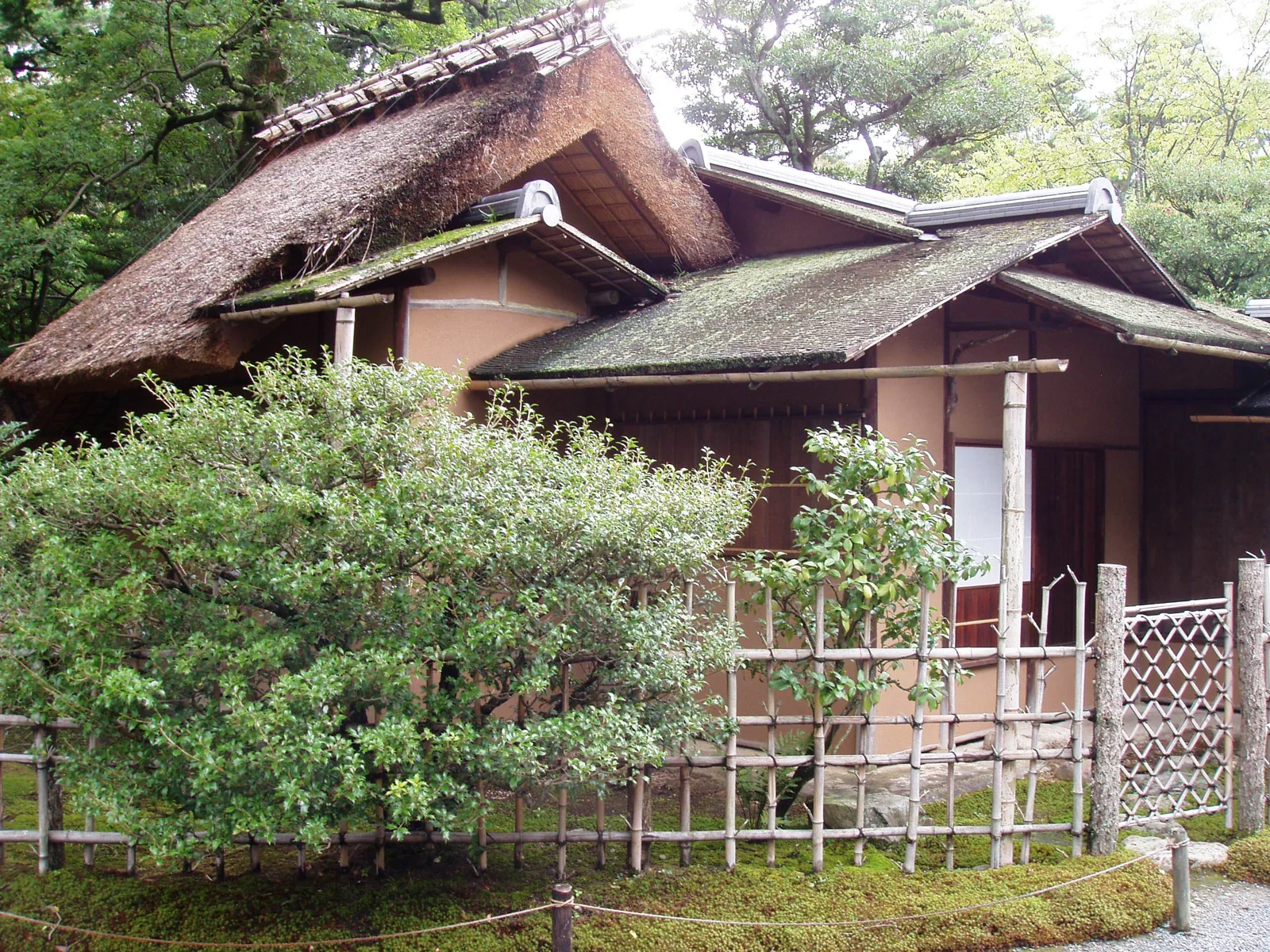
At the North Pond, notice the scale between shoreline trees, bridges and Yushintei. On the western shore, Yushintei was moved from the Konoe residence in 1884. Its rustic tea-house setting uses fences, a tea garden and an outside waiting bench to create a more enclosed space. After the broad pond view, attention narrows to the entrance, fence and tea house. This is an architectural and garden visit; the tour does not include going inside for tea.
Near the South Pond, the pebble beach draws the eye to the water’s edge. Orderly rounded stones form a curving shoreline with bridges and islands. The Agency calls them issho stones and records a tradition that carrying each stone earned one sho of rice; understand this as the naming story. Rather than only seeking a low-angle photo, compare the colors of stone shore, grassy banks and water, and see how the bridge shifts as the group moves.
The current Seikatei at the southern end was rebuilt in 1808 and survives from the Edo-period buildings arranged around the pond. Notice the low roof and relationship between tea house and South Pond; it is a different building from Yushintei. Distinguishing them helps you place later photos at the north or south pond. Photography is allowed, but large professional cameras, tripods and step stools are prohibited. Cross narrow stone bridges securely, photograph from stops staff permit, and do not fall behind or return for a missed shot.
With Sento booked for 13:30: Imperial Palace first, then a lunch break
This example suits companions all aged 18 or above who can walk the garden route continuously and already hold 13:30 Sento permission. Reach Seishomon around 9:30, enter and join the 10:00 Chinese tour, finishing about 10:50. Leave along the public route and that day’s directions. Around 11:15, find somewhere to sit; allow an hour for lunch and rest afterward without adding the park’s far north or south. Reach Sento’s entrance at 13:00, check in from 13:10 and tour from 13:30 to about 14:30.
The gap between lunch and Sento is deliberate. Seishomon and Sento are separate, nonadjacent entrances; after eating you may still need to collect belongings, use the toilet and walk. If a restaurant has a queue, choose only if you can preserve the 13:00 arrival. If the Imperial Palace entrance is especially busy, switch to a shorter independent visit with fewer photos, or omit it and keep the confirmed Sento visit. Do not skip lunch and rush the group just to complete both.
After leaving Sento at 14:30, finish toward Marutamachi Station. For Keihan, head out the park’s east side toward Jingu-Marutamachi instead; choose one return route. Do not add the Imperial Palace’s 14:00 Chinese tour, which overlaps. For autumn park colors, add only a short stretch on the station route. Aim for a transport point or nearby food by about 15:30, leaving time to return to your hotel before evening plans.
With an 11:00 Sento slot, reverse the order: arrive nearby at 10:30, finish around noon, eat lunch, then visit the Imperial Palace independently or join the 14:00 Chinese tour. For the latter, still reach Seishomon early and pass security. Shorten the post-lunch walk for a guided tour, or choose independent visiting if you want a leisurely meal. Choosing the day’s priority once helps more than repeatedly checking the time at both gates.
A half-day without reservations: palace, rest and a southward exit
Without Sento, reach Seishomon around 9:30, choose the 10:00 tour or an independent visit, and leave around 11:00–11:30. Eat and rest near the park’s west side, then walk south through the grounds, identifying the Nakadachiuri and Hamagurigomon areas before leaving toward Marutamachi Station. This combines court architecture and today’s city park in one morning without arriving early for a ticket.
The park’s openness reflects changes across eras. The Environment Ministry explains that the area held many imperial family and court noble residences in the Edo period, was gradually improved after the Meiji move of the capital, and opened as a national garden after the war. Outside the palace walls, identify gates, roads, former residence sites and modern rest areas rather than calling all greenery a palace garden. The outer walk then has its own subject even without Sento.
With children or slower walkers, shorten the southward route by returning directly to Imadegawa Station after the palace. There is no need to walk half the park for an elegant one-way itinerary. If stamina differs, meet at a specific rest house rather than “the palace gate.” If the palace is closed that day, take a short outer-grounds walk and meal, and move the palace half-day to an open date rather than waiting at closed Seishomon.
Choose lunch and the return route separately
Nakadachiuri Rest House is on the park’s west side, north of Nakadachiuri Gate, with a restaurant, souvenirs and free resting space. The National Gardens Association currently lists the rest house and restaurant at 8:00–18:30, restaurant last order at 18:00, and shop at 9:00–16:30, with year-end/New Year closures. It is a possible morning rest stop around an Imperial Palace visit. Sitting down to organize a route need not become a shopping stop every time.
After Sento, Marutamachi is an officially listed walk to the subway, with the Karasuma Line toward Shijo and Kyoto Station. Guests on Keihan can choose Jingu-Marutamachi for Sanjo, Gion-Shijo or Tofukuji. Both require walking; choose for your actual hotel location. If you detour north to a restaurant near Imadegawa, count it as extra walking rather than scheduling a train using the original 15-minute Marutamachi estimate.
Both palace visits cost zero; list transport, lunch and storage separately. For two people, start with actual fares for two, two lunches and any required storage, then fill in costs from the chosen menu. The main costs of free visiting are time, places and walking. There is no need to cross the city from far away merely to save admission, or to add a paid afternoon attraction just because you bought no ticket in the morning.
Wheelchairs, walking sticks and children: keep a route with rest options
The Imperial Palace route is relatively flat and permits wheelchairs; official wheelchair loans are available, but the surface is gravel. Obtaining a chair and pushing it easily for the entire route are different matters. Arrange companion help, reduce stops away from the main route, tell staff your needs at entry and follow available paths. For elevators, start route planning at the subway exit rather than requiring the whole group to match the fastest ordinary walking estimate. The approach to Seishomon also uses energy.
Sento’s roughly 1 km route has narrow stone bridges without handrails, large level changes and stepping stones; the official FAQ directly excludes wheelchairs. If you use a stick, have painful knees or cannot walk continuously for an hour, assess these actual surfaces and describe your needs to the visitor office. Walking 1 km in a flat park does not mean crossing narrow stone bridges at the same pace. If you need to sit whenever necessary or may lose the group’s pace, an independent Imperial Palace visit with rests suits better.
If one adult strongly wants Sento, another can stay with the children in Kyoto Gyoen and agree a meeting point after the tour. There is no waiting area inside Sento for family members without permission; caregivers must not leave children with entrance staff. Plan who carries luggage and a contact phone, and place lunch after the group reunites. If splitting care makes the day stressful, visit the Imperial Palace together instead.
Summer sessions and winter cutoffs differ; reduce walking in rain
Sento normally lists five sessions: 9:30, 11:00, 13:30, 14:30 and 15:30. In July and August, applications generally start with 9:30, 11:00 and 15:30 to avoid extreme heat, with others opened according to demand. For midsummer, check the sessions actually available in the system before arranging lunch and other visits. Even with garden shade, entering the park, finding gates and returning to the station involve outdoor walking. Reduce two visits to one in heat.
Imperial Palace independent admission ends at 16:20 with exit by 17:00 in April–August; at 15:50 with exit by 16:30 in March and September; and at 15:20 with exit by 16:00 in October–February. With a winter 15:30 Sento tour ending around 16:30, you cannot then enter the Imperial Palace. Put it in the morning or earlier afternoon if you want both. Last admission is an entry cutoff, not a suggested start for a full tour.
Sento tours normally run in rain, but the authority may suspend visits when safety cannot be ensured and may announce closures ahead of typhoons. For ordinary light rain, use suitable shoes for wet paths and rain gear that does not obstruct others. With wheelchairs, strollers or companions less steady on stone bridges, remove long outer walks rather than rushing to regain the original schedule. Both principal visits are outdoors. If you need seated shelter, use a genuinely indoor venue or meal for that half-day and reschedule the palace.
Keep the calendar with the permit and work backward from your next train
Both sites generally close Mondays, or the following day when Monday is a holiday, and December 28–January 4. Imperial events can cause additional closures. Anchor Sento plans to the permit and calendar for your date, and check the same date for an independent Imperial Palace visit. Free access to Kyoto Gyoen and people walking there do not establish that Agency facilities are open.
Before a Shinkansen, airport transfer or intercity train on the final day, subtract luggage pickup, travel to the station and platform time from departure before accepting Sento’s last session. With only a morning available, prioritize an authorized early slot or the Imperial Palace alone. If same-day tickets remain only for afternoon, pass on them. Protecting the return avoids spending the latter garden route calculating whether you can catch a train. For wider accommodation and area planning, return to the Kyoto two- and three-day itineraries and replace one area with this half-day.
A few useful answers
Do both Kyoto Imperial Palace and Kyoto Sento Imperial Palace need reservations?
General admission to Kyoto Imperial Palace is free without reservation, through Seishomon. Sento requires an advance application or same-day ticket, and everyone follows a guided tour. Both are in Kyoto Gyoen, but entrances and reception are separate.
When are Sento’s same-day tickets distributed?
Current official rules give about 8:40 on site, first come, first served until full. Usually ten same-day places per session are supplemented by unused advance places. Choose an acceptable time from that day’s published figures. 11:00 is one tour session.
Can infants, children or wheelchair users visit Sento?
Sento requires age 18 or above and does not allow under-18 companions. The current FAQ excludes wheelchair visits. Choose the Imperial Palace and a short park walk instead; palace paths are gravel, so arrange assistance and rests.
Can I visit both on the same day?
Yes. With a confirmed 13:30 Sento place, visit the Imperial Palace in the morning, eat and rest, then reach Sento’s visitor entrance around 13:00. Allow 20–30 minutes between the gates for movement and wayfinding. After about 60 minutes at Sento, return toward Marutamachi or Jingu-Marutamachi.
Will an unobstructed Shishinden view be available after autumn 2026?
Works began October 8, 2026 and are expected to take about nine years, in three phases: protective roof installation, building work, and removal and restoration. Views change with construction. Use current photos on the Agency’s works page and the public route on site.
Official information and references
Sources used in this guide.
- Kyoto Imperial Palace: visiting rules, Chinese tours and luggage limits
- Kyoto Imperial Palace: English visiting rules and interior restrictions
- Imperial Household Agency: seasonal visiting hours
- Kyoto Imperial Palace: access from Imadegawa
- Kyoto Sento Imperial Palace: access from Marutamachi
- Kyoto Sento Imperial Palace: current application guidance
- Kyoto Sento Imperial Palace: official application entry point
- Kyoto Sento Imperial Palace: same-day reception
- Kyoto Sento Imperial Palace: FAQ on lotteries, wheelchairs, luggage and audio
- Imperial Household Agency: reception 20 minutes before permit tours
- Imperial Household Agency: age requirements and on-site application locations
- Kyoto Sento Imperial Palace: official visitor route map
- Imperial Household Agency: three Shishinden work phases and latest photos
- Kyoto Imperial Palace: October 8, 2026 works announcement
- Kyoto Imperial Palace: Kogosho and Oikeniwa architecture
- Kyoto Imperial Palace: Oikeniwa Garden
- Kyoto Sento Imperial Palace: Yushintei
- Kyoto Sento Imperial Palace: Seikatei
- Kyoto Sento Imperial Palace: South Pond pebble shore and issho-stone tradition
- Environment Ministry: Kyoto Gyoen area, history and free access
- National Gardens Association: current rest-house information, including Nakadachiuri