Visit Kyoto Imperial Palace without booking, or secure a Sento place: 08:40 same-day applications, the age-18 minimum, ID and luggage rules, 2026 Shishinden works, and a half-day route from Imadegawa to Marutamachi.
- Region & Focus
- KyotoAttractions
- Reading Scope
- 28 min read · 15 chapters · 5 Q&As
- Official Verification
- 21 official sources checkedUpdated 29 October 2026
- Key Topics
- ItinerariesBookingKyoto, Osaka & Kansai
Chapter Route Map (tap any stop)
- Choose a version everyone can join before deciding to visit both
- Shishinden work has begun: focus on the other buildings and gardens
- Approach Seishomon from Imadegawa; Marutamachi makes Sento easier to locate
- After entering Seishomon, leave about an hour for the public route
- For a Chinese tour, meet at the visitors’ rest house
- Online Sento applications: opening three months ahead, processed by day
- No online places: apply at Sento on the day from about 08:40
- Sento check-in and belongings: ID for everyone, luggage stored first
- An hour at Sento: changing views of the North Pond, South Pond and tea houses
- With Sento booked at 13:30: Imperial Palace first, lunch and some spare time
- A half-day with no booking: Imperial Palace, rest and a southern station exit
- Choose lunch and the return route separately: west, south and east serve different needs
- Wheelchairs, walking sticks and children: keep a route with places to stop
- Summer sessions and winter deadlines differ; reduce walking first in rain
- Keep the calendar beside the permit, and work backwards from your next departure
- Quick Q&A
You can decide on the day to enter Kyoto Imperial Palace, but need a visit place for Kyoto Sento Imperial Palace. Both are in Kyoto Gyoen, with separate entrances and visiting arrangements. For a first visit, choose a flexible half-day at the Imperial Palace and park. With a Sento booking, fix its roughly one-hour garden tour first, then fit lunch and the other visit around it. Long-term work on Shishinden began in October 2026, another factor if a complete architectural view is your aim.
Choose a version everyone can join before deciding to visit both
If anyone is under 18, choose Kyoto Imperial Palace and Kyoto Gyoen directly. Sento has a minimum age of 18, and babies cannot accompany visitors either. Wheelchair users should also focus on the Imperial Palace: Sento’s current FAQ explicitly says wheelchair visits are not possible. With only half a day and no wish to queue early, the Imperial Palace’s self-guided visit is more suitable. Add Sento only for adults willing to gather at a fixed time and walk over stepping stones and stone bridges. These conditions narrow the choice faster than selecting the prettiest photograph.
Gyoen is the surrounding national garden. The Imperial Palace and Sento, managed by the Imperial Household Agency, each have walls, entrances and calendars. The Ministry of the Environment gives Gyoen as about 700 m east to west and 1,300 m north to south, with free access. Passing through a park gate still leaves a walk to the actual visitor entrance. Save the Agency’s Kyoto office application counter, the Imperial Palace’s Seishomon Gate and Sento’s visitor entrance as three separate map locations. Reaching Kyoto Gyoen is not the same as checking in.
With four or five hours, two adults can visit one palace, sit down for lunch and walk out. Visiting both needs an earlier start and less walking around the perimeter. Leave Katsura and Shugakuin Imperial Villas for another half-day: Katsura is in Nishikyo Ward and Shugakuin in Sakyo Ward, each with its own on-site reception. Katsura currently accepts junior-high-school age and above; Sento and Shugakuin require age 18 or above. “Imperial garden” does not give them one shared age rule.
| Item | Kyoto Imperial Palace | Kyoto Sento Imperial Palace |
|---|---|---|
| Access | General opening needs no application | Advance application or same-day numbered ticket |
| Visit format | Self-guided, with free staff tours also offered | Everyone joins the Japanese tour; Chinese audio devices available |
| Age | No Sento-style age-18 rule for general opening | Age 18 and above; young children cannot accompany visitors |
| Surface | Gravel; wheelchair visits and loans available | About 1 km, stone bridges, stepping stones and level changes; no wheelchair visits |
| Transport starting point | Imadegawa Station | Marutamachi Station or Furitsu Idai Byoin-mae |
| Cost | Free | Free |
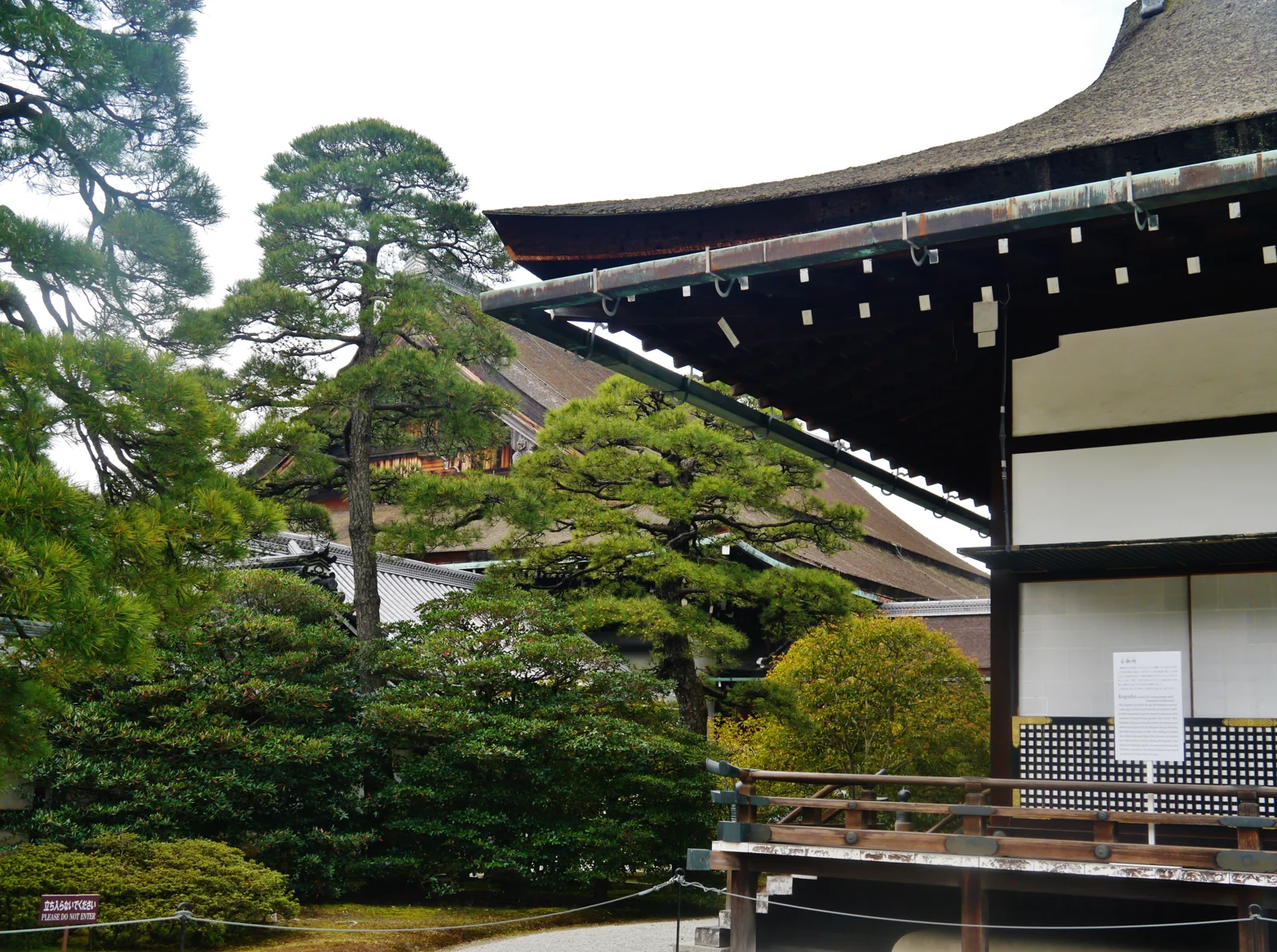
Visit Kyoto Imperial Palace without booking, or secure a Sento place: 08:40 same-day applications, the age-18 minimum, ID and luggage rules, 2026 Shishinden works, and a half-day route from Imadegawa to Marutamachi.
Shishinden work has begun: focus on the other buildings and gardens
The Imperial Household Agency announces that Shishinden work began on 8 October 2026, with about nine years planned in three phases. Phase one installs a protective roof in fiscal years 2026–2029; phase two works on the building in fiscal years 2029–2032; phase three removes protective structures and reinstates the site in fiscal years 2033–2034. These are Japanese fiscal years: fiscal 2034 runs to the end of March 2035. Read the announced phases when planning rather than converting a work year into a specific full-reopening day.
The protective roof is a temporary covering outside the building, shielding the cypress-bark roof from weather during replacement. The project also includes repairs to walls and hinged shutters, seismic and fire-protection equipment, and work on the 18 steps and some terraces around installation. If you want an unobstructed full view of Shishinden, pre-work travel photographs no longer set a suitable expectation. The October 2026 autumn special opening has ended; its displays should not be treated as regular daily features.
Other building exteriors and gardens still provide subjects for an Imperial Palace visit. To understand court spaces, look at how entry, waiting, ceremonial and everyday areas are separated. For water scenery, leave time for visible parts of Oikeniwa and the inner garden. See current photographs and progress on the Agency’s Shishinden works page. Its 8 October 2026 entry describes construction-vehicle routes at Imadegawaguchi and Kenshunmon. Visitors still follow Seishomon admission instructions rather than seeking a shortcut through a works entrance.
An animation of the construction method released by the Imperial Household Agency in October 2026, showing how the temporary protective roof is moved over Shishinden.
Approach Seishomon from Imadegawa; Marutamachi makes Sento easier to locate
The official Imperial Palace access page lists about five minutes on foot from Imadegawa on the Karasuma underground line, or seven from the Karasuma Imadegawa city bus stop. These are official arrival references. Add time for leaving the platform, finding the exit, reaching Seishomon and security checks. For the 10:00 Chinese tour, aim to be near Seishomon around 09:30. From Kyoto Station, take the Karasuma Line north rather than first travelling to Kawaramachi for a bus. Guests in Shijo-Karasuma can start on the same underground line.
Sento’s official access information gives about 15 minutes from Marutamachi Station and ten from the Furitsu Idai Byoin-mae bus stop. The Agency’s visit system also lists about 20 minutes from Keihan Jingu-Marutamachi. Underground Marutamachi and Keihan Jingu-Marutamachi are different places: use the operator and full station name when meeting friends. After entering Gyoen from the Marutamachi side, head to the visitor entrance on the north side of the official route map, beside the visitors’ rest house. The “Kyoto Sento Imperial Palace Main Gate” marked on the west is separate from visitor admission. Seishomon is elsewhere; taking a Sento permit there leaves another walk.
For a first visit to both, save an area map and both entrance names. Google Maps attraction pins often lie at the centre of a site. Use the Agency’s access map and on-site signs to identify the side you need. This itinerary allows about 20–30 minutes between Seishomon and Sento’s visitor entrance for walking and finding the way, including going around walls, stopping to check directions and sorting belongings.
After entering Seishomon, leave about an hour for the public route
General admission to Kyoto Imperial Palace is free and needs no advance application. Enter through Seishomon for a hand-luggage inspection. Suitcases and large bags cannot enter, so leave them at your accommodation or suitable storage on arrival or check-out day. The palace has no visitor car or bicycle parking; public transport followed by walking is more direct. Sort your backpack before the gate and make items easy to remove for inspection to reduce the whole group’s pause at entry.
General visits cover building exteriors and garden views on the designated route; building interiors are closed. Starting with the carriage porch and Shodaibu-no-ma waiting rooms helps explain how people of different ranks arrived and waited before you see ceremonial spaces and the Kogosho area. Kogosho combines shinden-zukuri and shoin-zukuri architecture and served ceremonies and audiences. Its purpose and form differ from Shishinden. Compare roof outlines, building orientation and garden relationships without needing to memorise every building name.
Oikeniwa lies east of Kogosho, centred on a pond. The pebble shore, bridges, islands and trees create layers across the same water. From the public viewing position, study the bends of the shoreline, then the bridges and buildings in the view, rather than looking only for a reflection photograph. “Strolling garden” describes its design; visitors still follow the designated route. Ropes and staff determine access to bridges, grass and platforms, rather than the garden description implying freedom to walk around the pond.
Agency staff tours take about 50 minutes; self-guided visitors can vary their stops. For a first visit, this guide suggests 60–90 minutes including signs, photographs and the rest house. With Sento booked in the afternoon, make the Imperial Palace the morning’s only formal visit and have lunch afterwards. Leaving Nijo Castle out of the morning gives room for security queues or route changes caused by works.
For a Chinese tour, meet at the visitors’ rest house
Current staff-led Chinese and English tours at the Imperial Palace run at 10:00 and 14:00; Japanese tours at 09:30, 10:30, 13:30 and 14:30. They are free and need no booking. Gather at the visitors’ rest house before the start. The stated time begins the tour after gathering there; it is not the time to reach the outside of Gyoen. Both guided and self-guided visits work; the difference is whether you want to follow the full explanation at its pace.
If you mainly want gardens or companions need more rest, a self-guided visit with the Agency’s audio-guide app is more flexible. It offers Japanese, English, Chinese, Korean, French and Spanish. Download it at your hotel and use headphones on site. A 10:00 Chinese tour followed by a permitted 11:00 Sento visit is too tight: the first takes about 50 minutes, the second opens reception 20 minutes beforehand, and you still have to leave and walk between them. Choose one or move Sento to an afternoon slot for which you have permission.
Sento works differently. Everyone follows a Japanese-language guided tour; self-guided visits are not available. Overseas visitors can borrow a free multilingual audio device, including Chinese. A 10:00 Chinese staff tour at the Imperial Palace does not mean Sento has a Chinese group at that time too. Make sure companions understand this before applying rather than discovering the difference in explanation style on arrival.
Online Sento applications: opening three months ahead, processed by day
Use the official link on the Kyoto Sento Imperial Palace visit page to enter the application system. Select the correct site, date, session and number of guests. Online applications open at 05:00 on the first day three months before the visit month and close at 23:59 three days before the visit, all in Japan time. The Agency’s example is a 10 November visit: applications open at 05:00 on 1 August and close at 23:59 on 7 November. Convert Japan Standard Time (JST) to your local time zone when setting a reminder.
One application covers at most four people, including the representative. The representative must apply personally and provide every visitor’s name, age and nationality, plus their own phone number and the email address required online. Gather companions’ details first and match names to the documents they will show. A group of five or more cannot assume one application covers everyone. Separate applications may receive different sessions, so guests wanting to visit together should get their respective results before booking other fixed activities.
The official FAQ says applications are processed by day. If applications on one day exceed remaining capacity, a draw is held among that day’s applicants; clicking fastest at dawn does not confer priority. If four spaces show and the number does not immediately fall after you submit for four, that does not reserve four places. Results are notified by email, with about three working days given as a guide. Before formal permission arrives, avoid binding lunch or other paid activities to an immediately adjacent time.
After permission, save the date, start time, representative and companion list, and the permit’s required presentation method. Have every adult bring their own identification. For overseas visitors, a passport most easily matches the nationality and name information. Deal with date or companion changes through the permission notice and original application channel. Cancel places you know you will not use early too, since capacity is limited.
No online places: apply at Sento on the day from about 08:40
Sento has separate same-day capacity, even when online places are full. Current instructions list a normal 50 people daily, ten per session, with unused advance places added. Actual session numbers appear on the same-day application page. Numbered tickets are issued first come, first served on site at Sento from about 08:40, ending when full. Each specifies a visit time. For this route, make Sento your first morning destination, secure a time and then plan the Imperial Palace.
The official update at 08:30 on 28 October 2026 listed 12, 29, 20, 35 and 34 places across the five sessions, showing how unused advance places affect same-day capacity. Those numbers belong only to that day’s notice. Read your own visit date’s page when planning another date. Do not reuse old information saying reception starts at 11:00. That is now one of the tour sessions; the current ticket-issue time is about 08:40.
Read the ticket time before deciding your next move. With 09:30, wait nearby, use the toilet and sort your belongings rather than walking to the Imperial Palace first. With 13:30, visit the Imperial Palace in the morning and return to Sento after lunch. If only 15:30 remains, make it your afternoon’s sole fixed activity and go to the station or a meal afterwards. Agree acceptable times and the latest departure from Kyoto before companions obtain tickets for different sessions and discuss meeting afterwards.
If on-site places are full, take the Imperial Palace public route, lunch and a short Gyoen walk instead. There is no need to cross the city seeking another villa’s places, especially with a long-distance train later. Sento also accepts postal applications and applications at the Kyoto office counter. The counter can accept applications until the preceding day, subject to capacity and office hours, and may not issue permission that day. For short overseas stays, advance online applications or on-site same-day tickets make time costs easier to judge.
Sento check-in and belongings: ID for everyone, luggage stored first
The Agency’s visit notice says reception for permitted palace and villa visits opens 20 minutes before the start; late arrivals may be unable to join. This guide suggests reaching the vicinity of Sento’s visitor entrance 30 minutes early, allowing time in order to find the entrance, check ID, use the toilet and borrow an audio device. For 13:30, target arrival at 13:00.
Everyone visiting Sento must show identification that identifies them personally; the representative also needs ID for on-site applications. Keep the permit or numbered ticket and passports separately accessible, rather than all buried at the bottom of a backpack. After the representative obtains places, companions still have their own identity checks. Group paperwork does not replace any individual’s ID. People without permission cannot enter to wait. If a family with children splits up, arrange the carer and meeting place outside the facility or in the park beforehand.
Sento’s visitors’ rest house has lockers and an accessible multipurpose toilet. Suitcases, other large bags and dangerous items cannot enter. Store suitcases before entry and travel light for the visit. The FAQ also prohibits bringing in food and drink. Finish lunch, coffee and snacks before entry, and arrange belongings as reception instructs. Seishomon separately specifies hand-luggage inspections at the Imperial Palace. Follow each site’s reception and belongings rules; entering the Palace in the morning does not make the afternoon a direct continuation through the same grounds.
An hour at Sento: changing views of the North Pond, South Pond and tea houses
The Sento visit takes about 60 minutes over about 1 km of paths, led by staff; building interiors are closed. The official route map shows the northern visitor entrance, visitors’ rest house, Kyoto Omiya Palace’s carriage porch and Otsunegoten, the North and South ponds, and tea houses together. Seeing Omiya Palace buildings is part of this route. It is not a separate indoor attraction for which you can freely buy another ticket.
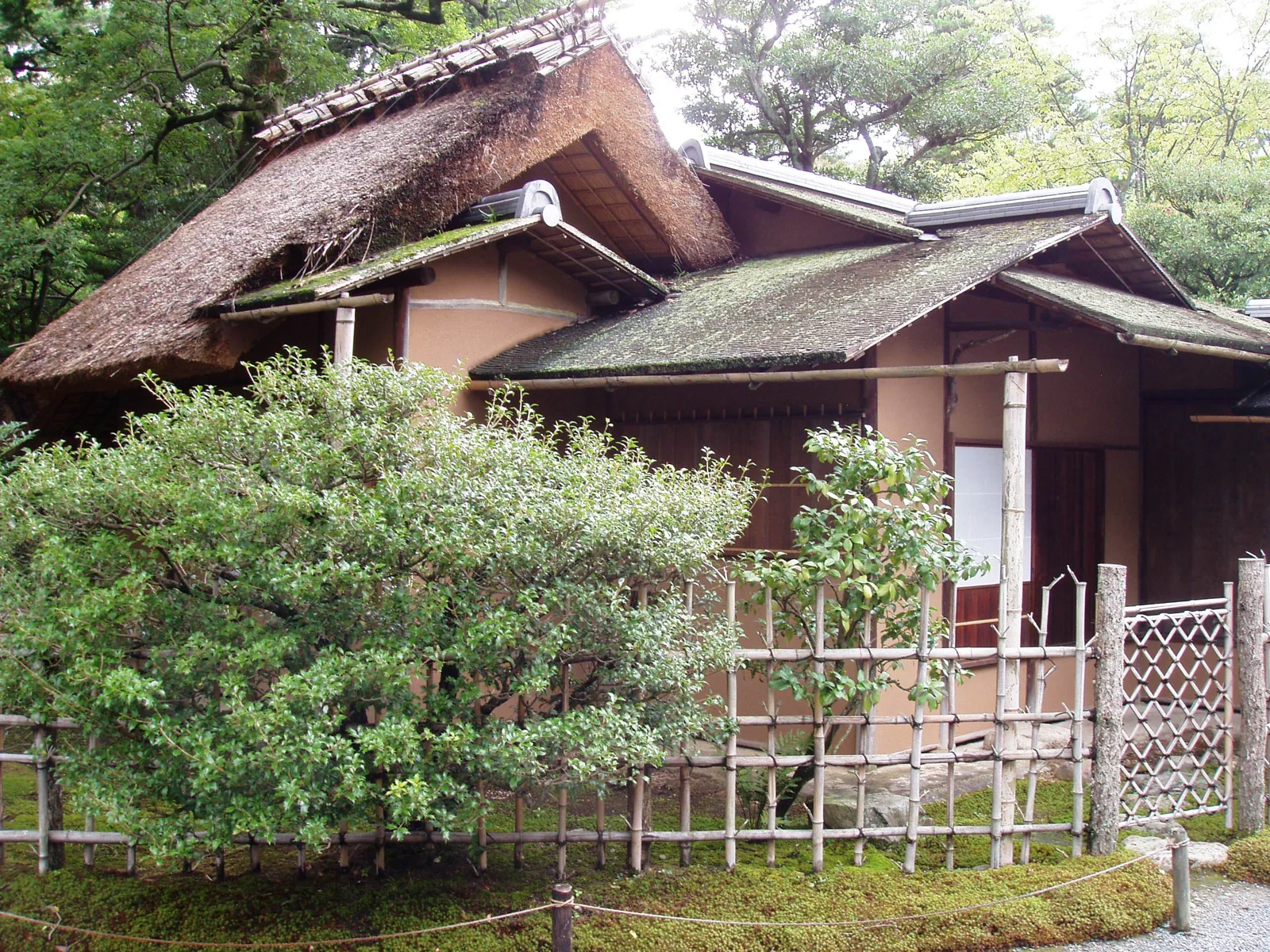
At the North Pond, notice the scale of waterside trees, bridges and Yushintei. On the west bank, Yushintei was moved from the Konoe residence in 1884. This rustic tea-house space combines an enclosure, tea garden and outer waiting bench. Compared with the broad water outside, the view contracts into a small area, shifting attention from the whole pond to the entrance, fences and tea house. This is an architectural and garden visit, without an included indoor tea service.
At the South Pond, the pebble beach draws your eye towards the water. Neatly rounded stones form a curved bank with bridges and islands. The Agency calls them issho stones and records the tradition that one sho of rice was paid to transport each stone. Read this as the story behind the name. Rather than pursuing only low-angle photographs, compare the colours of stone bank, grassy bank and water, and watch how the bridge’s position changes as the group moves.
The present Seikatei at the southern end was rebuilt in 1808 and is a surviving building from the Edo-period arrangement around the pond. Look at its low roof and the relationship between the pavilion and South Pond. It is distinct from Yushintei. Identifying them separately helps you recall which pond appears in your photographs. Photography is allowed, but large professional cameras, tripods and stepladders are prohibited. Walk securely over narrow stone bridges, photograph where staff allow a pause and do not fall behind to chase a picture.
With Sento booked at 13:30: Imperial Palace first, lunch and some spare time
This example suits companions all aged 18 or above who can walk the garden route continuously and already hold permission for Sento at 13:30. Reach Seishomon around 09:30, complete admission and join the 10:00 Chinese tour. It ends around 10:50; leave by the public route and that day’s directions. Around 11:15, find somewhere to sit, allow an hour for lunch and rest afterwards. Do not add Gyoen’s far northern or southern end simply to fill time. Reach Sento’s visitor entrance at 13:00, follow reception from 13:10 and tour from 13:30 to about 14:30.
The schedule deliberately leaves room between lunch and Sento. Seishomon and Sento are not neighbouring versions of the same gate. After eating, you may still need to collect items, use the toilet and walk. If restaurants involve queues, choose one that preserves the 13:00 arrival. If the Imperial Palace entrance is especially busy, switch to self-guided viewing with fewer photographs or remove that visit altogether and protect your Sento place. Do not skip lunch and rush after the group just to complete both.
After leaving Sento at 14:30, finish towards underground Marutamachi, or go via Gyoen’s east side to Jingu-Marutamachi for Keihan. Choose one return route. Do not add the Imperial Palace’s 14:00 Chinese tour: the times already overlap. For autumn colour in Gyoen, add only a short stretch on the way to your station. Reach transport or nearby food options by about 15:30, leaving time to return to your accommodation before evening plans.
With an 11:00 Sento slot, reverse the order: arrive nearby at 10:30, finish around noon, have lunch and visit the Imperial Palace independently or join its 14:00 Chinese tour. For the latter, still reach Seishomon early for security. Shorten the post-lunch walk if joining the tour; choose self-guided viewing if you want a slow meal. Selecting the day’s priority once is easier than repeatedly watching the clock at both entrances.
A half-day with no booking: Imperial Palace, rest and a southern station exit
Without Sento, reach Seishomon around 09:30, choose the 10:00 tour or self-guided viewing and leave around 11:00–11:30. Eat and rest near Gyoen’s west side, then walk south through the park, locating the Nakatachiuri and Hamagurigomon area before leaving towards Marutamachi Station. This avoids arriving early for a numbered ticket while bringing court architecture and today’s city park into one morning.
Gyoen’s open space reflects changes across different eras. The Ministry of the Environment explains that many imperial-family and court-noble residences stood here in the Edo period. After the capital moved in the Meiji period, the area was gradually developed, then opened after the war as a national garden. Outside the palace walls, identify gates, roads, former residence sites and present rest areas rather than calling all the green space an “imperial garden”. The outer walk then has its own content even without Sento.
With children or slower walkers, shorten the southern walk to a direct return to Imadegawa after leaving. You need not cross half of Gyoen just to create a neat one-way route. With different energy levels, meet at a particular rest house rather than “the palace gate”. If the Imperial Palace is closed that day, make a short outer-park walk and meal the brief alternative. Move the palace half-day to an open date rather than waiting at closed Seishomon.
Choose lunch and the return route separately: west, south and east serve different needs
Nakatachiuri Rest House is on Gyoen’s west side, north of Nakatachiuri Gate, with a restaurant, souvenirs and free resting space. It suits a stop before or after the Imperial Palace. The National Parks Foundation currently lists the rest house and restaurant at 08:00–18:30, restaurant last orders at 18:00, and shop at 09:00–16:30, with year-end/New Year closures. Morning palace visitors can consider it for a break before noon. Sitting down to sort routes need not turn every stop into shopping.
After Sento, underground Marutamachi is an officially listed walking option, with the Karasuma Line towards Shijo and Kyoto Station. Guests along Keihan can choose Jingu-Marutamachi towards Sanjo, Gion-Shijo or Tofukuji. Both stations involve walking: choose by your actual accommodation. If a restaurant north of the site draws you back towards Imadegawa, count that as extra walking rather than still working backwards from the original 15-minute Marutamachi reference.
Admission today costs zero at both palaces; list transport, lunch and storage separately. For two people, start with “actual fares for two + two lunches + storage if needed”, then fill in costs from the chosen menus. Time, places and walking are the main costs of a free visit. There is no need to cross town from far away just to save an admission charge, or add a paid afternoon attraction to make the day feel complete because you bought no morning ticket.
Wheelchairs, walking sticks and children: keep a route with places to stop
The Imperial Palace route is relatively flat and permits wheelchairs; official wheelchair loans are also available. The surface is gravel, however. Obtaining a wheelchair and having an easy surface throughout are different things. Arrange companion help, limit detours from the main route and tell staff your needs on entry, then follow usable paths. If you need lifts, choose the route from the underground exit rather than requiring everyone to match the fastest standard walking time. The station-to-Seishomon stretch also uses energy.
Sento’s roughly 1 km includes narrow stone bridges without handrails, large changes in level and stepping stones. Its official FAQ directly says wheelchairs cannot visit. If you use a stick, have painful knees or cannot walk continuously for an hour, judge these actual surfaces first and describe your needs to the visitor office. Walking a kilometre across a flat park does not establish the same pace on narrow stone bridges. If you need to sit whenever required or struggle to keep the group’s pace, self-guided Imperial Palace viewing with rests is more suitable.
If an adult in a family strongly wants Sento, another adult can stay with children in Gyoen and meet after the tour. Sento has no waiting place inside for unpermitted relatives; carers should not leave children with entrance staff. When splitting up, decide who carries luggage and who has a contact phone. Lunch works better after regrouping. If sharing care would make the whole day tense, visit the Imperial Palace together instead.
Summer sessions and winter deadlines differ; reduce walking first in rain
Sento normally lists five sessions: 09:30, 11:00, 13:30, 14:30 and 15:30. To avoid extreme heat in July and August, it generally first accepts applications for 09:30, 11:00 and 15:30, opening others according to demand. For midsummer, check sessions actually available in the current system before arranging lunch and other visits. Even with shade in the garden, entry, gate-finding and the walk back to the station remain outdoors. Reduce two sites to one in hot weather.
Imperial Palace self-guided entry ends seasonally: April–August at 16:20, with exit by 17:00; March and September at 15:50, exit by 16:30; October–February at 15:20, exit by 16:00. With Sento at 15:30 in winter, you cannot enter the Imperial Palace after finishing around 16:30. To see both, put the Palace in the morning or earlier afternoon. Last entry is a gate deadline, not a suggested time to start a complete tour.
Sento normally operates in rain, but the authority can suspend visits when safety cannot be ensured; approaching typhoons may also bring advance notices. For ordinary light rain, use shoes suited to wet paths and rainwear that does not obstruct others. With wheelchairs, pushchairs or companions unsteady on stone bridges, remove long outer walks rather than rushing to recover the minute-by-minute plan. Both main visits are outdoors. If you need a seated activity sheltered from rain, replace the half-day with a truly indoor venue or meal and reschedule the palace date.
Keep the calendar beside the permit, and work backwards from your next departure
Both sites generally close on Mondays, or the next day when Monday is a public holiday, and from 28 December to 4 January. Imperial events can cause additional closures. Anchor Sento plans to the permit and calendar for that date; check the same date for a self-guided Imperial Palace visit too. Gyoen’s surrounding park is freely accessible, so people walking there do not establish that the Agency’s facilities are open.
On the last day before Shinkansen, airport or intercity travel, subtract luggage collection, station travel and platform margin from departure time before accepting Sento’s final session. With only a morning available, prioritise a permitted early session or a single Imperial Palace visit. Decline same-day tickets if only afternoon remains. Protecting the return journey stops you calculating train chances throughout the garden’s second half. For broader Kyoto accommodation and area planning, return to the two- and three-day Kyoto itineraries and substitute this half-day for one area.
A few useful answers
Do both Kyoto Imperial Palace and Sento require booking?
General Imperial Palace admission is free without booking, through Seishomon. Sento requires an advance application or same-day numbered ticket, and everyone joins a tour. Both are in Gyoen but have separate entrances and reception.
When are Sento same-day tickets issued?
Current official rules give about 08:40 on site at Sento, first come, first served until full. Normally each session has ten same-day places plus unused advance capacity. Choose acceptable times from that day’s published figures. 11:00 is one tour session.
Can babies, children or wheelchair users visit Sento?
Sento is for age 18 and above; under-18 companions cannot enter. The current FAQ says wheelchair visits are not possible. Choose self-guided Imperial Palace viewing and a short Gyoen walk instead. The Palace has gravel surfaces, so arrange help and rest.
Can I visit both on the same day?
Yes. With Sento permission for 13:30, visit the Imperial Palace in the morning, rest over lunch and reach the Sento visitor entrance area at 13:00. Allow another 20–30 minutes between the gates in your schedule. After about 60 minutes at Sento, return towards Marutamachi or Jingu-Marutamachi.
Can I still see all of Shishinden after autumn 2026?
About nine years of work began on 8 October 2026, in three phases: installing a protective roof, work on the building, and removing the covering and reinstating the site. Views change with the works. Plan around current photographs on the Agency’s works page and the on-site public route.
Official information and references
Sources used in this guide.
- Kyoto Imperial Palace: visit rules, Chinese tours and luggage restrictions
- Kyoto Imperial Palace: English visit rules and closed interiors
- Imperial Household Agency: seasonal opening hours
- Kyoto Imperial Palace: access from Imadegawa
- Kyoto Sento Imperial Palace: access from Marutamachi
- Kyoto Sento Imperial Palace: current application instructions
- Kyoto Sento Imperial Palace: official application entry point
- Kyoto Sento Imperial Palace: same-day applications
- Kyoto Sento Imperial Palace: FAQ on draws, wheelchairs, luggage and audio
- Imperial Household Agency: reception 20 minutes before permitted visits
- Imperial Household Agency: site age limits and on-site application locations
- Kyoto Sento Imperial Palace: official visitor route map
- Imperial Household Agency: three Shishinden phases and latest photographs
- Kyoto Imperial Palace: works announcement of 8 October 2026
- Kyoto Imperial Palace: Kogosho and Oikeniwa architecture
- Kyoto Imperial Palace: Oikeniwa
- Kyoto Sento Imperial Palace: Yushintei
- Kyoto Sento Imperial Palace: Seikatei
- Kyoto Sento Imperial Palace: South Pond pebble beach and issho-stone tradition
- Ministry of the Environment: Kyoto Gyoen extent, history and free access
- National Parks Foundation: current Nakatachiuri and other rest-house information