Adult observation deck tickets for Kyoto Tower cost ¥1,000, with doors opening at 10:00 and last entry at 20:30. How to walk from JR Kyoto Station Central Exit or Porta, time sunset views, use SANDO floors, store luggage, and enter the 2027 New Year's Day lottery.
- Region & Focus
- KyotoAttractions
- Reading Scope
- 24 min read · 11 chapters · 6 Q&As
- Official Verification
- 28 official sources checkedUpdated 22 November 2026
- Key Topics
- First tripItinerariesBooking
Chapter Route Map (tap any stop)
- Tickets, prices and how long to allow
- Leaving Kyoto Station northwards: underground access opens at 11:00
- Go up in daylight to spot temples and hills
- Timing sunset and photographing the illuminated tower
- Gozan no Okuribi and 2027 New Year's Day sunrise tickets
- Dining, souvenir shopping and wagashi workshops in SANDO
- Using Kyoto Station itself as a wet-weather viewpoint
- Storing luggage on arrival and timing departure pick-ups
- Picking which side of the station to stay on
- Visiting with pushchairs or wheelchairs: build in buffer for lifts and lunch
- Pairing Kyoto Tower with nearby temples or Umekoji for a half-day
- Quick Q&A
Kyoto Tower stands directly across from the Central Exit of JR Kyoto Station. For ¥1,000, adults can ride up to the 100-metre observation deck to pick out To-ji's five-storey pagoda and Kiyomizu-dera by day, or stay until the city lights come on. Standard opening hours run until 21:00, with last admission at 20:30. If you want photographs of the tower itself, stay on the north side of Kyoto Station first; if you arrive with suitcases, drop them at the station before crossing the road.
Tickets, prices and how long to allow
Officially named Nidec Kyoto Tower, the landmark reaches 131 metres to the tip of its spire, with the paid 360-degree observation deck sitting 100 metres above ground. Same-day tickets are sold at the observation counter on the ground floor (1F) of Kyoto Tower Building by cash, card, or supported mobile payment. From there, take the main building lift to 11F and change to the dedicated observation lift. Because building 11F is also labelled Observation Zone 1F, keep "change lifts at 11F" in mind if the two numbering systems look confusing.
From 1 October 2026, general admission is ¥1,000 for adults, ¥800 for high school students, ¥700 for junior high and primary school pupils, ¥300 for preschool children aged 3 and older, and free for children under 3. A family of two adults, one primary school child, and one five-year-old pays ¥3,000 in total. Holders of qualifying Japanese disability certificates pay ¥500 for adults, high school, junior high, and primary pupils on presentation before purchase, with the same rate extending to one accompanying carer and ¥300 for children aged 3 and over. General group discounts require at least 20 visitors on the same ticket category paid in a single transaction, with adult and child counts tallied separately.
Individual visitors can buy tickets on the spot or purchase e-tickets beforehand via links on the official website. Boarding for the lifts is managed in order of arrival, so pre-purchased ticket holders still join the entry queue. The operator estimates most guests spend 15 to 30 minutes walking the circular deck, though you should budget extra time for buying tickets, changing lifts, and heading back down. Allow around an hour if you plan to wait for twilight, take turns at the telescopes with children, or trace the landmarks towards Higashiyama and To-ji at an unhurried pace.
If your schedule is flexible, weekday mornings offer crisp visibility of the surrounding hills and temple roofs without the sunset queue. When you have timed evening entertainment elsewhere, anchor that booking first and fit the ascent around it. General admission has no time limit once you are inside, though closing is at 21:00 with last entry at 20:30 and no re-entry once you leave. Staying on the deck until dark lets you capture both sunset and night views before heading downstairs for dinner.
Families heading to Umekoji Park can weigh up combination tickets, which only save money if you intend to visit both venues. For instance, the Kyoto Tower and Kyoto Aquarium combo is listed at ¥3,240 for adults versus ¥3,600 bought separately; it remains valid for one month from issue, covers a single entry to each site, and cannot be refunded or exchanged. When clear weather is a deciding factor, buying separate tickets on the day gives you far more flexibility. Guests staying at Kyoto Tower Hotel receive complimentary deck admission, so you only need to check the standalone aquarium price.
| Ticket type | Fare | Eligibility |
|---|---|---|
| Adult | ¥1,000 | Adults and university students |
| High school student | ¥800 | High school students |
| Junior high & primary pupil | ¥700 | Junior high and primary school pupils |
| Young child | ¥300 | Preschool children aged 3 and over |
| Under 3 | Free | Children under 3 years old |
Adult observation deck tickets for Kyoto Tower cost ¥1,000, with doors opening at 10:00 and last entry at 20:30. How to walk from JR Kyoto Station Central Exit or Porta, time sunset views, use SANDO floors, store luggage, and enter the 2027 New Year's Day lottery.
Leaving Kyoto Station northwards: underground access opens at 11:00
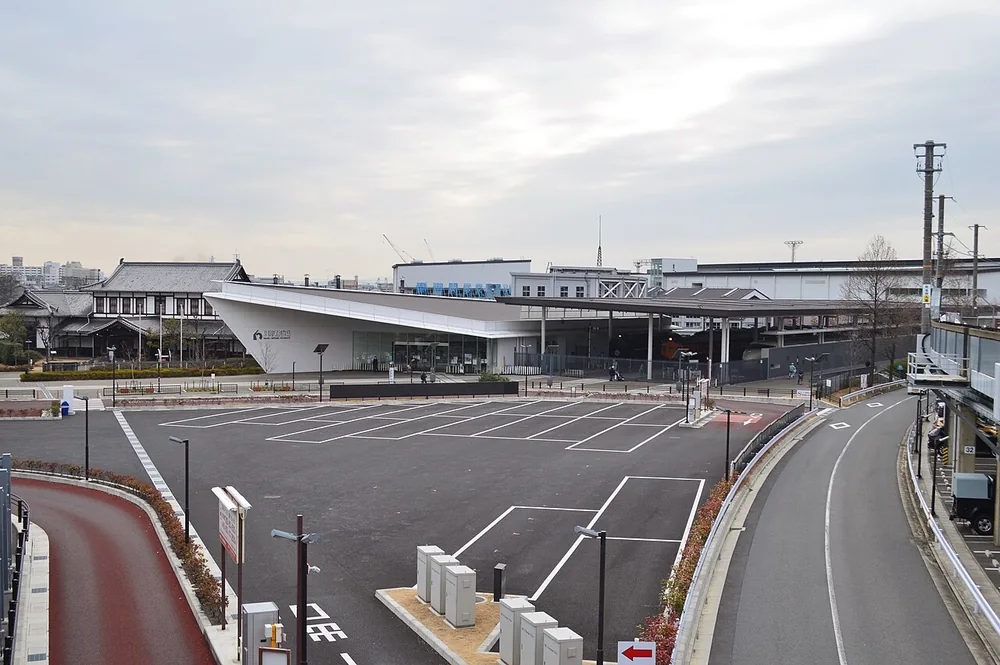
Alighting from JR conventional lines, follow signs for the Central Exit on the Karasuma-dori side. Stepping outside brings the white spire straight into view across the bus terminal; use the pedestrian crossings over Shiokoji-dori to reach the building on the north side of the road. If a navigation app drops you at the Hachijo Exit on the station's south side, double back via the North-South Free Passage towards Isetan and Central Exit signs before crossing. When meeting friends, specify either "outside the JR Central Gate" or "by the 1F ticket desk inside Kyoto Tower Building", as the station forecourt separates the two.
Arriving on the Tokaido Shinkansen, leave through the Shinkansen Central Gate, turn right past the Kintetsu platforms, and ride the escalator up to the North-South Free Passage. Keep Isetan on your left, walk to the north end, and take the escalator down to street level facing the tower. Passengers from Kintetsu Kyoto Station use the same north-south concourse. For your return journey, retrace that route following "Shinkansen" signs; because the West Gate and JR conventional Central Gate serve different platform layouts, noting down your train number and platform ahead of time saves following the wrong crowd.
On the Kyoto Municipal Subway Karasuma Line, or when it rains, walk into the East Zone of the Porta underground mall and look for the tower link near the subway ticket barriers. That underground passage connects straight into Kyoto Tower Building, but only opens from 11:00 to 23:00. Because the observation deck opens at 10:00, anyone aiming for the first hour must cross at street level. Wheelchair users should enter via the West Entrance: after crossing from the station, walk left along the building facade and turn right at the corner, where the doorway sits on your right. In busy spells, arrange to meet companions just beside the West Entrance so the lift lobby stays clear.
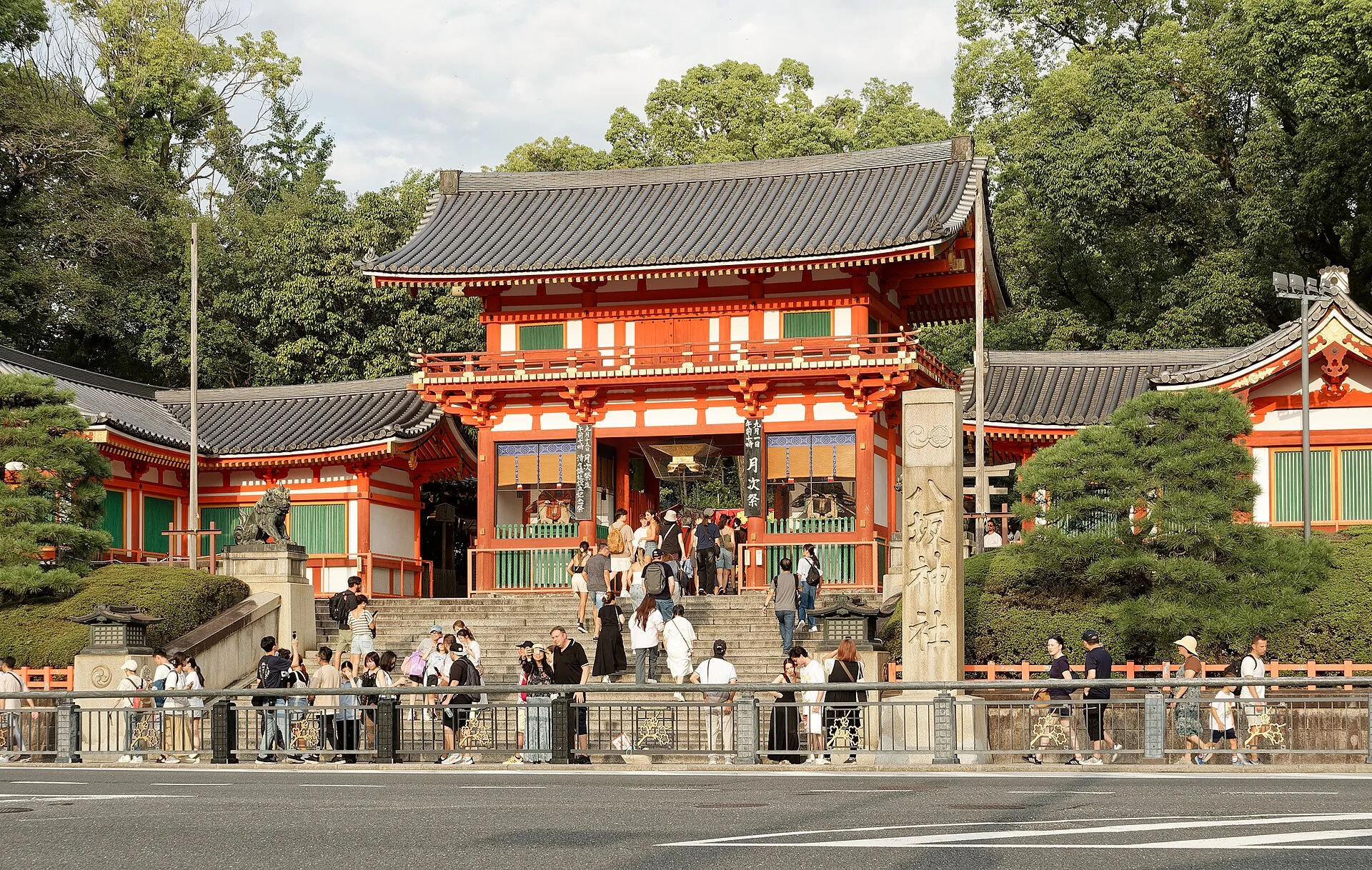
If Gion is your next stop, walk back to the bus terminal on the north side of Kyoto Station. On weekends and public holidays, the EX100 Sightseeing Limited Express leaves from stand D1 and stops at Gion for Yasaka Shrine. Stand D1 also handles the EX101 for Gojo-zaka, so check the route number on the front display before boarding. Sightseeing Limited Express buses board by the front door and take IC cards or cash at ¥500 for adults and ¥250 for children, with the Kyoto City Subway & Bus 1-Day Pass also accepted. Standard city bus 206 also links Kyoto Station and Gion within the flat-fare zone at ¥230 for adults and ¥120 for children. If you plan to ascend the tower on your way back from Higashiyama, check the cloud cover from the bus terminal before crossing the street.
Go up in daylight to spot temples and hills
Once on the observation deck, look straight down for Kyoto Station first, then scan southwest for To-ji. Having one landmark directly beneath you and the other anchored by its unmistakable five-storey pagoda makes orientation easy. Standing roughly 55 metres tall above low-rise neighbourhoods, To-ji's pagoda gives a reliable sense of scale before you trace surrounding streets and temple walls. To the east along the lower slopes, look for Kiyomizu-dera: the wooden Kiyomizu Stage appears tiny from this distance, so narrow down the direction using the window markers and then zoom in with the free telescopes on 5F.
If you walked up Kiyomizu-zaka the day before, looking down reveals how rows of tiled roofs step neatly up the hillside. First-time visitors can also do the reverse: locate the foot of Higashiyama from the tower on day one, then watch how Shijo-dori runs straight back towards the city centre when you step out of Yasaka Shrine's West Romon Gate the next day. Looking south, the railway lines split out from beneath Kyoto Station's roof; children often enjoy spotting which track carries the next train more than memorising temple names.
Opened in 1964, the slender white shaft was styled after a lighthouse. Crossing the station square, it is easy to focus only on the top pod, whereas tilting your head up from beneath the building reveals how the cylinder rises out of its boxy base. Stepping back to Karasuma Koji Square on the 4th floor of Kyoto Station puts enough distance between you and the tower to frame the spire, observation pod, and street junction in one shot. Keen photographers can scout ground angles first and simply wait for better light later.
Up close, look for the seams wrapping the steel shell. Designed in collaboration with architect Mamoru Yamada, the cylindrical steel plates form a load-bearing monocoque structure tapering towards the top and resting on the roof of the original nine-storey building. That engineering also explains why the first lift only climbs inside the commercial block before you transfer at 11F into the tower shaft itself. Architecture fans can contrast the exposed steel trusses inside Kyoto Station's concourse with the smooth white skin across the road—two sharply different structures sharing one junction.
Natural daylight is essential for picking out rooftops, temple compounds, and mountain ridgelines. If you intend to visit one of those temples straight after descending, factor in afternoon closing gates, especially during shorter winter days. Stick to daytime for mapping exercises or crisp city panoramas; to gauge the distance from the valley floor to the foothills, follow one visible avenue from window to window before bringing your eye back to Kyoto Station.
Timing sunset and photographing the illuminated tower
The west-facing windows catch evening twilight, though the western hills and cloud deck decide precisely when the sun drops out of sight. National Astronomical Observatory of Japan tables for Kyoto list sunset at 19:14 on 21 June 2027 and 16:49 on 21 December 2027. To combine late afternoon clarity with night lights, schedule an early dinner or eat around 20:00 at Kyoto Station in June, whereas in December you should wrap up afternoon sightseeing early enough to be back outside the station by 16:00.
On weekends, plan to reach the ground-floor ticket counter 30 to 60 minutes before sunset. That buffer covers the lift transfer, finding a clear window pane, and locating landmarks without squeezing dinner or shopping plans around the station. If you only care about the city lights after dark, arrive later once the sunset phone-camera crowd thins out. Keep earlier departure times in mind if you still have a train to catch or bags to collect; arriving right before last entry at 20:30 leaves enough time for a single lap, with little margin for photography or browsing downstairs.
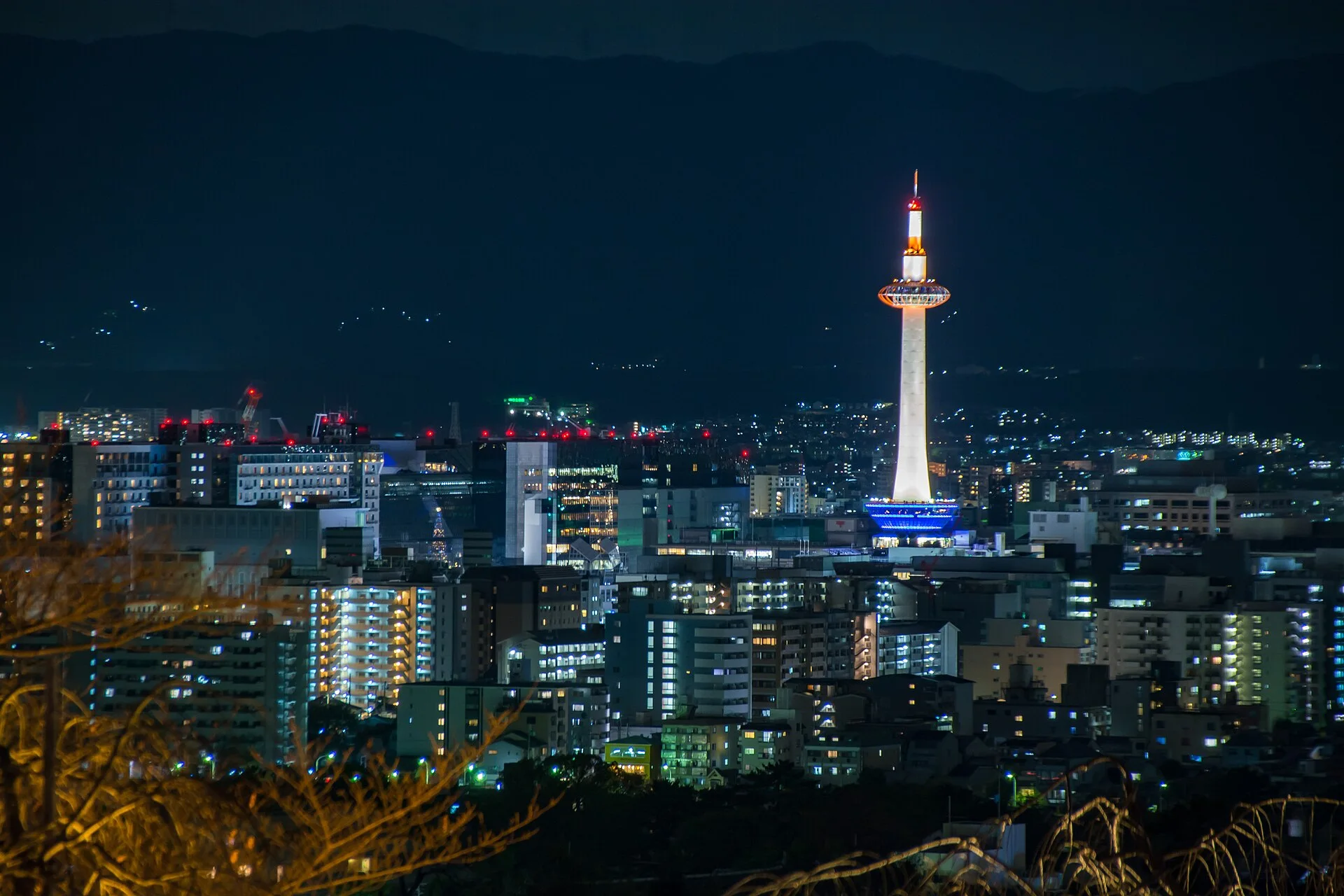
Anyone shooting the tower from street level is looking for its exterior lighting, which normally runs from sunset until 24:00—long after the deck itself shuts. The official website publishes daily colour schedules and special illuminations, along with monthly lights-off slots on the 16th supporting Kyoto City's "DO YOU KYOTO?" campaign. Should the spire look dark when you reach the station, grab dinner or photograph the glass concourse first, then return to a north-facing terrace or the forecourt once the scheduled lighting resumes.
For exterior shots, start outside the JR Central Exit or on Karasuma Koji Square. Keep cameras tucked away while waiting at pedestrian crossings, and step clear of walkways once across. Up inside the deck after dark, interior lights, bright clothing, and phone screens reflect heavily in the glass. Switch off your flash, hold the lens close to the pane, cup your hand to block side glare, and shift angle slightly until bright reflections disappear. Taking one frame while the sky still holds blue and another after lights come on gives the hillsides and street grid completely different depth.
If you prefer to take in the night skyline with a drink, head to Sky Lounge KUU on the 3rd floor of the Observation Zone. It opens at 17:00 on weekdays and 14:00 on weekends and public holidays, running until 23:00 with last orders at 22:30. Take the observation lift from 11F—lounge guests ride that segment free of charge and pay from the bar menu. Because it closes later than the main deck, you can finish the observation loop first and unwind over a drink afterwards; if you are only visiting the lounge, tell the staff on 11F directly.
Gozan no Okuribi and 2027 New Year's Day sunrise tickets
On 16 August each year, Kyoto marks Gozan no Okuribi, and Kyoto Tower shortens general admission hours to 10:00–18:30, with last entry at 18:00. Any evening viewing on the deck requires a dedicated event ticket for that year's programme. Families hoping to watch the bonfires should decide early whether to enter for special deck access or stake out a street-level vantage point, then work backwards to plan daytime stops. Simply dropping into SANDO towards dusk with a standard ticket in mind may leave only enough time for a quick drink.
For New Year's Day 2027, the early-morning First Ascent (Gantan Hatsunobori) admits 150 guests, with check-in at 06:30 at the 1F West Entrance and standing viewing on 4F and 5F from 06:30 to 07:30. Event pricing is ¥4,000 for junior high students and older, ¥2,100 for primary school pupils, and ¥300 for children aged 3 and above. Lottery entries run from 23 November 2026 at 00:00 JST to 16 December 2026 at 23:59 JST, with winners notified by email by 17:00 JST on 18 December 2026. Each application covers up to six people, requires credit card details upfront, charges automatically upon selection, and cannot be altered or refunded. Regular hours and fares resume at 10:00.
If you are travelling with older relatives for New Year's sunrise, check the walking time from your hotel lobby to the West Entrance before entering the lottery. Because viewing is standing-room only in the early chill, keep warm layers within reach while waiting. For a more relaxed start to the day, visit a shrine for Kyoto hatsumode first, have breakfast, and head up to the deck in daylight instead—regular tickets, combo passes, and hotel guest vouchers all work normally once daytime hours begin.
Dining, souvenir shopping and wagashi workshops in SANDO
KYOTO TOWER SANDO, occupying the lower floors beneath the tower, keeps separate hours from the observation deck, with the B1F food hall normally open 11:00 to 23:00. It works well when a group wants different meals: Kyo no Odashi-meshi Katsuo serves dashi rice bowls and ochazuke, Gyoza-dokoro Sukemasa specialises in pan-fried dumplings, and Torisei focuses on chicken dishes. Claim a table in the shared seating area together before ordering individually. If dinner is meant to be your breather, descend from the tower first; when a stall's queue looks long, picking a neighbour lets everyone stay at the same table.
The 1F souvenir floor generally opens 10:00 to 21:00, bringing together Shogoin Yatsuhashi Sohonten, an Ujitawara Seichajo tea shop, and spice specialist Ochanokosaisai. Keep snacks for the train apart from boxed gifts going home. Check best-before dates on fresh nama-yatsuhashi boxes, and consider picking one filled and one unfilled small box to sample both. Travellers catching a Shinkansen and then a flight do best with compact tea bags or small spice tins that slip straight into cabin luggage, saving you from repacking a large suitcase at the station.
Up on 2F, the hands-on workshop floor normally runs 10:00 to 19:00. Shichijo Kanshundo lists wagashi sweet-making sessions at 10:00, 13:00, 15:00, and 17:00 with same-day sign-up when spaces remain, whereas Daiki Suisan's nigiri sushi class requires advance booking. If you want to combine craft time with sunset views, check session times against daylight first: in winter, a 17:00 class finishes after dark, so 13:00 or 15:00 slots pair far better with twilight, while summer lets you browse 1F or rest in Porta between crafting and heading up late.
When you have a fixed evening train and specific gifts to pick up, buy everything on 1F before going up so you can head straight back to the station afterwards. Finishing night views near 21:00 still leaves time for B1F dining, provided you verify each kitchen's last-order cut-off, though souvenir shopping shifts to open concourse outlets inside Kyoto Station. Picking a shop marked clearly on the station map beats wandering back through underground arcades on a tight connection.
Using Kyoto Station itself as a wet-weather viewpoint
On rainy days you can skip crossing the street with umbrellas altogether. After 11:00, walk from Porta straight into the lower tower floors for food or shopping, and only buy a deck ticket if you can still make out the ridge behind Higashiyama. Heavy rain streaks the windows and blurs distant views, while low cloud can swallow the upper spire in mist. If you simply want a close look at the tower, frame it from sheltered spots along Kyoto Station's north facade before eating inside the complex, and use the station itself as a dry meeting hub instead of hopping onto another bus.
Karasuma Koji Square on 4F of the Kyoto Station Building opens 07:20 to 23:00 and looks straight north towards the tower. Higher up, the 185-metre Skyway on 10F opens 10:00 to 22:00, bridging the east and west wings with sweeping views over the northern street grid. On the west side, the Grand Stairway climbs from Muromachi Koji Square, while 4F offers a clear angle on the station's steel roof trusses. Visiting these free vantage points first lets you judge visibility towards the hills before paying to go higher.
Crossing the Skyway to the east side leads down to 7F East Square, where a LEGO scale model of Kyoto Station is displayed, typically open 10:00 to 23:00. Families can inspect the model and then walk back north to compare it with the real station and tower outside. It is a handy way for children to stretch their legs after a long train ride, while anyone wanting to photograph the Grand Stairway illuminations can loop back along the same side to meet later.
Note that the Kyoto Station Building rooftop decks—Oozora Plaza and Happy Terrace—closed on 27 November 2026 for construction of the new cross-track concourse and free passage, and are scheduled to remain shut until around winter 2031. Throughout 2027, head to the Skyway or Karasuma Koji Square for north-facing views instead. Shinkansen passengers with a short rainy layover should stick to 4F; walking the Skyway takes extra lift and stair time, and you still need the North-South Free Passage to reach your ticket barriers.
In bitter winter wind, keep street-level photos of the lit spire brief—just a few minutes outside—before dropping down into Porta for dinner or watching the Grand Stairway light show indoors. Anyone feeling the cold can wait inside while photographers nip out to the square and rejoin them steps away. Because the observation deck itself is fully enclosed, going up in late afternoon and stepping back down after dark also cuts out standing around on windy corners.
Storing luggage on arrival and timing departure pick-ups
Kyoto Tower's observation entrance offers no storage for large bags or pushchairs, so drop suitcases at your hotel or inside Kyoto Station first. Take the escalator down to B1F just outside the JR Central Gate to find Crosta Kyoto, where temporary left-luggage storage costs ¥1,000 per item per day with same-day pick-up between 08:00 and 20:00. Weekends and public holidays can fill up, so travellers with smaller cases should check station coin lockers first and reserve the staffed counter for oversized bags.
For same-day luggage delivery to partner hotels within Kyoto City, drop bags at the station counter by 14:00 at ¥1,500 per item for delivery from 17:00. Travellers staying their first night in Gion and heading straight to Higashiyama can tour the tower and continue to Yasaka Shrine without doubling back for suitcases. Anyone booked into a minpaku, self-check-in flat, or non-partner property should stick to station storage and factor the retrieval detour into their evening route. Keep claim slips and ID in a daypack, and pull out train tickets, medication, and warm layers before handing bags over.
With two spare hours after an afternoon arrival, drop luggage first, cross from the JR Central Exit to climb the tower, grab a bite in SANDO, and ride the subway up to Shijo. If your train runs late, check how much dinner window remains before deciding whether to postpone the ascent to the next morning. Arrivals from Osaka staying near the station can snap the tower as they walk past, leave bags at their hotel, and go up cleanly right at opening time the next day.
Sending bags from a partner hotel back to the station requires dropping them at your hotel reception by 10:00 on departure day for the same ¥1,500 per-item fee, with collection at B1F Crosta between 14:00 and 20:00. Guests staying around Shijo with an afternoon Shinkansen can fit in one final round of city sightseeing before visiting the tower and claiming luggage. If you are booked on a midday train, bring your cases to station lockers or straight onto the train, as same-day delivery does not arrive until the afternoon.
For an 18:30 Shinkansen departure, a comfortable rhythm is reaching the tower's 1F desk around 16:00 and walking back to the station by 17:00—leaving ample margin to collect bags, pick up bento for the train, and reach your platform. On a roughly 20:30 departure with bags held at Crosta, bring your tower visit forward so you clear pick-up well before the 20:00 cut-off. If you find yourself racing either the last lift or a restaurant queue, prioritise retrieving luggage first; taking a quick photo of the nearby exit and floor sign when you lock a coin locker also saves guesswork later.
Picking which side of the station to stay on
Kyoto Tower Hotel sits inside the same building as the observation deck, making it effortless to pop back to your room between sightseeing and dinner. For stays checking in from 1 October 2026 onwards, each guest—including co-sleeping young children—receives one observation deck ticket at check-in per stay, valid from check-in until check-out day, except for the New Year's Day sunrise and Gozan no Okuribi special events. Standard check-in is 15:00 and check-out is 11:00; early morning arrivals can schedule their climb for the afternoon or save it for departure morning, factoring the included ticket value into room-rate comparisons.
If you prefer keeping street-level errands separate from station concourses, Kyoto Century Hotel sits roughly two minutes east of the Central Exit via the bus and taxi forecourt crossing. That side makes early morning bus departures straightforward and keeps SANDO within easy reach for dinner. Travellers leaving mainly by Shinkansen or Kintetsu should compare Miyako City Kintetsu Kyoto Station, which connects directly along the Kintetsu and Shinkansen concourses—trading tower-front night views for flat, effortless suitcase rolling, so weigh any price gap against how often you will haul luggage across the station.
For multi-night stays centred on Nishiki Market, Shijo-Kawaramachi, and Gion, basing yourself in Shijo-Karasuma or Kawaramachi makes more sense. Shijo-Karasuma sits directly on the Karasuma Subway Line to Kyoto Station, while Kawaramachi puts evening walks along the Kamogawa River at your doorstep; you can save Kyoto Tower for arrival or departure day and carry souvenirs straight to your hotel instead of commuting back to the station every night. That said, if one person in your group wants an early tower ascent while another catches a Kintetsu train, staying by the station lets you split up smoothly and reunite outside a chosen ticket gate after check-out.
Visiting with pushchairs or wheelchairs: build in buffer for lifts and lunch
Wheelchair users enter via the building's West Entrance, take the lift up to 11F, and transfer via a dedicated wheelchair platform lift rated up to 180 kg. A lift connects the 4F and 5F observation levels, though there is no wheelchair-accessible toilet inside the observation deck itself—ask staff at the West Entrance or ticket counter before going up. Heavier powered wheelchairs need the combined weight of user and chair checked against the 180 kg limit.
There is one shared Western-style sit-down toilet on 5F of the observation deck, which can queue at busy hours, so take children to station facilities before crossing the road. When managing a pushchair loaded with shopping bags, consolidate essentials into a single daypack beforehand rather than juggling loose handles during lift transfers. Up on 5F, start by helping younger children spot trains below while others take their time scanning the skyline; if one window is crowded, move to the opposite face first and circle back when a telescope frees up.
When two families travel together, agree on a meeting corner on B1F of SANDO before deciding who wants to go up. Children eager for a snack or grandparents preferring less standing can stay below among the shops while the rest ride up and rejoin them for lunch. Ordering early around 11:00 on weekdays leaves generous breathing room between getting seated, finishing food, and heading back to the station—particularly handy if you are catching a train to Umekoji for the afternoon.
Pairing Kyoto Tower with nearby temples or Umekoji for a half-day
To build an easy half-day on foot from the station front, walk roughly seven minutes north up Karasuma-dori to Higashi Hongan-ji, open 05:50 to 17:30 from March to October and 06:20 to 16:30 from November to February. Early risers can explore the Goeido-mon Gate and temple courtyard before returning to buy tower tickets at opening, while afternoon visitors can tour the grounds first and stay on the deck for sunset. On overcast days, the covered corridors make a welcome stroll; bring slip-on shoes, as you remove footwear when stepping inside the halls.
In fine weather, continue to Higashi Hongan-ji's detached Shosei-en Garden, which closes at 16:00 (last entry 15:30) in winter and 17:00 (last entry 16:30) from March to October. Enter via the West Gate with a garden maintenance donation starting from ¥700 for adults, from ¥300 for junior high and high school students, and free for primary school age and younger. Paths run outdoors with water permitted but no food inside, making a calm garden-and-temple loop before dinner under the tower—or split them into separate trips if timings clash.
Another strong half-day pairing towards Umekoji is the Kyoto Railway Museum, reached via one stop on the JR Sagano Line to Umekoji-Kyotonishi Station. Standard hours are 10:00 to 17:00 with last admission at 16:30, closed Wednesdays (except public and school holidays) and from 30 December 2026 to 1 January 2027. Doing the museum first and returning to Kyoto Tower later works well; the tower lists an adult museum combo ticket at ¥2,250, valid one month for one entry each. Note that single same-day adult museum admission rises to ¥1,900 from 1 March 2027, so compare prices against your exact travel dates from March onwards.
If you already have evening plans starting at Yasaka Shrine followed by dinner in Gion, move Kyoto Tower to the next morning before departure. Conversely, an open evening ahead of an early train suits climbing the tower first before returning to pack. And if you only have one train transfer at Kyoto Station, snap the spire from the north concourse, pick up station bento, and head straight to your platform.
A few useful answers
How much are Kyoto Tower tickets?
General admission is ¥1,000 for adults, ¥800 for high school students, ¥700 for junior high and primary school pupils, ¥300 for preschool children aged 3 and over, and free for under-3s. Tickets are sold on the day at the 1F ticket counter inside Kyoto Tower Building.
Do you need to book Kyoto Tower in advance?
Individual visitors can buy tickets on arrival or purchase e-tickets in advance via the official website. Boarding for the observation lifts operates on a first-come, first-served basis. The 2027 New Year's Day sunrise viewing requires a separate online lottery ticket.
What is the best time to go up for night views?
To catch both the surrounding mountain ridges and the evening lights, aim to arrive 30 to 60 minutes before sunset. Dusk falls around 17:00 in winter and sunset is roughly 19:15 around the summer solstice. If you are out late, the tower exterior usually stays lit until 24:00 even after the observation deck closes.
Which Kyoto Station exit is closest to Kyoto Tower?
Leave JR conventional lines via the Central Exit (Karasuma Exit) and cross Shiokoji-dori past the bus terminal. In wet weather, head through the East Zone of the Porta underground shopping mall near the subway ticket gates; the underground corridor to the tower opens from 11:00 to 23:00.
Do you need a tower ticket just to visit KYOTO TOWER SANDO?
No ticket is needed to eat, shop, or join wagashi workshops on the lower SANDO floors; admission only applies to the observation deck. Typical hours are 11:00 to 23:00 for B1F dining, 10:00 to 21:00 for 1F souvenirs, and 10:00 to 19:00 for 2F workshops, though individual shop and last-order times vary.
Where can you leave luggage near Kyoto Tower?
There is no storage for large suitcases or pushchairs at the observation entrance. Use Crosta Kyoto on B1F outside the JR Central Gate, open 08:00 to 20:00 at ¥1,000 per item per day, or standard station coin lockers.
Official information and references
Sources used in this guide.
- Kyoto Tower Official: Opening Hours, Tickets & Combo Passes
- Kyoto Tower Official: October 2026 Observation Deck Fare Revision Notice
- Kyoto Tower Official: Access from Kyoto Station, Porta & West Entrance
- Kyoto Tower Official: Observation Deck FAQ, Wheelchair Access & Photography Rules
- Kyoto Tower Official: Landmarks & Free Telescopes
- Kyoto Tower Official: Floor Guide
- Kyoto Tower Official: Tower Design & Height
- Kyoto Tower Official: Daily Tower Illumination Schedule
- Kyoto Tower Official: 2027 New Year's Day First Ascent Lottery
- National Astronomical Observatory of Japan: Kyoto Sunrise & Sunset Times, June 2027
- National Astronomical Observatory of Japan: Kyoto Sunrise & Sunset Times, December 2027
- KYOTO TOWER SANDO: Floor & Shop Hours
- Kyoto Station Building: Plazas & Skyway Opening Hours
- Kyoto Station Building: Closure of Oozora Plaza Roof Deck
- Kyoto City Transport Bureau: Sightseeing Limited Express Bus Stops & Routes
- Kyoto City Transport Bureau: Kyoto Station to Higashiyama Route 206 & Sightseeing Limited Express
- Crosta Kyoto Official: Luggage Storage & Hotel Delivery
- Kyoto Tower Hotel: Complimentary Observation Deck Tickets for Guests
- Kyoto Century Hotel: Walking Route from Kyoto Station Central Exit
- Miyako City Kintetsu Kyoto Station: Rail & Hotel Access
- Higashi Hongan-ji: Opening Hours & Access
- Higashi Hongan-ji: Shosei-en Garden Hours, Entrance & Maintenance Donation
- Kyoto Railway Museum: Visitor Guide & 2027 Fare Link
- Kyoto Railway Museum: Access from Umekoji-Kyotonishi Station
- Kyoto Railway Museum: March 2027 Admission Price Revision
- Kyoto Tower Hotel: Sky Lounge KUU Hours & Lift Access
- Kyoto Tower Hotel: Check-in, Check-out & Access Guide
- Kyoto City Transport Bureau: Standard City Bus Flat-Fare Zone