Walk Hanamikoji from Gion-Shijo Station, using Shijo-dori to orient yourself between Tatsumi-bashi, the teahouse quarter and Kennin-ji. Covers private-street photography rules, Gion Corner winter shows, and 2027 Miyako Odori dates and fares.
- Region & Focus
- KyotoNeighbourhoods and shopping
- Reading Scope
- 19 min read · 11 chapters · 6 Q&As
- Official Verification
- 33 official sources checkedUpdated 22 November 2026
- Key Topics
- First tripNeighbourhoodsItineraries
Chapter Route Map (tap any stop)
- Start at Shijo-dori to Separate Shirakawa, the Teahouse Quarter and Yasaka Shrine
- Keihan, Hankyu or City Bus: Choose by Your Starting Point
- Start Teahouse Machiya Viewing at Ichiriki-tei, Then Contrast Shirakawa's Facades
- Stay on Public Streets and Follow District Rules for Private Lanes and Geiko
- How the Kagai Works: Ochaya, Okiya and the Stage
- Fitting an Evening Gion Corner Show into Your Walk
- Miyako Odori in April 2027: How Tea Tickets Dictate Your Arrival Time
- Balancing Kennin-ji Temple and Yasaka Shrine
- Adapting Your Route via Shijo-dori for Crowds, Rain or After Dark
- Should You Stay by the Eastern-Bank Teahouses or West of the Kamo River?
- Linking Cherry Blossoms, Gion Matsuri and Autumn Foliage
- Quick Q&A
On a first visit to Gion Hanamikoji, walk south from Ichiriki-tei at the Shijo-dori corner to Kennin-ji to see the teahouse machiya lining the stone-paved street. If you have an hour to spare, start north of Shijo-dori at Gion Shirakawa and Tatsumi-bashi first. Yasaka Shrine stands at the eastern end of Shijo-dori; return to Shijo-dori and head east for the shrine or Maruyama Park. Hanamikoji's main street is open to walkers—keep to the stone-paved edges through the teahouse quarter and stay on public roads whenever you see private-lane no-entry signs. For maiko performances, book Gion Corner directly, or choose Gion Kobu's Miyako Odori in April 2027.
Start at Shijo-dori to Separate Shirakawa, the Teahouse Quarter and Yasaka Shrine
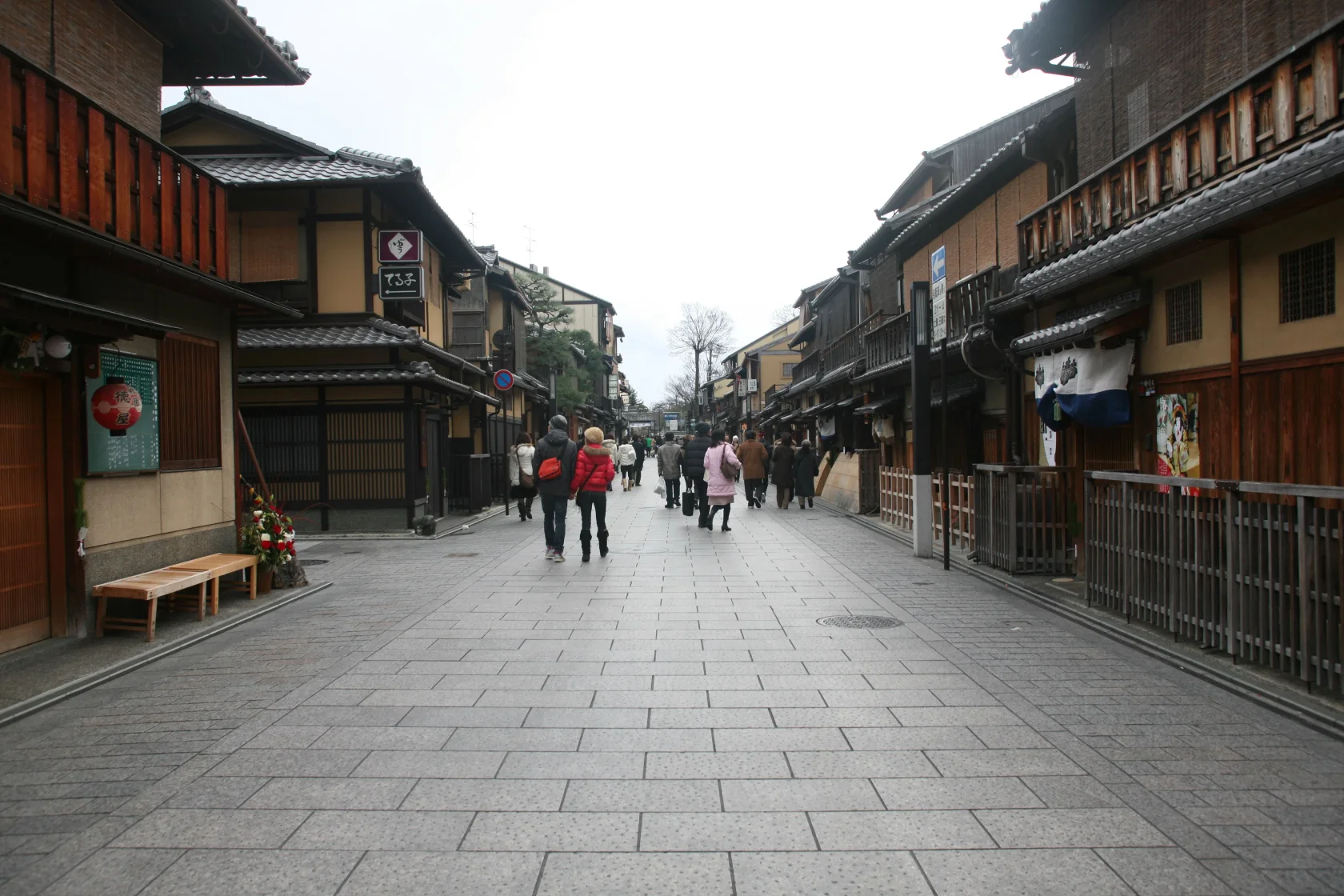
Hanamikoji (Hanamikoji-dori) runs roughly north–south through Gion, intersected across the middle by Shijo-dori. On maps, "Hanamikoji" usually refers to the stone-paved stretch south of Shijo-dori, with Ichiriki-tei (shortened to "Ichiriki" in official district guides) on the corner serving as an unmistakable landmark. Heading south from here takes you past teahouses (ochaya) and restaurants, then past signs for Gion Kobu Kaburenjo Theatre, before reaching Kennin-ji's North Gate. To photograph the classic machiya streetscape, save "Shijo Hanamikoji" and "Kennin-ji North Gate" on your phone to establish your walking axis.
Gion Shirakawa lies north of Shijo-dori. From Kawabata-dori along the eastern bank of the Kamo River, head north and follow Shirakawa-minami-dori towards Tatsumi-bashi (listed as Tatsumi Bridge in the Kyoto City Travel Guide), right beside Tatsumi Daimyojin Shrine. The key landmarks here are the canal, the bridge and the riverside teahouse facades. To link up with the southern stretch, walk back to Shijo-dori along public streets from the Tatsumi-bashi area and cross at the traffic lights. Using Shirakawa, Shijo-dori and Ichiriki-tei as your three orientation points keeps you from losing your bearings even when zoomed deep into narrow lanes on a phone map.
Yasaka Shrine's West Romon Gate stands at the eastern end of Shijo-dori where it meets Higashioji-dori. Simply follow Shijo-dori east from the Hanamikoji corner towards the vermilion gate. To add Maruyama Park, continue straight behind the shrine; Chion-in sits just north of the park. Although Hanamikoji, Yasaka Shrine and Kennin-ji are all within easy walking distance of one another, combining them in a single morning requires watching opening times. Walk Shirakawa and Hanamikoji early, then arrive at Kennin-ji when it opens at 10:00. If the shrine and park are your priority, follow Shijo-dori east and save Kennin-ji for another Higashiyama walk.
For the stone-paved main street alone, allow 20 to 35 minutes from Gion-Shijo Station to Kennin-ji's North Gate, including pauses to take in the streetscape. Adding Shirakawa, Tatsumi-bashi and the walk back to Shijo-dori via public streets brings the estimate to 45 to 70 minutes. Treat these as planning buffers: waiting at crossings, browsing shops or holding timed theatre tickets will alter your pace. If you only have half an hour before a show, walk straight along Shijo-dori to Kaburenjo Theatre and leave the bridge and shrine for another gap in your schedule.
| Destination | Route from Shijo-dori | Key Landmarks |
|---|---|---|
| Gion Shirakawa & Tatsumi-bashi | Head towards the Kamo River's eastern bank, then turn onto Shirakawa-minami-dori via Kawabata-dori | Shirakawa canal, Tatsumi-bashi, Tatsumi Daimyojin Shrine |
| Hanamikoji Stone-Paved Street | Turn south at the Shijo Hanamikoji intersection | Ichiriki-tei, teahouse wooden lattices, Kaburenjo Theatre signs |
| Kennin-ji Temple | Walk south along Hanamikoji to the North Gate | North Gate, temple admission signs |
| Yasaka Shrine & Maruyama Park | Follow Shijo-dori east to Higashioji-dori | Yasaka Shrine West Romon Gate |
Walk Hanamikoji from Gion-Shijo Station, using Shijo-dori to orient yourself between Tatsumi-bashi, the teahouse quarter and Kennin-ji. Covers private-street photography rules, Gion Corner winter shows, and 2027 Miyako Odori dates and fares.
Keihan, Hankyu or City Bus: Choose by Your Starting Point
Take the Keihan Line to Gion-Shijo Station and use Exit 6 for Minamiza Theatre. The street-level exit sits on the eastern bank of the Kamo River; walk east along Shijo-dori until you spot Ichiriki-tei, then turn onto the stone-paved street. This rail link works well from Fushimi or elsewhere on the Keihan Line, as well as for travellers making the round trip from Kyoto Station by train: ride the JR Nara Line from Kyoto Station to Tofukuji, then change to a Keihan train bound for Sanjo or Demachiyanagi and alight at Gion-Shijo. Because the transfer at Tofukuji involves two rail operators, tap your IC transit card following the transfer-gate signage.
Arriving from Osaka-Umeda or along the Hankyu Kyoto Line, Exit 1 at Hankyu Kyoto-Kawaramachi Station brings you up near Kiyamachi. From there, walk east along Shijo-dori and cross Shijo Ohashi Bridge to reach Minamiza and Hanamikoji. When arranging to meet friends, specify either "Hankyu Kyoto-Kawaramachi Station" or "Keihan Gion-Shijo Station". The two stations sit on opposite sides of the Kamo River: walking across the bridge is straightforward, but factor in the walk from ticket barriers to street level. If you have a pushchair or need a lift, both Keihan and Hankyu station maps mark step-free routes—meeting at street level on Shijo-dori by the bridgehead is easier than waiting at stair exits.
For fewer transfers from Kyoto Station, head to the Karasuma-side Kyoto Station Bus Terminal and board City Bus 206 bound for Higashiyama from Bay D2, getting off at "Gion". That stop serves Yasaka Shrine and Higashioji-dori; if you want Hanamikoji first, walk west along Shijo-dori towards the Kamo River. To go straight to Kennin-ji, get off at "Higashiyama Yasui" as listed by the temple and follow public roads—the temple notes it is about a 5-minute walk. When you have a fixed theatre curtain time and bus queues are growing long, switch to the JR-to-Keihan route via Tofukuji instead.
On the Subway Tozai Line, alight at Higashiyama Station if you want to visit Yasaka Shrine first. The Kyoto Municipal Transportation Bureau marks the street-level lift at Exit 2 on the south side of Sanjo-dori. From the exit, walk south down Higashioji-dori to Shijo-dori, then turn east into the shrine or west towards Hanamikoji. To begin at Shirakawa instead, alight at Sanjo-Keihan and walk south along the eastern bank of the Kamo River until you reach Shirakawa-minami-dori before turning off the main road. Guests staying near Karasuma-Oike can use the Tozai Line both ways, or finish in Kawaramachi for dinner after Hanamikoji instead of doubling back to Higashiyama Station.
When meeting a group or friends arriving by different routes, split the rendezvous into two steps. Have everyone cross to their side of Shijo Ohashi Bridge first—anyone on the wrong bank can simply follow Shijo-dori towards Minamiza—and gather outside before walking down Hanamikoji together. If theatre doors have already opened, meet directly at the entrance printed on your ticket rather than clustering outside Ichiriki-tei. Those starting at Gion Shirakawa and returning via Hankyu can cross back over Shijo Ohashi Bridge to Kyoto-Kawaramachi with dinner options along the way, while Keihan travellers bound for Osaka or Fushimi can board on the eastern bank.
Start Teahouse Machiya Viewing at Ichiriki-tei, Then Contrast Shirakawa's Facades
The Gion Shopping Street Association highlights the stretch from Ichiriki-tei to Kennin-ji as Hanamikoji's signature scene, lined with reddish-brown wooden-latticed teahouses. Standing along the public street edge, you can observe the spacing of the latticework, how grilles align with doors and windows, and how tiled eaves step slightly from one house to the next. Along the base of some exterior walls sit curved or angled bamboo-and-wood barriers known as inuyarai, set lower than the hanging lanterns—drop your gaze from the lattices towards the ground to spot them. Keep clear of thresholds while admiring them so deliveries and arriving guests can pass easily.
Entering from Shirakawa first invites a broader view. Kyoto City's Gion Shinbashi preservation plan divides the district into ochaya-style machiya facing Shinbashi-dori and riverside teahouse architecture facing the Shirakawa canal. Look along Shinbashi-dori at the continuous rooflines and second-floor lattice windows, then step onto permitted public walkways to view the waterside storeys, windows and foliage reflections—you will immediately see why the same row of buildings presents a completely different face from behind. The preservation zone retains a machiya streetscape shaped from the late Edo to early Meiji periods; studying the waterside buildings before looking at the lattice-fronted facades along stone-paved Hanamikoji makes the contrast stand out.
The entrance to Gion Kobu Kaburenjo Theatre sits off the main street on a noticeably grander scale than the narrow teahouse fronts along the lane. Kyoto City lists the main hall, annex, entrance porch and main gate as Nationally Registered Tangible Cultural Properties. Note the recessed forecourt between the main gate and the building itself to see how a theatre entrance differs from a machiya storefront. Visitors heading to Gion Corner should follow signs for the small theatre entrance, whereas Miyako Odori ticket holders should follow the organiser's venue map. Both events may show the same "Gion Kobu Kaburenjo" pin and street address on map apps, so message your companions the exact event name on your ticket if arriving separately.
Along the southern stretch you will pass doorplates, restaurant menus and Gion Corner signposts. For a sit-down break, look for places posting opening hours or walk-in queueing rules at the door, or book lunch ahead along Shijo-dori—when reserving, check seating time limits, seat types and cancellation policies. An ochaya signboard marks a traditional entertainment teahouse serving private banquets, quite distinct from a cafe or teahouse where you drop in for a cup of tea. For matcha and sweets, check posted menus or shop names by the entrance first and leave ochaya doorways clear for booked guests.
As you walk down the main street, glance down at the paving stones. Kyoto City Tourism Association notes that Hanamikoji uses different stone finishes for its central roadway and side strips, creating a clear visual boundary along the edges. Because machiya eaves sit low on a narrow street, standing on the side strips lets you frame both the overhanging tiles and the foreground paving in one shot. Over at Shirakawa, try framing the bridge railings together with the teahouses across the canal.
Stay on Public Streets and Follow District Rules for Private Lanes and Geiko
Vehicles use the stone-paved main street of Hanamikoji, so walk along the two stone-paved side strips and leave the centre clear for traffic. Kyoto City's Gion-machi etiquette map distinguishes public roads from private lanes and asks pedestrians not to walk or linger in the carriageway. Step out of the roadway when taking street photos and keep a full pedestrian path open; if a bridgehead or kerbside is crowded, keep moving. Tripods take up the width needed for pedestrians and cars to pass, and Kyoto City Tourism Association asks visitors not to set them up here. In larger groups, put cameras away, walk single file and regroup where there is space to stop.
Side alleys branching off Hanamikoji often display "Private Road", "No Entry" or "No Photography" signs at the entrance. If a lane is marked no entry, turn back onto the main street, and do not lean in from the corner to shoot down a no-photography alley. The stone steps, bamboo blinds and under-eave thresholds outside teahouses are private access zones for shops and residents. Community photography guidelines around Shirakawa likewise ask visitors to stay on the walkway—do not step into the canal, cross flowerbed fences or lean against the stone balustrade of Tatsumi Daimyojin Shrine. If Tatsumi-bashi is packed, walk straight across and wait to take photos from an unobstructed spot along the bank.
When you encounter a geiko or maiko walking through the quarter, step aside to let her pass—never block her path, trail behind her, touch her kimono sleeves or ask her to stop for a photo. Kyoto City Tourism Association requests that visitors do not photograph them without permission. You will also see visitors in rental kimono; do not chase them with a camera as they walk past or turn into a doorway. If you want kimono portraits of your own companions, find a quiet spot on a public street during daylight hours where you will not block foot traffic, have them face your camera, and steer clear of shop entrances, delivery vans or people waiting at crossings.
When snapping shop signs or machiya joinery, take a quick shot and put your phone away after a few steps so people behind you can pass. View hanging lanterns and wooden lattices from a polite distance without touching them. If you want a commemorative photo with performers in a formal setting, Gion Corner's official winter schedule includes a post-show photo session with a maiko. Book a winter performance and follow staff instructions inside the venue—keep street etiquette separate from organised stage photography.
How the Kagai Works: Ochaya, Okiya and the Stage
In Kyoto's kagai (geisha districts), practitioners are known locally as geiko rather than geisha. Kyoto City's kagai cultural guides break the path from maiko to geiko into distinct stages. Apprentices enter an okiya (geiko house) as shikomi, helping with chores while learning dance, etiquette and the Kyoto dialect before progressing to supervised banquet appearances. Their formal debut as a maiko is called misedashi. After years of working and continuing to train, the transition ceremony to become a full geiko is called erikae. Geiko also specialise by discipline: tachikata focus on dance, while jikata perform vocals, shamisen and accompaniment—useful terms to recognise when reading performance programmes to tell who is dancing and who is playing.
The ochaya brings venue, entertainers and banquet hospitality together. The okiya serves as the maiko's home and training base, keikoba rehearsal halls such as the Nyokoba are where arts are practised, and the kaburenjo theatre provides a stage for ticketed audiences. Because all four institutions sit clustered within the same neighbourhood, you often see performers and staff moving between buildings along Hanamikoji—and it explains why ochaya uphold the ichigensan okotowari (first-time visitors by introduction only) custom, which Kyoto City links to long-term trust between teahouse and patron. First-time travellers wishing to see a public performance can book dates directly through Gion Corner or the Miyako Odori box office.
Gion Kobu and Gion Higashi are two separate kagai districts. For the spring Miyako Odori at Gion Kobu Kaburenjo Theatre, the performance belongs to Gion Kobu and showcases the Inoue school of Kyomai dance. Gion Higashi's annual showcase is called the Gion Odori, which Kyoto City lists under the Fujima school of dance. When searching online, keep the exact Japanese event name (Miyako Odori vs Gion Odori) and organiser clear—if multiple kagai performances overlap on the same day, double-check the venue address on your ticket to make sure you know which district you have booked. Street banners display both kanji and kana, so recognising these two names is plenty.
If this is your first time watching Kyomai dance, once the curtain rises, focus on the dancers' footwork, hand gestures and turning speed, and watch how their movements lock onto the music as it enters. You can also follow a piece by ear: shamisen, drums and flutes each hold distinct positions and roles, rather than the dancers singing throughout. For deeper context across multiple scenes, read the Gion Kobu Kabukai programme notes for that year's settings and costumes. Picking up these cues inside the theatre gives concrete meaning to the teahouses and rehearsal halls you passed outside by day.
Fitting an Evening Gion Corner Show into Your Walk
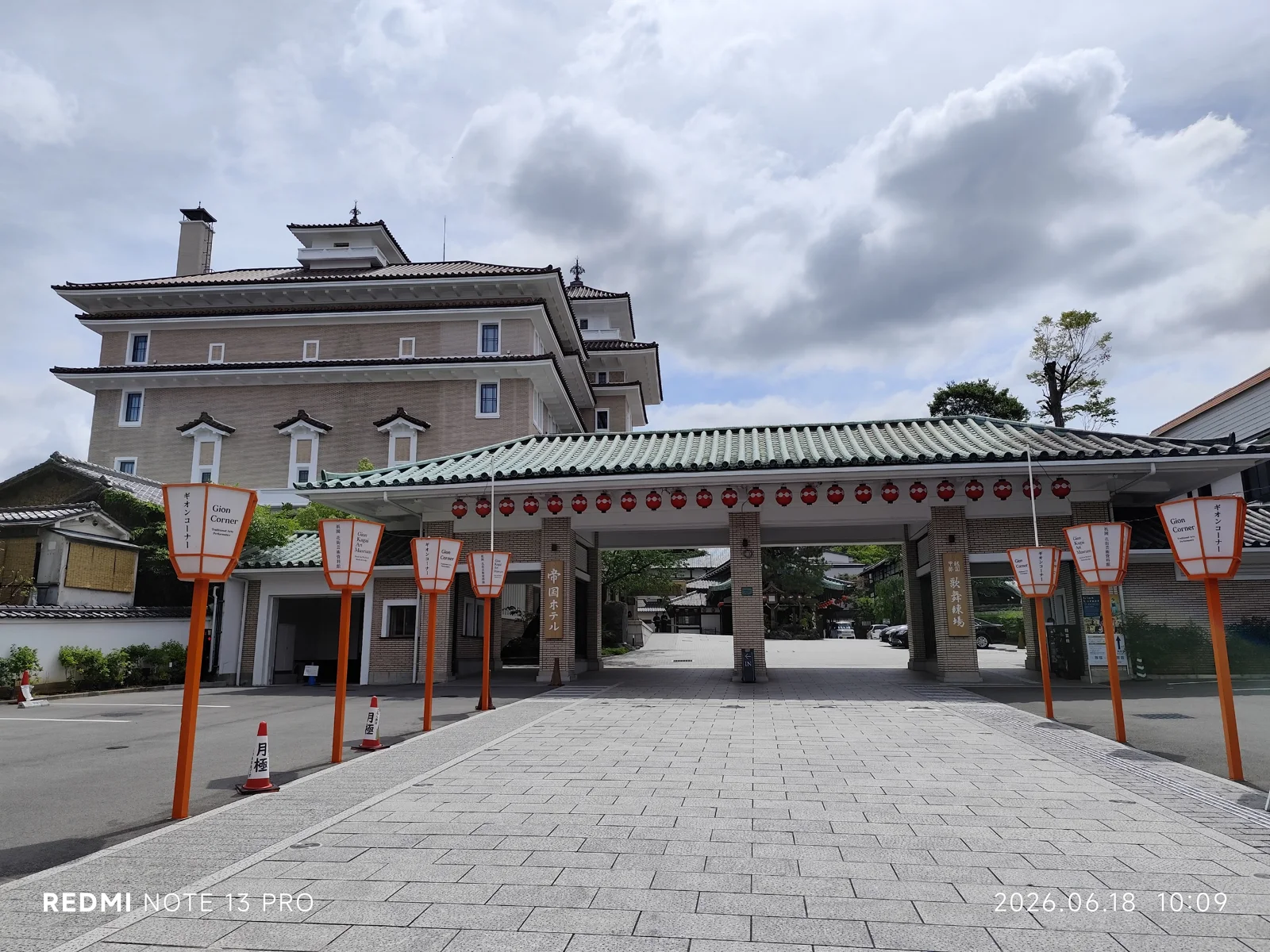
Gion Corner runs in the small theatre inside Gion Kobu Kaburenjo Theatre along Hanamikoji, at 570-2 Gionmachi Minamigawa, Higashiyama-ku, Kyoto. Look for the Gion Corner signboard on the stone-paved main street and follow the venue arrows inside. Standard performances run at 18:00 and 19:00, and the English-language page lists regular shows at about 50 minutes. The programme samples seven arts—Kyomai dance, tea ceremony, flower arrangement (kado), koto music, Bugaku court dance and Kyogen comedy, plus Bunraku puppetry or Noh theatre depending on the season—making it an easy early-evening curtain-raiser before dinner on Shijo-dori or across the Kamo River.
Winter performances run from Tuesday to Friday between 1 December and 11 March at the same 18:00 and 19:00 times, excluding Japanese national holidays. The venue also closes for the year-end/New Year period from 26 December to 4 January, on 11 February and 23 February, and on fixed annual holidays on 16 July and 16 August. The winter programme features six performing arts followed by an after-show photo session with a maiko. If you are only in Kyoto on a winter weekend, save Shirakawa and Kennin-ji for the daytime and keep Gion Corner for a weekday evening.
Standard adult admission is ¥5,500. The official English ticketing page lists ¥3,850 for ages 16 to 22, ¥3,300 for ages 7 to 15, and free entry for children aged 0 to 6 sitting on a lap (or ¥3,300 if occupying a seat). Priority seats cost ¥6,600 and tea-and-sweets seats cost ¥6,050, both at flat rates regardless of age. Families should count how many seats and age bands they need before booking. Note that standard seats still let you watch the tea ceremony demonstration on stage; choose the tea-and-sweets tier only if you want matcha and wagashi served at your seat.
If you book the 18:00 show, visit Kennin-ji in the afternoon and save dinner for afterwards. For the 19:00 show, have a light bite beforehand or choose an early restaurant sitting with a clear finish time so you are not rushing back to the theatre. On winter nights with the maiko photo session, allow extra time for queueing and crossing the river before your dinner booking. To weigh up other shows in the district by duration, dates and tea service, see our Gion stage performance and ticket guide.
Miyako Odori in April 2027: How Tea Tickets Dictate Your Arrival Time
Gion Kobu's 153rd Miyako Odori is scheduled for 1 to 30 April 2027 at Gion Kobu Kaburenjo Theatre, with three daily performances at 12:30, 14:30 and 16:30. Tickets go on sale at 10:00 JST on 6 January 2027. If you plan to attend once, pick an afternoon slot whose arrival window fits reliably into your day—the organiser does not accept cancellations, exchanges or refunds, so if you are arriving in Kyoto by Shinkansen that same day, build in ample time for luggage storage, station transfers and street crossings.
First-class seats with a tea ceremony ticket cost ¥8,000; standard first-class seats are ¥7,000; second-class seats are ¥5,000; and eligible second-class student seats are ¥3,000. Under the organiser's rules, student tickets cover junior high, senior high, university, vocational college and technical college students, plus primary school pupils and younger children accompanied by a guardian (junior high students and older must bring student ID on the day). If your priority is the dance and you want to save budget for the rest of Higashiyama, compare the first- and second-class seating charts first. If anyone in your group holds a tea-included ticket, plan your theatre meet-up around their earlier check-in deadline.
Entry to the tea ceremony room begins one hour before curtain-up, and tea-ticket holders must arrive at least 40 minutes before the performance—unused tea tickets cannot be redeemed after the show. For the 14:30 performance with tea, arrive by 13:50 at the latest and eat an early lunch; if you want to visit Kennin-ji first and have tea afterwards, pick the 16:30 performance and reach the theatre before 15:50. Because both the tea ceremony and stage performance take a solid chunk of the day, anyone coming from Kawaramachi should navigate straight to Kaburenjo Theatre as their destination.
Before buying, open the seating chart and tea-room floor plan on the official Miyako Odori website. If you want a clear view of the ensemble formations without climbing many stairs, check which floor your seat sits on and the entry route before deciding whether to add a tea ticket. Tickets can be booked online or by telephone, and you can register an online member account in advance. Unlike Gion Corner's tea-and-sweets seat, where refreshments are served at your auditorium seat, Miyako Odori's tea ticket admits you to a separate tea room in a pre-show slot.
As an introduction to Gion Kobu, Miyako Odori traces the four seasons through continuous linked scenes combining Kyomai dance, shamisen, vocals, drums and flutes. A programme booklet helps you follow each scene's setting, and the official website also introduces the stage layout. Gion Corner, by contrast, condenses multiple traditional arts into a single evening showcase—so if you reach Kyoto with only pre-dinner hours free, book Gion Corner's evening slot, whereas if you can dedicate an April afternoon to Gion Kobu's dance and tea room, plan your route backwards from a daytime Miyako Odori performance.
Balancing Kennin-ji Temple and Yasaka Shrine
If you want to enter Kennin-ji after walking south down Hanamikoji, standard hours begin at 10:00 with last admission at 16:30 and closing at 17:00. General admission is ¥800 in 2026 and rises to ¥1,000 from 1 January 2027; primary, junior high and senior high students remain ¥500, and pre-school children enter free (primary school pupils and younger must be accompanied). Groups of 15 or more must apply by fax or email at least 10 days in advance. If you want time to linger over the gardens and Dharma Hall, set aside 45 to 60 minutes rather than arriving right before last entry.
Inside Kennin-ji's Dharma Hall, look straight up at Koizumi Junsaku's ceiling painting Twin Dragons (Soryu-zu), then head back to the Hojo (Abbot's Quarters) to view the high-resolution reproduction of Tawaraya Sotatsu's Wind God and Thunder God screens (the original is entrusted to Kyoto National Museum). Note that Hosokawa Morihiro's fusuma sliding-door paintings Eight Views of Xiaoxiang are closed for maintenance on 9 December 2026. If Twin Dragons is your main reason for visiting, check the temple's scheduled closure dates for temple ceremonies on 19–20 April and 4–5 June, and spend those afternoons at a shrine or theatre instead. Handheld cameras and smartphones are permitted in designated photography areas, while video recording, tripods, selfie sticks and gimbals are prohibited—if someone in your group plans to film the whole day, stow the video gear before entering and take in the halls and gardens without a lens.
The alternative is turning east at the Shijo-Hanamikoji junction towards Yasaka Shrine, entering through the West Romon Gate and continuing into Maruyama Park. Collect goshuin temple or shrine stamps before an evening performance. If anyone in your group takes slopes slowly, agree from Shijo-dori to meet near Yasaka Shrine while stronger walkers tackle the uphill approach to Chion-in or Higashiyama. If you intend to continue all the way to Kiyomizu-dera, both Kennin-ji and Kaburenjo Theatre lie near the southern end of Hanamikoji—link your afternoon into our Kiyomizu-dera and Higashiyama walking route and order stops around each site's last admission.
When walking from Kiyomizu-dera towards Gion, use Higashiyama Yasui as your decision point for Kennin-ji. With plenty of time left before 16:30, visit the temple before Hanamikoji, walk north along the stone-paved street, and finish on Shijo-dori for dinner. If you arrive close to last entry, stick to the public teahouse streets or continue to Yasaka Shrine. If you want architectural shots at both locations, cover the narrow streets earlier and save longer waits for good light outside the shrine gate.
Adapting Your Route via Shijo-dori for Crowds, Rain or After Dark
Morning is best for studying architectural details and walking the southern stretch before Kennin-ji opens. If shops are still shuttered, keep your street stroll short, grab breakfast along Shijo-dori and return once temples and museums open. When arriving in the afternoon, check the Kyoto City Travel Guide Gion–Kiyomizu comfort map first. Hanamikoji has its own forecast pin where you can toggle dates, time slots and weather alongside live street camera feeds. North of Shijo-dori, Tatsumi-bashi has little standing room: if people are already on the bridge, wait for walkers to pass before shooting, or stroll slowly along the canal bank and study the machiya layouts instead.
Light rain still works for a short stretch along the stone paving, but in heavy downpours switch to indoor venues with fixed entry hours. Kennin-ji includes indoor halls and wooden corridors, and the temple may refuse entry if your clothes or socks are soaked—bring spare dry socks and a folding umbrella if walking from the station. On rainy days with children, head to the Japan Kanji Museum near Yasaka Shrine (normally open 09:30–17:00, last entry 16:30; closed Mondays, or the next weekday when Monday is a public holiday, plus year-end/New Year and temporary closures). Drop-in activities in the main exhibition zone are open without reservation, and the museum suggests allowing 1.5 to 2 hours. Pre-schoolers enter free with an accompanying guardian aged 18 or over, and each primary-to-high-school student grants a ¥300 discount for up to two accompanying adults; lifts connect all floors, and there is a nursing room and accessible toilet on the ground floor.
On wet days with a pushchair or companions who tire easily, meet at street level near Minamiza Theatre, walk just to the Hanamikoji corner to see the entrance and Ichiriki-tei, and decide from current crowd flow how far south to continue. Pedestrian space along both edges of the main street is tight, so yield right of way when facing oncoming cars or a wall of umbrellas. If splitting up to browse, set meeting points inside a restaurant or outside a shop with space to stand so slower walkers are not forced to hurry down narrow lanes. Walking back to a station along wide Shijo-dori is far easier than weaving through side streets by phone navigation.
After sunset, teahouse lanterns come on while service vehicles and evening patrons still share the street. If you hold show tickets, take the main road straight to the theatre, then return along Hanamikoji to Shijo-dori afterwards for trains or dinner. In winter, if frost makes the stone slabs slick, save the Shirakawa canal banks and bridges for daylight and stick to well-lit Shijo-dori after dark. To return to Kyoto Station after an evening performance, walk back up Hanamikoji to Shijo-dori, enter Keihan Gion-Shijo Station, take an Osaka-bound train that stops at Tofukuji, and transfer to the JR Nara Line back to Kyoto Station.
Should You Stay by the Eastern-Bank Teahouses or West of the Kamo River?
If you only have one night in Kyoto focused on Gion Corner, dinner in Gion and an early-morning walk along Shirakawa, staying on the eastern bank near Shijo-dori keeps both your post-show walk back and next-morning stroll short. Paste the accommodation's full name into a map before booking and trace the route from the nearest station or bus stop to the front door. For lodgings tucked inside narrow alleys, save the property's own arrival directions so you can tell your guest entrance apart from neighbouring teahouse doors, and drop off luggage before exploring the stone-paved lanes.
If your itinerary also leans on Hankyu trains to Osaka, subway transfers at Shijo-Karasuma, or evening shopping and dining in Kawaramachi, look for hotels west of the Kamo River. After a show, cross Shijo Ohashi Bridge through Kiyamachi into Kawaramachi, or continue further west along Shijo-dori towards Karasuma. Travellers making frequent Shinkansen or regional JR trips can also base themselves around Kyoto Station and ride in during the day via Tofukuji and the Keihan Line. If you are only staying one night with evening theatre tickets, arrange luggage drop-off or pick-up around the curtain time rather than hauling suitcases across town from Kyoto Station right before the show.
Linking Cherry Blossoms, Gion Matsuri and Autumn Foliage
In spring, pair Gion Shirakawa with Maruyama Park for cherry blossoms. Shirakawa sets canal and teahouses side by side at close range, though foot traffic across Tatsumi-bashi slows to a crawl when trees are in peak bloom as visitors stop for photos. Arrive early at Shirakawa, stroll along the water before returning to Shijo-dori, then walk through Yasaka Shrine to see the weeping cherry tree at the centre of Maruyama Park. If you hold Miyako Odori tickets the same day, plan your blossom route backwards from the theatre check-in deadline; when crowds peak, pick one viewing spot first and leave the second for after the show if time allows.
In July, Gion Matsuri splits into two distinct zones. During the Saki-matsuri Yoiyama evenings, yamahoko floats and ohayashi musicians centre on the yamahoko neighbourhoods west of the Kamo River in central Kyoto. For mikoshi portable shrines, check Yasaka Shrine's festival schedule and pick a public viewing spot around the shrine, Shijo Otabisho or the procession route. Because Gion Matsuri and Gion Kobu performances are organised separately, confirm the festival times and locations first if combining both in one day, and build in time to cross Shijo Ohashi Bridge. Traffic control notices detail each year's crossing restrictions—keep residential doorways clear and follow temporary signage around nearby stations and bus stops.
In autumn, save your longest blocks of time for Higashiyama sites with gardens or walking trails; Hanamikoji's strength is its street-level teahouses, which pair neatly with Kennin-ji or Yasaka Shrine afterwards. Late-autumn daylight fades early, so schedule gardens while the light holds and leave the teahouse lanes and evening theatres for later. On windy winter evenings, standing on the Kamo River bridges or around Tatsumi-bashi gets bitterly cold quickly—keep Shirakawa brief, warm up indoors, and dine near Shijo-dori if you have an evening show to cut down on riverside walking after dark.
A few useful answers
Which direction should I walk on my first visit to Hanamikoji?
Leave Keihan Gion-Shijo Station via Exit 6 to Minamiza Theatre, walk east along Shijo-dori to Ichiriki-tei, then turn south down Hanamikoji towards Kennin-ji. To include Gion Shirakawa and Tatsumi-bashi, head north along the Kamo River's eastern bank first before returning to Shijo-dori for the southern stretch.
Do I need a ticket to visit Hanamikoji?
No—the main street is a public road and free to walk along. Indoor admission to Kennin-ji, Gion Corner and Miyako Odori each require separate tickets. Whenever you see no-entry signs at side alleys, remain on the main street.
Is photography allowed on Hanamikoji?
For streetscapes, choose a spot on a public road where you can pause without blocking pedestrians, and stay clear of the vehicle carriageway and doorways. Obey no-photography and no-entry signs on private lanes, and never block, follow or photograph geiko and maiko without permission.
Does Gion Corner run shows on winter weekends?
Under the winter schedule from 1 December to 11 March, performances run only on Tuesdays to Fridays at 18:00 and 19:00, excluding national holidays and scheduled closure dates.
When is Miyako Odori held in 2027?
It runs from 1 to 30 April 2027 at Gion Kobu Kaburenjo Theatre, with three daily shows at 12:30, 14:30 and 16:30. Tickets go on sale at 10:00 JST on 6 January 2027.
Is it worth saving Hanamikoji specifically for an evening walk?
Evening is ideal if you want to see the glowing teahouse lanterns before a Gion Corner performance. If your priority is inspecting wooden lattices and stone paving details—or combining the walk with Kennin-ji's daytime hours—daylight offers far better visibility.
Official information and references
Sources used in this guide.
- Gion Shopping Street Association | Hanamikoji & Ichiriki-tei
- Kyoto City Travel Guide | Gion & Kiyomizu-dera Walking Area
- Kyoto City Tourism Association | Gion Walking & Photography Etiquette
- City of Kyoto | Gion-machi Public Roads, Private Lanes & Visitor Etiquette Map
- City of Kyoto | Gion Shinbashi Traditional Buildings Preservation Plan
- Gion Shinbashi District | Photography Guidelines
- Shochiku Minamiza Theatre | Keihan & Hankyu Station Exits
- Keihan Electric Railway | Transfer via Tofukuji from Kyoto Station
- Keihan Electric Railway | Gion-Shijo Station Step-Free Route
- Hankyu Railway | Kyoto-Kawaramachi Station Map
- City of Kyoto | Geiko, Maiko & Apprenticeship Training in Gion Kagai
- City of Kyoto | Kagai Dance Schools & Performances
- City of Kyoto | Ochaya Hospitality & Introduction Customs
- Kyoto Traditional Musical Art Foundation | Gion Corner Showtimes & Fares
- Kyoto Traditional Musical Art Foundation | Gion Corner English Age Fares & Duration
- Kyoto Traditional Musical Art Foundation | Gion Corner Access & Entrance
- Gion Kobu Kabukai | 2027 Miyako Odori Dates, Seating, Tea Room & Tickets
- Kennin-ji Temple | Opening Hours, Admission & Access
- Kennin-ji Temple | January 2027 Admission Fee Revision
- Kennin-ji Temple | Temple Treasures & Twin Dragons Ceiling Painting
- Kennin-ji Temple | 9 December 2026 Temporary Closure of Eight Views of Xiaoxiang
- Kennin-ji Temple | Rainy-Day Entry Guidelines
- Kennin-ji Temple | Photography Rules
- Japan Kanji Museum | Opening Hours, Closures & Exhibitions
- Kyoto City Travel Guide | Hanamikoji Hourly Crowd Forecast & Live Camera
- Yasaka Shrine | Gion Matsuri Rituals & Yamahoko Schedule
- Kyoto Municipal Transportation Bureau | Tozai Line Higashiyama Station Lift Exit
- City of Kyoto | Gion Kobu Kaburenjo Registered Tangible Cultural Properties
- Kennin-ji Temple | Twin Dragons Public Viewing & Scheduled Closures
- Kyoto City Travel Guide | Gion Shinbashi Preservation District & Sanjo-Keihan Station
- Kyoto City Travel Guide | Gion Matsuri Yamahoko & Mikoshi Viewing Routes
- Japan Kanji Museum | Family Admission Discounts, Lifts & Facilities
- City of Kyoto | Maruyama Park & Weeping Cherry Tree Location