Walk into Teramachi Kyogoku Shopping Arcade from Kyoto-Kawaramachi or Kyoto Shiyakusho-mae stations. Compare JAM, LOWECO, RUSHOUT, Flamingo and second-hand kimono shops, plus ShinPuhKan and rainy-day routes.
- Region & Focus
- KyotoNeighbourhoods and shopping
- Reading Scope
- 16 min read · 9 chapters · 5 Q&As
- Official Verification
- 25 official sources checkedUpdated 22 November 2026
- Key Topics
- NeighbourhoodsFirst tripTravel budget
Chapter Route Map (tap any stop)
- Which Station to Start From Depends on Your First Purchase
- Shijo to Takoyakushi-dori: Try a Benchmark Piece First
- Rokkaku to Sanjo: Everyday Basics Downstairs, Era Pieces Upstairs
- Buying Second-hand Kimono: Decide How You Will Wear It Home
- Checks You Can Run Before Joining the Fitting-Room Queue
- Footwear, Leather Goods and Accessories: One Extra Check
- Tax-Free Shopping From November: Pay Tax-Inclusive Upfront, Claim on Departure
- Finishing at ShinPuhKan by Karasuma-Oike
- Fitting Teramachi Into Your Kyoto Itinerary
- Quick Q&A
Vintage shopping along Kyoto's Teramachi-dori centres on the Teramachi Kyogoku Shopping Arcade between Shijo and Sanjo. If you are hunting for imported jackets or denim, start at the southern end by Hankyu Kyoto-Kawaramachi Station; if second-hand kimono is your priority, take the underground to Kyoto Shiyakusho-mae Station and enter from the northern end near Sanjo. Several shops open before noon, so arriving around lunch lets you compare RUSHOUT and weekday hours at Flamingo in Shinkyogoku in a single sweep. Save ShinPuhKan, just west along Sanjo towards Karasuma-Oike, for after your fittings.
Which Station to Start From Depends on Your First Purchase
Teramachi-dori runs a long way north to south, so narrow your map to the stretch between Sanjo-dori and Shijo-dori, targeting the covered Teramachi Kyogoku Shopping Arcade. Its southern end sits beside Hankyu Kyoto-Kawaramachi Station, while the northern end crosses Sanjo-dori towards Kyoto Shiyakusho-mae Station. One street east runs Shinkyogoku, which also houses vintage stores. Save street addresses alongside shop names: 'Teramachi-dori Sanjo-sagaru' means south of the Sanjo junction, whereas 'Teramachi-dori Shijo-agaru' means north of Shijo. Those two markers bracket your day's hunting ground.
Coming on a day trip from Osaka via the Hankyu Kyoto Line, alight at Kyoto-Kawaramachi Station and follow arcade signs to Exit 9, where spotting the Shinkyogoku entrance first makes it easy to turn west onto Teramachi; Hankyu's station map also marks Exit 10 towards Teramachi-dori. If you would rather buy second-hand kimono first and finish near Shijo for dinner, work south from the northern end: exit the Tozai underground line at Kyoto Shiyakusho-mae Station, follow signs through the Zest Oike underground shopping mall to Exit 5 or 6, and walk south towards Sanjo. Step-free access listed by Kyoto City Transport uses either the Exit 3 lift or the Zest Oike lift; once at street level, orient yourself on Oike-dori before crossing Sanjo into the arcade.
From JR Kyoto Station, board the Karasuma underground line from Platform 2 towards Kokusaikaikan, alight at Shijo Station, and walk east along Shijo-dori for roughly 15 minutes to the arcade. To save your legs, take City Bus 4, 7 or 205 from outside Kyoto Station, checking the front display for services routed via Shijo-Kawaramachi, as some 205 buses take another path. At weekends, city-centre traffic slows down; if you have a tight restaurant booking afterwards, the underground plus a walk is easier to time. When staying within this district on foot, paying single fares with an IC card makes the most sense: Kyoto Municipal Subway adult single fares run ¥220 to ¥360 by distance (children ¥110 to ¥180), so an ¥800 adult one-day pass only pays off if you have extra rides elsewhere.
Arriving along the Keihan Line lets you pick which bridge to cross. Leave Gion-Shijo Station heading west over Shijo Bridge straight to the southern tip of Teramachi—ideal if you are heading back to Osaka or dining around Shijo later. If your morning starts in Okazaki or you want the Sanjo-end shops first, walk west from Keihan Sanjo Station over Sanjo Bridge and turn left into the arcade at Sanjo-Teramachi. Either river crossing takes around 15 minutes on foot. Just remember, if you are catching a Hankyu train home, not to stop on the east bank of the Kamo River simply because both sides carry 'Kawaramachi' on maps—Hankyu Kyoto-Kawaramachi Station sits across the bridge.
Decide early where a cabin suitcase will wait if you are travelling with one. On a day trip leaving by Hankyu in the evening, use the lockers marked on Kyoto-Kawaramachi's station map so you can browse the arcade hands-free. If you are heading straight out from Kyoto Station to a city-centre hotel that night, Kyoto City's hands-free sightseeing service offers same-day luggage delivery from Kyoto Station to partner accommodation, with an official cut-off of 14:00. Keep your hotel name and address handy, along with a tape measure and a base layer for trying tops on—wheeling a large case between upstairs rails while juggling jackets leaves almost no room to turn.
| Starting Point or Plan | Recommended Route | First Stop |
|---|---|---|
| Arriving from Osaka on Hankyu | Exit 9 at Kyoto-Kawaramachi Station, then head west | Furugiya JAM Kyoto Shijo |
| Entering from the north by underground | Kyoto Shiyakusho-mae Station via Zest Oike Exit 5 or 6 | Eirakucho vintage shops or Suzaku |
| Morning in Gion with dinner near Shijo | West from Keihan Gion-Shijo Station over Shijo Bridge | Southern Teramachi towards Nishiki-koji |
| Visiting ShinPuhKan before browsing | Karasuma-Oike South Gate to ShinPuhKan, then east on Sanjo | Northern Teramachi shops at Sanjo |
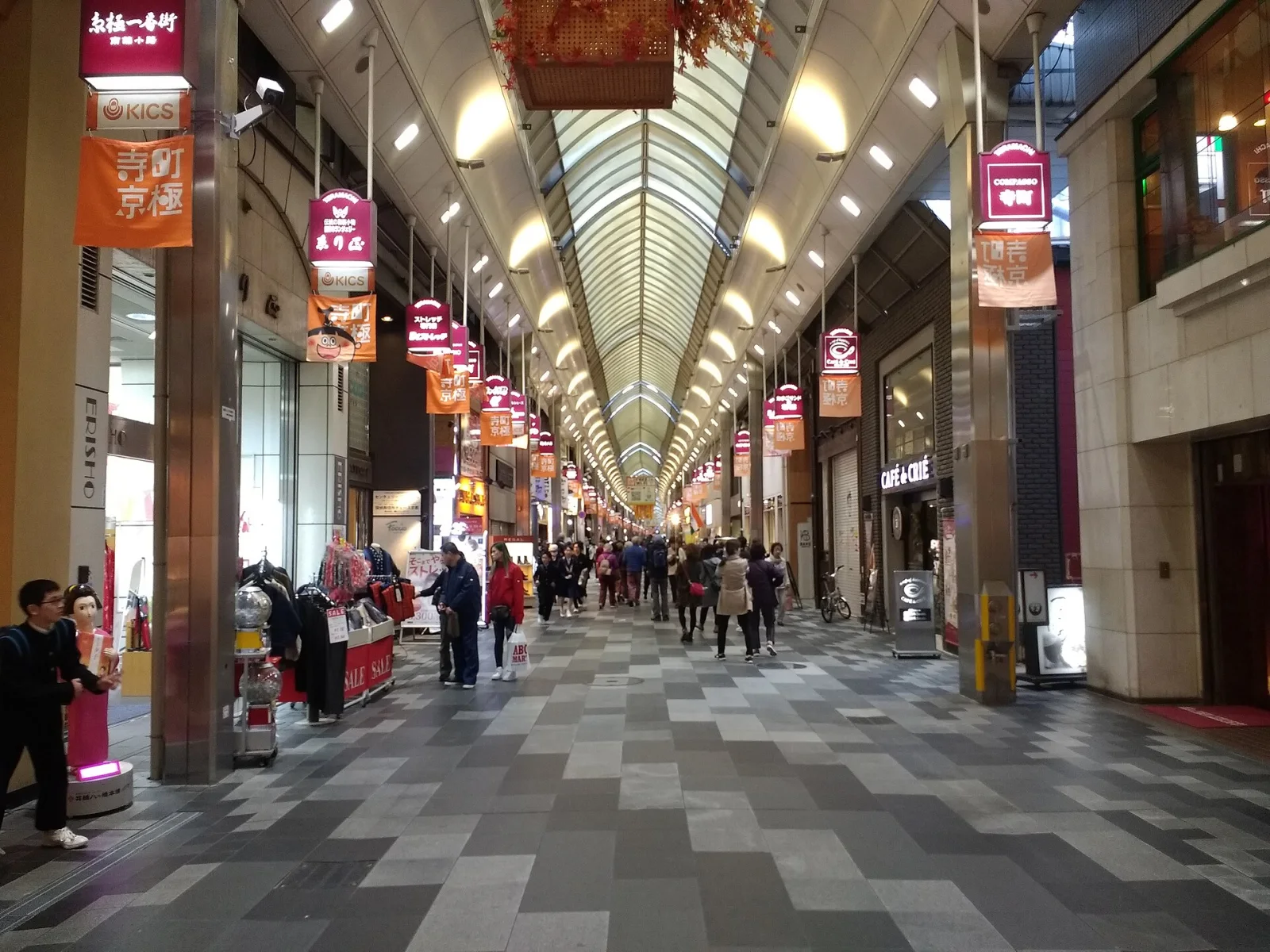
Walk into Teramachi Kyogoku Shopping Arcade from Kyoto-Kawaramachi or Kyoto Shiyakusho-mae stations. Compare JAM, LOWECO, RUSHOUT, Flamingo and second-hand kimono shops, plus ShinPuhKan and rainy-day routes.
Shijo to Takoyakushi-dori: Try a Benchmark Piece First
Make Furugiya JAM Kyoto Shijo your southern opener at 549 Nakanocho, Teramachi-dori Shijo-agaru. The shop's website tags this branch as VINTAGE & SELECT with hours of 11:00–20:00; the arcade directory still prints 12:00, so work from JAM's own 11:00 opening for a morning start. It is a useful first stop for comparing cuts across imported vintage stock, especially if you sit between sizes. Try on two similar tops and note the chest width and sleeve length that fit best so you can weed out obvious misses on the racks when later fitting rooms are busy.
For dresses, blouses and jewellery, walk north from Shijo towards Nishiki-koji to reach Little Trip to Heaven on the first and second floors of 296 Higashi-Daimonjicho. Its stock leans towards European and American vintage dresses, linen tops and accessories. When checking a dress, look at the waistline height before comparing skirts, as shoulder-to-waist length governs the whole silhouette. Some skirts hang cleanly while standing yet ride up once you sit because the front waist pulls tight; if you are buying for a wedding or long train journeys, sit down in the fitting room and reach forward as if grabbing your phone. For clip-on earrings, test both clasps before paying, since spring tension often differs side to side.
Nishiki-koji makes a practical regrouping point: the eastern side leads into Shinkyogoku and Nishiki Tenmangu Shrine, while the western side holds the main Nishiki Market stalls. Anyone hungry can head west while companions keep trying clothes on along Teramachi, agreeing to meet on the wider corner off the arcade. Nishiki Market's alley is narrow and market rules require eating purchased food inside or directly in front of the stall—finish hot broth, skewers and drinks before handling clothes racks again. Save jarred pickles or condiments until just before leaving Teramachi so you are not lugging liquids up narrow stairs, and check the Kyoto city-centre shopping guide for the wider Nishiki and Shinkyogoku loop.
Wait until you reach Takoyakushi-dori before deciding whether to cut across to Shinkyogoku. If you are after denim, try on a pair of jeans before crossing that side lane so you have a waist-and-hip baseline. Two pairs measuring the same across the waistband can feel completely different when a short front rise pinches as soon as you sit. Buying a jacket as a gift for someone else works the same way: jot down your own jacket measurements and note whether they wear it over a T-shirt or a hoodie, making mismatched rack labels much easier to rule out.
Rokkaku to Sanjo: Everyday Basics Downstairs, Era Pieces Upstairs
If you want an affordable piece for regular wear, head north to LOWECO by JAM Kyoto on the ground floor of the Prime Building at 228 Eirakucho, open 11:00–20:00. Fans of American graphic tees, workwear or specific labels should pin RUSHOUT upstairs on the first floor of the same building (listed 12:00–19:00). The two shops operate separate tills with their own payment and return terms. Arriving before noon, start downstairs; if you get there towards evening and want both, head upstairs first. Once you pass Sanjo you lose this building as a landmark, so saving 228 Eirakucho on your map beats searching vaguely for Teramachi vintage later.
Sharing one address lets you contrast two ways of shopping the rails. On a tighter budget, filter by size and wearability first, holding two similar items side by side to check elastic recovery and fabric wear. When hunting discontinued pieces, narrow by brand, cloth or cut and ask staff to point out era details. Faded cuffs are normal on old workwear; what matters more is how much thickness remains on the inner elbows. Loose collar stitching can be repaired, whereas cloth worn paper-thin may tear right beside fresh thread—always inspect high-tension zones rather than relying on how the front looks.
To visit Shinkyogoku's branch, cut east along Rokkaku-dori and walk south to 490 Nakasujicho, where Flamingo Kyoto sits in Basement 1 of the Seven Two Building. Posted hours are 12:00–21:00 on weekdays and 11:00–21:00 at weekends and public holidays, with cards, e-money and tax-free shopping for overseas visitors. It makes an easy final stop after dinner. When arranging to meet friends at Rokkaku, specify 'Shinkyogoku-Rokkaku' or 'Teramachi-Rokkaku'—two junctions one alley apart with nearly identical names easily leave both groups waiting in the wrong spot. For an afternoon focused on everyday wear, pick at most two of these three shops for proper try-ons and treat the third as a quick browse.
Teramachi continues north past Sanjo too. If you arrive early before the 11:00 vintage openings, walk north towards Oike-dori to Honno-ji Temple. Temple grounds are listed free from 06:00–17:00, and the Daihoden Treasure Hall opens 09:00–17:00 (last entry 16:30; ¥700 adults, ¥500 junior and senior high students, ¥300 primary pupils; closed over New Year and exhibition changeovers) at 522 Shimohonnomaecho, south of Oike. Teramachi Kyogoku traces its name back to 1590, when Toyotomi Hideyoshi gathered temples along this avenue. Walking back from the temple gate to the first Sanjo vintage store shows how temple precincts and covered everyday shops still share one street—though with only an hour spare, go straight into the shops at Sanjo and save the museum for an early morning.
Buying Second-hand Kimono: Decide How You Will Wear It Home
Head to the northern stretch of Teramachi Kyogoku for Kimono Suzaku Teramachi at 234 Eirakucho, just south of Sanjo (listed 11:00–20:00, irregular closing days). It carries second-hand and new kimono alongside accessories, plus rentals and dressing services. Decide early whether you want a full kimono outfit, a haori jacket to pair with everyday clothes, or simply an obi sash and small accessories. Buyers wanting a complete set should ask staff to demonstrate on one piece—separating obi, underlayers and ties—and budget for any missing parts or tailoring. A haori wears more like an everyday coat; slip one on over a plain white T-shirt or crisp shirt to judge shoulder and sleeve proportions.
Give both your height and how you plan to wear it when asking about sizing. On kimono tags, 'mitake' indicates full length from shoulder to hem, while 'yuki' measures roughly from the centre back across the shoulder to the cuff. Holding a robe against your ankle only checks raw length, as traditional dressing folds excess cloth at the waist. Inspect lined garments inside the collar, along both inner sleeve edges and around the hem, plus across seated crease lines where stains hide. If you want bold motifs to frame at home, pick thick fabric where any wear sits outside your planned crop; if you intend to wear the whole piece, ask staff to point out mends or delicate spots and factor silk cleaning and storage into the real cost.
For contemporary takes on kimono tailoring, walk west along Sanjo later the same day to Y. & SONS on the ground floor of ShinPuhKan, listed as a men's kimono shop open 11:00–20:00. Second-hand stores and modern houses serve different goals: the former delivers ready-to-wear dimensions at approachable prices, while the latter shows updated styling and palettes across a full look. If someone in your group only wants a rental for photographs, keep shopping and rental schedules separate—dressing, walking out and returning garments all eat into the clock, so drop bought kimono at your hotel before dinner, or return rentals ahead of your evening table.
Checks You Can Run Before Joining the Fitting-Room Queue
Before leaving home, measure one garment you genuinely wear. Button it up, lay it flat, and record armpit-to-armpit chest width, shoulder seam to shoulder seam across the back, collar base to hem, and shoulder point to cuff. Compare like with like: a thin tee and a down parka sharing the same flat chest measurement will feel very different once winter layers go underneath. For jeans, note waist width, front rise and inside leg from the crotch seam to the hem. Vintage labels often stick to US inches, yet previously hemmed trousers only match your actual tape measure. Bring a compact soft tape measure—asking staff politely before spreading clothes out to measure.
On coats and jackets, test the parts that jam first. Run zips fully up and down to check the bottom box engagement and how smoothly the slider clears curves, then raise both arms to shoulder height as if reaching for a train strap or lifting a camera. Inspect leather along the collar, underarms and elbows for cracking: surface creases may just come from folding, whereas flaking when bent signals perishing. On windbreakers, check taped shoulder seams, peeling inner coatings and cuff tabs. Hold denim inner thighs up to the light and feel whether one leg has thinned far faster than the other; cloth already worn thin will quickly split under long sitting, cycling or stairs.
Step into brighter light when inspecting pale chests and collars, as warm shop bulbs easily mask faint yellowing. Flip front plackets over to spot pale rings left by spot-cleaning, and lay knitwear sleeves flat side by side to check equal length and underarm snags. Give ribbed cuffs a gentle stretch and watch how cleanly they spring back—slack ribbing opens up further after a few wears. Reshaping crushed suit shoulder pads, reversing felted wool jumpers or shifting entrenched mustiness from an outer shell costs far more than sewing on a missing button. For a daily winter coat, lining tears and frayed cuffs affect lifespan far more than a rare label.
If a price tag or note is unclear, ask directly: 'Kono yogore wa toremasu ka' (Can this stain be removed?) or 'Onaoshi shita kasho wa arimasu ka' (Has any part of this been altered?). When you see 'deadstock' on a label, ask how the item was stored, as unworn pieces can still carry fold creases or storage oxidation. Where vintage pricing jumps steeply across eras, weigh labels, selvedge, hardware and any provenance notes together rather than relying on a single print. Buying purely to wear lets you favour clear condition and fair pricing; pay extra for era details only when collecting and the shop can explain the dating.
Jot down stock codes or—with staff permission—photograph the tag after trying something on so condition notes and prices do not blur together three shops later. Split your budget mentally into two columns for staples: the ticket price and whatever tailoring, dry-cleaning or button replacement it needs before you can wear it. Trousers needing a hem especially benefit from that second column. Picture each top alongside two pairs of trousers or skirts already in your wardrobe; if nothing comes to mind, leave it on the rack until you have finished the rest of the street.
When fitting-room queues build up, ask how many items you can take in at once, empty your pockets and set crossbody bags aside before trying buttoned pieces. Compare two jackets sequentially: button the first, take a few steps, note collar height and arm resistance, then repeat the exact sequence in the second. On tailored jackets, verify shoulder line and upper-back drape first, leaving sleeve or trouser hems for alteration. Test sheer white shirts over the same colour base layer you plan to wear at home so you do not get a surprise when unpacking.
Footwear, Leather Goods and Accessories: One Extra Check
If you only want a small souvenir to pack home, skip remaining clothes rails past Rokkaku and spend your time on belts, shoes or jewellery. On leather belts, check whether the leather around the most-used holes has thinned, and measure from the buckle tip to your usual notch. If a belt is solely for high-waisted skirts, test it at your natural waist rather than hip level so old sizing differences show immediately. Slip your own phone inside a crossbody bag before adjusting the strap to see whether the zip pulls one-handed and where the base hits against your knee in the mirror. Where extra strap holes have been punched, flex the leather beside each hole for splits—broken hardware on a bag is often harder to replace than repairing a seam.
Shop for second-hand shoes wearing socks of your usual thickness, try both feet on and take several strides. Check where the uppers crease and how evenly the heels have worn down; if insoles lift out, ask staff before peeking at the footbed underneath. Separating sole edges or midsoles that crumble when flexed need repair priced in straight away. Only swap into newly bought shoes mid-trip after walking a lap of the shop with zero pressure on your toes, instep or Achilles tendon. Stiff boots meant for breaking in slowly once you are home need dedicated suitcase room first, or one pair of boots will swallow space meant for a coat.
When buying earrings or rings as gifts, confirm pierced posts versus clip-ons first, then match the recipient's ring size against the shop's inner diameter gauge. Ask how unfamiliar materials should be cared for, since older metals are often plated and composition determines whether polishing is safe for daily wear. Open and close necklace clasps twice to verify there is no gap when shut, and scan the full chain for tarnished sections that clash with the rest. Ask for separate small pouches at the till—especially for post earrings—so fine pieces do not tangle with price tags and loose coins inside your luggage.
Tax-Free Shopping From November: Pay Tax-Inclusive Upfront, Claim on Departure
Compare shop prices using tax-inclusive totals on the rack. From 1 November 2026, Japan switches to a refund-based tax-free system: eligible overseas visitors pay the full tax-inclusive price in participating stores, carry the goods out of Japan, complete customs verification, and receive their refund via the shop or its tax-free operator. Japan Customs sets the minimum spend at ¥5,000 before tax at the same store on the same day—three small receipts from different shops cannot be pooled at the airport. Flamingo lists tax-free service on its official site; bring your passport and chosen items to the counter together to complete the store registration and confirm payout method and any handling fees. Keep purchases from other shops separate, as only participating stores that log your transaction qualify.
Customs clearance must be completed within 90 days of purchase. Departing through Kansai International Airport, head to the tax-free kiosks in the international departures concourse before security, or connect to the designated Wi-Fi and follow Visit Japan Web prompts. Pack tax-free clothing near the top of your suitcase, clear customs first—presenting items if prompted for inspection—and only then drop off checked bags. Do not leave yourself just enough time for bag drop and security; the more you buy, the more worthwhile it is to bag inspectable items separately in advance.
Even when not claiming tax-free, keep receipts until you are back at your hotel and check second-hand return terms at the till, particularly on marked-down flawed items or pieces sold with verbal condition notes. Having both receipt and swing tag avoids confusion if you realise you picked up the wrong size. Use packing cubes to separate fresh purchases from snacks, knitwear and sharp hardware, and bag dark denim separately so dampness or rain never transfers dye onto white shirts. Plastic bags prevent dye bleed in transit, though any damp pieces should be aired out once back in your room; avoid crushing structured wool coats or kimono flat in your case, and consider wearing a bulky outer layer onto the plane to free luggage space.
Finishing at ShinPuhKan by Karasuma-Oike
From Teramachi-dori, turn west at the Sanjo junction and follow Sanjo-dori until just before Karasuma-dori, then turn onto Aneyakoji. ShinPuhKan sits on Karasuma-dori south of Aneyakoji, several blocks west of the Teramachi arcade; coming straight from Kyoto Station, take the Karasuma underground line to Karasuma-Oike Station and use the direct passage from the South Gate. General shop hours run 11:00–20:00, with restaurants and the cinema keeping their own hours. Check the ground-floor directory before entering if you are aiming for 1LDK (curated fashion), Y. & SONS (men's kimono) or Ocha to Sake Tasuki (desserts), while keeping the bulk of your vintage browsing hours for Teramachi and Shinkyogoku.
ShinPuhKan incorporates the red-brick facade of the former Kyoto Central Telephone Office, designed by Tetsuro Yoshida and completed in 1926, before reopening in 2020 following an overhaul overseen by Kengo Kuma. Admire the brick elevation and arched windows from Karasuma-dori, then walk through to the landscaped courtyard linking Karasuma-dori and Higashinotoin-dori. It makes a natural final pause between Teramachi and the Karasuma underground line for architecture, tea and an easy train home—even in steady rain, you can stay under the covered walkways before stepping straight into the South Gate passage. If modern Sanjo architecture is a priority, keep vintage browsing to two hours at core shops and walk west along the Kyoto Sanjo-dori walking route.
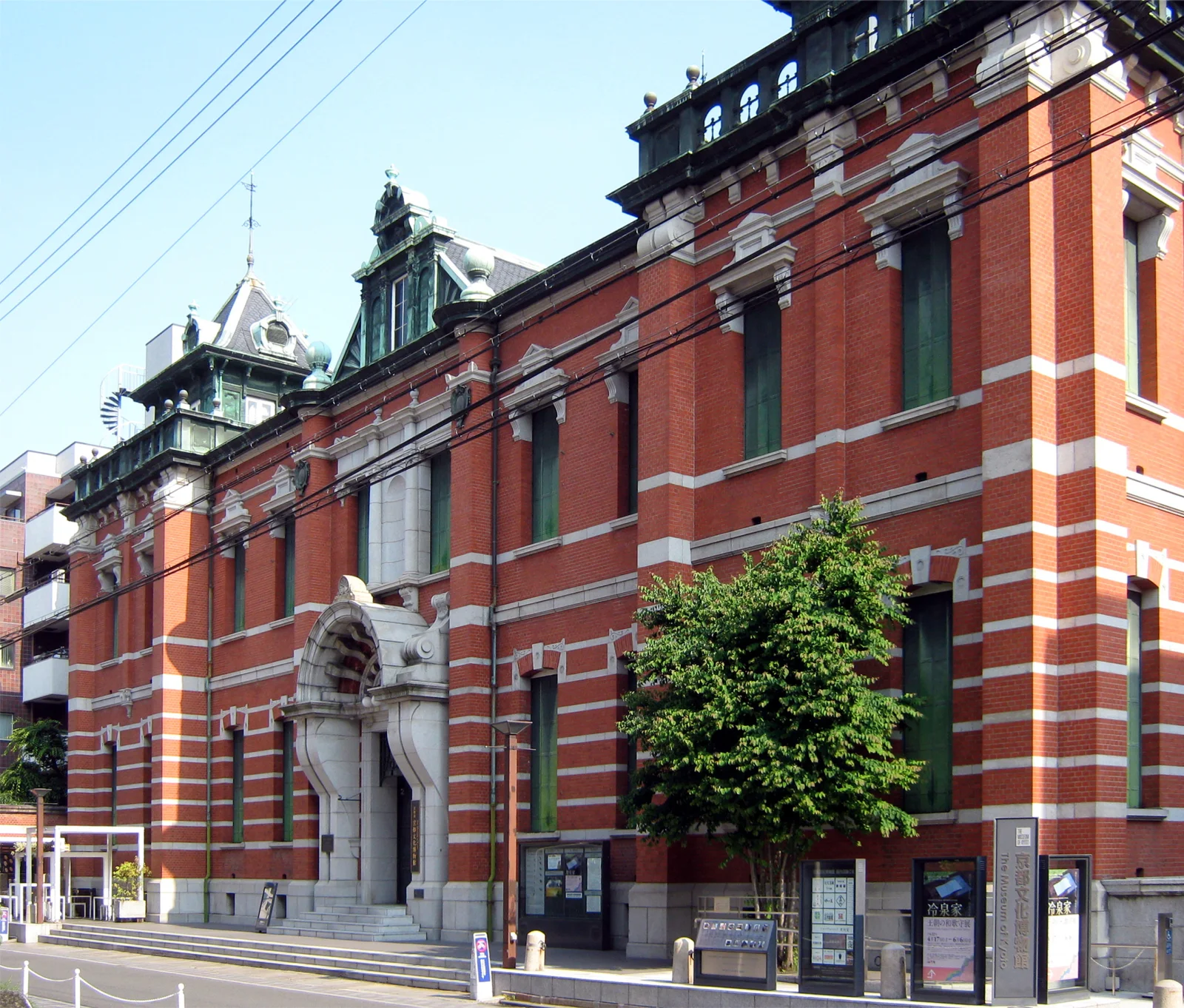
If rain sets in heavily after shopping, The Museum of Kyoto stands right around Sanjo-Takakura. Official general-exhibition hours are 10:00–19:30 (last entry 19:00; ¥600 adults, ¥400 university students, free for high-school age and younger), while the historic Annex is generally free until 19:30 unless hosting a special ticketed event. Kyoto City Tourism notes Monday closures (opening on public holidays and closing the following weekday instead) plus a New Year shutdown from 28 December to 3 January. Check whether it is open before setting out—on Mondays or later in the evening, eat at ShinPuhKan, catch a film or head straight back to save doubling back with shopping bags.
Fitting Teramachi Into Your Kyoto Itinerary
A brisk two-hour loop suits travellers staying near Shijo who plan to spend the evening in Gion. Come up near Hankyu Exit 9, establish your baseline fit at the southern end, pause along Nishiki-koji for a bite, then choose either one shop on Rokkaku's Shinkyogoku side or LOWECO downstairs before Sanjo. Skip any store with a long queue, saving a final window on the walk back to pay for shortlisted pieces and cross the river. That pace leaves room to try clothes on and return for a second look without chasing a checklist, letting you settle every buy before dinner.
With four hours at weekends, start at JAM Shijo when it opens at 11:00 and work north so you reach RUSHOUT upstairs right around its 12:00 opening. Break for lunch near Sanjo or Rokkaku, then cross into Shinkyogoku for another round of fittings. If travel companions want different things, split between kimono and jackets and regroup on the wider corner outside Sanjo-Teramachi. Early risers should take a Kamo River walk, eat breakfast or look at Sanjo's heritage buildings before the first vintage doors open—arriving between 09:00 and 11:00 mostly means staring at closed shutters.
In wet weather, stick to shops on one side: Teramachi Kyogoku and Shinkyogoku each have overhead roofs, whereas cross-lanes and the Sanjo walk to ShinPuhKan are exposed. During heavy downpours, stay wholly inside Teramachi, duck into Zest Oike at the northern end for a dry breather and ride the Tozai Line home. Note that arcades only block direct rain—winter winds funnel straight up the northern stretch past the canopy. Wear an outer layer that comes off quickly over your usual base layer, and in summer sit down for a cold drink after a row of seatless vintage stores before deciding whether you have the energy to compare one more coat. Travellers with buggies, luggage or older companions should favour single-floor shops, as multiple flights of steep stairs lengthen a half-day far more than distance on the map.
Summer visits during the Gion Matsuri require extra slack around the Yamaboko processions on 17 July (Saki Matsuri) and 24 July (Ato Matsuri). Both parades cross central Kyoto, slowing anyone walking from Shijo to Karasuma-Oike or catching buses across major junctions; move shopping to another day or enter and leave by the same-side underground line, checking the current year's route map on Kyoto Travel Navi. Late December works differently as New Year closures vary shop by shop: clear your top two stores in the first half of an open trading day, and pair museum closures with open dining or shopping complexes. Anyone shopping for winter jumpers or coats should wear trip-weight layers when trying them on, checking that high collars still button comfortably over a scarf.
If you are still choosing accommodation, staying around Kawaramachi lets you drop heavy coats back in your room before dinner after a half-day of vintage shopping. Karasuma-Oike suits travellers heading to Nijo Castle or Okazaki the next morning—or finishing late at ShinPuhKan—thanks to its two intersecting underground lines right beside your bed. Slot browsing into natural transfer gaps, such as dropping bags at a central hotel on day one and hitting Teramachi in the afternoon rather than shuttling back and forth from Kyoto Station around opening hours. Compare transport trade-offs in Kawaramachi and Gion accommodation and Kyoto Karasuma accommodation.
A few useful answers
Which station exit should first-time visitors use for Teramachi vintage shopping?
Take Exit 9 from Hankyu Kyoto-Kawaramachi Station, then walk one street west to Teramachi-dori. To start from the northern end at Sanjo and work south, ride the underground to Kyoto Shiyakusho-mae Station and leave via Zest Oike Exit 5 or 6.
What is the best time of day to visit Teramachi's vintage shops?
JAM Kyoto Shijo and LOWECO both open at 11:00, while RUSHOUT opens at 12:00. Flamingo opens at 12:00 on weekdays and 11:00 at weekends and public holidays, staying open until 21:00. Arriving close to noon makes linking several stores straightforward.
Where should I look for second-hand kimono or haori jackets?
Head to Kimono Suzaku Teramachi at 234 Eirakucho, just south of Sanjo. Bring an everyday top you intend to wear under a haori, or ask staff to check mitake length, yuki sleeve span and required accessories for a full kimono set.
Can I connect Teramachi, Shinkyogoku and ShinPuhKan on a rainy day?
Teramachi Kyogoku and Shinkyogoku both have covered arcades, though the connecting side lanes and the stretch along Sanjo-dori to ShinPuhKan are uncovered. In heavy rain, stick to Teramachi Kyogoku, enter Zest Oike at the northern end for the underground, and use the direct South Gate passage from Karasuma-Oike into ShinPuhKan.
Is tax-free shopping available at Teramachi vintage stores?
Only participating stores offer tax-free shopping—Flamingo lists the service on its official website. From 1 November 2026, eligible purchases of ¥5,000 or more before tax at the same store on the same day are paid tax-inclusive upfront and refunded after completing customs verification upon departure.
Official information and references
Sources used in this guide.
- Kyoto Teramachi Kyogoku Shopping Arcade | Access & Exits
- Hankyu Railway | Kyoto-Kawaramachi Station Map
- Kyoto City Transport | Kyoto Shiyakusho-mae Station
- Kyoto City Transport | City Bus from Kyoto Station
- Kyoto City Transport | Subway Riding Guide & Fares
- Furugiya JAM | Kyoto Shijo Store
- Kyoto Teramachi Kyogoku Shopping Arcade | Furugiya JAM Listing
- Kyoto Teramachi Kyogoku Shopping Arcade | Little Trip to Heaven
- Furugiya JAM | LOWECO Kyoto Store
- RUSHOUT | Kyoto Store
- Flamingo | Kyoto Store
- Kyoto Teramachi Kyogoku Shopping Arcade | Kimono Suzaku Teramachi
- Kyoto Nishiki Market | Shop Map & Dining Rules
- ShinPuhKan | Access & Opening Hours
- ShinPuhKan | Shops & Restaurants Directory
- City of Kyoto | History of ShinPuhKan
- The Museum of Kyoto | Admission & Opening Hours
- Kyoto City Tourism Association | The Museum of Kyoto Closing Information
- Kyoto City Tourism Association | Gion Matsuri Overview & Dates
- Japan Customs | Tax-Free Shopping System for Overseas Visitors
- Kyoto City Transport | Subway Kyoto Station Platforms
- Kyoto City Tourism Association | Hands-Free Sightseeing Luggage Storage & Same-Day Delivery
- Kyoto Teramachi Kyogoku Shopping Arcade | History of Teramachi
- Honno-ji Temple | Worship Hours & Daihoden Treasure Hall
- Osaka Customs | Tax-Free Procedures & Checked-Luggage Order