Walk Sanjo-dori from Sanjo Ohashi Bridge to Karasuma Oike, taking in the Museum of Kyoto Annex, ANGERS, Kyukyodo and Shinpuhkan. Includes half-day routes, wet-weather plans, station exits and opening hours.
- Region & Focus
- KyotoNeighbourhoods and shopping
- Reading Scope
- 20 min read · 10 chapters · 5 Q&As
- Official Verification
- 32 official sources checkedUpdated 22 November 2026
Chapter Route Map (tap any stop)
- Sanjo Ohashi to Shinpuhkan: Where to Start
- Sanjo Ohashi and Kiyamachi: Two Waterways First
- ANGERS Kawaramachi: Pick Your Floor by What You Want
- Teramachi: Paper at Kyukyodo, Tea at Sanjo Teramachi
- 1928 Building at Sanjo Gokomachi: Add an Afternoon Gallery Stop
- The Museum of Kyoto: Two Entrances for the Annex and Main Building
- Breakfast on Sakaimachi and Afternoon Coffee in the Old Vault
- Nakagyo Post Office to Shinpuhkan: Two Ways to Save a Building
- TRAVELER’S FACTORY in Shinpuhkan: Note Your Refill Size
- Adjusting for Weather, Pace and Your Next Stop
- Quick Q&A
A half-day walk along Kyoto's Sanjo-dori takes you from the Kamogawa River to Karasuma Oike, with time to step inside a former bank, browse stationery at ANGERS in Kawaramachi and Kyukyodo in Teramachi, and catch the underground home from Shinpuhkan. For a first visit, allow 3 to 4 hours so you can linger in one museum or shop and stop for coffee. Aim to reach Kawaramachi around 11:00 if you want to browse ANGERS as it opens, and if you plan to see the exhibitions at the Museum of Kyoto, leave plenty of time and check that your visit does not fall on a closing day.
Sanjo Ohashi to Shinpuhkan: Where to Start
Walking east to west, the route runs from Sanjo Ohashi Bridge past Kiyamachi and the Takasegawa Canal, through Kawaramachi and Teramachi, to the Museum of Kyoto on Takakura-dori, Nakagyo Post Office on Higashinotoin-dori, and finally Shinpuhkan. Kyoto city tourism guides put the stretch from the Kamogawa River to Muromachi-dori at roughly 1 km. Continuing to Karasuma Oike as your finish is much the same distance: 15 to 20 minutes of pure walking, plus time for traffic lights, shopping and a sit-down break. To start directly in Kawaramachi and skip the riverside section, take the Tozai Line underground to Kyoto Shiyakusho-mae Station, a 1-minute walk from ANGERS.
Keihan Sanjo Station and the underground Sanjo Keihan Station sit on the east bank of the Kamogawa River and connect via underground passages. To begin on the bridge, head up to street level signed for Sanjo Ohashi and walk west across the river. Kiyamachi and Kawaramachi lie on the west bank, so setting your map app to 'Sanjo Station' on foot will usually route you back to the east side. Coming from Kyoto Station, you can ride the Karasuma Line to Karasuma Oike and walk the route in reverse to the river, then catch a Keihan train from Sanjo towards Demachiyanagi or Osaka. Sanjo Keihan, Kyoto Shiyakusho-mae and Karasuma Oike are consecutive stops on the Tozai Line, making it easy to hop back on if your feet tire.
If you are staying around Shijo Kawaramachi or connecting to the Hankyu Line, ending on the Kawaramachi side makes more sense. Hankyu Kyoto-Kawaramachi Station is on Shijo-dori, a short walk south of Sanjo Kawaramachi; ANGERS estimates about 12 minutes on foot from Exit 3. Arriving from Osaka on the Hankyu Line, you can also alight at Karasuma Station, walk west to east, and depart from Kyoto-Kawaramachi. Saving two station names and your key stops before setting off lets you navigate junction by junction instead of staring at a blue dot the whole way.
If your group arrives separately, meet at a shop on the west side of the bridge or in the Shinpuhkan courtyard. Simply agreeing on 'Sanjo' often leaves half the group at the Keihan ticket gates on the east bank while everyone else waits in Kawaramachi. Searching Japanese store names in romaji or English map pins works better than typing 'Kyoto Sanjo'. Kyoto addresses use directional terms such as agaru (north), sagaru (south), higashi-iru (east) and nishi-iru (west). ANGERS' address, Kawaramachi-Sanjo agaru nishigawa, simply means just north of the Kawaramachi-Sanjo junction on the west side of the street.
Walk Sanjo-dori from Sanjo Ohashi Bridge to Karasuma Oike, taking in the Museum of Kyoto Annex, ANGERS, Kyukyodo and Shinpuhkan. Includes half-day routes, wet-weather plans, station exits and opening hours.
Sanjo Ohashi and Kiyamachi: Two Waterways First
As you step onto Sanjo Ohashi Bridge, look at the onion-shaped bronze finials on the wooden railings, known as giboshi. Kyoto city tourism records note that Toyotomi Hideyoshi ordered the bridge rebuilt in 1590, and finials bearing inscriptions from the Tensho era can still be seen along the parapet. During the Edo period, this marked the western terminus of the 53 stations of the Tokaido road, serving as the starting point for travellers leaving Kyoto and the finish line for those arriving from Edo. Today's span across the Kamogawa River is based on the 1950 reconstruction. Look closely from the railings to the bridge abutments and you can read different eras in the timber, stone and metal.
Both the bridge deck and the approaches give clean angles over the Kamogawa River and railings. A narrow pedestrian strip runs along the parapet, so watch for oncoming walkers and cyclists when framing close-ups. To see older stonework, look north from the western bridgehead: Kyoto city designates this corner as the site of a former kosatsuba noticeboard for official decrees, where stone pillars from the Tensho reconstruction remain. If you are in a group or only pausing for a few minutes, cross from east to west, take your photos and carry straight on at street level towards Kiyamachi.
Just past the Kamogawa River, you cross a far narrower waterway. This is the Takasegawa Canal, dug in the early Edo period by Suminokura Ryoi and his son Soan to haul cargo into the city. Follow Kiyamachi north from Sanjo to just south of Nijo-dori to see the stone marker for Ichinofunairi, the first boat basin. These basins gave barges room to load, unload and turn around, and looking down from the street makes the canal's working layout much clearer than treating it merely as a pretty stream. Allow an extra 20 minutes for this detour, then head west along Aneyakoji-dori to rejoin Kawaramachi or Teramachi without retracing your steps to Sanjo.
If you have dinner booked in Kiyamachi, Pontocho or Gion, save the riverside stretch for late afternoon. Walking back east after Teramachi puts Kiyamachi and Pontocho right on the west bank, with Gion just across the bridge. Prefer not to go down to the lower riverbank? Take in the water views from the bridge deck and stay at street level heading west. In heavy rain or when paving stones turn slick, skipping the canal-side steps keeps your shoes dry.
ANGERS Kawaramachi: Pick Your Floor by What You Want
ANGERS Kawaramachi sits just north of the Kawaramachi-Sanjo junction inside a converted bank building, open 11:00 to 20:00 according to its official site. The shop spans three floors: stationery and everyday goods on the ground floor, clothing accessories, children's books and family items on the first floor (2F), and tableware, kitchenware and coffee gear on the second floor (3F). If you only have 20 minutes and know what you want, head straight to the relevant floor. For notebooks or small gifts, the ground floor alone has plenty to choose from. Look for the shop name along the exterior wall; it is an easy walk from either Sanjo Station across the river or Kyoto Shiyakusho-mae to the west.
This is a good stop for comparing stationery alongside homeware. When picking out a notebook, check the size, ruling and how flat it opens, as a daily pocket journal needs different handling from a sketchbook you want to lie completely flat. Buying coffee gear as a gift? Double-check the dripper shape and size used at home, and consider whether matching paper filters are easy to restock once you leave Japan. Factor the rest of your trip into any ceramics purchase: paper goods and textiles pack lightly if you are still changing hotels or regions, whereas fragile mugs and plates are best left for the final leg before returning to your accommodation.
From ANGERS, you can either return to the Sanjo junction and head west into Teramachi, or cut across slightly further north along Aneyakoji-dori. The main Sanjo route makes it easier to stick with companions, while the Aneyakoji shortcut lets you browse south from Kyukyodo back into the covered arcades. If your party wants to split up, agree to meet back on the ground floor of ANGERS so nobody has to search every level. Should you arrive from the bridge near lunchtime, pick a single floor to browse, and remember to leave at least an hour if you plan to tour the Museum of Kyoto exhibitions.
Teramachi: Paper at Kyukyodo, Tea at Sanjo Teramachi
Kyukyodo's Kyoto main store stands just north of the Teramachi-dori and Aneyakoji-dori junction. Walk north from Sanjo Teramachi past Aneyakoji and you will reach it. The shop sells incense, calligraphy and painting supplies, greeting cards, writing paper and washi products; shopping-street records note that it was founded here in Teramachi in 1663. For lightweight souvenirs that slip easily into a daypack, start with postcards, small notepaper pads and envelopes. If you are buying paper for someone who uses a brush pen or calligraphy brush, distinguish between practice sheets and correspondence cards: practice paper is about ink absorption and brushwork, while cards need to survive posting or fit existing envelopes.
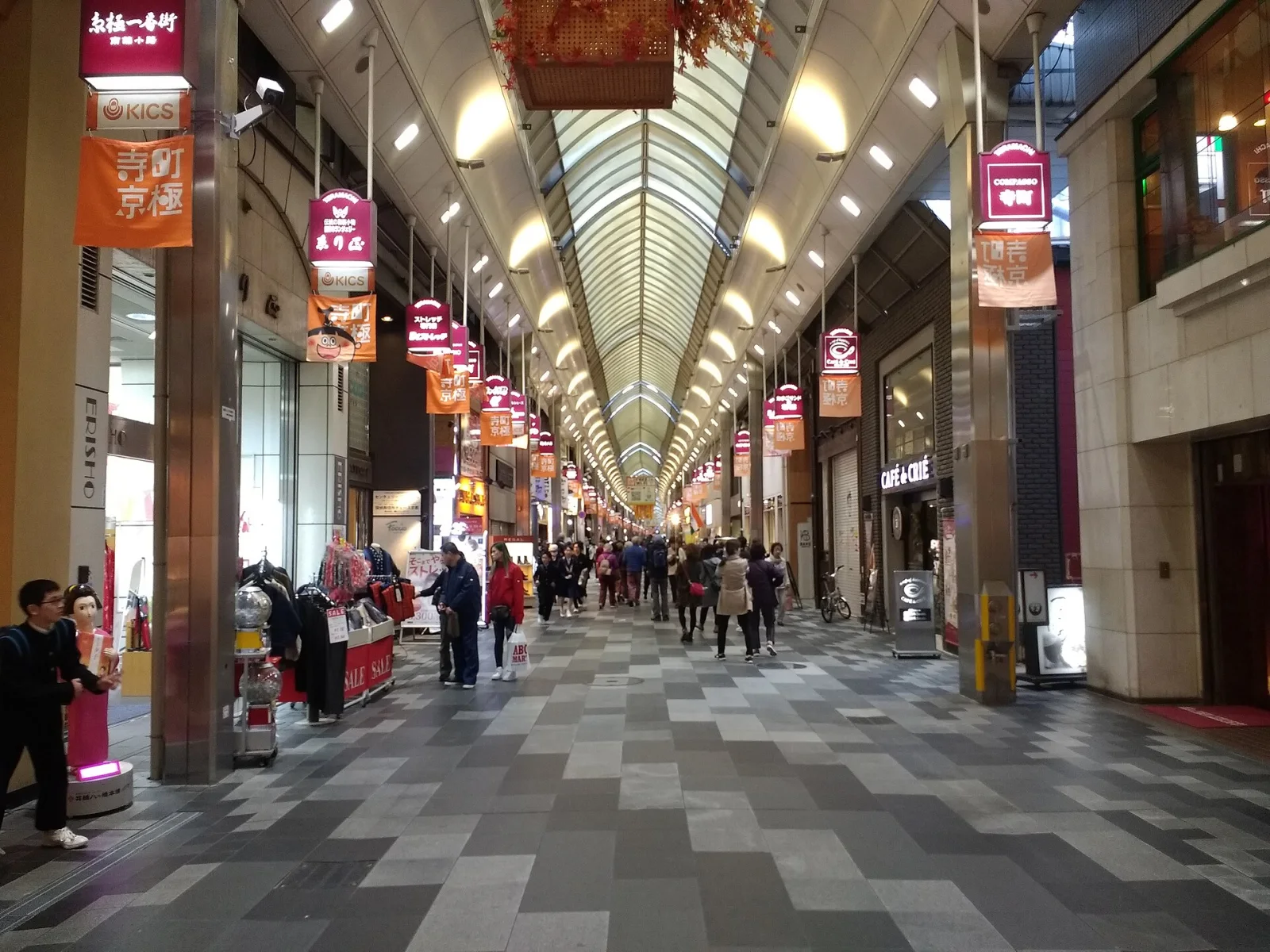
Teramachi-dori runs north to south, with Sanjo acting as the dividing line. The stretch holding Kyukyodo and the tea shops belongs to the northern Teramachi Senmontenkai association. South of Sanjo lies the Teramachi Kyogoku covered arcade running towards Shijo, with Shinkyogoku running parallel one street east. Walking west from Kawaramachi, pass the Shinkyogoku sign first and continue to the next corner for Teramachi, then turn north. Both the Sanjo arcade and Teramachi link straight into adjacent streets, so set your next shop by name on your map whenever you want to detour.
Before buying incense sticks or sachets, decide where you will use them. Hanging sachets work well in wardrobes or drawers, whereas stick incense at home requires a holder and ash catcher. If you are new to Japanese incense, start with a small pack you will finish easily, and if anyone in your group is sensitive to fragrance, let them wait outside so browsing stays relaxed and brief. Washi creases easily, so carry an A4 plastic folder in your bag, and keep large sheets flat in the shop's stiff sleeve by hand until you pack your suitcase.
Kyukyodo pairs neatly with Rakushikan on the ground floor of the Museum of Kyoto further west. Kyukyodo makes it simple to shop by purpose -- letter sets, envelopes and calligraphy tools -- while Rakushikan focuses on handmade washi and paper goods inside the main building's townhouse-style shopping lane. When comparing two patterned sheets for collage, origami or gift-wrapping, hold them up to check weight, translucency and the colour of the reverse side. If you only have time for one paper stop between Kawaramachi and Teramachi, pick Kyukyodo for stationery; if handmade paper itself is the draw and the Museum Annex is already on your list, leave time for Rakushikan.
For Uji tea souvenirs, walk south from Kyukyodo along Teramachi towards Sanjo to pass the Itohkyuemon Sanjo Teramachi branch. This stop is geared towards picking up loose tea and matcha sweets to take away. If you still have a museum visit, train connections or dinner ahead, favour boxed items marked as shelf-stable at room temperature in quantities you can finish or gift comfortably. Planning to make matcha lattes at home? Compare loose-leaf tins against tea bags and preparation notes before buying. If you would rather sit down for coffee or breakfast, save your café time for INODA COFFEE on Sakaimachi-dori or Maeda Coffee beside the Annex.
If you walked north along the Takasegawa Canal to Ichinofunairi at Nijo, you can shift your tea stop one block north. Head west along Nijo-dori to Teramachi and turn north to find the Ippodo Tea Kyoto Main Store, whose Kaboku Tearoom is listed on the official site as open 10:00 to 17:00. Want to brew Japanese tea yourself and make the tasting a stop in its own right? Sit down here, then stroll south down Teramachi towards Kyukyodo and Sanjo. This loop avoids backtracking past the same corners and turns a café stop into an optional extra; if you just want a single bag of tea to carry away, Sanjo Teramachi is faster.
1928 Building at Sanjo Gokomachi: Add an Afternoon Gallery Stop
Continuing west from Teramachi, the pale-toned 1928 Building stands on the south-east corner of Sanjo and Gokomachi. Designed by Goichi Takeda as the former Kyoto bureau of the Mainichi Shimbun newspaper, it opened in 1928. From the Sanjo-dori pavement, look up for the star-shaped windows and balcony, then step closer to inspect the lamps flanking the entrance -- the star motif comes from the old newspaper emblem. Compared with the grand former banks nearby, this building's character lies in smaller details across its windows, railings and light fittings. Stand back slightly across the junction to fit both the upper windows and projecting balcony into a single phone shot.
Passing by in the afternoon, you can climb the stairs to Gallery Dohjidai on the first floor (2F). The gallery normally opens from 12:00 to 19:00, closing at 17:00 on the final day of an exhibition, and closes on Mondays unless a national holiday falls on that day. If contemporary art is your main indoor interest, make this gallery your feature stop and admire the Museum of Kyoto Annex purely from the street. To see historic interiors over a drink or meal, the basement café-restaurant preserves Taizan tiles on its walls, noted in Kyoto tourism materials as made by the former Taizan Seitosho kiln in Higashikujo, Kyoto. Comparing the exterior stonework with the glazed basement tiles lets you take in two distinct craft finishes in one building.
The second floor (3F) houses GEAR, a non-verbal theatre show running about 90 minutes; note that the building has no lift or escalator. If you have booked tickets, treat the curtain time as the single fixed anchor of your half-day and walk in from either Kawaramachi or Karasuma Oike. Browse one end of Sanjo before the show and the other half afterwards. Should stairs be difficult for anyone in your group, admire the exterior at the Gokomachi corner and save your indoor time for the lift-equipped Museum of Kyoto ahead.
The Museum of Kyoto: Two Entrances for the Annex and Main Building
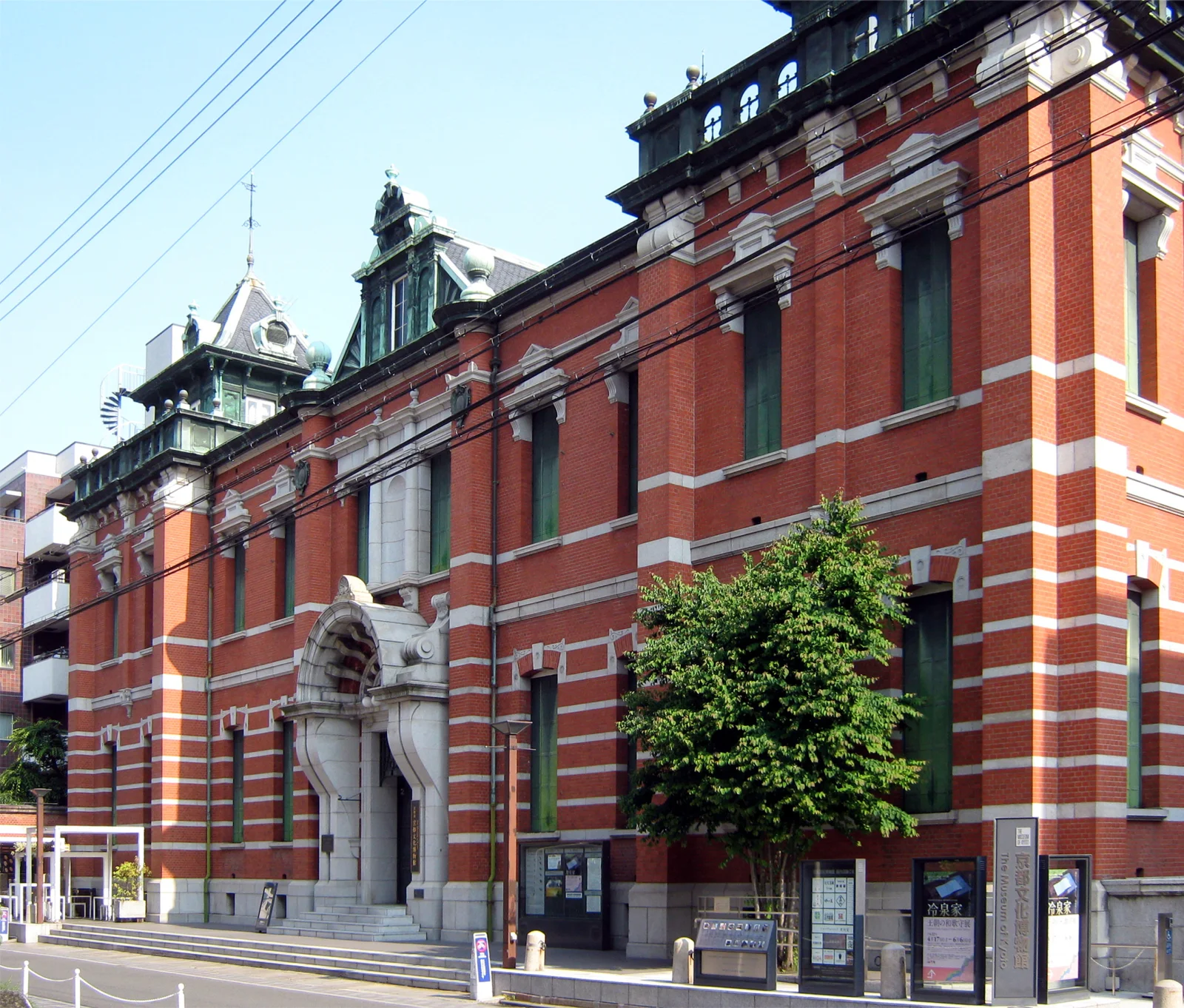
Where Sanjo-dori meets Takakura-dori, the red-brick building striped with pale stone is the Museum of Kyoto Annex. Originally the Kyoto branch of the Bank of Japan, it was completed in 1906 to a design by Kingo Tatsuno and Uheiji Nagano. From Sanjo-dori, the horizontal stone bands divide the long facade into crisp tiers while the stone arch of the main doorway draws the eye to the centre. Standing diagonally across the junction lets you take in both street elevations, the roofline and the staggered window heights at once. Choose a wide corner to frame your shot and wait for a break in pedestrians rather than stepping backwards into traffic to fit the roof.
Step inside the Annex Hall to look up at the lofty ceiling and upper gallery railings. This once served as the main banking hall where tellers dealt with customers; today it hosts exhibitions, concerts and cultural events. General opening hours are 10:00 to 19:30, and entry to the Annex Hall is normally free, though ticketed events may charge admission or alter hours. Check the Annex Hall events schedule beforehand if seeing the interior is a priority. If a paid event happens to be on, either book entry for the day or admire the exterior brickwork and head into the Main Building exhibitions instead.
Even the small roof dormers have a story. Natural daylight filters into the hall ceiling from clerestory windows projecting out of the pitched roof, visible from the street outside. On the heavy iron entrance doors, the handles sit on the inside -- a remnant from the days when night watchmen were locked inside after hours. Once in the hall, look at the stone cladding beneath the old counter: museum notes explain that the limestone comes from Ogaki in Gifu Prefecture and contains visible fossils such as fusulinids and crinoids. Turning those roof windows and stone fossils into a quick scavenger hunt is an easy way to keep children engaged.
The Main Building stands just north of the Annex. To buy exhibition tickets, use the lockers or visit the information desk, turn off Sanjo onto Takakura-dori and use the ground-floor entrance. The General Exhibition runs 10:00 to 19:30 (last entry 19:00), with admission at ¥600 for adults, ¥400 for university students and free for high-school students and younger; the ticket also covers standard film screenings, though special screenings have separate rules. If you hold a special exhibition ticket, it grants same-day entry to the General Exhibition as well. For an evening visit, special exhibitions usually close at 18:00, extending to 19:30 on Fridays, with last admission 30 minutes before closing in both cases.
With only half an hour to spare, stick to the Annex Hall and exterior facade, saving a full ticket for another trip. If you want a thorough look at Kyoto's history, head up to the General Exhibition on the second floor (2F), pick one thematic gallery to start with, and allow 45 to 60 minutes -- budgeting extra time for special exhibitions or films. Re-entry to the exhibition galleries is not permitted, so finish your tour before browsing the ground-floor shops or stopping for coffee. Pencils are allowed inside the galleries, while ballpoint pens, fountain pens and mechanical pencils must stay in your bag. On rainy days, leave long umbrellas in the racks outside the galleries and stow folding umbrellas inside your bag. Bringing a fresh notebook from earlier in the walk lets you jot down exhibit titles in pencil and paste your ticket stub inside afterwards. If your group has different interests, agree to meet in the Roji Tenpo lane of reconstructed Kyoto machiya shopfronts on the ground floor, where non-museumgoers can browse crafts, paper goods and cafés at their own pace.
The museum closes on Mondays (or the following Tuesday when Monday is a national holiday) and over the New Year period from 28 December to 3 January. If your walk falls on a Monday, focus on Kawaramachi, Teramachi and Shinpuhkan and admire the Annex brickwork from the pavement. Personal photography is permitted in the Annex Hall and on the ground floor of the Main Building, though photography is prohibited inside the exhibition galleries and may be suspended during certain Annex events.
Breakfast on Sakaimachi and Afternoon Coffee in the Old Vault
INODA COFFEE's Main Store and Sanjo Store sit close together around Sanjo and Sakaimachi, yet face different streets. The Main Store is on Sakaimachi-dori just south of Sanjo, listed as open 07:00 to 18:00. The Sanjo Store sits directly on Sanjo-dori just east of Sakaimachi, generally open 10:00 to 19:00 with last orders at 18:30. If you love classic kissaten coffee houses and want to beat the morning rush, have breakfast at the Main Store before the museum opens at 10:00. Passing along the main route later in the day, the Sanjo Store lets you step straight in off the street without an extra detour.
Reopened in 2024, the Sanjo Store preserves the oval counter of the original branch alongside large window-side tables, offering a distinct feel from the Main Store. Fans of dark roasts can start with the house Sanjo Blend Toki, and there are sandwiches and light meals if you want a proper lunch. General table reservations are not taken, so if you are in a larger group or arriving at peak meal times, only join the queue if the wait looks manageable. Allow 30 to 60 minutes for a meal, and move lunch onwards towards Shinpuhkan if the line stretches out.
Maeda Coffee Bunpaku sits inside the former bank's brick vault building, reached straight through the courtyard after viewing the Annex Hall. Opening hours are generally 10:00 to 17:00 (last orders 16:30), extending to 18:00 (last orders 17:30) during special exhibitions, closed Mondays (or the next day after a public holiday). It is the neatest pairing for combining architecture and afternoon coffee in one stop. If you are catching a late special exhibition and want coffee as well, stop at Maeda Coffee before heading upstairs, as its last orders close earlier than the General Exhibition's final entry.
Before going inside the Annex, take note of the street-facing entrance on Sanjo-dori and then spot the freestanding vault building beside the courtyard. Seeing all three elements together makes the bank's layout clear: public reception rooms along the main street, and secure storage tucked behind. Museum history notes also point out the roof vents atop the old vault -- look up from the courtyard before stepping inside the café. If you only have time for one sit-down drink, choose the INODA Main Store for breakfast, or save Maeda Coffee for a daytime break inside the historic complex.
Nakagyo Post Office to Shinpuhkan: Two Ways to Save a Building
Leaving the museum and walking west to Higashinotoin-dori brings you to Nakagyo Post Office, still an active post office today. Originally completed in 1902 as the Kyoto Post and Telegraph Office, its later rebuild preserved the south facade facing Sanjo-dori along with parts of the east and west walls and roofline. Window surrounds, cornices and corner details remain clearly legible from the pavement. While the former Bank of Japan leans on bold white stone bands, the post office rewards closer attention to window rhythms, corner masonry and eaves. Walking from Teramachi to here, comparing how those openings and rooflines vary is far more rewarding than snapping two brick walls back to back.
After Shijo-dori and Karasuma-dori were widened in 1912, commercial life gradually shifted away from Sanjo-dori. Historical records at the Museum of Kyoto link that urban shift directly to why so many Meiji- and Taisho-era buildings survived intact along Sanjo. Continue to Shinpuhkan for a contrasting approach to preservation. Designed by Tetsuro Yoshida as the former Kyoto Central Telephone Office, its first phase was completed in 1926, before the redeveloped complex opened in 2020. After passing the post office, turn north onto Higashinotoin-dori into Shinpuhkan to see the courtyard linking old and new wings. To admire the continuous arched windows highlighted in heritage listings, walk round to Karasuma-dori and look back at the western facade.
Shinpuhkan's walkways bridge Higashinotoin-dori and Karasuma-dori, extending north to Aneyakoji-dori with direct basement access to the south ticket gate of Karasuma Oike Station. When you are ready to leave at the end of your walk, simply follow the underground signs down from inside the complex. Heading back onto Sanjo? Exit on a different corner to compare the retained post-office facade with the former telephone exchange now shared by boutiques, a hotel and a cinema. How long you linger in the courtyard depends on the weather; on chilly days, pick your next shop indoors before crossing the open air.
To extend the architectural walk at street level, exit Shinpuhkan onto Karasuma-dori, turn south back to Sanjo, and cross Karasuma to explore the western blocks. The Sanjo Kaiwai landscape preservation zone cited in museum materials stretches from Teramachi to Shinmachi, roughly two blocks further west than this half-day route. Heading west from Karasuma, viewing facades from the opposite pavement works much better than standing right beneath a doorway, making it easy to see how historic masonry meets newer neighbouring towers. Visitors who prefer to browse stationery or sit in a café can wait on the east side of Shinpuhkan while others loop back, then everyone can depart together from Karasuma Oike.
TRAVELER’S FACTORY in Shinpuhkan: Note Your Refill Size
Inside Shinpuhkan, TRAVELER’S FACTORY KYOTO opens 11:00 to 20:00 according to the complex's directory. The shop centres on Traveler's Notebooks, paper refills, brass charms and customisable accessories, alongside Kyoto-exclusive editions. If you are buying your first leather cover, slip both sizes into the bag you actually carry each day to compare the fit. For jotting down station names on trains, the Passport size sits lightly in the hand; for pasting train tickets, printed maps and travel photos, the larger Regular size gives much better page space. Already own a cover? Take a quick photo of its size and product code on your phone before you arrive so you pick the right inserts.
Choose your refills to match how you travel. Grid or ruled inserts work cleanly for listing train times, hotels and flight details before a trip, whereas blank or lightly lined paper is far better for sketching facades, collecting station stamps and sticking ticket stubs along Sanjo. If you plan to keep using the notebook back home, stock up on versatile standard refills that are easy to replace later, and add one Kyoto edition as a keepsake from this trip. Look closely at metal tags, clasps and pen clips before buying so you know they can sit separately from your phone and glasses inside a bag. Short on time and splitting between coffee and shopping? Picking up a couple of slim refills takes almost no packing space, whereas comparing paper textures properly warrants an extra 20 minutes.
If you plan to take the Keihan Line in the evening, you can equally start your browse here, drop heavy purchases back at your hotel, and walk east later. Visitors focusing solely on Shinpuhkan and the former Bank of Japan can loop between them via Higashinotoin, Sanjo and Takakura-dori, catching the post office along the way. Want to catch a film at the cinema here? Count the screening duration separately rather than squeezing it into the 3-to-4-hour walking estimate, and meet friends in the courtyard before the show instead of searching across different Karasuma Oike station exits.
Adjusting for Weather, Pace and Your Next Stop
On a weekday half-day, aim for Sanjo Ohashi around 10:30, reach ANGERS at 11:00, then pick up paper or tea in Teramachi. Stop for a sit-down lunch, continue to the Museum of Kyoto, and finish with half an hour at Shinpuhkan. Placing the museum in the early afternoon lets you add the General Exhibition and wrap up around 15:30. With only 2 hours to spare, exit at Kyoto Shiyakusho-mae, choose either ANGERS or Kyukyodo, walk past the Annex and Nakagyo Post Office, and exit via Shinpuhkan -- saving indoor galleries for another day and skipping the northern Takasegawa detour.
If the museum is closed or you are pushing a buggy in the rain, reverse the direction. Enter Shinpuhkan directly from Karasuma Oike Station via the underground passage to cut down outdoor wayfinding, stepping out to see the post office and Annex facade only when the rain eases. Want longer covered shopping? Stick to the roofed sections of the Teramachi arcade, though note that crossings along Sanjo-dori remain open to the sky. Caught in a sudden downpour on the east side? Rather than sheltering on the bridge, ride one underground stop from Kyoto Shiyakusho-mae to Sanjo Keihan for the Keihan Line and leave the riverside for another time.
For wheelchair users or anyone avoiding stairs, the eastern stretch stays flat across the bridge, and passengers arriving on the Tozai Line at Sanjo Keihan can use the street-level lift at Exit 2 on the south side of Sanjo-dori. At the western end, Kyoto City Transportation Bureau access maps direct step-free travellers at Karasuma Oike towards the north ticket gate and Exit 3-2 on the south-east corner of the Karasuma Oike junction. The Museum of Kyoto notes a ramped access route along Takakura-dori roughly 40 metres south of the Main Building entrance, with an assistance call button on the Sanjo-Takakura corner. Accessible toilets sit on the ground floor of the Main Building, and baby-changing tables are available in both men's and women's washrooms. Wheelchairs and pushchairs can be borrowed at the information desk (pushchairs can also be left there when galleries are busy), and coin lockers take a refundable ¥100 coin. Entering via Takakura-dori is far easier for Main Building facilities than negotiating the steps of the Sanjo-facing Annex.
In summer heat, schedule the bridge, Kiyamachi and exterior photography for early morning or late afternoon, retreating into a sit-down lunch spot or the air-conditioned Main Building around midday. In winter, photograph the red brickwork while daylight holds and save indoor browsing at Shinpuhkan or ANGERS for dusk. During spring cherry-blossom season along the Takasegawa Canal, allow extra walking time for bridge viewpoints, crossings and photo stops, and limit shopping to a single store. In peak blossom or holiday crowds, choose a single shop door or courtyard entrance as a group meeting point rather than stopping everyone at a busy street corner.
To continue onto Nishiki Market, turn south down Teramachi or Takakura, then catch the Hankyu Line or underground from the Shijo area afterwards. Leave perishable food purchases until the end of your walk so you are not carrying bags along the full length of Sanjo. For a wider look at department stores, Nishiki Market and covered arcades, check the Kyoto shopping districts guide before planning your next half-day. Alternatively, ride the Tozai Line one stop west from Karasuma Oike to Nijojo-mae for Nijo Castle's gates and gardens -- visiting the castle in the morning and walking Sanjo west to east in the afternoon also flows smoothly, or set aside half a day for each.
Staying near Karasuma? Drop heavy ceramics or washi back at your hotel before heading out again. If you want to return to the river after dark, take the underground to Kyoto Shiyakusho-mae and stroll down from the west bank rather than walking the whole length of Sanjo twice. Pontocho's alley is narrow, so meet directly outside your restaurant entrance and let latecomers walk in from Kawaramachi. When planning your ride home after dinner, check whether the restaurant address sits closer to Sanjo or Shijo: head for Gion-Shijo or Kyoto-Kawaramachi near Shijo, or Sanjo Station if you are still up by Sanjo.
A few useful answers
How long should I allow for Kyoto's Sanjo-dori walk?
The stretch from Sanjo Ohashi Bridge to Karasuma Oike is roughly 1 km. Allow 3 to 4 hours to browse a couple of key shops, visit the Museum of Kyoto Annex and stop for coffee. Short on time? Start at Kyoto Shiyakusho-mae Station and skip the bridge and northern Takasegawa Canal.
Which side of the river are Keihan Sanjo and Sanjo Keihan stations on?
Both sit on the east bank of the Kamogawa River and connect underground: Keihan uses the name Sanjo Station, while the Tozai underground line uses Sanjo Keihan. For Kiyamachi, Kawaramachi or the Museum of Kyoto, come up to street level and cross the bridge heading west.
Do you need a ticket for the Museum of Kyoto Annex?
Entry to the Annex Hall is normally free, though some special events require tickets. Admission to the Main Building's General Exhibition is ¥600 for adults, ¥400 for university students and free for high-school students and younger; special exhibition tickets also include entry to the General Exhibition.
How can I do Sanjo-dori if it rains or the museum is closed?
Use the south ticket gate of Karasuma Oike Station for direct covered entry into Shinpuhkan, then step out towards Teramachi once the rain eases. The Museum of Kyoto closes on Mondays (or Tuesday if Monday is a national holiday), when you can admire the Annex facade from the pavement and focus on Shinpuhkan, Teramachi and Kawaramachi.
How do ANGERS, Kyukyodo and TRAVELER’S FACTORY compare?
Head to the ground floor of ANGERS Kawaramachi for everyday stationery and lifestyle gifts. Choose Kyukyodo in Teramachi for letter paper, greeting cards, incense and calligraphy supplies. Visit TRAVELER’S FACTORY inside Shinpuhkan for leather Traveler's Notebooks and customisable refills.
Official information and references
Sources used in this guide.
- Kyoto City Tourism Association | History of Sanjo Ohashi Bridge
- Kyoto City Tourism Association | Sanjo-dori Modern Architecture Walking Map (PDF)
- City of Kyoto | Takasegawa Ichinofunairi Historic Site
- Keihan Electric Railway | Sanjo Station Map and Transfer Guide
- Kyoto City Transportation Bureau | Sanjo Keihan Station Lift Routes
- Kyoto City Transportation Bureau | Karasuma Oike Station Exits and Step-Free Access
- ANGERS | Kawaramachi Main Store Location, Hours and Floor Guide
- Kyukyodo | Kyoto Main Store Address and Opening Hours
- Teramachi Senmontenkai | Northern Arcade History and Shops
- Teramachi Kyogoku Shopping Arcade | Sanjo to Shijo Arcade Directory
- Itohkyuemon | Sanjo Teramachi Store
- Ippodo Tea | Kyoto Main Store and Kaboku Tearoom
- City of Kyoto | Registered Tangible Cultural Properties (Former Telephone Office, Newspaper Bureau and Nakagyo Post Office)
- Gallery Dohjidai | 1928 Building History and Floor Guide
- Gallery Dohjidai | Opening Hours, Closing Days and Access
- Kyoto City Tourism Association | 1928 Building and Taizan Tiles
- GEAR Theatre | Show Schedule and Venue Facilities
- The Museum of Kyoto | Main Building and Annex Opening Hours
- The Museum of Kyoto | General, Special and Annex Admission Fees
- The Museum of Kyoto | Closing Days, Pushchairs, Lockers and Photography Rules
- The Museum of Kyoto | Step-Free Entrance and Accessibility Facilities
- The Museum of Kyoto | History and Vault of the Former Bank of Japan Kyoto Branch
- The Museum of Kyoto | Design and Materials of the Former Bank of Japan Kyoto Branch
- The Museum of Kyoto | Rakushikan
- Maeda Coffee | Bunpaku Branch Opening Days and Last Orders
- INODA COFFEE | Main Store Opening Information
- INODA COFFEE | Sanjo Store Opening Information and Menu
- Shinpuhkan | Direct Underground Access and Location
- Shinpuhkan | Former Telephone Exchange and Connecting Walkways
- Shinpuhkan | TRAVELER’S FACTORY KYOTO
- TRAVELER’S FACTORY | Kyoto Store and Kyoto-Exclusive Notebook Accessories
- Kyoto Prefecture Tourism Federation | Pontocho Alley