Walk Sanjo-dori from Sanjo Ohashi Bridge to Karasuma Oike, visiting The Museum of Kyoto Annex, ANGERS, Kyukyodo, and ShinPuhKan. Includes half-day pacing, rainy-day routes, station exits, and opening hours.
- Region & Focus
- KyotoNeighborhoods and shopping
- Reading Scope
- 20 min read · 10 chapters · 5 Q&As
- Official Verification
- 32 official sources checkedUpdated November 22, 2026
Chapter Route Map (tap any stop)
- Sanjo Ohashi Bridge to ShinPuhKan: Where to Start
- Sanjo Ohashi Bridge and Kiyamachi: Two Waterways First
- ANGERS in Kawaramachi: Pick Your Floor by What You Want
- Teramachi: Paper at Kyukyodo and Tea Around Sanjo-Teramachi
- The 1928 Building at Sanjo-Gokomachi: Add an Afternoon Gallery Stop
- The Museum of Kyoto: Two Separate Entrances for the Annex and Main Building
- Breakfast on Sakaimachi and Afternoon Coffee in the Old Bank Vault
- Nakagyo Post Office to ShinPuhKan: Two Ways to Preserve Historic Facades
- TRAVELER'S FACTORY at ShinPuhKan: Check Your Notebook Specs
- Adjusting for Weather, Pace, and Your Next Stop
- Quick Q&A
A half-day walk along Kyoto's Sanjo-dori takes you from the Kamo River to Karasuma Oike, stepping inside former bank buildings, browsing stationery at ANGERS in Kawaramachi and Kyukyodo in Teramachi, and ending at ShinPuhKan right above the subway. For a first visit, plan 3 to 4 hours, picking one museum or shop to linger in and leaving time for coffee. If ANGERS is on your list, arriving in Kawaramachi around 11:00 avoids waiting for doors to open. If you want to tour the exhibitions at The Museum of Kyoto, budget enough indoor time and double-check that you are not visiting on a closed day.
Sanjo Ohashi Bridge to ShinPuhKan: Where to Start
Walking east to west, the route runs from Sanjo Ohashi Bridge through Kiyamachi and the Takase River, across Kawaramachi and Teramachi, past The Museum of Kyoto at Takakura-dori and Nakagyo Post Office at Higashinotoin-dori, and finishes at ShinPuhKan. Kyoto City tourism materials list the stretch from the Kamo River to Muromachi-dori at roughly 1 km. Ending at Karasuma Oike is about the same distance—15 to 20 minutes of pure walking, plus extra time for crosswalks, browsing, and coffee breaks. To jump straight in at Kawaramachi, take the Tozai Subway Line to Kyoto Shiyakusho-mae Station, a 1-minute walk from ANGERS, if you prefer to skip the riverside start.
Keihan Sanjo Station and the subway's Sanjo-Keihan Station connect underground, both on the east bank of the Kamo River. To start at the bridge, follow signs toward Sanjo Ohashi up to street level and cross westward. Kiyamachi and Kawaramachi sit on the west bank, so setting your map destination to "Sanjo Station" on foot will loop you back to the east side. Starting from Kyoto Station, you can also take the Karasuma Line to Karasuma Oike, walk east to the Kamo River, and leave via Keihan Sanjo toward Demachiyanagi or Osaka. Because Sanjo-Keihan, Kyoto Shiyakusho-mae, and Karasuma Oike are consecutive stops on the Tozai Line, you can hop back on the subway anytime your legs get tired.
If you are staying near Shijo-Kawaramachi or catching a Hankyu train afterward, wrapping up closer to Kawaramachi makes the logistics smoother. Hankyu's Kyoto-Kawaramachi Station sits on Shijo-dori, a noticeable walk south from Sanjo-Kawaramachi—ANGERS's official site estimates about 12 minutes from Exit 3. Coming from Osaka on the Hankyu Line, you can get off at Karasuma Station, walk west to east, and return from Kyoto-Kawaramachi. Saving two station names and your must-visit shops on your map beforehand lets you orient yourself block by block instead of staring at a navigation arrow.
If someone in your group arrives early, meet near a shop on the west side of the bridge or inside the ShinPuhKan courtyard. Using just "Sanjo" as a meeting point often leaves half the group at the Keihan ticket gates on the east bank and the rest waiting in Kawaramachi. Searching Japanese shop names on your map works far better than typing "Kyoto Sanjo." Kyoto street addresses also use directional suffixes—agaru (north), sagaru (south), higashi-iru (east), and nishi-iru (west)—so ANGERS's address, Kawaramachi-Sanjo agaru nishigawa, simply means the west side of the street just north of the Kawaramachi-Sanjo intersection.
Walk Sanjo-dori from Sanjo Ohashi Bridge to Karasuma Oike, visiting The Museum of Kyoto Annex, ANGERS, Kyukyodo, and ShinPuhKan. Includes half-day pacing, rainy-day routes, station exits, and opening hours.
Sanjo Ohashi Bridge and Kiyamachi: Two Waterways First
As you step onto Sanjo Ohashi Bridge, look at the onion-shaped metal finials atop the wooden railings, known in Japanese as giboshi. According to Kyoto City tourism records, Toyotomi Hideyoshi ordered the bridge rebuilt in 1590, and you can still spot finials bearing inscriptions from the Tensho era. During the Edo period, this marked the western terminus of the 53 Stations of the Tokaido—the starting point heading out from Kyoto, or the finish line arriving from Edo. Today's span across the Kamo River is based on the 1950 reconstruction. Shifting your gaze from the railings to the bridge approaches reveals traces from several different eras in one place.
You can frame views of the Kamo River and the railings right from the sidewalk and bridge ends. A pedestrian lane runs along the rail, so keep an eye out for oncoming walkers and cyclists when stopping for close-ups. To see older stonework, look at the north side of the western bridgehead: Kyoto City identifies that corner as the former kosatsuba (official edict noticeboard), where stone pillars from the Tensho-era rebuild still stand. If you are with a group or only pausing for a few minutes, cross from east to west, take your photos, and head straight into Kiyamachi without leaving street level.
Just past the Kamo River, you will cross a much narrower channel: the Takase River, excavated in the early Edo period by Suminokura Ryoi and his son Soan to haul cargo. Walk north from Sanjo along Kiyamachi to the south side of Nijo-dori and you will find the stone marker for Ichinofunairi, a former boat dock. These inlets gave barges room to load, unload, and turn around; viewing the canal and its stone banks from street level makes its working history much clearer than treating it as just a scenic stream. Add about 20 minutes round-trip if you want to trace that canal history, then cut west along Aneyakoji-dori to rejoin Kawaramachi or Teramachi without backtracking to Sanjo.
If you have dinner reservations in Kiyamachi, Pontocho, or Gion, consider saving the Kamo River for late afternoon. Finishing Teramachi and walking east puts Kiyamachi and Pontocho right on the west bank, with Gion just across the bridge. If you prefer to admire the water without walking the lower riverbank paths, take in the view from the bridge and continue west along the street. In heavy rain or on slick pavement, viewing the Takase River from street level and skipping the steps down to the canal keeps your shoes much drier.
ANGERS in Kawaramachi: Pick Your Floor by What You Want
ANGERS Kawaramachi Main Store sits just north of the Kawaramachi-Sanjo intersection inside a converted bank building, open 11:00 to 20:00 according to its website. The store spans three floors: stationery and everyday goods on the first floor, clothing accessories, children's books, and family items on the second, and tableware, kitchen tools, and coffee gear on the third. If you only have 20 minutes and know what you are after, head straight to that floor; if you just want notebooks or small gifts, the first floor has plenty. Look for the shop name along the outer wall—it is an easy walk from either Sanjo Station across the river or Kyoto Shiyakusho-mae to the west.
It is a convenient spot to compare stationery and tabletop goods under one roof. For notebooks, check the size, ruling, and how flat the pages open—an everyday pocket notebook asks for something different than a sketchbook meant to lie flat. When buying coffee equipment as a gift, match the shape and size of the dripper used at home and check whether paper filters are easy to restock once you get back. Factor in the rest of your itinerary before picking up ceramics: if you still have train transfers or other cities ahead, paper and cloth goods pack easily, whereas fragile cups and plates are best saved for a final stop near your hotel.
After ANGERS, you can walk back down to the Sanjo corner and head west to Teramachi, or cut across slightly farther north along Aneyakoji-dori. The Sanjo route makes it easy to regroup at a landmark intersection, while the northern cut lets you stroll through the shopping arcade back toward Sanjo starting from Kyukyodo. If your group splits up inside ANGERS, designate the first floor as the meeting point so anyone done browsing stationery does not have to hunt through all three levels. If you arrive around lunchtime, focus on one floor first, and set aside at least an hour if you plan to enter the exhibitions at The Museum of Kyoto.
Teramachi: Paper at Kyukyodo and Tea Around Sanjo-Teramachi
Kyukyodo's Kyoto Main Store stands on Teramachi-dori just north of Aneyakoji-dori; walk north from Sanjo-Teramachi past Aneyakoji and you are there. Shopping street records note that the shop began in Kyoto's Teramachi district in 1663, selling incense, calligraphy supplies, greeting cards, letter paper, and washi goods. Postcards, small writing pads, and envelopes make easy souvenirs that slip into a daypack. If you are buying paper for someone who practices brush calligraphy, clarify whether it is for practice or correspondence—practice sheets are judged on ink absorption and brushwork feel, while cards need to hold up in the mail or fit standard envelopes.
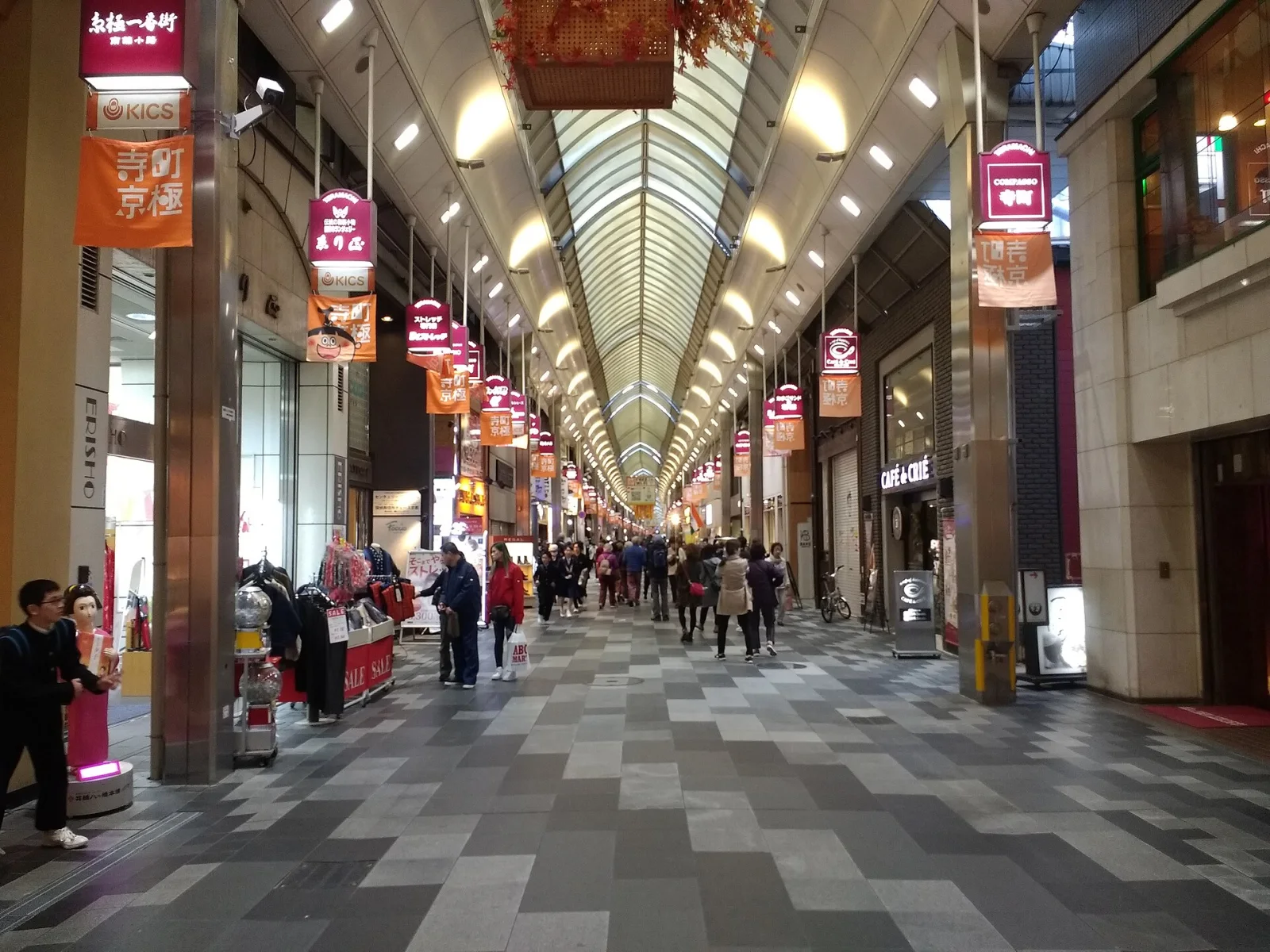
Sanjo acts as a dividing line along north-south Teramachi-dori. The block with Kyukyodo and the tea shops belongs to the northern Teramachi Senmontenkai district, whereas heading south leads into the Teramachi Kyogoku Shopping Street toward Shijo, with Shinkyogoku running parallel one block east. Walking west from Kawaramachi, pass the Shinkyogoku sign first and turn north at the next sign marked "Teramachi." Both the Sanjo arcade and Teramachi continue across multiple blocks, so once you decide which alley to explore next, plug that specific shop name into your map.
Before picking out incense or scent sachets, think about where you will use them. For closets or drawers, look for hanging sachets; for burning stick incense at home, remember to factor in an incense holder and ash tray. First-time buyers can start with small packs that are easy to finish. If someone in your group is sensitive to strong scents, have them wait outside—it also keeps the browsing stop brisk. Because washi paper creases easily, pack a flat A4 folder in your bag, and carry large sheets by hand in the store's wrapping before packing them flat in your suitcase last.
Kyukyodo pairs naturally with Rakushikan on the first floor of The Museum of Kyoto Main Building just to the west. Kyukyodo makes it easy to shop by function—letter sets, envelopes, and brush tools—while Rakushikan focuses on washi paper and paper crafts inside the museum's machiya-style retail row. If you are shopping for collage, origami, or gift wrap and see two similar patterns, compare their thickness, translucency, and backing color. If you only have time for one stop and want stationery between Kawaramachi and Teramachi, pick Kyukyodo; if you are drawn to specialty washi and already plan to visit the museum annex, leave time for Rakushikan.
For Uji tea souvenirs, walking south from Kyukyodo along Teramachi toward Sanjo brings you right past Itohkyuemon's Sanjo-Teramachi shop, ideal for grabbing boxed teas and matcha sweets to go. If you still have museum galleries, train rides, or dinner ahead, prioritize shelf-stable items marked for room-temperature storage in quantities you can finish or gift. If you plan to make matcha lattes at home, compare loose-leaf tins and tea bags side by side. Save sit-down coffee or breakfast stops for INODA COFFEE on Sakaimachi-dori or Maeda Coffee beside the museum annex.
If you walked north along the Takase River to Ichinofunairi at Nijo, shift your tea stop one block up. Follow Nijo-dori west to Teramachi and turn north for the Ippodo Tea Kyoto Main Store, whose Kaboku Tearoom is listed open 10:00 to 17:00. If you want to brew Japanese tea yourself and treat tea drinking as a dedicated stop, sit down there before walking south along Teramachi past Kyukyodo back to Sanjo. This loop avoids doubling back through the same corner and lets you treat the coffee shops as optional extras; if you just want a quick packet of tea to carry away, stick to Sanjo-Teramachi.
The 1928 Building at Sanjo-Gokomachi: Add an Afternoon Gallery Stop
Continuing west past Teramachi, look at the pale facade on the southeast corner of Sanjo and Gokomachi-dori: the 1928 Building, designed by Goichi Takeda as the Kyoto branch of the Mainichi Shimbun newspaper and completed in 1928. From Sanjo-dori, tilt your head up to spot the star-shaped windows and balconies, then step closer to the doorway to see the matching star motifs on the flanking light fixtures, borrowed from the newspaper's old emblem. Compared with the grand former bank down the street, this building rewards attention to smaller details—window frames, railings, and lamps. Step slightly back across the street if you want to fit both the upper balconies and windows into one phone shot.
In the afternoon, you can walk up the stairs to Dohjidai Gallery on the second floor, typically open 12:00 to 19:00 (closing at 17:00 on an exhibition's final day, closed Mondays unless it is a national holiday). If contemporary art is your main interest, make this your primary indoor stop and admire The Museum of Kyoto Annex from the street. To see historic interior materials over coffee, head down to the basement cafe-restaurant, where Kyoto City tourism notes the walls preserve Taizan tiles originally fired at Taizan Seitosho in Kyoto's Higashikujo area—giving you exterior stonework and glazed interior tiles in the same building.
The third floor houses the non-verbal stage show GEAR, which runs about 90 minutes, and the building has no elevator or escalator. If you have tickets, build your half-day around the curtain time—it is easy to walk here from either Kawaramachi or Karasuma Oike, exploring one end of the street before the show and the other afterward. For anyone in your group who prefers to avoid stairs, admire the 1928 Building from the Gokomachi corner and continue west to The Museum of Kyoto, which has elevator access.
The Museum of Kyoto: Two Separate Entrances for the Annex and Main Building
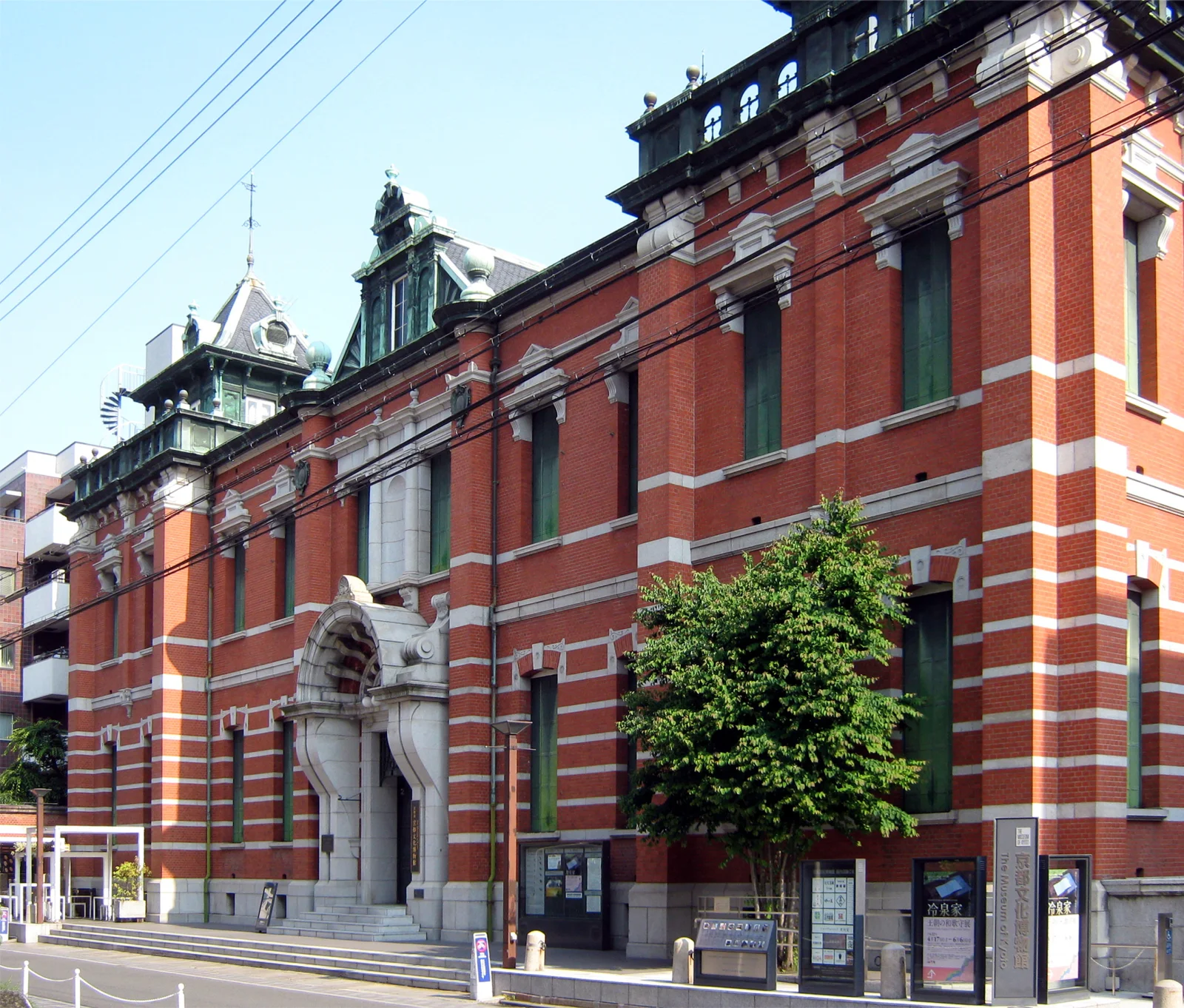
At Takakura-dori, the red-brick building banded in pale stone is The Museum of Kyoto Annex, completed in 1906 as the Bank of Japan Kyoto Branch and designed by Kingo Tatsuno and Uheiji Nagano. Seen from Sanjo-dori, the horizontal stone courses break up the long facade while the arched main doorway draws your eye to the center. Stepping back to view the building diagonally from the intersection makes the two corner elevations, roofline, and staggered window heights much clearer. Pick a wide street corner and wait for a break in pedestrian traffic before framing your shot, rather than stepping backward into the roadway to fit the roof.
Inside the Annex Hall, take in the high ceiling and upper gallery railings. Once the bank's main customer hall where tellers worked, it now hosts exhibitions, concerts, and events. Museum listings show general opening hours of 10:00 to 19:30, with free entry to the Annex Hall on regular days, though special events may require tickets or alter hours. If seeing the interior is a priority, check the Annex Hall event calendar as you plan your day; if a ticketed event is underway, decide whether to buy in, or stick to the exterior facade and tour the Main Building galleries instead.
Even the small roof windows above the Annex serve a purpose. Natural daylight filters into the hall ceiling from clerestory skylights that jut out along the pitched roof visible from the street, and the heavy iron entrance doors have handles mounted on the inside from the days when night watchmen stood guard within. Once inside, glance down beneath the teller counters: the museum notes the stone comes from Ogaki in Gifu Prefecture and contains visible fusulinid and crinoid fossils. If you are walking with kids, spotting the roof skylights outside and hunting for fossils in the stone counters makes a fun mini-quest.
The Main Building sits immediately north of the Annex. Turn onto Takakura-dori from Sanjo to reach the first-floor entrance for exhibition tickets, coin lockers, and the information desk. The General Exhibition is open 10:00 to 19:30 (last entry 19:00), with admission at ¥600 for adults, ¥400 for university students, and free for high school students and younger; tickets also include regular film screenings, though special screenings follow separate rules. If you hold a Special Exhibition ticket, you can use it for the General Exhibition on the same day. For a late-afternoon visit, note that Special Exhibitions usually close at 18:00 (extended to 19:30 on Fridays), with last admission 30 minutes before closing.
If you only have half an hour, start with the Annex Hall and exterior brickwork, saving the Main Building galleries for another trip. To explore Kyoto's urban history, head up to the second-floor General Exhibition, pick which era or theme you want to read first, and allow 45 to 60 minutes, budgeting extra time separately for special shows or films. Galleries do not allow re-entry, so wait until afterward for shopping or coffee on the first floor. Only wooden pencils are permitted for note-taking inside exhibition rooms—keep ballpoint pens, fountain pens, and mechanical pencils in your bag—and on rainy days leave long umbrellas in the racks and stow folding umbrellas inside your bag. If you bought a fresh notebook earlier, jot down exhibition titles in pencil and paste your ticket stub inside afterward. If your companions have different interests, meet at the first-floor Roji Tenpo area, a recreated row of machiya storefronts with shops and dining where browsers can stay downstairs while museum-goers head up, though individual shop hours vary.
The museum closes every Monday (or the following day when Monday is a national holiday) and over New Year's from December 28 to January 3. On a Monday walk along Sanjo-dori, focus on Kawaramachi, Teramachi, and ShinPuhKan, and admire the Annex facade from the street. Personal-use photography is allowed in the Annex and the Main Building's first floor, but prohibited inside exhibition galleries and occasionally restricted during Annex events.
Breakfast on Sakaimachi and Afternoon Coffee in the Old Bank Vault
Both the Main Branch and the Sanjo Branch of INODA COFFEE sit right around Sanjo and Sakaimachi-dori, though on different streets. The Main Branch is just south of Sanjo along Sakaimachi-dori and opens early, listed 7:00 to 18:00. The Sanjo Branch faces Sanjo-dori just east of Sakaimachi and generally runs 10:00 to 19:00 (last order 18:30). If you love classic kissaten coffee houses and want to beat the mid-morning rush, have breakfast at the Main Branch before The Museum of Kyoto opens at 10:00; if you want a mid-walk break right on the main route without a detour, step straight into the Sanjo Branch.
Reopened in 2024, the Sanjo Branch keeps its signature oval counter alongside window-facing tables, giving it a different feel from the Main Branch. Dark-roast fans can start with the Sanjo Blend Toki, and sandwiches and light meals are available if you want a proper lunch. Neither branch takes standard table reservations, so if you have a large group or arrive near peak meal hours, only stop if the wait looks manageable—budget 30 to 60 minutes, or shift lunch down toward ShinPuhKan if the line is long.
Maeda Coffee Bunpaku occupies the former bank's brick vault building, tucked just off the courtyard behind the Annex Hall. Typical hours are 10:00 to 17:00 (last order 16:30), extending to 18:00 (last order 17:30) during special exhibitions, and it closes Mondays (or Tuesday after a holiday Monday). It is an easy way to pair architecture and an afternoon coffee in a single stop. If you have tickets for an evening special exhibition and want coffee first, stop by Maeda Coffee before heading upstairs, since its last order comes earlier than the General Exhibition's final entry.
Before stepping into the Annex, notice the main street entrance on Sanjo-dori and then spot the freestanding vault building beside the courtyard. Seeing the two together shows how the bank placed public-facing operations on the street and tucked secure storage behind. Museum history pages also point out the old roof vents atop the vault, worth a look from the courtyard before you go inside for coffee. If you only have time for one drink stop, choose INODA Main Branch for breakfast, or save Maeda Coffee for the middle of the day right after touring the Annex.
Nakagyo Post Office to ShinPuhKan: Two Ways to Preserve Historic Facades
Leaving the museum and walking west to Higashinotoin-dori brings you to Nakagyo Post Office, still an active post office today. Built in 1902 as the Kyoto Post and Telegraph Office, it underwent a modern rebuild that preserved the south facade along Sanjo-dori, portions of the east and west walls, and the roof—leaving the original doors, windows, cornices, and corner details visible from the street. After the bold white stone stripes of the former Bank of Japan, shift your eye here to the rhythm of the window bays, corners, and roofline rather than just snapping two red-brick buildings back to back.
After Shijo-dori and Karasuma-dori were widened in 1912, commercial activity that once centered on Sanjo gradually shifted elsewhere—a transition that museum records credit with helping preserve so many historic buildings along Sanjo-dori. Continue to ShinPuhKan for a second preservation approach: the former Kyoto Central Telephone Office, designed by Tetsuro Yoshida with its first phase finished in 1926, reopened in 2020 as a redeveloped complex. Turn north up Higashinotoin-dori into ShinPuhKan to walk through the central courtyard between the heritage brick wing and the new tower; to see the rhythmic arched windows highlighted in city cultural property notes, step out to Karasuma-dori and look back at the west facade.
ShinPuhKan's passageways link Higashinotoin-dori and Karasuma-dori, open north to Aneyakoji-dori, and connect directly underground to the south ticket gate of Karasuma Oike Station. When you are ready to leave, simply follow the subway signs downstairs from inside the complex. If you want one more look back down Sanjo-dori, exit from a different corner to contrast the preserved streetfront of a working post office with the old telephone exchange now shared by shops, a hotel, and a cinema. How long you linger in the courtyard depends on the weather; on chilly days, pick your next shop from inside the covered arcade before crossing the open air.
To extend the architecture walk a little farther, step out onto Karasuma-dori, walk south back to Sanjo, and cross west into the blocks beyond. According to museum heritage notes, the Sanjo-kaiwai historic streetscape zone stretches from Teramachi to Shinmachi-dori, about two blocks past the end of this half-day walk. Looking across from the opposite sidewalk makes it easier to read each facade and see how historic buildings join modern neighbors. Anyone in your group who prefers to stay put for stationery and coffee can wait on the east side of ShinPuhKan and meet back up before heading down to Karasuma Oike Station together.
TRAVELER'S FACTORY at ShinPuhKan: Check Your Notebook Specs
TRAVELER'S FACTORY KYOTO sits inside ShinPuhKan, with mall listings showing hours from 11:00 to 20:00. The shop centers on Traveler's Notebooks, paper refills, brass charms, and customizable accessories, alongside Kyoto-exclusive editions. If you are buying your first notebook, test both sizes against the bag you actually carry: the Passport size slips out easily on trains for jotting down station names, while the larger Regular size gives you room to paste tickets, printed maps, and travel photos. If you already own a leather cover, snap a quick photo of its size and spine specs before leaving home so you grab the right refills.
Match your paper refills to how you plan to use them. Grid or lined inserts work cleanly for organizing transit, hotel confirmations, and flight times before a trip, while blank or lightly formatted pages leave room for facade sketches, ink stamps, and ticket stubs along Sanjo-dori. If you expect to keep writing in it back home, stick to standard refills you can easily restock, and pick up one Kyoto-edition item for this trip. Before buying metal tags, clasps, or pen clips, think about whether they might scratch your phone or glasses inside your bag. If you only have time for a coffee and one quick purchase, spare refills pack almost flat; otherwise, give yourself an extra 20 minutes to compare paper textures.
If you are catching the Keihan train east in the evening, you can also start at ShinPuhKan, drop heavy bags back at your hotel, and walk east later. Travelers focusing only on ShinPuhKan and the former Bank of Japan can simply shuttle along Higashinotoin, Sanjo, and Takakura-dori, passing Nakagyo Post Office on the way. If you plan to catch a movie at ShinPuhKan's cinema, count the runtime separately rather than squeezing it into your 3-to-4-hour walk—and have your group meet in the courtyard before showtime instead of trying to find each other across different subway gates at Karasuma Oike.
Adjusting for Weather, Pace, and Your Next Stop
On a weekday half-day, aim to cross Sanjo Ohashi Bridge around 10:30, reach ANGERS as it opens at 11:00, and browse paper or tea in Teramachi afterward. Stop for a sit-down lunch, head into The Museum of Kyoto in the early afternoon, and save the last 30 minutes for ShinPuhKan—extending your finish to around 15:30 if you tour the General Exhibition. If you only have two hours, exit at Kyoto Shiyakusho-mae Station, pick either ANGERS or Kyukyodo, walk past the Museum Annex and Nakagyo Post Office, and wrap up at ShinPuhKan, skipping the Takase River detour north unless you have time to spare.
When the museum is closed or you are pushing a stroller in the rain, flip the route in reverse. Start at Karasuma Oike Station and step straight into ShinPuhKan via its direct subway passage to minimize time outdoors, stepping out to see the post office and Annex facades when the rain eases. To linger in Teramachi without getting soaked, stay under the covered arcade stretches, though crossing Sanjo-dori still involves open intersections. In a sudden downpour, instead of waiting it out on the bridge, ride the Tozai Line one stop from Kyoto Shiyakusho-mae to Sanjo-Keihan for the east bank, and save the Kamo River for another clear window.
For wheelchair users or anyone minimizing stairs, the bridge deck on the east end is flat, and the Tozai Line at Sanjo-Keihan offers elevator access to street level via Exit 2 on the south side of Sanjo-dori. On the west end, Kyoto Municipal Transportation maps route elevator users at Karasuma Oike toward the north ticket gate and Exit 3-2, emerging at the southeast corner of the Karasuma-Oike intersection. The Museum of Kyoto notes a ramped access path on Takakura-dori about 40 meters south of the Main Building entrance, with an assistance intercom at the Sanjo-Takakura corner. Inside the Main Building's first floor, you will find an accessible restroom, baby-changing tables in both men's and women's restrooms, and free loaner wheelchairs and strollers at the information desk (where personal strollers can also be stored when galleries are busy), plus coin lockers requiring a refundable ¥100 coin. Using the Takakura-dori entrance is much more direct for accessing these facilities than navigating the steps of the Sanjo-facing Annex.
In summer heat, schedule the bridge, Kiyamachi, and exterior photos for morning or late afternoon, saving midday for a seated lunch or air-conditioned museum galleries. In winter, photograph the red-brick facades while daylight is still bright before browsing inside ShinPuhKan or ANGERS at dusk. During spring cherry blossom season along the Takase River, budget extra walking time for bridge views, crosswalks, and photo pauses, and consolidate your shopping to one store. If your group gets separated in cherry-blossom or holiday crowds, pick a single doorway or shop entrance with a set meetup time rather than waiting on a busy street corner.
To continue on to Nishiki Market, turn south at Teramachi or Takakura-dori, then finish near Shijo to catch the Hankyu or subway lines. Save takeaway food purchases for the end of your walk so you are not hauling snacks down half of Sanjo-dori. If you want to compare department stores, Nishiki Market, and covered arcades before planning the rest of your afternoon, check our Kyoto shopping district guide. Alternatively, take the Tozai Line one stop west from Karasuma Oike to Nijojo-mae Station to pair this walk with Nijo Castle's gates and gardens—or tour the castle in the morning and walk Sanjo-dori west to east in the afternoon, though giving each half a day works best if you want to explore both in depth.
If you are staying near Karasuma, you can drop heavy ceramics or stacks of washi at your hotel before heading back out. Want to return to the riverside for dinner? Ride the subway to Kyoto Shiyakusho-mae and walk straight to the west bank instead of crossing the whole street a second time. Because Pontocho's alley is narrow, set your dinner meetup right at the restaurant entrance so latecomers can walk straight up from Kawaramachi. When planning your ride home afterward, check whether the restaurant address sits closer to Shijo or Sanjo—head to Gion-Shijo or Kyoto-Kawaramachi Station near Shijo, or Sanjo Station near Sanjo, and map your route straight from the reservation address.
A few useful answers
How long does the Kyoto Sanjo-dori walk take?
The stretch from Sanjo Ohashi Bridge to Karasuma Oike is about 1 km. Allow 3 to 4 hours if you plan to browse one major shop, visit The Museum of Kyoto Annex, and stop for coffee. Short on time? Start from Kyoto Shiyakusho-mae Station and skip the bridge and the northern Takase River detour.
Which side of the river are Keihan Sanjo and Subway Sanjo-Keihan stations on?
Both stations sit on the east bank of the Kamo River and link underground—Keihan operates Sanjo Station, while the Kyoto Subway Tozai Line serves Sanjo-Keihan Station. To reach Kiyamachi, Kawaramachi, or The Museum of Kyoto, come up to street level and cross the bridge heading west.
Do you need a ticket for The Museum of Kyoto Annex?
Entry to the Annex Hall is normally free, though certain concerts or special events require tickets. Admission to the Main Building's General Exhibition is ¥600 for adults, ¥400 for university students, and free for high school students and younger; Special Exhibition tickets also include same-day General Exhibition access.
How can I walk Sanjo-dori if it rains or the museum is closed?
Use the direct underground connection from Karasuma Oike Station's south gate into ShinPuhKan, then step out onto Sanjo-dori toward Teramachi when the rain lets up. The Museum of Kyoto closes on Mondays (or Tuesday if Monday is a national holiday); on closed days, admire the Annex exterior from the street and spend your time at ShinPuhKan, Teramachi, and Kawaramachi.
How should I choose between ANGERS, Kyukyodo, and TRAVELER'S FACTORY?
Head to ANGERS Kawaramachi's first floor to compare everyday stationery alongside lifestyle goods. Choose Kyukyodo in Teramachi for letter paper, greeting cards, incense, and calligraphy supplies. Go to TRAVELER'S FACTORY inside ShinPuhKan if you want Traveler's Notebooks and customizable refills.
Official information and references
Sources used in this guide.
- Kyoto City Tourism Association | History of Sanjo Ohashi Bridge
- Kyoto City Tourism Association | Sanjo-dori Modern Architecture Walking Map (PDF)
- City of Kyoto | Takase River Ichinofunairi Historic Site
- Keihan Electric Railway | Sanjo Station Map and Transfer Guide
- Kyoto Municipal Transportation Bureau | Sanjo-Keihan Station Elevator Route
- Kyoto Municipal Transportation Bureau | Karasuma Oike Station Exits and Accessible Routes
- ANGERS | Kawaramachi Main Store Location, Hours, and Floor Guide
- Kyukyodo | Kyoto Main Store Address and Hours
- Teramachi Senmontenkai | Northern Arcade History and Shops
- Teramachi Kyogoku Shopping Street | Shopping Arcade from Sanjo to Shijo
- Itohkyuemon | Sanjo-Teramachi Shop
- Ippodo Tea | Kyoto Main Store and Kaboku Tearoom
- City of Kyoto | Registered Cultural Properties (Former Telephone Office, Newspaper Branch, Nakagyo Post Office)
- Dohjidai Gallery | History and Floor Guide of the 1928 Building
- Dohjidai Gallery | Opening Hours, Closed Days, and Access
- Kyoto City Tourism Association | The 1928 Building and Taizan Tiles
- GEAR | Showtimes and Venue Accessibility
- The Museum of Kyoto | Main Building and Annex Opening Hours
- The Museum of Kyoto | General, Special Exhibition, and Annex Admission
- The Museum of Kyoto | Closures, Strollers, Lockers, and Photography Rules
- The Museum of Kyoto | Accessible Entrance and Facilities
- The Museum of Kyoto | History and Vault of the Former Bank of Japan Kyoto Branch
- The Museum of Kyoto | Architecture and Materials of the Former Bank of Japan Kyoto Branch
- The Museum of Kyoto | Rakushikan Shop
- Maeda Coffee | Bunpaku Branch Hours and Last Order
- INODA COFFEE | Main Branch Information
- INODA COFFEE | Sanjo Branch Information and Menu
- ShinPuhKan | Direct Subway Access and Location
- ShinPuhKan | Passage Between the Former Telephone Office and New Wing
- ShinPuhKan | TRAVELER'S FACTORY KYOTO
- TRAVELER'S FACTORY | Kyoto Store and Exclusive Notebook Accessories
- Kyoto Prefecture Tourism Federation | Pontocho Street