Plan your Kyoto shopping around Shijo-Kawaramachi, Nishiki Market, Karasuma, and Nishijin. Covers half-day routes, how the two department stores and arcades compare, rainy-day underground walkways, Kyoto Station souvenirs, and Japan's tax-free refund rules starting November 2026.
- Region & Focus
- KyotoNeighborhoods and shopping
- Reading Scope
- 19 min read · 9 chapters · 6 Q&As
- Official Verification
- 32 official sources checkedUpdated November 22, 2026
- Key Topics
- NeighborhoodsItinerariesFood
Chapter Route Map (tap any stop)
- Where to Get Off If You Only Have Half a Day
- What to Buy First at Nishiki Market
- Heading North Through Shinkyogoku, and Where to Cross to Teramachi
- Choosing Between Shijo's Two Department Stores
- Karasuma Oike: Washi Paper, Books, and Small Crafts
- Save Nishijin for Seeing Textiles Made
- Starting November 2026: Register at Purchase, Inspect at Departure
- Where to Buy Tea, Confections, and Textiles
- Adjusting for Rain, Departure Day, and New Year's
- Quick Q&A
For your first shopping trip in Kyoto, half a day around Nishiki Market and Shijo-Kawaramachi is plenty. Pick up dry goods to pack home first, stroll through the covered arcades, and grab boxed sweets at Kyoto Takashimaya at the end. If you only have a brief window on a rainy day, duck into Daimaru from the Hankyu Karasuma side and follow the Shijo-dori underground passage toward Takashimaya. Save another half day for Nishijin if you want to see how traditional textiles are woven. Note that starting November 1, 2026, Japan's tax-free system switches to paying the tax-included price at checkout and claiming your refund after customs inspection on departure, so build that stop into your airport schedule before checking luggage.
Where to Get Off If You Only Have Half a Day
Starting from Kyoto Station with Nishiki Market or Daimaru on your list, ride the Karasuma Subway Line to Shijo Station. Municipal subway "Shijo" and Hankyu Railway "Karasuma" meet at Shijo-Karasuma; the station names differ, but the underground concourse links them. For Nishiki Market's west entrance, follow underground signs for Hankyu Exit 16 ("Takakura-dori North / Nishiki Market"), walk north along Takakura-dori, and turn east onto Nishikikoji. That same exit also signs Daimaru's east entrance. If you have a stroller or suitcase, check the station map for elevators before choosing an exit.
Coming from Osaka on the Hankyu Line, pick your stop based on your first target. Get off at Karasuma for Nishiki Market groceries and Daimaru, or ride one stop farther to Kyoto-kawaramachi if you want Takashimaya, T8, or Shinkyogoku first. Exit 4 at Kyoto-kawaramachi is signed for Takashimaya's east entrance, a handy landmark. The two department stores sit a few blocks apart along Shijo-dori—you can walk underground from one to the other, or end at whichever store matches your return train so you aren't hauling bags back across town.
If you are staying near Sanjo-Keihan, start at Kyoto BAL at Kawaramachi-Sanjo, stroll south down Shinkyogoku, and turn west onto Nishikikoji into the market—a natural flow for an afternoon of boutiques and apparel. If you are hunting down market stalls with fixed closing days or leaving Kyoto early the next morning, flip the order and hit the market before Kawaramachi. Guests around Karasuma Oike looking for washi paper and bookstores can walk south near Takakura-dori past Sanjo to Nishikikoji, then catch the train from Shijo instead of doubling back to Oike.
With four hours to spare, give equal time to Nishiki Market, Shinkyogoku, and one department store, leaving room for a sit-down meal in between. If you only have 90 minutes for office snacks, head straight for one department store's basement food hall. When a Nishijin weaving workshop or kimono fitting is on the schedule, lock that reservation in first and slot downtown bookstores and gifts into another open window.
| What You Want to Buy | First Stop | Easy Add-On Nearby |
|---|---|---|
| Dashi dry goods, Kyoto pickles, small bites | Nishiki Market West Entrance (Subway Shijo / Hankyu Karasuma) | Walk east to Nishiki Tenmangu Shrine, then Shinkyogoku |
| Department store gift boxes, apparel, select goods & books | Hankyu Kyoto-kawaramachi (Takashimaya, T8) | Shinkyogoku, or walk Kawaramachi-dori to Kyoto BAL |
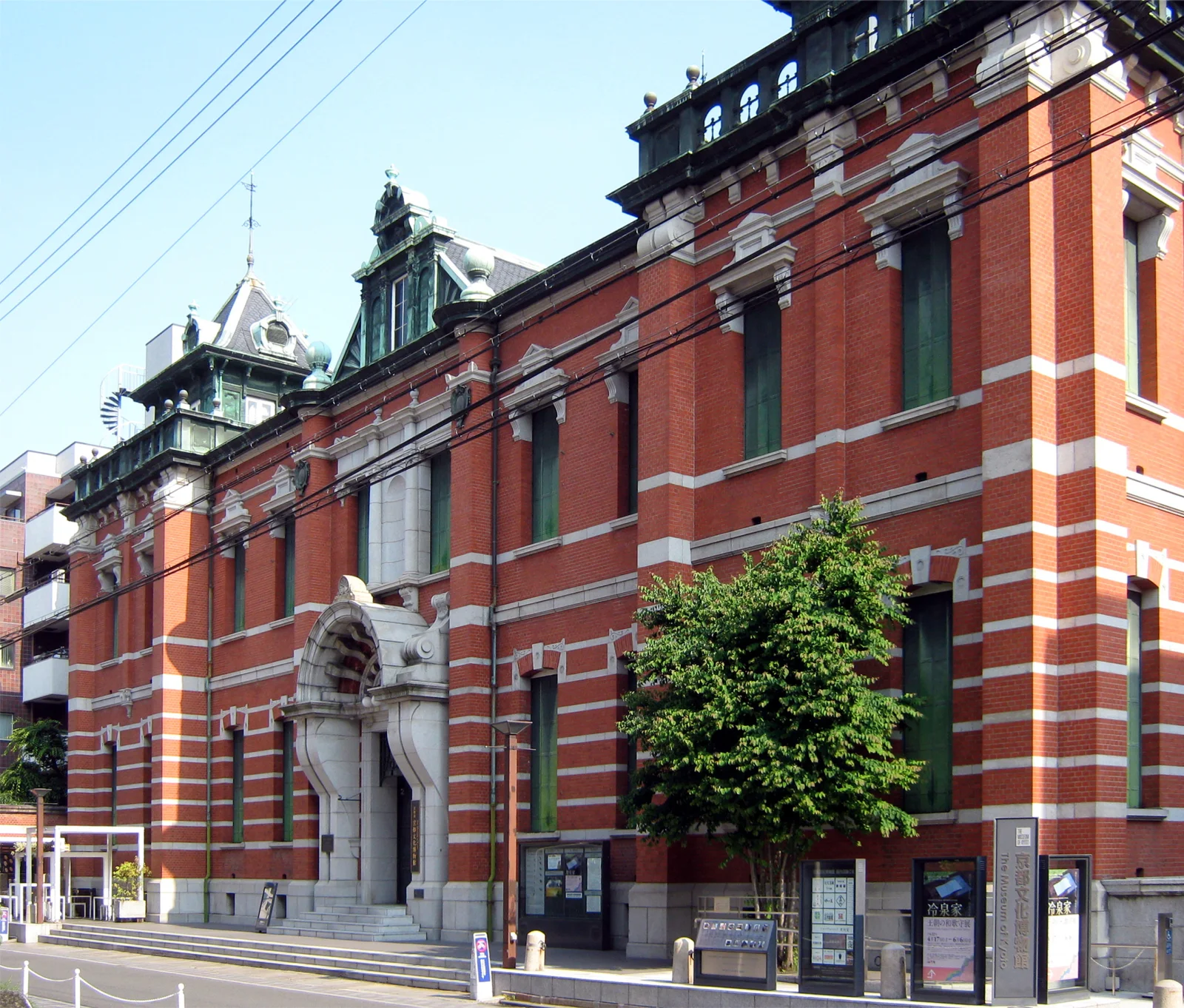
| Washi paper, exhibition catalogs & small crafts | Subway Karasuma Oike (The Museum of Kyoto) | Head south to Nishiki Market or Daimaru Kyoto |
| Weaving demos & Nishijin textile accessories | Horikawa Imadegawa or Subway Imadegawa | Follow Imadegawa-dori to Kamishichiken & Kitano Tenmangu Shrine |
| Last-minute boxed souvenirs before your train | JR Kyoto Station Central Gate side | Souvenir zones inside the Kyoto Porta station building |
Plan your Kyoto shopping around Shijo-Kawaramachi, Nishiki Market, Karasuma, and Nishijin. Covers half-day routes, how the two department stores and arcades compare, rainy-day underground walkways, Kyoto Station souvenirs, and Japan's tax-free refund rules starting November 2026.
What to Buy First at Nishiki Market
Just north of Shijo-dori, Nishiki Market runs roughly 400 meters along Nishikikoji from Takakura-dori east to Teramachi-dori. Entering from the west and exiting east works best for first-timers because it drops you right at Nishiki Tenmangu Shrine and Shinkyogoku. If you are already carrying department store gift boxes, enter from the east for one or two targeted blocks and slip back out to Shijo via a side street. Orient yourself on your map using cross streets—Takakura, Sakaimachi, Tominokoji, and Teramachi—rather than trying to read every overhead sign.
Each shop sets its own hours, though the market association notes that more stalls close on Wednesdays than other days. For a reliable morning anchor, pin Tanaka Keiran on the west side of Tominokoji-dori; the association's directory lists 9:00–17:00 (closed January 1–5) for its *dashimaki* rolled omelets. Use the association's online map to filter by category—Kyoto pickles, dried goods and *tsukudani* simmered delicacies, or *yuba*, *fu*, and tofu. There is no market-wide closing day, so saving the hours for two or three target stalls gives your morning a clear starting point.
Before buying dried *yuba* (tofu skin), kombu kelp, or bonito flakes, think about how you actually cook at home. Ask staff how long dried *yuba* needs to soak for soups or simmered dishes, and specify whether you want kombu for *dashi* stock or for simmering and eating, plus how many batches one pack yields. For *tsukudani* gifts, sample a flavor and check storage rules on the back before choosing pack sizes. Ring up items you plan to eat in Kyoto—like rolled omelet or fresh *yuba*—separately from take-home groceries so your bags stay organized.
Closer to Teramachi, the association directory highlights Nishiki Takakuraya for Kyoto pickles. If you are bringing pickles home, check the pouch for "Keep Refrigerated" versus "Room Temperature" and verify the best-by date. Even within the same shop, lightly brined *asazuke* and aged varieties require different handling; pack room-temperature pouches for long travel days. Buy freshly cooked snacks only at stalls with designated eating space, and finish them before walking on so your hands stay free to read packaging labels.
The market association asks visitors to finish food inside or directly in front of the stall where they bought it and put leftovers away while walking. When queues build up, wait where staff direct you so the narrow aisle keeps moving. Because strollers and wheelchairs have a hard time passing oncoming crowds inside, walk along parallel Shijo-dori and cut into the market at the nearest cross lane. If people in your group want different snacks, split up and meet at an outer corner rather than in front of a busy stall.
Most stalls operate normally through the final days of December, while many close from January 1 to 3. Buy specialty ingredients before New Year's Eve and pack dry goods ahead of your flight. In the first days of January, if all you need is a box of sweets, skip the market hunt and buy at open souvenir counters inside Kyoto Station after checking their holiday hours.
Heading North Through Shinkyogoku, and Where to Cross to Teramachi
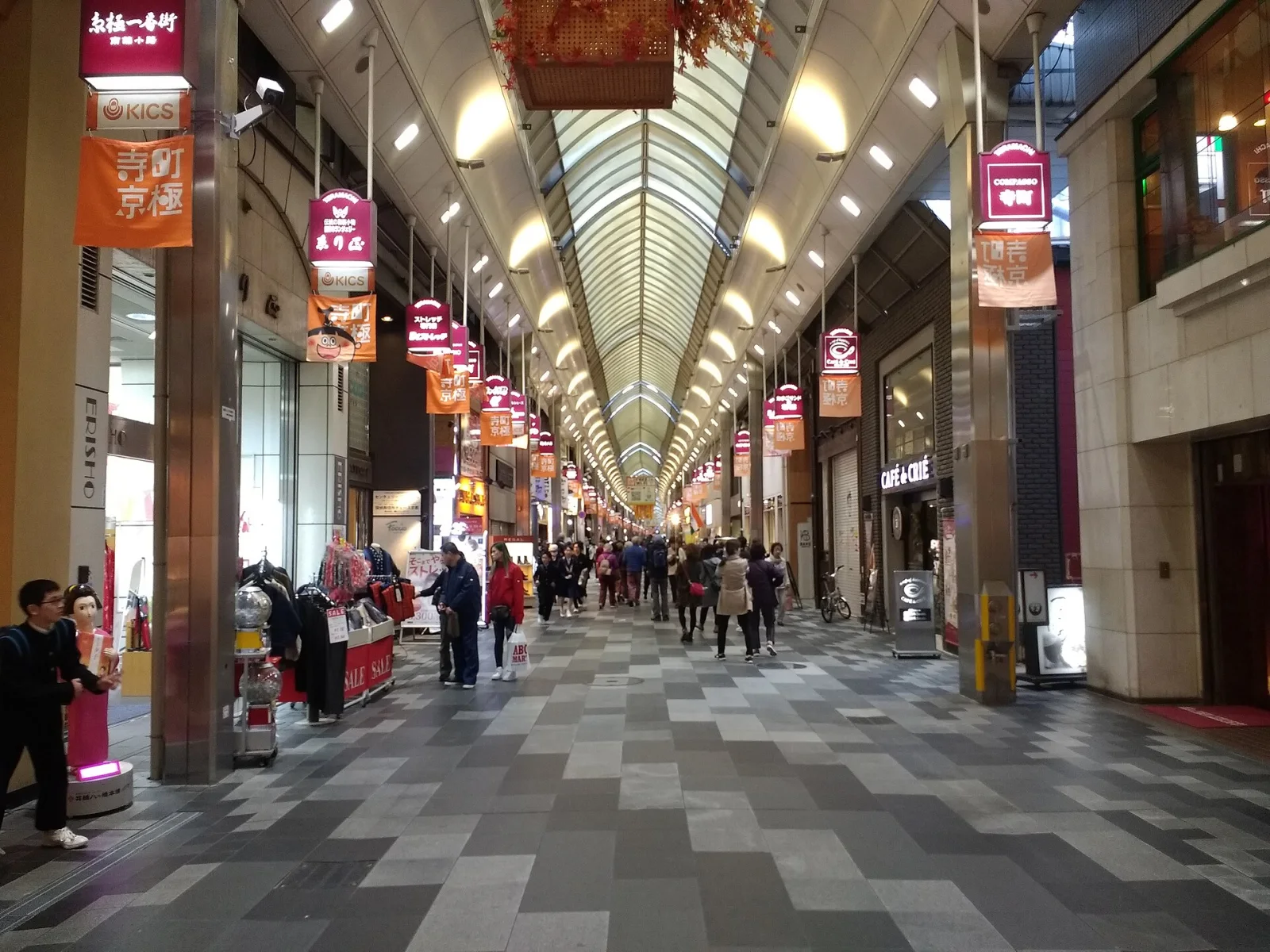
Walking east out of Nishiki Market across Teramachi-dori puts you straight into Shinkyogoku, where Nishiki Tenmangu Shrine sits. For vintage clothes, anime goods, and budget-friendly variety shops, turning north here flows far better than looping back down to Shijo. Shinkyogoku and Teramachi Kyogoku run roughly parallel, making it easy to switch arcades at Rokkaku-dori or Sanjo-dori. Shinkyogoku Rokkaku Park at Rokkaku-dori has a prominent "Rokkun Plaza" sign that works well as a landmark. If you arrange to meet at Sanjo-dori, specify whether you mean the Shinkyogoku or Teramachi corner—the two exits sit close enough together that it is easy to wait on the wrong side.
To revisit a shop later, save both its name and the nearest cross street. Shinkyogoku's directory divides the arcade by Shijo, Nishikikoji, Takoyakushi, Rokkaku, and Sanjo, so knowing which two blocks frame a store makes backtracking for a fitting much easier. With vintage apparel, check actual measurements on the tag, inspect hems and cuffs, and hold altered pieces up against what you are wearing. Browse the arcades first for vinyl records, Japanese books, and collectibles, then fill any gaps at the specialty floors in T8 back on Shijo.
If you grazed through two stalls in Nishiki at midday, plan a sit-down tea or coffee break once you reach Shinkyogoku or Teramachi. Larger groups can let browsers continue to Rokkaku while others grab a table along Sanjo, saving everyone from waiting outside dressing rooms. In heavy rain, stay under the Teramachi Kyogoku roof rather than walking exposed Kawaramachi-dori, and keep an umbrella ready at the top of your bag for the open crosswalks leading to department stores or Kyoto BAL.
Kawaramachi-Sanjo offers a different pace. Just south of Sanjo on Kawaramachi-dori, Kyoto BAL runs 11:00–20:00 (closed January 1 per its website). Check its main building floor guide for books and lifestyle boutiques instead of walking every floor blindly. From Shijo Takashimaya, you can walk north along Kawaramachi-dori to BAL, then cut back through Rokkaku-dori into Shinkyogoku so you never retrace the same street.
Choosing Between Shijo's Two Department Stores
Takashimaya anchors the Kawaramachi end of Shijo. If you want traditional sweets from the basement food hall alongside Kyoto Tsutaya Books or Nintendo goods in the adjacent T8 wing, tackle it as a single stop. General retail hours run 10:30–20:00, though individual tenants vary: Mandarake Kyoto on T8's 4F opens 12:00–20:00, so hit Nishiki Market or a coffee shop first if you are hunting secondhand collectibles. EAT8, the basement dining zone in T8, generally opens at 11:00, making it easy to separate lunch from souvenir shopping.
Nintendo KYOTO sits on T8's 7F and opens 10:30–20:00. According to Nintendo's official notice, numbered entry tickets may be required on weekends, national holidays, and peak days: pick them up at the 1F T8 entrance by the Mario statue before opening, or outside the 7F store after opening, one per person. If your family is coming specifically for Nintendo, lock in your entry time first before wandering other floors. For broader anime goods, pair T8's secondhand shops with the nearby arcades to keep your walking concentrated around Shijo.
Daimaru Kyoto anchors the Karasuma end, right off the west side of Nishiki Market. B2F through 2F typically operate 10:00–20:00, 3F through 7F close earlier at 10:00–19:00, and the 8F restaurant floor generally runs 11:00–22:00, with some shop-by-shop variation. If you reach Daimaru late afternoon and want to try on clothes on the middle floors, hit the fitting rooms before going downstairs for food so you don't run into the 19:00 closing bell. Food-only shoppers can arrive later and slip straight back to Subway Shijo via the underground passage.
Since both stores have expansive basement food halls, let your return route break the tie on quick trips. Heading to dinner near the Kamogawa River, Pontocho, or Gion? Finish at Takashimaya and walk east. Catching a train back to Kyoto Station or staying near Karasuma? Daimaru cuts out backtracking. When comparing room-temperature gift boxes between the two stores, scan floor maps for brand counters first and note piece counts and shelf life in your phone so you only walk to the counters you actually want.
Buying chilled desserts? Kyoto Takashimaya's B1F provides free refrigerated lockers if you plan to keep browsing inside—just remember to collect them before leaving. If you still have a few blocks to walk afterward, drop chilled boxes in your hotel fridge or buy them at your final stop. Before a flight, ask staff how long the ice pack holds and count every leg from checkout to your home refrigerator, including airport trains, check-in, and the ride home after landing.
If your group splits up to shop, meet at a specific basement food counter or a numbered subway exit rather than saying "Takashimaya 1F," since the main building and T8 have separate street entrances. Check the floor map early for restrooms and seating if you have kids in tow, and wait until everyone regroups before moving to the next block.
Karasuma Oike: Washi Paper, Books, and Small Crafts
Take Exit 5 from Karasuma Oike Station and walk east along Sanjo-dori for about three minutes to reach The Museum of Kyoto. On the main building's ground floor, alongside the museum shop, sits "Roji Tenpo," a row of shops modeled after a traditional machiya lane. The directory includes Rakushikan for washi paper, plus Kyoto-focused books, exhibition catalogs, and small crafts. If you are undecided on gifts, start with washi stationery and catalogs—flat writing paper packs easily, while heavy art books depend on suitcase space. Note Rakushikan's shorter schedule: 11:00–17:00, closed Mondays and Tuesdays.
Looking for folding fans, incense, or tea? Pin one shop along Sanjo-dori before leaving the museum so you only detour into its block. Kyoto street addresses often use *agaru* (north of) and *sagaru* (south of); check corner signs to see whether you are on east-west Sanjo or north-south Takakura before reading the rest of the address. When you finish around the museum, walk south down Takakura-dori to Daimaru and Shijo, or head east on Sanjo to Kawaramachi BAL for apparel and lifestyle goods.
To compare two classic paper shops side by side, walk east from the museum along Sanjo-dori and turn north on Teramachi-dori to Kyukyodo's Kyoto Main Store. The museum specializes in exhibition catalogs and Kyoto-patterned washi, while Kyukyodo focuses on calligraphy brushes, inkstones, postcards, stationery, and incense. If brushes or inkstones are your priority, start from the City Hall side at Kyukyodo and walk toward Sanjo afterward. From there, take the Tozai Subway Line at Kyoto Shiyakusho-mae, or return to the Karasuma Line if you are headed to Kyoto Station.
When gifting stationery, pick a paper size that fits how the recipient actually writes before choosing a motif. Ask for exact dimensions on oversized catalogs and posters—some open wider than a carry-on suitcase. Pack thick books flat against the back of your bag and tuck paper sleeves beside rigid boxes to prevent creasing. Fabric pen cases and small woodblock prints travel well early in a trip; for expensive or oversized pieces, ask about international shipping options, protective wrapping, and fees before deciding whether to carry them yourself.
Save Nishijin for Seeing Textiles Made
Start a Nishijin itinerary at Horikawa Imadegawa. Operated by the Nishijin Textile Industrial Association, the Nishijin Textile Center offers free admission and is open 10:00–16:00 from October through March and 10:00–17:00 from April through September. It closes on Mondays (moving to Tuesday if Monday is a national holiday) and over New Year's from December 29 to January 3. If a Monday falls in your Kyoto stay, swap this with a downtown department store day.
From Kyoto Station, City Bus No. 9 stops at Horikawa Imadegawa, a one- or two-minute walk from the Center. From Shijo-Kawaramachi or Shijo-Karasuma, take Bus No. 12 toward Kinkaku-ji and Ritsumeikan University; on the way back to Shijo, check that the bus headsign reads "Shijo-Kawaramachi / Sanjo-Keihan." To skip road traffic, ride the Karasuma Subway Line to Imadegawa Station and walk about 10 minutes as estimated by the Center. Build that walk back to the subway into your timing if you are catching a limited express, Shinkansen, or carrying chilled goods.
Hand-weaving workshops require advance booking for ages fifth grade and up, run about 40 minutes, and cost ¥2,750 at the standard rate for a woven table mat you take home. For younger kids, try the Nishijin brocade kaleidoscope craft—about 30 minutes, ¥1,980 per person, capped at four participants per session, with second graders and under accompanied by a parent. Tour the textile displays before the workshop so children can connect the patterns on their fabric scraps to what they just saw. Plan your departure around your reserved session and decide afterward whether weather and energy allow continuing to Kitano.
On a first visit, begin with the weave samples and historical exhibits, then pause at an artisan demonstration to watch how warp and weft threads interlace before browsing the ground-floor shop. Examining coasters, bookmarks, and coin purses right after seeing the looms makes the motifs click. Look closely at the weave face and flip items over to inspect edge finishing, and ask whether pieces can handle water or require dry wiping. For major purchases like *fukuro obi* sashes or kimono yardage, bring photos and measurements of what you plan to pair them with so staff can advise on pattern, fiber, and cut. Give the Center at least an hour, or longer if you book a workshop.
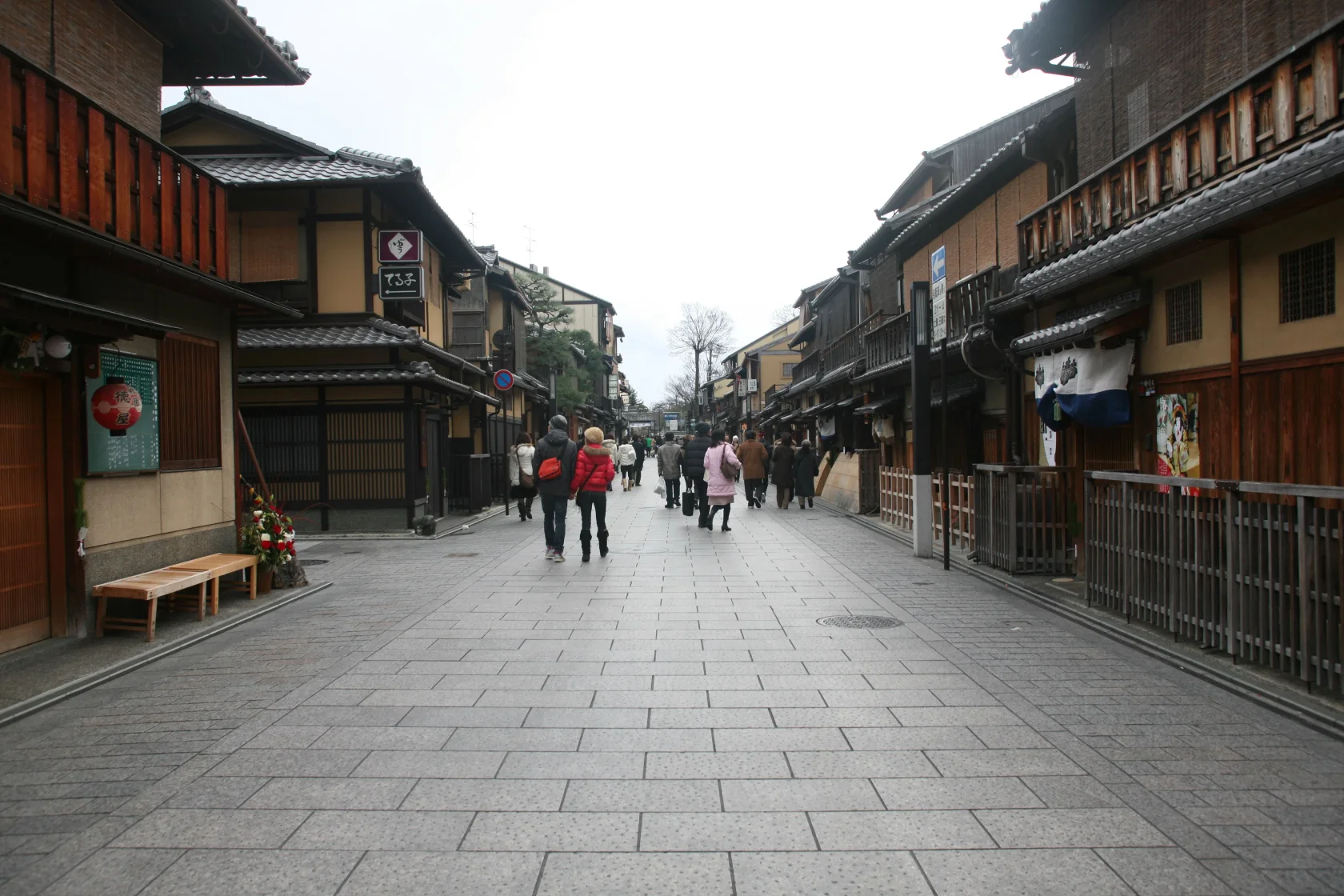
With energy left afterward, walk to Imadegawa Shichihonmatsu and follow Kamishichiken toward Kitano Tenmangu Shrine's East Gate. Kamishichiken is a working geisha teahouse and residential street—admire the wooden lattice facades from the public lane, keep doorways clear for photos, and avoid blocking the alley in groups. On the 25th of each month, Kitano Tenmangu hosts the Tenjin-ichi flea market (subject to weather cancellations posted on the shrine notice board); browse the shrine approach before visiting the Center. Ask stalls about sizes and wrapping when buying ceramics or fabric, and catch a bus directly from Kitano Tenmangu-mae if you end up carrying heavy pottery.
If it rains on your textile day, visit the Center on its own, take the bus straight back to Shijo, and save the teahouse lanes for clear weather. If washi paper appeals to you more than weaving, replace the whole Nishijin block with The Museum of Kyoto and Sanjo shops around Karasuma Oike, then finish with Nishiki Market and lunch. You still get a focused craft stop with plenty of time to sit down.
Starting November 2026: Register at Purchase, Inspect at Departure
Beginning November 1, 2026, eligible foreign visitors in Japan pay the tax-included price at checkout and register their purchases at participating stores or tax-free counters. Within 90 days of purchase, present your passport upon departure and undergo Japan Customs inspection as directed; the store or its tax-free provider then refunds the consumption tax equivalent via your registered method. Carry your physical passport while shopping. Pull out your payment card before ringing up and ask whether registration happens at the register or on another floor—you must complete it the same day, as coming back the next day won't fix a missed receipt.
The minimum spend is ¥5,000 before tax at the same store on the same day. Shops sharing a delegated tax-free counter can combine receipts under counter rules, though even inside one complex, some tenants process tax-free separately. On Kyoto Takashimaya T8's official directory, for example, certain tenants send you to Kyoto Takashimaya's 7F Tax-Free Counter while others handle registration in-store. Jot the shop name or floor on receipts before taking the elevator up from B1. If your group splits up to shop, the person who actually made each purchase must appear with the receipts, items, passport, and payment card.
Kyoto Takashimaya's 7F Tax-Free Counter runs 10:30–20:00. Daimaru Kyoto's Tax-Free Counter sits on 8F, where official guidelines note same-day eligible receipts can be combined with a handling fee of up to 2.3% of the tax-excluded purchase amount; Takashimaya also deducts a handling fee from refunds. If you are only picking up two boxes of snacks before leaving, paying regular retail price and skipping the queue is often easiest. Save registration for trips where apparel or housewares stack up, or stick to planned list items rather than adding extra snack boxes just to hit the minimum.
Special sealed tamper-evident bags for consumables are gone, yet registered food and beverages must still leave Japan. If you plan to share a box of sweets in your hotel room, pay for it separately from the gift boxes going home. Because each purchase transaction is evaluated as a single unit, eating, using, or leaving even one registered item behind in Japan can disqualify the entire refund. Buy hot Nishiki Market street food, small tastings, and toiletries you will use on the trip at standard tax-included prices.
Flying out of Kansai International Airport (KIX), tax-free inspection takes place before security screening and before dropping off checked luggage. Pack registered goods in a bag you can open easily or near the top of your suitcase, and keep your passport in hand. Designated zones in the KIX international departure lobby offer dedicated Wi-Fi for Visit Japan Web declarations alongside tax-free kiosks; if the system flags you for inspection, bring every registered item to the customs counter. Factor this step into your Kyoto train schedule on top of airline check-in, and save your refund confirmation details or email before leaving the store.
Where to Buy Tea, Confections, and Textiles
Choose tea based on how the drinker brews. For someone who uses a teapot, pick up small pouches of *sencha* or roasted *hojicha* so there is room to experiment back home. For an office kitchen, go with individually wrapped teabags counted by headcount. Kyoto's Yamashiro region grows *tencha*, the shaded leaf ground into *matcha*, which is used differently from steeped *sencha*. Before gifting *matcha*, confirm whether the recipient plans to whisk it traditional-style, mix lattes, or bake—ask staff to match the grade and buy one tin you will actually finish rather than two purely for pretty packaging.
To taste before buying, take Exit 11 from Kyoto Shiyakusho-mae Station on the Tozai Line and walk about five minutes to Ippodo Tea's Kyoto Main Store on Teramachi-dori north of Nijo. Both the shop and the Kaboku Tearoom open 10:00–17:00 (tearoom last order 16:30), closed the second Wednesday of each month. If you reach this neighborhood in the afternoon, sit down for tea and sweets first, then browse tins. When you find a favorite, ask staff for first-steep water temperature, leaf weight, and water volume so you can replicate it at home.
For office sweets, check piece counts and wrapping format first—see whether a box holds a single uncut loaf, shared inner pouches, or individually wrapped bites. Buy dry goods earlier in the trip and leave short-shelf-life treats for your final day, asking how many hours chilled confections can stay at room temperature before hitting a fridge. Shelf life on *nama-yatsuhashi*, baked *yatsuhashi*, and related sweets varies by maker and packaging, so read the date printed on each box. Bag same-night snacks separately from gifts so they are easy to grab when you get back to your hotel.
You don't have to wait for Nishijin to shop for textiles. Compare fabric totes, *kinchaku* drawstring pouches, and *furoshiki* wrapping cloths at Shijo department stores and Sanjo craft shops first, then study weaving techniques at the Nishijin Textile Center. If choosing a *furoshiki* for a bento or gift box, match its dimensions to the box plus enough corner length to tie a knot. Check washing labels carefully, especially on silk accessories. A *furoshiki* can even pull double duty as outer wrapping for a boxed gift in your suitcase before becoming a present itself at home.
Leave extra room for padding when buying ceramics or glassware. If you pick out a bowl at a Nishijin market stall, inspect the rim and foot ring in good light and ask the vendor for an extra layer of paper on the spot. Pack stationery flat beside sturdy boxes and seal liquid condiments in zip-top bags cushioned by clothes. When carrying food across international borders, read the Japanese ingredient and storage labels closely—many countries strictly ban fresh fruit and processed meat products, even when vacuum-sealed. Enjoy meat snacks from market stalls while you are in Japan, and fill your suitcase with clearly labeled, factory-sealed items.
Adjusting for Rain, Departure Day, and New Year's
In patchy rain, enter Nishiki Market from the Karasuma side, walk through Teramachi Kyogoku or Shinkyogoku to Shijo, and finish inside Takashimaya. Overhead roofs cover the main market and arcade stretches, though the ends, cross-streets, and store entryways remain open to the sky. When you are juggling paper bags or a stroller during a downpour, dive underground from Subway Shijo into the Hankyu Karasuma concourse, shop Daimaru, and walk beneath Shijo-dori to Kyoto-kawaramachi—wait for the rain to ease before surfacing into the market so you aren't constantly folding and parking wet umbrellas.
During peak summer heat or warm early autumn, trim two arcades down to one and trade the rest for an air-conditioned lunch and bookstore browse inside a department store. If your group spent the morning walking down from Higashiyama across the Kamogawa River into Kawaramachi, sit down for a break first and stick to a short stretch near Shinkyogoku. During major festivals such as Gion Matsuri, Hankyu station maps warn that crowd control may restrict certain entrances and exits; build in buffer time on travel days and pick a clear meetup spot outside the station.
You can handle departure-day souvenirs right at Kyoto Station. Outside JR Central Gate, the station building houses Kyoto Porta's "Omiyage Koji Kyokomachi" on 1F and "Kyomeika Meisaidokoro Kyo" on 2F—check both the floor and shop name before your train, and don't assume everything labeled "Porta" is in the underground mall. To reach 2F Kyo, exit JR Central Gate, ride the escalator on the left up to 2F, and follow the North-South Free Passage; Shinkansen passengers can buy gifts here before heading to the Shinkansen gates. The 1F souvenir zone generally runs 8:30–20:00 and 2F runs 8:30–21:00, while 2F's "Omiyage Kaido Kyo" opens early from 7:30–22:00. Buy late-opening specialty brands the day before and use station counters for train snacks.
If you are transferring to Osaka in the afternoon from a Shijo-Kawaramachi hotel via Hankyu, collect your luggage first and wait to buy crushable goods at a major store so you aren't transferring paper bags between trains. If you are riding JR from Kyoto Station, shop the station building's souvenir zones before retrieving stored bags on the same level so you can browse hands-free without rolling suitcases through tight aisles.
Spending New Year's in Kyoto? Kyoto BAL closes January 1, Daimaru Kyoto closes January 1 and 2, and the Nishijin Textile Center closes December 29 through January 3—and in 2027, January 4 falls on a regular Monday closure, making January 5 the first open day. On short holiday stays, grab must-have boxed gifts the day before closures hit, use quiet New Year streets for sightseeing walks, and pick up dry goods and pickles once Nishiki Market stalls reopen instead of walking back and forth looking for open shutters.
A few useful answers
Where should first-time shoppers go in Kyoto?
Set aside half a day for Nishiki Market and Shijo-Kawaramachi. Start with food at the market, continue north through Shinkyogoku and Teramachi Kyogoku, and finish at Takashimaya or T8. If you are returning to Kyoto Station from the Karasuma side, pick up gift boxes at Daimaru instead.
When is the best time to visit Nishiki Market, and is it open on Wednesdays?
Each stall sets its own schedule, and more shops close on Wednesdays than other days. Go in the morning and use the market association map to find open stalls—for example, Tanaka Keiran lists hours of 9:00–17:00.
Where can I shop in Kyoto when it rains?
For clothing and gift boxes, walking between Daimaru and Takashimaya via the Shijo-dori underground passage is the driest route. Nishiki Market, Shinkyogoku, and Teramachi Kyogoku have covered main arcades, though you will need an umbrella at arcade ends and certain street crossings.
Do Kyoto department stores still give instant tax-free discounts at checkout?
Starting November 1, 2026, you pay the tax-included price at checkout, register your purchases the same day, and present the goods for customs inspection within 90 days when leaving Japan—before checking your bags. Once customs verifies your items, the store or its refund provider issues the refund via your registered method.
Is one morning enough to see Nishijin textiles?
One morning is enough to tour the Nishijin Textile Center and pick up small woven goods; it is about a 10-minute walk from Imadegawa Station on the Karasuma Line or a short ride on City Bus to Horikawa Imadegawa. If you want to add a weaving workshop plus Kamishichiken and Kitano Tenmangu Shrine, budget half a day and time your transit around your reservation.
What souvenirs can I buy at Kyoto Station right before my train?
Both Omiyage Koji Kyokomachi (1F) and Kyomeika Meisaidokoro Kyo (2F) in the Kyoto Porta station building carry Kyoto sweets, tea, and pickles. You can grab boxed gifts right before boarding instead of heading back downtown to Shijo.
Official information and references
Sources used in this guide.
- Kyoto Nishiki Market Shopping Street - FAQ and Dining Etiquette
- Kyoto Nishiki Market Shopping Street - Market Map and Shop Categories
- Kyoto Nishiki Market Shopping Street - Tanaka Keiran Opening Hours
- Hankyu Railway - Kyoto-kawaramachi and Karasuma Station Maps
- Kyoto Municipal Transportation Bureau - Karasuma Line Shijo Station Map
- Shinkyogoku Shopping Street Promotion Association - Arcade Map
- Kyoto City Nakagyo Ward - Shopping District Information
- Kyoto BAL - Address and Opening Hours
- Kyoto Takashimaya - Department Store and T8 Hours
- Kyoto Takashimaya - Services and Lockers
- Kyoto Takashimaya S.C. - T8 Tax-Free Shops and Service Counter
- Daimaru Kyoto - Floor Opening Hours
- Daimaru Kyoto - Visitor Tax-Free Shopping and Refund Procedures
- The Museum of Kyoto - Museum Shops
- The Museum of Kyoto - Walking Access from Karasuma Oike Station
- Nishijin Textile Industrial Association - Nishijin Textile Center Hours and Access
- Kyoto Municipal Transportation Bureau - City Bus Route 12
- Kyoto Prefecture Tourism Federation - Kamishichiken District
- Kitano Tenmangu Shrine - Tenjin-ichi Market and Cancellation Notices
- Japan Tourism Agency - 2026 New Tax-Free Refund System Visitor Guide
- Japan Tourism Agency - Refund Methods and Departure Inspection FAQ
- Kyoto Porta - Kyoto Station Building Souvenir Area Directions
- Kyoto Prefecture - Yamashiro Tea Varieties and Kyoto Tea Regions
- Taipei Customs, Customs Administration (Taiwan) - Passenger Food Import and Export Regulations
- Nintendo - Nintendo KYOTO Hours and Numbered Entry Tickets
- The Museum of Kyoto - Rakushikan Hours
- Kyoto Kyukyodo - Kyoto Main Store Address
- Ippodo Tea - Kyoto Main Store and Kaboku Tearoom
- Kyoto Nishiki Market Shopping Street - Nishiki Takakuraya Kyoto Pickles
- Nishijin Textile Industrial Association - Hand-Weaving and Kaleidoscope Reservations
- Kyoto Porta - Floor Opening Hours
- Kyoto Porta - Omiyage Kaido Kyo Opening Hours