Plan your Kyoto shopping around Shijo-Kawaramachi, Nishiki Market, Karasuma and Nishijin. Covers half-day routes, how the two main department stores and covered arcades compare, rainy-day underground walkways, Kyoto Station souvenirs, and Japan's tax-free refund rules starting in November 2026.
- Region & Focus
- KyotoNeighbourhoods and shopping
- Reading Scope
- 19 min read · 9 chapters · 6 Q&As
- Official Verification
- 32 official sources checkedUpdated 22 November 2026
- Key Topics
- NeighbourhoodsItinerariesFood
Chapter Route Map (tap any stop)
- Where to Get Off for a Half-Day Shopping Trip
- What to Buy First in Nishiki Market
- Walking North Through Shin-Kyogoku and Crossing to Teramachi
- Choosing Between the Two Shijo Department Stores
- Washi Paper, Books and Small Crafts in Karasuma-Oike
- Nishijin for Visitors Interested in Weaving and Textiles
- Registering Purchases and Claiming Tax-Free Refunds from November 2026
- Where to Buy Tea, Confectionery and Textiles
- Adapting Your Route for Rain, Departure Day and New Year
- Quick Q&A
For your first shopping trip in Kyoto, half a day around Nishiki Market and Shijo-Kawaramachi is plenty. Pick up dried pantry goods first, cut through the covered arcades, and finish with boxed gifts at Kyoto Takashimaya. If you only have a short window on a rainy day, enter Daimaru from the Hankyu Karasuma side and follow the underground walkway beneath Shijo-dori towards Takashimaya. Set aside another half-day for Nishijin if you want to see traditional weaving up close. From 1 November 2026, Japan's tax-free system changes to paying the tax-inclusive price at the till and receiving your refund after customs inspection on departure, so leave time for that step before checking in your luggage at the airport.
Where to Get Off for a Half-Day Shopping Trip
Starting from Kyoto Station with Nishiki Market or Daimaru on your list, take the municipal subway Karasuma Line to Shijo Station. The subway's Shijo Station and Hankyu's Karasuma Station meet underground at Shijo-Karasuma; the station names differ, but the concourses connect. To reach Nishiki Market's west entrance, follow the underground passage towards Hankyu Exit 16, signposted 'Takakura-dori (North) / Nishiki Market', then walk north up Takakura-dori and turn east along Nishikikoji into the market. If you are heading straight to Daimaru, the same exit also leads to the Daimaru east entrance. When travelling with a pushchair or suitcase, check the station map for lifts before picking the nearest exit.
If you are arriving from Osaka on the Hankyu Line, choose your stop based on your first purchase. Get off at Karasuma for Nishiki Market and Daimaru, or stay on until Kyoto-Kawaramachi if you want to start at Takashimaya, T8 or Shin-Kyogoku. Exit 4 at Kyoto-Kawaramachi Station is signposted for the Takashimaya east entrance, which makes a handy landmark for orienting yourself. The two department stores sit at opposite ends of Shijo-dori a few blocks apart. You can walk between them via the underground passage, or save one for the end of your route so you board your return train without doubling back laden with bags.
If you are staying near Sanjo-Keihan, begin at Kyoto BAL at Kawaramachi-Sanjo, head south down Shin-Kyogoku, and turn west onto Nishikikoji into the market. That direction works well if you want to browse select shops and clothing in the afternoon. If you are targeting market stalls with specific closing days or leaving Kyoto early the next morning, reverse the order and visit the market before heading towards Kawaramachi. Staying around Karasuma-Oike with plans to browse washi paper and bookshops? Walk south from Takakura-dori past Sanjo-dori down to Nishikikoji, then catch your train back from Shijo so you do not have to loop back up to Oike.
With four hours to spare, divide your time between Nishiki Market, Shin-Kyogoku and one department store, leaving room to sit down for a proper meal in between. If you only have 90 minutes and just need boxed sweets for colleagues, go straight to a department store's basement food hall. Whenever you have a Nishijin weaving workshop or a fitting appointment, build your schedule around that booking and slot central bookshops and souvenir runs into your remaining free time.
| What to Buy | First Stop | Easy Add-Ons Nearby |
|---|---|---|
| Dashi pantry staples, Kyoto pickles, small bites | Nishiki Market West Entrance (Subway Shijo / Hankyu Karasuma) | Walk east to Nishiki Tenmangu Shrine, then continue into Shin-Kyogoku |
| Department store gift boxes, clothing, select shops and books | Hankyu Kyoto-Kawaramachi (Takashimaya, T8) | Shin-Kyogoku, or walk north along Kawaramachi-dori to Kyoto BAL |
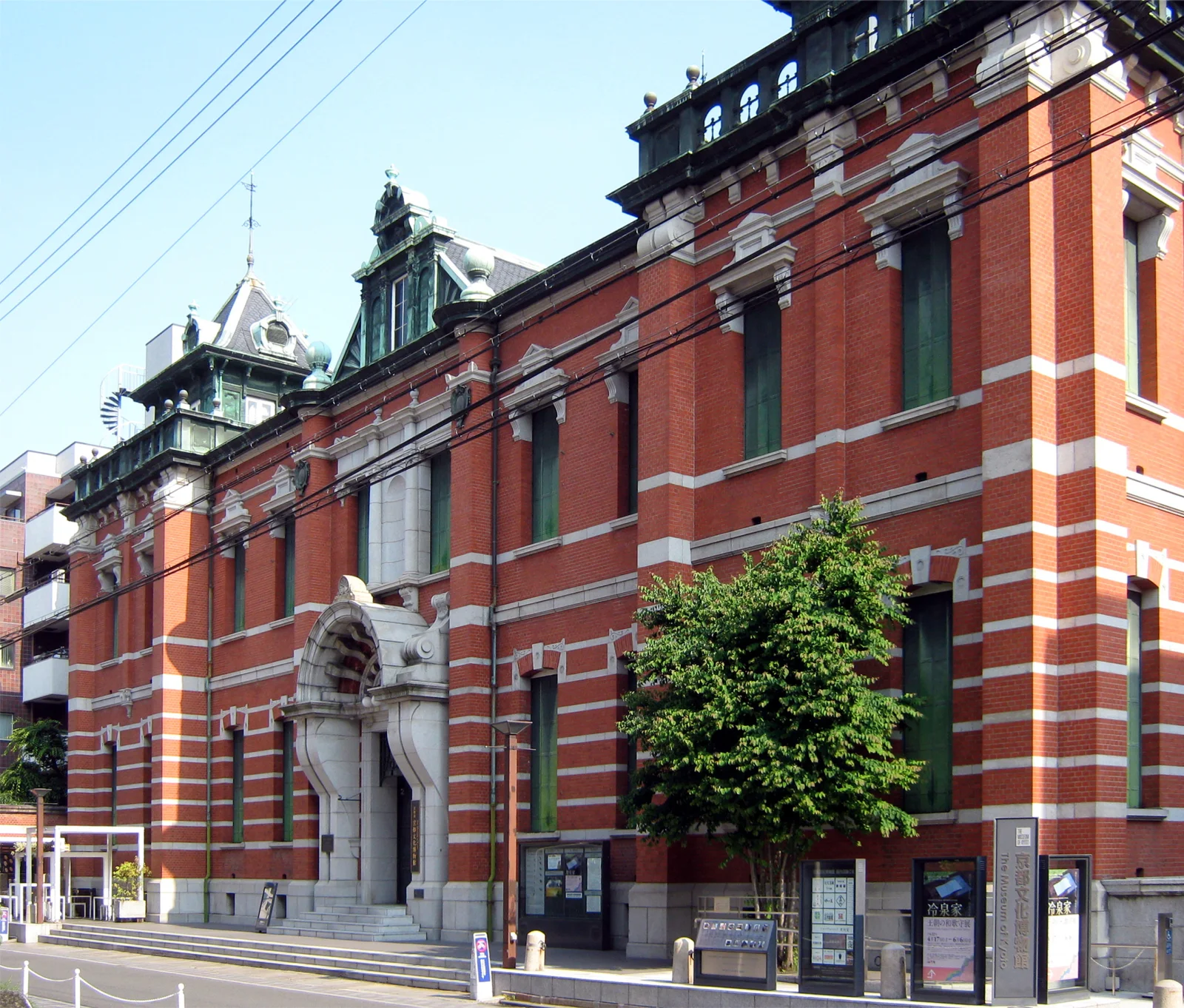
| Washi paper, exhibition catalogues and small crafts | Subway Karasuma-Oike (The Museum of Kyoto) | Head south to Nishiki Market or Daimaru Kyoto |
| Weaving demonstrations and Nishijin textile accessories | Horikawa Imadegawa or Subway Imadegawa | Continue along Imadegawa-dori to Kamishichiken and Kitano Tenmangu |
| Last-minute boxed souvenirs before your train | JR Kyoto Station Central Exit side | Souvenir zones inside the Kyoto Porta station building |
Plan your Kyoto shopping around Shijo-Kawaramachi, Nishiki Market, Karasuma and Nishijin. Covers half-day routes, how the two main department stores and covered arcades compare, rainy-day underground walkways, Kyoto Station souvenirs, and Japan's tax-free refund rules starting in November 2026.
What to Buy First in Nishiki Market
Located just north of Shijo-dori, the market stretches roughly 400 metres along Nishikikoji from Takakura-dori east to Teramachi-dori. Entering from the west and exiting at the east end works best for first-timers, as it drops you straight by Nishiki Tenmangu Shrine and Shin-Kyogoku. If you are already carrying gift boxes from a department store, enter from the east, pick a couple of stalls within the first two blocks, and slip back down one of the north-south side streets to Shijo-dori once you are done. Navigating by cross streets—Takakura, Sakaimachi, Tominokoji and Teramachi—is much easier than hunting for street numbers among the shop signs.
Individual stalls in Nishiki Market set their own hours, and the market association notes that more shops close on Wednesdays than on other days. For a reliable morning starting point, pin Tanaka Keiran on the west side of Tominokoji-dori; its association listing shows opening hours of 9:00–17:00 (closed 1–5 January) and its signature item is dashimaki, a savoury dashi-rolled omelette. You can check other traders on the association's market map by filtering categories such as Kyoto pickles, dried goods and tsukudani, or yuba, wheat gluten and tofu. Because the market as a whole has no single closing day, saving the hours for two or three target shops gives your route a clear anchor.
Before buying dried yuba (tofu skin), kombu kelp or bonito flakes, think about how you actually cook at home. Ask the staff how long dried yuba needs to soak for soups or simmered dishes, and check whether a pack of kombu is meant for making dashi stock or eating simmered, along with how many batches it yields. If you are buying simmered tsukudani as gifts, sample one flavour and check the storage instructions on the packet before deciding between small pouches and larger packs. Pay separately for fresh dashimaki or fresh yuba you plan to eat in Kyoto so your bags stay organised from items travelling home.
Towards the Teramachi end, Nishiki Takakuraya—featured on the market association's directory—specialises in Kyoto pickles. When buying for friends or family, check the packet label to see whether an item requires refrigeration or can be kept at room temperature, then verify the best-before date. Lightly brined pickles and cured varieties from the same shop often have different storage requirements; keep ambient-stable packs in the bag destined for long train or plane journeys. For freshly cooked snacks, choose stalls with dedicated eat-in space and finish your food before moving on so your hands are free to read product labels.
The market association asks visitors to finish food inside or directly in front of the stall where they bought it, and to put snacks away before walking on. Where queues form, stand in the waiting area marked by the shop so the main lane stays clear. Pushchairs and wheelchairs can struggle to pass oncoming foot traffic in the narrowest stretches; walking parallel along Shijo-dori and cutting in via the nearest cross street saves constant weaving. If people in your group have different appetites for street snacks, split up and meet at an outer junction rather than crowding outside a stall.
Most stalls trade as normal during the final days of the year, while many close from 1 to 3 January. If you have specific ingredients on your list, schedule Nishiki Market before New Year's Eve and sort your dried goods before heading home. After New Year's Day, if you only need a box of sweets, pick them up at an open souvenir shop inside Kyoto Station—checking station opening hours before an early train is far easier than hunting for open stalls in the city centre.
Walking North Through Shin-Kyogoku and Crossing to Teramachi
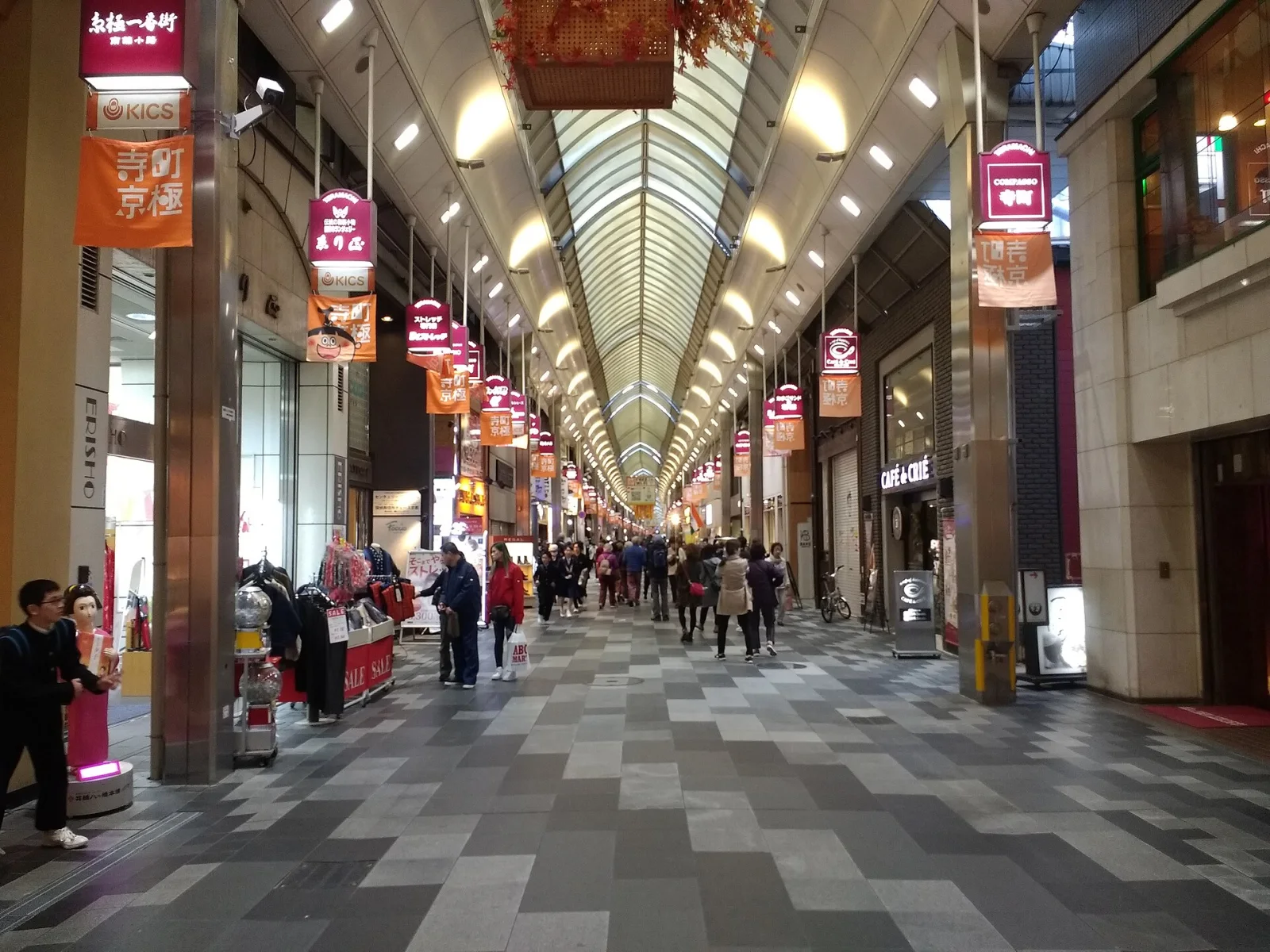
Exit Nishiki Market heading east across Teramachi-dori and you arrive straight at Shin-Kyogoku, right by Nishiki Tenmangu Shrine. If you are looking for vintage clothing, anime merchandise or affordable everyday goods, turning north here flows much better than looping back to Shijo-dori. The Shin-Kyogoku and Teramachi Kyogoku arcades run roughly parallel, making it easy to switch between them at Rokkaku-dori or Sanjo-dori. At the Rokkaku-dori junction, Shin-Kyogoku Rokkaku Park carries a 'Rokkun Plaza' sign that works well as a landmark. When arranging to meet on Sanjo-dori, specify whether you mean the Shin-Kyogoku or Teramachi side—the two entrances sit close enough together that waiting at the wrong one is an easy mistake.
If a shop catches your eye, save its name alongside the nearest cross street. Shin-Kyogoku's directory divides the arcade into blocks between Shijo, Nishikikoji, Takoyakushi, Rokkaku and Sanjo, so noting which two junctions a store sits between makes it easy to return for a fitting later. For vintage pieces, check actual measurements on the tag, inspect hems and cuffs, and compare altered garments against something you are already wearing. For vinyl records, Japanese books or collectables, browse the arcade shops first and fill any gaps at the specialist stores inside T8 back on Shijo.
If you have grazed at a couple of stalls through Nishiki Market around midday, save a sit-down tea break for Shin-Kyogoku or Teramachi. Larger groups can let keen shoppers continue up to Rokkaku while everyone else claims a table along Sanjo—agreeing on a meeting spot avoids standing around outside fitting rooms. In heavy rain, continuing from Nishiki Market into Teramachi Kyogoku keeps you drier than the exposed pavement along Kawaramachi-dori. You will still cross uncovered junctions between the arcades and the department stores or Kyoto BAL, so keep an umbrella in an outer pocket where you can reach it quickly.
Kawaramachi-Sanjo offers a different pace of shopping. Kyoto BAL sits just south of Sanjo on Kawaramachi-dori, open 11:00–20:00 daily except New Year's Day according to its official website. Walk a few steps south from Sanjo to find it, and check the main building's floor guide by category if you are after books or homeware rather than touring every floor. Neither the arcades nor BAL require a floor-by-floor sweep: if you walk up Kawaramachi-dori from Takashimaya to BAL, turn west into Rokkaku-dori on the way back to rejoin Shin-Kyogoku without retracing the same avenue.
Choosing Between the Two Shijo Department Stores
Takashimaya anchors the Kawaramachi end. Combine it in a single stop if you want basement food-hall confections alongside Kyoto Tsutaya Books or official Nintendo merchandise inside the adjoining T8 specialty wing. Standard retail hours for both Takashimaya and T8 are 10:30–20:00, though individual tenants vary: Mandarake Kyoto on T8's fourth floor opens 12:00–20:00, so if you are hunting for second-hand collectables, spend the morning at Nishiki Market or over coffee first. T8's basement dining zone, EAT8, generally opens from 11:00, making it easy to separate lunch from souvenir shopping.
Nintendo KYOTO occupies the seventh floor of T8 and opens 10:30–20:00. According to Nintendo's official guidance, timed entry tickets may be issued on weekends, national holidays and other busy days. Before opening, tickets are distributed outside the T8 ground-floor entrance by the Mario statue; after opening, head to the seventh-floor shopfront, with one ticket issued per person. If the whole family has come specifically for Nintendo, sort out your entry slot on arrival before browsing other floors. Anyone looking for general anime goods can follow up at T8's second-hand shops or the nearby arcades to keep walking clustered around Shijo.
Daimaru Kyoto sits on the Karasuma side, right where you emerge when walking south to Shijo-dori from the west end of Nishiki Market. Floors B2 to 2F usually trade 10:00–20:00, floors 3F to 7F close earlier at 10:00–19:00, and the 8F restaurant floor runs 11:00–22:00 as a baseline, with some individual variations. If your afternoon runs late and you want to try on clothes on the upper floors, do your fittings before heading down to the food hall so you do not get caught by the 19:00 closing bell. Shoppers who only want food can arrive later and slip straight down the underground walkway back to Shijo Subway Station.
Since both stores have expansive basement food halls, let your onward route decide which one you use for a quick shop. If you are dining along the Kamogawa River, Pontocho or Gion, finish at Takashimaya and head straight east with your boxes. If you are catching a train back to Kyoto Station or staying in Karasuma, Daimaru saves unnecessary backtracking. To compare ambient-stable gift boxes across both stores, check their floor guides by brand first and note piece counts and shelf lives on your phone so you only cross Shijo for specific counters and pick up bulk office treats last.
If you buy chilled desserts at Takashimaya, there are free refrigerated lockers on B1 for shoppers who plan to stay inside the building a while longer—just collect them on your way out. If you still have several streets to cover, drop chilled items in your hotel fridge first or save them for your final stop. When taking chilled sweets to the airport, ask how long the insulated bag and ice packs last and count the entire door-to-door window from checkout through the airport train, check-in, flight and journey home.
When splitting up from your travel companions, agree to meet in a specific basement food zone or at a numbered station exit. Named station exits are much clearer than saying 'the ground floor of Takashimaya', as the main department store and T8 have separate entrances. If you are travelling with children and need toilets or seating, check the store's floor directory before everyone disperses.
Washi Paper, Books and Small Crafts in Karasuma-Oike
Exit Karasuma-Oike Station via Exit 5 and walk east along Sanjo-dori; The Museum of Kyoto puts the walk at around three minutes. On the ground floor of the main building, alongside the museum shop, sits the Roji Tenpo arcade—a lane styled after traditional Kyoto townhouses. The museum's tenant directory includes Rakushikan for washi paper goods, alongside Kyoto-themed books, exhibition catalogues and small gifts. If you are unsure what to buy, start with slim washi stationery you can pack effortlessly before committing to heavy catalogues if luggage space is tight. For dedicated paper shopping, note Rakushikan's own hours on the museum page: 11:00–17:00, closed Mondays and Tuesdays.
If you are after folding fans, incense or loose-leaf tea, pin a single shop before leaving the museum so you only detour down the lane it sits on. Traditional Kyoto addresses often use the words 'agaru' (north of a junction) or 'sagaru' (south of a junction). When you only see street-corner plaques, first check whether you are on east-west Sanjo-dori or north-south Takakura-dori, then read the directional cue. Once you finish around the museum, stroll south down Takakura-dori back towards Daimaru and Shijo, or follow Sanjo-dori east to Kyoto BAL on Kawaramachi for clothing and lifestyle select shops.
To compare two styles of paper goods in one walk, head east from the museum along Sanjo-dori and turn north onto Teramachi-dori to reach Kyukyodo's Kyoto main store. The museum side excels at exhibition catalogues and Kyoto-patterned washi trinkets, while Kyukyodo stocks calligraphy and painting supplies, postcards, letter paper and incense. If brushes or inkstones are your priority, start at Kyukyodo from the City Hall side and walk down towards Sanjo afterwards; from there, you can board the Tozai subway line at Kyoto Shiyakusho-mae, or return to the Karasuma Line for Kyoto Station.
When buying stationery as gifts, pick a sheet size that matches how the recipient actually writes before choosing the pattern. Ask for exact dimensions on posters and exhibition catalogues, as large-format art books can exceed cabin-baggage width. Pack heavy books flat against the back spine of your suitcase and slide paper sleeves beside rigid boxes to prevent creasing. Fabric pencil cases and small prints are easy to buy early in your trip; for high-value or bulky works, ask the shop about international shipping regions, protective packaging and postage costs before deciding whether to carry them yourself.
Nishijin for Visitors Interested in Weaving and Textiles
Start a Nishijin visit at Horikawa Imadegawa. Operated by the Nishijin Textile Industrial Association, the Nishijin Textile Centre offers free admission and opens 10:00–16:00 from October to March, extending to 17:00 from April to September. It closes on Mondays (moving to the Tuesday if Monday is a national holiday) and over the New Year break from 29 December to 3 January. If your Kyoto itinerary puts you in town on a Monday, swap your Nishijin visit with a city-centre department store day.
From Kyoto Station, take City Bus 9 and alight at Horikawa Imadegawa, a one- or two-minute walk from the centre. From Shijo-Kawaramachi or Shijo-Karasuma, board City Bus 12 bound for Kinkaku-ji and Ritsumeikan University; on the return journey to Shijo, check that the destination display reads 'Shijo-Kawaramachi / Sanjo-Keihan'. To avoid road traffic, ride the Karasuma subway line to Imadegawa Station and walk roughly 10 minutes as estimated by the centre. Factor that walk back to the subway into your timing if you have chilled food or a limited-express or Shinkansen train to catch.
Hand-weaving workshops at the centre require advance booking; suitable for ages 10 and up (primary year 5 equivalent), the session runs roughly 40 minutes, costs ¥2,750 at standard rates, and lets you take home your woven table runner. Younger children can instead make a kaleidoscope wrapped in Nishijin fabric—about 30 minutes, ¥1,980 per person, capped at four participants per slot, with a parent or guardian accompanying ages seven and under. Families do best looking at the textile exhibits before crafting so the fabric motifs make more sense. Anchor your departure around your reserved workshop slot, then decide on the day whether weather and energy allow a walk on to Kitano.
On a first visit, start with the weave samples and historical displays, and pause at any live artisan demonstration to watch how warp and weft threads interlock before browsing the shop downstairs. When choosing coasters, bookmarks or coin purses, inspect the weave pattern up close, check the finishing on the reverse, and ask which pieces tolerate water and which should only be wiped dry. If you are shopping for higher-ticket items such as obi sashes or kimono yardage, bring measurements and reference photos so staff can advise on motifs, fibre content and suitable cuts. Allow an hour as a baseline, adjusting around any booked workshop.
If your legs still feel fresh after leaving the centre, walk to Imadegawa Shichihonmatsu and continue along Kamishichiken towards the east gate of Kitano Tenmangu Shrine. Kamishichiken is a working geisha-teahouse and residential street—admire the latticed facades from the public lane, keep doorways clear when taking photos, and never block the alley if you are in a group. If your visit falls on the 25th of the month and you want to browse the Tenjin-ichi flea market at Kitano Tenmangu, visit the shrine approach before the Textile Centre; the market is held monthly on the 25th but may be cancelled in poor weather, with updates posted on the shrine's noticeboard. Leave time at the stalls to check dimensions and ask for wrapping, and catch a bus straight back to your hotel from outside Kitano Tenmangu if you buy heavy ceramics.
If it rains and you still want to see textiles, visit the centre alone and take the bus back to Shijo, saving the teahouse district for clear weather. Should washi paper appeal more than woven silk, swap the entire Nishijin half-day for The Museum of Kyoto and the shops along Sanjo-dori, then finish at Nishiki Market and a relaxed lunch—you still get a dedicated craft stop with plenty of time to sit down.
Registering Purchases and Claiming Tax-Free Refunds from November 2026
From 1 November 2026, eligible overseas visitors in Japan pay the full tax-inclusive price at the till and register their purchase at a participating shop or tax-free counter. When leaving Japan within 90 days of purchase, present your passport and follow any customs instruction to have your goods inspected; the shop or its refund provider then returns the consumption tax equivalent using your registered method. Short-term visitors must bring their physical passport when registering. Have your payment card ready at checkout, ask whether registration takes place on another floor, and complete it before you leave—department stores cannot retroactively register missed receipts the following day.
The qualifying threshold is ¥5,000 before tax on eligible items bought at the same store on the same day. Shops served by a shared tax-free counter can be combined at that counter under store rules, though individual tenants inside the same complex may still handle registration separately. On Kyoto Takashimaya T8's official store list, for example, some boutiques process refunds at the main department store's 7F tax-free counter while others handle registration in-store. Jot the shop name or floor on your receipts before taking the lift up from B1, and if friends shop separately before meeting up, each original buyer must present their own receipts, items, passport and payment card in person.
Kyoto Takashimaya's 7F tax-free counter opens 10:30–20:00. Daimaru Kyoto's tax-free counter is on 8F; Daimaru's official site notes that eligible same-day receipts can be combined and that a handling fee of up to 2.3% of the pre-tax total applies, while Takashimaya likewise deducts a processing fee from refunds. If you are only grabbing two boxes of sweets, paying the regular tax-inclusive total is simpler; if you are already buying clothes or homeware under the same roof, check whether those receipts combine. Registering only items already on your list keeps your budget clear and stops you from packing extra filler boxes just to hit the minimum.
Special sealed packaging for consumables has been abolished, yet registered food and drinks must still be taken out of Japan. If you plan to share a box of pastries in your hotel room, pay for it separately from the gift boxes going home: tax-free eligibility is assessed per transaction, so eating, using or gifting a single item from a registered batch inside Japan can forfeit the refund for the entire receipt. Hot street food in Nishiki Market, small tasters and toiletries you intend to use during your stay are best bought at the regular tax-inclusive price.
When departing via Kansai International Airport, tax-free inspection takes place before security screening and before you check in hold luggage. Pack registered items in a bag you can open easily or near the top of your suitcase, and keep your passport to hand. In the designated zone of Kansai Airport's international departures hall, you can connect to the dedicated procedure Wi-Fi to submit your declaration through Visit Japan Web or use the tax-free kiosks; if the system calls for inspection, bring all registered items to the customs counter. Work backwards from both your airline check-in deadline and this customs step when choosing your train from Kyoto, and keep any refund confirmation emails or receipts accessible until the money arrives via your registered method.
Where to Buy Tea, Confectionery and Textiles
Start with how the tea will be brewed. If the recipient uses a teapot, pick small packets of sencha or roasted hojicha so they can try a couple of varieties before anything goes stale; for an office kitchen, individually wrapped tea bags scaled to headcount make more sense. Kyoto's Yamashiro region produces tencha, the shade-grown leaf stone-milled into matcha—unlike steeped sencha where you strain out the leaves, matcha is consumed whole. Before buying matcha as a gift, check whether the person plans to whisk it traditional-style, make lattes or bake with it; asking in-store and buying a single tin you will actually finish beats bringing home two decorative tins that sit unopened.
To taste before buying, take Exit 11 from Kyoto Shiyakusho-mae Station on the Tozai Line to Ippodo Tea's Kyoto main store just north of Nijo on Teramachi-dori—roughly a five-minute walk according to the shop. Both the retail counter and its Kaboku tearoom open 10:00–17:00 (last tearoom orders 16:30) and close on the second Wednesday of each month. If you reach this stretch in the afternoon, sit down for tea and sweets before choosing tins, and ask the staff for the exact water temperature, leaf weight and water volume for the first infusion of whichever tea you enjoyed.
For office gifts, check piece counts and whether sweets are individually wrapped—inspect boxes in the food hall to see if you are getting one uncut loaf, shared pouches or single-wrapped portions. Buy dried goods early in your stay and save short-shelf-life treats for your final day, asking how long any chilled items can stay at room temperature before reaching a fridge. Fresh nama-yatsuhashi, baked yatsuhashi and filled variations carry different use-by dates depending on maker and packaging, so read the date stamped on each box and bag snacks for the hotel separately from gifts.
You do not have to wait until Nishijin to shop for textiles. Department stores on Shijo and craft shops around Sanjo let you compare sizes of tote bags, drawstring kinchaku pouches and furoshiki wrapping cloths before you study weaves at the Textile Centre. When picking a furoshiki for a bento or gift box, measure against the box's width and length so enough corner fabric remains for a neat knot. Check care labels on items that need frequent washing, especially silk accessories—and if you need extra padding mid-trip, a furoshiki can wrap a gift box in your suitcase before being gifted itself.
Leave extra room in your luggage for wrapping ceramics and glassware. If you pick out a bowl at a Nishijin market, check the rim and foot ring in good light and ask for an extra layer of paper on the spot; pack stationery beside rigid boxes and seal liquid condiments inside zip bags cushioned by clothes. Before packing food to bring home, check the Japanese ingredient list and storage details against your destination's customs rules—fresh fruit and processed meat products are strictly restricted across borders, even when vacuum-sealed. Enjoy hot meat snacks from market stalls while you are in Japan, and keep your take-home bag to commercially sealed goods with clear ingredient labels.
Adapting Your Route for Rain, Departure Day and New Year
When showers come and go, enter Nishiki Market from the Karasuma side, continue through Teramachi Kyogoku or Shin-Kyogoku back down to Shijo-dori, and finish inside Takashimaya. Overhead roofs shelter the main stretches of the market and arcades, though you will still hit uncovered patches at the market ends, cross streets and department store entrances. If you are carrying thin paper bags or pushing a buggy during a downpour, switch at Shijo Subway Station into the Hankyu Karasuma underground concourse, browse Daimaru, and follow the underground walkway beneath Shijo-dori to Kyoto-Kawaramachi—head back above ground to the market only once the rain eases so you are not constantly opening umbrellas and parking them at shop doorways.
In the heat of high summer or warm early autumn, trim a two-arcade loop down to one and spend the extra time eating or browsing books inside an air-conditioned department store. If anyone in your group spent the morning walking down the slopes of Higashiyama before crossing the Kamogawa River into Kawaramachi, sit down for a break first and cover only a short stretch of Shin-Kyogoku afterwards. During major events such as the Gion Matsuri, Hankyu's official station maps warn that entry and specific exits may be restricted during peak crowds; on a travel day, allow extra time to locate an open entrance and agree on a meeting point near the station in case you get separated.
Last-minute gifts before catching a train are easily sorted at Kyoto Station. Inside the main station building by the JR Central Exit, Kyoto Porta houses Omiyage Koji Kyo-komachi on 1F and Kyo Meika Meisaidokoro Miyako on 2F—note the floor and shop name before checking departure boards, and remember that both sit inside the station building rather than in Porta's underground mall. To reach Miyako on 2F following Porta's route guide, exit the JR Central ticket gates, take the escalator on the left up to the second floor, and walk towards the North-South Free Passage. Shinkansen passengers can pick up gifts here before following signs to the Shinkansen gates. Souvenir zones typically open 8:30–20:00 on 1F and 8:30–21:00 on 2F, while Omiyage Kaido Miyako on 2F opens 7:30–22:00 for early departures; buy any later-opening specialist brands the day before and use the station shops for snacks on the train.
If you are moving on to Osaka in the afternoon from a hotel in Shijo-Kawaramachi via the Hankyu Line, collect your bags from the hotel first and choose final purchases based on how well they withstand packing—pack boxed sweets securely inside your case straight after checkout so you are not juggling paper bags between trains. If you are taking a JR train instead, browse the station building's souvenir floors before picking up left luggage at Kyoto Station, then retrieve your bags on the same level and head straight for the ticket gates without wheeling suitcases through crowded shops.
Over the New Year holiday in Kyoto, Kyoto BAL closes on 1 January and Daimaru Kyoto closes on 1 and 2 January. The Nishijin Textile Centre remains closed until 3 January, and because 4 January 2027 falls on its regular Monday closing day, plan any visit from 5 January onwards. If you only have a short stay over New Year, pick up essential gift boxes the day before closures begin, use the quiet holiday mornings for street walks, and wait until Nishiki Market traders reopen before shopping for dried goods and Kyoto pickles rather than walking up and down hunting for open shutters.
A few useful answers
Where should first-time visitors shop first in Kyoto?
Set aside half a day for a loop from Nishiki Market to Shijo-Kawaramachi. Pick up food and pantry goods in the market first, stroll through Shin-Kyogoku and Teramachi Kyogoku, and finish at Takashimaya or T8—or use Daimaru for gift boxes if you are heading back to Kyoto Station from the Karasuma side.
What is the best time to visit Nishiki Market, and is it open on Wednesdays?
Stalls set their own hours, and the market association notes that more shops close on Wednesdays than other days. Aim for the morning and check open traders on the association's directory map—for example, Tanaka Keiran lists hours of 9:00–17:00.
Where is the best place to shop in Kyoto on a rainy day?
For clothing and gift boxes, linking Daimaru and Takashimaya via the underground walkway beneath Shijo-dori keeps you completely out of the rain. Nishiki Market, Shin-Kyogoku and Teramachi Kyogoku have covered main arcades, though you will still need an umbrella at the ends and across uncovered junctions.
Can I get an immediate tax-free discount at Kyoto department stores?
From 1 November 2026, you pay the tax-inclusive price at the till, register your purchase on the same day, and present your goods for customs inspection before checking in your luggage when leaving Japan within 90 days. Once cleared, the store or refund provider issues the refund through your registered method.
Is one morning enough for Nishijin textiles?
A single morning is enough if you only plan to tour the Nishijin Textile Centre and browse small woven goods—it is a 10-minute walk from Imadegawa Station on the Karasuma Line or a short ride by City Bus to Horikawa Imadegawa. Allow half a day and schedule buses around your booking if you add a weaving workshop, Kamishichiken and Kitano Tenmangu.
What souvenirs can I buy at Kyoto Station if I am short on time before a train?
Inside the Kyoto Porta station building, Omiyage Koji Kyo-komachi on 1F and Kyo Meika Meisaidokoro Miyako on 2F stock boxed Kyoto sweets, loose-leaf tea and pickles, letting you pick up gifts right before boarding without returning to Shijo.
Official information and references
Sources used in this guide.
- Kyoto Nishiki Market Shopping Street | FAQ and Dining Etiquette
- Kyoto Nishiki Market Shopping Street | Market Map and Store Categories
- Kyoto Nishiki Market Shopping Street | Tanaka Keiran Opening Hours
- Hankyu Railway | Kyoto-Kawaramachi and Karasuma Station Maps
- Kyoto Municipal Transportation Bureau | Karasuma Line Shijo Station Map
- Shin-Kyogoku Shopping Arcade Promotion Association | Arcade Map
- Nakagyo Ward, City of Kyoto | Shopping Arcade Information
- Kyoto BAL | Address and Opening Information
- Kyoto Takashimaya | Department Store and T8 Opening Hours
- Kyoto Takashimaya | Services and Lockers
- Kyoto Takashimaya S.C. | T8 Tax-Free Shops and Service Counter
- Daimaru Kyoto | Floor Opening Hours
- Daimaru Kyoto | Visitor Tax-Free Shopping and Refund Procedures
- The Museum of Kyoto | Museum Shops
- The Museum of Kyoto | Walking Route from Karasuma-Oike Station
- Nishijin Textile Industrial Association | Nishijin Textile Centre Opening Days and Access
- Kyoto Municipal Transportation Bureau | City Bus Route 12
- Kyoto Prefecture Tourism Federation | Kamishichiken District
- Kitano Tenmangu Shrine | Tenjin-ichi Market and Cancellation Notices
- Japan Tourism Agency | 2026 Tax-Free Refund System Traveller Guide
- Japan Tourism Agency | Refund Methods and Departure Inspection FAQ
- Kyoto Porta | Route Guide to Kyoto Station Building Souvenir Zones
- Kyoto Prefecture | Yamashiro Tea Varieties and Kyoto Tea Regions
- Taipei Customs, Customs Administration, Ministry of Finance | Regulations on Carrying Food Products by Travellers
- Nintendo | Nintendo KYOTO Opening Hours and Entry Tickets
- The Museum of Kyoto | Rakushikan Opening Hours
- Kyoto Kyukyodo | Kyoto Main Store Address
- Ippodo Tea | Kyoto Main Store and Kaboku Tearoom
- Kyoto Nishiki Market Shopping Street | Nishiki Takakuraya Kyoto Pickles
- Nishijin Textile Industrial Association | Hand-Weaving and Kaleidoscope Workshop Bookings
- Kyoto Porta | Opening Hours by Floor
- Kyoto Porta | Omiyage Kaido Miyako Opening Hours