Choose Gion Corner or a seasonal dance performance for one evening in Kyoto. Find the current theaters, 2026 prices, winter dates, guest booking, QR tickets, exchange numbers, tea service, child rules and Keihan or Hankyu routes home.
- Region & Focus
- KyotoAttractions
- Reading Scope
- 40 min read · 20 chapters · 8 Q&As
- Official Verification
- 23 official sources checkedUpdated October 28, 2026
Chapter Route Map (tap any stop)
- One evening: choose the performance first
- Use the right address for Gion Corner, Yasaka Kaikan or Gion Kaikan
- How to follow an hour at Gion Corner
- Choose 18:00 or 19:00; check winter weekdays first
- Standard, Premium or tea-and-sweets seats: what the extra cost buys
- Buying Gion Corner tickets with children: count the seats you need
- Booking Gion Corner as an overseas visitor: guest entry and month lists
- QR tickets, convenience-store collection and exchange numbers
- Arrival, late entry and photography: November has explicit restrictions
- Gion Odori 2026: an hour devoted to dance
- Gion Odori tea service is before the show; children under three cannot enter
- After buying Gion Odori online, bring the organizer’s exchange number
- For spring Miyako Odori, start with that season’s Gion Kobu production
- Check Minamiza’s production: comedy in November, Kaomise in December
- Ask each venue about explanations and wheelchair spaces for your performance
- Separate ticket costs from dinner to see the difference
- An 18:00 Gion Corner example: one afternoon sightseeing focus
- A Gion Odori afternoon example: time for tea and dinner
- The journey home: Keihan Gion-shijo and Hankyu Kyoto-kawaramachi are on opposite banks
- Changes, cancellations and canceled performances: keep the ticket and use the original seller
- Quick Q&A
With only one evening for a performance in Kyoto, first decide whether to sample several traditional arts or focus on dance from the geisha districts. Gion Corner offers an introduction in about an hour. Gion Odori, held November 1–10, 2026, instead gives an afternoon to the dancers of Gion Higashi. The addresses matter too: Gion Corner now uses the small theater at Gion Kobu Kaburenjo. The former Yasaka Kaikan has been preserved and adapted as Imperial Hotel, Kyoto. Gion Odori takes place at the separate Gion Kaikan, opposite Yasaka Shrine.
One evening: choose the performance first
For a first encounter with Japanese traditional arts, or a short show before or after dinner, start with Gion Corner. In about an hour, you can see Kyoto-style dance, tea ceremony, flower arrangement, koto music, bugaku court dance and kyogen comedy, usually with a short bunraku or noh performance as well. The program moves quickly between forms. It suits visitors who want an introduction before choosing an art to explore further. If your main interest is a stage filled with geiko and maiko dancers, match your travel dates to a seasonal dance production.
Gion Odori in early November is organized by the Gion Higashi Kabukai. It lasts about an hour and focuses on dance and ensemble pieces accompanied by nagauta and kiyomoto music. The spring Miyako Odori belongs to Gion Kobu and has its own venue and ticket arrangements. For characters, dramatic conflict and kabuki actors, compare the current Minamiza program. Checking the production name and repertoire first prevents buying a nearby show that differs from what you hoped to see.
With limited Japanese, I would start with a standard Gion Corner seat and follow the program as a sequence of introductions. Consider Premium if you want to consult explanations during the show. If you already have a clear interest in dance and your dates overlap with Gion Odori, give the seasonal production priority. With only half an afternoon, choose the 13:30 dance performance and leave dinner and the journey home until afterward, without waiting for an evening show.
| Option | Main content and timing | Suggested plan |
|---|---|---|
| Gion Corner | Short introduction to traditional arts; 18:00 and 19:00; about one hour | One evening in Kyoto, with dinner before or after |
| Gion Odori | November 1–10, 2026; 13:30 and 16:00; about one hour | An afternoon centered on dance from a geisha district |
| Miyako Odori | Spring dance production by Gion Kobu | Choose tickets for the relevant spring season |
| Minamiza | Depends on the current production; kabuki and other theater | Choose the production, then reserve its full running time |
Choose Gion Corner or a seasonal dance performance for one evening in Kyoto. Find the current theaters, 2026 prices, winter dates, guest booking, QR tickets, exchange numbers, tea service, child rules and Keihan or Hankyu routes home.
Use the right address for Gion Corner, Yasaka Kaikan or Gion Kaikan
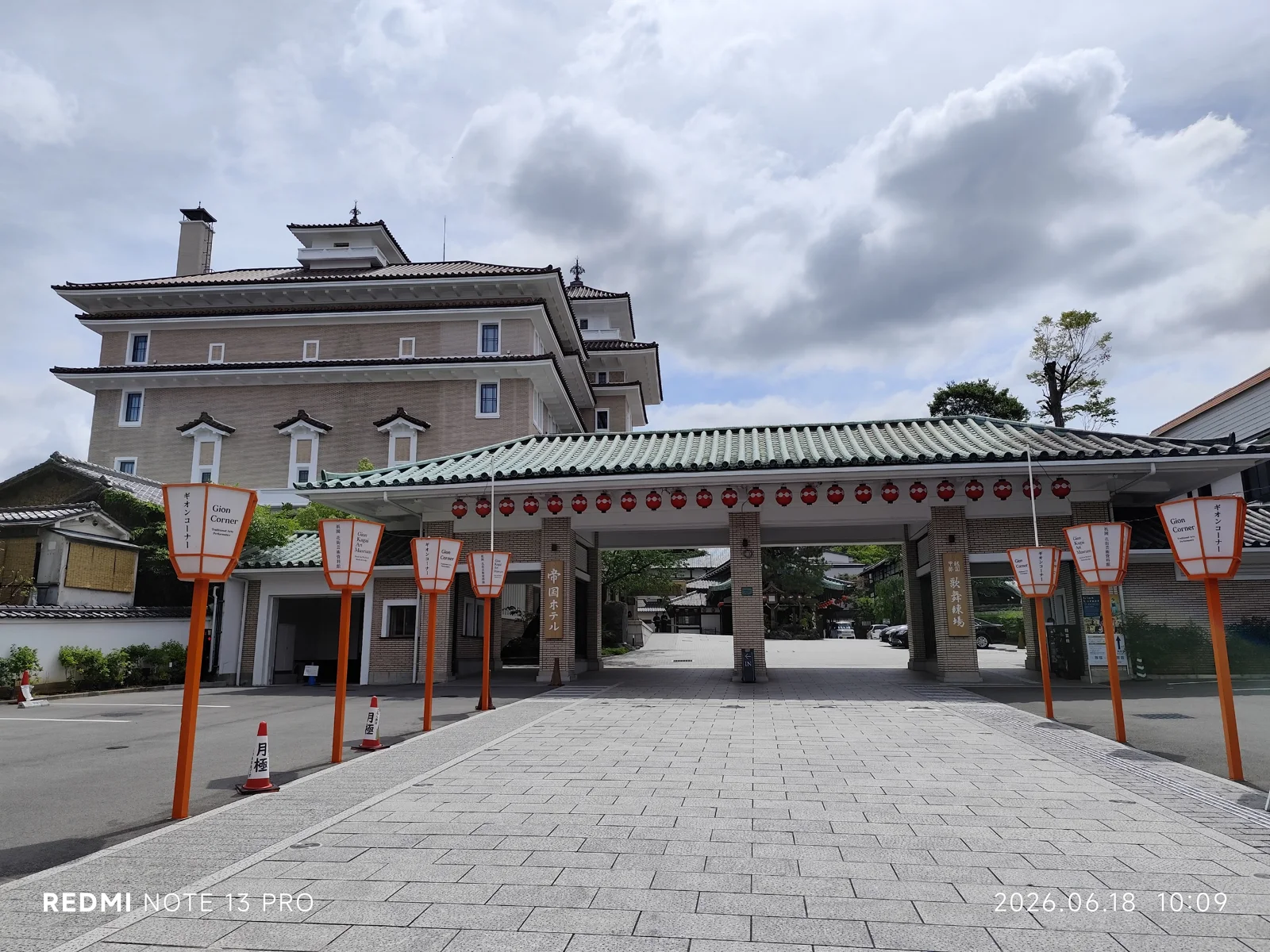
Gion Corner’s current official venue is the small theater at Gion Kobu Kaburenjo, at 570-2 Gionmachi Minamigawa, Higashiyama-ku, Kyoto. The official directions lead inward from the Gion Corner sign on Hanamikoji-dori to the Kaburenjo entrance. Reaching Hanamikoji is only part of the walk. Do not book a meal that ends just minutes before the 18:00 curtain.
Treat the former Yasaka Kaikan and the present performance address as separate destinations. The Imperial Hotel, Kyoto website now presents the operating hotel that preserves and adapts Yasaka Kaikan, at 570-289 Minamigawa. Gion Corner’s ticket and access pages direct audiences to the small theater at 570-2. If an old travel account or product page still calls it “Yasaka Kaikan Gion Corner,” follow the venue on your ticket and the current official entrance directions. The hotel entrance is not the performance check-in point.
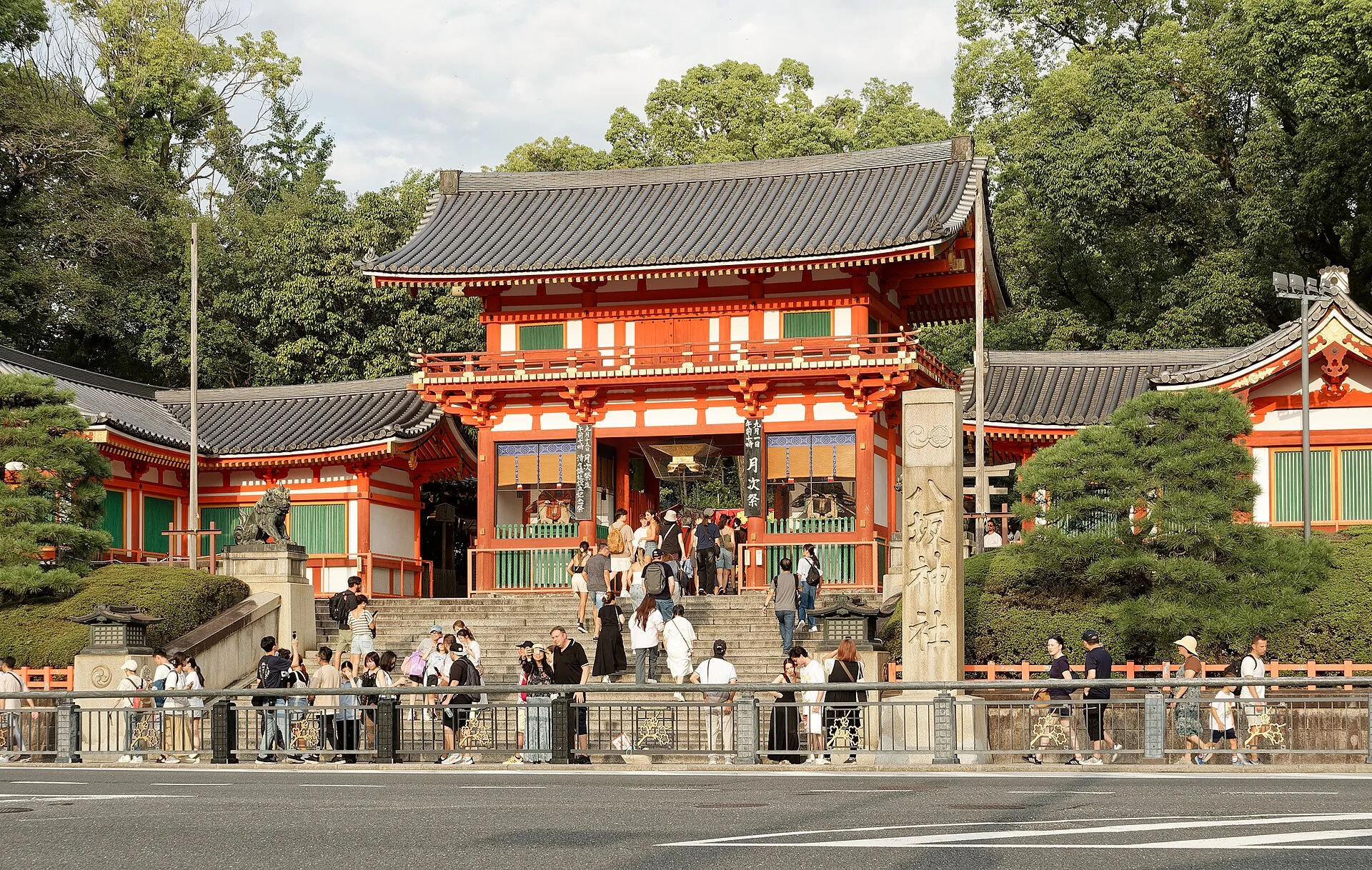
Gion Kaikan, the venue for Gion Odori, is another building, at 323 Gionmachi Kitagawa, below the stone steps of Yasaka Shrine. The Gion Higashi association’s contact address, 319 Kitagawa, is not the theater where audiences watch the show. Save the three names as separate map points and match your ticket to the correct one. This avoids crossing back and forth over Shijo-dori to find the entrance just before curtain time.
How to follow an hour at Gion Corner
Gion Corner brings several arts into one evening. The tea ceremony presents the Urasenke ryurei style, which uses tables and chairs. Flower arrangements alternate between the Ikenobo and Saga Goryu schools. Start by watching hand movements, the placement of utensils and the empty space, then listen to the koto. Each segment asks for a different kind of attention. You do not need to follow every one as a story-driven play.
The Kyoto-style dance segment is performed by maiko. Pick one detail to follow: a fan opening and closing, a turn of the body, or the line a sleeve makes during a movement. You need not keep searching your phone for the meaning of each gesture. On the same stage, bugaku costumes and movements, then kyogen dialogue and physical comedy, ask you to watch in different ways. If one form appeals to you, that gives you a clear direction for a full performance later.
The regular program includes either bunraku or noh, depending on the period. Bunraku combines puppet manipulation, narration and shamisen. Noh has its own rhythm of singing, music and dance, with masks that help identify characters. If you specifically want bunraku, open the outline for your chosen month before buying a ticket simply labeled Gion Corner. The official November 2026 booking page lists bunraku, a concrete basis for choosing that month.
The winter program is different. That seasonal change matters if someone particularly wants puppetry or noh. If your aim is simply to sample several traditional performances after dinner in Gion, choose from the dates that operate. The show can be the evening’s only cultural activity; you do not need to add a separate tea lesson to complete the plan.
A July 2026 Kyoto-style dance clip from the Kyoto Traditional Musical Art Foundation, showing a stage performance by maiko.
Choose 18:00 or 19:00; check winter weekdays first
The current Gion Corner performance page lists regular shows at 18:00 and 19:00. The English program description says about an hour, while its duration field says about 50 minutes. For dinner or a pickup, allow a full hour plus time to leave your seat, collect belongings and exit the theater. After an 18:00 start, a 19:00 restaurant reservation in another neighborhood is too tight.
The winter season runs from December 1 to March 11, with performances only Tuesday through Friday, still at 18:00 and 19:00. The venue closes on national holidays during winter. Other listed closures are July 16, August 16, December 26–January 4, February 11 and February 23. If you are in Kyoto on a December Saturday, do not assume there are two shows every day. Place the performance in the schedule first, then plan that day’s Higashiyama walk.
The winter program lists Kyoto-style dance, tea ceremony, flower arrangement, koto, bugaku and kyogen, followed by a photo opportunity with a maiko. This happens at a different time from the regular prohibition on photography during the show. Leave extra time afterward if you want the winter photo, so a dinner or train reservation does not make you anxious before the final segment ends.
Standard, Premium or tea-and-sweets seats: what the extra cost buys
Current Gion Corner prices, including tax, are ¥5,500 for a standard adult ticket for ages 23 and over, ¥6,600 for Premium, and ¥6,050 for a tea-and-sweets seat. Compared with a standard adult ticket, Premium adds ¥1,100 and tea and sweets add ¥550. They offer different extras, so choose the one you will use. A standard seat works if you simply want to see the full show and save your food budget for dinner.
The official English introduction says that 30 of the theater’s 165 seats are Premium, with a more comfortable viewing arrangement and a digital tablet for explanations and translations. If you need translation, read the service details for the seat options in your booking and choose a language you can use. A companion who wants to focus on movement and music can compare standard and Premium separately. A first visit alone is no reason to choose the highest price.
The tea-and-sweets category includes Japanese tea and a sweet. If you want to whisk tea yourself and learn the full procedure, choose a separate experience that explicitly includes teaching and practice, and give it its own time. Watching tea ceremony within a formal show and taking a tea lesson use very different amounts of an evening. Decide whether you want to watch or learn before booking consecutive activities.
Buying Gion Corner tickets with children: count the seats you need
The official English price list gives ¥3,850 for ages 16–22 and ¥3,300 for ages 7–15. Ages 0–6 enter free, but a child in that age group who needs a separate seat requires an age 7–15 ticket. Premium and tea-and-sweets seats cost the same at every age. For a family total, list each child’s age, then decide whether they need a seat. This is clearer than searching only for “two adults and one child.”
For example, two adults aged 23 or over and a 10-year-old pay ¥5,500 + ¥5,500 + ¥3,300 = ¥14,300 for standard seats. Three Premium seats cost ¥19,800. The ¥5,500 difference helps you decide whether every family member needs the additional services. These totals include ticket face values only; add any ticket issuance or other fees shown at checkout.
Also consider whether your child is comfortable in a dark theater, can sit quietly and can watch continuously for about an hour. An 18:00 show suits a return to the room afterward to get ready for bed. A 19:00 show better suits children who have already eaten and are not usually sleepy at that hour. If you need to leave during the show to care for a child, ask staff how to exit and return so the caregiver has a workable arrangement.
Booking Gion Corner as an overseas visitor: guest entry and month lists
Follow “Buy tickets” from the foundation’s official page to the ticket system. It offers English and Simplified Chinese entry points and a Japanese option to reserve or buy without registering. Use that guest option if you do not want a membership. On October 28, 2026, the list showed October, November and December introductory performances of Japanese traditional culture. Select the reservation link for the month to reach the date and seat choices.
Check the month first, then the date, 18:00 or 19:00, seat category and number of people. A month heading may cover the entire month, but the December list separately gives December 25 at 19:00 as the end of acceptance. Read the winter closure dates too. A heading of December 1–31 does not mean tickets are available every evening through month-end. The actual selectable dates and performances are what matter next.
Handle adjacent seats for your group in the same booking. The system’s general FAQ says consecutive seats are usually assigned, but adjacent seats may be unavailable depending on bookings. Whether you can choose specific seats depends on the performance. Select a suitable category and party size, then inspect the seats offered. Do not assume after payment that staff can move everyone together free of charge.
The next steps are payment and collection methods, purchaser details and reservation confirmation; acceptance is completed only at the end. Before checkout, reread the date, performance and full amount, and use an email address that can receive the notice. If you will not receive mail at a Japanese address, choose a collection method actually offered for that show that you can complete. Not every method on a general information page is available for every performance.
QR tickets, convenience-store collection and exchange numbers
Gion Corner’s general ticket guidance includes convenience-store collection, delivery and Ticketless Q electronic tickets. Checkout shows the methods actually available. For electronic tickets, the official guidance allows a printed entry QR code or one sent to your phone through email or LINE and displayed on the day. Keep the QR ticket used for entry, rather than only a card charge notice or an order-total screen.
Electronic tickets are issued individually: four tickets mean four QR codes. If one person buys them all, arrange to enter together or use the system’s transfer function to send each ticket to its user. Give companions who will dine separately or arrive later their tickets before leaving. Otherwise, all entry details may be on a phone that has not yet reached the theater.
With convenience-store collection, distinguish completed payment from completed ticket issuance. Save the deadline and required numbers from the purchase page, and collect early at an eligible store. If your trip is short and you reach Kyoto close to curtain time, electronic tickets or the same-day box office may fit better than a separate collection trip. Same-day sales depend on seats remaining. Reserve ahead if you have only one suitable evening.
If payment produces an error, save the error, then check your purchase history and notification email. The ticket FAQ asks for your device, operating system, browser version and specific error for support. If the email has not arrived, first check spam, receiving settings and blocks on messages containing URLs. Do not buy the same date and party size again simply because the email is not immediate.
Arrival, late entry and photography: November has explicit restrictions
The Gion Corner November 2026 booking outline prohibits photography, video and audio recording during the show, and eating or drinking inside. It also asks audiences to keep conversation quiet. Finish food and drinking before entry and set your phone so it does not disturb others. Take exterior photographs after arrival and before check-in, then give the stage your attention during the show.
The same page says late entry may be refused. You can plan to reach the venue 30 minutes before curtain time to find the entrance, use the restroom and handle tickets and seating. This is a suggested buffer; check the specific show for door-opening time. Starting your calculation only when leaving the station, or treating 18:00 as arrival at the Hanamikoji junction, leaves too little time.
If you expect to be late, use your original booking details to contact the venue and let staff advise whether and when you can enter. Do not take an 18:00 ticket to the 19:00 queue on your own if you miss the start. The ticket terms restrict customer-requested cancellations and changes. Finishing the previous activity early usually protects your purchased seat better than a last-minute ride to catch the curtain.
Gion Odori 2026: an hour devoted to dance
The 67th Gion Odori runs November 1–10, 2026, at Gion Kaikan, with daily performances at 13:30 and 16:00, each about an hour. This year’s title is “Kyoraku Tamamizu no Megumi.” Geiko and maiko from Gion Higashi perform dances to nagauta and kiyomoto music, ending with the Gion Higashi Kouta, which presents the four seasons and ensemble dance. It suits an audience that wants to concentrate on dance.
The 16:00 show can lead into dinner. If you have only one day in Kyoto and must return to Osaka that evening, the early show leaves more room. If you give the afternoon to the performance, you need not visit the far side of the city and double back first. Before buying, mark four blocks in your schedule: arrival, tea service or waiting, the full performance, and departure. Then see how much walking time remains.
A special viewing ticket with tea is ¥7,000; a viewing ticket without tea is ¥6,000, with a program booklet for another ¥1,000. All seats are assigned, but the organizer says seat numbers cannot be selected at purchase. Ask the organizer before paying if you need a particular row, adjacent seats or mobility arrangements. Assigned seating does not mean you can choose any seat number on the shop page.
Gion Corner offers short segments of several arts, while Gion Odori gives the entire time to Gion Higashi dance. Both may feature maiko, but they serve different purposes. With a budget for one show, choose by what you want to see rather than by which ticket includes more items.
Gion Odori tea service is before the show; children under three cannot enter
The tea-inclusive product says tea service starts one hour before the show and ends five minutes before it. For 13:30, that means 12:30–13:25; for 16:00, it is 15:00–15:55. Eat lunch earlier or finish before entering so you do not have to find the exchange desk while rushing to catch the end of tea service.
The official English performance information separately says doors open about 40 minutes before the show. Tea-ticket holders can arrive early for the service that begins an hour before curtain time and follow staff directions for tea and seating. Those without tea tickets should still allow time to exchange tickets and wait. When arranging a group meeting, specify both the exchange time and tea time rather than sending only the show’s start time.
Gion Odori explicitly excludes children under three. Use the child’s actual date of birth; do not apply Gion Corner’s free-entry rule for ages 0–6. If two adults take turns caring for a young child, choose activities each can attend rather than buying for everyone and expecting an exception at the door. Buy any required child seat according to the organizer’s actual ticket options.
If you want both tea and dance, include the ¥1,000 tea difference in your comparison. A ticket without tea serves those who simply want to watch the full stage performance. If you buy tea, leave time before the show: arriving on time for the dance may still mean missing the tea service you paid for.
After buying Gion Odori online, bring the organizer’s exchange number
Follow the Gion Higashi official site to its BASE shop, choose a ticket with or without tea, then choose the performance. The official shop’s delivery instructions say an exchange number is emailed after payment and used to collect the ticket on the day. You must show the number sent by the Gion Higashi tea-house association; a BASE order ID cannot replace it. Find the real exchange email before departure if a companion has only a payment screen.
The system may also automatically send a “shipped” notice, but the organizer explicitly says no physical item is sent. Overseas visitors and travelers changing hotels need not stay at one property to wait for a parcel. Keep the organizer’s exchange details from the email. Put the date, 13:30 or 16:00 start, ticket count and exchange number together for easier checking at the venue.
Two sources give different 2026 online deadlines: the Gion Higashi season page says October 28, while the BASE product page says October 29 at 23:00. Plan to complete online purchase by October 28. After that, check the shop’s actual acceptance status or use the Gion Kaikan box office. The season announcement lists box-office hours of 11:00–16:00 daily from October 30 to November 10, including same-day sales.
When read on October 28, 2026, the ticket without tea was sold out, while tea-inclusive options remained. That describes stock at the time. Use the options for your chosen date to see whether seats remain. The organizer also says purchases cannot be changed or canceled. Set your party, return journey and arrival time before payment.
For spring Miyako Odori, start with that season’s Gion Kobu production
The official seasonal performance list places Gion Kobu’s Miyako Odori in spring and Gion Higashi’s Gion Odori in autumn. For a spring geiko and maiko dance performance, use Gion Kobu’s organizer links to choose that season’s program, seats and tea service. The similar “odori” names have separate organizers, dates and ticket delivery.
For an autumn or winter trip, build your plan around what you can attend then. In early November, compare Gion Odori with Gion Corner. On other dates, choose Gion Corner or the current Minamiza production. If spring Miyako Odori is your particular interest, make it the focus of a separate trip. Missing its season is no reason to wait in Gion’s streets for geiko or maiko as a substitute for the stage.
For spring tickets, ask the same two practical questions: how much time do you want to give to dance, and do you want tea before the show? Read the same season’s meeting and performance arrangements before planning lunch and the rest of the afternoon. Even within the Gion Kobu Kaburenjo grounds, check the hall on your ticket rather than reusing Gion Corner’s small-theater check-in instructions.
Check Minamiza’s production: comedy in November, Kaomise in December
The current Minamiza schedule lists the comedy “Sanbaba” for November 3–25, 2026. The December 1–24 production is the annual Kaomise Grand Kabuki featuring eastern and western companies for the coming Year of the Sheep. General telephone and web bookings start November 9 at 10:00, with separate advance sales for Shochiku Kabuki Club members. A November visit may bring you to comedy. The theater’s name alone does not select the type of performance.
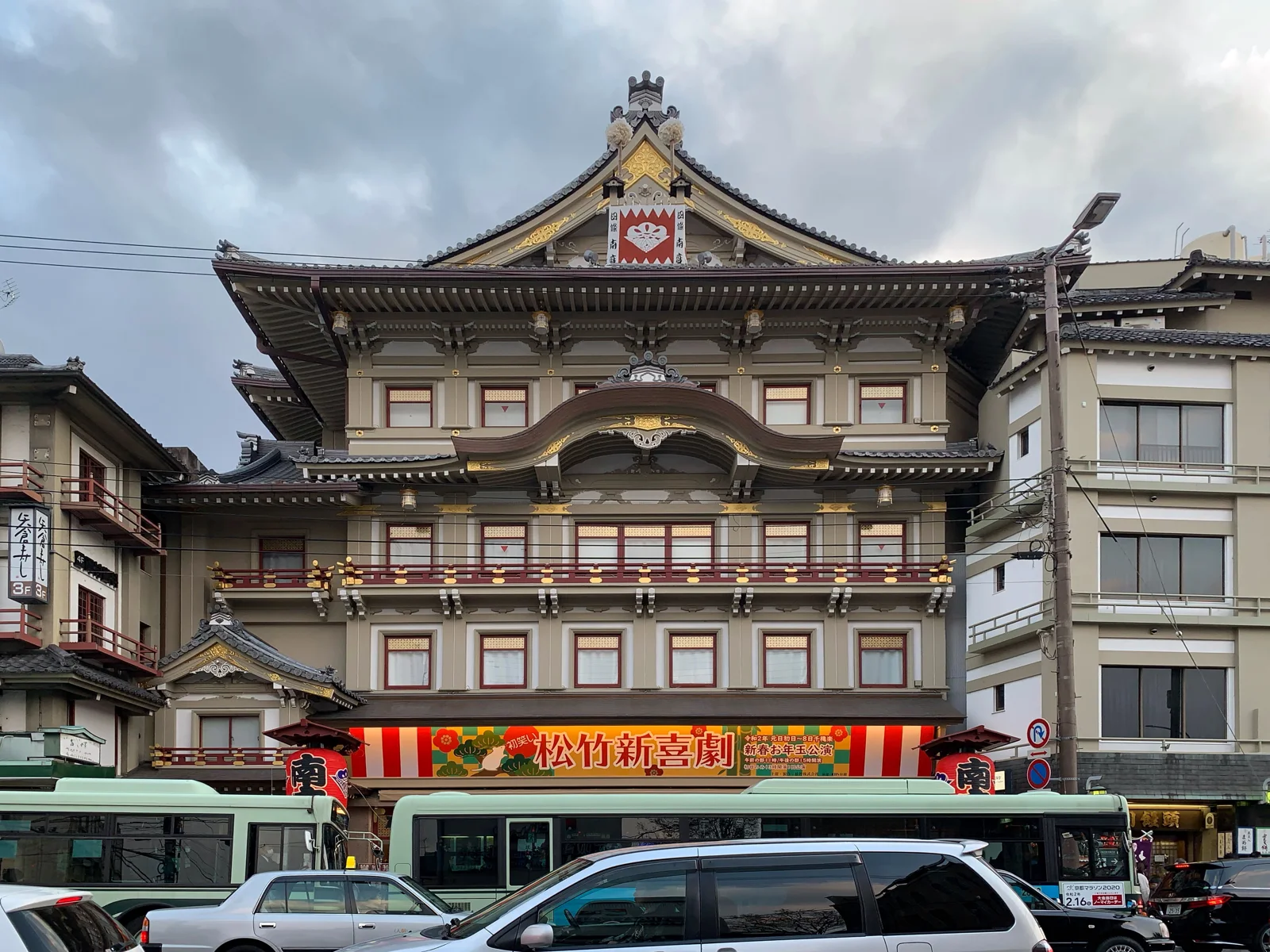
The season’s detailed Kaomise page gives a 10:30 matinee with an estimated 15:15 finish and a 16:00 evening performance with an estimated 21:10 finish. There are no performances on December 9 or 17. Private bookings cover the matinees on December 12, 19 and 20 and the evening on December 18. Eliminate closures and private performances for your travel dates, then choose the remaining matinee or evening that fits your accommodation and return route.
The matinee spans lunch; the evening spans dinner. Meals and intervals belong inside that block of time. To see the full evening program, stay downtown in the afternoon, eat early and return to your accommodation after the show. An 18:00 Gion Corner show cannot fit before it. The announced evening estimate is about five hours and ten minutes, a very different evening from a one-hour introduction.
Tax-inclusive prices for this production are ¥26,000 for first class, ¥13,000 for second class A, ¥10,000 for second class B, ¥8,000 for third class, ¥6,000 for fourth class and ¥28,000 for special seats. Fourth class has the same ¥6,000 face value as Gion Odori without tea, but content, viewing distance and available time should guide your choice. The production also says preschool children aged four and over each require a ticket. If you want only one short segment, first establish whether that production sells a corresponding ticket.
Minamiza seats also differ by floor, distance and access route. Someone who wants facial detail may choose differently from someone who wants the full stage composition. With limited mobility, establish whether you can reach the seat before comparing prices. Shochiku’s official online, telephone and box-office channels have their own procedures. Entering through the specific production page reduces the chance of buying a same-named production in another city.
Ask each venue about explanations and wheelchair spaces for your performance
Gion Corner’s November performance gives a specific wheelchair deadline: contact the venue by 16:00 on the weekday before your intended visit. Later requests depend on seats remaining. State the date, performance, how the wheelchair will be used and the number of companions together, then arrange transport after the reply. Buying ordinary online seats before raising access needs leaves fewer options.
The Shochiku accessibility table lists wheelchair viewing spaces, loan wheelchairs, elevators and accessible restrooms at Minamiza. Advance contact is also needed if you can transfer from a wheelchair to an ordinary seat. Beyond the equipment list, connect your needs to the whole route: entrance, upper floors, seat and the walk back to the station. Ask about your booked date and seat category rather than only whether an elevator exists.
Language services differ too. Gion Corner Premium uses tablets for explanations and translations. Minamiza’s equipment table lists no viewing-assistance subtitle tablets. Script loans require advance contact, while Japanese audio guides are provided as arranged for kabuki performances only. If Japanese is difficult for you, read the plot summary, characters and program first, then decide how much time you want to spend on the full production. Do not assume another theater’s multilingual subtitle service is available here.
Separate ticket costs from dinner to see the difference
For one adult aged 23 or over, a standard Gion Corner ticket has a ¥5,500 face value. Add an assumed ¥2,000 dinner and the pair costs ¥7,500, before transport and checkout fees. Raise the dinner assumption to ¥3,500 and the pair becomes ¥9,000. Separating the ticket from your own meal allowance shows whether a budget change comes from a seat upgrade or a more formal dinner.
For one adult, a ¥7,000 tea-inclusive Gion Odori ticket plus a ¥1,000 program gives ¥8,000 in performance spending. Without tea or a booklet, it is ¥6,000. If two people choose different extras, add each person’s items separately. To save money, first remove an optional booklet or tea service while keeping time for the full show. Lower spending does not require a rushed check-in.
A formal set dinner with a fixed start and cancellation fee creates a second inflexible reservation alongside the show. With one evening, I would fix the performance first, then find a meal that can finish beforehand. If the restaurant matters more, choose afternoon dance instead. When both are prepaid and close together, a transport or meal delay affects the second booking.
An 18:00 Gion Corner example: one afternoon sightseeing focus
Choose one temple south of Gion or a short nearby walk for the afternoon. An example plan is a simple dinner finished around 17:00, venue arrival at 17:30 and the show at 18:00. The 17:30 arrival is your own buffer; follow the ticket and staff instructions for check-in. If a restaurant cannot serve then, have a later lunch and eat dinner after the show rather than fitting food into a gap that does not exist.
For Kennin-ji beforehand, use the Kyoto area itineraries and temple opening hours to choose a daytime visit. If you have already walked elsewhere all day, return to your room to rest before Gion. An hour in the theater feels different when you arrive rested. Leave a rest period instead of adding sights merely to fill the wait.
The 19:00 show lets you finish dinner first, but means a later return to the room. Consider the routines of children and older companions. For either show, count the walk from the restaurant to the small theater. Famous restaurants with queues, fixed two-hour meals and cross-city travel do not fit the last gap before curtain time.
In heavy rain or wet shoes, remove the walk and go directly from your accommodation to dinner and the theater. Deal with wet umbrellas, coats and luggage before sitting down. Save electronic tickets and your return route in advance so you can use the time before the show to settle in instead of searching bags and email at the door.
A Gion Odori afternoon example: time for tea and dinner
For a 13:30 show with tea, choose one city activity in the morning and eat lunch early. That leaves time to use tea service from 12:30 without rushing. The show lasts about an hour; afterward, decide between a short walk along Shijo-dori and a rest at your accommodation. You need not add another timed experience that afternoon. If a companion does not enjoy matcha or sweets, choose suitable extras for each person when buying.
For the 16:00 show, use tea service from 15:00 as the afternoon’s fixed point, then eat dinner afterward. If staying in Osaka, first choose the Keihan or Hankyu route that suits your accommodation, then decide whether to dine in Kyoto or Osaka. A 16:00 start may sound early, but do not put the uphill walk to Kiyomizu, another garden and lengthy shopping before it. Stay in the same area beforehand so you can sit and rest early if tired.
Without tea, use that period for a rest outside, while still allowing ticket exchange and time to find your seats. Share the organizer’s exchange email with the person leading the group. Check the party size and performance once at the venue. Meet at a named exit afterward so some people do not head toward Yasaka while others return to their seats for belongings.
The journey home: Keihan Gion-shijo and Hankyu Kyoto-kawaramachi are on opposite banks
Gion Corner’s official access information gives about five minutes on foot to Keihan Gion-shijo and ten to Hankyu Kyoto-kawaramachi. Gion Higashi’s season page gives about ten and fifteen minutes respectively from Gion Kaikan. These are venue walking estimates. Add time to leave your seat, cross streets, enter the station and reach the platform. Meet at a named station entrance rather than simply writing “Shijo Station.”
Keihan Gion-shijo is east of the Kamo River and suits destinations along Keihan, including the Osaka direction. Hankyu Kyoto-kawaramachi is on the west side; compare Hankyu for Osaka Umeda. Minamiza is at the east end of Shijo Bridge. Its official access page places it beside Gion-shijo Exit 6 and about three minutes on foot from Kyoto-kawaramachi Exit 1. Each venue has a different walk to the stations. Follow your own station direction after the show.
If staying near Kyoto Station, check the route from the actual venue to your hotel. Near Shijo Karasuma, distinguish Hankyu Karasuma from subway Shijo. Underground passages, transfers and the final hotel walk all take time. If you walk slowly, need an elevator or prefer not to cross the bridge, choose the easier exit route first. Saving effort is more useful than shaving a little off the map’s straight-line distance.
For Osaka or an airport-line connection, look up the complete journey for your travel date, including the second transfer. Choose a train you can reach comfortably, with later services as a buffer. If you also want a restaurant with a queue after the show, move dinner near your accommodation. Last trains vary by date and direction. Write the actual service and transfer points in your itinerary rather than memorizing a generic last-train time.
Changes, cancellations and canceled performances: keep the ticket and use the original seller
Gion Corner’s official ticket terms do not accept product changes or order cancellations after application for the customer’s own reasons. The Gion Odori shop likewise prohibits changes and cancellations after purchase. If your flight lands too close to the show, use that evening for an ordinary meal and put prepaid performances in the middle of the trip. While plans are unsettled, keep a possible date without rushing to buy a ticket whose loss you cannot accept.
If the organizer cancels a performance, follow the original purchase channel and the refund notice for that show. Gion Corner’s general terms say the organizer sets the refund period and specified procedure, and tickets must be kept safely. A notice may involve mailed ticket returns, bank refunds and required information. Save the purchase notice, original ticket and contact details before traveling so a change does not leave you trying to reconstruct which website you used.
For a souvenir, keep a lawfully purchased program or take exterior photographs where allowed. Winter Gion Corner photos with a maiko follow the staff’s arrangements on the day.
A few useful answers
Is Gion Corner still at Yasaka Kaikan?
The current official venue is the small theater at Gion Kobu Kaburenjo, at 570-2 Gionmachi Minamigawa. Walk inward from the Gion Corner sign on Hanamikoji. Imperial Hotel, Kyoto, which preserves and adapts the former Yasaka Kaikan, is separately at 570-289 Minamigawa.
Does Gion Corner perform every day?
Regular shows are listed at 18:00 and 19:00. From December 1 to March 11, performances run only Tuesday through Friday, with national-holiday closures. Other closures include July 16, August 16 and the year-end/New Year period.
How much is a standard Gion Corner ticket?
Ages 23 and over pay ¥5,500, ages 16–22 ¥3,850, and ages 7–15 ¥3,300. Premium is ¥6,600 and tea-and-sweets seating ¥6,050 at every age. Ages 0–6 enter free but need a child ticket for their own seat. These are the official prices as of October 28, 2026.
Can I take photographs or enter Gion Corner late?
The November 2026 performance page prohibits photography, video, audio recording, eating and drinking inside. Late entry may be refused. The winter photo opportunity with a maiko after the show follows separate staff arrangements.
When is Gion Odori in 2026?
November 1–10 at Gion Kaikan, with daily shows at 13:30 and 16:00, each about an hour. Tickets are ¥7,000 with tea or ¥6,000 without; a program is another ¥1,000. Children under three cannot enter.
Can I exchange a BASE order ID for a Gion Odori ticket?
Use the exchange number sent by the Gion Higashi tea-house association. A BASE order ID cannot replace it. A shipped notice does not mean a physical item will arrive. Exchange the number at the theater on the day.
Is Gion Odori tea service after the show?
Tea service begins one hour before the show and ends five minutes before it: 12:30–13:25 for the 13:30 performance and 15:00–15:55 for the 16:00 performance.
Can I see kabuki at Minamiza in November?
November 3–25, 2026, is the comedy “Sanbaba.” The season’s annual Kaomise Grand Kabuki runs December 1–24, with general booking from November 9 at 10:00. Check the production before buying.
Official information and references
Sources used in this guide.
- Gion Corner | Repertoire and winter program
- Gion Corner | Current times, prices and closures
- Gion Corner | English seating, age and duration information
- Gion Corner | Small-theater address and entrance
- Gion Corner | Official ticket portal
- Gion Corner ticket service | Payment and collection
- Gion Corner ticket service | Cancellation and refund terms
- Gion Corner ticket service | Individual electronic QR tickets and delivery
- Gion Corner ticket service | Seating, cancellations and errors
- Gion Higashi Kabukai | 67th production, children, sales and doors
- Gion Higashi official shop | Exchange numbers, prices, changes and cancellations
- Gion Higashi official shop | Tea-inclusive ticket and deadline
- Gion Higashi official shop | Ticket without tea and sold-out status
- Imperial Hotel, Kyoto | Adaptation of Yasaka Kaikan and current address
- Official geisha-district guide | Spring and autumn dance productions
- Shochiku Minamiza | Current productions
- Shochiku | Booking start for December 2026 Kaomise
- Shochiku Minamiza | Station exits and access
- Shochiku | Minamiza accessibility and viewing services
- Shochiku | Official ticket methods
- Shochiku Kabuki-bito | 2026 Kaomise times, closures, private bookings and prices
- Keihan | Current lines and stations
- Hankyu | Current lines and stations