Walk Kyoto's Kitayama district from Kitayama Station through the Kyoto Botanical Gardens, Tadao Ando's Garden of Fine Arts Kyoto, and Nakaragi no Michi. Covers tickets, conservatory cutoff times, rainy-day routes, Kitayama-dori cafes, and late-2026 closures.
- Region & Focus
- KyotoItineraries
- Reading Scope
- 16 min read · 9 chapters · 5 Q&As
- Official Verification
- 34 official sources checkedUpdated November 22, 2026
- Key Topics
- ItinerariesNeighborhoodsSeasons
Chapter Route Map (tap any stop)
- Step off at Kitayama Station and pick your gate first
- Garden admission covers the conservatory, with a 15:30 afternoon cutoff
- Pick your garden zones by what is blooming that week
- From tropical rainforest to desert and alpine peaks inside the conservatory
- Walk Tadao Ando's concrete ramps to view eight ceramic murals
- Let Nakaragi no Michi decide which subway station ends your walk
- Take a break along Kitayama-dori or dodge rain at Rekisaikan
- Autumn 2026 night openings follow separate schedules at each site
- How to pace morning, afternoon, and two-hour Kitayama visits
- Quick Q&A
For a first visit to Kyoto's Kitayama neighborhood, start at Subway Kitayama Station Exit 3 to save steps. The Kyoto Botanical Gardens sit right outside the exit, with general daytime admission at ¥500 including the Conservatory. To add Tadao Ando's Garden of Fine Arts Kyoto, leave through the garden's Kitayama Gate and buy a separate ticket right next door to the east. You can comfortably pair both in half a day, then decide after lunch whether to walk Nakaragi no Michi beside the Kamo River. If you arrive in the afternoon, prioritize the conservatory's last-entry cutoff first.
Step off at Kitayama Station and pick your gate first
From Kyoto Station, ride the Subway Karasuma Line bound for Kokusaikaikan to Kitayama Station (K03). Kyoto Concert Hall's access guide puts the trip at roughly 15 minutes, or about 11 minutes from Shijo Station where the line connects to Hankyu Karasuma Station. If you are staying along the Tozai Line, transfer at Karasuma Oike. Watch for "Kokusaikaikan" as the terminus on platform signs; Kitaoji is the stop right before Kitayama.
The classic route links Kitayama Station Exit 3 directly to the botanical garden's Kitayama Gate. Before leaving the station, pin the garden areas you actually want to see on your map so you do not burn time wandering down every side path from the first flowerbed. If you plan to visit the Garden of Fine Arts afterward, follow signs inside the grounds back to the Kitayama Gate. The Garden of Fine Arts Kyoto sits just east of the Kitayama Gate; they look side by side on a map, but each has its own entrance and ticket booth.
If you want to end along the river, flip the order and tour the Garden of Fine Arts in the morning. Start there from Kitayama Station, enter the botanical gardens through the Kitayama Gate, and work your way south toward the conservatory and main lawn. Leave by the Main Gate, walk west along Kitaoji-dori to Kitaoji Bridge, stroll a stretch of the riverbank, and catch the subway back from Kitaoji Station. Finishing in the southwest corner keeps backtracking inside the park to a minimum.
If morning weeping cherries along the river are your priority, start at Kitaoji Station (K04), walk to Kitaoji Bridge, and turn onto Nakaragi no Michi on the east bank. Head north toward Kitayama Bridge and connect to the northern edge of the botanical gardens. From Kitaoji Station Exit 3 to the Main Gate, the garden estimates about a 10-minute walk. Coming up from Keihan Demachiyanagi after visiting Shimogamo Shrine, you can also join the riverbank from the south while your legs are fresh in the morning.
Because the station names look similar, check the Romanized names or station codes on your map for Kitayama (K03) and Kitaoji (K04). Kitaoji Station also connects to a major bus terminal, handy if you are continuing toward Daitoku-ji or Kamigamo. If you are heading straight for the gardens and the ceramic murals, drop separate pins for Subway Kitayama Station and the Botanical Gardens Kitayama Gate so you orient easily once aboveground.
Walk Kyoto's Kitayama district from Kitayama Station through the Kyoto Botanical Gardens, Tadao Ando's Garden of Fine Arts Kyoto, and Nakaragi no Michi. Covers tickets, conservatory cutoff times, rainy-day routes, Kitayama-dori cafes, and late-2026 closures.
Garden admission covers the conservatory, with a 15:30 afternoon cutoff
The Kyoto Botanical Gardens open 9:00–17:00 during the day, with last entry at 16:00. The Conservatory opens later at 10:00, stops admitting visitors at 15:30, and closes at 16:00. General daytime admission is ¥500, high school students and seniors 65 and older pay ¥250, and junior high students and younger enter free. Kyoto Prefecture combined garden and conservatory admission in April 2025, so a single daytime ticket or annual pass covers the conservatory too.
The conservatory cutoff is the easiest deadline to miss. Reaching the subway platform at 15:15 still leaves the walk out of the station, the ticket window, and the stroll across the grounds, leaving far less time than the timetable suggests. On afternoon visits, head straight toward the conservatory first and save the outdoor flowerbeds for after you exit. Past 15:30, shift focus to whichever outdoor gardens are peaking that week. If you arrive after 16:00, you can still make the Garden of Fine Arts Kyoto before its 16:30 last entry.
The Garden of Fine Arts Kyoto generally opens 9:00–17:00 with last admission at 16:30. General tickets cost ¥200, while high school students and seniors 65 and older pay ¥100 with valid age ID; junior high students and younger are free. Buying regular daytime tickets for both sites comes to ¥700 for adults, or ¥350 for high schoolers and eligible seniors 65 and up. If one person wants plants and another wants architecture, splitting up works easily: meet back outside the Kitayama Gate or at the subway exit so neither has to cross the park again.
Longer-term Kyoto visitors planning repeat seasonal trips can judge the annual pass by expected visits. The garden's adult annual pass is ¥2,000, and the high school and 65+ pass is ¥1,000, both breaking even on the fourth visit. For a single Kitayama trip, standard day tickets make more sense. Both attractions close from December 28, 2026 through January 4, 2027, and the Garden of Fine Arts Kyoto also closes December 2–4, 2026 for cleaning, making those early December days ideal for pairing the botanical gardens with a riverside walk.
| Facility | Hours | Last Entry | General Admission |
|---|---|---|---|
| Kyoto Botanical Gardens | 9:00–17:00 | 16:00 | ¥500 (includes Conservatory) |
| Botanical Gardens Conservatory | 10:00–16:00 | 15:30 | Included with garden admission |
| Garden of Fine Arts Kyoto | 9:00–17:00 | 16:30 | ¥200 |
Pick your garden zones by what is blooming that week
Opened in 1924, the Kyoto Botanical Gardens are recognized by the park as Japan's oldest public botanical garden. Its appeal is that formal flowerbeds, native woodland, and the glasshouse each hold their own. The official site suggests 90 to 120 minutes for a first visit before breaks. With two hours on site, spend roughly half on the conservatory and main walking axis, then choose one flower garden and one wooded stretch. If you already know which variety is blooming, work backward from that zone.
Entering from the Kitayama Gate puts you in the northern planting areas, where the official map leads to the Bulb Garden and Shiki Irodori no Oka, or inward toward the central Nakaragi no Mori grove and pond. That woodland contains Nakaragi Shrine, which shares its Japanese reading with the Nakaragi no Michi riverside path to the west. After walking around the pond trees, swing west to the Conservatory, then south to the Main Gate flowerbeds and Western-style Gardens, which include the rose garden and sunken beds.
For notable trees, watch for the Heritage Trees plaques along the paths. To mark its 2024 centennial, the garden designated 38 historic trees over 100 years old and added markers. Some are deodar cedars planted when the garden opened, while others stood on the land before 1924. In warmer months you see their canopies shading the lanes; in winter the bare branches and bark stand out clearly. Saving a separate map of the old trees gives you an easy excuse to return in another season.
Pairing Nakaragi no Mori with the Native Plants Garden shows two different sides of local flora. The grove around Nakaragi Shrine preserves natural forest representing the historic vegetation of the Yamashiro Basin, while the Native Plants Garden collects wild Japanese species arranged by woodland, wetland, and sandy habitats. Walking from beneath the shrine's canopy into the wetland beds lets you alternate between looking up at mature trees and down at low wild plants. If someone in your group mainly wants flower photos, set a seasonal bed as your meetup point while tree fans loop through the natural grove.
In spring, check the garden's official Sakura Map before choosing a path. In 2024, the Japan Association of Botanical Gardens certified the garden's cherry collection as a National Collection, covering 186 cultivars at the time, including Edo-era varieties and regional Kyoto cherries. Because bloom windows stagger across cultivars, pick a few trees peaking that week rather than chasing one spot. Even if the double weeping cherries along Nakaragi no Michi are still in bud, earlier cultivars inside the park or the bulb beds will carry the spring color.
From late spring into early summer, use the official flower calendar to locate tree peonies, herbaceous peonies, Japanese irises, and hydrangeas, each mapped to its own section. If you only have an hour after rain clears, sticking to the iris garden and pond edges feels far less rushed than trying to cover the whole grounds. In summer, visit the lotus pond south of Nakaragi no Mori in the morning before stepping into the conservatory. For autumn foliage, pair the pond and Nakaragi no Mori with the rose garden or seasonal beds so you get color both overhead and at eye level.
Winter visits work best when you combine the conservatory with outdoor pockets close to the gates. Pick between the plum grove, the camellia garden, and the bulb beds near Kitayama Gate based on the week's bloom report. The park updates its weekly Garden Bulletin every Friday on its homepage and stocks paper copies at each entrance. Use the annual flower calendar to plan the month, and the Friday bulletin to pinpoint exact beds on a single-visit trip.
If you enjoy a guided overview, join the free 45-minute staff-led mini tour starting outside the Botanical Garden Hall on Saturdays with no reservation required beyond garden admission. Tours usually begin at 13:00, shifting to 10:00 from July through September. Certified volunteer tours also run Wednesdays at 13:00, pausing from July through September. On Saturdays with a midday tour, visit the Garden of Fine Arts right after opening, eat lunch, and enter the botanical gardens once so you do not crisscross the grounds for the meetup. Tours may be canceled in bad weather.
From tropical rainforest to desert and alpine peaks inside the conservatory
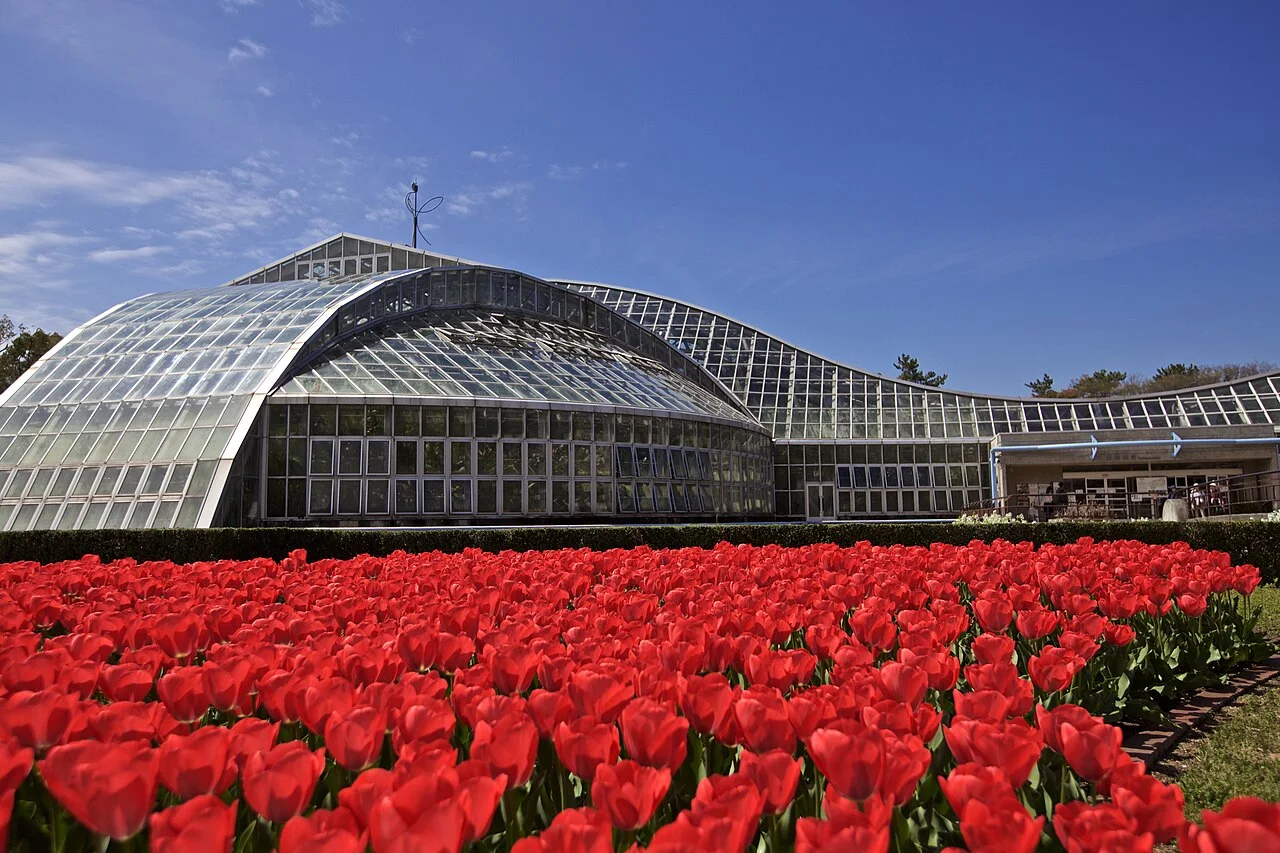
Sitting on the west side of the park, the Conservatory rises behind a rippling glass roofline. Kyoto Prefecture notes that the silhouette echoes the Kitayama mountains alongside water motifs inspired by Kinkaku-ji. Inside, eight climate zones unfold along a roughly 460-meter step-free circular route. Moving from broad-leaved tropical rainforest to desert, savanna, and alpine habitats makes it easy to compare how leaf size and plant form adapt to different climates.
Visiting with kids, turn the walk into a quick game by picking two plants with dramatically different leaf sizes, checking their origin plaques, and spotting familiar food crops growing in the Tropical Useful Plants Room. Orchid fans can linger in the Orchid and Bromeliad section. Just like outdoors, check the flower calendar and weekly updates ahead of time if you are hoping to catch a rare plant in bloom, since each room rotates featured specimens by season.
The conservatory's Reversed Day-Night Room usually suspends night-blooming flower displays from November through April. In cold weather, wear layers you can shed easily inside the warm, humid rooms, and avoid blocking narrow turns when stopping for photos. Even on rainy days, reaching the conservatory from the subway gate involves an exposed stretch of garden path. If you are waiting out a shower, walk the full indoor loop first before deciding which outdoor zones to tackle next.
From November 12 to December 27, 2026, the garden reopens the Reversed Day-Night Room for a special hands-on exhibition of conservatory plant specimens you can look at, touch, and smell. Alongside it, from November 28 to December 25, 2026, a poinsettia exhibition displays roughly 700 pots across about 100 varieties in the Special Exhibition Room, Orchid Room, and Jungle Room. Both run until 16:00 with last entry at 15:30. If your dates overlap with rain or the Garden of Fine Arts cleaning closure, shift that time into these indoor displays.
Strollers and wheelchairs are available free on a first-come, day-of basis at every daytime gate without reservations. Nursing rooms are located at the Kitayama Gate, the Botanical Garden Hall first-aid room, and the restroom south of the Great Lawn, with coin lockers at the Main Gate, Kitayama Gate, and Conservatory. Kyoto Prefecture offers multilingual garden and conservatory maps, and the 1F office in the Botanical Garden Hall lends tactile maps with audio pens for same-day use. Ask about return rules when borrowing a stroller or wheelchair if you plan to exit from a different gate.
In addition to standard wheelchairs at the gates, the garden began renting single-person electric mobility devices from the 1F shop in the Botanical Garden Hall on October 18, 2026. Rentals are first-come, first-served until 14:00 for roughly two-hour sessions and pause in rain. Riders must show photo ID verifying name, address, and age, be at least 18 years old and 140 cm tall, and weigh no more than 100 kg including bags. Because this desk sits inside the park, anyone needing mobility help straight off the subway should start with a wheelchair at the Kitayama Gate and the station elevator.
Walk Tadao Ando's concrete ramps to view eight ceramic murals
Officially titled Kyoto Prefectural Garden of Fine Arts (Kyoto), Tadao Ando's design arranges raw concrete walls, sloped ramps, and cascading water into an open-air gallery. Visitors wind downward through turns and levels to view each painting from changing heights. Because the entire complex is outdoors, wear a raincoat in light drizzle so your hands stay free on the ramps, and swap it for indoor galleries or the conservatory if heavy rain hits. Visitors with strollers should inspect the route layout at the gate, as the multi-level ramps take more effort than the botanical garden's flat paths.
The courtyard holds eight glazed ceramic panel reproductions. Four, including Michelangelo's The Last Judgment, debuted at the 1990 International Garden and Greenery Exposition in Osaka, while four were created specifically for this site. Scale is the draw: Monet's Water Lilies, Morning is close to original size at roughly 2 meters tall and 12.75 meters wide, set beside a reflecting pool. On bright days, watch how water reflections alter depth; toward dusk, steady your footing before pausing to inspect details rather than rushing down the next ramp.
Michelangelo's The Last Judgment is also near full scale at around 14 meters high, reproducing the fresco as it looked in 1990. Where the Sistine Chapel forces you to crane up behind the altar, Kitayama lets you shift your eye level across stacked walkways. Da Vinci's The Last Supper appears at near life-size as well; step back a few paces first to take in the figures and perspective before moving close to the panel. With only half an hour to spare, choose one centerpiece mural at the entrance and let the ramps carry you past the others along the way.
The Choju-jinbutsu-giga (Scrolls of Frolicking Animals) panels enlarge Volumes A and B from Kozan-ji roughly twofold, making the playful pacing of monkeys, rabbits, and frogs easy to read. The National Palace Museum version of Along the River During the Qingming Festival is likewise scaled up about two times, letting you trace boats along the waterway and spot dense pockets of street life. Moving from the Japanese picture scroll straight into the Qingming scroll highlights how each long format guides the viewer's eye, making this corner well worth a longer pause.
Give the Garden of Fine Arts 40–60 minutes on a first visit, or pick two priority murals and one complete loop if you are meeting companions or making a concert curtain. Keep walkways clear while taking personal travel photos and follow posted site rules. Wedding, promotional, and commercial shoots require advance permission and separate fees under facility regulations. When you exit onto Kitayama-dori, you can cross the street for pastries after wrapping up the outdoor loop.
Let Nakaragi no Michi decide which subway station ends your walk
Nakaragi no Michi runs along the left—eastern—bank of the Kamo River immediately west of the botanical gardens, stretching about 800 meters between Kitaoji Bridge and Kitayama Bridge. When setting navigation for the first time, pin the east end of either bridge and walk along the garden side of the water. City guides note that this stretch is famous in spring for its double-flowered red weeping cherries, and walking beneath the canopy gives far better views than snapping photos from the bridge alone.
The botanical garden's Kamogawa Gate sits near Kitayama Bridge in the upper-left corner of the park map. If you want to focus on the northern flowerbeds, stepping in from the riverside is shorter than looping back to Kitayama Station. Entering here puts you directly beside Shiki Irodori no Oka, where plantings wind along hills, ponds, and streams, alongside the Endangered Species Garden and Chinese Plants Garden. Plant enthusiasts can browse the taxonomy labels while companions who only want the river stroll walk to the end and meet outside the Kitayama Gate.
To finish near Kitayama Station, start at Kitaoji Bridge and walk north to Kitayama Bridge before turning east onto Kitayama-dori. Walk south instead, and you end right near Kitaoji Station, its bus terminal, and downtown subway trains. If you are stopping often for cherry blossom photos, walking with young kids, or pushing a wheelchair, stick to the section closest to your entry bridge and step back up to street level the same way. For wide shots framing the bridges and the tree line together, scout the angle from the bridge deck first, then drop down to the embankment path.
Joggers and cyclists use the riverside path on weekdays too, so step aside when framing photos to keep the lane clear. If you bring snacks, Kyoto City riverside notices warn that black kites swoop down from overhead to snatch food, so eat pastries indoors or in seated cafes. Leave the embankment for street-level Kitayama-dori or Kitaoji-dori if rain picks up or river levels rise, and never cut through low underpasses beneath the bridges. In summer, both the riverbank and bridges offer little shade, so tackle the river walk before lunch and step into the garden or a cafe afterward.
If you are building a full riverside walking day, continue north from Nakaragi no Michi toward Kamigamo Shrine. The shrine's site estimates a 25-minute walk from Kitayama Station, and Kyoto City Tourism lists Kyoto City Bus Line 4 from Kitayama Station to Kamigamo Shrine-mae. Using the bus one way saves energy for the return trip so you still catch the botanical garden's daytime cutoff. Map routes also lead south toward Shimogamo Shrine and Demachiyanagi, though that belongs to a longer riverside itinerary separate from the brisk two-bridge loop.
Take a break along Kitayama-dori or dodge rain at Rekisaikan
The shops along Kitayama-dori make an easy transition between the two gardens. For sweets, head directly across from the Kitayama Gate to the MALEBRANCHE Kyoto Kitayama Main Store. The store listing gives shop hours as 9:00–17:30 and salon hours as 10:00–17:30 with last order at 17:00. Because the cafe opens an hour after the retail counter, morning visitors should tour the Garden of Fine Arts or the northern garden beds first, then cross the street on the way out. If you only have time for boxed gifts, use the takeout counter separately from the sit-down salon.
For a break inside the park, Kyoto Prefecture announced that Mori no Cafe on the north edge of the Great Lawn reopened from September 2026, and the shop inside Botanical Garden Hall sells drinks, bento boxes, and baked goods. Families can plan lunch right after the Great Lawn or nearby flowerbeds without leaving the grounds. Before an evening concert, Kyoto Concert Hall houses a branch of Maeda Coffee; check its monthly schedule notices in advance so your coffee stop lines up with concert doors.
The Kyoto Institute, Library and Archives (Rekisaikan) is about a four-minute walk south from Kitayama Station Exit 1. Entry is free for its Kyoto studies exhibitions and local archive reading spaces, with separate fees only for select lectures and photocopies. Pop into the 1F exhibition space and Kyoto Studies Exchange Area while passing through, or head up to 2F if you have time for historic maps, local history volumes, and archival film. Regular closures include national holidays, the second Wednesday of each month, and December 28 through January 4; on weekends, the 1F exhibition room stays open until 17:00 while the exchange area closes 12:00–13:00, so check each space's hours separately.
Need a kid-friendly indoor spot before a show? Rekisaikan's 1F also features Hotto Space, equipped with light snack and drink vending machines, child-sized tables, and free-reading books. It stays open until 16:45 on weekends, making a handy backup if you arrive during the exchange area's midday break, and the 1F lobby includes nursing and diaper-changing rooms. From November 4 to December 1, 2026, the 2F reading room also hosts a display of materials on Kyoto Prefecture's flora, an easy add-on the same afternoon as the botanical gardens.
When the forecast looks shaky, keep your plans clustered between Kitayama Gate and the concert hall. Kyoto Concert Hall sits roughly five minutes south of Kitayama Station Exit 1 or Exit 3, with a step-by-step elevator route mapped from Exit 3 to the hall entrance. Rekisaikan, the concert hall, and the Garden of Fine Arts are all walkable directly from Kitayama Station. If you already hold concert tickets, verify whether your performance is in the Main Hall or Murata Ensemble Hall, leave room for coffee or a quick exhibit, and head straight back to the subway afterward without re-entering the gardens.
Kyoto Concert Hall's Kitayama Matinee Concert also anchors a morning schedule cleanly. On Tuesday, February 9, 2027, Vol. 28 features cellist Yuya Mizuno and pianist Yu Nitahara in the Murata Ensemble Hall, with doors at 10:30, performance at 11:00, and an expected finish around 12:00 for ¥1,500 reserved seating. On a concert day, eat lunch nearby afterward, then spend the afternoon in the conservatory and early-spring outdoor beds. If you want mural photos too, step next door from Kitayama Gate while leaving enough daylight for the outdoor ramps.
Autumn 2026 night openings follow separate schedules at each site
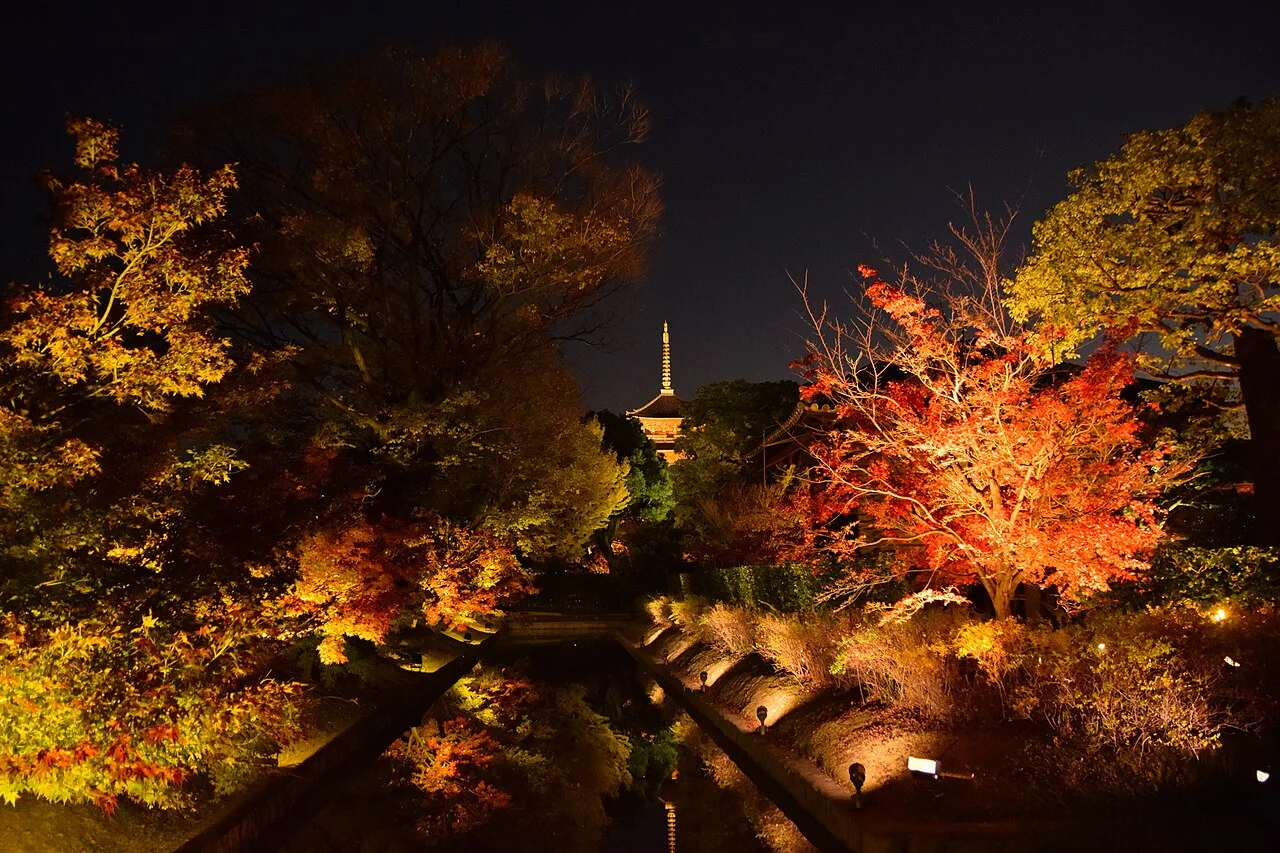
From November 14 to December 13, 2026, the Kyoto Botanical Gardens host the NIGHT GARDEN of Autumn Colors event from 18:00 to 21:30, with last entry at 20:30. Daytime tickets and annual passes only cover daylight hours; evening entry requires an event ticket. Adult admission is ¥1,100 on weekdays and ¥1,500 on weekends and national holidays, elementary and junior high students pay ¥600, and preschool children are free. Entry is through the Kitayama Gate or Main Gate, with a one-way illuminated route circling the pondside autumn maples and open zones.
According to the event site, the Conservatory opens at night only on Saturdays, Sundays, and national holidays from 18:00 to 21:00, so weekday visitors should focus on the illuminated paths and pond reflections. If your group splits up, set the meetup outside the Kitayama Gate. Visitors entering from the Main Gate who want to catch the subway from Kitayama afterward can simply follow the pond path toward the Kitayama Gate instead of doubling back to Kitaoji.
Over those same weekends, the Garden of Fine Arts Kyoto extends hours on Saturdays and Sundays from 17:00 to 20:00, with last admission at 19:45 and general tickets at ¥200. To cover both after dark, visit the Garden of Fine Arts first before walking through the Kitayama Gate into the botanical gardens, rather than rushing out of the big park at closing time. If you want the night conservatory on a weekend, do not cut arrival close to the garden's 20:30 final entry, since the conservatory itself closes at 21:00.
If you want both daylight and illuminations, tour the outdoor flowerbeds and conservatory in the late afternoon, step out for dinner or rest before daytime closing, and re-enter later with an evening ticket. On weekday nights, either see the Garden of Fine Arts during regular daytime hours first or dedicate the evening solely to the botanical garden's lit paths. The autumn light-up ends December 13, so travelers arriving around New Year should plan straight around the year-end closures instead.
How to pace morning, afternoon, and two-hour Kitayama visits
Arrive at 9:00 and you can browse the week's outdoor blooms first, then enter the conservatory right when doors open at 10:00. Once outside again, spend the rest of your garden time around the pond and shaded woods. If you want to finish the Garden of Fine Arts before noon, step out of the Kitayama Gate to tour it next door, then follow lunch with Nakaragi no Michi. Slower walkers can trim the riverbank to a short stretch near Kitayama Bridge and ride back from Kitayama Station.
With just over two hours and a preference for architecture, tour the Garden of Fine Arts first, then spend your remaining window inside the botanical gardens on the week's highlights or the conservatory. Arriving after lunch with an afternoon tea reservation? Walk the Garden of Fine Arts right before your seating, then stroll south from Kitayama Bridge afterward if daylight holds. When companions move at different speeds, pick one gate outside as your fixed rendezvous so flower watchers and architecture fans can explore separately.
If you arrive in the afternoon with dinner plans in Gion later, start with the conservatory before its early cutoff, pick one outdoor bed on the walk back to the Kitayama Gate, and catch the Garden of Fine Arts on your way out. Reaching Kitayama after 16:00 still lets you pair the Garden of Fine Arts with the riverbank, keeping the whole route neatly between the two subway stations. Heading to Kawaramachi for dinner? Ride back via Shijo Station to transfer to the Hankyu Line, or change at Karasuma Oike for the Tozai Line toward Higashiyama, skipping extra crosstown buses to linger longer by the river.
To stretch half a day into a full northern Kyoto itinerary, choose which direction to push next. Continuing north along the Kamo River leads to Kamigamo Shrine and its traditional approach streets. For dinner in Ichijoji, note that Kitayama sits on the Subway Karasuma Line while Ichijoji is on the Eizan Electric Railway, requiring a bus or surface transfer between them. Riding the Eizan Line from Demachiyanagi also pairs cleanly with Shimogamo Shrine or casual dinner spots around Demachiyanagi.
Add Kurama-dera and Kifune Shrine only if you carve out a separate half-day for the mountain rail line. Both sit deeper in the hills along the Eizan Electric Railway and require extra time for steep trails and station-to-shrine walks. Leave generous slack in the mountains first and judge your legs before tacking Kitayama onto the afternoon. If you already hiked Kurama and Kifune, stick to a relaxed riverbank walk and dinner back in town, saving the botanical gardens and murals for a fresh day during full ticketed hours; see our Kurama and Kifune day route for mountain logistics.
Your hotel neighborhood also shapes when Kitayama fits best. Staying near Kyoto Station or Shijo puts both gardens and the riverbank on a single direct Karasuma Line ride. If you are basing in northern Kyoto while commuting daily to Gion or Arashiyama, compare neighborhood bases and dinner options in our Kyoto Kitayama stays guide. Save the final stretch of your day for a unhurried meal, a concert you already hold tickets for, or a quiet pause overlooking the water from Kitaoji Bridge.
A few useful answers
Which subway station is best for the Kyoto Botanical Gardens in Kitayama?
Take the Kyoto Municipal Subway Karasuma Line to Kitayama Station and use Exit 3 for the Kitayama Gate. If you prefer entering through the Main Gate, get off at Kitaoji Station and walk east from Exit 3 for about 10 minutes.
Do you need a separate ticket for the conservatory at the Kyoto Botanical Gardens?
Daytime admission to the conservatory is included with your garden ticket. General daytime entry is ¥500, and the conservatory is open 10:00–16:00 with last entry at 15:30. Autumn night openings require a separate event ticket.
How do you connect the Garden of Fine Arts Kyoto with the Kyoto Botanical Gardens?
Step out of the botanical gardens through the Kitayama Gate, and the Garden of Fine Arts Kyoto entrance is right next door to the east. General daytime admission is ¥200, with last entry usually at 16:30 and closing at 17:00. Because it is an open-air concrete courtyard with ramps and stairs, rainy visits still involve exposed walkways and elevation changes.
What closes in Kitayama over the New Year holiday?
Both the Kyoto Botanical Gardens and the Garden of Fine Arts Kyoto are closed from December 28, 2026 to January 4, 2027. The Garden of Fine Arts Kyoto also closes temporarily for cleaning from December 2 to 4, 2026. Over the year-end holiday, you can still walk Nakaragi no Michi along the Kamo River.
How long does it take to walk Nakaragi no Michi?
The path runs roughly 800 meters between Kitaoji Bridge and Kitayama Bridge, taking 20–30 minutes at a relaxed pace with photo stops. Walking north brings you up to Kitayama-dori, while heading south ends closer to Kitaoji Station.
Official information and references
Sources used in this guide.
- Kyoto Botanical Gardens General Guide: Hours, Admission, Rentals, and Dining
- Kyoto Prefecture: Combined Garden and Conservatory Admission from April 2025
- Kyoto Botanical Gardens: Access and Gate Entrances
- Kyoto Botanical Gardens: Park Map, Flower Calendar, and Centennial Trees
- Kyoto Prefecture: Botanical Garden and Conservatory Map and Tactile Map
- Kyoto Botanical Gardens: Conservatory Overview
- Kyoto Botanical Gardens: Weekly Friday Bloom Updates and Park Bulletin
- Garden of Fine Arts Kyoto: Daytime Hours, Admission, and Photography Rules
- Garden of Fine Arts Kyoto: Entrance and Subway Access
- Garden of Fine Arts Kyoto: Eight Ceramic Mural Works
- Garden of Fine Arts Kyoto: December 2026 Cleaning and Year-End Closures
- Garden of Fine Arts Kyoto: 2026 Autumn Night Opening (Nov 14–Dec 13)
- NIGHT GARDEN of Autumn Colors: 2026 Tickets, Open Areas, and Gates
- City of Kyoto: Nakaragi no Michi Distance, Weeping Cherries, and Riverside Location
- Kyoto Municipal Transportation Bureau: Subway Lines and Transfers
- Kyoto City Tourism: Bus Access from Kitayama Station to Kamigamo Shrine
- Kamigamo Shrine: Access and Walking Times
- MALEBRANCHE Kyoto Kitayama Main Store: Shop and Salon Hours
- Kyoto Institute, Library and Archives (Rekisaikan): Floor Guide and Hours
- Kyoto Concert Hall: Kitayama Station Exits and Elevator Route
- Kyoto Concert Hall: February 9, 2027 Kitayama Matinee Concert
- Maeda Coffee: Kyoto Concert Hall Branch
- Eizan Electric Railway: Demachiyanagi, Ichijoji, Kibuneguchi, and Kurama Line
- Kyoto Prefecture: Natural Forest Around Nakaragi Shrine
- Kyoto Botanical Gardens: Native Forest and Wild Plant Ecological Garden
- Kyoto Botanical Gardens: Shiki Irodori no Oka and Endangered Species Garden
- Kyoto Botanical Gardens: Guided Tour Times and Meeting Point
- Kyoto Botanical Gardens: Personal Mobility Device Rental Notice
- Kyoto Institute, Library and Archives (Rekisaikan): Regular Closures, Free Entry, and Access
- Kyoto Institute, Library and Archives (Rekisaikan): 2026 Kyoto Prefecture Plant Materials Exhibition
- Kyoto City Disaster Prevention: Localized Heavy Rain and River Levels
- City of Kyoto: Kamo River Walking Etiquette and Black Kite Precautions
- Kyoto Botanical Gardens: 2026 Conservatory Plant Specimens Exhibition
- Kyoto Botanical Gardens: 2026 Poinsettia Exhibition