Explore Kyoto's Kitayama district on foot from Kitayama Station: Kyoto Botanical Gardens, Tadao Ando's Garden of Fine Arts, and the Nakaragi-no-Michi river walk. Includes ticket prices, conservatory last entry, wet-weather plans, Kitayama-dori cafes, and late-2026 closures.
- Region & Focus
- KyotoItinerary planning
- Reading Scope
- 16 min read · 9 chapters · 5 Q&As
- Official Verification
- 34 official sources checkedUpdated 22 November 2026
- Key Topics
- ItinerariesNeighbourhoodsSeasons
Chapter Route Map (tap any stop)
- Arrive at Kitayama Station and Choose Your Gate First
- Garden Tickets Include the Conservatory—Watch the 15:30 Cut-Off
- Picking Your Botanical Gardens Route by the Week's Blooms
- From Tropical Rainforest to Desert and Alpine Flora
- Garden of Fine Arts: Viewing Eight Works Across Concrete Tiers
- Walking Nakaragi-no-Michi and Choosing Your Return Station
- Taking a Break on Kitayama-dori or Sheltering at Rekisaikan
- Autumn 2026 Night Openings Follow Separate Timetables
- Morning, Afternoon, and Two-Hour Itineraries
- Quick Q&A
For a first visit to Kyoto's Kitayama district, starting at Exit 3 of Kitayama Underground Station saves the most walking. Kyoto Botanical Gardens sits right beside the exit, with standard daytime admission at ¥500 including the Conservatory. To add Tadao Ando's Garden of Fine Arts, leave via the Botanical Gardens' Kitayama Gate and buy a separate ticket immediately next door to the east. You can comfortably pair both in half a day, then decide after lunch whether to stroll Nakaragi-no-Michi along the Kamo River. Arriving in the afternoon? Make the Conservatory your first stop before its last-entry cut-off.
Arrive at Kitayama Station and Choose Your Gate First
From Kyoto Station, take the Kyoto Municipal Subway Karasuma Line northbound toward Kokusaikaikan to Kitayama Station (K03). Kyoto Concert Hall's access guide estimates the journey at roughly 15 minutes, or about 11 minutes from Shijo Station (which connects to Hankyu Karasuma). Travellers staying along the Tozai Line change at Karasuma Oike. Check platform destination signs for "Kokusaikaikan"; Kitaoji is the stop immediately before Kitayama.
The standard route runs from Kitayama Station Exit 3 straight to the Botanical Gardens' Kitayama Gate. Before leaving the station, pin the areas you want to see on your map so you do not end up wandering down every side path from the very first flowerbed. If you are heading to the Garden of Fine Arts afterwards, follow signs inside for "Kitayama Gate" back to your entry point. The Garden of Fine Arts sits just east outside Kitayama Gate—close on the map, though both attractions keep separate entrances and ticket booths.
If you would rather leave the riverbank walk for last, visit the Garden of Fine Arts in the morning. Tour it by Kitayama Station first, enter the Botanical Gardens via Kitayama Gate, and work your way south toward the Conservatory and southern lawns. Exit through the Main Gate, walk west along Kitaoji-dori to Kitaoji Bridge, stroll a stretch of the riverbank, and catch the underground back from Kitaoji Station. That keeps the final leg on the southwest side and minimises backtracking inside the gardens.
To catch the riverside weeping cherry blossoms in the morning, walk from Kitaoji Station (K04) to Kitaoji Bridge and join Nakaragi-no-Michi on the east bank. Head north along the river to Kitayama Bridge, then enter the northern side of the Botanical Gardens. The gardens' own guide lists a 10-minute walk from Kitaoji Station Exit 3 to the Main Gate. Visitors arriving from Keihan Demachiyanagi after Shimogamo Shrine can also join the riverbank from the south, saving the full waterside stroll for the morning when energy is highest.
Because the station names look similar, check the Romanised names ("Kitayama" versus "Kitaoji") or station codes on maps. Kitaoji Station also links to a major bus terminal, handy if your next stop is Daitoku-ji or Kamigamo. Heading straight for the gardens and Tadao Ando's courtyard? Save pins for both Kitayama Station and the Botanical Gardens Kitayama Gate so you can orient yourself as soon as you reach street level.
Explore Kyoto's Kitayama district on foot from Kitayama Station: Kyoto Botanical Gardens, Tadao Ando's Garden of Fine Arts, and the Nakaragi-no-Michi river walk. Includes ticket prices, conservatory last entry, wet-weather plans, Kitayama-dori cafes, and late-2026 closures.
Garden Tickets Include the Conservatory—Watch the 15:30 Cut-Off
Kyoto Botanical Gardens opens 09:00–17:00 during daytime hours, with last entry at 16:00. The Conservatory opens later at 10:00, stops admitting visitors at 15:30, and closes at 16:00. Standard daytime admission is ¥500 for adults, ¥250 for high school students and visitors aged 65 or over, and free for junior high school pupils and younger. Since April 2025, Kyoto Prefecture has bundled garden and conservatory admission, so your daytime ticket or annual pass covers the Conservatory.
The Conservatory is the easiest part to miss. Stepping off the underground at 15:15 leaves a tighter window than the timetable suggests once you exit the station, clear the ticket gate, and cross the grounds. On an afternoon visit, walk straight toward the Conservatory first and save outdoor flowerbeds for the way out. After 15:30, switch your focus to whichever outdoor beds are blooming best. Arriving after 16:00? You can still catch daytime admission at the Garden of Fine Arts before its 16:30 last entry.
The Kyoto Prefectural Garden of Fine Arts normally opens 09:00–17:00 with last entry at 16:30. Standard admission is ¥200 for adults, ¥100 for high school students and visitors aged 65 or over (ID required for seniors), and free for junior high school pupils and younger. Buying single daytime tickets for both sites comes to ¥700 for adults, or ¥350 for high school students and eligible visitors aged 65+. If companions split up between plants and architecture, arrange to meet outside Kitayama Gate or the underground exit so neither has to cross the gardens again.
Longer-stay visitors planning return trips across seasons can weigh up the annual pass. A Botanical Gardens annual pass costs ¥2,000 for adults and ¥1,000 for high school students and visitors aged 65+, breaking even on the fourth visit in both tiers. For a one-off Kitayama outing, standard day tickets are all you need. Both attractions close from 28 December 2026 to 4 January 2027; the Garden of Fine Arts also closes for cleaning from 2 to 4 December 2026, leaving those early-December days free for the Botanical Gardens and riverside walk.
| Facility | Hours | Last Entry | Standard Ticket |
|---|---|---|---|
| Kyoto Botanical Gardens | 09:00–17:00 | 16:00 | ¥500 (includes Conservatory) |
| Botanical Gardens Conservatory | 10:00–16:00 | 15:30 | Included with garden admission |
| Kyoto Prefectural Garden of Fine Arts | 09:00–17:00 | 16:30 | ¥200 |
Picking Your Botanical Gardens Route by the Week's Blooms
Opened in 1924, Kyoto Botanical Gardens is listed by Kyoto Prefecture as Japan's oldest public botanical garden. Its charm lies in how formal flowerbeds, mature woodland, and the Conservatory each hold their own as highlights. The official site suggests 90 to 120 minutes for a first visit, plus rest stops. If you have two hours, devote roughly half to the Conservatory and walking routes, then pick one garden zone and one stretch of woodland. If you already know which variety is peaking, work your route backwards from that area.
Entering at Kitayama Gate brings you straight to the northern planting beds: follow the official park map to the Bulb Garden and Shiki Irodori-no-Oka (Hill of Four Seasons), or turn inward toward central Nakaragi Forest and the pond. That woodland shelters Nakaragi Shrine, which shares its name and reading with the riverside path to the west. After the waterside trees, continue to the Conservatory on the west side, then head south to the Main Gate flowerbeds and the European-style Garden, which officially encompasses the Rose Garden and Sunken Garden.
If you like notable trees, look out for the "Heritage Trees" plaques. To mark its centenary in 2024, the garden selected and signposted 38 trees aged 100 years or more, including Himalayan cedars planted at opening and veteran trees that stood here before the park existed. In warmer months you can see how their canopies shade the walkways; in winter, bare branches and bark textures stand out clearly. Keep a map of these heritage trees alongside your blossom photos and you have a ready excuse to return in another season.
To appreciate how Nakaragi Forest and the Native Plants Garden differ, walk them back to back. The grove around Nakaragi Shrine preserves local natural woodland, introducing the indigenous flora of the Yamashiro Basin. The Native Plants Garden gathers wild species from across Japan, arranged by woodland, wetland, and sandy habitats. Moving from the shrine canopy to the wetlands lets you alternate between low ground cover and overhead tree crowns. If companions are mainly here for flower photography, agree on a seasonal flowerbed as your meeting point while tree enthusiasts take a brief loop through the natural grove.
In spring, consult the official Sakura Map. In 2024, the gardens' cherry collection was recognised as a National Plant Collection by the Japan Association of Botanical Gardens, encompassing 186 cultivars including Edo-period varieties and Kyoto local cherries. Because varieties peak in sequence, choose a few trees in full flower that week with your group. Even if the double weeping cherries along Nakaragi-no-Michi are still tight in bud, other cultivars inside the park or the Bulb Garden will deliver plenty of spring colour.
In late spring and early summer, use the official flower calendar to track down tree peonies, herbaceous peonies, Japanese irises, and hydrangeas, each clearly marked on the park map. If you only have an hour after a shower, the iris garden and pond edges feel far less rushed than attempting the full circuit. For summer lotuses, visit the lotus pond south of Nakaragi Forest in the morning before stepping into the Conservatory. In autumn, link the pond and Nakaragi Forest with the Rose Garden or seasonal beds so you take in both eye-level blooms and turning leaves overhead.
Winter favours the Conservatory and outdoor areas near the gates. Pick one highlight—the plum grove, camellia garden, or the Bulb Garden near Kitayama Gate—using that week's bloom update. The Botanical Garden Newsletter (Shokubutsuen Dayori) on the official website updates every Friday and is handed out at each gate. Use the flower calendar to pick the right month and the weekly newsletter to pinpoint active beds—particularly useful if you are making a single trip and want to head straight to what is in bloom.
For live commentary on seasonal highlights, join the staff-led mini-tour starting outside the Botanical Garden Hall on Saturdays—around 45 minutes, no booking needed, included with admission. It usually begins at 13:00, moving earlier to 10:00 from July to September. Certified volunteer tours also run on Wednesdays at 13:00 (suspended July–September). When planning around the Saturday afternoon tour, fit the Garden of Fine Arts in after opening and before lunch, then enter the Botanical Gardens so you avoid trekking back across the park for the meeting point. Tours may be cancelled in poor weather.
From Tropical Rainforest to Desert and Alpine Flora
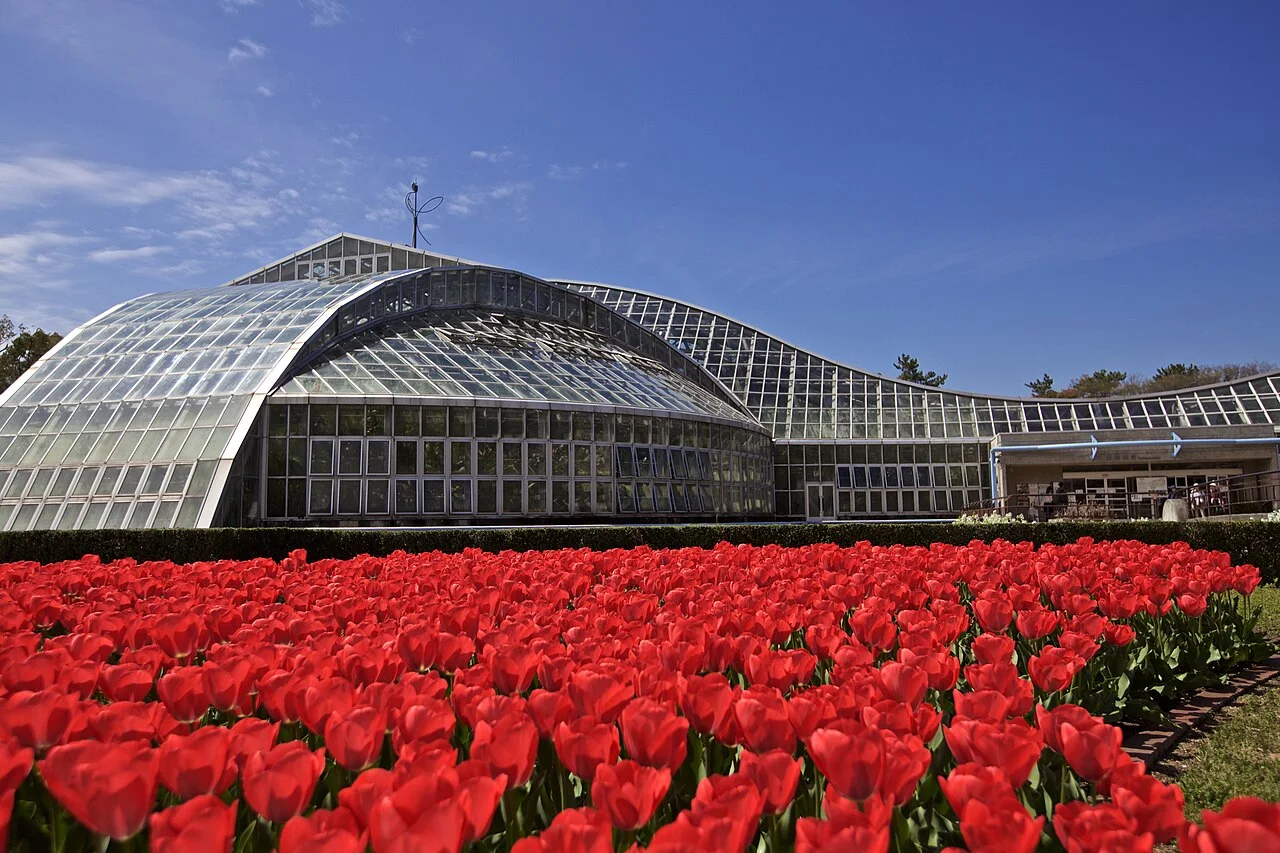
Standing on the west side of the park, the Conservatory is topped by a sweeping profile of undulating glass roofs. Kyoto Prefecture's facility notes liken its silhouette and waterside setting to the Kitayama mountains and Kinkaku-ji. Inside, eight climate-controlled rooms form a step-free circular route roughly 460 metres long. Moving from broad-leaved tropical rainforest into desert, savannah, and alpine zones makes it easy to spot how leaf shapes and plant habits adapt to each climate.
Visiting with children? Challenge them to spot two plants with dramatically different leaf sizes, read the plaques to trace where each grows in the wild, then visit the Tropical Useful Plants Room to see familiar foods growing on live plants. Orchid lovers can spend extra time in the Orchid and Bromeliad zone. If you are hoping to catch a particular rare flower, check the flower calendar and weekly notices just as you would outdoors—every room rotates seasonal specimens.
The Conservatory's Day-Night Reversal Room usually suspends its night-blooming display from November to April. In colder months, wear layers you can easily unzip indoors, and keep narrow turns clear when stopping for photographs. Even in wet weather, you still cross an open-air path between the underground exit and the glasshouse; if you need shelter for a while, tour the entire Conservatory first and judge the rain before choosing your next outdoor section.
From 12 November to 27 December 2026, the Day-Night Reversal Room temporarily reopens with a conservatory plant specimen display you can look at, touch, and smell. Running alongside it from 28 November to 25 December, a poinsettia exhibition showcases roughly 100 cultivars and 700 pots across the Special Exhibition Room, Orchid Room, and Jungle Room. Both run until 16:00 with last entry at 15:30—an ideal fallback on rainy days or during the Garden of Fine Arts' early-December cleaning closure.
Pushchairs and wheelchairs are available to borrow at each daytime gate on a first-come, first-served basis (no advance reservations). Nursing rooms are available at Kitayama Gate, the Botanical Garden Hall first-aid room, and the toilets south of the Great Lawn; coin lockers sit at the Main Gate, Kitayama Gate, and the Conservatory. Kyoto Prefecture provides Chinese-language park and conservatory maps, and tactile maps with audio guides can be borrowed on the day from the first-floor office in the Botanical Garden Hall. When borrowing a pushchair or wheelchair, check return instructions at the gate before planning to leave through another exit.
In addition to gate wheelchairs, from 18 October 2026 the Botanical Garden Hall first-floor shop hires out single-rider electric mobility scooters on a first-come basis (last hire 14:00, roughly two hours per session, unavailable in rain). Applicants must present photo ID confirming name, address, and age, and be aged 18 or over, at least 140 cm tall, and weigh at most 100 kg including luggage. Since this desk sits inside the grounds, anyone needing assistance straight from the underground can use a Kitayama Gate wheelchair and the street-level lift.
Garden of Fine Arts: Viewing Eight Works Across Concrete Tiers
Known in Japanese as Kyoto Furitsu Toban Meiga no Niwa, the Kyoto Prefectural Garden of Fine Arts was designed by Tadao Ando as an open-air courtyard of concrete walls, ramps, and water features. Visitors turn corners and descend along walkways to view each work from shifting heights. Because the entire gallery is open-air, a raincoat keeps your hands free on the ramps in light drizzle; in heavy downpours, switch to indoor venues or the Conservatory. Visitors with pushchairs should check the layout at the entrance first—unlike the level botanical paths, this circuit involves multi-level slopes.
Eight ceramic-plate artworks are installed on site. Four, including The Last Judgment, debuted at Expo '90 (the International Garden and Greenery Exposition), while four were produced specifically for this courtyard. Scale is half the story: Monet's Water Lilies, Morning sits close to full size at roughly 2 metres high by 12.75 metres long beside a pool of water. View it together with the water surface—in bright daylight, reflections alter the sense of depth; as dusk settles, pause on flat ground to inspect details rather than rushing down the next ramp.
Michelangelo's The Last Judgment stands near life-size at roughly 14 metres tall, preserving the fresco's appearance as of 1990. In the Sistine Chapel the painting towers behind the altar, whereas in Kitayama you can adjust your eye line across different walkway tiers. Da Vinci's The Last Supper is also near full scale—step back first to read the figures and perspective before approaching the wall for close detail. With only half an hour to spare, pick one headline piece at the entrance and take in the others along the ramps.
The ceramic Choju-jinbutsu-giga (Scrolls of Frolicking Animals) enlarges Kozan-ji's first and second scrolls to roughly twice original scale; focus on the passages where monkeys, rabbits, and frogs gather to feel the scroll's lively rhythm. Along the River During the Qingming Festival, reproduced from the National Palace Museum version at roughly double scale, invites you to trace boats along the canal and read the shifting density of shops and neighbourhoods. Moving from the Japanese picture scroll to the unfurled Chinese panorama makes a rewarding spot to linger and compare how each guides the eye.
Allow 40–60 minutes for a first visit, or pick two focal works plus one full architectural loop if companions are waiting or you have a concert scheduled. Keep pathways clear and respect site signage when taking personal photos. Wedding, promotional, and commercial shoots require prior permission and separate filming fees under garden rules. If you want pastries afterwards, finish the outdoor circuit first before crossing Kitayama-dori outside Kitayama Gate.
Walking Nakaragi-no-Michi and Choosing Your Return Station
Nakaragi-no-Michi runs along the left (east) bank of the Kamo River directly west of the Botanical Gardens, stretching roughly 800 metres from Kitaoji Bridge to Kitayama Bridge. When starting navigation, pin the east end of either bridge and stay on the Botanical Gardens side of the river. Kyoto City guides note this stretch for its double red weeping cherry blossoms in spring, where walking under the canopy gives a much fuller view than snapping a quick frame from a bridge.
The Botanical Gardens' Kamogawa Gate sits near Kitayama Bridge in the northwest corner of the park map—if you only want the northern flowerbeds, walking straight from the riverbank to this gate is shorter than doubling back to Kitayama Station. Entering here brings you straight to Shiki Irodori-no-Oka (Hill of Four Seasons), where hills, ponds, and streams separate collections including the Endangered Plants Garden and Chinese Plants Garden. Keen plant enthusiasts can browse the botanical plaques while family members who only want the river stroll meet up outside Kitayama Gate.
To return from Kitayama Station, walk south to north from Kitaoji Bridge to Kitayama Bridge, then head east along Kitayama-dori. Reverse the route to finish near Kitaoji Station, its bus terminal, and city-bound underground trains. If you stop often for blossom photos, walk with small children, or push a wheelchair, cover only the section nearest one entrance and return to street level by the same bridge. To frame both a bridge and the full line of trees, check the sightline from the bridge deck first, then drop down to the embankment for a lower angle.
On weekdays, joggers and cyclists share the riverside path, so step aside when pausing for photos. If you bring food, Kyoto City's riverside guidance warns that black kites swoop from overhead—save snacks for a cafe instead. Leave the riverbank for Kitayama-dori or Kitaoji-dori if rain worsens or water levels rise, and avoid taking low underpasses beneath bridges as shortcuts. In summer, both embankment and bridges get strong sun; walk here before entering the gardens, then break for a shaded lunch.
Making a full riverside day of it? Continue north from Nakaragi-no-Michi toward Kamigamo Shrine. The shrine's website estimates a 25-minute walk from Kitayama Station, while Kyoto City tourism info also lists Kyoto City Bus Route 4 from Kitayama Station to "Kamigamo Jinja-mae". Taking the bus one way saves steps if you add the shrine, leaving you to decide on the return whether to catch the Botanical Gardens before last entry. Maps also show the riverbank continuing south toward Shimogamo Shrine and Demachiyanagi—budget that separately as a longer walk rather than folding it into the short two-bridge loop.
Taking a Break on Kitayama-dori or Sheltering at Rekisaikan
Cafes along Kitayama-dori make an easy pause between the two gardens. For sweets, cross straight opposite the Botanical Gardens' Kitayama Gate to MALEBRANCHE Kyoto Kitayama Main Store: its listing gives retail hours of 09:00–17:30 and salon seating 10:00–17:30 with last orders at 17:00. Because the cafe opens an hour later than the shop, early arrivals can visit the Garden of Fine Arts or northern flowerbeds first and cross over when leaving—or head straight to the takeaway counter if short on time.
To rest inside the park, Kyoto Prefecture announces that "Mori no Cafe" on the north side of the Great Lawn reopens from September 2026, alongside a shop inside the Botanical Garden Hall selling drinks, bento boxes, and bread. Walking with family, stopping here keeps lunch right next to the Great Lawn and nearby flowerbeds. If you have a concert afterwards, Maeda Coffee operates inside Kyoto Concert Hall; check their monthly opening notices against evening curtain times.
Kyoto Institute, Library and Archives (Rekisaikan) sits roughly four minutes south on foot from Kitayama Station Exit 1. It houses Kyoto studies exhibitions and local-history reading rooms; entry is free, with fees only for select lectures and copying. Drop in for the first-floor gallery and Kyoto Studies Exchange Area, or head up to the second floor if you have time for historic maps, local records, and archival films. Regular closures include national holidays, the second Wednesday of each month, and 28 December to 4 January; on weekends, the first-floor gallery opens until 17:00 while the Kyoto Studies Exchange Area closes 12:00–13:00, so time each section separately.
Need somewhere to sit and eat with children before a concert? Rekisaikan's first floor has "Hotto Space", fitted with snack and drink vending machines, children's tables, and free-reading books. Open until 16:45 on weekends, it makes a handy wait spot if the Exchange Area is closed for lunch, and the first-floor lobby also offers nursing and nappy-changing rooms. From 4 November to 1 December 2026, the second-floor reading room features a display on Kyoto Prefecture's flora—an easy afternoon match with the Botanical Gardens.
In changeable weather, keep your circuit compact around Kitayama Gate and Kyoto Concert Hall. The hall is about five minutes south of Kitayama Station Exits 1 or 3, and provides a visual lift route guide from Exit 3 to the hall entrance. Rekisaikan, the Concert Hall, and the Garden of Fine Arts are all within easy walking reach of Kitayama Station. If you already hold concert tickets, check whether your seat is in the Main Hall or Ensemble Hall Murata, plan coffee or exhibition time around doors-open, and head straight back to the underground afterwards without crossing the gardens.
Kyoto Concert Hall's Kitayama Matinee Series can anchor an entire day. On Tuesday 9 February 2027, Vol. 28 features cellist Yuya Mizuno and pianist Yu Nitahara at Ensemble Hall Murata—doors open at 10:30, the recital starts at 11:00 and finishes around 12:00, with reserved seats at ¥1,500. Save the gardens for after the concert on that date: eat lunch nearby, enter the Botanical Gardens for the Conservatory and early-spring beds, and leave time to slip next door from Kitayama Gate for the Garden of Fine Arts ramps before closing.
Autumn 2026 Night Openings Follow Separate Timetables
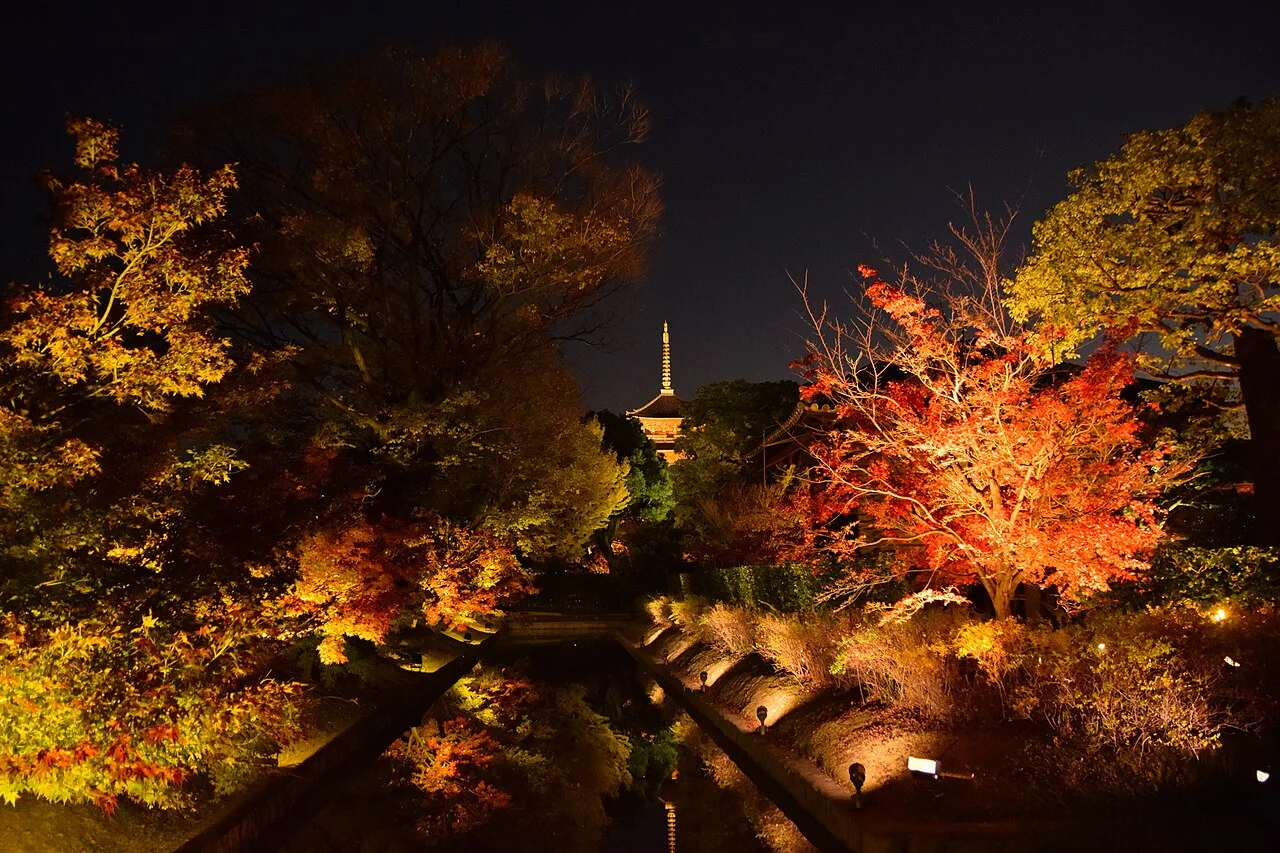
From 14 November to 13 December 2026, Kyoto Botanical Gardens hosts NIGHT GARDEN of Autumn Colors from 18:00 to 21:30 (last entry 20:30). Daytime tickets and annual passes are valid for daytime only; night admission uses dedicated event tickets—adults ¥1,100 on weekdays and ¥1,500 on Saturdays, Sundays, and national holidays, primary and junior high school pupils ¥600, free for preschool children. Enter via Kitayama Gate or the Main Gate, following a one-way route past the illuminated pondside autumn foliage and open areas.
If you want to see the Conservatory lit up, the official event site notes evening Conservatory access (18:00–21:00) is limited to Saturdays, Sundays, and national holidays; on weekday nights, focus on the waterside and lit garden paths. If companions split up, meet outside Kitayama Gate. Entering via the Main Gate with plans to catch the underground from the opposite side? Follow the pondside route north toward Kitayama Gate so you don't double back to Kitaoji.
Over the same dates, the Garden of Fine Arts extends evening hours on Saturdays and Sundays only, from 17:00 to 20:00 (last entry 19:45, standard ticket ¥200). If visiting both at night, tour the Garden of Fine Arts first and then enter the Botanical Gardens through Kitayama Gate—far calmer than rushing out of the big park at the end. Keep in mind that the Conservatory closes at 21:00, so do not leave the walk to the glasshouse until the main event's 20:30 last-entry cut-off.
To experience both daylight and illuminations, spend the afternoon around the outdoor flowerbeds and Conservatory, leave before daytime closing for dinner or a break, and re-enter with your night ticket. On weekday evenings, visit the Garden of Fine Arts earlier during daytime hours or concentrate purely on the Botanical Gardens' outdoor light-up. The event ends on 13 December; visitors arriving over New Year should plan around the year-end closures instead.
Morning, Afternoon, and Two-Hour Itineraries
Arriving at 09:00: check that week's outdoor blooms in the Botanical Gardens first, then step into the Conservatory when it opens at 10:00. Afterwards, if you want more garden time, circle the pond and take in a stretch of woodland. Aiming to finish the Garden of Fine Arts before noon? Step next door from Kitayama Gate, then continue to Nakaragi-no-Michi after lunch. For a gentler pace, shorten the river walk to the section near Kitayama Bridge and take the underground back from Kitayama Station.
With just over two hours and a taste for architecture, start at the Garden of Fine Arts and spend the remaining time on the week's blooms or the Conservatory. Arriving after lunch with an afternoon tea booking? Slot the Garden of Fine Arts into the gap before your table, then walk south from Kitayama Bridge after tea if daylight remains. If companions move at different speeds, agree on an exit gate so plant enthusiasts and architecture fans can each go at their own pace.
Arriving in the afternoon with dinner plans in Gion later? Prioritise the earlier-closing Conservatory first, pick one outdoor zone on the return walk to Kitayama Gate, and catch the Garden of Fine Arts on your way out. After 16:00, pair the Garden of Fine Arts with the riverbank walk between the two stations. Heading to Kawaramachi for dinner? Change onto the Hankyu Line at Shijo Station; staying in Higashiyama? Switch to the Tozai Line at Karasuma Oike. Avoiding an extra cross-town bus leaves more evening light beside the water.
Extending half a day into a full day in northern Kyoto depends on which side you head toward next. Follow the Kamo River north for Kamigamo Shrine and its temple-town streets. For dinner in Ichijoji instead, allow bus or surface transfer time between Kitayama on the Karasuma Line and Ichijoji on the Eizan Electric Railway. Riding the Eizan line via Demachiyanagi also pairs neatly with Shimogamo Shrine or dinner around Demachiyanagi.
Adding Kurama-dera and Kifune Shrine works best as a separate half-day on the mountain railway, allowing for hillside paths and connections between stations and shrines. Covering both takes generous mountain time before deciding in the afternoon whether you have the legs for Kitayama. If you have already packed Kurama and Kifune into one day, finish back in town with a riverside stroll and dinner, saving the Botanical Gardens and Garden of Fine Arts for a day when you can use their full ticketed hours. For onward ideas, see the Kurama and Kifune Day Route.
Where you slot Kitayama into your itinerary also depends on where you stay. Based near Kyoto Station or Shijo, the Karasuma Line handles both gardens and the riverbank in one clean round trip. If you are considering staying in northern Kyoto while travelling daily to Gion or Arashiyama, compare bases and dinner options in the Kyoto Kitayama Accommodation Guide. Leave the final stretch of your day for a relaxed meal, a pre-booked concert, or a quiet look at the river from Kitaoji Bridge.
A few useful answers
Which station should I get off at for Kyoto Botanical Gardens in Kitayama?
Take the Kyoto Municipal Subway Karasuma Line to Kitayama Station and use Exit 3 for the Kitayama Gate. To enter via the Main Gate instead, get off at Kitaoji Station and walk east for about 10 minutes from Exit 3.
Do I need a separate ticket for the Conservatory at Kyoto Botanical Gardens?
No—daytime Conservatory entry is included with garden admission. Standard adult admission is ¥500, and the Conservatory opens 10:00–16:00 with last entry at 15:30. Separate event tickets apply for the autumn night opening.
How do I connect the Garden of Fine Arts with the Botanical Gardens?
The ticketed entrance to the Kyoto Prefectural Garden of Fine Arts sits just east outside the Botanical Gardens' Kitayama Gate. Standard daytime admission is ¥200, with last entry usually at 16:30 and closing at 17:00. Note that it is an open-air venue with ramps and level changes even in rain.
Which Kitayama attractions close over the New Year period?
Both Kyoto Botanical Gardens and the Kyoto Prefectural Garden of Fine Arts close from 28 December 2026 to 4 January 2027. The Garden of Fine Arts also closes from 2 to 4 December 2026 for cleaning. During New Year closures, you can still walk Nakaragi-no-Michi along the Kamo River.
How long does it take to walk Nakaragi-no-Michi?
The stretch between Kitaoji Bridge and Kitayama Bridge is roughly 800 metres—allow 20 to 30 minutes at a relaxed pace with photos. Walking north finishes near Kitayama-dori, while walking south connects easily to Kitaoji Station.
Official information and references
Sources used in this guide.
- Kyoto Botanical Gardens General Guide: Hours, Admission, Equipment Hire and Onsite Dining
- Kyoto Prefecture: Bundled Garden and Conservatory Admission from April 2025
- Kyoto Botanical Gardens: Access and Entrance Gates
- Kyoto Botanical Gardens: Park Map, Flower Calendar and Heritage Trees
- Kyoto Prefecture: Chinese-Language Park and Conservatory Maps and Tactile Maps
- Kyoto Botanical Gardens: Conservatory Facility Guide
- Kyoto Botanical Gardens: Weekly Friday Bloom Updates and Garden Newsletter
- Kyoto Prefectural Garden of Fine Arts: Daytime Hours, Admission and Photography Rules
- Kyoto Prefectural Garden of Fine Arts: Entrance and Underground Access
- Kyoto Prefectural Garden of Fine Arts: Eight Ceramic-Plate Works
- Kyoto Prefectural Garden of Fine Arts: December 2026 Cleaning and Year-End Closures
- Kyoto Prefectural Garden of Fine Arts: Autumn 2026 Special Night Opening
- NIGHT GARDEN of Autumn Colors: 2026 Event Tickets, Open Zones and Entry Gates
- Kyoto City: Nakaragi-no-Michi Distance, Weeping Cherries and Riverside Zone
- Kyoto Municipal Transportation Bureau: Municipal Underground Lines and Transfers
- Kyoto City Official Travel Guide: Bus from Kitayama Station to Kamigamo Shrine
- Kamigamo Shrine: Access and Walking Times
- MALEBRANCHE Kyoto Kitayama Main Store: Shop and Salon Opening Hours
- Kyoto Institute, Library and Archives (Rekisaikan): Floor Guide and Opening Info
- Kyoto Concert Hall: Kitayama Station Exit and Lift Route
- Kyoto Concert Hall: 9 February 2027 Kitayama Matinee Series
- Maeda Coffee: Kyoto Concert Hall Branch
- Eizan Electric Railway: Demachiyanagi, Ichijoji, Kibuneguchi and Kurama Line
- Kyoto Prefecture: Natural Woodland Around Nakaragi Shrine
- Kyoto Botanical Gardens: Forests of Japan and Native Plants Garden
- Kyoto Botanical Gardens: Shiki Irodori-no-Oka and Endangered Plants Garden
- Kyoto Botanical Gardens: Guided Tour Times and Meeting Points
- Kyoto Botanical Gardens: Electric Mobility Scooter Hire Notice
- Kyoto Institute, Library and Archives (Rekisaikan): Regular Closures, Free Admission and Access
- Kyoto Institute, Library and Archives (Rekisaikan): 2026 Kyoto Flora Exhibition
- Kyoto City Disaster Prevention Info: Localised Heavy Rain and River Levels
- Kyoto City: Kamo River Walking Etiquette and Black Kite Food Warnings
- Kyoto Botanical Gardens: 2026 Conservatory Plant Specimen Exhibition
- Kyoto Botanical Gardens: 2026 Poinsettia Exhibition