Walk Hanamikoji from Gion-Shijo Station, using Shijo-dori to orient yourself between Tatsumi Bridge, the teahouse district, and Kennin-ji Temple. Includes private-alley and photography rules, Gion Corner winter schedules, and 2027 Miyako Odori dates and fares.
- Region & Focus
- KyotoNeighborhoods and shopping
- Reading Scope
- 19 min read · 11 chapters · 6 Q&As
- Official Verification
- 33 official sources checkedUpdated November 22, 2026
- Key Topics
- First tripNeighborhoodsItineraries
Chapter Route Map (tap any stop)
- Start at Shijo-dori to Tell Shirakawa, the Teahouse District, and Yasaka Shrine Apart
- Choosing Keihan, Hankyu, or City Bus Based on Your Starting Point
- Inspect Machiya Facades from Ichiriki-tei South, and Riverfronts from Shirakawa
- Stick to Public Roads and Follow Local Signs for Private Alleys and Photos
- How a Flower District Works: Ochaya, Okiya, and the Stage
- Fitting Gion Corner into Your Evening
- Planning for Miyako Odori in April 2027: Tea Tickets Set Your Arrival Time
- Deciding Between Kennin-ji Temple and Yasaka Shrine
- Using Shijo-dori to Reroute for Crowds, Rain, or Nightfall
- Should You Stay East by the Teahouses or West Across the Kamo River?
- Timing Gion for Cherry Blossoms, Gion Matsuri, and Autumn Foliage
- Quick Q&A
For a first walk through Gion's Hanamikoji, start at Ichiriki-tei at the Shijo-dori entrance and head south toward Kennin-ji Temple to see the teahouse machiya lining both sides of the flagstones. If you have an hour, add Gion Shirakawa and Tatsumi Bridge north of Shijo-dori at the start of your loop. Yasaka Shrine sits at the eastern end of Shijo-dori; to visit the shrine or Maruyama Park, return to Shijo-dori and walk east. Hanamikoji's main thoroughfare is open to pedestrians—stick to the stone-paved strips on either side through the teahouse district, and stay on public roads whenever you see private-street no-entry signs. To see a maiko performance, book Gion Corner directly, or plan around Gion Kobu's Miyako Odori in April 2027.
Start at Shijo-dori to Tell Shirakawa, the Teahouse District, and Yasaka Shrine Apart
Hanamikoji (Hanamikoji-dori) runs roughly north-south through Gion, intersecting Shijo-dori across the middle. On maps, "Hanamikoji" usually refers to the stone-paved stretch south of Shijo-dori, where Ichiriki-tei (often shortened to "Ichiriki" in official district guides) makes an easy landmark at the corner. Heading south from there, you pass teahouses and restaurants, then signs for the Gion Kobu Kaburenjo Theater, before reaching Kennin-ji Temple's North Gate. If you want classic machiya street views, save "Shijo Hanamikoji" and "Kennin-ji North Gate" on your phone to anchor your walking axis.
Gion Shirakawa lies north of Shijo-dori. From Kawabata-dori on the east bank of the Kamo River, walk north and follow Shirakawa Minami-dori toward Tatsumi Bridge (listed as "Tatsumibashi" on Kyoto Travel Navi), with Tatsumi Daimyojin Shrine beside it. The key visual landmarks here are the canal, the bridge, and the waterside teahouse architecture. To connect to the southern section, follow public streets from around Tatsumi Bridge back to Shijo-dori and cross at the traffic light. Using Shirakawa, Shijo-dori, and Ichiriki-tei as three reference points keeps you oriented even when zoomed tightly into narrow alleys on a phone map.
Yasaka Shrine's West Tower Gate stands at the eastern end of Shijo-dori where it meets Higashioji-dori. From the mouth of Hanamikoji, simply walk east along Shijo-dori toward the vermilion gate. To add Maruyama Park, continue behind the shrine, with Chion-in Temple just north of the park. Although Hanamikoji, Yasaka Shrine, and Kennin-ji are all within easy walking distance, pairing them in a single morning still depends on entry hours. Walk Shirakawa and Hanamikoji early in the morning, then visit Kennin-ji when it opens at 10:00. If your priority is the shrine and park, head east on Shijo-dori and save Kennin-ji for another Higashiyama outing.
For the stone-paved main street alone, allow 20 to 35 minutes from Gion-Shijo Station to Kennin-ji's North Gate, including pauses to take in the streetscape. Adding Shirakawa and Tatsumi Bridge before looping back to Shijo-dori along public roads takes 45 to 70 minutes. Use these as planning buffers: waiting at crosswalks, companions browsing shops, or fixed showtimes will change your pace. If you only have half an hour before a performance, take Shijo-dori straight to the theater and save the bridge and shrine for another gap in your schedule.
| Destination | Route from Shijo-dori | Key Landmarks |
|---|---|---|
| Gion Shirakawa & Tatsumi Bridge | Head to the east bank of the Kamo River and turn onto Shirakawa Minami-dori via Kawabata-dori | Shirakawa canal, Tatsumi Bridge, Tatsumi Daimyojin Shrine |
| Hanamikoji Stone-Paved Street | Walk south from the Shijo-Hanamikoji intersection | Ichiriki-tei, teahouse lattice facades, Kaburenjo Theater signs |
| Kennin-ji Temple | Follow Hanamikoji south to the North Gate | North Gate, temple grounds directional signs |
| Yasaka Shrine & Maruyama Park | Walk east along Shijo-dori to Higashioji-dori | Yasaka Shrine West Tower Gate |
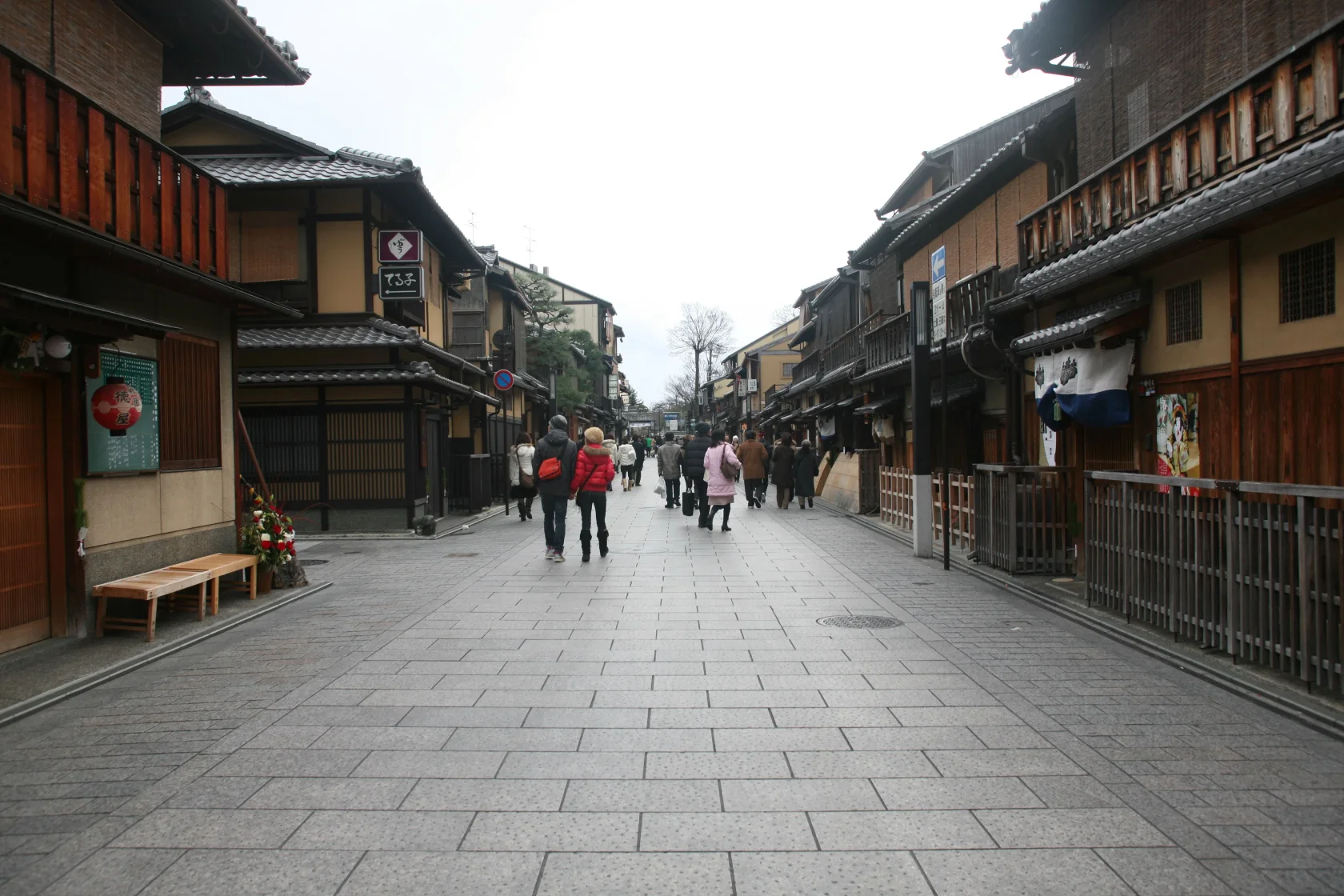
Walk Hanamikoji from Gion-Shijo Station, using Shijo-dori to orient yourself between Tatsumi Bridge, the teahouse district, and Kennin-ji Temple. Includes private-alley and photography rules, Gion Corner winter schedules, and 2027 Miyako Odori dates and fares.
Choosing Keihan, Hankyu, or City Bus Based on Your Starting Point
Take the Keihan Railway to Gion-Shijo Station and use Exit 6 toward Minamiza Theatre. The street-level exit sits on the east bank of the Kamo River; walk east along Shijo-dori and turn south at Ichiriki-tei onto the flagstones. This line works well if you are coming from Fushimi or other Keihan stops, or riding rail both ways from Kyoto Station. From Kyoto Station, take the JR Nara Line to Tofukuji, transfer to the Keihan line bound for Sanjo or Demachiyanagi, and get off at Gion-Shijo. Because the Tofukuji transfer connects two different operators, tap your IC card according to the transfer gate signs.
Coming from Osaka-Umeda or along the Hankyu Kyoto Line, Exit 1 at Hankyu Kyoto-Kawaramachi Station leads toward the Kiyamachi area. Walk east along Shijo-dori across Shijo-Ohashi Bridge to reach Minamiza Theatre and Hanamikoji. When meeting friends, specify "Hankyu Kyoto-Kawaramachi Station" or "Keihan Gion-Shijo Station." The two stations face each other across the Kamo River with a direct walk over the bridge, though you should still budget time to walk from the ticket gates up to street level. Both Keihan and Hankyu station maps mark accessible routes for strollers or elevators—it is easier to meet at street level on Shijo-dori or by the bridgehead than at a stair exit.
For fewer transfers from Kyoto Station, go to the Kyoto Station Bus Terminal on the Karasuma side and board Kyoto City Bus 206 (Higashiyama route) from bay D2, getting off at "Gion." That stop serves the Yasaka Shrine and Higashioji-dori area; if you want Hanamikoji first, walk west along Shijo-dori toward the Kamo River. To go straight to Kennin-ji Temple, get off at "Higashiyama Yasui," which the temple lists as about a 5-minute walk via public streets. When you have a fixed theater curtain time and the bus queue is long, switch to JR and Keihan via Tofukuji instead.
On the Kyoto Municipal Subway Tozai Line, get off at Higashiyama Station if you want to see Yasaka Shrine first. The Municipal Transportation Bureau marks the street-level elevator at Exit 2 on the south side of Sanjo-dori. From the station, walk south along Higashioji-dori to the Shijo-dori intersection, then head east into the shrine or west toward Hanamikoji. To start at Shirakawa instead, get off at Sanjo Keihan Station, walk south along the east bank of the Kamo River to find Shirakawa Minami-dori, and turn off the main avenue. Visitors staying near Karasuma Oike can ride the Tozai Line both ways, or finish their Hanamikoji walk with dinner around Shijo and leave from Kawaramachi without backtracking to Higashiyama Station.
When meeting a tour group or friends arriving on different lines, split the rendezvous into two steps. Have everyone cross the Kamo River on Shijo-Ohashi Bridge first—anyone on the wrong bank can look for Minamiza Theatre along Shijo-dori—and walk into Hanamikoji once the group is together. If theater doors are already open, meet directly at the entrance printed on your ticket rather than crowding outside Ichiriki-tei. Anyone starting from Gion Shirakawa and returning via Hankyu can cross the bridge back to Kyoto-Kawaramachi along Shijo-dori and stop for a meal before entering the station, while travelers heading back to Osaka or Fushimi on Keihan can board on the east bank.
Inspect Machiya Facades from Ichiriki-tei South, and Riverfronts from Shirakawa
The Gion Shopping Street Promotion Association highlights the stretch from Ichiriki-tei to Kennin-ji Temple as the signature streetscape of Hanamikoji, lined with teahouses featuring reddish-brown wooden latticework. From the public walkway, you can observe how the lattice spacing, door-and-window layouts, and tiled eaves step slightly from one building to the next. Along the base of some exterior walls sit curved or angled bamboo-and-wood barriers called "inuyarai." Positioned lower than the hanging lanterns, they are easy to spot if you look down from the latticework toward the pavement. Keep a little distance from thresholds so deliveries and arriving guests have clear passage.
If you enter via Shirakawa first, step back for a broader view. Kyoto City's Gion Shinbashi preservation plan divides the district into teahouse-style machiya facing Shinbashi-dori and riverside teahouse architecture overlooking the Shirakawa canal. Looking down Shinbashi-dori at the continuous eaves and second-story lattice windows, then viewing the waterside stories, windows, and foliage from public walkways, shows how the same row of buildings presents two distinct faces. The preservation district retains a machiya streetscape formed from the late Edo period through the early Meiji era. Comparing the structures above the water with the lattice fronts facing Hanamikoji's flagstones makes the contrast unmistakable.
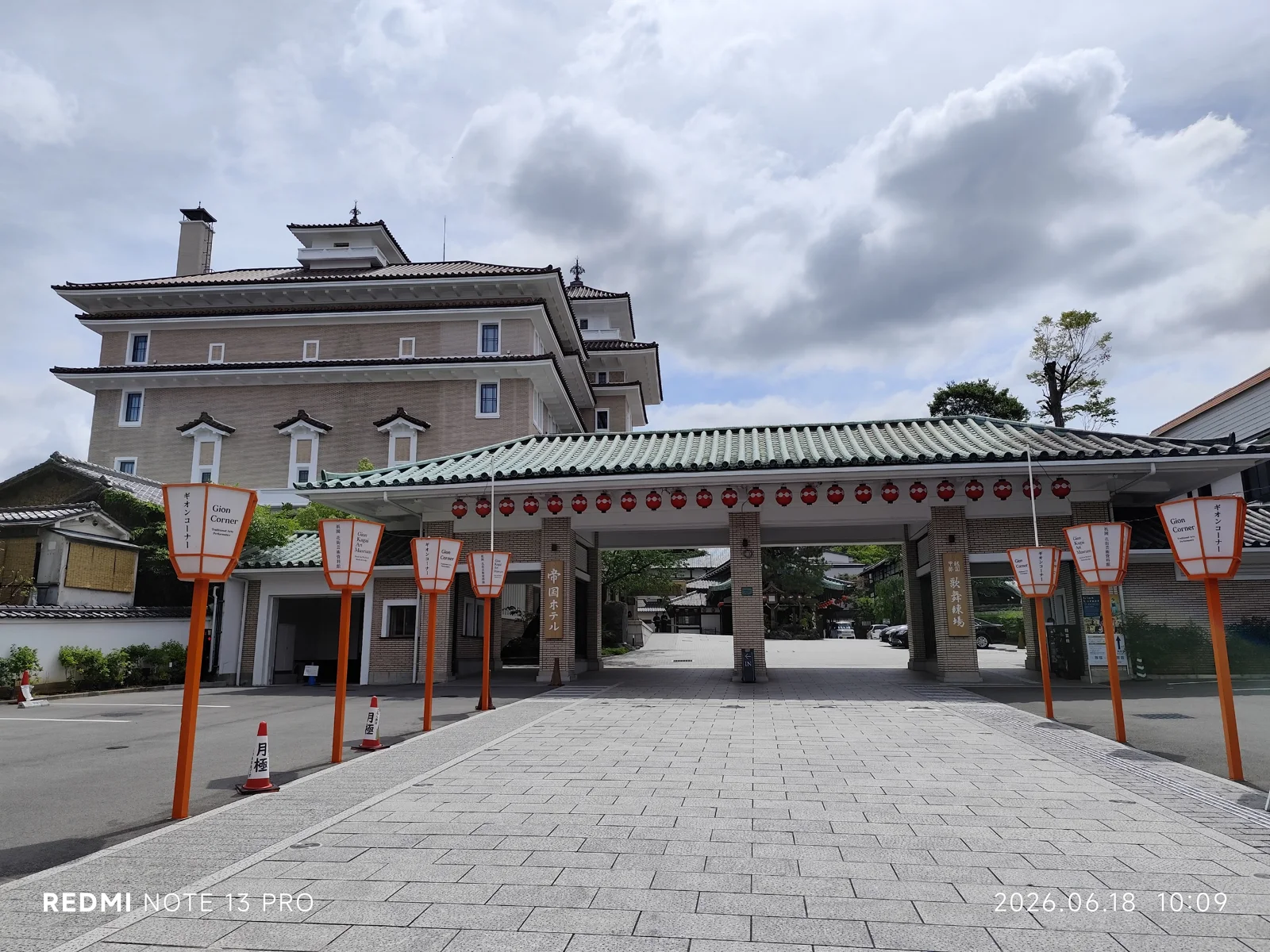
The entrance to Gion Kobu Kaburenjo Theater sits just off the main street on a noticeably grander scale than the narrow teahouse fronts nearby. Kyoto City notes that its main hall, annex, vestibule, and main gate are registered national tangible cultural properties. Notice the setback space between the outer gate and the main building—it quickly shows the difference between a public theater entrance and a machiya doorway. Visitors bound for Gion Corner should follow signs for the small theater entrance, while Miyako Odori ticket holders should follow the organizer's venue map. Because both may pin to "Gion Kobu Kaburenjo" at the same street address, share the exact event name on your ticket if your party is arriving separately.
Heading south, you will see nameplates, restaurant menus, and directional signs for Gion Corner. If you want to stop in somewhere, look for venues posting walk-in hours or waitlists at the door, or book lunch along Shijo-dori in advance. Before reserving a restaurant, check its dining windows, seating rules, and cancellation policy. Establishments marked "ochaya" are traditional flower-district teahouses hosting private banquets, distinct from teahouses or cafes where you drop in for a cup of tea. For matcha and sweets, check menus or shop names ahead of time, read the posted entry signs by the door, and leave ochaya entrances clear for booked guests.
As you walk the main street, watch the paving underfoot. The Kyoto City Tourism Association notes that different stone materials pave the center roadway and the side strips of Hanamikoji, creating a visual boundary for pedestrians. Because machiya eaves sit low and the street is narrow, shooting from the side strips lets you frame both the rooflines and nearby flagstones in one shot. Along Shirakawa, you can frame the bridge railings and opposite-bank teahouses together.
Stick to Public Roads and Follow Local Signs for Private Alleys and Photos
Motor vehicles use Hanamikoji's stone-paved main street, so walk along the side strips and leave the center lane clear for traffic. Kyoto City's Gion-machi etiquette map distinguishes public roads from private alleys and asks pedestrians not to walk or linger in the vehicle lane. Step out of the roadway to take street photos while leaving a full path open for passersby; if a bridgehead or roadside spot is crowded, keep moving. Because tripods eat into the narrow clearance needed for passing cars and pedestrians, the Kyoto City Tourism Association asks visitors not to set them up here. Larger groups should put cameras away, walk single file, and regroup only where there is space to pause.
Side lanes branching off Hanamikoji may display "Private Street" (shido), "No Entry" (tachiiri kinshi), or "No Photography" (satsuei kinshi) signs at their mouths. If entry is prohibited, stay on the main street, and do not lean cameras into alleys marked no-photography. Entry steps, noren curtains, and doorways beneath teahouse eaves are working access points for businesses and residents. Community photo guidelines around Shirakawa likewise ask visitors to stay on public walkways, keep out of the canal and flowerbed railings, and avoid leaning against the stone fence of Tatsumi Daimyojin Shrine. If Tatsumi Bridge is packed, walk straight across and take photos from a spot along the bank where you will not block foot traffic.
When you encounter geiko or maiko walking through the district, yield the right of way—do not block their path, follow them, touch their kimono sleeves, or ask them to stop for photos. The Kyoto City Tourism Association asks visitors not to photograph them without permission. You will also see visitors in rental kimono; avoid chasing shots as they walk past or step into shops. If you want kimono photos of your own friends, find an open spot on a public road during daylight without blocking doors, delivery vans, or people waiting at crosswalks, and face your companions toward the camera.
To photograph shop signs or machiya details, snap a quick shot and pocket your phone after a few steps so people behind you can pass. Look at hanging lanterns and lattice windows without touching them. If you specifically want a photo opportunity in a formal setting, Gion Corner's official winter schedule includes a post-show photo session with a maiko. Book a winter performance and follow the staff's instructions inside the venue, keeping street etiquette and stage photography rules strictly separate.
How a Flower District Works: Ochaya, Okiya, and the Stage
In Kyoto's flower districts (kagai), the Japanese term "geiko" is commonly used alongside "geisha." Kyoto City's cultural archives divide a maiko's path to becoming a geiko into distinct stages. Apprentices enter an okiya (maiko house) as "shikomi" to help with chores while studying dance, etiquette, and Kyoto dialect before progressing to an observational stage attending banquets. A formal debut as a maiko is called "misedashi." After years of working and continuing to train, the ceremony marking the transition to geiko is called "erikae." Geiko specialize by discipline: "tachikata" focus on dance, while "jikata" handle singing, shamisen, and accompaniment. You will see these roles in theater programs, which makes it easy to identify who is dancing and who is playing on stage.
An ochaya coordinates the venue, performers, and banquet hospitality. An okiya serves as the home and training base for maiko, rehearsal halls such as nyokoba host daily practice, and a kaburenjo theater provides a stage for ticketed audiences. Having all four building types clustered in one neighborhood explains why performers move along Hanamikoji between appointments—and why ochaya maintain the custom of "ichigensan okotowari" (no first-time guests without an introduction). Kyoto City's materials emphasize that this system rests on long-term trust between teahouses and patrons. First-time travelers looking for public performances should book dates and times directly through Gion Corner or Miyako Odori ticket pages.
Gion Kobu and Gion Higashi are two separate flower districts. For the spring Miyako Odori at Gion Kobu Kaburenjo, the official Japanese event name is "Miyako Odori," presented by Gion Kobu and centered on Kyomai Inoue-school dance. Gion Higashi's annual performance is called "Gion Odori," which Kyoto City lists under the Fujima school of dance. Keeping the Japanese event name and organizer handy when searching helps you verify venue addresses and ensure you booked the right district if another kagai is performing on the same day. Neighborhood signs display both kanji and kana, so recognizing these two names is plenty.
If this is your first time watching Kyomai dance, focus at curtain rise on footwork, hand gestures, and the pace of the dancers' turns, noticing how movement locks onto incoming music. You can also listen to how the shamisen, drums, and flutes each carry separate parts rather than having the dancers sing on stage. To follow multi-act programs, read the season's scene descriptions and costume notes from the Gion Kobu Kabukai program guide. Recognizing those cues inside the theater brings the daytime teahouses and rehearsal halls along your walk into sharper focus.
Fitting Gion Corner into Your Evening
Gion Corner operates in the small theater inside Gion Kobu Kaburenjo along Hanamikoji, at 570-2 Gion-machi Minamigawa, Higashiyama-ku, Kyoto. Look for the Gion Corner signboard on the stone-paved main street and follow venue signs inside. Standard shows run at 18:00 and 19:00, with the English official site listing regular performances at about 50 minutes. The program features Kyomai dance, tea ceremony, flower arrangement, koto music, bugaku court dance, and kyogen comedy, rotating bunraku puppetry or noh theater depending on the season. It fits well at the start of an evening before heading to Shijo-dori or across the Kamo River for dinner.
Winter performances run Tuesday through Friday from December 1 to March 11, still at 18:00 and 19:00, with no shows on Japanese national holidays. The venue also closes December 26 through January 4, February 11 and 23, and has fixed annual closures on July 16 and August 16. The winter program lists six traditional arts plus a post-show photo opportunity with a maiko. If you are only in Kyoto on winter weekends, schedule Shirakawa and Kennin-ji for the daytime and save Gion Corner for a weekday evening itinerary.
General adult admission is ¥5,500. Official English ticketing lists ¥3,850 for ages 16 to 22, ¥3,300 for ages 7 to 15, and free admission for children ages 0 to 6 sitting on a lap (or ¥3,300 if a seat is needed). Priority seating is ¥6,600 and tea-and-sweets seating is ¥6,050, both at flat rates regardless of age. Count how many seats and age tiers your family needs before booking. Standard tickets still include the on-stage tea ceremony demonstration, while tea-and-sweets seating adds matcha and wagashi served at your seat.
If you book the 18:00 show, tour Kennin-ji in the afternoon and save dinner for afterward. For the 19:00 show, grab a light bite beforehand or book an early dinner with a clear end time so you are not rushing back to the theater. On winter evenings when you stay for the post-show maiko photo, factor queue time and the walk back across the river into your dinner reservation. To compare other shows in the district by runtime, dates, and tea service, see our Gion Stage Performance and Ticket Guide.
Planning for Miyako Odori in April 2027: Tea Tickets Set Your Arrival Time
The 153rd Miyako Odori by Gion Kobu is scheduled for April 1 to April 30, 2027, at Gion Kobu Kaburenjo Theater. Three shows run daily at 12:30, 14:30, and 16:30. Tickets go on sale January 6, 2027, at 10:00 JST. If you are only attending once, pick an afternoon showtime you can comfortably reach. Sales are final—cancellations, exchanges, and refunds are not accepted—so if you are arriving in Kyoto by Shinkansen that day, leave ample buffer for luggage drop-off, transfers, and crossing town.
First-class seats with a tea ticket are ¥8,000, standard first-class seats are ¥7,000, second-class seats are ¥5,000, and eligible student second-class seats are ¥3,000. The organizer defines student eligibility as junior high, high school, university, vocational school, and technical college students, plus elementary school children and younger accompanied by a guardian. Junior high students and older must bring student ID on the day. If you want to prioritize the dance while saving budget for other Higashiyama stops, compare first- and second-class views on the seating chart first. If anyone in your group holds a tea ticket, schedule your meetup around their earlier entry deadline.
The tea ceremony room opens sequentially starting 1 hour before curtain, and tea-ticket holders must arrive at least 40 minutes before showtime—missed tea service cannot be redeemed after the performance. For a 14:30 show with a tea ticket, arrive no later than 13:50 and eat an early lunch. To visit Kennin-ji first and have tea afterward, choose the 16:30 show and arrive by 15:50. Since both the tea service and stage performance eat into the afternoon, set the Kaburenjo Theater directly as your navigation endpoint when walking from Kawaramachi.
Before buying tickets, open both the seating chart and tea-room floor plan on the official Miyako Odori site. If you want a clear view of stage formations with minimal stair climbing, check which floor your seats sit on and how entry flows before deciding on a tea ticket. Tickets are sold online and by phone; you can register an online account ahead of the sale date. Unlike Gion Corner's tea-and-sweets seats served inside the auditorium, a Miyako Odori tea ticket grants entry to a separate tea room prior to the show.
As an introduction to Gion Kobu, Miyako Odori depicts the four seasons through continuous scenes uniting Kyomai dance, shamisen, vocals, drums, and flute. Printed programs help you follow each scene's setting, and the official site previews stage details. Gion Corner, by contrast, packs multiple traditional arts into a single evening slot. If you realize after arriving in Kyoto that your open window is right before dinner, pick Gion Corner's evening shows; if you want to devote an April afternoon to Gion Kobu's Kyomai and tea ceremony, work backward from Miyako Odori's daytime curtain.
Deciding Between Kennin-ji Temple and Yasaka Shrine
If you want to step inside Kennin-ji Temple after walking south down Hanamikoji, regular hours start at 10:00, with last admission at 16:30 and closing at 17:00. General admission is ¥800 in 2026 and rises to ¥1,000 starting January 1, 2027, while elementary, junior high, and high school students remain ¥500 and pre-school children enter free. Elementary-age and younger visitors must be accompanied by an adult. Groups of 15 or more must apply by fax or email at least 10 days in advance. If you want time to linger in the gardens and Dharma Hall, allow 45 to 60 minutes rather than rushing in right before last admission.
Inside Kennin-ji's Dharma Hall, look up at the ceiling for Junsaku Koizumi's "Twin Dragons" painting. Afterward, head back to the Hojo (Abbot's Hall) to see the high-resolution reproduction of Tawaraya Sotatsu's "Wind God and Thunder God" folding screens (the original is entrusted to the Kyoto National Museum). Note that Morihiro Hosokawa's sliding-door paintings "Eight Views of Xiao and Xiang" are closed to viewing on December 9, 2026, due to maintenance work. If you are coming specifically for the Twin Dragons ceiling, check the temple's scheduled closure dates—April 19–20 and June 4–5—when temple events block viewing, and shift your afternoon to Yasaka Shrine or a theater show instead. Handheld cameras and phones are allowed in designated areas, while video recording, tripods, selfie sticks, and gimbals are prohibited; anyone filming a daylong vlog should pack those rigs away before entering.
Another option is turning east from the mouth of Hanamikoji to Yasaka Shrine, entering through the West Tower Gate and continuing into Maruyama Park. If you collect goshuin temple stamps, visit the shrine before an evening performance. When traveling with companions who prefer avoiding hills, meet near Yasaka Shrine from Shijo-dori and let energetic walkers tackle the slopes of Chion-in or Higashiyama on their own. If you plan to continue all the way to Kiyomizu-dera, Kennin-ji and the Kaburenjo Theater sit conveniently near the southern end—plug your afternoon into the Kiyomizu-dera and Higashiyama walking route and order stops by closing time.
If you visit Kiyomizu-dera first and walk toward Gion, make your go/no-go call on Kennin-ji when you reach Higashiyama Yasui. With plenty of time before 16:30, tour the temple before walking Hanamikoji from south to north and finishing with dinner on Shijo-dori. If you arrive close to last admission, stick to the public teahouse streets or walk over to Yasaka Shrine instead. Anyone aiming for clean architectural photos at both spots should walk the narrow streets early, then linger outside the shrine's tower gate as the light shifts.
Using Shijo-dori to Reroute for Crowds, Rain, or Nightfall
Mornings are best for studying architectural details and walking the southern stretch before Kennin-ji opens. If shops are still shuttered, shorten your street walk, grab breakfast along Shijo-dori, and return once temples and museums open. When arriving in the afternoon, check Kyoto Travel Navi's Gion-Kiyomizu Crowd Comfort Map first. Hanamikoji has its own forecast pin where you can toggle dates, time slots, and weather alongside a live street camera. Farther north, Tatsumi Bridge has tight footing—if people are already waiting for a clear frame on the bridge, keep walking along the canal and spend your time studying the machiya layouts instead.
Light rain still works for a short flagstone stroll, but in heavy rain prioritize indoor stops with clear entry hours. Kennin-ji's interiors and wooden corridors can turn away visitors whose clothes or socks are soaked through, so pack dry socks and a compact umbrella if you have a walk from the station. On rainy days with kids, head to the Kyoto Kanji Museum near Yasaka Shrine, generally open 9:30 to 17:00 (last entry 16:30), closed Mondays (or the following weekday if Monday is a national holiday) plus New Year and irregular closures. Walk-in activities in the main gallery run without reservations, with the museum recommending 1.5 to 2 hours. Preschoolers enter free when accompanied by an adult 18 or older, and each elementary-to-high-school visitor grants a ¥300 discount to up to two accompanying adults. Elevators connect all floors, and the first floor has a nursing room and accessible restroom.
If you are pushing a stroller or walking with family members who tire easily, meet at street level near Minamiza Theatre on rainy days, walk to the corner of Hanamikoji to see the entrance and Ichiriki-tei, and decide from there how far south to go. Pedestrian strips along the main street are narrow, so yield when meeting oncoming cars or rows of umbrellas. To split up without losing each other, set a meeting point inside a restaurant or outside a spacious storefront so slower walkers do not have to chase the group through crowded lanes. Returning to stations via Shijo-dori is also far simpler than navigating side streets in the rain.
After sunset, teahouse lanterns come on while service vehicles and evening guests continue moving through the street. If you hold show tickets, take the main avenue straight to the theater and walk back up Hanamikoji to Shijo-dori afterward for transit or dinner. On frosty winter nights, save the Shirakawa canal paths and bridges for daylight and stick to well-lit Shijo-dori after dark. To return to Kyoto Station after a show, walk back to Shijo-dori, enter Keihan Gion-Shijo Station, take an Osaka-bound train that stops at Tofukuji, and transfer to the JR Nara Line.
Should You Stay East by the Teahouses or West Across the Kamo River?
If you only have one night in Kyoto and want Gion Corner, dinner in Gion, and an early morning walk in Shirakawa, staying on the east bank of the Kamo River near Shijo-dori keeps both your walk home after a show and the next morning's stroll short. Before booking, paste the property's full name into a map and trace the walk from the nearest train or bus stop to the front door. For inns tucked down side lanes, save the property's arrival directions so you can tell your guest entrance apart from neighboring ochaya doors. Travelers carrying suitcases should drop luggage first before walking the flagstones.
If your itinerary also relies on Hankyu trains to Osaka, subway connections at Shijo-Karasuma, or shopping and dining in Kawaramachi, look for lodging on the west bank of the Kamo River. After an evening show, crossing Shijo-Ohashi Bridge brings you through Kiyamachi into Kawaramachi, or straight west along Shijo-dori toward Karasuma. Frequent Shinkansen or JR travelers heading out to other prefectures can also base at Kyoto Station and ride JR plus Keihan via Tofukuji into Gion during the day. For a one-night stay with evening theater tickets, drop or retrieve bags outside show hours rather than hauling luggage across town to curtain.
Timing Gion for Cherry Blossoms, Gion Matsuri, and Autumn Foliage
In spring, pair Gion Shirakawa and Maruyama Park for cherry blossoms. Shirakawa's canal and teahouse facades frame the blooms up close, though bridge foot traffic slows sharply at peak bloom as visitors stop for photos. Arrive at Shirakawa early, walk a stretch along the water, then return to Shijo-dori and pass through Yasaka Shrine to find the weeping cherry tree at the center of Maruyama Park. If you have Miyako Odori tickets the same day, work backward from your theater arrival deadline; when crowds swell, pick one blossom spot before the show and leave the other for afterward if you still have time.
During July's Gion Matsuri, split your routes for the festival's two main events. Before the Saki Matsuri (First Procession), the yama and hoko floats and ohayashi music live in the yamahoko neighborhoods on the west side of the Kamo River in central Kyoto. To see mikoshi portable shrines, check Yasaka Shrine's festival schedule for public viewing spots near the shrine, Shijo Otabisho, or along the procession route. Because Gion Matsuri and Gion Kobu performances are organized separately, lock in your festival viewing spot and time window first before budgeting time to cross Shijo-Ohashi Bridge. Official traffic-control notices list each year's crossing restrictions; keep residential entrances clear and follow temporary signage at nearby train and bus stops.
In autumn, reserve your longest blocks for Higashiyama sites with gardens and walking trails, using Hanamikoji for its teahouse streetscape before connecting to Kennin-ji or Yasaka Shrine. Because daylight fades early in late autumn, visit gardens while the sun is up and save the teahouse district and theater for later. On windy winter days, standing on the Kamo River bridges or around Tatsumi Bridge gets chilly fast—keep your Shirakawa loop short, duck indoors to warm up, and dine near Shijo-dori if you have an evening show to minimize riverfront walking after dark.
A few useful answers
Which direction should I walk Hanamikoji on my first visit?
Leave Keihan Gion-Shijo Station via Exit 6 toward Minamiza Theatre, walk east along Shijo-dori to Ichiriki-tei, and turn south down Hanamikoji toward Kennin-ji Temple. To add Gion Shirakawa and Tatsumi Bridge, walk north along the east bank of the Kamo River first, then return to Shijo-dori to connect to the southern stretch.
Do I need a ticket to walk Hanamikoji?
No—the main street is a public road and free to walk. Separate tickets are required to enter Kennin-ji Temple's interior, Gion Corner, and Miyako Odori. Whenever you see no-entry signs at side alleys, stay on the main thoroughfare.
Can I take photos on Hanamikoji?
For streetscapes, stop only on public roads where pedestrians still have room to pass, staying clear of the vehicle lane and building doorways. Follow posted no-entry and no-photography signs at private alleys, and never block, follow, or photograph geiko and maiko without permission.
Does Gion Corner run shows on winter weekends?
From December 1 to March 11, the winter schedule runs Tuesday through Friday only at 18:00 and 19:00, with no performances on national holidays or scheduled closure days.
When are the 2027 Miyako Odori performances?
The 2027 season runs April 1 to April 30 at Gion Kobu Kaburenjo Theater, with three daily shows at 12:30, 14:30, and 16:30. Tickets go on sale January 6, 2027, at 10:00 JST.
Is it worth making a special trip in the evening?
Visit in the evening if you want to see lit teahouse lanterns or attend Gion Corner. For photographing wooden latticework and flagstone details—or combining your walk with Kennin-ji Temple's visiting hours—daytime light works better.
Official information and references
Sources used in this guide.
- Gion Shopping Street Promotion Association | Hanamikoji and Ichiriki-tei
- Kyoto Travel Navi | Gion and Kiyomizu-dera Walking Area
- Kyoto City Tourism Association | Gion Walking and Photography Etiquette
- City of Kyoto | Gion-machi Public Roads, Private Alleys, and Visitor Etiquette Map
- City of Kyoto | Gion Shinbashi Preservation Plan for Traditional Buildings
- Gion Shinbashi District | Photography Guidelines
- Shochiku Minamiza Theatre | Keihan and Hankyu Station Exits
- Keihan Electric Railway | Kyoto Station Transfer via Tofukuji
- Keihan Electric Railway | Gion-Shijo Station Barrier-Free Route
- Hankyu Railway | Kyoto-Kawaramachi Station Map
- City of Kyoto | Geiko, Maiko, and Traditional Training in Gion's Flower Districts
- City of Kyoto | Flower District Dance Schools and Performances
- City of Kyoto | Ochaya Hospitality and Introduction Customs
- Kyoto Traditional Musical Art Foundation | Gion Corner Showtimes and Tickets
- Kyoto Traditional Musical Art Foundation | Gion Corner English Age Fares and Runtime
- Kyoto Traditional Musical Art Foundation | Gion Corner Access and Entrance
- Gion Kobu Kabukai | 2027 Miyako Odori Dates, Seating, Tea Service, and Tickets
- Kennin-ji Temple | Hours, Admission, and Access
- Kennin-ji Temple | January 2027 Admission Fee Revision
- Kennin-ji Temple | Cultural Properties and Twin Dragons Ceiling
- Kennin-ji Temple | December 9, 2026 Closure of Eight Views of Xiao and Xiang
- Kennin-ji Temple | Rainy-Day Entry Rules
- Kennin-ji Temple | Photography Rules
- Kyoto Kanji Museum | Opening Hours, Closures, and Interactive Exhibits
- Kyoto Travel Navi | Hanamikoji Hourly Crowd Forecast and Live Camera
- Yasaka Shrine | Gion Matsuri Rituals and Yamahoko Schedule
- Kyoto Municipal Transportation Bureau | Tozai Line Higashiyama Station Elevator Access
- City of Kyoto | Gion Kobu Kaburenjo Registered Cultural Properties
- Kennin-ji Temple | Twin Dragons Public Viewing and Scheduled Closures
- Kyoto Travel Navi | Gion Shinbashi Preservation District and Sanjo Keihan Station
- Kyoto Travel Navi | Gion Matsuri Yamahoko and Mikoshi Viewing Routes
- Kyoto Kanji Museum | Family Discounts, Elevators, and Facilities
- City of Kyoto | Maruyama Park and Weeping Cherry Tree Location