Plan Kiyomizu-dera’s Main Hall, Okunoin and Otowa Waterfall from its two entrances. Compare regular admission, Jojuin Garden and 2026 evening visits, then choose a rail or express bus route and a Higashiyama walk that suits your group.
- Region & Focus
- KyotoShrines and temples
- Reading Scope
- 34 min read · 22 chapters · 4 Q&As
- Official Verification
- 27 official sources checkedUpdated October 26, 2026
- Key Topics
- ItinerariesNeighborhoodsSeasons
Chapter Route Map (tap any stop)
- Kiyomizu-dera alone and a full Higashiyama walk are different half-days
- Kiyomizu-Gojo works well by rail, with an uphill walk after the station
- Buses from Kyoto Station: distinguish EX100, EX101 and regular routes
- Use the two temple approaches: Kiyomizu-zaka and Chawan-zaka
- Budget separately for regular admission, Jojuin and nearby temples
- Gates open at six; amulets and goshuin start around eight
- From Niomon to the pagoda: locate the gates, bell tower and pagoda
- Worship at the Main Hall before viewing the stage and hillside
- Look back from Okunoin, then descend to Otowa Waterfall
- Otowa Waterfall connects the temple’s origin with prayer
- Zuigudo, Koyasu Pagoda and Jishu Shrine: choose by the day’s purpose
- Wheelchairs, strollers and older visitors: choose a manageable circuit
- Eat downhill and bring only drinks with secure lids into the temple
- Turn from Kiyomizu-zaka into Sannenzaka and north to Ninenzaka
- Yasaka Pagoda and Yasaka Shrine are separate landmarks
- Give Kodai-ji time for its gardens and Kiyomizu-dera another evening
- Daytime route: let lunch determine the afternoon’s length
- Autumn evenings in 2026: eat first, then climb for the lights
- Jojuin’s Moon Garden deserves time to sit and look
- Cherry blossoms, new leaves and summer nights call for different pacing
- Keep temple paths and residents’ access clear while photographing
- Leave from the north or finish early at the foot of the hill
- Quick Q&A
Allow half a day for Kiyomizu-dera. Walk uphill to worship at the Main Hall, continue past Okunoin to Otowa Waterfall, then head downhill for lunch. Decide afterward whether to follow Sannenzaka and Ninenzaka to Yasaka Shrine. For evening illumination, put Kiyomizu-dera near dusk and use the daytime for the neighborhood or a rest. Meals and climbs fall in a different order in these two plans. Combining an early visit, a full Higashiyama shopping walk and a return at night often spends your energy on repeated climbs. Kiyomizu-dera admission, seasonal Jojuin Garden visits and nearby Kodai-ji are charged separately. Choose the spaces you want to see before adding up time and cost.
Kiyomizu-dera alone and a full Higashiyama walk are different half-days
With Kiyomizu-dera as the day’s focus, start by allowing about two hours from reaching the foot of the hill to leaving the temple, followed by a meal. This planning allowance includes the climb, ticket purchase and time to stop. Add time for an Otowa Waterfall queue, a goshuin calligraphy stamp or a closer look at buildings. Photographing Niomon Gate and leaving takes much less time than entering the Main Hall, circling past Okunoin and descending to the waterfall. Completing the paid temple route gives a fuller visit than rushing to the next stop after entrance photographs.
To explore Higashiyama in the afternoon, leave room for a meal and roughly two hours of walking. Descend Kiyomizu-zaka, turn into Sannenzaka and Ninenzaka, and finish toward Yasaka Shrine. If you enter Kodai-ji on the way, give it a full visit slot and shorten shopping, coffee or the northern walk. With only a morning available, end with Kiyomizu-dera and lunch, especially if you have an afternoon train or hotel check-in.
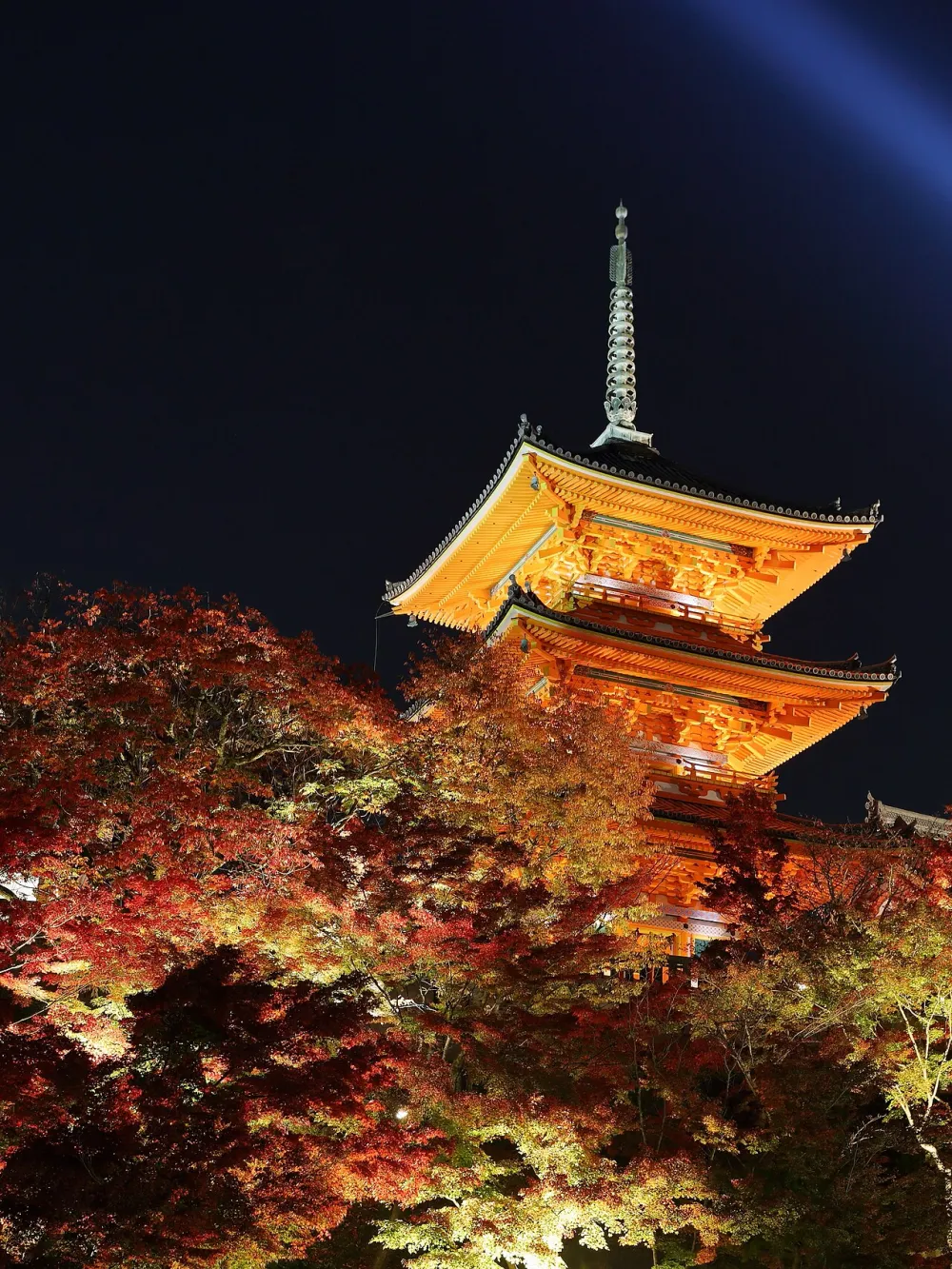
Plan Kiyomizu-dera’s Main Hall, Okunoin and Otowa Waterfall from its two entrances. Compare regular admission, Jojuin Garden and 2026 evening visits, then choose a rail or express bus route and a Higashiyama walk that suits your group.
Kiyomizu-Gojo works well by rail, with an uphill walk after the station
If staying on the Keihan network or arriving from Osaka by Keihan, start at Kiyomizu-Gojo Station. The temple access page lists about 25 minutes on foot to Kiyomizu-dera. The route rises from the riverside toward Higashiyama and counts toward your day’s walking. The station’s name does not remove the climb. Decide before entering the station whether you will also return by Keihan. If you finish at Gion-Shijo, there is no need to retrace your steps.
From Kyoto Station, rail can avoid a long road journey: take the JR Nara Line to Tofukuji, then transfer to Keihan for Kiyomizu-Gojo. The tourism association’s Higashiyama access options also list this connection. It suits people comfortable with one transfer and the final walk. For elevators, check the map on the Keihan station page. Kiyomizu-Gojo has elevators, ramps and a wheelchair-accessible toilet. From your chosen street exit, continue toward the temple’s published entrance route.
Higashiyama subway station is another starting point. The tourism association lists about 35 minutes on foot via Nene-no-michi, Ninenzaka and Sannenzaka. This suits a street walk before the temple or accommodation on the Tozai subway line. From Kyoto Station, it requires a transfer at Karasuma Oike. If you plan to enter at Kiyomizu-dera and finish at Kodai-ji or Yasaka Shrine, arriving through Kiyomizu-Gojo and leaving from a northern station is more direct, saving the longer northern section for after worship.
Buses from Kyoto Station: distinguish EX100, EX101 and regular routes
To reduce the distance from the riverside, take a bus to Gojozaka bus stop, then walk uphill. The temple lists about ten minutes on foot after the bus; add time for waiting, crossings, photographs and slower walking. Compare regular city bus services such as route 206 on your day. From Shijo-Kawaramachi, route 207 connects to Kiyomizu-michi. Read the destination direction and stop name before boarding rather than relying only on the route number. Do not automatically wait on the arrival side for your return.
On Saturdays, Sundays and national holidays, compare the sightseeing limited express buses. The Kyoto City transport bureau’s autumn 2026 notice lists EX101 between Kyoto Station and Gojozaka, while EX100 continues toward Gion, Okazaki and Ginkaku-ji. Only EX100 toward Kyoto Station stops at Kiyomizu-michi. Both routes cost ¥500 per adult or ¥250 per child for a single ride, payable by transport IC card or cash. A valid Subway & Bus 1-Day Pass is also accepted. Put this fare separately in your transport budget.
The sightseeing limited express boarding guide instructs passengers to board at the front, pay first and exit at the rear. Have your day pass ready before queuing if you already bought one. For just one ride, calculate the actual single fare rather than detouring to northern sights you did not intend to visit just to use more buses. For arrival around early opening or departure after an evening visit, check services actually running at that hour. Daytime sightseeing express service cannot be used to infer a nighttime return.
Use the two temple approaches: Kiyomizu-zaka and Chawan-zaka
The temple’s official entrance guidance identifies two approaches: up Kiyomizu-zaka to Niomon Gate, or along Chawan-zaka to the disaster-prevention road entrance. Set navigation to Niomon, or choose the Chawan-zaka road entrance for wheelchair access. If a map sends you toward paths behind the mountain, return to one of these two approaches.
For general walking, Kiyomizu-zaka connects shops with the Niomon exterior. To finish worship first, make fewer shop stops uphill and choose souvenirs on the way down. Carrying cakes, pottery and heavy packaging through the temple only adds a burden. From Chawan-zaka, follow entrance and on-site signs toward the Main Hall. You need not detour to photograph Niomon first and then double back. Understanding the two routes also makes it easier to agree on meeting points.
There is no general visitor parking inside the temple. In a taxi, name the actual entrance and explain any mobility needs. Agree before setting off how far the car can go and how you will continue after alighting. The road directly in front of the Kiyomizu-zaka entrance also has vehicle access time restrictions. For wheelchair vehicle access via the disaster-prevention road, follow temple instructions and tell the driver you need the step-free route close to the Main Hall.
Budget separately for regular admission, Jojuin and nearby temples
Budget ¥500 per adult and ¥200 per elementary or junior high school student for regular admission. The Saigoku 33 Kannon pilgrimage association lists both categories; the adult ¥500 rate also appears in JR Central’s Kiyomizu-dera guide. Paid admission centers on the Main Hall, stage and temple grounds route. Nearby streets and other temples are separate plans. Two adults and one elementary school child pay ¥1,200 for Kiyomizu-dera, plus actual transport, lunch and any other paid areas.
Jojuin Garden’s limited openings have separate admission and reception hours; Kodai-ji also requires its own ticket. A budget with separate lines for Kiyomizu-dera, garden, transport and meals makes the spending clear. If the stage and Otowa Waterfall are your priorities, the main Kiyomizu-dera visit is sufficient. Add the time and cost for sitting with the garden if you enjoy gardens and Jojuin happens to be open.
Kiyomizu-dera’s FAQ states that there is no group admission discount. Holders of eligible original disability or rehabilitation certificates, plus one companion, may enter free. Teachers leading official educational activities have separate documentation requirements and must show both teacher identification and an itinerary. Prepare the required documents in advance to deal with admission in one step and calculate the applicable cost for each group member.
Gates open at six; amulets and goshuin start around eight
The 2026 visiting timetable lists daily opening at 6:00 a.m. Normal closing is 6:00 p.m.; on July and August days without extended evening opening, it is 6:30 p.m. Designated spring, summer and autumn evening visits extend to 9:30 p.m., with admission ending at 9:00 p.m. If you reach Gojozaka with only an hour of daytime opening left, prioritize the climb and paid route, saving shopping for the descent.
An early start suits visitors who want architecture and worship first. The temple opening notice separately lists amulet and goshuin counters as starting around 8:00 a.m. For a goshuin, arrive later or complete part of the visit before going to the counter. Entering at six and collecting items at eight leaves waiting time, so decide whether you want to stay that long.
Breakfast also affects timing. Eat at your accommodation before the climb, or make a short early temple visit and eat downhill afterward. Both are manageable. Do not count on unopened shops for a seated breakfast. If others have not slept enough, come after a normal breakfast and shorten the afternoon walk. That is often more comfortable than making everyone rise early and run out of energy by lunch.
From Niomon to the pagoda: locate the gates, bell tower and pagoda
Coming up Kiyomizu-zaka, you first reach Niomon Gate, the temple’s main gate. Its vermilion structure and views to either side stand out. Pause here to identify the direction of the Main Hall before continuing. Groups wanting a photograph must first apply at the photo office in front of Niomon for a designated location. The distinct building also works as a landmark when gathering.
The official grounds map marks the West Gate, bell tower and three-story pagoda near the entrance. At about 30 meters high, the pagoda is the clearest vertical landmark here. During evening illumination, notice the contrast between the tower and surrounding autumn leaves. After viewing its exterior, look toward the Main Hall to distinguish the vermilion entrance buildings from the wooden stage on the hillside.
For details, compare the pagoda’s tiered eaves with the bell tower’s woodcarving, giving each stop a specific subject. The West Gate is associated with nissokan, contemplation toward the western mountains, and sunset helps explain the temple’s orientation. Pause briefly for building photographs near the entrance, then continue into the temple. Put the phone away until you reach another stable place to stand and frame a view; the positions of the halls and towers become easier to follow.
Worship at the Main Hall before viewing the stage and hillside
At the Main Hall, put worship before sightseeing. The temple’s introduction to Kannon devotion identifies the principal image as the Eleven-Headed Thousand-Armed Kannon. JR Central explains that this is a hidden image and visitors normally worship before a substitute image displayed in front of it. To understand why people come, pause with your palms together before moving to the stage. This gives the visit a clearer order than searching only for photographs.
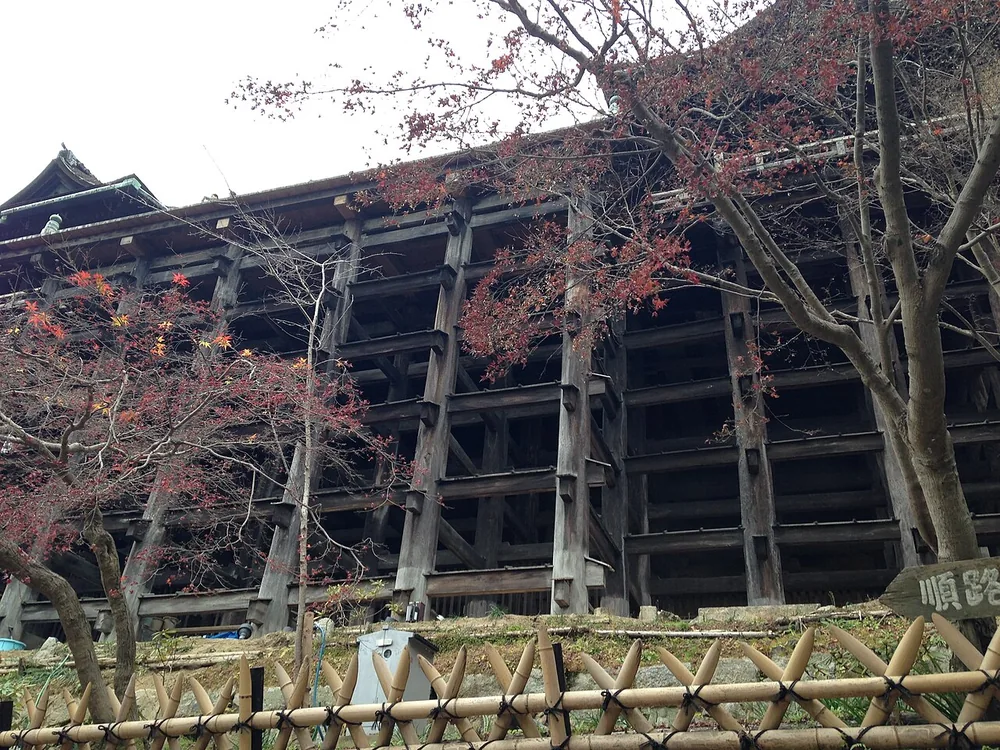
The present Main Hall was rebuilt in 1633. The temple describes it as a wooden National Treasure built on the cliffs of Mount Otowa. The stage faces the city and brings the hillside canopy into view. After looking across the valley and city from the permitted area, step back somewhere less crowded to examine the roof, columns and the way the building projects over the slope. Moving your attention from the distant view to the structure gives this stop more depth.
For photographs of yourself and the building, choose somewhere outside the main passage. Take turns and let others use the space afterward. To watch longer, move to a side where stopping is allowed by the flow of visitors. Stand beside children looking down near the railing. Wet wooden surfaces and shoe soles can be slippery in rain; close your umbrella and stand securely before reaching for your phone. You can look back at the Main Hall from Okunoin later, so this first viewpoint need not supply every photograph.
Look back from Okunoin, then descend to Otowa Waterfall
Continue along the visitor route from the Main Hall to Okunoin for another view of the Kiyomizu stage and surrounding hillside. The official map places Okunoin directly above Otowa Waterfall, with its own projecting stage. Save time here if you want a photograph of the whole Main Hall. Photographs from the Main Hall’s stage itself show a different distance and angle.
Between them, Amida Hall has its own tradition of nenbutsu devotion. Read its name and explanation as you pass. If Buddhist architecture interests you, compare the Main Hall, Amida Hall and Okunoin: which sits against the mountain, which faces the valley, and how do the rooflines meet? You need not memorize every date. Recognizing the positions of the three gives the next temple map a concrete meaning.
Follow the route down toward Otowa Waterfall. With changes in elevation and different walking speeds, agree on a clear meeting point below. Those ahead should avoid sudden stops at bends. Wheelchair and stroller users should identify step-free route signs at junctions and follow the temple’s prepared paths to avoid stairs. Near the waterfall, you can connect the view down from Okunoin with the actual terrain.
Otowa Waterfall connects the temple’s origin with prayer
Otowa Waterfall is central to the temple’s name and founding story. The temple’s history page describes Kenshin finding a clear spring on Mount Otowa, meeting the ascetic Gyoei, and Sakanoue no Tamuramaro’s later role in establishing the temple. Looking up at the halls from here connects the water source with the buildings. There is more reason to stop than simply completing a turn at collecting water.
The official explanation of the three streams describes using a dipper to take water and pray for purification of the six senses and fulfillment of wishes. Before joining, look at the queue and how water is collected, then follow the flow. Dippers are shared; use and return them as directed on site. If you only want to see the waterfall or prefer not to wait, watch the streams and surrounding buildings from permitted areas and save time for a meal downhill.
When the queue is long, first ask whether everyone wants to take part. Those skipping it can wait somewhere that does not block access. With a lunch reservation, decide after the Main Hall how much time you can spend at the waterfall, then follow the route out after praying.
Zuigudo, Koyasu Pagoda and Jishu Shrine: choose by the day’s purpose
Zuigudo stands before the Main Hall area. The temple says it enshrines Daizuigu Bosatsu and offers a tainai-meguri, a symbolic passage through the womb. If interested, check the reception point at the hall on arrival and decide whether to visit before or after the Main Hall. If you dislike darkness or a child does not want to enter, keep to worship outside. If your group splits, agree on a clear location and time in front of the hall rather than separating at the last moment.
Across the valley, look for Koyasu Pagoda, a different building from the large three-story pagoda near the entrance. The official map describes it as a three-story pagoda enshrining Koyasu Kannon and associated with prayers for safe childbirth. Extend your route along open paths if that devotion or a distant view of the Main Hall interests you. To save energy for Sannenzaka, note its direction from the main route and head downhill.
If you planned prayers for romance beside Kiyomizu-dera, note the situation at Jishu Shrine. The shrine’s Japanese notice says it is closed for building and grounds work, so this itinerary does not include the love-divination stones.
Wheelchairs, strollers and older visitors: choose a manageable circuit
Kiyomizu-dera’s step-free visit guidance gives a specific route. Wheelchair vehicles enter via the disaster-prevention road from Chawan-zaka and are guided near the Main Hall, followed by a prepared step-free circuit around the grounds. A grounds map is available at Todorokimon, the Main Hall entrance. Several accessible toilets are provided. Bring your own wheelchair; the temple does not lend them. Share the map and pickup needs with companions or your driver before departure so everyone uses the same place names at the entrance.
Strollers can reach the Main Hall on the step-free road to the left of the front visitor route, then follow the wheelchair circuit. Accessible toilets can be used for diaper changes. Families can therefore combine the Main Hall with a circuit of the grounds. Separately allow the energy needed to push along Kiyomizu-zaka and slopes outside the station. If your group has different tolerances for slopes and steps, a seated meal followed by transport from the foot of the hill is easier than continuing toward Ninenzaka’s stone stairs.
Older visitors who do not use wheelchairs can still divide the outing into the temple and lunch downhill. Complete the Main Hall and Okunoin first, decide on the waterfall queue according to interest, and assess the street walk after eating. Naming the next rest point helps more than repeatedly saying it is nearly there. For someone who wants Higashiyama without a long walk, keep the stone-paved stretch they most want to see and connect the rest with seated meals and transport.
Eat downhill and bring only drinks with secure lids into the temple
Kiyomizu-zaka makes it easy to buy snacks as you walk. Finish or put food away before entering. Kiyomizu-dera’s visitor rules prohibit bringing food and drink, eating while walking and eating while standing, with an exception for drinks in securely closable bottles or flasks. The plaza before Niomon and the outer roads are also temple grounds. Queuing at the gate with an ice cream affects both your entry and others’ passage.
Visiting in the morning and eating a proper meal afterward puts the climb and temple walk earlier, when energy is better. Check seating, menus and acceptable waiting times before choosing a restaurant. With children or older adults, put sitting down for food ahead of souvenir shopping. If you have a reserved mealtime, assess your remaining time after the Main Hall and leave shopping for afterward rather than worrying about being late while queuing at the waterfall.
Before an afternoon on Sannenzaka and Ninenzaka, drink water and use the toilet after lunch. A matcha or sweet can serve as a midway rest instead of buying every snack on the walk. Finish inside a shop or designated eating area before moving on, leaving hands free for railings and children. Buy fragile pottery later where possible, then head toward your return route once staff have wrapped it.
Turn from Kiyomizu-zaka into Sannenzaka and north to Ninenzaka
After leaving the temple, return along Kiyomizu-zaka. For a walk toward Gion, turn into Sannenzaka, also commonly called Sannen-zaka, then continue to Ninenzaka. Kyoto’s Sannenzaka historical marker describes a stone stairway connecting Yasaka and Kiyomizu-zaka. Here you can see how townhouses relate to the pilgrimage approach. Keep north as your main direction and stop at shops that interest you, rather than repeatedly checking the way back to Kiyomizu-dera.
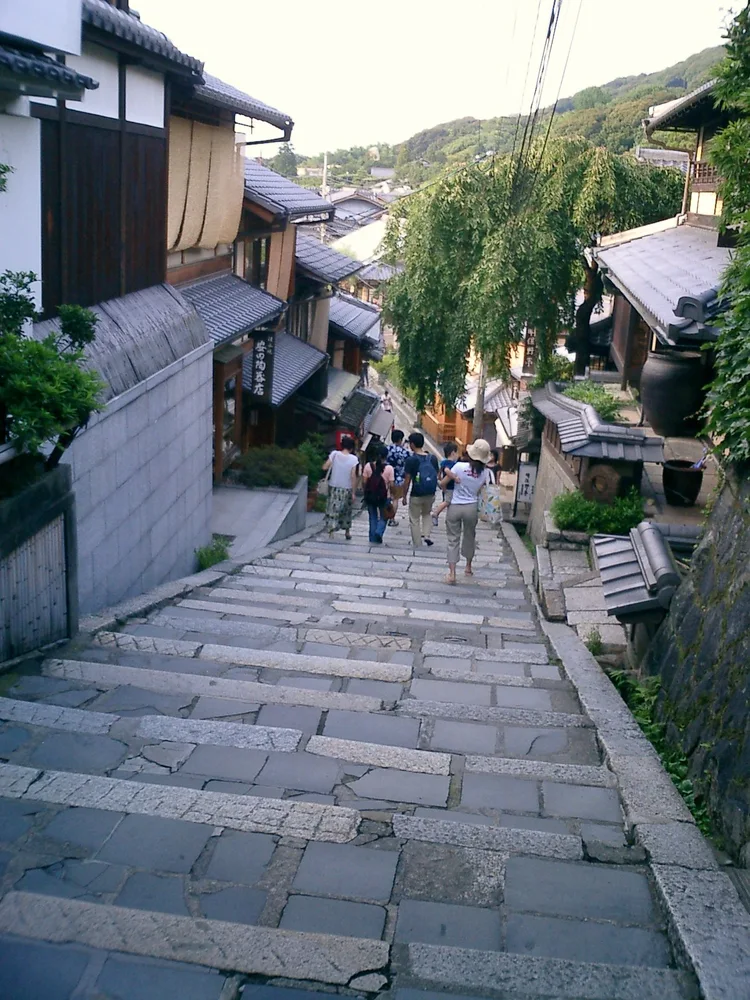
The Kyoto tourism association’s street guide describes Sannenzaka and Ninenzaka as a traditional neighborhood between Kiyomizu-dera and Kodai-ji, with shops beside stone stairs and paving. Take time for eaves, shopfronts and bends in the street. Step out of the flow before taking a photograph; do not back down the middle of the stairs for a composition. People are still climbing in the opposite direction, and strollers and large bags also need room.
At Ninenzaka, there are two natural options. For streets, continue toward Nene-no-michi and Yasaka Shrine. For a garden, turn to Kodai-ji and shorten the remaining shops. If children or older companions are tiring, seek a suitable return route toward Higashioji and skip the northern extension. The value of this walk is the freedom to pause. Record it as one walking block rather than assigning five minutes to every corner.
For an evening Kiyomizu-dera visit, return on familiar main roads if you already walked these slopes in daylight. Doubling back to Ninenzaka for empty-street photographs turns a completed descent into another detour. Shops have their own hours, so focus on the journey back after the evening temple visit. Buy souvenirs beforehand with storage arranged, or leave them for another daytime outing.
Yasaka Pagoda and Yasaka Shrine are separate landmarks
The Yasaka Pagoda seen in many Higashiyama street photographs belongs to Hokan-ji. It is separate from Yasaka Shrine farther north. View the five-story pagoda from public roads and use it as a street landmark. Add Hokan-ji to your navigation search to distinguish the tower from the shrine at the eastern end of Shijo-dori. Shops and homes still line the streets. Keep doorways clear and continue walking after taking your photograph.
To continue north, follow the area around Nene-no-michi to Yasaka Shrine and end the walk with worship. The shrine access page lists the grounds as accessible 24 hours a day and the office as open from 9:00 a.m. to 5:00 p.m. If arriving near dusk, decide whether you need a goshuin or devotional item before planning dinner. For worship in the grounds alone, take your time and then head toward Gion-Shijo or Kyoto-Kawaramachi.
The shrine lists about five minutes on foot to Keihan Gion-Shijo and eight minutes to Hankyu Kyoto-Kawaramachi. These stations are on opposite sides of the Kamo River; choose according to your accommodation and route back to Osaka. If everyone mainly wants dinner, end the temple and shrine visits around Shijo. Adding another garden with a fixed closing time before eating makes the two deadlines compete.
Give Kodai-ji time for its gardens and Kiyomizu-dera another evening
For another temple while walking north through Higashiyama, consider Kodai-ji. Its gardens, halls and bamboo grove offer a different visit from Kiyomizu-dera’s stage and valley views. The current admission page lists ¥800 for adults and ¥400 for junior and senior high school students, with daytime hours of 9:00 a.m. to 5:30 p.m. and admission ending at 5:00 p.m. The bamboo grove is within the paid garden, so allow a full temple visit to see it. Elementary school children and younger enter free with an adult guardian, with at least one adult responsible for every five children. Elementary school excursions and school trips are not accepted after 5:00 p.m. in November; ordinary family visits follow the guardian rule above.
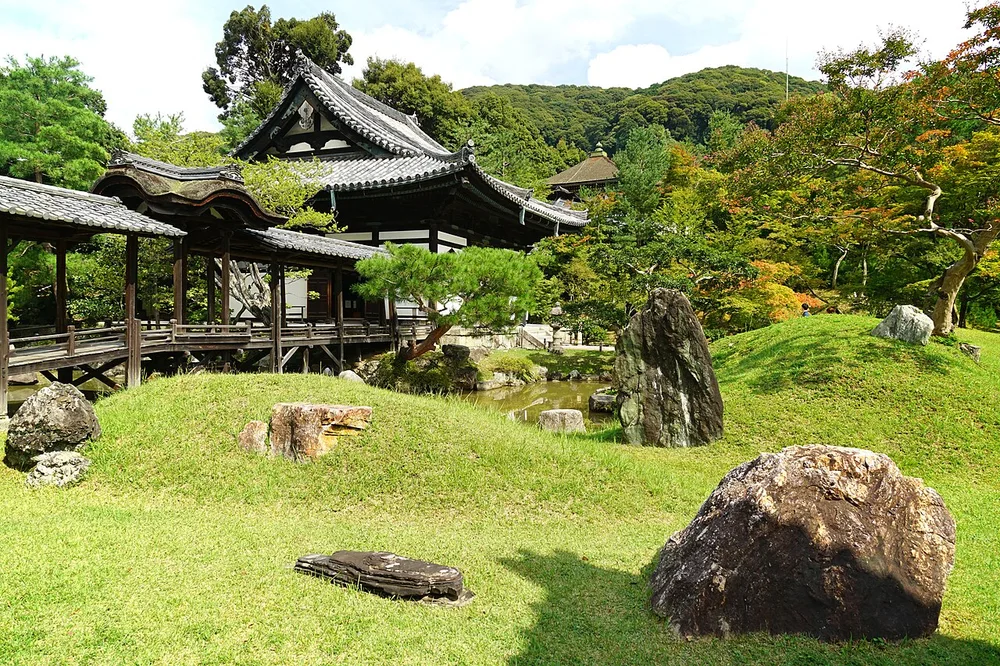
The autumn 2026 evening visits run from October 23 to December 13. Lighting begins at 5:00 p.m., admission ends at 9:30 p.m. and the temple closes at 10:00 p.m. Kodai-ji’s events page for the year says day and evening admission cost the same, with no clearing of visitors between sessions. You cannot re-enter on the same ticket after leaving. If entering in the afternoon to wait for the lights, eat beforehand or plan dinner after leaving instead of reaching the exit and wanting to return to the garden.
Kiyomizu-dera’s autumn evenings run for fewer days. In late October or early November, choose Kodai-ji for a Higashiyama garden at night; this Kiyomizu-dera autumn opening runs only November 21 to 30. If you want both, separate evenings give more time. Kodai-ji’s Hojo is closed to entry all day on November 12 and 13, while other halls and the bamboo grove remain open. Change your date if seeing that hall’s interior is a priority.
Daytime route: let lunch determine the afternoon’s length
For a first visit with average walking stamina, arrive at the foot of the hill in the morning and visit Kiyomizu-dera first. Allow for the climb, then follow Niomon, the Main Hall, Okunoin and Otowa Waterfall before eating outside the temple. If the waterfall queue takes longer, shorten the afternoon street walk.
After lunch, ask what everyone wants next: more buildings at Kodai-ji, shopping on Sannenzaka and Ninenzaka, or a short street section before heading to a return station. Once you have completed the temple, there is no need to climb back to Kiyomizu-dera that afternoon. Two hours after lunch is time you can allocate: give it all to a garden, or keep it for shops if that is your interest.
If leaving Kyoto around 2:00 or 3:00 p.m., visit Kiyomizu-dera in the morning, eat and return to collect stored luggage. With no fixed evening plan, wander toward Yasaka Shrine and have dinner around Shijo. Both plans share the same morning; only the distance after lunch changes. Choose possible departure points before setting out so changing course does not require returning to the temple gate.
Autumn evenings in 2026: eat first, then climb for the lights
Kiyomizu-dera’s 2026 special evening visit schedule lists autumn dates of November 21 to 30, with no reservation required. Admission ends at 9:00 p.m. and gates close at 9:30 p.m. The tourism association lists evening viewing from 5:30 p.m. Admission is ¥500 for adults or ¥200 for elementary and junior high school students. This is an extension of opening hours. Plan one visit from dusk into night to see the buildings change with the light, rather than assuming a separate day/evening session as at some temples.
For this version, walk in Higashiyama during the afternoon, have an early dinner, then climb Kiyomizu-zaka to the temple. If you prefer dinner afterward, choose a restaurant along the return route and an acceptable mealtime first, and get water and a small snack before climbing. Starting from Shijo just before the admission cutoff leaves the hill still to climb. Aim for arrival near dusk so both worship and photographs have room.
At night, view the pagoda, illuminated Main Hall and hillside canopy in stages. The temple explains the blue beam as a symbol of Kannon’s compassion. Identify its position relative to the buildings, then find a secure place to take photographs. Phone night mode takes longer; clear the passage after a shot and move elsewhere for another. Views between the stage and Okunoin face different ways, so following the route also varies your photographs.
With children, reduce daytime walking and keep only one main night stop after dinner. If they start falling asleep, finish and follow the return route you chose earlier. Bring an outer layer for the hill after dark in late November, and keep hands free for steps. Take turns photographing and caring for children instead of making everyone wait in the cold wind at one spot.
Jojuin’s Moon Garden deserves time to sit and look
For another garden within a Kiyomizu-dera autumn visit, choose Jojuin. The temple calls it the Moon Garden, using Mount Kodaiji as borrowed scenery. Its viewpoint differs from the city view on the stage. The reason to include it is time to study depth and the water surface, making it suitable for visitors willing to pause. A half-day with a train to catch after stage photographs need not squeeze it into a brief entry.
The temple’s 2026 opening schedule lists November 21 to 30, with daytime admission from 10:00 a.m. to 4:00 p.m. and evening admission from 6:00 to 8:30 p.m. No reservation is needed. Kyoto City’s current event page lists ¥600 for adults and ¥300 for elementary and junior high school students. If visiting Kiyomizu-dera too, add the charges separately: ¥500 + ¥600 = ¥1,100 per adult, or ¥200 + ¥300 = ¥500 per elementary or junior high school student.
In daylight, your arrival time can determine whether to see the garden or main temple route first. For both at night, Jojuin’s admission ends half an hour before admission at Kiyomizu-dera’s main gate, so address that earlier deadline and leave the remaining time for the Main Hall and night views. With a second paid visit already added, leave Kodai-ji for another day to give the garden enough time.
Cherry blossoms, new leaves and summer nights call for different pacing
The temple’s annual calendar broadly places cherry blossoms from the second half of March to early April and autumn leaves from mid-November to early December. In spring, look where flowering hillside trees meet the Main Hall. In early summer, compare fresh green leaves with the dark wood. If plants interest you, give the grounds more time and shorten shopping. If buildings are your priority, the Main Hall, Okunoin and waterfall form the same clear route in any season.
Extended evening opening in spring 2026 runs March 27 to April 5; summer dates are August 14 to 16. As in autumn, admission ends at 9:00 p.m. and gates close at 9:30 p.m. Summer Sennichi-mairi and special access to the Main Hall’s innermost sanctuary are separately listed for August 9 to 16, from 9:00 a.m. to 5:00 p.m. Evening extension covers only the final three days. For early August, plan daytime worship rather than treating the entire Sennichi-mairi period as offering evenings.
In summer, climb earlier, drink before entry and leave midday for a seated meal and rest. In rain, reduce repeated photography on the stone stairs and descend after the main temple route. If clothes and socks are soaked, returning to your accommodation is more comfortable than adding another temple where shoes must come off. For kimono photographs in Higashiyama, include footwear, return deadlines and actual walking speed. A clothing return after the evening visit must fit the rental shop’s own opening arrangements.
Keep temple paths and residents’ access clear while photographing
Kiyomizu-dera’s rules prohibit drones, monopods, tripods and wedding, cosplay or model photography. Commercial photography without permission and YouTube livestreaming are also prohibited. Use handheld equipment for ordinary travel photographs and stop out of the way. Ask a companion for brief help if you want to be in the picture. Do not spread bags, tripods or clothing across a passage.
People use these streets in daily life too. Kyoto’s visitor etiquette guidance asks visitors to respect private property and not chase or photograph geiko and maiko without permission. Where you see no-photography signs, private paths or residential entrances, continue along the public road. Choose street viewpoints that leave access clear. A group stopping suddenly in a narrow lane to discuss the next destination can block more space than the photograph itself. Move somewhere wider before checking the map.
The official Kiyomizu-dera documentary, Kiyomizu – Cycle of Blessings, combines around ten years of seasonal footage with temple interviews. Watch before visiting to understand daily life and the meaning of worship. At the Main Hall, waterfall and hillside, you can then connect those images with actual places.
Kiyomizu-dera presents worship, buildings and daily life through ten years of seasonal footage and temple interviews. Watch before departure for the religious background of the Main Hall and Otowa Waterfall.
Leave from the north or finish early at the foot of the hill
After a daytime walk north to Yasaka Shrine, take Keihan from Gion-Shijo or cross the Kamo River to Hankyu Kyoto-Kawaramachi. For Kyoto Station, check the buses available at that time or use rail to a station near your accommodation. If only visiting Kiyomizu-dera, leave from around Gojozaka or Kiyomizu-michi at the foot of the hill. Confirm the direction and destination before finding the stop. When it is busy, do not join a queue just because others are waiting.
Count your group before leaving the temple at night and descend on the main roads. If collecting luggage at a hotel before a late train, include collection and station access in the transport allowance. Cancel street detours if time becomes tight. Visitors with mobility needs should meet their driver at the agreed entrance.
A few useful answers
How much is regular admission to Kiyomizu-dera?
¥500 for adults and ¥200 for elementary and junior high school students. Special Jojuin Garden openings and Kodai-ji require separate tickets. Two adults and one elementary school child pay ¥1,200 for Kiyomizu-dera.
When are the autumn 2026 special evening visits?
November 21 to 30. Admission ends at 9:00 p.m. and gates close at 9:30 p.m. No reservation is required. These are extended opening hours, so you can plan one visit from dusk into night.
How do I combine Kiyomizu-dera, Sannenzaka, Ninenzaka and Yasaka Shrine?
After the temple, descend Kiyomizu-zaka, turn into Sannenzaka, then continue north via Ninenzaka and Nene-no-michi to finish at Yasaka Shrine and Shijo. Shorten shopping or the northern walk if entering Kodai-ji.
Can wheelchair and stroller users visit Kiyomizu-dera?
The temple provides a step-free visitor route. Wheelchair vehicles follow instructions from the Chawan-zaka disaster-prevention road entrance. Strollers can reach the Main Hall on the road to the left of the front visitor route. Bring your own wheelchair.
Official information and references
Sources used in this guide.
- Kiyomizu-dera: 2026 hours, transport and two entrances
- Kiyomizu-dera: grounds map, halls and pagodas
- Kiyomizu-dera: Kannon devotion
- Kiyomizu-dera: history and Otowa Waterfall origins
- Kiyomizu-dera: accessibility, child facilities and admission exemptions FAQ
- Kiyomizu-dera: amulet and goshuin counter hours
- Kiyomizu-dera: food, photography and visitor rules
- Kiyomizu-dera: 2026 annual events
- Kiyomizu-dera: 2026 special evening visits
- Kiyomizu-dera: Jojuin Garden opening
- Kyoto City Tourism Association: 2026 Kiyomizu-dera evening ticket categories
- Kyoto City Tourism Association: 2026 Jojuin Garden prices
- JR Central: Kiyomizu-dera regular admission and hidden principal image
- Saigoku 33 Kannon pilgrimage association: Kiyomizu-dera adult and schoolchild admission
- Kyoto City transport bureau: autumn 2026 sightseeing limited express buses
- Kyoto City transport bureau: sightseeing limited express boarding procedure
- Kyoto City Tourism Association: Higashiyama transport and rail/walking options
- Keihan: Kiyomizu-Gojo Station facilities
- Kyoto City Tourism Association: Sannenzaka and Ninenzaka neighborhood
- Kyoto City Tourism Association: Sannenzaka historical marker
- Yasaka Shrine: visiting hours and access
- Kodai-ji: current tickets, hours and partial hall access restrictions
- Kodai-ji: autumn 2026 evening visits
- Jishu Shrine: restoration closure notice
- Kyoto City Tourism Association: public streets and photography etiquette
- Kiyomizu-dera FEEL: official documentary and production notes
- Kyoto City: Sannenzaka landscape and Hokan-ji’s Yasaka Pagoda