Compare Ninomaru’s waiting rooms, audience halls and paintings with Honmaru’s Katsura princely residence and rotating original works. Choose a 90-minute route or a half day with both palaces, gardens, the painting gallery and rest stops.
- Region & Focus
- KyotoAttractions
- Reading Scope
- 29 min read · 16 chapters · 4 Q&As
- Official Verification
- 14 official sources checkedUpdated October 26, 2026
- Key Topics
- ItinerariesKyoto, Osaka & Kansai
Chapter Route Map (tap any stop)
- On a first visit, see Ninomaru and its garden fully
- Higashi Ote-mon, the guardhouse and Kara-mon already explain the castle’s order
- Ninomaru’s staggered layout puts each room’s use in place
- From Tozamurai to Ohiroma: waiting, messages and formal audiences
- From Kuroshoin to Shiroshoin, the paintings grow quieter
- Ninomaru Garden: move between two viewpoints to see the palace around the pond
- Honmaru Palace centers on a princely residence moved from beside the Imperial Palace
- Honmaru’s Goshoin: a room that could become a Noh stage
- Otsune Goten’s original paintings rotate: choose dates for specific rooms
- Honmaru Garden and the keep base: level walking and a climb
- Seiryu-en and the teahouse fit the later part of a long route
- Add the original-painting gallery: compare the space first, then the brushwork
- The 90-minute route: Ninomaru, the pond garden and back east
- The two-palace route: let Honmaru’s time decide the order
- Mobility needs, socks and storage: connect indoor and outdoor routes first
- Choose tickets last: match fees and opening days to what you want to see
- Quick Q&A
On a first visit to Nijo Castle, prioritize Ninomaru Palace and its garden. Add Honmaru Palace for a princely residence, late-Edo bird-and-flower paintings and traces of life in a modern imperial villa, allowing two and a half to three hours. The two palaces differ greatly in room use, period and imagery. Choose what you want to see before booking Honmaru, then connect gates, interiors, pond garden, teahouse and original-painting gallery into a relaxed half day.
On a first visit, see Ninomaru and its garden fully
With only 90 minutes, choose Ninomaru Palace and Ninomaru Garden. With half a day, add Honmaru Palace. Honmaru offers the rooms and paintings of a princely residence and traces of its later imperial-villa life. Ninomaru links waiting, message handling, formal audiences and residential space, making it easier to understand how a shogun’s palace worked.
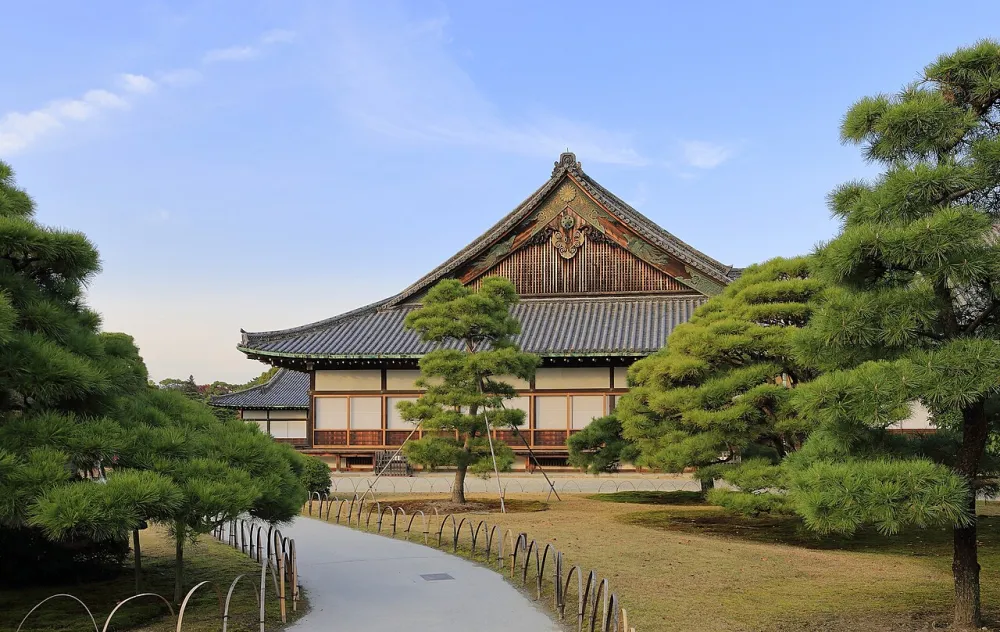
The castle’s visit-duration FAQ estimates one to one and a half hours for Ninomaru Palace and garden, or two and a half to three hours including Honmaru Palace and garden. These estimates include walking within the grounds and help you choose a morning or afternoon slot. For detailed painting viewing and a teahouse stop, reserve half a day. If your companion has less interest in interiors, make Ninomaru your main paid attraction and leave after the garden.
For both palaces, first find an available Honmaru time and put Ninomaru before or after it. An early-morning Honmaru booking suits going straight there and seeing Ninomaru on the way back. A later pre-noon slot lets you finish Ninomaru first. This leaves time to stop at rooms and rest along the paths.
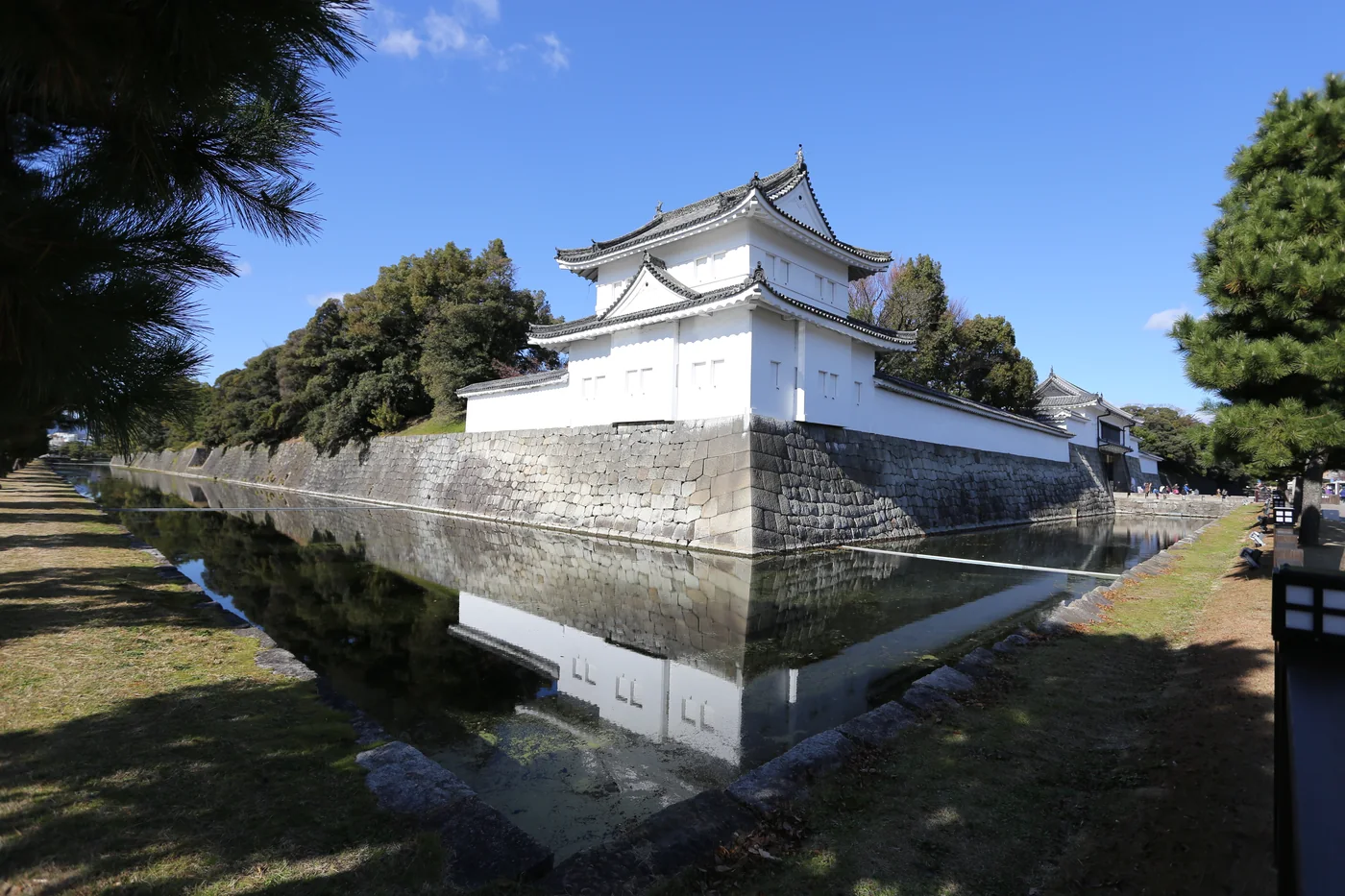
Compare Ninomaru’s waiting rooms, audience halls and paintings with Honmaru’s Katsura princely residence and rotating original works. Choose a 90-minute route or a half day with both palaces, gardens, the painting gallery and rest stops.
Higashi Ote-mon, the guardhouse and Kara-mon already explain the castle’s order
Enter through Higashi Ote-mon, look at the gatehouse height, then head toward Kara-mon. The castle’s cultural-property guide suggests that Higashi Ote-mon was rebuilt as a single-story gate for Emperor Go-Mizunoo’s 1626 visit so no one would look down on him from above. The surviving gatehouse dates to 1662. That relationship between ground and upper floor connects with the raised and lower sections inside the palace, giving the architectural detail a clear purpose.
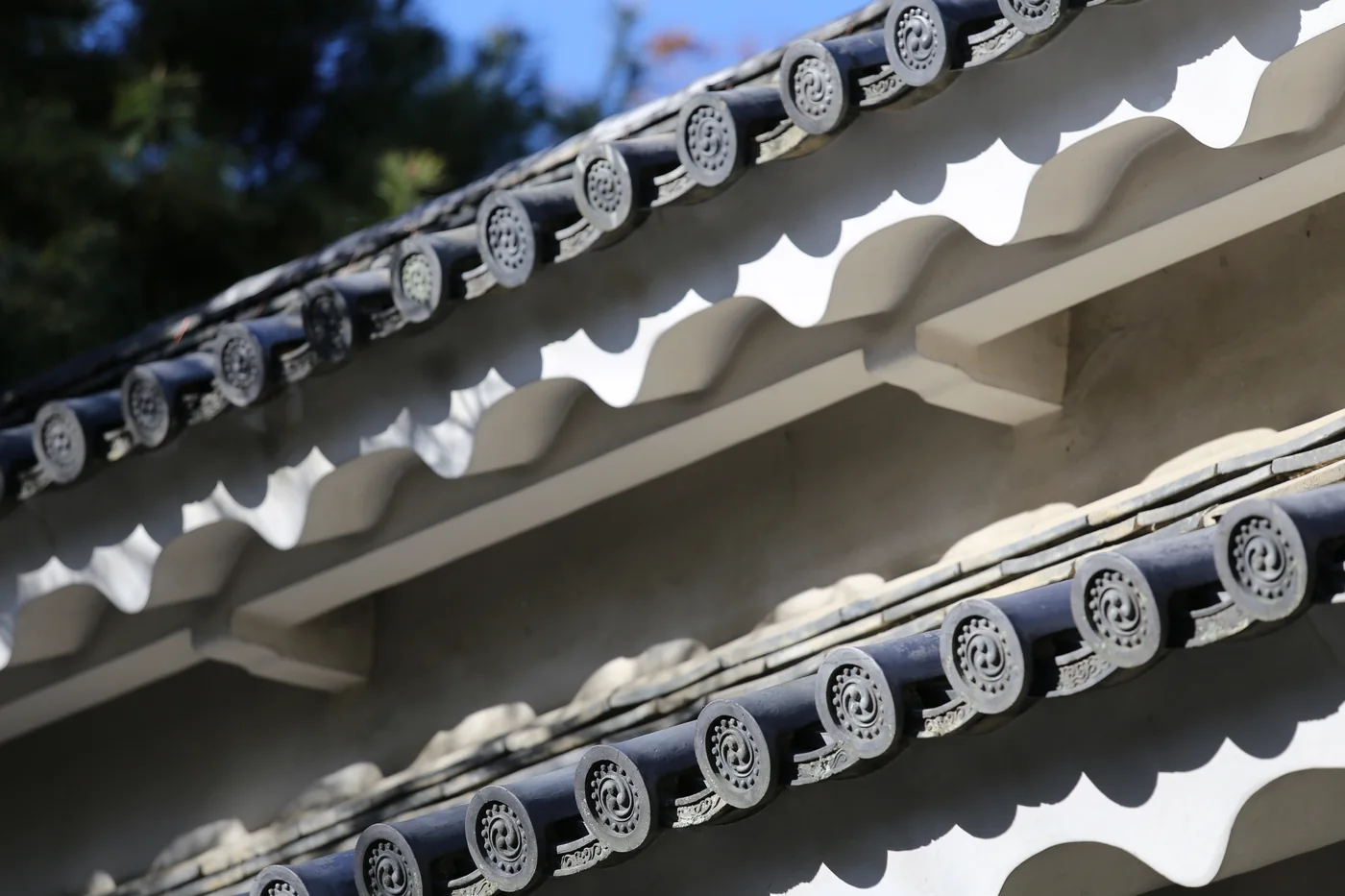
The nearby guardhouse was a security post. During the Edo period, guards sent by the shogunate took turns serving at Nijo. Several guardhouses once stood here; this one remains. On a first visit, note its position relative to the main gate from outside: guarding came before the etiquette of entering the palace. If your Honmaru reservation is close, save it for the return rather than delaying entry to photograph every exterior.
Kara-mon is Ninomaru Palace’s main gate. This four-pillar gate has curved karahafu gables on the front and rear of its roof, with colorful carvings beneath cypress-bark roofing. Pine, bamboo, plum and cranes convey longevity; Chinese lions protect the space. View the whole gate from outside the flow of visitors, then choose a carving to examine. Inside the palace, decoration continues from these carvings to transoms and metal fittings.
Ninomaru’s staggered layout puts each room’s use in place
The Ninomaru Palace plan runs southeast to northwest through Tozamurai, Shikidai, Ohiroma, Sotetsu no Ma, Kuroshoin and Shiroshoin. The six buildings are staggered like geese in flight and joined by corridors. Official figures list 33 rooms and over 800 tatami mats. You need not memorize each name. Remember the uses: entrance waiting, conveying business, formal audiences, closer audiences and daily living. The decoration and painting subjects then connect more easily.
Outside Ninomaru Palace, overlapping roofs show that it comprises several buildings. Inside, follow the viewing corridor past the rooms. Paintings, columns, door frames and floor-level changes form each space together. Looking at them as a whole explains more than treating every painting as a framed museum work. How deeply you can see through an opening also changes with your corridor position.
For a first visit, assign one focus each to Tozamurai, Ohiroma, Kuroshoin and Shiroshoin: find tigers, locate the raised platform, and compare color with ink painting. If you like painting, add the Shikidai’s Roju rooms and Ohiroma’s Fourth Room to the comparison. Follow the areas open on site and do not walk against the flow to revisit one painting.
From Tozamurai to Ohiroma: waiting, messages and formal audiences
The First, Second and Third Rooms of Tozamurai were visitors’ waiting rooms, also called the Tiger Rooms for their bamboo-and-tiger paintings. Look first at the tigers across walls and sliding doors, then at the room scale. Visitors were already placed in a display of Tokugawa power before a formal audience. With children, finding tigers and leopards in the paintings is an easier start than a full explanation of shogunate history.
Also in Tozamurai, the Imperial Messenger’s Room received court envoys, with cypress and green maple paintings. The Willow Room and nearby rooms also use plants. Take time over this difference: decoration changes with visitors’ status and room use. Tigers do not dominate every corner. In a plant-decorated room, recall the Tiger Rooms to compare the two approaches to reception.
At Shikidai, the focus shifts to conveying visitors’ business and gifts and to greetings between senior councilors and daimyo. Pines in the Shikidai Room symbolize lasting prosperity. The Roju rooms behind use subjects such as reeds and geese, willows and herons, with white wall above the horizontal beams. The official account clearly explains the area’s duties. Compare the decoration at front and back, imagining the people who handled business before a formal audience.
Ohiroma’s First and Second Rooms hosted the shogun’s formal audiences with daimyo and court nobles. The castle’s Ohiroma explanation identifies the First Room as the raised section and the Second as the lower section; the shogun sat on the raised section facing south. The alcove, staggered shelves, attached writing desk and ornamental doorway are concentrated in the principal room. Follow the floor-level change up to these wall features to place a history-book audience scene inside an actual room.
The famous return of governing power to the emperor is associated with this room, but there is more to see than one event. The alcove behind the shogun and the shelves and writing desk on either side frame his seat and shape how visitors looked toward their host. Look at the room before reading about the event to gain more than a location label.
The Third Room’s transoms use cypress boards up to 35 centimeters thick, carved through from both sides. Flower-and-folded-ribbon-shaped metal fittings on the beams are another detail to notice in Ohiroma and Kuroshoin. Look up at the thickness and openings of the carving, then back at the painted pines for two layers of material and imagery. The Fourth Room’s pine-and-hawk paintings use giant pines and powerful birds. The official interpretation identifies this as a place for storing weapons during the shogun’s Kyoto visits, distinct from the main audience room.
From Kuroshoin to Shiroshoin, the paintings grow quieter
Called the Small Hall in the Edo period, Kuroshoin ranked immediately below Ohiroma as a formal space. It received daimyo close to the Tokugawa family and high-ranking court nobles. The Cherry Blossom Room in Kuroshoin shows blooming and falling cherry blossoms, plum blossoms, snow remaining on branches and pines. From an opening, first find details of different seasons, then consider how they surround the audience position. The sliding-door paintings are by Kano Naonobu, younger brother of Kano Tanyu.
Shiroshoin’s ink landscapes differ sharply from the earlier rich gold and color. Based on its old name, Goza no Ma, the official account interprets it as the shogun’s living and sleeping quarters. The First and Second Rooms have West Lake subjects; the Third shows figures from Chinese legends and history. Visiting after Kuroshoin reveals formal and domestic spaces in the same interior route and explains why the six buildings reward sequential viewing.
You can also hear the nightingale floor in the corridors. The castle’s construction diagram explains the sound as friction between metal clamps and nails. Listen while focusing on the timber structure and footsteps. Concentrate on one raised section, one transom group and one ink landscape. A few clear observations after the visit are more useful than storing every room name on your phone.
Ninomaru Garden: move between two viewpoints to see the palace around the pond
After the palace, treat Ninomaru Garden as a continuation of the interior visit. West of Ohiroma, the pond garden was remodeled for the 1626 imperial visit, with Kobori Enshu among the officials directing the work. Ohiroma, Kuroshoin and the now-lost Imperial Visit Palace surrounded it from different sides, so the scenery had to serve several viewing directions. This relationship makes the garden worth keeping even when you visit only one palace.
Choose two stops on the public paths: one with pond islands and shoreline stone arrangements in front, another looking back at the palace roofs. The official garden introduction mentions the central island, waterfall and heavy stone edging around the pond. Moving changes the relationship between water, stone banks and buildings, offering more than many similar photos from one spot.
At the sign for the Imperial Visit Palace site, hold the former building’s position in mind and look back across the open garden. The audience rooms, vanished imperial-visit building and pond reconnect here. If you have a Honmaru slot ahead, finish the views near the main route and save a longer rest for Seiryu-en afterward. Visitors seeing only Ninomaru can spend more time beside the pond.
Honmaru Palace centers on a princely residence moved from beside the Imperial Palace
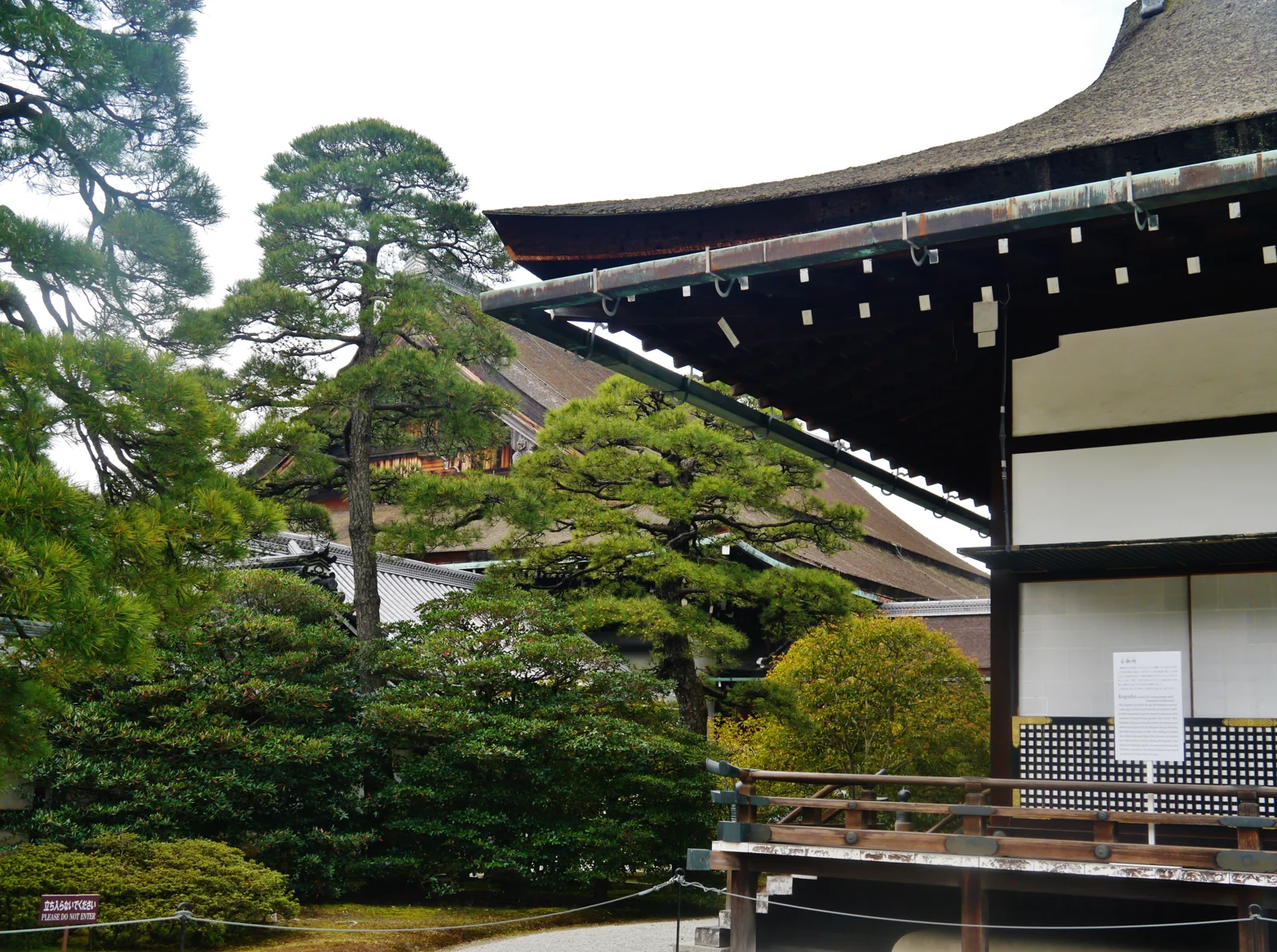
Inside the inner moat, the buildings have a different identity. The history of the surviving Honmaru Palace records that the earlier palace burned in 1788. A temporary palace built in the late shogunate period was also removed in the early Meiji era. Today’s complex was created in 1893–1894 by moving part of the Katsura princely palace from north of Kyoto Imperial Palace. Used by the imperial family during the Nijo Imperial Villa period, its interiors preserve the story of a princely home and modern imperial villa.
Major repairs to Honmaru Palace finished at the end of March 2024. It reopened to the public on September 1 after 18 years. The repaired interior follows a limited viewing route. Original paintings and karakami patterned paper need protection, while the residential passages also explain entry in small groups.
The entrance, Goshoin, Otsune Goten, kitchen and Wild Goose Rooms of Honmaru Palace originally occupied separate positions in the Katsura residence. During relocation, Otsune Goten was turned 90 degrees and joined to the south of Goshoin. The previously separate kitchen and Wild Goose Rooms were also placed next to each other. Knowing that the buildings were recombined helps explain the connecting corridors and room directions as a Meiji-period arrangement.
This gives visitors who have seen Ninomaru a reason to add Honmaru. Ninomaru focuses on rank between shogun and visitors; Honmaru shows princely daily life, late-Edo painting and a relocated residence becoming an imperial villa. Ninomaru is enough for grand gilded audience spaces. Add Honmaru if you want time for finer patterned paper, bird-and-flower paintings and domestic facilities.
Honmaru’s kitchen and Wild Goose Rooms supply the residence’s service spaces. A counter and sink stand on the kitchen’s north side. The two Wild Goose Rooms served retainers and attendants, with flying geese in the paintings matching the name. The kitchen is normally closed; use the official floor plan to understand that part. Focus on rooms visible along the open route to connect the owner’s living quarters, reception and attendants’ activities.
Honmaru’s Goshoin: a room that could become a Noh stage
Honmaru’s Entrance Room and Message Room together cover about 60 square meters, with separate waiting rooms for messengers, court attendants and nobles. Reception remained a function, but on a different scale from Ninomaru. In Goshoin’s First to Third Rooms, the owner sat in the raised First Room and visitors in the Second and Third. Alcove and shelves frame the main seat. After Ninomaru’s raised and lower sections, this provides a direct comparison.
The Goshoin spatial explanation also says that removing the Third Room’s tatami turned it into a Noh stage, with the corridor joining its southwest corner serving as the bridgeway. Use the plan to understand how an ordinary room became a performance space for another occasion. View the structure and connections from the current route; diagrams explain its stage use.
The Four Seasons Rooms form a four-room square, each with paintings of one season. The broken-swastika-pattern transom between the spring and summer rooms connects with the design tradition of the Katsura family’s separate villa, today’s Katsura Imperial Villa. The Cloud-and-Crane Rooms are named for that pattern on their karakami paper. Their First to Third Rooms run in a row. Small upper and lower sliding panels at the First Room’s shelves show spring and autumn seaside scenes. These subjects and patterns reward close attention and explain Honmaru’s emphasis on domestic detail.
Otsune Goten’s original paintings rotate: choose dates for specific rooms
Otsune Goten housed the princely owner’s daily life and sleeping quarters. Living rooms have alcoves and shelves, while bedrooms and other rooms retain chrysanthemum-shaped mosquito-net hooks. Small fittings reveal actual domestic use. The Honmaru painting introduction lists Kano Eigaku’s pine-and-crane paintings, with detailed crane feathers and scattered gold, and Nakajima Raisho’s seasonal flowers on different wall surfaces. Some plants have no outlines. Their character differs greatly from Ninomaru’s giant pines and tigers.
Honmaru protects original paintings by opening different Otsune Goten rooms in rotation. The fiscal 2026 Otsune Goten schedule lists the Pine-and-Crane Room, Pheasant Room and Storage Room from September 19 to November 15, 2026. From November 18, 2026 to March 14, 2027, it switches to the Seasonal Flowers, Farming, Bush Clover and Dressing Rooms. For pine-and-crane or seasonal-flower paintings, this date difference affects your choice before morning or afternoon light does.
Cedar-door paintings also rotate. Fourteen sets are normally stored, with about one set displayed every six months. The Honmaru cedar-door painting schedule lists the Tsurusawa school’s Pine and Cranes from October 21, 2026 to March 14, 2027. Made in 1800, it originally stood on the south side of Goshoin’s west corridor. Paintings on cedar boards use a different material from paper sliding doors. Notice how wood grain meets the image for another comparison.
Nijo Castle’s video on conserving and repairing Honmaru Palace wall paintings shows original works and restoration processes.
Honmaru Garden and the keep base: level walking and a climb
South of Honmaru Palace, Honmaru Garden was created after the Katsura palace relocation. It was altered again after Emperor Meiji’s 1895 visit, leaving curved paths, lawns, ornamental stones and a moon-viewing platform. After the interiors, view the main house and modern garden together. Ninomaru’s pond stones and multiple viewpoints give way to lawns, curves and buildings here. Seeing both makes the difference clearer than a single garden photograph.
At Honmaru’s southwest corner is the former castle keep site. The keep burned after a lightning strike in 1750. Today the main features are its stone base and the view from above. The castle’s keep-site guide says you can overlook Honmaru Palace, the gardens and Kyoto. If you like floor plans, connect the roofs and paths you have just walked from this higher viewpoint.
Leave the climb to those with enough energy and time. Companions using a wheelchair route or tired after two palaces can continue through the garden toward the exit and meet others at an agreed rest point. This stretch adds a new viewpoint. The level route already offers complete architectural and garden content; every high point need not be a whole-group task.
Seiryu-en and the teahouse fit the later part of a long route
Seiryu-en was created in 1965, with a Japanese garden, Koun-tei and Waraku-an on the west and a Western-style lawn on the east. The castle’s Seiryu-en introduction records the use of building materials, garden stones and trees from the former Suminokura residence. Here, shift attention from palace rooms to water, exteriors and lawn edges. The three gardens preserve designs from different periods within one visit.
For a seated tea break, choose Waraku-an teahouse. The official services page lists matcha and sencha sets, with usual hours of 9:30–16:30 and last orders at 16:00. On a two-palace route, putting tea after Honmaru avoids rushing a reservation mid-drink. Ninomaru-only visitors can also use it after the garden. Orders cost extra. For food brought with you, use the main rest area.
On ordinary days, view Koun-tei from its south side. Limited-period dining and special uses have separate arrangements. Seeing its position in the garden from open paths makes a full walk. Accessible toilets near the Seiryu-en rest area also make this a meeting place after separate photo stops. Before returning to Higashi Ote-mon, decide whether to enter the original-painting gallery.
Add the original-painting gallery: compare the space first, then the brushwork
Some Ninomaru Palace paintings have been replaced with reproductions for conservation. To see originals, visit the Nijo Castle Painting Gallery. The gallery introduction explains that original paintings are stored on movable panels in their original room arrangements, then selected for exhibitions by room or theme. Reproductions use traditional materials and techniques informed by study of early-Edo form and color. The palace shows how images surround people in a room; the gallery offers a closer view of the surviving works.
The autumn 2026 exhibition, “Wall Paintings That Adorned the Throne,” features Ohiroma’s First and Second Rooms from September 10 to November 8. The winter exhibition, “A Splendid Setting for Banquets,” follows with Kuroshoin’s First and Second Rooms from November 19 to January 17, 2027, closing December 29–31. In autumn, take your memory of Ohiroma’s raised seat straight to the gallery. In winter, look more carefully at Kuroshoin. Between exhibitions, keep the palaces and gardens in your plan.
The gallery charges an additional ¥100, separate from castle admission. Entry is 9:00–16:30, with closure at 16:45. The official FAQ allows photographs inside but prohibits flash, monopods, tripods and extended selfie sticks. This differs from the photography ban in both palaces. Set aside gallery time for a photograph of a painting you like; in the palaces, focus on rooms and explanations.
The 90-minute route: Ninomaru, the pond garden and back east
Enter through Higashi Ote-mon, pass Kara-mon to Ninomaru Palace, visit Ninomaru Garden, then head toward Seiryu-en and back to the east side. This keeps a complete palace, a garden stretch and exterior gates. The castle’s short route links main points in one hour. For reading paintings, handling shoes and looking at the pond garden, budget 90 minutes.
Use the toilet and organize belongings before entering the palace. Inside, focus on Tozamurai’s tigers, Ohiroma’s raised section and the color change from Kuroshoin to Shiroshoin. Outside, view the pond garden from two angles. If the current gallery exhibition matches a room you just saw, add it. For a seated break, use the main rest area or Waraku-an. One flexible final stop gives a short route more breathing room than two fixed reservations.
If Ninomaru is closed, its formal spaces of power are unavailable. Visit another day or make that day a Honmaru residence-and-gardens visit. Castle admission alone covers gardens and open outdoor paths; each palace interior has separate admission rights. If rooms are your purpose, read the palace calendars before arranging the rest of Kyoto.
The two-palace route: let Honmaru’s time decide the order
For an early Honmaru reservation, head there first after entering the castle. Follow reception, storage and the approximately eight-minute introductory video before going inside. Then see Honmaru Garden and continue to Ninomaru. The castle estimates about 40 minutes inside Honmaru, with possible waits for group entry. Putting the fixed slot first lets you drop the keep base or teahouse later if tired and keep your own pace at Ninomaru.
For a later Honmaru slot, see Ninomaru first. The Honmaru visit procedure gives about 850 meters from Higashi Ote-mon to Honmaru’s entrance, a minimum walk of 15–20 minutes. The castle requires you to enter the castle grounds at least 20 minutes before the Honmaru reservation. Add about 30 minutes inside Ninomaru, then ticket purchase, shoes, garden stops and possible waits. With half a day, finish Ninomaru and its pond garden after entering, then go straight to Honmaru. Save the teahouse, gallery and Seiryu-en for afterward.
Walking from Honmaru toward the west bridge and returning via the north side to Seiryu-en follows the official recommended direction. In flower season, the longer official route circles south for the plum grove or cherry garden. For architecture on ordinary days, the northern return connects more easily with tea and the gallery. With an afternoon restaurant reservation, allow for leaving the castle and taking the subway. Make the gallery or climb optional so three hours still preserve the main content of both palaces.
Mobility needs, socks and storage: connect indoor and outdoor routes first
Main paths include gravel. The official wheelchair service lends a limited number of power-assisted wheelchairs from the General Information Office, without reservations. The assist function requires a caregiver. If bringing your own mobility aid, collect a service map after entry. Mark the Honmaru detour, west-bridge and Seiryu-en rest areas, and accessible toilets east of Midori no Sono before choosing the outdoor distance.
Both palaces provide indoor viewing wheelchairs, but users must transfer. The official FAQ says visitors unable to transfer may not be able to enter. Discuss this with the castle before booking Honmaru and arrange the transfer assistance you need. Outdoor path access and indoor viewing require separate preparation. Connect your own physical needs with the services on site.
For strollers, use luggage storage at the main rest area. The castle lists ¥500 storage for large items such as strollers and suitcases. If companions take turns visiting interiors, agree on a meeting place and time first. Neither castle reentry nor palace reentry is allowed, so you cannot simply return to a section you have left. The main rest area has nursing and diaper-changing facilities, useful between the two interiors.
Honmaru requires removing shoes and wearing socks. Put shoes and hand-carried items in the interior lockers. For items measuring 35 cm wide × 35 cm deep × 50 cm high or larger, use the main rest area’s luggage storage. Corridors are narrow and entry is in groups. Leaving a large camera bag in storage makes movement easier. Include collection before leaving: the return from Honmaru to the east side still involves a walk.
Photography and video are prohibited inside both palaces. Outdoors, photograph only along viewing routes without obstructing others. Monopods and tripods are prohibited within the castle. The visitor rules also restrict eating and drinking to designated places. Eat your packed lunch at the main rest area and stop at rest areas or other designated places for water. On a summer two-palace route, make hydration a real rest stop and settle where to eat before entering interiors.
For a drink or simple break, the main rest area usually opens 8:45–16:45, with a cafe corner, shop, storage and nursing facilities. Waraku-an suits those who want a longer teahouse stop.
Choose tickets last: match fees and opening days to what you want to see
As of October 2026, the official fee page lists adult castle admission at ¥800, castle plus Ninomaru Palace at ¥1,300, and Honmaru at another ¥1,000. Both palaces total ¥2,300; the original-painting gallery adds ¥100. A Honmaru ticket excludes castle admission. Castle entry covers gardens and open outdoor routes. Buy the additional rights for each palace or gallery according to your plan.
On ordinary days, castle entry starts at 8:45 and ends at 16:00; the castle closes at 17:00. Ninomaru reception runs until 16:10, Honmaru reception 9:30–16:00. The whole castle closes December 29–31. Ninomaru closes on Tuesdays in January, July, August and December, plus December 26–28 and January 1–3; a Tuesday public holiday moves closure to the next day. Honmaru closures are the third Monday of each month and the following day, December 26–28 and January 1–3. The monthly Monday and following-day closures do not apply when those dates are public holidays. For both palaces, choose a day when their opening calendars overlap.
Honmaru online tickets go on sale 30 days ahead and cannot be changed, canceled or refunded after purchase. Read the Otsune Goten and cedar-door schedules first. A small number of same-day Honmaru tickets are sold at the General Information Office inside the castle, not at the regular ticket office beside Higashi Ote-mon. With only a short gap in central Kyoto, Ninomaru needs no reservation and is easier to fit in. For a Honmaru residence-focused visit, build the half day around its booked time.
For explanations, choose an official scheduled Nijo Castle tour. Japanese tours start at 9:30 and 11:30, costing ¥1,500 per person from elementary-school age. English tours start at 10:00 and 12:00, costing ¥2,500 per person aged 7 and over. Each lasts about 60 minutes. Castle and Ninomaru tickets cost extra; Honmaru is excluded. Tour guests must check in beside the General Information Office inside the castle 20 minutes before the start. Renting an audio guide is another option for viewing paintings at your own pace. For both palaces, connect Honmaru after the tour with enough walking time between fixed starts.
A few useful answers
Is Ninomaru alone enough for a first Nijo Castle visit?
Ninomaru Palace and garden offer about one to one and a half hours of content, suitable for first visits and limited time. Add Honmaru to compare a princely residence with the shogun’s audience spaces.
Does a Honmaru Palace ticket include Ninomaru?
Honmaru admission includes neither castle entry nor Ninomaru Palace. Adult daytime admission for both palaces is ¥1,300 for castle entry plus Ninomaru, then ¥1,000 for Honmaru: ¥2,300 total.
Can I see every Otsune Goten painting on the same day?
Otsune Goten opens rooms in rotation to protect original paintings. The Pine-and-Crane and Seasonal Flowers Rooms belong to different periods. Read the official schedule before buying a Honmaru time slot.
Do both palaces and the original-painting gallery have the same photography rules?
Photography and video are prohibited inside Ninomaru and Honmaru Palaces. The Painting Gallery allows photography but prohibits flash, tripods, monopods and extended selfie sticks.
Official information and references
Sources used in this guide.
- Ninomaru Palace and Garden | World Heritage Nijo Castle
- Honmaru Palace and Garden | World Heritage Nijo Castle
- Cultural Properties and Facilities | World Heritage Nijo Castle
- Visiting Honmaru Palace | World Heritage Nijo Castle
- Frequently Asked Questions | World Heritage Nijo Castle
- Nijo Castle Painting Gallery | World Heritage Nijo Castle
- Suggested Visitor Routes | World Heritage Nijo Castle
- Visitor Services | World Heritage Nijo Castle
- Fees | World Heritage Nijo Castle
- Opening Hours and Closures | World Heritage Nijo Castle
- Visitor Rules | World Heritage Nijo Castle
- Official Nijo Castle Guided Tours | World Heritage Nijo Castle
- Fiscal 2026 Otsune Goten Opening Schedule
- Honmaru Palace Cedar-Door Painting Exhibition Schedule