Kawaramachi and Gion sit across the Kamo River from each other. Compare the Shijo shopping district, Kiyamachi, Pontocho, and Gion Shirakawa by train lines, nighttime noise, machiya stairs, Gion Matsuri closures, and Kyoto's accommodation tax.
- Region & Focus
- KyotoHotels and stays
- Reading Scope
- 18 min read · 7 chapters · 5 Q&As
- Official Verification
- 27 official sources checkedUpdated November 22, 2026
- Key Topics
- Where to stayNeighborhoodsBooking
Chapter Route Map (tap any stop)
- Start Your Lodging Map at Shijo-ohashi Bridge
- Save Two Addresses Before Arrival Day
- Pick Room Orientation Before Paying Extra for a View
- Check Both Ends of the Stairs in a Machiya
- Choose Which Gion Matsuri Events Matter, Then Book Refundable Rates
- Leave Breathing Room Between the Kamo River and Pontocho
- Split Two Days Between Higashiyama and the Shopping Arcades
- Quick Q&A
On a first trip to Kyoto, start on the west bank of the Kamo River around Shijo-Kawaramachi if dinner, shopping, and trips to Osaka-Umeda fill your schedule. Look across the river in Gion if you want morning walks to Yasaka Shrine, evening strolls along the Shirakawa Canal, or easy Keihan Line access to Fushimi Inari. Kiyamachi and Pontocho suit travelers who want dinner and late drinks steps from bed. Light sleepers and families with young kids should check which street a room faces and whether an elevator reaches the lobby or front door. If your dates overlap with Gion Matsuri, pull up that year's street-closure map before locking in a room.
Start Your Lodging Map at Shijo-ohashi Bridge
Locate Shijo-ohashi Bridge first. Just west of the bridge sits Hankyu Kyoto-Kawaramachi Station, where Shijo-dori leads to the Shijo-Kawaramachi intersection, Nishiki Market, and the Teramachi and Shinkyogoku covered arcades. Just east of the bridge is Keihan Gion-Shijo Station, and following Shijo-dori east on foot brings you straight to Yasaka Shrine. When comparing hotels on both banks in a single list, use the bridge as your anchor and trace two routes for every property: getting from the train to your lobby with bags, and walking back after dinner. Those two segments immediately weed out awkward locations when search results lump both banks together.
On the Kawaramachi side, begin around the Shijo-Kawaramachi intersection. Staying close to this corner is the simplest option if you take Hankyu trains to Osaka or want to drop shopping bags from Takashimaya in your room before heading back out. If your dinner reservations cluster near the Kamo River, shift slightly east toward Kiyamachi. Light sleepers can still keep station and arcade access by looking within the same block for interior-courtyard rooms or facades away from restaurant rows. GOOD NATURE HOTEL KYOTO, just south of Takashimaya, makes a useful map benchmark: its official access guide lists about 2 minutes on foot from Hankyu Exit 4 and about 5 minutes from Keihan Gion-Shijo Exit 3, measuring from opposite sides of the bridge.
For Gion Shirakawa, open the exact street address before booking. Tatsumi Bridge and Shinbashi-dori sit north of Shijo-dori near the Shirakawa Canal and teahouse streets, while the main strolling stretch of Hanamikoji runs south from Shijo-dori down to Kennin-ji Temple. Choose near Tatsumi Bridge or Shinbashi-dori if you want to step right onto the canal path in the morning, or shift south and east if Kennin-ji, Hanamikoji, and Yasaka Shrine anchor your days. Several properties marketed as Gion Shirakawa actually sit closer to Sanjo-dori and Higashiyama Subway Station: Tsumugi Gion Shirakawa, for instance, lists about 5 minutes from Higashiyama Station and about 7 minutes from Sanjo-Keihan Station. Two listings can share the same neighborhood label and still send you to different train lines every morning.
Pontocho Alley hugs the west bank of the Kamo River from Sanjo down to Shijo-dori, while Kiyamachi runs parallel just to the west along the Takase River with cross-lanes connecting back to Kawaramachi-dori. Staying along Kiyamachi or Pontocho cuts your walk home after dinner to a few minutes and makes spontaneous late-night stops easy. The trade-off comes in the final few dozen yards: rolling suitcases through narrow alleys crowded with waiting diners is far harder than strolling them empty-handed. If you arrive late with luggage, check whether your hotel has a main entrance directly on Kawaramachi-dori or Shijo-dori so you can leave the side alleys for after check-in.
There is also a practical pocket farther north on the west bank. If you plan to ride the Tozai Subway Line toward Okazaki the next morning, or prefer crossing the river via Sanjo-ohashi after dinner, look around Kawaramachi-Sanjo rather than measuring everything against Kyoto-Kawaramachi Station. Cross Hotel Kyoto, just south of Sanjo-dori, illustrates the split well: its official guide lists about 7 minutes from Kyoto-Kawaramachi Exit 1A, about 4 minutes from Kyoto Shiyakusho-mae Exit 2 via the underground passage, and about 4 minutes across the bridge from Exit 6 shared by Sanjo and Sanjo-Keihan stations. Hotels sitting between the two bridges should be timed from the specific line you actually plan to ride.
You do not need to split your stay to enjoy both sides of the river. Bridge crossings only add friction if you plan to eat on the opposite bank every night and still return to your room repeatedly during the day. Groups with different paces can also use the river as a natural divider: shoppers can drop bags in Kawaramachi while history-focused companions linger in Gion, then meet back at the bridge or a specific storefront rather than forcing everyone onto the same route.
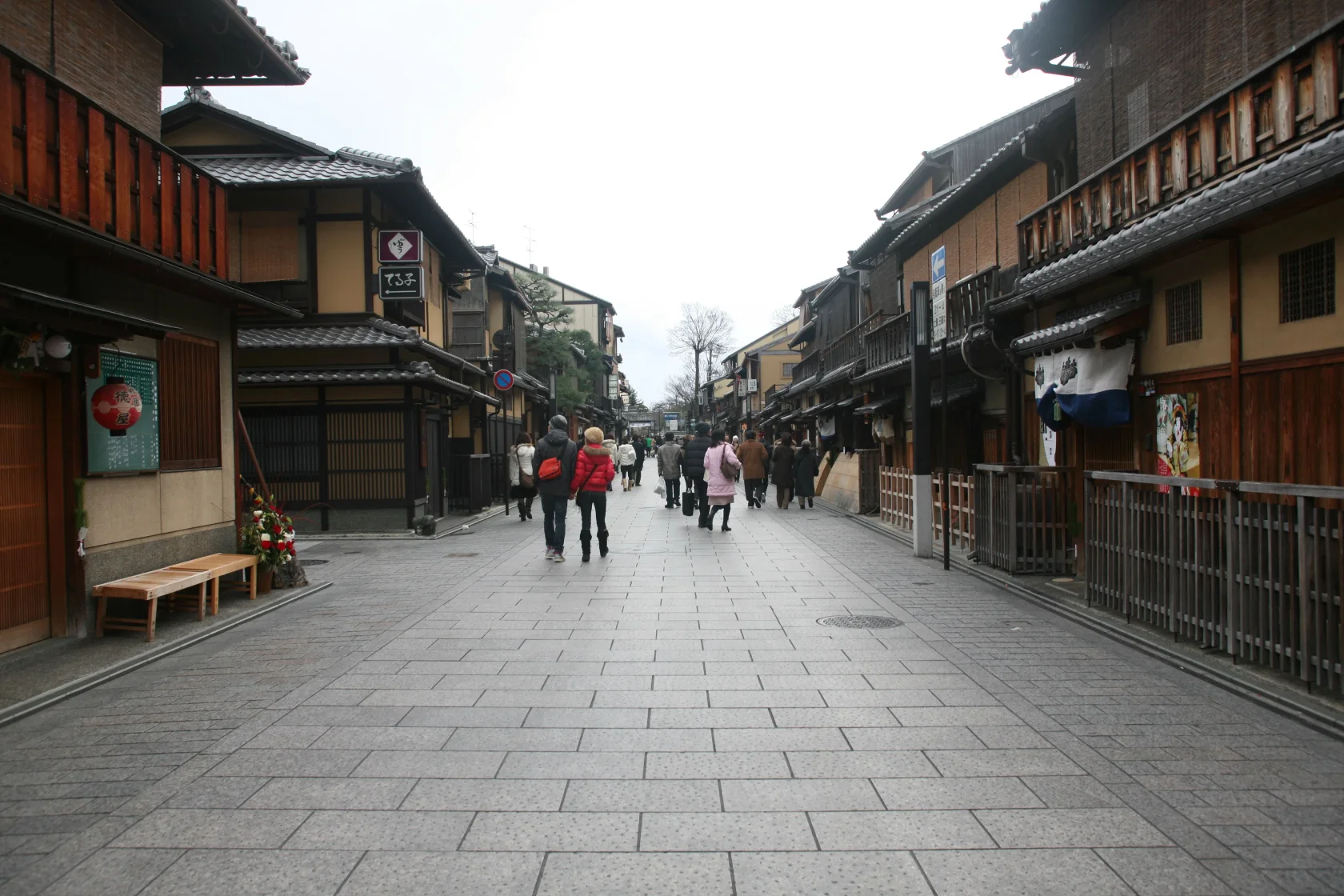
Kawaramachi and Gion sit across the Kamo River from each other. Compare the Shijo shopping district, Kiyamachi, Pontocho, and Gion Shirakawa by train lines, nighttime noise, machiya stairs, Gion Matsuri closures, and Kyoto's accommodation tax.
Save Two Addresses Before Arrival Day
To reach the Kawaramachi side from Osaka-Umeda, ride the Hankyu Kyoto Line straight to its Kyoto-Kawaramachi terminus. If you arrive at JR Kyoto Station from Kansai Airport or on the Shinkansen, take the Karasuma Subway Line north to Shijo Station, walk through the underground passage to Hankyu Karasuma Station, and ride one stop east to Kyoto-Kawaramachi—useful when your hotel sits near the bridge and you have bags. For properties tucked closer to Teramachi or Shinkyogoku, compare walking directly from Shijo Subway Station versus transferring for a single stop. Plug the hotel's street entrance into your navigation app so wait times, stairs, and turns are counted accurately.
To reach Gion on the east bank from JR Kyoto Station, ride a JR Nara Line train that stops at Tofukuji and transfer there to the Keihan Main Line toward Sanjo or Demachiyanagi, getting off at Gion-Shijo. If your lodging sits at the north end of Shirakawa, check walking routes from Keihan Sanjo Station or Higashiyama Subway Station instead; staying near Sanjo-Keihan also makes walking home across Sanjo-ohashi Bridge straightforward. Coming from central Osaka, you can board the Keihan Line directly at Yodoyabashi or Kyobashi—just check the train type so it stops at your station—and skip cutting across Umeda to catch Hankyu.
Properties on the northern edge of the east bank are also easy to reach entirely by subway from Kyoto Station: ride the Karasuma Line to Karasuma Oike and switch to the Tozai Line for Sanjo-Keihan or Higashiyama. If you arrive via JR at Yamashina and are only sightseeing in Higashiyama that day, transfer directly to the Tozai Line at Yamashina without looping through Kyoto Station. When traveling in a group, one person can drop bags at a hotel near the station while everyone else starts lunch nearby. Anyone using a wheelchair or wide stroller should check official station maps for transfer elevators and street-level lifts, then recheck walking times from that specific elevator exit.
Hankyu Kyoto-Kawaramachi and Keihan Gion-Shijo are separate stations run by different railways; transferring between them means exiting the ticket gates and walking across Shijo-ohashi Bridge at street level, so do not mistake two nearby map pins for a single complex. If you need an elevator with a stroller or wheelchair, pin the street-level lift on your map and check whether you will have to cross a busy intersection once above ground. Hankyu's official station map separates the East and Central ticket gates and lists different operating hours for certain underground exits. Keihan Gion-Shijo provides an elevator between street level and the concourse near Exit 7, plus internal elevators down to the platforms, meaning the accessible route can be slightly longer than the hotel's standard exit estimate.
If you travel light and want to avoid station transfers, check direct Kyoto City buses from Kyoto Station to Shijo-Kawaramachi and compare which bus stop sits closest to your hotel. On weekend afternoons with children, factor queue time at the Kyoto Station bus bays into your schedule. Save the exact Japanese stop names on your phone before boarding, because Shijo-Kawaramachi, Shijo-Keihan, and Gion each serve different spots. On tight schedules, stick to rail and walk the final stretch into Hanamikoji; during heavy rain or when traveling with family who cannot stand for long, a taxi from Kyoto Station saves multiple luggage transfers if you have the hotel's drop-off pin ready.
Before calling a cab, save the lodging's Japanese name and street address along with separate pickup and drop-off points. Many machiya sit inside narrow lanes where large vehicles cannot enter, so ask your host for the nearest corner where a taxi can pull over easily, and note how many turns it takes from there. Arriving in the rain with two big suitcases is far smoother when you aim for a drivable curb instead of figuring it out at the alley mouth. For rail and bus options between the airport and Kyoto, see our Kansai Airport transfers guide.
Your second saved address should be the check-in desk. Whole-house machiya rentals do not always hand over keys at the house itself. Shirakawa-an's official guide, for example, specifies check-in from 3:00 PM (with 11:00 AM check-out) and directs guests first to Mochitora, the owner's wagashi shop, before heading to the townhouse. Once you receive confirmation instructions, store the check-in desk and sleeping address separately and share both with everyone in your party. If members arrive separately, decide ahead of time who handles check-in, where the rest will wait, and notify the property promptly via your booking channel if you will arrive late.
If you reach Kyoto early and want to explore Higashiyama right away, store large bags in station lockers or use Kyoto City's HANDS FREE KYOTO baggage delivery service to send luggage to participating hotels. For same-day delivery, confirm the counter's cutoff time, size limits, and whether your property is on the participating list—especially if check-in happens at an off-site reception desk. Pull out afternoon essentials such as medication, rain gear, and phone chargers before handing over your bags. On departure day, reverse delivery to Kyoto Station lets you tour the city unencumbered and pick up your suitcases right before boarding a late Shinkansen.
Pick Room Orientation Before Paying Extra for a View
When eyeing a hotel on the west bank, pull up Street View and the property's own entrance photos to see what sits directly outside the windows. Along Shijo-dori and Kawaramachi-dori, ask which floor you get and whether your room faces traffic. Near the Kiyamachi dining strip, street noise often spikes later at night when bars close and diners spill outside. Across the river, Kawabata-dori carries steady traffic right along the east bank, so even a room billed as river-view may look over a roadway, riverside path, or late-night restaurants on the opposite shore. Compare river-facing and courtyard-facing categories separately, and keep the waterways straight: Kiyamachi runs along the Takase River, the main river dividing the two districts is the Kamo River, and Gion Shirakawa sits along its own canal on the east bank.
Instead of writing a vague message asking for a quiet room, send a specific request: ask for an interior-facing room away from Shijo-dori and the elevators, and ask whether different orientations exist within your booked room type. If the booking engine lets you select a specific orientation or layout, screenshot those room terms; if the hotel only treats requests as non-binding preferences, weigh that against paying for a guaranteed courtyard or higher-tier room. Upper floors reduce street chatter directly beneath the window, though glazing, ventilation hum, and hallway traffic still matter. Sensitive sleepers should also ask about connecting-door gaps, elevator lobbies, and floor ice machines.
Many travelers book Shirakawa specifically for a canal-view window. Before paying a premium, inspect listing photos closely to verify which floor the shot was taken from and whether the window belongs to a private bedroom or a shared lounge—then confirm with the operator which room matches which photo. Decide whether you want to sit inside gazing at the water, sleep with the window cracked to hear the stream, or simply stroll past Tatsumi Bridge every morning. Only the first two justify paying for a specific window; otherwise, a quieter, well-laid-out room nearby gives better value. Put the price gap side by side with how many daylight hours you will actually spend indoors.
Guest reviews help pinpoint exactly where noise occurs. Search reviews for your exact room category using terms like Shijo-dori, elevator, bar, or air conditioning, and note the floor number or day of the week mentioned. If multiple guests flag the same street-facing wing, ask the hotel for an alternative orientation at a similar price before arrival. When Kiyamachi or Pontocho only offers street-facing rooms and you have early train departures, moving across to a quieter side street or over to Shijo-Karasuma accommodations—while still walking back to Kawaramachi for dinner—is far more realistic than forcing your group to wrap up dinner early every night.
Families with young kids or older adults who return midday for naps need to consider daytime noise and lobby logistics too. If a hotel sits above a shopping complex, check whether the hotel lobby has its own street entrance, how many elevator transfers it takes to reach your room, and which door stays open at night. Having a department store nearby makes quick supply runs easy, and meeting back at a dedicated hotel lobby is simpler than tracking down family members across mall floors. For a single-night stay, a straightforward route from the street straight to the front desk usually beats a prettier window.
Check Both Ends of the Stairs in a Machiya
Renting an entire machiya makes the most sense when you plan to spend at least one evening hanging out at the house—cooking breakfast from market ingredients, doing two days' worth of laundry, or sharing takeout in a living room. If you are out from morning until night and just need a shower and a bed, a city hotel cuts out off-site check-in steps and steep indoor layouts. When comparing rates for three or four travelers, compare bed counts and bathroom counts rather than headline nightly prices: one townhouse gives you a shared lounge, whereas two hotel rooms give everyone separate bathrooms so early departures do not create a morning bottleneck.
Read a machiya's floor plan from the front genkan entryway through the toilet, bath, and every sleeping spot. If beds sit upstairs while the only toilet is downstairs, expect multiple stair trips every night. Guests with knee trouble should choose a layout with both a bedroom and toilet on the ground floor, or switch to a modern hotel with an elevator. Families with crawling toddlers should check stair railings, open landings, and whether the stairwell can be closed off—details living-room photos rarely show. Even ground-floor tatami sleeping requires checking how easy it is to stand up, as stiff knees often fare better with raised beds and a bench for putting on shoes.
You do not need to haul every suitcase up steep wooden stairs. If the ground floor has safe space to leave large luggage, pull out only what you need for the night and morning into a small tote before heading upstairs. Check bathtub depth, grab bars, thresholds, and shower space separately as well. Apply the exact same step-by-step audit to accessible hotel rooms—tracing street, entrance, lobby, elevator, and bathroom—because even a bathroom with grab bars may still hide a raised step at the doorway; ask for real photos before booking if anything looks unclear.
To verify hotel accessibility specs in advance, start with Kyoto City's Accessible Lodging Directory (Hito ni Yasashii Oyado Joho). Its profile for Cross Hotel Kyoto, for example, lists wheelchair-accessible rooms and step-free shared elevators, while separately noting a 60 cm bathroom doorway width in standard guest rooms. If you bring your own wheelchair, send your chair width alongside the room floor plan and ask which side of the bed allows a transfer. When booking two rooms for a group, confirm whether the accessible room and your companion's room sit on the same floor so no one has to ride an elevator in the middle of the night just to check in.
In winter, ask how both the bedrooms and the bathroom are heated in a renovated machiya and whether heaters can be switched on before arrival; in summer, check whether every bedroom has its own air-conditioning unit and how cooling is distributed across floors. Confirm where the third and fourth guests sleep and whether they get raised beds or floor futons, as one floor can mix both setups. For an idea of how detailed official listings can get, Shirakawa-an explicitly breaks down one AC unit downstairs and two upstairs, while Tsumugi Gion Shirakawa lists its exact kitchen stove and cookware. Before buying groceries to cook, check rules on provided seasonings, trash sorting, and quiet hours for kitchen use.
When booking hotels with children, enter exact ages rather than guessing and check the bed setup line by line—a twin room and a triple room are not the same thing. Co-sleeping works when kids are young enough to share comfortably, whereas older kids used to their own bed need a confirmed third bed or sofa bed. Separate sink and bath spaces let one person shower while another brushes teeth and packs. If you plan midday naps, verify housekeeping hours and entrance access, and pick one nearby kid-friendly dinner spot with seated waiting so part of the group can easily take a tired child back early.
Because dozens of whole-house listings pack the word Gion or Shirakawa into their names, always save the official Japanese property name and street number together. Kyoto City maintains public registries for both Hotel Business Act licensed lodgings (including off-site reception desks) and registered Private Lodging Business (minpaku) properties. Look up hotels and simple lodgings by address in the licensed registry, and verify minpaku listings in the city's registered-facility list. When sharing options with travel companions, send the exact property name and street address rather than just a booking-platform link.
Choose Which Gion Matsuri Events Matter, Then Book Refundable Rates
For Gion Matsuri, pin your hotel search around the Shijo-Karasuma yamaboko float neighborhoods if your priority is viewing the floats, or shift across the river to Gion if you want to focus on events around Yasaka Shrine. Kyoto City's official festival schedule sets Saki Matsuri Yoiyama evenings on July 14–16 with the main Saki Matsuri procession on July 17, followed by Ato Matsuri Yoiyama on July 21–23 and the Ato Matsuri procession on July 24. Staying on the west bank makes it easy to duck back to your room while waiting for dusk lanterns to light the floats, whereas staying on the east bank saves a river crossing after Yasaka Shrine ceremonies and dinner in Gion. Traffic restrictions do not cover the entire month identically, so lock in your exact dates first and overlay that year's festival road-closure map onto your normal route.
On procession days passing through Shijo-Kawaramachi, trace a backup route between your hotel and train station ahead of time. Hankyu's 2026 Gion Matsuri advisory notes that station entry controls and one-way up-or-down exit designations may apply, meaning your usual closest exit might be closed or exit-only on festival days. Schedule luggage-heavy arrivals outside peak viewing windows, or drop bags at Kyoto Station and pick them up after the crowds clear. Save walking routes across both Shijo-ohashi and Sanjo-ohashi bridges and follow crowd marshals during street closures.
You can decide where to spend extra budget by separating where you want to watch Yoiyama at night from where you need to depart the next morning. If you can reach Kyoto earlier in the day, staying right on the edge of the Yamaboko-cho float district lets you drop bags before streets pack out and stroll in by dusk. Groups arriving late with an early Shinkansen the next morning may do better looking at Kyoto Station area stays, riding up empty-handed for the evening festival, and returning to sleep near the tracks. With toddlers or older travelers, pick one compact viewing window close to transit rather than pushing through the densest crowds to the end.
During cherry blossom season, autumn foliage, or major festivals, lock in a refundable room with the exact guest count once you confirm transit works. Put the free-cancellation deadline on your calendar along with the hotel's local time zone (JST) and whether canceling one night affects a multi-night rate. Then compare a second property for the same dates and headcount, checking room size, cleaning fees, breakfast, and off-site check-in before jumping at a lower price. Compare properties in the listed JPY total first before worrying about your card's foreign-exchange rate at checkout, and prioritize late free-cancellation cutoffs if you plan to shift dates around peak bloom or foliage.
Whole-house machiya rentals often enforce stricter change and cancellation rules than big hotels. Shirakawa-an's official policy, for example, charges a 30% cancellation fee starting 21 days before check-in, 50% starting 7 days out, and 100% for same-day cancellations or no-shows. Before booking a fixed-date townhouse, confirm arrival dates with everyone in your group and check whether your first night should be booked on the same reservation as the rest of your stay. Save the last free-cancellation date from your confirmation email immediately, and ask the operator whether date changes can be modified inside the original booking before canceling and rebooking under a new rate.
Kyoto City's revised accommodation tax took effect on March 1, 2026, billed per person per night based on the taxable room rate (which includes service charges but excludes meals and consumption tax). The rate is ¥200 for stays under ¥6,000, ¥400 from ¥6,000 to under ¥20,000, ¥1,000 from ¥20,000 to under ¥50,000, ¥4,000 from ¥50,000 to under ¥100,000, and ¥10,000 for ¥100,000 and above. For example, if two guests split a room with a taxable rate of ¥15,000 per person per night for two nights, the combined accommodation tax comes to ¥1,600. Always check checkout line items to see whether the tax is included online or collected at the property—especially on multi-night stays with fluctuating nightly rates or single-sum townhouse quotes.
Leave Breathing Room Between the Kamo River and Pontocho
Kamogawa noryo-yuka are open-air riverside dining decks built by west-bank restaurants overlooking the water. For 2026, the Kamogawa Noryo-yuka Cooperative lists the season from May 1 through October 15, though individual spots vary on daytime openings and some close at the end of September. Start with the cooperative's restaurant list and area map, then go to the restaurant's own booking page to select noryo-yuka or yuka seating specifically. If sitting outdoors matters to you, check the wet-weather policy in advance—whether reservations move indoors, cancel outdoor seating, or require rebooking—and pick an indoor backup you are happy with if that evening is your only window.
Riverside decks work well for lunch too. The cooperative's directory lets you filter for daytime hiruyuka service as well as table-and-chair versus tatami seating. Booking lunch outdoors lets Kawaramachi guests return to their room during peak afternoon heat before heading over to Shirakawa later. For evening reservations, double-check both start and end times so you are not stuck waiting in a cramped alley before seating opens. If you order a fixed course, confirm dietary restrictions and children's options ahead of time, and send both the restaurant address and reservation name to everyone in your party in case people arrive separately.
Staying in Gion does not prevent a Pontocho dinner—just pin which street the restaurant actually opens onto, cross Shijo-ohashi or Sanjo-ohashi Bridge to the west bank, and enter from the nearest cross-alley. If you want a riverbank stroll afterward, spot the closest stairwell down to the promenade as you leave the restaurant. Stick to street-level bridges and sidewalks whenever rain picks up, water rises, or warning signs appear: Kyoto Prefecture explicitly warns that sudden heavy rainfall can cause Kamo River water levels to spike rapidly, so leave the lower banks immediately if the current speeds up or turns muddy. If part of your group wants to turn in early, say goodnight at the wider intersection outside Pontocho rather than debating next steps in a narrow lane.
Because Pontocho is tight, drop bulky umbrellas, shopping bags, and backpacks at your hotel before dinner and carry only compact rain gear. If older travelers need a seat right away, ask at booking whether the restaurant uses chairs or floor tatami and whether you have to climb stairs from the street. Even an evening with just one restaurant on the schedule slows down over bridge crossings, doorway waits, and finding a restroom. You can also watch sunset from the riverbank first and slip into the alley from either the Sanjo or Shijo end—or if your reservation is already indoors, keep the Kamo River stretch strictly as an after-dinner walk.
Walking home through Gion requires watching for cars along Hanamikoji and sticking to public roads marked at the street entrances instead of lining up outside teahouse doorways. Obey signs prohibiting entry or photography on private side lanes. If you encounter geiko or maiko, give them clear space to pass and never follow or photograph them without permission. Keep late-night voices low until you are indoors, follow your townhouse host's exact trash hours and drop-off instructions, and step aside to spots that do not block foot or car traffic when taking photos. For routes and local etiquette, see our Gion Hanamikoji walking guide.
Split Two Days Between Higashiyama and the Shopping Arcades
Waking up in Gion puts Shirakawa, Yasaka Shrine, and Maruyama Park right at your doorstep for the morning. Start with whichever stretch sits closest to your door, and time Hanamikoji around Kennin-ji Temple's opening hours if you plan to visit the Hojo or Dharma Hall. If your route continues uphill through Kodai-ji, Ninenzaka, Sannenzaka, and Kiyomizu-dera, make sure everyone is up for the climb and plan your return via main roads or the nearest station based on remaining energy. With older family members, turning Yasaka Shrine and Maruyama Park into a relaxed half-day and heading back to the hotel after lunch works well, while energetic walkers can continue along our Kiyomizu-dera and Higashiyama walking route and meet back on Shijo-dori by evening.
During cherry blossom and autumn foliage seasons, timing your start cuts down wait times considerably. Kyoto City's Sightseeing Comfort Forecast maps predicted crowds by date, time slot, and weather across spots like Hanamikoji, Kiyomizu-zaka, and Nishiki Market. If Hanamikoji looks packed in the morning, walk Shirakawa first and swing through Hanamikoji after leaving Kennin-ji. Save your single early-morning push for the sloped temple stretch you want most, and keep the afternoon close to your hotel with short loops and café breaks. If walking all the way from Shijo-Kawaramachi to Kiyomizu-dera is too much, Kyoto City's tourism guide highlights City Bus 207 to Kiyomizu-michi—though note you still have an uphill walk from the bus stop.
Save the other half-day for the Kawaramachi shopping district. Pick your target stalls in Nishiki Market first, grab lunch somewhere with proper seating once hunger hits, and browse Teramachi, Shinkyogoku, or Takashimaya afterward. On days with on-and-off rain, pairing Nishiki Market with the covered shopping arcades keeps you dry and leaves easy department-store spots for meals and rests. Guests coming from Gion still have to cross the Kamo River, after which underground passages and department-store floors keep you sheltered—and returning to a west-bank room to swap wet shoes is quick. If you finish around Shijo with energy left, stroll north along Teramachi toward Sanjo while another group waits at Sanjo-ohashi Bridge, connecting smoothly into our Kyoto Sanjo-dori walking guide.
For day trips beyond central Kyoto, staying on the west bank gives direct Hankyu access from Kyoto-Kawaramachi to Katsura, where you transfer to the Hankyu Arashiyama Line. To visit Fushimi Inari, board a local or express Keihan train from Gion-Shijo that stops at Fushimi-Inari Station, as Keihan Limited Express trains pass straight through. Headed to Kurama or Kibune, take Keihan to Demachiyanagi and transfer to the Eizan Electric Railway. If you have to cross a bridge to reach your morning train, weigh that single morning walk against how convenient your nightly walk home is—for a single day trip out of town, base your room on your usual evening routine, whereas two straight mornings of early Shinkansen or JR transfers argue for staying near Kyoto Station instead.
The stretch between Shijo-ohashi and Sanjo-ohashi makes splitting up effortless for travelers with different stamina levels. Families who just want short bursts outside can stick to their own side of the river, sending shoppers into Kawaramachi while machiya enthusiasts cross to Shirakawa. Pin a specific storefront or bridge corner as your rendezvous point. If anyone in your group is uncomfortable with steep riverbank stairs or slick stone paving, keep the entire day on flat street-level sidewalks and pick dinner spots entered directly off main streets so nobody has to double back just to meet up.
On your last evening, line up your morning train schedule, luggage storage cutoff times, and hotel check-out procedure before going to sleep. For early departures, locate the nearest street-level station entrance ahead of time, and follow your host's key-return instructions carefully if the front desk or check-in shop sits separate from your room. If you are not leaving Kyoto until late afternoon, keep your final hours on the same side of the river as your bags and depart from your closest station. To fit in one last morning walk along Shirakawa, pack up and stroll before checking out so you only need to swing by for your luggage on the way out.
A few useful answers
For a first trip to Kyoto, is Kawaramachi or Gion more convenient?
Start near Kyoto-Kawaramachi Station if you want shopping, late dinners, and direct Hankyu trains to Osaka-Umeda. Choose between Gion-Shijo Station and your main sights if you want early-morning walks along Shirakawa and Yasaka Shrine or plan to ride the Keihan Line often. If most of your trips rely on JR trains, compare Kyoto Station as well.
How can I avoid street noise when booking near Kawaramachi?
After booking, message the hotel to ask for an interior-facing room away from elevators. If quiet sleep matters, rule out rooms facing the Shijo-Kawaramachi intersection or directly overlooking Kiyamachi restaurant entrances, and verify whether room orientation is guaranteed at booking or only noted as a request for check-in.
Which station should I use for a Gion Shirakawa machiya?
Look up the actual check-in desk or lodging address first. Properties near Tatsumi Bridge and Shinbashi-dori sit closer to Gion-Shijo or Keihan Sanjo, while places near the east end of Sanjo-dori can be quicker from Higashiyama or Sanjo-Keihan subway stations. Recalculate walking times using elevator exits if you have large suitcases.
Is staying near Yasaka Shrine good for Saki Matsuri Yoiyama during Gion Matsuri?
To see the yamaboko floats during Yoiyama evenings, look first on the west side of the river around Shijo-Karasuma and Shijo-Kawaramachi, and check that year's traffic restriction map for hotel access. If your focus is the shrine rituals around Yasaka Shrine, stay on the Gion side so you can walk straight there.
Can I stay in Gion and dine on a Pontocho riverside deck at night?
Yes. Pontocho runs along the west bank of the Kamo River, so you can cross via Shijo-ohashi or Sanjo-ohashi depending on the restaurant's location. Reserve riverside yuka seating specifically and ask what happens if it rains. For 2026, the cooperative lists the noryo-yuka season through October 15, though some restaurants wrap up at the end of September.
Official information and references
Sources used in this guide.
- Kyoto City Tourism Association — Choosing Accommodation: Key Features of Each Area
- Kyoto City Tourism Association — Central Kyoto Sightseeing Map
- Kyoto City Tourism Association — City Rail Lines and Transfers
- Kyoto City Tourism Association — Kyoto Station Transfer Guide
- Hankyu Railway — Kyoto-Kawaramachi Station Map
- Keihan Electric Railway — Gion-Shijo Station Information and Map
- Kyoto City — HANDS FREE KYOTO Baggage Delivery Service
- Kyoto City Tourism Association — Gion Matsuri Schedule and Procession Routes
- Hankyu Railway — Gion Matsuri Station Maps and Special Trains
- Kyoto City — Accommodation Tax Rates and 2026 Revision
- Kyoto Kamogawa Noryo-yuka Cooperative — 2026 Season Dates and Restaurant Directory
- Kyoto City Tourism Association — Pontocho-dori
- Kyoto Prefecture — Kamo River Water Levels and Safety Advisories
- Kyoto City Tourism Association — Responsible Travel Guidelines from Southern Gionmachi
- Kyoto City — Private Lane and Photography Notices Around Gion Hanamikoji
- Kyoto Prefecture Tourism Federation — Gion District and Shinbashi Preservation Area
- GOOD NATURE HOTEL KYOTO — Access and Entrances
- Kyomachiya Shirakawa-an — Facilities and Check-in Guide
- Tsumugi Gion Shirakawa — Property Information and Walking Routes
- Kennin-ji Temple — Visiting Information and Access
- Cross Hotel Kyoto — Walking Routes from Shijo and Sanjo
- Kyoto City — Cross Hotel Kyoto Accessibility Information
- Kyoto City — Hotel Business Act Licensed Facilities and Off-Site Reception Desks
- Kyoto City — Registered Private Lodging Business (Minpaku) Directory
- Kyomachiya Shirakawa-an — Cancellation and Payment Policy
- Kyoto City Tourism Association — Comfortable Access to Higashiyama and Kiyomizu-dera Temple
- Kyoto City Tourism Association — Sightseeing Comfort Forecast