Plan a three-day Kyoto cherry blossom trip around live city bloom updates. Covers Keage to the Philosopher's Path, Togetsukyo Bridge to Tenryu-ji, Kyoto Gyoen early blossoms, Ninna-ji late blooms, night illuminations, transit, and where to stay.
- Region & Focus
- Kyoto
- Reading Scope
- 24 min read · 11 chapters · 5 Q&As
- Official Verification
- 32 official sources checkedUpdated November 22, 2026
- Key Topics
- SeasonsItinerariesRail travel
Chapter Route Map (tap any stop)
- Track Live Bloom Reports and Separate Early from Late Varieties
- Which Gate to Use for Early-Spring Kyoto Gyoen
- Northern Higashiyama: Start at Keage and Decide Your Next Move in Okazaki
- Link Kiyomizu-dera, Maruyama Park, and Shirakawa on One Downhill Walk
- Morning in Arashiyama: Which Bank of the River to Start On
- Choosing Between Red Weeping Cherries and Late Omuro-zakura
- Half-Day at Daigo-ji: Pick Your Precincts Before You Arrive
- Nakaragi-no-Michi for a Northern Half-Day (and the Botanical Gardens for Light Rain)
- Build a Three-Day Plan You Can Swap Around
- Where to Stay: Karasuma Oike, Gion, or Kyoto Station
- Transit Passes, Picnic Bentos, and Your Final Stop Before Leaving
- Quick Q&A
Kyoto's cherry blossom season typically runs from late March through mid-April. For a first trip, the smartest move is splitting Higashiyama, Arashiyama, and late-blooming temple gardens across separate days, saving your clearest morning for whichever area is peaking. If you only have one day, walk from Keage Subway Station to the Philosopher's Path and loop back toward Okazaki in the afternoon, or head straight from Keage to Heian Shrine for a shorter walk. Arriving early in the season? Start with the weeping cherry trees in Kyoto Gyoen National Garden. If you miss the peak of the city's Yoshino cherries, shift your main outing to Ninna-ji or Heian Shrine's Shin-en Garden, where late-blooming red weeping cherries linger.
Track Live Bloom Reports and Separate Early from Late Varieties
Based on 1991-2020 observations of its official sample tree, the Kyoto Local Meteorological Office lists March 26 as the average first bloom for Kyoto's Yoshino cherries and April 4 for full bloom. In 2026, first bloom arrived on March 23 and full bloom hit on March 30. Nearly a week's swing in peak bloom is enough to show weekend visitors completely different streets. When booking 2027 flights to catch city-center tree rows, target late March through early April. If your dates are locked in, pick a hotel that lets you pivot between routes and put open-access paths without timed tickets first.
The Meteorological Office calls first bloom on the day five or six blossoms open on the sample tree, and full bloom once roughly 80% of buds have opened. As soon as first bloom makes the news, look first for early-blooming trees already at peak. Once in Kyoto, open the Kyoto City Tourism Association's Sakura Dayori bloom tracker to check individual spots for observation dates, bloom levels, and variety notes. Kyoto Gyoen, the Philosopher's Path, and Ninna-ji share the same list yet run on completely separate clocks. Because the association updates venue reports throughout the season, it is the best tool for mapping out the next day's route.
Arriving earlier in late March, put the early weeping cherries at Konoe Residence Ruins in Kyoto Gyoen at the top of your list. Once Yoshino cherries fill the canals and streets, string together stretches of the Philosopher's Path, Okazaki, and Gion Shirakawa, picking one segment to walk slowly. Closer to mid-April, shift to Ninna-ji's Omuro-zakura or watch updates for the double-petaled red weeping cherries inside Heian Shrine's Shin-en Garden. Kyoto Gyoen also has late-spring sato-zakura, meaning you can enter the very same park through completely different gates at the start and end of spring.
Right as petals start dropping after full bloom, the canal surface can outshine the branches overhead. To catch petals drifting down the current, save Okazaki or the Philosopher's Path for after sunrise when the water reads clearly and it is easier to shift vantage points. If strong wind or steady rain moves in, you may not get several relaxed days after peak bloom - move your top spot to the next dry half-day. Keep low-bloom afternoons for museums or city restaurants, then return to a nearby riverbank once the light or rain improves.
| What You're Seeing | Where to Go First | How to Get In and Out |
|---|---|---|
| City Yoshino cherries just starting; early weeping cherries at peak | Konoe Residence Ruins, Kyoto Gyoen | Karasuma Line to Imadegawa Station; enter from the north side of the park |
| Trees lined up in bloom along the Higashiyama canals | Keage, Okazaki, or the Philosopher's Path | Tozai Line in at Keage Station; exit via Higashiyama Station or Ginkakujimichi |
| Petals falling along the canals; red weeping cherries still blooming | Heian Shrine Shin-en Garden or Nakaragi-no-Michi | East from Higashiyama Station for Shin-en; Kitaoji or Kitayama Station for Nakaragi-no-Michi |
| Omuro-zakura at peak bloom | Ninna-ji Temple | Randen Omuro-Ninnaji Station or JR Hanazono Station |
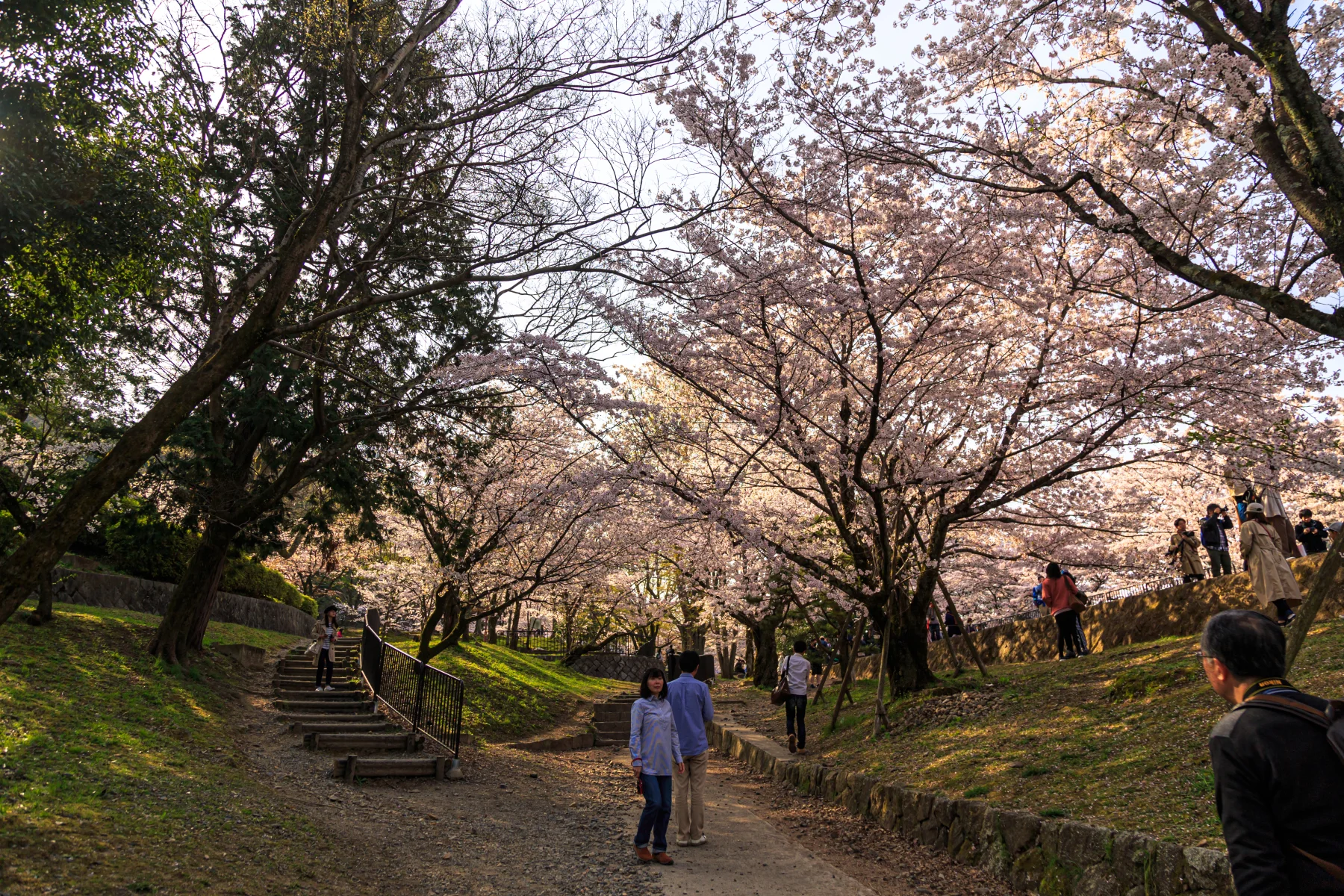
Plan a three-day Kyoto cherry blossom trip around live city bloom updates. Covers Keage to the Philosopher's Path, Togetsukyo Bridge to Tenryu-ji, Kyoto Gyoen early blossoms, Ninna-ji late blooms, night illuminations, transit, and where to stay.
Which Gate to Use for Early-Spring Kyoto Gyoen
To see the weeping cherries at Konoe Residence Ruins, ride the Karasuma Subway Line to Imadegawa Station and enter from the north side of Kyoto Gyoen - far closer than walking all the way up from Kyoto Station toward the Imperial Palace. Drop your map pin directly on Konoe Residence Ruins. The weeping cherries cluster in the northwest corner; once inside, check the blooming trees beside the pond first and stroll to the Konoe Residence Ruins Rest House before deciding whether to head south. Individual trees bloom at different paces, so if the main grove still looks bare, walk over to the early-blooming trees right by the pond.
Later in spring, head first to Demizu Stream on the southwest side of the park. Ride the Karasuma Line to Marutamachi Station and walk through the southwest entrance straight to the stream and its sato-zakura trees. Demizu Stream has a weeping cherry as well - catch that tree in early spring and return later for the multi-petaled sato-zakura nearby. To connect Konoe Residence Ruins down here, walk the western edge in stages and pause for water at the Nakadachiuri Rest House along the way. With only an hour, pick either the early-blooming north end or the late-blooming south end and leave the long central path for visitors with more time.
Kyoto Gyoen itself is free to enter, whereas the Kyoto Imperial Palace has separate entry gates and visiting rules. If you just want blossoms, walk straight into the park through the north or south gates. Gravel paths take more effort than the paved sidewalks outside the subway stations, so if you are with kids or anyone using a walker, keep your blossom stops near one rest house and exit back toward Karasuma-dori. The Ministry of the Environment lists the Nakadachiuri, Tominokoji, and Konoe Residence Ruins rest houses as places where you can eat bento boxes. To include the palace grounds as well, see our Kyoto Imperial Palace and Sento Imperial Palace guide for gates and booking rules.
Northern Higashiyama: Start at Keage and Decide Your Next Move in Okazaki
From Kyoto Station, take the Karasuma Line to Karasuma Oike and transfer to the Tozai Line for Keage. Exit 1 puts you beside the historic Keage Incline, where a gentle slope leads down to the lower canal level. The old incline once carried boats on wheeled cradles across the canal's elevation drop. In spring, a continuous row of cherry trees stretches down the slope over wooden ties, crushed stone, and an uneven grade. If you have a stroller or slick-soled shoes, follow the paved side path toward Nanzen-ji to view the blossoms from outside the tracks instead of walking back and forth across the rails.
Between Keage and the Philosopher's Path sit Nanzen-ji and the Eikan-do neighborhood. Entering the Philosopher's Path from the south means walking to Nyakuoji Bridge next to Kumano Nyakuoji Shrine to join the main trail. Follow the Lake Biwa Canal branch about 2 km toward Ginkaku-ji; the north end lets out near Ginkakujimichi on Imadegawa-dori. Either end works: starting south gives you quiet morning light at Keage or Nanzen-ji, while starting north puts you near Ginkaku-ji first before walking toward Keage Station or Okazaki. Factor in bridge crossings, waiting for companions, and photo stops when estimating your pace; if crowds make you turn around, take the wider parallel streets back to a station.
From Shijo-Kawaramachi, ride the Keihan Line from Gion-Shijo to Demachiyanagi and transfer to City Bus 7 or 203 to Ginkakujimichi. Staying along the Karasuma Line? Take the subway to Imadegawa and board Bus 203 bound for Ginkaku-ji from Karasuma Imadegawa. After getting off, walk east from the Shirakawa-dori Imadegawa intersection to reach the canal and path entrance. Walking all the way to Ginkaku-ji's main gate adds an uphill stretch beyond the northern end of the Philosopher's Path. If your visit is strictly about blossoms, turn onto the canal path right at the entrance and save the temple for another trip. When the north end bottlenecks, start at the south end, walk to the midpoint, and exit to buses along Shirakawa-dori to skip the crowded shopping lane in front of Ginkaku-ji. If part of your group wants to shop while others take photos, meet at a lunch spot near the north end and keep the narrow canal bridges clear for walking.
Okazaki fits naturally into the second half of the day. Head downhill north from Keage past the Lake Biwa Canal Museum into Okazaki to look over the water and tree-lined banks from the bridges. Once near Heian Shrine's giant torii gate, keep following the canal or step into Shin-en Garden for more blossoms, or head into a museum for a break. Higashiyama Subway Station also makes an easy exit here. If you walked the Philosopher's Path in the morning, spend the afternoon at an Okazaki museum or Shin-en Garden and finish at Higashiyama Station rather than repeating the same canal stretch.
In light rain, short walks by the bridges and along the canal still work well - just step into wider areas when stopping for photos. If the rain refuses to clear, the nearby Lake Biwa Canal Museum is free (closed Mondays, or the next weekday when Monday is a holiday). The Kyoto City KYOCERA Museum of Art typically opens 10:00 AM to 6:00 PM (closed Mondays, except on national holidays and observed Monday holidays). Check special exhibition slots before leaving if you plan to see a show; if you simply want shelter on a wet day, pair a museum visit with the short Okazaki Canal walk back to Higashiyama Station.
Link Kiyomizu-dera, Maruyama Park, and Shirakawa on One Downhill Walk
Kiyomizu-dera typically opens at 6:00 AM and stays open until 6:00 PM in spring. To photograph blossoms around the Kiyomizu Stage early, take the Keihan Line to Kiyomizu-Gojo Station and walk east along Gojo-dori, climbing up Chawan-zaka or Kiyomizu-zaka. City Bus 206 from Kyoto Station stops at Gojozaka, which the temple lists as roughly a 10-minute walk - still with an uphill climb. From Keihan Kiyomizu-Gojo Station to the temple gate takes about 25 minutes by the temple's estimate. Count backward from opening time using that walk, and budget separate minutes for the climb and framing photos once inside. Even if you stay near Kawaramachi and both Keihan stations look equally close, climbing from Kiyomizu-Gojo makes it much easier to walk straight down toward Gion afterward.
Coming down Kiyomizu-zaka, follow Sannenzaka and Ninenzaka past Kodai-ji toward Yasaka Shrine and Maruyama Park. That stretch combines stone steps, shop queues, and people pausing for photos; anyone in your group who needs to avoid stairs should take the wider streets out to Higashioji-dori and enter the park near Yasaka Shrine. Maruyama Park's centerpiece is its towering weeping cherry tree, known locally as the "Gion Night Sakura." When crowds ring the fence during the day, circle halfway around the paved path - the full spread of the canopy reads much better from a short distance back. Starting your walk here? Walk straight east from Gion-Shijo Station along Shijo-dori. To fold in temple worship or Otowa Waterfall, see our Kiyomizu-dera and Higashiyama walking guide.
For an afternoon stretch along Gion Shirakawa, double back from Yasaka Shrine to the north side of Shijo-dori, follow Shirakawa Minami-dori and Tatsumi Bridge, and walk out toward the Kamo River. Shirakawa brings water, stone bridges, and machiya townhouses into one frame; when the riverside lane narrows, wait for companions off the bridge and keep shop doorways and residential alleys clear. For another waterside stroll, cross to the west bank of the Kamo River along Kiyamachi's Takase River before heading into Shijo-Kawaramachi for dinner. Doing Kiyomizu in the morning and Shirakawa in the afternoon keeps every move on the same side of town - and if rain hits, you can duck straight downtown without another bus transfer.
If you can only visit this area on a Saturday, Sunday, or Japanese national holiday, Kyoto City runs Sightseeing Limited Express buses from Kyoto Station. EX101 serves Gojozaka, while EX100 continues on to Gion, Okazaki, and the Ginkaku-ji area. (Kiyomizu-michi is only served by EX100 heading back to Kyoto Station; get off at Gojozaka for Kiyomizu-dera.) Fares are ¥500 for adults and ¥250 for children, paid on boarding through the front door with an IC card or the Subway & Bus 1-Day Pass. For a dawn opening at the temple gate, stick to trains and walking, and save the express bus for daytime hops.
Morning in Arashiyama: Which Bank of the River to Start On
From Kyoto Station, ride the JR Sagano Line to Saga-Arashiyama Station and start on the north bank at Tenryu-ji or walk down the main shopping street toward Togetsukyo Bridge. Staying in Karasuma or Kawaramachi? Ride the Hankyu Kyoto Line to Katsura and transfer to the Arashiyama Line, which drops you on the south side of Togetsukyo Bridge. Starting on the south bank lets you stroll Nakanoshima Park for river-and-mountain views before crossing the bridge to Tenryu-ji. To see both sides in one sweep, arrive via Hankyu and leave via JR (or vice versa) so you never have to push across Togetsukyo Bridge twice - especially helpful if someone wants to turn in early or catch a later train.
Arashiyama's cherry blossom view is all about broad hills and open water. To put the bridge, blossoms, and mountains in one shot, step down the riverbank away from the bridge approaches for extra room and better angles. If crowds have already stacked up at the north end of Togetsukyo Bridge, go from the JR station straight to Tenryu-ji first and check the riverfront afterward. Arriving on Hankyu? Stroll the south bank first and cross once the foot traffic thins out. With a stroller, handle photo stops and kid handoffs off the bridge rather than stopping in the narrowest bottleneck.
Tenryu-ji's Sogenchi Pond Garden and Hyakkaen Garden share the standard garden ticket, open daily from 8:30 AM to 5:00 PM (last entry 4:50 PM): ¥500 for high schoolers and adults, ¥300 for elementary and junior high students, and free for preschoolers. Head to Sogenchi Pond first for the mountain reflection, then decide how long to linger in Hyakkaen depending on bloom. Entry to the Daihojo and other temple halls adds ¥300 to the garden ticket, with an earlier cutoff at 4:30 PM. Reaching Arashiyama in the afternoon and hoping to sit inside the halls looking out at the garden? Enter the temple first and save snacks and riverbank walks for afterward. The Cloud Dragon ceiling painting in the Hatto Dharma Hall uses a separate ticket and keeps its own open dates; on a short weekend half-day focused purely on blossoms, save your time for the gardens.
If strong winds sweep across the river, Saga-Arashiyama Station and Tenryu-ji alone still make a full half-day. If heavy rain obscures the mountains across the water, travelers staying near Kyoto Station can hop back on JR to Umekoji and visit the Kyoto Railway Museum instead. When scattered showers are in the forecast across three days, put Arashiyama on the half-day with the clearest mountain visibility and keep Higashiyama for breaks between rain when you can piece together canal walks.
Choosing Between Red Weeping Cherries and Late Omuro-zakura
Heian Shrine's Shin-en Garden holds four distinct gardens: East, Middle, West, and South. When the red weeping cherries peak, the South Shin-en offers low-hanging branches up close, while the East pond pairs blossoms with pavilion architecture. Walk north from Higashiyama Station on the Tozai Line through Okazaki Park and enter Shin-en from inside the shrine grounds. From March 1 to September 30, daytime hours run 8:30 AM to 6:00 PM (last entry 5:30 PM); admission is ¥600 for adults, ¥300 for elementary and junior high students, and free for preschoolers and younger children. The outer shrine opens earlier, so on a morning visit, walk along the Okazaki Canal before the garden opens at 8:30 AM.
Shin-en's late-blooming red weeping cherries and the Yoshino cherries along the Okazaki Canal often peak on different days. Check both "Heian Shrine" and "Okazaki Canal" separately on Sakura Dayori: if Shin-en is in full bloom while the canal trees are shedding petals, buying a garden ticket is well worth it. If both sides of the canal are packed with blossoms while the garden is still early, spend your time on the outer bridges and paths instead. Walking back from the museums toward the station in the afternoon also passes a stretch of the canal, letting older companions enjoy blossoms without completing a full loop inside the paid garden.
Ninna-ji's Omuro-zakura are famous for blooming late with low canopies, clustered northwest of the Middle Gate. From the wooden boardwalk, you can see flower clusters at eye level and frame them with the five-story pagoda behind. Check Ninna-ji's own bloom reports and time your visit around its official Omuro-zakura status. The temple lists a special Flower Festival grounds admission of ¥800 for adults (high schoolers and younger free). Goten Palace Garden admission is also ¥800 for adults, so look for the Flower Festival gate and ticket counter when coming specifically for the Omuro cherries. According to the temple FAQ, Omuro-zakura viewing runs 8:30 AM to 5:30 PM (last entry 5:00 PM), eating beneath the trees is prohibited, and there is no night viewing for Omuro-zakura.
From Kyoto Station, take the JR Sagano Line to Hanazono Station and walk roughly 15 minutes. Coming from western Kyoto, ride the Randen Kitano Line to Omuro-Ninnaji Station, about a 3-minute walk from the gate. Already in Arashiyama when both areas look good? Ride the Randen Arashiyama Line to Katabiranotsuji and transfer to the Kitano Line. On a sunny festival weekend, taking the train keeps your arrival schedule in your own hands rather than sitting on a single bus all the way from Kyoto Station. Pairing Ninna-ji with Kinkaku-ji? Handle Ninna-ji's entry and lunch first, then move east in the afternoon. For the Goten Palace painted sliding doors and main complex layout, check our Ninna-ji half-day visiting guide.
Half-Day at Daigo-ji: Pick Your Precincts Before You Arrive
Daigo-ji sits near Daigo Station on the Tozai Subway Line - the same line as Keage, though several stops farther out. From Karasuma Oike, take a Rokujizo-bound train to Daigo Station and exit via Exit 2; the temple lists the walk at roughly 10 minutes. From Kyoto Station, take the JR Biwako or Kosei Line one stop to Yamashina and transfer to the subway toward Daigo. Give Daigo-ji a full half-day and start in Shimo-Daigo at the foot of the mountain; families with kids or older travelers can easily limit their walk to Sanbo-in and the main approach. If you also plan to see Keage the same day, keep one of the two stops brief so you aren't walking deep into both complexes and rushing back downtown for lunch.
Toyotomi Hideyoshi staged his famous Daigo Cherry Blossom Viewing here in 1598. Today, Sanbo-in pairs garden scenery with that history, Garan holds the five-story pagoda, and Reihokan houses its own museum galleries. Spring pricing applies from March 20 through the third Sunday of April: a three-area combo ticket is ¥1,800 for adults and ¥1,300 for junior high and high school students; a single-area ticket is ¥800 for adults and ¥600 for junior high and high school students. Always check the current Japanese-language official page for active rates. If you mainly want Sanbo-in's garden and nearby cherry trees, a single-area ticket offers plenty to see. The temple budgets about 90 minutes to cover all three paid areas, plus extra time during peak bloom for ticket lines, gates, and photo stops.
Climbing to Kami-Daigo starts at the Nyonin-do trailhead at the base, where hikers fill out an entry register and must return down the mountain by 5:00 PM. If you are traveling with older companions, running into rain, or visiting strictly for blossoms, focus entirely on Shimo-Daigo, where live bloom updates apply. On windy mornings when canal walks turn miserable, Sanbo-in and Reihokan still let you enjoy gardens, historic halls, and temple treasures. Heading back on the Tozai Line, transfer to JR at Yamashina or stay on to Karasuma Oike. If you want an afternoon rest at your hotel, tour just one zone right off the ticket gate, walk back to Daigo Station, and save cross-town cherry viewing for the next day.
Nakaragi-no-Michi for a Northern Half-Day (and the Botanical Gardens for Light Rain)
Nakaragi-no-Michi is a Kamo River embankment path right beside the west side of the Kyoto Botanical Gardens, where red weeping cherries arch overhead. Walk east from Kitaoji Station on the Karasuma Line to Kitaoji Bridge, pick up the riverside path on the east bank, and head north to Kitayama Bridge before turning east to Kitayama Station - or walk it in reverse from Kitayama. Having a subway station at both ends means you never have to backtrack. If companions prefer to avoid direct sun or river wind, trim the outing to the Botanical Gardens plus a short section along the Kamo River and keep going only if the blossoms pull you forward.
The Kitayama Gate of the Kyoto Botanical Gardens connects directly to Exit 3 of Kitayama Station, while the Main Gate is about a 10-minute walk from Exit 3 of Kitaoji Station. Standard garden hours are 9:00 AM to 5:00 PM (last entry 4:00 PM), and the Conservatory opens 10:00 AM to 4:00 PM (last entry 3:30 PM). A day pass covering both the gardens and the Conservatory is ¥500 for adults, ¥250 for high schoolers and seniors 65+, and free for junior high students and younger. If it rains and you want the Conservatory, arrive before 3:00 PM and decide afterward whether to walk the riverbank. Because the gardens hold many cherry varieties, check the park's own bloom map first and head straight for the closest blooming section instead of pushing a stroller over wet gravel unnecessarily.
Combining this route with Demachiyanagi works, though walking all the way from Kitayama down to the Kamogawa Delta into a stiff river wind takes more stamina than the map implies. To cover Kyoto Gyoen and northern Kyoto in one day, ride the Karasuma Line between Imadegawa and Kitayama. Hit whichever area has stronger bloom in the morning, eat lunch near a subway station, and add another stretch along the river in the afternoon if everyone still feels up to it. On a one-night stay when downtown trees are already peaking, skipping Nakaragi-no-Michi saves a round-trip between Higashiyama and the north end of town.
Build a Three-Day Plan You Can Swap Around
If a three-day trip only gives you one sunny morning, spend it on your top outdoor route. For low-angle blossoms sloping beside old tracks, start at Keage, continue along the Philosopher's Path before noon, and save Okazaki's museums for the afternoon. For bridge, river, and distant mountain views, go to Arashiyama early and switch districts after lunch. Both spots are far better at sunrise than midday, so there is no need to cram both into one day. Save day three for whichever of Kyoto Gyoen, Nakaragi-no-Michi, or Ninna-ji looks best on the bloom report - each sits near its own rail line. Set one clear meeting point ahead of time so swapping days never forces your group to re-plan every detail.
On the day you plan Kiyomizu-dera's night illumination, keep the morning to an easy route near your hotel, such as Kyoto Gyoen or the area west of Kawaramachi. Eat dinner in Higashiyama before sunset, focus on one illuminated route once inside, and walk out to a Keihan station afterward. Kiyomizu-dera's published 2026 spring night viewing ran from March 27 to April 5, with last entry at 9:00 PM and closing at 9:30 PM, and required no advance reservation that year; wait for the temple's 2027 announcement before locking in that night. Maruyama Park's lit weeping cherry and Heian Shrine's evening events follow separate hours and entry rules, so stick to one ticketed night venue and leave daytime hours flexible for shifting weather.
On a peak-bloom weekend, check Kyoto City's Tourism Comfort Map for crowd forecasts and live feeds at the north end of the Philosopher's Path, Okazaki Park, and the north end of Togetsukyo Bridge to pick an entrance or pivot to the next stop. When two candidate spots are equally at peak, families with kids do better picking whichever takes fewer transfers out of the station and has nearby rest areas. When crowds pack onto one bridge and you just want to see blossoms, detour along a wider street to the next open entry point rather than waiting in a crush for friends to clear a photo spot.
When spring rain comes with strong gusts, take exposed routes like Kyoto Gyoen's outer paths, Togetsukyo Bridge, and long riverbanks off that afternoon's plan. Transit around Kyoto Station stays simple in bad weather, and downtown guests can hop via subway between Kyoto Station, Shijo, and Karasuma Oike. Keep a wiping cloth in your camera bag, and avoid carrying large umbrellas along the narrowest lanes of the Philosopher's Path. After a shower, look for fallen petals along paved streets and only stop for close-ups on riverside sections with guardrails or extra room. If a path closes or water levels rise, stay up on the bridge-level sidewalks.
Where to Stay: Karasuma Oike, Gion, or Kyoto Station
Karasuma Oike sits at the junction of the Karasuma and Tozai subway lines, giving early risers direct rides to Kyoto Gyoen, Kitayama, and Keage, plus straight access to Okazaki on rainy days without crossing the Kamo River first. If you are staying two or more nights and crossing districts daily, book this hub first. Staying at Shijo-Karasuma adds the Hankyu Line, letting one base cover both Higashiyama and Arashiyama - just compare exact walking distances to Shijo or Karasuma stations. Keep in mind that dashing out the nearest stairway exit at dawn is very different from rolling suitcases to an elevator exit. See our Kyoto Karasuma neighborhood stay guide for area breakdowns.
The east bank of the Kamo River between Gion-Shijo and Sanjo-Keihan works well for early-morning Shirakawa photos and easy walks back after dark. If your itinerary links Kiyomizu-dera, Maruyama Park, and Okazaki, staying near Sanjo lets you ride the Tozai Line to Keage and Higashiyama and take Keihan down to Kiyomizu-Gojo. Pin your dinner spots, bridge crossings, and morning entry points on one map when picking a hotel. Paying more per night makes practical sense if walking buys you quiet dawn and late-night photo windows; for daytime-only cherry viewing, Karasuma or Kyoto Station keeps transit just as straightforward.
Kyoto Station suits travelers hauling heavy luggage, catching early Shinkansen trains, or heading out early on JR to Arashiyama and Ninna-ji. City buses gather on the north side; if your hotel sits off the south Hachijo Exit, allow extra minutes to cross the station, find your platform, and drop bags. If two travelers arrive and depart via Kyoto Station and only spend one middle day in Higashiyama, keeping a single hotel the entire stay usually takes less effort than shifting luggage over to Gion. After an evening in Higashiyama, walk to a train station for the ride back instead of standing in the long bus line outside the temple gates.
Comparing direct-station hotels, Hotel Okura Kyoto and Hotel Granvia Kyoto show how the trade-off works. Hotel Okura's B2 level connects straight to Exit 3 of Kyoto Shiyakusho-mae Station on the Tozai Line for quick rides to Okazaki and Keage, and you can also walk back across Sanjo Ohashi Bridge from the east side of the river. Hotel Granvia sits inside Kyoto Station - take the escalator right of the JR Central Gate up to the second-floor lobby to drop bags on arrival and ride JR straight to Arashiyama. On a one-night stay before an early Shinkansen, sleeping at Kyoto Station saves cross-town check-out transit; over two or three nights focused on Higashiyama, Kyoto Shiyakusho-mae's subway access pays off on every round trip.
From March 2026, Kyoto collects a five-tier accommodation tax calculated per person, per night on the base room rate: ¥200 under ¥6,000; ¥400 from ¥6,000 to under ¥20,000; ¥1,000 from ¥20,000 to under ¥50,000; ¥4,000 from ¥50,000 to under ¥100,000; and ¥10,000 at ¥100,000 and above. For two guests staying two nights at a base room rate of ¥18,000 per person per night, the total accommodation tax comes to ¥1,600. When comparing hotels, separate the base room charge, cleaning or meal add-ons, and the accommodation tax paid at the property, and mark free-cancellation deadlines on your calendar so you can still adjust dates once bloom forecasts sharpen.
Transit Passes, Picnic Bentos, and Your Final Stop Before Leaving
Standard flat-fare Kyoto City Bus rides cost ¥230 for adults; the Subway & Bus 1-Day Pass is ¥1,100 for adults and ¥550 for children, covering municipal subways, City Buses, select private bus zones, and the Sightseeing Limited Express buses. If your day only involves a round trip from Kyoto Station to Keage and walking back to Higashiyama Station, tapping an IC card per leg usually costs less. Only compare pass totals on days you pair EX100 to Ginkaku-ji with extra bus or subway rides out to Kitayama and back. JR, Hankyu, Randen, and Keihan fares are separate, so on an Arashiyama day simply tap your IC card across every leg rather than going out of your way to buy a city pass.
For cherry blossom picnics, grab a bento from the basement food halls at Kyoto Station or department stores around Shijo before heading to Kyoto Gyoen's designated eating rest houses. Sandwiches or onigiri travel better when you are adjusting plans on the fly; save soupy dishes for a sit-down meal. Eating beside the Kamo River? Pick a spot set back from the main walking path and pack all trash out with you. Save the Philosopher's Path for continuous walking and look for lunch near Ginkaku-ji, Nanzen-ji, or down in Okazaki. On peak-bloom days, if you have a lunch reservation, trace the exact walk from the canal path to the restaurant door beforehand so you aren't finishing your walk at the exact minute your table is booked.
If your departure day leaves just one morning, store bags at Kyoto Station and ride the Karasuma Line. In late March, pair Imadegawa Station with Konoe Residence Ruins; later in April, pick the Botanical Gardens' Kitayama Gate, where you barely need to check directions after stepping off the train. Travelers catching a Shinkansen can keep that final outing on one subway line. When your departure train is fixed, build in time to walk back to the platform, pick up luggage, and grab lunch, keeping your last 30 minutes of cherry viewing within easy reach of your return station entrance.
A few useful answers
When should I book Kyoto for cherry blossoms in 2027?
For rows of Yoshino cherries around downtown, start by looking at late March through early April. The Kyoto Local Meteorological Office lists April 4 as the historical average full bloom date, while 2026 hit full bloom on March 30. Book refundable stays so you can adjust dates, then pick each day's neighborhood from Kyoto City's site-by-site bloom updates once you arrive.
With only one day for cherry blossoms in Kyoto, should I pick the Philosopher's Path or Arashiyama?
For a first visit when both areas are blooming equally well, choose the Keage, Philosopher's Path, and Okazaki corridor - subway access makes it far more flexible. Pick Arashiyama when river-and-mountain views, local bloom, and visibility are all clear. Giving one full day to a single corridor beats rushing between both morning and afternoon.
Are there still cherry blossoms to see in mid-April?
Look for Ninna-ji's Omuro-zakura, the double-petaled red weeping cherries in Heian Shrine's Shin-en Garden, or the sato-zakura near Demizu Stream in Kyoto Gyoen. All three update on separate bloom schedules, so go with whichever one has the strongest bloom and easiest transit that day.
How should I adjust a rainy Higashiyama cherry blossom plan?
In light rain, walk a short stretch of the Okazaki Canal and step inside the Lake Biwa Canal Museum or the Kyoto City KYOCERA Museum of Art. Both usually close on Mondays; for a Monday rain backup, use the Kyoto Botanical Gardens and Conservatory directly connected to Kitayama Subway Station.
When are Kiyomizu-dera's 2027 spring night illuminations?
The temple currently only lists its 2026 spring dates. Once the 2027 schedule is posted, use Kiyomizu-dera's Spring Night Viewing page to lock in your evening plan. Standard daytime entry normally starts at 6:00 AM.
Official information and references
Sources used in this guide.
- Kyoto Local Meteorological Office | Sample Tree Averages and 2026 Observations
- Kyoto City Tourism Association | Cherry Blossom Bloom Reports by Location
- Kyoto City Tourism Association | Crowd Forecasts for Philosopher's Path, Okazaki, and Arashiyama
- Ministry of the Environment, Japan | Kyoto Gyoen Cherry Blossom Spots and Picnic Rest Houses
- Kyoto Municipal Transportation Bureau | Keage Subway Station Map and Exits
- Kyoto City Tourism Association | Philosopher's Path Route and Trail Information
- Kyoto City Tourism Association | Transit to Ginkaku-ji and the Philosopher's Path
- Lake Biwa Canal Museum | Okazaki and Keage Walking Map
- Lake Biwa Canal Museum | Hours and Free Admission Details
- Kyoto City KYOCERA Museum of Art | Visiting Hours and Closed Days
- Kiyomizu-dera Temple | Standard Opening Hours
- Kiyomizu-dera Temple | Walking Routes and Bus Stops
- Kiyomizu-dera Temple | Spring Night Special Viewing
- Kyoto City Tourism Association | Maruyama Park Weeping Cherry Tree
- Kyoto City Tourism Association | Gion Shirakawa and Shinbashi Preservation District
- Kyoto Municipal Transportation Bureau | Sightseeing Limited Express Stops, Operating Days, and 1-Day Pass Notice
- Kyoto Municipal Transportation Bureau | City Bus and Sightseeing Limited Express Fares and Boarding Guide
- Kyoto City Tourism Association | Arashiyama Togetsukyo Bridge Cherry Blossom Spots and Access
- Hankyu Railway | Arashiyama Station and Katsura-Bound Timetable
- Tenryu-ji Temple | Garden, Temple Buildings, and Hatto Fares and Entry Cutoffs
- Heian Shrine | Shin-en Garden Hours and Admission
- Heian Shrine | Worship and Garden Viewing FAQ
- Ninna-ji Temple | Omuro-zakura Tickets, Hours, and Grounds Rules
- Ninna-ji Temple | JR and Randen Access Routes
- Daigo-ji Temple | Spring Cherry Blossom Admission and Kami-Daigo Trail Entry
- Daigo-ji Temple | Official Subway Exit and Walking Route
- Daigo-ji Temple | Historical Records of the 1598 Daigo Hanami
- Kyoto City Tourism Association | Nakaragi-no-Michi Bloom Updates and Location
- Kyoto Botanical Gardens | Subway Exit, Admission, and Conservatory Hours
- City of Kyoto | Accommodation Tax Tiers Effective March 2026
- Hotel Okura Kyoto | Direct Underground Access from Kyoto Shiyakusho-mae Station
- Hotel Granvia Kyoto | Route from JR Kyoto Station to the Lobby