Plan three days of cherry blossom viewing around Kyoto's bloom calendar. Covering Keage to the Philosopher's Path, Togetsukyo Bridge to Tenryu-ji, early blooms at Kyoto Gyoen, late blossoms at Ninna-ji, night illuminations, transport and where to stay.
- Region & Focus
- Kyoto
- Reading Scope
- 24 min read · 11 chapters · 5 Q&As
- Official Verification
- 32 official sources checkedUpdated 22 November 2026
- Key Topics
- SeasonsItinerariesRail travel
Chapter Route Map (tap any stop)
- Match your dates to the bloom, and learn Kyoto's early and late spots
- Which gate to use for early-spring Kyoto Gyoen
- Northern Higashiyama: start at Keage and decide your next move at Okazaki
- Downhill from Kiyomizu-dera through Maruyama Park to Shirakawa
- Morning in Arashiyama: which side of the river to start on
- Choosing between crimson weeping cherries and Omuro-zakura
- Half a day at Daigo-ji: pick your sub-precincts first
- Nakaragi-no-Michi for a northern half-day, and the Botanical Gardens for drizzle
- How to structure three days so you can swap routes around the weather
- Where to stay: Karasuma Oike, Gion or Kyoto Station
- Passes, picnics and your final evening stop
- Quick Q&A
Kyoto's cherry blossom season typically runs from late March to mid-April. On a first visit, the smartest approach is to split Higashiyama, Arashiyama and the late-blooming gardens across separate days, saving your sunniest morning for whichever area is at peak bloom. With only one day, walk from Keage underground station to the Philosopher's Path, then swing down to Okazaki in the afternoon—or head straight from Keage to Heian Shrine for a shorter walk. Arrive early in the season and start with the weeping cherries at Kyoto Gyoen; miss the city's Yoshino peak and shift your main days to Ninna-ji or Heian Shrine's Shin'en Garden, where crimson weeping cherries linger longer.
Match your dates to the bloom, and learn Kyoto's early and late spots
Based on sample-tree averages from 1991 to 2020, the Kyoto Local Meteorological Observatory puts the city's typical Yoshino cherry first bloom at 26 March and full bloom at 4 April. In 2026, however, first bloom arrived on 23 March and full bloom on 30 March—nearly a week early, enough to transform the view for weekend travellers. When booking 2027 flights for city-centre avenues, treat late March to early April as your prime window. If your dates are fixed, book a hotel that lets you pivot easily between routes and pencil in open-access canalside walks first.
The observatory declares first bloom when five or six flowers open on its official sample tree, and full bloom once roughly 80 per cent of the buds are open. As soon as that first-bloom announcement lands, look for early-flowering spots already at their best. Once in Kyoto, check the Kyoto City Tourism Association's Sakura Dayori report to inspect individual sites for observation dates, bloom stages and variety notes. Kyoto Gyoen, the Philosopher's Path and Ninna-ji appear on the same list but follow completely different timelines; because each venue files updates through the season, it is the best tool for planning the next morning's route.
Arriving in late March? Put the early-blooming weeping cherries at the Konoe Residence Site in Kyoto Gyoen at the top of your list. Once Yoshino cherries line the canals and streets, link stretches of the Philosopher's Path, Okazaki and Gion Shirakawa—picking one segment to wander unhurriedly. Around mid-April, switch to Ninna-ji's Omuro-zakura or watch the updates for Heian Shrine's double-flowered crimson weeping cherries. Kyoto Gyoen also has late-season Sato-zakura, meaning you can enter the same park from entirely different gates at the start and end of spring.
Right after peak bloom, as petals begin to fall, the water along the canals can outshine the canopy overhead. For drifting petal rafts, save Okazaki or the Philosopher's Path until after daybreak so the surface catches the light and you have room to change vantage points. If high winds or steady rain arrive, peak blossoms may not last long enough to space out leisurely—move your top outdoor priority to the very next dry half-day. Keep overcast, sparse-bloom afternoons for museums or city restaurants, returning to the nearest riverbank once the light or weather clears.
| What you see in the forecast | Where to go first | Best way in and out |
|---|---|---|
| City Yoshino trees just opening; early weeping cherries at peak | Konoe Residence Site, Kyoto Gyoen | Karasuma Line to Imadegawa Station; enter from the north side of the park |
| Canalside trees along Higashiyama in full row-by-row bloom | Keage, Okazaki or the Philosopher's Path | Enter via Tozai Line Keage Station; exit via Higashiyama Station or Ginkakujimichi |
| Riverbanks shedding petals while crimson weeping cherries remain in bloom | Heian Shrine Shin'en Garden or Nakaragi-no-Michi | Walk from Higashiyama Station for Shin'en Garden; Kitaoji or Kitayama Station for Nakaragi-no-Michi |
| Omuro-zakura at peak bloom | Ninna-ji | Randen Omuro-Ninnaji Station or JR Hanazono Station |
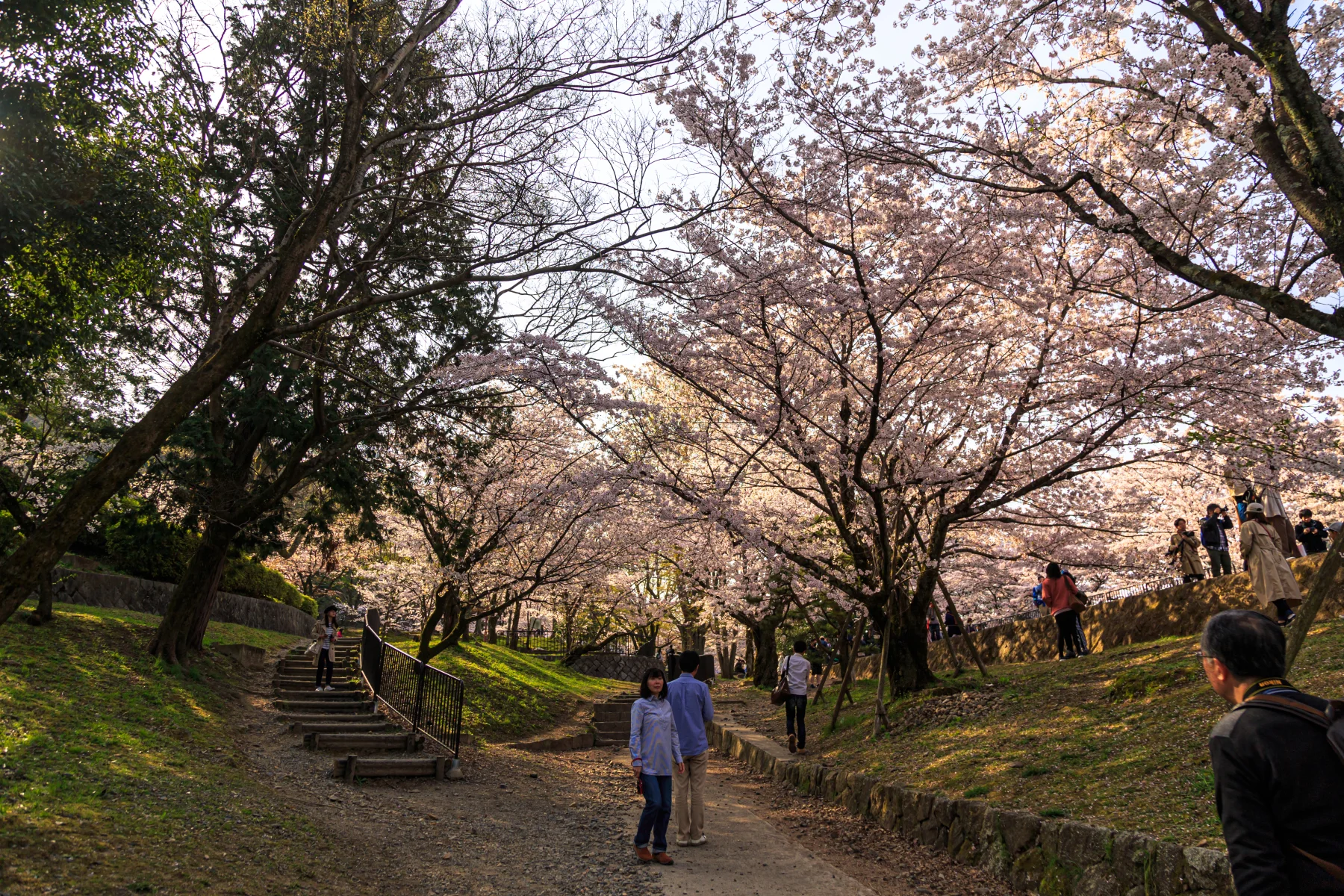
Plan three days of cherry blossom viewing around Kyoto's bloom calendar. Covering Keage to the Philosopher's Path, Togetsukyo Bridge to Tenryu-ji, early blooms at Kyoto Gyoen, late blossoms at Ninna-ji, night illuminations, transport and where to stay.
Which gate to use for early-spring Kyoto Gyoen
For the weeping cherries at the Konoe Residence Site, take the Karasuma underground line to Imadegawa Station and enter from the north side of Kyoto Gyoen—far closer than walking all the way up from Kyoto Station. Set your map pin directly to Konoe-tei Ato. The weeping cherries cluster in the park's north-western corner: start with the trees blooming beside the pond, then stroll to the Konoe-tei Ato rest area before deciding whether to continue south. Individual trees open at different speeds, so if the main grove still looks bare, check the early bloomers by the water.
Later in spring, head straight to Demizu-no-ogawa in the south-western corner. Ride the Karasuma Line to Marutamachi Station and take the south-west entrance straight to the stream and late-blooming Sato-zakura. There is also a weeping cherry tree near Demizu-no-ogawa that rewards early-spring visits, while double-flowered Sato-zakura bloom nearby later on. To connect Konoe-tei Ato with this corner, walk in stages along the park's western flank, stopping for water at the Nakadachiuri rest area along the way. If you only have an hour, pick either the early- or late-blooming end and leave the long central avenues for visitors with time to spare.
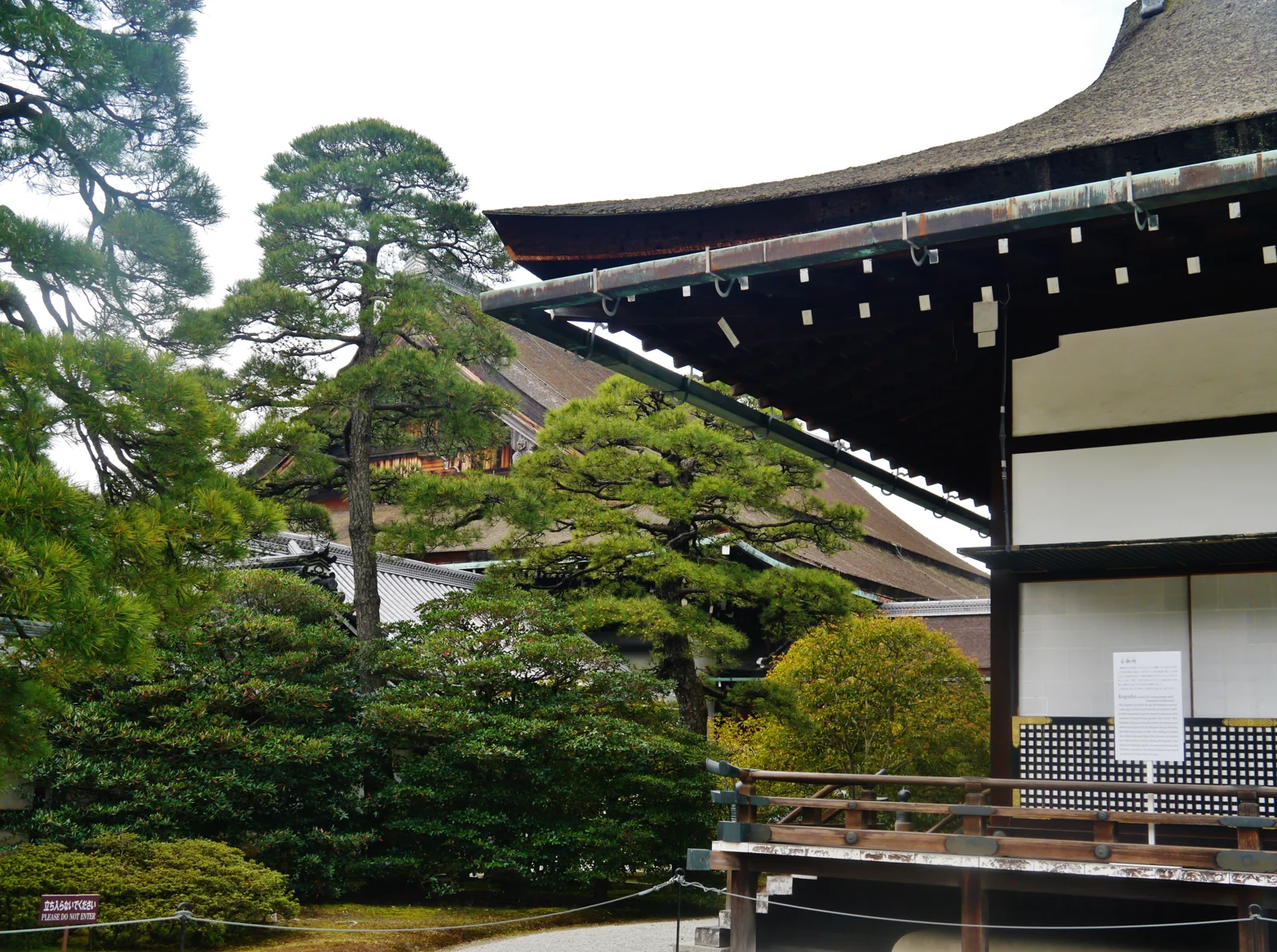
Kyoto Gyoen itself is free to enter, whereas the Kyoto Imperial Palace operates separate gates and visiting arrangements; if you are only here for the blossoms, walk straight into the park from either the north or south entrance. Its gravel paths take more effort than the tarmac pavements around the underground stations, so if you are travelling with young children or anyone using a walker, group nearby groves and rest areas together and exit back onto Karasuma-dori. The Ministry of the Environment permits picnics at the Nakadachiuri, Tominokoji and Konoe-tei Ato rest areas. If you plan to include the palace grounds as well, the Kyoto Imperial Palace and Sento Imperial Palace visitor guide covers each gate and booking method.
Northern Higashiyama: start at Keage and decide your next move at Okazaki
From Kyoto Station, take the Karasuma Line to Karasuma Oike and change to the Tozai Line for Keage. Leave via Exit 1 near the former Keage Incline and follow the slope down towards the lower stretch of the canal. This old railway once carried boats on wheeled cradles between the canal's upper and lower levels. In spring, a continuous row of trees stretches up the gradient over sleepers, ballast and an uneven incline. If you have a pushchair or shoes with slippery soles, follow the paved footpath along the edge towards Nanzen-ji and admire the blossoms from the side rather than walking up and down the tracks.
Nanzen-ji and Eikan-do sit between Keage and the Philosopher's Path. Coming from the south, you join the main canal path at Nyakuoji Bridge beside Kumano Nyakuoji Shrine. Follow the Lake Biwa Canal branch roughly two kilometres towards Ginkaku-ji until the northern end brings you out near Ginkakujimichi on Imadegawa-dori. Either direction works: starting at the south gives Keage and Nanzen-ji the quiet early-morning hours, while starting at the north lets you reach the Ginkaku-ji area first and finish at Keage Station or Okazaki. Factor bridge crossings, regrouping and photo stops into your walking estimates; if crowds build up and you want to turn back, use the wider parallel streets to reach a station.
From Shijo-Kawaramachi, take the Keihan train from Gion-Shijo to Demachiyanagi and transfer to City Bus 7 or 203 for Ginkakujimichi. Staying along the Karasuma Line? Ride the underground to Imadegawa and catch bus 203 bound for Ginkaku-ji from Karasuma-Imadegawa. Step off and head east from the Shirakawa-dori Imadegawa junction to find the canal and path entrance. Reaching Ginkaku-ji's main gate requires an uphill walk past that northern trailhead; if your day is strictly for blossoms, turn straight into the path and save the temple for another trip. When the northern stretch gets congested, enter from the south, walk halfway, and step off along Shirakawa-dori to catch a bus—skipping the bottlenecked shopping street outside Ginkaku-ji. If part of your group wants to browse shops while others take photos, agree to meet at a restaurant near the northern end and keep the small canal bridges clear for foot traffic.
Okazaki fits neatly into the second half of the day. Walk downhill northwards from Keage past the Lake Biwa Canal Museum into Okazaki, where bridges frame both the water and the blossom-lined banks. Near Heian Shrine's giant torii gate, you can stay with the blossoms along the canal or inside Shin'en Garden, or step indoors into one of the museums for a rest. Higashiyama underground station makes for an easy exit. If you already walked the Philosopher's Path in the morning, save the afternoon for Okazaki's museums or Shin'en Garden and finish at Higashiyama Station rather than retracing the same canal twice.
In light rain, short walks along the canal and bridges are still doable—just pick wider spots when pausing for photos. If the skies refuse to clear, the nearby Lake Biwa Canal Museum is free to enter (closed Mondays, or the following weekday when Monday is a public holiday). The Kyoto City KYOCERA Museum of Art typically opens 10:00–18:00, closed Mondays except on public holidays and substitute holidays. Check special exhibition slots before setting out if you plan to see a show; if you just want shelter during a downpour, pair a museum visit with the stretch of the Okazaki Canal leading back to Higashiyama Station.
Downhill from Kiyomizu-dera through Maruyama Park to Shirakawa
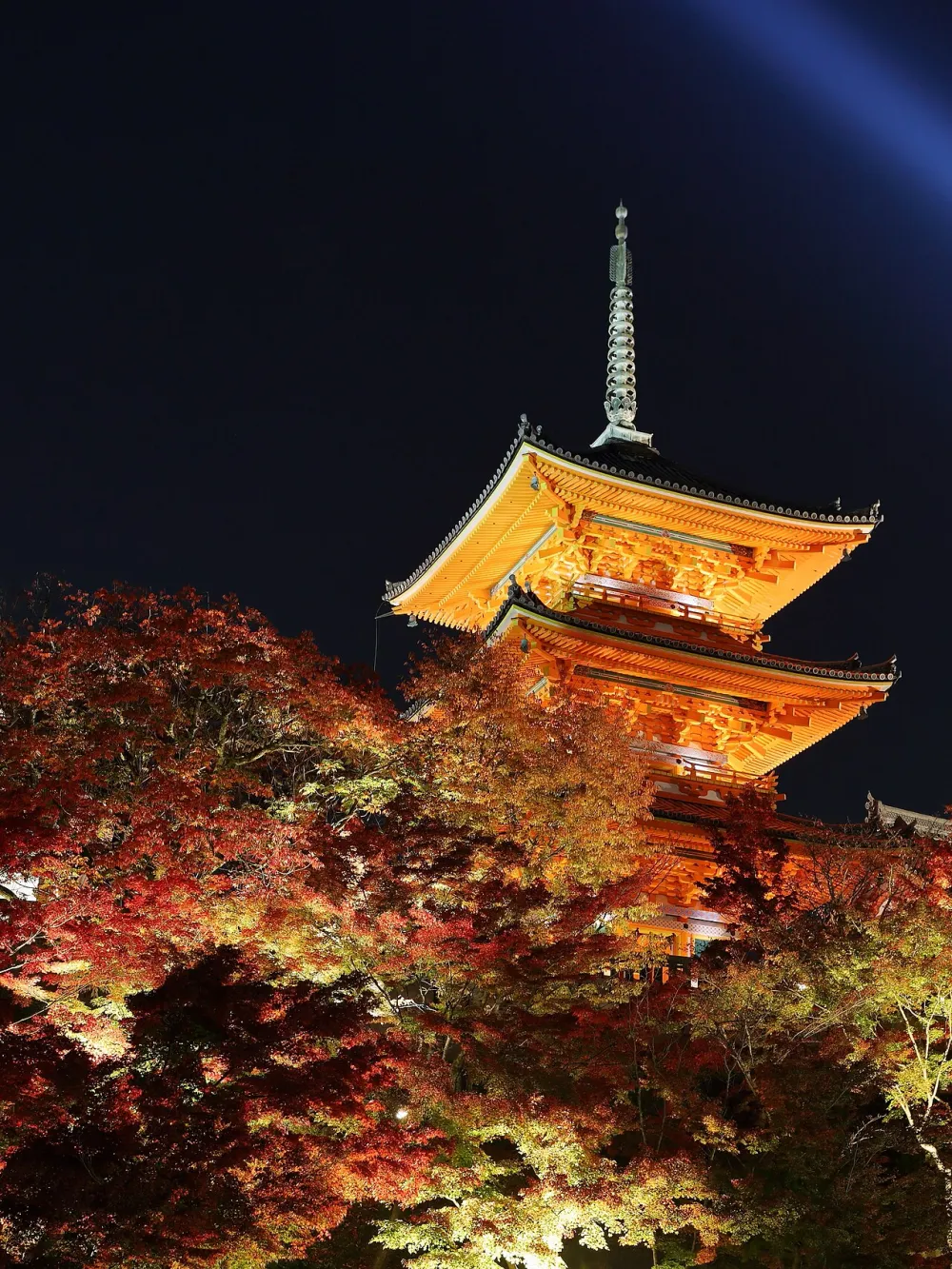
Kiyomizu-dera usually opens at 06:00 and stays open until 18:00 during spring. For morning photographs of cherry blossoms framing the main wooden stage, walk east along Gojo-dori from Keihan Kiyomizu-Gojo Station and climb via Chawan-zaka or Kiyomizu-zaka. City Bus 206 from Kyoto Station stops at Gojo-zaka, which the temple lists as roughly a 10-minute walk uphill, while the walk from Kiyomizu-Gojo Station takes around 25 minutes. Work backwards from opening time using that estimate, keeping your uphill walk separate from photography time at the top. Even when both Keihan stations look equally close to Kawaramachi, climbing from Kiyomizu-Gojo makes for a natural downhill sweep into Gion afterwards.
Descending from Kiyomizu-zaka, follow Sannenzaka and Ninenzaka past the Kodai-ji area towards Yasaka Shrine and Maruyama Park. Expect stone steps, queues outside shops and people stopping for photos; anyone in your group with bad knees should take the wider roads down to Higashioji-dori and enter the park via Yasaka Shrine instead. Maruyama Park's centrepiece is the large weeping cherry known as the Gion Night Cherry. If crowds pack around the fence by day, walk halfway round the park path—the full silhouette of its spreading crown reads much better from a little distance. Starting your outing here? Simply walk east along Shijo-dori from Gion-Shijo Station. For temple worship details or a stop at Otowa Waterfall, continue with our Kiyomizu-dera and Higashiyama walking guide.
To carry on to Gion Shirakawa in the afternoon, loop back north of Shijo-dori from Yasaka Shrine towards Shirakawa Minami-dori and Tatsumi Bridge, then exit towards the Kamo River. Shirakawa brings together water, stone bridges and traditional machiya townhouses; where the bank narrows, wait for friends away from the bridge and leave shopfronts and residential alleys clear. Fancy another stretch by the water? Cross to the west side of the Kamo River along Kiyamachi's Takase River, putting you right next to Shijo-Kawaramachi for dinner. Doing Kiyomizu-dera in the morning and Shirakawa in the afternoon keeps everything on one side of the river, letting you retreat straight into the city centre without an extra bus ride if rain sets in.
Visiting on a Saturday, Sunday or Japanese public holiday? Kyoto's municipal Sightseeing Limited Express buses run from Kyoto Station: EX101 serves Gojo-zaka, while EX100 continues to Gion, Okazaki and the Ginkaku-ji area. Note that Kiyomizu-michi is only served by EX100 heading back towards Kyoto Station, so get off at Gojo-zaka for Kiyomizu-dera. Fares are ¥500 for adults and ¥250 for children, paid at the front door upon boarding with an IC travel card or the Kyoto City Subway and Bus 1-Day Pass. For dawn arrivals at opening time, stick to trains and walking, keeping the express buses for daytime hops.
Morning in Arashiyama: which side of the river to start on
From Kyoto Station, take the JR Sagano Line to Saga-Arashiyama Station to visit Tenryu-ji on the north bank first or walk down the shopping street towards Togetsukyo Bridge. Staying around Karasuma or Kawaramachi? Ride the Hankyu Kyoto Line to Katsura and change to the Arashiyama Line, which drops you on the south side of Togetsukyo Bridge—an effortless route through Nakanoshima Park with river and mountain views before crossing to Tenryu-ji. To see both banks without doubling back over a crowded bridge, arrive by Hankyu and leave by JR, or vice versa. It works especially well if someone in your party wants to head back to the hotel early or catch an onward train.
In Arashiyama, the blossoms are part of a wider panorama of river and forested slopes. Step back a little from either bridgehead to fit water, cherry trees and hills into one frame with room to spare. If queues are already backing up on the north side of Togetsukyo Bridge, walk straight from the JR station to Tenryu-ji first and save the riverbank for later. Arriving by Hankyu? Stroll along the south bank until foot traffic across the bridge loosens up. With a pushchair, keep photo stops and child-swapping pauses clear of the bridge itself, where the pavement is narrowest.
Tenryu-ji's Sogenchi Pond Garden and Hyakkaen Garden share a single garden ticket, open 08:30–17:00 on standard days (last entry 16:50) at ¥500 for high school students and adults, ¥300 for primary and junior high pupils, and free for pre-schoolers. Head straight to Sogenchi Pond for the mountain reflections before judging how long to linger in Hyakkaen. Adding the main halls such as the Ohojo costs an extra ¥300 on top of the garden ticket, with earlier last entry at 16:30. If you arrive in the afternoon and want to sit inside looking out over the garden, visit the temple first and push snacks and riverbank walks to later. The Cloud Dragon painting in the Dharma Hall (Hatto) requires a separate ticket and follows its own opening calendar, so on a blossom-focused weekend half-day, stick to the gardens.
Even in brisk river winds, a half-day works neatly between Saga-Arashiyama Station and Tenryu-ji. If heavy rain wipes out views of the opposite hills and you are based near Kyoto Station, hop back on JR to Umekoji and swap to the Kyoto Railway Museum. Facing three days of passing showers? Give Arashiyama whichever half-day has clear views across the valley, and save Higashiyama for a break in the rain when you can link a few canalside walks.
Choosing between crimson weeping cherries and Omuro-zakura
Heian Shrine's Shin'en Garden comprises four sections—East, Middle, West and South. When the crimson weeping cherries peak, the South Garden showcases low-hanging branches up close, while the East Garden pairs blossoms with architecture across the pond. Walk through Okazaki Park from Tozai Line Higashiyama Station and enter via the main shrine precinct. From 1 March to 30 September, daytime hours are 08:30–18:00 (last entry 17:30); admission is ¥600 for adults, ¥300 for primary and junior high students, and free for kindergarten-age children and under. The outer shrine grounds open earlier, leaving time for a gentle stroll along the Okazaki Canal before the garden gates open at 08:30.
The late-blooming crimson weeping cherries inside Shin'en Garden and the Yoshino trees along the Okazaki Canal often peak at different times. Check both Heian Shrine and Okazaki Canal separately in the Sakura Dayori report: if the garden is in full bloom while the canal is already shedding petals, buying a garden ticket pays off. Conversely, if the canal banks are lined with peak blooms and the garden is still behind, stay outside on the bridges and paths. Walking back from the museums in the afternoon still takes you past part of the canal, letting older travellers enjoy the blossoms without walking the entire walled loop.
Ninna-ji is famous for its late-blooming, low-crowned Omuro-zakura grove just north-west of the Middle Gate. Walkways let you view the dense clusters at eye level and frame them against the five-storey pagoda behind. Check Ninna-ji's own Omuro-zakura updates to time your visit. Its website lists special Flower Festival mountain admission at ¥800 for adults and free for high school students and under; the Goten Palace and Garden are also ¥800 for adults, so look for the Flower Festival gate and ticket booth when you are here for the grove. According to the temple FAQ, Omuro-zakura viewing runs 08:30–17:30 (last entry 17:00), picnicking beneath the trees is prohibited, and there is no night illumination of the grove.
From Kyoto Station, take the JR Sagano Line to Hanazono Station and walk roughly 15 minutes. Coming from western Kyoto, ride the Randen Kitano Line to Omuro-Ninnaji Station, about a three-minute walk from the gate. Combining Arashiyama and Ninna-ji when both are blooming? Take the Randen train from Arashiyama and change to the Kitano Line at Katabiranotsuji. On a sunny Flower Festival weekend, arriving by rail keeps your schedule in your own hands rather than sitting in traffic on a bus from Kyoto Station. If you also want to see Kinkaku-ji, schedule Ninna-ji admission and lunch first before heading east in the afternoon. For the Goten Palace painted sliding doors and main temple buildings, use our Ninna-ji half-day visiting route to decide what to include.
Half a day at Daigo-ji: pick your sub-precincts first
Daigo-ji sits by Daigo Station on the Tozai Line—the same underground line as Keage, though several stops further south-east. Ride directly from Karasuma Oike on a train bound for Rokujizo, take Exit 2 at Daigo Station and follow the temple's posted 10-minute walk; from Kyoto Station, take the JR Biwako or Kosei Line to Yamashina and transfer to the underground. Give Daigo-ji a dedicated half-day starting in lower Shimo-Daigo; with children or older companions, Sanboin and part of the temple approach are often plenty. If you want to visit Keage on the same day, keep one of the two stops brief rather than trekking deep into both grounds and rushing back for lunch.
Toyotomi Hideyoshi famously staged the 1598 Daigo-no-Hanami blossom-viewing banquet here. Today, Sanboin pairs garden vistas with that history, the Garan complex holds the five-storey pagoda, and the Reihokan Museum houses its own galleries. Under spring rates running from 20 March to the third Sunday in April, a three-area combined pass is ¥1,800 for adults and ¥1,300 for junior and senior high students, while single-area tickets cost ¥800 for adults and ¥600 for junior and senior high students (check the current Japanese official page for exact pricing). Buying just Sanboin gives you plenty of gardens and blossoms; covering all three paid areas takes around 90 minutes according to the temple, plus extra time for queues, gates and photos during peak bloom.
Heading up to Kami-Daigo requires signing the mountain register at the Nyonindo trailhead at the base, and the temple requires hikers to return down by 17:00. With older relatives, in wet weather, or simply when you are focused on cherry blossoms, spend your time in Shimo-Daigo where bloom status is tracked. If morning gusts make exposed canal paths unpleasant, Sanboin and Reihokan still offer sheltered gardens, architecture and temple treasures. On the return leg, change from the Tozai Line to JR at Yamashina or stay on until Karasuma Oike; if you want an afternoon break at the hotel, pick your favourite area right by the ticket gate and save cross-city blossom hopping for tomorrow.
Nakaragi-no-Michi for a northern half-day, and the Botanical Gardens for drizzle
Nakaragi-no-Michi is the riverside path along the Kamo River just west of the Kyoto Botanical Gardens, where crimson weeping cherries arch overhead to form a tunnel. Take the Karasuma Line to Kitaoji Station, walk east to Kitaoji Bridge, follow the eastern bank northwards to Kitayama Ohashi Bridge, then turn east to Kitayama Station—or walk it in reverse. Having an underground station at both ends removes any need to double back. If anyone in your group dislikes strong sun or riverside wind, shorten the plan to the Botanical Gardens plus a brief riverside stretch, continuing only if the blossoms pull you forward.
The Kyoto Botanical Gardens' Kitayama Gate connects straight to Exit 3 of Kitayama underground station, while the main gate is roughly a 10-minute walk from Exit 3 of Kitaoji Station. Standard hours are 09:00–17:00 (last entry 16:00), with the Conservatory open 10:00–16:00 (last entry 15:30). Day tickets including the Conservatory cost ¥500 for adults, ¥250 for high school students and visitors aged 65 and over, and are free for junior high school students and under. On a rainy day, visit the Conservatory before 15:00 and decide afterwards whether the weather allows a riverside walk. With dozens of cherry varieties inside the grounds, check the gardens' own bloom board and pick the nearest section on the map rather than pushing a pushchair needlessly over wet gravel.
Continuing down to Demachiyanagi works on paper, though a brisk wind along the Kamo River turns the walk from Kitayama to the Kamogawa Delta into a longer trek than the map suggests. Pairing Kyoto Gyoen with northern Kyoto is straightforward on the Karasuma Line between Imadegawa and Kitayama: tackle whichever section is blooming best in the morning, eat lunch near a station, and stroll another stretch of riverbank if energy holds. If you are only staying one night and central Kyoto is already at peak bloom, save Nakaragi-no-Michi for a future trip rather than burning travel time between Higashiyama and the north.
How to structure three days so you can swap routes around the weather
If only one morning of a three-day stay brings blue skies, give it to your top outdoor priority. For low-angle blossoms sweeping up an incline, start at Keage, follow the Philosopher's Path through the morning and save Okazaki's museums for the afternoon. For bridges framed against distant hills, take Arashiyama early and switch districts after lunch. Both places reward dawn starts far more than midday visits, so avoid cramming them into the same day. Keep day three for whichever spot leads the bloom chart—Kyoto Gyoen, Nakaragi-no-Michi or Ninna-ji—since each sits near its own train or underground line. Agree on a clear meeting point with companions so swapping days on the fly never splits the group.
If you have a night viewing planned at Kiyomizu-dera, pair that morning with an easy return-to-hotel route such as Kyoto Gyoen or west of Kawaramachi. Have dinner in Higashiyama before dusk, focus your evening energy on one illuminated stretch, and walk out to a Keihan station afterwards. Kiyomizu-dera's published 2026 spring night schedule ran from 27 March to 5 April (last entry 21:00, closing 21:30, with no advance booking required that year); wait for the temple to confirm 2027 dates before locking them in. Maruyama Park's weeping cherry illumination and Heian Shrine's evening events run on separate calendars and ticketing, so stick to one ticketed venue per evening and keep daytime plans flexible for rain shifts.
On a peak-bloom weekend, check the city's Kyoto Tourism Comfort Map for the north end of the Philosopher's Path, Okazaki Park and the north side of Togetsukyo Bridge. Its crowd forecasts and live feeds from select spots help you choose which direction to enter from—or when to skip ahead to the next stop. When two candidate areas are equally in bloom, families with children are usually better off picking the one with fewer transfers and rest spots close to the station. If a thick stream of visitors is funnelled towards a single bridge while you just want to see the trees, take a wider parallel street to the next open entrance instead of waiting shoulder-to-shoulder for a photo gap.
In driving rain and strong spring gusts, shift exposed stretches around Kyoto Gyoen's perimeter, Togetsukyo Bridge and long open riverbanks off that afternoon's plan. Central Kyoto stations keep wet-weather travel simple via the underground between Kyoto Station, Shijo and Karasuma Oike. Pack a microfibre lens cloth and avoid the narrowest pinch points of the Philosopher's Path when carrying a large umbrella. After a shower, look for fallen petals along paved paths, choosing spots with railings or wide verges for close-ups. If paths close or water levels rise, stick to the pavements along the road bridges instead.
Where to stay: Karasuma Oike, Gion or Kyoto Station
Karasuma Oike sits at the crossroads of the Karasuma and Tozai underground lines, putting morning trains to Kyoto Gyoen, Kitayama or Keage right on your doorstep—and letting you reach Okazaki on rainy days without crossing the Kamo River. If you plan to cover multiple districts over two or more nights, book here first. Staying near Shijo-Karasuma adds Hankyu Railway access, handy for using one base for both Higashiyama and Arashiyama; just compare exact walking times to Shijo or Karasuma stations, as a quick dash down the nearest stair entrance at dawn feels very different from wheeling suitcases to a lift exit. See our Kyoto Karasuma neighbourhood stay guide for specifics.
The eastern bank of the Kamo River between Gion-Shijo and Sanjo-Keihan works brilliantly for early-morning photography in Shirakawa or late-night walks home. If you are stringing together Kiyomizu-dera, Maruyama Park and Okazaki, staying around Sanjo lets you hop on the underground for Keage and Higashiyama as well as Keihan trains to Kiyomizu-Gojo. Plot your preferred dinner spots, river crossings and dawn starting gates on one map before choosing. Paying extra per night makes real sense for photographers if walking replaces early taxis and gives you quiet streets at dawn and dusk; for daytime-only blossom viewing, Karasuma or Kyoto Station handles transit just as smoothly.
Kyoto Station suits travellers with bulky luggage, early Shinkansen departures, or dawn JR rides towards Arashiyama and Ninna-ji. City buses fan out from the north side, whereas starting from the Hachijo Exit on the south side means factoring in the walk through the concourse, platform transfers and hotel bag drops. If two travellers are arriving and departing through Kyoto Station with only one day set aside for Higashiyama, keeping one room here beats hauling bags across town to Gion. Coming back from Higashiyama at night, walk to an underground or rail station rather than joining the long queues at the bus stops.
For direct station connections, compare Hotel Okura Kyoto (underground) and Hotel Granvia Kyoto (JR). Hotel Okura connects at basement level B2 directly to Exit 3 of Kyoto Shiyakusho-mae Station, putting Tozai Line trains for Okazaki and Keage steps away, while still keeping the walk home across Sanjo Ohashi Bridge from the eastern riverbanks simple. Hotel Granvia sits right inside Kyoto Station—just take the escalator immediately right of the JR Central Ticket Gate up to the second-floor lobby, drop your bags on arrival and step back down for JR trains to Arashiyama. On a single-night stop with an early morning Shinkansen, direct Kyoto Station access saves a cross-town transfer after check-out; over two or three nights focused on Higashiyama, Kyoto Shiyakusho-mae saves effort on every return trip.
From March 2026, Kyoto applies a five-tier accommodation tax calculated per person, per night on the room-only rate: ¥200 under ¥6,000; ¥400 from ¥6,000 to under ¥20,000; ¥1,000 from ¥20,000 to under ¥50,000; ¥4,000 from ¥50,000 to under ¥100,000; and ¥10,000 for ¥100,000 and above. For example, two guests sharing a room at a ¥18,000 room-only rate per person per night for two nights pay ¥1,600 in total tax. When comparing hotels, separate the base rate, cleaning or meal add-ons and local accommodation tax paid at the property, and note free-cancellation deadlines in your calendar so you can still adjust dates once blossom forecasts firm up.
Passes, picnics and your final evening stop
A single ride within Kyoto's flat-fare City Bus zone is ¥230 for adults, while the Kyoto City Subway and Bus 1-Day Pass costs ¥1,100 for adults and ¥550 for children—covering municipal underground lines, City Buses, select private bus routes and the Sightseeing Limited Express buses. If your day is simply Kyoto Station to Keage, walking all the way down to Higashiyama Station and riding back, tapping an IC card per journey usually costs less. The pass only pays off once you combine multiple legs, such as riding EX100 to Ginkaku-ji followed by buses or underground trains up to Kitayama and back to your hotel. JR, Hankyu, Randen and Keihan railways are not included, so on an Arashiyama day pay each leg by IC card instead of hunting down a pass counter.
For blossom picnics, pick up bento boxes at the food halls beneath Kyoto Station or Shijo department stores before heading to Kyoto Gyoen's designated rest areas. Sandwiches and onigiri suit travellers adjusting routes on the hoof, while soupy hot dishes are better saved for a sit-down meal. Eating beside the Kamo River? Pick a wide stretch clear of the main walking path and take all rubbish away with you. Along the Philosopher's Path, keep walking while viewing and save lunch for Ginkaku-ji, Nanzen-ji or Okazaki. If you have a lunch booking on peak-bloom day, check the walk from the canal exit to the restaurant door beforehand so you do not schedule your reservation for the exact minute you finish backtracking.
Left with just one morning before leaving Kyoto? Store your luggage at Kyoto Station and take the Karasuma Line north: in late March head to Imadegawa Station for Konoe-tei Ato, or in mid-April ride straight to Kitayama Station where the Botanical Gardens' Kitayama Gate requires almost no navigation. Staying on the same underground line makes catching a fixed-time Shinkansen straightforward. Build in generous buffer time to walk back to the platform, collect your bags and pick up lunch, keeping your final half-hour of blossom viewing within easy sight of your return station entrance.
A few useful answers
Which dates should I book for Kyoto cherry blossoms in 2027?
Aim for late March to early April for rows of Yoshino cherry trees in the city centre. The Kyoto Local Meteorological Observatory's average full-bloom date is 4 April, while in 2026 peak bloom fell on 30 March. Book refundable rooms with room to shift dates, then use Kyoto's spot-by-spot blossom reports once you arrive to decide which district to visit each day.
If I only have one day in Kyoto, should I pick the Philosopher's Path or Arashiyama?
For first-time visitors, if both areas are at a similar stage, choose Keage, the Philosopher's Path and Okazaki for the easiest underground access and flexibility. Pick Arashiyama when blossom cover and visibility across the river and hills are both strong. Covering one area properly is far more enjoyable than rushing between both in a single day.
Are there still cherry blossoms to see in mid-April?
Head to Ninna-ji for the Omuro-zakura, Heian Shrine's Shin'en Garden for double-flowered crimson weeping cherries, or the Demizu-no-ogawa stream area of Kyoto Gyoen for late-blooming Sato-zakura. Each site updates separately, so pick whichever is looking best and fits your route.
How should I adjust a Higashiyama cherry blossom itinerary if it rains?
Walk a stretch of the Okazaki Canal in light rain before ducking into the Lake Biwa Canal Museum or the Kyoto City KYOCERA Museum of Art. As both museums normally close on Mondays, keep Kyoto Botanical Gardens and its conservatory—connected directly to Kitayama Station—as your Monday wet-weather backup.
When will Kiyomizu-dera open for spring night viewing in 2027?
The temple currently lists its 2026 spring schedule (27 March to 5 April). Wait for the 2027 dates to be announced on Kiyomizu-dera's special night-viewing page before locking in your evening plans. Daytime admission normally begins at 06:00.
Official information and references
Sources used in this guide.
- Kyoto Local Meteorological Observatory: Sample Tree Averages and 2026 Observations
- Kyoto City Tourism Association: Cherry Blossom Forecasts by Location
- Kyoto City Tourism Association: Crowd Levels at Philosopher's Path, Okazaki and Arashiyama
- Ministry of the Environment Japan: Kyoto Gyoen Blossom Spots and Picnic Rest Areas
- Kyoto Municipal Transportation Bureau: Keage Underground Station Map and Exits
- Kyoto City Tourism Association: Philosopher's Path Route and Trail Details
- Kyoto City Tourism Association: Access to Ginkaku-ji and the Philosopher's Path
- Lake Biwa Canal Museum: Okazaki and Keage Walking Map
- Lake Biwa Canal Museum: Opening Hours and Free Admission Information
- Kyoto City KYOCERA Museum of Art: Opening Hours and Closed Days
- Kiyomizu-dera: Standard Opening Hours
- Kiyomizu-dera: Uphill Walking Routes and Bus Stops
- Kiyomizu-dera: Spring Special Night Viewing
- Kyoto City Tourism Association: Maruyama Park Weeping Cherry Tree
- Kyoto City Tourism Association: Gion Shirakawa and Shinbashi Preservation District
- Kyoto Municipal Transportation Bureau: Sightseeing Limited Express Stops, Operating Days and 1-Day Pass Notice
- Kyoto Municipal Transportation Bureau: Standard City Bus and Sightseeing Limited Express Fares and Boarding Guide
- Kyoto City Tourism Association: Arashiyama Togetsukyo Bridge Blossom Viewing Spots and Access
- Hankyu Railway: Arashiyama Station and Katsura-bound Timetables
- Tenryu-ji: Garden, Halls and Dharma Hall Admission Fees and Hours
- Heian Shrine: Shin'en Garden Opening Hours and Admission Fees
- Heian Shrine: Worship and Sightseeing FAQs
- Ninna-ji: Omuro-zakura Tickets, Hours and Entry Rules
- Ninna-ji: Access via JR and Randen Tram
- Daigo-ji: Spring Cherry Blossom Admission and Kami-Daigo Mountain Entry
- Daigo-ji: Official Underground Station Exit and Walking Route
- Daigo-ji: Historical Records of the 1598 Daigo Blossom Viewing
- Kyoto City Tourism Association: Nakaragi-no-Michi Blossom Status and Location
- Kyoto Botanical Gardens: Underground Exit, Admission Fees and Conservatory Hours
- City of Kyoto: Accommodation Tax Tiers Effective March 2026
- Hotel Okura Kyoto: Underground Entrance from Kyoto Shiyakusho-mae Station
- Hotel Granvia Kyoto: Route from JR Kyoto Station to the Lobby