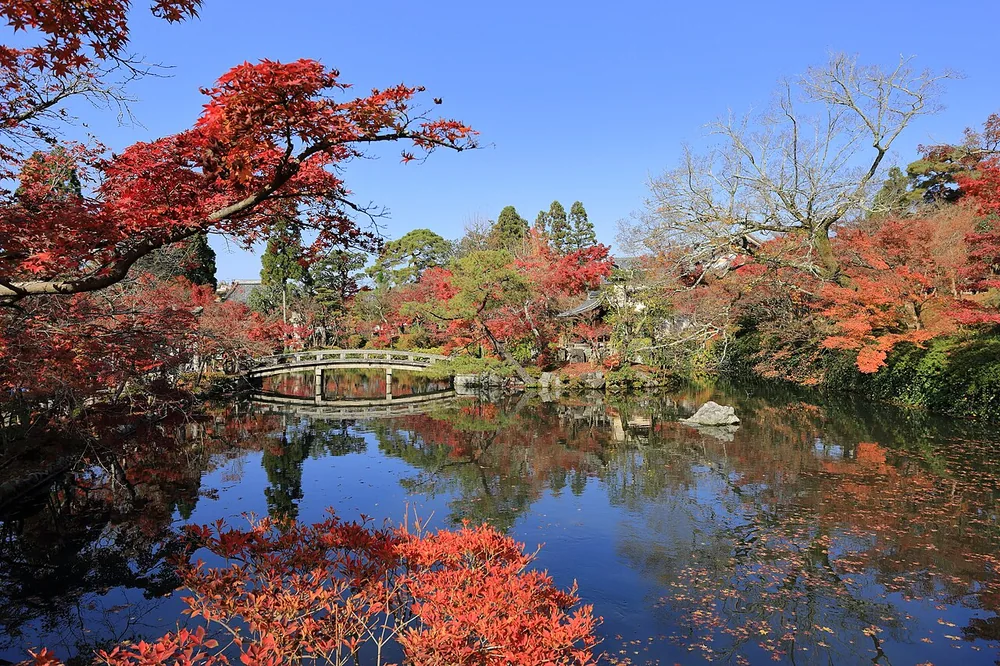
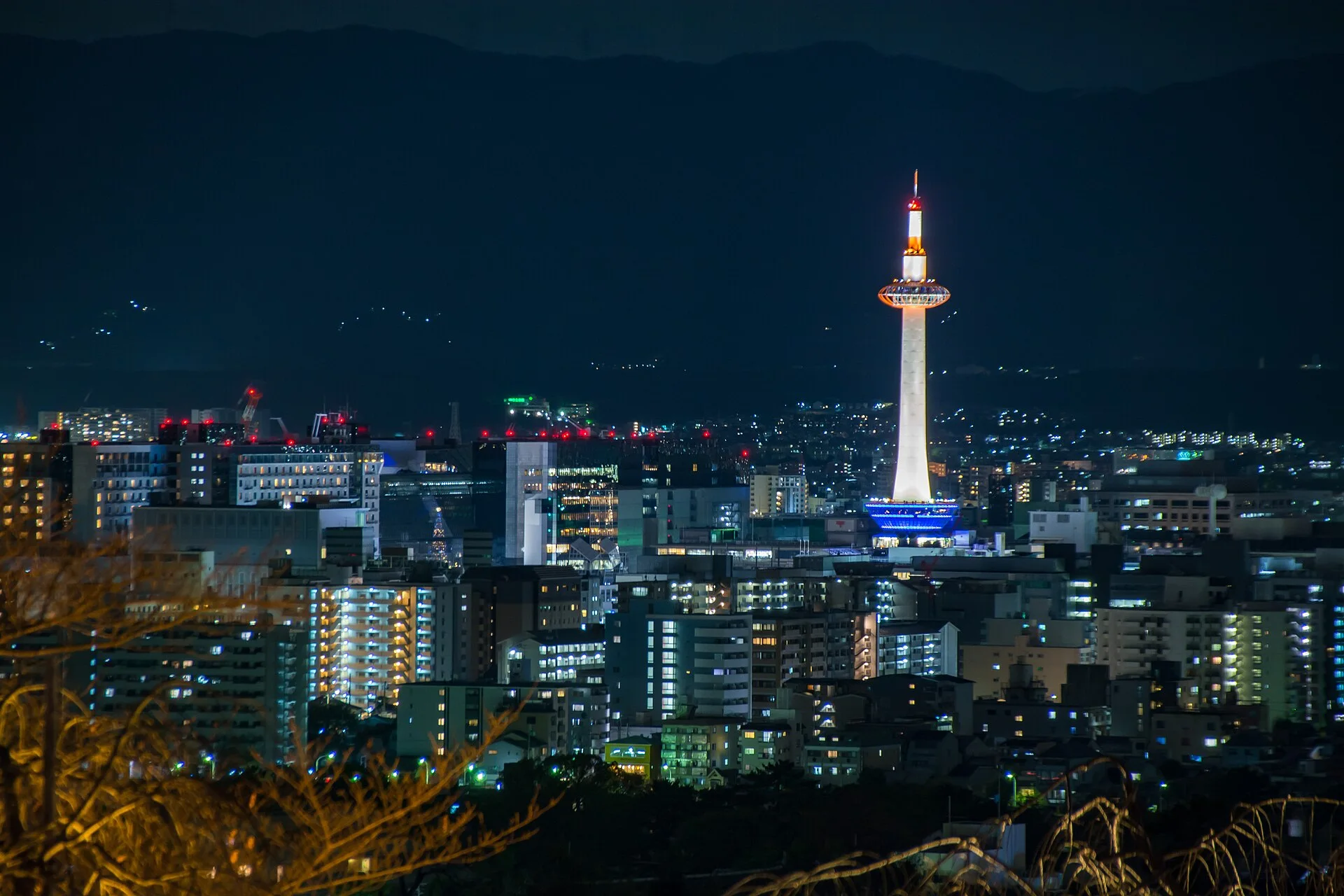
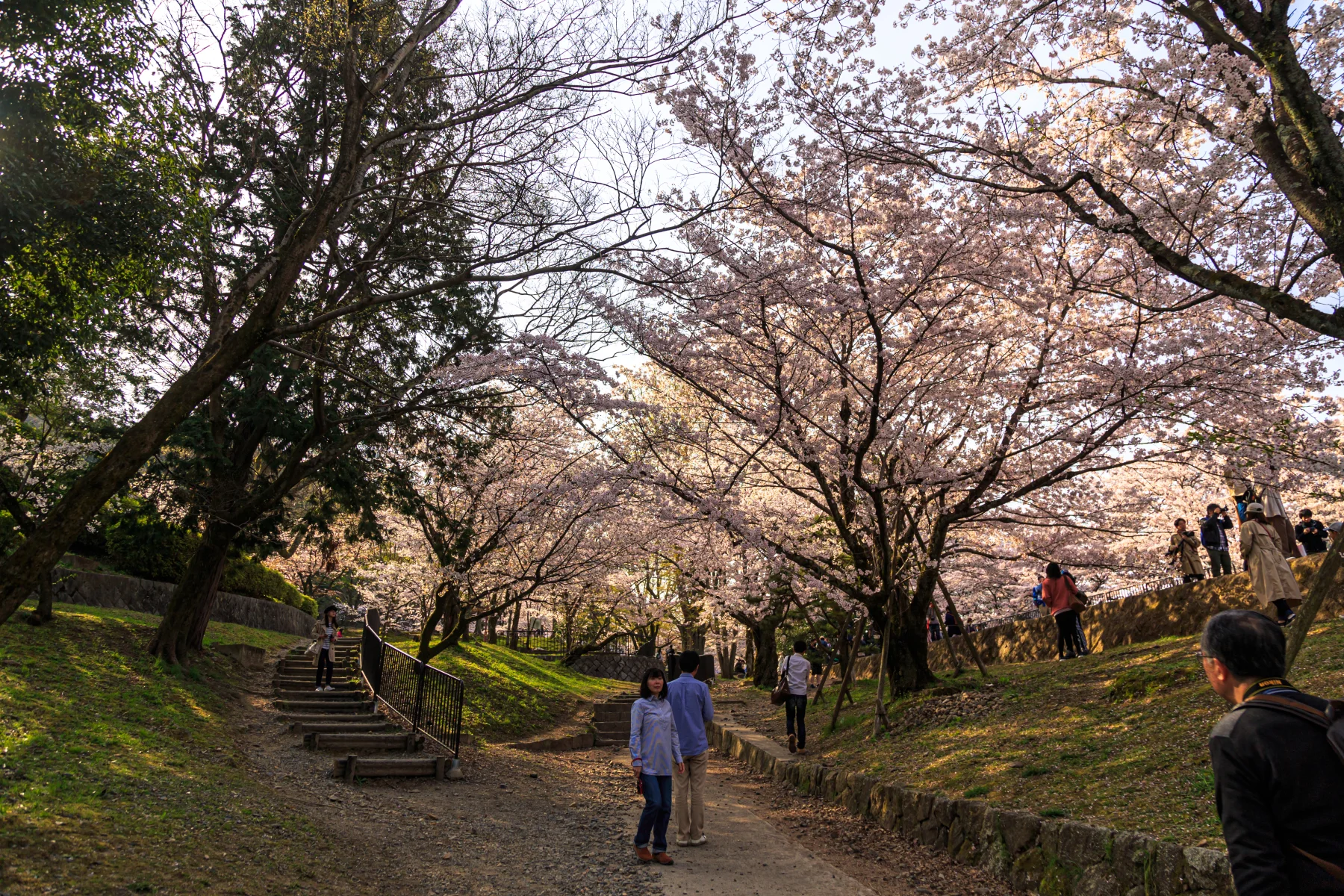
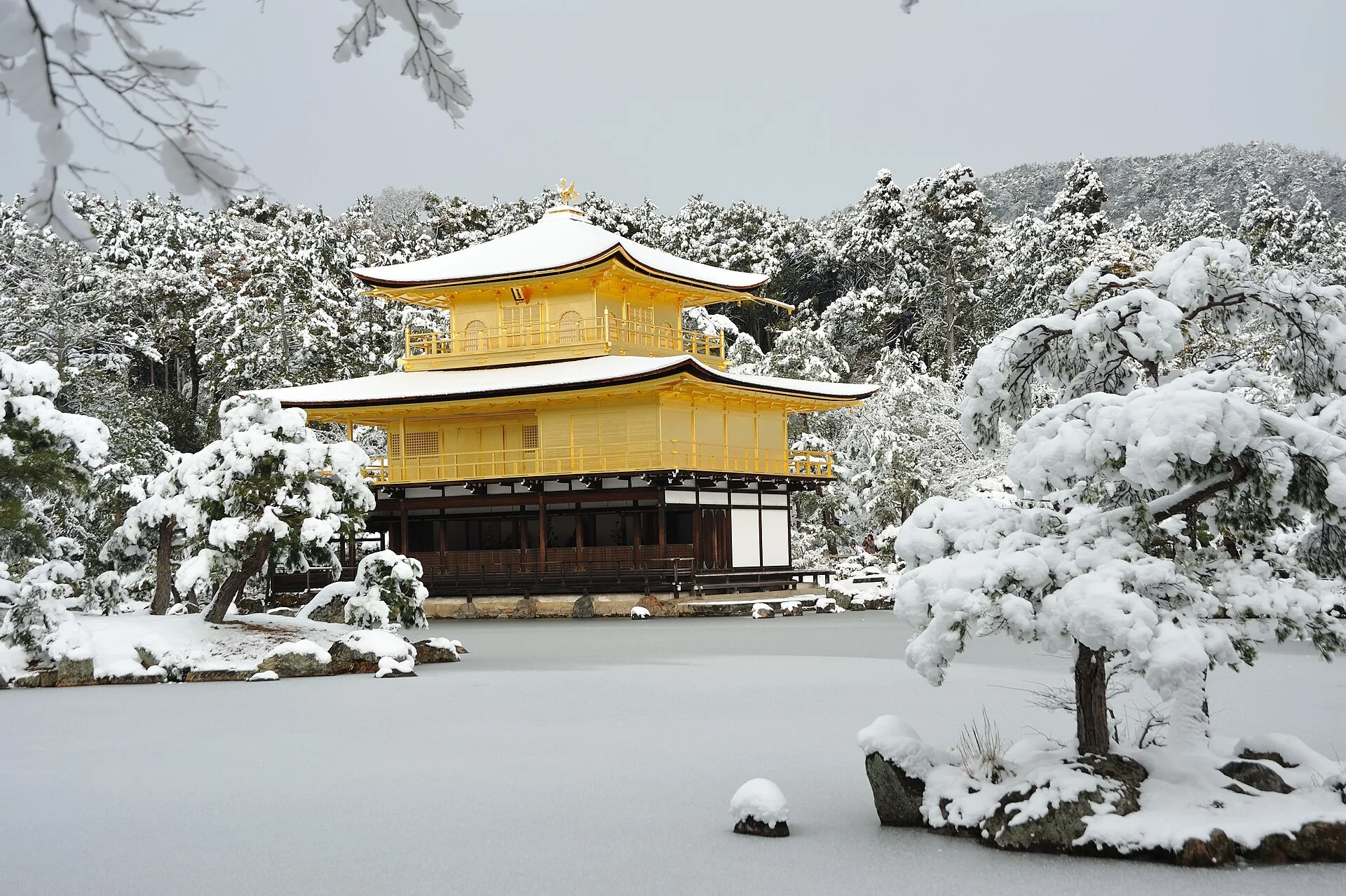
Shinnyo-do's 2026 autumn foliage season runs from 18 November to 7 December, with ¥500 grounds admission plus ¥500 for special access to the Main Hall and Shoin; evening visits are exclusive JR Central chartered sessions requiring advance online booking. The temple recommends alighting at Kinrin Shako-mae stop for an easy 8-minute walk, then strolling downhill to pair with Konkai-Komyo-ji's unreserved daytime and evening illuminations in a single afternoon.
- Region & Focus
- KyotoWhen to visit
- Reading Scope
- 14 min read · 8 chapters · 4 Q&As
- Official Verification
- 9 official sources checkedUpdated 20 November 2026
- Key Topics
- SeasonsItinerariesKyoto, Osaka & Kansai
Chapter Route Map (tap any stop)
- Two Separate Tickets: Daytime vs Evening Foliage Viewing
- Alight at Kinrin Shako-mae—Do Not Let the Stop Name Trick You into a Steep Climb
- Main Hall, Shoin, and Three-Storey Pagoda: What Each Ticket Unlocks
- Downhill to Kurodani: Konkai-Komyo-ji's Daytime and Evening Tickets
- Fitting Kurodani into a Day in Kyoto
- Four Ways to Tackle Kurodani by Travel Style
- Late Season and Off-Peak: Why Kurodani Rewards a Visit Beyond Peak Maples
- Six Checks Before You Set Off
- Quick Q&A
Shinnyo-do splits its autumn foliage season into two completely distinct daytime and evening experiences, each with its own ticket. During the day, from 18 November to 7 December, entry to the temple grounds costs ¥500, with an additional ¥500 to view the Kangyo Mandala inside the Main Hall and Shoin study (¥1,000 in total; special viewing is free for junior high school students and younger). In the evening, from 17:30 to 19:30 through 8 December, JR Central runs a privately chartered special viewing that must be booked online in advance—no evening tickets are sold at the gate. On the official access page, the temple puts its best time-saving tip right at the top: the closest bus stop, Shinnyo-do-mae, requires climbing a steep hill, so take the bus to Kinrin Shako-mae on Shirakawa-dori instead for a gentle 8-minute walk. Afterwards, it is an easy downhill stroll of roughly 330 metres as the crow flies to Konkai-Komyo-ji, where both daytime and evening autumn viewings in 2026 require no booking and include evening illuminations with live traditional Japanese music. Spend around ¥3,000 in admission fees in total and you can comfortably explore both historic temples in a single afternoon and evening.
Two Separate Tickets: Daytime vs Evening Foliage Viewing
Shinnyo-do sets its 2026 autumn foliage season from 18 November to 7 December. Throughout this period, entering the grounds requires a ¥500 admission fee, with extended opening hours starting earlier at 8:30 and closing at 16:30. Access to the Main Hall and Shoin study for the special Kangyo Mandala exhibition costs an extra ¥500, bringing the combined total to ¥1,000 (special viewing is free for junior high school students and younger). Outside the autumn foliage season, regular admission is ¥500 for adults and high school students, free for junior high school students and younger, with ticket sales ending at 15:45. These prices reflect the August 2026 revision—older blog posts still quoting ¥300 are out of date, so budget with the current rates to avoid surprises at the gate.
The evening session operates under an entirely different system. Every evening from 17:30 to 19:30 through 8 December (last entry at 19:00), JR Central hosts an exclusive chartered special viewing. Because it is a private charter, no walk-up tickets are available at the temple gate; you must reserve your slot beforehand on the JR Central booking page, and popular weekend dates sell out fast. Daytime visits require no reservation and let you buy tickets on arrival—meaning you can shift your plans around the weather forecast—whereas the evening charter locks you into a fixed date. Because their booking rules diverge from the start, deciding which day goes to daytime viewing and which goes to evening illuminations shapes your whole itinerary.
Before buying tickets, compare what each session actually covers. The ¥1,000 daytime pairing includes the maple-lined approach, the inner sanctuaries (Naijin and Nainaijin) of the Main Hall, and the Kangyo Mandala displayed in the Shoin, taking roughly an hour at a relaxed pace. The two-hour evening session focuses on illuminated maples framing the Main Hall, casting shadows and colours quite unlike daylight. Travellers keen on both can tour the Main Hall and Shoin in the late afternoon and return after dark for the lights without retracing identical steps, then walk downhill towards Kurodani afterwards to link up with neighbouring temples.
Looking back at the previous year's calendar clarifies the temple's scheduling pattern. In autumn 2025, Shinnyo-do held an early special viewing from 1 to 17 November, followed separately by the Kangyo Mandala and temple treasures exhibition during the 18 November to 7 December foliage window. The temple routinely separates the lead-up from the peak two weeks of crimson leaves. In 2026, planning your visit within the official foliage window starting 18 November lets you see both the interior treasures and the hillside maples in one go.
Both the first and second halves of the foliage season have their loyal fans. During the opening week from 18 to 24 November, the canopies remain thick with leaves, showing off vibrant gradients of crimson, amber, and green. From 25 November to 7 December, fallen leaves carpet the approach and stone steps, creating a striking contrast of scattered red maples against green moss in crisp morning sunlight. Because a single spell of wind and rain can accelerate leaf fall, check the Kyoto weather forecast the night before and shift your daytime visit by a day if needed.
Arriving at the right hour transforms what you see. At the 8:30 opening bell, the approach and the plaza before the Main Hall are still quiet, and low morning sun slants cleanly through the leaves—well worth setting an early alarm for photographers. After 10:00, tour groups and coaches begin arriving and foot traffic along the approach slows to a crawl. The evening charter avoids that bottleneck altogether: JR Central caps attendance per session, keeping the atmosphere far calmer than midday peak hours and explaining why many visitors gladly pay for both tickets.
Departure timing also differs by ticket. Daytime visitors leave whenever they please, whereas evening charter guests must follow scheduled check-in and clearing times—read the full arrival instructions on your JR Central booking confirmation before closing the window. Scheduling the evening charter as your final stop of the day works best, leaving plenty of time for an unhurried dinner and journey back into central Kyoto after the 19:30 finish rather than rushing through the middle of your evening.
Pairing the two ticket types smartly leaves room for Kyoto's changeable weather. Daytime entry remains flexible across the entire foliage period, while the evening charter is fixed once booked. The smoothest strategy is to lock in your evening charter date early, then wait until two days before arrival to pick your daytime slot based on live foliage reports and the forecast.
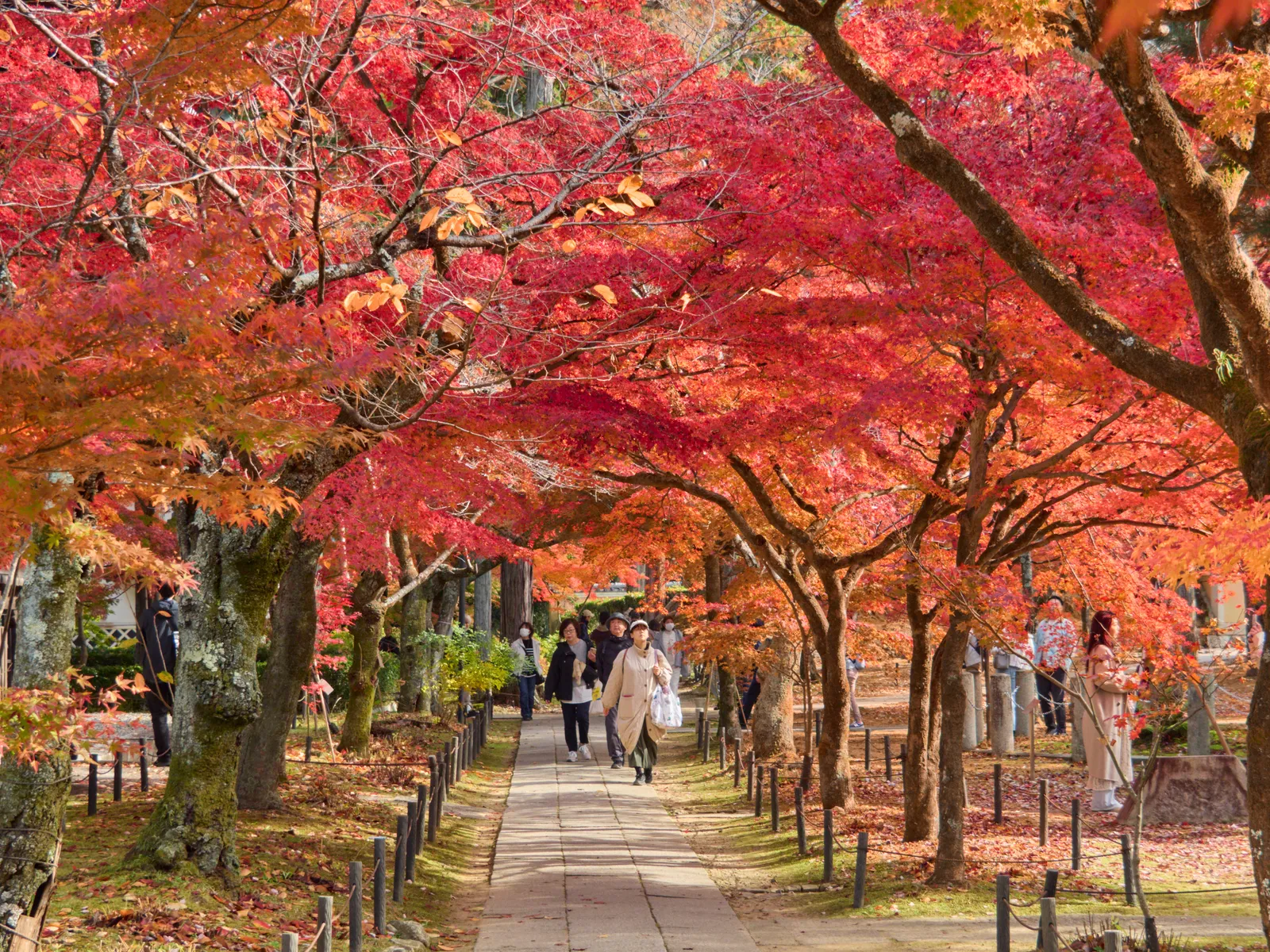
Shinnyo-do's 2026 autumn foliage season runs from 18 November to 7 December, with ¥500 grounds admission plus ¥500 for special access to the Main Hall and Shoin; evening visits are exclusive JR Central chartered sessions requiring advance online booking. The temple recommends alighting at Kinrin Shako-mae stop for an easy 8-minute walk, then strolling downhill to pair with Konkai-Komyo-ji's unreserved daytime and evening illuminations in a single afternoon.
Alight at Kinrin Shako-mae—Do Not Let the Stop Name Trick You into a Steep Climb
Shinnyo-do's official access page places its most practical piece of advice on the very first line: although the nearest bus stop is named 'Shinnyo-do-mae', getting off there leaves you with a steep uphill climb, so the temple explicitly recommends alighting at Kinrin Shako-mae on Shirakawa-dori instead for an easy 8-minute walk. That single choice dictates how comfortable your approach feels. Take the wrong stop and anyone pushing a buggy or walking with older relatives faces a tough climb both ways—and even fit solo travellers will notice the difference once legs tire later in the day.
Official bus journey times from Kyoto's main transport hubs make it simple to pick a direct route from your hotel. From Kyoto Station, City Bus 17 or Express 100 takes around 40 minutes with no transfers. From Shijo-Kawaramachi, Bus 17 takes about 21 minutes and Bus 5 about 25 minutes—ideal after brunch. From Shijo-Keihan-mae, Loop Bus 203 takes roughly 25 minutes; from Sanjo-Keihan-mae, Bus 5 takes around 15 minutes; and from Demachiyanagi Station, Buses 17, Loop 203, or Express 102 take just 10 minutes, making it the quickest transfer if you arrive on the Keihan Line. If you are coming by Kyoto Municipal Underground, change at Marutamachi Station for Loop Bus 93 or 204 (also about 10 minutes). Travellers staying near Ginkaku-ji or the Philosopher's Path can simply stroll along Ginkaku-ji-michi; the temple leaves that route un-timed as a pleasant walk.
During peak autumn weekends, factor bus queues into your timetable. Route 17 bound for Ginkaku-ji frequently fills to capacity within a few central stops, leaving passengers waiting further down the line stranded until the next bus. Departing from Kyoto Station, check the headway on Express 100, or take the train to Demachiyanagi and catch the final 10-minute bus hop—one smooth transfer beats standing in a long, chilly queue, especially with children.
Keep the ticketing routine in mind once you arrive. Payment is collected at the reception counter on the left-hand side inside the Main Hall: you pay the ¥500 grounds fee on entry, and if you decide to continue into the Main Hall and Shoin, you top up the extra ¥500 at the same counter (special viewing is free for junior high school students and younger). The temple also notes explicitly that organised walking groups ('Aruko-kai') are still required to pay the grounds fee, and visitors holding disability certificates qualify for listed concessions—check the official info page before travelling if that applies to your party.
Drivers face strict autumn traffic and parking limits. Shinnyo-do's on-site car park is tiny at the best of times, and during the foliage season private cars are barred from entering the grounds altogether; the paid car park outside the gate holds only about 15 spaces, while tour coaches must use the Kyoto Municipal Ginkaku-ji Sightseeing Car Park. Because Shirakawa-dori clogs up heavily in November, circling narrow side streets for a handful of spaces wastes time—park at the Ginkaku-ji Sightseeing Car Park and walk across, which is precisely why the temple spells out bus routes and parking restrictions so prominently.
The walk from Kinrin Shako-mae is straightforward to navigate. Head north briefly along Shirakawa-dori, cross at the junction, and turn left up a gentle incline that winds through quiet residential lanes straight into the temple precinct—matching the temple's 8-minute estimate at an everyday pace. On the way out, retrace the slope back down to Shirakawa-dori to continue towards Okazaki or Ginkaku-ji, or if you walked in from Ginkaku-ji-michi, enter via the gentle slope off the northern end of the Philosopher's Path with scattered maples along the way instead of busy main roads.
If neither crowded buses nor driving appeals, a taxi offers a convenient middle ground. From the Shijo area it takes roughly 10 to 15 minutes up the hill to Shinnyo-do's gate, though hailing a cab off the street in Higashiyama during peak autumn is notoriously difficult—book ahead using a ride-hailing app. Have the driver drop you right at the gate on the way in, and on the way out walk downhill to the main road along Okazaki-michi where picking up a taxi is far easier.
Main Hall, Shoin, and Three-Storey Pagoda: What Each Ticket Unlocks
Shinnyo-do's Main Hall is an Important Cultural Property rebuilt in 1717 (Kyoho 2), crafted entirely in zelkova wood with a seven-bay-wide, four-bay-deep hip-and-gable tiled roof. Unusually for a historic Kyoto temple, visitors are free to walk from the outer sanctuary through the inner sanctuary right into the innermost Nainaijin, experiencing the building's layered spatial depth first-hand. During the autumn special viewing, the Main Hall and Shoin are opened together around the highlight of the Kangyo Mandala. Because there is so much to see indoors, even a rainy afternoon remains thoroughly rewarding—giving Shinnyo-do real resilience as an afternoon stop regardless of the weather.
The principal image enshrined inside, a standing wooden statue of Amida Nyorai, is a hidden Buddha (hibutsu) designated an Important Cultural Property and unveiled just once a year on 15 November. In 2026 that single opening day has already passed, so outside 15 November visitors see the altar in its regular closed state. Spend two minutes reading the temple's official statue page before you go so you recognise the history behind the sanctuary when you step inside.
Rising from one corner of the grounds is the 30-metre Three-Storey Pagoda, a Kyoto Prefectural Designated Cultural Property rebuilt in 1817 (Bunka 14). Several viewpoints around the precinct frame the vermilion timber tower cleanly against fiery maples, though the temple notes that the interior of the pagoda is closed to the public. Let the sun guide your camera order: from midday onwards, warm autumn afternoon light hits the pagoda facade and surrounding leaves together, making a look back from the approach especially dimensional; morning visitors should tour the Main Hall first and save the pagoda for last to avoid shooting straight into glare.
Before locking in your dates, double-check the garden closure schedule. Shinnyo-do's official information page lists 2026 garden viewing closures on the morning of 27 January, the second Sundays of August and November, 6 May, 13 October, and 15 November, alongside potential partial closures for temple ceremonies. Because 15 November doubles as both a garden closure day and the hidden Buddha unveiling, focus strictly on the Main Hall queue that day and leave the garden off your plan. Bookmark the official info page on your phone and refresh it on the morning of your visit for any last-minute notices.
Theme-minded travellers can also pick up a rewarding cultural thread here. Shinnyo-do is Temple No. 1 on the Rakuyo Six Amida Pilgrimage, with neighbouring Eikan-do serving as Temple No. 2. Even if you have no intention of completing all six stops, linking Kurodani and Okazaki as a short Amida walking route delivers rich autumn scenery with noticeably thinner crowds than Kyoto's headline temples.
Layout across the precinct is intuitive to follow: walk up the approach directly towards the imposing Main Hall, spot the Three-Storey Pagoda perched to one side, and enter the Shoin special viewing via the passage off the side of the Main Hall. The densest foliage clusters along both sides of the approach, in front of the Main Hall, and around the tall old maples beside the pagoda, where looking back from the gentle slope frames tower and leaves in a single shot. Afternoon visitors can shoot with the light from start to finish, while morning visitors are better off starting inside the Main Hall and walking back down the approach last.
Downhill to Kurodani: Konkai-Komyo-ji's Daytime and Evening Tickets
Walk downhill from Shinnyo-do's gate and roughly 330 metres away as the crow flies stands Konkai-Komyo-ji, head temple of the Jodo sect. Locals universally call this temple 'Kurodani' after Kurodani-cho, the neighbourhood where it sits. Neither temple's website quotes an exact walking time between them, as the route is simply an easy few-minute stroll down a quiet slope—and if you parked near Kinrin Shako-mae, finishing at Konkai-Komyo-ji leaves you on the lower side without having to climb back uphill.
Konkai-Komyo-ji's 2026 autumn special viewing runs from 13 November to 6 December. Daytime hours are 10:00 to 16:30 (last entry 16:00), opening the Mie-do Hall, Daihojo, and garden for ¥1,000 for adults and ¥500 for primary school children, or ¥1,600 / ¥800 with a combined Sanmon Gate ticket—all completely reservation-free. History buffs can also book a guided Bakumatsu tour (¥2,600 including the combined ticket) tracing the temple's turbulent late-Edo past. Evening viewing runs on the same dates from 17:30 to 20:30 (last entry 20:00) at ¥1,000 for the main grounds, ¥800 for Eisho-in illuminations, or ¥1,600 for a combined ticket, likewise open to walk-ins with no booking required; only the Friday and Saturday Premium Night Viewing (¥2,000, capped at 30 guests) and Early Entry (¥1,500) require advance reservations.
Time your evening visit to Konkai-Komyo-ji around its live music programme. Every night, 20-minute traditional Japanese instrument performances take place at 17:45, 18:30, and 19:30. Catching the 17:45 opening set, wandering the illuminated garden at leisure for photos, and staying for the 19:30 finale fills two hours with an effortless rhythm. Live classical music paired with softly lit foliage creates a depth few standard light-ups match—and because no booking is required, it pairs cleanly with Shinnyo-do's reserved JR Central charter on a separate evening, letting you adjust one night without jeopardising the other.
Public transport for Konkai-Komyo-ji leans towards the Okazaki side. The temple lists two main City Bus options: alight at Okazaki-michi (Routes 32, 203, 204) for a 10-minute walk, or Higashi-Tenno-cho (Route 5) for a 15-minute walk. With 73 on-site parking spaces, driving in from this side is also much simpler than at Shinnyo-do. Visitors walking down from Shinnyo-do can exit towards Okazaki-michi to connect smoothly with Heian Shrine or buses back into town, where evening departures are more frequent.
Bring proper low-light camera gear if you plan to shoot after dark. The garden lighting is intentionally restrained and atmospheric, so a fast-aperture lens or compliant tripod (subject to on-site rules) outperforms a smartphone alone. Splitting the evening around the 20-minute concerts works nicely—listen to the 17:45 set, shoot while others gather for the next performance, and save time before the 20:00 last entry to cross over to Eisho-in's exquisite light-up on the ¥1,600 combined pass.
Konkai-Komyo-ji's nickname 'Kurodani' comes straight from its address at 121 Kurodani-cho, Sakyo-ku, Kyoto. Anyone keen on Bakumatsu history will feel the weight of the site—the temple once served as a garrison for the Satsuma domain, which the bookable ¥2,600 Bakumatsu tour brings to life. Even if you know little of that era, the vast wooden sweep of the Mie-do Hall and the autumn colours across the Daihojo garden easily fill a rewarding hour.
Fitting Kurodani into a Day in Kyoto
Combining Shinnyo-do and Konkai-Komyo-ji into a Kurodani half-day loop follows a natural gravity-assisted rhythm: explore Okazaki or the Philosopher's Path in the morning, walk gently uphill from Kinrin Shako-mae into Shinnyo-do after lunch, and take until about 15:30 to see the Main Hall, Shoin, and Kangyo Mandala. Slip out before ticket sales end at 15:45 and wander downhill to reach Konkai-Komyo-ji ahead of its 16:00 daytime last entry—the two afternoon schedules dovetail with zero backtracking or dead waiting time. After an early dinner nearby, return to Konkai-Komyo-ji at 17:30 for the illuminations and finish with the 19:30 music set. Across both temples, combined adult admission comes to roughly ¥3,000, delivering twice the architectural and garden depth for about the cost of a single marquee city-centre illumination.
If your daytime schedule is already packed, an evening-only plan works just as well. Spend the day around Okazaki or Ginkaku-ji, enter Konkai-Komyo-ji from Okazaki-michi after dusk, and save Shinnyo-do's JR Central charter for another night. Bear in mind that the two temples exit onto opposite sides: leaving Shinnyo-do takes you down via Kinrin Shako-mae, whereas Konkai-Komyo-ji opens onto Okazaki-michi near Heian Shrine. Pick your exit before booking dinner and tell everyone in your group so nobody ends up searching in the dark.
Kurodani's quiet superpower is how well it holds up in the rain. Shinnyo-do's walkable Main Hall and covered Shoin exhibition keep you dry, while Konkai-Komyo-ji's spacious Mie-do and Daihojo halls offer substantial indoor shelter—neither temple relies solely on fair-weather outdoor trees. If showers arrive, shorten your time on the open approaches and linger longer inside the halls; better yet, rain halves the crowds along Shinnyo-do's approach, leaving serene umbrella-lined views.
Before locking in your 2026 itinerary, double-check the overlapping dates: Shinnyo-do's foliage season runs from 18 November to 7 December (with evening charters continuing until 8 December), while Konkai-Komyo-ji runs from 13 November to 6 December. To place Kurodani within a wider city route and beat peak crowds, read our guides to Kyoto autumn foliage zones and Kyoto trip planning alongside the dates, fares, and downhill routing laid out here.
If anything changes on the day, a quick phone call settles it fastest. Shinnyo-do's enquiry line (075-771-0915) answers from 9:00 to 16:00—worth a brief call in the morning if you want to confirm no temple ceremony has restricted access before turning up at the gate. Konkai-Komyo-ji's office also operates from 9:00 to 16:00, so ask any evening illumination questions during daytime hours.
Choose your return bus based on where you exit. Leaving via Kinrin Shako-mae puts you back on Shirakawa-dori, where Loop Bus 203 heads south along Higashioji-dori into Higashiyama or north to Demachiyanagi for the Keihan Line. Exiting via Okazaki-michi leads naturally past the grand torii gate of Heian Shrine or down Jingu-michi to Sanjo-dori for City Buses. Because Higashioji-dori bogs down after the 19:30 evening rush, walking ten extra minutes towards Sanjo Station often gets you back to your hotel faster than waiting in a bus queue.
Four Ways to Tackle Kurodani by Travel Style
Different travellers can tailor the same pair of temples to suit their pace. Solo travellers or couples can cover both daytime interiors—¥1,000 at Shinnyo-do plus ¥1,000 at Konkai-Komyo-ji—for well under ¥3,000, pausing for lunch in Okazaki or along Ginkaku-ji-michi, then optionally returning to Konkai-Komyo-ji's walk-in evening session for ¥1,000 (or ¥1,600 with Eisho-in) with zero booking hassle. Those walking with older relatives or pushing a buggy can take the gentle Kinrin Shako-mae approach into Shinnyo-do's flat Main Hall, then coast downhill to Konkai-Komyo-ji by day to dodge both steep hills and heavy crowds. Photographers get the cleanest light by pairing Shinnyo-do's 8:30 opening with its reserved evening charter, while budget-focused visitors can buy Konkai-Komyo-ji's ¥1,600 daytime combined pass and ¥1,600 evening combo for ¥3,200 total—seeing every corner day and night without competing for charter slots.
Families with toddlers or pre-schoolers fare best by keeping everything between morning and mid-afternoon. Enter Shinnyo-do at 8:30 while paths are clear, stroll down to Okazaki for a relaxed lunch, build in nap time around midday, and reach Konkai-Komyo-ji before the 16:00 daytime cutoff. Evening illuminations bring dim lighting and frequent stone steps that do not mix well with buggies, so parents eager to see night maples are usually happier taking turns after bedtime or sticking to daytime views.
Keen photographers will get far stronger results by splitting the illuminations across two separate nights instead of cramming everything into one. Start at Shinnyo-do at 8:30 for morning side-light across the approach and pagoda, rest back at your hotel in the afternoon, visit Konkai-Komyo-ji that evening for garden reflections and live music, and return the next evening for Shinnyo-do's quieter chartered Main Hall illumination. Each temple has a completely different after-dark mood, and pacing them out lets you work carefully.
For older visitors with limited stamina or wheelchair users, sticking strictly to the one-way downhill route is the kindest plan. Approach Shinnyo-do along the gentle incline from Kinrin Shako-mae—the Main Hall interior itself is level and compact—then follow the downward slope to Konkai-Komyo-ji's Okazaki-michi side, keeping to the Mie-do and Daihojo area. Because temporary ramps and step layouts can shift during autumn services, phone both temples in advance between 9:00 and 16:00 to confirm accessible routes (Shinnyo-do: 075-771-0915; Konkai-Komyo-ji: 075-771-2204).
Using reservation rules as a second planning filter keeps your schedule resilient. JR Central's chartered slots are limited and weekend nights go fast, whereas weekday evenings offer much better availability; at Konkai-Komyo-ji, only Friday and Saturday Premium Night Viewing and Early Entry need advance booking, leaving every other session open to walk-ins. Pencil in the unreserved sessions first, and lock in your evening charter once flights and hotels are confirmed—writing all entry windows and last-admission times into a shared itinerary so nobody books clashing slots.
Late Season and Off-Peak: Why Kurodani Rewards a Visit Beyond Peak Maples
Arriving in early December reveals a quieter, deeper side of Kurodani. By then, most leaves have drifted from the branches onto the approach and forecourt in thick crimson carpets, uncovering patches of mossy ground beneath old trees in muted, rich tones. Visitor numbers drop sharply compared with late November, meaning you can step inside the Main Hall without queuing and linger beside the fallen leaves in peace. Shinnyo-do extends its foliage season to 7 December—and evening charters to 8 December—specifically for late-season travellers, whereas Konkai-Komyo-ji closes on 6 December, leaving only Shinnyo-do open at night for those final two evenings.
Outside the autumn rush, both temples still merit a dedicated trip. Shinnyo-do's annual hidden Buddha unveiling falls reliably on 15 November (already past for 2026, returning next year), while any ordinary day grants access to the Important Cultural Property Main Hall and Three-Storey Pagoda for ¥500 until 15:45. Konkai-Komyo-ji's seasonal Bakumatsu tours draw repeat Kyoto visitors year-round. What anchors this neighbourhood is never just two weeks of red leaves, but the scale of its architecture and history—and visiting off-season lets you savour the halls almost to yourself.
One final directional reminder makes all the difference: entering from Okazaki-michi forces you to visit Konkai-Komyo-ji first and climb uphill to Shinnyo-do afterwards, turning the easiest descent into a slog. To save your legs and keep the sunlight behind your lens, stick to the one-way line: Kinrin Shako-mae -> Shinnyo-do -> downhill stroll -> Konkai-Komyo-ji -> exit via Okazaki-michi.
Six Checks Before You Set Off
Run through these six checks before leaving your hotel so you can focus purely on the scenery once you arrive. First, verify your dates against both official seasons: 18 November to 7 December for Shinnyo-do (with evening charters through 8 December) and 13 November to 6 December for Konkai-Komyo-ji—or follow regular admission hours outside those windows. Second, screenshot your JR Central evening charter confirmation showing session time and headcount. Third, aim for Kinrin Shako-mae on Shirakawa-dori and save the 8-minute gentle route offline. Fourth, budget using current fares: ¥1,000 for Shinnyo-do's foliage season plus your chosen Konkai-Komyo-ji daytime or evening tickets. Fifth, check Shinnyo-do's official info page on the morning of your visit to make sure you avoid garden closure days or special ceremony limits. Sixth, if rain rolls in, switch smoothly to an indoor-heavy pace—both temples have more than enough under cover to fill a memorable day.
Once prices, dates, slopes, and reservations are settled beforehand, half a day in Kurodani unfolds effortlessly. Checks one and four trip up the most visitors: outdated articles still circulating online list old ¥300 fees or obsolete closing times, catching travellers out half an hour before last entry—which is why every figure here is verified straight from both temples' current 2026 notices.
A few useful answers
Do I need a reservation for Shinnyo-do's evening autumn viewing?
Yes. In 2026, evening viewing is an exclusive JR Central chartered programme running daily from 18 November to 8 December, 17:30 to 19:30 (last entry 19:00). Slots must be booked in advance via the JR Central reservation page, and no evening tickets are sold at the temple gate. Daytime foliage entry requires no reservation—just pay at the gate.
How much do admission tickets cost?
During Shinnyo-do's autumn foliage season, grounds admission is ¥500 and special access to the Main Hall and Shoin (including the Kangyo Mandala exhibition) is an extra ¥500, totalling ¥1,000 (regular season admission is ¥500 for adults and high school students, free for junior high school students and younger). At Konkai-Komyo-ji's 2026 autumn special viewing, daytime admission is ¥1,000 for adults and ¥500 for primary school children; evening admission is ¥1,000 for the main grounds, ¥800 for Eisho-in illuminations, or ¥1,600 for both, with all standard daytime and evening sessions open without booking.
Which bus stop is easiest for Shinnyo-do?
Alight at Kinrin Shako-mae on Shirakawa-dori, an official 8-minute walk along a gentle slope. Although Shinnyo-do-mae is slightly closer on a map, the temple warns it involves a steep uphill climb—best avoided if you have luggage, a buggy, or older companions. Bus 17 or Express 100 from Kyoto Station takes roughly 40 minutes; Buses 17, Loop 203, or Express 102 from Demachiyanagi take about 10 minutes; and Bus 17 from Shijo-Kawaramachi takes around 21 minutes.
Can I visit Shinnyo-do and Konkai-Komyo-ji together?
Yes—they sit roughly 330 metres apart as the crow flies, with Shinnyo-do up the hill and Konkai-Komyo-ji below. Neither temple specifies an exact walking time, as it is simply a pleasant few-minute stroll downhill between them. Konkai-Komyo-ji's reservation-free daytime and evening viewings also complement Shinnyo-do's pre-booked evening charter nicely.
Official information and references
Sources used in this guide.
- Shinnyo-do (Shinsho Gokuraku-ji) | Official Homepage (2026 Autumn Foliage Season & Evening Notice)
- Shinnyo-do | Viewing Hours, Admission Fees & Garden Closure Dates (Revised August 2026)
- Shinnyo-do | Access (Kinrin Shako-mae Recommendation & Bus Travel Times)
- Shinnyo-do | Principal Hidden Buddha Statue (Annual 15 November Unveiling)
- Shinnyo-do | Main Hall & Three-Storey Pagoda (Rebuilt 1817, Interior Closed)
- JR Central | Shinnyo-do Evening Chartered Special Viewing Reservation Page
- Konkai-Komyo-ji | 2026 Autumn Special Daytime Viewing (13 Nov – 6 Dec)
- Konkai-Komyo-ji | 2026 Autumn Special Evening Viewing & Illuminations
- Konkai-Komyo-ji | Access & Temple Grounds Information