Shinnyo-do's 2026 autumn leaf season runs November 18 to December 7, with ¥500 grounds admission plus ¥500 for the Main Hall and Shoin. Night viewings are private JR Central charters requiring online booking. Take the bus to Kinrin Shako-mae for an easy 8-minute walk, then stroll downhill to Konkaikomyo-ji's day-and-night tickets to cover Kurodani in one unhurried afternoon.
- Region & Focus
- KyotoWhen to visit
- Reading Scope
- 14 min read · 8 chapters · 4 Q&As
- Official Verification
- 9 official sources checkedUpdated November 20, 2026
- Key Topics
- SeasonsItinerariesKyoto, Osaka & Kansai
Chapter Route Map (tap any stop)
- Day and Night Require Two Separate Tickets
- Get Off at Kinrin Shako-mae, Not the Steep Stop Named After the Temple
- Main Hall, Shoin, and Three-Story Pagoda: What Each Ticket Covers
- Walk Downhill to Kurodani: Konkaikomyo-ji's Day and Night Tickets
- Fitting Kurodani into One Kyoto Day
- Four Ways to Do a Half-Day in Kurodani
- Late Season and Off-Peak: Beyond the Autumn Peak
- Six-Point Pre-Trip Checklist
- Quick Q&A
Autumn leaf season at Shinnyo-do splits into two completely different experiences—and two separate tickets. Daytime access runs November 18 through December 7: grounds admission costs ¥500, and stepping inside the Main Hall and Shoin to see the Kangyo Mandala adds another ¥500 (¥1,000 total; free special viewing for middle school students and younger). After dark, JR Central operates private evening charters from 5:30 PM to 7:30 PM JST through December 8, which must be booked online via JR Central's reservation page with no walk-up tickets sold at the gate. For transit, the temple puts its best tip right at the top of its access page: the closest stop, Shinnyo-do-mae, forces a steep uphill climb, so take the bus to Kinrin Shako-mae on Shirakawa-dori for an easy 8-minute walk instead. Afterward, a downhill stroll of roughly 330 meters straight-line distance brings you to Konkaikomyo-ji, where both daytime and nighttime 2026 autumn special viewings are walk-up with no reservation needed—complete with night illumination and live traditional Japanese music—letting you cover both historic temples from dusk through evening for around ¥3,000 in total admission.
Day and Night Require Two Separate Tickets
Shinnyo-do's 2026 autumn foliage season runs from November 18 to December 7. During this window, entering the grounds costs ¥500, with extended hours opening early at 8:30 AM and closing at 4:30 PM. Adding access to the Main Hall and Shoin for the Kangyo Mandala special viewing costs an extra ¥500, bringing the total to ¥1,000 (middle school students and younger enter the special viewing free). Outside foliage season, regular admission is ¥500 for adults and high school students and free for middle school and younger, with ticket sales closing at 3:45 PM. This fee table took effect in August 2026—older blog posts still quoting ¥300 are outdated, so budget using current rates.
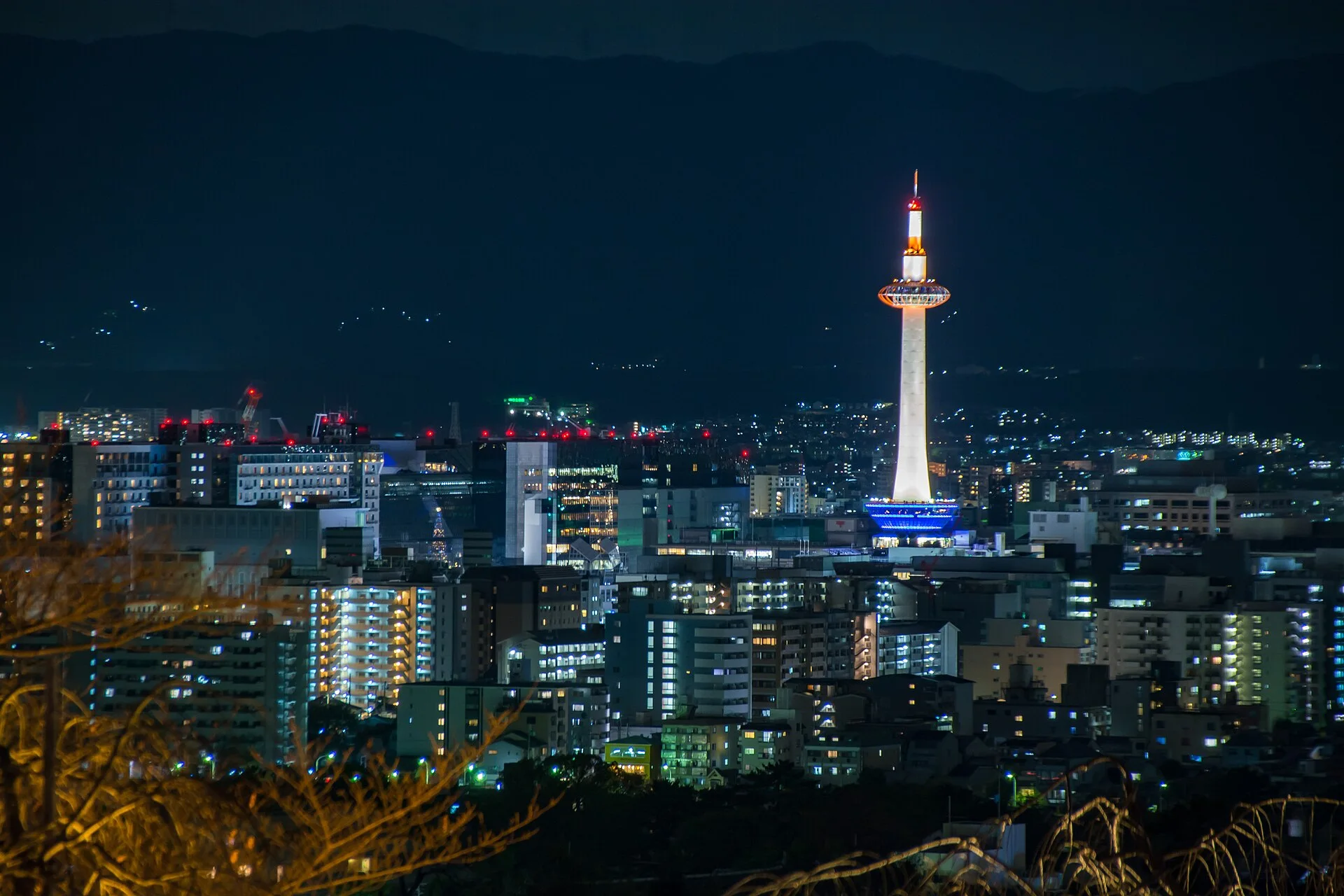
Night sessions run on an entirely different rulebook. Every evening from 5:30 PM to 7:30 PM JST through December 8 (last entry 7:00 PM), JR Central hosts a private charter viewing. Because it is charter-only, no night tickets are sold at the temple gate; you must book ahead on JR Central's reservation page, and peak weekend dates fill up fast. Daytime entry requires no booking and lets you adjust around the weather forecast, while the night charter locks in your date—two separate ticketing tracks that determine which day you save for daytime foliage and which evening goes to illuminated maples.
Before paying, compare what each ticket unlocks. The ¥1,000 daytime combo includes the maple-lined approach, the Main Hall's inner and innermost sanctuaries, and the Kangyo Mandala displayed in the Shoin, taking roughly an hour at a relaxed pace. The two-hour night charter lights up the maples surrounding the Main Hall, giving the architecture and foliage a completely different depth than daylight. Visitors who want both can tour the Main Hall and Shoin in the afternoon, return for the lights after dark, and then walk downhill toward Kurodani to connect with neighboring temples.
Looking back at 2025 clarifies the temple's seasonal rhythm. That autumn, Shinnyo-do ran an early special viewing from November 1 to 17, followed by its November 18 to December 7 foliage season featuring the Kangyo Mandala and temple treasures as two distinct periods. The temple clearly separates its peak two-week foliage window from earlier indoor openings. For 2026, aiming for the official foliage window starting November 18 gets you both peak color and indoor treasures in one stop.
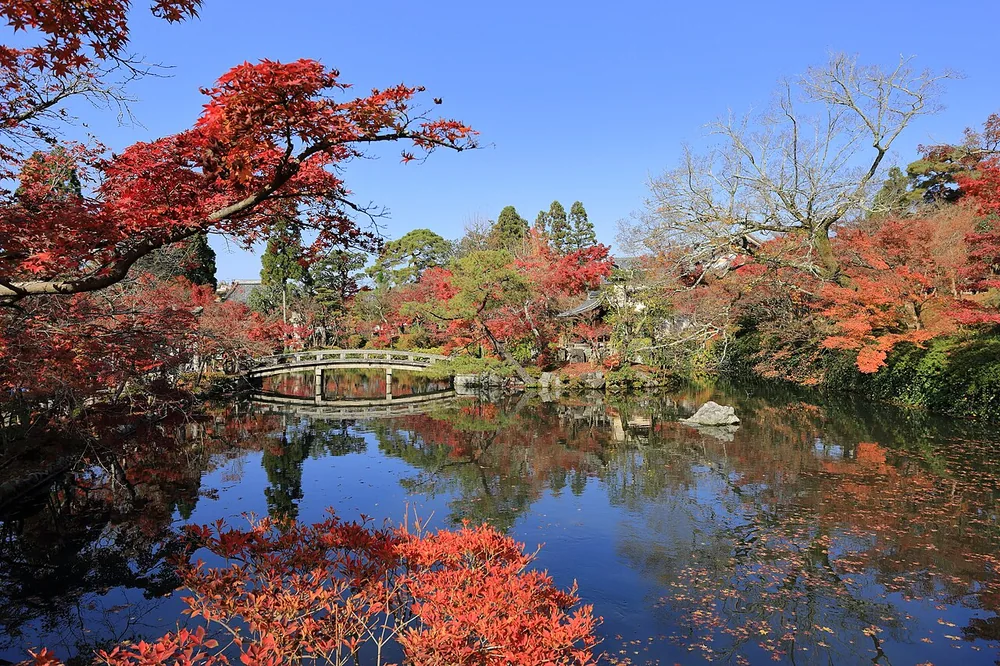
Early and late halves of the season offer different scenery. From November 18 to 24, leaves remain dense on the branches with vivid red, orange, and green gradients. From November 25 to December 7, fallen leaves blanket the approach and stone steps, making the crimson leaf carpet and moss outside the Main Hall glow in clear morning sun. Because a single bout of wind and rain can accelerate leaf drop, check the Kyoto forecast the night before and shift your daytime visit by a day if needed.
Your arrival hour makes just as much difference. Right at 8:30 AM opening, the approach and Main Hall forecourt are nearly empty, and low morning sun cuts cleanly through the foliage—well worth an early alarm for photographers. After 10:00 AM, tour groups and coaches roll in and foot traffic slows to a crawl. Night sessions avoid that crunch altogether because JR Central caps capacity per slot, creating a far calmer atmosphere than midday peaks and making the day-and-night pairing worthwhile.
Departure timing splits along the same lines. Daytime visitors leave at their own pace, whereas night charter guests follow set check-in and clearing times—read all check-in details on JR Central's booking page before closing your confirmation screen. Scheduling the night charter as your last stop of the day lets you head straight to dinner and back downtown after the 7:30 PM finish without rushing mid-itinerary.
Pairing the flexible daytime ticket with a fixed night slot also buys weather insurance. Since daytime admission works any day in the foliage window while your night charter date is locked once booked, secure the night charter first and wait until two days before arrival to pick your daytime slot around live foliage and weather reports.
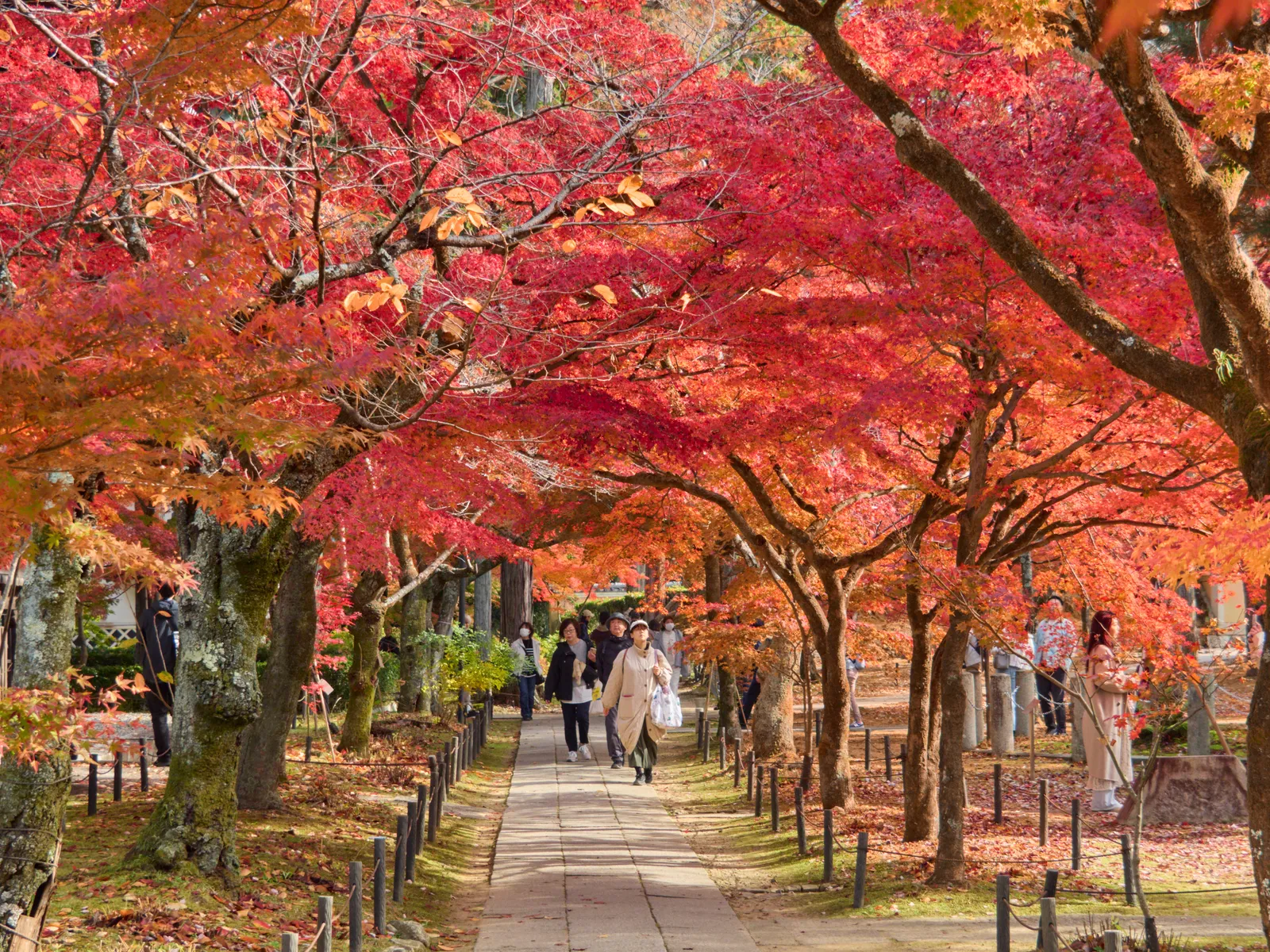
Shinnyo-do's 2026 autumn leaf season runs November 18 to December 7, with ¥500 grounds admission plus ¥500 for the Main Hall and Shoin. Night viewings are private JR Central charters requiring online booking. Take the bus to Kinrin Shako-mae for an easy 8-minute walk, then stroll downhill to Konkaikomyo-ji's day-and-night tickets to cover Kurodani in one unhurried afternoon.
Get Off at Kinrin Shako-mae, Not the Steep Stop Named After the Temple
Shinnyo-do's official access page puts its most practical advice right on line one: although the nearest bus stop is called "Shinnyo-do-mae," stepping off there leaves you facing a steep uphill climb, so the temple explicitly recommends riding to Kinrin Shako-mae on Shirakawa-dori for an 8-minute gentle walk instead. That single choice determines how comfortable the approach feels—with strollers or older companions, the wrong stop forces a tough climb going in and coming back out.
Official bus times from major hubs make picking a route easy: from Kyoto Station, Route 17 or Express 100 takes about 40 minutes direct; from Shijo Kawaramachi, Route 17 takes about 21 minutes or Route 5 takes about 25 minutes; from Shijo Keihan-mae, Loop 203 takes about 25 minutes; from Sanjo Keihan-mae, Route 5 takes about 15 minutes; from Demachiyanagi Station, Route 17, Loop 203, or Rapid 102 takes just 10 minutes (the quickest connection off the Keihan Line); and from Karasuma Marutamachi Subway Station, Route 93 or Loop 204 also takes about 10 minutes. Anyone staying near Ginkaku-ji or the Philosopher's Path can walk over via Ginkaku-ji-michi at their own pace—the official site leaves that walk un-timed.
Factor in peak-season bus waits as well. On autumn weekends, outbound Route 17 buses toward Ginkaku-ji often fill up within the first few downtown stops, leaving passengers farther down the line stranded for the next bus. From Kyoto Station, keep an eye on Express 100 intervals or take the train to Demachiyanagi first for the quick 10-minute bus hop—one smooth transfer usually beats standing in a cold queue, especially with kids.
Keep track of where tickets are handled. Payment is taken at the reception counter on the left inside the Main Hall: pay ¥500 on entry for the grounds, and add ¥500 at the same counter if continuing into the Main Hall and Shoin (middle school and younger free for special viewing). The temple specifically notes that organized walking clubs (aruko-kai) also pay the grounds fee, and disability discount details are listed on the official info page to check before you go.
Drivers face strict autumn traffic and parking limits. Shinnyo-do's on-site lot is tiny and closed to private cars during foliage season; the paid lot outside the gate holds only about 15 vehicles, and tour coaches must use the municipal Ginkaku-ji Sightseeing Parking Lot. Since Shirakawa-dori bottlenecks easily in peak season, parking at the Ginkaku-ji lot and walking over beats circling side streets for one of 15 spots.
The walk from Kinrin Shako-mae is straightforward to follow. Head north briefly along Shirakawa-dori, cross the intersection, and turn left up a gentle incline through quiet residential lanes straight into the temple grounds—an easy 8 minutes at a normal pace. Returning down the same slope brings you back to Shirakawa-dori toward either Okazaki or Ginkaku-ji, while walkers coming via Ginkaku-ji-michi slip in from the north end of the Philosopher's Path along quiet tree-lined slopes.
If you prefer skipping crowded buses without driving, a taxi is a practical compromise. The ride up from the Shijo area takes a little over 10 minutes, though flagging a cab curbside in Higashiyama during fall peak is difficult, so book ahead in a ride-hailing app. Have the driver drop you near the gate on arrival, and walk downhill to Okazaki-michi afterward where passing cabs are much easier to catch.
Main Hall, Shoin, and Three-Story Pagoda: What Each Ticket Covers
Rebuilt in 1717 (Kyoho 2) and designated an Important Cultural Property, Shinnyo-do's Main Hall is a seven-by-four-bay all-keyaki structure topped with a tiled hip-and-gable roof. Unusually for a historic Kyoto temple, visitors can walk freely from the outer sanctuary through the inner sanctuary all the way to the innermost sanctuary, taking in the spatial progression up close. The autumn special viewing bundles the Main Hall and Shoin, spotlighting the Kangyo Mandala; because the indoor exhibits are substantial, Shinnyo-do works well in the afternoon or on rainy days when weather threatens outdoor plans.
Inside, the principal wooden standing statue of Amida Nyorai is an Important Cultural Property and a hidden Buddha unveiled only once a year on November 15. With the 2026 unveiling date now passed, visits through the rest of the season show the statue in its regular enshrined setting until next year. Spending two minutes reading the statue overview on Shinnyo-do's website before arriving adds helpful context once you step into the inner sanctuary.
Rising roughly 30 meters in one corner of the grounds, the Three-Story Pagoda—a Kyoto Prefecture Designated Cultural Property rebuilt in 1817 (Bunka 14)—gives photographers classic angles framing vermilion timber against scarlet maples. The official site notes the pagoda interior remains closed to visitors and is viewed from outside only. Follow the sun when planning shots: afternoon sunlight hits the pagoda facade and nearby maples cleanly when looking back from the approach, whereas morning visitors should tour the Main Hall first and save the pagoda for last to avoid shooting into harsh backlight.
Before picking a date, verify the garden closure calendar too. The official info page lists 2026 garden closure dates as the morning of January 27, the second Sundays of August and November, May 6, October 13, and November 15, alongside possible unscheduled closures or restrictions during temple ceremonies. Since November 15 is both a garden closure day and the annual statue unveiling, focus on the Main Hall queue if you go then and skip the garden. Bookmark the official info page and refresh it that morning for any last-minute updates.
Theme-route fans also get a quiet bonus link here. Shinnyo-do is the first stop on the Rakuyo Six Amida Pilgrimage, with neighboring Eikan-do as stop number two. Even if you have no plans to complete all six temples, linking Kurodani and Okazaki as an Amida walking route keeps you in noticeably calmer territory than Kyoto's marquee hotspots.
Navigation across the grounds is intuitive: the approach leads straight to the grand Main Hall, the Three-Story Pagoda stands on higher ground to one side, and the Shoin special viewing branches off the side of the Main Hall. Maples cluster thickest along both sides of the approach and in front of the Main Hall, with tall old trees framing the pagoda so a backward glance from the gentle slope captures tower and foliage in one frame. Afternoon visitors get front-lit color all the way through, while morning visitors should start at the Main Hall and work back down the approach to keep glare out of their lens.
Walk Downhill to Kurodani: Konkaikomyo-ji's Day and Night Tickets
Walk downhill from Shinnyo-do's gate for roughly 330 meters in a straight line and you reach Konkaikomyo-ji, head temple of the Jodo (Pure Land) sect. Locals refer to the temple simply as "Kurodani," matching its Kurodani-cho address. Neither temple lists an exact walking time between the two, because it is just a pleasant, few-minute downhill lane. If you parked near Kinrin Shako-mae, looping back stays on the same side of the hill without forcing a steep climb.
Konkaikomyo-ji's 2026 autumn special viewing runs November 13 through December 6. Daytime access runs 10:00 AM to 4:30 PM (last entry 4:00 PM) covering the Miei-do, Ohojo, and garden for ¥1,000 (adults) and ¥500 (elementary school), or ¥1,600 / ¥800 combined with the Sanmon Gate—all walk-up with no reservation required. History enthusiasts can book a separate Bakumatsu guided tour (¥2,600 including the combo ticket). Night viewings run the same dates from 5:30 PM to 8:30 PM (last entry 8:00 PM): ¥1,000 for night admission, ¥800 for Eisho-in illumination, or ¥1,600 for both, likewise walk-up without reservations. Only the Friday and Saturday Premium Night Viewing (¥2,000, capped at 30 guests) and Priority Early Entry (¥1,500) require advance booking.
Shape your evening at Konkaikomyo-ji around its live music schedule. Every night features 20-minute sets on traditional Japanese instruments at 5:45 PM, 6:30 PM, and 7:30 PM JST. Catch the opening 5:45 PM performance, stroll the lit garden with your camera, and finish with the 7:30 PM finale for an unhurried two-hour visit. Live music gives the grounds deeper atmosphere than simple floodlighting, and because standard night entry is walk-up, it pairs smoothly on a separate night with Shinnyo-do's advance-booked JR Central charter.
Transit connections for Konkaikomyo-ji tilt toward the Okazaki neighborhood. Its official site lists Kyoto City Bus routes 32, 203, and 204 to Okazaki-michi (about a 10-minute walk) or Route 5 to Higashi Tenno-cho (about a 15-minute walk), plus 73 parking spaces on-site for easier driving access than Shinnyo-do. Walking downhill from Shinnyo-do naturally funnels you toward Okazaki-michi anyway, leaving convenient bus links to Heian Shrine or central Kyoto even after nightfall.
Photographers planning night shots should pack low-light gear. The garden illumination leans soft and atmospheric, rewarding fast-aperture lenses and compliant tripods (following posted site rules) far better than phone cameras alone. The 20-minute instrument sets divide the evening cleanly—shoot first or listen at 5:45 PM without rushing either—and next-door Eisho-in adds a more intimate lit garden if you enter with the ¥1,600 dual ticket before 8:00 PM last entry.
The nickname "Kurodani" comes straight from the temple's street address: 121 Kurodani-cho, Sakyo-ku, Kyoto. Travelers drawn to late-Edo history will feel an extra pull here, as the grounds once housed a Satsuma domain garrison—the focus of the ¥2,600 bookable Bakumatsu tour. Even if 19th-century politics aren't on your radar, the grand Miei-do hall and autumn views across the Ohojo garden easily fill a rewarding hour.
Fitting Kurodani into One Kyoto Day
Linking Shinnyo-do and Konkaikomyo-ji into a half-day Kurodani loop delivers maximum return with minimal climbing: spend the morning around Okazaki or the Philosopher's Path, walk gently uphill from Kinrin Shako-mae into Shinnyo-do in the afternoon, browse the Main Hall, Shoin, and Kangyo Mandala until around 3:30 PM, exit before the 3:45 PM ticket cutoff, and stroll downhill to catch Konkaikomyo-ji before its 4:00 PM daytime last entry. Have dinner nearby, return at 5:30 PM for Konkaikomyo-ji's night illumination, and wrap up after the 7:30 PM concert. Combined adult admission across both temples day and night runs roughly ¥3,000—about what one famous downtown temple charges for night entry alone, with twice the halls and gardens.
If your daytime itinerary is already packed, an evening-only plan works cleanly too. Sightsee in Okazaki or around Ginkaku-ji by day, enter Konkaikomyo-ji at dusk from Okazaki-michi, and save Shinnyo-do's JR Central charter for another night. Keep in mind that the exits point opposite ways: Shinnyo-do empties downhill back toward Kinrin Shako-mae, whereas Konkaikomyo-ji lets out toward Okazaki-michi and Heian Shrine—decide on your dinner spot and meetup point before splitting up in the dark.
Kurodani also shines as a rainproof Kyoto plan. Shinnyo-do's Main Hall interior is open for walk-through visits and the Shoin mandala stays completely sheltered, while Konkaikomyo-ji's Miei-do and Ohojo provide spacious indoor halls. When rain rolls in, shorten your outdoor strolls and linger inside the buildings; rainy days also thin crowds by half along the approach, giving umbrella walkers remarkably quiet views.
Confirm the 2026 dates one more time before finalizing your calendar: Shinnyo-do runs November 18 through December 7 (night charter through December 8), and Konkaikomyo-ji runs November 13 through December 6. To slot Kurodani into your citywide pacing and crowd-dodging strategy, check our Kyoto autumn foliage zones and transit guide and Kyoto quiet-hours itinerary guide; this page locks in Kurodani's exact dates, fares, and downhill routing.
For day-of questions, calling the temple desk beats discovering a gate notice on arrival. Shinnyo-do's phone line is 075-771-0915 (answered 9:00 AM–4:00 PM JST), helpful for verifying ceremony closures on the morning you visit. Konkaikomyo-ji's desk operates on the same 9:00 AM–4:00 PM JST schedule, so sort out any night-event details before late afternoon.
Your ride home follows whichever exit you use. From Kinrin Shako-mae on Shirakawa-dori, Loop 203 heads south along Higashioji-dori toward Higashiyama's main corridor or north to Demachiyanagi for the Keihan Line. From Okazaki-michi, walk south along Jingu-michi to Sanjo-dori or catch city buses outside Heian Shrine's giant torii gate. Because Higashioji-dori clogs badly around the 7:30 PM evening rush, walking 10-plus minutes toward Sanjo Station often beats waiting in a bus queue.
Four Ways to Do a Half-Day in Kurodani
Different travel styles click neatly into Kurodani. Solo travelers or couples: spend ¥1,000 at Shinnyo-do plus ¥1,000 at Konkaikomyo-ji by day (under ¥3,000 total) with lunch near Okazaki or Ginkaku-ji-michi, then return to Konkaikomyo-ji at night for ¥1,000 (or ¥1,600 with Eisho-in) without needing reservations. With older family members or strollers: enter Shinnyo-do via the gentle Kinrin Shako-mae walk and continue downhill to Konkaikomyo-ji by day, avoiding both steep hills and evening crowds. Photographers: pair Shinnyo-do's 8:30 AM opening light with its night charter. Budget travelers: combine Konkaikomyo-ji's ¥1,600 daytime combo with its ¥1,600 night combo (¥3,200 total) for full day-and-night access without fighting for charter tickets.
Families with preschoolers do best sticking to morning through mid-afternoon. Enter Shinnyo-do at 8:30 AM while paths are quiet, head down to Okazaki for lunch and nap time, then reach Konkaikomyo-ji before its 4:00 PM daytime cutoff. Dim pathways and stone steps make night illuminations awkward with strollers, so parents wanting night foliage should trade off turns or save evenings for another trip.
Dedicated photographers will get much more out of splitting night shoots across two evenings. Start at Shinnyo-do at 8:30 AM for morning light across the approach and pagoda, rest midday, shoot Konkaikomyo-ji's lit garden reflections and live music that night, and book Shinnyo-do's JR Central night charter for a second evening. The two illuminated moods—water reflections and traditional music versus a quiet, capacity-capped Main Hall—deserve separate nights.
For companions with limited mobility or wheelchair users, the one-way downhill direction is far easier. Enter Shinnyo-do from Kinrin Shako-mae along the gentle slope—the Main Hall interior is flat and compact—then follow the downhill lane to Konkaikomyo-ji's Okazaki-michi side, where highlights sit around Miei-do and Ohojo. Since temple ramps and step layouts occasionally change during ceremonies, call ahead between 9:00 AM and 4:00 PM JST to verify accessible paths: Shinnyo-do at 075-771-0915 and Konkaikomyo-ji at 075-771-2204.
Use reservation rules as your second scheduling filter. JR Central charter slots are capped—lock in weekend dates early while weekdays stay more flexible—whereas Konkaikomyo-ji requires bookings only for Friday/Saturday Premium Night Viewing and Priority Early Entry. Draft your schedule around walk-up sessions first, confirm the night charter once flights and hotels are set, and put all entry and last-admission times into one shared plan so no one books the wrong slot.
Late Season and Off-Peak: Beyond the Autumn Peak
Arriving in early December reveals a quieter side of Kurodani. By then, most leaves have fallen, laying a thick crimson carpet across the approach and Main Hall forecourt while exposing moss around old trunks for a deeper, more understated palette. Crowds drop sharply compared with late November, letting you linger inside the Main Hall and admire the fallen-leaf carpet without queues. Shinnyo-do extends foliage hours through December 7 and night charters through December 8, while Konkaikomyo-ji finishes December 6—leaving only Shinnyo-do's night charter open on those last two evenings.
Outside autumn peak, Kurodani still warrants a return visit. Shinnyo-do's annual hidden Buddha unveiling falls on November 15 every year (2026 has passed; the next opportunity is next year), while regular days cost just ¥500 (last entry 3:45 PM) to take in the Important Cultural Property Main Hall and pagoda in peace. Konkaikomyo-ji schedules its Bakumatsu history tours across seasonal runs, keeping it on repeat Kyoto itineraries. The area's appeal rests on architecture and history rather than two fleeting weeks of red leaves.
One last directional reminder: entering from Okazaki-michi reverses the route, forcing you to visit Konkaikomyo-ji first and climb uphill to Shinnyo-do afterward. To save your knees and follow the light, stick strictly to the one-way flow: Kinrin Shako-mae -> Shinnyo-do -> downhill lane -> Konkaikomyo-ji -> exit via Okazaki-michi. You tackle one gentle incline at the start, and both sunlight angles and sightseeing rhythm line up from start to finish.
Six-Point Pre-Trip Checklist
Run through these six checks before heading out and the walk itself stays effortless. First, confirm your dates against official 2026 seasons: Shinnyo-do runs November 18–December 7 (night charter through December 8) and Konkaikomyo-ji runs November 13–December 6; outside those windows, follow regular hours. Second, save a screenshot of your JR Central night charter confirmation showing your time slot and headcount. Third, pin the Kinrin Shako-mae bus stop and its 8-minute gentle route offline. Fourth, budget with current 2026 fares—¥1,000 for Shinnyo-do daytime foliage plus Konkaikomyo-ji day or night tickets. Fifth, refresh Shinnyo-do's official info page the morning you go to catch any garden closures or ceremony changes. Sixth, keep the rain backup ready, as both temples have generous indoor halls to carry a wet day.
Confirming fares, dates, slope direction, and reservations before leaving home turns a half-day in Kurodani into smooth sailing. Items one and four catch the most travelers off guard, because outdated guides online still list ¥300 admission or old closing times—and relying on stale figures can leave you shut out half an hour before the real cutoff, which is why every number here reflects both temples' current 2026 notices.
A few useful answers
Do I need a reservation for Shinnyo-do's night autumn viewing?
Yes. In 2026, night access is a private charter operated by JR Central from November 18 to December 8, open 5:30 PM to 7:30 PM JST (last entry 7:00 PM). Tickets must be booked online via JR Central's reservation page, and no walk-up night tickets are sold at the temple gate. Daytime autumn grounds admission requires no reservation—just pay at the temple.
How much does admission cost?
During Shinnyo-do's autumn foliage season, grounds admission is ¥500, and the Main Hall and Shoin special viewing (including the Kangyo Mandala) is an extra ¥500, totaling ¥1,000. Regular off-season admission is ¥500 for adults and high school students and free for middle school students and younger. At Konkaikomyo-ji's 2026 autumn special viewing, daytime admission is ¥1,000 for adults and ¥500 for elementary school students; night admission is ¥1,000, Eisho-in illumination is ¥800, or ¥1,600 for both—all walk-up with no reservation needed for standard sessions.
Which bus stop is easiest for Shinnyo-do?
Ride to Kinrin Shako-mae on Shirakawa-dori, an easy 8-minute walk per the temple's official guide. Although Shinnyo-do-mae is closer on paper, the official site warns it requires climbing a steep hill—avoid it with luggage, strollers, or older companions. Bus rides take about 40 minutes from Kyoto Station (Route 17 or Express 100), 10 minutes from Demachiyanagi (Routes 17, 203, or 102), and 21 minutes from Shijo Kawaramachi (Route 17).
Can I visit Shinnyo-do and Konkaikomyo-ji together?
Yes. They sit about 330 meters apart in a straight line, with Shinnyo-do uphill and Konkaikomyo-ji downhill, connected by a pleasant few-minute downhill lane (neither official site lists an exact minute count). Konkaikomyo-ji's walk-up day and night sessions pair naturally with Shinnyo-do's advance-booked night charter.
Official information and references
Sources used in this guide.
- Shinsho Gokuraku-ji (Shinnyo-do) | Official Homepage (2026 Autumn Foliage & Night Viewing Notices)
- Shinnyo-do | Visiting Hours, Fees & Garden Closure Dates (Revised August 2026)
- Shinnyo-do | Access (Kinrin Shako-mae Recommendation & Bus Times)
- Shinnyo-do | Principal Hidden Buddha Statue (Annual November 15 Unveiling)
- Shinnyo-do | Main Hall & Three-Story Pagoda (Rebuilt 1817, Interior Closed)
- JR Central | Shinnyo-do Night Charter Special Viewing Reservation Page
- Konkaikomyo-ji | 2026 Autumn Daytime Special Viewing (Nov 13–Dec 6)
- Konkaikomyo-ji | 2026 Autumn Nighttime Special Viewing & Illumination
- Konkaikomyo-ji | Access & Grounds Information