Compare Kaiyukan prices by date and age, choose an entry slot, a feeding session and an evening visit, and plan the walk from Osakako Station, whale shark tanks, baby facilities, lunch and a harbour cruise.
- Region & Focus
- OsakaAttractions
- Reading Scope
- 32 min read · 20 chapters · 2 Q&As
- Official Verification
- 22 official sources checkedUpdated 7 November 2026
- Key Topics
- BookingItinerariesFood
Chapter Route Map (tap any stop)
- Allow half a day for Kaiyukan, then choose a Tempozan extra
- Ticket prices vary by date and age; children pay from age three
- Choosing a 15-minute entry slot, changing tickets and cancelling
- From Osakako Station to the entrance: trains, buses and pushchairs
- Store luggage before admission: wheeled suitcases are not allowed inside
- From forest to ocean depths: the route through the two buildings
- Watching whale sharks at different levels of the Pacific Ocean tank
- Forests, sea lions and penguins: compare movement on land and underwater
- Three levels of the Great Barrier Reef deserve more than a passing look
- Save time for Jellyfish Galaxy and the Arctic
- Choose one feeding session, then work backwards to an entry time
- Whale shark backstage tours: standard and feeding versions
- Pushchairs, carriers and feeds: know which building has the facilities
- Use the lift route for wheelchair users and companions who need rests
- Café breaks inside, full meals outside: do not leave halfway for lunch
- Audio guides, stamp books and photographs
- Evening lighting from 17:00 or daytime feeding sessions
- Tempozan Market Place and harbour cruises have different young-child fares
- Tempozan Ferris wheel: accompanying children, clear cabins and advance tickets
- A shuttle boat from Universal City; keep USJ and Kaiyukan on separate days
- Quick Q&A
Kaiyukan rewards a slow visit: as you descend through the floors, you see the same ocean from different heights. Choose an admission time that lets you stay without a break, and plan lunch, luggage storage and baby care around it. You can then take your time with the whale sharks, penguins and jellyfish before eating at Tempozan Market Place. Re-entry has not been allowed since 15 June 2026, so the first decision before buying tickets is which part of the day to set aside for one continuous visit.
Allow half a day for Kaiyukan, then choose a Tempozan extra
The aquarium FAQ gives a typical visit time of about two hours. Allow two to three hours with children, plus time to feed your baby, walk slowly down the ramps or watch a feeding session. Adults who want the large tanks and children looking for penguins or jellyfish can follow the same route. Eat lunch before or after admission so that you can see the whole aquarium in one visit.
Kaiyukan (Google Maps) is on Osaka Bay, next to Tempozan Market Place. Visit the aquarium in the morning, then have lunch and choose one waterfront activity for the afternoon. If you arrive later, eat lunch first and enter in time to see the evening lighting from 17:00.
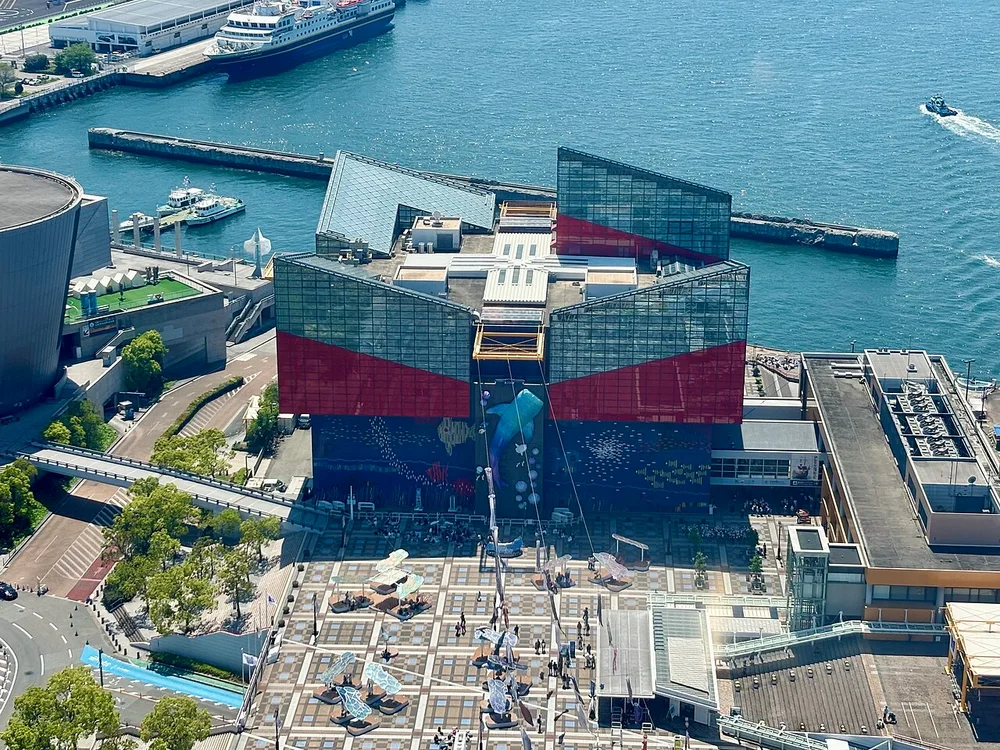
Compare Kaiyukan prices by date and age, choose an entry slot, a feeding session and an evening visit, and plan the walk from Osakako Station, whale shark tanks, baby facilities, lunch and a harbour cruise.
Ticket prices vary by date and age; children pay from age three
The official Kaiyukan ticket calendar uses date-based pricing. Its monthly view initially shows adult prices; open a date to see all age categories. Adults are senior secondary pupils and anyone aged 16 or over; child tickets cover primary and junior secondary pupils; young-child tickets cover preschool children aged three or over. Children aged two or under enter free. School stage also matters: the child rate applies from 1 April of the year a child starts primary school, and the adult rate from 1 April of the year they finish junior secondary school.
For example, on 26 October 2026, admission cost ¥2,800 for adults, ¥1,400 for children and ¥700 for young children, with opening hours of 10:30–20:00. On 31 October, the prices were ¥3,200, ¥1,650 and ¥800, with opening hours of 09:00–20:00. Compare both the price and the available opening hours when choosing a day.
For two adults, one primary-school child and one four-year-old, standard admission totalled ¥7,700 on 26 October and ¥8,850 on 31 October. Families with flexible dates can weigh that ¥1,150 difference against transport and accommodation. If your date is fixed, buy all four tickets for that day and budget separately for food, lockers and extras. Backstage, cruise and other attraction packages have their own age rules. If you buy standard admission first, avoid paying for admission again when adding an activity.
Choosing a 15-minute entry slot, changing tickets and cancelling
Kaiyukan manages admission in 15-minute slots. The official ticket FAQ says e-tickets usually go on sale 30 days before the visit. Same-day tickets are also sold at the aquarium, but each slot has a limit. Booking ahead for mornings or busy Japanese holiday periods makes lunch easier to plan than waiting for the next available slot on arrival. Your ticket time is when you pass through the admission gate; you cannot enter early. Once inside, you may stay until closing.
Calculate your journey time to the gate, including leaving Osakako Station, walking, storing bags and taking children to the toilet. Families who need station lifts should not use the train's arrival time as their aquarium entry time. Finish preparations in the entrance building before entering in your allotted slot. If you arrive early, rest in the area before admission; having a ticket does not allow early entry.
Through an official Webket account, you can change the date and time up to twice, choosing an available slot within the same price band. Make the change no later than the original visit date. If you are running late, open My Page and change the time first. If your preferred slot is full, you may still have to wait at the entrance. This is useful after a transport delay, but cannot be used to move to another price band without paying the difference.
Official Webket e-tickets paid for by credit card can be cancelled through your account up to and including the visit date, with no cancellation fee. Tickets for which a receipt has been issued cannot be cancelled. The card issuer determines when refunds reach your account. Packages and additional activities follow their own terms. Log in to Webket before buying; new users should register before adding tickets to the basket. The aquarium warns that adding tickets first and then registering can cause an error.
From Osakako Station to the entrance: trains, buses and pushchairs
For rail access, use Osakako Station (Google Maps) on the Chuo Line. Kaiyukan gives a walking time of about five minutes from Exit 1. Head towards Tempozan Market Place and the large Ferris wheel; the official access map also marks the routes from Exits 1 and 2. This is an outdoor walk. Allow for rain after leaving the station, even though the aquarium visit itself is indoors.
From the Midosuji Line, change to the Chuo Line at Hommachi. From other lines, find a suitable Chuo Line interchange. The destination is Osakako, which is different from JR Osaka Station and Nankai Namba Station. The Kaiyukan access page also lists Osaka City Bus route 88 from Osaka Station and route 60 from Namba, both bound for Tempozan. Alight at Tempozan Harbor Village. Compare the bus if it gives you a direct journey, and allow for road traffic when booking a precise admission slot.
Pushchair and wheelchair users should follow lift signs at the station and allow extra time for the route to a suitable exit. At Kaiyukan, tell staff if you need lifts to join the exhibition route. You do not have to use the nearest stair exit or carry a pushchair onto an escalator. If it is nearly a child's dinner or nap time afterwards, returning to the city is an easier finish than adding somewhere further from the station.
Store luggage before admission: wheeled suitcases are not allowed inside
If you visit after checking out, leave luggage at your accommodation or in a coin locker. The current baggage rules prohibit wheeled suitcases and general goods trolleys. They also restrict large items whose three dimensions total 120 cm or more, or whose longest side exceeds 70 cm. Arrange storage before entering, rather than taking a case to the tanks and looking for somewhere to leave it.
The official FAQ lists coin lockers in the entrance building and Tempozan Market Place, including near the shopping centre escalators and beneath the Ferris wheel. Lockers before admission cost ¥400, ¥600, ¥800, ¥1,000 or ¥1,500 according to size. The paid area has only small ¥400 lockers. Store large bags outside the gate. There are only two extra-large lockers, so do not leave the whole family's luggage arrangements until just before entry.
The locker's width, depth and height matter more than the suitcase size in inches. The ¥1,000 lockers are 35.5 cm wide and 64.5 cm deep, with heights of 68.6–104.6 cm. The two ¥1,500 extra-large lockers measure 46.1 × 64.5 × 116.2 cm. Measure the widest part of your case, including wheels and handles, before travelling. A taller locker may still be too narrow. Leaving large bags at your accommodation and bringing a day bag reduces reliance on vacant lockers.
From forest to ocean depths: the route through the two buildings
Use the official floor plan to distinguish the two buildings. Admission starts on floor 3 of the entrance building. After Aqua Gate, you go up to Japan Forest on floor 8 of the main aquarium, then descend through the exhibitions. Floors 6, 5 and 4 offer views of multilevel tanks including the Pacific Ocean. Jellyfish Galaxy is on floor 3. Later, the route reaches the Arctic and Falkland Islands displays on floor 4 of the entrance building, before returning to the floor 3 exit. Read the building name as well as the floor number.
The upper levels show rivers, land and the water surface; lower levels show underwater life and deeper views. This is why the route deserves time. When the same exhibit name appears again, change what you look for: watch an animal enter the water above, then see how it swims with its limbs, tail or fins below. If a child spends a long time at the first window, let them finish watching one action. Another level will offer a further view.
Follow the route on your first circuit and see all the large main-building tanks before deciding whether to return to the start. While you remain inside, you can go back and make another circuit, but you cannot re-enter the exhibition area after the last-admission time. This differs from re-entry after leaving through the gate: since 15 June 2026, the same ticket cannot be used to return after departure. Plan a second look at the whale sharks before you leave.
Watching whale sharks at different levels of the Pacific Ocean tank
The Pacific Ocean is Kaiyukan's large central tank, shared by whale sharks, rays and shoals of fish. Adults hoping for a whole-body photograph and children waiting for a shark to swim past can pause at a broad viewing window and let the fish enter their view. There is no need to jog along the glass after them. When it is crowded, continue to the next level or window for another view.
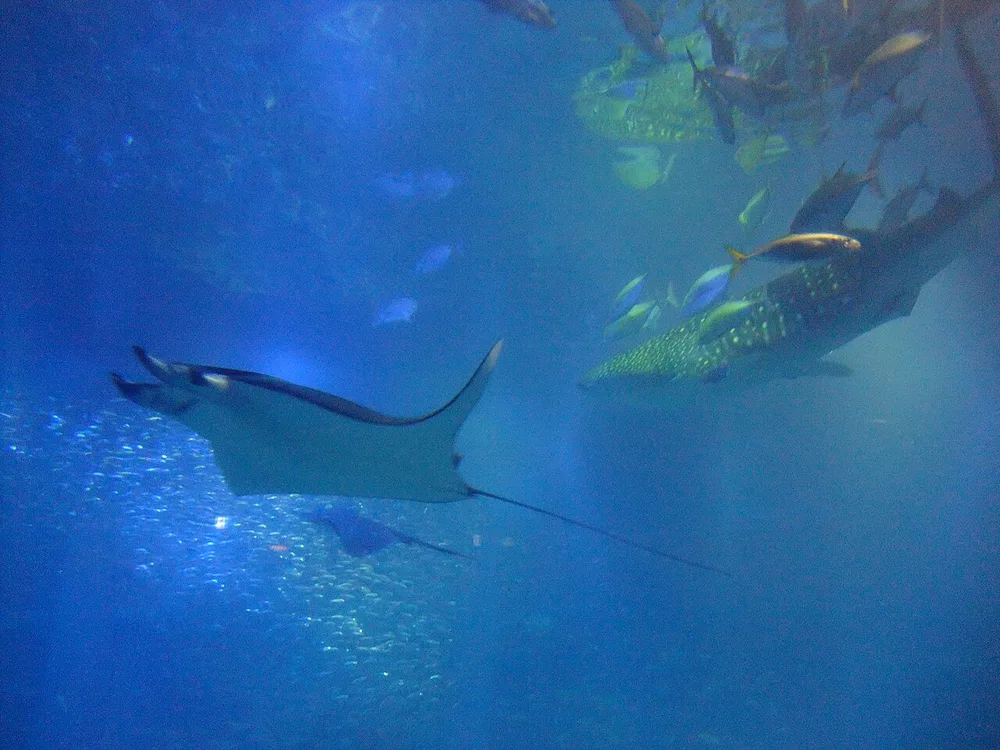
The official exhibition guide explains the ocean regions alongside their natural environments. Look first for a whale shark's broad mouth and gill slits, then watch the space it needs to turn. Rays propel themselves with their pectoral fins, while the shoals move differently again. Comparing two animals is easier for children than learning every fish name, and gives adults something to do beyond taking photographs.
Floor 6 is nearer the top of the tank; the angle changes as you descend to floors 5 and 4. Take in the broad view above, then look at body size and the layers of fish below. Each pass can offer something different. If you have time for only one full circuit, take fewer photographs at each window and save a longer stop here. Standard admission is enough; no backstage fee is needed.
Forests, sea lions and penguins: compare movement on land and underwater
At Japan Forest, look at the streams, waterfall, moss and trees before finding the otters. Monterey Bay places sea lions and seals on land and underwater along the same part of the route, so you can compare their posture before and after entering the water. Panama Bay shows a tropical dry season: red-nosed coatis with ringed tails on land, and porcupinefish in the water. Ecuador Rain Forest combines dense plants and wetlands with arapaima underwater. As you move from a dry shore to humid rainforest, the animals change with the environment. Children can look for creatures other than fish here.
Antarctica is a good place to compare penguins standing on shore with penguins swimming underwater. In the Tasman Sea, watch the dolphins' body shape, breathing and swimming. If a child has already spent a long time with the otters, spend less time at some small tanks and save energy for the Pacific Ocean and the final Arctic section. Stops need not be equal: children interested in movement will choose differently from those who enjoy finding fish.
Use a question children can answer by looking, such as, ‘What does it use to move on land, and what does it use in water?’ They need not answer correctly every time, and you need not translate every label. If a child dislikes darkness, explain that the jellyfish area later is darker and walk slowly beside them. If they do not want to approach a window, follow staff directions onwards and focus on the next exhibit they feel comfortable with.
Kaiyukan’s official World Otter Day short film introduces the otters featured in the aquarium’s work, alongside a visit to Japan Forest.
Three levels of the Great Barrier Reef deserve more than a passing look
The Great Barrier Reef tank, renewed in November 2024, links three scenes from floors 6 to 4. Floor 6 shows varied coral close to the surface, competing for light. Floor 5 explores coral growth, increasing size and breakage. Floor 4 shows coral skeletons becoming caves, gravel and a setting for new life. The corals are replicas; the fish move through the water. Understanding this design gives you more to see than a tank of colourful tropical fish.
With primary-school children, first find the brighter side on floor 6, then look for changes in the terrain as you descend. They do not need to memorise coral names. Noticing changes in light, depth and terrain already gives the reef more meaning than a photograph. Adults interested in exhibit design may prefer to spend time here rather than divide their time equally among every small tank.
The next tank, Japan Deep, presents a deep-sea environment more than 200 metres down, beyond the reach of sunlight. Compare the Great Barrier Reef's corals seeking light with this sea without daylight, rather than using floor numbers alone to infer ocean depth. After completing floor 4 of the main building, you can rest at cafe R.O.F beyond Japan Deep. Then descend to Jellyfish Galaxy and continue to the Arctic and Falkland Islands in the entrance building.
Save time for Jellyfish Galaxy and the Arctic
Jellyfish Galaxy uses dark surroundings and pools of light to show the jellyfish. The pace is slower than at the large tanks. Stand still and watch their bells contract and bodies rise and fall; this makes their movement easier to see than walking with a phone light on. Turn off flash and phone lighting before taking photographs, and dim the screen to reduce reflections on the glass and glare for others.
The Arctic section later shows ice and underwater environments on separate levels, giving two views of ringed seals. Floor 4 of the entrance building also houses the Falkland Islands display. Reaching the main building's lower floors does not mean the visit is over, so do not skip the last section when you first see signs towards the exit. If seals are a child's priority, spend less time shopping earlier and save their patience for this part.
Choose one feeding session, then work backwards to an entry time
The official feeding timetable lists sessions by exhibit and floor. Feeding sessions within a standard visit and the backstage feeding-viewing tour are different products. For example, official information read on 7 November 2026 listed afternoon sessions for penguins in Antarctica on floor 7 at 14:30, Pacific Ocean fish on floor 6 at 15:00 and Arctic ringed seals on floor 4 at 14:45. Sessions may be cancelled or rescheduled according to the animals' condition, so plan from the official timetable for your visit date.
For a 15:00 Pacific Ocean feeding session, first pass the entrance, forest on floor 8 and upper exhibits on floor 7, then reach floor 6 in time to wait. Buying a 15:00 admission slot would rush the earlier exhibits. If whale sharks and shoals are your main interest, an earlier afternoon entry with the Pacific Ocean as the middle of the visit works better. On days with a later opening, do not copy a morning feeding time that falls before visitors can enter.
You need not chase every feeding session in one afternoon. In the timetable read on that date, the 14:30 penguins, 14:45 seals and 15:00 Pacific Ocean fish are on different floors, with little time between sessions. Families with young children can choose one. After watching the keepers feed the animals, return to your normal pace instead of counting down to the next session on your phone.
Whale shark backstage tours: standard and feeding versions
The official whale shark backstage page lists a standard tour of about 20 minutes at ¥1,500 for the activity alone, with views from above the Pacific Ocean tank and commentary in Japanese. The feeding version lasts about 30 minutes and costs ¥2,500 for the activity alone, adding a chance to watch keepers feed the animals. Both require aquarium admission separately, and both also have packages including admission. You watch staff at work; visitors do not feed the whale sharks themselves.
Both backstage tours are for primary-school children and older. Primary-school pupils must join with a guardian aged 16 or over, who must also buy their own activity ticket. With one primary-school child and one younger child, one adult can join the tour while another looks after the younger child. If one adult is bringing both children, standard aquarium viewing is the easiest way to stay together.
Electronic activity tickets are sold from 30 days before the visit until 30 minutes before the session, subject to availability. The time selected for a package is the aquarium entry time; the backstage tour starts 30 minutes after that time. Save the meeting instructions after buying and head to the floor 8 venue after admission. If places remain, the ticket window sells admission packages and activity-only tickets, while the floor 8 venue sells activity-only tickets. The window starts at opening time; floor 8 sales usually begin at 11:00. On days when the aquarium opens between 08:00 and 09:30, floor 8 sales instead begin 30 minutes after opening.
Pushchairs, carriers and feeds: know which building has the facilities
The official baby facilities page lists a Baby Care Room on floor 2 of the entrance building, with children's toilets, nursing rooms, changing beds and formula-making equipment. The private nursing rooms beyond Aqua Gate have no hot water or nappy-changing facilities. Tempozan Market Place also has a Baby Care Room on floor 3, with nursing spaces, changing tables, formula-making equipment and a Family Zone for use together. Use a fully equipped room before admission rather than searching for hot water once inside.
Kaiyukan does not hire out pushchairs. There is a parking area outside near the entrance, to the left of the ticket windows, but none inside. If you bring a pushchair in, keep it with you throughout. Most of the route uses ramps, but some sections involve stairs or escalators; staff can guide you to lifts. Families whose children can walk some of the way and be carried for the rest can leave the pushchair outside and use a carrier. For children who need to sit or sleep for long periods, choose a pushchair that meets the admission rules.
The official pushchair specifications require a width of no more than 85 cm, rear pushing, no self-propulsion, wheel locks and a safety harness to prevent falls. Check the dimensions when unfolded before travelling. General goods trolleys and child trailers do not count as pushchairs. Measure double pushchairs in particular. Once the pushchair meets the rules, allow time for lift access at the entrance and along the aquarium route.
Use the lift route for wheelchair users and companions who need rests
The official accessibility information lists accessible toilets before admission on floor 2 of the entrance building and inside on floor 6, plus priority viewing areas along the route. A limited number of wheelchairs can be borrowed free from the information point beside the ticket windows and the floor 3 service counter in the entrance building. The FAQ asks visitors who need one to telephone 06-6576-5501 first. Arrange this before travelling if a companion tires on long ramps.
The accessibility map marks transfer points where staff help with lifts: after Aqua Gate when going up, beside the stairs beyond Japan Forest on floor 8, and near cafe R.O.F after completing floor 4 of the main building. Later, you can use the designated lift independently from floor 3 to the Arctic on floor 4 of the entrance building. Knowing these points avoids searching for an alternative at an escalator. A nurse is based in the first-aid room on floor 2 of the entrance building; ask staff for help with medical needs.
Café breaks inside, full meals outside: do not leave halfway for lunch
cafe R.O.F (Google Maps) is inside the paid area on floor 4 of the main building, beyond Japan Deep. Some seats overlook a tank, making it a useful break during the longer part of the visit. The official food page gives hours from 30 minutes after opening until 30 minutes before closing, with last orders one hour before closing. This is a place for whale shark soft-serve ice cream or a light bite. Put a full family meal at the shopping centre before admission or after the visit.
SEA SAW on floor 2 of the entrance building serves drinks and light food before admission. The Museum Shop in the same building is also outside the gate; the Official Shop is inside. Check locations before buying souvenirs, so you do not leave and then want to return to the paid area. Once you have your aquarium ticket, check the shopping centre's offers for that day and choose food you already intended to buy.
General eating and drinking inside is confined to cafe R.O.F on floor 4. Sealed bottles with lids that do not leak when tipped are allowed, and there are provisions for baby food. Stop beside seating when drinking water or feeding a baby, leaving the route clear. Ordinary takeaway drinks cups, alcohol and meals eaten while walking should not be brought inside. Finish lunch before entry and keep your water bottle and the food your young child needs.
Audio guides, stamp books and photographs
The official visitor guide page lists audio guides at ¥800 per device, collected from the floor 3 service counter in the entrance building. Six languages, including Chinese, cover 33 points with about 40 minutes of audio. They suit adults and older children interested in animal care. A family that prefers talking as it walks need not hire a device for everyone. Watch children and people ahead while listening, and avoid stopping in the middle of the route with headphones on.
Younger children who enjoy finding pictures and collecting stamps can try the ¥400 Kaiyukan Exploration Team stamp book, sold at the Official Shop inside the aquarium. It includes 11 stamps and animal silhouette searches. Decide how much time to give animal watching and stamp collecting; there is no need to rush past a favourite tank to finish every stamp. If an adult needs to stamp the pages, treat the book as a souvenir and let the child choose the shapes they want to find.
Use a handheld camera. Selfie sticks, tripods with their legs extended and prolonged use of viewing windows are not allowed; a tripod may be used folded as a monopod. Flash is prohibited all day at special exhibition tanks and the ringed seal tank. Elsewhere, do not use camera lighting or direct flash at animals or other visitors. Move away from the window after taking photographs so the next group can see. If a child wants to wait for a fish to come round again, put the phone away and watch together for the direction it returns from.
Evening lighting from 17:00 or daytime feeding sessions
The official FAQ confirms that Kaiyukan switches to its evening lighting after 17:00. If you enjoy darker tank surroundings and do not need to work around a young child's nap, enter in the afternoon, see the daytime displays and stay through the change. An admission slot does not limit you to one hour, but arriving near closing leaves less time. Last admission is one hour before closing.
On a day closing at 20:00, for example, a 19:00 entry leaves only one hour. That is too compressed for a first family visit. If children tire in the evening, a morning visit followed by lunch works better; evening lighting can be optional. Adults can enter after a late lunch and eat dinner afterwards, keeping both meals outside the gate.
Groups in which everyone is under 16 must enter by 18:00 and leave by 19:00. This affects teenagers visiting independently in the evening. Families should choose a slot using that day's closing time and their children's dinner and rest needs.
Tempozan Market Place and harbour cruises have different young-child fares
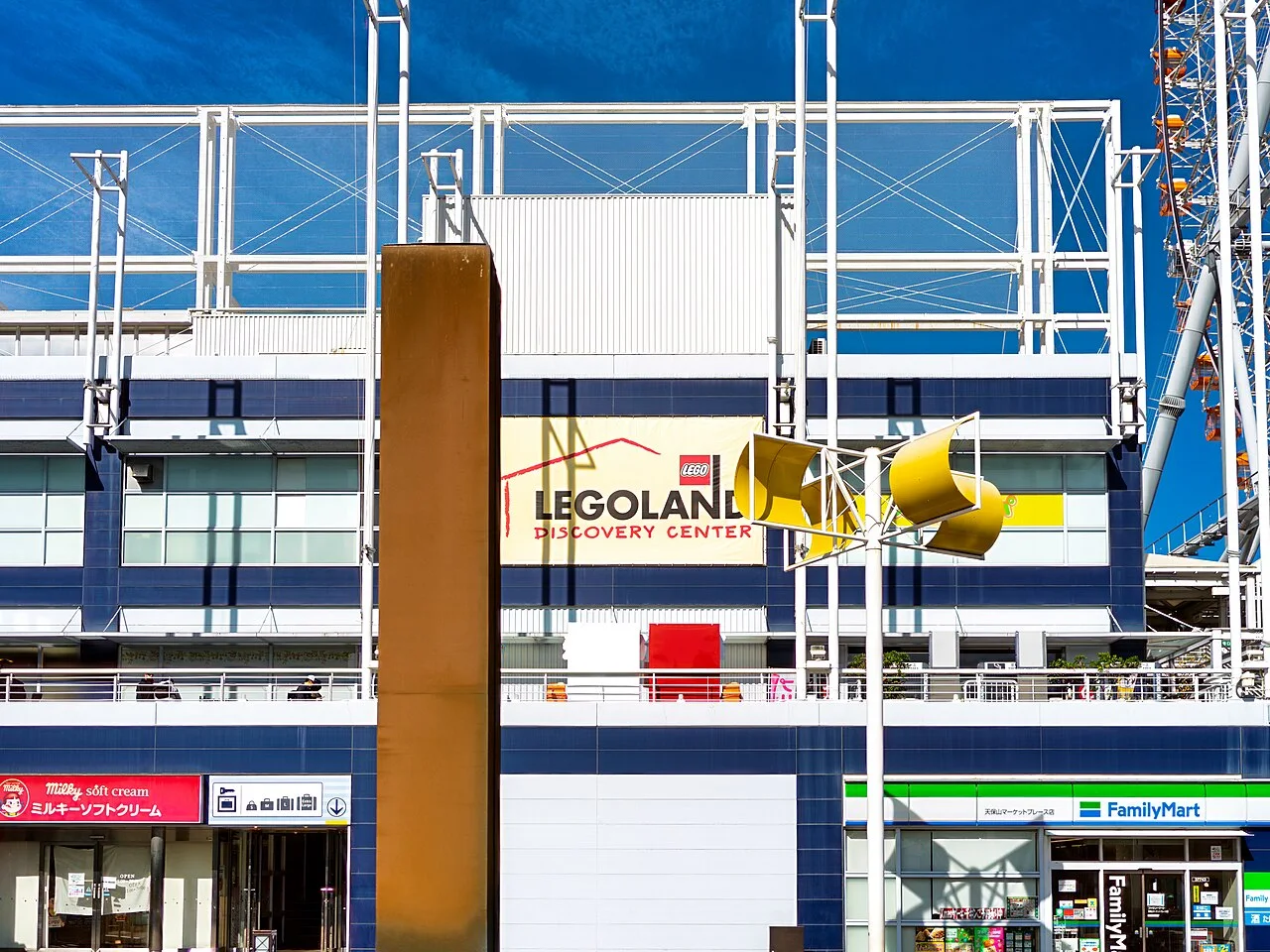
Tempozan Market Place (Google Maps) is next to Kaiyukan, with a food court, restaurants and cafés, and Naniwa Kuishinbo Yokocho. Families visiting the aquarium in the morning can eat here afterwards. Afternoon visitors can eat first, use the floor 3 Baby Care Room and then go to the gate. The official calendar lists the shopping centre and individual facilities separately. The aquarium opening time does not mean every restaurant has opened.
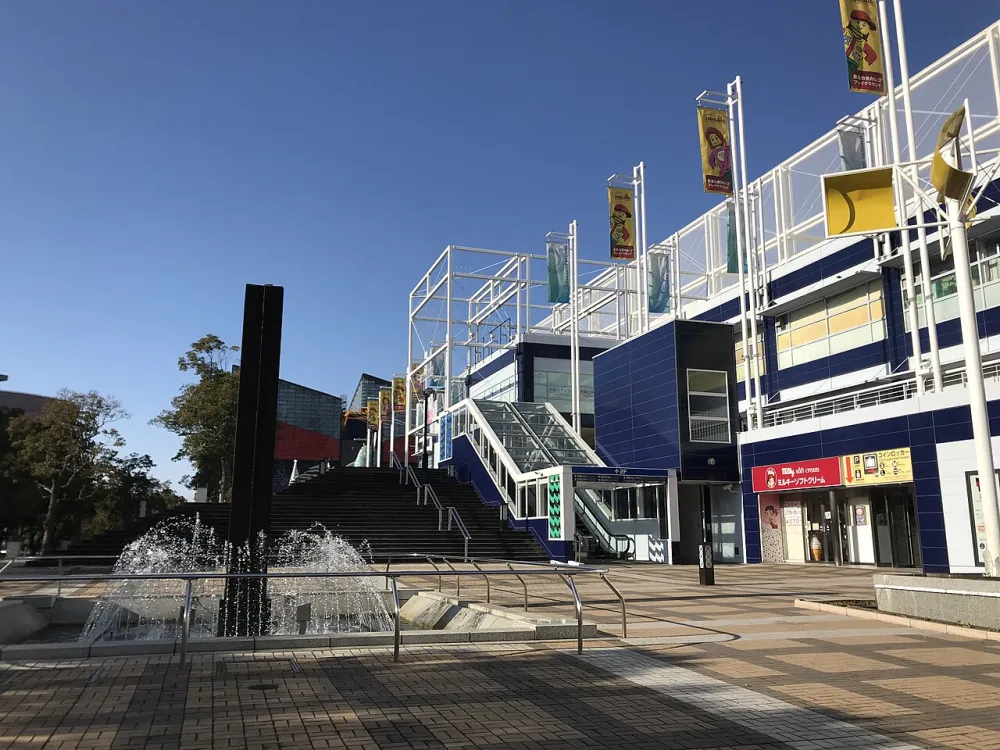
For views of Osaka Port, use the Santa Maria boarding point (Google Maps). The official Kaiyukan and Santa Maria package includes a daytime harbour cruise of about 45 minutes. Electronic packages go on sale five days before use. You still select a Kaiyukan date and entry slot, while the cruise uses daytime sailings. There is no young-child package. Cruise fares apply from age one, but one preschool child per adult travels free; Kaiyukan charges from age three. Calculate the two separately rather than applying one young-child rate to both.
Cruises depend on weather and sea conditions. Choose a land activity if a child is prone to seasickness. The waterfront outside Kaiyukan has space to watch ships and the harbour. To return to Osakako Station, follow the direction of the large Ferris wheel back to the street. You need not pay to enter another attraction to spend time here.
Tempozan Ferris wheel: accompanying children, clear cabins and advance tickets
After leaving Kaiyukan, walk to the Tempozan Giant Ferris Wheel (Google Maps) beside the shopping centre. Osaka Convention & Tourism Bureau's COOL OSAKA page lists a ride of about 15 minutes, with standard tickets at ¥1,000 per person. Hours are 10:00–21:00 on weekdays and 10:00–22:00 at weekends and on public holidays, with last admission 15 minutes before closing. It is a shorter stop than another major attraction if you mainly want harbour views from above.
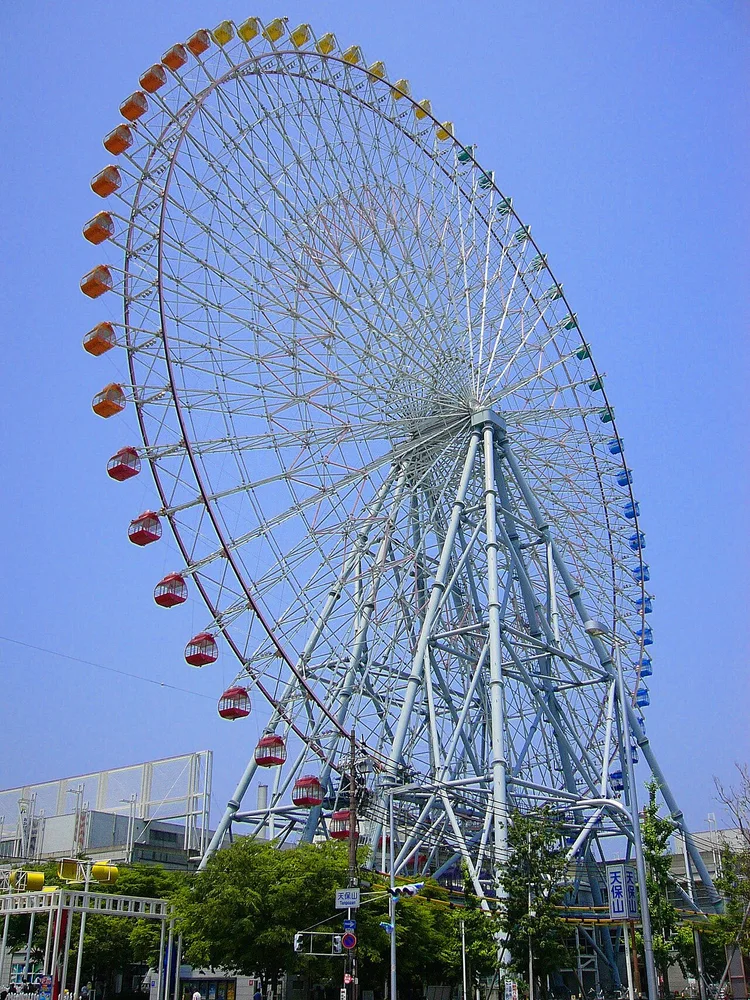
The operator's advance ticket on Asoview, valid in 2026, charges ¥1,000 per person from age three. Preschool children must share a cabin with a paying adult aged 16 or over. Each cabin holds up to eight people. Clear cabins cost the same as ordinary ones; there are eight, so check the separate queues on site. Children afraid of heights can choose an ordinary cabin without the extra pressure of a transparent floor.
The advance ticket reserves neither an actual boarding time nor a seat. The date and party size cannot be changed after purchase, and cancellation fees are 100% from 22:00 on the use date. Buy on site for accessibility discounts and similar concessions. Food and drink cannot be brought aboard. Finish eating and dispose of takeaway cups before joining the queue. If you have a fixed dinner time in the city, allow for queueing as well as the 15-minute ride.
A shuttle boat from Universal City; keep USJ and Kaiyukan on separate days
The official Captain Line introduction gives a crossing of about ten minutes between Kaiyukan West Pier and Universal City Port (Google Maps). This is a cross-bay shuttle, unlike the 45-minute Santa Maria harbour cruise. If you stay around Universal City, compare the boat for a visit to Kaiyukan the next day. After landing, allow time to reach the gate and store bags. Kaiyukan West Pier is about one minute's walk from the aquarium; Universal City Port is about five minutes from JR Universal City Station. Sailings change by month, so check the monthly timetable for your direction before booking admission.
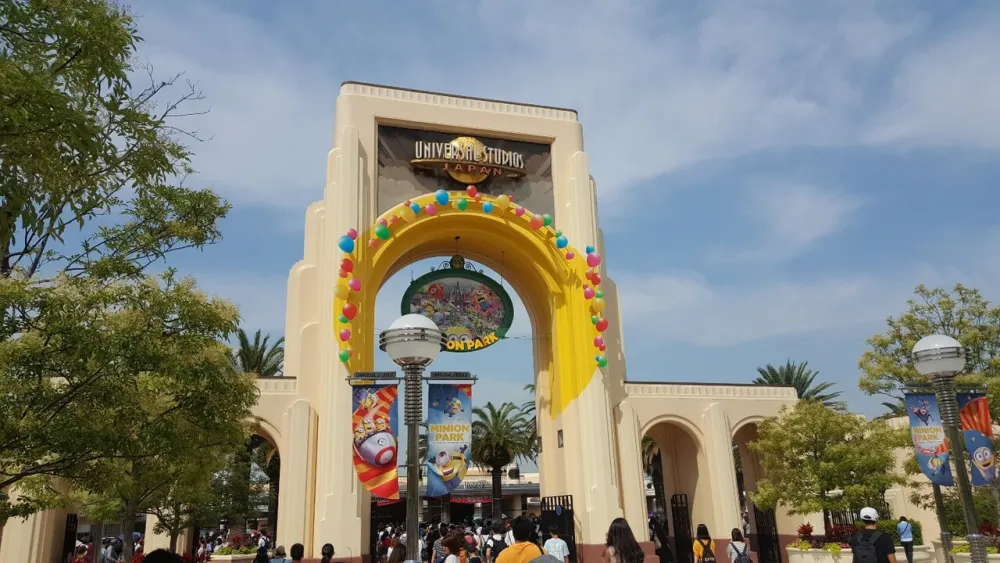
If operating hours, waves or gaps between boats do not suit, take the train. Do not cut a full USJ day in half simply because the two places face each other across the water. Each has its own tickets and queues, and children also need meals. A full day at USJ, followed by a separate morning departure from Universal City for the aquarium and a waterfront meal, is more relaxed.
A few useful answers
Can I see the whale sharks with a standard admission ticket?
Yes. Standard admission lets you view the whale sharks in the Pacific Ocean tank from the main building’s different floors. The whale shark backstage tour costs extra and gives a view from above the tank.
Can I leave for lunch and return on the same ticket?
No. Kaiyukan ended re-entry on 15 June 2026. Eat outside before admission or after your visit. For a break inside, use cafe R.O.F on floor 4.
Official information and references
Sources used in this guide.
- Kaiyukan: admission tickets and date-based prices
- Kaiyukan: tickets and visitor services FAQ
- Kaiyukan: access guide
- Kaiyukan: floor plan
- Kaiyukan: exhibitions
- Kaiyukan: three-level Great Barrier Reef display
- Kaiyukan: Jellyfish Galaxy
- Kaiyukan: feeding times
- Kaiyukan: whale shark backstage tours
- Kaiyukan: baby and pushchair facilities
- Kaiyukan: accessibility and first aid
- Kaiyukan: baggage and visitor rules
- Kaiyukan: food and shops
- Kaiyukan: audio guides and stamp books
- Tempozan Market Place: opening calendar
- Kaiyukan: Santa Maria package
- Kaiyukan: Captain Line shuttle boat
- Kaiyukan: e-tickets, credit-card cancellations and re-entry announcement
- Kaiyukan: permitted items and pushchair specifications PDF
- Kaiyukan: accessible visitor route PDF
- Osaka Convention & Tourism Bureau COOL OSAKA: Tempozan Giant Ferris Wheel
- Tempozan Giant Ferris Wheel: operator’s Asoview advance ticket, valid in 2026