Compare Kaiyukan ticket prices by date and age, choose an entry slot, and plan feeding times or evening lighting. Find your way from Osakako Station to the whale sharks, baby facilities, Tempozan meals and harbor cruises.
- Region & Focus
- OsakaAttractions
- Reading Scope
- 32 min read · 20 chapters · 2 Q&As
- Official Verification
- 22 official sources checkedUpdated November 7, 2026
- Key Topics
- BookingItinerariesFood
Chapter Route Map (tap any stop)
- Set aside half a day for Kaiyukan, then choose any Tempozan extras
- Ticket prices vary by date and age; children pay from age three
- Choosing a 15-minute entry slot, changing tickets and canceling
- From Osakako Station to the entrance: trains, buses and the stroller route
- Store luggage before entry; wheeled suitcases are not allowed inside
- From forest to seabed: the route through the two buildings
- Watch the whale sharks from more than one level
- Forests, sea lions and penguins: compare movement on land and underwater
- The Great Barrier Reef spans three floors; look beyond the colorful fish
- Save time for Jellyfish Galaxy and the Arctic at the end
- Choose one feeding session, then work backward to your entry time
- Whale shark backstage visits: standard and feeding versions
- Strollers, carriers and feeding babies: know which building has the facilities
- Wheelchairs and rest breaks: use the elevator route through the aquarium
- Coffee inside, full meals outside: avoid a mid-visit lunch exit
- Audio guides, stamp books and photographs
- Evening lighting from 5:00 p.m. or daytime feeding sessions
- Tempozan Marketplace and harbor cruises have different child fare rules
- Tempozan Ferris wheel: child supervision, clear gondolas and advance tickets
- Staying in Universal City: use the shuttle boat and keep USJ on a separate day
- Quick Q&A
Allow time to descend through Kaiyukan and see the same stretch of ocean from different levels. Choose an entry slot that lets you stay without a break, and sort out lunch, luggage and baby care before you enter. You can then take your time with the whale sharks, penguins and jellyfish before eating at Tempozan Marketplace. Re-entry ended on June 15, 2026, so deciding when you can see the whole aquarium in one visit comes before buying tickets.
Set aside half a day for Kaiyukan, then choose any Tempozan extras
The aquarium FAQ gives a typical visit time of about two hours. Allow two to three hours with children, plus extra time for feeding a baby, walking slowly down the ramps or watching an animal feeding session. Adults interested in the large tanks and children looking for penguins or jellyfish can follow the same route. Have lunch before entering or after leaving so you can see the whole aquarium in one continuous visit.
Kaiyukan (Google Maps) is on Osaka Bay, beside Tempozan Marketplace. Visit in the morning, then eat and choose one waterfront activity for the afternoon. If you arrive later, have lunch first and enter afterward; you can stay for the evening lighting from 5:00 p.m.
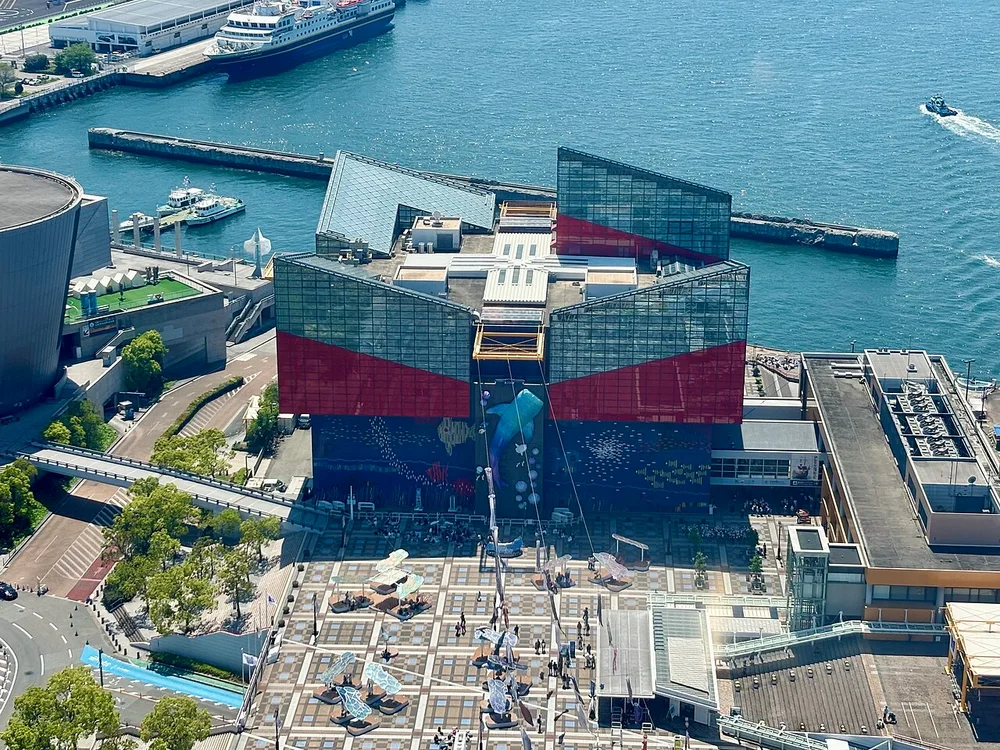
Compare Kaiyukan ticket prices by date and age, choose an entry slot, and plan feeding times or evening lighting. Find your way from Osakako Station to the whale sharks, baby facilities, Tempozan meals and harbor cruises.
Ticket prices vary by date and age; children pay from age three
The official Kaiyukan ticket calendar uses date-based pricing. Its monthly view shows the adult price first; select a date to see all age categories. Adult tickets cover high school students and anyone aged 16 or older. Child tickets cover elementary and junior high school students. Preschool tickets cover children aged three and older who have not started elementary school; children aged two and younger enter free. School year also determines the category: child pricing starts on April 1 of the year a child enters elementary school, and adult pricing starts on April 1 of the year they finish junior high school.
For example, on October 26, 2026, adult tickets cost ¥2,800, child tickets ¥1,400 and preschool tickets ¥700, with opening hours of 10:30 a.m. to 8:00 p.m. On October 31, the prices are ¥3,200, ¥1,650 and ¥800, and the aquarium opens from 9:00 a.m. to 8:00 p.m. These dates differ in both price and opening time. Compare the admission cost with the hours available when choosing your day.
For two adults, one elementary school child and one four-year-old, standard admission totals ¥7,700 on October 26 or ¥8,850 on October 31. Families with flexible dates can weigh that ¥1,150 difference against transport and accommodation plans. If your date is fixed, select all four tickets for that day and budget separately for meals, lockers and extra activities. Backstage packages, cruises and other attractions have their own age rules. Avoid paying twice for aquarium admission if you buy a standard ticket before adding an activity.
Choosing a 15-minute entry slot, changing tickets and canceling
Kaiyukan manages admissions in 15-minute slots. The official ticket FAQ says e-tickets generally go on sale 30 days before the visit date. Same-day tickets are also sold at the aquarium, but each slot has limited capacity. Booking ahead for a morning visit or a busy Japanese holiday makes lunch easier to plan than arriving and waiting for the next available slot. The printed time is when you may pass through the entrance gates; early entry is not allowed. Once inside, you may stay until closing.
Calculate your journey all the way to the gates, including leaving Osakako Station, walking, storing bags and taking children to the toilet. Families using strollers also need time to find elevators. Do not use the train arrival time as your aquarium entry time. Finish preparations in the Entrance Building before entering at your booked time. You can rest in the pre-admission area if you arrive early, but having a ticket does not permit early passage through the gates.
Official Webket accounts allow up to two date or time changes to slots already on sale within the same price band. Make the change no later than the original ticket date. If you are running late, open My Page and change the time first. If your preferred slot is full, you may still need to wait at the entrance. This can help after a transport delay; it does not allow a move to a different price band without paying the difference.
Official Webket e-tickets paid for by credit card can be canceled in your account through the visit date, with no cancellation fee. Tickets for which a receipt has been issued cannot be canceled. Your card issuer determines when the refund reaches your account. Packages and separately purchased activities follow their own product terms. Sign in to Webket before buying; if you need an account, register before adding tickets to your cart. An aquarium notice says that adding tickets first and then registering may cause an error.
From Osakako Station to the entrance: trains, buses and the stroller route
By rail, head to Osakako Station (Google Maps). Kaiyukan lists a walk of about five minutes from Exit 1 on the Chuo Line. Follow signs toward Tempozan Marketplace and the giant Ferris wheel; the official access map shows directions from both Exits 1 and 2. This is an outdoor walk at street level. In rain, plan cover for the section after the station: an indoor aquarium visit still involves an exposed journey to the door.
From the Midosuji Line, transfer to the Chuo Line at Hommachi. From other lines, find a suitable connection to the Chuo Line first. The destination is Osakako, a different station from JR Osaka or Nankai Namba. The Kaiyukan access page also lists Osaka City Bus routes 88 from Osaka Station and 60 from Namba. Take a bus toward Tempozan and get off at Tempozan Harbor Village, beside the aquarium. A direct bus may suit your hotel location, but allow for road traffic if you have a precise entry slot.
Stroller and wheelchair users should follow elevator signs in the station and add time for the route to the accessible exit. At Kaiyukan, tell staff if you need an elevator connection to the viewing route. The nearest stair exit is not your only option, and you do not need to carry a stroller onto an escalator. If the return journey is close to a child’s dinner or nap time, heading back into town makes the day easier to finish than adding another stop far from the station.
Store luggage before entry; wheeled suitcases are not allowed inside
On checkout day, leave luggage at your accommodation or in a coin locker first. The current rules on belongings prohibit wheeled suitcases and general cargo carts. They also restrict large items with combined length, width and height of 120 cm or more, or any one side over 70 cm. Deal with this before entry; you cannot wheel a case into the tank galleries and leave it against a wall.
The official FAQ lists coin lockers in the Entrance Building and Tempozan Marketplace, including near the mall escalators and below the Ferris wheel. Lockers before admission cost ¥400, ¥600, ¥800, ¥1,000 or ¥1,500 by size. Inside the paid area, only small ¥400 lockers are available. Store large bags before the gates. There are only two extra-large lockers, so avoid leaving the whole family’s luggage arrangements until you arrive.
Actual width, depth and height matter more than a suitcase’s nominal size in inches. The ¥1,000 lockers are 35.5 cm wide and 64.5 cm deep, with heights from 68.6 to 104.6 cm. The two ¥1,500 extra-large lockers measure 46.1 × 64.5 × 116.2 cm. Measure the case at its widest points, including wheels and handles, before departure. A taller locker may still be too narrow. Leaving large cases at your accommodation and bringing a day bag reduces your dependence on empty lockers.
From forest to seabed: the route through the two buildings
Use the official floor map to distinguish the buildings. Admission starts on the third floor of the Entrance Building. Pass through Aqua Gate, then go up to Japan Forest on Kaiyukan’s eighth floor and work your way down. The main building’s sixth, fifth and fourth floors overlook multilevel tanks such as the Pacific Ocean. Jellyfish Galaxy and other exhibits are on the third floor. Later, the route reaches the Arctic and Falkland Islands exhibits on the fourth floor of the Entrance Building, before returning to the third-floor exit. Read building names as well as floor numbers.
The upper route shows rivers, land and the water’s surface; lower levels reveal underwater and deeper views. That is why this route rewards a slow visit. When an exhibit name appears again, change what you look for: watch when an animal enters the water from above, then see how it uses its limbs, tail or fins below. If a child stays at the first window for a long time, let them finish watching an action. Another level offers a new view later.
On your first circuit, follow the route and see the main building’s large tanks before deciding whether to return to the start. While you remain inside, you may go back and repeat the route after finishing, but you cannot enter the exhibition area again after the last admission time. This differs from re-entry after leaving: since June 15, 2026, you cannot return on the same ticket once you exit. Plan any second look at the whale sharks before leaving the aquarium.
Watch the whale sharks from more than one level
The Pacific Ocean is Kaiyukan’s large central tank, shared by whale sharks, rays and schools of fish. Whether an adult wants a full-length photograph or a child wants to see a shark approach, pause at a wide viewing window and let the animals swim into sight. There is no need to jog along the glass after them. If a window is crowded, continue to the next one or the floor below to keep watching.
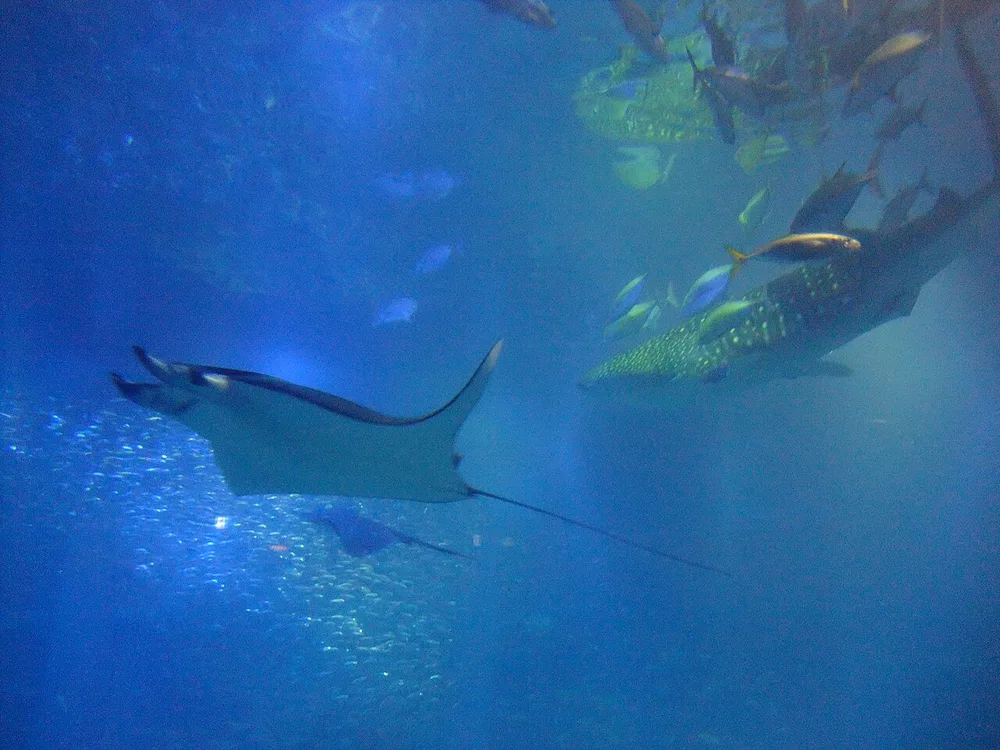
The official exhibit guide connects marine areas with their natural environments. With the whale sharks, start by finding the broad mouth and gill slits, then watch how widely they turn. Nearby rays propel themselves with their pectoral fins, while schools of fish move differently again. Comparing two animals is easier for children than memorizing every fish name, and gives adults something to do beyond taking photographs.
The sixth floor is closer to the upper part of the tank. Descending to the fifth and fourth floors changes your angle. Take in the overall view upstairs, then look at body size and the layers of fish below. Each pass can offer something different. If you only have time for one full circuit, take fewer photographs at other windows and save a longer stop here. Standard admission includes these views; no backstage fee is needed.
Forests, sea lions and penguins: compare movement on land and underwater
At Japan Forest, look at the streams, waterfalls, moss and trees before searching for otters. Monterey Bay places sea lions and seals on land and underwater along the same route, so you can compare their posture before and after entering the water. The Gulf of Panama depicts the tropical dry season, with ring-tailed coatis on land and porcupinefish in the water. Ecuador Rain Forest combines dense plants and wetlands with arapaima in the water. As you move from dry shores to humid rainforest, both habitat and animals change. Children can look for creatures other than fish here.
The Antarctica exhibit is good for comparing penguins standing on shore with their movement underwater. In the Tasman Sea, watch the dolphins’ body shape, breathing and swimming. If a child has spent a long time with the otters near the start, spend less time at some small tanks later to save energy for the Pacific Ocean and the final Arctic exhibit. Stops do not need equal time. Children interested in movement and those who like finding fish will naturally pause in different places.
Guide the visit with something a child can observe, such as, “What does it use to move on land, and what changes in the water?” They do not need to answer correctly every time, and you need not translate every display panel word for word. If your child fears the dark, explain that the jellyfish area later is darker, and walk slowly beside them. If they do not want to approach a particular window, follow staff directions onward and focus on the next exhibit they feel comfortable with.
Kaiyukan’s official World Otter Day short introduces the otters featured by the aquarium and complements a visit to Japan Forest.
The Great Barrier Reef spans three floors; look beyond the colorful fish
Updated in November 2024, the Great Barrier Reef tank links three scenes from the sixth to fourth floors. The sixth floor shows varied corals near the surface competing for light. The fifth turns to coral growth, large formations and breakage. On the fourth, coral skeletons become caves, sand and rubble that support new life. The corals in the exhibit are replicas; the fish move through the water. Knowing the design helps you see more than a tank of colorful tropical fish.
With elementary school children, first find the brighter side on the sixth floor, then look for changes in the terrain as you descend. Children do not need to learn coral names. Noticing changes in light, depth and terrain already reveals more of the reef than a photograph. Adults interested in exhibit design may want to spend longer here rather than divide their time evenly among small tanks.
The following Japan Deep tank depicts a deep-sea environment more than 200 meters below the surface, beyond the reach of sunlight. Compare the corals seeking light in the Great Barrier Reef with this dark marine environment. That explains the difference more clearly than treating each floor as a fixed ocean depth. After the main building’s fourth-floor exhibits, cafe R.O.F is behind Japan Deep. Rest there before descending to Jellyfish Galaxy and continuing to the Arctic and Falkland Islands in the Entrance Building.
Save time for Jellyfish Galaxy and the Arctic at the end
Jellyfish Galaxy displays jellyfish in dark surroundings with focused lighting. Its pace is slower than the large tanks. Stand still and watch the bells contract and bodies rise and fall; this reveals more movement than walking with your phone light on. Turn off phone lights and flash before photographing in the dark, and lower your screen brightness to keep reflections off the glass and light out of other visitors’ eyes.
Later, the Arctic exhibit uses two levels to show life on the ice and underwater, with two views of the ringed seals. The fourth floor of the Entrance Building also houses the Falkland Islands exhibit. Reaching the lower floors of the main building does not mean the visit is over. Keep following the route even if you see signs toward the exit. If seals are your child’s priority, spend a little less time shopping earlier and save their patience for this section.
Choose one feeding session, then work backward to your entry time
The official feeding schedule lists sessions by exhibit and floor. Watching a feeding during a normal visit and joining the backstage feeding program are separate products. For example, official information retrieved on November 7, 2026 lists afternoon sessions for penguins in Antarctica on the seventh floor at 2:30 p.m., Pacific Ocean fish on the sixth floor at 3:00 p.m., and Arctic ringed seals on the fourth floor at 2:45 p.m. Sessions may be canceled or their times changed depending on the animals’ condition. Plan from the official schedule for your visit date.
For the 3:00 p.m. Pacific Ocean feeding, for example, allow time to enter, visit the eighth-floor forest and upper seventh-floor exhibits, and reach the sixth floor. Booking 3:00 p.m. admission would force you to rush everything before the tank. If whale sharks and schools of fish are your main interest, an earlier afternoon entry makes the Pacific Ocean a natural middle stop. On days with a later opening, do not copy a morning feeding time earlier than opening into your itinerary.
You need not chase every feeding in one afternoon. In the schedule retrieved on that date, the 2:30 p.m. penguins, 2:45 p.m. seals and 3:00 p.m. Pacific Ocean fish are on different floors, with little time between sessions; families with toddlers can choose just one. After watching the keepers feed the animals, return to your normal viewing pace rather than counting down to the next session on your phone.
Whale shark backstage visits: standard and feeding versions
The official whale shark backstage activity page lists a standard version of about 20 minutes for ¥1,500 as an activity-only ticket. It offers a view from above the Pacific Ocean tank with explanations in Japanese. The feeding version lasts about 30 minutes and costs ¥2,500 as an activity-only ticket, adding a chance to watch keepers feed the animals. Both require aquarium admission separately, and both also offer admission-inclusive packages. Visitors watch staff at work; they do not feed the whale sharks themselves.
Both backstage versions are for elementary school age and older. Elementary school children must take part with a guardian aged 16 or older, who also needs a paid activity ticket. With one elementary school child and one preschooler, one adult can join the activity while another looks after the younger child. If one adult is bringing both children, a standard aquarium visit is the easiest way to stay together.
Electronic activity tickets are sold from 30 days before the visit until 30 minutes before the activity, subject to availability. The selected time on a package is the aquarium entry time; the backstage activity starts 30 minutes later. Save the meeting instructions after buying and head to the eighth-floor activity venue once inside. When spaces remain, the ticket counter sells admission packages and activity-only tickets; the eighth-floor venue sells activity-only tickets. Counter sales start at opening. Eighth-floor sales usually start at 11:00 a.m.; on days opening between 8:00 and 9:30 a.m., they start 30 minutes after opening.
Strollers, carriers and feeding babies: know which building has the facilities
The official baby facilities page lists a Baby Care Room on the second floor of the Entrance Building, with children’s toilets, nursing rooms, changing beds and formula preparation equipment. The private nursing rooms behind Aqua Gate have no hot water or diaper-changing facilities. Tempozan Marketplace has another Baby Care Room on the third floor, with nursing space, changing tables, formula preparation equipment and a Family Zone for families to use together. Use the fully equipped room before entry rather than searching for hot water once inside.
Kaiyukan does not rent strollers. A stroller parking area is outside near the entrance, to the left of the ticket counter. There is no stroller parking inside, so if you bring one in, keep it with you throughout the route. Most of the route uses ramps, but some connections use stairs or escalators; ask staff for elevator guidance. If your child can walk part of the way and an adult can carry them for the rest, you can park outside and use a carrier. For a toddler who needs to sit or sleep for long periods, choose a stroller that meets the entry rules.
The official stroller specification sheet requires a width of no more than 85 cm, a design pushed from behind without self-propulsion, wheel locks and a safety belt to prevent falls. Check the stroller’s unfolded dimensions before traveling. General cargo carts and child trailers do not count as strollers. Measure double strollers especially carefully. Once you know it meets the rules, allow time for the entrance and staff-guided elevator connections inside.
Wheelchairs and rest breaks: use the elevator route through the aquarium
The official accessibility information lists accessible toilets in the pre-admission area on the Entrance Building’s second floor and on the sixth floor inside, as well as priority viewing zones along the route. Wheelchairs can be borrowed free at the information desk beside the ticket counter or the third-floor service counter in the Entrance Building. Numbers are limited; the FAQ asks prospective borrowers to call 06-6576-5501 first. If long ramps tire someone in your group, arrange wheelchair use before setting out.
The accessible route map marks several connections where staff help is needed: going upstairs behind Aqua Gate, beside the stairs after Japan Forest on the eighth floor, and near cafe R.O.F after the main building’s fourth-floor exhibits. Ask for guidance there if you need an elevator. For the later connection from the third floor to the Arctic on the Entrance Building’s fourth floor, you can use the designated elevator yourself. Knowing these points avoids searching for a different route when you reach an escalator. A nurse is available in the second-floor first-aid room in the Entrance Building; ask staff for help with medical needs.
Coffee inside, full meals outside: avoid a mid-visit lunch exit
cafe R.O.F (Google Maps) is in the paid area on the main building’s fourth floor, behind Japan Deep. Some seats overlook a tank, making it a useful break during the long route. The official dining page lists opening 30 minutes after the aquarium opens and closing 30 minutes before it closes, with last orders one hour before aquarium closing. Stop here for whale shark soft-serve ice cream or light food. For a full family meal, use the mall before entering or after finishing.
SEA SAW on the Entrance Building’s second floor serves drinks and light food in the pre-admission area. The Museum Shop in the same building is also outside the gates, while the Official Shop is inside the paid area. Check their positions if you want souvenirs before leaving, so you do not exit and then want to return to the paid area. With your aquarium admission ticket, you can also check the mall’s official same-day offers before choosing a meal you already planned to have.
General eating and drinking inside is limited to the fourth-floor cafe R.O.F. Sealed, lidded water bottles that do not leak when tipped are permitted, and baby food is also allowed under the rules. Stop beside a bench to drink or feed a baby, leaving the viewing route clear. Ordinary takeaway drink cups, alcohol and full meals eaten while walking are unsuitable to bring inside. Finish lunch before entry and carry a water bottle and the food your baby needs, leaving the afternoon free for the tanks.
Audio guides, stamp books and photographs
The official visitor guide tools page lists audio guides at ¥800 per device, collected from the third-floor service counter in the Entrance Building. They cover 33 points in six languages, including Chinese, with about 40 minutes of recordings. They suit adults and older children interested in animal care. A family that prefers chatting while walking need not rent one each. Keep an eye on children and people ahead while listening, and avoid stopping in the middle of the passage with headphones on.
For young children who enjoy spotting shapes and collecting stamps, the ¥400 Kaiyukan Expedition stamp notebook is sold at the Official Shop inside the aquarium. It includes 11 stamps and animal silhouette searches. Decide whether this visit is mainly for watching animals slowly or collecting stamps, then allocate your time. There is no need to hurry past a favorite tank to complete the book. If an adult must do the stamping, treat the book as a souvenir and let the child choose the shapes they want to find.
Handheld photography is allowed. Selfie sticks, opened tripods and prolonged occupation of a viewing window are prohibited; a tripod may be used folded as a monopod. Flash is prohibited all day at special exhibition tanks and the ringed seal tank. Elsewhere, do not use video lights or direct flash at animals or other visitors. Move away from the window after taking your photographs so the next group can approach. If your child wants to wait for a fish to circle back, put the phone down and watch together for where it reappears.
Evening lighting from 5:00 p.m. or daytime feeding sessions
The official FAQ confirms that the aquarium switches to its evening lighting after 5:00 p.m. If you like darker tank displays and do not need to work around a toddler’s nap, enter in the afternoon, see the daytime exhibits and remain inside through 5:00 p.m. Your entry slot does not limit you to a one-hour visit. However, arriving close to closing leaves less time; last admission is one hour before closing.
For example, if the calendar lists an 8:00 p.m. closing, a 7:00 p.m. entry leaves only one hour. That is too compressed for a first family visit. For children who tire in the evening, a morning visit followed by lunch works better; evening lighting can be optional. Adults traveling together can have a late lunch before entering in the afternoon and dinner after leaving, keeping both meals outside the gates.
If everyone in a group is under 16, they must enter by 6:00 p.m. and leave before 7:00 p.m. This affects evening plans for teenagers visiting alone. Families can choose a slot based on the day’s closing time and their children’s dinner and rest needs.
Tempozan Marketplace and harbor cruises have different child fare rules
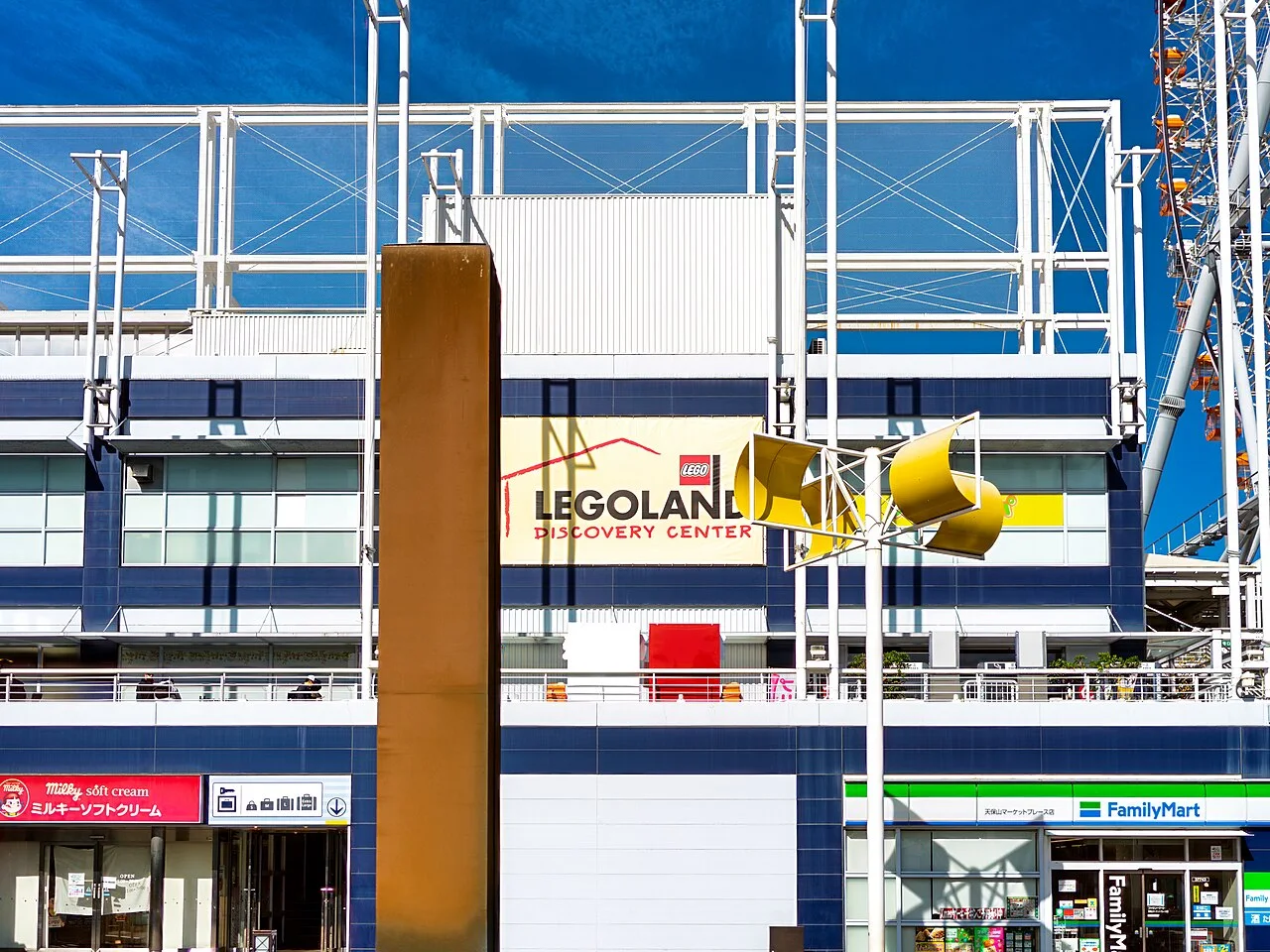
Tempozan Marketplace (Google Maps) is beside Kaiyukan, with a food court, restaurants, cafes and Naniwa Kuishinbo Yokocho. Families visiting the aquarium in the morning can eat here afterward. For afternoon entry, eat first and use the third-floor Baby Care Room before heading to the gates. The official date calendar lists the mall and individual facilities separately; aquarium opening time does not mean every restaurant is open.
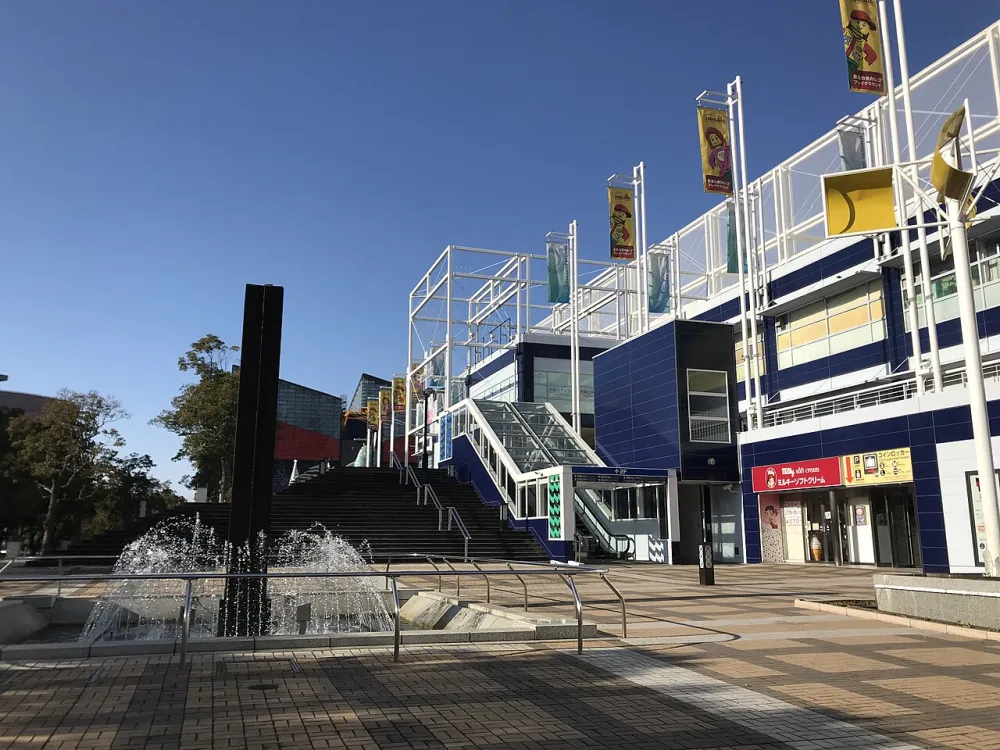
For Osaka harbor views, head to the Santa Maria boarding point (Google Maps). The official Kaiyukan and Santa Maria package includes a daytime harbor cruise of about 45 minutes. Electronic packages go on sale five days before use. You still select a date and entry time for Kaiyukan, and use a daytime sailing for the cruise. There is no preschool package. Cruise fares apply from age one, but each adult may bring one preschool child free; Kaiyukan charges from age three. Calculate each attraction separately instead of applying one preschool price to both.
Cruises depend on sea and weather conditions. Choose a land activity if your child is prone to seasickness. The waterfront outside Kaiyukan offers space to watch ships and the harbor. To return to Osakako Station, retrace the street route toward the giant Ferris wheel. You do not need another paid attraction just to have somewhere to pause.
Tempozan Ferris wheel: child supervision, clear gondolas and advance tickets
After leaving Kaiyukan, walk to the Tempozan Giant Ferris Wheel (Google Maps) beside the mall. The Osaka Convention & Tourism Bureau’s COOL OSAKA page lists a ride of about 15 minutes and a standard fare of ¥1,000 per person. Hours are 10:00 a.m. to 9:00 p.m. on weekdays and 10:00 a.m. to 10:00 p.m. on weekends and holidays, with boarding check-in closing 15 minutes before the wheel closes. For harbor views from above, this takes less time than visiting another large attraction.
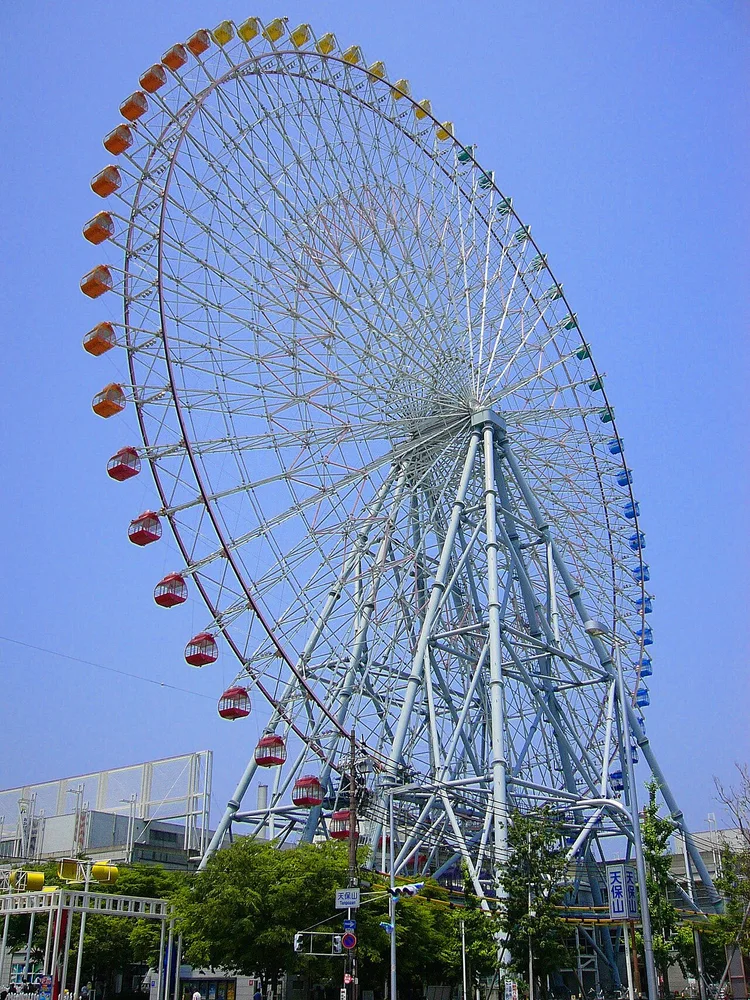
The operator’s advance ticket sold on Asoview for 2026 lists ¥1,000 per person aged three and older. Preschool children must ride with a paid, ticket-holding adult aged 16 or older. Each gondola holds up to eight people. Clear and standard gondolas cost the same; there are eight clear gondolas. Check the separate queues on site. A standard gondola is a sensible choice for children afraid of heights, without the added pressure of a transparent floor.
This advance ticket does not reserve a boarding time or seat. Dates and passenger numbers cannot be changed after purchase, and the cancellation fee becomes 100% from 10:00 p.m. on the use date. Buy on site if you need an accessibility discount or another eligible reduction. Food and drink are not allowed in the gondolas. Finish eating and dispose of takeaway cups in the mall before queuing. If you have a fixed dinner time back in town, add queuing time to the 15-minute ride.
Staying in Universal City: use the shuttle boat and keep USJ on a separate day
The official Captain Line introduction gives a crossing of about ten minutes between Kaiyukan West Pier and Universal City Port (Google Maps). This is a cross-bay shuttle, distinct from the 45-minute Santa Maria sightseeing cruise. If you stay around Universal City, consider it as transport to Kaiyukan the next day. Allow time after docking to walk to the gates and store bags. Kaiyukan West Pier is about one minute on foot from the aquarium; Universal City Port is about five minutes from JR Universal City Station. Sailings vary by month, so match your entry slot with the monthly timetable in the direction you need.
Take the train if operating hours, rough water or sailing intervals do not suit your plans. Two places facing each other across the bay do not make it practical to halve a full USJ day for Kaiyukan. Both have admission costs and queues, and children need meals. A more relaxed plan gives USJ a full day, then leaves Universal City after breakfast on another day for the aquarium and a waterfront meal.
A few useful answers
Can I see the whale sharks with standard admission?
Yes. Standard admission lets you view the whale sharks in the Pacific Ocean tank from several floors of the main building. The whale shark backstage visit is a separate paid activity with a view from above the tank.
Can I leave for lunch and return on the same ticket?
No. Kaiyukan ended re-entry on June 15, 2026. Eat outside before entering or after finishing your visit. For a break inside, use cafe R.O.F on the fourth floor.
Official information and references
Sources used in this guide.
- Kaiyukan: admission tickets and date-based prices
- Kaiyukan: ticket and visitor services FAQ
- Kaiyukan: access
- Kaiyukan: floor map
- Kaiyukan: exhibits
- Kaiyukan: the Great Barrier Reef across three floors
- Kaiyukan: Jellyfish Galaxy
- Kaiyukan: feeding times
- Kaiyukan: whale shark backstage activity
- Kaiyukan: baby and stroller facilities
- Kaiyukan: accessibility and first aid
- Kaiyukan: belongings and visitor rules
- Kaiyukan: dining and shops
- Kaiyukan: audio guides and stamp books
- Tempozan Marketplace: operating calendar
- Kaiyukan: Santa Maria package
- Kaiyukan: Captain Line shuttle boat
- Kaiyukan: notice on e-tickets, credit card cancellations and re-entry
- Kaiyukan: permitted items and stroller specifications PDF
- Kaiyukan: accessible viewing route PDF
- Osaka Convention & Tourism Bureau COOL OSAKA: Tempozan Giant Ferris Wheel
- Tempozan Giant Ferris Wheel: operator’s Asoview advance ticket for 2026