Take the Hankyu Railway from Osaka-Umeda and change at Ishibashi Handai-mae for Minoo. Covers Minoo Falls walking times, buggy gradients, 2026 autumn foliage and illumination dates, plus Katsuo-ji bus stops, fares and payment rules.
- Region & Focus
- Osaka
- Reading Scope
- 23 min read · 8 chapters · 6 Q&As
- Official Verification
- 32 official sources checkedUpdated 22 November 2026 at 08:00 GMT+8
- Key Topics
- ItinerariesRail travelSeasons
Chapter Route Map (tap any stop)
- How to Get There from Osaka: Pick the Right Minoo Station
- Walking the Takimichi Trail: Ichinohashi, Ryuan-ji and Minoo Falls
- Visiting with Children or Older Travellers: Use the Insectarium as a Turnaround Point
- 2026 Minoo Autumn Foliage: Check Section Photos Before Setting Off
- Waterfall Illuminations Run Until 21:30 — Plan the Walk Back Down
- Allow Half a Day for Katsuo-ji: Fares and Temple Admission Are Separate
- Try Fried Maple Leaves by the Station and Save Lunch for the Descent
- Planning a Half-Day — and Wet-Weather Backup in Ikeda
- Quick Q&A
Follow the valley trail roughly 2.7 km from Hankyu Minoo Station to reach the 33-metre drop of Minoo Falls. The walk takes around 40 to 50 minutes each way, making a return trip with photo stops and rests an easy half-day outing from central Osaka. Families with young children or slower walkers can stop at the Minoo Park Insectarium and Ryuan-ji Temple instead. To fit the daruma-filled Katsuo-ji Temple into the same day, walk the Takimichi trail in the morning, return to Hankyu Minoo Station, and transfer via Minoo-kayano up into the hills.
How to Get There from Osaka: Pick the Right Minoo Station
Set your map destination to Hankyu Minoo Station (HK59) when heading to the waterfall. Take the Hankyu Takarazuka Line from Osaka-Umeda and change onto the Minoo Line at Ishibashi Handai-mae (HK48). For a faster morning journey, board an express train that stops at Ishibashi Handai-mae; if you are starting from Shonai or another local-only stop, a local train will take you straight to the interchange. Change inside the station to Platform 5, signed for Minoo. The branch line calls at Sakurai and Makiochi before terminating at Minoo.
A standard adult single fare from Osaka-Umeda to Minoo costs ¥280, or ¥560 return. Sample timings from the Minoh Tourist Association put the express leg at 16 minutes and the Minoo Line at 6 minutes, plus transfer time, so allow around 30 minutes from boarding your first train. Tap the same transport IC card at both ends. Older guides online still mention direct trains from Osaka-Umeda to Minoo, so plan daytime trips around one change, and on the way back take the train to Ishibashi Handai-mae and cross to Platform 2 for Osaka-Umeda.
Umeda's stations sit clustered together. From JR Osaka Station, follow signs for Hankyu Railway or Hankyu Sanbangai to reach Hankyu Osaka-Umeda Station. If you enter the Osaka Metro Midosuji Line instead and see trains bound for Minoo-kayano, those run through onto the Kita-Osaka Kyuko Railway to a different terminus. Minoo-kayano is the gateway for buses up to Katsuo-ji, whereas Hankyu Minoo is the starting point if you want to walk uphill to the waterfall first.
If you are staying in Namba or Shin-Osaka and Katsuo-ji is your main priority, take a Midosuji Line train running through to Minoo-kayano directly to the bus terminal. Check the destination display on the front of the train before boarding, as some services terminate earlier at Shin-Osaka, Esaka or Senri-chuo. You can also reach the waterfall from Minoo-kayano by catching Hankyu Bus route 21 or 36, checking the onboard destination display for Hankyu Minoo Station.
Hankyu Minoo Station has a single ticket gate. Exit following signs for Minoo Falls and walk past the shopping arcade to Ichinohashi Bridge, entering the prefectural park in around five minutes. If you are returning to central Osaka afterwards, leave bulky luggage at your accommodation and carry a daypack with room for a jacket and water. Travellers pushing a buggy through the Ishibashi Handai-mae interchange should check the station layout map for lift routes and allow a few extra minutes to change platforms.
Pick up a printed map at the Minoh Transportation and Tourist Information Centre beside the station. It opens daily 09:00–17:00 in November; during the rest of the year it opens 10:00–16:00 on weekdays and 09:00–17:00 on weekends and national holidays, closing on Thursdays (or the following day if Thursday is a public holiday). Save the park walking map if you are only doing the Takimichi trail and head straight uphill from the station; if you plan to hike on to Katsuo-ji and do not know the mountain trails, ask at the desk for the wider hiking map, as the two maps cover different areas.
Take the Hankyu Railway from Osaka-Umeda and change at Ishibashi Handai-mae for Minoo. Covers Minoo Falls walking times, buggy gradients, 2026 autumn foliage and illumination dates, plus Katsuo-ji bus stops, fares and payment rules.
Walking the Takimichi Trail: Ichinohashi, Ryuan-ji and Minoo Falls
The official park site lists the Takimichi trail from Hankyu Minoo Station to the waterfall at around 2.7 km, taking 40 to 50 minutes, while the park guide map marks the walking route at roughly 2.8 km. Both figures are one-way. Walking steadily with minimal stops takes 80 to 100 minutes return. With family, photo stops by the stream, or queues across the bridges, allow two and a half to three hours station to station, or set aside a full morning including the train from central Osaka.
Ichinohashi Bridge marks a clear boundary. Leaving the station, you pass small shops and houses before the sound of rushing water grows louder beyond the bridge, where signs for Minoo Falls lead up the Takimichi trail. Take the first stretch gently and decide as a group whether to go all the way to the falls. For a shorter stroll, the walk from the station to the Insectarium takes 15 to 20 minutes and already offers valley views, bridges and historic buildings with an easy downhill return.
Further upstream you pass the Umeyashiki rest house before reaching the Insectarium and the Park Management Office. Use this area for toilets, buggy checks or deciding whether children want to go inside the museum. Just uphill from the Insectarium stands Ryuan-ji Temple. Because the temple sits right beside the trail, pause in the forecourt first to pick a visible meeting spot before splitting up, and put away drinks and snacks before entering the grounds.
Ryuan-ji enshrines Benzaiten, and from outside its main gate you can look across the stream to the Ho-okaku pavilion and the red railings of Zuiun-bashi Bridge. The red span stands out cleanly through the trees, making it easy to frame both bridge and riverbed from the public path. Worshippers can follow the open temple circuit, while casual walkers already have a natural resting point in the forecourt. If you are short on time, save the Insectarium or temple for the walk back so you can reach the waterfall in the morning without clock-watching.
Between the station and Ryuan-ji, you can also detour to Shotengu Saiko-ji Temple on the town side of the valley. Dedicated to Daishokangiten, it offers autumn maples followed by camellias from around December through May. If you return to the station area with half an hour to spare and do not mind stone steps, save Saiko-ji for the end; if you prefer to stay beside the river the whole way, enter the park directly across Ichinohashi Bridge and visit Ryuan-ji along the main path. The two temples are close together, each with its own approach.
Higher up, landmarks shift from temple grounds to Daimon-bashi Bridge, Tojinmodori-iwa Rock and Shugyokoba. Tojinmodori-iwa is a massive boulder beside the path, and Shugyokoba has a rest shelter ideal for drinking water, packing away layers or waiting for slower companions. If others stop to photograph the rock face, pause until oncoming walkers clear the narrow section. Should daylight fade or energy drop, turning back here still gives an easy return down the main paved trail.
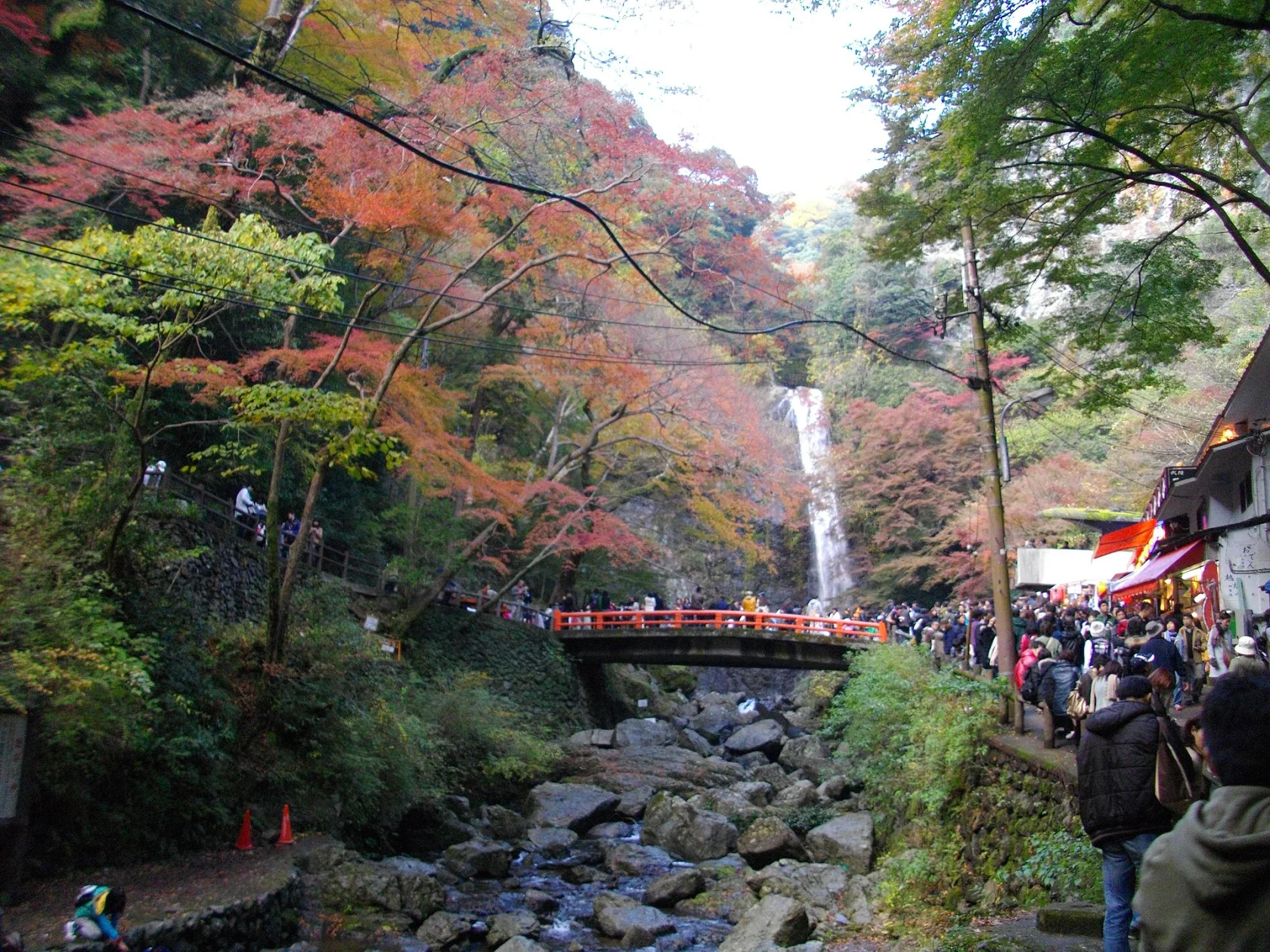
On the final approach to the waterfall, Takimi-bashi Bridge comes into view first, and looking back frames the boulders and gorge below. The waterfall itself plunges 33 metres down a rock face into the basin. Stand close to feel the spray and look straight up, or step back slightly to fit both the pool and the cliff top into one frame. In August 2026, the park announced the full reopening of the Takimichi trail following the previous year's shop fire near the falls. Temporary fencing narrows the path beside the former site, and the second floor of the waterfall-front rest house remains closed under the reopening notice.
The waterfall's name holds a local clue. According to the Minoh Tourist Association, legend likens the cascading water to a 'mi', a traditional winnowing basket used to toss and separate grain from chaff. Ryuan-ji carries its own piece of history as a widely cited birthplace of Japan's 'tomikuji' temple lottery. When walking with children, spot both names on the map by the station, pause at the temple and the falls, and take in the bridges again on the descent.
A full return walk covers roughly 5.4 km. Although the return leg is all downhill, fallen leaves, damp tarmac and oncoming crowds slow your pace and can tire calves and toes. Leave time to sit down, stopping at any temple forecourt, shop or bridge you passed on the way up. Side hiking trails, viewpoints and streamside paths involve steeper climbs, so sticking to the main valley trail is plenty for a first half-day visit.
To cut down the walking by taxi, use Otaki-ue Car Park off Prefectural Route 43 as an alternative drop-off above the falls, about a 15-minute walk down the steep Senbon-enro path. This suits sure-footed visitors who want most of their time around the waterfall itself. Wheelchair users and buggies should stick to the paved climb from Hankyu Minoo Station. There is no public car park inside the prefectural park, and cars, motorcycles and bicycles are prohibited on the Takimichi trail.
Visiting with Children or Older Travellers: Use the Insectarium as a Turnaround Point
The Takimichi trail from the station is paved; the park FAQ notes there are no steps along the main path, though there is one steep incline along the way. You can take a pushchair all the way up if someone can steer it steadily and take the downhill slope slowly. With a lightweight small-wheeled buggy, a child nearing nap time, or a carer who does not want a prolonged push, the forecourt of Ryuan-ji Temple makes a practical turnaround point—let children walk a short stretch, then visit the Insectarium or head back to the station for lunch.
The Minoo Park Insectarium opens 10:00–17:00 with last admission at 16:30. Admission is ¥280 for adults and free for junior high school students and younger, though children in primary Year 3 (third grade) and below must be accompanied by an adult. It closes on Tuesdays (staying open on Tuesday national holidays and closing the following weekday instead) and over the New Year period from 29 December to 3 January. Set aside about an hour for the exhibits and butterfly conservatory, then pause for water in the temple forecourt outside if children want extra time.
Next to the Insectarium, the Park Management Office lends one free power-assisted wheelchair suitable for the park path, the Ryuan-ji forecourt and the area in front of the waterfall. A companion must operate the controls; you can fill out a form and show ID from 09:00 on the day for use between 09:30 and 17:00, returning it to the same office. Remember it takes roughly 15 minutes uphill from the station to reach the office, so if a companion cannot manage that initial stretch, arrange mobility equipment before leaving your accommodation.
Visitors needing a nursing space can ask at the Park Management Office. On busy autumn weekends, use the toilets at the station or around the Insectarium to avoid turning back partway up the gorge. Families who take frequent breaks can aim for one bridge or rest house at a time; beyond the Insectarium, agree on a clear meeting spot in case anyone needs to sit out or return to the hotel early before deciding whether to continue further.
Pack packed lunches and snacks inside zipped bags. Wild Japanese macaques live on Mount Minoo and occasionally enter the park looking for food; if you see a monkey, stop to let it pass and avoid staring closely, reaching out or chasing it for photos. Minoh City prohibits feeding wild monkeys, with fines of up to ¥10,000 for ignoring warnings or orders. Rustling plastic snack bags at the roadside quickly attracts attention, so wait until no monkeys are in sight before eating.
The park features fast-flowing water and steep rocky drop-offs, so keep children on the path when viewing the river and never sit on or climb over the railings. Picnic only at designated rest areas and carry all wrappers and rubbish back down with you. Open flames are banned throughout the park and pitching tents is generally prohibited; dogs are welcome on a lead, provided owners clean up after them.
2026 Minoo Autumn Foliage: Check Section Photos Before Setting Off
Autumn colour in Minoo Park typically runs from mid-November to early December, with trees around the waterfall turning slightly later—often late November to early December. Because the gorge is long and narrow, sunlight exposure and tree species vary by section. The park's autumn foliage updates track Senbon-enro and Minoo Falls, Shugyokoba, the Insectarium to Ryuan-ji, and the entrance bridges separately. For peak foliage framing the waterfall, check the Senbon-enro and waterfall section photo first, which often shows yellow, crimson and lingering green leaves in one frame.
According to the park's 20 November 2026 log, foliage along Senbon-enro and around the waterfall was still turning with green leaves remaining, while Shugyokoba, the Insectarium to Ryuan-ji, and Ichinohashi to Meotobashi Bridge were approaching peak colour, and Jigokudani lagged behind. On days like that, an easy walk can focus on Ichinohashi to Ryuan-ji; if you visit later in the season, watch the waterfall-area update and continue further once colour concentrates upstream.
On sunny days, look at which valley wall catches the light and step into wider sections when busy to shoot river reflections or maple branches crossing bridge railings. Overcast light is softer and preserves detail in both leaves and wet boulders, making it ideal for close-ups along the walk. After wind and rain, fallen leaves gather along kerbs and bends—easy to photograph safely from inside the guardrails.
The park warns that on weekends and national holidays between 14 November and 6 December 2026, queues and crowds on the Takimichi trail can begin right outside Hankyu Minoo Station. Aim for a weekday morning, or arrive around 09:00 on weekends to cover your priority stretch before peak footfall. Leave space for returning walkers even on wide paths, keep waterfall photo stops brief, and fold away tripods on narrow stretches and bridges—park staff may ask visitors to stop using tripods during busy periods.
In a group, agree on two unmistakable meeting points beforehand, such as the Insectarium entrance on the way up and Ichinohashi Bridge on the way down. Step to the wider side once you have taken a photo, keep children beside adults, and secure loose items in a bag. If constant single-file passing slows everyone down, turning around at Shugyokoba makes complete sense—each stretch offers distinct foliage, and lingering where you have room to look beats queuing for a spot at the waterfall rail.
Drivers must also factor in mountain road restrictions. On Saturdays, Sundays and national holidays from 14 November to 6 December 2026, Prefectural Route 43 between Sanso Kaze no Mori and the three-way junction below the Minoo Dam operates one-way northbound only from 09:00 to 18:00, including for bicycles, affecting how you drive back down from above the falls. If traffic slows and you have a Shinkansen train or flight to catch afterwards, take the Hankyu Railway and walk instead.
If you still prefer to drive for the full route, the Municipal Minoo Station Front No. 1 and No. 2 car parks operate 24 hours at ¥200 per hour for standard cars between 08:00 and 20:00. During the autumn festival, the No. 1 car park has a daytime cap of ¥2,000, while the No. 2 car park lists a daytime cap of ¥1,000, both roughly a 10-minute walk from Ichinohashi Bridge. Travellers staying in central Osaka who are only walking the Takimichi trail save time hunting for spaces by taking the train and keeping the morning for the valley.
Waterfall Illuminations Run Until 21:30 — Plan the Walk Back Down
The 2026 Meiji no Mori Minoo Quasi-National Park Autumn Foliage Festival runs until 6 December. Evening illuminations at Minoo Falls, along the Takimichi trail, Ryuan-ji Temple and Saiko-ji Temple take place daily from 14 November to 6 December, from sunset until 21:30. If you want a full day in central Osaka, arrive in Minoo just before dusk, walk up from the park entrance and wait near the waterfall for the lights to come on. Dusk through early darkness gives enough contrast to capture both the illuminated cascade and the surrounding leaves.
Once lit, the waterfall and cliff wall stand out vividly, though bends along the valley path still have dark patches. Allow 40 to 50 minutes uphill and remember you must walk the same trail back down to Hankyu Minoo Station to catch the train via Ishibashi Handai-mae. Lights switch off at 21:30—leaving the basin right at shut-off means walking a stretch in the dark. With young children or older travellers unsure about dark descents, stick to the illuminated lower stretch between Ichinohashi Bridge and Ryuan-ji Temple.
Keep your phone charged to light your footing in the valley and stay within earshot of your group. Slow down on damp slopes, wet leaves and dimmer streamside stretches, and turn back early if your soles feel slick. Minoh City cancels illuminations if severe storm warnings, landslide alerts or dangerous rises in the Minoo River are issued; obey any trail closure notices immediately. If your evening schedule is already tight, stay in Umeda for an unhurried dinner and easy return to your hotel.
The 'Minoo no Mori Sound and Light Night Walk' places audio panels at Saiko-ji, Ryuan-ji, Shugyokoba, Daimon-bashi Bridge and Minoo Falls—tap your smartphone on a panel to play the soundtrack. The autumn festival also sets up stamp stations beside Ryuan-ji's Kannon-do Hall, in front of Saiko-ji's Daikoku-do Hall, and at the waterfall-front rest house; the waterfall stamp runs roughly 10:30 to 16:00, so collect it during daylight and then find an open spot to wait for dusk if you want both daytime and illuminated views.
Katsuo-ji Temple runs its own 'Nishiki no Aki Yoimairi' evening openings on separate dates: weekends and Japanese national holidays from 1 to 29 November 2026, from sunset until 20:30 (last entry 20:00). Plan dinner back in Umeda if you visit the waterfall illuminations, or keep your reserved return transport if you booked Katsuo-ji night access. Splitting the two evening events onto different days avoids rushing between mountain buses after dark.
Allow Half a Day for Katsuo-ji: Fares and Temple Admission Are Separate
Reach Katsuo-ji on Hankyu Bus route 30 from Stop 8 outside Minoo-kayano Station on the Kita-Osaka Kyuko Line. Daytime buses run direct to the temple gate in around 20 minutes. If you came from Osaka-Umeda on the Hankyu Line to walk the waterfall first, return to Hankyu Minoo Station, take a local bus to Minoo-kayano, and change there onto route 30. The local bus from Hankyu Minoo Station to Minoo-kayano costs ¥250 for adults and is paid separately from the Katsuo-ji express bus. If you leave the waterfall near dusk, move Katsuo-ji to the following morning rather than chasing the last daytime bus.
Route 30 costs ¥800 one-way for adults and ¥400 for children. From 1 October 2026, the Minoo-kayano to Katsuo-ji route operates cashless onboard. You can tap ICOCA, Suica or other transport IC cards—top up at least ¥1,600 per adult for a return trip beforehand, as cards cannot be topped up on the bus—boarding through the middle door, exiting at the front and tapping both times. Alternatively, buy a dedicated bus ticket by credit card from attendants at Stop 8 in Minoo-kayano, or buy a return ticket with cash at the temple souvenir shop before boarding.
Katsuo-ji generally opens 08:00–17:00 on weekdays, Sundays and national holidays (last entry 16:30), and until 18:00 on Saturdays (last entry 17:30). Temple admission is ¥500 for high school students and adults, ¥400 for primary and junior high school students, ¥100 for pre-school children, and free for ages two and under. Counting the return bus from Minoo-kayano plus adult temple entry comes to ¥2,100, excluding train fares from central Osaka and any connecting local buses.
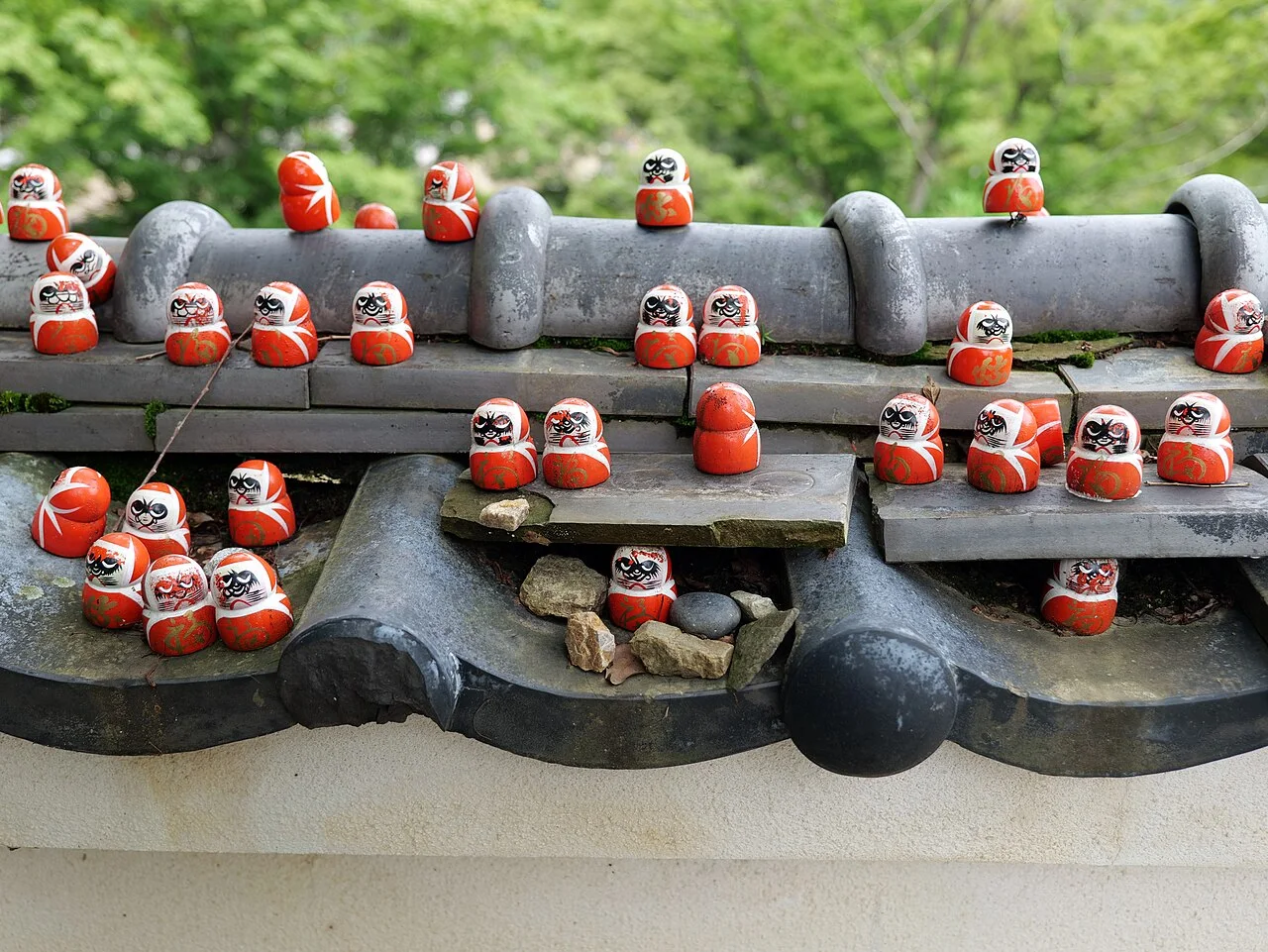
Just inside the gate, follow the path beside the pond to see where the daruma dolls are arranged. Shelves across the grounds hold rows of large winning daruma, while palm-sized red figurines line stone corners and steps. Because the daruma displays and ponds sit across terraced levels, step onto wider paths when taking photos so worshippers and climbers can pass. Allow at least 90 minutes if you plan to browse the grounds or buy a daruma, and time your arrival around return bus departures.
Daruma at Katsuo-ji serve different roles. To take home a 'Kachi-daruma' (winning daruma), choose a size at the temple counter, follow the instructions to write your goal on the base, and paint in its right eye—on the left side as you face the doll. Visitors who achieve their goal return to paint the second eye, give thanks at the main hall, and leave the daruma on the dedication shelves. The rows of tiny figurines tucked along steps and crevices are daruma fortune slips ('omikuji'); step close for photos, but leave every figurine where it sits.
Experienced hikers can walk all the way from Minoo Station to Katsuo-ji. The Minoh Tourist Association hiking map outlines an approximately 12 km route taking around 4 hours 20 minutes, finishing at the Gein or Shinke bus stops. Walking from Minoo Station to the Minoo Visitor Centre at Masanochaya takes around 90 minutes, followed by roughly 70 minutes along Nature Study Trail No. 4 and Prefectural Route 4 to Katsuo-ji, plus the historic approach path beyond. The Visitor Centre has toilets and rest areas; download an offline hiking map beforehand to follow junctions, gradients and bus links. Those wanting maximum time inside the temple are better off walking the Takimichi trail and taking the bus back from the station.
Doing Katsuo-ji in the morning and the waterfall in the afternoon also works well. Ride straight from central Osaka to Minoo-kayano to catch a daytime bus up the mountain, then ride back down to the same station and connect by bus to Hankyu Minoo Station for the walk up to Ryuan-ji—and on to the falls if energy allows. Even if the temple bus queue runs long, you can still complete the lower valley walk in daylight and enjoy the waterfall without rushing back.
Drivers heading to Katsuo-ji should check temple car park reservations and Prefectural Route access rules first. Car parking during the 2026 autumn illuminations requires advance booking, especially on weekends and national holidays when entry follows assigned time slots. If attending Katsuo-ji's night viewing, confirm your return transport in the afternoon—whether a reserved shuttle, special event bus or private car—because daytime timetable buses and night event services operate separately.
Try Fried Maple Leaves by the Station and Save Lunch for the Descent
Between the station and Ichinohashi Bridge, stalls sell 'momiji no tempura'—deep-fried maple leaves. According to the Minoh Tourist Association, the traditional method uses leaves harvested from Ichigyo-ji maple trees, washed and salted for over a year before being desalted and fried in a batter of wheat flour, sugar and sesame seeds. Expect a crisp, lightly sweet snack where even the thin stem is coated in batter. Watch leaves being fried at shopfronts from the side, then step away from the queue to eat.
For a proper meal after descending, explore Minoo Hondori Shopping Street south of the station, on the opposite side from the waterfall approach. It is an easy place to sit down for udon or a set meal before boarding your train. For local souvenirs, look out for yuzu products labelled with Minoo's seed-grown 'misho yuzu'. If children just want to share a taste of fried maple leaves, start with a small bag and come back for extra flavours later.
If queues look long during peak foliage season, walk across the bridge to the waterfall first and pick up bags of fried leaves on the way back to eat in Umeda or at your hotel. Have breakfast around Hankyu Osaka-Umeda Station or near your hotel before setting off, and pack water and snacks in your rucksack. Teahouses along the trail are pleasant when seats are free, though at busy times it is better to rest in wider open spaces so you do not block shop entrances and older companions can find benches easily.
Eating lunch near the station makes onward connections smoother. If you plan to visit Katsuo-ji in the afternoon, check the bus departure times to Minoo-kayano before ordering, allowing extra minutes to pay the bill, use the toilets and reach the bus stop. With young children, limit stops on the climb to one quick snack and save a seated lunch for the station area. Note that momiji no tempura batter normally contains wheat and sesame, so check packaging labels before gifting to anyone with allergies.
Planning a Half-Day — and Wet-Weather Backup in Ikeda
If you only have a morning, allow around four hours from leaving Umeda to returning there. Arriving at Hankyu Minoo Station around 09:00 lets you walk the main trail to the waterfall first, then visit Ryuan-ji and buy fried maple leaves on the descent. If you want to add the Insectarium, count backwards from your next timed booking, subtracting the walk down and train transfer to see how long you have inside. With an afternoon flight from Kansai Airport or a Shinkansen from Shin-Osaka, turning back around the Insectarium or Ryuan-ji keeps the schedule comfortable.
If seeing butterflies with children is your main goal, time your arrival just before the Insectarium opens, walk up alongside the stream and leave plenty of room for lunch and rests. Family members wanting the full hike can continue uphill from the temple forecourt while others head back towards the station to eat. Before splitting up, agree on a clear landmark, direction of return and cut-off time—named landmarks beat vague spots like 'that snack stall we passed' if phones lose battery or signal.
In light rain, walk as far as the Insectarium and decide after seeing the indoor exhibits whether to carry on. In heavy rain, rising stream levels or trail closures, switch to an indoor stop instead. If mountain weather looks poor as you set off from central Osaka, stay on the same Hankyu Takarazuka Line and stop at Ikeda for the Cupnoodles Museum Osaka Ikeda (Momofuku Ando Instant Ramen Museum), a five-minute walk from Ikeda Station's Masumicho exit, avoiding an unnecessary detour up the Minoo branch line.
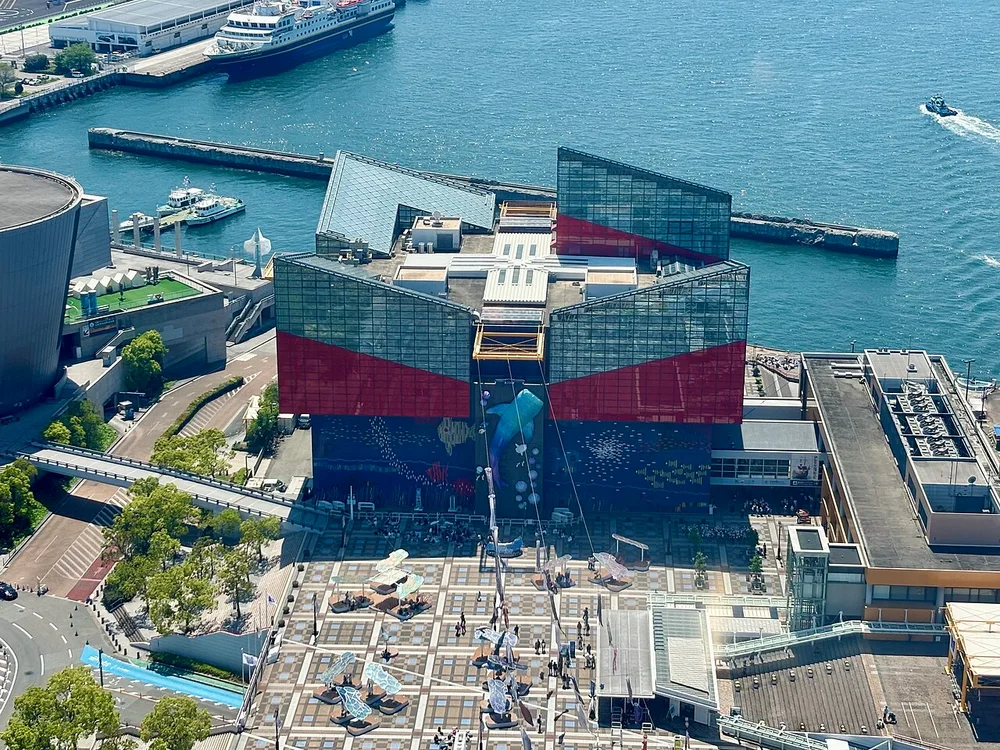
Admission to the Ikeda museum is free, open 09:30–16:30 with last entry at 15:30. It closes on Tuesdays (or the following day when Tuesday is a public holiday), for the New Year from 28 December 2026 to 2 January 2027, and for maintenance from 12 to 15 January 2027. Hands-on Chicken Ramen workshops require paid tickets and advance booking, so on a spontaneous wet-weather switch stick to the permanent exhibitions. If visiting on a Tuesday when both Minoo's Insectarium and Ikeda's museum are closed, head back into central Osaka for open indoor options such as the Osaka Aquarium Kaiyukan at Tempozan.
In summer the Takimichi trail has forest shade, though it climbs straight from the station; start early to beat the strongest sun and pack plenty of water for children who sweat easily. In winter dusk arrives early, and shaded streamside bends and steep slopes turn slick after rain or snow—turn back at Ichinohashi Bridge or the Insectarium if footing feels uncertain. If your itinerary has flexible days, save a drier day for Minoo and keep rail-connected indoor stops for wet weather.
You do not need to move hotels for Minoo. On a three- or four-day Kansai base, staying in Umeda gives direct Hankyu access up to Minoo and straightforward afternoon connections from Osaka Station. Staying in Namba simply adds a short metro ride in the morning while keeping evening dining handy on your return. If you only have half a day, treat Ichinohashi Bridge, Ryuan-ji Temple and Minoo Falls as three natural stopping points, and pick your base around the stations you use most across the rest of your trip using our Osaka neighbourhood guide.
A few useful answers
Is there an admission fee for Minoo Park?
Entry to Minoo Park and the Takimichi trail to the waterfall is free. The Minoo Park Insectarium charges ¥280 for adults and is free for junior high school students and younger. If continuing to Katsuo-ji Temple, bus fares and temple admission are paid separately.
How long does it take to walk from Hankyu Minoo Station to Minoo Falls?
It is roughly 2.7 km one-way, taking 40 to 50 minutes. The station to the park entrance takes around 5 minutes, and reaching the Insectarium takes 15 to 20 minutes. Allowing for photos, breaks and the return walk, plan two and a half to three hours in Minoo.
Do I need to change trains between Osaka-Umeda and Minoo?
Yes. Take the Hankyu Takarazuka Line to Ishibashi Handai-mae, then transfer to the Hankyu Minoo Line for the terminal Minoo Station. A standard adult single fare from Hankyu Osaka-Umeda to Hankyu Minoo costs ¥280.
Can I take a pushchair to Minoo Falls?
The Takimichi trail from Hankyu Minoo Station is paved with no steps, though it includes one steep incline. If your pushchair handles well and you have the stamina for the uphill and slow descent, you can reach the falls; with a small-wheeled buggy or older travellers, consider turning back at the Insectarium or Ryuan-ji Temple. The Senbon-enro path down from the car park above the falls is very steep.
When do the 2026 Minoo Falls autumn illuminations end?
Illuminations run daily from 14 November to 6 December 2026, from sunset until 21:30, covering the waterfall, parts of the Takimichi trail and nearby temples. Remember to allow 40 to 50 minutes to walk back down from the falls to Hankyu Minoo Station.
Can I pay cash on the Katsuo-ji bus?
From 1 October 2026, the Hokusetsu Reien route between Minoo-kayano Station and Katsuo-ji is cashless onboard. Tap a transport IC card or buy a dedicated ticket by credit card from attendants at Stop 8 in Minoo-kayano; for the return trip, you can buy a dedicated ticket with cash at the temple souvenir shop.
Official information and references
Sources used in this guide.
- Minoo Park | Trail Distance, Wheelchair Gradients and Park Rules
- Minoo Park | Walking Guide Map
- Minoo Park | Access and Walking Times
- Minoo Park | Minoo Falls and Park Facilities
- Minoo Park | Full Reopening of the Takimichi Trail
- Minoo Park Insectarium | Opening Hours and Admission
- Minoo Park | Free Power-Assisted Wheelchair Loan
- Minoo Park | Section-by-Section Autumn Foliage Updates
- Minoo Park | 2026 Autumn Illumination Announcement
- Minoo Park | 2026 Autumn Holiday Crowds and Tripod Rules
- Minoh City | 2026 Mountain Road Traffic Restrictions
- Minoh City | Ordinance Prohibiting Feeding Wild Monkeys
- Hankyu Railway | Hankyu Minoo Station Map and Timetable
- Hankyu Railway | Ishibashi Handai-mae Interchange Station Map
- Hankyu Railway | Standard Passenger Fare Table
- Hankyu Bus | Katsuo-ji Route Fares and Cashless Payment
- Minoh Tourist Association | 2026 Katsuo-ji Autumn Night Special Viewing
- Minoh Tourist Association | Ryuan-ji Temple
- Minoh Tourist Association | Mount Minoo Hiking Map
- Minoh Tourist Association | Momiji no Tempura and Local Minoo Specialities
- Cupnoodles Museum Osaka Ikeda | Hours, Access and Maintenance Notices
- Minoh Tourist Association | Train Times and Station Car Park Rates
- Minoh Tourist Association | Station Transport and Tourist Information Centre
- Minoh Tourist Association | Saiko-ji Temple
- Minoh Tourist Association | Origins of the Mount Minoo and Waterfall Names
- Hankyu Bus | Fares Between Hankyu Minoo and Minoo-kayano Stations
- Osaka Convention & Tourism Bureau | Katsuo-ji Temple Hours and Admission
- Minoh City | 2026 Autumn Foliage Festival Events
- Minoh Tourist Association | Temple Visits and Daruma Customs
- Osaka Convention & Tourism Bureau | Free Entry to Meiji no Mori Minoo Park
- Cupnoodles Museum Osaka Ikeda | New Year and Maintenance Closures
- Minoh Tourist Association | Shopping Streets Around Minoo Station