Should you stay in Namba, Umeda, Tennoji, or Shin-Osaka? Choose your Osaka base around Kansai Airport transfers, intercity rail, and Universal Studios Japan, matching official station exits with triple rooms, four-bed layouts, and lift-accessible hotel entrances.
- Region & Focus
- OsakaAccommodation
- Reading Scope
- 17 min read · 15 chapters · 5 Q&As
- Official Verification
- 34 official sources checkedUpdated 19 November 2026
- Key Topics
- Where to stayKyoto, Osaka & Kansai
Chapter Route Map (tap any stop)
- Start with three journeys to pick your Osaka base
- Read Namba walking times alongside the rail operator
- Twins with extra beds in Namba, or sit-down family rooms by Yotsubashi
- Pick your regular Umeda rail line before choosing a side of Osaka Station
- In Higashi-Umeda, the one-minute walk starts at Exit M9
- Four-bed, connecting, and accessible rooms by JR Osaka Central Gate
- Skip a park-side hotel if you are only visiting USJ for one day
- Tennoji suits airport arrivals and southern Osaka, with two entrances to compare
- Save Shin-Osaka for the Shinkansen leg of your trip
- Pick your daytime luggage station before switching hotels
- For late arrivals or early flights at Terminal 2, check the Aero Plaza link first
- Flying into Itami first? Re-check your first-night station
- Weigh three straight nights against a single hotel move on one sheet
- Count beds per person—short trips rarely justify moving hotels
- Send exact Japanese station names and floor levels before check-in
- Quick Q&A
If you are taking Nankai Electric Railway in from Kansai Airport and spending most evenings in Dotonbori, base yourself near Nankai Namba. If you have two days of trips to Kyoto, Kobe, or Universal Studios Japan, choose the area around JR Osaka Station. If you are riding the JR airport line and focusing on Tennoji and Abeno, stay in Tennoji. And if you have a reserved early-morning Shinkansen on departure day, staying beside Shin-Osaka Station pays off. Before comparing room rates, save your arrival station, exact hotel entrance, and departure station in the same itinerary note.
Start with three journeys to pick your Osaka base
The first journey is from Kansai Airport to the hotel check-in desk, the second is returning to your room from the station you use most, and the third is the first train you must catch on time after checking out. Circle whichever of those three is hardest to change. If it is an early Shinkansen, look at Shin-Osaka; if it is arriving late with children and large suitcases via Nankai Namba, a short walk to your Namba hotel entrance matters more than saving one or two underground stops the next morning. Only put room style and dinner spots first if you are a small group travelling with cabin bags.
Staying three nights in Umeda with one day in Shinsaibashi versus staying in Namba with one day shopping in Umeda puts the commuting difference into a single day. When your itinerary includes one day in Kyoto, one in Kobe, and another at Universal Studios Japan, check which platforms all three mornings start from. Mark JR Osaka, Hankyu Osaka-umeda, Hanshin Osaka-Umeda, and the Osaka Metro entrances separately. The walk from the ticket gate back to your hotel after an evening train reflects real tiredness far better than a morning stroll to the nearest underground station with empty hands.
If you need a three- or four-bed room, enter your full party size first to see which districts actually have suitable layouts. Standard twin rooms for two are far easier to find, making it simple to narrow your search down by station exit. If one pair plans to rise early and the other intends to stay out late, match each room to the station they will actually use.
| Area | Journey you save | Station names to search first |
|---|---|---|
| Namba / Shinsaibashi | Drop bags straight after the Nankai airport train and walk back from Dotonbori after dinner | Nankai Namba; check Yotsubashi if staying on the west side of Shinsaibashi |
| Umeda / Osaka Station | Frequent JR or private-rail day trips, or early starts for Universal Studios Japan | JR Osaka, Hankyu Osaka-umeda, or Hanshin Osaka-Umeda |
| Tennoji / Abeno | Direct JR arrival from Kansai Airport and daytime exploring in Tennoji and southern Osaka | JR Tennoji, Midosuji Line Tennoji, Kintetsu Osaka-Abenobashi |
| Shin-Osaka | Walk straight from the hotel to the Shinkansen gates on departure morning | JR Shin-Osaka and Shinkansen gates; check the Midosuji Line for city trips |
Should you stay in Namba, Umeda, Tennoji, or Shin-Osaka? Choose your Osaka base around Kansai Airport transfers, intercity rail, and Universal Studios Japan, matching official station exits with triple rooms, four-bed layouts, and lift-accessible hotel entrances.
Read Namba walking times alongside the rail operator
Both Nankai Electric Railway's Rapi:t limited express and Airport Express run from Kansai Airport Station to Nankai Namba. When a hotel lists "Osaka-Namba Station", it usually means the joint Kintetsu and Hanshin station. Osaka Metro's Midosuji, Yotsubashi, and Sennichimae lines each have separate ticket gates at Namba Station, while JR Namba sits over on the OCAT side. As soon as your booking confirmation arrives, open the hotel's access page and match the exit to the exact line you will ride. If a map centred on the hotel only highlights the nearest underground stairs, check the station diagram to see which line they connect to.
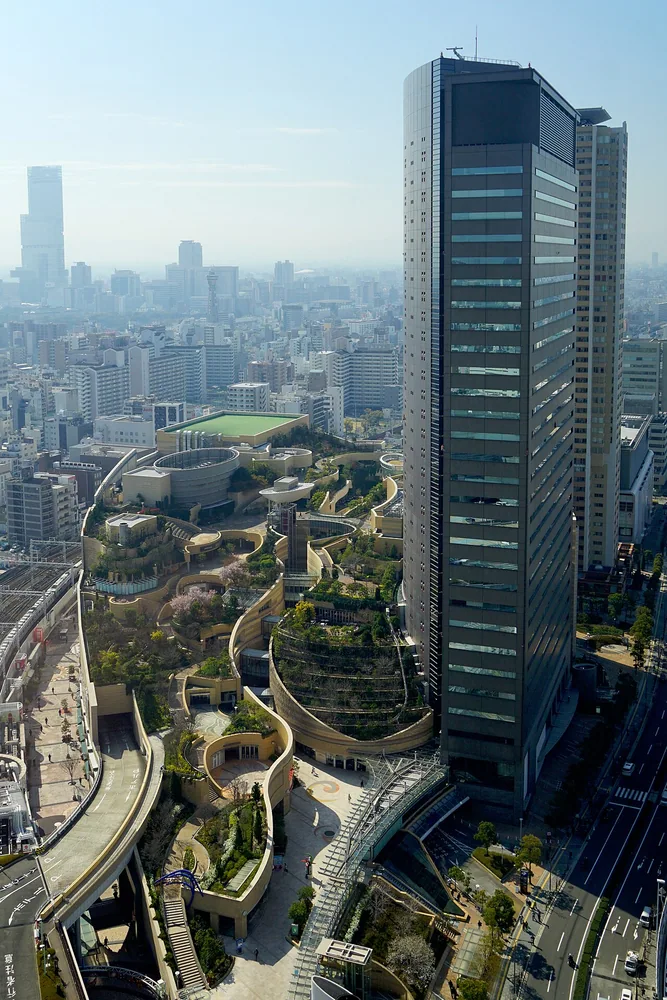
Swissotel Nankai Osaka's official access page lists walking times to the very same lobby desk by rail line: roughly 2 minutes from the Nankai Namba 3F North Gate, about 4 minutes from the Midosuji Line South Gate, around 10 minutes from the Yotsubashi Line North Gate, and roughly 15 minutes from the JR Namba gate. These are the hotel's own measurements, and the gap comes from where each train drops you and which exit you take, not just street distance. Late-night airport buses to OCAT leave you walking from the JR Namba side, so confirm whether you are arriving at the Nankai platforms or OCAT before choosing a Namba hotel.
Shop names on maps often pull travellers straight into shopping arcades. From the Nankai Namba 3F North Gate, turn left following the hotel signs and locate the 3F entrance lift up to the 6F lobby. If you are travelling with two children or two luggage trolleys, agree to meet at the 6F reception. For Kintetsu or Hanshin trips the next day, save the Osaka-Namba entrances separately instead of reusing the Nankai route from the night before, and pin the street-level entrance for walking back after dinner in Dotonbori.
Twins with extra beds in Namba, or sit-down family rooms by Yotsubashi
At Swissotel Nankai Osaka, compare standard twin rooms directly against the Swiss Executive Triple, whose room page specifies three beds. For other room types where you want an extra bed, the hotel FAQ advises searching online for three adults to pull up extra-bed plans, as certain King and Queen categories remain capped at two guests. If your party is two adults and one child, enter the child's exact age and bed requirement during booking; if the system only offers bed-sharing when you want a third bed, check directly with the hotel. Compare Queen and Twin totals first if two guests can share, or filter straight for triple occupancy if all three need separate beds.
For a family of four wanting space to sit down with takeaway meals, look at MIMARU Osaka Namba North in Minami-Horie. The property lists Osaka Metro Yotsubashi Station as about a 3-minute walk away. Its Family Apartments measure around 39 to 41 sq m, fitted with two single beds and a set of bunk beds, and are listed for up to four adults. Check the official child policy and occupancy rules before comparing a bunk bed side-by-side with full-size adult singles.
Arriving from Kansai Airport with two exhausted children makes Nankai's direct station link hard to beat. Staying around Yotsubashi makes sense over several nights when you want extra floor space for children's routines while exploring Shinsaibashi and Horie on foot by day. Decide beforehand who is comfortable climbing the bunk ladder and who will get up in the night for younger children. If your group is four adults who all want flat beds with easy step-out access, check four-bed rooms or twin pairs in Umeda instead.
MIMARU's room pages also distinguish between in-room washing machines and shared hotel laundry facilities. Apartment-style properties typically provide coin-operated laundry rooms on site. Planning which evening you will wash and dry clothes tells you whether an in-room machine is actually necessary. Families staying three nights in Osaka before continuing to Kyoto or Hiroshima tend to value combining dinner and laundry under one roof far more than overnight guests.
Pick your regular Umeda rail line before choosing a side of Osaka Station
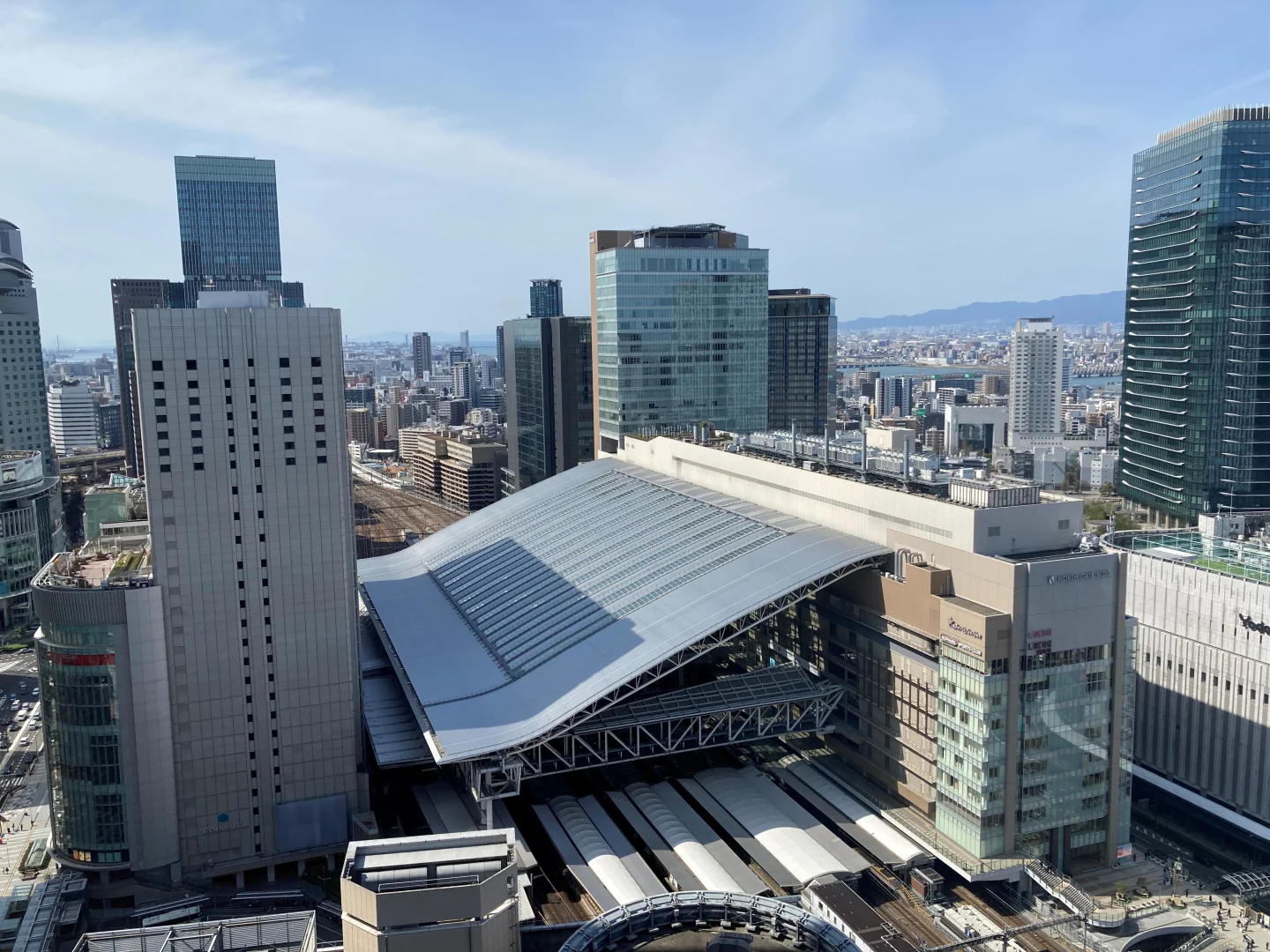
JR Osaka Station works best for morning trains to Kyoto Station, Sannomiya, or Universal Studios Japan. If one day focuses on Kyoto's Kawaramachi district, Hankyu Osaka-umeda may suit better; if you are taking the Hanshin line to Kobe-Sannomiya, look towards the Hanshin side. Whenever a listing says "next to Osaka-Umeda Station", check which railway company it means. If family members are arriving from different lines, arrange to meet at a street-level landmark or the hotel desk rather than just saying "Umeda Central Exit".
On JR trains from Kansai Airport, the HARUKA express arrives at JR Osaka Station's underground platforms. If you are staying near the northern retail complexes, route via the Umekita Underground Exit or the corresponding street-level entrance. For Hotel Granvia Osaka, follow the hotel's HARUKA directions through the ticketed concourse to the JR Osaka West Exit. When travelling with older relatives, pushchairs, or heavy bags, cross-check JR West's station map with the hotel guide to confirm your exact ticket gate and lifts.
Staying on the north side means dinner around Daimaru or Kitashinchi requires crossing back through the station afterwards, whereas staying on the south side puts busy plazas or underground walkways between you and morning Hankyu trains. Tracing the route from your hotel door to each day's main station takes one extra step than sorting by "distance to Osaka Station", yet immediately rules out awkward properties. Discovering a cross-station platform transfer only after boarding can eat up ten minutes just walking internal corridors.
For Universal Studios Japan, check whether your morning train runs direct to Universal City or requires changing to the JR Yumesaki Line at Nishikujo. USJ's official access page maps routes from Osaka, Tennoji, Shin-Osaka, and Namba stations. Work backwards from your target park entry time using your own route rather than treating rail transit time as door-to-gate time. Families visiting the park two days running who want midday hotel rests should also compare park-side hotels so dinner and bedtime do not require a daily train ride.
In Higashi-Umeda, the one-minute walk starts at Exit M9
VIA INN Umeda advertises a 1-minute walk from Higashi-Umeda Station, which its official access page measures from Tanimachi Line Exit M9—walking through the station to M9 adds roughly 3 minutes. From JR Osaka Station, the hotel recommends the Midosuji Gate for a 6-minute street walk; Hankyu Osaka-umeda Exit 3 is also listed at around 6 minutes, while Hanshin Osaka-Umeda uses the East Exit. Comparing VIA INN Umeda with station-connected Granvia shows how your regular rail operator matters more than headline walking times.
At VIA INN Umeda, a Standard Twin is 17 sq m with two side-by-side 100 cm single beds and a modular unit bathroom. The Deluxe Twin keeps the same two 100 cm beds but expands to 23 sq m with a separate bath and toilet. Two adults with one suitcase each doing day trips to Kyoto and Kobe can easily shortlist the Standard Twin; if you share morning bathroom routines or need space to pack shopping, the wider layout is worth the upgrade.
If friends are arriving at VIA INN Umeda from different directions, send the street address or a photo of the entrance facade. Asking passers-by for "Midosuji" alone can send someone towards the Osaka Metro Midosuji Line rather than JR Osaka's Midosuji Gate. If anyone in your group needs step-free access, combine the hotel's access guide with the station map to verify the lift-equipped exit before committing to a shorter street route.
Four-bed, connecting, and accessible rooms by JR Osaka Central Gate
Hotel Granvia Osaka sits directly on the south side of JR Osaka Station. Leaving the 1F Central Gate towards the Central South Gate leads up a short flight of stairs to the hotel's East Entrance. For a lift, use the 3F Connecting Bridge Gate towards the South Gate Building and take the designated hotel lifts up to the 19F reception, which operate from 07:00 to 24:00. The East Entrance closes between 01:00 and 06:00, when guests use the West Entrance instead. Arriving off the HARUKA express, follow signage from the JR Osaka West Exit past JP Tower, cross the junction, and follow the slope to the West Entrance. Save both the address (Umeda 3-1-1) and your intended night entrance if arriving in separate groups.
Granvia's Corner Family room spans 43 sq m for two to four guests, equipped with four 120 x 203 cm beds and two washbasins. Four adults who do not want bunk beds can compare this room directly against two standard twins on the same dates. Dual basins help when splitting morning routines, while booking two separate rooms lets young children sleep early while others plan the next day with the lights on. Groups of four to six can also check the hotel's Connecting Rooms according to their party mix.
Travellers needing wheelchair turning space should check the Universal Room, listed officially at 38 sq m for two to three guests. Use a single station map during booking to line up your arrival platform, the 1F entrance, and the 19F desk, and verify bathroom door widths and bedside clearance against the room specifications. When travelling with older relatives who have different mobility needs, prioritise barrier-free room access over staying on the exact same floor.
Skip a park-side hotel if you are only visiting USJ for one day
If you fly into Kansai Airport on day one, depart from Shin-Osaka on day three, and spend just one day at Universal Studios Japan in between, stay in your city hotel rather than moving bags twice. From Umeda, check the JR platform and train destination before boarding; from Namba, pick the route closest to your hotel's rail line. Pull up the park's transit map to check for direct services versus changes at Nishikujo, and decide beforehand whether you will drop shopping bags at the hotel before dining in Dotonbori.
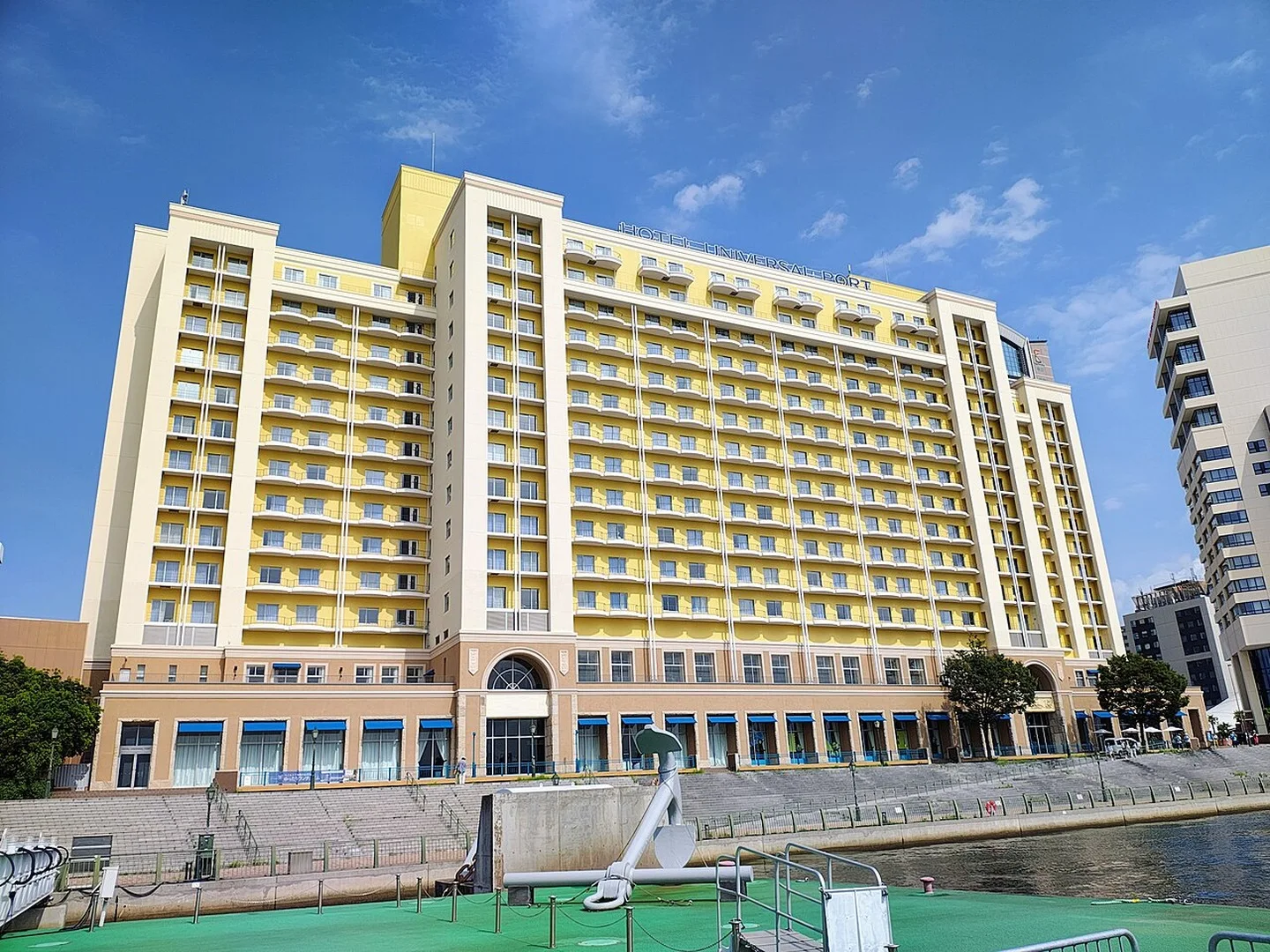
If your family plans two consecutive park days and needs midday breaks back in the room, add park-side properties to your shortlist. Hotel Universal Port's official access page splits the walk from Universal City Station into two paths: turning right out of the ticket gate takes roughly 3 minutes via stairs, while the step-free route on the left takes around 5 minutes for pushchairs and wheeled suitcases. The hotel also maps a separate route to the Universal Studios Japan entrance, giving clear starting points for both ends. Even if you stay in Umeda the night before, checking these routes clarifies your transfer the next morning. For a breakdown of official, alliance, and partner tiers around the park and city, see our USJ partner hotels guide.
When part of a group buys a one-day ticket while others explore central Osaka, staying on in Umeda lets everyone regroup easily at the same hotel in the evening. If three adults split rooms and one is looking after a toddler, a park-side base lets them return early without disrupting the rest of the party. Factor in an extra meal and onward transfers to the airport or Shin-Osaka when weighing park hotels so non-riders still have convenient days.
Tennoji suits airport arrivals and southern Osaka, with two entrances to compare
Base yourself in Tennoji to ride JR's Kansai Airport Rapid Service or HARUKA expresses stopping at Tennoji directly from the airport. The Midosuji Line runs straight north to Namba, Shinsaibashi, and Umeda. If your days focus on Tennoji Park and Abeno, with dinner nearby and southbound travel the following morning, staying on this side keeps everything compact. However, if every evening ends late in Dotonbori, a Namba hotel turns the trip home into a walk.
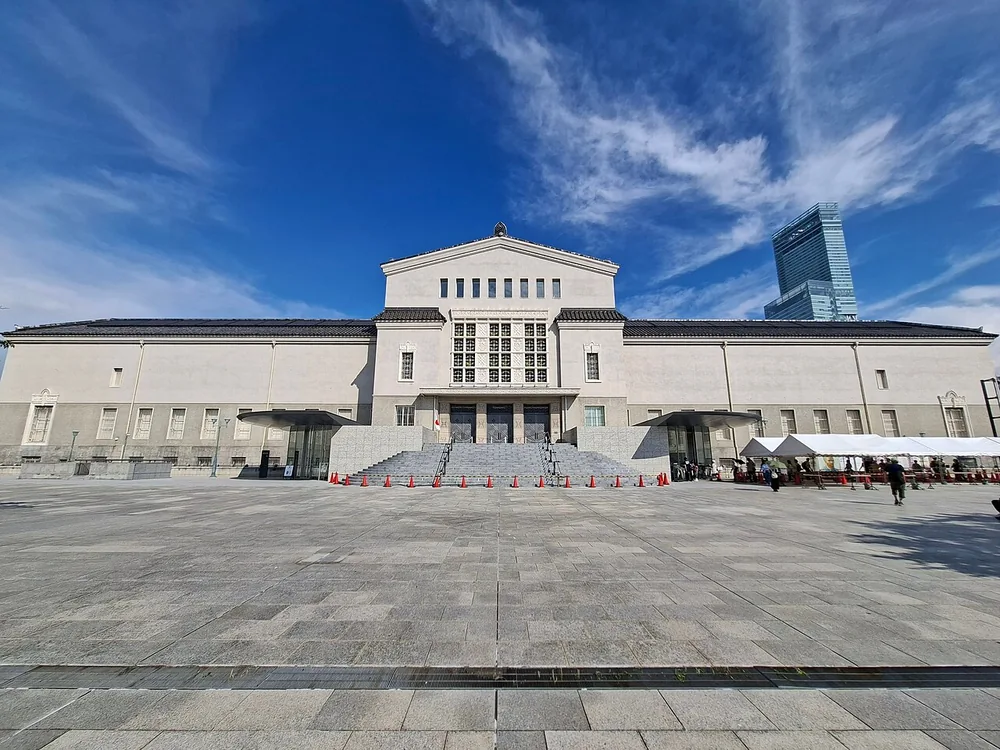
Osaka Marriott Miyako Hotel occupies Abeno Harukas, with reception on the 19th floor. From JR Tennoji, follow the hotel's route out of the Central Gate, turn left towards the South Exit; from the Midosuji Line, turn left out of the West Gate. Both lead to the hotel's basement entrance outside Kintetsu Department Store, where nearby lifts go straight to 19F. Coming from Kintetsu Osaka-Abenobashi, turn right after the West Gate instead. Save the directions matching your specific rail line—all routes converge on the same building.
The B1 basement entrance closes from 00:30 to 05:00, during which guests use the street-level 1F entrance. The 1F inner doors also lock between 00:30 and 05:30: pass through the outer automatic doors and press the intercom on the left for reception to open the door on arrival, or tap your room key on the right-hand card reader if already checked in, then take the lift to 19F. Anyone pulling suitcases off a late flight should pin the 1F entrance directly on their map. Hotel night-entry diagram
VIA INN Abeno Tennoji offers a useful nearby benchmark for two-person stays. Its access page lists roughly a 2-minute walk from JR Tennoji South Exit (Exit 14) and Midosuji Line Exit 5. The Compact Twin measures 15 sq m with two side-by-side 90 x 197 cm beds and a unit bathroom; the FAQ explicitly states there are no triple rooms or extra beds. It works well for two guests with an early JR Tennoji departure, while groups of three adults should filter for properties that explicitly accommodate three guests.
Save Shin-Osaka for the Shinkansen leg of your trip
Book Shin-Osaka when catching the Shinkansen onwards to Tokyo, Nagoya, Okayama, or Hiroshima. If your departure train is unhurried, you can still stay in Namba after an evening stroll through Dotonbori. If you are escorting older relatives onto a strict morning departure, move your bags to Shin-Osaka after dinner on your final night. Alternatively, if you arrive on a late-night Shinkansen for a single night, leave suitcases at Shin-Osaka and ride JR or the Midosuji Line into central Osaka the next morning.
remm Shin-Osaka connects directly to the Shin-Osaka Hankyu Building. Shinkansen arrivals turn right out of the Central Gate towards the Shin-Osaka Hankyu Building entrance and take the lift to the 12F lobby. JR conventional-line passengers turn right from the East Gate to link back towards the Shinkansen Central Gate area. From the Osaka Metro Midosuji Line, follow hotel directions via the North-East Gate and Exit 1 into the building's 3F entrance. Note down your outgoing train type, ticket gate, and hotel floor separately when comparing direct-access stays.
remm's Corner Twin offers 22.8 sq m with two 110 x 200 cm beds, a bathtub, and a separate bathroom and toilet. Two guests arriving late and leaving early can check whether this bed and bathroom setup suits them. Groups of three or more needing separate beds in one room should compare other Shin-Osaka layouts against four-bed rooms at Osaka Station: an extra transfer to Shin-Osaka the evening before buys calm access to the Shinkansen platform next morning. If your group has heavy luggage, inspect floor plans for clearance at the foot of the beds, doorway width, and space to open suitcases flat.
Even when sleeping at the station, allow time in the morning to meet up, collect tickets, and locate your coach boarding mark. If half your group stays at Shin-Osaka and the other stays downtown, agree to meet at a specific shop or landmark outside the Shinkansen Central Gate. Guests transferring from JR conventional lines pass through a separate transfer gate, so if anyone needs assistance, meet as a full group before heading to the boarding gate.
Pick your daytime luggage station before switching hotels
If you arrive from Kyoto after 09:00 and your new Osaka hotel cannot check you in until afternoon, ask whether early bag drop is available first. If you are staying in Namba that night while spending the afternoon around Umeda and Kita, storing bags at JR Osaka Station lets you collect them right before leaving the area. Crosta Osaka sits on the 1F north-central concourse outside the ticket gates, with official step-free routes listed from the Central, Midosuji, and Sakurabashi gates; if coming up from underground platforms, check the JR lift map first.
If your departure hub is Shin-Osaka, check Crosta Shin-Osaka on the 1F concourse outside the ticket gates instead. Storing bags at Osaka Station only to depart directly from Shin-Osaka forces an unnecessary stop to retrieve them; locking in your departure station first thing saves that detour. Match your planned train departure against the counter's same-day collection window, and if timings are tight, leave luggage with your original hotel or send it directly to the next property.
Station-to-hotel luggage delivery suits travellers sightseeing all afternoon before checking in at night. Crosta Osaka's page lists participating hotels alongside same-day drop-off cut-offs and hotel collection times. If you plan to swim or get children straight into a bath on arrival, keep a change of clothes in your daypack while waiting for delivered bags. When moving heavy luggage with small children, leave one adult with the children and bags while the other handles station gates rather than weaving everyone through crowds twice.
For late arrivals or early flights at Terminal 2, check the Aero Plaza link first
Both JR and Nankai rail stations at Kansai International Airport sit beside Terminal 1. From Terminal 2, official airport guidance directs passengers to the free 1F shuttle bus to Aero Plaza, a 7-to-9-minute ride excluding waiting time and the walk to the rail gates. When aiming for the last train, calculate from when you clear baggage reclaim rather than your scheduled landing time, then add this shuttle leg. Look up evening train departures while still in T2 so you know whether to head for Nankai or JR as soon as you step off the bus.
Check Nankai services for Namba, and JR services for Tennoji, JR Osaka, or Shin-Osaka. Some late trains serve alternative stations in the same city, requiring a taxi for the final stretch to your hotel. Once through immigration, message your hotel with an updated arrival time under your booking name and actual guest count. Friends landing at different terminals should only wait at Kansai Airport Station before heading into town if both are certain of catching the same train.
For early-morning departures, work backwards from your airline's check-in deadline. If the earliest city trains arrive too late, spend your final night on the airport island. Hotel Nikko Kansai Airport sits inside Aero Plaza, connected to Terminal 1's 2F via a walkway to the hotel's 2F entrance, while Terminal 2 passengers still use the terminal shuttle. Treat leaving the hotel for the station and reaching your airline desk as two distinct steps. For a fuller breakdown of airport connections, see our Kansai Airport to Osaka transfer guide.
Flying into Itami first? Re-check your first-night station
Travellers flying domestically from Tokyo often land at Osaka International Airport (Itami, ITM) and fly home from Kansai International Airport (KIX). Check both airport codes on your tickets first. Itami's official site lists limousine buses by destination—including Osaka Station (Umeda) and Shin-Osaka Station—so even if a hotel booking page claims "direct airport bus", verify which airport it serves. Walk to the bus stop serving your arrival terminal and check hotel entrances near the actual urban drop-off point.
If you land at Itami and head into Umeda on day one before flying out of Kansai Airport at the end, staying near JR Osaka Station lets you save two clean routes: the inbound bus drop-off and the outbound HARUKA underground platform. If you plan final-day shopping in Namba, check whether bringing bags to Nankai Namba first makes more sense before heading to Kansai Airport. Travellers flying in and out of Itami by bus should plan their return walk from the hotel door to the exact city boarding stop.
Weigh three straight nights against a single hotel move on one sheet
For a two-night stay in central Osaka, pick one hotel and stay put. You can arrive at Nankai Namba and explore Dotonbori on evening one, visit Tennoji in the morning and Umeda in the afternoon on day two, and return to Namba for dinner. Changing hotels mid-stay eats into sightseeing hours and forces you to haul bags from one familiar desk to an unfamiliar entrance. Staying put also lets you leave bulky purchases at reception or pack properly before checkout without hauling them through underground malls.
If two out of three days involve day trips from Umeda to Kyoto and Kobe, leaving one day for Osaka itself, make Umeda your base. Filter the hotel map around your primary rail operator first. JR Osaka connects easily to Fushimi Inari and Kyoto Station, whereas Hankyu makes more sense for Kawaramachi. If you are meeting friends for dinner in Namba afterwards, drop purchases back at your base station first and take a quick underground ride down.
Only split your stay when there is a clear operational reason, such as two consecutive days at Universal Studios Japan or an early Shinkansen from Shin-Osaka on departure morning—for instance, two nights in Namba followed by one night in Shin-Osaka. On moving day, drop suitcases at the new hotel before heading into Umeda, confirming early bag-drop hours ahead of time. If you want a full last day sightseeing from your first hotel, leave your bags near your final stop on the way to Shin-Osaka so no one doubles back.
For a single overnight stay before an afternoon Shinkansen, your hotel can usually hold bags until you leave later that day. Note your arrival time and latest collection deadline alongside the booking, especially if luggage storage is strictly same-day. When using hotel-to-hotel luggage forwarding, verify the delivery date, booking name, and sender contact details with the receiving hotel, and keep passports, regular medication, and overnight clothes with you.
Count beds per person—short trips rarely justify moving hotels
When travelling as a family or group, enter exact ages and guest counts per room in the search bar from the start. Two adults with children aged seven and three need space for all four; whether children can share existing beds or require their own depends on the hotel's rules. For four adults needing individual beds, Granvia's Corner Family (four fixed beds) and MIMARU's Family Apartment (two singles plus bunk beds) may cost a similar amount, yet differ in how the fourth guest sleeps. Assign every bed on paper before comparing total prices.
Three adults who do not want anyone stuck on a sofa bed should filter for triple-bed rooms or book two separate rooms. For a single night using an extra bed, ensure both total occupancy and the extra-bed request appear on the reservation. Families booking two rooms to keep an eye on children or older relatives should look for listed Connecting Rooms or request same-floor placement based on guest ages. Adjacent rooms and connecting rooms are not the same—only dedicated connecting categories guarantee an internal door under a single booking.
When comparing final nightly rates, click through to the final checkout screen to check taxes, breakfast, cancellation terms, and payment timing before deciding between one larger room or two twins with a second bathroom. Early risers should check breakfast opening hours—if service starts after your train departs, a room-only rate avoids paying for a meal you cannot eat. If travelling with toddlers, mobility aids, or anyone needing grab rails, check room photos for bathtub edges versus walk-in showers and step thresholds between the bathroom and bedroom.
Send exact Japanese station names and floor levels before check-in
Keep the rail operator, ticket gate, hotel entrance, and reception floor together in your shared itinerary. For Swissotel Nankai Osaka, save "Nankai Namba 3F North Gate to Hotel 6F". For Granvia, note the stairs from JR Osaka 1F Central Gate to the East Entrance, the lift route via 3F Connecting Bridge Gate, and the 19F lobby. For Osaka Marriott Miyako, save "JR Tennoji Central Gate to Abeno Harukas 19F" alongside both B1 and 1F entrances. For remm Shin-Osaka, note "Shinkansen Central Gate to Shin-Osaka Hankyu Building 12F". If your train operator changes, pull up the hotel's matching official diagram.
With your station anchor locked in, map out our three-day Osaka itinerary or Universal Studios Japan visit plan around it. Book dinner on arrival night somewhere within easy walking distance, and keep one flexible meal slot in reserve for whichever travel day has the tightest rail connections.
A few useful answers
For a first trip to Osaka, should I stay in Namba or Umeda?
If you are taking Nankai Electric Railway from Kansai Airport and spending your evenings around Dotonbori, stay near Nankai Namba. If you have back-to-back day trips to Kyoto, Kobe, or Universal Studios Japan by JR, Hankyu, or Hanshin, check entrances around JR Osaka Station or the corresponding Osaka-Umeda stations first.
Is there a big walking difference between Nankai Namba and JR Namba stations?
Yes. Using Swissotel Nankai Osaka as a benchmark, the hotel's official access guide lists roughly 2 minutes from the Nankai Namba 3F North Gate to reception, versus about 15 minutes from the JR Namba ticket gate. Always check exits against the specific railway operator you are actually riding.
What room types in Osaka give four adults a proper bed each?
At JR Osaka Station, Hotel Granvia Osaka offers a Corner Family room with four 120 x 203 cm beds. In Minami-Horie, MIMARU Osaka Namba North has Family Apartments with two single beds and one bunk bed. If you prefer two separate bedrooms, compare dedicated connecting-room options.
Is JR Osaka Station a good base for an early-morning Shinkansen?
No — Shinkansen trains departing Osaka leave from Shin-Osaka Station, not JR Osaka Station. If you have booked an early-morning departure or are travelling with older relatives and heavy suitcases, staying directly connected to Shin-Osaka saves a morning transfer.
Which exit at Tennoji Station leads to Osaka Marriott Miyako Hotel?
From JR Tennoji, take the Central Gate towards the South Exit; from the Midosuji Line, turn left out of the West Gate and follow the hotel's route to the Abeno Harukas entrance, then take the lift up to the 19th-floor lobby. Note that the B1 entrance is closed from 00:30 to 05:00, so use the 1F street-level entrance during those hours.
Official information and references
Sources used in this guide.
- Nankai Electric Railway | Kansai Airport to Nankai Namba
- Nankai Electric Railway | Kansai Airport and Namba Timetables
- Osaka Metro | Namba Station Map and Rail Exits
- Swissotel Nankai Osaka | Access from Each Rail Line Gate
- Swissotel Nankai Osaka | Nankai Namba 3F North Gate to 6F Reception
- Swissotel Nankai Osaka | Extra Beds and Room Occupancy FAQ
- Swissotel Nankai Osaka | Executive Triple and Room Overview
- MIMARU Osaka Namba North | Yotsubashi Station, Family Apartment and Laundry
- JR West | Trains from Kansai Airport to Tennoji, Osaka and Shin-Osaka
- JR West | JR Osaka Station Underground Exits and HARUKA Platforms
- JR West | JR Osaka Station 1F Concourse Map
- Hotel Granvia Osaka | Osaka Station Entrances and 19F Reception
- Hotel Granvia Osaka | Central Gate to 1F Hotel Entrance Map
- Hotel Granvia Osaka | Corner Family, Connecting and Universal Rooms
- Osaka Marriott Miyako Hotel | Tennoji Rail Access and Underground Entrance Hours
- Osaka Marriott Miyako Hotel | 1F Night Lock and Late Check-in Guide
- VIA INN Abeno Tennoji | JR South Exit and Midosuji Line Exit 5
- VIA INN Abeno Tennoji | Compact Twin Room Details
- VIA INN Abeno Tennoji | Occupancy and Extra Bed FAQ
- remm Shin-Osaka | Shinkansen, JR and Midosuji Line Access to 12F Lobby
- remm Shin-Osaka | Corner Twin Floor Area, Beds and Bathroom
- Kansai International Airport | Terminal 2 and Free Aero Plaza Shuttle
- Hotel Nikko Kansai Airport | Terminal Access and Hotel Entrances
- Universal Studios Japan | Rail Access Map from Major Stations
- VIA INN Umeda | Rail Gates and Exit M9 Walking Directions
- VIA INN Umeda | Standard and Deluxe Twin Rooms
- Hotel Universal Port | Short Route, Step-Free Route and Park Walk
- Crosta Osaka | Luggage Storage, Station Location and Hotel Delivery
- Crosta Shin-Osaka | Station Luggage Desk and Opening Hours
- Osaka International Airport (Itami) | Airport Bus Stops and Routes
- Hankyu Railway | Osaka-umeda to Kyoto-kawaramachi Route and Timetable
- Hanshin Electric Railway | Kobe-Sannomiya, Osaka-Umeda and Osaka-Namba
- Osaka Metro | Midosuji Line and City Network Map
- JR Central | Shin-Osaka Station and Shinkansen Concourse Maps